Cat's Claw (Uncaria tomentosa): Uses, Evidence and Safety
Cat's claw (Uncaria tomentosa), also called una de gato: Amazonian traditional use, why human evidence is inconclusive, and cautions for autoimmune disease, bleeding and pregnancy.
Content last updated . This page has not been medically reviewed.
Safety first. Supplements can cause side effects and interact with medicines. Read mushroom safety and interactions before you use any mushroom product.
What is Cat's claw good for?
What the body uses it for, and how strong the evidence is. A normal job in the body is not proof that extra supplements add benefit; each card says which.
Overall evidence for any health use
Not enough evidenceNCCIH says there is no conclusive evidence from human studies that cat's claw helps any health purpose, including COVID-19. Few high-quality trials exist.
Supplements: No established benefit; evidence is insufficient.
Traditional use in the Amazon
Not enough evidenceIndigenous people of the Amazon rainforest have used cat's claw for centuries. This is tradition, not trial evidence.
Supplements: Traditional use alone does not show benefit.
Promoted for arthritis
Not enough evidenceCat's claw is promoted for osteoarthritis and rheumatoid arthritis, but NCCIH finds no conclusive human evidence for these uses.
Supplements: No established benefit for arthritis.
Promoted for viral infections and cancer
Not enough evidenceIt is promoted for viral infections and cancer, but NCCIH says human evidence does not support these uses.
Supplements: No established benefit.
Short-term oral safety and the liver
Not enough evidenceNCCIH says oral cat's claw appears safe for short periods, up to about 6 months; skin use is poorly documented. NIH LiverTox says it has not been implicated in causing liver injury, though no reports is not proof of safety.
Supplements: Safety information only; long-term safety is not described.
Connected topics
Open a group to see how each topic connects and how strong the evidence is.
Root causes (2)
- Autoimmune DysfunctionDocumented risk
NCCIH says cat's claw might make the immune system more active and so increase symptoms of autoimmune diseases.
- Medication Side EffectsDocumented risk
NCCIH notes theoretical interactions with blood thinners, blood pressure drugs and other supplements; a cell study found extracts activate PXR, which was not shown in people.
Conditions & symptoms (1)
- Autoimmune DiseasesDocumented risk
NCCIH says cat's claw might increase symptoms of autoimmune diseases; people with these conditions should ask a clinician first.
Documented risks and interactions (4)
- May make the immune system more active (risk in autoimmune disease). NCCIH says cat's claw might stimulate the immune system, which could increase symptoms of autoimmune diseases. People with these conditions should ask a clinician first.
- May slow blood clotting (bleeding risk). NCCIH says cat's claw may slow blood clotting, which might raise bleeding risk during surgery. People having surgery should tell the surgical team.
- Possible interactions with medicines. NCCIH notes theoretical reasons to suspect interactions with blood thinners, antiplatelet drugs, blood pressure drugs and other supplements. In cell experiments, extracts activated a receptor (PXR) that controls a liver drug-handling enzyme; this was not shown in people.
- Pregnancy and breastfeeding. NCCIH says some studies of use during pregnancy suggest it is unsafe, and little is known about breastfeeding.
Safety first: ask a clinician before using cat's claw if you have an autoimmune disease, take blood thinners or blood pressure medicine, are pregnant, or have surgery planned. NCCIH (US, 2024) says cat's claw might make the immune system more active, which could increase symptoms of autoimmune diseases, and may slow blood clotting, which might raise bleeding risk during surgery. [1] Some studies of its use during pregnancy suggest it is unsafe. [1]
What cat's claw is
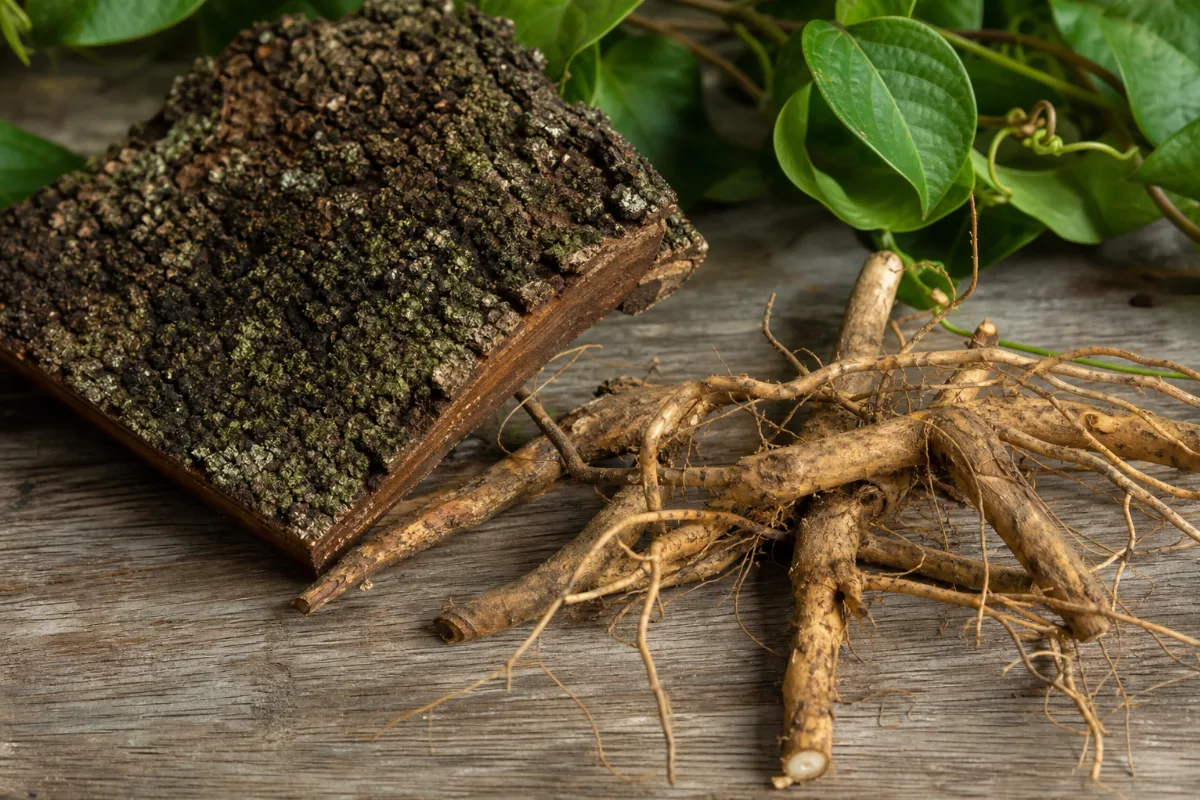
Cat's claw is a woody vine that grows wild in the Amazon rainforest and other tropical areas of Central and South America. NCCIH names two common species, Uncaria tomentosa and Uncaria guianensis, and says most commercial preparations in the United States contain U. tomentosa. [1] GBIF accepts Uncaria tomentosa (Willd. ex Schult.) DC., family Rubiaceae. [2] The NIH LiverTox entry describes the herbal medicine as derived from the bark. [3] The Spanish name is una de gato. Do not confuse it with cat's foot or devil's claw, which NCCIH says are different plants. [1] Because trials and products may use either species, check which one a study or label names. This page gives no wild-harvest or identification help.Traditional use
This is tradition, not proof. NCCIH says Indigenous people of the Amazon rainforest have used cat's claw for centuries to ward off disease. [1] The source does not name particular peoples or describe the practices, and we do not claim to speak for those traditions. Today cat's claw is promoted for osteoarthritis, rheumatoid arthritis, cancer, viral infections and other conditions. [1]What research shows
NCCIH says there have been very few high-quality clinical trials of cat's claw, and that many studies did not use rigorous methods or enough participants for definite conclusions. [1]| Use | What the source found | Strength of evidence | Who and what was studied |
|---|---|---|---|
| Osteoarthritis, rheumatoid arthritis, viral infections, cancer | NCCIH: "no conclusive scientific evidence" from studies in people supports any health purpose. [1] | Insufficient evidence; marketing claim | Human studies exist but were small or not rigorous |
| COVID-19 | NCCIH includes COVID-19 among purposes without conclusive human evidence. [1] | No good evidence of benefit | Not applicable |
| Colds and respiratory infections specifically | Proper evidence not found: we searched PubMed for Uncaria tomentosa trials and read NCCIH and LiverTox, and did not find a human trial for colds. | Not assessed | None identified |
| Immune effects in cells | A laboratory study found extracts activate a cell receptor (PXR) that controls a liver enzyme, which is about drug handling, not a health benefit. [4] | Preclinical (cells) | Cell line, not people |
Laboratory immune effects are not the same as benefit to a person; see Laboratory Immune Effects vs Clinical Benefit.
Safety
- Duration: NCCIH says oral cat's claw appears safe for short periods, as much as 6 months, but there is insufficient reliable information about use on the skin. [1]
- Immune conditions: see the warning above and Immunodeficiency, Autoimmune Conditions and Immunosuppression. Whether cat's claw affects people who take immunosuppressant medicines is not described in the sources we read, so ask the prescriber.
- Medicines: NCCIH says there are theoretical reasons to suspect interaction with anticoagulant, antiplatelet and blood pressure drugs and other supplements. [1] In cell experiments, cat's claw extracts activated PXR and induced the liver enzyme CYP3A4, which could in theory change how some medicines are cleared; this has not been shown in people in the sources we read. [4] See How Interactions Work.
- Surgery: tell the surgical team, as NCCIH advises. [1] See Supplements Before Surgery.
- Liver: NIH LiverTox says cat's claw has not been implicated in causing liver injury. [3] Absence of reports is not proof of safety.
- Pregnancy and breastfeeding: pregnancy is flagged above; little is known about breastfeeding. [1] See Pregnancy and Breastfeeding.
- Children, older adults, kidney conditions, allergy, contamination: not described in the sources we read. See Quality Testing and Certifications.
We give no amounts; a clinician or pharmacist decides what is right for a person. Related pages: Goldenseal, Echinacea and Herb Safety & Interactions.
Frequently asked questions
Is cat's claw proven to help arthritis?
No. NCCIH says there is no conclusive scientific evidence from studies in people for any health purpose. [1]
What is una de gato?
It is the Spanish name for cat's claw, and NCCIH notes it is not cat's foot or devil's claw. [1]
Who should be careful with cat's claw?
People with autoimmune disease, people on blood thinners or blood pressure drugs, people having surgery, and pregnant people, per NCCIH. [1]
Can cat's claw harm the liver?
NIH LiverTox says it has not been implicated in liver injury. [3]
Is cat's claw safe long term?
NCCIH reports it appears safe orally for up to 6 months; longer use was not described. [1]
References
- NCCIH (US), Cat's Claw: Usefulness and Safety, last updated November 2024. Read 2026-10-22.
- GBIF Backbone Taxonomy, Uncaria tomentosa match record. Read 2026-10-22.
- National Institute of Diabetes and Digestive and Kidney Diseases, Cat's Claw. LiverTox: Clinical and Research Information on Drug-Induced Liver Injury. Read 2026-10-22.
- Identification of PXR activators from Uncaria rhynchophylla (Gou Teng) and Uncaria tomentosa (cat's claw). Drug Metab Dispos. 2023 (laboratory cell study). Read 2026-10-22.