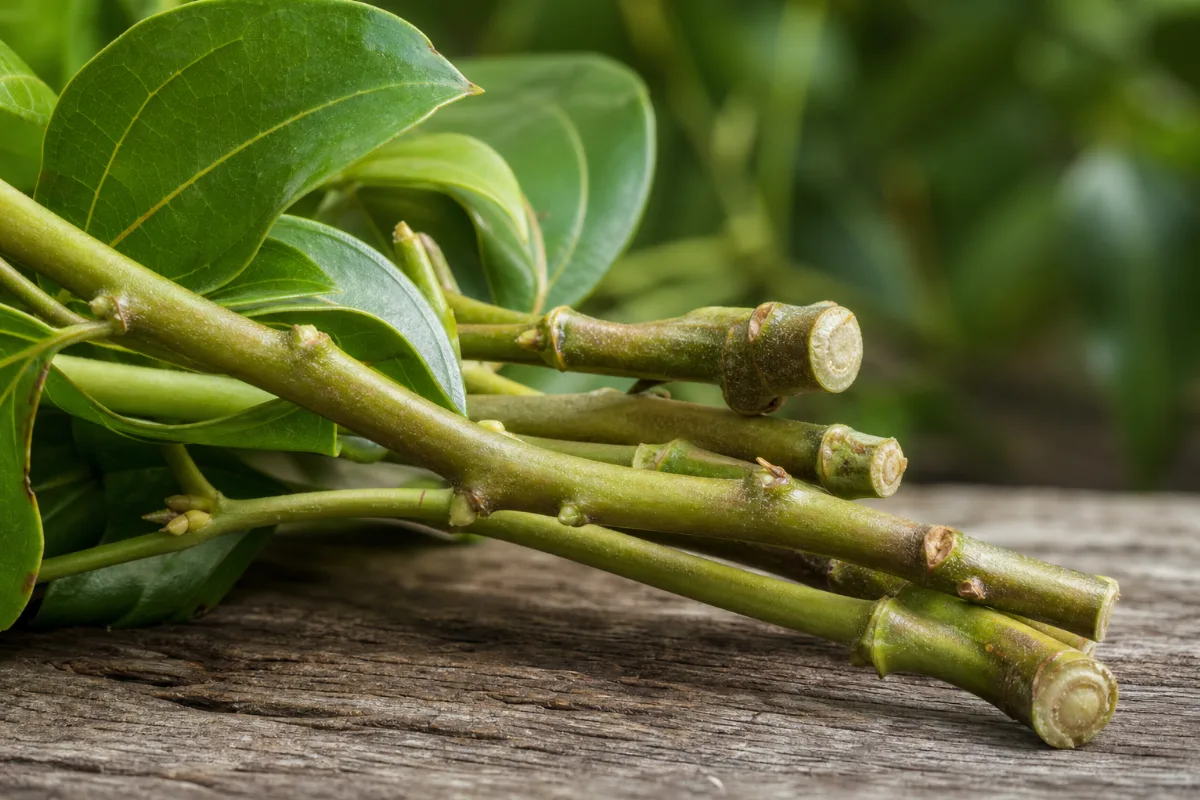
Herbs & Botanicals · Traditional Chinese warming herb
Cassia twig
Cinnamomum aromaticum (also written C. cassia) · also called Cinnamon twig, gui zhi, Cinnamomi ramulus
Cassia twig, or gui zhi, is the young twig of the Chinese cassia tree, used in Chinese medicine for colds with chills, aching joints and poor circulation. It is a main herb in Gui Zhi Tang and other classic formulas. All the human trials we found tested multi-herb formulas, mostly for period pain, so the evidence for the twig itself is thin. Cassia contains coumarin, which can harm the liver in sensitive people; ask a doctor first if you have liver disease, are pregnant or take blood thinners.
General information, not medical advice. Last substantive update · Not medically reviewed. A named clinician has not signed off on this page. How this page is made
About Cassia twig
Cassia twig (gui zhi) is a warming Chinese herb for colds, joint pain and circulation. Human trials only test formulas that contain it, mostly for period pain, with low to very low certainty. Cassia contains coumarin, a liver caution; ask a doctor if you have liver disease, are pregnant or take blood thinners.
What it is
Gui zhi is the dried young twig of the Chinese cassia tree, a member of the laurel family. The name Cinnamomum cassia is used in many sources, while GBIF records the accepted name as Cinnamomum aromaticum; databases disagree, so labels can be confusing.
It is a different part from cinnamon bark (rou gui) and a different plant from cassia seed. Its main compounds include cinnamaldehyde, cinnamic acid, tannins and some coumarin. A Chinese comparison found twig and bark share compound types but differ in amounts.
What makes it distinctive
In traditional Chinese medicine the twig is a 'warm' herb used for colds with chills and for aching joints, while the bark is 'hot' and used differently. It is the lead herb in Gui Zhi Tang and appears in many formulas such as Guizhi Fuling.
Its chemistry also differs from bark: in one comparison, coumarin and cinnamaldehyde showed higher in bark, and cinnamic acid higher in twig. Research on cinnamon bark should not be assumed to apply to the twig.
Historical and current uses
Traditional uses are for early colds, joint and limb pain, poor circulation and painful periods. Modern research mostly tests whole formulas in China, not the twig alone.
For the bark and kitchen spice, see the Cinnamon page.
What the research shows
The best-studied use is period pain with the five-herb Guizhi Fuling formula. A 128-woman placebo-controlled trial found less pain, and a 2026 analysis of 14 trials found more women reported relief but an inconclusive average pain score. A review of 38 poor-quality trials suggests the formula may add to a drug for fibroids. A 2017 review of 13 trials reports a three-herb decoction helped rheumatoid arthritis symptoms, but gives no numbers.
None of these tests the twig alone. Blood sugar findings come from cinnamon in general, mostly bark. For the main traditional uses, colds, joint pain and circulation, we found no controlled trial.
At a glance
Traditional uses history, not proof
- Early colds with chills and no sweating, as the main herb in Gui Zhi Tang
- Joint and limb pain, especially pain that feels worse in the cold
- Poor circulation and cold hands and feet, in Chinese medicine terms 'warming the channels'
- Painful periods and lower-belly masses, as part of Guizhi Fuling formula
Studied for research
- Period pain: low certainty, in a five-herb formula
- Uterine fibroids: very low certainty, in a five-herb formula
- Rheumatoid arthritis: very low certainty, in a three-herb decoction
- Colds, joint pain and circulation: insufficient, no trial of the twig alone
- Blood sugar: low certainty, for cinnamon in general, not the twig
Main compounds
- Cinnamaldehyde
- Cinnamic acid
- Coumarin (less than bark by relative amount, but not quantified)
- Tannins such as proanthocyanidins
Common forms
- Dried sliced twig for decoction
- Multi-herb pills and capsules
- Extracts and capsules (species and part often not stated)
Research links: Trial: Guizhi Fuling Wan for period pain (2023) · Review: Cinnamomi ramulus traditional uses and chemistry (2020) · BfR authors: coumarin risk assessment · NCCIH: Cinnamon · Research Library · Genes & Biomarkers Library
The plant and its history
- Accepted scientific name
- Cinnamomum aromaticum Nees (also written Cinnamomum cassia)
- Naming authority
- GBIF accepts Cinnamomum aromaticum Nees (key 3033982) and lists Cinnamomum cassia as a synonym; checked 2026-10-25.
- Synonyms
- Cinnamomum cassia (L.) J.Presl (as used in Chinese and many other sources)
- Common names
- Cassia twig (English); Cinnamon twig (English); Gui zhi (Chinese (pinyin)); Cinnamomi ramulus (Latin pharmacy name)
- Botanical family
- Lauraceae (laurel family)
- Classification
- Plantae > Laurales > Lauraceae > Cinnamomum > Cinnamomum aromaticum
- Native range
- Southern China and Southeast Asia (as commonly stated); not verified in a source we read.
- Habitat
- Not verified.
- What the plant looks like
- Roots: Not verified.; Stems: Young twigs are the part used; not further described in sources read.; Leaves: Not verified.; Flowers: Not verified.; Fruit: Not verified.
- Cultivation
- Not verified.
- Harvest and processing
- Traditionally young twigs are cut, dried and sliced; not verified in a source we read.
- Look-alikes and adulterants
- Name: Cinnamon bark (rou gui, cassia bark); Note: Same tree, different part; chemistry differs (see the 2012 fingerprint study).; Name: Ceylon cinnamon (Cinnamomum verum); Note: A different species, with little coumarin; see the cinnamon page.; Name: Cassia seed (Senna obtusifolia, jue ming zi); Note: A different plant with a similar name; see the cassia seed page.
- Sustainability and conservation
- Not assessed.
Traditional use and history history, not clinical proof
| Tradition or era | Documented use | Source |
|---|---|---|
| Traditional Chinese medicine | Gui zhi: a warming herb for colds with chills, joint and limb pain, and 'opening the channels'; first herb in Gui Zhi Tang and a main herb in Guizhi Fuling and Guizhi-Shaoyao-Zhimu formulas. | p31750548 |
| Modern formula trials (China, 2014 to 2026) | Trials and reviews of formulas containing the twig for period pain, fibroids and rheumatoid arthritis. | p42746361 |
Traditional use shows how a plant was used. It does not show that a supplement works or is safe today.
What is inside, and how it may work
What the plant contains and how those compounds act in cells and animals. Laboratory and animal mechanisms are not proven effects in people.
Main compounds
| Compound | Family | Where it is concentrated | Activity studied | Level of evidence |
|---|---|---|---|---|
| Cinnamaldehyde PubChem 637511 | phenylpropanoid aldehyde (volatile oil) | Twig and bark (higher in bark by relative peak area) Not given | Main volatile compound; lab antibacterial and anti-inflammatory findings; a known skin irritant. Not shown to explain any human result. 20 9 16 | Laboratory research |
| Coumarin PubChem 323 | benzopyrone | Bark more than twig by relative peak area Cassia bark ranges from not detected to about 10,000 mg/kg; twig amount not found | Liver toxicity in a sensitive subgroup; food-safety limit set by EFSA/BfR. 19 1 20 16 | Authoritative guidance |
| Cinnamic acid PubChem 444539 | phenolic acid | Higher in twig than bark by relative peak area Not given | Lab anti-inflammatory and antimicrobial findings; not shown in people. 20 9 16 | Laboratory research |
| Proanthocyanidins (for example procyanidin B2) PubChem 122738 | condensed tannins | Twig and bark Not given | Tannins are listed among the compounds of the twig; effects are lab only. 9 16 | Laboratory research |
| Other twig constituents | triterpenoid saponins, flavonoids, steroids, polysaccharides | Twig More than 121 compounds isolated in total | Reviewed in 2020; most findings are lab or animal. 9 | Laboratory research |
Mechanisms, receptors and pathways
| Target or pathway | Gene or receptor | What was found | Level |
|---|---|---|---|
| Inflammation and pain pathways (for example COX-2) | COX-2 (reported for the Guizhi Fuling formula) | Lab and animal work on the formula reports lower COX-2 activity and less tissue swelling; the twig's contribution is not isolated. 8 | Laboratory research |
| Antibacterial, antiviral, antipyretic, antiplatelet | Not applicable | A 2020 review lists these effects of twig extracts and compounds in lab and animal studies. Lab and animal only; no human proof. 9 | Laboratory research |
Absorption, metabolism and elimination
- Absorption
- Not studied for twig in the sources read.
- Distribution
- Not studied.
- Metabolism
- MSK reports lab findings that cinnamon may affect CYP450 2A6, 2C9, 2D and 3A4 handled drugs; clinical relevance unknown.
- Elimination
- Not studied.
- Bioavailability
- Unknown.
Isolated compounds versus whole extracts
Every human trial here tested a multi-herb formula; none tested twig alone or an isolated compound. Isolated cinnamaldehyde and cinnamic acid results are lab and animal only.
Nutritional composition
A medicinal herb, not a food source of nutrients.
2 low certainty2 very low certainty1 not enough evidence
What is Cassia twig good for?
The main studied uses and how strong the human evidence is. For cassia twig, every result below comes from a multi-herb formula or from cinnamon in general, so none is rated above low.
Benefits, one by one
Each card is a research question, not a promise. Tap a goal to filter. Open a card to see the studies, doses and limits.
Period pain (Guizhi Fuling formula containing the twig)
Low certaintyIn a placebo-controlled trial of 128 women, a five-herb formula that contains cassia twig reduced period pain more than placebo over six months. A 2026 pooled analysis of 14 Chinese trials found more women reported pain relief, but the average pain score result was inconclusive. The results belong to the whole formula, not to the twig alone.
2 studiesTested as capsules or pills of the five-herb formula. Amounts are not…
Studies, doses and limits
What the trials found
One placebo-controlled trial (128 women, China) and a 2026 meta-analysis (14 trials, 1280 women, all in China, short follow-up).
Results
Trial: pain fell more than with placebo (P < 0.01). Meta-analysis: pain-relief rate RR 1.62 (95% CI 1.23 to 2.14); pain score MD -1.26 (95% CI -4.21 to 1.70), inconclusive.
Effect sizes as reported
Relative risk 1.62 for pain relief; no clear difference in mean pain score.
Why this rating
Formula, not twig alone; all trials in China; large differences between trials; short follow-up; the reviewers themselves limit their confidence.
Form and dose studied
Tested as capsules or pills of the five-herb formula. Amounts are not given here; ask a doctor or pharmacist.
Who was studied
Women with primary dysmenorrhea (period pain with no known pelvic cause).
Limits
The twig cannot be separated from the other four herbs. No trial outside China. Results rely partly on 'response rates' defined by each trial.
Why researchers looked
Guizhi Fuling is a classic Chinese formula for painful periods, fibroids and related conditions, with cassia twig as the first herb.
Traditional use
In traditional Chinese medicine the twig is thought to warm and open the channels and move blood, so it appears in formulas for pain and blood stasis.
Proposed mechanism Laboratory research
Lab and animal work on the formula suggests anti-inflammatory and COX-2 effects, and the twig's cinnamaldehyde is one proposed contributor. Not shown in people.
A proposed mechanism does not show that the effect happens in people.
Adverse events were reported as mild or absent in these trials. See Safety for twig cautions in pregnancy.
Uterine fibroids (Guizhi Fuling formula, usually added to a drug)
Very low certaintyA 2014 review of 38 mostly low-quality Chinese trials found that adding the formula to the drug mifepristone shrank fibroids more than the drug alone. The authors could not draw firm conclusions. This is a formula result, not a twig result.
1 studiesFormula pills or capsules, mostly with a prescription drug. Do not co…
Studies, doses and limits
What the trials found
38 randomized trials, 3816 women, China, generally poor methodological quality.
Results
Average volume of the largest fibroids: MD -3.35 cm3 (95% CI -4.84 to -1.87; I2 93%) with formula plus mifepristone vs mifepristone alone. Dysmenorrhea symptoms improved with the formula alone (RR 2.27, 95% CI 1.04 to 4.97).
Effect sizes as reported
See results; very large differences between trials.
Why this rating
Poor trial quality, high heterogeneity, all in China, formula not twig.
Form and dose studied
Formula pills or capsules, mostly with a prescription drug. Do not combine on your own.
Who was studied
Women with fibroids.
Limits
Review is from 2013 data. Fibroid size on scans is not the same as symptom relief.
Why researchers looked
The formula is widely used in China for fibroids.
Traditional use
Used for 'masses' and blood stasis in the lower abdomen.
Proposed mechanism Laboratory research
Not established; lab and animal findings on the formula only.
A proposed mechanism does not show that the effect happens in people.
No serious adverse events were reported in the review.
Rheumatoid arthritis (GuiZhi-ShaoYao-ZhiMu decoction)
Very low certaintyA 2017 review of 13 trials of a decoction built on cassia twig, peony and anemarrhena says it was equal or better than standard drugs for some symptoms. The abstract gives no numbers, the herbs varied between trials, and a first author works for a supplement maker. This is a formula result, not twig alone.
1 studiesDecoctions with several herbs; amounts not reproduced. Do not stop ar…
Studies, doses and limits
What the trials found
13 randomized trials; comparisons were mainly with standard Western drugs, a few with placebo.
Results
The authors report 'three to six times' greater effectiveness than standard drugs for some symptoms and few adverse events in the decoction groups. No participant numbers or effect sizes are given in the abstract.
Effect sizes as reported
Not given in the abstract.
Why this rating
No numbers in the abstract, varied formulas, comparison mainly against drugs, trial quality not stated, industry-linked author, formula not twig.
Form and dose studied
Decoctions with several herbs; amounts not reproduced. Do not stop arthritis medicines to try herbs.
Who was studied
Adults with rheumatoid arthritis.
Limits
Pooled sample size and bias ratings not read.
Why researchers looked
The decoction is a classic Chinese formula for painful, swollen joints.
Traditional use
Gui zhi is used in Chinese medicine for joint pain, especially pain that feels worse with cold, and for freeing the channels.
Proposed mechanism Laboratory research
Lab and animal studies of the formula suggest anti-inflammatory effects. Not shown in these trials.
A proposed mechanism does not show that the effect happens in people.
Do not replace prescribed arthritis treatment.
Colds, joint pain and circulation (traditional use)
Not enough evidenceGui zhi is a classic Chinese herb for early colds with chills, joint aches and poor circulation, and is a main herb in Gui Zhi Tang. We found no controlled human trial of the twig alone for any of these uses, so the evidence is insufficient.
1 studiesTraditionally a dried twig boiled in a decoction, usually with other …
Studies, doses and limits
What the trials found
None found for twig alone; PubMed searches for Guizhi Tang or twig with colds returned no controlled trial.
Results
No human results.
Effect sizes as reported
Not applicable.
Why this rating
No human trial of twig alone found.
Form and dose studied
Traditionally a dried twig boiled in a decoction, usually with other herbs; amounts not given here.
Who was studied
Not applicable.
Limits
Search limited to a few PubMed queries within a fixed time budget.
Why researchers looked
Long traditional use as a 'warming' herb that releases the surface.
Traditional use
Traditional Chinese medicine classes the twig as warm and pungent, used to dispel cold and open the channels. Old texts also list cautions (see Safety).
Proposed mechanism Laboratory research
A 2020 review lists lab and animal antibacterial, antiviral, anti-inflammatory, antipyretic, analgesic and antiplatelet effects of twig extracts and compounds. Not shown in people.
A proposed mechanism does not show that the effect happens in people.
Not a replacement for care of a high fever or breathing problems.
Blood sugar (cinnamon in general, mostly bark)
Low certaintyMeta-analyses of cinnamon trials in type 2 diabetes find lower fasting glucose, but the products were mostly bark, species were often not stated, and results differ a lot between trials. NCCIH says research does not clearly support cinnamon for any condition. Twig has not been tested alone.
3 studiesCinnamon powder or extract; amounts not reproduced. If you take diabe…
Studies, doses and limits
What the trials found
A 2013 meta-analysis (10 trials, 543 people) and a 2024 meta-analysis (24 trials) of cinnamon in type 2 diabetes.
Results
2013: fasting glucose -24.59 mg/dL (95% CI -40.52 to -8.67), no significant HbA1c change. 2024: fasting blood sugar SMD -1.32 (95% CI -1.77 to -0.87) and HbA1c SMD -0.67 (95% CI -1.18 to -0.15).
Effect sizes as reported
See results; high heterogeneity in the 2013 analysis (I2 67% to 95%).
Why this rating
For cinnamon in general, not twig; species and part often unreported; large differences between trials.
Form and dose studied
Cinnamon powder or extract; amounts not reproduced. If you take diabetes medicine ask a pharmacist first.
Who was studied
Adults with type 2 diabetes.
Limits
Does not apply directly to the twig. Cassia bark also carries coumarin, see Safety.
Why researchers looked
Cinnamon is widely promoted for diabetes; cassia is the common supermarket type.
Traditional use
The twig is not traditionally a blood-sugar herb; this is a bark and spice use.
Proposed mechanism Pharmacological theory
Proposed effects on insulin signalling from lab and animal work; not shown for twig in people.
A proposed mechanism does not show that the effect happens in people.
Possible added blood sugar lowering with diabetes drugs: theory, not tested for twig.
Connections to the rest of health
How Cassia twig connects to the rest of our health knowledge graph. Every link says what kind of connection it is. A safety link (for example to the liver) is a warning, not a benefit. A study that merely mentions a topic never creates a benefit link.
Explore every connection: goals, body systems, organs, symptoms, genes
A. Wellness goals
| Connected to | Kind of connection | Evidence status | Context | Studies |
|---|---|---|---|---|
| Womens Wellness | Low certainty | Period pain (Guizhi Fuling formula containing the twig): In a placebo-controlled trial of 128 women, a five-herb formula that contains cassia twig reduced period pain more than placebo over six months. A 2026 pooled analysis of 14 Chinese trials found more women reported pain relief, but the average pain score result was inconclusive. The results belong to the whole formula, not to the twig alone. Uterine fibroids (Guizhi Fuling formula, usually added to a drug): A 2014 review of 38 mostly low-quality Chinese trials found that adding the formula to the drug mifepristone shrank fibroids more than the drug alone. The authors could not draw firm conclusions. This is a formula result, not a twig result. | 12 18 4 | |
| Joint Support | Very low certainty | Rheumatoid arthritis (GuiZhi-ShaoYao-ZhiMu decoction): A 2017 review of 13 trials of a decoction built on cassia twig, peony and anemarrhena says it was equal or better than standard drugs for some symptoms. The abstract gives no numbers, the herbs varied between trials, and a first author works for a supplement maker. This is a formula result, not twig alone. | 5 | |
| Immune Support | Traditional use | Not enough evidence | Colds, joint pain and circulation (traditional use): Gui zhi is a classic Chinese herb for early colds with chills, joint aches and poor circulation, and is a main herb in Gui Zhi Tang. We found no controlled human trial of the twig alone for any of these uses, so the evidence is insufficient. | 9 |
| Healthy Circulation | Traditional use | Not enough evidence | Colds, joint pain and circulation (traditional use): Gui zhi is a classic Chinese herb for early colds with chills, joint aches and poor circulation, and is a main herb in Gui Zhi Tang. We found no controlled human trial of the twig alone for any of these uses, so the evidence is insufficient. | 9 |
| Joint Support | Traditional use | Not enough evidence | Colds, joint pain and circulation (traditional use): Gui zhi is a classic Chinese herb for early colds with chills, joint aches and poor circulation, and is a main herb in Gui Zhi Tang. We found no controlled human trial of the twig alone for any of these uses, so the evidence is insufficient. | 9 |
| Blood Sugar Balance | Low certainty | Blood sugar (cinnamon in general, mostly bark): Meta-analyses of cinnamon trials in type 2 diabetes find lower fasting glucose, but the products were mostly bark, species were often not stated, and results differ a lot between trials. NCCIH says research does not clearly support cinnamon for any condition. Twig has not been tested alone. | 2 14 17 |
B. Body systems
| Connected to | Kind of connection | Evidence status | Context | Studies |
|---|---|---|---|---|
| Hepatic / Liver System | Documented risk | Coumarin liver risk in a sensitive subgroup; data are for cassia bark. Coumarin liver risk in sensitive people; data are for cassia bark. Preparation or compound: Coumarin (cassia) |
1 17 | |
| Reproductive system | Low certainty | Period pain in a placebo-controlled trial and a 2026 meta-analysis; formula, not twig alone. Preparation or compound: Guizhi Fuling formula (contains twig) |
12 18 | |
| Reproductive System | Biological association | Low certainty | Studied for: Period pain (Guizhi Fuling formula containing the twig) Studied for: Uterine fibroids (Guizhi Fuling formula, usually added to a drug) | 12 18 4 |
| Musculoskeletal System | Biological association | Very low certainty | Studied for: Rheumatoid arthritis (GuiZhi-ShaoYao-ZhiMu decoction) Studied for: Colds, joint pain and circulation (traditional use) | 5 9 |
| Immune System | Biological association | Not enough evidence | Studied for: Colds, joint pain and circulation (traditional use) | 9 |
| Circulatory System | Biological association | Not enough evidence | Studied for: Colds, joint pain and circulation (traditional use) | 9 |
| Endocrine System | Biological association | Low certainty | Studied for: Blood sugar (cinnamon in general, mostly bark) | 2 14 17 |
I. Biomarkers
| Connected to | Kind of connection | Evidence status | Context | Studies |
|---|---|---|---|---|
| Pain score (visual analog scale, VAS) | Biological association | Low certainty | Measured in trials: lowered. A lab change is not the same as a health benefit. | 12 18 |
| Fibroid volume on imaging | Biological association | Very low certainty | Measured in trials: lowered. A lab change is not the same as a health benefit. | 4 |
| Fasting blood glucose | Biological association | Low certainty | Measured in trials: lowered. A lab change is not the same as a health benefit. | 2 14 |
L. Active compounds
| Connected to | Kind of connection | Evidence status | Context | Studies |
|---|---|---|---|---|
| Cinnamaldehyde | Biological association | In vitro | Main volatile compound; lab antibacterial and anti-inflammatory findings; a known skin irritant. Not shown to explain any human result. Preparation or compound: Twig and bark (higher in bark by relative peak area) |
20 9 16 |
| Coumarin | Biological association | Authoritative guidance | Liver toxicity in a sensitive subgroup; food-safety limit set by EFSA/BfR. Preparation or compound: Bark more than twig by relative peak area |
19 1 20 16 |
| Cinnamic acid | Biological association | In vitro | Lab anti-inflammatory and antimicrobial findings; not shown in people. Preparation or compound: Higher in twig than bark by relative peak area |
20 9 16 |
| Proanthocyanidins (for example procyanidin B2) | Biological association | In vitro | Tannins are listed among the compounds of the twig; effects are lab only. Preparation or compound: Twig and bark |
9 16 |
| Other twig constituents | Biological association | In vitro | Reviewed in 2020; most findings are lab or animal. Preparation or compound: Twig |
9 |
Each connection is stored with the ingredient, the connected record, the kind of connection, the evidence status, the supporting studies, the preparation or compound involved, and a review date (last reviewed October 25, 2026).
Evidence at a glance: what changed in 3 lab markers
Tap a number to show only those markers. Counts are markers, not people.
The evidence
The research centre for Cassia twig. Every record here was checked against PubMed or the publisher's page; we never list a study we have not verified.
Evidence by outcome
Bars show how many studies we found for each outcome, not how well it works. People are added up across trials only (reviews are not added, to avoid double counting).
How we rate evidence
High certainty
Several well-run trials or reviews agree; further research is unlikely to change the picture much.
Moderate certainty
Good trials point the same way, but some doubt remains.
Low certainty
Small, short or inconsistent trials. The finding could change with better research.
Very low certainty
Very little or very weak human data. Treat as a possibility only.
Mixed findings
Trials or reviews disagree with each other.
Not enough evidence
Not enough human research to say either way.
Evidence against
Good research found no benefit, or found harm.
We take the reviewers' own risk-of-bias and GRADE statements where they exist, and otherwise judge from study size, design, consistency, directness and whether a product matches what is sold. Many publications do not make evidence high. Method note: We started from our existing cassia twig summary, then read the PubMed abstract of each trial and review cited, opened the NCCIH and MSK pages, and part of two open-access reviews. We checked the plant name in GBIF and NCBI Taxonomy and compounds in PubChem. Not verified: EU monograph, LiverTox, LactMed, FDA, Commission E, WHO and the EFSA coumarin opinion itself (read via a BfR-authored abstract). Certainty ratings are the compiler's reading.
Study library: every study we checked 20
| Study | Design | People | Product, dose, length | Result |
|---|---|---|---|---|
| Abraham 2010 Toxicology and risk assessment of coumarin: focus on human data Mol Nutr Food Res 54(2):228-39 · PMID 20024932 · DOI |
Review review |
Review of human and animal data on coumarin; German telephone survey of more than 1000 people | Coumarin (natural compound in cassia cinnamon) bark (cassia cinnamon as dietary source) Not reproduced here Not reproduced here · vs Not applicable |
Coumarin damages the liver in animals and in a more susceptible subgroup of people, for reasons unknown. A tolerable daily intake of 0.1 mg per kg body weight was derived from human data, matching the European Food Safety Authority (2004). Heavy consumers of cassia cinnamon may reach an intake equal to this limit. Limit of 0.1 mg/kg body weight per day (a food-safety limit, not advice) Methods, limits and fundingOutcomes: Liver toxicity, tolerable daily intake Limitations: About cassia bark and food exposure, not twig. Authors are from the German federal risk-assessment institute (BfR). Not a statement on herbal twig preparations. Funding and conflicts: Government risk-assessment authors Read: abstract |
| Allen 2013 Cinnamon use in type 2 diabetes: an updated systematic review and meta-analysis Ann Fam Med 11(5):452-9 · PMID 24019277 · DOI |
Meta-analysis |
543 Adults with type 2 diabetes; 10 randomized trials |
Cinnamon (mostly bark; species and part not separated in the abstract) bark (species not separated) Not reproduced here Not reproduced here · vs Control |
Lower fasting glucose (-24.59 mg/dL, 95% CI -40.52 to -8.67), total cholesterol, LDL cholesterol and triglycerides, and higher HDL; no significant effect on HbA1c (-0.16%, 95% CI -0.39 to 0.02). Heterogeneity was high (I2 67% to 95%). Lower fasting glucose and blood fats; HbA1c unchanged (FPG -24.59 mg/dL (-40.52 to -8.67)) Methods, limits and fundingOutcomes: Fasting glucose, HbA1c, cholesterol, triglycerides Limitations: Not twig: cinnamon in general. High heterogeneity; the authors say best amount and duration are unclear. Small trials, 4 to 18 weeks. Funding and conflicts: Not stated in the abstract Read: abstract |
| Brancheau 2015 Do cinnamon supplements cause acute hepatitis? Am J Case Rep 16:250-4 · PMID 25923145 · DOI |
Case report |
1 A 73-year-old woman who took cinnamon supplements for about 1 week while on a statin |
Cinnamon supplement (species not stated in the abstract) not stated Not reproduced here Not reproduced here · vs Not applicable |
She had abdominal pain, vomiting and diarrhea; tests confirmed hepatitis and no other cause was found. Cinnamon and statin were stopped; the statin was later restarted without problems, leading the authors to blame the combination. One case of hepatitis linked to cinnamon plus a statin Methods, limits and fundingOutcomes: Liver tests, imaging Limitations: A single case; species and amount not stated, so it cannot be tied to twig or cassia. Cause is the authors' inference. Funding and conflicts: Not stated Read: abstract |
| Chen 2014 Chinese herbal medicine Guizhi Fuling Formula for treatment of uterine fibroids: a systematic review of randomised clinical trials BMC Complement Altern Med 14:2 · PMID 24383676 · DOI |
Systematic review |
3816 Women with uterine fibroids; 38 trials, China |
Guizhi Fuling Formula (contains cinnamon twig), alone or with mifepristone twig plus four other herbs (formula) Not reproduced here Not reproduced here · vs No treatment, placebo, drugs or other Chinese patent medicines |
The formula plus mifepristone reduced fibroid volume more than mifepristone alone (for example average volume of the largest fibroids, MD -3.35 cm3, 95% CI -4.84 to -1.87; I2 93%). Dysmenorrhea symptoms improved with the formula alone (RR 2.27, 95% CI 1.04 to 4.97). No serious adverse events were reported. Smaller fibroids when added to a drug; authors could not draw firm conclusions (MD -3.35 cm3 (-4.84 to -1.87)) Methods, limits and fundingOutcomes: Fibroid volume, dysmenorrhea symptoms, adverse events Limitations: Methodological quality of the included trials was generally poor; high heterogeneity; formula not twig alone. Funding and conflicts: Not stated in the abstract Read: abstract |
| Daily 2017 Efficacy and Safety of GuiZhi-ShaoYao-ZhiMu Decoction for Treating Rheumatoid Arthritis: A Systematic Review and Meta-Analysis of Randomized Clinical Trials J Altern Complement Med 23(10):756-770 · PMID 28609129 · DOI |
Systematic review |
People with rheumatoid arthritis; 13 randomized trials | GuiZhi-ShaoYao-ZhiMu decoction (formula built on cinnamon twig, peony and anemarrhena) twig plus peony and anemarrhena (formulas varied between trials; some added herbs) Not reproduced here Not reproduced here · vs Placebo or standard Western drugs |
The authors report the decoction, with or without Western medicine, was 'three to six times more effective' than standard drugs for some symptoms, and that few adverse events were reported in the decoction groups. The abstract gives no numbers for individual outcomes or participants. Reported as equal or better than drugs for some symptoms, without numbers in the abstract Methods, limits and fundingOutcomes: Symptoms of rheumatoid arthritis, adverse events Limitations: Formulas varied between trials; mostly compared with drugs rather than placebo; trial quality and pooled sample size not given in the abstract; the formula is not the twig alone. First author is employed by a supplement manufacturer (Daily Manufacturing Inc.). Funding and conflicts: Industry-linked first author (affiliation); funding not stated in the abstract Read: abstract |
| European Medicines Agency 2026 EMA / HMPC herbal monographs: cinnamon EMA herbal medicines · Source |
Database entry review |
Not applicable | Cinnamon not applicable Not reproduced here Not reproduced here · vs Not applicable |
Not opened. We know of EU monographs for Ceylon cinnamon bark; none for cassia twig was seen. Not verified. Not applicable Methods, limits and fundingOutcomes: Regulatory status Limitations: Not read. Funding and conflicts: Not applicable Read: not-found |
| GBIF Secretariat 2026 GBIF backbone: Cinnamomum cassia and Cinnamomum aromaticum GBIF species API · Source |
Database entry review |
Not applicable | Name check not applicable Not reproduced here Not reproduced here · vs Not applicable |
GBIF accepts Cinnamomum aromaticum Nees (key 3033982, Lauraceae, exact match) and lists 'Cinnamomum cassia' as a synonym of it (record 101381222). It also holds an accepted record 'Cinnamomum cassia Siebold' (key 104813361). Checked 2026-10-25. Not applicable Methods, limits and fundingOutcomes: Accepted name Limitations: The name has a tangled history; a pharmacopoeia was not read. Funding and conflicts: Public database Read: api |
| Gao 2022 The Multiple Pharmacologic Functions and Mechanisms of Action of Guizhi Fuling Formulation Evid Based Complement Alternat Med 2022:6813421 · PMID 35529925 · DOI |
Narrative review review |
Not applicable: review of a five-herb formula (Cinnamomi Ramulus, peony, moutan, peach kernel, poria) | Guizhi Fuling Formulation twig as one of five herbs Not reproduced here Not reproduced here · vs Not applicable |
The authors say clinical applications are 'relatively fragmented' and mechanisms uncertain. They list uses (dysmenorrhea, fibroids, endometriosis, others) and mostly lab and animal mechanisms. The pages read do not credit the twig itself. Not applicable Methods, limits and fundingOutcomes: Clinical uses and mechanisms of the formula Limitations: Read in part from the open full text; a review of a formula, not of the twig. No funding; authors declare no competing interests. Funding and conflicts: None declared Read: full-text-partial |
| Liu 2020 The traditional uses, phytochemistry, pharmacology and toxicology of Cinnamomi ramulus: a review J Pharm Pharmacol 72(3):319-342 · PMID 31750548 · DOI |
Narrative review review |
Not applicable: review of twig chemistry, lab, animal and traditional literature | Cinnamomi ramulus (gui zhi), cinnamon twig twig Not reproduced here Not reproduced here · vs Not applicable |
More than 121 compounds isolated (volatile oil, organic acids, triterpenoid saponins, coumarins, tannins, flavonoids, steroids, polysaccharides). It reviews antibacterial, anti-inflammatory, antiviral, antitumour, antipyretic, analgesic, antidiabetic and antiplatelet effects, mostly from lab and animal work. It says more toxicology studies are needed before clinical trials. Not applicable Methods, limits and fundingOutcomes: Traditional uses, chemistry, pharmacology, toxicology Limitations: A narrative review; most findings are from cells and animals; the abstract says nothing about human trials of twig alone. Funding and conflicts: Not stated Read: abstract |
| Liu 2021 A review: the botany, ethnopharmacology, phytochemistry, pharmacology of Cinnamomi cortex RSC Advances 11:27461 · Source · DOI |
Narrative review review |
Not applicable | Cinnamomi cortex (bark) bark Not reproduced here Not reproduced here · vs Not applicable |
In traditional Chinese medicine, people with a bleeding tendency or who are pregnant should use the bark with caution, and old texts list pregnancy and 'excessive internal heat' among its prohibitions. Not applicable Methods, limits and fundingOutcomes: Traditional use and cautions Limitations: About the bark, not the twig; the passage on cautions concerns the bark. The traditional texts are summarised second-hand. Funding and conflicts: Not stated Read: full-text-partial |
| LiverTox 2026 LiverTox (NIH): cinnamon or cassia twig NCBI Bookshelf · Source |
Database entry review |
Not applicable | Cinnamon, cassia twig not applicable Not reproduced here Not reproduced here · vs Not applicable |
Not found: an attempt to open the Bookshelf page returned a bot check, and a Bookshelf search did not show a clear cinnamon or cassia twig entry. Not proof that none exists. Not applicable Methods, limits and fundingOutcomes: Liver injury entry Limitations: Not read. Funding and conflicts: Not applicable Read: not-found |
| Luo 2023 Effect of Guizhi Fuling Wan in primary dysmenorrhea: A randomized controlled trial J Ethnopharmacol 307:116247 · PMID 36746293 · DOI |
Controlled trial |
128 Women with primary dysmenorrhea of the 'heat-burning blood-stasis' type, Yichang, China |
Guizhi Fuling Wan (five-herb formula that contains cinnamon twig) twig plus peony, moutan bark, peach kernel and poria (formula) Not reproduced here Not reproduced here · vs Placebo |
Pain fell significantly more with the formula than placebo in both the full and per-protocol analyses (P < 0.01), as did menstrual symptom, anxiety and traditional-syndrome scores. Depression score did not differ. 121 of 128 finished. No serious adverse events were seen. Less period pain than placebo; the abstract gives no mean differences or confidence intervals Methods, limits and fundingOutcomes: Change in pain (VAS) from baseline to month 6; Cox Menstrual Symptom Scale; anxiety and depression scores Limitations: Result belongs to the five-herb formula, not to the twig. One small single-region trial in one traditional syndrome type; self-rated pain; the abstract does not say who funded it. Funding and conflicts: Authors declare no competing interests Read: abstract |
| Memorial Sloan Kettering Cancer Center 2021 Cinnamon (Memorial Sloan Kettering integrative medicine herb page) MSK About Herbs · Source |
Database entry review |
Not applicable | Cinnamon (several Cinnamomum species) bark Not reproduced here Not reproduced here · vs Not applicable |
Says lab studies suggest cinnamon may raise side effects of drugs handled by CYP450 2A6, 2C9, 2D and 3A4 (clinical relevance not determined); that taken with statins it has been reported to cause hepatitis; that animal studies show it can raise levels of pioglitazone; that it may lower blood glucose and cholesterol although evidence is mixed; and that it may theoretically lengthen prothrombin time. Not applicable Methods, limits and fundingOutcomes: Interactions and safety Limitations: General cinnamon, not twig. The page cites its own references; we did not open them. Funding and conflicts: Cancer centre Read: full-page |
| Moridpour 2024 The effect of cinnamon supplementation on glycemic control in patients with type 2 diabetes mellitus: An updated systematic review and dose-response meta-analysis of randomized controlled trials Phytother Res 38(1):117-130 · PMID 37818728 · DOI |
Meta-analysis |
Adults with type 2 diabetes; 24 randomized trials | Cinnamon supplements (species and part not stated in the abstract) not stated Not reproduced here Not reproduced here · vs Control |
Lower fasting blood sugar (SMD -1.32, 95% CI -1.77 to -0.87), HOMA-IR and HbA1c (SMD -0.67, 95% CI -1.18 to -0.15); insulin level not changed significantly. Lower blood sugar markers; the authors call it a possible add-on (SMD -1.32 (-1.77 to -0.87)) Methods, limits and fundingOutcomes: Fasting blood sugar, insulin resistance (HOMA-IR), HbA1c, insulin Limitations: Not twig: cinnamon in general, species and part not stated. The abstract gives no heterogeneity or risk-of-bias figures. NCCIH says the cinnamon literature is hard to interpret because species and part are often unreported. Funding and conflicts: Not stated in the abstract Read: abstract |
| NCBI 2026 NCBI Taxonomy: Cinnamomum cassia (taxid 230708) NCBI Taxonomy esummary · Source |
Database entry review |
Not applicable | Name check not applicable Not reproduced here Not reproduced here · vs Not applicable |
The search term 'Cinnamomum cassia' returns taxid 230708, which NCBI currently records as Neolitsea cassia (status active). So databases disagree about this name; the commercial Chinese cassia is usually called C. aromaticum or C. cassia. Not applicable Methods, limits and fundingOutcomes: Name status Limitations: Name check only. Funding and conflicts: Public database Read: api |
| NCBI PubChem 2026 PubChem compound records: cinnamaldehyde (CID 637511), coumarin (CID 323), cinnamic acid (CID 444539), procyanidin B2 (CID 122738) PubChem REST name lookup · Source |
Database entry review |
Not applicable | Compound ID check not applicable Not reproduced here Not reproduced here · vs Not applicable |
CIDs returned by exact name lookup on 2026-10-25. Not applicable Methods, limits and fundingOutcomes: Compound identifiers Limitations: Identifier check only. Twig content of each compound was not checked. Funding and conflicts: Public database Read: api |
| National Center for Complementary and Integrative Health 2024 Cinnamon (NCCIH, NIH) NCCIH health page · Source |
Database entry review |
Not applicable | Cinnamon: Ceylon (C. verum) and cassia (C. aromaticum, also called C. cassia), bark bark Not reproduced here Not reproduced here · vs Not applicable |
Says research does not clearly support cinnamon for any health condition and that studies often do not say which species or part was used. Cassia contains coumarin and liver interactions have been reported; some cassia products contain high levels; prolonged use could be an issue for sensitive people such as those with liver disease. Some topical cinnamon oil or powder may cause skin irritation or contact dermatitis. Larger amounts of Ceylon cinnamon in pregnancy are considered unsafe; little is known about larger amounts of either type while breastfeeding. Not applicable Methods, limits and fundingOutcomes: Evidence, safety Limitations: About bark and spice, not twig. Funding and conflicts: Public agency Read: full-page |
| Qiu 2026 Anti-Dysmenorrhea Effects and Safety of Guizhi Fuling Capsules for Primary Dysmenorrhea: A Systematic Review and Meta-Analysis of Randomized Controlled Trials J Pain Res 19:631424 · PMID 42746361 · DOI |
Systematic review |
1280 Women with primary dysmenorrhea; 14 trials, all in China, mostly three menstrual cycles |
Guizhi Fuling Capsules (five-herb formula containing cinnamon twig), alone or added to usual medicines twig plus four other herbs (formula) Not reproduced here Not reproduced here · vs Placebo or conventional medicines |
Higher trial-defined pain-relief rate (RR 1.62, 95% CI 1.23 to 2.14; 11 trials, 1014 women) and total effective rate (RR 1.42, 95% CI 1.17 to 1.73). The pooled pain-score (VAS) result was inconclusive (MD -1.26, 95% CI -4.21 to 1.70; 3 trials). Adverse events were generally mild in 4 trials with safety data. The authors say confidence is limited. Better 'response' rates, but no clear change in average pain score (RR 1.62 (1.23-2.14)) Methods, limits and fundingOutcomes: Pain-relief rate, total effective rate, pain score (VAS), adverse events Limitations: Large differences between trials (I2 62% to 98%); all trials in China, short follow-up, incomplete reporting. The formula is not the twig alone. Funding and conflicts: Authors declare no competing interests (abstract) Read: abstract |
| Woehrlin 2010 Quantification of flavoring constituents in cinnamon: high variation of coumarin in cassia bark from the German retail market and in authentic samples from Indonesia J Agric Food Chem 58(19):10568-75 · PMID 20853872 · DOI |
Lab analysis lab |
47 47 cinnamon powder samples from German shops, stick samples, and bark from five Indonesian trees |
Cassia cinnamon bark (powders and sticks) bark Not reproduced here Not reproduced here · vs Not applicable |
Cassia cinnamon had high coumarin levels. Levels varied hugely, from below the detection limit to about 10,000 mg/kg in sticks from two packages. No coumarin was found in bark from two trees, yet one tree varied widely within itself. Coumarin in cassia varies enormously, even within one tree Methods, limits and fundingOutcomes: Coumarin, cinnamaldehyde, cinnamic acid, cinnamyl alcohol and eugenol by HPLC Limitations: Bark, not twig. Small sample of trees. Funding and conflicts: Government institute authors (BfR) Read: abstract |
| Yuan 2012 [Study on fingerprints of chemical constituents of cinnamomi ramulus and cinnamomi cortex] Zhongguo Zhong Yao Za Zhi 37(19):2917-21 · PMID 23270234 |
Lab analysis lab |
Chemical analysis of twig and bark samples (Chinese-language paper) | Cinnamomi Ramulus (twig) compared with Cinnamomi Cortex (bark) twig and bark Not reproduced here Not reproduced here · vs Bark |
Twig and bark have similar compound types. In relative peak areas, cinnamyl alcohol and cinnamic acid were higher in twig; coumarin, cinnamaldehyde and 2-hydroxycinnamaldehyde were higher in bark. The ratio of cinnamaldehyde to cinnamic acid separated most twig samples (below 23) from bark (above 23). Twig shows a lower relative coumarin signal than bark in this analysis Methods, limits and fundingOutcomes: HPLC chemical fingerprints Limitations: Relative peak areas only: no coumarin amount in mg per kg is given, so safe levels cannot be inferred. Sample numbers and species are not in the abstract. Funding and conflicts: Not stated Read: abstract |
What we do not know yet
- No controlled human trial of cassia twig alone for colds, joint pain or circulation.
- No coumarin amount for cassia twig itself; bark data only.
- No twig-specific pregnancy, breastfeeding or interaction study.
- No EU monograph, LiverTox, LactMed or Chinese Pharmacopoeia entry read.
- The 'yin deficiency with heat' caution is traditional teaching, not verified in a source we read.
How new research is added
New studies are found by a saved PubMed search and reviewed before the page is updated.
Lab markers
What changed in blood or saliva tests during trials. A changed number is not the same as feeling or being healthier, and we give no "normal ranges".
Other 3
Pain score (visual analog scale, VAS)
Lowered in trials
A line from 'no pain' to 'worst pain' where the person marks how bad it is.
Low certaintyResults and what it means
Why it was measured
Main outcome of the period-pain trial.
Statistical vs. clinical meaning
Self-rated pain. The two sources point different ways.
Safety implication
No serious events reported in the trial.
| Study | Result | People | Product |
|---|---|---|---|
| 12 | VAS pain fell significantly more with the formula than placebo from baseline to month 6 (P < 0.01) in the full and per-protocol analyses. | 128 women (121 finished), primary dysmenorrhea, China | Guizhi Fuling Wan vs placebo |
| 18 | Pooled VAS from 3 trials (295 women) was inconclusive: MD -1.26 (95% CI -4.21 to 1.70; I2 98%). | Women with primary dysmenorrhea | Guizhi Fuling Capsules, alone or added to usual medicines |
Fibroid volume on imaging
Lowered in trials
The size of fibroids measured on an ultrasound scan.
Very low certaintyResults and what it means
Why it was measured
Common outcome in the fibroid trials.
Statistical vs. clinical meaning
A scan measure; symptom relief was not the main measure.
Safety implication
No serious adverse events reported.
| Study | Result | People | Product |
|---|---|---|---|
| 4 | Average volume of the largest fibroids was smaller by 3.35 cm3 (95% CI -4.84 to -1.87; I2 93%) with formula plus mifepristone than with mifepristone alone. | Women with fibroids, 38 trials | Guizhi Fuling Formula plus mifepristone vs mifepristone |
Fasting blood glucose
Lowered in trials
Blood sugar measured after at least 8 hours without food.
Low certaintyResults and what it means
Why it was measured
Standard measure of blood sugar control in the cinnamon trials.
Statistical vs. clinical meaning
A lab marker; the two meta-analyses differ on HbA1c.
Safety implication
Watch for low blood sugar if combined with diabetes medicines (theory).
| Study | Result | People | Product |
|---|---|---|---|
| 2 | Fasting plasma glucose -24.59 mg/dL (95% CI -40.52 to -8.67); HbA1c -0.16% (95% CI -0.39 to 0.02), not significant. | 543 adults with type 2 diabetes, 10 trials | Cinnamon (mostly bark) vs control |
| 14 | Fasting blood sugar SMD -1.32 (95% CI -1.77 to -0.87); HbA1c SMD -0.67 (95% CI -1.18 to -0.15). | Adults with type 2 diabetes, 24 trials | Cinnamon supplements vs control |
Safety
What studies and official sources say about side effects, medicines and who should check first. Each point shows what kind of evidence it comes from.
Main points to know 7
- Coumarin: a liver caution for cassia products. Cassia cinnamon contains coumarin, which can harm the liver in a sensitive subgroup of people. A German risk-assessment review sets a food-safety limit (the tolerable daily intake) of 0.1 mg per kg body weight, the same as the European Food Safety Authority's 2004 value, and notes heavy cassia eaters can reach it. Coumarin in cassia bark varies enormously, from none to about 10,000 mg/kg. A Chinese comparison found a lower relative coumarin signal in twig than in bark, but gave no amounts, so we cannot say how much a twig product contains. People with liver disease should ask a doctor first. Authoritative guidance 1 19 20 17
- Pregnancy: traditional caution. Traditional Chinese texts advise caution in pregnancy and with 'excessive internal heat' for the related bark. We found no twig-specific pregnancy study or regulator statement. NCCIH says larger amounts of Ceylon cinnamon are considered unsafe in pregnancy and little is known about larger amounts of either type in breastfeeding. Avoid medicinal amounts unless a qualified practitioner advises it. Traditional use 10 17
- Bleeding tendency and blood thinners. Traditional sources advise caution with a bleeding tendency. MSK says cinnamon may in theory lengthen prothrombin time (a clotting test), and a 2020 review lists antiplatelet effects of twig in lab work. Coumarin is also chemically related to the family of blood-thinner drugs, but plant coumarin is not the same as warfarin and no interaction study with twig was found. Tell your doctor or pharmacist if you take warfarin, other anticoagulants or aspirin. Pharmacological theory 13 9 10
- Blood sugar and statin medicines. MSK says cinnamon may lower blood sugar (evidence mixed) and animal studies show it can raise levels of the diabetes drug pioglitazone. One case report links cinnamon supplements plus a statin to hepatitis. None of this is specific to twig. Case report 13 3
- 'Yin deficiency with heat' and fever. In traditional Chinese medicine, gui zhi is a warming herb and is not used for people with a heat pattern (such as 'yin deficiency with heat' or fever without chills). We could not open a source that states this, so it is recorded as traditional teaching and NOT verified. Traditional use 10
- Skin irritation from concentrated cinnamon compounds. NCCIH says some topical cinnamon oil or powder may cause skin irritation or contact dermatitis. Cinnamaldehyde, a main twig compound, is the best-known cause. Do not put concentrated oil or extract on skin or in the mouth undiluted. Authoritative guidance 17 16
- Not the same as cassia seed or cinnamon bark. Cassia twig (Cinnamomum, gui zhi) is a different part from cinnamon bark (rou gui) and a different plant from cassia seed (Senna, jue ming zi). Cautions and results do not carry across; check the label for species and part. Authoritative guidance 7 17
Side effects 4
| Effect | How often | Severity and recovery | Evidence |
|---|---|---|---|
| Liver injury linked to coumarin (cassia cinnamon) Sensitive subgroup of people; cause unknown. Data are for cassia bark and coumarin as a drug. | Not established | serious Not reported for twig | Authoritative guidance 1 17 |
| Hepatitis with cinnamon supplement plus statin (one case) Species and amount not stated. | 1 case | moderate Recovered after both were stopped; statin restarted without trouble | Case report 3 |
| Skin irritation or contact dermatitis (topical cinnamon oil or powder) General cinnamon statement. | Not established | mild Not reported | Authoritative guidance 17 |
| Side effects in formula trials The period-pain trial saw no serious adverse events; the 2026 meta-analysis called adverse events generally mild in 4 trials. These are five-herb formulas, not twig alone. | Not reported in the abstracts in numbers | unknown Not reported | Controlled trial 12 18 5 |
Liver
The liver concern is coumarin in cassia cinnamon, shown mainly for bark and for coumarin as a drug. One case of hepatitis occurred with a cinnamon supplement plus a statin. Twig's coumarin level was not found. No LiverTox page could be opened. 3 1 11
How often. Unknown for twig.
Monitoring. No agency advice for twig found. Anyone with liver disease or taking liver-affecting medicines should ask a doctor first.
- .
This is a safety connection. It is not evidence that Cassia twig supports liver health.
Medicines and supplements 4
| With | Why it matters | Importance | Evidence | What to do |
|---|---|---|---|---|
| Statins and other medicines handled by liver enzymes (CYP2A6, 2C9, 2D, 3A4) drug | Lab studies suggest cinnamon may raise side effects of such drugs; one case of hepatitis with a statin. | Unknown for twig | Case report Very low certainty 13 3 | Ask a pharmacist before combining. |
| Warfarin, other anticoagulants and antiplatelet medicines (aspirin) drug | MSK: may in theory lengthen prothrombin time; twig has antiplatelet effects in lab studies. Not tested in people. | Unknown | Pharmacological theory Not enough evidence 13 9 | Tell your doctor; do not start without advice if you take blood thinners. |
| Diabetes medicines (pioglitazone, insulin and others) drug | Cinnamon may lower blood sugar; animal data show higher pioglitazone levels. | Unknown for twig | Pharmacological theory Not enough evidence 13 2 | Check blood sugar more often and ask a pharmacist. |
| Other liver-toxic medicines or alcohol drug | Added liver load from coumarin (theory). | Unknown | Pharmacological theory Not enough evidence 1 | Avoid combining without medical advice. |
Who should check first 6
| Situation | Advice | Evidence |
|---|---|---|
| Liver disease or taking liver-affecting medicines | Ask a doctor first. | Authoritative guidance 17 1 |
| Pregnancy | Traditional caution; avoid medicinal amounts unless advised by a qualified practitioner. | Traditional use 10 17 |
| Breastfeeding | Little is known about larger amounts; avoid unless advised. | Authoritative guidance 17 |
| Bleeding disorders, anticoagulant use, or surgery coming up | Ask a doctor; theoretical effect on clotting. | Pharmacological theory 13 10 |
| Heat patterns / 'yin deficiency with heat' (traditional) | Traditionally avoided; not verified in a source we read. | Traditional use 10 |
| Children | No pediatric safety data for twig found; ask a pediatrician. | Insufficient |
Overdose, product quality and regulators
Summary. No human toxicity study of cassia twig was found; a 2020 review says more toxicology is needed. Coumarin is the known liver concern for cassia cinnamon.
Animal. Not read.
Human doses studied. Not reproduced.
High dose or long term signals. NCCIH: prolonged use of cassia could be an issue for sensitive people, such as those with liver disease.
Overdose response. Not reported.
Genotoxicity. The BfR review says a genotoxic mechanism for coumarin was considered possible but discounted by EFSA in 2004.
Toxic plant parts. Coumarin is found in cassia bark; twig content is not quantified in the sources read.
Coumarin levels in cassia vary widely between samples, even within one tree. Twig herbs may be sold without a stated species or part.
. Coumarin in cassia cinnamon from German shops and Indonesian trees ranged from below detection to about 10,000 mg/kg in sticks. 19
. NCCIH notes studies and products often do not state species or plant part. 17
| Body | Action | Date |
|---|---|---|
| NCCIH (NIH) (USA) | Cinnamon page: research does not clearly support use for any condition; coumarin and liver caution for cassia; skin irritation caution for topical oil or powder. Bark and spice, not twig. source | 2024 |
When to get medical help
- Yellow skin or eyes, dark urine, pale stools, or severe belly pain after using cassia or cinnamon products.
- Unusual bruising, nosebleeds or prolonged bleeding if you take blood thinners.
- Hives, face or throat swelling, or trouble breathing.
- Vaginal bleeding or cramping during pregnancy.
Stop the supplement and contact a clinician or emergency service. In the US, Poison Control is 1-800-222-1222.
General information only, not medical advice. Ask a clinician or pharmacist before use, especially with medicines, in pregnancy or with a health condition. See the Natural Remedy Safety guide.
Frequently asked questions
What is cassia twig (gui zhi) used for?
In Chinese medicine it is used for early colds with chills, aching joints, poor circulation and painful periods, usually in formulas such as Gui Zhi Tang. The research does not test the twig alone.
Is there proof it helps colds?
No. We found no controlled human trial of the twig for colds. Supporting findings come from lab and animal studies.
Does it help period pain?
What about joint pain and arthritis?
A 2017 review of 13 trials of a three-herb decoction reports benefit for rheumatoid arthritis symptoms, but gives no numbers and has an industry-linked author. It is a very-low-certainty result and not a substitute for prescribed arthritis treatment.
Is cassia twig the same as cinnamon?
Is it the same as cassia seed?
No. Cassia seed (jue ming zi) comes from a Senna plant, a different species with a different use.
Why is coumarin a concern?
Is it safe in pregnancy?
Can I take it with blood thinners or diabetes medicine?
Who should avoid it?
Can it irritate the skin?
NCCIH says some topical cinnamon oil or powder may cause irritation or contact dermatitis. Cinnamaldehyde is a main twig compound; do not use concentrated oil undiluted.
Explore by health goal
Womens WellnessJoint SupportImmune SupportHealthy CirculationBlood Sugar Balance
Editorial transparency
- Written by
- AlternativeMed editorial team. Research compiled with AI assistance, then checked against PubMed records.
- Medical review
- None. This page has not been reviewed by a physician or pharmacist.
- First published
- 2026-10-25
- Last substantive update
- 2026-10-25
- How we research
- We started from our existing cassia twig summary, then read the PubMed abstract of each trial and review cited, opened the NCCIH and MSK pages, and part of two open-access reviews. We checked the plant name in GBIF and NCBI Taxonomy and compounds in PubChem. Not verified: EU monograph, LiverTox, LactMed, FDA, Commission E, WHO and the EFSA coumarin opinion itself (read via a BfR-authored abstract). Certainty ratings are the compiler's reading.
- How we rate evidence
- See "How we rate evidence" in the Evidence tab.
- Independence
- No product is promoted on this page. No affiliate links are shown.
Sources 20
Each source was opened and checked. Where we read only the abstract, it says so. The small numbers in the text point here.
- Abraham K, Wohrlin F, Lindtner O, Heinemeyer G, Lampen A. Toxicology and risk assessment of coumarin: focus on human data. Mol Nutr Food Res 54(2):228-39. 2010. PMID 20024932. DOI 10.1002/mnfr.200900281. (abstract)
- Allen RW, Schwartzman E, Baker WL, Coleman CI, Phung OJ. Cinnamon use in type 2 diabetes: an updated systematic review and meta-analysis. Ann Fam Med 11(5):452-9. 2013. PMID 24019277. DOI 10.1370/afm.1517. (abstract)
- Brancheau D, Patel B, Zughaib M. Do cinnamon supplements cause acute hepatitis?. Am J Case Rep 16:250-4. 2015. PMID 25923145. DOI 10.12659/AJCR.892804. (abstract)
- Chen NN, Han M, Yang H, et al.. Chinese herbal medicine Guizhi Fuling Formula for treatment of uterine fibroids: a systematic review of randomised clinical trials. BMC Complement Altern Med 14:2. 2014. PMID 24383676. DOI 10.1186/1472-6882-14-2. (abstract)
- Daily JW, Zhang T, Cao S, Park S. Efficacy and Safety of GuiZhi-ShaoYao-ZhiMu Decoction for Treating Rheumatoid Arthritis: A Systematic Review and Meta-Analysis of Randomized Clinical Trials. J Altern Complement Med 23(10):756-770. 2017. PMID 28609129. DOI 10.1089/acm.2017.0098. (abstract)
- European Medicines Agency. EMA / HMPC herbal monographs: cinnamon. EMA herbal medicines. 2026. (not-found)
- GBIF Secretariat. GBIF backbone: Cinnamomum cassia and Cinnamomum aromaticum. GBIF species API. 2026. (api)
- Gao J, Yang J, Lu Z, et al.. The Multiple Pharmacologic Functions and Mechanisms of Action of Guizhi Fuling Formulation. Evid Based Complement Alternat Med 2022:6813421. 2022. PMID 35529925. DOI 10.1155/2022/6813421. (full-text-partial)
- Liu J, Zhang Q, Li RL, et al.. The traditional uses, phytochemistry, pharmacology and toxicology of Cinnamomi ramulus: a review. J Pharm Pharmacol 72(3):319-342. 2020. PMID 31750548. DOI 10.1111/jphp.13189. (abstract)
- Liu S, Yang L, Zheng S, et al.. A review: the botany, ethnopharmacology, phytochemistry, pharmacology of Cinnamomi cortex. RSC Advances 11:27461. 2021. DOI 10.1039/d1ra04965h. (full-text-partial)
- LiverTox. LiverTox (NIH): cinnamon or cassia twig. NCBI Bookshelf. 2026. (not-found)
- Luo Y, Mao P, Chen P, et al.. Effect of Guizhi Fuling Wan in primary dysmenorrhea: A randomized controlled trial. J Ethnopharmacol 307:116247. 2023. PMID 36746293. DOI 10.1016/j.jep.2023.116247. (abstract)
- Memorial Sloan Kettering Cancer Center. Cinnamon (Memorial Sloan Kettering integrative medicine herb page). MSK About Herbs. 2021. (full-page)
- Moridpour AH, Kavyani Z, Khosravi S, et al.. The effect of cinnamon supplementation on glycemic control in patients with type 2 diabetes mellitus: An updated systematic review and dose-response meta-analysis of randomized controlled trials. Phytother Res 38(1):117-130. 2024. PMID 37818728. DOI 10.1002/ptr.8026. (abstract)
- NCBI. NCBI Taxonomy: Cinnamomum cassia (taxid 230708). NCBI Taxonomy esummary. 2026. (api)
- NCBI PubChem. PubChem compound records: cinnamaldehyde (CID 637511), coumarin (CID 323), cinnamic acid (CID 444539), procyanidin B2 (CID 122738). PubChem REST name lookup. 2026. (api)
- National Center for Complementary and Integrative Health. Cinnamon (NCCIH, NIH). NCCIH health page. 2024. (full-page)
- Qiu T, Wang T, Huang W. Anti-Dysmenorrhea Effects and Safety of Guizhi Fuling Capsules for Primary Dysmenorrhea: A Systematic Review and Meta-Analysis of Randomized Controlled Trials. J Pain Res 19:631424. 2026. PMID 42746361. DOI 10.2147/JPR.S631424. (abstract)
- Woehrlin F, Fry H, Abraham K, Preiss-Weigert A. Quantification of flavoring constituents in cinnamon: high variation of coumarin in cassia bark from the German retail market and in authentic samples from Indonesia. J Agric Food Chem 58(19):10568-75. 2010. PMID 20853872. DOI 10.1021/jf102112p. (abstract)
- Yuan PF, Shang MY, Cai SQ. [Study on fingerprints of chemical constituents of cinnamomi ramulus and cinnamomi cortex]. Zhongguo Zhong Yao Za Zhi 37(19):2917-21. 2012. PMID 23270234. (abstract)