Herbs & Botanicals · Herbs · African tree, vitamin C-rich fruit pulp, evidence mostly small or from animals
Baobab
Adansonia digitata L. · also called African baobab, monkey bread, pain de singe (French), baobab fruit pulp (the EU food label name)
Baobab is the large African tree whose dry, tart fruit pulp is eaten as a vitamin C-rich food and drink, whose leaves are eaten as a vegetable and whose seed oil is used on skin. Most human research is on the fruit pulp, and it is small: a few short trials in healthy adults on blood sugar after a meal, and one 12-week trial in anaemic children that found no significant effect on iron. Evidence for blood pressure, cholesterol, gut health, the leaf and the oil is from animals, lab work or observation. Take care with crude seed oil, and tell your prescriber if you use diabetes medicines.
General information, not medical advice. Last substantive update · Not medically reviewed. A named clinician has not signed off on this page. How this page is made
About Baobab
Baobab (Adansonia digitata) is a large African tree. Its dry fruit pulp is a tart, vitamin C-rich food, its leaves are eaten as a vegetable and its seed oil is used on skin; these parts are not interchangeable. Human research is small. In healthy adults, a fruit extract lowered the blood sugar rise after a meal in two small trials but not in a third, and one 12-week trial in anaemic children found no significant iron effect. Blood pressure, cholesterol, weight, gut health and the leaf rest on animal, lab or observational data. The fruit pulp has EU and US food-ingredient clearance; leaf and seed oil do not. Safety points: crude seed oil contains cyclopropene fatty acids that harmed rats; diabetes medicines may add to baobab's sugar-lowering effect in theory; oxalate content is unknown so people with kidney stones should ask a doctor; no pregnancy data exist; one anaphylaxis case is reported; and some products had moulds or were cut with cereal flour. Ask a doctor or pharmacist about amounts.
What it is
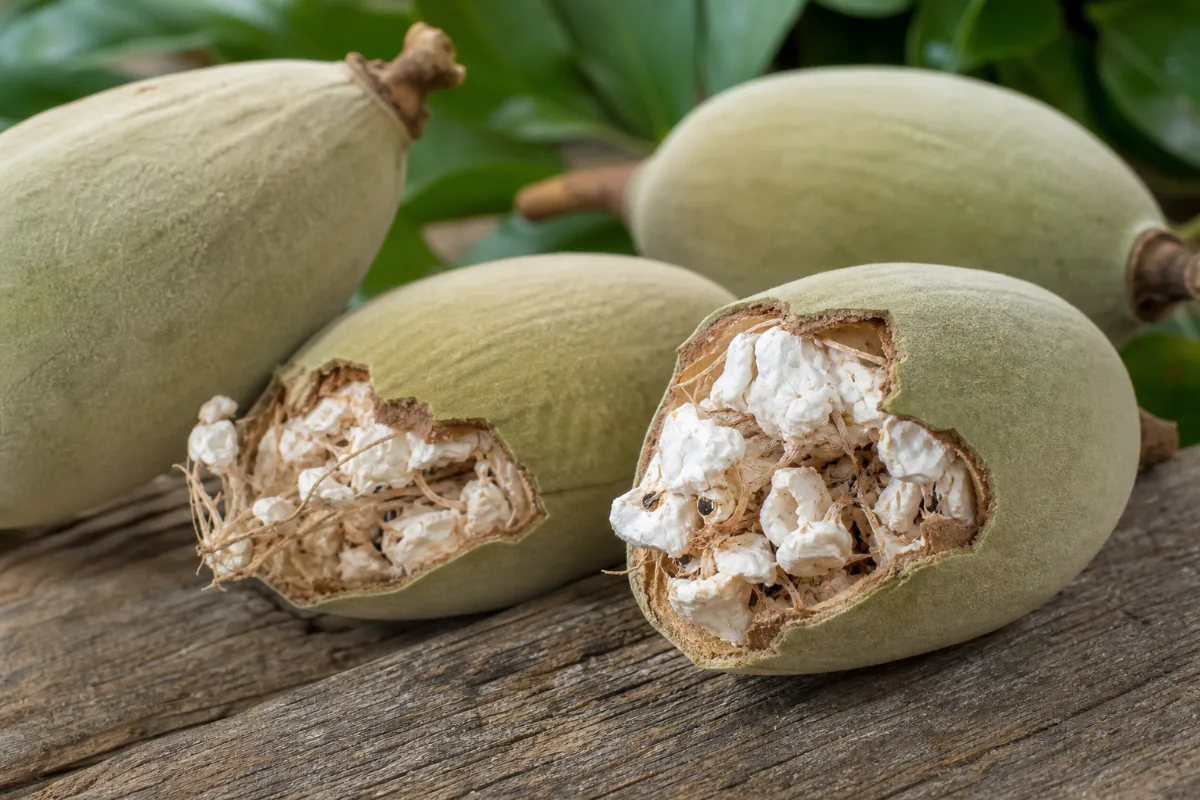
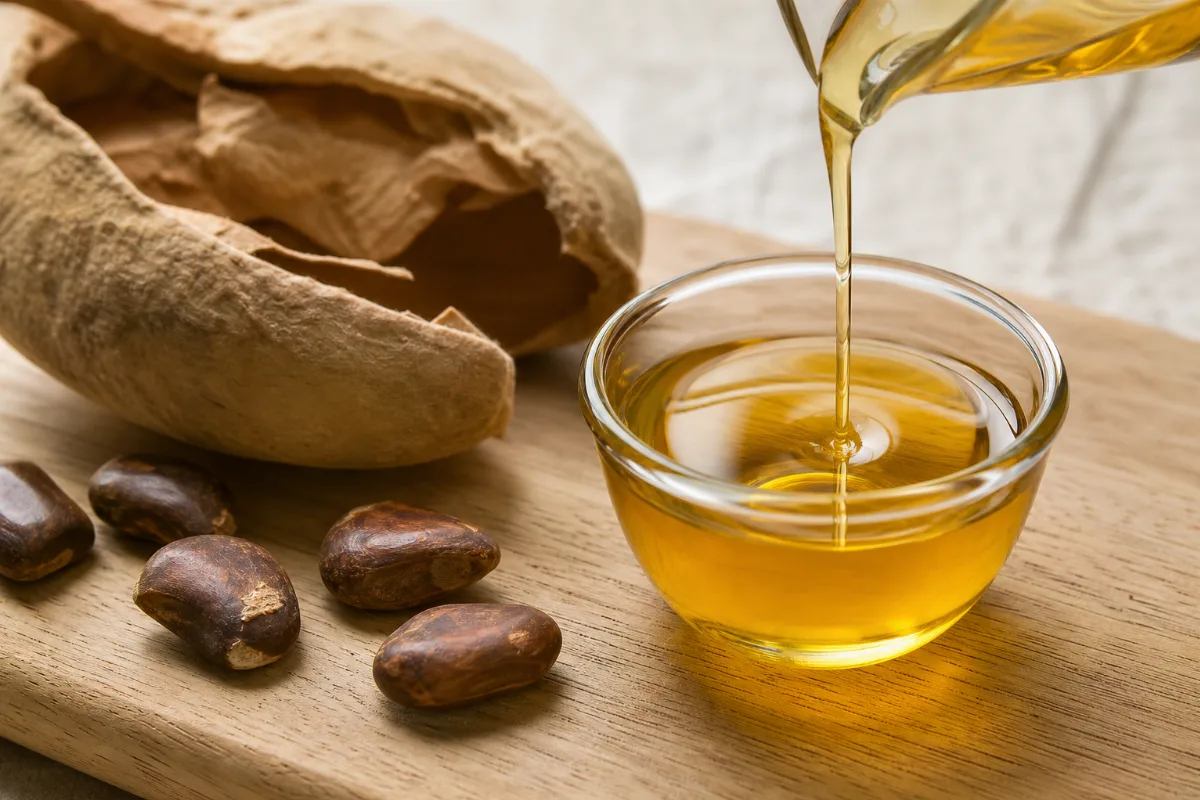
Baobab (Adansonia digitata) is the large African baobab tree, in the mallow family. Three parts are used in different ways: the dry, tart fruit pulp (eaten or stirred into drinks), the leaves (eaten as a vegetable) and the oil pressed from the seeds (used on skin).
These parts are not interchangeable. Almost all the human research is on the fruit pulp. Leaf and seed oil have little or no human research, and the seed oil has a safety issue the pulp does not.
What makes it distinctive
Baobab pulp is unusually rich in vitamin C and fibre, and it is high in polyphenols. The richest of 20 Angolan pulp samples measured nearly 300 milligrams of vitamin C per 100 grams, though amounts vary a lot by origin.
The fibre is mostly pectin-type fibre that gut bacteria ferment in lab models. The pulp also has formal food-ingredient clearance in the EU and US.
Historical and current uses
Baobab has been used across Africa for hydration, fever, cough and in diarrhoea and dysentery, and baobab oil has long been used on skin and scalp. In Senegal a drink made from the fruit ('pain de singe') is used at home for children's diarrhoea.
Today the pulp is sold as a powder for drinks, smoothies and cereal bars, and the oil is sold for cosmetics.
What the research shows
The research is thin and mostly small. In healthy adults, a pulp extract lowered the blood-sugar rise after one meal in two small trials; in a third, the extract baked into bread lowered insulin but not glucose. A 12-week trial in anaemic children found no significant change in iron markers.
For blood pressure, blood fats, weight, gut health and the leaf, the evidence is animal or lab work, or one observational comparison. A trial of baobab powder in people with obesity is planned but has no results. The best rating any use reaches here is low; the vitamin C content is the best-supported fact about baobab, and that is a nutrient measurement, not a treatment effect.
The Rita 2022 and Silva 2023 papers share authors, and two gut-model studies have industry-linked authors.
At a glance
Traditional uses history, not proof
- Fruit pulp as a food and drink across Africa; drink for children's diarrhoea in Senegal
- Leaves eaten as a vegetable
- Traditional use for hydration, fever, cough, parasites and dysentery in many African countries
- Seed oil for skin and scalp care
Studied for research
- Blood sugar after a meal, low certainty (two small trials in healthy adults, one with no glucose effect)
- Insulin after a meal, very low certainty (one 13-person study)
- Iron status, very low certainty (one null trial in children; lab data support vitamin C action)
- Cholesterol and blood fats, very low certainty (one observational study)
- Blood pressure, weight, leaf and blood sugar, gut health: animal or lab data only
Main compounds
- Vitamin C (ascorbic acid) and citric acid in the pulp
- Polyphenols including proanthocyanidins and tannins in the pulp
- Pectin-type fibre in the pulp
- Cyclopropene fatty acids (malvalic and sterculic acid) in the seed oil
Common forms
- Fruit pulp powder or extract, used in drinks (the form in nearly all trials)
- Leaves eaten as a vegetable
- Seed oil: crude oil contains cyclopropene fatty acids; refining by heat reduces them
- Foods fortified with baobab pulp; results for one product cannot be assumed for another
Research links: FDA GRAS Notice No. 273: baobab dried fruit pulp · Irish food safety authority (FSAI): baobab fruit pulp substantial equivalence opinion · Commission Decision 2008/575/EC (EUR-Lex) · Research Library · Genes & Biomarkers Library
The plant and its history
- Accepted scientific name
- Adansonia digitata L. (African baobab)
- Naming authority
- L. (Linnaeus), as returned by the GBIF Backbone (usageKey 5406695).
- Common names
- Baobab (English); Monkey bread (English (fruit; not verified in a source read)); Pain de singe (French (as used in Tal-Dia 1997))
- Botanical family
- Malvaceae (mallow family), which also includes cotton, hibiscus and okra; seed oils of this family characteristically contain cyclopropene fatty acids (Razafimamonjison 2017).
- Classification
- Plantae > Tracheophyta > Magnoliopsida > Malvales > Malvaceae > Adansonia > Adansonia digitata
- Native range
- Associated with savannah drylands of sub-Saharan Africa (Muthai 2017 abstract); pulp and leaf studies used samples from Kenya, Sudan, Malawi, Mali and Angola.
- Habitat
- Not verified beyond savannah drylands.
- What the plant looks like
- Roots: Root tubers have been analysed for minerals (Kamanula 2018, not read); not a main medicinal part here.; Stems: Large trunk with high water content (Chapotin 2006 title; not read for this file).; Leaves: Edible leaves, eaten as a vegetable; rich in calcium and protein (Chadare 2009).; Flowers: Not described in sources read.; Fruit: Large pod with dry, acidic, powdery pulp around seeds; pulp is the part authorised as a food ingredient (EU 2008; FDA GRN 273). Seeds and kernels contain oil (Chadare 2009).
- Cultivation
- Not verified from a source read.
- Harvest and processing
- Fruits are sun-dried; harvesting immature fruit and open-air drying were linked with contamination in Kenya (James 2022). Pulp is separated mechanically (FSAI).
- Look-alikes and adulterants
- Name: Other Adansonia species; Note: GBIF lists seven other accepted species (A. perrieri, A. gregorii, A. madagascariensis, A. grandidieri, A. suarezensis, A. za, A. rubrostipa). Most are Madagascan; seed fatty acid profiles differ by species group (Razafimamonjison 2017). Labels reading just 'baobab' may not name the species.; Name: Pulp powder adulterated with cereal flour; Note: Rice, maize or wheat flour is sometimes added to baobab powder (Chepngeno 2022).
- Sustainability and conservation
- Not verified. No IUCN assessment was retrieved.
The plant and the parts used
Traditional use and history history, not clinical proof
| Tradition or era | Documented use | Source |
|---|---|---|
| Africa, traditional use | Various plant parts have been used for hydration, fever, parasites, cough, sweating and in diarrhoea and dysentery in many African countries (Silva 2023, a narrative review). | p37432337 |
| Senegal, community use | The fruit ('pain de singe') is used in a local drink for diarrhoea, tested against the WHO solution in 1997. | p9827122 |
| Skin and scalp care, Nigeria and other African countries | Plant oils including baobab oil have been used for skin and scalp care for centuries (Ayanlowo 2022). | p33928725 |
| Regulatory history, European Union | Baobab dried fruit pulp was authorised as a novel food ingredient (Commission Decision 2008/575/EC, as cited by the FSAI). | s-fsai-baobab-se |
| Regulatory history, United States | FDA replied 'no questions' to GRAS notice 273 for baobab dried fruit pulp (closed 25 July 2009). | s-fda-grn273 |
| EMA/HMPC and NCCIH | No monograph or page found: NOT verified. | s-ema-hmpc-baobab |
Traditional use shows how a plant was used. It does not show that a supplement works or is safe today.
What is inside, and how it may work
What the plant contains and how those compounds act in cells and animals. Laboratory and animal mechanisms are not proven effects in people.
Main compounds
| Compound | Family | Where it is concentrated | Activity studied | Level of evidence |
|---|---|---|---|---|
| Ascorbic acid (vitamin C) PubChem 54670067 | vitamin | Fruit pulp Up to 288.9 mg/100 g in the richest Angolan pulp samples (Monteiro 2022); 40 g can cover 84 to over 100% of the reference intake of pregnant women (Chadare 2009) | Helps non-haem iron absorption; lab effect of baobab on iron similar to added ascorbic and citric acid. 22 8 1 | Laboratory research |
| Citric acid PubChem 311 | organic acid | Fruit pulp Not given | Named with ascorbic acid as a mineral absorption enhancer in baobab. 1 | Laboratory research |
| Proanthocyanidins and hydrolysable tannins | polyphenols | Fruit pulp Reported as high in the aqueous extract; values not in the abstract | Radical scavenging in the lab. 28 29 | Laboratory research |
| Catechin PubChem 9064 | flavan-3-ol | Fruit pulp Not given | Listed among baobab catechins in a review. 29 | Laboratory research |
| Pectic polysaccharides (low-methoxylated homogalacturonan) | dietary fibre | Fruit pulp High fibre: up to 56.62 g/100 g in one sample set (Monteiro 2022) | Fermented to short-chain fatty acids in lab gut models. 17 22 | Laboratory research |
| Malvalic acid PubChem 10416 | cyclopropene fatty acid | Seed oil Not given; heating at 200 C breaks most down | Inhibited fat desaturation in rat liver. 7 23 | Animal research |
| Sterculic acid PubChem 12921 | cyclopropene fatty acid | Seed oil Not given | Same effect as malvalic acid in rat liver. 7 26 | Animal research |
| Oleic acid PubChem 445639 | fatty acid | Seed oil Major fatty acid | Main fat in the oil. 26 | Laboratory research |
| Linoleic acid PubChem 5280450 | fatty acid | Seed oil Major fatty acid | Main fat in the oil. 26 | Laboratory research |
| Palmitic acid PubChem 985 | fatty acid | Seed oil Major fatty acid | Main fat in the oil. 26 | Laboratory research |
| Oxalic acid (antinutrient in leaves and seeds) PubChem 971 | organic acid | Leaf; seed Not reported for baobab in the abstracts read | Antinutrient class: oxalates and phytates dominated antinutrients across eight leafy vegetables including baobab leaf. 6 25 | Laboratory research |
Mechanisms, receptors and pathways
| Target or pathway | Gene or receptor | What was found | Level |
|---|---|---|---|
| Starch and sugar digestion enzymes | alpha-amylase, alpha-glucosidase | Pulp and leaf extracts inhibited both enzymes in the test tube; baobab extract baked into bread cut rapidly digestible starch in vitro. 10 11 | Laboratory research |
| Blood pressure control (renin-angiotensin) | ACE | Pulp and leaf extracts inhibited ACE in vitro; a pulp extract lowered ACE activity and blood pressure in hypertensive rats. 10 19 | Animal research |
| Cholesterol synthesis and fat digestion | HMG-CoA reductase; pancreatic lipase | Inhibited by pulp and leaf extracts in vitro; no effect on triglyceride build-up in a human fat-cell line. 10 | Laboratory research |
| Gut fermentation | Gut microbiome | Pulp fibre fermented to acetate, propionate and butyrate in a lab model with stool from 3 donors. 17 14 | Laboratory research |
| Mineral uptake | Dietary iron and zinc (bioaccessibility) | Baobab raised bioaccessible iron and zinc in a lab porridge model, like added vitamin C and citric acid. 1 | Laboratory research |
| Fatty acid desaturation | delta-6 and delta-5 desaturases | Cyclopropene fatty acids in fresh seed oil depressed both desaturations in rat liver and lowered arachidonic acid in membrane fats. 7 | Animal research |
Absorption, metabolism and elimination
- Absorption
- No human blood-level data for baobab compounds were found. In lab models, baobab raised the amount of iron and zinc available for absorption, and 25% baobab lowered carotenoid bioaccessibility without changing uptake into Caco-2 gut cells.
- Distribution
- No data found.
- Metabolism
- Pectic fibre is fermented by gut bacteria in lab models. Cyclopropene fatty acids changed liver enzymes in rats.
- Elimination
- No data found.
- Bioavailability
- Not established in humans for any baobab compound.
Isolated compounds versus whole extracts
Baobab's effect on iron in a lab model was about the same as adding pure ascorbic and citric acid, suggesting the pulp acts mainly through its acids rather than a unique compound. For blood sugar, the trials used whole-fruit extracts, so no single compound is established as the cause. Pulp, leaf and seed oil are different materials with different compounds and risks and should not be treated as interchangeable.
Nutritional composition
Composition varies widely by origin and sample. Reported figures: pulp vitamin C up to 288.9 mg/100 g and fibre up to 56.62 g/100 g in the richest Angolan samples (Monteiro 2022); 40 g of pulp covers 84 to over 100% of the vitamin C reference intake of pregnant women aged 19 to 30 (Chadare 2009); pulp iron ranged from 13.1 ug/g (Mali) to 57.4 ug/g (Kenya) (Muthai 2017); leaf calcium 307 to 2640 mg/100 g dry weight; seed lipid 11.6 to 33.3 g/100 g dry weight. Oxalate in baobab was not found in the sources read. About 80% of the pulp's nutritional value is carbohydrate (FSAI).
1 moderate certainty1 low certainty4 very low certainty7 not enough evidence
What is Baobab good for?
The main proposed uses and how strong the human evidence is for each. "Low" is the best rating any baobab use reached here. "Very low" and "insufficient" mean one small or observational study, or only animal and lab work, and none of these is a proven treatment for you. Almost all the human research is on the fruit pulp; leaf and seed oil are separate and far less studied. Ratings are this profile's own reading of the studies, not formal grades. Ask a doctor or pharmacist about amounts.
Benefits, one by one
Each card is a research question, not a promise. Tap a goal to filter. Open a card to see the studies, doses and limits.
Blood sugar after a meal (baobab fruit pulp extract)
Low certaintyIn two small trials in healthy adults, a drink made from baobab fruit pulp extract lowered the blood sugar rise after a glucose drink or white bread. This is a short-term effect in people without diabetes. It has not been tested over weeks or in people who take diabetes medicines, so it is not a treatment for diabetes.
6 studiesAqueous extract of fruit pulp drunk with a glucose load (Rita) or wit…
Studies, doses and limits
What the trials found
Rita 2022 (NCT05140629): 31 healthy adults had a standard glucose drink (control, n=16) or the glucose drink followed by 250 mL of baobab fruit aqueous extract (n=15). The blood-sugar area under the curve was lower in the baobab group (p=0.012) and so was the peak glucose (p=0.029). Coe 2013: baobab fruit extract drunk in 250 mL water at 18.5 g or 37 g along with white bread reduced the blood-sugar response at both doses (P<.05); fullness and energy use did not change (the number of volunteers is not in the abstract). Coe 2016: 13 healthy volunteers ate white bread with 1.88% baobab fruit extract: the blood-sugar response was NOT lower in that study (see the insulin benefit). The 2023 narrative review (Silva) covers these and animal studies but is not a graded systematic review. The 2025 Riedel trial protocol (50 adults with obesity, 45 days) confirms little long-term human data exist.
Results
Two small positive trials in healthy adults, one null result for glucose in bread, no trials in people with diabetes.
Effect sizes as reported
Rita 2022: glucose AUC p=0.012, peak p=0.029 (differences not in abstract); Coe 2013: lower response at both doses (P<.05); Coe 2016: glucose response not lower
Why this rating
Two small, short trials in healthy people point the same way, but a third small trial found no glucose effect, the extracts and amounts differ between trials and no trial lasted more than one meal. Rated low, with the caveat that it is small trials only.
Form and dose studied
Aqueous extract of fruit pulp drunk with a glucose load (Rita) or with bread (Coe 2013); extract baked into bread (Coe 2016). Products and amounts differ and are not interchangeable.
Who was studied
Healthy adults
Limits
Healthy people only, single sessions, tiny trials, no long-term or diabetes data; Coe 2013 volunteer numbers not in the abstract; the two Coe trials come from the same group.
Why researchers looked
Baobab fruit pulp is rich in polyphenols and fibre, and test-tube work shows these slow the digestion of starch, so researchers tested whether it blunts the sugar peak after eating.
Traditional use
The fruit pulp is eaten and drunk in many African countries; the studies here test modern aqueous or pulp extracts, not home recipes.
Proposed mechanism Laboratory research
In the lab, baobab extract reduced the quickly digestible starch in bread (Coe 2013) and pulp and leaf extracts blocked the sugar-digesting enzymes alpha-amylase and alpha-glucosidase (Cicolari 2020). These are test-tube findings and have not been shown to explain the human results.
A proposed mechanism does not show that the effect happens in people.
People taking insulin or other blood-sugar medicines should ask their doctor or pharmacist before using baobab regularly, because an added sugar-lowering effect is possible in theory (no study tested it).
Insulin response after a meal (baobab fruit extract in bread)
Very low certaintyIn one very small crossover study, white bread with a baobab fruit extract needed less insulin for the same blood sugar. The authors call this preliminary. It has not been repeated.
1 studiesBaobab fruit extract added to white bread at 1.88% (fruit pulp).
Studies, doses and limits
What the trials found
Coe 2016: 13 healthy volunteers (9 women, 4 men) ate three test meals on separate days: plain white bread, white bread with 0.4% green tea extract, and white bread with 1.88% baobab fruit extract. Neither enriched bread lowered the blood-sugar response or hunger, but the baobab bread lowered the insulin area under the curve for the whole 0 to 180 minutes and for several segments (P<.05). The authors say this is preliminary research.
Results
One small crossover study found lower insulin but not lower glucose.
Effect sizes as reported
Insulin AUC lower with baobab bread (P<.05; values not in abstract)
Why this rating
One 13-person study in healthy people, no repeat, single meals, no clinical outcome.
Form and dose studied
Baobab fruit extract added to white bread at 1.88% (fruit pulp).
Who was studied
Healthy adults
Limits
Very small; healthy people; one result; insulin is a lab measure, not a clinical outcome.
Why researchers looked
If the same blood sugar can be kept with less insulin, that may be easier on the body. Researchers measured insulin as well as glucose.
Traditional use
No traditional use relates to insulin.
Proposed mechanism Preliminary mechanism
Not established. The authors suggest the polyphenols slow starch digestion.
A proposed mechanism does not show that the effect happens in people.
No safety signal reported in the abstract.
Cholesterol and blood fats (baobab juice, observational)
Very low certaintyOne observational study found lower total cholesterol, LDL and triglycerides in 70 regular users of baobab juice than in 70 non-users. Because the groups were not randomised, this cannot show that baobab caused the difference. No controlled trial of blood fats in people was found.
3 studiesHabitual A. digitata juice (plant part not stated); essential oil onl…
Studies, doses and limits
What the trials found
Ahmed 2022 (Malawi Med J): 70 A. digitata juice users and 70 non-users were compared. Users had significantly lower total cholesterol, triglycerides and LDL (p<0.01). Fasting glucose, HbA1c, HDL, kidney function and liver enzymes did not differ. The abstract does not say which plant part, how much or how long. Animal and lab studies (Suliman 2020; Cicolari 2020) point the same way but cannot be applied to people.
Results
One observational study in humans; the rest is lab and rat data.
Effect sizes as reported
Total cholesterol, triglycerides and LDL lower in users (p<0.01, values not in abstract)
Why this rating
Observational design (users may eat and live differently); the juice, amount and duration are not stated; no randomised trial found.
Form and dose studied
Habitual A. digitata juice (plant part not stated); essential oil only in the lab.
Who was studied
70 users and 70 non-users (setting not stated in the abstract)
Limits
Cannot show cause; no dose or product details; other diet differences possible.
Why researchers looked
Baobab contains fibre and polyphenols, so researchers compared blood fats in people who use baobab juice with people who do not.
Traditional use
Not specifically traditional for cholesterol in the sources read.
Proposed mechanism Laboratory research
In test tubes, baobab pulp and leaf extracts inhibited HMG-CoA reductase (the enzyme statin drugs target) and pancreatic lipase (Cicolari 2020); the essential oil reduced LDL oxidation (Ahmed 2022, lab). In rats on a high-sugar high-fat diet, aqueous fruit lowered lipids (Suliman 2020). None of this shows an effect in people.
A proposed mechanism does not show that the effect happens in people.
Liver and kidney tests were the same in users and non-users in this one study, which does not prove long-term safety.
Blood pressure (animal and lab data only)
Not enough evidenceNo human trial of baobab on blood pressure was found. In rats made hypertensive by a drug, a methanol extract of baobab fruit pulp lowered blood pressure, and in test tubes baobab extracts blocked ACE, the enzyme targeted by ACE-inhibitor drugs. These are early signals only.
3 studiesMethanol extract of fruit pulp in rats; hydromethanolic extracts of p…
Studies, doses and limits
What the trials found
Liman 2021: 48 rats with L-NAME-induced hypertension were treated with a methanol extract of baobab fruit pulp (200 or 400 mg/kg) or ramipril (10 mg/kg). The extract lowered systolic, diastolic and mean pressure and heart rate dose-dependently and, at 400 mg/kg, lowered ACE activity, lipids, CRP, IL-1 beta, oxidative stress and heart-injury markers. Cicolari 2020 found pulp and leaf extracts inhibit ACE in the test tube. The Riedel 2025 protocol will measure blood pressure as a secondary outcome in people; no results exist yet.
Results
No human data; animal and lab results only.
Effect sizes as reported
Rats: dose-dependent fall in blood pressure (numbers not in abstract)
Why this rating
No human trial. Rat doses and a methanol extract are not comparable to eating baobab.
Form and dose studied
Methanol extract of fruit pulp in rats; hydromethanolic extracts of pulp and leaf in the test tube.
Who was studied
Rats; enzymes in the lab
Limits
No people studied.
Why researchers looked
Baobab pulp contains potassium and polyphenols, and lab tests suggested ACE inhibition, so a blood-pressure effect was tested in rats.
Traditional use
Not found in the sources read.
Proposed mechanism Animal research
Methanol fruit-pulp extract lowered ACE activity, blood pressure and heart rate in L-NAME hypertensive rats; pulp and leaf extracts inhibited ACE in vitro.
A proposed mechanism does not show that the effect happens in people.
People taking blood-pressure medicines should tell their prescriber if they add concentrated baobab products; an added effect is theoretical.
Weight and metabolic syndrome (fruit pulp, rats only)
Not enough evidenceIn rats fed a high-sugar high-fat diet, aqueous baobab fruit improved blood fats and blood sugar and lowered body weight by 4 to 11%. No human weight-loss or metabolic-syndrome trial was found.
2 studiesAqueous fruit pulp in rats.
Studies, doses and limits
What the trials found
Suliman 2020: 42 male Wistar rats; after 6 weeks of high-sugar high-fat diet, treatment with 200, 400 or 800 mg/kg/day aqueous baobab fruit (or simvastatin 10 mg/kg) for 3 weeks. 200 mg/kg lowered dyslipidaemia and high glucose significantly and the fruit normalised raised liver enzymes, creatinine and urea; weight fell by 4 to 11%. Cicolari 2020 found baobab pulp and leaf extracts did not change triglyceride build-up in a human fat-cell line (a neutral result).
Results
Animal data only; one neutral fat-cell result.
Effect sizes as reported
Weight -4 to -11% in rats (Suliman 2020)
Why this rating
Rat study only, no people tested.
Form and dose studied
Aqueous fruit pulp in rats.
Who was studied
Rats
Limits
No human data.
Why researchers looked
Because baobab pulp is rich in fibre and antioxidants, rats with a diet-induced metabolic syndrome were treated to see whether the signs reversed.
Traditional use
None found.
Proposed mechanism Animal research
Reported antioxidant, anti-inflammatory and fat- and sugar-lowering effects in rats; mechanism not established in people.
A proposed mechanism does not show that the effect happens in people.
None reported in the abstract.
Blood sugar and blood fats (baobab leaf, rats only)
Not enough evidenceBaobab leaf is a separate plant part from the fruit. In diabetic rats, a methanol leaf extract cut blood sugar by about 47%. No study of baobab leaf on blood sugar in people was found, so this is an early lab signal only.
2 studiesMethanol leaf extract in rats.
Studies, doses and limits
What the trials found
Ebaid 2019: methanol extract of baobab leaf (200 and 400 mg/kg) for six weeks in streptozotocin diabetic rats lowered blood glucose by 46.7%, HbA1c by 46.15%, cholesterol, triglycerides, LDL, IL-6, TNF-alpha and MDA compared with untreated diabetic rats, and improved red cell counts. Cicolari 2020 found leaf extracts among the most active against sugar- and fat-digesting enzymes in vitro.
Results
Rat and lab data only.
Effect sizes as reported
Rats: glucose -46.7%, HbA1c -46.15% vs untreated diabetic rats
Why this rating
No human data; methanol extract in rats.
Form and dose studied
Methanol leaf extract in rats.
Who was studied
Rats
Limits
No human trial found; leaf and fruit must not be treated as equal.
Why researchers looked
Leaves are eaten as a vegetable and used in traditional medicine; rats were used to test sugar-lowering action.
Traditional use
Leaves are traditionally eaten and used for ailments in Africa (Silva 2023 review, narrative).
Proposed mechanism Animal research
Reduced oxidative stress and inflammatory markers in rats; leaf extracts blocked sugar-digesting enzymes in the test tube.
A proposed mechanism does not show that the effect happens in people.
Leaf mineral and oxalate content: see the safety file.
Iron status and iron absorption (fruit pulp, vitamin C)
Very low certaintyBaobab pulp is rich in vitamin C, which helps the body take up iron from plant foods. In a 12-week trial in anaemic Kenyan schoolchildren, a pulp drink did not significantly change haemoglobin or iron stores. In lab models, adding baobab to porridge raised the amount of iron and zinc available for absorption, an effect similar to adding vitamin C and citric acid. Whether this helps real people is not shown.
4 studiesPulp drink (Evang), blend with carrots and Grewia (Mohamed Ali), pulp…
Studies, doses and limits
What the trials found
Evang 2021 (Eur J Nutr): 58 Kenyan schoolchildren aged 6 to 12 with haemoglobin below 12.2 g/dl (29 per group) received a baobab fruit-pulp drink or an isoenergy drink without pulp for 12 weeks. Haemoglobin, ferritin and soluble transferrin receptor did not differ significantly between groups; haemoglobin rose 2.2% on baobab and fell 1.2% on control. The authors say no significant effect could be detected. Mohamed Ali 2016: children with iron-deficiency anaemia in Sudan given a carrot, baobab and Grewia tenax blend (Carboadeim) or iron syrup plus folic acid improved in haemoglobin and ferritin in both groups; baobab cannot be separated from the other ingredients. Adetola 2022 (lab): baobab raised iron and zinc bioaccessibility in maize porridge. Debelo 2020 (lab): 25% baobab lowered carotenoid bioaccessibility from millet porridge, though uptake into gut cells was not significantly changed.
Results
The one placebo-type trial in people was null; other evidence is a mixed product or lab models.
Effect sizes as reported
Evang 2021: no significant difference in Hb, ferritin or sTfR; ferritin fell 17.3% (baobab) vs 26.0% (control); lab: up to +111% iron and +60% zinc bioaccessibility
Why this rating
The only controlled trial in children found no significant effect; the Sudan study used a blend and compared it with iron syrup; lab models measure bioaccessibility, not absorption by people.
Form and dose studied
Pulp drink (Evang), blend with carrots and Grewia (Mohamed Ali), pulp in porridge (lab).
Who was studied
Schoolchildren with low haemoglobin; children with iron-deficiency anaemia (blend)
Limits
Small trial (58); amount not given in the abstract; no adult trial; lab results are not absorption.
Why researchers looked
Many people in rural Africa eat plant-based meals with poorly absorbed iron, and baobab pulp is a vitamin C-rich local food.
Traditional use
The pulp is a traditional food and drink across Africa.
Proposed mechanism Laboratory research
Vitamin C and citric acid in the pulp keep iron in a form the gut can absorb. In the lab, baobab increased bioaccessible iron and zinc up to 111% and 60% in porridge with a carotene source and iron fortification, similar to added ascorbic and citric acids (Adetola 2022).
A proposed mechanism does not show that the effect happens in people.
Vitamin C raises non-haem iron absorption in theory, so people with iron-overload conditions (such as haemochromatosis) should ask their doctor before using concentrated pulp products regularly (theory, not a documented case).
Vitamin C and mineral content of the fruit pulp (and leaf) as food
Moderate certaintyBaobab pulp is a rich vitamin C food and also provides fibre and minerals such as potassium and calcium. Leaves are rich in calcium and protein. Amounts vary widely between samples and origins, and eating a nutrient is not the same as proving a health benefit.
4 studiesFruit pulp (powder); leaves as a cooked vegetable.
Studies, doses and limits
What the trials found
Chadare 2009 review: pulp is particularly rich in vitamin C; 40 g covers 84% to more than 100% of the recommended daily intake of pregnant women aged 19 to 30. Leaves hold 307 to 2640 mg calcium per 100 g dry weight and good-quality protein. Monteiro 2022: 20 Angolan pulp samples varied; the highest had 288.9 mg vitamin C and 56.62 g fibre per 100 g. Muthai 2017: pulp iron ranged from 13.1 ug/g (Mali) to 57.4 ug/g (Kenya). Ahmed 2024 calculated how many grams of leaf could supply reference amounts of minerals, but did not test absorption or oxalate and phytate.
Results
Measured nutrient contents, no health outcomes.
Effect sizes as reported
40 g pulp covers 84 to >100% of vitamin C reference intake of pregnant women 19-30 (Chadare 2009); vitamin C up to 288.9 mg/100 g (Angolan samples)
Why this rating
The nutrient content itself is consistent across measurement studies, but values vary widely by origin and sample and no study shows a health outcome from it. Rating applies to composition only.
Form and dose studied
Fruit pulp (powder); leaves as a cooked vegetable.
Who was studied
Composition data
Limits
Variable analytical methods; absorption of minerals from leaf not tested.
Why researchers looked
Baobab is widely promoted as a nutrient-dense wild food for places where deficiencies are common.
Traditional use
Pulp, leaves and seeds are traditional foods across sub-Saharan Africa.
Proposed mechanism Pharmacological theory
Not a mechanism claim; the content is measured chemistry.
A proposed mechanism does not show that the effect happens in people.
Leaf and seed contain antinutrients (oxalate, phytate); see the safety file.
Gut health and prebiotic fibre (fruit pulp and fibre; lab models)
Not enough evidenceBaobab pulp is high in fibre, mostly pectin-type fibre. In lab gut models using stool samples, it fed gut bacteria and raised short-chain fatty acids. No human trial of baobab on the gut has reported results.
3 studiesBaobab fruit pulp powder or baobab fibre in lab models.
Studies, doses and limits
What the trials found
Foltz 2021: baobab fruit pulp powder fermented for 48 hours with stool from three adult donors raised acetate (+18.4 mM), propionate (+5.5 mM) and a little butyrate (+0.9 mM) and lowered branched-chain fatty acids; Bacteroidetes rose in all donors; other groups varied by donor. Duysburgh 2024 (SHIME gut model): baobab fibre, Arabic gum and the combination changed microbiome activity and composition, with a combination synergy. Two of the lab studies involve industry authors. Riedel 2025 is a planned trial of 16 g baobab powder for 45 days on gut permeability in 50 adults with obesity; no results yet.
Results
Lab gut-model data only; no published human result.
Effect sizes as reported
Acetate +18.4 mM, propionate +5.5 mM, butyrate +0.9 mM (Foltz 2021, 48 h, lab)
Why this rating
Lab models with three donors or a simulator, industry-linked authors, no people fed.
Form and dose studied
Baobab fruit pulp powder or baobab fibre in lab models.
Who was studied
Stool samples; simulated colon
Limits
No human result; interindividual differences.
Why researchers looked
The pulp's fibre is fermentable, so researchers tested whether it behaves like a prebiotic.
Traditional use
The pulp has been used traditionally in diarrhoea and dysentery in several African countries (Silva 2023, narrative).
Proposed mechanism Laboratory research
Gut bacteria ferment the pectic fibre into acetate, propionate and butyrate; changes in Bifidobacteria and other groups varied by donor (Foltz 2021, lab).
A proposed mechanism does not show that the effect happens in people.
Fermentable fibre can cause gas or bloating in some people in general; this was not counted in baobab trials.
Diarrhoea in children (baobab-based rehydration drink)
Very low certaintyIn Senegal a rehydration drink made with baobab fruit ('monkey bread') was compared with the WHO solution in 161 children with diarrhoea. The WHO solution did a little better, though not by a statistically significant amount. Baobab is not a replacement for proper rehydration treatment.
2 studiesLocal baobab fruit solution compared with the WHO oral rehydration so…
Studies, doses and limits
What the trials found
Tal-Dia 1997 (French abstract): 161 children aged 6 months or older (mean 16.6 months) with acute diarrhoea and mild to moderate dehydration: 79 received the WHO standard solution and 82 the local baobab-based solution, followed for 4 to 48 hours. The WHO solution was superior for duration of diarrhoea and weight gain, but the difference was not statistically significant. The authors recommended the baobab solution for home use for nutritional, economic and cultural reasons.
Results
One older trial: WHO solution a little better, not significantly.
Effect sizes as reported
WHO solution superior, not statistically significant (values not in the abstract)
Why this rating
One old trial, not clearly blinded, standard solution slightly better.
Form and dose studied
Local baobab fruit solution compared with the WHO oral rehydration solution.
Who was studied
Children 6 months and older, Senegal
Limits
Old abstract with few numbers.
Why researchers looked
Baobab is used traditionally against diarrhoea and dysentery, and home-made baobab drinks were tested as a low-cost rehydration option.
Traditional use
Traditional use for diarrhoea and dysentery in many African countries (Silva 2023, narrative).
Proposed mechanism Pharmacological theory
Not established; likely sugars, salts and fluid in the drink.
A proposed mechanism does not show that the effect happens in people.
A child with diarrhoea who cannot drink, is very sleepy, or has dry mouth and no urine needs medical care at once.
Baobab leaf as a food (protein and minerals)
Not enough evidenceBaobab leaves are eaten as a vegetable. Analyses show they are rich in calcium and protein, but no trial has fed leaf to people and measured health outcomes. Calcium-rich leaf also contains oxalate-type antinutrients that were not measured in baobab specifically.
3 studiesLeaf as a vegetable (cooked or dried).
Studies, doses and limits
What the trials found
Chadare 2009: leaves hold 307 to 2640 mg calcium per 100 g dry weight and protein with a chemical score of 0.81. Ahmed 2024 (Sudan): leaves from six areas were analysed and the number of grams a day needed to reach reference minerals was modelled; the authors say interventional studies of leaf are lacking and absorption, phytates and oxalates still need study. Begouabe 2026: across eight Congo Basin leafy vegetables including baobab leaf, antinutrients were mainly oxalates and phytates and varied widely.
Results
No trial; composition and modelling only.
Effect sizes as reported
Calcium 307 to 2640 mg/100 g dry weight (Chadare 2009)
Why this rating
Chemistry and modelling only; no health outcome and no absorption data.
Form and dose studied
Leaf as a vegetable (cooked or dried).
Who was studied
Composition data
Limits
Antinutrients unmeasured for baobab; wide variation.
Why researchers looked
Leaves are a traditional food, so researchers calculated whether they could help close nutrient gaps.
Traditional use
Eaten as a leafy vegetable in West and Southern Africa.
Proposed mechanism Pharmacological theory
Not a mechanism claim.
A proposed mechanism does not show that the effect happens in people.
Oxalate and phytate in leaves may reduce mineral uptake and matter for people prone to kidney stones; baobab-specific amounts were not found.
Seed oil on skin and hair (baobab oil)
Not enough evidenceBaobab seed oil is used in skin and hair care. No baobab-specific skin trial was found; it appears only as one of seven oils in a general review of African oils. The oil also contains special fatty acids that raise a safety question when it is eaten.
2 studiesCold-pressed or refined seed oil (not specified); topical.
Studies, doses and limits
What the trials found
Ayanlowo 2022 reviewed seven oils for skin use in Nigeria including baobab oil; the abstract reports benefits for skin barrier function, wound healing and anti-inflammatory and antimicrobial effects for plant oils as a group and says adverse effects may be mainly due to processing and storage hygiene. It gives no separate baobab results. Razafimamonjison 2017 confirmed baobab seed oil has palmitic, oleic and linoleic acids as main fatty acids plus cyclopropenic acids.
Results
No baobab-specific human trial.
Effect sizes as reported
None reported for baobab alone
Why this rating
General review with no baobab-specific outcome; no controlled trial.
Form and dose studied
Cold-pressed or refined seed oil (not specified); topical.
Who was studied
Adults
Limits
No trial found.
Why researchers looked
Pressed seed oil is traditional in Africa and sold in cosmetics.
Traditional use
Plant oils including baobab oil have been used for centuries in Nigeria and other African countries for skin and scalp care (Ayanlowo 2022).
Proposed mechanism Pharmacological theory
Fatty acids (palmitic, oleic, linoleic) and vitamins in the oil are proposed to support the skin barrier; this has not been shown for baobab oil in people.
A proposed mechanism does not show that the effect happens in people.
Do not swallow crude seed oil: it contains cyclopropene fatty acids (see the safety file).
Antioxidant activity (lab measurements)
Not enough evidenceBaobab pulp extracts score high in antioxidant tests in the lab. Lab antioxidant scores do not prove a health benefit in people.
2 studiesFruit pulp extracts.
Studies, doses and limits
What the trials found
Rita 2022 measured total phenols, proanthocyanins and hydrolyzable tannins and a strong superoxide and nitric-oxide radical scavenging capacity in the baobab aqueous extract used in the trial. The 2023 narrative review (Silva) lists antioxidant, anti-inflammatory, analgesic and antimicrobial activities attributed to baobab, mostly from lab and animal work.
Results
Lab measurements only; no clinical outcome.
Effect sizes as reported
Not reported in the abstract
Why this rating
Test-tube scores do not show a benefit in people.
Form and dose studied
Fruit pulp extracts.
Who was studied
Lab
Limits
Not a clinical outcome.
Why researchers looked
The pulp has many polyphenols and vitamin C, so antioxidant tests were run.
Traditional use
None.
Proposed mechanism Laboratory research
Free-radical scavenging by phenols, proanthocyanins and tannins in test-tube assays.
A proposed mechanism does not show that the effect happens in people.
None.
Connections to the rest of health
How Baobab connects to the rest of our health knowledge graph. Every link says what kind of connection it is. A safety link (for example to the liver) is a warning, not a benefit. A study that merely mentions a topic never creates a benefit link.
Explore every connection: goals, body systems, organs, symptoms, genes
A. Wellness goals
| Connected to | Kind of connection | Evidence status | Context | Studies |
|---|---|---|---|---|
| Blood pressure | Drug or supplement interaction | Not enough evidence | Rat and lab ACE effects; no human data. Preparation or compound: Fruit pulp extract |
19 10 |
| Blood pressure | Preliminary mechanism | Not enough evidence | Rat and lab data only. Preparation or compound: Fruit pulp extract |
19 10 |
| Gut health | Preliminary mechanism | Not enough evidence | Lab gut models only. Gut health and prebiotic fibre (fruit pulp and fibre; lab models): Baobab pulp is high in fibre, mostly pectin-type fibre. In lab gut models using stool samples, it fed gut bacteria and raised short-chain fatty acids. No human trial of baobab on the gut has reported results. Preparation or compound: Fruit pulp fibre |
17 14 27 |
| Blood Sugar Balance | Potential benefit | Low certainty | Blood sugar after a meal (baobab fruit pulp extract): In two small trials in healthy adults, a drink made from baobab fruit pulp extract lowered the blood sugar rise after a glucose drink or white bread. This is a short-term effect in people without diabetes. It has not been tested over weeks or in people who take diabetes medicines, so it is not a treatment for diabetes. | 28 11 12 29 10 27 |
| Metabolic Health | Potential benefit | Low certainty | Blood sugar after a meal (baobab fruit pulp extract): In two small trials in healthy adults, a drink made from baobab fruit pulp extract lowered the blood sugar rise after a glucose drink or white bread. This is a short-term effect in people without diabetes. It has not been tested over weeks or in people who take diabetes medicines, so it is not a treatment for diabetes. | 28 11 12 29 10 27 |
| Blood Sugar Balance | Preliminary mechanism | Very low certainty | Insulin response after a meal (baobab fruit extract in bread): In one very small crossover study, white bread with a baobab fruit extract needed less insulin for the same blood sugar. The authors call this preliminary. It has not been repeated. Blood sugar and blood fats (baobab leaf, rats only): Baobab leaf is a separate plant part from the fruit. In diabetic rats, a methanol leaf extract cut blood sugar by about 47%. No study of baobab leaf on blood sugar in people was found, so this is an early lab signal only. | 12 15 10 |
| Metabolic Health | Preliminary mechanism | Very low certainty | Insulin response after a meal (baobab fruit extract in bread): In one very small crossover study, white bread with a baobab fruit extract needed less insulin for the same blood sugar. The authors call this preliminary. It has not been repeated. Weight and metabolic syndrome (fruit pulp, rats only): In rats fed a high-sugar high-fat diet, aqueous baobab fruit improved blood fats and blood sugar and lowered body weight by 4 to 11%. No human weight-loss or metabolic-syndrome trial was found. | 12 30 10 |
| Cholesterol Balance | Biological association | Very low certainty | Cholesterol and blood fats (baobab juice, observational): One observational study found lower total cholesterol, LDL and triglycerides in 70 regular users of baobab juice than in 70 non-users. Because the groups were not randomised, this cannot show that baobab caused the difference. No controlled trial of blood fats in people was found. | 2 10 30 |
| Heart Health | Biological association | Very low certainty | Cholesterol and blood fats (baobab juice, observational): One observational study found lower total cholesterol, LDL and triglycerides in 70 regular users of baobab juice than in 70 non-users. Because the groups were not randomised, this cannot show that baobab caused the difference. No controlled trial of blood fats in people was found. | 2 10 30 |
| Blood Pressure Support | Preliminary mechanism | Not enough evidence | Blood pressure (animal and lab data only): No human trial of baobab on blood pressure was found. In rats made hypertensive by a drug, a methanol extract of baobab fruit pulp lowered blood pressure, and in test tubes baobab extracts blocked ACE, the enzyme targeted by ACE-inhibitor drugs. These are early signals only. | 19 10 27 |
| Heart Health | Preliminary mechanism | Not enough evidence | Blood pressure (animal and lab data only): No human trial of baobab on blood pressure was found. In rats made hypertensive by a drug, a methanol extract of baobab fruit pulp lowered blood pressure, and in test tubes baobab extracts blocked ACE, the enzyme targeted by ACE-inhibitor drugs. These are early signals only. | 19 10 27 |
| Weight Management | Preliminary mechanism | Not enough evidence | Weight and metabolic syndrome (fruit pulp, rats only): In rats fed a high-sugar high-fat diet, aqueous baobab fruit improved blood fats and blood sugar and lowered body weight by 4 to 11%. No human weight-loss or metabolic-syndrome trial was found. | 30 10 |
| Cholesterol Balance | Preliminary mechanism | Not enough evidence | Blood sugar and blood fats (baobab leaf, rats only): Baobab leaf is a separate plant part from the fruit. In diabetic rats, a methanol leaf extract cut blood sugar by about 47%. No study of baobab leaf on blood sugar in people was found, so this is an early lab signal only. | 15 10 |
| Reduce Fatigue | Potential benefit | Very low certainty | Iron status and iron absorption (fruit pulp, vitamin C): Baobab pulp is rich in vitamin C, which helps the body take up iron from plant foods. In a 12-week trial in anaemic Kenyan schoolchildren, a pulp drink did not significantly change haemoglobin or iron stores. In lab models, adding baobab to porridge raised the amount of iron and zinc available for absorption, an effect similar to adding vitamin C and citric acid. Whether this helps real people is not shown. | 16 21 1 13 |
| Immune Support | Potential benefit | Very low certainty | Iron status and iron absorption (fruit pulp, vitamin C): Baobab pulp is rich in vitamin C, which helps the body take up iron from plant foods. In a 12-week trial in anaemic Kenyan schoolchildren, a pulp drink did not significantly change haemoglobin or iron stores. In lab models, adding baobab to porridge raised the amount of iron and zinc available for absorption, an effect similar to adding vitamin C and citric acid. Whether this helps real people is not shown. | 16 21 1 13 |
| Immune Support | Biological association | Moderate certainty | Vitamin C and mineral content of the fruit pulp (and leaf) as food: Baobab pulp is a rich vitamin C food and also provides fibre and minerals such as potassium and calcium. Leaves are rich in calcium and protein. Amounts vary widely between samples and origins, and eating a nutrient is not the same as proving a health benefit. | 8 22 24 3 |
| Healthy Aging | Biological association | Moderate certainty | Vitamin C and mineral content of the fruit pulp (and leaf) as food: Baobab pulp is a rich vitamin C food and also provides fibre and minerals such as potassium and calcium. Leaves are rich in calcium and protein. Amounts vary widely between samples and origins, and eating a nutrient is not the same as proving a health benefit. Baobab leaf as a food (protein and minerals): Baobab leaves are eaten as a vegetable. Analyses show they are rich in calcium and protein, but no trial has fed leaf to people and measured health outcomes. Calcium-rich leaf also contains oxalate-type antinutrients that were not measured in baobab specifically. | 8 22 24 3 6 |
| Digestive Support | Preliminary mechanism | Not enough evidence | Gut health and prebiotic fibre (fruit pulp and fibre; lab models): Baobab pulp is high in fibre, mostly pectin-type fibre. In lab gut models using stool samples, it fed gut bacteria and raised short-chain fatty acids. No human trial of baobab on the gut has reported results. | 17 14 27 |
| Digestive Support | Traditional use | Very low certainty | Diarrhoea in children (baobab-based rehydration drink): In Senegal a rehydration drink made with baobab fruit ('monkey bread') was compared with the WHO solution in 161 children with diarrhoea. The WHO solution did a little better, though not by a statistically significant amount. Baobab is not a replacement for proper rehydration treatment. | 31 29 |
| Healthy Skin | Traditional use | Not enough evidence | Seed oil on skin and hair (baobab oil): Baobab seed oil is used in skin and hair care. No baobab-specific skin trial was found; it appears only as one of seven oils in a general review of African oils. The oil also contains special fatty acids that raise a safety question when it is eaten. | 5 26 |
| Hair Support | Traditional use | Not enough evidence | Seed oil on skin and hair (baobab oil): Baobab seed oil is used in skin and hair care. No baobab-specific skin trial was found; it appears only as one of seven oils in a general review of African oils. The oil also contains special fatty acids that raise a safety question when it is eaten. | 5 26 |
| Healthy Aging | Preliminary mechanism | Not enough evidence | Antioxidant activity (lab measurements): Baobab pulp extracts score high in antioxidant tests in the lab. Lab antioxidant scores do not prove a health benefit in people. | 28 29 |
| Inflammation Balance | Preliminary mechanism | Not enough evidence | Antioxidant activity (lab measurements): Baobab pulp extracts score high in antioxidant tests in the lab. Lab antioxidant scores do not prove a health benefit in people. | 28 29 |
B. Body systems
| Connected to | Kind of connection | Evidence status | Context | Studies |
|---|---|---|---|---|
| Allergy | Adverse effect or risk | Very low certainty | One anaphylaxis case report. Preparation or compound: Fruit |
20 |
| Metabolism Weight | Biological association | Low certainty | Studied for: Blood sugar after a meal (baobab fruit pulp extract) Studied for: Insulin response after a meal (baobab fruit extract in bread) | 28 11 12 29 10 27 30 15 |
| Endocrine System | Biological association | Low certainty | Studied for: Blood sugar after a meal (baobab fruit pulp extract) Studied for: Insulin response after a meal (baobab fruit extract in bread) | 28 11 12 29 10 27 15 |
| Cardiovascular System | Biological association | Very low certainty | Studied for: Cholesterol and blood fats (baobab juice, observational) Studied for: Blood pressure (animal and lab data only) | 2 10 30 19 27 |
| Digestive System | Biological association | Very low certainty | Studied for: Iron status and iron absorption (fruit pulp, vitamin C) Studied for: Vitamin C and mineral content of the fruit pulp (and leaf) as food | 16 21 1 13 8 22 24 3 17 14 27 31 29 |
| Immune System | Biological association | Very low certainty | Studied for: Iron status and iron absorption (fruit pulp, vitamin C) Studied for: Vitamin C and mineral content of the fruit pulp (and leaf) as food | 16 21 1 13 8 22 24 3 28 29 |
| Musculoskeletal System | Biological association | Not enough evidence | Studied for: Baobab leaf as a food (protein and minerals) | 8 3 6 |
| Integumentary System | Biological association | Not enough evidence | Studied for: Seed oil on skin and hair (baobab oil) | 5 26 |
C. Body parts and organs
| Connected to | Kind of connection | Evidence status | Context | Studies |
|---|---|---|---|---|
| Kidneys | Contraindication | Not enough evidence | Oxalate content not established; ask your doctor if you form stones. Oxalate not established; ask a doctor if you form stones. Preparation or compound: Leaf; concentrated products |
6 3 |
| Liver | Adverse effect or risk | Not enough evidence | Rats on crude oil had larger livers and altered drug-metabolising enzymes. Rat liver changes. Preparation or compound: Crude seed oil |
4 |
| Gut | Biological association | Not enough evidence | Fermentable fibre may cause gas in some people (theory). Preparation or compound: Fruit pulp fibre |
17 |
D. Symptoms
| Connected to | Kind of connection | Evidence status | Context | Studies |
|---|---|---|---|---|
| Allergy | Adverse effect or risk | Very low certainty | One anaphylaxis case report. Preparation or compound: Fruit |
20 |
I. Biomarkers
| Connected to | Kind of connection | Evidence status | Context | Studies |
|---|---|---|---|---|
| Blood glucose | Drug or supplement interaction | Very low certainty | May lower post-meal glucose in healthy adults; unknown with diabetes drugs. Preparation or compound: Fruit pulp extract |
28 11 |
| Haemoglobin and iron | Drug or supplement interaction | Very low certainty | Vitamin C raises iron uptake in lab models; trial in children was null. Preparation or compound: Fruit pulp (vitamin C) |
16 1 |
| Blood sugar after a meal | Potential benefit | Low certainty | Lower post-meal sugar rise in two small trials in healthy adults; not in a third. Preparation or compound: Fruit pulp extract |
28 11 12 |
| Insulin | Potential benefit | Very low certainty | One 13-person study. Preparation or compound: Fruit extract in bread |
12 |
| Haemoglobin | Potential benefit | Very low certainty | No significant change in 58 children. Preparation or compound: Fruit pulp drink |
16 |
| LDL cholesterol | Biological association | Very low certainty | Lower in users than non-users; not a trial. Preparation or compound: Juice (observational) |
2 |
| Blood sugar rise after a glucose load or bread | Biological association | Low certainty | Measured in trials: lowered. A lab change is not the same as a health benefit. | 28 11 12 |
| Insulin after a meal | Biological association | Very low certainty | Measured in trials: lowered. A lab change is not the same as a health benefit. | 12 |
| LDL cholesterol, total cholesterol and triglycerides | Biological association | Very low certainty | Measured in trials: lowered. A lab change is not the same as a health benefit. | 2 30 |
| HbA1c and fasting glucose | Biological association | Very low certainty | Measured in trials: no-change. A lab change is not the same as a health benefit. | 2 |
| Blood pressure and ACE activity (rats) | Biological association | Not enough evidence | Measured in trials: lowered. A lab change is not the same as a health benefit. | 19 |
| Haemoglobin | Biological association | Very low certainty | Measured in trials: no-change. A lab change is not the same as a health benefit. | 16 21 |
| Ferritin (iron stores) | Biological association | Very low certainty | Measured in trials: mixed. A lab change is not the same as a health benefit. | 16 21 |
| Bioaccessible iron and zinc (lab) | Biological association | Not enough evidence | Measured in trials: raised. A lab change is not the same as a health benefit. | 1 13 |
| Short-chain fatty acids in a lab gut model | Biological association | Not enough evidence | Measured in trials: raised. A lab change is not the same as a health benefit. | 17 |
J. Genes, receptors and enzymes
| Connected to | Kind of connection | Evidence status | Context | Studies |
|---|---|---|---|---|
| ACE (angiotensin-converting enzyme) | Preliminary mechanism | Animal | Inhibited by baobab extracts in vitro and lowered in rats; the gene symbol was added by the compiler for the enzyme named in the studies. | 10 19 |
| HMGCR (HMG-CoA reductase) | Preliminary mechanism | In vitro | Inhibited in vitro by pulp and leaf extracts. | 10 |
| AMY2A (pancreatic alpha-amylase) | Preliminary mechanism | In vitro | Alpha-amylase inhibited in vitro; the specific gene symbol is the compiler's mapping. | 10 |
| FADS2 and FADS1 (delta-6 and delta-5 desaturases) | Preliminary mechanism | Animal | Activity depressed in rat liver by cyclopropene fatty acids from baobab seed oil; gene symbols added by the compiler. | 7 |
| PNLIP (pancreatic lipase) | Preliminary mechanism | In vitro | Pancreatic lipase inhibited in vitro by pulp and leaf extracts; gene mapping by the compiler. | 10 |
L. Active compounds
| Connected to | Kind of connection | Evidence status | Context | Studies |
|---|---|---|---|---|
| Ascorbic acid (vitamin C) | Biological association | In vitro | Helps non-haem iron absorption; lab effect of baobab on iron similar to added ascorbic and citric acid. Preparation or compound: Fruit pulp |
22 8 1 |
| Citric acid | Biological association | In vitro | Named with ascorbic acid as a mineral absorption enhancer in baobab. Preparation or compound: Fruit pulp |
1 |
| Proanthocyanidins and hydrolysable tannins | Biological association | In vitro | Radical scavenging in the lab. Preparation or compound: Fruit pulp |
28 29 |
| Catechin | Biological association | In vitro | Listed among baobab catechins in a review. Preparation or compound: Fruit pulp |
29 |
| Pectic polysaccharides (low-methoxylated homogalacturonan) | Biological association | In vitro | Fermented to short-chain fatty acids in lab gut models. Preparation or compound: Fruit pulp |
17 22 |
| Malvalic acid | Biological association | Animal | Inhibited fat desaturation in rat liver. Preparation or compound: Seed oil |
7 23 |
| Sterculic acid | Biological association | Animal | Same effect as malvalic acid in rat liver. Preparation or compound: Seed oil |
7 26 |
| Oleic acid | Biological association | In vitro | Main fat in the oil. Preparation or compound: Seed oil |
26 |
| Linoleic acid | Biological association | In vitro | Main fat in the oil. Preparation or compound: Seed oil |
26 |
| Palmitic acid | Biological association | In vitro | Main fat in the oil. Preparation or compound: Seed oil |
26 |
| Oxalic acid (antinutrient in leaves and seeds) | Biological association | In vitro | Antinutrient class: oxalates and phytates dominated antinutrients across eight leafy vegetables including baobab leaf. Preparation or compound: Leaf; seed |
6 25 |
Each connection is stored with the ingredient, the connected record, the kind of connection, the evidence status, the supporting studies, the preparation or compound involved, and a review date (last reviewed October 25, 2026).
Evidence at a glance: what changed in 9 lab markers
Tap a number to show only those markers. Counts are markers, not people.
The evidence
The research centre for Baobab. Every record here was checked against PubMed or the publisher's page; we never list a study we have not verified.
Evidence by outcome
Bars show how many studies we found for each outcome, not how well it works. People are added up across trials only (reviews are not added, to avoid double counting).
How we rate evidence
High certainty
Several well-run trials or reviews agree; further research is unlikely to change the picture much.
Moderate certainty
Good trials point the same way, but some doubt remains.
Low certainty
Small, short or inconsistent trials. The finding could change with better research.
Very low certainty
Very little or very weak human data. Treat as a possibility only.
Mixed findings
Trials or reviews disagree with each other.
Not enough evidence
Not enough human research to say either way.
Evidence against
Good research found no benefit, or found harm.
We take the reviewers' own risk-of-bias and GRADE statements where they exist, and otherwise judge from study size, design, consistency, directness and whether a product matches what is sold. Many publications do not make evidence high. Method note: We searched PubMed, the FDA GRAS inventory, the Irish food safety authority's opinion on baobab pulp and other regulators' pages, and recorded each study's design, people, product and result as reported. Only abstracts were read for most studies. The text of the 2008 EU decision could not be opened, and EMA, EFSA and NCCIH pages on baobab were not found; those are marked not verified. One case report was read by title only. Certainty ratings are the compiler's own reading, not formal grades. No study is cited that we could not verify.
Study library: every study we checked 39
| Study | Design | People | Product, dose, length | Result |
|---|---|---|---|---|
| Adetola 2022 Potential of moringa leaf and baobab fruit food-to-food fortification of wholegrain maize porridge to improve iron and zinc bioaccessibility. Int J Food Sci Nutr · PMID 33858271 · DOI |
Laboratory research in-vitro |
Lab digestion model (dialysability) | Baobab fruit (13 to 15 g/100 g porridge) in wholegrain maize porridge; moringa leaf compared fruit pulp 13 to 15 g per 100 g porridge (dry basis) lab test · vs Porridge without baobab |
Baobab increased the share and total amount of iron and zinc available for absorption, by up to 111% (iron) and 60% (zinc) especially with carrot, mango and iron-fortified porridge; effects were similar to adding ascorbic and citric acids. Moringa leaf lowered bioaccessible iron and zinc. Up to +111% iron, up to +60% zinc bioaccessibility Methods, limits and fundingOutcomes: Iron and zinc bioaccessibility Limitations: Lab model only: bioaccessible is not the same as absorbed by a person. Read: abstract |
| Ahmed 2022 The beneficial effect of Adansonia digitata products success to modulate lipid profiles and inhibit LDL oxidation in-vitro: An associational study. Malawi Med J · PMID 37265822 · DOI |
Cohort study |
140 70 users and 70 non-users |
Habitual A. digitata juice (users) vs non-users; essential oil tested on LDL in the lab unspecified (juice); essential oil not stated in the abstract not stated (habitual use) · vs Non-users |
Users had lower total cholesterol, triglycerides and LDL (p<0.01). No difference in fasting glucose, HbA1c, HDL, kidney or liver tests. The essential oil reduced LDL oxidation in the test tube. TC, TG, LDL lower in users (p<0.01); other tests no difference Methods, limits and fundingOutcomes: Blood fats, HbA1c, glucose, liver and kidney tests; LDL oxidation in the lab Limitations: Observational comparison, not a trial: users may differ from non-users in diet and lifestyle. The abstract does not say which plant part or how much. Funding and conflicts: Authors declared none Read: abstract |
| Ahmed 2024 Evaluation of the Nutritional Impact of Baobab Leaves (Adansonia digitata L.) as a Dietary Intervention to Combat Nutrient Deficiencies and Poverty-Related Health Problems. Nutrients · PMID 39770961 · DOI |
Other |
Leaves from six areas of Sudan | Baobab leaves (food composition and intake modelling) leaf modelled grams a day to reach reference intakes n/a (not a trial) · vs n/a |
Calculates how many grams of leaf per day would supply reference amounts of potassium, calcium, magnesium, sodium, iron, manganese and protein. It is a calculation, not an intervention. The authors say phytates and oxalates and mineral absorption still need study. Methods, limits and fundingOutcomes: Dry matter, protein, minerals, phenols; modelled intake needed to meet EFSA reference values Limitations: No people were fed or measured; absorption not tested; oxalate and phytate not measured. Funding and conflicts: Authors declared none Read: abstract |
| Andrianaivo-Rafehivola 1995 Modifications of hepatic drug metabolizing enzyme activities in rats fed baobab seed oil containing cyclopropenoid fatty acids. Food Chem Toxicol · PMID 7759021 · DOI |
Animal research animal |
Rats | Baobab seed oil with cyclopropenoid fatty acids (CPFAs) vs heated baobab oil, in the diet seed oil Diet with 1.27% CPFA (fresh oil) or 0.046% CPFA (heated oil) not stated in the abstract · vs Rats on oils with no CPFAs |
Rats fed fresh baobab oil grew less, had larger relative liver weight and lower cytochrome P-450 and some other enzymes. Heating the oil, which cut CPFAs, partly reversed these changes. Methods, limits and fundingOutcomes: Growth, liver weight, liver drug-metabolising enzymes Limitations: Rat feeding study at a high CPFA level in the diet; doses are not comparable to human use. Read: abstract |
| Ayanlowo 2022 African oils in dermatology. Dermatol Ther · PMID 33928725 · DOI |
Narrative review |
Literature review plus interviews with traditional healers | Seven oils used on skin in Nigeria, including baobab oil seed oil n/a n/a · vs n/a |
Plant oils used for skin care are said to support the skin barrier and wound healing and to have anti-inflammatory and antimicrobial effects. The oils are not without adverse effects, which may be mainly due to processing and storage hygiene. The abstract gives no separate baobab results. Methods, limits and fundingOutcomes: Traditional and reported skin uses and possible adverse effects Limitations: Review mixes seven oils; no baobab-specific trial data in the abstract. Read: abstract |
| Begouabe 2026 Nutritional, mineral, and bioactive composition of indigenous leafy vegetables from the Congo Basin: A systematic review and meta-analysis. Food Res Int · PMID 42215083 · DOI |
Meta-analysis |
Published composition data 2009 to 2025 | Eight indigenous leafy vegetables from the Congo Basin, including baobab (A. digitata) leaf leaf n/a n/a · vs n/a |
Across the eight species, antinutrients were mostly oxalates and phytates and varied widely between species. Baobab leaf was grouped with the species with a marked bioactive profile. The abstract gives no baobab-only oxalate figure. Methods, limits and fundingOutcomes: Protein, minerals, vitamin C, antinutrients, bioactive compounds Limitations: Pooled composition across species, not a baobab-specific oxalate value; no health outcomes. Read: abstract |
| Cao 1993 Inhibition of fatty acid delta 6- and delta 5-desaturation by cyclopropene fatty acids in rat liver microsomes. Biochim Biophys Acta · PMID 7903050 · DOI |
Animal research animal |
Rat liver microsomes | Fresh baobab seed oil (cyclopropene fatty acids: malvalic and sterculic acid) vs heated oil seed oil not stated in the abstract not stated · vs Control oil |
Cyclopropene fatty acids in fresh baobab oil strongly reduced delta-6 and delta-5 desaturation and lowered arachidonic acid in liver membrane fats; the free acids did the same in the test tube. Methods, limits and fundingOutcomes: Fatty acid desaturation Limitations: Rat and test-tube work. Read: abstract |
| Chadare 2009 Baobab food products: a review on their composition and nutritional value. Crit Rev Food Sci Nutr · PMID 19093269 · DOI |
Narrative review |
Literature data on composition | Baobab pulp, leaves, seeds and kernels (food composition) pulp; leaf; seed; kernel n/a n/a · vs n/a |
Pulp is particularly rich in vitamin C: 40 g covers 84 to more than 100% of the recommended daily intake of pregnant women aged 19 to 30. Leaves are rich in calcium (307 to 2640 mg/100 g dry weight). Seeds and kernels contain 11.6 to 33.3 and 18.9 to 34.7 g lipid per 100 g dry weight. Values vary widely between samples. Methods, limits and fundingOutcomes: Macronutrients, micronutrients, fatty acids, antioxidant activity Limitations: Composition review from 2009; reported contents vary a lot; no health outcomes; the authors ask for work on digestibility and bioavailability. Read: abstract |
| Chepngeno 2022 Baobab pulp authenticity and quality control by multi-imaging high-performance thin-layer chromatography. Food Chem · PMID 35567968 · DOI |
Other n/a |
135 135 authentic samples plus lab-made adulterated samples |
Baobab pulp powder checked by HPTLC for added cereal flours fruit pulp 10 to 30% rice, maize or wheat flour added n/a · vs 135 reference samples (Kenya and Sudan) |
Raffinose was identified as a marker of cereal adulteration; the method detected 10 to 30% added flour with 95% recovery. The paper exists because adulteration of baobab powder with similar-looking cereal flours has been increasing as demand grows. Detection from 10 to 30% added flour Methods, limits and fundingOutcomes: Detection of cereal flour adulteration Limitations: Lab method paper; does not say how often shop products are adulterated. Read: abstract |
| Cicolari 2020 Hydromethanolic Extracts from Adansonia digitata L. Edible Parts Positively Modulate Pathophysiological Mechanisms Related to the Metabolic Syndrome. Molecules · PMID 32575811 · DOI |
Laboratory research in-vitro |
Enzyme tests and human fat-cell line | Hydromethanolic extracts of baobab fruit pulp, leaves, raw and toasted seeds pulp; leaf; seed lab concentrations lab test · vs Compared between parts |
Pulp and leaf extracts were the most active against these enzymes. They did not change triglyceride build-up in the fat-cell line (neutral). Methods, limits and fundingOutcomes: Inhibition of alpha-amylase, alpha-glucosidase, ACE, HMG-CoA reductase, pancreatic lipase; fat cell development Limitations: Test-tube study; enzyme inhibition does not show an effect in people. Funding and conflicts: Authors declared none Read: abstract |
| Coe 2013 The polyphenol-rich baobab fruit (Adansonia digitata L.) reduces starch digestion and glycemic response in humans. Nutr Res · PMID 24176228 · DOI |
Controlled trial |
Healthy volunteers (number not given in the abstract) | Baobab fruit extract (from 6 African locations) in water, with white bread; also baked into bread in lab tests fruit pulp 18.5 g (low) or 37 g (high) in 250 mL water single meals · vs White bread with water |
Extract baked into bread at 1.88% cut rapidly digestible starch in the lab. In people, both doses lowered the blood sugar response to white bread; fullness and energy use did not change. Glucose response lower at both doses (P<.05); no effect on satiety or energy expenditure Methods, limits and fundingOutcomes: Starch digestion in the lab; blood sugar response, fullness and energy use after bread Limitations: Number of volunteers is not in the abstract. Healthy people, single meals only. Read: abstract |
| Coe 2016 White bread enriched with polyphenol extracts shows no effect on glycemic response or satiety, yet may increase postprandial insulin economy in healthy participants. Nutr Res · PMID 26612114 · DOI |
Controlled trial |
13 13 healthy volunteers (9 women, 4 men) |
White bread with baobab fruit extract 1.88% (and a green tea extract bread for comparison) fruit pulp 1.88% of bread single meals, crossover · vs Plain white bread |
Neither enriched bread lowered the blood sugar response or hunger. Baobab bread lowered the insulin area under the curve (total and several time windows). Insulin AUC lower (P<.05) with baobab bread; glucose response not lower Methods, limits and fundingOutcomes: Blood sugar, insulin and hunger for 3 hours after eating Limitations: Very small crossover study in healthy people; described by the authors as preliminary. Read: abstract |
| Debelo 2020 African Adansonia digitata fruit pulp (baobab) modifies provitamin A carotenoid bioaccessibility from composite pearl millet porridges. J Food Sci Technol · PMID 32180634 · DOI |
Laboratory research in-vitro |
Lab digestion model and Caco-2 gut cells | Baobab fruit pulp 0 to 25% in pearl millet porridge fruit pulp 0 to 25% of dry weight lab test · vs Porridge without baobab |
25% baobab lowered carotenoid bioaccessibility (13.3% vs 23.8% in control), but uptake into Caco-2 cells over 6 hours was not significantly changed. 5% and 15% made no difference. Bioaccessibility 13.3% vs 23.8% at 25% baobab Methods, limits and fundingOutcomes: Provitamin A carotenoid bioaccessibility and uptake Limitations: Lab only. Read: abstract |
| Duysburgh 2024 Co-Supplementation of Baobab Fiber and Arabic Gum Synergistically Modulates the In Vitro Human Gut Microbiome Revealing Complementary and Promising Prebiotic Properties. Nutrients · PMID 38892504 · DOI |
Laboratory research in-vitro |
SHIME lab model of the human gut | Baobab fibre alone, Arabic gum alone, or both fruit (baobab fibre) 2.5 g a day (combined dosage strategy in the model) long-term lab simulation · vs Model run without supplement |
Baobab fibre, Arabic gum and both changed the gut bacteria in the simulated colon, with effects on Bifidobacteriaceae and Faecalibacterium prausnitzii; the combination had some synergy (including propionate). The effect of baobab alone is not separated in the abstract. Methods, limits and fundingOutcomes: Gut microbial activity and composition Limitations: Lab model, not people. One author works for Nexira (which sells Arabic gum products) and others for ProDigest, which ran the model. Funding and conflicts: Authors are employees of Nexira and ProDigest Read: abstract |
| Ebaid 2019 Efficacy of a Methanolic Extract of Adansonia digitata Leaf in Alleviating Hyperglycemia, Hyperlipidemia, and Oxidative Stress of Diabetic Rats. Biomed Res Int · PMID 30984778 · DOI |
Animal research animal |
Streptozotocin diabetic rats | Methanol extract of baobab leaf leaf 200 and 400 mg/kg 6 weeks · vs Untreated diabetic rats |
Leaf extract lowered blood glucose by 46.7% and HbA1c by 46.15% compared with the untreated diabetic rats at week six, with lower cholesterol and triglycerides and better red blood cell counts. Glucose -46.7%, HbA1c -46.15% vs diabetic rats Methods, limits and fundingOutcomes: Blood glucose, HbA1c, lipids, inflammation, blood counts Limitations: Rats given a methanol extract; says nothing about people eating leaf. Read: abstract |
| Evang 2021 Can the supplementary consumption of baobab (Adansonia digitata L.) fruit pulp improve the hemoglobin levels and iron status of schoolchildren in Kenya? Findings of a randomized controlled intervention trial. Eur J Nutr · PMID 33355689 · DOI |
Controlled trial |
58 58 Kenyan schoolchildren aged 6 to 12 with haemoglobin below 12.2 g/dl (29 per group) |
Drink containing baobab fruit pulp (BFP) fruit pulp not given in the abstract 12 weeks, daily · vs Isoenergy drink without baobab |
Changes in haemoglobin, ferritin and soluble transferrin receptor did not differ significantly between groups. Haemoglobin rose 2.2% on baobab and fell 1.2% on control; ferritin fell 17.3% on baobab and 26.0% on control. No significant difference in any iron marker (not reported in the abstract) Methods, limits and fundingOutcomes: Haemoglobin, ferritin, soluble transferrin receptor Limitations: Small, single-blind, 12 weeks. The authors say no significant effect could be detected. Funding and conflicts: Authors declared no conflict of interest Read: abstract |
| Foltz 2021 A Pectin-Rich, Baobab Fruit Pulp Powder Exerts Prebiotic Potential on the Human Gut Microbiome In Vitro. Microorganisms · PMID 34576876 · DOI |
Laboratory research in-vitro |
3 Stool samples from 3 adult donors, in a lab gut model |
Baobab fruit pulp powder fermented with human stool samples fruit pulp not stated 48 hours in the lab · vs Compared in the abstract with inulin |
Fermentation raised acetate (+18.4 mM at 48 h), propionate (+5.5 mM) and a little butyrate (+0.9 mM). Bacteroidetes rose in all donors; Bifidobacteria, Lactobacilli and Firmicutes rose in a donor-dependent way. The authors call the prebiotic potential promising and exploratory. Acetate +18.4 mM, propionate +5.5 mM, butyrate +0.9 mM at 48 h Methods, limits and fundingOutcomes: Acids made by gut bacteria (short-chain fatty acids), bacterial groups Limitations: Three donors, lab model, no people fed. Two authors work for the company Döhler (a food ingredients maker). Funding and conflicts: Two authors are employees of Döhler Read: abstract |
| James 2022 Microbial Contamination and Occurrence of Aflatoxins in Processed Baobab Products in Kenya. Int J Food Sci · PMID 35252436 · DOI |
Other |
Samples sold in Kenya | Processed baobab products from formal and informal processors in Kenya (pulp, candies) fruit pulp n/a n/a · vs Formal vs informal processors |
Pulp from informal processors had more Enterobacteriaceae and yeasts and moulds than formal-processor pulp. Fungal and aflatoxin contamination was found in 25% of pulp from formal and 5% from informal processors and in 5% of candies from informal processors, as the abstract states. Aflatoxin ranged from 3.93 to 11.09 x 10^3 (units as printed in the abstract). Enterobacteriaceae 3.1 vs 0.7 log CFU/g; yeasts and moulds 5.3 vs 3.1 log CFU/g (informal vs formal) Methods, limits and fundingOutcomes: Bacteria, yeasts and moulds, aflatoxin, moisture Limitations: The abstract's contamination percentages look reversed compared with the microbe counts and its aflatoxin units are unusual; the full paper was not read. Samples came from selected Kenyan counties only. Funding and conflicts: Authors declared no conflict Read: abstract |
| Liman 2021 Effect of Methanol Extract of Baobab (Adansonia digitata L.) Fruit Pulp on N(G)-Nitro-L-Arginine Methyl Ester (L-NAME) Induced Hypertension in Rats. High Blood Press Cardiovasc Prev · PMID 33826116 · DOI |
Animal research animal |
48 48 rats with high blood pressure caused by L-NAME |
Methanol extract of baobab fruit pulp fruit pulp 200 and 400 mg/kg in rats not stated in the abstract · vs Untreated hypertensive rats; ramipril 10 mg/kg |
The extract lowered blood pressure and heart rate dose-dependently and lowered ACE activity, lipids, CRP, IL-1 beta and oxidative stress markers at 400 mg/kg. Methods, limits and fundingOutcomes: Blood pressure, ACE activity, blood fats, inflammation markers Limitations: Rat study with a methanol extract. This is not how baobab is eaten, so no human blood pressure effect can be inferred. Read: abstract |
| Martini 2019 Anaphylaxis to baobab fruit: the paradox of "natural healthy food". Eur Ann Allergy Clin Immunol · PMID 31686469 · DOI |
Case report |
1 One reported patient (Italy) |
Baobab fruit eaten fruit pulp unknown single event · vs none |
The report is titled 'Anaphylaxis to baobab fruit', so a severe allergic reaction after eating baobab fruit has been documented. Only the title and citation were read; this letter has no abstract. Methods, limits and fundingOutcomes: Allergic reaction Limitations: Details were not read: no abstract was available. Read: summary-only |
| Mohamed Ali 2016 Treatment of iron deficiency anaemia with the natural hematinic Carbaodeim. Sudan J Paediatr · PMID 27651552 |
Controlled trial |
Children with iron-deficiency anaemia, Gezira State, Sudan (numbers not given in the abstract) | Mixed natural product 'Carboadeim': carrots + baobab + Grewia tenax (godeim) fruit pulp not given in the abstract 3 months · vs Iron syrup plus folic acid |
Mean haemoglobin rose from 7.38 to 11.67 g/dL (blend) and from 7.35 to 11.384 g/dL (iron syrup). Ferritin rose from 10.30 to 44.34 ng/mL (blend) and from 10.87 to 75.7 ng/mL (iron). Baobab's own contribution cannot be separated. Both groups improved; ferritin rose less on the blend than on iron syrup Methods, limits and fundingOutcomes: Haemoglobin, ferritin Limitations: A three-ingredient blend, not baobab alone; no baobab-only or placebo arm; group sizes not in the abstract; the comparison is with iron treatment, so it cannot show baobab works by itself. Read: abstract |
| Monteiro 2022 Nutritional Properties of Baobab Pulp from Different Angolan Origins. Plants (Basel) · PMID 36079651 · DOI |
Other n/a |
20 20 samples |
Baobab pulp from 20 market samples in Namibe, Angola fruit pulp n/a n/a · vs n/a |
Composition depended on origin. The best municipality for fibre had 56.62 g fibre and 288.9 mg vitamin C per 100 g; another had the highest phenols (972 mg GAE/100 g) and calcium (3.80 mg/g). Fibre up to 56.62 g/100 g; vitamin C up to 288.9 mg/100 g Methods, limits and fundingOutcomes: Fibre, vitamin C, minerals, phenols, antioxidant activity Limitations: Market samples from one Angolan province; values are not typical of all products. Funding and conflicts: Authors declared none Read: abstract |
| Msalilwa 2020 Physicochemical Properties, Fatty Acid Composition, and the Effect of Heating on the Reduction of Cyclopropenoid Fatty Acids on Baobab (Adansonia digitata L.) Crude Seed Oil. J Lipids · PMID 33510911 · DOI |
Other n/a |
Oil samples from semi-arid areas of Tanzania | Crude baobab seed oil from Tanzania, heated at 150, 200 and 250 C seed oil n/a n/a · vs n/a |
Baobab seed oil contains two cyclopropenoid fatty acids, which communities perceive as a health risk and which the authors describe as carcinogenic ingredients. The main breakdown of CPFAs occurs at 200 C, so refining at 200 to 250 C is recommended to reduce them. Methods, limits and fundingOutcomes: Fatty acids; cyclopropenoid fatty acids (CPFAs) Limitations: Oil analysis, no animal or human outcomes; the label 'carcinogenic' is the authors' description and no cancer data are given. Funding and conflicts: Authors declared none Read: abstract |
| Muthai 2017 Nutritional variation in baobab (Adansonia digitata L.) fruit pulp and seeds based on Africa geographical regions. Food Sci Nutr · PMID 29188039 · DOI |
Other n/a |
Samples from Kenya, Malawi, Mali and others | Baobab pulp and seeds from east, west and southern Africa (composition) pulp; seed n/a n/a · vs n/a |
Pulp and seed nutrient and mineral content varied significantly by country. Mean pulp iron was highest in Kenya (57.4 ug/g) and lowest in Mali (13.1 ug/g); crude fibre highest in Kenya (8.68 g/100 g dry weight). The abstract says baobab is associated with savannah drylands of sub-Saharan Africa. Pulp iron 13.1 to 57.4 ug/g Methods, limits and fundingOutcomes: Protein, fibre, ash and minerals Limitations: Composition only. Read: abstract |
| Proll 1998 Low nutritional quality of unconventional tropical crop seeds in rats. J Nutr · PMID 9808658 · DOI |
Animal research animal |
Growing rats | Milled, heat-treated baobab seed as the only protein source in rat diets seed only protein source growth and balance study · vs Casein plus methionine |
Baobab seed protein was of lower quality than casein (true digestibility 74.5% vs 98.5%; biological value 70.0 vs 90.4; lysine limiting). The authors said safety studies and processing to remove antinutritional factors and possible toxic constituents were needed. The abstract gives no oxalate value. True digestibility 74.5% vs 98.5% casein Methods, limits and fundingOutcomes: Protein quality; antinutrients (trypsin inhibitors, phytic acid, oxalate, tannin, alkaloids) Limitations: Rat study of whole seed as the only protein; the abstract does not give the antinutrient values. Read: abstract |
| Razafimamonjison 2017 Fatty Acid Composition of Baobab Seed and Its Relationship with the Genus Adansonia Taxonomy. Chem Biodivers · PMID 28212461 · DOI |
Other n/a |
Seed lots of each Adansonia species | Seed oils of Adansonia species (GC analysis) seed oil n/a n/a · vs n/a |
All baobab species' oils have palmitic, oleic and linoleic acids as the main fatty acids and also contain cyclopropenic and cyclopropanic acids, which are characteristic of Malvaceae seed oils. Fatty acid profile differs between species groups. Methods, limits and fundingOutcomes: Fatty acid profile Limitations: Composition only. Read: abstract |
| Riedel 2025 Effects of Baobab fruit powder on gut and cardiometabolic health in obesity-Protocol for a randomised placebo-controlled trial. PLoS One · PMID 40802664 · DOI |
Trial protocol |
50 50 people with obesity (planned) |
Baobab fruit powder (planned) fruit pulp 16 g a day (planned) 45 days (planned) · vs Isocaloric placebo (planned) |
This is a plan, not a result. It confirms there are few human studies of baobab powder on gut and heart-and-metabolic health. Methods, limits and fundingOutcomes: Intestinal permeability; blood markers; microbiome; glucose, lipids, blood pressure; liver and kidney tests as safety Limitations: No results yet. Funding and conflicts: Authors list a South African and a Pan African trial registry Registration: PACTR202308727853680; SANCTR DOH-27-062024-8061 Read: abstract |
| Rita 2022 Adansonia digitata L. (Baobab Fruit) Effect on Postprandial Glycemia in Healthy Adults: A Randomized Controlled Trial. Nutrients · PMID 35057579 · DOI |
Controlled trial |
31 31 healthy adults (16 control, 15 baobab) |
Baobab fruit aqueous extract (250 mL drink) after a glucose drink fruit pulp 250 mL of extract (grams of powder not given in the abstract) single session (acute) · vs Glucose drink only |
Blood-sugar area under the curve and peak were lower in the baobab group. The extract was rich in phenols, proanthocyanins and tannins and scavenged free radicals in lab tests. Incremental glucose AUC p=0.012; maximum glucose p=0.029 (actual values not in abstract) Methods, limits and fundingOutcomes: Blood sugar after a glucose drink (incremental area under the curve, peak); phenols and antioxidant activity of the extract Limitations: Healthy adults only; one session; no people with diabetes; small; the abstract gives no mean differences. Funding and conflicts: Authors declared no conflict of interest Registration: NCT05140629 Read: abstract |
| Silva 2023 Adansonia digitata L. (Baobab) Bioactive Compounds, Biological Activities, and the Potential Effect on Glycemia: A Narrative Review. Nutrients · PMID 37432337 · DOI |
Narrative review |
Narrative review of animal and human studies on blood glucose | Baobab fruit and its compounds, mostly pulp fruit pulp various various · vs various |
Describes phenols, flavonoids, proanthocyanins, tannins, catechins and carotenoids, and vitamin C and minerals; reviews animal and human glucose studies. A narrative review, not a graded systematic review. Methods, limits and fundingOutcomes: Bioactive compounds, biological activities and effects on glycaemia Limitations: Narrative, not systematic; no pooled result; some authors also wrote the Rita 2022 trial. Funding and conflicts: Authors declared none Read: abstract |
| Suliman 2020 Ameliorative activity of Adansonia digitata fruit on high sugar/high fat diet-simulated Metabolic Syndrome model in male Wistar rats. Biomed Pharmacother · PMID 32066041 · DOI |
Animal research animal |
42 42 male Wistar rats |
Aqueous baobab fruit fruit pulp 200, 400 and 800 mg/kg a day in rats 3 weeks of treatment after 6 weeks of high-sugar high-fat diet · vs Untreated rats; simvastatin 10 mg/kg |
The fruit improved blood fats, blood sugar, liver tests, creatinine and urea in rats, reduced weight by 4 to 11% and eased organ tissue damage. Methods, limits and fundingOutcomes: Blood fats, blood sugar, weight, liver and kidney tests, tissue changes Limitations: Rat study; no human equivalent dose; no conclusion for people. Funding and conflicts: Authors declared none Read: abstract |
| Tal-Dia 1997 [A baobab solution for the prevention and treatment of acute dehydration in infantile diarrhea]. Dakar Med · PMID 9827122 |
Controlled trial |
161 161 children aged 6 months or older with acute diarrhoea and mild to moderate dehydration, Senegal (79 WHO, 82 baobab) |
Local oral rehydration solution made with baobab fruit ('pain de singe') vs WHO standard solution fruit pulp not given in the abstract 4 to 48 hours · vs WHO oral rehydration solution |
The WHO solution did better on both outcomes, but the difference was not statistically significant. The authors recommended the baobab solution for home use for nutritional, economic and cultural reasons. WHO solution superior, not statistically significant Methods, limits and fundingOutcomes: Duration of diarrhoea, weight gain Limitations: Old French-language abstract; not clearly blinded; numbers beyond group sizes not in the abstract. Read: abstract |
| s-efsa-baobab EFSA scientific opinion on baobab · Source |
Authoritative guidance n/a |
Methods, limits and fundingRead: not-found | ||
| s-ema-hmpc-baobab EMA / HMPC: baobab herbal monograph · Source |
Authoritative guidance n/a |
Methods, limits and fundingRead: not-found | ||
| s-eu-decision-2008-575 Commission Decision 2008/575/EC of 27 June 2008 authorising baobab dried fruit pulp as a novel food ingredient (Regulation (EC) 258/97) · Source |
Authoritative guidance n/a |
Methods, limits and fundingRead: summary-only | ||
| s-fda-grn273 FDA GRAS Notice No. 273: Baobab (Adansonia digitata) dried fruit pulp · Source |
Authoritative guidance n/a |
Methods, limits and fundingRead: full-text | ||
| s-fsai-baobab-se Food Safety Authority of Ireland: Substantial equivalence opinion, Baobab (Adansonia digitata) fruit pulp (Kupanda, Cyprus; application June 2016) · Source |
Authoritative guidance n/a |
Methods, limits and fundingRead: full-text | ||
| s-gbif-adansonia-digitata GBIF Backbone: Adansonia digitata L. (usageKey 5406695) · Source |
Reference database n/a |
Methods, limits and fundingRead: full-text | ||
| s-ncbi-taxonomy-adansonia-digitata NCBI Taxonomy: Adansonia digitata (taxid 69109) · Source |
Reference database n/a |
Methods, limits and fundingRead: summary-only | ||
| s-nccih-baobab NIH NCCIH: baobab · Source |
Authoritative guidance n/a |
Methods, limits and fundingRead: not-found |
What we do not know yet
- What the evidence supports: small, short trials in healthy adults show a lower post-meal sugar rise from a fruit-pulp extract, and the pulp is a rich vitamin C food.
- No trial has tested baobab for weeks in people with diabetes or prediabetes; a 45-day trial in obesity is planned with no results.
- No human trial of blood pressure or cholesterol; only one observational comparison and animal data.
- No adult trial on iron; the one children's trial was null.
- No human trial of baobab leaf or seed oil, and no oxalate figures for baobab.
- No pregnancy, breastfeeding or child safety studies; no interaction studies with medicines in people.
- Several trial abstracts do not state the extract amount or volunteer numbers.
How new research is added
New studies are found by a saved PubMed search and are placed in a review queue. A person reads each one before it changes any evidence rating or safety wording. New publications never change ratings automatically.
Lab markers
What changed in blood or saliva tests during trials. A changed number is not the same as feeling or being healthier, and we give no "normal ranges".
Metabolic 4
Blood sugar rise after a glucose load or bread
Lowered in trials
How high blood sugar goes and how much total sugar reaches the blood in the hours after eating, shown as peak and area under the curve.
Low certaintyResults and what it means
Why it was measured
Main outcome of the baobab sugar trials.
Statistical vs. clinical meaning
A statistically lower sugar peak in healthy people after one meal is not a clinical benefit; long-term effects and effects in diabetes are unknown.
Safety implication
Sugar-lowering might add to diabetes medicines (theory).
| Study | Result | People | Product |
|---|---|---|---|
| 28 | Incremental AUC lower (p=0.012) and maximum glucose lower (p=0.029) in baobab group vs control; values not in the abstract | 31 healthy adults | 250 mL baobab fruit aqueous extract after oral glucose |
| 11 | Glucose response significantly lower at 18.5 g and 37 g extract with white bread (P<.05) | healthy volunteers (n not given) | Baobab fruit extract in 250 mL water with bread |
| 12 | Glucose response not lower with 1.88% baobab extract in bread | 13 healthy adults | Baobab extract in white bread |
Insulin after a meal
Lowered in trials
Insulin released after eating, shown as area under the curve.
Very low certaintyResults and what it means
Why it was measured
Used to judge how much insulin a meal needs.
Statistical vs. clinical meaning
Less insulin for the same glucose could be good, but this is one very small study and not a health outcome.
Safety implication
None specific.
| Study | Result | People | Product |
|---|---|---|---|
| 12 | Total (0-180 min) and segmental insulin AUC lower with baobab-extract bread (P<.05) | 13 healthy adults | 1.88% baobab fruit extract in white bread |
LDL cholesterol, total cholesterol and triglycerides
Lowered in trials
Blood fats linked to heart disease risk.
Very low certaintyResults and what it means
Why it was measured
Compared between baobab juice users and non-users.
Statistical vs. clinical meaning
Observational difference only in people; rat results not transferable. LDL and triglycerides are surrogate markers, not heart events.
Safety implication
None specific.
HbA1c and fasting glucose
No clear change in trials
Average blood sugar over about three months (HbA1c) and sugar after an overnight fast.
Very low certaintyResults and what it means
Why it was measured
Checked in the user/non-user comparison.
Statistical vs. clinical meaning
A single observational study; shows no long-term sugar difference in these users.
Safety implication
None.
| Study | Result | People | Product |
|---|---|---|---|
| 2 | No significant difference in fasting glucose or HbA1c (P>0.05) | 70 users vs 70 non-users | Habitual A. digitata juice |
Organ function 1
Haemoglobin
No clear change in trials
Oxygen-carrying protein in red blood cells; low levels signal anaemia.
Very low certaintyResults and what it means
Why it was measured
Primary iron outcome.
Statistical vs. clinical meaning
The controlled baobab trial was null; the Sudan study used a blend.
Safety implication
None.
| Study | Result | People | Product |
|---|---|---|---|
| 16 | No significant between-group difference; Hb +2.2% baobab vs -1.2% control | 58 Kenyan schoolchildren, 12 weeks | Baobab fruit-pulp drink |
| 21 | Hb 7.38 to 11.67 g/dL (blend) and 7.35 to 11.384 g/dL (iron syrup) over 3 months | children with iron-deficiency anaemia | Carrot + baobab + Grewia blend |
Other 4
Blood pressure and ACE activity (rats)
Lowered in trials
Pressure of blood in the arteries; ACE is an enzyme that raises it.
Not enough evidenceResults and what it means
Why it was measured
Tested in hypertensive rats.
Statistical vs. clinical meaning
Animal result; no human blood-pressure data found.
Safety implication
None specific.
| Study | Result | People | Product |
|---|---|---|---|
| 19 | Dose-dependent fall in systolic, diastolic and mean pressure; lower ACE activity at 400 mg/kg | 48 L-NAME hypertensive rats | Methanol baobab fruit-pulp extract |
Ferritin (iron stores)
Mixed results in trials
A blood marker of stored iron.
Very low certaintyResults and what it means
Why it was measured
Used to show iron stores.
Statistical vs. clinical meaning
Neither study shows a baobab-only effect.
Safety implication
None.
Bioaccessible iron and zinc (lab)
Raised in trials
The share of iron or zinc in a food that is released in a lab digestion model and could be absorbed.
Not enough evidenceResults and what it means
Why it was measured
Lab way to compare meals.
Statistical vs. clinical meaning
Lab model only; bioaccessible is not absorbed.
Safety implication
None.
Short-chain fatty acids in a lab gut model
Raised in trials
Acids made when gut bacteria ferment fibre.
Not enough evidenceResults and what it means
Safety
What studies and official sources say about side effects, medicines and who should check first. Each point shows what kind of evidence it comes from.
Main points to know 7
- Baobab fruit pulp as a food has regulatory clearance; concentrated extracts, seed oil and leaf do not. In the European Union, baobab dried fruit pulp was authorised as a novel food ingredient (Commission Decision 2008/575/EC, as cited by the Irish food safety authority), and in the United States the FDA replied 'no questions' to a 2008 GRAS notice for dried fruit pulp (GRN 273, closed 25 July 2009). Both cover the pulp as a food ingredient. We found no equivalent clearance for baobab seed oil taken by mouth, for leaf products or for concentrated extracts. That is a different thing from proven safe at any amount in every person. Authoritative guidance 35 36 34
- Crude baobab seed oil contains cyclopropene fatty acids that harmed rats. Baobab seed oil contains cyclopropenoid fatty acids (CPFAs: malvalic and sterculic acid). In rats, a diet with fresh baobab oil (1.27% CPFA) slowed growth, enlarged the liver and lowered liver drug-metabolising enzymes, and these changes were partly reversed with heated oil that had far less CPFA (0.046%). Heating at about 200 C breaks most CPFAs down. No human study of eating baobab seed oil was found, so the human risk is unknown. This is animal evidence. Animal research 4 7 23 26
- If you take diabetes medicines, tell your prescriber before using baobab regularly. In healthy adults, baobab fruit extract lowered the blood sugar rise after a glucose drink or bread. No study tested baobab in people taking insulin, sulfonylureas or other blood sugar medicines, so the effect when combined is unknown. A bigger sugar-lowering effect is possible in theory. Pharmacological theory 28 11 29
- Kidney stones: oxalate content of baobab is not known from the sources read. Oxalate is the main compound in the most common kidney stones. A review of eight African leafy vegetables including baobab leaf says antinutrients in these leaves were mostly oxalates and phytates and varied widely, but gave no baobab-only figure; a 2024 study of baobab leaf recommends that oxalates and phytates be measured. We found no figure for baobab pulp and no case report of stones linked to baobab. People who have had kidney stones should ask their doctor before eating large amounts of leaf or concentrated baobab products. Authoritative guidance 6 3 25
- Allergy is possible: a case of anaphylaxis to baobab fruit has been published. A published letter titled 'Anaphylaxis to baobab fruit' describes a severe allergic reaction. Only the title was available to read, so the details are unknown, and there is no way to judge how common this is. Case report 20
- Pregnancy and breastfeeding: no safety studies of baobab products were found. We found no study of baobab fruit, leaf or seed oil in pregnancy or breastfeeding. A review notes that 40 g of pulp can supply 84 to over 100% of the vitamin C reference intake for pregnant women, which describes the food's vitamin C content, not its safety. Food amounts of the authorised pulp are probably acceptable, but concentrated extracts, leaf preparations and seed oil by mouth have no safety data. LactMed was not checked. Authoritative guidance 8 29
- Buy from clean sources: moulds and flour adulteration were found. Baobab pulp and candies from informal processors in Kenya had more bacteria, yeasts and moulds, and aflatoxin was found in some products. Baobab powder has also been adulterated with cereal flours. Choose products with a named species and part and testing information. Other 18 9
Side effects 5
| Effect | How often | Severity and recovery | Evidence |
|---|---|---|---|
| Allergic reaction including anaphylaxis One published case report (title only read). Frequency unknown. | Not established | severe Unknown; needs emergency treatment | Case report 20 |
| Stomach and bowel upset (gas, bloating, loose stools) Baobab pulp is high in fermentable fibre (lab fermentation made acetate, propionate and butyrate). The trial abstracts read did not report adverse-event counts, so no rate can be given. | Not established | mild Presumed reversible | Pharmacological theory 17 16 |
| Low blood sugar when combined with blood-sugar medicines Theoretical. Trials were in healthy adults without drugs. | Not established | moderate Reversible with treatment | Pharmacological theory 28 11 |
| Slower growth and liver enlargement in rats fed crude seed oil Applies to crude seed oil, not pulp. | Rat diet with 1.27% cyclopropenoid fatty acids; no human data | unknown in people Partly reversed with heated oil in rats | Animal research 4 |
| Illness from contaminated product (bacteria, mould toxins) Contamination was found in sampled products; no illness reports were read. | Not established | variable Depends on contaminant | Other 18 |
Liver
We found no published human case of liver injury from baobab fruit, leaf or seed oil. In one observational comparison of 70 baobab juice users and 70 non-users, liver enzymes did not differ. In rats, a diet rich in crude baobab seed oil enlarged the liver and changed liver drug-metabolising enzymes (cytochrome P-450 and glutathione transferase fell), and rats given fruit or leaf extracts in other studies had improved liver tests. This does not show safety in people. LiverTox was not checked. 2 4 30
How often. No frequency of human liver injury was found. Not finding reports is not proof that none exist.
Monitoring. No agency monitoring advice was found. Stop and seek care for yellow skin or eyes, dark urine or pale stools.
This is a safety connection. It is not evidence that Baobab supports liver health.
Medicines and supplements 6
| With | Why it matters | Importance | Evidence | What to do |
|---|---|---|---|---|
| Diabetes medicines (insulin, sulfonylureas, metformin and others) prescription | Baobab extracts blocked starch-digesting enzymes in the lab and lowered the post-meal glucose rise in healthy adults; an additive effect with drugs is theory. | No study tested baobab in people taking diabetes medicines. | Pharmacological theory Very low certainty 28 11 10 | Tell your prescriber and watch for low blood sugar if you begin regular use of concentrated baobab. |
| Blood-pressure medicines (ACE inhibitors and others) prescription | Baobab pulp and leaf extracts inhibited ACE in the test tube, and a pulp extract lowered pressure in rats. | No human blood-pressure data; an added effect is unproven. | Animal research Not enough evidence 19 10 | Tell your prescriber if you use concentrated baobab products and have low blood pressure or dizziness. |
| Cholesterol-lowering medicines (statins) prescription | In the test tube, pulp and leaf extracts inhibited HMG-CoA reductase, the enzyme statins block. | No human interaction study; the lab finding does not show an effect in people. | Laboratory research Not enough evidence 10 | No specific action is known; mention baobab supplements to your pharmacist. |
| Iron supplements and iron-rich meals (vitamin C effect) nutrient | Baobab is rich in vitamin C and citric acid; in lab digestion, baobab raised iron and zinc bioaccessibility by up to 111% and 60%. | The one 12-week trial in anaemic children found no significant change in iron status. People with iron-overload disease may absorb too much in theory. | Laboratory research Very low certainty 1 16 8 | People with haemochromatosis or told to avoid extra iron should ask their doctor before using concentrated pulp products. |
| Drugs processed by the liver's cytochrome P-450 enzymes (with crude seed oil) prescription | In rats, crude baobab seed oil lowered liver cytochrome P-450 content and changed several drug-metabolising enzyme activities. | Rat result only; no human data. | Animal research Not enough evidence 4 | Avoid swallowing crude seed oil, and tell your pharmacist if you do. |
| Provitamin A foods (carotenoids) eaten in the same porridge nutrient | 25% baobab pulp lowered carotenoid bioaccessibility in a lab digestion model but did not change uptake in gut cells. | Lab only; not shown in people. | Laboratory research Not enough evidence 13 | No action needed from this single lab study. |
Who should check first 6
| Situation | Advice | Evidence |
|---|---|---|
| Known allergy to baobab or a past reaction to it | Do not use; seek emergency care for breathing trouble or throat swelling. | Case report 20 |
| Taking medicines for diabetes | Not forbidden, but ask your prescriber first; watch for low blood sugar. | Pharmacological theory 28 11 |
| Previous kidney stones or kidney disease (large amounts of leaf or concentrated products) | Ask your doctor; the oxalate content of baobab is not established in the sources read. | Authoritative guidance 6 3 |
| Iron overload (for example haemochromatosis) | Ask your doctor before regular concentrated pulp products, because vitamin C increases iron absorption. | Pharmacological theory 1 8 |
| Pregnancy or breastfeeding: concentrated extracts, leaf preparations and seed oil by mouth | Avoid unless a clinician agrees; no safety data were found. Food amounts of authorised pulp are a separate question for your doctor or midwife. | Authoritative guidance 8 |
| Swallowing crude (unrefined) baobab seed oil | Avoid; contains cyclopropene fatty acids that harmed rats. | Animal research 4 23 |
Overdose, product quality and regulators
Summary. Baobab fruit pulp has regulatory clearance as a food ingredient; the Irish food safety authority recorded contaminants (heavy metals, mycotoxins, bacteria) within limits for one supplier. For the seed oil the concern is cyclopropene fatty acids (animal data). No human overdose data were found for any part.
Animal. Rats on a diet with 1.27% cyclopropenoid fatty acids from fresh seed oil had retarded growth and larger livers; heated oil with 0.046% CPFA was less harmful (Andrianaivo-Rafehivola 1995). Fresh oil's CPFAs strongly reduced fatty acid desaturation in rat liver (Cao 1993). Whole seed fed as the only protein was poorly digested and the authors asked for safety studies (Proll 1998).
Human doses studied. Pulp drink for 12 weeks in 58 children (Evang 2021; amount not in the abstract); single extract drinks of 250 mL or 18.5 and 37 g in healthy adults; a planned trial of 16 g a day for 45 days (no results).
High dose or long term signals. No long-term human safety data beyond 12 weeks were found.
Overdose response. No overdose case was found.
Genotoxicity. Not found in the sources read. The authors of the oil analysis call CPFAs carcinogenic ingredients without giving cancer data in the abstract.
Toxic plant parts. Crude seed oil (cyclopropene fatty acids). No toxic part of the pulp was identified in the sources read. Seeds contain antinutrients (including oxalate and phytic acid, no values in the abstract) and poor-quality protein.
Quality problems found were mould, aflatoxin and bacteria in informally processed products, and adulteration of baobab powder with cereal flours.
Microbes and aflatoxin in Kenyan baobab products. Pulp from informal processors had more Enterobacteriaceae (3.1 vs 0.7 log CFU/g) and yeasts and moulds (5.3 vs 3.1) than from formal processors. Fungal and aflatoxin contamination was found in some pulp and candy samples (the abstract's percentages look reversed against the microbe counts and its aflatoxin units are unusual; full paper not read). 18
Adulteration with cereal flour. With rising demand, baobab pulp powder is being adulterated with similar-looking sifted rice, maize and wheat flours; a lab method detected 10 to 30% added flour using raffinose as a marker. 9
Authorised pulp specifications. Heavy metals (lead, cadmium, arsenic, mercury), mycotoxins and bacteria were within regulatory or guideline limits for one pulp supplier reviewed by the Irish food safety authority. 36
Seed oil refining. Heating crude seed oil to about 200 C breaks down most cyclopropenoid fatty acids. 23
| Body | Action | Date |
|---|---|---|
| US Food and Drug Administration (GRAS notice program) (United States) | GRN 273, baobab (Adansonia digitata) dried fruit pulp: filed 19 Dec 2008, closed 25 Jul 2009; FDA 'no questions'. Intended uses: blended fruit drinks and fruit cereal bars (up to 10% and 15%), and grain products, juices, milk products, beverages and sugar candies (0.5 to 3.8%). A no-questions letter is not an FDA approval. source | 2009-07-25 |
When to get medical help
- Swelling of lips, tongue or throat, wheeze, hives or trouble breathing after eating baobab: call emergency services now.
- A child with diarrhoea who cannot drink, is very sleepy, has a dry mouth or has passed no urine: get medical care at once; do not rely on a home drink.
- Shaky hands, sweating, confusion or fainting while on diabetes medicines (possible low blood sugar).
- Severe one-sided back or side pain with blood in the urine (possible kidney stone).
- Yellow skin or eyes, dark urine or pale stools: stop the product and seek care.
Stop the supplement and contact a clinician or emergency service. In the US, Poison Control is 1-800-222-1222.
General information only, not medical advice. Ask a clinician or pharmacist before use, especially with medicines, in pregnancy or with a health condition. See the Natural Remedy Safety guide.
Frequently asked questions
What is baobab?
Does baobab lower blood sugar?
In two small trials in healthy adults, a baobab fruit extract drink lowered the sugar rise after a glucose drink or bread, but a third small trial with the extract baked into bread did not. None tested people with diabetes or long-term use, so it is not a diabetes treatment. Rated low certainty.
Is it safe with diabetes medicines?
Can baobab fix iron deficiency or anaemia?
Is baobab good for the gut?
Does baobab lower blood pressure or cholesterol?
Is it safe in pregnancy or while breastfeeding?
No safety studies were found. The pulp is a vitamin C-rich food, but concentrated extracts, leaf preparations and seed oil by mouth have no safety data. Ask your doctor or midwife.
Does baobab contain oxalate? Is it a problem for kidney stones?
What side effects can it cause?
Is baobab approved in the EU and US?
Is baobab seed oil safe to eat?
How can I tell if baobab powder is poor quality?
Explore by health goal
Blood Sugar BalanceMetabolic HealthHealthy AgingCholesterol BalanceHeart HealthImmune SupportDigestive SupportBlood Pressure SupportWeight ManagementReduce FatigueGut HealthHealthy SkinHair SupportInflammation Balance
Editorial transparency
- Written by
- AlternativeMed editorial team. Research compiled with AI assistance, then checked against PubMed records.
- Medical review
- None. This page has not been reviewed by a physician or pharmacist.
- First published
- 2026-10-25
- Last substantive update
- 2026-10-25
- How we research
- We searched PubMed, the FDA GRAS inventory, the Irish food safety authority's opinion on baobab pulp and other regulators' pages, and recorded each study's design, people, product and result as reported. Only abstracts were read for most studies. The text of the 2008 EU decision could not be opened, and EMA, EFSA and NCCIH pages on baobab were not found; those are marked not verified. One case report was read by title only. Certainty ratings are the compiler's own reading, not formal grades. No study is cited that we could not verify.
- How we rate evidence
- See "How we rate evidence" in the Evidence tab.
- Independence
- No product is promoted on this page. No affiliate links are shown. If one is added later it will be labelled and kept apart from the evidence.
Sources 39
Each source was opened and checked. Where we read only the abstract, it says so. The small numbers in the text point here.
- Adetola OY, Kruger J, Ferruzzi MG et al.. Potential of moringa leaf and baobab fruit food-to-food fortification of wholegrain maize porridge to improve iron and zinc bioaccessibility.. Int J Food Sci Nutr. 2022. PMID 33858271. DOI 10.1080/09637486.2021.1911962. (abstract)
- Ahmed AM, Khabour OF, Yousuf A et al.. The beneficial effect of Adansonia digitata products success to modulate lipid profiles and inhibit LDL oxidation in-vitro: An associational study.. Malawi Med J. 2022. PMID 37265822. DOI 10.4314/mmj.v34i1.5. (abstract)
- Ahmed AEM, Mozzon M, Dawod ABA et al.. Evaluation of the Nutritional Impact of Baobab Leaves (Adansonia digitata L.) as a Dietary Intervention to Combat Nutrient Deficiencies and Poverty-Related Health Problems.. Nutrients. 2024. PMID 39770961. DOI 10.3390/nu16244340. (abstract)
- Andrianaivo-Rafehivola AA, Siess MH, Gaydou EM. Modifications of hepatic drug metabolizing enzyme activities in rats fed baobab seed oil containing cyclopropenoid fatty acids.. Food Chem Toxicol. 1995. PMID 7759021. DOI 10.1016/0278-6915(94)00151-d. (abstract)
- Ayanlowo O, -Adeife OC, Ilomuanya M et al.. African oils in dermatology.. Dermatol Ther. 2022. PMID 33928725. DOI 10.1111/dth.14968. (abstract)
- Begouabe H, Mbogho Abogo J, Obiang-Nze JA et al.. Nutritional, mineral, and bioactive composition of indigenous leafy vegetables from the Congo Basin: A systematic review and meta-analysis.. Food Res Int. 2026. PMID 42215083. DOI 10.1016/j.foodres.2026.119410. (abstract)
- Cao J, Blond JP, Bézard J. Inhibition of fatty acid delta 6- and delta 5-desaturation by cyclopropene fatty acids in rat liver microsomes.. Biochim Biophys Acta. 1993. PMID 7903050. DOI 10.1016/0005-2760(93)90045-b. (abstract)
- Chadare FJ, Linnemann AR, Hounhouigan JD et al.. Baobab food products: a review on their composition and nutritional value.. Crit Rev Food Sci Nutr. 2009. PMID 19093269. DOI 10.1080/10408390701856330. (abstract)
- Chepngeno J, Imathiu S, Owino WO et al.. Baobab pulp authenticity and quality control by multi-imaging high-performance thin-layer chromatography.. Food Chem. 2022. PMID 35567968. DOI 10.1016/j.foodchem.2022.133108. (abstract)
- Cicolari S, Dacrema M, Tsetegho Sokeng AJ et al.. Hydromethanolic Extracts from Adansonia digitata L. Edible Parts Positively Modulate Pathophysiological Mechanisms Related to the Metabolic Syndrome.. Molecules. 2020. PMID 32575811. DOI 10.3390/molecules25122858. (abstract)
- Coe SA, Clegg M, Armengol M et al.. The polyphenol-rich baobab fruit (Adansonia digitata L.) reduces starch digestion and glycemic response in humans.. Nutr Res. 2013. PMID 24176228. DOI 10.1016/j.nutres.2013.08.002. (abstract)
- Coe S, Ryan L. White bread enriched with polyphenol extracts shows no effect on glycemic response or satiety, yet may increase postprandial insulin economy in healthy participants.. Nutr Res. 2016. PMID 26612114. DOI 10.1016/j.nutres.2015.10.007. (abstract)
- Debelo H, Ndiaye C, Kruger J et al.. African Adansonia digitata fruit pulp (baobab) modifies provitamin A carotenoid bioaccessibility from composite pearl millet porridges.. J Food Sci Technol. 2020. PMID 32180634. DOI 10.1007/s13197-019-04173-y. (abstract)
- Duysburgh C, Govaert M, Guillemet D et al.. Co-Supplementation of Baobab Fiber and Arabic Gum Synergistically Modulates the In Vitro Human Gut Microbiome Revealing Complementary and Promising Prebiotic Properties.. Nutrients. 2024. PMID 38892504. DOI 10.3390/nu16111570. (abstract)
- Ebaid H, Bashandy SAE, Alhazza IM et al.. Efficacy of a Methanolic Extract of Adansonia digitata Leaf in Alleviating Hyperglycemia, Hyperlipidemia, and Oxidative Stress of Diabetic Rats.. Biomed Res Int. 2019. PMID 30984778. DOI 10.1155/2019/2835152. (abstract)
- Evang EC, Habte TY, Owino WO et al.. Can the supplementary consumption of baobab (Adansonia digitata L.) fruit pulp improve the hemoglobin levels and iron status of schoolchildren in Kenya? Findings of a randomized controlled intervention trial.. Eur J Nutr. 2021. PMID 33355689. DOI 10.1007/s00394-020-02447-2. (abstract)
- Foltz M, Zahradnik AC, Van den Abbeele P et al.. A Pectin-Rich, Baobab Fruit Pulp Powder Exerts Prebiotic Potential on the Human Gut Microbiome In Vitro.. Microorganisms. 2021. PMID 34576876. DOI 10.3390/microorganisms9091981. (abstract)
- James M, Owino W, Imathiu S. Microbial Contamination and Occurrence of Aflatoxins in Processed Baobab Products in Kenya.. Int J Food Sci. 2022. PMID 35252436. DOI 10.1155/2022/2577222. (abstract)
- Liman AA, Salihu A, Onyike E. Effect of Methanol Extract of Baobab (Adansonia digitata L.) Fruit Pulp on N(G)-Nitro-L-Arginine Methyl Ester (L-NAME) Induced Hypertension in Rats.. High Blood Press Cardiovasc Prev. 2021. PMID 33826116. DOI 10.1007/s40292-021-00448-8. (abstract)
- Martini M, Mistrello G, Amato S et al.. Anaphylaxis to baobab fruit: the paradox of "natural healthy food".. Eur Ann Allergy Clin Immunol. 2019. PMID 31686469. DOI 10.23822/EurAnnACI.1764-1489.91. (summary-only)
- Mohamed Ali MF, Swar MO, Osman AM. Treatment of iron deficiency anaemia with the natural hematinic Carbaodeim.. Sudan J Paediatr. 2016. PMID 27651552. (abstract)
- Monteiro S, Reboredo FH, Lageiro MM et al.. Nutritional Properties of Baobab Pulp from Different Angolan Origins.. Plants (Basel). 2022. PMID 36079651. DOI 10.3390/plants11172272. (abstract)
- Msalilwa UL, Makule EE, Munishi LK et al.. Physicochemical Properties, Fatty Acid Composition, and the Effect of Heating on the Reduction of Cyclopropenoid Fatty Acids on Baobab (Adansonia digitata L.) Crude Seed Oil.. J Lipids. 2020. PMID 33510911. DOI 10.1155/2020/6691298. (abstract)
- Muthai KU, Karori MS, Muchugi A et al.. Nutritional variation in baobab (Adansonia digitata L.) fruit pulp and seeds based on Africa geographical regions.. Food Sci Nutr. 2017. PMID 29188039. DOI 10.1002/fsn3.502. (abstract)
- Proll J, Petzke KJ, Ezeagu IE et al.. Low nutritional quality of unconventional tropical crop seeds in rats.. J Nutr. 1998. PMID 9808658. DOI 10.1093/jn/128.11.2014. (abstract)
- Razafimamonjison G, Leong Pock Tsy JM, Randriamiarinarivo M et al.. Fatty Acid Composition of Baobab Seed and Its Relationship with the Genus Adansonia Taxonomy.. Chem Biodivers. 2017. PMID 28212461. DOI 10.1002/cbdv.201600441. (abstract)
- Riedel S, de Buys K, Tshivhase AM et al.. Effects of Baobab fruit powder on gut and cardiometabolic health in obesity-Protocol for a randomised placebo-controlled trial.. PLoS One. 2025. PMID 40802664. DOI 10.1371/journal.pone.0328774. (abstract)
- Rita K, Bernardo MA, Silva ML et al.. Adansonia digitata L. (Baobab Fruit) Effect on Postprandial Glycemia in Healthy Adults: A Randomized Controlled Trial.. Nutrients. 2022. PMID 35057579. DOI 10.3390/nu14020398. (abstract)
- Silva ML, Rita K, Bernardo MA et al.. Adansonia digitata L. (Baobab) Bioactive Compounds, Biological Activities, and the Potential Effect on Glycemia: A Narrative Review.. Nutrients. 2023. PMID 37432337. DOI 10.3390/nu15092170. (abstract)
- Suliman HM, Osman B, Abdoon IH et al.. Ameliorative activity of Adansonia digitata fruit on high sugar/high fat diet-simulated Metabolic Syndrome model in male Wistar rats.. Biomed Pharmacother. 2020. PMID 32066041. DOI 10.1016/j.biopha.2020.109968. (abstract)
- Tal-Dia A, Toure K, Sarr O et al.. [A baobab solution for the prevention and treatment of acute dehydration in infantile diarrhea].. Dakar Med. 1997. PMID 9827122. (abstract)
- . EFSA scientific opinion on baobab. . . (not-found)
- . EMA / HMPC: baobab herbal monograph. . . (not-found)
- . Commission Decision 2008/575/EC of 27 June 2008 authorising baobab dried fruit pulp as a novel food ingredient (Regulation (EC) 258/97). . . (summary-only)
- . FDA GRAS Notice No. 273: Baobab (Adansonia digitata) dried fruit pulp. . . (full-text)
- . Food Safety Authority of Ireland: Substantial equivalence opinion, Baobab (Adansonia digitata) fruit pulp (Kupanda, Cyprus; application June 2016). . . (full-text)
- . GBIF Backbone: Adansonia digitata L. (usageKey 5406695). . . (full-text)
- . NCBI Taxonomy: Adansonia digitata (taxid 69109). . . (summary-only)
- . NIH NCCIH: baobab. . . (not-found)