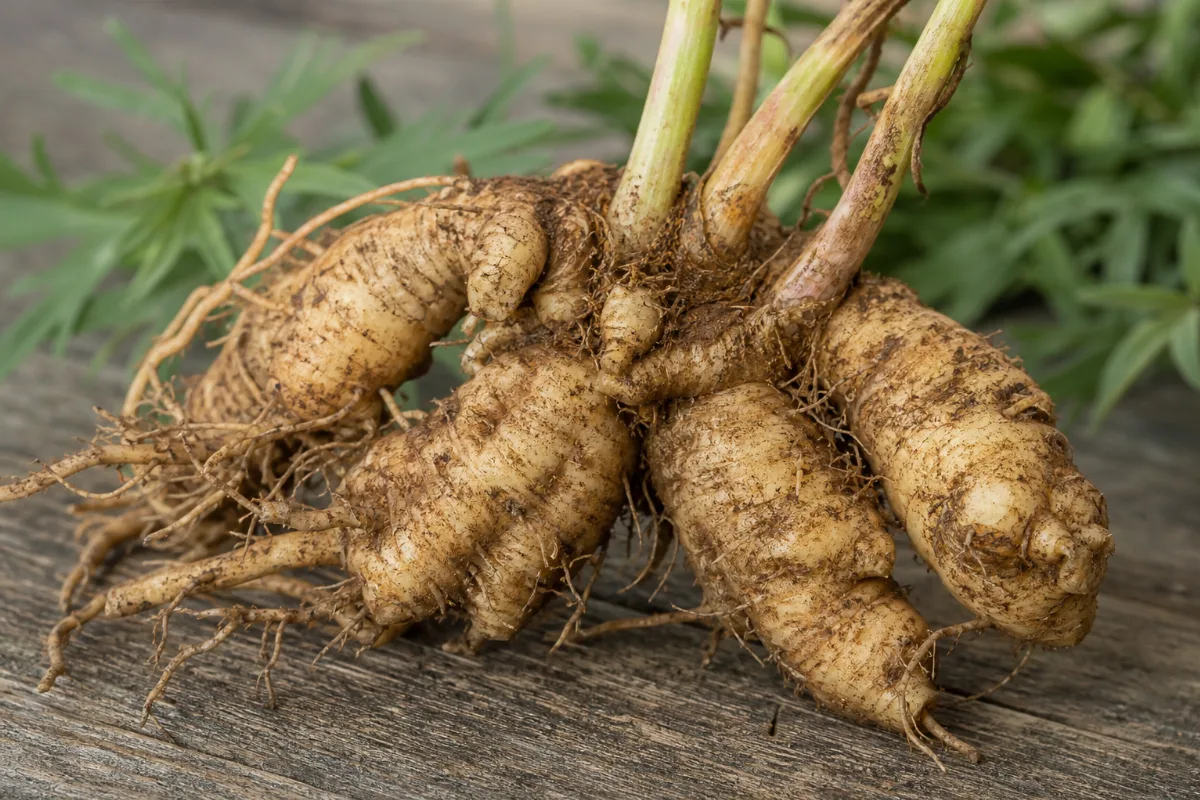
Herbs & Botanicals · Chinese herb that dries dampness
Cang zhu
Atractylodes lancea · also called Cangzhu, mao cang zhu, atractylodes rhizome
Cang zhu is the root-like stem of a Chinese daisy-family plant, used for centuries for bloating, loose stools, heavy joints and colds. Almost all the evidence is traditional use, lab work and a few small studies, so no benefit is proven. It is not bai zhu, a different herb. Avoid it in pregnancy unless a doctor agrees.
General information, not medical advice. Last substantive update · Not medically reviewed. A named clinician has not signed off on this page. How this page is made
About Cang zhu
Cang zhu (Atractylodes lancea) is a Chinese herb for damp, heavy complaints such as bloating, loose stools and achy joints. Human evidence is insufficient. It is a different herb from bai zhu. Pregnancy safety is unknown.
What it is
Cang zhu is the dried rhizome (a root-like underground stem) of Atractylodes lancea, a daisy-family plant from China, Japan and Korea. In the drug trade the name also covers A. chinensis, which GBIF lists as the same species.
Its main compounds are atractylodin, beta-eudesmol, hinesol and atractylone. Chinese medicine says it 'dries dampness', meaning it is used when the body feels heavy, bloated or waterlogged. Raw root is considered strongly drying, so it is often processed first.
Cang zhu versus bai zhu
Bai zhu is Atractylodes macrocephala, a separate species. Chinese medicine treats them differently: bai zhu is a mild tonic for weak digestion, while cang zhu is the stronger, drier herb for dampness. Bai zhu is traditionally used in pregnancy; cang zhu should not be assumed safe in pregnancy.
Many products and studies just say 'atractylodes'. Check the full Latin name before you rely on any claim. We cover bai zhu on its own page.
What the research shows
There is no controlled trial of plain cang zhu for any health problem. One small uncontrolled Japanese study found better digestive scores with three multi-herb formulas, and the abstract does not name the herbs in them.
A Thai group tested a standardized extract in 48 healthy adults, which was well tolerated and changed some immune markers. Their bile duct cancer work is early: one related paper was retracted in 2026 and another has an expression of concern. Most other findings come from the lab or animals.
At a glance
Traditional uses history, not proof
- Bloating, poor appetite and loose stools ('dampness' in the stomach)
- Joint pain with heaviness (rheumatic complaints)
- Night blindness and colds or flu
Studied for research
- Digestive complaints: insufficient evidence, one small uncontrolled study of formulas
- Immune markers in healthy adults: insufficient, one small trial
- Bile duct cancer research: early, with a retraction and an expression of concern
Main compounds
- Atractylodin
- Beta-eudesmol and hinesol
- Atractylone (volatile oil)
- Atractylenolides
Common forms
- Dried rhizome slices
- Processed (bran-fried) slices
- Decoction or granules in formulas
Research links: Review: Atractylodis Rhizoma, uses, chemistry and toxicology (2021) · Trial: safety and blood levels of a standardized extract in healthy adults · GBIF: Atractylodes lancea · Research Library · Genes & Biomarkers Library
The plant and its history
- Accepted scientific name
- Atractylodes lancea (Thunb.) DC.
- Naming authority
- Accepted in the GBIF backbone (key 3122433), exact match, confidence 99, checked 2026-10-25.
- Synonyms
- Atractylodes chinensis (Bunge) Koidz. (GBIF key 3122440, status SYNONYM of A. lancea)
- Common names
- Cang zhu (Chinese (pinyin)); Cangzhu (Chinese (pinyin)); Mao cang zhu (Chinese (pinyin)); Atractylodes rhizome (English); Atractylodis Rhizoma (Latin drug name)
- Botanical family
- Asteraceae (daisy family)
- Classification
- Plantae > Asterales > Asteraceae > Atractylodes > Atractylodes lancea
- Native range
- China, Japan, Korea and Thailand (livestock review; not checked against POWO/GBIF distribution).
- Habitat
- Not verified.
- What the plant looks like
- Roots: Rhizome is the medicinal part; description not verified.; Stems: Not verified.; Leaves: Not verified.; Flowers: Not verified.; Fruit: Not verified.
- Cultivation
- Not verified.
- Harvest and processing
- Traditionally used raw or processed (bran-fried, rice-water soaked); processing is said to soften the 'drying' effect and lower volatile oil (earlier summary and a 2026 review abstract).
- Look-alikes and adulterants
- Name: Atractylodes macrocephala (bai zhu); Note: Different species with different traditional uses; has its own page on this site.; Name: Atractylodes chinensis; Note: Listed as a synonym of A. lancea by GBIF; the Chinese drug (Atractylodis Rhizoma) lists both names as sources per a 2021 review.
- Sustainability and conservation
- Not assessed.
Traditional use and history history, not clinical proof
| Tradition or era | Documented use | Source |
|---|---|---|
| Chinese medicine (Ming dynasty and earlier) | A 1596 compendium (Bencao Gangmu) records cang zhu in 20 of 994 stomach and spleen entries. | p42818828 |
| East Asian traditional medicine | Diuretic and stomach remedy; rheumatic disease, digestive disorders, night blindness and influenza. | p32987126 |
| Kampo (Japan) | Appears in formulas used for stomach complaints (ingredient lists not confirmed in the study we read). | p41357899 |
Traditional use shows how a plant was used. It does not show that a supplement works or is safe today.
What is inside, and how it may work
What the plant contains and how those compounds act in cells and animals. Laboratory and animal mechanisms are not proven effects in people.
Main compounds
| Compound | Family | Where it is concentrated | Activity studied | Level of evidence |
|---|---|---|---|---|
| Atractylodin PubChem 5321047 | polyacetylene | rhizome Not given | Marker compound of the research extract; absorbed quickly but low blood exposure in healthy adults. 11 8 | Human pk |
| Beta-eudesmol PubChem 91457 | sesquiterpenoid alcohol | rhizome Not given | Linked to gut-movement effects in lab work. 11 16 | Lab |
| Hinesol PubChem 10878761 | sesquiterpenoid alcohol | rhizome Not given | Named as a main constituent in a 2026 review abstract. 11 15 | Pharmacological theory |
| Atractylone PubChem 3080635 | sesquiterpenoid | rhizome Not given | Main volatile constituent per a 2026 review abstract. 11 15 | Pharmacological theory |
| Atractylenolides I-III PubChem 5321018 | sesquiterpene lactones | rhizome Not given | I and II caused liver injury in zebrafish; III did not. 11 4 | Lab |
| Polysaccharides and flavonoids | mixed | rhizome Not given | Named in a 2026 review. 15 | Pharmacological theory |
Mechanisms, receptors and pathways
| Target or pathway | Gene or receptor | What was found | Level |
|---|---|---|---|
| Gut barrier and inflammation (NF-kB, MAPK, tight junctions) | ZO-1, occludin, claudin-1, TNF-alpha, IL-1beta, IL-6 | Reported in animal and cell work; much of it from related species or mixtures. 15 | Animal research |
| Immune signalling in blood cells | TNF-alpha, IL-6, IL-17A | Lower expression in blood cells in a dish and changes in immune markers in healthy volunteers. 3 | Human data |
| Drug-metabolising genes | cyp3a65, cyp3c1 (zebrafish) | Lower expression after atractylenolides I and II. 4 | Lab |
Absorption, metabolism and elimination
- Absorption
- Atractylodin was absorbed quickly but with low exposure in healthy adults.
- Distribution
- Not studied.
- Metabolism
- Not studied in people.
- Elimination
- Short residence time for atractylodin; no accumulation over 21 days.
- Bioavailability
- Low, per a 2026 review abstract.
Isolated compounds versus whole extracts
The only human trials used a standardized extract capsule from one Thai group; the dyspepsia study used multi-herb formulas. No isolated compound has been tested in people for a health outcome. Lab toxicity data exist for isolated atractylenolides.
Nutritional composition
A medicinal herb, not a nutrient source.
9 not enough evidence
What is Cang zhu good for?
The main studied and traditional uses and how strong the human evidence is for each. For cang zhu, none is better than insufficient.
Benefits, one by one
Each card is a research question, not a promise. Tap a goal to filter. Open a card to see the studies, doses and limits.
Digestive complaints and functional dyspepsia (multi-herb formulas)
Not enough evidenceOne small Japanese study with no control group saw milder stomach and mood scores after about seven weeks of three Kampo formulas. The abstract does not say how much cang zhu was in them, so it cannot be credited to cang zhu.
1 studiesRaw root, processed slices and formulas differ. Amounts are not repro…
Studies, doses and limits
What the trials found
A 2025 uncontrolled study of 41 adults with functional dyspepsia (33 analysed) reported better symptom and mood scores after an average of 52 days of three Kampo formulas. The abstract does not list the herbs.
Results
Symptom scale (GSRS) and mood scale improved before vs after; numbers are not given in the abstract.
Effect sizes as reported
Improvement without a control group
Why this rating
One small uncontrolled study of mixed formulas. No placebo-controlled trial of cang zhu for digestion was found.
Form and dose studied
Raw root, processed slices and formulas differ. Amounts are not reproduced here. Ask a doctor or pharmacist about amounts.
Who was studied
Adults with functional dyspepsia (Japan).
Limits
No control group, no blinding, 8 of 41 not analysed, three formulas pooled, cang zhu content not stated.
Why researchers looked
Cang zhu is a classic stomach herb in Chinese medicine, often written into formulas for bloating and a heavy feeling after eating.
Traditional use
Chinese medicine says cang zhu 'dries dampness' and wakes up a sluggish stomach and spleen. These are traditional ideas, not tested mechanisms.
Proposed mechanism Animal research
Not known in people. Animal and lab work suggests effects on gut movement and the gut lining, but it is not shown in people.
A proposed mechanism does not show that the effect happens in people.
See Safety. Raw root is traditionally described as very drying.
Bloating, poor appetite and loose stools (traditional use)
Not enough evidenceCang zhu has been written about for stomach and spleen complaints for centuries. A 2026 text analysis counted it in 20 of 994 such entries in a 1596 Chinese compendium. That shows long use, not that it works.
3 studiesRaw root, processed slices and formulas differ. Amounts are not repro…
Studies, doses and limits
What the trials found
No controlled human trial was found for these uses in the sources read.
Results
A 2026 review of the Bencao Gangmu counted cang zhu in 20 spleen-stomach entries, bai zhu in 26 and ginger in 25.
Effect sizes as reported
Counts of historical records only.
Why this rating
Tradition and historical records are not tests of benefit.
Form and dose studied
Raw root, processed slices and formulas differ. Amounts are not reproduced here. Ask a doctor or pharmacist about amounts.
Who was studied
Not applicable.
Limits
Historical text, no outcomes measured.
Why researchers looked
It is one of the most common herbs in old Chinese stomach remedies.
Traditional use
Reviews describe it as a diuretic and stomach remedy used across East Asia, usually in multi-herb decoctions.
Proposed mechanism Lab
Not shown in people. Reviews link atractylodin and beta-eudesmol to gut effects in lab work.
A proposed mechanism does not show that the effect happens in people.
See Safety.
Gut movement and gut protection (animal and lab work)
Not enough evidenceIn pigs, poultry and lab models, cang zhu extracts reduced diarrhea and gut inflammation. This is not human evidence, and much of it used the related bai zhu or herb mixtures.
2 studiesNot applicable.
Studies, doses and limits
What the trials found
No human data. A 2026 review says much evidence is from rodent and cell models, or from A. macrocephala or multi-herb mixtures.
Results
Animal and cell findings only.
Effect sizes as reported
Not applicable
Why this rating
Animals and cells do not predict results in people.
Form and dose studied
Not applicable.
Who was studied
Livestock and lab models.
Limits
Not human; mixes species and formulas.
Why researchers looked
Scientists want to know how the old digestive use might work.
Traditional use
Not a traditional claim.
Proposed mechanism Animal research
Tight-junction proteins, inflammation pathways (NF-kB, MAPK) and gut microbes were affected in animal and cell work.
A proposed mechanism does not show that the effect happens in people.
Not applicable.
Immune markers in healthy adults (research extract)
Not enough evidenceIn a placebo-controlled study of 48 healthy Thai adults, a standardized research extract was followed by changes in some blood immune markers. These are lab numbers, not better health.
3 studiesA standardized capsule extract; not a retail supplement. Amounts are …
Studies, doses and limits
What the trials found
A 2021 randomized, double-blind phase I trial in 48 healthy adults found changes in some cytokines and in CD4+ and CD8+ cell counts; cytotoxic activity showed only a trend. It was registered after it ran.
Results
Some cytokines lower, CD4+ and CD8+ cell counts higher after a single and a 21-day regimen. Exact figures are not in the abstract.
Effect sizes as reported
Marker changes only
Why this rating
Small phase I study of a research product with many outcomes, no health benefit measured, same research group as a retracted paper.
Form and dose studied
A standardized capsule extract; not a retail supplement. Amounts are not reproduced here.
Who was studied
Healthy Thai adults.
Limits
Surrogate markers only; one group; retrospective registration.
Why researchers looked
A Thai research group is testing the extract for a rare bile duct cancer and first checked its effect on the immune system in healthy people.
Traditional use
Not a traditional use.
Proposed mechanism Lab
Lowered inflammatory messenger genes (TNF-alpha, IL-6) in blood cells in a dish; mixed cytokine and immune-cell changes in volunteers.
A proposed mechanism does not show that the effect happens in people.
The same group reported the extract was well tolerated over 21 days in 48 people (see Safety).
Colds and influenza (traditional use)
Not enough evidenceCang zhu is traditionally used for colds and flu in China. A 2026 review calls it effective, but the abstract names no human trial, so this is not shown.
2 studiesRaw root, processed slices and formulas differ. Amounts are not repro…
Studies, doses and limits
What the trials found
No human trial for colds or influenza was found in the sources read.
Results
The reviews state the use; neither abstract gives trial results.
Effect sizes as reported
Not applicable
Why this rating
Traditional claim and review statement only.
Form and dose studied
Raw root, processed slices and formulas differ. Amounts are not reproduced here. Ask a doctor or pharmacist about amounts.
Who was studied
Not applicable.
Limits
No trial evidence.
Why researchers looked
Chinese medicine uses it to dry 'damp' that causes heaviness, aches and chills.
Traditional use
Reviews list influenza among traditional uses.
Proposed mechanism Lab
Not known. Lab work reports antimicrobial effects.
A proposed mechanism does not show that the effect happens in people.
See Safety.
Joint pain and rheumatic complaints (traditional use)
Not enough evidenceOld texts list cang zhu for 'wind-damp' joint pain. No human trial was found.
2 studiesRaw root, processed slices and formulas differ. Amounts are not repro…
Studies, doses and limits
What the trials found
No human trial for joint pain or arthritis was found.
Results
Review statement only.
Effect sizes as reported
Not applicable
Why this rating
Traditional use only.
Form and dose studied
Raw root, processed slices and formulas differ. Amounts are not reproduced here. Ask a doctor or pharmacist about amounts.
Who was studied
Not applicable.
Limits
No trial evidence.
Why researchers looked
Traditionally used for rheumatic diseases with heaviness and swelling.
Traditional use
A 2021 review lists rheumatic diseases among traditional uses.
Proposed mechanism Lab
Anti-inflammatory activity in lab work.
A proposed mechanism does not show that the effect happens in people.
See Safety.
Night blindness and eye complaints (traditional use)
Not enough evidenceOld Chinese books list cang zhu for night blindness. No human study was found. Night blindness has medical causes, such as vitamin A deficiency, so see an eye doctor.
1 studiesNot applicable.
Studies, doses and limits
What the trials found
No human study was found in the sources read.
Results
Review statement only.
Effect sizes as reported
Not applicable
Why this rating
A traditional record is not evidence of benefit.
Form and dose studied
Not applicable.
Who was studied
Not applicable.
Limits
Cannot treat vision loss.
Why researchers looked
A traditional record from old texts.
Traditional use
A 2021 review lists night blindness among traditional uses.
Proposed mechanism Unknown
Not known.
A proposed mechanism does not show that the effect happens in people.
Do not delay an eye check.
Anti-inflammatory and liver-protective effects (lab only)
Not enough evidenceCell and animal studies report anti-inflammatory and liver-protective actions for compounds like atractylodin. Other lab work shows liver harm from some compounds. Neither is proof for people.
3 studiesNot applicable.
Studies, doses and limits
What the trials found
No human data. A 2026 genus review lists anti-inflammatory and hepatoprotective activity from lab work; a zebrafish study found liver injury from two atractylenolides.
Results
Lab results only.
Effect sizes as reported
Not applicable
Why this rating
Cell and animal studies; protective and toxic signals both appear.
Form and dose studied
Not applicable.
Who was studied
Lab models.
Limits
Not people.
Why researchers looked
Scientists test the herb's chemicals to explain the traditional uses.
Traditional use
Not a traditional claim.
Proposed mechanism Lab
Lowered inflammation signals in cells and animals; mixed liver findings.
A proposed mechanism does not show that the effect happens in people.
See Safety for the liver.
Bile duct cancer research (standardized research extract)
Not enough evidenceA Thai group is testing a standardized extract in advanced bile duct cancer. Early results are marker and modelling studies, one related paper was retracted and another has an expression of concern. Not shown to treat cancer.
3 studiesResearch capsule, not a retail supplement. Amounts are not reproduced…
Studies, doses and limits
What the trials found
A 2025 sub-study of a phase 2A trial (16 patients per group) reported lower expression of some cancer-linked genes and IL-6 and higher IL-10 in treated groups. A journal expression of concern followed in 2026. Related modelling papers exist. A 2023 toxicity and anti-cancer paper from the group was retracted in 2026.
Results
Gene-expression changes in few blood samples (59 processed, 11 at day 90). No survival result is repeated here.
Effect sizes as reported
Marker changes
Why this rating
Small groups, expression of concern, retraction of a related paper, one research group.
Form and dose studied
Research capsule, not a retail supplement. Amounts are not reproduced here.
Who was studied
Advanced intrahepatic cholangiocarcinoma.
Limits
Marker study only; integrity concerns.
Why researchers looked
Cell and animal work led the group to test it in patients.
Traditional use
Not a traditional use.
Proposed mechanism Human observational
Reported changes in cancer and immune gene expression in blood.
A proposed mechanism does not show that the effect happens in people.
Not established as a treatment. Talk to your cancer team before using any herb.
Connections to the rest of health
How Cang zhu connects to the rest of our health knowledge graph. Every link says what kind of connection it is. A safety link (for example to the liver) is a warning, not a benefit. A study that merely mentions a topic never creates a benefit link.
Explore every connection: goals, body systems, organs, symptoms, genes
A. Wellness goals
| Connected to | Kind of connection | Evidence status | Context | Studies |
|---|---|---|---|---|
| Digestive Support | Not enough evidence | Digestive complaints and functional dyspepsia (multi-herb formulas): One small Japanese study with no control group saw milder stomach and mood scores after about seven weeks of three Kampo formulas. The abstract does not say how much cang zhu was in them, so it cannot be credited to cang zhu. Bloating, poor appetite and loose stools (traditional use): Cang zhu has been written about for stomach and spleen complaints for centuries. A 2026 text analysis counted it in 20 of 994 such entries in a 1596 Chinese compendium. That shows long use, not that it works. | 5 16 18 17 | |
| Gut Health | Not enough evidence | Bloating, poor appetite and loose stools (traditional use): Cang zhu has been written about for stomach and spleen complaints for centuries. A 2026 text analysis counted it in 20 of 994 such entries in a 1596 Chinese compendium. That shows long use, not that it works. | 16 18 17 | |
| Gut Health | Not enough evidence | Gut movement and gut protection (animal and lab work): In pigs, poultry and lab models, cang zhu extracts reduced diarrhea and gut inflammation. This is not human evidence, and much of it used the related bai zhu or herb mixtures. | 15 16 | |
| Immune Support | Not enough evidence | Immune markers in healthy adults (research extract): In a placebo-controlled study of 48 healthy Thai adults, a standardized research extract was followed by changes in some blood immune markers. These are lab numbers, not better health. Colds and influenza (traditional use): Cang zhu is traditionally used for colds and flu in China. A 2026 review calls it effective, but the abstract names no human trial, so this is not shown. | 3 8 14 17 18 | |
| Joint Support | Not enough evidence | Joint pain and rheumatic complaints (traditional use): Old texts list cang zhu for 'wind-damp' joint pain. No human trial was found. | 18 6 | |
| Eye Health | Not enough evidence | Night blindness and eye complaints (traditional use): Old Chinese books list cang zhu for night blindness. No human study was found. Night blindness has medical causes, such as vitamin A deficiency, so see an eye doctor. | 18 | |
| Inflammation Balance | Not enough evidence | Anti-inflammatory and liver-protective effects (lab only): Cell and animal studies report anti-inflammatory and liver-protective actions for compounds like atractylodin. Other lab work shows liver harm from some compounds. Neither is proof for people. | 6 17 4 | |
| Liver Support | Not enough evidence | Anti-inflammatory and liver-protective effects (lab only): Cell and animal studies report anti-inflammatory and liver-protective actions for compounds like atractylodin. Other lab work shows liver harm from some compounds. Neither is proof for people. | 6 17 4 | |
| Cellular Growth | Not enough evidence | Bile duct cancer research (standardized research extract): A Thai group is testing a standardized extract in advanced bile duct cancer. Early results are marker and modelling studies, one related paper was retracted and another has an expression of concern. Not shown to treat cancer. | 7 13 10 |
B. Body systems
| Connected to | Kind of connection | Evidence status | Context | Studies |
|---|---|---|---|---|
| Digestive system | Traditional use | Not enough evidence | Traditional stomach remedy; one small uncontrolled formula study. Preparation or compound: Rhizome decoction in formulas |
5 16 |
| Digestive System | Biological association | Not enough evidence | Studied for: Digestive complaints and functional dyspepsia (multi-herb formulas) Studied for: Bloating, poor appetite and loose stools (traditional use) | 5 16 18 17 15 |
| Immune System | Biological association | Not enough evidence | Studied for: Immune markers in healthy adults (research extract) Studied for: Bile duct cancer research (standardized research extract) | 3 8 14 7 13 10 |
| Respiratory System | Biological association | Not enough evidence | Studied for: Colds and influenza (traditional use) | 17 18 |
| Bones Joints Muscles | Biological association | Not enough evidence | Studied for: Joint pain and rheumatic complaints (traditional use) | 18 6 |
| Eyes | Biological association | Not enough evidence | Studied for: Night blindness and eye complaints (traditional use) | 18 |
| Liver Detox | Biological association | Not enough evidence | Studied for: Anti-inflammatory and liver-protective effects (lab only) | 6 17 4 |
I. Biomarkers
| Connected to | Kind of connection | Evidence status | Context | Studies |
|---|---|---|---|---|
| Gastrointestinal Symptom Rating Scale (GSRS) | Biological association | Not enough evidence | Measured in trials: lowered. A lab change is not the same as a health benefit. | 5 |
| Blood cytokines and lymphocyte counts | Biological association | Not enough evidence | Measured in trials: mixed. A lab change is not the same as a health benefit. | 3 |
| IL-6, IL-10 and VEGF-A gene expression (blood) | Biological association | Not enough evidence | Measured in trials: mixed. A lab change is not the same as a health benefit. | 7 |
| ALT and AST in zebrafish embryos (lab) | Biological association | Not enough evidence | Measured in trials: raised. A lab change is not the same as a health benefit. | 4 |
L. Active compounds
| Connected to | Kind of connection | Evidence status | Context | Studies |
|---|---|---|---|---|
| Atractylodin | Biological association | Human pk | Marker compound of the research extract; absorbed quickly but low blood exposure in healthy adults. Preparation or compound: rhizome |
11 8 |
| Beta-eudesmol | Biological association | Lab | Linked to gut-movement effects in lab work. Preparation or compound: rhizome |
11 16 |
| Hinesol | Biological association | Pharmacological theory | Named as a main constituent in a 2026 review abstract. Preparation or compound: rhizome |
11 15 |
| Atractylone | Biological association | Pharmacological theory | Main volatile constituent per a 2026 review abstract. Preparation or compound: rhizome |
11 15 |
| Atractylenolides I-III | Biological association | Lab | I and II caused liver injury in zebrafish; III did not. Preparation or compound: rhizome |
11 4 |
| Polysaccharides and flavonoids | Biological association | Pharmacological theory | Named in a 2026 review. Preparation or compound: rhizome |
15 |
Each connection is stored with the ingredient, the connected record, the kind of connection, the evidence status, the supporting studies, the preparation or compound involved, and a review date (last reviewed October 25, 2026).
Evidence at a glance: what changed in 4 lab markers
Tap a number to show only those markers. Counts are markers, not people.
The evidence
The research centre for Cang zhu. Every record here was checked against PubMed or the publisher's page; we never list a study we have not verified.
Evidence by outcome
Bars show how many studies we found for each outcome, not how well it works. People are added up across trials only (reviews are not added, to avoid double counting).
How we rate evidence
High certainty
Several well-run trials or reviews agree; further research is unlikely to change the picture much.
Moderate certainty
Good trials point the same way, but some doubt remains.
Low certainty
Small, short or inconsistent trials. The finding could change with better research.
Very low certainty
Very little or very weak human data. Treat as a possibility only.
Mixed findings
Trials or reviews disagree with each other.
Not enough evidence
Not enough human research to say either way.
Evidence against
Good research found no benefit, or found harm.
We take the reviewers' own risk-of-bias and GRADE statements where they exist, and otherwise judge from study size, design, consistency, directness and whether a product matches what is sold. Many publications do not make evidence high. Method note: We started from our existing cang zhu summary, then read the PubMed abstract of every study cited. We checked the plant name in GBIF and compounds in PubChem. Not verified: EU monograph, NCCIH, LactMed, LiverTox, WHO and Commission E (none read). Reviews were read by abstract only. Certainty ratings are the compiler's reading.
Study library: every study we checked 18
| Study | Design | People | Product, dose, length | Result |
|---|---|---|---|---|
| AlternativeMed editorial team 2026 Atractylodes (bai zhu): our page on Atractylodes macrocephala alternativemed.com/herbs-botanicals/atractylodes · Source |
Internal page review |
Not applicable | Atractylodes macrocephala (bai zhu) rhizome Not reproduced here Not reproduced here · vs Not applicable |
Our bai zhu page states that A. lancea (cang zhu) is a different species and that bai zhu is traditionally used for weak digestion, bloating and loose stools, and to stop slight bleeding in pregnancy. Live check 2026-10-25: HTTP 200. Not applicable Methods, limits and fundingOutcomes: Comparison with cang zhu Limitations: Our own page; not independent evidence. Funding and conflicts: Not applicable Read: full-page |
| GBIF Secretariat 2026 GBIF backbone match: Atractylodes lancea (Thunb.) DC. GBIF species API (usageKey 3122433) · Source |
Database entry review |
Not applicable | Not applicable not applicable Not reproduced here Not reproduced here · vs Not applicable |
Atractylodes lancea (Thunb.) DC.: status ACCEPTED, exact match, confidence 99, family Asteraceae, order Asterales. Atractylodes chinensis (Bunge) Koidz. (key 3122440) is listed as a SYNONYM of it. Checked 2026-10-25. Not applicable Methods, limits and fundingOutcomes: Accepted name check Limitations: Name check only. NCBI Taxonomy not queried. Funding and conflicts: Public database Read: api |
| Kulma 2021 A randomized placebo-controlled phase I clinical trial to evaluate the immunomodulatory activities of Atractylodes lancea (Thunb) DC. in healthy Thai subjects BMC Complement Med Ther 21:61 · PMID 33579265 · DOI |
RCT (phase I, double blind, placebo controlled) plus lab cell work |
48 48 healthy Thai adults |
Standardized A. lancea extract capsule (research product) dried rhizome (cang zhu); standardized extract Not reproduced here Not reproduced here · vs Placebo |
Single and 21-day regimens were followed by changes in some cytokines (for example lower IL-17A on one regimen) and higher CD4+ and CD8+ cell counts; cytotoxic activity showed only a trend. Cell experiments showed lower TNF-alpha and IL-6 gene expression. Results are lab markers, not health outcomes. Changes in blood immune markers; no clinical outcome Methods, limits and fundingOutcomes: Blood cytokines, immune-cell counts and white-blood-cell killing activity against a bile duct cancer cell line Limitations: Healthy volunteers, small groups, many outcomes, several results are 'trends', retrospectively registered, one research group. Funding and conflicts: No competing interests declared Registration: TCTR20201020001 (registered 17 Oct 2020, after the trial ran) Read: abstract |
| Li 2026 Differential toxic phenotypes and liver injury induced by Atractylenolides (I, II, and III): Insights from zebrafish (Danio rerio) models and network toxicology Comp Biochem Physiol C Toxicol Pharmacol 299:110365 · PMID 40997982 · DOI |
Lab study (zebrafish embryos, network analysis) animal |
Zebrafish embryos | Isolated atractylenolides I, II, III (described as from A. macrocephala) isolated compounds Not reproduced here Not reproduced here · vs Not applicable |
Atractylenolides I and II caused concentration-dependent death and liver injury with higher ALT and AST and lower expression of cyp3a65 and cyp3c1; atractylenolide III did not. Silybin partly reversed the liver changes. Lab toxicity signal for two compounds; not a human result Methods, limits and fundingOutcomes: Mortality, liver shrinkage, ALT and AST, drug-metabolising gene expression Limitations: Zebrafish embryos, isolated compounds, from A. macrocephala; not the whole herb and not people. Funding and conflicts: No competing interests declared Read: abstract |
| Liang 2025 Integrated effects of Kampo treatment on gastrointestinal symptoms and stress in patients with functional dyspepsia: a preliminary prospective observational study Front Pharmacol 16:1685656 · PMID 41357899 · DOI |
Observational (single arm, before and after) |
41 Adults with functional dyspepsia, Hiroshima, Japan; 33 analysed |
Three Kampo formulas (bukuryoin, heiisan, rikkunshito) Multi-herb formulas; the abstract does not list the herbs or say which Atractylodes each contained Not reproduced here Not reproduced here · vs None (no control group) |
After an average of 52 days, symptom scores (hunger, pain, constipation, gastrectasia and overall) and negative mood scores improved. No control group. Improvement before vs after, uncontrolled Methods, limits and fundingOutcomes: Gastrointestinal Symptom Rating Scale (GSRS) and mood scale (POMS-2A) before and after treatment Limitations: Single centre, 8 of 41 not analysed, no control group, three different formulas pooled, ingredients not stated in the abstract, so cang zhu cannot be credited. Authors call it preliminary. Funding and conflicts: No competing interests; some authors on the journal editorial board Read: abstract |
| Luo 2026 A systematic review on the application, phytochemistry and pharmacological activities of the genus Atractylodes Chin Med 21:211 · PMID 42629552 · DOI |
Systematic review (genus wide, mostly lab) review |
Not applicable | Genus Atractylodes (A. lancea, A. macrocephala and others) rhizomes Not reproduced here Not reproduced here · vs Not applicable |
371 compounds; anti-cancer, anti-inflammatory, gastrointestinal-regulatory, neuroprotective, hepatoprotective and lung-protective activity reported (lab). The abstract says potential toxicity is tied to the traditional 'dryness' property and can be reduced by processing such as bran-frying. Review of mostly non-human work Methods, limits and fundingOutcomes: Traditional use, chemistry, pharmacology, safety Limitations: Genus-wide; mixes species; abstract only read for this file. Funding and conflicts: One author is on the journal editorial board; not involved in review Read: abstract |
| Martviset 2025 Targeting tumor-associated genes, immune response, and circulating tumor cells in intrahepatic cholangiocarcinoma: Therapeutic potential of Atractylodes lancea (Thunb.) DC. PLoS One 20(5):e0323732 · PMID 40359186 · DOI |
Randomized phase 2A cohort, blood gene expression sub study |
48 Advanced intrahepatic bile duct cancer patients (16 per group) plus 16 non-cancer subjects |
Standardized A. lancea capsule plus supportive care (research product) dried rhizome (cang zhu); standardized extract Not reproduced here Not reproduced here · vs Not applicable |
Treated groups had lower expression of some cancer-linked genes (VEGF-A, Ki-67, EpCAM) and of IL-6 and higher IL-10 than at baseline. Only 59 blood samples were processed. The authors call for more studies. A journal expression of concern was published in July 2026 (we did not read it). Gene-expression changes; no survival result in this paper Methods, limits and fundingOutcomes: Blood gene expression (cancer and immune genes) on day 1 and day 90 Limitations: Expression of concern attached; small groups; marker study, not a survival trial; one research group; day-90 samples few (11). Funding and conflicts: No competing interests declared Read: abstract |
| Na-Bangchang 2021 Phase I clinical trial to evaluate the safety and pharmacokinetics of capsule formulation of the standardized extract of Atractylodes lancea J Tradit Complement Med 11(4):343-355 · PMID 34195029 · DOI |
RCT (phase I, placebo controlled) |
48 48 healthy Thai participants |
Standardized A. lancea extract capsule (research product) dried rhizome (cang zhu); standardized extract Not reproduced here Not reproduced here · vs Placebo |
The extract was well tolerated in both the single-dose and 21-day groups. Atractylodin was absorbed quickly but blood exposure was low and short-lived, with no build-up after 21 days. Well tolerated in this small, short study Methods, limits and fundingOutcomes: Safety, tolerability and blood levels of atractylodin Limitations: Healthy adults only, 20 on extract per group, three weeks at most, one research group. Tolerability details are not in the abstract. Funding and conflicts: No competing interests declared Read: abstract |
| Not found 2026 Regulator records for cang zhu: EMA/HMPC, NCCIH, MSK, LactMed, LiverTox Our existing summary (2026-10-23) and one search page check · Source |
Negative search review |
Not applicable | Not applicable not applicable Not reproduced here Not reproduced here · vs Not applicable |
Our earlier summary found no EMA/HMPC, NCCIH, MSK, MedlinePlus or WHO monograph for A. lancea and LiverTox was blocked by a browser check. In this round a single PubMed search for Atractylodes with liver injury or case reports found no human liver case report for cang zhu; LiverTox, LactMed, NCCIH and EMA pages were not opened. Absence here is not proof none exists. Not applicable Methods, limits and fundingOutcomes: Look for official monograph or fact sheet Limitations: Not a safety finding. Search was limited. Funding and conflicts: Not applicable Read: not-found |
| Plengsuriyakarn 2026 Retraction Note: Preclinical studies of toxicity and anti-cholangiocarcinoma activity of the standardized capsule formulation of atractylodes lancea (Thunb.) DC. BMC Complement Med Ther 26:70 · PMID 41715103 · DOI |
Retraction notice review |
Not applicable | Standardized A. lancea capsule (research product) dried rhizome (cang zhu); standardized extract Not reproduced here Not reproduced here · vs Not applicable |
The 2023 toxicity and anti-cholangiocarcinoma paper from this group was retracted in 2026. The notice text we read is only the header. Reasons are in the full notice, not read. Do not rely on the retracted paper Methods, limits and fundingOutcomes: Retraction of a 2023 paper (BMC Complement Med Ther 23:186) Limitations: Reason for retraction not read. Funding and conflicts: Not applicable Read: abstract |
| PubChem (NCBI) 2026 PubChem compound records: atractylodin, beta-eudesmol, hinesol, atractylone, atractylenolide I PubChem PUG REST · Source |
Database entry review |
Not applicable | Not applicable not applicable Not reproduced here Not reproduced here · vs Not applicable |
CIDs: atractylodin 5321047 (C13H10O), beta-eudesmol 91457 (C15H26O), hinesol 10878761 (C15H26O), atractylone 3080635 (C15H20O), atractylenolide I 5321018 (C15H18O2). Checked 2026-10-25. Not applicable Methods, limits and fundingOutcomes: Compound identity check Limitations: Identity only; says nothing about safety or effect. Funding and conflicts: Public database Read: api |
| Rachmaini 2025 Teratogenic effect of unregistered traditional Chinese medicine containing Atractylodis lancea radix, Glycyrrhiza glabra radix, Rheum officinale rhizome, and Angelica dahurica radix on fetal morphology of BALB/c mice J Complement Integr Med 22(4):681-689 · PMID 40839075 · DOI |
Animal study (pregnant mice) animal |
80 80 pregnant BALB/c mice |
Unregistered four-herb Chinese product including Atractylodis lancea root (not cang zhu alone) Four-herb mixture Not reproduced here Not reproduced here · vs Vehicle (negative control) |
In all treated groups there were differences in maternal weight, fetus number and fetal weight, bone-development abnormalities and open eyelids or clubfoot; haemorrhage was seen in 27 fetuses in the highest group. The abstract's conclusion also says no maternal toxicity or teratogenesis, which contradicts the results, so it cannot be read as a clear finding. Fetal effects in mice with a mixture; unclear and internally inconsistent Methods, limits and fundingOutcomes: Maternal and fetal weight, fetus number, skeletal and other malformations Limitations: Mouse study of a four-herb mixture, cang zhu not separable, the abstract contradicts itself. Funding and conflicts: Not stated Read: abstract |
| Saeheng 2024 Population-pharmacokinetic/pharmacodynamic model of atractylodes lancea (Thunb.) DC. administration in patients with advanced-stage intrahepatic cholangiocarcinoma: a dosage prediction BMC Complement Med Ther 24:384 · PMID 39508255 · DOI |
Modelling study (phase 2A data) |
Advanced intrahepatic cholangiocarcinoma | Standardized A. lancea capsule (research product) dried rhizome (cang zhu); standardized extract Not reproduced here Not reproduced here · vs Not applicable |
The abstract reports a model that predicted earlier trial results. Model dose recommendations are deliberately not repeated here. Model output only Methods, limits and fundingOutcomes: Model of blood levels and predicted tumour progression and mortality Limitations: Computer prediction, same group as the retracted 2023 paper and the phase I trials. Funding and conflicts: No competing interests declared Registration: TCTR20210129007 Read: abstract |
| Saeheng 2025 Immunomodulatory Effects of Atractylodes lancea in Healthy Volunteers with Dosage Prediction for Cholangiocarcinoma Therapy: A Modelling Approach Pharmaceuticals (Basel) 18(2):198 · PMID 40006012 · DOI |
Computer modelling study using earlier trial data |
Model built on healthy-volunteer data; abstract also mentions preliminary phase 2A results | Standardized A. lancea extract (research product) dried rhizome (cang zhu); standardized extract Not reproduced here Not reproduced here · vs Not applicable |
A model reproduced earlier observed data. The abstract describes preliminary phase 2A cancer results; they are not independently checked here. Dose predictions in this paper are deliberately not repeated. Model output, not a clinical result Methods, limits and fundingOutcomes: Predicted blood levels and immune-marker changes Limitations: Modelling, not a trial; same research group as the phase I trials; cancer results are preliminary and from a group whose related 2023 paper was retracted. Funding and conflicts: No competing interests; funders had no role Read: abstract |
| Soliman 2026 Harnessing Phytobiotics for Gut Protection: A Comprehensive Review on the Role of Cangzhu (Atractylodes lancea) in Sustainable Animal Husbandry Animals (Basel) 16(17):2789 · PMID 42738577 · DOI |
Narrative review (animal and lab) review |
Pigs, poultry, ruminants and lab models | Cangzhu (A. lancea rhizome), often in mixtures or from the related A. macrocephala dried rhizome (cang zhu) Not reproduced here Not reproduced here · vs Not applicable |
Reports tight-junction, anti-inflammatory and microbiota effects and fewer cases of diarrhea in livestock studies. The authors say much of the evidence comes from rodent and cell work, or from A. macrocephala or multi-herb mixes; pure A. lancea livestock trials are limited. Animal and lab only Methods, limits and fundingOutcomes: Gut protection in animals Limitations: Not human. Mixes species and formulas. Funding and conflicts: No conflicts declared Read: abstract |
| Sun 2026 Pharmacotherapy of the spleen and stomach in Li Shizhen's Bencao Gangmu (Compendium of materia medica, 1596): a text-statistical analysis of 994 entries and a bridge to modern pharmacology Front Pharmacol 17:1889778 · PMID 42818828 · DOI |
Historical text analysis review |
Not applicable (a 1596 text) | Atractylodes lancea (cang zhu) among many botanical drugs dried rhizome (cang zhu) Not reproduced here Not reproduced here · vs Not applicable |
In 994 spleen-stomach entries, cang zhu appeared in 20, bai zhu (A. macrocephala) in 26 and ginger in 25. The author links atractylodin and beta-eudesmol to effects on gut movement and protection in modern lab work. Shows long traditional use, not effectiveness Methods, limits and fundingOutcomes: How often drugs are recorded for stomach and spleen complaints Limitations: A historical record counts how often a herb was written about; it does not show it works. Funding and conflicts: No conflicts declared Read: abstract |
| Sun 2026 Herbal Textual Research, Phytochemistry, Pharmacology and Toxicity of Atractylodis Rhizoma: A Comprehensive Review Molecules 31(6):1015 · PMID 41900114 · DOI |
Narrative review review |
Not applicable | Atractylodis Rhizoma dried rhizome (cang zhu) Not reproduced here Not reproduced here · vs Not applicable |
327 compounds identified; reported antimicrobial, anti-inflammatory, antioxidant, hepatoprotective and neuroprotective effects (lab). The authors say the rhizome is 'particularly effective' for gastrointestinal disorders and influenza, but the abstract names no human trial. Low bioavailability is a challenge. Review claim, not a trial result Methods, limits and fundingOutcomes: History, chemistry, pharmacology, toxicity Limitations: The effectiveness statement is the authors' view; no trial named in the abstract. Funding and conflicts: No conflicts declared Read: abstract |
| Zhang 2021 Atractylodis Rhizoma: A review of its traditional uses, phytochemistry, pharmacology, toxicology and quality control J Ethnopharmacol 266:113415 · PMID 32987126 · DOI |
Systematic review (narrative; mostly lab and traditional) review |
Not applicable | Atractylodes lancea and A. chinensis rhizome (Atractylodis Rhizoma) dried rhizome (cang zhu) Not reproduced here Not reproduced here · vs Not applicable |
States the rhizome of A. lancea and A. chinensis is used in East Asia as a diuretic and stomach remedy, for rheumatic disease, digestive disorders, night blindness and influenza. Over 200 compounds isolated. Authors say long-term toxicity in vivo and clinical efficacy still need study. Review of mostly non-human work Methods, limits and fundingOutcomes: Traditional uses, chemistry, pharmacology, toxicology Limitations: Does not grade human evidence; further details in this file (night blindness record, dryness, enzyme work) come from our existing summary and were not re-opened. Funding and conflicts: No competing interests declared Read: abstract |
What we do not know yet
- No placebo-controlled trial of cang zhu for digestion, joints, colds or eyes.
- No EU monograph, NCCIH, LactMed or LiverTox page read for cang zhu.
- No human data for pregnancy, breastfeeding, liver or medicine interactions.
- Human studies come mostly from one research group, with a retraction and an expression of concern.
How new research is added
New studies are found by a saved PubMed search and reviewed before the page is updated.
Lab markers
What changed in blood or saliva tests during trials. A changed number is not the same as feeling or being healthier, and we give no "normal ranges".
Other 4
Gastrointestinal Symptom Rating Scale (GSRS)
Lowered in trials
A questionnaire where people rate stomach and bowel symptoms; lower is better.
Not enough evidenceResults and what it means
Why it was measured
Tracks how bothersome digestive symptoms feel.
Statistical vs. clinical meaning
Self-rated, no control group, mixed formulas.
Safety implication
Not reported.
| Study | Result | People | Product |
|---|---|---|---|
| 5 | Hunger, pain, constipation, gastrectasia and overall scores improved after an average of 52 days; no numbers given in the abstract. | 33 analysed of 41 adults with functional dyspepsia, Japan | Three Kampo formulas (bukuryoin, heiisan, rikkunshito) |
Blood cytokines and lymphocyte counts
Mixed results in trials
Signalling proteins (cytokines such as IL-17A, IFN-gamma, IL-10) and counts of T and NK cells measured in blood.
Not enough evidenceResults and what it means
Why it was measured
Used to see whether something changes immune activity.
Statistical vs. clinical meaning
Lab markers; no link to health outcomes shown.
Safety implication
Not reported in the abstract.
| Study | Result | People | Product |
|---|---|---|---|
| 3 | Lower IL-17A at 24 h and higher CD4+ and CD8+ counts on the 21-day regimen; single regimen: lower IFN-gamma and IL-10, more NK, CD4+ and CD8+ cells. Exact values are not in the abstract. | 48 healthy Thai adults | Standardized A. lancea extract capsule vs placebo |
IL-6, IL-10 and VEGF-A gene expression (blood)
Mixed results in trials
Activity of genes for an inflammatory signal (IL-6), an anti-inflammatory signal (IL-10) and a tumour growth factor (VEGF-A).
Not enough evidenceResults and what it means
Why it was measured
A research marker of immune and tumour activity.
Statistical vs. clinical meaning
Research marker, not a clinical outcome; integrity concern.
Safety implication
Not reported.
| Study | Result | People | Product |
|---|---|---|---|
| 7 | Lower IL-6 and VEGF-A, Ki-67 and EpCAM expression and higher IL-10 in treated groups. A journal expression of concern was published in 2026. | Patients with advanced intrahepatic cholangiocarcinoma, 16 per group | Standardized A. lancea capsule plus supportive care vs supportive care alone |
ALT and AST in zebrafish embryos (lab)
Raised in trials
Liver enzymes; higher values suggest liver cell damage.
Not enough evidenceResults and what it means
Why it was measured
Used in the lab to check whether compounds harm the liver.
Statistical vs. clinical meaning
Not human, not whole herb.
Safety implication
A reason for caution, not a measured risk in people.
| Study | Result | People | Product |
|---|---|---|---|
| 4 | Atractylenolides I and II raised ALT and AST and shrank the liver; atractylenolide III did not. | Zebrafish embryos | Isolated compounds from A. macrocephala |
Safety
What studies and official sources say about side effects, medicines and who should check first. Each point shows what kind of evidence it comes from.
Main points to know 6
- Pregnancy and breastfeeding: no human safety data. We found no human study of cang zhu in pregnancy or breastfeeding. One mouse study of an unregistered four-herb Chinese product that included Atractylodis lancea root reported fetal effects, but its abstract contradicts itself and cang zhu cannot be separated out. The bai zhu page notes that bai zhu, a different herb, is traditionally used in pregnancy; that does not carry over to cang zhu. Avoid medicinal amounts unless a doctor agrees. Animal and gap 12 1 9
- Traditionally very 'drying'. Chinese medicine describes raw cang zhu as strongly drying, with thirst, dry mouth and an uneasy upper stomach, and advises caution for people described as having 'internal heat' or 'yin deficiency'. A 2026 review says the toxicity risk is tied to this 'dryness' and is reduced by processing such as bran-frying. These are traditional ideas, and the specific symptoms come from our earlier summary and were not re-opened. No modern human study of these effects was found. Traditional use 6 18
- Liver: no human case found, lab signals exist. A search of PubMed found no human liver injury case report for cang zhu (titles only). In zebrafish embryos, atractylenolides I and II (from the related bai zhu) caused liver injury. LiverTox was not opened. People with liver disease should ask a doctor first. Animal research 4 9
- Medicine interactions: theory only. No human interaction study was found. Lab work cited in our summary suggests two atractylenolides block UGT2B7, an enzyme that clears some medicines, and the zebrafish study found lower expression of drug-metabolising genes. A blood-thinner (anticoagulant or antiplatelet) interaction is a theory only; no study was found. Tell your doctor or pharmacist if you take warfarin, aspirin, clopidogrel or other blood thinners, or medicines with a narrow safety margin. Theoretical 4 18
- Species confusion: cang zhu is not bai zhu. Cang zhu is Atractylodes lancea (and A. chinensis, listed as a synonym by GBIF). Bai zhu is A. macrocephala, a different herb with different traditional uses. Products labelled only 'atractylodes' may be either. Studies on one cannot be assumed for the other. Identity 2 1
- Essential oil is strong and untested. The rhizome is rich in volatile oil (atractylodin, beta-eudesmol, hinesol, atractylone). Traditional processing lowers volatile oil, per our summary. We found no safety study of concentrated oil in people, so do not swallow or apply concentrated oil. Gap 11 9
Side effects 2
| Effect | How often | Severity and recovery | Evidence |
|---|---|---|---|
| Thirst, dry mouth, uneasy upper stomach, constipation (raw root, traditional description) Described in traditional sources; specifics from our earlier summary, not re-read. | Not established | mild Not reported | Traditional use 6 |
| Well tolerated in healthy adults (standardized research extract, single and 21-day regimens) 48 healthy Thai adults, 20 per extract group; tolerability details are not in the abstract. | Not established | none reported in the abstract Not applicable | Human trial 8 |
Liver
No human liver injury case from cang zhu was found in a PubMed search (titles only). Lab work shows liver injury in zebrafish embryos from atractylenolides I and II. A related-species and lab liver-protection literature also exists, so the signals are mixed. LiverTox was not opened. 4 9
How often. No data.
Monitoring. No agency advice found. People with liver disease or on liver-affecting medicines should ask a doctor first.
This is a safety connection. It is not evidence that Cang zhu supports liver health.
Medicines and supplements 3
| With | Why it matters | Importance | Evidence | What to do |
|---|---|---|---|---|
| Blood thinners (warfarin, aspirin, clopidogrel) drug | Theoretical only; no study found. | Unknown | Theoretical Not enough evidence 9 | Tell your doctor or pharmacist before using it. |
| Medicines cleared by UGT2B7 or CYP enzymes drug | Lab enzyme and gene-expression findings for isolated atractylenolides. | Unknown in people | Lab Not enough evidence 4 | Ask a pharmacist if you take regular medicines. |
| Other drying or diuretic herbs and medicines herb | Traditional caution about combined drying effects; not tested. | Unknown | Traditional use Not enough evidence 6 | Do not combine without advice. |
Who should check first 4
| Situation | Advice | Evidence |
|---|---|---|
| Pregnancy and breastfeeding | Avoid medicinal amounts unless a doctor agrees; no human data. | Gap 12 9 |
| Dry mouth, thirst or 'yin deficiency' in traditional terms | Traditional caution only; ask a practitioner. | Traditional use 6 |
| Liver disease | Ask a doctor first; lab liver signals. | Animal research 4 |
| Children | No safety data found; avoid. | Gap 9 |
Overdose, product quality and regulators
Summary. No human toxicity study of the plain herb was found. A standardized extract was well tolerated for up to 21 days in 48 healthy adults. Lab work shows toxicity of some isolated compounds at high exposure.
Animal. Zebrafish embryos: atractylenolides I and II caused death and liver injury at high exposure. A mouse study of a four-herb mixture reported fetal effects with an unclear conclusion.
Human doses studied. Not reproduced.
High dose or long term signals. None observed in people; long-term safety unknown.
Overdose response. Not described in the sources read.
Genotoxicity. Not read.
Toxic plant parts. Rhizome is the medicinal part. Raw rhizome is described as drying; processing softens this. No other toxic part identified in the sources read.
No contamination or adulteration study was found for cang zhu. Species mix-up with bai zhu is the likely issue.
| Body | Action | Date |
|---|
When to get medical help
- Yellow skin or eyes, dark urine or severe upper-belly pain after using it.
- Hives, face or throat swelling, or trouble breathing.
- Unusual bleeding or bruising while on blood thinners.
- Vaginal bleeding or cramping in pregnancy.
Stop the supplement and contact a clinician or emergency service. In the US, Poison Control is 1-800-222-1222.
General information only, not medical advice. Ask a clinician or pharmacist before use, especially with medicines, in pregnancy or with a health condition. See the Natural Remedy Safety guide.
Frequently asked questions
What is cang zhu used for?
What is the difference between cang zhu and bai zhu?
Does cang zhu help digestion?
Does it help colds or the flu?
It is a traditional use and a 2026 review calls it effective, but the abstract names no human trial.
Does it help joint pain or night blindness?
Both are traditional uses only. We found no human study. Night blindness can come from vitamin A shortage or eye disease, so see a doctor.
Is cang zhu safe in pregnancy or breastfeeding?
Why is it called a drying herb?
Is it safe for the liver?
No human liver injury case was found, but two compounds harmed the liver of zebrafish embryos in the lab. People with liver disease should ask a doctor.
Does it interact with blood thinners?
Can I use the essential oil?
Explore by health goal
Digestive SupportGut HealthImmune SupportJoint SupportEye HealthInflammation BalanceLiver SupportCellular Growth
Editorial transparency
- Written by
- AlternativeMed editorial team. Research compiled with AI assistance, then checked against PubMed records.
- Medical review
- None. This page has not been reviewed by a physician or pharmacist.
- First published
- 2026-10-25
- Last substantive update
- 2026-10-25
- How we research
- We started from our existing cang zhu summary, then read the PubMed abstract of every study cited. We checked the plant name in GBIF and compounds in PubChem. Not verified: EU monograph, NCCIH, LactMed, LiverTox, WHO and Commission E (none read). Reviews were read by abstract only. Certainty ratings are the compiler's reading.
- How we rate evidence
- See "How we rate evidence" in the Evidence tab.
- Independence
- No product is promoted on this page. No affiliate links are shown.
Sources 18
Each source was opened and checked. Where we read only the abstract, it says so. The small numbers in the text point here.
- AlternativeMed editorial team. Atractylodes (bai zhu): our page on Atractylodes macrocephala. alternativemed.com/herbs-botanicals/atractylodes. 2026. (full-page)
- GBIF Secretariat. GBIF backbone match: Atractylodes lancea (Thunb.) DC.. GBIF species API (usageKey 3122433). 2026. (api)
- Kulma I, Panrit L, Plengsuriyakarn T, et al.. A randomized placebo-controlled phase I clinical trial to evaluate the immunomodulatory activities of Atractylodes lancea (Thunb) DC. in healthy Thai subjects. BMC Complement Med Ther 21:61. 2021. PMID 33579265. DOI 10.1186/s12906-020-03199-6. (abstract)
- Li Y, Jiang Z, Zhou Z, et al.. Differential toxic phenotypes and liver injury induced by Atractylenolides (I, II, and III): Insights from zebrafish (Danio rerio) models and network toxicology. Comp Biochem Physiol C Toxicol Pharmacol 299:110365. 2026. PMID 40997982. DOI 10.1016/j.cbpc.2025.110365. (abstract)
- Liang L, Li H, Doi H, et al.. Integrated effects of Kampo treatment on gastrointestinal symptoms and stress in patients with functional dyspepsia: a preliminary prospective observational study. Front Pharmacol 16:1685656. 2025. PMID 41357899. DOI 10.3389/fphar.2025.1685656. (abstract)
- Luo S, Jiang J, Zhang D, et al.. A systematic review on the application, phytochemistry and pharmacological activities of the genus Atractylodes. Chin Med 21:211. 2026. PMID 42629552. DOI 10.1186/s13020-026-01473-2. (abstract)
- Martviset P, Chantree P, Tongsiri N, et al.. Targeting tumor-associated genes, immune response, and circulating tumor cells in intrahepatic cholangiocarcinoma: Therapeutic potential of Atractylodes lancea (Thunb.) DC.. PLoS One 20(5):e0323732. 2025. PMID 40359186. DOI 10.1371/journal.pone.0323732. (abstract)
- Na-Bangchang K, Kulma I, Plengsuriyakarn T, et al.. Phase I clinical trial to evaluate the safety and pharmacokinetics of capsule formulation of the standardized extract of Atractylodes lancea. J Tradit Complement Med 11(4):343-355. 2021. PMID 34195029. DOI 10.1016/j.jtcme.2021.02.002. (abstract)
- Not found. Regulator records for cang zhu: EMA/HMPC, NCCIH, MSK, LactMed, LiverTox. Our existing summary (2026-10-23) and one search page check. 2026. (not-found)
- Plengsuriyakarn T, Kotawong K, Karbwang J, Na-Bangchang K. Retraction Note: Preclinical studies of toxicity and anti-cholangiocarcinoma activity of the standardized capsule formulation of atractylodes lancea (Thunb.) DC.. BMC Complement Med Ther 26:70. 2026. PMID 41715103. DOI 10.1186/s12906-026-05308-3. (abstract)
- PubChem (NCBI). PubChem compound records: atractylodin, beta-eudesmol, hinesol, atractylone, atractylenolide I. PubChem PUG REST. 2026. (api)
- Rachmaini F, Ahmadin A, Abdillah R, et al.. Teratogenic effect of unregistered traditional Chinese medicine containing Atractylodis lancea radix, Glycyrrhiza glabra radix, Rheum officinale rhizome, and Angelica dahurica radix on fetal morphology of BALB/c mice. J Complement Integr Med 22(4):681-689. 2025. PMID 40839075. DOI 10.1515/jcim-2025-0073. (abstract)
- Saeheng T, Karbwang J, Na-Bangchang K. Population-pharmacokinetic/pharmacodynamic model of atractylodes lancea (Thunb.) DC. administration in patients with advanced-stage intrahepatic cholangiocarcinoma: a dosage prediction. BMC Complement Med Ther 24:384. 2024. PMID 39508255. DOI 10.1186/s12906-024-04618-8. (abstract)
- Saeheng T, Karbwang J, Na-Bangchang K. Immunomodulatory Effects of Atractylodes lancea in Healthy Volunteers with Dosage Prediction for Cholangiocarcinoma Therapy: A Modelling Approach. Pharmaceuticals (Basel) 18(2):198. 2025. PMID 40006012. DOI 10.3390/ph18020198. (abstract)
- Soliman M, Du C, Liu X, et al.. Harnessing Phytobiotics for Gut Protection: A Comprehensive Review on the Role of Cangzhu (Atractylodes lancea) in Sustainable Animal Husbandry. Animals (Basel) 16(17):2789. 2026. PMID 42738577. DOI 10.3390/ani16172789. (abstract)
- Sun W. Pharmacotherapy of the spleen and stomach in Li Shizhen's Bencao Gangmu (Compendium of materia medica, 1596): a text-statistical analysis of 994 entries and a bridge to modern pharmacology. Front Pharmacol 17:1889778. 2026. PMID 42818828. DOI 10.3389/fphar.2026.1889778. (abstract)
- Sun J, Qiao J, Tang J, et al.. Herbal Textual Research, Phytochemistry, Pharmacology and Toxicity of Atractylodis Rhizoma: A Comprehensive Review. Molecules 31(6):1015. 2026. PMID 41900114. DOI 10.3390/molecules31061015. (abstract)
- Zhang WJ, Zhao ZY, Chang LK, et al.. Atractylodis Rhizoma: A review of its traditional uses, phytochemistry, pharmacology, toxicology and quality control. J Ethnopharmacol 266:113415. 2021. PMID 32987126. DOI 10.1016/j.jep.2020.113415. (abstract)