Herbs & Botanicals · Pungent digestive resin spice
Asafoetida
Ferula assa-foetida · also called Asafoetida, asafetida, hing, devil's dung
Asafoetida, or hing, is a strong-smelling resin from the roots of Ferula plants, used as a spice and in folk medicine for digestion. Small trials suggest possible help for indigestion, but the evidence is low certainty. The main caution: do not give it to babies, because a case report links an asafoetida remedy to a dangerous blood-oxygen problem.
General information, not medical advice. Last substantive update · Not medically reviewed. A named clinician has not signed off on this page. How this page is made
About Asafoetida
Asafoetida is a pungent resin spice used in South Asian and Iranian cooking and folk medicine. The best human evidence is a small amount for indigestion. It should not be given to babies, and safety in pregnancy and with medicines is not established.
Safety first
Babies: a case report describes life-threatening methaemoglobinaemia in an infant given an asafoetida herbal remedy. Do not give asafoetida to infants. Get urgent help for blue lips or skin or trouble breathing.
Pregnancy and breastfeeding: no human safety data were found. Ask a doctor or midwife before using medicinal amounts.
Medicines: blood thinners, blood pressure medicines and diabetes medicines may interact in theory, based on lab and rat studies. Tell your doctor or pharmacist if you use asafoetida supplements.
Liver and gut: rat results on the liver are mixed and human data are missing. Specific stomach side effects were not quantified in the studies we read.
Spice versus supplement: cooking uses small pinches; studies used capsules or a branded resin formulation. Ask a doctor or pharmacist about amounts.
What it is
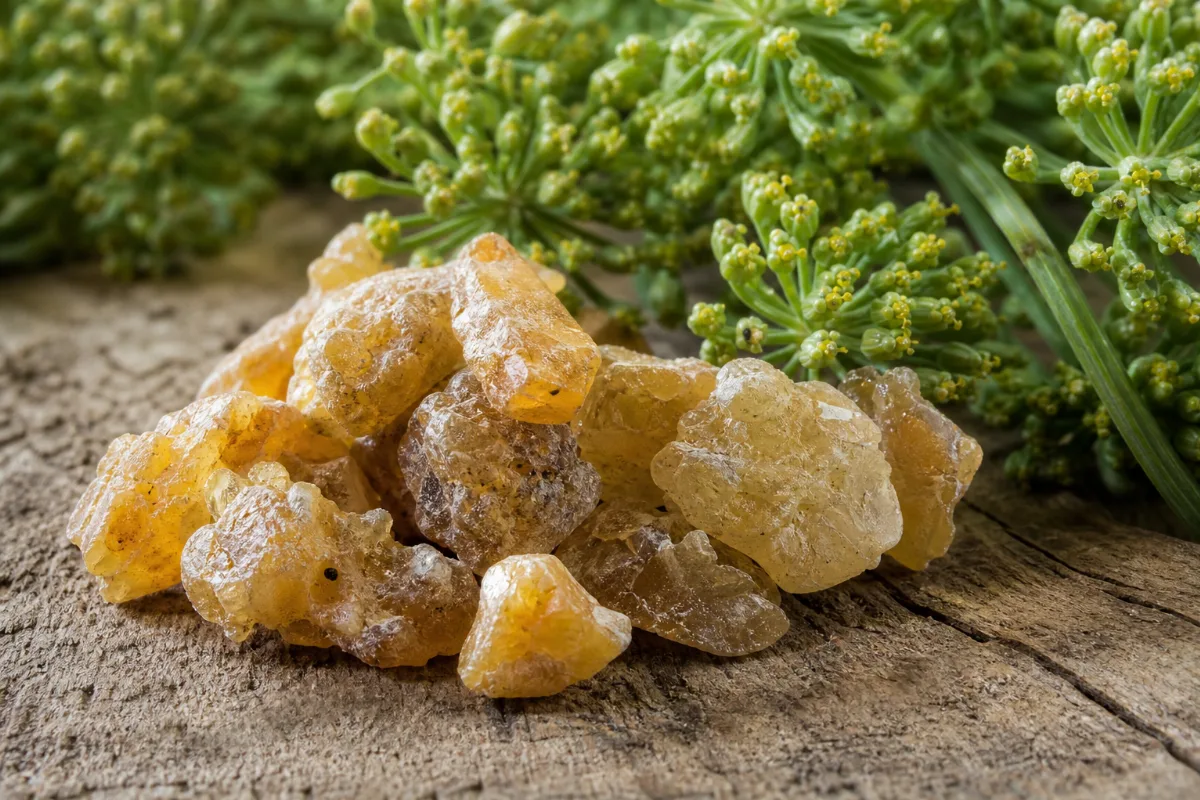
Asafoetida (hing) is a hardened, strong-smelling resin collected from the roots of Ferula plants in the carrot family. It is a kitchen spice and a folk medicine in South Asia and Iran.
Resin compounds include coumarins such as farnesiferol C and galbanic acid, and sulphur compounds that give the smell. GBIF lists Ferula assa-foetida and Ferula foetida as separate accepted species.
What the research shows
The best human evidence is for indigestion: a Cochrane review rated one small asafoetida trial low certainty, and a 2025 trial of a branded formulation (industry-linked) reported less bloating and heartburn.
Small trials in PCOS, severe asthma and COVID-19 (a combination product) exist but are tiny and unconfirmed. Blood pressure, blood sugar and organ protection results are from rats.
Homeopathic asafoetida trials for IBS are very low certainty and are not the spice.
At a glance
Traditional uses history, not proof
- Digestive spice in cooking
- Folk remedy for digestion
- Persian medicine remedy for PCOS
Studied for research
- Indigestion (functional dyspepsia): low
- Irritable bowel (homeopathic dilutions): very low
- Gut bacteria and stool form: low
- Attention and sleep (one trial): low
- PCOS: very low
- Asthma control: low
- COVID-19 (combination product): very low
- Blood pressure, blood sugar, organ protection (rats): insufficient
Main compounds
- Coumarins (farnesiferol C, galbanic acid, umbelliferone)
- Ferulic acid
- Sulphur compounds
Common forms
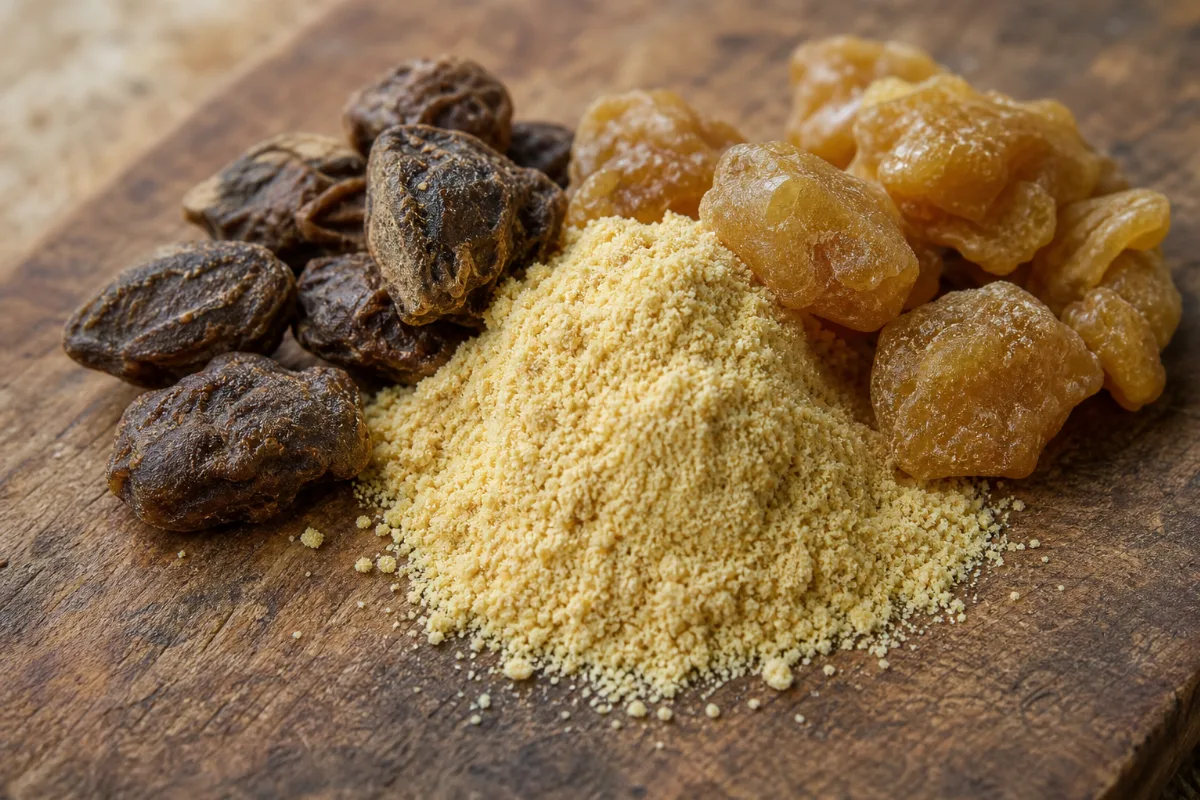
- Resin (oleo-gum resin)
- Ground spice powder
- Capsules and branded extracts
- Homeopathic dilution
Research links: Baez 2023: herbal medicines for functional dyspepsia (Cochrane, PubMed) · Das 2025: asafoetida resin and dyspepsia, randomised trial (PubMed) · Al-Qahtani 2020: infant methaemoglobinaemia case report (PubMed) · Amalraj 2017: Asafoetida review (PubMed) · Research Library · Genes & Biomarkers Library
The plant and its history
- Accepted scientific name
- Ferula assa-foetida L. (and Ferula foetida (Bunge) Regel, treated as a separate accepted species by GBIF)
- Naming authority
- GBIF species match, read 2026-10-25: Ferula assa-foetida L., key 8113074, SPECIES, ACCEPTED, family Apiaceae; Ferula foetida (Bunge) Regel, key 7704723, SPECIES, ACCEPTED, family Apiaceae.
- Synonyms
- Ferula asafoetida (spelling variant); Ferula assafoetida
- Common names
- Asafoetida (English); Hing (Hindi / Ayurveda); Devil's dung (English)
- Botanical family
- Apiaceae (carrot or parsley family), per GBIF.
- Classification
- Plantae > Apiaceae > Ferula > Ferula assa-foetida
- Native range
- Not verified in the sources read. Studies from Iran and India use it.
- Habitat
- Not verified.
- What the plant looks like
- Roots: The oleo-gum resin is collected from the roots/rhizome (rat study abstracts say 'rhizome').; Stems: Not verified.; Leaves: Not verified.; Flowers: Not verified.; Fruit: Not verified.
- Cultivation
- Not covered.
- Harvest and processing
- Not covered. The product is a hardened gum-like resin with a strong sulfurous smell (2017 review).
- Look-alikes and adulterants
- Name: Ferula communis (giant fennel) and other Ferula species; Note: Different species with different compounds (for example ferulenol from F. communis). Evidence from one species should not be assumed for another.
- Sustainability and conservation
- Not covered.
The plant and the parts used
Traditional use and history history, not clinical proof
| Tradition or era | Documented use | Source |
|---|---|---|
| Spice and folk medicine (South Asia, Iran) | Used for centuries as a kitchen spice and folk medicine; recommended for PCOS in Persian medicine. | p28725631 |
| Persian medicine | Recommended for polycystic ovary syndrome (trial introduction). | p39086865 |
| EMA/HMPC | No monograph found. | s-regulators-asafoetida |
Traditional use shows how a plant was used. It does not show that a supplement works or is safe today.
What is inside, and how it may work
What the plant contains and how those compounds act in cells and animals. Laboratory and animal mechanisms are not proven effects in people.
Main compounds
| Compound | Family | Where it is concentrated | Activity studied | Level of evidence |
|---|---|---|---|---|
| Ferulic acid PubChem 445858 | phenolic acid | Not verified for asafoetida | A widely studied plant phenolic with antioxidant activity. Often listed as a constituent of Ferula resins in general sources; its content in asafoetida resin was not confirmed from an abstract we read. 18 | Laboratory research |
| Umbelliferone PubChem 5281426 | simple coumarin | Oleo-gum resin (commonly listed; not confirmed in abstracts read) | Coumarin building block; content in asafoetida not confirmed here. 18 | Laboratory research |
| Farnesiferol C PubChem 15559239 | sesquiterpene coumarin | Ferula species resin | Kills cancer cells and affects the P-glycoprotein drug pump in cell and computer studies; no human data. 9 18 | Laboratory research |
| Galbanic acid PubChem 7082474 | sesquiterpene coumarin | Ferula resins | Acute oral toxicity tested in rats in a separate paper (not read). 18 | Laboratory research |
| Sulphur compounds (resin volatile compounds) | organosulphur | Oleo-gum resin | Responsible for the strong sulfurous smell (2017 review). One trial authors noted hydrogen sulphide in the resin as a rationale for use in COVID-19. 2 6 | Mechanism hypothesis |
Mechanisms, receptors and pathways
| Target or pathway | Gene or receptor | What was found | Level |
|---|---|---|---|
| Angiotensin II type 1 receptor | AT1 receptor | Rat blood pressure rises caused by angiotensin II were reduced by water extracts, with effects close to losartan. 14 15 | Animal research |
| Insulin signalling and glucose uptake | Adiponectin, GLUT4, insulin receptor, AMPK (rat muscle) | Genes were upregulated in diabetic rats given asafoetida. 5 | Animal research |
| Platelet activation / vitamin K recycling | PLCg2, cPLA2; VKORC1 | Ferulenol, a coumarin of Ferula communis (not asafoetida), reduced collagen-triggered platelet clumping in a dish and has been reported to inhibit VKORC1. 13 | Laboratory research |
| Gut microbiome | Not specified | A branded resin formulation shifted gut bacteria in a 14-day human trial; the authors interpret this as a gut-brain effect. 7 | Human data |
Absorption, metabolism and elimination
- Absorption
- Not found in the abstracts read.
- Distribution
- Not found.
- Metabolism
- Not found.
- Elimination
- Not found.
- Bioavailability
- The 2025 trial used a self-emulsifying hydrogel formulation, which suggests absorption of the resin is a design issue, but no figures were found.
Isolated compounds versus whole extracts
Human trials used capsules or a branded formulation of the resin; cell studies use purified coumarins such as farnesiferol C or ferulenol (a different species). Results from purified compounds or other Ferula species should not be assumed for the kitchen spice.
Nutritional composition
Asafoetida is used in small pinches as a flavouring, not as a source of nutrients. Food composition data was not read.
4 low certainty3 very low certainty5 not enough evidence
What is Asafoetida good for?
The studied uses and how strong the evidence is. For asafoetida most human trials are small and the rest is animal or lab work.
Benefits, one by one
Each card is a research question, not a promise. Tap a goal to filter. Open a card to see the studies, doses and limits.
Indigestion (functional dyspepsia)
Low certaintyA 2023 Cochrane review listed asafoetida among herbs that may ease indigestion symptoms, from one small trial with low-certainty evidence. A 2025 placebo-controlled trial of 62 adults with a branded resin formulation reported less bloating, early fullness and heartburn over 14 days. It was linked to the maker.
2 studiesAsafoetida is eaten as a spice in small amounts in cooking. Studies u…
Studies, doses and limits
What the trials found
Two human sources: a Cochrane review that included one asafoetida trial (43 people, low certainty) and a 2025 randomised placebo-controlled trial (62 people, 14 days, industry-linked, branded self-emulsifying formulation).
Results
Cochrane: standardised mean difference -1.51 (95% CI -2.20 to -0.83) versus placebo, 1 study, 43 people. 2025 trial: significant time, treatment and treatment-by-time effects for early satiety, bloating and heartburn (P < .05).
Effect sizes as reported
SMD -1.51 (95% CI -2.20 to -0.83) in the Cochrane review; trial p-values < .05
Why this rating
Low: the Cochrane reviewers rate the asafoetida result low certainty because it rests on one small trial. The 2025 trial is short, small and made by the formulation's maker, so we treat it as supportive, not proof.
Form and dose studied
Asafoetida is eaten as a spice in small amounts in cooking. Studies used capsules or a branded formulation of the resin. Amounts used in studies are not given here; ask a doctor or pharmacist about amounts.
Who was studied
Adults with functional dyspepsia symptoms.
Limits
Few and small trials. The tested product was a branded formulation, not the kitchen spice. Reviewers call for more high-quality trials.
Why researchers looked
Asafoetida is a traditional digestive spice in South Asia and Iran, so indigestion is the most studied human use.
Traditional use
Used as a digestive spice and folk remedy (2017 review). Traditional use is not proof of benefit.
Proposed mechanism Animal evidence
Not established in people. Lab and animal work suggests antispasmodic (gut-relaxing) and antioxidant actions.
A proposed mechanism does not show that the effect happens in people.
Abstracts did not list specific side effects for asafoetida. Do not give to infants (see safety).
Irritable bowel syndrome (homeopathic dilutions)
Very low certaintyTwo small trials tested very dilute homeopathic asafoetida in constipation-type IBS. More people felt better at two weeks than with placebo, but the Cochrane reviewers rate the evidence very low and these dilutions are not the same as the spice.
1 studiesHomeopathic dilution, not the spice or resin. No amounts given here; …
Studies, doses and limits
What the trials found
Cochrane review (4 trials, 307 people; 2 trials, 171 people, tested homeopathic asafoetida). Global improvement at 2 weeks: 73% (46/63) with asafoetida versus 45% (30/66) with placebo.
Results
RR 1.61 (95% CI 1.18 to 2.18) for asafoetida; RR 1.31 (95% CI 0.80 to 2.15) for asafoetida plus nux vomica. Very low certainty.
Effect sizes as reported
RR 1.61 (1.18 to 2.18), very low certainty
Why this rating
Very low per the Cochrane reviewers: unclear or high risk of bias, small trials, no adverse-event reporting. One review author is a homeopath and helped design a trial.
Form and dose studied
Homeopathic dilution, not the spice or resin. No amounts given here; ask a doctor or pharmacist.
Who was studied
Adults with constipation-type IBS.
Limits
Reviewers conclude no firm conclusions can be drawn. No included study reported adverse events.
Why researchers looked
Homeopathic asafoetida has been tested for IBS with constipation.
Traditional use
Not applicable to the spice; homeopathy uses extreme dilutions.
Proposed mechanism None
Not established; a very dilute remedy cannot be compared with the resin.
A proposed mechanism does not show that the effect happens in people.
None reported; none measured.
Gut bacteria and stool form (one dyspepsia trial)
Low certaintyIn the 2025 industry-linked trial, the asafoetida formulation shifted gut bacteria and improved stool form scores over 14 days. These are side results from one small trial and we rate them low.
1 studiesAsafoetida is eaten as a spice in small amounts in cooking. Studies u…
Studies, doses and limits
What the trials found
One 14-day randomised placebo-controlled trial (62 people) of a branded self-emulsifying formulation of the resin.
Results
Stool form: Bristol type 1 stools fell from 65% to 18% and type 2 from 35% to 7% by day 14 (as reported). The Firmicutes-to-Bacteroidetes ratio fell by 71.9% (P < .001).
Effect sizes as reported
Reported percentages; no confidence intervals in the abstract
Why this rating
Low: single, short, small, industry-linked trial; microbiome ratios are not clinical outcomes.
Form and dose studied
Asafoetida is eaten as a spice in small amounts in cooking. Studies used capsules or a branded formulation of the resin. Amounts used in studies are not given here; ask a doctor or pharmacist about amounts.
Who was studied
Adults with dyspepsia symptoms.
Limits
Secondary outcomes; the formulation is a patented product, not plain asafoetida.
Why researchers looked
Researchers looked at the gut-brain link in people with dyspepsia symptoms.
Traditional use
None found.
Proposed mechanism Human evidence limited
The authors propose a gut microbiome-gut-brain effect; this is their interpretation.
A proposed mechanism does not show that the effect happens in people.
No side effects described in the abstract.
Attention and sleep (secondary results in one trial)
Low certaintyThe same 2025 trial reported faster reaction times and better sleep scores after 14 days. It is one small industry-linked trial in people with indigestion, so we rate it low and do not treat asafoetida as a proven brain or sleep aid.
1 studiesAsafoetida is eaten as a spice in small amounts in cooking. Studies u…
Studies, doses and limits
What the trials found
One 62-person randomised placebo-controlled trial (14 days).
Results
Reaction time 44% lower (P < .001); sleep scale change of 10.89 points (P < .001), as reported by the authors.
Effect sizes as reported
44% faster reaction time; sleep score change 10.89 +/- 3.23
Why this rating
Low: secondary outcomes, small sample, short, industry-linked, no replication found.
Form and dose studied
Asafoetida is eaten as a spice in small amounts in cooking. Studies used capsules or a branded formulation of the resin. Amounts used in studies are not given here; ask a doctor or pharmacist about amounts.
Who was studied
Adults with dyspepsia symptoms.
Limits
Not tested in people without indigestion. Not replicated.
Why researchers looked
The trial measured attention and sleep because dyspepsia can affect both.
Traditional use
None found.
Proposed mechanism None
Not established.
A proposed mechanism does not show that the effect happens in people.
No side effects described in the abstract.
Polycystic ovary syndrome (PCOS)
Very low certaintyTwo small Iranian trials tested asafoetida in women with PCOS. One found fewer ovarian follicles than placebo and changes in two blood hormones; the other, with no placebo, reported more pregnancies than a contraceptive pill. Both are tiny and need repeating.
2 studiesAsafoetida is eaten as a spice in small amounts in cooking. Studies u…
Studies, doses and limits
What the trials found
Two randomised trials: 47 women with a placebo and fennel arm (3 months); 30 women compared with a contraceptive pill (two 21-day courses, 8-month follow-up).
Results
Placebo trial: fewer ovarian follicles (p<0.05) and changes in DHEAS and TSH (p<0.03) versus placebo. Contraceptive-comparison trial: more pregnancies (p=0.019) and longer-lasting regular cycles (p=0.001) than the pill.
Effect sizes as reported
Direction and p-values only
Why this rating
Very low: two tiny trials (14 and 15 per asafoetida group), surrogate markers, one without a placebo, abstracts only.
Form and dose studied
Asafoetida is eaten as a spice in small amounts in cooking. Studies used capsules or a branded formulation of the resin. Amounts used in studies are not given here; ask a doctor or pharmacist about amounts.
Who was studied
Women with PCOS.
Limits
Very small; no independent replication found; safety and fertility effects not established. Pregnancy outcomes in a trial do not show it is safe in pregnancy.
Why researchers looked
Asafoetida is recommended for PCOS in Persian medicine.
Traditional use
Persian medicine recommends Ferula assa-foetida for PCOS (trial introduction).
Proposed mechanism None
Not established.
A proposed mechanism does not show that the effect happens in people.
Asafoetida safety in pregnancy is not established; see safety.
Asthma control
Low certaintyA 2026 randomised trial of asafoetida capsules in 74 people with stable severe asthma reported a larger rise in asthma control score than placebo and less wheezing after one month. Lung capacity (FVC) went down, so the picture is mixed.
1 studiesAsafoetida is eaten as a spice in small amounts in cooking. Studies u…
Studies, doses and limits
What the trials found
One 30-day randomised placebo-controlled trial (39 asafoetida, 35 placebo).
Results
ACT score improved more than with placebo (p<0.05); wheezing improved (p<0.001); FVC decreased (p<0.001); no significant difference in complications.
Effect sizes as reported
ACT percent change larger than placebo (p<0.05)
Why this rating
Low: single small short trial, mixed lung function result, abstract only.
Form and dose studied
Asafoetida is eaten as a spice in small amounts in cooking. Studies used capsules or a branded formulation of the resin. Amounts used in studies are not given here; ask a doctor or pharmacist about amounts.
Who was studied
Adults with stable severe asthma.
Limits
Do not replace asthma medicines. One month only; one centre.
Why researchers looked
Asafoetida has been explored for breathing problems and asthma.
Traditional use
Not described in the abstract.
Proposed mechanism None
Not established.
A proposed mechanism does not show that the effect happens in people.
No significant difference in complications versus placebo in this trial.
COVID-19 (combination product)
Very low certaintyA 2024 trial in 122 hospital patients used a product combining asafoetida resin with tragacanth, not asafoetida alone. The abstract gives no test result, so we cannot say whether it helped.
1 studiesNot applicable; ask a doctor.
Studies, doses and limits
What the trials found
One 14-day single-blinded randomised trial (122 patients) of Phytopaj (asafoetida plus tragacanth) plus usual care versus usual care alone.
Results
Mean lymphocyte count and oxygen levels rose more in the Phytopaj group; the abstract gives no p-values.
Effect sizes as reported
Means only
Why this rating
Very low: combination product, single-blind, no placebo, no statistics in the abstract.
Form and dose studied
Not applicable; ask a doctor.
Who was studied
Hospitalised adults with COVID-19.
Limits
The authors do not recommend it for older people or people with other illnesses until more is known.
Why researchers looked
Asafoetida resin contains hydrogen sulphide-releasing compounds, which the authors thought might help breathing.
Traditional use
None.
Proposed mechanism Hypothesis
The authors reasoned that hydrogen sulphide from the resin could help; unproven.
A proposed mechanism does not show that the effect happens in people.
The authors advise against use in older people and those with other illnesses.
Blood pressure (rats only)
Not enough evidenceIn rats, water extracts of asafoetida lowered high blood pressure caused by angiotensin II or a clipped kidney artery, with effects similar to losartan. No human blood pressure trial was found.
3 studiesNot applicable.
Studies, doses and limits
What the trials found
None in people. Two rat studies.
Results
Aqueous extract reduced angiotensin II-induced pressure rises (3 doses) and reduced pressure and oxidative markers over 4 weeks in renovascular hypertensive rats.
Effect sizes as reported
Direction only
Why this rating
Insufficient: animal evidence only; one acute and one 4-week model; one dose given by injection.
Form and dose studied
Not applicable.
Who was studied
Rats.
Limits
Do not use as a blood pressure treatment. May add to blood pressure medicines (theoretical).
Why researchers looked
The review lists a hypotensive (pressure-lowering) action.
Traditional use
Not described.
Proposed mechanism Animal evidence
Authors link it to blocking the angiotensin II type 1 receptor (rats).
A proposed mechanism does not show that the effect happens in people.
Possible additive effect with blood pressure medicines is theoretical, based on rats.
Blood sugar and blood fats (rats only)
Not enough evidenceIn diabetic rats, asafoetida lowered blood glucose by about 49% and improved blood fats and HbA1c. No human diabetes trial was found.
1 studiesNot applicable.
Studies, doses and limits
What the trials found
None in people.
Results
Glucose -49% (asafoetida alone) in male diabetic rats over 8 weeks, plus lower lipids and liver enzymes (p < 0.05).
Effect sizes as reported
Glucose -49% (rats)
Why this rating
Insufficient: male rats only, one dose, no long-term safety data.
Form and dose studied
Not applicable.
Who was studied
Rats.
Limits
Do not use to treat diabetes. May add to the effect of diabetes medicines (theoretical).
Why researchers looked
Asafoetida has been reported to have hypoglycaemic effects in animals.
Traditional use
Not described.
Proposed mechanism Animal evidence
Rat muscle genes for insulin signalling were upregulated (authors' finding).
A proposed mechanism does not show that the effect happens in people.
Possible low blood sugar with diabetes medicines is theoretical, based on rats.
Liver, kidney and testes protection (rodents)
Not enough evidenceRodent studies suggest root and resin extracts reduce chemical damage to the liver, kidneys and testes. A different rat study found liver damage with six weeks of daily asafetida. No human data.
3 studiesNot applicable.
Studies, doses and limits
What the trials found
None in people.
Results
Protection against formaldehyde and the cancer drug doxorubicin in rodents (reviews and a 2026 rat study); contrast with raised AST/LDH and liver tissue damage in rats after 6 weeks of daily asafetida.
Effect sizes as reported
Direction only
Why this rating
Insufficient: mixed rodent results; protective in some models, harmful in another.
Form and dose studied
Not applicable.
Who was studied
Rodents.
Limits
Mixed animal results mean liver safety with long-term use is unknown.
Why researchers looked
Antioxidant and anti-inflammatory activity was seen in lab models.
Traditional use
Not described.
Proposed mechanism Animal evidence
Authors suggest antioxidant, anti-inflammatory and anti-cell-death effects (rodents).
A proposed mechanism does not show that the effect happens in people.
Liver safety is unclear; see safety.
Resin coumarins and cell studies (lab only)
Not enough evidenceResin coumarins such as farnesiferol C kill cancer cells in dishes. This is lab and computer work and says nothing about eating the spice.
1 studiesNot applicable.
Studies, doses and limits
What the trials found
None in people.
Results
Lab and computer studies reviewed for farnesiferol C.
Effect sizes as reported
Not applicable
Why this rating
Insufficient: no human data.
Form and dose studied
Not applicable.
Who was studied
Cell lines.
Limits
Not a treatment. A drug-pump effect is why some interactions cannot be ruled out.
Why researchers looked
The resin contains coumarins, a family of plant compounds under study.
Traditional use
None.
Proposed mechanism Laboratory research
Cell death, effects on tumour blood vessel growth and on the P-glycoprotein drug pump in cells (review).
A proposed mechanism does not show that the effect happens in people.
See interactions.
Traditional use as a digestive spice
Not enough evidenceAsafoetida has been used for centuries as a kitchen spice and folk medicine, especially in South Asia and Iran. Tradition is not proof of benefit.
1 studiesEaten in small amounts in cooking; amounts for health uses are not gi…
Studies, doses and limits
What the trials found
No separate human trial of the culinary spice was found.
Results
Traditional use only.
Effect sizes as reported
Not applicable
Why this rating
Insufficient: tradition only for the spice itself.
Form and dose studied
Eaten in small amounts in cooking; amounts for health uses are not given here.
Who was studied
Adults (traditional).
Limits
No safety study of culinary amounts was found.
Why researchers looked
Culinary and folk use.
Traditional use
Spice and folk medicine for centuries (2017 review).
Proposed mechanism Traditional use
Not established.
A proposed mechanism does not show that the effect happens in people.
Not studied.
Connections to the rest of health
How Asafoetida connects to the rest of our health knowledge graph. Every link says what kind of connection it is. A safety link (for example to the liver) is a warning, not a benefit. A study that merely mentions a topic never creates a benefit link.
Explore every connection: goals, body systems, organs, symptoms, genes
A. Wellness goals
| Connected to | Kind of connection | Evidence status | Context | Studies |
|---|---|---|---|---|
| Digestive Support | Low certainty | Indigestion (functional dyspepsia): A 2023 Cochrane review listed asafoetida among herbs that may ease indigestion symptoms, from one small trial with low-certainty evidence. A 2025 placebo-controlled trial of 62 adults with a branded resin formulation reported less bloating, early fullness and heartburn over 14 days. It was linked to the maker. | 3 7 | |
| Gut Health | Low certainty | Indigestion (functional dyspepsia): A 2023 Cochrane review listed asafoetida among herbs that may ease indigestion symptoms, from one small trial with low-certainty evidence. A 2025 placebo-controlled trial of 62 adults with a branded resin formulation reported less bloating, early fullness and heartburn over 14 days. It was linked to the maker. Irritable bowel syndrome (homeopathic dilutions): Two small trials tested very dilute homeopathic asafoetida in constipation-type IBS. More people felt better at two weeks than with placebo, but the Cochrane reviewers rate the evidence very low and these dilutions are not the same as the spice. | 3 7 17 | |
| Microbiome Balance | Low certainty | Gut bacteria and stool form (one dyspepsia trial): In the 2025 industry-linked trial, the asafoetida formulation shifted gut bacteria and improved stool form scores over 14 days. These are side results from one small trial and we rate them low. | 7 | |
| Better Focus | Low certainty | Attention and sleep (secondary results in one trial): The same 2025 trial reported faster reaction times and better sleep scores after 14 days. It is one small industry-linked trial in people with indigestion, so we rate it low and do not treat asafoetida as a proven brain or sleep aid. | 7 | |
| Better Sleep | Low certainty | Attention and sleep (secondary results in one trial): The same 2025 trial reported faster reaction times and better sleep scores after 14 days. It is one small industry-linked trial in people with indigestion, so we rate it low and do not treat asafoetida as a proven brain or sleep aid. | 7 | |
| Womens Wellness | Very low certainty | Polycystic ovary syndrome (PCOS): Two small Iranian trials tested asafoetida in women with PCOS. One found fewer ovarian follicles than placebo and changes in two blood hormones; the other, with no placebo, reported more pregnancies than a contraceptive pill. Both are tiny and need repeating. | 12 8 | |
| Hormone Balance | Very low certainty | Polycystic ovary syndrome (PCOS): Two small Iranian trials tested asafoetida in women with PCOS. One found fewer ovarian follicles than placebo and changes in two blood hormones; the other, with no placebo, reported more pregnancies than a contraceptive pill. Both are tiny and need repeating. | 12 8 | |
| Fertility Support | Very low certainty | Polycystic ovary syndrome (PCOS): Two small Iranian trials tested asafoetida in women with PCOS. One found fewer ovarian follicles than placebo and changes in two blood hormones; the other, with no placebo, reported more pregnancies than a contraceptive pill. Both are tiny and need repeating. | 12 8 | |
| Lung Support | Low certainty | Asthma control: A 2026 randomised trial of asafoetida capsules in 74 people with stable severe asthma reported a larger rise in asthma control score than placebo and less wheezing after one month. Lung capacity (FVC) went down, so the picture is mixed. | 11 | |
| Breathing Support | Low certainty | Asthma control: A 2026 randomised trial of asafoetida capsules in 74 people with stable severe asthma reported a larger rise in asthma control score than placebo and less wheezing after one month. Lung capacity (FVC) went down, so the picture is mixed. | 11 | |
| Immune Support | Very low certainty | COVID-19 (combination product): A 2024 trial in 122 hospital patients used a product combining asafoetida resin with tragacanth, not asafoetida alone. The abstract gives no test result, so we cannot say whether it helped. | 6 | |
| Blood Pressure Support | Preliminary mechanism | Not enough evidence | Blood pressure (rats only): In rats, water extracts of asafoetida lowered high blood pressure caused by angiotensin II or a clipped kidney artery, with effects similar to losartan. No human blood pressure trial was found. | 14 15 2 |
| Heart Health | Preliminary mechanism | Not enough evidence | Blood pressure (rats only): In rats, water extracts of asafoetida lowered high blood pressure caused by angiotensin II or a clipped kidney artery, with effects similar to losartan. No human blood pressure trial was found. | 14 15 2 |
| Blood Sugar Balance | Preliminary mechanism | Not enough evidence | Blood sugar and blood fats (rats only): In diabetic rats, asafoetida lowered blood glucose by about 49% and improved blood fats and HbA1c. No human diabetes trial was found. | 5 |
| Metabolic Health | Preliminary mechanism | Not enough evidence | Blood sugar and blood fats (rats only): In diabetic rats, asafoetida lowered blood glucose by about 49% and improved blood fats and HbA1c. No human diabetes trial was found. | 5 |
| Liver Support | Preliminary mechanism | Not enough evidence | Liver, kidney and testes protection (rodents): Rodent studies suggest root and resin extracts reduce chemical damage to the liver, kidneys and testes. A different rat study found liver damage with six weeks of daily asafetida. No human data. | 20 19 4 |
| Cellular Protection | Preliminary mechanism | Not enough evidence | Resin coumarins and cell studies (lab only): Resin coumarins such as farnesiferol C kill cancer cells in dishes. This is lab and computer work and says nothing about eating the spice. | 9 |
| Digestive Support | Traditional use | Not enough evidence | Traditional use as a digestive spice: Asafoetida has been used for centuries as a kitchen spice and folk medicine, especially in South Asia and Iran. Tradition is not proof of benefit. | 2 |
B. Body systems
| Connected to | Kind of connection | Evidence status | Context | Studies |
|---|---|---|---|---|
| Blood | Adverse effect or risk | Documented risk | One case report of methaemoglobinaemia. Preparation or compound: Ferula asafoetida herbal remedy in an infant |
1 |
| Liver | Adverse effect or risk | Mixed findings | Raised liver enzymes in rats; protective in other rodent models. Preparation or compound: Asafetida, chronic dosing in rats |
4 19 |
| Heart and circulation | Drug or supplement interaction | Theoretical | Possible added effect with blood pressure and blood-thinning medicines. Preparation or compound: Asafoetida extracts (rat data) |
14 15 13 |
| Digestive System | Biological association | Low certainty | Studied for: Indigestion (functional dyspepsia) Studied for: Irritable bowel syndrome (homeopathic dilutions) | 3 7 17 2 |
| Gut Health | Biological association | Low certainty | Studied for: Indigestion (functional dyspepsia) Studied for: Irritable bowel syndrome (homeopathic dilutions) | 3 7 17 |
| Brain Focus | Biological association | Low certainty | Studied for: Attention and sleep (secondary results in one trial) | 7 |
| Sleep Recovery | Biological association | Low certainty | Studied for: Attention and sleep (secondary results in one trial) | 7 |
| Reproductive Health | Biological association | Very low certainty | Studied for: Polycystic ovary syndrome (PCOS) | 12 8 |
| Hormone Health | Biological association | Very low certainty | Studied for: Polycystic ovary syndrome (PCOS) | 12 8 |
| Respiratory Health | Biological association | Low certainty | Studied for: Asthma control | 11 |
| Immune System | Biological association | Very low certainty | Studied for: COVID-19 (combination product) Studied for: Resin coumarins and cell studies (lab only) | 6 9 |
| Heart Circulation | Biological association | Not enough evidence | Studied for: Blood pressure (rats only) | 14 15 2 |
| Blood Sugar Support | Biological association | Not enough evidence | Studied for: Blood sugar and blood fats (rats only) | 5 |
| Liver Detox | Biological association | Not enough evidence | Studied for: Liver, kidney and testes protection (rodents) | 20 19 4 |
I. Biomarkers
| Connected to | Kind of connection | Evidence status | Context | Studies |
|---|---|---|---|---|
| Dyspepsia symptom scores | Biological association | Low certainty | Measured in trials: decreased. A lab change is not the same as a health benefit. | 7 3 |
| Stool form (Bristol scale) | Biological association | Low certainty | Measured in trials: improved. A lab change is not the same as a health benefit. | 7 |
| Firmicutes-to-Bacteroidetes ratio | Biological association | Low certainty | Measured in trials: decreased. A lab change is not the same as a health benefit. | 7 |
| Choice reaction time | Biological association | Low certainty | Measured in trials: decreased. A lab change is not the same as a health benefit. | 7 |
| Global IBS improvement at 2 weeks | Biological association | Very low certainty | Measured in trials: increased. A lab change is not the same as a health benefit. | 17 |
| Asthma Control Test score | Biological association | Low certainty | Measured in trials: increased. A lab change is not the same as a health benefit. | 11 |
| Ovarian follicle count and hormones | Biological association | Very low certainty | Measured in trials: decreased. A lab change is not the same as a health benefit. | 12 |
| Pregnancy and regular cycles after treatment | Biological association | Very low certainty | Measured in trials: increased. A lab change is not the same as a health benefit. | 8 |
| Blood lymphocyte count | Biological association | Very low certainty | Measured in trials: increased. A lab change is not the same as a health benefit. | 6 |
| Blood glucose in diabetic rats | Biological association | Not enough evidence | Measured in trials: decreased. A lab change is not the same as a health benefit. | 5 |
| Blood pressure in rats | Biological association | Not enough evidence | Measured in trials: decreased. A lab change is not the same as a health benefit. | 14 15 |
| Liver enzymes (AST, LDH) in rats | Biological association | Not enough evidence | Measured in trials: increased. A lab change is not the same as a health benefit. | 4 19 |
K. Biological pathways
L. Active compounds
| Connected to | Kind of connection | Evidence status | Context | Studies |
|---|---|---|---|---|
| Ferulic acid | Biological association | In vitro | A widely studied plant phenolic with antioxidant activity. Often listed as a constituent of Ferula resins in general sources; its content in asafoetida resin was not confirmed from an abstract we read. Preparation or compound: Not verified for asafoetida |
18 |
| Umbelliferone | Biological association | In vitro | Coumarin building block; content in asafoetida not confirmed here. Preparation or compound: Oleo-gum resin (commonly listed; not confirmed in abstracts read) |
18 |
| Farnesiferol C | Biological association | In vitro | Kills cancer cells and affects the P-glycoprotein drug pump in cell and computer studies; no human data. Preparation or compound: Ferula species resin |
9 18 |
| Galbanic acid | Biological association | In vitro | Acute oral toxicity tested in rats in a separate paper (not read). Preparation or compound: Ferula resins |
18 |
| Sulphur compounds (resin volatile compounds) | Biological association | Mechanism hypothesis | Responsible for the strong sulfurous smell (2017 review). One trial authors noted hydrogen sulphide in the resin as a rationale for use in COVID-19. Preparation or compound: Oleo-gum resin |
2 6 |
Each connection is stored with the ingredient, the connected record, the kind of connection, the evidence status, the supporting studies, the preparation or compound involved, and a review date (last reviewed October 25, 2026).
The evidence
The research centre for Asafoetida. Every record here was checked against PubMed or the publisher's page; we never list a study we have not verified.
Evidence by outcome
Bars show how many studies we found for each outcome, not how well it works. People are added up across trials only (reviews are not added, to avoid double counting).
How we rate evidence
High certainty
Several well-run trials or reviews agree; further research is unlikely to change the picture much.
Moderate certainty
Good trials point the same way, but some doubt remains.
Low certainty
Small, short or inconsistent trials. The finding could change with better research.
Very low certainty
Very little or very weak human data. Treat as a possibility only.
Mixed findings
Trials or reviews disagree with each other.
Not enough evidence
Not enough human research to say either way.
Evidence against
Good research found no benefit, or found harm.
We take the reviewers' own risk-of-bias and GRADE statements where they exist, and otherwise judge from study size, design, consistency, directness and whether a product matches what is sold. Many publications do not make evidence high. Method note: We started from our existing herb summary, searched PubMed, read the abstract of each study cited, and checked plant names in GBIF and compounds in PubChem. NCCIH and EMA pages for asafoetida were not found (the addresses returned an error), and LiverTox and LactMed were not opened; those are not verified. Only abstracts were read. Certainty ratings are the compiler's own reading unless the reviewers' own grades are quoted. No study is cited that we could not verify.
Study library: every study we checked 20
| Study | Design | People | Product, dose, length | Result |
|---|---|---|---|---|
| Al-Qahtani 2020 Severe Methemoglobinemia Secondary to Ferula asafoetida Ingestion in an Infant: A Case Report. Saudi J Med Med Sci · PMID 31929780 · DOI |
Case report |
1 One infant with cyanosis and severe breathing difficulty after a herbal remedy containing Ferula asafoetida |
Ferula asafoetida herbal remedy not stated in abstract (herbal remedy) not stated in abstract not stated in abstract · vs not applicable |
Life-threatening methaemoglobinaemia. Methylene blue was not given because the infant's G6PD status was unknown (two brothers had G6PD deficiency); the infant recovered with high-oxygen treatment. The authors suggest avoiding F. asafoetida in infants. Single case; no frequency (not applicable) Methods, limits and fundingOutcomes: Methaemoglobin level; recovery Limitations: One case cannot show how common this is or prove the cause. Funding and conflicts: No conflicts declared. Read: abstract |
| Amalraj 2017 Biological activities and medicinal properties of Asafoetida: A review. J Tradit Complement Med · PMID 28725631 · DOI |
Narrative review review |
Review of laboratory, animal and some clinical studies | Asafoetida (Ferula asafoetida) oleo-gum resin oleo-gum resin not stated in abstract not stated in abstract · vs not applicable |
Describes asafoetida as a strong, sulfurous-smelling oleo-gum resin used for centuries as a spice and folk medicine, and lists reported activities (relaxant, antispasmodic, hypotensive, hepatoprotective, antimicrobial, anticancer, among others). Not applicable (not applicable) Methods, limits and fundingOutcomes: Reported activities Limitations: Narrative review; abstract does not give study numbers; most listed activities are lab or animal findings. Funding and conflicts: Not stated in abstract. Read: abstract |
| Baez 2023 Non-Chinese herbal medicines for functional dyspepsia. Cochrane Database Syst Rev · PMID 37323050 · DOI |
Systematic review |
4477 41 randomised trials, 4477 people with functional dyspepsia, 27 herbal medicines (one asafoetida trial of 43 people) |
Non-Chinese herbal medicines incl. Ferula asafoetida not stated in abstract not stated in abstract not stated in abstract · vs Placebo or other treatments |
For Ferula asafoetida the review lists possible symptom improvement versus placebo from one study of 43 people, low-certainty evidence. The reviewers conclude evidence for herbal medicines is moderate to very low certainty and that more high-quality trials are needed. Almost all studies reported little or no difference in adverse events versus placebo (red pepper was the exception). SMD -1.51 (asafoetida) (95% CI -2.20 to -0.83) Methods, limits and fundingOutcomes: Global dyspepsia symptoms; adverse events; quality of life Limitations: Asafoetida result rests on one small trial; low certainty (GRADE as reported by the reviewers). Funding and conflicts: Cochrane review; funding not read. Read: abstract |
| Bagheri 2015 Evaluation of Toxicity Effects of Asafetida on Biochemical, Hematological, and Histological Parameters in Male Wistar Rats. Toxicol Int · PMID 26862262 · DOI |
Animal study animal |
Male Wistar rats | Asafetida not stated in abstract 25-200 mg/kg (rats), 6 weeks; acute 250-1000 mg/kg 6 weeks · vs Untreated rats |
No deaths or behaviour changes in the acute test. With 6 weeks of daily dosing, blood counts changed (red cells, white cells, haematocrit, platelets), AST and LDH rose, and liver tissue showed damage; kidney markers were unchanged. The authors conclude chronic use could harm liver cells and blood factors. Direction only (not applicable) Methods, limits and fundingOutcomes: Blood counts, kidney and liver markers, tissue slides Limitations: Rats; doses are not comparable to human spice or supplement use. Funding and conflicts: Not stated in abstract. Read: abstract |
| Bagheri 2026 Effects of Limb Remote Ischemic Conditioning and Asafoetida on Biochemical, Histological, and Neurological Parameters and Metabolic Gene Expression in Diabetic Rats. Comb Chem High Throughput Screen · PMID 40947686 · DOI |
Animal study animal |
40 40 male Wistar rats with diet- and streptozotocin-induced type 2 diabetes |
Asafoetida (Ferula assa-foetida) not stated in abstract 50 mg/kg/day by mouth (rats) 8 weeks · vs Diabetic control; remote ischaemic conditioning |
Asafoetida lowered glucose (-49% alone, -41% with conditioning), lipids, liver enzymes and HbA1c versus untreated diabetic rats and improved pain latency and memory scores (p < 0.05). Glucose -49% (rats) (not stated in abstract) Methods, limits and fundingOutcomes: Glucose, lipids, liver enzymes, HbA1c, pain latency, memory Limitations: Rats only, male only, one dose, no long-term safety data (authors' own limits). Funding and conflicts: Not stated in abstract. Read: abstract |
| Bahrami-Taghanaki 2024 The effect of Phytopaj (Ferula assa-foetida L. oleo gum resin and tragacanth) in patients with COVID-19: A randomized clinical trial. Avicenna J Phytomed · PMID 38966627 · DOI |
Controlled trial |
122 122 hospitalised COVID-19 patients |
Phytopaj: Ferula assa-foetida oleo-gum resin plus tragacanth (combination) oleo-gum resin not stated in abstract 14 days · vs Usual care only (single-blinded) |
Lymphocyte count and oxygen figures rose more in the Phytopaj group, but the abstract gives no test result. The authors say it was most useful in moderate COVID-19 and not recommended for older patients or people with other illnesses until more is known. Means only; no p-values in abstract (not stated in abstract) Methods, limits and fundingOutcomes: Blood lymphocyte count, blood oxygen Limitations: Combination product; single-blind; no placebo; no statistics in the abstract. Funding and conflicts: No conflicts declared. Read: abstract |
| Das S 2025 Ferula asafoetida oleo-gum resin alleviates dyspepsia symptoms through modulation of microbiome-gut-brain axis: A randomized, double-blind, placebo-controlled study. Medicine (Baltimore) · PMID 41054174 · DOI |
Controlled trial |
62 62 people with functional dyspepsia symptoms |
Food-grade self-emulsifying hydrogel formulation of Ferula asafoetida oleo-gum resin (ASF) oleo-gum resin 250 mg/day 14 days · vs Placebo |
Significant time, treatment and treatment-by-time effects for early satiety, bloating and heartburn (P < .05). Stool form scale improved; gut bacteria profile shifted; reaction time fell 44% and a sleep score improved (all reported as P < .001 by the authors). Symptom scores improved vs placebo; reaction time -44% (not stated in abstract) Methods, limits and fundingOutcomes: Dyspepsia symptom scale (Leuven), stool form, gut microbiome, reaction time, sleep scale Limitations: Short (14 days); small; patented branded formulation, not the plain spice; microbiome and cognitive results are secondary and the authors' own conclusions are strong. Abstract only. Funding and conflicts: Industry-linked: the formulation is made by Akay Natural Ingredients; several authors work for the company. Read: abstract |
| Dehparvar 2024 A preliminary report comparing the effect of Asafoetida with oral contraceptive on polycystic ovarian syndrome in a double-blind randomized trial. Avicenna J Phytomed · PMID 39086865 · DOI |
Controlled trial |
30 30 women with polycystic ovary syndrome (PCOS) |
Asafoetida (Ferula assafoetida L.) not stated in abstract 1 g/day Two 21-day courses · vs Low-dose oral contraceptive pill |
More pregnancies (p=0.019) and longer regular cycles (p=0.001) in the asafoetida group than the contraceptive group over eight months of follow-up. Blood fats rose with the contraceptive pill. There was no placebo group. Direction and p-values only (not stated in abstract) Methods, limits and fundingOutcomes: Menstrual regularity, pregnancy, blood tests, ovarian ultrasound Limitations: Tiny trial, preliminary, no placebo (compared with a contraceptive pill, which would be expected to prevent pregnancy), authors' conclusion that it is safe is not supported by a safety measure in the abstract. Funding and conflicts: No conflicts declared. Read: abstract |
| El Bitar 2025 A review of Farnesiferol C: From molecular insights to anticancer potential and emerging therapeutic applications. Biomed Pharmacother · PMID 41175593 · DOI |
Narrative review in-vitro |
Cell and computer studies | Farnesiferol C, a sesquiterpene coumarin from Ferula species purified compound not stated in abstract not stated in abstract · vs not applicable |
Describes a sesquiterpene coumarin from Ferula species that kills cancer cells in dishes and affects the P-glycoprotein drug pump. Mentions antioxidant, antidiabetic, antiviral and anti-inflammatory activity in lab work. No human data. Not applicable (not applicable) Methods, limits and fundingOutcomes: Cell death, blood vessel growth, drug-pump (P-glycoprotein) effects Limitations: Lab and computer evidence only; the abstract says 'primarily from Ferula species' without naming asafoetida. Funding and conflicts: No conflicts declared. Read: abstract |
| GBIF 2026 GBIF species match: Ferula assa-foetida and Ferula foetida GBIF API · Source |
Database record plant |
GBIF species match (read 2026-10-25): 'Ferula assa-foetida L.' key 8113074, rank SPECIES, status ACCEPTED, family Apiaceae. 'Ferula foetida (Bunge) Regel' key 7704723, rank SPECIES, status ACCEPTED, family Apiaceae. GBIF treats these as two separate accepted species. Methods, limits and fundingLimitations: Names only; which species supplies a given commercial hing was not established. Read: API response | ||
| Ghafari 2026 Therapeutic effects of Asafoetida (Ferula foetida oleo-gum-resin) on lung function tests, clinical symptoms, and blood parameters in asthmatic patients. Avicenna J Phytomed · PMID 42920811 · DOI |
Controlled trial |
74 74 people with stable severe asthma (39 asafoetida, 35 placebo) |
Ferula foetida oleo-gum-resin capsules oleo-gum resin 300 mg capsules daily 1 month · vs Placebo capsules |
ACT score rose in both groups; the rise was larger with asafoetida than placebo (p<0.05). Wheezing improved (p<0.001). Forced vital capacity decreased (p<0.001); the abstract does not explain this. No significant difference in complications between groups. ACT change larger than placebo (p<0.05) (not stated in abstract) Methods, limits and fundingOutcomes: Asthma control test (ACT), wheeze, lung function, blood counts Limitations: Small, one month, single centre; mixed lung function result; abstract only. Funding and conflicts: No conflicts declared. Read: abstract |
| Ghavi 2023 "Ferula assa-foetida L" or "Foeniculum vulgare"? Which one is more effective in the management of polycystic ovarian syndrome? A randomized, placebo controlled, triple-blinded. Avicenna J Phytomed · PMID 37655000 · DOI |
Controlled trial |
47 47 women with PCOS |
Ferula assa-foetida L. not stated in abstract 100 mg twice daily 3 months · vs Fennel; placebo |
Fewer ovarian follicles than placebo (p<0.05) and changes in DHEAS and TSH levels (p<0.03) in the asafoetida group. The abstract does not report cycle regularity or fertility outcomes. Direction and p-values only (not stated in abstract) Methods, limits and fundingOutcomes: Ovarian follicle count, hormones, thyroid-stimulating hormone Limitations: Small trial (14 per asafoetida group); surrogate markers only; abstract only. Funding and conflicts: The authors state no relationship with the company Barij Essence. Read: abstract |
| Huang 2026 Ferulenol, a Prenylated Coumarin, Suppresses Collagen-Induced Platelet Activation via PLCg2-Mediated cPLA2 Signaling in Humans. Pharmazie · PMID 42411791 · DOI |
Laboratory research in-vitro |
Platelets from healthy donors in a dish; mice | Ferulenol, a coumarin from a different species, Ferula communis (not asafoetida) purified compound 10-40 uM in a dish acute · vs Untreated platelets |
Ferulenol reduced collagen-triggered platelet clumping in a dish. In mice it delayed clot formation without clearly lengthening bleeding time. The authors note ferulenol has been reported to inhibit the vitamin K recycling enzyme VKORC1 that warfarin targets. Concentration-dependent (dish) (not applicable) Methods, limits and fundingOutcomes: Platelet clumping; mouse clot and bleeding time Limitations: A different species and a purified compound; not tested in people; shows why a blood-thinner interaction cannot be ruled out, not that one exists. Funding and conflicts: Not stated in abstract. Read: abstract |
| Kazemi 2020 Antihypertensive Effects of Standardized Asafoetida: Effect on Hypertension Induced by Angiotensin II. Adv Biomed Res · PMID 33912493 · DOI |
Animal study animal |
36 36 male rats given angiotensin II |
Aqueous extract of asafoetida oleo-gum resin oleo-gum resin (water extract) 10, 30, 60 mg/kg injected into the abdomen (rats) acute · vs Losartan; control |
All three doses reduced the blood pressure rise caused by angiotensin II; the lowest dose was as effective as losartan. The authors link this to blocking the angiotensin II type 1 receptor. Direction only (not applicable) Methods, limits and fundingOutcomes: Systolic and mean blood pressure, heart rate Limitations: Rats; injected not eaten; acute model. Funding and conflicts: No conflicts declared. Read: abstract |
| Kazemi 2023 Antihypertensive and Antioxidant Effects of an Aqueous Extract of Asafetida in Renovascular Hypertensive Rats. Saudi J Kidney Dis Transpl · PMID 38995276 · DOI |
Animal study animal |
Rats with renal-artery-clip high blood pressure | Aqueous extract of asafetida gum gum (water extract) not stated in abstract (gavage) 4 weeks · vs Losartan; sham |
Extract reduced blood pressure and oxidative stress markers in heart and kidney, with an effect similar to losartan. Direction only (not applicable) Methods, limits and fundingOutcomes: Blood pressure, oxidative markers in heart and kidney Limitations: Rats only. Funding and conflicts: Not stated in abstract. Read: abstract |
| NIH; EMA; 2026 NCCIH, EMA/HMPC, LiverTox and LactMed entries for asafoetida NCCIH; EMA; LiverTox; LactMed |
Not found |
On 2026-10-25 the addresses https://www.nccih.nih.gov/health/asafoetida and https://www.ema.europa.eu/en/medicines/herbal/asafoetida both returned HTTP 404. No NCCIH page or EMA/HMPC herbal monograph for asafoetida was found. LiverTox and LactMed entries were not opened or searched in detail. Methods, limits and fundingLimitations: Not found / not opened, so NOT verified. Absence of a page is not proof of safety. Read: not opened | ||
| Peckham 2019 Homeopathy for treatment of irritable bowel syndrome. Cochrane Database Syst Rev · PMID 31483486 · DOI |
Systematic review |
307 4 randomised trials, 307 people with irritable bowel syndrome; 2 trials (171 people, constipation-type IBS) tested homeopathic asafoetida |
Homeopathic asafoetida (very dilute) or asafoetida plus nux vomica homeopathic dilution (not the plant part) not applicable (homeopathic dilution) 2 weeks (asafoetida trials) · vs Placebo or usual care |
At two weeks 73% (46/63) in the asafoetida groups reported global improvement versus 45% (30/66) with placebo (RR 1.61); the asafoetida plus nux vomica trial was not clearly different (68% vs 52%, RR 1.31). Certainty very low. No included study reported adverse events. RR 1.61 (asafoetida); RR 1.31 (with nux vomica) (1.18 to 2.18; 0.80 to 2.15) Methods, limits and fundingOutcomes: Global symptom improvement; pain; stool; adverse events Limitations: Homeopathic dilutions are not the same as the spice; unclear or high risk of bias; one review author is a homeopath and helped design an included trial. Funding and conflicts: A review author is a homeopath (declared). Read: abstract |
| PubChem 2026 PubChem compound records: ferulic acid, umbelliferone, farnesiferol C, galbanic acid, umbelliprenin PubChem API · Source |
Database record chemical |
Read 2026-10-25: ferulic acid CID 445858 (C10H10O4); umbelliferone CID 5281426 (C9H6O3); farnesiferol C CID 15559239 (C24H30O4); (-)-galbanic acid CID 7082474 (C24H30O5); umbelliprenin CID 1781413 (C24H30O3). The records confirm the compounds exist; they do not show how much is in asafoetida. Methods, limits and fundingLimitations: Identifiers only. Sulphur compounds were not looked up (no specific compound confirmed from an abstract). Read: API response | ||
| Safdar 2026 Protective Effects of Ferula Asafoetida Against Subacute Doxorubicin-Induced Hepatotoxicity as Well as Nephrotoxicity Biomarkers and Histopathology. Chem Biodivers · PMID 41883009 · DOI |
Animal study animal |
Wistar rats given the chemotherapy drug doxorubicin | Hydroethanolic extract of Ferula asafetida not stated in abstract 100-300 mg/kg daily (rats) 28 days · vs Doxorubicin alone |
The extract dose-dependently reversed doxorubicin-raised liver and kidney markers and tissue injury. Screening found coumarins, phenols, flavonoids and terpenoids. Direction only (not applicable) Methods, limits and fundingOutcomes: Liver and kidney markers and tissue slides Limitations: Rats; extract not the spice. Funding and conflicts: Not stated in abstract. Read: abstract |
| Thulluri 2025 A Review of the Protective Effects of Ferula asafoetida on the Liver, Kidney, and Testes Against Formaldehyde-Induced Damage. Cureus · PMID 40144445 · DOI |
Narrative review animal |
Rodent studies of formaldehyde toxicity | Ferula asafoetida root extracts root extract not stated in abstract not stated in abstract · vs not applicable |
Rodent studies suggest root extracts may reduce formaldehyde-induced damage. The authors note methodological differences between studies and call for controlled clinical trials. Direction only (not applicable) Methods, limits and fundingOutcomes: Oxidative damage, inflammation, cell death in liver, kidney, testes Limitations: Animal evidence only; heterogeneous methods. Funding and conflicts: No funding or conflicts declared. Read: abstract |
What we do not know yet
- No large independent trial of plain asafoetida spice or resin for indigestion or IBS.
- No human data on pregnancy, breastfeeding or long-term use.
- No human interaction study with blood thinners, blood pressure or diabetes medicines.
- No comparison of culinary amounts with supplement amounts.
- Compound content of commercial hing was not confirmed.
How new research is added
New studies are found by a saved PubMed search and placed in a review queue. A person reads each one before it changes any evidence rating or safety wording.
Lab markers
What changed in blood or saliva tests during trials. A changed number is not the same as feeling or being healthier, and we give no "normal ranges".
Other 12
Dyspepsia symptom scores
Decreased in trials
Rating scales for bloating, early fullness, heartburn and general indigestion.
Low certaintyResults and what it means
Why it was measured
Used to judge indigestion treatments.
Statistical vs. clinical meaning
Symptom scores are patient-reported and sensitive to placebo effect.
Safety implication
None.
| Study | Result | People | Product |
|---|---|---|---|
| 7 | Early satiety, bloating and heartburn improved versus placebo (P < .05) | 62 adults with dyspepsia symptoms | Branded asafoetida oleo-gum-resin formulation vs placebo, 14 days |
| 3 | Asafoetida SMD -1.51 (95% CI -2.20 to -0.83) versus placebo, 1 study, 43 people, low certainty | People with functional dyspepsia | Ferula asafoetida vs placebo |
Stool form (Bristol scale)
Improved in trials
A seven-type picture scale of stool shape, from hard lumps to watery.
Low certaintyResults and what it means
Why it was measured
Used to judge constipation and diarrhoea.
Statistical vs. clinical meaning
Self-reported; one trial.
Safety implication
None reported.
| Study | Result | People | Product |
|---|---|---|---|
| 7 | Type 1 stools fell from 65% to 18% and type 2 from 35% to 7% by day 14 | 62 adults with dyspepsia symptoms | Branded asafoetida formulation vs placebo |
Firmicutes-to-Bacteroidetes ratio
Decreased in trials
A rough measure of two large groups of gut bacteria.
Low certaintyResults and what it means
Why it was measured
Used in microbiome research.
Statistical vs. clinical meaning
The ratio is a research marker whose meaning for health is debated.
Safety implication
None.
| Study | Result | People | Product |
|---|---|---|---|
| 7 | Ratio fell 71.9% (P < .001); alpha diversity rose (P < .05) | 62 adults with dyspepsia symptoms | Branded asafoetida formulation vs placebo |
Choice reaction time
Decreased in trials
How fast a person responds to a signal; a simple attention test.
Low certaintyResults and what it means
Global IBS improvement at 2 weeks
Increased in trials
The share of people who say their overall IBS symptoms improved.
Very low certaintyResults and what it means
Why it was measured
Used to judge IBS treatments.
Statistical vs. clinical meaning
Homeopathic dilution; very low certainty.
Safety implication
No adverse events were reported by the included studies.
| Study | Result | People | Product |
|---|---|---|---|
| 17 | 73% (46/63) vs 45% (30/66) with placebo; RR 1.61 (95% CI 1.18 to 2.18); very low certainty | 171 people with constipation-type IBS in 2 trials | Homeopathic asafoetida vs placebo |
Asthma Control Test score
Increased in trials
A short questionnaire scoring asthma symptoms over the past weeks.
Low certaintyResults and what it means
Why it was measured
Used to track asthma control.
Statistical vs. clinical meaning
Self-reported; both groups improved.
Safety implication
FVC decreased (p<0.001) in the same trial.
| Study | Result | People | Product |
|---|---|---|---|
| 11 | Percent change larger than placebo (p<0.05); wheezing improved (p<0.001) | 74 adults with stable severe asthma | Asafoetida oleo-gum-resin capsules vs placebo, 1 month |
Ovarian follicle count and hormones
Decreased in trials
Ultrasound count of small ovarian follicles; blood DHEAS and TSH.
Very low certaintyResults and what it means
Why it was measured
Used to monitor PCOS.
Statistical vs. clinical meaning
Surrogate markers in a tiny trial.
Safety implication
None reported.
| Study | Result | People | Product |
|---|---|---|---|
| 12 | Fewer ovarian follicles (p<0.05); DHEAS and TSH changed (p<0.03) vs placebo | 47 women with PCOS | Ferula assa-foetida vs fennel vs placebo, 3 months |
Pregnancy and regular cycles after treatment
Increased in trials
Pregnancies and regular menstrual cycles in the 8 months after treatment.
Very low certaintyResults and what it means
Why it was measured
Used to judge fertility treatments in PCOS.
Statistical vs. clinical meaning
The comparison drug prevents pregnancy, so the comparison is not neutral.
Safety implication
Does not show asafoetida is safe in pregnancy.
| Study | Result | People | Product |
|---|---|---|---|
| 8 | More pregnancies (p=0.019) and longer regular cycles (p=0.001) than with a contraceptive pill | 30 women with PCOS | Asafoetida vs low-dose oral contraceptive |
Blood lymphocyte count
Increased in trials
White blood cell type used as a general immune marker.
Very low certaintyResults and what it means
Why it was measured
Measured in COVID-19 trials.
Statistical vs. clinical meaning
No statistics in abstract; combination product.
Safety implication
None reported.
| Study | Result | People | Product |
|---|---|---|---|
| 6 | Mean count 1,015.90 to 1,652.27 per microlitre with Phytopaj vs 1,104.28 to 1,326.12 with usual care; no p-values in the abstract | 122 hospital patients with COVID-19 | Asafoetida plus tragacanth (Phytopaj) vs usual care |
Blood glucose in diabetic rats
Decreased in trials
Blood sugar in rats given a high-fat diet and streptozotocin.
Not enough evidenceResults and what it means
Why it was measured
Used in animal diabetes models.
Statistical vs. clinical meaning
Rats only.
Safety implication
Possible additive effect with diabetes medicines (theoretical).
| Study | Result | People | Product |
|---|---|---|---|
| 5 | Glucose -49% with asafoetida alone (-41% with conditioning) vs diabetic controls | 40 male diabetic rats | Asafoetida by mouth, 8 weeks |
Blood pressure in rats
Decreased in trials
Systolic and mean arterial pressure measured through an artery catheter in rats.
Not enough evidenceResults and what it means
Why it was measured
Used in animal hypertension models.
Statistical vs. clinical meaning
Rats only.
Safety implication
Possible additive effect with blood pressure medicines (theoretical).
Liver enzymes (AST, LDH) in rats
Increased in trials
Blood enzymes that rise when liver cells are damaged.
Not enough evidenceResults and what it means
Why it was measured
Used to screen for liver toxicity.
Statistical vs. clinical meaning
Mixed rat results.
Safety implication
Human liver safety unknown.
Safety
What studies and official sources say about side effects, medicines and who should check first. Each point shows what kind of evidence it comes from.
Main points to know 3
- Do not give to infants: a case report of dangerous blood-oxygen problems (methaemoglobinaemia). A 2020 case report describes an infant who was given a Ferula asafoetida herbal remedy and developed life-threatening methaemoglobinaemia, a blood problem that stops red cells carrying oxygen well. The baby had blue skin and severe breathing difficulty and recovered with high-oxygen treatment. The authors suggest the remedy be avoided in infants and say infants are more prone because an enzyme that clears methaemoglobin is less active. It is one case, so how common this is is unknown. Case report 1
- No safety data found for pregnancy, breastfeeding, long-term use or most medicine combinations. We found no human study of asafoetida in pregnancy or breastfeeding, and no regulator page. Absence of data is not proof of safety. A PCOS trial that reported pregnancies does not show asafoetida is safe in pregnancy. Authoritative guidance 16 8
- Liver: mixed rat results, nothing in people. One rat study found raised liver enzymes and liver tissue damage after six weeks of daily asafetida, while other rodent studies found protection against chemical liver injury. No case of human liver injury from asafoetida was found in our searches, but we did not search liver case reports exhaustively. Animal study 4 19 20
Side effects 3
| Effect | How often | Severity and recovery | Evidence |
|---|---|---|---|
| Methaemoglobinaemia in an infant (blue skin, severe breathing difficulty) Single case; authors suggest avoiding asafoetida in infants. Do not give asafoetida or hing remedies to babies. | Not established | life-threatening in the one reported case Recovered with high-oxygen treatment in the reported case | Case report 1 |
| Stomach and gut effects, strong smell and taste The resin has a strong sulfurous smell. The Cochrane review said almost all herbal dyspepsia trials found little or no difference in adverse events versus placebo, but the asafoetida trial's own adverse events were not given in the abstract, and the 2025 trial abstract listed none. Specific stomach side effects of asafoetida are not quantified in the sources we read. | Not established | not stated Not stated | Authoritative guidance 2 3 |
| Asthma-trial complications No significant difference in complications between asafoetida and placebo capsules over one month in 74 people with severe asthma; forced vital capacity decreased in the asafoetida group (p<0.001), which the abstract does not explain. | Not established | not stated Not stated | Controlled trial 11 |
Liver
Rat studies disagree. After six weeks of daily asafetida, rats had raised AST and LDH and liver tissue damage, and the authors warned that long-term use could harm liver cells and blood factors. In other rodent models, extracts protected against formaldehyde or doxorubicin liver injury. No human liver injury case was found in our PubMed searches, and the LiverTox entry (if any) was not opened. 4 19 20 16
How often. Unknown; cannot be estimated from animal studies.
Monitoring. No agency monitoring advice was found. People with liver disease should ask a doctor or pharmacist before using concentrated asafoetida.
This is a safety connection. It is not evidence that Asafoetida supports liver health.
Medicines and supplements 4
| With | Why it matters | Importance | Evidence | What to do |
|---|---|---|---|---|
| Blood thinners (warfarin, other anticoagulants) and antiplatelet medicines drug | Asafoetida resin contains coumarins. A coumarin from a different species, Ferula communis (ferulenol), reduced platelet clumping in a dish and has been reported to inhibit the vitamin K enzyme that warfarin targets. Whether asafoetida does the same in people is not known. | Possible extra bleeding risk is theoretical. No human interaction report or trial was found. | Laboratory research Very low certainty 13 9 | If you take a blood thinner, ask your doctor or pharmacist before using asafoetida supplements or large amounts, and mention it before surgery. |
| Blood pressure medicines (including losartan-type medicines) drug | In rats, water extracts of asafoetida lowered high blood pressure by a route linked to the angiotensin II receptor, the same target as losartan. | Possible extra pressure lowering and dizziness is theoretical; no human trial of blood pressure was found. | Animal evidence Very low certainty 14 15 | Tell your doctor or pharmacist if you use asafoetida supplements and take blood pressure medicines. |
| Diabetes medicines drug | In diabetic rats asafoetida lowered blood glucose by about 49%. | Possible low blood sugar with diabetes medicines is theoretical; no human trial was found. | Animal evidence Very low certainty 5 | If you have diabetes, ask your doctor or pharmacist before using asafoetida supplements and watch for low-sugar symptoms. |
| Medicines moved by the P-glycoprotein drug pump drug | A review of farnesiferol C, a Ferula coumarin, describes effects on the P-glycoprotein drug pump in cells. | Unknown; lab finding only. | Laboratory research Very low certainty 9 | Ask a pharmacist if you take narrow-margin medicines. |
Who should check first 4
| Situation | Advice | Evidence |
|---|---|---|
| Infants and young babies (including as a colic or tummy rub remedy) | Do not give asafoetida or hing remedies to infants, because of the methaemoglobinaemia case report. | Case report 1 |
| Pregnancy and breastfeeding | No human safety data were found. Avoid medicinal or supplement amounts unless a doctor agrees. Small amounts in cooking were not studied for safety either. | Authoritative guidance 16 |
| Known G6PD deficiency or unexplained blue skin/lips in a child | The infant case involved a family with G6PD deficiency, and treatment was affected by the unknown G6PD status. Ask a doctor before giving any herbal remedy to a child with G6PD deficiency in the family. | Case report 1 |
| Liver disease, bleeding disorders, planned surgery, or people on blood thinners, blood pressure or diabetes medicines | Ask a doctor or pharmacist before using medicinal amounts. Liver and bleeding effects in people are unknown. | Animal evidence 4 13 14 5 |
Overdose, product quality and regulators
Summary. In rats, no deaths or behaviour changes occurred after single oral doses of asafetida, but six weeks of daily dosing changed blood counts, raised AST and LDH and damaged liver tissue.
Animal. Male Wistar rats: acute 250-1000 mg/kg by mouth (no deaths in 72 h); chronic 25-200 mg/kg for 6 weeks (liver and blood changes).
Human doses studied. Human trials used capsules or a branded formulation for 14 days to 3 months; no safety endpoint beyond the abstracts was found. Amounts are not given here.
High dose or long term signals. Liver and blood changes in rats with chronic dosing. Methaemoglobinaemia in one infant.
Overdose response. Not found. Seek urgent care for blue lips or skin, breathlessness or severe vomiting.
Genotoxicity. Not found in the sources read.
Toxic plant parts. The oleo-gum resin from the roots is the part used. No separate toxic plant part was identified in the sources read.
No study of asafoetida purity or adulteration was found. Retail hing can be sold as a mix; whether commercial products contain fillers was not established in the sources we read.
| Body | Action | Date |
|---|
When to get medical help
- Blue or grey lips, skin or nails, fast breathing, or unusual sleepiness in a baby or child (call emergency services)
- Chest pain or sudden shortness of breath
- Unusual bleeding or bruising if you take blood thinners
- Yellow skin or eyes, dark urine or severe upper-belly pain
Stop the supplement and contact a clinician or emergency service. In the US, Poison Control is 1-800-222-1222.
General information only, not medical advice. Ask a clinician or pharmacist before use, especially with medicines, in pregnancy or with a health condition. See the Natural Remedy Safety guide.
Frequently asked questions
What is asafoetida (hing)?
Asafoetida, called hing in India, is a hardened resin from the roots of Ferula plants, mainly Ferula assa-foetida. It has a strong sulfurous smell and is used in small pinches in cooking and in traditional medicine. GBIF lists both Ferula assa-foetida and Ferula foetida as accepted species, so products may come from either.
Does asafoetida help indigestion?
Is asafoetida safe for babies?
No. A 2020 case report describes a life-threatening blood problem called methaemoglobinaemia in an infant given an asafoetida herbal remedy. The infant recovered with oxygen treatment. The authors suggest avoiding it in infants. It is one case, but it is serious, so do not give hing remedies to babies. Get urgent help if a baby has blue or grey lips or skin or trouble breathing.
Is asafoetida safe in pregnancy or while breastfeeding?
Not known. We found no human safety study and no regulator page for pregnancy or breastfeeding. Absence of data is not proof of safety, so ask a doctor or midwife before using medicinal amounts.
Is the spice in cooking the same as a supplement?
Can asafoetida interact with blood thinners?
Does asafoetida lower blood pressure or blood sugar?
Can asafoetida harm the liver?
What side effects does asafoetida cause?
Does asafoetida help with PCOS or asthma?
Explore by health goal
Gut HealthDigestive SupportMicrobiome BalanceBetter FocusBetter SleepWomens WellnessHormone BalanceFertility SupportLung SupportBreathing SupportImmune SupportBlood Pressure SupportHeart HealthBlood Sugar BalanceMetabolic HealthLiver SupportCellular Protection
Editorial transparency
- Written by
- AlternativeMed editorial team. Research compiled with AI assistance, then checked against PubMed records.
- Medical review
- None. This page has not been reviewed by a physician or pharmacist.
- First published
- 2026-10-25
- Last substantive update
- 2026-10-25
- How we research
- We started from our existing herb summary, searched PubMed, read the abstract of each study cited, and checked plant names in GBIF and compounds in PubChem. NCCIH and EMA pages for asafoetida were not found (the addresses returned an error), and LiverTox and LactMed were not opened; those are not verified. Only abstracts were read. Certainty ratings are the compiler's own reading unless the reviewers' own grades are quoted. No study is cited that we could not verify.
- How we rate evidence
- See "How we rate evidence" in the Evidence tab.
- Independence
- No product is promoted on this page. No affiliate links are shown.
Sources 20
Each source was opened and checked. Where we read only the abstract, it says so. The small numbers in the text point here.
- Al-Qahtani S, Abusham S, Alhelali I. Severe Methemoglobinemia Secondary to Ferula asafoetida Ingestion in an Infant: A Case Report.. Saudi J Med Med Sci. 2020. PMID 31929780. DOI 10.4103/sjmms.sjmms_5_18. (abstract)
- Amalraj A, Gopi S. Biological activities and medicinal properties of Asafoetida: A review.. J Tradit Complement Med. 2017. PMID 28725631. DOI 10.1016/j.jtcme.2016.11.004. (abstract)
- Baez G, Vargas C, Arancibia M, Papuzinski C, Franco JV. Non-Chinese herbal medicines for functional dyspepsia.. Cochrane Database Syst Rev. 2023. PMID 37323050. DOI 10.1002/14651858.CD013323.pub2. (abstract)
- Bagheri SM, Yadegari M, Mirjalily A, Rezvani ME. Evaluation of Toxicity Effects of Asafetida on Biochemical, Hematological, and Histological Parameters in Male Wistar Rats.. Toxicol Int. 2015. PMID 26862262. DOI 10.4103/0971-6580.172258. (abstract)
- Bagheri SM, Hakimizadeh E, Allahtavakoli M. Effects of Limb Remote Ischemic Conditioning and Asafoetida on Biochemical, Histological, and Neurological Parameters and Metabolic Gene Expression in Diabetic Rats.. Comb Chem High Throughput Screen. 2026. PMID 40947686. DOI 10.2174/0113862073379526250813000428. (abstract)
- Bahrami-Taghanaki HR, Hoseinzadeh H, Hamedi S, Nejad-Bajestani MJ, Esmaeilzadeh N, Abdollahzadeh H, Hoseini-Asil S, Haghighi G, Bojdi A. The effect of Phytopaj (Ferula assa-foetida L. oleo gum resin and tragacanth) in patients with COVID-19: A randomized clinical trial.. Avicenna J Phytomed. 2024. PMID 38966627. DOI 10.22038/AJP.2023.22800. (abstract)
- Das S S, Rm V, Aneesa PA, Joy Parappilly S, Natinga Mulakal J, Chakrapani Ps B, Illathu Madhavamenon K. Ferula asafoetida oleo-gum resin alleviates dyspepsia symptoms through modulation of microbiome-gut-brain axis: A randomized, double-blind, placebo-controlled study.. Medicine (Baltimore). 2025. PMID 41054174. DOI 10.1097/MD.0000000000044590. (abstract)
- Dehparvar N, Garshasbi A, Niasari-Naslaji A, Alijaniha F, Gholami-Fesharaki M, Ghaffari F, Naseri M. A preliminary report comparing the effect of Asafoetida with oral contraceptive on polycystic ovarian syndrome in a double-blind randomized trial.. Avicenna J Phytomed. 2024. PMID 39086865. DOI 10.22038/AJP.2023.23122. (abstract)
- El Bitar L, Sarraf F, Nafeh P, Habib A, Mahfoud I, Yazbeck A, Younes M, Wex B, Rizk S. A review of Farnesiferol C: From molecular insights to anticancer potential and emerging therapeutic applications.. Biomed Pharmacother. 2025. PMID 41175593. DOI 10.1016/j.biopha.2025.118725. (abstract)
- GBIF. GBIF species match: Ferula assa-foetida and Ferula foetida. GBIF API. 2026. (API response)
- Ghafari S, Hojati V, Boskabady MH, Mirsadraei M. Therapeutic effects of Asafoetida (Ferula foetida oleo-gum-resin) on lung function tests, clinical symptoms, and blood parameters in asthmatic patients.. Avicenna J Phytomed. 2026. PMID 42920811. DOI 10.22038/ajp.2025.26965. (abstract)
- Ghavi F, Shakeri F, Abdolahian S. "Ferula assa-foetida L" or "Foeniculum vulgare"? Which one is more effective in the management of polycystic ovarian syndrome? A randomized, placebo controlled, triple-blinded.. Avicenna J Phytomed. 2023. PMID 37655000. DOI 10.22038/AJP.2022.21389. (abstract)
- Huang WC, Chang Y, Chang CY, Lee YX, Hsu CY, Hsia CW, Jayakumar T, Chang CC, Sheu JR. Ferulenol, a Prenylated Coumarin, Suppresses Collagen-Induced Platelet Activation via PLCg2-Mediated cPLA2 Signaling in Humans.. Pharmazie. 2026. PMID 42411791. DOI 10.31083/Pharmazie52496. (abstract)
- Kazemi F, Mohebbati R, Niazmand S, Shafei MN. Antihypertensive Effects of Standardized Asafoetida: Effect on Hypertension Induced by Angiotensin II.. Adv Biomed Res. 2020. PMID 33912493. DOI 10.4103/abr.abr_106_20. (abstract)
- Kazemi F, Mohebbati R, Shafei MN. Antihypertensive and Antioxidant Effects of an Aqueous Extract of Asafetida in Renovascular Hypertensive Rats.. Saudi J Kidney Dis Transpl. 2023. PMID 38995276. DOI 10.4103/sjkdt.sjkdt_9_22. (abstract)
- NIH; EMA; NLM. NCCIH, EMA/HMPC, LiverTox and LactMed entries for asafoetida. NCCIH; EMA; LiverTox; LactMed. 2026. (not opened)
- Peckham EJ, Cooper K, Roberts ER, Agrawal A, Brabyn S, Tew G. Homeopathy for treatment of irritable bowel syndrome.. Cochrane Database Syst Rev. 2019. PMID 31483486. DOI 10.1002/14651858.CD009710.pub3. (abstract)
- PubChem. PubChem compound records: ferulic acid, umbelliferone, farnesiferol C, galbanic acid, umbelliprenin. PubChem API. 2026. (API response)
- Safdar A, Ahmad FU, Asif A, Kashif MUR, Sewell RDE. Protective Effects of Ferula Asafoetida Against Subacute Doxorubicin-Induced Hepatotoxicity as Well as Nephrotoxicity Biomarkers and Histopathology.. Chem Biodivers. 2026. PMID 41883009. DOI 10.1002/cbdv.202502186. (abstract)
- Thulluri SP, Selvaraj K, Yerraguntla DP, Kumar SS. A Review of the Protective Effects of Ferula asafoetida on the Liver, Kidney, and Testes Against Formaldehyde-Induced Damage.. Cureus. 2025. PMID 40144445. DOI 10.7759/cureus.79545. (abstract)