Herbs & Botanicals · Traditional cough seed, cyanide risk
Apricot kernel
Prunus armeniaca · also called Bitter apricot kernel, apricot seed, xing ren
Apricot kernel is the seed inside an apricot stone. Bitter kernels contain amygdalin, which the body can turn into cyanide, and poisonings have been reported in adults and young children. It is a traditional Chinese cough remedy, but no human trial of that use was found. Amygdalin, laetrile and 'vitamin B17' do not treat cancer and can be fatal.
General information, not medical advice. Last substantive update · Not medically reviewed. A named clinician has not signed off on this page. How this page is made
About Apricot kernel
Bitter apricot kernels can release cyanide, and poisonings are documented in adults and children. Agencies in Europe, North America and Germany have warned about them. The kernel is a traditional Chinese cough remedy with no verified human trial, and amygdalin or laetrile does not treat cancer.
Safety first
Cyanide poisoning is the main risk. Bitter kernels contain amygdalin, and gut bacteria and food enzymes turn it into hydrogen cyanide. Case reports describe coma, seizures, severe acid build-up in the blood and collapse. One adult collapsed about 70 minutes after eating kernels, after first looking well. Symptoms can start within 20 minutes in others.
Children are most at risk. EFSA, Europe's food safety agency, set a one-sitting safety limit and found that a toddler's limit is about half of one small kernel. A 3-year-old fell into a coma with convulsions after eating 3 kernels, and a 4-year-old was in deep coma after kernels and oral 'vitamin B17'. Both recovered with antidotes. Agencies in Germany and Canada say children should not eat bitter kernels at all (we read these only in summaries).
What the regulators say. EFSA concluded in 2016 that raw apricot kernels are an acute health risk. The US FDA warned in May 2024 about three bitter apricot seed products with high amygdalin, which it said could lead to fatal cyanide toxicity. German and Canadian agencies have also published small limits for adults; those figures differ between agencies and we did not verify them, so we do not repeat them here, and they are not advice for you.
If someone has eaten bitter kernels or an amygdalin product and feels dizzy, breathless, confused or faint, or has a seizure, call emergency services or poison control at once. Antidotes exist. A child who has eaten kernels needs advice immediately, even if they seem well.
Cancer. Laetrile, amygdalin and 'vitamin B17' do not treat cancer. Do not delay or replace cancer treatment. NCI says oral use is more dangerous than injection. Taking raw almonds or crushed fruit pits, foods with the enzyme beta-glucosidase (celery, peaches, bean sprouts, carrots) or high oral vitamin C may increase the toxicity.
Pregnancy and breastfeeding: avoid. No human safety data exist, and oral laetrile caused malformations in hamsters. Long-term use: a man who took kernel extract daily for 5 years had confirmed cyanide toxicity. Sweet versus bitter: sweet kernels in one study had no detectable amygdalin, but labels on food or supplements are not proof, and the FDA found high amygdalin in online products. Ask a doctor or pharmacist about your own situation.
What it is
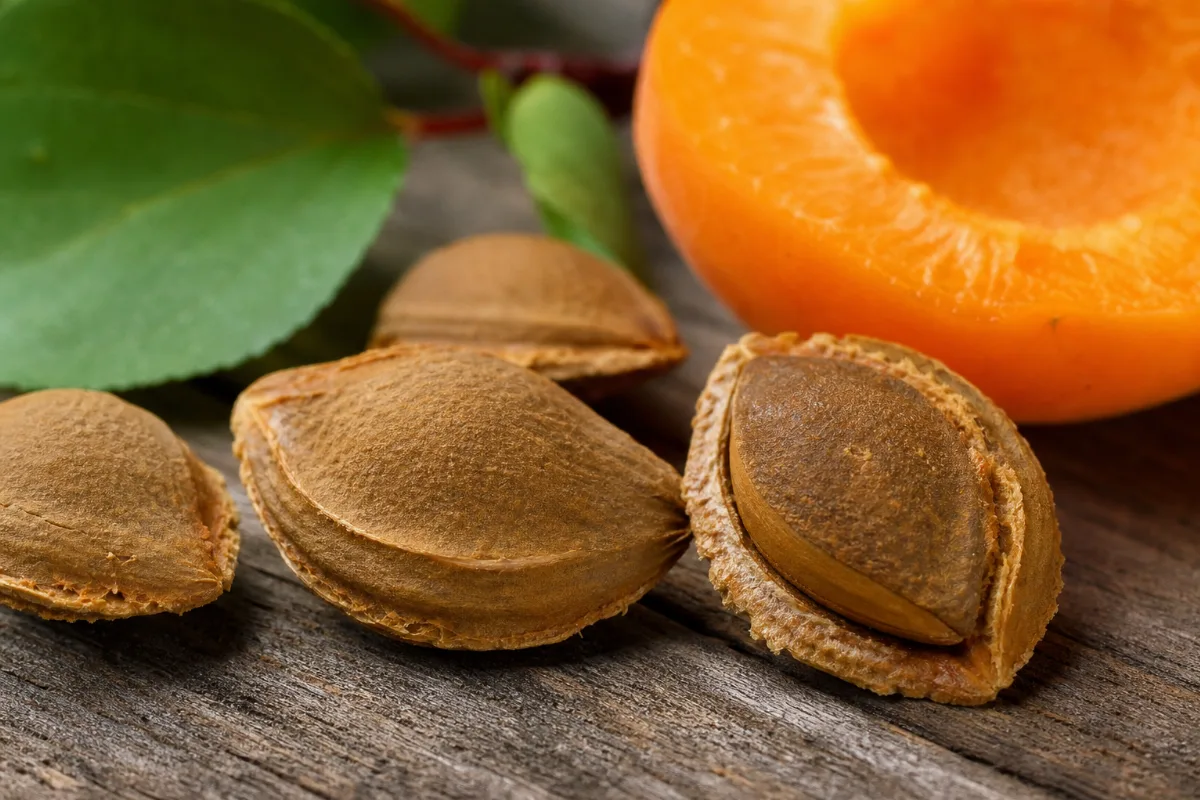
Apricot kernel is the seed inside the hard stone of the apricot (Prunus armeniaca, rose family). In Chinese medicine the bitter seed is called xing ren or kuxingren. The seed contains oil (oleic acid is a main fatty acid) and amygdalin, a compound that releases cyanide and benzaldehyde when digested.
'Vitamin B17' is a marketing name for amygdalin or laetrile. It is not a vitamin, and laetrile is a related semi-synthetic compound.
What the research shows
Cancer: A Cochrane review (2015) found no qualifying trials and called the risk-benefit balance unambiguously negative. An earlier review found 36 reports, all case series and case reports, none proving benefit. In a 1982 trial of 178 people, no substantive benefit was seen, and some people had signs of cyanide toxicity.
Cough, asthma and constipation: these are traditional uses. A 2024 review describes them but we found no human trial. Cholesterol: the review lists three small human studies we could not verify. Diabetic rats had better blood sugar and lipids. Lab work shows amygdalin acting on cancer cells in a dish; that does not show benefit in people.
History
Xing ren is a long-standing Chinese cough and bowel remedy; Korean tradition treats the seed as toxic and prepares it specially. Laetrile was promoted as a cancer remedy in the United States from the 1970s; NCI says the FDA rejected a 1970 drug application and the Supreme Court upheld a ban on interstate shipment in 1980.
At a glance
Traditional uses history, not proof
- Cough and asthma (xing ren, traditional Chinese medicine)
- Moistening the bowel in constipation
- Promoted as a cancer remedy since the 1970s (not a traditional use)
Studied for research
- Cancer treatment (laetrile, amygdalin): against, no benefit and a poisoning risk
- Cough and asthma: insufficient (tradition only)
- Constipation: insufficient (tradition only)
- Cholesterol and blood sugar: insufficient (small unverified human studies; rat study)
- Anticancer effects in cells: insufficient (lab only)
Main compounds
- Amygdalin (cyanogenic glycoside)
- Benzaldehyde
- Hydrogen cyanide (released)
- Oleic acid (kernel oil)
Common forms
- Raw kernels
- Processed seed (xing ren) in Chinese medicine
- Kernel extracts and powders
- Purified amygdalin or laetrile
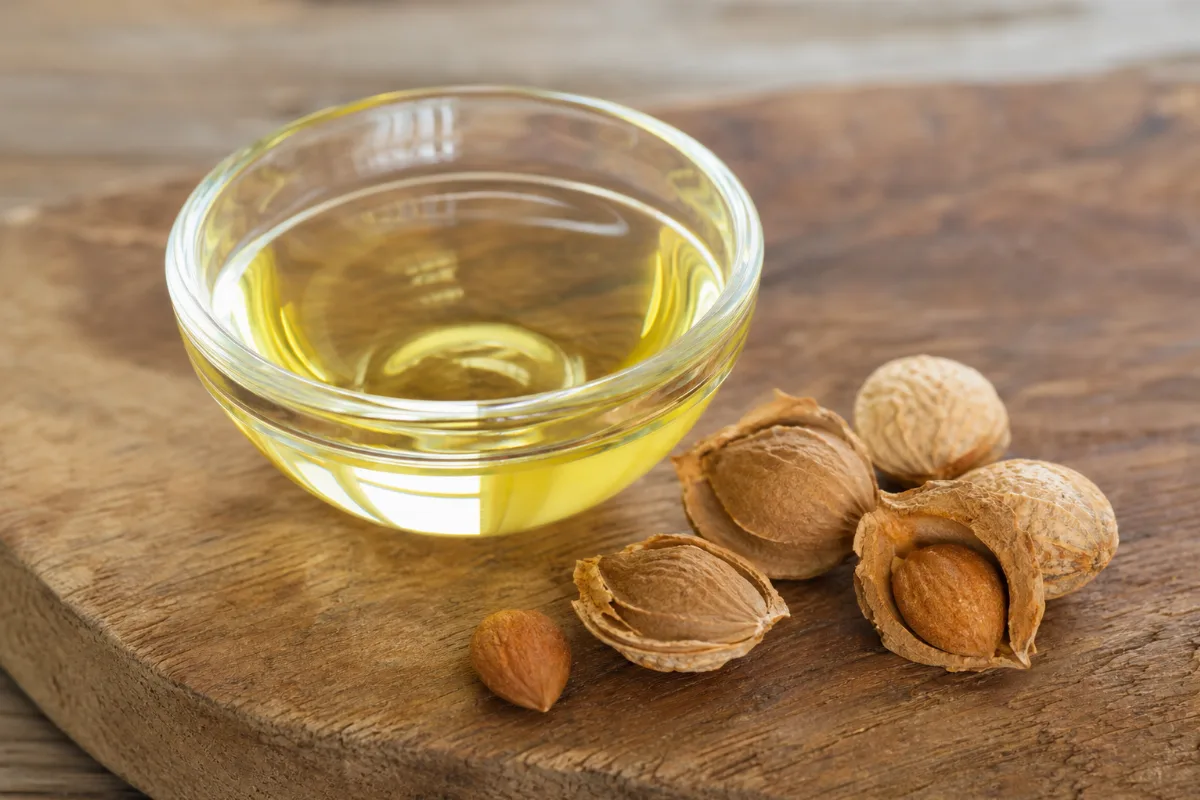
- Apricot kernel oil (a different product)
Research links: EFSA: raw apricot kernels and cyanide (news story, 2016) · FDA warning on high-amygdalin apricot seeds (2024) · Cochrane review: laetrile for cancer (PubMed) · NCI: Laetrile/Amygdalin (PDQ) · Tang 2024: Armeniacae semen amarum review (PubMed) · Research Library · Genes & Biomarkers Library
The plant and its history
- Accepted scientific name
- Prunus armeniaca
- Naming authority
- L.
- Common names
- Apricot kernel (en); Bitter apricot kernel (en); Apricot seed (en); Xing ren (Armeniacae semen amarum, kuxingren) (zh (pinyin) / Latin)
- Botanical family
- Rosaceae (rose family)
- Classification
- Plantae > Rosaceae > Prunus > Prunus armeniaca
- Native range
- Not found in the sources read.
- Habitat
- Not found in the sources read.
- What the plant looks like
- Seed: The kernel is the seed inside the hard apricot stone (endocarp). Fatty acids make up about half of the seed by weight, per the 2024 review (summary-only).
- Cultivation
- Not found in the sources read.
- Harvest and processing
- Traditional preparations vary. A Korean rat study describes a prebrewed form without the endocarp, which has less amygdalin.
- Look-alikes and adulterants
- Name: Sweet apricot kernel; Note: In one study of ten apricot varieties, sweet-kernel varieties had no detectable amygdalin or prunasin; bitter varieties did.; Name: Bitter almond and other Prunus pits; Note: Also cyanide-releasing; NCI lists crushed fruit pits and raw almonds as increasing oral laetrile toxicity. Health Canada's alert notes that apricot kernels look like almonds (headline seen in a search result).; Name: Wild cherry bark; Note: A different Prunus product with its own page and its own cyanide-releasing compounds.
- Sustainability and conservation
- Not found.
The plant and the parts used
Traditional use and history history, not clinical proof
| Tradition or era | Documented use | Source |
|---|---|---|
| Traditional Chinese medicine | Xing ren (Armeniacae semen amarum) for cough, asthma and to moisten the bowel in constipation. | p38323080 |
| Korean medicine | The seed is treated as a toxic herb because of hydrogen cyanide and amygdalin, and a prebrewed form without the endocarp is used. | p24278634 |
| United States, 1970s-1980s | Laetrile was promoted as a cancer remedy. NCI says the FDA rejected a 1970 investigational drug application, a 1982 NCI-sponsored trial found no benefit, and the Supreme Court upheld a ban on interstate shipment in 1980. | s-nci-pdq |
| Today | Sold online as raw bitter kernels and 'seeds'; the FDA warned about three such products in 2024. | s-fda-2024 |
Traditional use shows how a plant was used. It does not show that a supplement works or is safe today.
What is inside, and how it may work
What the plant contains and how those compounds act in cells and animals. Laboratory and animal mechanisms are not proven effects in people.
Main compounds
| Compound | Family | Where it is concentrated | Activity studied | Level of evidence |
|---|---|---|---|---|
| Amygdalin PubChem 656516 | cyanogenic glycoside | bitter kernel | The compound that releases hydrogen cyanide; the main toxic component. Laetrile is a related semi-synthetic compound. 13 7 4 | Review |
| Prunasin PubChem 119033 | cyanogenic glycoside | developing kernel | Precursor stage in bitter kernels; undetectable in sweet cultivars tested. 4 | Plant analysis |
| Hydrogen cyanide PubChem 768 | breakdown product | released after chewing or digestion | Causes the poisoning; blood levels were measured in case reports. 3 5 | Case report |
| Benzaldehyde PubChem 240 | aromatic aldehyde | released with the cyanide; also in the volatile oil | The bitter-almond smell; breakdown product of amygdalin. 13 | Review |
| Oleic acid PubChem 445639 | fatty acid | kernel oil | A main fatty acid of the oil; the review says fatty acids are about 50% of the seed (summary-only). 13 | Review |
Mechanisms, receptors and pathways
| Target or pathway | Gene or receptor | What was found | Level |
|---|---|---|---|
| Beta-glucosidase breakdown of amygdalin | beta-glucosidase (gut bacteria, food and plant enzymes) | Amygdalin is split into benzaldehyde and hydrogen cyanide. Oral intake is more dangerous than injection because gut bacteria supply the enzyme (NCI; hamster study). 13 22 14 | Human review and animal |
| Cell oxygen use (cyanide poisoning) | Not specified in sources read | Cases show severe acid build-up in the blood (lactic acidosis) and respond to antidotes that bind or detoxify cyanide. 11 3 2 | Human data |
| Protein-recycling and cell-death pathways in cancer cells | proteasome, cathepsins B and L | Amygdalin and kernel extracts lowered activity and triggered cell-death signals in breast cancer cells in a dish. 1 | Lab |
| Blood sugar and blood fats in diabetic rats | Not specified | Kernels with or without caffeine improved glucose and lipid measures in rats. 9 | Animal research |
Absorption, metabolism and elimination
- Absorption
- Oral amygdalin releases cyanide in the gut. NCI says oral laetrile is more toxic than injected laetrile, and that intravenous laetrile released relatively little cyanide.
- Distribution
- Not found in the sources read.
- Metabolism
- Gut bacteria and some food enzymes (beta-glucosidase) split amygdalin to cyanide. In germ-free rats oral amygdalin caused no side effects or raised cyanide (NCI summary).
- Elimination
- Not found.
- Bioavailability
- Not found in people for whole kernels.
Isolated compounds versus whole extracts
Cancer trials used purified amygdalin or laetrile, not whole kernels. Case reports of poisoning involve whole kernels or kernel extracts. Sweet kernels in one study had no detectable amygdalin, while bitter kernels did. No study compares whole bitter kernels with purified amygdalin in people.
Nutritional composition
Apricot kernel is a seed with oil (fatty acids make up about half, per a review summary). Whole bitter kernels are not a safe food source because of cyanide. Apricot kernel oil is a different product (cold-pressed oil), not assessed in the safety sources read.
4 not enough evidence1 evidence against
What is Apricot kernel good for?
What apricot kernel is used for, and how strong the evidence is. Cancer is listed first because it is the claim most often made, and the evidence is against it.
Benefits, one by one
Each card is a research question, not a promise. Tap a goal to filter. Open a card to see the studies, doses and limits.
Cancer treatment claims (laetrile, amygdalin, 'vitamin B17')
Evidence againstNo good evidence shows that amygdalin, laetrile or apricot kernels treat cancer. The best reviews found no controlled trials, and the one large test in people found no benefit and some signs of cyanide poisoning.
4 studiesPurified amygdalin or laetrile (injection or tablets) was tested, not…
Studies, doses and limits
What the trials found
A Cochrane review (2015) searched for randomised or quasi-randomised trials and found none that qualified; its authors judged the risk-benefit balance 'unambiguously negative'. An earlier systematic review (2007) found 36 reports, all case series and case reports, and none proved effectiveness. A single-arm NCI-sponsored trial of 178 people (Moertel, 1982) saw no substantive benefit in cure, improvement, symptoms or survival, and some patients had signs of cyanide toxicity or blood cyanide approaching the lethal range. NCI's summary of that trial reports one partial response lasting 10 weeks among 175 evaluable patients.
Results
No benefit shown. Cyanide toxicity seen.
Effect sizes as reported
No eligible trials for a pooled estimate (Cochrane 2015). Moertel 1982: no substantive benefit.
Why this rating
Reviewers found no supporting trial and a clear poisoning risk; the largest human study found no benefit.
Form and dose studied
Purified amygdalin or laetrile (injection or tablets) was tested, not whole kernels. We give no amounts.
Who was studied
People with many cancer types.
Limits
Most evidence is old case reports. Newer controlled trials do not exist.
Why researchers looked
Amygdalin, the compound in bitter apricot kernels, was promoted from the 1950s as a cancer remedy and sold as 'vitamin B17'. It is not a vitamin.
Traditional use
Marketed as an alternative cancer treatment, mainly since the 1970s. Not a traditional Chinese use of the kernel.
Proposed mechanism Pharmacological theory
The claim is that cyanide released from amygdalin would harm cancer cells more than healthy ones. NCI reports that animal tests found little or no anticancer activity, and that gut bacteria and some foods release cyanide from oral amygdalin.
A proposed mechanism does not show that the effect happens in people.
Do not replace cancer treatment. Oral use is more dangerous than injection (NCI). Deaths and severe poisoning have been reported; see the Safety tab.
Anticancer effects in lab cells and animals
Not enough evidenceAmygdalin and kernel extracts can kill or slow cancer cells in a dish. This does not show that they help people, and animal tests were mostly negative.
3 studiesPure amygdalin and kernel water extracts in cell culture.
Studies, doses and limits
What the trials found
No human trial. The 2024 review says kernel anticancer work is mostly in cell studies, with few animal studies. NCI reports that rodent tumour tests were mostly negative, with one modest result in a cervical cancer model.
Results
Cell-culture effects only.
Effect sizes as reported
Not applicable (lab work).
Why this rating
Lab findings only; the human reviews and animal tests are against benefit.
Form and dose studied
Pure amygdalin and kernel water extracts in cell culture.
Who was studied
Cells in a dish.
Limits
Doses used on cells are not doses a person could safely reach.
Why researchers looked
Researchers look for how amygdalin might act on cancer cells.
Traditional use
Not a traditional use.
Proposed mechanism Laboratory research
In breast cancer cells in a dish, amygdalin and kernel extracts lowered protein-recycling activity and triggered cell-death signals.
A proposed mechanism does not show that the effect happens in people.
Lab results are not a reason to eat kernels.
Cough and asthma (xing ren, traditional Chinese medicine)
Not enough evidenceIn Chinese medicine the bitter apricot seed (xing ren or kuxingren) is a standard cough and asthma remedy. We found no human trial that tests it, so this is a tradition, not proven.
2 studiesTraditional Chinese practice uses processed seed in formulas. We do n…
Studies, doses and limits
What the trials found
No human trial of apricot kernel for cough or asthma appeared in the part of the 2024 review we read, or in our PubMed searches. The review says some clinical and animal reports exist but gives few details. We did not read them.
Results
No verified human result.
Effect sizes as reported
None.
Why this rating
Tradition and lab or animal work only; no human trial verified.
Form and dose studied
Traditional Chinese practice uses processed seed in formulas. We do not give amounts.
Who was studied
Not tested in a verified trial.
Limits
We read only the first part of the review.
Why researchers looked
It has long been used for coughs and wheeze; researchers study its compounds.
Traditional use
A 2024 review says the dried ripe seed is used in traditional Chinese medicine for lung disease, cough and asthma, as a single herb or inside formulas. The Korean tradition treats the raw seed as a toxic herb and prepares it specially (a rat study describes a prebrewed form without the endocarp).
Proposed mechanism Animal research
Amygdalin breaks down to benzaldehyde and hydrogen cyanide when gut or plant enzymes act on it; the same breakdown is the poisoning risk. A 2023 asthma study cited by the review used an ovalbumin-induced mouse model.
A proposed mechanism does not show that the effect happens in people.
Cough that lasts, brings up blood or comes with breathlessness needs a doctor. A cough remedy made from raw bitter kernels can cause cyanide poisoning.
Constipation (traditional bowel-moistening use)
Not enough evidenceThe seed is used traditionally to ease constipation. We found no human trial.
1 studiesNot applicable.
Studies, doses and limits
What the trials found
No human trial was found in the sources read.
Results
None.
Effect sizes as reported
None.
Why this rating
Traditional use only.
Form and dose studied
Not applicable.
Who was studied
Not studied.
Limits
No data.
Why researchers looked
The seed is oily and is described in Chinese medicine as moistening the bowel.
Traditional use
The 2024 review lists lubricating the colon and reducing constipation as a traditional use.
Proposed mechanism Pharmacological theory
Fatty oil in the seed (oleic acid is a main fatty acid) is the usual explanation; not tested in people in the sources we read.
A proposed mechanism does not show that the effect happens in people.
Do not use raw bitter kernels as a laxative; the cyanide risk applies.
Cholesterol and blood sugar
Not enough evidenceA review lists three small human studies on cholesterol from one group and a rat study on diabetes. We did not verify the human studies, so we cannot say this works.
2 studiesNot stated here.
Studies, doses and limits
What the trials found
The 2024 review's table lists three small studies by one research group (healthy adults and adults with raised total cholesterol) reporting lower total and LDL cholesterol. We could not find them in PubMed by author and subject, and the review gives no sample sizes or control groups. We did not read them.
Results
Reported but not verified.
Effect sizes as reported
Not verified.
Why this rating
Human studies not read or verified; animal data only.
Form and dose studied
Not stated here.
Who was studied
Healthy adults and adults with high cholesterol (as listed in the review).
Limits
Unverified.
Why researchers looked
Kernels contain oil and other compounds, and are tested for lipids in small studies.
Traditional use
Not a traditional use.
Proposed mechanism Animal research
Unknown. In diabetic rats, kernels (alone and with caffeine) lowered blood glucose, HbA1c, cholesterol, triglycerides and LDL and raised insulin and HDL.
A proposed mechanism does not show that the effect happens in people.
Cholesterol and diabetes have well-tested treatments; a raw bitter kernel is not a safe way to try this.
Connections to the rest of health
How Apricot kernel connects to the rest of our health knowledge graph. Every link says what kind of connection it is. A safety link (for example to the liver) is a warning, not a benefit. A study that merely mentions a topic never creates a benefit link.
Explore every connection: goals, body systems, organs, symptoms, genes
A. Wellness goals
| Connected to | Kind of connection | Evidence status | Context | Studies |
|---|---|---|---|---|
| Breathing Support | Traditional use | Not enough evidence | Cough and asthma (xing ren, traditional Chinese medicine): In Chinese medicine the bitter apricot seed (xing ren or kuxingren) is a standard cough and asthma remedy. We found no human trial that tests it, so this is a tradition, not proven. | 13 10 |
| Digestive Support | Traditional use | Not enough evidence | Constipation (traditional bowel-moistening use): The seed is used traditionally to ease constipation. We found no human trial. | 13 |
| Cholesterol Balance | Preliminary mechanism | Not enough evidence | Cholesterol and blood sugar: A review lists three small human studies on cholesterol from one group and a rat study on diabetes. We did not verify the human studies, so we cannot say this works. | 13 9 |
| Blood Sugar Balance | Preliminary mechanism | Not enough evidence | Cholesterol and blood sugar: A review lists three small human studies on cholesterol from one group and a rat study on diabetes. We did not verify the human studies, so we cannot say this works. | 13 9 |
B. Body systems
| Connected to | Kind of connection | Evidence status | Context | Studies |
|---|---|---|---|---|
| Nervous system | Adverse effect or risk | Authoritative guidance | Coma, seizures and nerve damage reported. Preparation or compound: Amygdalin (cyanide) |
18 22 |
| Liver | Adverse effect or risk | Authoritative guidance | Liver damage listed by NCI. Preparation or compound: Laetrile |
22 |
| Immune System | Biological association | Evidence against | Studied for: Cancer treatment claims (laetrile, amygdalin, 'vitamin B17') Studied for: Anticancer effects in lab cells and animals | 7 6 8 22 1 13 |
| Respiratory System | Biological association | Not enough evidence | Studied for: Cough and asthma (xing ren, traditional Chinese medicine) | 13 10 |
| Digestive System | Biological association | Not enough evidence | Studied for: Constipation (traditional bowel-moistening use) | 13 |
| Cardiovascular System | Biological association | Not enough evidence | Studied for: Cholesterol and blood sugar | 13 9 |
| Metabolism Weight | Biological association | Not enough evidence | Studied for: Cholesterol and blood sugar | 13 9 |
I. Biomarkers
| Connected to | Kind of connection | Evidence status | Context | Studies |
|---|---|---|---|---|
| Vitamin B12 | Drug or supplement interaction | Summary only | Deficiency may raise cyanide risk. Preparation or compound: Amygdalin |
7 |
| Blood cyanide | Biological association | Moderate certainty | Measured in trials: raised. A lab change is not the same as a health benefit. | 3 5 11 8 |
| Tumour response and survival | Biological association | Evidence against | Measured in trials: no-change. A lab change is not the same as a health benefit. | 8 7 22 |
| LDL and total cholesterol | Biological association | Not enough evidence | Measured in trials: lowered (reported, not verified). A lab change is not the same as a health benefit. | 13 9 |
J. Genes, receptors and enzymes
| Connected to | Kind of connection | Evidence status | Context | Studies |
|---|---|---|---|---|
| Beta-glucosidase | Preliminary mechanism | Authoritative guidance | Splits amygdalin to cyanide; in gut bacteria and in foods such as celery, peaches, bean sprouts and carrots (NCI). | 22 |
K. Biological pathways
| Connected to | Kind of connection | Evidence status | Context | Studies |
|---|---|---|---|---|
| Proteasome and autophagy (cathepsins) | Preliminary mechanism | Lab | Lowered in breast cancer cells by amygdalin in a dish. | 1 |
L. Active compounds
| Connected to | Kind of connection | Evidence status | Context | Studies |
|---|---|---|---|---|
| Amygdalin | Biological association | Review | The compound that releases hydrogen cyanide; the main toxic component. Laetrile is a related semi-synthetic compound. Preparation or compound: bitter kernel |
13 7 4 |
| Prunasin | Biological association | Plant analysis | Precursor stage in bitter kernels; undetectable in sweet cultivars tested. Preparation or compound: developing kernel |
4 |
| Hydrogen cyanide | Biological association | Case report | Causes the poisoning; blood levels were measured in case reports. Preparation or compound: released after chewing or digestion |
3 5 |
| Benzaldehyde | Biological association | Review | The bitter-almond smell; breakdown product of amygdalin. Preparation or compound: released with the cyanide; also in the volatile oil |
13 |
| Oleic acid | Biological association | Review | A main fatty acid of the oil; the review says fatty acids are about 50% of the seed (summary-only). Preparation or compound: kernel oil |
13 |
Each connection is stored with the ingredient, the connected record, the kind of connection, the evidence status, the supporting studies, the preparation or compound involved, and a review date (last reviewed October 25, 2026).
Evidence at a glance: what changed in 2 lab markers
Tap a number to show only those markers. Counts are markers, not people.
The evidence
The research centre for Apricot kernel. Every record here was checked against PubMed or the publisher's page; we never list a study we have not verified.
Evidence by outcome
Bars show how many studies we found for each outcome, not how well it works. People are added up across trials only (reviews are not added, to avoid double counting).
How we rate evidence
High certainty
Several well-run trials or reviews agree; further research is unlikely to change the picture much.
Moderate certainty
Good trials point the same way, but some doubt remains.
Low certainty
Small, short or inconsistent trials. The finding could change with better research.
Very low certainty
Very little or very weak human data. Treat as a possibility only.
Mixed findings
Trials or reviews disagree with each other.
Not enough evidence
Not enough human research to say either way.
Evidence against
Good research found no benefit, or found harm.
We take the reviewers' own risk-of-bias and GRADE statements where they exist, and otherwise judge from study size, design, consistency, directness and whether a product matches what is sold. Many publications do not make evidence high. Method note: We read our existing herb summary, searched PubMed, read the abstract of each PubMed record cited, read the EFSA news story, the FDA warning and the NCI summary, and checked names in GBIF and NCBI Taxonomy and compounds in PubChem. Regulator pages that could not be opened are marked not verified.
Study library: every study we checked 24
| Study | Design | People | Product, dose, length | Result |
|---|---|---|---|---|
| Cecarini 2022 Targeting proteolysis with cyanogenic glycoside amygdalin induces apoptosis in breast cancer cells Molecules · PMID 36364419 · DOI |
Laboratory research in-vitro |
MCF7 breast cancer cells in a dish | Amygdalin and two apricot kernel water extracts seed (kernel) not stated in the abstract |
Amygdalin and extracts lowered protein-recycling activity and triggered cell-death signals in cultured cells. Lab finding only Methods, limits and fundingOutcomes: Proteasome and cell-death pathways Limitations: Cells in a dish; not evidence for use in people. Read: abstract |
| Cigolini 2011 Hydroxocobalamin treatment of acute cyanide poisoning from apricot kernels BMJ Case Reports · PMID 22694886 · DOI |
Case report |
1 35-year-old woman |
Apricot kernels seed (kernel) more than 20 kernels (reported) |
Initially looked well, then about 70 minutes after eating the kernels developed headache, nausea, breathlessness, low blood pressure and low oxygen. After antidotes including hydroxocobalamin she was symptom-free at 24 hours. Delayed symptoms, recovery Methods, limits and fundingOutcomes: Clinical course Limitations: Single case. Read: abstract |
| Dalkiran 2020 Role of hemodialysis in the management of cyanide intoxication from apricot kernels in a 3-year-old child Pediatric Emergency Care · PMID 30399062 · DOI |
Case report |
1 3-year-old girl |
Apricot kernels seed (kernel) 3 kernels (reported) |
Respiratory distress and coma after tonic-clonic convulsions following ingestion of 3 apricot kernels, with severe metabolic acidosis (pH 6.91). Blood cyanide was 3.15 mg/L three hours after ingestion. She recovered after hydroxocobalamin and a 3-hour hemodialysis session. Life-threatening poisoning, full recovery Methods, limits and fundingOutcomes: Clinical course Limitations: Single case. Read: abstract |
| Deng 2021 Accumulation pattern of amygdalin and prunasin during apricot kernel development Foods · PMID 33670310 · DOI |
Laboratory chemistry plant-analysis |
Ten apricot cultivars | Kernels analysed seed (kernel) not stated in the abstract |
Amygdalin and prunasin were undetectable in the sweet-kernel cultivars throughout kernel development. In bitter kernels amygdalin rose as the kernel ripened. Sweet cultivars tested had no detectable amygdalin Methods, limits and fundingOutcomes: Amygdalin and prunasin content Limitations: Plant chemistry in ten cultivars; says nothing about snack products or other cultivars. Read: abstract |
| Konstantatos 2017 An unusual presentation of chronic cyanide toxicity from self-prescribed apricot kernel extract BMJ Case Reports · PMID 28893740 · DOI |
Case report |
1 67-year-old man |
Apricot kernel extract, self-prescribed daily kernel extract daily for 5 years (reported) 5 years |
A seemingly well man seemed hypoxic on a finger oxygen monitor during routine anaesthesia. Blood tests confirmed cyanide toxicity. The authors explain the reading by free cyanide interfering with the monitor. Oxygen readings returned to normal after he stopped the extract. Chronic cyanide toxicity, resolved after stopping Methods, limits and fundingOutcomes: Clinical course Limitations: Single case. Read: abstract |
| Milazzo 2007 Laetrile for cancer: a systematic review of the clinical evidence Supportive Care in Cancer · PMID 17106659 · DOI |
Systematic review human-review |
36 People with any cancer (36 reports: case series and case reports) |
Laetrile apricot and other Prunus kernels (source of amygdalin) not stated in the abstract |
Thirty-six reports met the inclusion criteria and no controlled clinical trials were found (3 non-consecutive case series, 2 consecutive case series, 6 best case series, 25 case reports). None proved effectiveness. Claim of benefit not supported by sound clinical data Methods, limits and fundingOutcomes: Effectiveness or safety of laetrile in any cancer Limitations: Only uncontrolled reports could be reviewed. Read: abstract |
| Milazzo 2015 Laetrile treatment for cancer (Cochrane review) Cochrane Database of Systematic Reviews · PMID 25918920 · DOI |
Systematic review human-review |
0 People with cancer (no trials met the criteria) |
Laetrile or amygdalin apricot and other Prunus kernels (source of amygdalin) not stated in the abstract |
Over 200 references were located; none met the inclusion criteria (randomised or quasi-randomised trials). The authors conclude that claims of benefit are not supported by sound clinical data, that there is a considerable risk of serious cyanide poisoning, especially after oral intake, and that the risk-benefit balance is unambiguously negative. No eligible trials; risk-benefit judged unambiguously negative by the authors Methods, limits and fundingOutcomes: Anti-cancer effect and adverse effects of laetrile/amygdalin Limitations: No trial data exist, so no effect size can be given. Funding and conflicts: No conflicts declared Read: abstract |
| Moertel 1982 A clinical trial of amygdalin (Laetrile) in the treatment of human cancer New England Journal of Medicine · PMID 7033783 · DOI |
Phase II trial (single arm) |
178 178 people with cancer, mostly in good general condition |
Amygdalin (Laetrile) plus a 'metabolic therapy' programme of diet, enzymes and vitamins not applicable (purified drug) not stated in the abstract |
No substantive benefit was seen for cure, improvement or stabilisation, symptoms, or length of life. Some patients had symptoms of cyanide toxicity or blood cyanide levels approaching the lethal range. The authors call amygdalin a toxic drug that is not effective as a cancer treatment. (NCI PDQ reports 175 evaluable patients and one partial response lasting 10 weeks.) No benefit; cyanide toxicity seen Methods, limits and fundingOutcomes: Cure, improvement or stabilisation of cancer, symptoms, survival Limitations: Single-arm trial with a combined programme; 1982. Funding and conflicts: Not stated in the abstract Read: abstract |
| Nour El-Deen 2024 Impact of co-administration of apricot kernels and caffeine on adult male diabetic albino rats Frontiers in Physiology · PMID 39611078 · DOI |
Animal research animal |
40 40 diabetic male rats |
Apricot kernels, alone and with caffeine seed (kernel) not stated in the abstract |
Blood glucose, HbA1c, cholesterol, triglycerides and LDL fell and insulin and HDL rose in treated diabetic rats; caffeine added to the effect. Animal findings only Methods, limits and fundingOutcomes: Blood sugar, lipids, insulin Limitations: Rats. Safety of the kernels was not the question. Read: abstract |
| Park 2013 Single oral dose toxicity study of prebrewed armeniacae semen in rats Toxicological Research · PMID 24278634 · DOI |
Animal research animal |
Rats | Prebrewed Armeniacae semen extract (traditional Korean preparation without the endocarp) seed single dose in rats |
Prebrewed extract had lower amygdalin than an extract that included the endocarp. At the highest dose tested, seizures and some deaths occurred within hours; the authors treat amygdalin as the toxic principle that traditional prebrewing reduces. Amygdalin identified as toxic principle in rats Methods, limits and fundingOutcomes: Toxic signs and lethal dose Limitations: Rat study; not a safety finding for people. Read: abstract |
| Sauer 2015 Severe cyanide poisoning from an alternative medicine treatment with amygdalin and apricot kernels in a 4-year-old child Wiener Medizinische Wochenschrift · PMID 25605411 · DOI |
Case report |
1 4-year-old boy with metastatic ependymoma |
Intravenous and oral 'vitamin B17' (amygdalin) plus oral apricot kernel seed (kernel) not stated in the abstract |
Severely agitated, encephalopathic and unresponsive (Glasgow Coma Scale 3) with severe lactic acidosis and a markedly raised serum cyanide level. After sodium thiosulfate he recovered completely without further intensive care. Severe poisoning, full recovery after antidote Methods, limits and fundingOutcomes: Clinical course Limitations: Single case; kernels combined with amygdalin. Read: abstract |
| Suchard 1998 Acute cyanide toxicity caused by apricot kernel ingestion Annals of Emergency Medicine · PMID 9832674 · DOI |
Case report |
1 41-year-old woman |
Apricot kernels bought at a health food store seed (kernel) not stated in the abstract |
Weak and short of breath within 20 minutes, then comatose and hypothermic. She responded promptly to cyanide antidote treatment and later needed a continuous thiosulfate infusion for persistent acidosis. The authors call it the first US case since 1979. Severe poisoning, recovery Methods, limits and fundingOutcomes: Clinical course Limitations: Single case. Read: abstract |
| Tang 2024 Armeniacae semen amarum: a review on its botany, phytochemistry, pharmacology, clinical application, toxicology and pharmacokinetics Frontiers in Pharmacology · PMID 38323080 · DOI |
Narrative review human-and-animal-review |
Review of the traditional Chinese kernel (Kuxingren) | Armeniacae semen amarum (bitter apricot kernel) seed (kernel) not stated in the abstract |
Traditional use for cough, asthma and constipation. Anticancer work was mostly in cells. Three small human cholesterol studies by one group are listed in a table (healthy adults and adults with high cholesterol); sizes and controls are not given in the part we read. States that eating a large amount of amygdalin in a short time may cause cyanide poisoning, because gut enzymes break amygdalin into benzaldehyde and hydrogen cyanide. Narrative; no pooled estimate Methods, limits and fundingOutcomes: Traditional uses, compounds, lab and clinical work, toxicity Limitations: Traditional-medicine review. We read only about the first 100,000 of 354,000 characters, so toxicity detail and processing methods were not read. Funding and conflicts: No conflicts declared Read: full-text (first part only) |
| Willhite 1982 Congenital malformations induced by laetrile Science · PMID 7063858 · DOI |
Animal research animal |
Pregnant hamsters | Laetrile, oral or intravenous not applicable (purified) not stated in the abstract |
Oral laetrile caused skeletal malformations in offspring, while intravenous laetrile did not. Oral laetrile raised cyanide levels and thiosulfate protected the embryos. The author attributes the effect to cyanide released by gut bacterial beta-glucosidase. Birth defects in hamsters with oral laetrile Methods, limits and fundingOutcomes: Malformations in offspring Limitations: Animal study of purified laetrile, not kernels. Read: abstract |
| s-bfr BfR (German Federal Institute for Risk Assessment) 2015 opinion on bitter apricot kernels · Source |
Regulator document reference |
Methods, limits and fundingRead: summary-only (search result headline and summary, not opened) | ||
| s-efsa-news EFSA news story: Raw apricot kernels could pose a risk to consumers because of cyanide (2016) · Source |
Regulator document reference |
Methods, limits and fundingRead: read (web page, 2026-10-25) | ||
| s-efsa-opinion EFSA Journal 2016;14(4):4424: Acute health risks related to cyanogenic glycosides in raw apricot kernels and derived products · Source |
Regulator document reference |
Methods, limits and fundingRead: not read (page blocked, 403) | ||
| s-fda-2024 FDA: FDA issues warning about toxic amygdalin found in apricot seeds (24 May 2024) · Source |
Regulator document reference |
Methods, limits and fundingRead: read (web page, 2026-10-25) | ||
| s-gbif GBIF species match: Prunus armeniaca L. · Source |
Database record reference |
Methods, limits and fundingRead: api-record (2026-10-25) | ||
| s-health-canada Health Canada: reminders about bitter apricot kernels (2017 and later) and 20 ppm cyanide maximum for kernels sold as food from 2020 · Source |
Regulator document reference |
Methods, limits and fundingRead: summary-only (seen through a web search summary, not opened) | ||
| s-ncbi-tax NCBI Taxonomy: Prunus armeniaca · Source |
Database record reference |
Methods, limits and fundingRead: api-record (2026-10-25) | ||
| s-nci-pdq NCI: Laetrile/Amygdalin (PDQ) health professional version · Source |
Regulator document reference |
Methods, limits and fundingRead: read (web page, first 100,000 of 104,351 characters, 2026-10-25) | ||
| s-pubchem PubChem compound records: amygdalin (656516), prunasin (119033), benzaldehyde (240), hydrogen cyanide (768), oleic acid (445639) · Source |
Database record reference |
Methods, limits and fundingRead: api-record (2026-10-25) | ||
| s-regulators-notfound LiverTox, LactMed, EMA/HMPC and NCCIH searched for apricot kernel, laetrile and amygdalin · Source |
Negative search reference |
Methods, limits and fundingRead: not found |
What we do not know yet
- No controlled trial of kernels, amygdalin or laetrile for cancer exists.
- No verified human trial for cough, asthma or constipation.
- The three human cholesterol studies in the review were not verified.
- No data on how often kernel poisoning happens.
- No breastfeeding data; no LiverTox, LactMed, EMA or NCCIH entry found.
- The full EFSA opinion and German and Canadian agency pages were not read.
How new research is added
New studies are found by a saved PubMed search and placed in a review queue. A person reads each one before it changes any rating or safety wording.
Lab markers
What changed in blood or saliva tests during trials. A changed number is not the same as feeling or being healthier, and we give no "normal ranges".
Metabolic 1
LDL and total cholesterol
Lowered (reported, not verified) in trials
Blood fats linked to heart disease risk.
Not enough evidenceResults and what it means
Why it was measured
The only human outcome the 2024 review lists for kernels besides traditional uses.
Statistical vs. clinical meaning
A blood-fat change is not the same as fewer heart attacks.
Safety implication
Cyanide risk applies to raw bitter kernels.
| Study | Result | People | Product |
|---|---|---|---|
| 13 | Three small studies listed in a review table reported lower total and LDL cholesterol; not read by us | Healthy adults and adults with high cholesterol (per the review) | Apricot kernels (details not read) |
| 9 | Lower total cholesterol, triglycerides and LDL, higher HDL in diabetic rats | 40 rats | Apricot kernels, alone and with caffeine |
Other 2
Blood cyanide
Raised in trials
The amount of cyanide in the blood. Cyanide stops cells from using oxygen.
Moderate certaintyResults and what it means
Why it was measured
It confirms cyanide poisoning, which is the central risk of bitter kernels and amygdalin products.
Statistical vs. clinical meaning
A raised level is a measure of harm, not of benefit. Evidence is case reports and one trial, so frequency is unknown.
Safety implication
This is a poisoning marker. Treatment is an emergency matter.
| Study | Result | People | Product |
|---|---|---|---|
| 3 | 3.15 mg/L, three hours after a 3-year-old ate 3 apricot kernels | One child | Apricot kernels |
| 5 | Cyanide toxicity confirmed by blood analysis after 5 years of daily kernel extract; oxygen readings normalised after stopping | One 67-year-old man | Self-prescribed apricot kernel extract |
| 11 | Serum cyanide markedly raised in a 4-year-old with encephalopathy | One child | Oral amygdalin and apricot kernel |
| 8 | Blood cyanide levels approaching the lethal range in several patients | 178 people with cancer | Amygdalin (Laetrile) |
Tumour response and survival
No clear change in trials
Whether cancer shrank, stopped growing, or people lived longer.
Evidence againstResults and what it means
Why it was measured
The main outcome that would show if laetrile or amygdalin treats cancer.
Statistical vs. clinical meaning
The best clinical test found no benefit.
Safety implication
Taking this in place of cancer treatment risks harm.
| Study | Result | People | Product |
|---|---|---|---|
| 8 | No substantive benefit in cure, improvement or stabilisation, symptoms, or life span among 178 patients (NCI summary: one partial response lasting 10 weeks in 175 evaluable patients) | People with cancer | Amygdalin plus metabolic therapy |
| 7 | No qualifying trials found | People with cancer | Laetrile or amygdalin |
Safety
What studies and official sources say about side effects, medicines and who should check first. Each point shows what kind of evidence it comes from.
Main points to know 5
- Bitter apricot kernels can cause cyanide poisoning. Bitter kernels contain amygdalin. When it is chewed or digested, enzymes and gut bacteria turn it into hydrogen cyanide. Case reports describe coma, convulsions, severe acid build-up in the blood, and low blood pressure in adults and young children, some after only a few kernels. EFSA (Europe's food safety agency) found that a single sitting of raw kernels can exceed its safety limit, and that a toddler's limit is about half of one small kernel. Treat any suspected poisoning as an emergency. Case report 16 12 2 3 11 5 13
- Children are most at risk. EFSA worked out a much smaller limit for toddlers than for adults. A 3-year-old fell into a coma with convulsions after eating 3 kernels (blood cyanide 3.15 mg/L); a 4-year-old with cancer was in deep coma after oral 'vitamin B17' and kernels. Both recovered with antidotes. German (BfR) and Canadian agencies advise that children should not eat bitter kernels at all (agency summaries, not opened). Case report 16 3 11 20 15
- Laetrile, amygdalin and 'vitamin B17' do not treat cancer. A Cochrane review found no trials that met its criteria and called the risk-benefit balance unambiguously negative, with a considerable risk of serious cyanide poisoning, especially after oral intake. A 1982 NCI-sponsored trial of 178 people found no substantive benefit and some blood cyanide levels approaching the lethal range. It is not a vitamin. Do not delay or replace cancer care. Systematic review 7 6 8 22
- Sweet and bitter kernels differ, but labels are not proof. In one study of ten apricot varieties, amygdalin and prunasin were undetectable in the sweet-kernel varieties and rose as bitter kernels ripened. That is plant chemistry; it does not tell you what is in a bag of kernels sold as food or a supplement. The FDA's 2024 warning covered bitter apricot seed products with high amygdalin. Laboratory 4 18
- Pregnancy and breastfeeding: avoid. There are no safety studies in pregnant or breastfeeding women. In hamsters, oral laetrile caused skeletal malformations in offspring (cyanide released by gut bacteria), while injected laetrile did not. We could not find LactMed or LiverTox entries. A search summary says European and Canadian agencies advise pregnant and breastfeeding women to avoid bitter kernels; we did not open the originals. Animal research 14 24 15
Side effects 4
| Effect | How often | Severity and recovery | Evidence |
|---|---|---|---|
| Acute cyanide poisoning (headache, nausea, breathlessness, low blood pressure, coma, seizures, acid build-up in the blood) Symptoms can start within 20 minutes or be delayed, as in a woman who looked well for about 70 minutes before collapsing. No source gives how often it happens. | Not established | severe to life-threatening Recovered in the case reports with prompt antidotes (hydroxocobalamin, sodium thiosulfate, in one case dialysis) | Case report 12 2 3 11 5 18 |
| Chronic low-level cyanide toxicity A man taking kernel extract daily for 5 years had confirmed cyanide toxicity that showed up as false low readings on a finger oxygen monitor. | Not established | moderate Resolved after the extract was stopped in one case | Case report 5 |
| Nerve damage affecting sight, hearing, balance and sensation The FDA says chronic high intake of cyanide-releasing compounds can cause this; NCI lists nerve damage affecting walking (ataxic neuropathy) with laetrile. | Not established | serious unknown | Authoritative guidance 18 22 |
| Death NCI lists death among laetrile effects and cites case reports of coma and death; it gives no count. The FDA says high-amygdalin products 'could lead to fatal cyanide toxicity'. | Not established | fatal not applicable | Authoritative guidance 22 18 |
Liver
NCI lists liver damage among the effects of laetrile, which releases cyanide. We found no LiverTox entry for apricot kernel and no case series that studied liver injury from kernels specifically. The kernel is not known as a liver-safe herb or a liver-toxic herb; the central harm is cyanide. 22 24
How often. Unknown.
Monitoring. No source gives monitoring advice for kernels. Tell a doctor about yellow skin or eyes, dark urine or pale stools.
This is a safety connection. It is not evidence that Apricot kernel supports liver health.
Medicines and supplements 6
| With | Why it matters | Importance | Evidence | What to do |
|---|---|---|---|---|
| Raw almonds, crushed fruit pits and foods with the enzyme beta-glucosidase (celery, peaches, bean sprouts, carrots) food | These can release more cyanide from oral amygdalin. | NCI says they can increase toxicity; two people in a phase I trial who ate raw almonds during oral treatment developed cyanide symptoms. | Authoritative guidance Low certainty 22 | Another reason to avoid amygdalin products and raw bitter kernels. |
| High-dose oral vitamin C supplement | NCI says high oral vitamin C doses can increase the toxicity of oral laetrile. | Reported in NCI's summary; mechanism not read. | Authoritative guidance Low certainty 22 | Do not combine amygdalin or kernels with vitamin C megadoses. |
| Vitamin B12 deficiency condition | The body uses vitamin B12 in handling cyanide. The Cochrane plain-language summary (as summarised in our existing herb notes, not in the abstract we read) says vegetarians with B12 deficiency may face a higher risk. | Summary-only. | Authoritative guidance Very low certainty 7 | Ask a doctor if you are deficient. |
| Other cyanide sources (bitter almonds, other fruit pits, cassava, wild cherry bark) herb | Adding cyanide-releasing foods adds to the load. | Not studied together. | Pharmacological theory Not enough evidence 22 | Treat them as one risk, not separate ones. |
| Medicines drug | No drug-interaction study of apricot kernel was found. | Unknown. | No data Not enough evidence 24 | Ask a pharmacist; the poisoning risk matters more than any interaction. |
| Pulse oximeter (finger oxygen monitor) test | In a man with chronic kernel-extract use, free cyanide appeared to give false low oxygen readings. | One case report. | Case report Very low certainty 5 | Tell your anaesthetist and doctors if you have taken kernel products. |
Who should check first 4
| Situation | Advice | Evidence |
|---|---|---|
| Children, especially toddlers | Avoid. EFSA's single-sitting limit for toddlers is under one small kernel; two child poisonings are in the case reports. | Authoritative guidance 16 3 11 |
| Pregnancy and breastfeeding | Avoid. No human data; oral laetrile caused malformations in hamsters. | Animal research 14 24 |
| Cancer (as a treatment) | Do not use. Not supported by trials; risk of poisoning. | Systematic review 7 8 |
| Vitamin B12 deficiency, or taking vitamin C in large amounts | Higher risk reported for oral amygdalin; avoid. | Authoritative guidance 22 7 |
Overdose, product quality and regulators
Summary. The toxic part is the kernel (seed). Amygdalin is the toxic principle; its breakdown makes hydrogen cyanide. Oral intake is more dangerous than injection because gut bacteria and food enzymes release the cyanide.
Animal. A rat study of a traditional prebrewed Korean preparation found seizures and deaths at the highest dose and identified amygdalin as the toxic principle; prebrewing without the endocarp lowered amygdalin. In rodent tumour tests amygdalin was not effective (NCI). Germ-free rats given oral amygdalin had no raised cyanide; rats with normal gut bacteria showed poisoning signs.
Human doses studied. Not given here. Case reports involve a few kernels in children and more than 20 in one adult. Agencies have published single-sitting limits (EFSA: 20 micrograms per kg body weight).
High dose or long term signals. Chronic daily use for 5 years caused toxicity in one man. The FDA says chronic exposure can damage nerves for sight, hearing and balance.
Overdose response. Emergency treatment uses cyanide antidotes such as hydroxocobalamin and sodium thiosulfate; dialysis was used once when an antidote was not at hand.
Genotoxicity. Not found.
Toxic plant parts. Seed kernel (bitter types). Sweet kernels in one study had no detectable amygdalin. The fruit flesh is not the toxic part, but crushed fruit pits are listed by NCI as a source of cyanide.
The bigger quality problem is not contamination but unknown amygdalin content. The FDA found high amygdalin in three online bitter apricot seed products. Cochrane warns that online products may come from questionable sources and may be contaminated, as these markets lack government oversight (summary of our existing notes, not in the abstract).
High amygdalin in retail products. FDA warning dated 24 May 2024 on three bitter apricot seed products sold online; the company had declined a voluntary recall as of that date. 18
Sweet versus bitter labelling. Amygdalin content varies by variety; sweet cultivars tested had none detected, but this does not verify any retail product. 4
| Body | Action | Date |
|---|---|---|
| EFSA (European Food Safety Authority) (EU) | 2016 scientific opinion concluded raw apricot kernels pose an acute health risk because of cyanide; set an acute reference dose of 20 micrograms per kg body weight. Its news story says a toddler's limit is about 60 mg of kernel, roughly half of one small kernel, and carries a correction that less than half of one large kernel could already exceed the limit for adults. source | 2016 |
| US Food and Drug Administration (US) | Warning (24 May 2024) to stop using three bitter apricot seed products found to contain high amygdalin, and to contact a health care provider if used. Laetrile is not approved in the US (per NCI): the FDA rejected a 1970 investigational drug application, and the US Supreme Court upheld a ban on interstate shipment in 1980. source | 2024 |
When to get medical help
- Call emergency services (or poison control) at once after eating kernels or an amygdalin product and developing headache, dizziness, nausea, fast breathing, confusion, blue lips or skin, seizures, fainting or collapse. Symptoms can be delayed.
- Tell the medical team exactly what and how much was eaten; antidotes exist.
- Any child who has eaten bitter kernels needs medical advice immediately, even if they seem well.
- Yellow skin or eyes, dark urine, loss of balance, vision or hearing changes after repeated use: see a doctor.
Stop the supplement and contact a clinician or emergency service. In the US, Poison Control is 1-800-222-1222.
General information only, not medical advice. Ask a clinician or pharmacist before use, especially with medicines, in pregnancy or with a health condition. See the Natural Remedy Safety guide.
Frequently asked questions
Are apricot kernels safe to eat?
What are the signs of cyanide poisoning from apricot kernels?
Are apricot kernels dangerous for children?
Do apricot kernels or laetrile cure cancer?
Is 'vitamin B17' a real vitamin?
What did the FDA warn about?
On 24 May 2024 the FDA warned people to stop using three bitter apricot seed products found to contain high amygdalin, which it said could cause fatal cyanide toxicity. The company had declined a recall as of that date.
What is the difference between sweet and bitter kernels?
Does it work for cough or asthma?
It is a traditional Chinese use, but we found no human trial, so the evidence is insufficient.
Is it safe in pregnancy or breastfeeding?
What makes cyanide risk worse?
NCI says raw almonds, crushed fruit pits, foods with beta-glucosidase (celery, peaches, bean sprouts, carrots) and high oral vitamin C can increase toxicity of oral laetrile.
Can kernels harm the liver or nerves?
What about apricot kernel oil?
It is a different product. The safety sources we read were about the kernels and amygdalin, not the oil, so we make no claim about the oil. Ask a doctor or pharmacist about amounts and your medicines.
Explore by health goal
Breathing SupportDigestive SupportCholesterol BalanceBlood Sugar Balance
Editorial transparency
- Written by
- AlternativeMed editorial team. Research compiled with AI assistance, then checked against PubMed records.
- Medical review
- None. This page has not been reviewed by a physician or pharmacist.
- First published
- 2026-10-25
- Last substantive update
- 2026-10-25
- How we research
- We read our existing herb summary, searched PubMed, read the abstract of each PubMed record cited, read the EFSA news story, the FDA warning and the NCI summary, and checked names in GBIF and NCBI Taxonomy and compounds in PubChem. Regulator pages that could not be opened are marked not verified.
- How we rate evidence
- See "How we rate evidence" in the Evidence tab.
- Independence
- No product is promoted on this page. No affiliate links are shown.
Sources 24
Each source was opened and checked. Where we read only the abstract, it says so. The small numbers in the text point here.
- Cecarini V, Selmi S, Cuccioloni M, et al.. Targeting proteolysis with cyanogenic glycoside amygdalin induces apoptosis in breast cancer cells. Molecules. 2022. PMID 36364419. DOI 10.3390/molecules27217591. (abstract)
- Cigolini D, Ricci G, Zannoni M, et al.. Hydroxocobalamin treatment of acute cyanide poisoning from apricot kernels. BMJ Case Reports. 2011. PMID 22694886. DOI 10.1136/bcr.03.2011.3932. (abstract)
- Dalkiran T, Kandur Y, Ozaslan M, et al.. Role of hemodialysis in the management of cyanide intoxication from apricot kernels in a 3-year-old child. Pediatric Emergency Care. 2020. PMID 30399062. DOI 10.1097/PEC.0000000000001644. (abstract)
- Deng P, Cui B, Zhu H, et al.. Accumulation pattern of amygdalin and prunasin during apricot kernel development. Foods. 2021. PMID 33670310. DOI 10.3390/foods10020397. (abstract)
- Konstantatos A, Shiv Kumar M, Burrell A, Smith J. An unusual presentation of chronic cyanide toxicity from self-prescribed apricot kernel extract. BMJ Case Reports. 2017. PMID 28893740. DOI 10.1136/bcr-2017-220814. (abstract)
- Milazzo S, Lejeune S, Ernst E. Laetrile for cancer: a systematic review of the clinical evidence. Supportive Care in Cancer. 2007. PMID 17106659. DOI 10.1007/s00520-006-0168-9. (abstract)
- Milazzo S, Horneber M. Laetrile treatment for cancer (Cochrane review). Cochrane Database of Systematic Reviews. 2015. PMID 25918920. DOI 10.1002/14651858.CD005476.pub4. (abstract)
- Moertel CG, Fleming TR, Rubin J, et al.. A clinical trial of amygdalin (Laetrile) in the treatment of human cancer. New England Journal of Medicine. 1982. PMID 7033783. DOI 10.1056/NEJM198201283060403. (abstract)
- Nour El-Deen AES, Taha AM, Elsayed A, et al.. Impact of co-administration of apricot kernels and caffeine on adult male diabetic albino rats. Frontiers in Physiology. 2024. PMID 39611078. DOI 10.3389/fphys.2024.1358177. (abstract)
- Park JH, Seo BI, Cho SY, et al.. Single oral dose toxicity study of prebrewed armeniacae semen in rats. Toxicological Research. 2013. PMID 24278634. DOI 10.5487/TR.2013.29.2.091. (abstract)
- Sauer H, Wollny C, Oster I, et al.. Severe cyanide poisoning from an alternative medicine treatment with amygdalin and apricot kernels in a 4-year-old child. Wiener Medizinische Wochenschrift. 2015. PMID 25605411. DOI 10.1007/s10354-014-0340-7. (abstract)
- Suchard JR, Wallace KL, Gerkin RD. Acute cyanide toxicity caused by apricot kernel ingestion. Annals of Emergency Medicine. 1998. PMID 9832674. DOI 10.1016/s0196-0644(98)70077-0. (abstract)
- Tang S, Wang M, Peng Y, et al.. Armeniacae semen amarum: a review on its botany, phytochemistry, pharmacology, clinical application, toxicology and pharmacokinetics. Frontiers in Pharmacology. 2024. PMID 38323080. DOI 10.3389/fphar.2024.1290888. (full-text (first part only))
- Willhite CC. Congenital malformations induced by laetrile. Science. 1982. PMID 7063858. DOI 10.1126/science.7063858. (abstract)
- . BfR (German Federal Institute for Risk Assessment) 2015 opinion on bitter apricot kernels. . . (summary-only (search result headline and summary, not opened))
- . EFSA news story: Raw apricot kernels could pose a risk to consumers because of cyanide (2016). . . (read (web page, 2026-10-25))
- . EFSA Journal 2016;14(4):4424: Acute health risks related to cyanogenic glycosides in raw apricot kernels and derived products. . . (not read (page blocked, 403))
- . FDA: FDA issues warning about toxic amygdalin found in apricot seeds (24 May 2024). . . (read (web page, 2026-10-25))
- . GBIF species match: Prunus armeniaca L.. . . (api-record (2026-10-25))
- . Health Canada: reminders about bitter apricot kernels (2017 and later) and 20 ppm cyanide maximum for kernels sold as food from 2020. . . (summary-only (seen through a web search summary, not opened))
- . NCBI Taxonomy: Prunus armeniaca. . . (api-record (2026-10-25))
- . NCI: Laetrile/Amygdalin (PDQ) health professional version. . . (read (web page, first 100,000 of 104,351 characters, 2026-10-25))
- . PubChem compound records: amygdalin (656516), prunasin (119033), benzaldehyde (240), hydrogen cyanide (768), oleic acid (445639). . . (api-record (2026-10-25))
- . LiverTox, LactMed, EMA/HMPC and NCCIH searched for apricot kernel, laetrile and amygdalin. . . (not found)