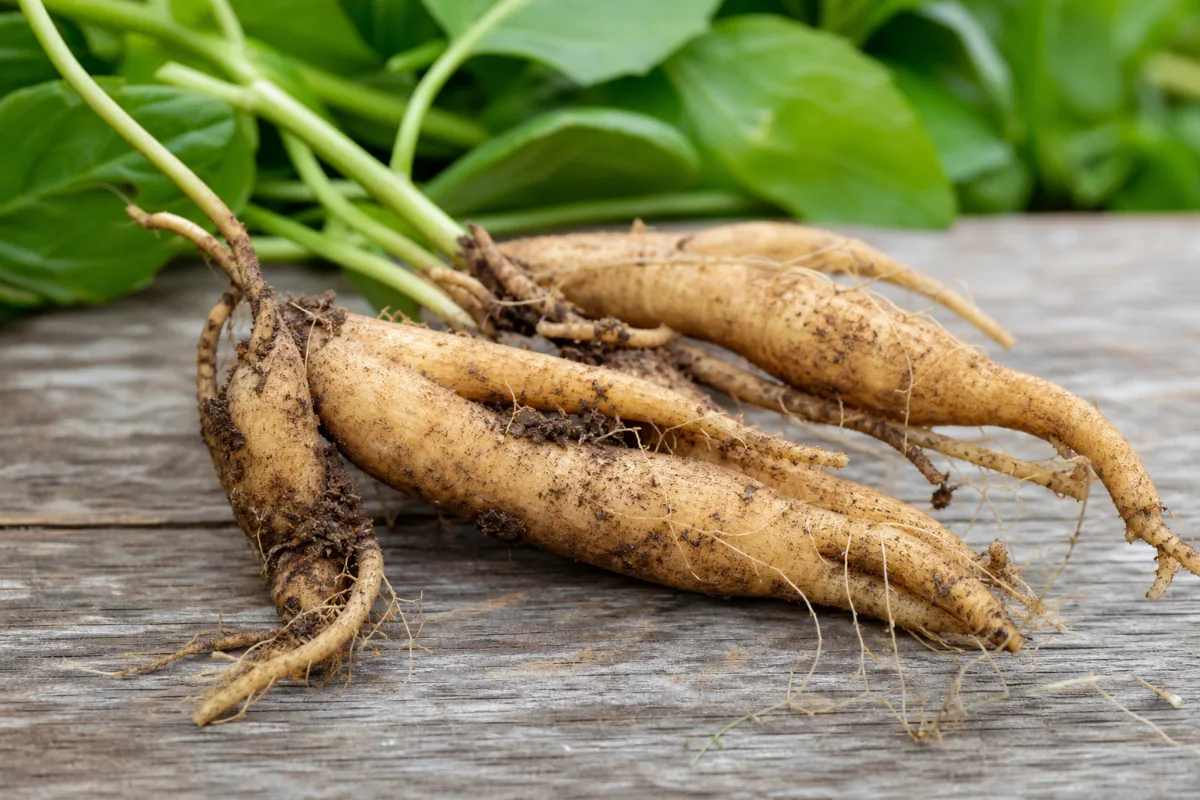
Herbs & Botanicals · Chinese and Korean throat root
Platycodon
Platycodon grandiflorus · also called Balloon flower, balloon flower root, jie geng, doraji, kikyo
Platycodon is the root of the balloon flower, used in Chinese medicine for sore throat and phlegm and eaten as a vegetable in Korea. Most research is in the lab or on animals, with a few small human trials. A two-herb Japanese sore-throat mix did no better than placebo in two small trials. Avoid concentrated extracts in pregnancy, and ask a doctor first if you take blood thinners.
General information, not medical advice. Last substantive update · Not medically reviewed. A named clinician has not signed off on this page. How this page is made
About Platycodon
Platycodon (balloon flower root) is a food and medicine in East Asia. Its main compounds are saponins such as platycodin D. Human research is small: two negative sore-throat trials of a licorice mix and single trials on immune markers, body fat and chemotherapy heart effects.
What it is
Platycodon grandiflorus is a bellflower-family plant native to China, Japan, North Korea and eastern Siberia. The dried root is Radix Platycodi, or jie geng, in Chinese medicine. In Korea the root is a side dish called doraji.
Traditional Chinese medicine uses it to soothe the throat, dispel phlegm and expel pus. In Japan it is paired with licorice as Kikyo-to. Traditional use is not proof that it works.
What the research shows
Cough and phlegm, the classic uses, have no controlled human trial for the root alone. The only sore-throat trials (two, 70 people each) found the licorice mix no better than placebo within 10 to 30 minutes of one dose.
One trial found higher natural killer cell activity after 8 weeks, one found lower body fat in some groups after 12 weeks, and one reported fewer subclinical heart changes during chemotherapy. Each is a single study. We found no human trial for blood sugar or cancer; reviews describe those effects in the lab and in animals only.
At a glance
Traditional uses history, not proof
- Sore throat, cough and phlegm in Chinese medicine (as a decoction)
- Throat relief as a licorice mix in Japanese medicine (Kikyo-to)
- A root vegetable and health drink in Korea (doraji), China and Japan
Studied for research
- Sore throat: two small trials of a licorice mix found no benefit over placebo
- Cough and phlegm: traditional use; lab and animal work only
- Immune activity: one trial raised blood markers, not shown to prevent infections
- Body fat: one preliminary 12-week trial
- Heart changes during chemotherapy: one small trial, very low certainty
Main compounds
- Platycodin D and other saponins
- Flavonoids such as luteolin
- Polysaccharides and phenolic acids
Common forms
- Dried root decoction (traditional)
- Fresh or cooked root as food
- Extract tablets and root drinks (as tested in trials)
Research links: Review: pharmacology of platycodin D (2023) · Review: ethnopharmacology of Platycodon grandiflorum (2024) · Hong Kong CMRO: Radix Platycodi · Research Library · Genes & Biomarkers Library
The plant and its history
- Accepted scientific name
- Platycodon grandiflorus (Jacq.) A.DC.
- Naming authority
- Accepted in the GBIF backbone (usage key 3164340), checked 2026-10-25. Spelling 'grandiflorum' is used in some papers and refers to the same plant.
- Synonyms
- Platycodon grandiflorum
- Common names
- Balloon flower (English); Platycodon (English); Jie geng (Jiegeng) (Chinese); Doraji (Korean); Kikyo (Japanese)
- Botanical family
- Campanulaceae (bellflower family)
- Classification
- Plantae > Tracheophyta > Magnoliopsida > Asterales > Campanulaceae > Platycodon > Platycodon grandiflorus
- Native range
- China, Japan, North Korea and Eastern Siberia, per the 2024 review.
- Habitat
- Not verified in the sources read.
- What the plant looks like
- Roots: Fleshy root, the used part; collected in spring and autumn, peeled or unpeeled, and dried (Hong Kong record).; Stems: Not verified.; Leaves: Tender leaves and shoots are eaten in some traditions (review).; Flowers: Large balloon-shaped buds give the common name; flowers and seeds are shown in the review but not described.; Fruit: Not verified.
- Cultivation
- A perennial with a 2 to 3 year growth cycle in cultivation, per the 2024 review.
- Harvest and processing
- Washed, rootlets removed, peeled when fresh or not, then dried (Hong Kong record).
- Look-alikes and adulterants
- Name: Other 'jie geng' or 'bellflower' roots; Note: Product names vary; check that the label says Platycodon grandiflorus root.
- Sustainability and conservation
- Not assessed in the sources read.
Traditional use and history history, not clinical proof
| Tradition or era | Documented use | Source |
|---|---|---|
| Chinese medicine | Diffuse the lung, soothe the throat, dispel phlegm and expel pus; part of formulas such as Jiegeng decoction and Yin Qiao San. | s-cmro-radix-platycodi |
| Han dynasty and later Chinese texts | Documented medicinal use dating to the Han dynasty and recorded in classical materia medica, per the reviews. We did not check the old texts ourselves; claims of 'thousands of years' are NOT verified. | p37089949 |
| Korea, Japan, China (food) | Eaten as a side-dish root vegetable in Korea; used in pickles, dishes and health drinks in China, Japan and Korea. | p39072195 |
| Japan (Kampo) | Kikyo-to (licorice plus platycodon) is commonly used for sore throat. | p35648044 |
Traditional use shows how a plant was used. It does not show that a supplement works or is safe today.
What is inside, and how it may work
What the plant contains and how those compounds act in cells and animals. Laboratory and animal mechanisms are not proven effects in people.
Main compounds
| Compound | Family | Where it is concentrated | Activity studied | Level of evidence |
|---|---|---|---|---|
| Platycodin D PubChem 162859 | oleanane-type triterpenoid saponin | Root Chinese Pharmacopoeia 2020 minimum 0.10% in the root (review). | Main studied saponin; hemolytic, reduced platelet function and killed cancer cells in lab tests. 16 25 15 26 | Laboratory research |
| Platycodigenin PubChem 12314399 | triterpenoid sapogenin (aglycone) | Root Not given in the sources read. | The non-sugar core of platycodin saponins; no health effect tested in the sources read. 17 | Laboratory research |
| Lobetyolin PubChem 14655097 | polyacetylene glycoside | Root Not given. | Named by a 2025 review as an anti-tumour component in lab studies. 18 14 | Laboratory research |
| Luteolin PubChem 5280445 | flavonoid | Not specified Not given. | Named by a 2025 review as an anti-tumour component in lab studies. 19 14 | Laboratory research |
Mechanisms, receptors and pathways
| Target or pathway | Gene or receptor | What was found | Level |
|---|---|---|---|
| Immune-cell activation (NK cells, interferon-gamma) | Not specified | A red root extract raised NK cell activity and interferon-gamma in healthy adults. 22 | Human data |
| NF-kB, PI3K/AKT, MAPK signalling | NFKB1, AKT, MAPK | Reduced inflammation and boosted T cell and macrophage function in lab studies. 6 | Laboratory research |
| Platelet glycoprotein receptors | GPIIb/IIIa (alphaIIb beta3), GPIb alpha, GPVI | Platycodin D caused these receptors to be pulled into platelets and reduced clumping and clots in mice. 15 | Animal research |
| Red blood cell membrane | None | Oleanane-type saponins, including platycodin D, break red cells in lab tests (hemolysis). 25 | Laboratory research |
| Heart-cell death after doxorubicin | Bcl-2, Bax, caspase-3, cytochrome C | An extract reduced heart-cell death in mice given doxorubicin. 23 | Animal research |
| Fat-cell and fat metabolism pathways | Not specified | Anti-obesity effects described in animals; one human body-fat trial; a five-person pilot found a serum angiogenesis test changed. 12 24 25 | Human data |
Absorption, metabolism and elimination
- Absorption
- Oral platycodin D is poorly absorbed with low bioavailability in animals. In five volunteers a meal delayed absorption of a standardised extract by about 3.5 hours.
- Distribution
- Not studied in the sources read.
- Metabolism
- Not studied in the sources read.
- Elimination
- Half-life about 5.4 hours by mouth versus 2.1 hours by injection in animals.
- Bioavailability
- Low by mouth. Pairing with licorice or new formulations raised exposure in animal studies.
Isolated compounds versus whole extracts
Most lab findings (hemolysis, platelet effects, cancer-cell killing) come from isolated platycodin D at doses and routes that food or tea does not mimic. Human trials used whole-root extracts, a root drink and a licorice mix. Do not assume that results for the isolated saponin apply to the root as food, or the reverse.
Nutritional composition
Eaten as a root vegetable in Korea and elsewhere. A review says the root contains saponins, flavonoids, polysaccharides and phenolic acids; we did not find nutrient amounts in the sources read.
2 low certainty1 very low certainty6 not enough evidence1 evidence against
What is Platycodon good for?
The main studied uses and how strong the human evidence is for each. Most are weak or lab-only.
Benefits, one by one
Each card is a research question, not a promise. Tap a goal to filter. Open a card to see the studies, doses and limits.
Cough and phlegm (traditional use)
Not enough evidencePlatycodon root (jie geng) is a classic Chinese remedy to clear phlegm and ease cough. Reviews describe animal and test-tube work only. We found no controlled human trial of the root alone for cough.
4 studiesDried root decoction in formulas, traditionally. Never tested alone i…
Studies, doses and limits
What the trials found
No controlled human trial of platycodon alone for cough was found in the sources read. The reviews that praise it for cough rest on animal and cell studies and on clinical experience.
Results
No measured result in people.
Effect sizes as reported
None.
Why this rating
Traditional use plus lab and animal findings only.
Form and dose studied
Dried root decoction in formulas, traditionally. Never tested alone in a cough trial that we found.
Who was studied
Not applicable.
Limits
Traditional use is not proof. Reviews are written by herb researchers and tend to be hopeful.
Why researchers looked
It is one of the best-known respiratory herbs in Chinese medicine and appears in many formulas.
Traditional use
Hong Kong's herb record lists its traditional actions as diffusing the lung, soothing the throat, dispelling phlegm and expelling pus. A 2023 review says it was prescribed in ancient China for lung abscess.
Proposed mechanism Animal research
Saponins such as platycodin D are described as helping loosen phlegm and calm airway inflammation in animals and cells.
A proposed mechanism does not show that the effect happens in people.
See Safety: stomach irritation, pregnancy and blood-thinning cautions.
Sore throat (two-herb formula, single dose)
Evidence againstTwo small Japanese trials tested Kikyo-to, a licorice and platycodon mix, for sore throat from a cold. Neither found it better than placebo within 10 or 30 minutes of one dose.
2 studiesKikyo-to powder, a fixed licorice plus platycodon extract mix, one do…
Studies, doses and limits
What the trials found
Two randomized, placebo-controlled trials of 70 people each. In 2019 the sore-throat score fell by 14.40 with Kikyo-to and 17.00 with placebo at 10 minutes. In 2022 it fell by 15.3 and 17.2 at 30 minutes. Neither difference was significant. No side effects were reported.
Results
Both trials: no advantage over placebo at 10 or 30 minutes.
Effect sizes as reported
2019: p = 0.39. 2022: p = 0.66.
Why this rating
Two consistent null trials, but small, single dose and only minutes of follow-up, so they say nothing about days of use. The mix contains licorice, so platycodon alone was not tested.
Form and dose studied
Kikyo-to powder, a fixed licorice plus platycodon extract mix, one dose.
Who was studied
Adults with a cold-related sore throat in Japan.
Limits
Does not test longer use or other formulas. Cannot separate platycodon from licorice.
Why researchers looked
Kikyo-to is a common Japanese sore-throat remedy, so researchers tested it against placebo.
Traditional use
Platycodon and licorice are paired in a very old Chinese formula for the throat.
Proposed mechanism Pharmacological theory
Not tested in these trials.
A proposed mechanism does not show that the effect happens in people.
No side effects were reported in either trial; both were very short.
Immune activity (natural killer cells)
Low certaintyIn one 8-week Korean trial, a red platycodon root extract raised natural killer (NK) cell activity and interferon-gamma more than placebo. These are blood markers. The trial did not count colds or infections.
1 studiesRed platycodon root extract tablets.
Studies, doses and limits
What the trials found
One randomized, double-blind trial of 100 healthy adults (87 finished). NK cell activity (p = 0.005) and interferon-gamma (p = 0.003) were higher with the extract than placebo after 8 weeks. No serious adverse events and no clinically significant changes in safety tests.
Results
Higher NK activity and interferon-gamma than placebo; exact sizes not in the abstract.
Effect sizes as reported
None given.
Why this rating
One trial, short, healthy adults, lab markers only. No infection outcomes.
Form and dose studied
Red platycodon root extract tablets.
Who was studied
Healthy Korean adults aged 20-75.
Limits
Needs repeating by other groups. Does not show fewer colds.
Why researchers looked
NK cells are immune cells that attack infected cells, so a rise looks promising, but it is not the same as fewer infections.
Traditional use
Traditionally used for lung and throat infections.
Proposed mechanism Laboratory research
Lab studies describe immune-cell activation through signalling pathways such as NF-kB and MAPK.
A proposed mechanism does not show that the effect happens in people.
No serious adverse events in the trial.
Antiviral and immune effects in the laboratory
Not enough evidenceA 2025 review describes platycodon blocking some viruses and activating immune cells in cells and animals. It describes no human trial.
1 studiesNot applicable.
Studies, doses and limits
What the trials found
No human data in the review abstract.
Results
Lab findings only.
Effect sizes as reported
None.
Why this rating
Test-tube and animal evidence only.
Form and dose studied
Not applicable.
Who was studied
Not applicable.
Limits
The review's conclusion that it 'can be used as an antiviral drug' goes further than lab results allow.
Why researchers looked
Researchers look for natural antivirals from respiratory-tract herbs.
Traditional use
Used for lung infections in traditional Chinese medicine.
Proposed mechanism Laboratory research
Reported effects include blocking virus growth stages and calming NF-kB, PI3K/AKT and MAPK pathways.
A proposed mechanism does not show that the effect happens in people.
Not assessed.
Body fat in overweight adults
Low certaintyA 12-week Korean trial of 108 overweight adults found lower body fat with the lowest extract strength, and smaller abdominal fat areas on scans with the highest. It was a first small study.
2 studiesEthanol root extract tested at three strengths.
Studies, doses and limits
What the trials found
Randomized, double-blind, placebo-controlled, 108 adults with BMI 23 to 30, three extract strengths against placebo for 12 weeks. Body fat mass and percentage fell with the lowest strength versus placebo; total abdominal and subcutaneous fat areas fell with the highest. The abstract does not report liver, kidney or side-effect results. A separate five-person pilot found that a platycodin D extract changed a lab angiogenesis test in blood serum.
Results
Lower body fat mass and percentage in one group; lower scan fat areas in another.
Effect sizes as reported
None given in the abstract.
Why this rating
One preliminary trial, no clear dose pattern, mixed results by group; authors at the product maker are listed (no conflict declared).
Form and dose studied
Ethanol root extract tested at three strengths.
Who was studied
Korean adults aged 20-60, overweight or moderately obese.
Limits
Not shown to be a weight-loss treatment. No body-weight result in the abstract.
Why researchers looked
Animal studies suggested anti-obesity effects, so the group ran a human pilot.
Traditional use
Eaten as a root vegetable (doraji) in Korea.
Proposed mechanism Animal research
Platycodin D has been proposed to block fat uptake and fat-cell growth in cells and animals.
A proposed mechanism does not show that the effect happens in people.
Liver and kidney markers were measured but results were not in the abstract.
Heart protection during anthracycline chemotherapy
Very low certaintyOne randomized trial of 125 early breast cancer patients reported fewer subclinical heart changes and lower troponin T with platycodon than placebo, and no survival difference. It needs confirming, and nobody should add it during chemotherapy without the cancer team.
2 studiesNot stated in the abstract.
Studies, doses and limits
What the trials found
Randomized placebo-controlled trial, 125 patients. Severe heart failure: 2 (3.1%) with placebo and 1 (1.6%) with platycodon, not significant. Subclinical heart failure 21.9% vs 8.2% (P = .033) and troponin T 48.4% vs 31.1% (P = .002) in favour of platycodon, as the abstract reports them. Survival did not differ (disease-free HR 1.09, 95% CI 0.45-2.62).
Results
Fewer subclinical heart changes; severe heart failure and survival no different.
Effect sizes as reported
Survival HR CIs wide: 0.45-2.62 and 0.33-6.43.
Why this rating
One trial from one hospital; product, amount and duration not in the abstract; group labels in the abstract's figures are unclear and need checking against the full paper. The mouse study came from the same group.
Form and dose studied
Not stated in the abstract.
Who was studied
Women with early breast cancer on anthracycline chemotherapy.
Limits
Too small to judge survival. The mouse study also reported an anti-spread effect, which has not been shown in people.
Why researchers looked
Anthracycline drugs can damage the heart, and mouse work suggested platycodon might protect it.
Traditional use
Not a traditional use.
Proposed mechanism Animal research
In mice, an extract reduced heart-cell death caused by doxorubicin.
A proposed mechanism does not show that the effect happens in people.
Do not combine with chemotherapy unless the oncology team agrees. The abstract does not report side effects.
Blood fats after a fatty meal
Not enough evidenceAn 8-week trial of a platycodon root drink found a lower triglyceride rise after a fat-heavy test meal only in a sub-group (people who already ate more fat). It is a hint, not a finding.
1 studiesPlatycodi radix beverage.
Studies, doses and limits
What the trials found
Randomized trial in healthy normal-lipid adults. Responders, found after the fact, were those eating more than 38.5 g of fat a day with higher lipoprotein lipase, and they had lower triglyceride response after an oral fat test. The abstract gives no overall result.
Results
Lower triglyceride response in a post-hoc sub-group.
Effect sizes as reported
None.
Why this rating
Sub-group found after the study; no overall effect reported.
Form and dose studied
Platycodi radix beverage.
Who was studied
Healthy adults with low fruit and vegetable intake.
Limits
Cannot be used to say it lowers blood fats.
Why researchers looked
Blood fats that stay high after meals are linked to heart disease.
Traditional use
Eaten as a food in Korea.
Proposed mechanism Preliminary mechanism
Not tested in the trial.
A proposed mechanism does not show that the effect happens in people.
Not reported.
Blood sugar
Not enough evidenceWe found no human trial of platycodon on blood sugar or diabetes. Reviews describe blood-sugar effects in lab and animal studies only.
2 studiesNot applicable.
Studies, doses and limits
What the trials found
No human trial found (PubMed search for platycodon with glucose or diabetes and human terms returned only lab and the obesity trial, which did not report blood sugar in its abstract).
Results
No human result.
Effect sizes as reported
None.
Why this rating
Lab and animal only.
Form and dose studied
Not applicable.
Who was studied
Not applicable.
Limits
Animal results often do not carry over to people.
Why researchers looked
Reviews list a glucose-lowering effect among its lab findings.
Traditional use
Not a traditional use in the sources read.
Proposed mechanism Animal research
Platycodin D was reported to affect liver sugar production through AMPK in lab studies.
A proposed mechanism does not show that the effect happens in people.
If you take diabetes medicine, ask a clinician before adding concentrated extracts.
Anti-cancer effects in the laboratory
Not enough evidenceReviews describe platycodin D and other compounds killing cancer cells in dishes and animals. They state large clinical trials are lacking. Nothing here shows it treats cancer.
2 studiesNot applicable.
Studies, doses and limits
What the trials found
No clinical trial against cancer was found.
Results
Lab only.
Effect sizes as reported
None.
Why this rating
Cell and animal studies only; review says large trials are lacking.
Form and dose studied
Not applicable.
Who was studied
Not applicable.
Limits
Lab concentrations may be unreachable in the body, since oral platycodin D is poorly absorbed.
Why researchers looked
Saponins often kill cancer cells in dishes, so many lab papers exist.
Traditional use
Not a traditional cancer remedy in the sources read.
Proposed mechanism Laboratory research
Reported: cell death, cell-cycle arrest and less spread in cell and animal models.
A proposed mechanism does not show that the effect happens in people.
Safety with cancer drugs is not established.
Effect on platelets and clotting
Not enough evidenceIsolated platycodin D reduced platelet clumping and clot formation in lab and mouse experiments. No human study of the root or a food amount was found.
2 studiesNot applicable.
Studies, doses and limits
What the trials found
None in people.
Results
Lab and mouse only.
Effect sizes as reported
None.
Why this rating
Isolated compound in lab and mice.
Form and dose studied
Not applicable.
Who was studied
Not applicable.
Limits
Possible bleeding risk with blood thinners is a theory, not shown in people.
Why researchers looked
Researchers tested whether the saponin could be an anti-clot drug.
Traditional use
Not a traditional use.
Proposed mechanism Animal research
Platycodin D caused platelet surface receptors to be pulled inside, impairing activation.
A proposed mechanism does not show that the effect happens in people.
See Safety interactions.
Connections to the rest of health
How Platycodon connects to the rest of our health knowledge graph. Every link says what kind of connection it is. A safety link (for example to the liver) is a warning, not a benefit. A study that merely mentions a topic never creates a benefit link.
Explore every connection: goals, body systems, organs, symptoms, genes
A. Wellness goals
| Connected to | Kind of connection | Evidence status | Context | Studies |
|---|---|---|---|---|
| Breathing Support | Traditional use | Not enough evidence | Cough and phlegm (traditional use): Platycodon root (jie geng) is a classic Chinese remedy to clear phlegm and ease cough. Reviews describe animal and test-tube work only. We found no controlled human trial of the root alone for cough. | 3 25 26 14 |
| Lung Support | Traditional use | Not enough evidence | Cough and phlegm (traditional use): Platycodon root (jie geng) is a classic Chinese remedy to clear phlegm and ease cough. Reviews describe animal and test-tube work only. We found no controlled human trial of the root alone for cough. | 3 25 26 14 |
| Seasonal Wellness | Demonstrated clinical effect | Evidence against | Sore throat (two-herb formula, single dose): Two small Japanese trials tested Kikyo-to, a licorice and platycodon mix, for sore throat from a cold. Neither found it better than placebo within 10 or 30 minutes of one dose. | 8 9 |
| Immune Support | Demonstrated clinical effect | Evidence against | Sore throat (two-herb formula, single dose): Two small Japanese trials tested Kikyo-to, a licorice and platycodon mix, for sore throat from a cold. Neither found it better than placebo within 10 or 30 minutes of one dose. | 8 9 |
| Immune Support | Potential benefit | Low certainty | Immune activity (natural killer cells): In one 8-week Korean trial, a red platycodon root extract raised natural killer (NK) cell activity and interferon-gamma more than placebo. These are blood markers. The trial did not count colds or infections. | 22 |
| Immune Support | Preliminary mechanism | Not enough evidence | Antiviral and immune effects in the laboratory: A 2025 review describes platycodon blocking some viruses and activating immune cells in cells and animals. It describes no human trial. | 6 |
| Inflammation Balance | Preliminary mechanism | Not enough evidence | Antiviral and immune effects in the laboratory: A 2025 review describes platycodon blocking some viruses and activating immune cells in cells and animals. It describes no human trial. | 6 |
| Weight Management | Potential benefit | Low certainty | Body fat in overweight adults: A 12-week Korean trial of 108 overweight adults found lower body fat with the lowest extract strength, and smaller abdominal fat areas on scans with the highest. It was a first small study. | 12 24 |
| Metabolic Health | Potential benefit | Low certainty | Body fat in overweight adults: A 12-week Korean trial of 108 overweight adults found lower body fat with the lowest extract strength, and smaller abdominal fat areas on scans with the highest. It was a first small study. | 12 24 |
| Heart Health | Potential benefit | Very low certainty | Heart protection during anthracycline chemotherapy: One randomized trial of 125 early breast cancer patients reported fewer subclinical heart changes and lower troponin T with platycodon than placebo, and no survival difference. It needs confirming, and nobody should add it during chemotherapy without the cancer team. | 7 23 |
| Cholesterol Balance | Preliminary mechanism | Not enough evidence | Blood fats after a fatty meal: An 8-week trial of a platycodon root drink found a lower triglyceride rise after a fat-heavy test meal only in a sub-group (people who already ate more fat). It is a hint, not a finding. | 11 |
| Heart Health | Preliminary mechanism | Not enough evidence | Blood fats after a fatty meal: An 8-week trial of a platycodon root drink found a lower triglyceride rise after a fat-heavy test meal only in a sub-group (people who already ate more fat). It is a hint, not a finding. | 11 |
| Blood Sugar Balance | Preliminary mechanism | Not enough evidence | Blood sugar: We found no human trial of platycodon on blood sugar or diabetes. Reviews describe blood-sugar effects in lab and animal studies only. | 25 14 |
| Metabolic Health | Preliminary mechanism | Not enough evidence | Blood sugar: We found no human trial of platycodon on blood sugar or diabetes. Reviews describe blood-sugar effects in lab and animal studies only. | 25 14 |
| Healthy Aging | Preliminary mechanism | Not enough evidence | Anti-cancer effects in the laboratory: Reviews describe platycodin D and other compounds killing cancer cells in dishes and animals. They state large clinical trials are lacking. Nothing here shows it treats cancer. | 14 25 |
| Healthy Circulation | Preliminary mechanism | Not enough evidence | Effect on platelets and clotting: Isolated platycodin D reduced platelet clumping and clot formation in lab and mouse experiments. No human study of the root or a food amount was found. | 15 25 |
B. Body systems
| Connected to | Kind of connection | Evidence status | Context | Studies |
|---|---|---|---|---|
| Digestive system | Adverse effect or risk | Not enough evidence | Possible stomach irritation or nausea with excess; peptic ulcer caution (traditional reference, not verified). Preparation or compound: Platycodon saponins |
1 2 |
| Cardiovascular system | Drug or supplement interaction | Not enough evidence | Reduced platelet function in lab and mice; theoretical bleeding risk with blood thinners. Preparation or compound: Platycodin D |
15 |
| Reproductive system | Contraindication | Not enough evidence | Killed human sperm in a test tube; avoid concentrated extracts in pregnancy and breastfeeding as a precaution. Avoid concentrated extracts in pregnancy and breastfeeding as a precaution. Preparation or compound: Platycodin D |
26 |
| Respiratory System | Biological association | Not enough evidence | Studied for: Cough and phlegm (traditional use) Studied for: Sore throat (two-herb formula, single dose) | 3 25 26 14 8 9 6 |
| Immune System | Biological association | Low certainty | Studied for: Immune activity (natural killer cells) Studied for: Antiviral and immune effects in the laboratory | 22 6 14 25 |
| Metabolism Weight | Biological association | Low certainty | Studied for: Body fat in overweight adults Studied for: Blood sugar | 12 24 25 14 |
| Cardiovascular System | Biological association | Very low certainty | Studied for: Heart protection during anthracycline chemotherapy Studied for: Blood fats after a fatty meal | 7 23 11 15 25 |
| Endocrine System | Biological association | Not enough evidence | Studied for: Blood sugar | 25 14 |
I. Biomarkers
| Connected to | Kind of connection | Evidence status | Context | Studies |
|---|---|---|---|---|
| Natural killer (NK) cell activity | Biological association | Low certainty | Measured in trials: raised. A lab change is not the same as a health benefit. | 22 |
| Interferon-gamma | Biological association | Low certainty | Measured in trials: raised. A lab change is not the same as a health benefit. | 22 |
| Sore throat pain score (0-100 scale) | Biological association | Evidence against | Measured in trials: no-change. A lab change is not the same as a health benefit. | 8 9 |
| Body fat mass and percentage | Biological association | Low certainty | Measured in trials: lowered. A lab change is not the same as a health benefit. | 12 |
| Abdominal and subcutaneous fat area (CT scan) | Biological association | Low certainty | Measured in trials: lowered. A lab change is not the same as a health benefit. | 12 |
| Cardiac troponin T | Biological association | Very low certainty | Measured in trials: lowered. A lab change is not the same as a health benefit. | 7 |
| Subclinical heart failure | Biological association | Very low certainty | Measured in trials: lowered. A lab change is not the same as a health benefit. | 7 |
| Triglyceride response after a fat meal | Biological association | Not enough evidence | Measured in trials: mixed. A lab change is not the same as a health benefit. | 11 |
K. Biological pathways
| Connected to | Kind of connection | Evidence status | Context | Studies |
|---|---|---|---|---|
| Preliminary mechanism | In vitro | 6 |
L. Active compounds
| Connected to | Kind of connection | Evidence status | Context | Studies |
|---|---|---|---|---|
| Platycodin D | Biological association | In vitro | Main studied saponin; hemolytic, reduced platelet function and killed cancer cells in lab tests. Preparation or compound: Root |
16 25 15 26 |
| Platycodigenin | Biological association | In vitro | The non-sugar core of platycodin saponins; no health effect tested in the sources read. Preparation or compound: Root |
17 |
| Lobetyolin | Biological association | In vitro | Named by a 2025 review as an anti-tumour component in lab studies. Preparation or compound: Root |
18 14 |
| Luteolin | Biological association | In vitro | Named by a 2025 review as an anti-tumour component in lab studies. Preparation or compound: Not specified |
19 14 |
Each connection is stored with the ingredient, the connected record, the kind of connection, the evidence status, the supporting studies, the preparation or compound involved, and a review date (last reviewed October 25, 2026).
The evidence
The research centre for Platycodon. Every record here was checked against PubMed or the publisher's page; we never list a study we have not verified.
Evidence by outcome
Bars show how many studies we found for each outcome, not how well it works. People are added up across trials only (reviews are not added, to avoid double counting).
How we rate evidence
High certainty
Several well-run trials or reviews agree; further research is unlikely to change the picture much.
Moderate certainty
Good trials point the same way, but some doubt remains.
Low certainty
Small, short or inconsistent trials. The finding could change with better research.
Very low certainty
Very little or very weak human data. Treat as a possibility only.
Mixed findings
Trials or reviews disagree with each other.
Not enough evidence
Not enough human research to say either way.
Evidence against
Good research found no benefit, or found harm.
We take the reviewers' own risk-of-bias and GRADE statements where they exist, and otherwise judge from study size, design, consistency, directness and whether a product matches what is sold. Many publications do not make evidence high. Method note: We started from our existing platycodon summary, searched PubMed, and read the abstract of every PubMed study cited, the full text of two reviews, and the Hong Kong CMRO record. Plant names were checked in GBIF and NCBI Taxonomy, and compounds in PubChem. Not verified: EMA, LiverTox and LactMed could not be read; no NCCIH page was found; the stomach-ulcer and nausea caution comes from a traditional reference seen only in a search summary. Certainty ratings are the compiler's reading.
Study library: every study we checked 26
| Study | Design | People | Product, dose, length | Result |
|---|---|---|---|---|
| 5000yan.com 2026 Jiegeng (Platycodon Root), TCM herb reference Online TCM herb reference page · Source |
Traditional use |
Not applicable | Platycodon grandiflorus root root Not applicable Not applicable · vs Not applicable |
A search-result summary (page not opened in full) says jiegeng is contraindicated in chronic cough from yin deficiency and in coughing blood, to be used with caution in people with gastric ulcer, and that excessive internal use may cause nausea and vomiting. None (None) Methods, limits and fundingOutcomes: Identity, traditional use or regulatory status Limitations: Commercial reference site seen only as a search-result summary, not a regulator or study. No amount is given for 'excessive'. Treated as traditional-use guidance, NOT verified. Funding and conflicts: Public record or reference page Read: abstract |
| Cha 2021 Evaluation of 13-week subchronic toxicity of Platycodon grandiflorus (Jacq.) A.DC. root extract in rats. Journal of Ethnopharmacology · PMID 33246125 · DOI |
Animal research animal |
80 Sprague-Dawley rats (40 male, 40 female) |
Platycodi radix water extract root 300, 1000 and 3000 mg/kg a day by mouth 13 weeks · vs Water |
At 500 mg/kg a day and above there was more liver-cell enlargement (centrilobular hypertrophy), thyroid follicular-cell enlargement and squamous hyperplasia of the stomach's limiting ridge in both sexes, judged adaptive and non-adverse because organ weights and clinical tests were unchanged. No other treatment-related effects. No-effect level 3000 mg/kg a day or more; no target organ identified. No harm found in rats at the amounts tested (None) Methods, limits and fundingOutcomes: Toxicity tests, organ weights, blood and urine tests, tissue examination Limitations: Rat study; rat stomach tissue changes may not map to people; no pregnancy or reproductive testing in the abstract. Funding and conflicts: Not stated in the abstract. Read: abstract |
| Chinese Medicine Regulatory Office 2015 Radix Platycodi (Jie Geng) Hong Kong Chinese Materia Medica Standards thematic exhibition · Source |
Authoritative guidance |
Not applicable | Platycodon grandiflorus root root Not applicable Not applicable · vs Not applicable |
Defines Radix Platycodi as the dried root of Platycodon grandiflorum (Jacq.) A. DC., Campanulaceae, collected spring and autumn. Traditional actions: diffuse the lung, soothe the throat, dispel phlegm and expel pus. Refers to the Pharmacopoeia of the People's Republic of China (2015). None (None) Methods, limits and fundingOutcomes: Identity, traditional use or regulatory status Limitations: Gives no safety, dose or trial data. Traditional description only. Funding and conflicts: Public record or reference page Read: full-text |
| European Medicines Agency 2026 EMA herbal medicines search for platycodon EMA website, accessed 2026-10-25 · Source |
Authoritative guidance |
Not applicable | Platycodon grandiflorus root root Not applicable Not applicable · vs Not applicable |
The search page returned HTTP 401 to our request, so we could not check whether an HMPC monograph exists. None (None) Methods, limits and fundingOutcomes: Identity, traditional use or regulatory status Limitations: Not verified. We make no claim either way about an EMA/HMPC monograph. Funding and conflicts: Public record or reference page Read: abstract |
| GBIF Secretariat 2026 GBIF backbone match: Platycodon grandiflorus (Jacq.) A.DC. GBIF API (species/match), checked 2026-10-25 · Source |
Authoritative guidance |
Not applicable | Platycodon grandiflorus root root Not applicable Not applicable · vs Not applicable |
Exact match, status ACCEPTED, usage key 3164340, rank species; family Campanulaceae, order Asterales, class Magnoliopsida, phylum Tracheophyta, kingdom Plantae. None (None) Methods, limits and fundingOutcomes: Identity, traditional use or regulatory status Limitations: Taxonomy only. Funding and conflicts: Public record or reference page Read: full-text |
| Gao 2025 Antiviral and Immune Enhancement Effect of Platycodon grandiflorus in Viral Diseases: A Potential Broad-Spectrum Antiviral Drug. Molecules · PMID 40005144 · DOI |
Narrative review in-vitro |
Review of papers from 1990 to 2024 | Platycodon grandiflorus root Not applicable Not applicable · vs Not applicable |
Reports inhibition of viruses such as SARS coronavirus and porcine reproductive and respiratory syndrome virus in the lab, and immune-cell effects through NF-kB, PI3K/AKT and MAPK pathways. The abstract mentions no human trial. Review; no new data (None) Methods, limits and fundingOutcomes: Antiviral and immune effects Limitations: Authors' conclusion that it 'can be used as an antiviral drug' goes beyond the lab evidence described. Funding and conflicts: No conflict declared. Read: abstract |
| Hao 2020 Platycodon grandiflorum Protects Against Anthracycline-Induced Cardiotoxicity in Early Breast Cancer Patients. Integrative Cancer Therapies · PMID 32729334 · DOI |
Controlled trial |
125 Women with early breast cancer receiving anthracycline-based chemotherapy (Shanghai) |
Platycodon grandiflorum (product and amount not given in the abstract) unspecified Not given in the abstract Not given in the abstract · vs Placebo |
Severe (NYHA class III or IV) heart failure: 2 (3.1%) with placebo and 1 (1.6%) with platycodon, not significantly different. The abstract reports subclinical heart failure as 21.9% vs 8.2% (P = .033) and troponin T 48.4% vs 31.1% (P = .002), with lower values in the platycodon group. No difference in survival (disease-free HR 1.09, 95% CI 0.45-2.62; overall HR 1.46, 95% CI 0.33-6.43). Fewer subclinical heart changes with platycodon in this trial; no difference in survival (Survival HRs: 0.45-2.62 and 0.33-6.43) Methods, limits and fundingOutcomes: Heart failure, subclinical heart failure, cardiac troponin T, disease-free and overall survival Limitations: One trial from one hospital. The abstract does not say what product, amount or duration was used, and does not say which figure belongs to which group, so the percentages should be checked against the full paper. Survival comparison was too small to be meaningful. Funding and conflicts: No conflict declared. Read: abstract |
| Ishimaru 2019 Kikyo-to vs. Placebo on Sore Throat Associated with Acute Upper Respiratory Tract Infection: A Randomized Controlled Trial. Internal Medicine · PMID 31178508 · DOI |
Controlled trial |
70 Japanese patients with sore throat from an upper respiratory infection |
Kikyo-to: fixed combination of licorice root and Platycodon root extracts root 2.5 g as a single dose Single dose, outcome at 10 minutes · vs 2.5 g placebo |
35 per group. Score fell by 14.40 with Kikyo-to and 17.00 with placebo (p = 0.39). Moderate or greater impact on daily life: 22.9% vs 40.0% (p = 0.20). No side effects reported. No benefit over placebo at 10 minutes (None) Methods, limits and fundingOutcomes: Change in sore throat score (0-100 visual scale) at 10 minutes Limitations: Small; single dose; only 10 minutes of follow-up; a two-herb mix. Funding and conflicts: No conflict of interest declared. Read: abstract |
| Ishimaru 2022 Kikyo-to for Acute Upper Respiratory Tract Infection-Associated Sore Throat Pain: A Multicenter Randomized Controlled Trial. Journal of Integrative and Complementary Medicine · PMID 35648044 · DOI |
Controlled trial |
70 Japanese adults aged 20-65 with sore throat from an upper respiratory infection |
Kikyo-to: fixed combination of licorice (Glycyrrhiza) root and Platycodon root extracts root 2500 mg as a single dose Single dose, outcome at 30 minutes · vs 2500 mg lactose placebo |
34 per group analysed. Score fell by 15.3 with Kikyo-to and 17.2 with placebo (p = 0.66). Moderate or greater impact on daily life: 61.8% vs 55.9% (p = 0.80). No side effects reported. No benefit over placebo at 30 minutes (None) Methods, limits and fundingOutcomes: Change in sore throat score (0-100 visual scale) at 30 minutes Limitations: Small; single dose; only 30 minutes of follow-up; a two-herb mix so platycodon alone was not tested. Funding and conflicts: Not stated in the abstract. Registered: UMIN000035591. Read: abstract |
| Jung 2021 Safety evaluation of fermented Platycodon grandiflorus (Jacq.) A.DC. extract: Genotoxicity, acute toxicity, and 13-week subchronic toxicity study in rats. Journal of Ethnopharmacology · PMID 33895248 · DOI |
Animal research animal |
Sprague-Dawley rats and standard gene-damage tests | Fermented Platycodon grandiflorus extract (FPGE) root 750, 1500 and 3000 mg/kg a day by mouth 13 weeks · vs Vehicle |
Not mutagenic and not chromosome-damaging. No deaths or harmful findings up to 3000 mg/kg; approximate lethal dose above 3000 mg/kg; no-effect level 3000 mg/kg. No harm found in rats or in gene-damage tests (None) Methods, limits and fundingOutcomes: Gene-damage tests; acute and subchronic toxicity Limitations: A fermented extract, not plain root; animal and test-tube tests only. Funding and conflicts: Not stated in the abstract. Read: abstract |
| Kang 2023 Blood Microbiota Profile Is Associated with the Responsiveness of Postprandial Lipemia to Platycodi radix Beverage: A Randomized Controlled Trial in Healthy Subjects. Nutrients · PMID 37513685 · DOI |
Controlled trial |
Healthy adults with normal blood fats and low fruit and vegetable intake | Platycodi radix beverage root Not given in the abstract 8 weeks · vs Control (not described in the abstract) |
Only 'responders' (higher baseline fat intake above 38.5 g a day and higher lipoprotein lipase) had a significant fall in the triglyceride response. The study is mainly about predicting who responds. Lower post-meal triglyceride response in a sub-group found after the fact (None) Methods, limits and fundingOutcomes: Triglyceride response after an oral fat tolerance test; blood microbiota Limitations: Sub-group finding after the fact; the abstract gives no overall result and no number of participants. Funding and conflicts: No conflict declared. Read: abstract |
| Kim 2019 Intervention Study on the Efficacy and Safety of Platycodon grandiflorus Ethanol Extract in Overweight or Moderately Obese Adults: A Single-Center, Randomized, Double-Blind, Placebo-Controlled Trial. Nutrients · PMID 31615016 · DOI |
Controlled trial |
108 Korean adults aged 20-60 with BMI 23-30 |
Platycodon grandiflorus root ethanol extract (PGE) root Three strengths tested (571, 1142 and 2855 mg as PGE) against placebo 12 weeks · vs Placebo |
The lowest strength (571 mg group) had a significant fall in body fat mass and body fat percentage versus placebo. Total abdominal and subcutaneous fat areas fell in the highest-strength group (2855 mg). The abstract does not report the liver and kidney results or side effects. Lower body fat in some groups, not in a clear dose pattern (None) Methods, limits and fundingOutcomes: Body composition, CT-scan abdominal fat areas, adipokines, liver and kidney function markers Limitations: Preliminary study. The lowest strength worked on body fat and the highest on scan fat areas, which is not a tidy dose pattern. Authors from the product company GC WellBeing are listed; the paper states no conflict of interest. Funding and conflicts: Two authors are listed at GC WellBeing Corporation; conflict of interest statement: none declared. Read: abstract |
| Lee 2011 Single oral dose toxicity test of platycodin d, a saponin from platycodin radix in mice. Toxicological Research · PMID 24278575 · DOI |
Animal research animal |
Male and female mice | Platycodin D (isolated saponin) root 125 to 2000 mg/kg once by mouth 14-day follow-up · vs Not described in the abstract |
No deaths or treatment-related findings up to 2000 mg/kg by mouth; lethal dose above 2000 mg/kg. No acute harm by mouth in mice (None) Methods, limits and fundingOutcomes: Deaths, weight, clinical signs, organ examination Limitations: Single oral dose in mice; says nothing about injection, where the 2023 review reports hemolysis risk. Funding and conflicts: Not stated in the abstract. Read: abstract |
| Liu 2025 Platycodon grandiflorum, as a medicinal and food homologous plant: a comprehensive review of anti-tumor components, mechanisms, modern applications, and preventive healthcare. Frontiers in Nutrition · PMID 41220717 · DOI |
Narrative review in-vitro |
Review | Platycodon grandiflorum and its compounds (platycodin D, polysaccharides, lobetyolin, luteolin, apigenin) root Not applicable Not applicable · vs Not applicable |
Describes cancer-cell effects in cells and animals and says large-scale clinical trials are lacking. Describes Chinese medicine use for sore throat, phlegm and pus. Review; no new data (None) Methods, limits and fundingOutcomes: Anti-tumour components and mechanisms Limitations: Narrative review; abstract read. Funding and conflicts: No conflict declared. Read: abstract |
| Luo 2018 Platycodin D inhibits platelet function and thrombus formation through inducing internalization of platelet glycoprotein receptors. Journal of Translational Medicine · PMID 30442147 · DOI |
Laboratory research animal |
Isolated platelets and mice | Platycodin D (isolated compound) root Not given in the abstract Not applicable · vs Untreated platelets |
Platycodin D reduced platelet clumping in response to collagen, ADP, arachidonic acid and epinephrine, and impaired clotting and arterial clot formation in mice that received treated platelets. Reduced platelet function in the lab and in mice (None) Methods, limits and fundingOutcomes: Platelet clumping, clot retraction, bleeding and clot formation in mice Limitations: Isolated compound, not the whole root or food; no human data. Funding and conflicts: Not stated in the abstract. Read: abstract |
| NCBI PubChem 2026 PubChem compound record: Platycodin D PubChem PUG REST, checked 2026-10-25 · Source |
Authoritative guidance |
Not applicable | Platycodon grandiflorus root root Not applicable Not applicable · vs Not applicable |
CID 162859, formula C57H92O28, molecular weight 1225.3. None (None) Methods, limits and fundingOutcomes: Identity, traditional use or regulatory status Limitations: Identity only; says nothing about health effects. Funding and conflicts: Public record or reference page Read: full-text |
| NCBI PubChem 2026 PubChem compound record: Platycodigenin PubChem PUG REST, checked 2026-10-25 · Source |
Authoritative guidance |
Not applicable | Platycodon grandiflorus root root Not applicable Not applicable · vs Not applicable |
CID 12314399, formula C30H48O7, molecular weight 520.7. None (None) Methods, limits and fundingOutcomes: Identity, traditional use or regulatory status Limitations: Identity only; says nothing about health effects. Funding and conflicts: Public record or reference page Read: full-text |
| NCBI PubChem 2026 PubChem compound record: Lobetyolin PubChem PUG REST, checked 2026-10-25 · Source |
Authoritative guidance |
Not applicable | Platycodon grandiflorus root root Not applicable Not applicable · vs Not applicable |
CID 14655097, formula C20H28O8. None (None) Methods, limits and fundingOutcomes: Identity, traditional use or regulatory status Limitations: Identity only; says nothing about health effects. Funding and conflicts: Public record or reference page Read: full-text |
| NCBI PubChem 2026 PubChem compound record: Luteolin PubChem PUG REST, checked 2026-10-25 · Source |
Authoritative guidance |
Not applicable | Platycodon grandiflorus root root Not applicable Not applicable · vs Not applicable |
CID 5280445, formula C15H10O6. None (None) Methods, limits and fundingOutcomes: Identity, traditional use or regulatory status Limitations: Identity only; says nothing about health effects. Funding and conflicts: Public record or reference page Read: full-text |
| NCCIH 2026 NCCIH herb page for platycodon (not found) NCCIH website, accessed 2026-10-25 · Source |
Authoritative guidance |
Not applicable | Platycodon grandiflorus root root Not applicable Not applicable · vs Not applicable |
The address nccih.nih.gov/health/platycodon returned HTTP 404; no NCCIH fact sheet on platycodon was found. None (None) Methods, limits and fundingOutcomes: Identity, traditional use or regulatory status Limitations: Absence of a page we guessed at is not proof that NCCIH has nothing; only that we found none. Funding and conflicts: Public record or reference page Read: abstract |
| NIH / NLM Bookshelf 2026 LiverTox and LactMed search for platycodon NCBI Bookshelf search, accessed 2026-10-25 · Source |
Authoritative guidance |
Not applicable | Platycodon grandiflorus root root Not applicable Not applicable · vs Not applicable |
The Bookshelf search was blocked by a reCAPTCHA check, so LiverTox and LactMed could not be checked. Not retried. None (None) Methods, limits and fundingOutcomes: Identity, traditional use or regulatory status Limitations: Not verified. No liver or breastfeeding record is claimed or denied. Funding and conflicts: Public record or reference page Read: abstract |
| Park 2021 An 8-week randomized, double-blind, placebo-controlled study to evaluate the efficacy and safety of red Platycodon grandiflorus root extract on enhancement of immune function. Phytomedicine · PMID 34735908 · DOI |
Controlled trial |
100 Healthy Korean adults aged 20-75 with white blood cell counts of 3000-10,000 per microlitre |
Red Platycodon grandiflorus root extract (RPGE) tablets root Tablets of 375 mg RPGE powder, 2 tablets twice a day 8 weeks · vs Placebo tablets |
87 of 100 finished (RPGE 41, placebo 46 analysed). NK cell activity (p = 0.005) and interferon-gamma (p = 0.003) were higher with RPGE than placebo. No clinically significant changes in safety tests and no serious adverse events. Higher NK cell activity and interferon-gamma than placebo (None) Methods, limits and fundingOutcomes: Change in natural killer (NK) cell activity (primary); interferon-gamma; safety tests Limitations: Lab markers only; no data on infections or colds. One trial, 8 weeks, in healthy Korean adults. Funding and conflicts: Not stated in the abstract. Registered: CRIS KCT0005945. Read: abstract |
| Shi 2023 Extract of Platycodon grandiflorum Prevents Doxorubicin-induced Cardiotoxicity in Breast Cancer. Integrative Cancer Therapies · PMID 37029546 · DOI |
Animal research animal |
Mouse model of breast cancer treated with doxorubicin | Platycodon grandiflorum extract root Not given in the abstract Not given in the abstract · vs Doxorubicin alone |
The extract reduced heart-muscle damage and heart-cell death, and 'remarkably enhanced' anti-spread effect versus doxorubicin alone. Protective in mice (None) Methods, limits and fundingOutcomes: Heart damage, heart-cell death, spread of cancer Limitations: Mouse study; does not show safety or benefit in patients. Funding and conflicts: No conflict declared. Read: abstract |
| Twiner 2011 Pharmacokinetic pilot study of the antiangiogenic activity of standardized platycodi radix. Advances in Therapy · PMID 21975926 · DOI |
Controlled clinical trial |
5 Five healthy volunteers |
Platycodi radix extract standardized to platycodin D (414 mg platycodin D) root Single oral amount; 3 fasting, 1 with a 400 kcal meal, 1 placebo 5 hours of blood draws · vs Placebo (1 person) |
In the 3 fasting volunteers the serum test fell 25.76% from baseline at 60 minutes (P<0.002). Placebo fell 5.6% and the extract 17.8% over 30-240 minutes. The meal delayed absorption by about 3.5 hours. A lab test of serum changed; absorption was delayed by food (None) Methods, limits and fundingOutcomes: Ability of blood serum to block new blood vessel growth in a human fat-tissue test; timing of absorption Limitations: Five people, one placebo; a lab test, not a health outcome. Funding and conflicts: Supported by NIH extramural funds; company links not stated in the abstract. Read: abstract |
| Xie 2023 The pharmacology and mechanisms of platycodin D, an active triterpenoid saponin from Platycodon grandiflorus. Frontiers in Pharmacology · PMID 37089949 · DOI |
Narrative review |
Review of lab, animal and some clinical-experience reports | Platycodin D and Platycodon grandiflorus root root Not applicable Not applicable · vs Not applicable |
Says intravenous saponins may cause hemolysis, a safety concern limiting clinical use; oleanane-type saponins such as platycodin D are more hemolytic than ursane or dammarane types; oral platycodin D has low bioavailability and half-life about 5.4 h (2.1 h by injection, in animals); a licorice pairing raised platycodin D levels. Calls the plant low in toxicity with few side effects. Cites traditional use for pharyngitis and laryngitis. Review; no new data (None) Methods, limits and fundingOutcomes: Pharmacology, pharmacokinetics, toxicity (hemolysis) Limitations: Narrative review; most evidence is lab and animal. Full text was read for the hemolysis, toxicity, pharmacokinetic and licorice passages. Funding and conflicts: No conflict declared. Read: full-text |
| Zhang 2024 Ethnopharmacology, phytochemistry, pharmacology and product application of Platycodon grandiflorum: A review. Chinese Herbal Medicines · PMID 39072195 · DOI |
Narrative review in-vitro |
Review | Platycodon grandiflorum root (jiegeng) root Not applicable Not applicable · vs Not applicable |
Describes food use in China, Japan and Korea; reports a lab study in which platycodin D at 0.2 micromol per litre killed almost all human sperm in a test tube; says heavy metals should be monitored; notes Chinese Pharmacopoeia 2020 sets a minimum platycodin D content of 0.10% and that 1- and 2-year-old roots fell below it in one analysis. Review; no new data (None) Methods, limits and fundingOutcomes: Traditional use, chemistry, pharmacology, quality Limitations: Narrative review; first ~100,000 characters of the full text read. Lab and animal studies dominate. Funding and conflicts: No conflict stated in the part read. Read: full-text |
What we do not know yet
- No controlled human trial of platycodon alone for cough or phlegm.
- Sore-throat trials tested only one dose and up to 30 minutes, with licorice in the mix.
- No human trial for blood sugar, cancer or clotting.
- Chemotherapy-heart trial details unclear; no independent repeat.
- No pregnancy, breastfeeding or long-term human safety data.
- EMA/HMPC, LiverTox, LactMed, FDA not verified.
How new research is added
New studies are found by a saved PubMed search and placed in a review queue. A person reads each one before it changes any rating or safety wording.
Lab markers
What changed in blood or saliva tests during trials. A changed number is not the same as feeling or being healthier, and we give no "normal ranges".
Metabolic 1
Triglyceride response after a fat meal
Mixed results in trials
How much blood triglycerides rise after a standard fat drink.
Not enough evidenceResults and what it means
Why it was measured
Slow clearance is a heart-risk marker.
Statistical vs. clinical meaning
Post-hoc sub-group.
Safety implication
Not reported.
| Study | Result | People | Product |
|---|---|---|---|
| 11 | Lower in 'responders' only; no overall result in the abstract. | Healthy adults, number not in abstract | Platycodi radix beverage, 8 weeks |
Other 7
Natural killer (NK) cell activity
Raised in trials
How strongly a type of immune cell kills target cells in a lab test of blood.
Low certaintyResults and what it means
Why it was measured
Used as a marker of immune readiness.
Statistical vs. clinical meaning
Statistically significant, but a lab marker; clinical meaning unproven.
Safety implication
No clinically significant safety-test changes.
| Study | Result | People | Product |
|---|---|---|---|
| 22 | Higher in the extract group than placebo after 8 weeks (p = 0.005); numbers not given in the abstract. | Healthy adults aged 20-75, n = 87 finishers | Red platycodon root extract tablets |
Interferon-gamma
Raised in trials
A signalling protein made by immune cells during defence against viruses.
Low certaintyResults and what it means
Why it was measured
Marker of immune activation.
Statistical vs. clinical meaning
A lab marker; a higher level is not proof of better protection.
Safety implication
None reported.
| Study | Result | People | Product |
|---|---|---|---|
| 22 | Higher than placebo after 8 weeks (p = 0.003). | Healthy adults, n = 87 finishers | Red platycodon root extract tablets |
Sore throat pain score (0-100 scale)
No clear change in trials
A scale where people mark how sore their throat feels.
Evidence againstResults and what it means
Why it was measured
The outcome people care about right after taking a remedy.
Statistical vs. clinical meaning
Placebo worked as well within the short window tested.
Safety implication
No side effects reported.
Body fat mass and percentage
Lowered in trials
Fat in the body measured by body-composition scan.
Low certaintyResults and what it means
Why it was measured
Tracks fat loss better than weight.
Statistical vs. clinical meaning
Statistically significant in one group; no clear dose pattern.
Safety implication
Liver and kidney results not in abstract.
| Study | Result | People | Product |
|---|---|---|---|
| 12 | Significant decrease with the lowest strength versus placebo; figures not in the abstract. | Korean adults BMI 23-30, n = 108 | Platycodon root ethanol extract, 12 weeks |
Abdominal and subcutaneous fat area (CT scan)
Lowered in trials
Fat area measured on a CT scan of the belly.
Low certaintyResults and what it means
Cardiac troponin T
Lowered in trials
A protein that leaks into the blood when heart muscle is damaged.
Very low certaintyResults and what it means
Why it was measured
A sign of heart injury during chemotherapy.
Statistical vs. clinical meaning
One trial; unclear figures.
Safety implication
Not reported.
| Study | Result | People | Product |
|---|---|---|---|
| 7 | 48.4% vs 31.1% (P = .002), lower in the platycodon group per the abstract; what these percentages measure is not stated. | Early breast cancer patients on anthracyclines, n = 125 | Platycodon grandiflorum vs placebo |
Subclinical heart failure
Lowered in trials
Heart changes found on tests before symptoms appear.
Very low certaintyResults and what it means
Why it was measured
Early warning of chemotherapy heart damage.
Statistical vs. clinical meaning
Single trial; severe outcomes no different.
Safety implication
Not reported.
| Study | Result | People | Product |
|---|---|---|---|
| 7 | 21.9% vs 8.2% (P = .033); severe heart failure 3.1% vs 1.6%, not significant. | Same trial | Platycodon grandiflorum vs placebo |
Safety
What studies and official sources say about side effects, medicines and who should check first. Each point shows what kind of evidence it comes from.
Main points to know 4
- Eaten as food in East Asia; little formal human safety data. The root is a common vegetable (doraji) in Korea and is eaten in China and Japan. Reviews call it low in toxicity. But no human safety study of concentrated extracts was found. The short trials reported no serious problems (8 weeks, 100 adults; two single-dose sore-throat trials with no side effects). The 12-week obesity trial's abstract did not report side effects. Controlled trial 22 9 8 12 25
- Stomach upset: nausea and irritation with large amounts. Saponins can irritate the stomach lining. One TCM reference page (seen only as a search summary, not verified) says too much may cause nausea and vomiting and advises caution in gastric ulcer. In rats given the root water extract for 13 weeks, the stomach's limiting ridge showed squamous hyperplasia at 500 mg/kg a day and above, judged adaptive by the authors. No human report of stomach harm was found, and no amount is known to cause it. Traditional use 1 2
- Red blood cell damage (hemolysis) is an injection concern. A 2023 review says saponins given into a vein may cause hemolysis, and that platycodin D is hemolytic in lab tests (oleanane-type saponins more than other types). This is the reason cited for limiting clinical use of the isolated saponin. In mice, a single oral dose of platycodin D up to 2000 mg/kg caused no deaths or findings. We found no human case of hemolysis from eating or drinking the root. Laboratory research 25 13
- Pregnancy and breastfeeding: avoid as a precaution. No pregnancy or breastfeeding safety study was found, and the rat studies read did not test reproduction. A lab study reported platycodin D at 0.2 micromol per litre killing almost all human sperm in a test tube; what that means for people is not known. Food amounts in Korean cooking are a different matter from concentrated extracts, but concentrated products should be avoided in pregnancy, while trying to conceive, and while breastfeeding unless a clinician agrees. Pharmacological theory 26 21
Side effects 4
| Effect | How often | Severity and recovery | Evidence |
|---|---|---|---|
| No side effects reported in two single-dose sore-throat trials of the platycodon plus licorice formula Very short follow-up (minutes). Licorice has its own cautions. | 0 reported in 70 + 70 participants | none reported Not applicable | Controlled trial 8 9 |
| No serious adverse events and no clinically significant safety-test changes in the 8-week immune trial Report only says 'no serious'. Minor symptoms are not described in the abstract. | None serious (87 of 100 finished) | none serious Not applicable | Controlled trial 22 |
| Nausea or vomiting with excessive amounts (stated by a TCM reference, not verified) No amount or rate given. | Not established | unknown Not stated | Traditional use 1 |
| Side effects in the 12-week obesity trial The abstract says safety and liver and kidney markers were measured but reports no results. | Not established | unknown Not stated | Controlled trial 12 |
Liver
No LiverTox record or case report of liver injury from platycodon was found (LiverTox could not be checked: the search was blocked). In rats, the 13-week water extract caused liver-cell enlargement (centrilobular hypertrophy) at 500 mg/kg a day and above, judged adaptive because liver weight and blood tests were normal. The fermented extract caused no liver findings up to 3000 mg/kg. The 8-week human trial found no clinically significant safety-test changes. 2 10 22 21
How often. No data. Not finding reports is not proof of safety.
Monitoring. No agency advice found. People with liver disease should ask a clinician before using concentrated extracts.
This is a safety connection. It is not evidence that Platycodon supports liver health.
Medicines and supplements 5
| With | Why it matters | Importance | Evidence | What to do |
|---|---|---|---|---|
| Licorice (Glycyrrhiza) herb | Pairing the root with licorice raised platycodin D blood levels in one study reported by the review. | More saponin exposure is possible when taken together. Licorice itself can raise blood pressure and lower potassium. | Animal research Low certainty 25 | Treat the licorice combination as a stronger exposure and check licorice cautions. |
| Blood thinners and antiplatelet medicines (warfarin, apixaban, aspirin, clopidogrel) drug | Isolated platycodin D reduced platelet clumping and clot formation in lab and mouse tests. | Theoretical added bleeding risk. No human interaction report found. | Animal research Very low certainty 15 25 | Ask a pharmacist or doctor first, and mention it before surgery. |
| Cancer chemotherapy (anthracyclines and others) drug | One trial and mouse work suggest heart protection; combinations with cancer drugs have been studied in cells and animals only. | Safety with chemotherapy is not established. The trial found no survival difference but was small. | Controlled trial Very low certainty 7 23 25 | Do not use during chemotherapy without the oncology team. |
| Medicines for diabetes or obesity drug | Lab and animal findings on blood sugar and fat metabolism. | Unknown in people; no human interaction study. | Pharmacological theory Not enough evidence 25 14 | Tell your clinician if you take glucose-lowering medicine. |
| Drug-metabolising enzymes drug | Not checked: we did not review enzyme or transporter studies. | Unknown. | Pharmacological theory Not enough evidence 25 | Ask a pharmacist if you take medicines with narrow safety margins. |
Who should check first 5
| Situation | Advice | Evidence |
|---|---|---|
| Pregnancy, trying to conceive, breastfeeding (concentrated extracts) | Avoid as a precaution; no safety data. | Pharmacological theory 26 |
| Peptic or stomach ulcer, or stomach irritation | Caution advised by a TCM reference (not verified). Saponins may irritate the lining. | Traditional use 1 |
| Bleeding disorders, blood-thinning medicine, or an operation coming up | Ask a doctor first (theory from isolated-compound lab work). | Animal research 15 |
| Cough with blood, or long-lasting dry cough | Traditional texts caution against use; see a doctor, since these signs need a diagnosis (TCM reference, not verified). | Traditional use 1 |
| Chemotherapy | Only with the oncology team's agreement. | Controlled trial 7 |
Overdose, product quality and regulators
Summary. In animals the root and its main saponin showed low toxicity by mouth. Injection of saponins is a different matter because of hemolysis.
Animal. Root water extract in rats for 13 weeks: no-effect level 3000 mg/kg a day or more, with adaptive liver, thyroid and stomach tissue changes at 500 mg/kg and above. Fermented extract: lethal dose above 3000 mg/kg. Platycodin D in mice, one oral dose: lethal dose above 2000 mg/kg.
Human doses studied. Tablets for 8 weeks and extracts for 12 weeks in trials; no toxicity found in the trial abstracts reported.
High dose or long term signals. Long-term human safety is unknown.
Overdose response. No overdose report found.
Genotoxicity. The fermented extract was not mutagenic or chromosome-damaging in standard tests.
Toxic plant parts. The root is the used part. No toxic plant part was described in the sources read; leaves and shoots are eaten in some cooking traditions per one review.
No adulteration study was found. A 2024 review says heavy metals in the raw root should be monitored and that root age changes platycodin D content.
Heavy metals. The review says content should be monitored to ensure safety; no measured levels were read. 26
Strength varies. In one analysis, 1- and 2-year-old roots fell below the Chinese Pharmacopoeia 2020 minimum platycodin D content of 0.10%, while 3- and 4-year-old roots met it. 26
| Body | Action | Date |
|---|---|---|
| Chinese Pharmacopoeia / Hong Kong CMRO (China / Hong Kong) | Radix Platycodi is a listed traditional Chinese medicine (dried root); the Hong Kong page describes traditional actions only and gives no safety information. source | 2015 |
When to get medical help
- Hives, swelling of the face or throat, or trouble breathing: stop and get emergency care.
- Dark urine, yellow skin or eyes, or unusual tiredness (possible red-cell or liver problem): stop and see a doctor.
- Persistent vomiting, black stools or severe stomach pain: stop and get medical help.
- Unusual bleeding or bruising, especially on blood thinners: stop and call a doctor.
- Coughing up blood or a cough lasting weeks: this needs a diagnosis, not a herb.
Stop the supplement and contact a clinician or emergency service. In the US, Poison Control is 1-800-222-1222.
General information only, not medical advice. Ask a clinician or pharmacist before use, especially with medicines, in pregnancy or with a health condition. See the Natural Remedy Safety guide.
Frequently asked questions
Does platycodon work for cough or sore throat?
Is platycodon the same as balloon flower, jie geng and doraji?
Yes. They are names for the root of Platycodon grandiflorus in English, Chinese and Korean. Kikyo is the Japanese name.
Can platycodon boost the immune system?
One 8-week trial of 100 adults raised natural killer cell activity and interferon-gamma, but did not measure colds or infections, so a real benefit is not shown.
Can it help with weight loss?
One preliminary 12-week trial found lower body fat in some groups of 108 overweight adults. It is not proven as a weight-loss treatment.
Is it safe to eat?
Can it upset the stomach?
What is the hemolysis concern?
Is it safe in pregnancy or breastfeeding?
No safety study exists. A lab study found platycodin D killed human sperm in a test tube, so concentrated extracts are best avoided in pregnancy and while breastfeeding.
Does it interact with blood thinners?
Possibly in theory. Isolated platycodin D reduced clotting in lab and mouse tests. No human interaction was reported, so ask a pharmacist.
Can I use it during chemotherapy?
Does it affect the liver?
Explore by health goal
Immune SupportMetabolic HealthHeart HealthBreathing SupportLung SupportSeasonal WellnessInflammation BalanceWeight ManagementCholesterol BalanceBlood Sugar BalanceHealthy AgingHealthy Circulation
Editorial transparency
- Written by
- AlternativeMed editorial team. Research compiled with AI assistance, then checked against PubMed records.
- Medical review
- None. This page has not been reviewed by a physician or pharmacist.
- First published
- 2026-10-25
- Last substantive update
- 2026-10-25
- How we research
- We started from our existing platycodon summary, searched PubMed, and read the abstract of every PubMed study cited, the full text of two reviews, and the Hong Kong CMRO record. Plant names were checked in GBIF and NCBI Taxonomy, and compounds in PubChem. Not verified: EMA, LiverTox and LactMed could not be read; no NCCIH page was found; the stomach-ulcer and nausea caution comes from a traditional reference seen only in a search summary. Certainty ratings are the compiler's reading.
- How we rate evidence
- See "How we rate evidence" in the Evidence tab.
- Independence
- No product is promoted on this page. No affiliate links are shown.
Sources 26
Each source was opened and checked. Where we read only the abstract, it says so. The small numbers in the text point here.
- 5000yan.com. Jiegeng (Platycodon Root), TCM herb reference. Online TCM herb reference page. 2026. (abstract)
- Cha SB, Li Y, Bae JS, et al.. Evaluation of 13-week subchronic toxicity of Platycodon grandiflorus (Jacq.) A.DC. root extract in rats.. Journal of Ethnopharmacology. 2021. PMID 33246125. DOI 10.1016/j.jep.2020.113621. (abstract)
- Chinese Medicine Regulatory Office, Hong Kong. Radix Platycodi (Jie Geng). Hong Kong Chinese Materia Medica Standards thematic exhibition. 2015. (full-text)
- European Medicines Agency. EMA herbal medicines search for platycodon. EMA website, accessed 2026-10-25. 2026. (abstract)
- GBIF Secretariat. GBIF backbone match: Platycodon grandiflorus (Jacq.) A.DC.. GBIF API (species/match), checked 2026-10-25. 2026. (full-text)
- Gao P, Li X, Ding J, et al.. Antiviral and Immune Enhancement Effect of Platycodon grandiflorus in Viral Diseases: A Potential Broad-Spectrum Antiviral Drug.. Molecules. 2025. PMID 40005144. DOI 10.3390/molecules30040831. (abstract)
- Hao W, Shi Y, Qin Y, et al.. Platycodon grandiflorum Protects Against Anthracycline-Induced Cardiotoxicity in Early Breast Cancer Patients.. Integrative Cancer Therapies. 2020. PMID 32729334. DOI 10.1177/1534735420945017. (abstract)
- Ishimaru N, Kinami S, Shimokawa T, et al.. Kikyo-to vs. Placebo on Sore Throat Associated with Acute Upper Respiratory Tract Infection: A Randomized Controlled Trial.. Internal Medicine. 2019. PMID 31178508. DOI 10.2169/internalmedicine.2748-19. (abstract)
- Ishimaru N, Suzuki S, Shimokawa T, et al.. Kikyo-to for Acute Upper Respiratory Tract Infection-Associated Sore Throat Pain: A Multicenter Randomized Controlled Trial.. Journal of Integrative and Complementary Medicine. 2022. PMID 35648044. DOI 10.1089/jicm.2021.0433. (abstract)
- Jung JA, Noh JH, Jang MS, et al.. Safety evaluation of fermented Platycodon grandiflorus (Jacq.) A.DC. extract: Genotoxicity, acute toxicity, and 13-week subchronic toxicity study in rats.. Journal of Ethnopharmacology. 2021. PMID 33895248. DOI 10.1016/j.jep.2021.114138. (abstract)
- Kang S, Lee I, Park SY, et al.. Blood Microbiota Profile Is Associated with the Responsiveness of Postprandial Lipemia to Platycodi radix Beverage: A Randomized Controlled Trial in Healthy Subjects.. Nutrients. 2023. PMID 37513685. DOI 10.3390/nu15143267. (abstract)
- Kim YJ, Kwon EY, Kim JW, et al.. Intervention Study on the Efficacy and Safety of Platycodon grandiflorus Ethanol Extract in Overweight or Moderately Obese Adults: A Single-Center, Randomized, Double-Blind, Placebo-Controlled Trial.. Nutrients. 2019. PMID 31615016. DOI 10.3390/nu11102445. (abstract)
- Lee WH, Gam CO, Ku SK, et al.. Single oral dose toxicity test of platycodin d, a saponin from platycodin radix in mice.. Toxicological Research. 2011. PMID 24278575. DOI 10.5487/TR.2011.27.4.217. (abstract)
- Liu W, Jia S, Ma X, et al.. Platycodon grandiflorum, as a medicinal and food homologous plant: a comprehensive review of anti-tumor components, mechanisms, modern applications, and preventive healthcare.. Frontiers in Nutrition. 2025. PMID 41220717. DOI 10.3389/fnut.2025.1674705. (abstract)
- Luo Q, Wei G, Wu X, et al.. Platycodin D inhibits platelet function and thrombus formation through inducing internalization of platelet glycoprotein receptors.. Journal of Translational Medicine. 2018. PMID 30442147. DOI 10.1186/s12967-018-1688-z. (abstract)
- NCBI PubChem. PubChem compound record: Platycodin D. PubChem PUG REST, checked 2026-10-25. 2026. (full-text)
- NCBI PubChem. PubChem compound record: Platycodigenin. PubChem PUG REST, checked 2026-10-25. 2026. (full-text)
- NCBI PubChem. PubChem compound record: Lobetyolin. PubChem PUG REST, checked 2026-10-25. 2026. (full-text)
- NCBI PubChem. PubChem compound record: Luteolin. PubChem PUG REST, checked 2026-10-25. 2026. (full-text)
- NCCIH. NCCIH herb page for platycodon (not found). NCCIH website, accessed 2026-10-25. 2026. (abstract)
- NIH / NLM Bookshelf. LiverTox and LactMed search for platycodon. NCBI Bookshelf search, accessed 2026-10-25. 2026. (abstract)
- Park EJ, Jung AJ, Lee SH, et al.. An 8-week randomized, double-blind, placebo-controlled study to evaluate the efficacy and safety of red Platycodon grandiflorus root extract on enhancement of immune function.. Phytomedicine. 2021. PMID 34735908. DOI 10.1016/j.phymed.2021.153811. (abstract)
- Shi Y, Wu Y, Shen M, et al.. Extract of Platycodon grandiflorum Prevents Doxorubicin-induced Cardiotoxicity in Breast Cancer.. Integrative Cancer Therapies. 2023. PMID 37029546. DOI 10.1177/15347354231164621. (abstract)
- Twiner EM, Liu Z, Gimble J, et al.. Pharmacokinetic pilot study of the antiangiogenic activity of standardized platycodi radix.. Advances in Therapy. 2011. PMID 21975926. DOI 10.1007/s12325-011-0061-x. (abstract)
- Xie L, Zhao YX, Zheng Y, et al.. The pharmacology and mechanisms of platycodin D, an active triterpenoid saponin from Platycodon grandiflorus.. Frontiers in Pharmacology. 2023. PMID 37089949. DOI 10.3389/fphar.2023.1148853. (full-text)
- Zhang L, Wang X, Zhang J, et al.. Ethnopharmacology, phytochemistry, pharmacology and product application of Platycodon grandiflorum: A review.. Chinese Herbal Medicines. 2024. PMID 39072195. DOI 10.1016/j.chmed.2024.01.005. (full-text)