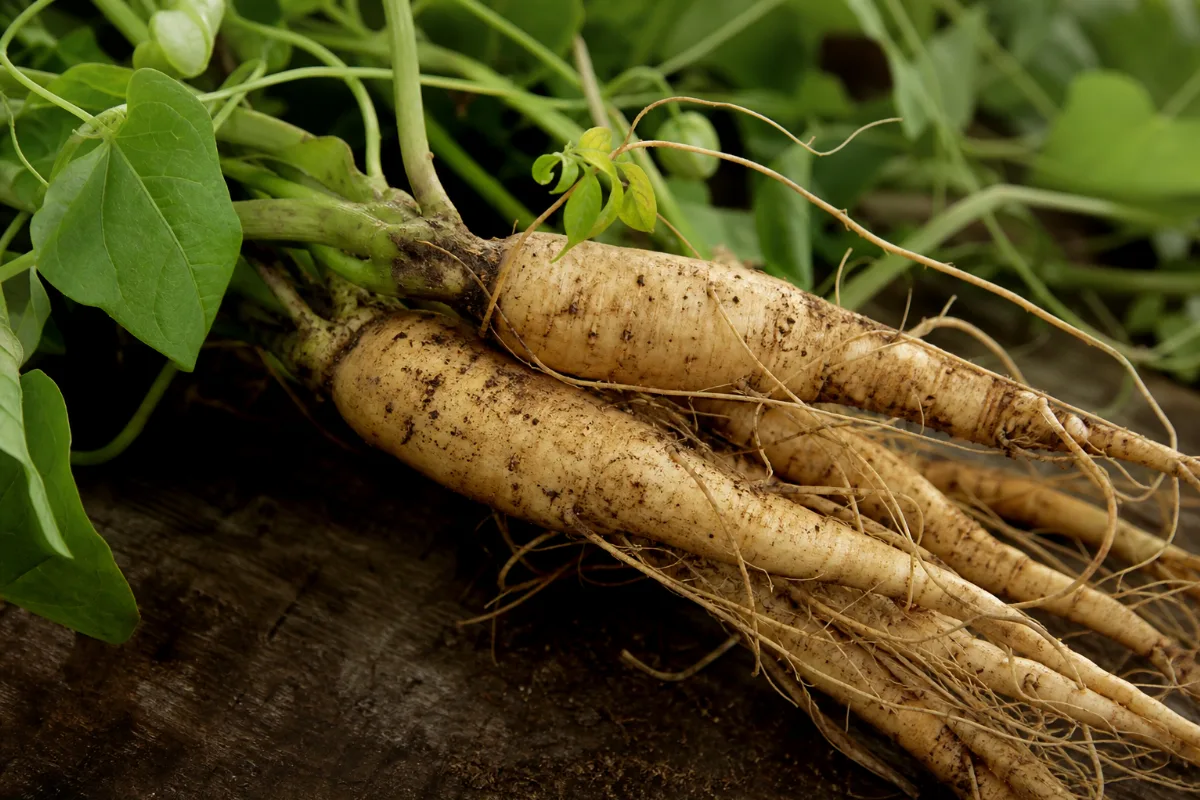
Adaptogens · Herbs & Botanicals · Qi-tonic root with low-to-very-low certainty evidence, mostly from formulae and animals
Codonopsis (Dang Shen)
Codonopsis pilosula (Franch.) Nannf. · also called Dang shen, 黨參, pilose bellflower, mansam (Korean), Codonopsis Radix; sometimes grouped with adaptogens, a label we found no regulator using for it
Dang shen is the dried root of Codonopsis pilosula, a climbing bellflower-family plant of China. In traditional Chinese medicine it is a qi-tonifying herb for tiredness, weak digestion and breathlessness, and it is also eaten as food. Modern research is mostly on animals, on its polysaccharides, and on multi-herb formulae.
General information, not medical advice. Last substantive update · Not medically reviewed. A named clinician has not signed off on this page. How this page is made
About Codonopsis (Dang Shen)
Dang shen (Codonopsis pilosula) is the root of a climbing bellflower-family plant used for centuries in traditional Chinese medicine as a gentle 'qi tonic' for tiredness, weak digestion and breathlessness. It is also eaten as a food in parts of China. Most modern research is on lab animals, on its polysaccharides, or on multi-herb formulae. We found no trial of dang shen taken alone for any health use.
What it is
Codonopsis pilosula (Franch.) Nannf. is a perennial vine in the bellflower family (Campanulaceae). The dried root is called Codonopsis Radix or dang shen. The Chinese Pharmacopoeia lists C. pilosula, C. pilosula var. modesta and C. tangshen as official sources; GBIF now treats the last two as forms of C. pilosula.
The root contains polysaccharides, inulin-type fructans, polyacetylenes such as lobetyolin, phenylpropanoids, alkaloids and saponins: over 100 compounds in all.
Traditional and current uses
Traditional Chinese medicine uses dang shen for weakness of the 'spleen and lung qi': tiredness, shortness of breath, wheeze, poor digestion and loss of appetite. It appears in many Chinese formulae, often with Astragalus.
Today most of its use in research is as one ingredient of formulae given beside conventional treatment for lung disease, cancer treatment side effects, digestion and fatigue. Its inclusion in China's food-and-medicine catalogue in 2023 was reported by trade press and not verified from the official notice.
What makes it distinctive
Dang shen is not ginseng, although the names sound alike. It is a bellflower-family root, not a member of the ginseng family. Several species of Codonopsis are sold, and studies of one (such as C. lanceolata, called deodeok or mansam in Korea) do not prove anything about C. pilosula.
Its fructans and polysaccharides make it unusual among 'tonic' roots, and they are the part most studied in animals for the stomach, gut bacteria and immune effects.
What the research shows
Nothing about dang shen reaches better than low certainty. The best-supported finding is from 48 trials of formulae for COPD, which improved breathing tests and quality of life but were judged too flawed to support routine use. Two small trials of a four-ingredient mix found smaller drops in white blood cells during cancer treatment.
Memory, mountain sickness, blood sugar, muscle strength, anaemia, kidney, heart, bone and stomach results are very low or insufficient: single small trials, mixtures, or animal and test-tube studies. There is no human trial of dang shen alone for blood pressure or blood sugar.
At a glance
Traditional uses history, not proof
- Traditional Chinese medicine: tiredness, shortness of breath, wheeze, weak digestion, deficiency of qi and blood
- Food: soups, rice and porridge in parts of China (trade press)
- Added to China's food-and-medicine catalogue in 2023 (not verified from the official notice)
Studied for research
- COPD and cancer-treatment white-cell counts (formulae), low
- Chemotherapy side effects, stomach cancer response, cancer fatigue, very low
- Memory, mountain sickness, blood sugar, muscle, anaemia, kidney, bone, very low
- Blood pressure, heart, children's tics, liver protection, insufficient
Main compounds
- Polysaccharides and inulin-type fructans
- Lobetyolin (a polyacetylene marker compound)
- Atractylenolide III, syringin and tangshenoside I
- Saponins, alkaloids and other classes (over 100 compounds)
Common forms
- Dried root
- Root in multi-herb formulae
- Extracts and polysaccharide fractions in research
- Injection forms in China (a different product)
Research links: PubMed: Dang shen formulae for COPD, systematic review and meta-analysis (2015) · PubMed: Codonopsis Radix comprehensive review (2025) · GBIF: Codonopsis pilosula · Research Library · Genes & Biomarkers Library
The plant and its history
- Accepted scientific name
- Codonopsis pilosula (Franch.) Nannf.
- Naming authority
- (Franch.) Nannf., accepted species in GBIF (usageKey 5412957).
- Synonyms
- Campanumoea pilosula Franch.; Codonopsis pilosula var. pilosula
- Common names
- Dang shen (Chinese (pinyin)); 黨參 (Chinese); Pilose bellflower (English); Mansam (만삼) (Korean); ヒカゲツルニンジン (Japanese)
- Botanical family
- Campanulaceae (bellflower family, order Asterales), the same family as bellflowers, balloon flower (Platycodon) and lobelia.
- Classification
- Plantae > Tracheophyta > Magnoliopsida > Asterales > Campanulaceae > Codonopsis > Codonopsis pilosula
- Native range
- Not verified in a source read. It is the source of a Chinese Pharmacopoeia medicine and the vernacular names in GBIF are Chinese, Korean and Japanese.
- Habitat
- Not verified in a source read.
- What the plant looks like
- Roots: The dried root is the medicinal part (Codonopsis Radix). Details of shape were not read in an abstract.; Stems: Not verified in a source read.; Leaves: Not verified in a source read.; Flowers: Not verified in a source read.; Fruit: Not verified in a source read.
- Cultivation
- Not verified in a source read.
- Harvest and processing
- A review lists traditional processing steps ('rubbing and sweating') and sulfur fumigation among its quality topics. Details were not in the abstract (p38746010).
- Look-alikes and adulterants
- Name: Other official Codonopsis sources; Note: The Chinese Pharmacopoeia names C. pilosula, C. pilosula var. modesta and C. tangshen as sources of Codonopsis Radix (p39020306, p41275746). GBIF now treats the last two as synonyms of subspecies of C. pilosula.; Name: Codonopsis lanceolata (deodeok, mansam in Korean use); Note: A different species, accepted in GBIF (5412935). Studies of it are labelled as a different species.; Name: Campanumoea javanica; Note: Often used as a substitute; about 95% shared chemical profile with Codonopsis Radix but most of its metabolites were previously unreported (p39020306). A DNA test separates it from Codonopsis (p10575378).; Name: Platycodon grandiflorus (balloon flower root); Note: Named as an adulterant; a DNA test separates it from Codonopsis (p10575378).; Name: Stellaria root (Stellariae Radix); Note: Found mixed with Codonopsis Radix in 1 of 12 market batches (p39575395).; Name: Ginseng, sha shen and dan shen; Note: Different plants with similar-sounding names. Dang shen (Codonopsis) is not ginseng (Panax).
- Sustainability and conservation
- Not verified. No IUCN assessment was retrieved.
Traditional use and history history, not clinical proof
| Tradition or era | Documented use | Source |
|---|---|---|
| Traditional Chinese medicine | Dang shen is a qi-tonifying herb, listed in a review of classical works (including the Compendium of Materia Medica) and used for spleen and lung weakness, tiredness, wheeze, shortness of breath, stomach upset and deficiency of qi and blood. | p38740108 |
| Chinese Pharmacopoeia | Official sources of Codonopsis Radix: C. pilosula, C. pilosula var. modesta and C. tangshen (as reported in review abstracts; the Pharmacopoeia was not read). | p39020306 |
| Food use in China | Eaten in soups, rice and porridge in Shanxi and Gansu provinces (trade press), and added to China's food-and-medicine catalogue in 2023 (not verified from the official notice). | s-nhc-announcement-9-2023 |
| Modern use | Common ingredient of Chinese formulae for lung disease, cancer treatment support, fatigue and digestive weakness (as found in the trials in this profile). | p37907925 |
Traditional use shows how a plant was used. It does not show that a supplement works or is safe today.
What is inside, and how it may work
What the plant contains and how those compounds act in cells and animals. Laboratory and animal mechanisms are not proven effects in people.
Main compounds
| Compound | Family | Where it is concentrated | Activity studied | Level of evidence |
|---|---|---|---|---|
| Lobetyolin PubChem 14655097 | polyacetylene glycoside | Root Regarded as the characteristic marker compound of Codonopsis Radix (p41275746) | Used as a quality marker; oral bioavailability in rats was low (3.90% pure, 6.97% in extract). 2 8 | Animal research |
| Atractylenolide III PubChem 155948 | sesquiterpene lactone | Root Not reported | Had the highest blood exposure among four compounds after an oral extract in rats, higher in females. 25 | Animal research |
| Syringin PubChem 5316860 | phenylpropanoid glycoside | Root Not reported | One of four compounds measured in rat blood after the extract. 25 | Animal research |
| Tangshenoside I | phenylpropanoid glycoside | Root Not reported | Named with codonopyrrolidium A/B as markers that identify different sources of Codonopsis Radix. No PubChem CID was returned by name. 2 25 | Other |
| Polysaccharides (CPPs) | polysaccharides | Root Main macromolecule class (p33766352) | Lab and animal immune, antioxidant, stomach, liver, blood sugar and prebiotic activity. 23 37 11 26 | Animal research |
| Inulin-type fructans (CP-A and others) | fructans (carbohydrates) | Root Three fructans with degree of polymerisation 16, 22 and 31 isolated | Protected rat stomach lining; stimulated Bifidobacterium longum growth in the lab. 19 20 | Animal research |
| Other compound classes | polyacetylenes, phenylpropanoids, alkaloids, triterpenoids, saponins | Root Over 100 compounds in at least 21 classes (p41275746) | Identified by chemistry; most have not been tested in people. 2 21 | Other |
Mechanisms, receptors and pathways
| Target or pathway | Gene or receptor | What was found | Level |
|---|---|---|---|
| Immune organs and T cells | CD4; B-cell receptor signalling | In septic rats, a Codonopsis extract raised thymus and spleen indexes and CD4 expression and altered blood counts; the authors link this to B-cell receptor signalling in the thymus. 37 | Animal research |
| Inflammation signals (MAPK and NF-kB) | TNF-alpha, IL-1beta, IL-6; ERK, p38, p65 | Polysaccharides lowered these in E. coli-infected macrophages and in mouse lung injury, while improving bacterial killing. 11 | Laboratory research |
| Sugar digestion | alpha-glucosidase (sucrase, maltase) | Extract blocked the enzymes (IC50 0.241 and 0.326 mg/mL) and lowered after-meal glucose in diabetic mice. 15 | Laboratory research |
| Insulin signalling | IRS1/PI3K/AKT | A Codonopsis plus Polygonatum mix raised signalling proteins and improved glucose in diabetic mice. 24 | Animal research |
| Gut lining and flora | Antioxidant enzymes (SOD, GSH-Px); gut bacteria | Fructan protected stomach lining in rats; fructans promoted B. longum; polysaccharides shifted gut bacteria in toxin-exposed mice. 19 20 26 | Animal research |
| Review-level pathway list | PI3K/Akt; MAPK/NF-kB; TLR4/NF-kB; AMPK/PGC-1alpha | A review attributes broad activity to these pathways; the evidence behind each was not read. 2 | Other |
| Blood vessels (a different species) | Voltage-dependent calcium channels | C. lanceolata extract relaxed damaged rat arteries by blocking these channels; not shown for C. pilosula. 16 | Laboratory research |
Absorption, metabolism and elimination
- Absorption
- In rats, four compounds (atractylenolide III, lobetyolin, tangshenoside I, syringin) were absorbed quickly after an oral extract. A review says polysaccharides and saponins are absorbed slowly with moderate bioavailability.
- Distribution
- A review says components are mostly distributed to the gut, liver and kidneys (p41275746).
- Metabolism
- CYP450 enzymes in rat liver microsomes broke down the four compounds over time (p39368759).
- Elimination
- Not found for humans.
- Bioavailability
- Oral bioavailability of lobetyolin in rats was 3.90% as the pure compound and 6.97% from the extract (p33783828). No human data.
Isolated compounds versus whole extracts
No single compound has been shown to carry dang shen's effects. Polysaccharides, fructans and saponins are the main groups studied in animals, and lobetyolin is used as a marker. Human trials all use the whole root in mixtures, so isolated compounds cannot be compared with the whole herb.
Nutritional composition
Dang shen is eaten as a food in some Chinese regions, but no nutrient table was read. Its fructan content (inulin-type) is relevant for digestion but amounts were not read.
2 low certainty13 very low certainty5 not enough evidence
What is Codonopsis (Dang Shen) good for?
The main proposed uses and how strong the human evidence is for each. 'Low' means small or inconsistent trials; 'very-low' means one or two small trials, often of mixtures; 'insufficient' means animal or cell work only, or no human study.
Benefits, one by one
Each card is a research question, not a promise. Tap a goal to filter. Open a card to see the studies, doses and limits.
Chronic lung disease (COPD): breathing tests and quality of life
Low certaintyA review of 48 trials found that Chinese formulae containing dang shen improved some breathing and quality-of-life scores in people with COPD. The authors said the trials were too flawed to support routine use.
3 studiesAlways a multi-herb formula, not dang shen alone. Doses are not given…
Studies, doses and limits
What the trials found
Shergis 2015 pooled 48 randomised trials of formulae containing dang shen root for COPD. Versus usual drugs, lung function (FEV1) was higher; versus placebo, quality-of-life scores (St George's questionnaire) improved; added to usual drugs, quality of life and the 6-minute walk improved and flare-ups were fewer. The authors found methodological flaws and said the evidence cannot support routine use outside Chinese medicine practice.
Results
Gains were seen on several measures, but the trials were of uneven quality and tested whole formulae. It is not possible to say how much dang shen contributed.
Effect sizes as reported
FEV1 +0.22 L (CI 0.13 to 0.31); SGRQ versus placebo -7.19 (CI -10.82 to -3.56); SGRQ added to drugs -9.05 (CI -12.72 to -5.38, I2 89%); 6-minute walk +51.43 m (CI 30.06 to 72.80)
Why this rating
Many trials pooled with low heterogeneity on FEV1, but the authors found methodological shortfalls and the products were multi-herb formulae. We rate it low, not higher, because of the authors' own caution.
Form and dose studied
Always a multi-herb formula, not dang shen alone. Doses are not given in the abstract.
Who was studied
Adults with COPD, mostly in China.
Limits
Formula trials; unclear blinding; the abstract gives no participant total; benefit cannot be pinned on dang shen.
Why researchers looked
Dang shen is used in Chinese medicine for 'weak lung qi' with cough and short breath, so COPD formulae are common in China.
Traditional use
Dang shen (Codonopsis root) is a classic qi-tonifying herb in traditional Chinese medicine, used for tiredness, weak digestion, shortness of breath and what is described as weak lung and spleen function.
Proposed mechanism Preliminary mechanism
Lab and animal work suggests Codonopsis polysaccharides can calm lung inflammation (mouse lung-injury study) and improve how immune cells kill bacteria. This has not been shown to explain any COPD benefit.
A proposed mechanism does not show that the effect happens in people.
Adverse events were low and not different from controls (33 events: stomach upset, dry mouth, insomnia). Dang shen is not a replacement for COPD inhalers or other prescribed medicines.
Idiopathic pulmonary fibrosis (a scarring lung disease): small exploratory trial
Very low certaintyOne small placebo-controlled trial of a 12-herb liquid that includes dang shen and astragalus found a better change in total lung capacity but no clear gain in most other lung measures.
1 studiesAlways a multi-herb formula, not dang shen alone. 40 ml three times a…
Studies, doses and limits
What the trials found
Zhang 2025: 68 patients analysed (72 started), 26 weeks, formula plus Corbrin capsules versus placebo plus Corbrin. Total lung capacity changed by +136 mL on the formula versus -523 mL on placebo (difference 659 mL, p = 0.02). Forced vital capacity, gas transfer, oxygen pressure and the quality-of-life score did not differ significantly.
Results
One lung-volume measure moved in the formula's favour; most others did not reach significance. The authors call it an exploratory proof-of-concept study.
Effect sizes as reported
TLC difference 659 mL (CI -1215 to -104); FVC % predicted difference 2.10% (CI -7.13 to 2.93)
Why this rating
One small exploratory trial with many outcomes, only one of which was significant, and a 12-herb formula.
Form and dose studied
Always a multi-herb formula, not dang shen alone. 40 ml three times a day in the trial.
Who was studied
Adults with idiopathic pulmonary fibrosis in China.
Limits
Small (34 per group); multiple outcomes tested; formula; no way to single out dang shen.
Why researchers looked
The trial report says this 12-herb formula has been used for lung disease in China for over 30 years.
Traditional use
Dang shen (Codonopsis root) is a classic qi-tonifying herb in traditional Chinese medicine, used for tiredness, weak digestion, shortness of breath and what is described as weak lung and spleen function.
Proposed mechanism Pharmacological theory
Not established. The trial authors do not explain which herb, if any, produced the change.
A proposed mechanism does not show that the effect happens in people.
Side effects were not different from placebo in this trial. Lung fibrosis needs a specialist; do not delay prescribed treatment.
Keeping white blood cell counts up during cancer treatment
Low certaintyIn two small trials, a four-ingredient herb mix that included dang shen slowed the fall in white blood cells during chemotherapy or radiotherapy. Reviews of many formulae also link dang shen-containing mixes to less severe low neutrophils.
4 studiesMixes in the trials: Codonopsis root extract with Ganoderma, Angelica…
Studies, doses and limits
What the trials found
Two randomised, double-blind trials from one Taiwanese group tested a mix of Ganoderma, Codonopsis pilosula and Angelica sinensis extracts plus a geranium compound. In 105 patients on chemo or radiotherapy for 6 weeks, leukocytes fell 14.2% on the mix versus 28.2% on placebo and neutrophils 11.0% versus 29.1%; CD4 and natural killer cells were higher than placebo. In 58 breast cancer patients, leukocytes fell 13.4% versus 31.5% and neutrophils 11.0% versus 35.6%, but T-cell and natural killer cell differences were not significant. A meta-analysis of 32 trials (2,224 people) found fewer cases of severe (grade 3/4) neutropenia with traditional plant medicines in oxaliplatin regimens (RR 0.45, CI 0.31 to 0.65), with Astragalus, Codonopsis, Atractylodes, Poria and Coix in combinations consistently linked to less neutropenia.
Results
Smaller drops in white cells in two small trials of a four-ingredient mix, and a consistent subgroup signal in a meta-analysis of formulae. Blood counts are a lab marker; the trials did not test infection rates or survival.
Effect sizes as reported
Leukocyte fall 14.2% vs 28.2% (n=105) and 13.4% vs 31.5% (n=58); severe neutropenia RR 0.45 (CI 0.31 to 0.65)
Why this rating
Two small blinded trials plus a meta-analysis point the same way, but they test mixtures, are short, come largely from one group, and the herb-level link is a subgroup observation.
Form and dose studied
Mixes in the trials: Codonopsis root extract with Ganoderma, Angelica and a geranium compound (doses not in the abstracts), 6 weeks.
Who was studied
Adults with cancer on chemotherapy or radiotherapy; one trial only breast cancer.
Limits
Same research group for both trials; combinations; no infection or survival outcomes; short.
Why researchers looked
Chemotherapy often lowers white blood cells. Dang shen-containing formulae are widely used alongside chemotherapy in China.
Traditional use
Dang shen (Codonopsis root) is a classic qi-tonifying herb in traditional Chinese medicine, used for tiredness, weak digestion, shortness of breath and what is described as weak lung and spleen function.
Proposed mechanism Preliminary mechanism
Lab and animal work reports that Codonopsis extracts and polysaccharides change immune organ weights, CD4 T cells and blood counts in rats. This is not proof of the human effect.
A proposed mechanism does not show that the effect happens in people.
Cancer treatment is specialist care. Tell the cancer team before taking any herb; interactions with chemotherapy have not been properly studied (see safety).
Nausea and gut side effects of chemotherapy
Very low certaintyReviews found that herbal formulae lessened chemotherapy gut side effects in trials that were not double-blind, but not in double-blind ones. Dang shen was one of the herbs that appeared in the successful formulae.
3 studiesAlways a multi-herb formula, not dang shen alone.
Studies, doses and limits
What the trials found
Chen 2021 pooled 22 trials (1,995 colorectal cancer patients): overall gut toxicity RR 0.78 (CI 0.72 to 0.84), nausea and vomiting RR 0.74, but no significant effect in double-blind studies. Codonopsis pilosula was one of five herbs linked to reductions in subgroup analysis. Han 2024 (meta-analysis, oxaliplatin) also found lower nausea and vomiting with plant medicines (RR 0.72, CI 0.61 to 0.84). A 136-patient placebo-controlled trial of a dang shen-containing granule for lung cancer chemotherapy (Cai 2026) is described in an abstract that gives no results.
Results
The benefit shows in less rigorous trials and disappears in double-blind trials, which is a warning sign for bias.
Effect sizes as reported
Overall gut toxicity RR 0.78 (CI 0.72 to 0.84); no significant effect in double-blind trials
Why this rating
Effect absent in double-blind trials, formula-level data, and the only placebo-controlled trial identified has no reported results.
Form and dose studied
Always a multi-herb formula, not dang shen alone.
Who was studied
Colorectal and lung cancer patients on chemotherapy.
Limits
Herb-level conclusions come from subgroup analysis; a trial abstract with no results.
Why researchers looked
Nausea, poor appetite and diarrhoea are common with chemotherapy, and spleen-strengthening formulae with dang shen are used for them.
Traditional use
Dang shen (Codonopsis root) is a classic qi-tonifying herb in traditional Chinese medicine, used for tiredness, weak digestion, shortness of breath and what is described as weak lung and spleen function.
Proposed mechanism Pharmacological theory
Not established. Animal work shows stomach-protective effects of Codonopsis fructans, but not in chemotherapy models.
A proposed mechanism does not show that the effect happens in people.
Ask the cancer team first.
Tumour response in advanced stomach cancer (added to chemotherapy)
Very low certaintyA review of 40 trials found that herbal medicines added to oxaliplatin chemotherapy raised the share of tumours that shrank. Dang shen was one of seven herbs flagged, but the finding is for the mixes.
1 studiesAlways a multi-herb formula, not dang shen alone.
Studies, doses and limits
What the trials found
Tan 2022 (40 trials, 3,029 patients): adding herbal medicine raised objective response (RR 1.35, CI 1.25 to 1.45) and disease control (RR 1.12, CI 1.08 to 1.16). The authors rated the overall evidence moderate certainty but said the trials were small and mostly had 'some concerns'. A sensitivity analysis flagged Astragalus, liquorice, Poria, Atractylodes, Chinese angelica, Codonopsis and tangerine peel.
Results
Higher shrinkage and disease-control rates for the herbal mixes. Survival and quality of life are not reported in the abstract.
Effect sizes as reported
Objective response RR 1.35 (CI 1.25 to 1.45); disease control RR 1.12 (CI 1.08 to 1.16)
Why this rating
Certainty for Codonopsis itself is very low: the review's moderate rating applies to herbal mixes overall, and the herb finding is a sensitivity analysis.
Form and dose studied
Always a multi-herb formula, not dang shen alone.
Who was studied
Advanced gastric cancer patients in China.
Limits
Mixes; no survival result in the abstract; small, poor-quality trials.
Why researchers looked
Chinese herbal formulae are often added to chemotherapy for advanced stomach cancer in China.
Traditional use
Dang shen (Codonopsis root) is a classic qi-tonifying herb in traditional Chinese medicine, used for tiredness, weak digestion, shortness of breath and what is described as weak lung and spleen function.
Proposed mechanism Pharmacological theory
Not established. Network-pharmacology and lab work only.
A proposed mechanism does not show that the effect happens in people.
Cancer treatment must be planned by the oncology team. Herb-drug interactions with chemotherapy are not established.
Preventing nerve damage from oxaliplatin chemotherapy
Very low certaintyA review found fewer cases of nerve damage in colorectal cancer patients taking plant medicines with oxaliplatin. A computer analysis named dang shen among four 'core' herbs, which is a prediction, not a finding.
1 studiesAlways a multi-herb formula, not dang shen alone.
Studies, doses and limits
What the trials found
Han 2024 searched to December 2022. Plant medicines lowered chronic oxaliplatin nerve damage (RR 0.66, CI 0.56 to 0.78) and severe nerve damage when chemotherapy lasted under 6 months. Core herbs Astragalus, Atractylodes, Poria and Codonopsis pilosula were picked by the analysis.
Results
Lower rates of nerve damage with mixed plant medicines.
Effect sizes as reported
Chronic nerve damage RR 0.66 (CI 0.56 to 0.78)
Why this rating
Formula-level, herb choice is a computer prediction, number of trials not in the abstract, GRADE result not shown in the abstract.
Form and dose studied
Always a multi-herb formula, not dang shen alone.
Who was studied
Colorectal cancer patients on oxaliplatin.
Limits
Authors ask for quality-assured long-term trials.
Why researchers looked
Oxaliplatin often causes numb, tingling hands and feet.
Traditional use
Dang shen (Codonopsis root) is a classic qi-tonifying herb in traditional Chinese medicine, used for tiredness, weak digestion, shortness of breath and what is described as weak lung and spleen function.
Proposed mechanism Pharmacological theory
The authors' computer (network pharmacology) analysis suggests an anti-inflammatory route involving NF-kB. This is a prediction.
A proposed mechanism does not show that the effect happens in people.
Oncology team should know about any herb.
Tiredness related to cancer
Very low certaintyA review of 82 trials of Chinese medicine for cancer fatigue found most trials favoured it, but quality was poor. Dang shen was one of the three most common herbs.
2 studiesAlways a multi-herb formula, not dang shen alone.
Studies, doses and limits
What the trials found
Yang 2023 included 82 randomised trials. 78 trials reported overall benefit and 33 were statistically significant. Astragalus, ginseng and Codonopsis were the most common herbs. Reporting was poor: none fully met the CONSORT-CHM standard and risk of bias was mostly unclear. Adverse effects were non-serious and reversible.
Results
Mostly favourable but low-quality; the review could not say which herb is responsible.
Effect sizes as reported
78 of 82 trials favoured Chinese medicine; 33 significant
Why this rating
Poorly reported trials, many different formulae, and no herb-level result.
Form and dose studied
Always a multi-herb formula, not dang shen alone.
Who was studied
Cancer patients.
Limits
Poor reporting; unclear risk of bias.
Why researchers looked
Tiredness is the most common long-lasting complaint in cancer care, and 'tonic' herbs like dang shen are used for it.
Traditional use
Dang shen (Codonopsis root) is a classic qi-tonifying herb in traditional Chinese medicine, used for tiredness, weak digestion, shortness of breath and what is described as weak lung and spleen function.
Proposed mechanism Animal research
Lab reviews list 'anti-fatigue' effects of Codonopsis polysaccharides in animals. Not shown in people.
A proposed mechanism does not show that the effect happens in people.
Non-serious reversible effects reported across all formulae.
Memory and learning in healthy adults
Very low certaintyOne 2004 trial of 60 healthy adults reported that a capsule with Codonopsis glycosides plus Ginkgo improved memory test scores versus placebo. The abstract gives no numbers, and Ginkgo was in the capsule.
2 studiesCapsule: 75 mg Codonopsis pilosula total glycosides plus 40 mg Ginkgo…
Studies, doses and limits
What the trials found
Singh 2004: 60 healthy adults aged 21 to 60 randomised to placebo, Ginkgo alone, or Ginkgo plus 75 mg Codonopsis total glycosides per capsule, one capsule twice daily. Both active groups were reported as better than placebo on a computerised memory test and the combination better than Ginkgo alone.
Results
The abstract gives no numbers. Because Ginkgo was in both active arms, a Codonopsis-only effect cannot be separated.
Effect sizes as reported
No numbers in the abstract
Why this rating
One small old trial, abstract with no numbers, combination product, healthy volunteers.
Form and dose studied
Capsule: 75 mg Codonopsis pilosula total glycosides plus 40 mg Ginkgo extract, twice daily (trial).
Who was studied
Healthy adults aged 21 to 60 in California.
Limits
Tiny; combination with Ginkgo; no numbers available to us.
Why researchers looked
Dang shen is said in Chinese medicine to help 'forgetfulness'; reviews list learning and memory improvement as reported effects.
Traditional use
Dang shen (Codonopsis root) is a classic qi-tonifying herb in traditional Chinese medicine, used for tiredness, weak digestion, shortness of breath and what is described as weak lung and spleen function.
Proposed mechanism Animal research
Animal and lab reviews report effects on learning and memory. No mechanism has been shown in people.
A proposed mechanism does not show that the effect happens in people.
Ginkgo has its own interactions, including with blood thinners.
Acute mountain sickness
Very low certaintyA small single-blind trial in 45 soldiers reported fewer mountain-sickness symptoms with compound Codonopsis tablets taken before and during a climb to 5,200 m.
2 studiesCompound tablets (contents not listed in the abstract).
Studies, doses and limits
What the trials found
Zhang 2010: 45 male soldiers (15 placebo, 30 'new compound codonopsis tablets'), single-blind, tablets taken 5 days before and up to 3 days after reaching 5,200 m. Symptom scores were lower on days 1, 3 and 5 (p < 0.01), and several lung-function measures were higher.
Results
Fewer symptoms and better lung function numbers in the treated group, with no effect sizes given in the abstract.
Effect sizes as reported
Symptom scores lower at p < 0.01; no sizes in abstract
Why this rating
Single-blind, small, all male soldiers, a compound product with contents not listed in the abstract.
Form and dose studied
Compound tablets (contents not listed in the abstract).
Who was studied
Young adult men moving from 1,400 m to 5,200 m.
Limits
Single-blind; compound product; Chinese-language paper, abstract only.
Why researchers looked
Dang shen is traditionally used for shortness of breath and weakness. Altitude work in China uses compound herbal tablets.
Traditional use
Dang shen (Codonopsis root) is a classic qi-tonifying herb in traditional Chinese medicine, used for tiredness, weak digestion, shortness of breath and what is described as weak lung and spleen function.
Proposed mechanism Animal research
A rat study of a different species (Codonopsis clematidea) found less platelet over-activation under low oxygen. This is not the same plant and not a human result.
A proposed mechanism does not show that the effect happens in people.
Blood clotting changes at altitude matter; do not combine herbs with blood thinners without advice.
Tics and hyperactivity in children (formula trials)
Not enough evidenceTwo small trials of multi-herb formulae that include dang shen reported benefit for Tourette's syndrome (2014) and minimal brain dysfunction (1990) in children. Neither can say anything about dang shen alone.
2 studiesAlways a multi-herb formula, not dang shen alone.
Studies, doses and limits
What the trials found
Tang 2014: 90 children with Tourette's randomised to Ningdong Granule (a multi-herb formula containing Codonopsis pilosula), tiapride, or both for 3 months. Effective rates were 79.3%, 67.9% and 83.3%; tic scores were lower with the formula than with tiapride. Zhang 1990: 100 children aged 7 to 14 with minimal brain dysfunction, 80 on a seven-herb formula and 20 on methylphenidate; effective rates were 86.25% versus 90.0% with fewer side effects on the formula.
Results
The formulae looked about as good as the drugs they were compared with, but there were no placebo groups.
Effect sizes as reported
Effective rates 79.3% vs 67.9% (Tourette's); 86.25% vs 90.0% (MBD)
Why this rating
No placebo groups, multi-herb formulae, old or abstract-only papers.
Form and dose studied
Always a multi-herb formula, not dang shen alone.
Who was studied
Children with Tourette's syndrome or minimal brain dysfunction in China.
Limits
No placebo; unclear blinding; one is from 1990.
Why researchers looked
Chinese formulae for children's tics and overactivity often include spleen-tonic herbs like dang shen.
Traditional use
Dang shen (Codonopsis root) is a classic qi-tonifying herb in traditional Chinese medicine, used for tiredness, weak digestion, shortness of breath and what is described as weak lung and spleen function.
Proposed mechanism Pharmacological theory
Not established. The Tourette's trial linked the formula to lower blood IL-12 and TNF-alpha, which is a lab marker.
A proposed mechanism does not show that the effect happens in people.
Children should be treated under a doctor's care; the Tourette's formula listed in the abstract contains other ingredients not assessed here.
Immune support (lab and animal research)
Not enough evidenceMost of the support for dang shen as an 'immune tonic' is from cell and animal studies of its polysaccharides and extracts. There are no human trials of dang shen alone for immunity.
5 studiesExtracts and polysaccharides in animals; doses not comparable with hu…
Studies, doses and limits
What the trials found
No human trials of dang shen alone for immune outcomes were found. The blood-count trials above use mixtures.
Results
Animal and cell results are consistent with an immune-modulating effect, but they do not show that taking dang shen strengthens immunity in people or prevents infection.
Effect sizes as reported
None in humans
Why this rating
Only animal, cell and review evidence for this claim.
Form and dose studied
Extracts and polysaccharides in animals; doses not comparable with human use.
Who was studied
Rats, mice and cells.
Limits
Models of sepsis, lung injury and toxin injury differ from everyday immunity.
Why researchers looked
Dang shen is classed as a qi tonic, and 'strengthening immunity' is its commonest modern description.
Traditional use
Dang shen (Codonopsis root) is a classic qi-tonifying herb in traditional Chinese medicine, used for tiredness, weak digestion, shortness of breath and what is described as weak lung and spleen function.
Proposed mechanism Animal research
In rats with sepsis a Codonopsis extract raised thymus and spleen weights and CD4 T cells; in mice and cells its polysaccharides lowered TNF-alpha, IL-1beta and IL-6 and improved bacterial killing; in mice they also eased mould-toxin liver injury and changed gut bacteria. Reviews describe PI3K/Akt and NF-kB pathways.
A proposed mechanism does not show that the effect happens in people.
Immune-modulating herbs may in theory interact with immune-suppressing drugs. No human interaction study was found.
Blood sugar and diabetes
Very low certaintyLab and mouse studies show Codonopsis extracts slow sugar digestion and lower after-meal glucose in diabetic mice. In people, one trial of an eight-ingredient paste found lower fasting glucose but no change in HbA1c. No human trial of dang shen alone for blood sugar was found.
4 studiesExtract (animal doses); paste and herbal recipes in people.
Studies, doses and limits
What the trials found
Jia 2022: Codonopsis pilosula extract blocked sucrase (IC50 0.241 mg/mL) and maltase (0.326 mg/mL) and lowered after-meal glucose in diabetic mice. Mao 2022: a Codonopsis Radix plus Polygonati Rhizoma mix, 2.5 to 10 g/kg for 4 weeks, improved fasting glucose, blood fats and liver enzymes and repaired liver and pancreas tissue in diabetic mice. Human: Hua 2026 (90 older adults with diabetes and muscle loss, 12 weeks) found fasting glucose fell more on an eight-ingredient paste than placebo (p = 0.018), but fasting insulin, HbA1c and insulin resistance did not differ. In a non-randomised cohort of 170 diabetic kidney patients, fasting glucose and HbA1c were lower at 12 months in the herbal-recipe group (HbA1c 7.8% vs 8.5%); dang shen was in 41.8% of recipes.
Results
Animal and test-tube data point to slowed sugar absorption. The human data are about mixtures, and HbA1c, the long-term sugar marker, did not move in the only randomised trial.
Effect sizes as reported
Fasting glucose p = 0.018 (paste vs placebo); HbA1c no difference (randomised); HbA1c 7.8% vs 8.5% (non-randomised cohort)
Why this rating
Animal and test-tube work plus two mixture-based human studies, one not randomised.
Form and dose studied
Extract (animal doses); paste and herbal recipes in people.
Who was studied
Mice; older adults with diabetes; Chinese diabetic kidney patients.
Limits
No dang shen-only human trial; HbA1c unchanged in the randomised trial.
Why researchers looked
Dang shen is used in Chinese formulae for 'wasting thirst' patterns and for weak digestion, and appears in many diabetes-related recipes.
Traditional use
Dang shen (Codonopsis root) is a classic qi-tonifying herb in traditional Chinese medicine, used for tiredness, weak digestion, shortness of breath and what is described as weak lung and spleen function.
Proposed mechanism Animal research
The extract blocked sugar-digesting enzymes (alpha-glucosidase) in the test tube and in mice. A two-herb mix raised insulin-signalling proteins (IRS1/PI3K/AKT) in diabetic mice.
A proposed mechanism does not show that the effect happens in people.
Blood sugar may drop. If you take insulin or glucose-lowering drugs, watch for low blood sugar and tell your prescriber. This is a theory-level caution drawn from animal and mixture studies, not a documented case.
Muscle mass and strength in older adults with diabetes
Very low certaintyOne 12-week trial of Shenqi paste, a food-and-medicine mix that includes dang shen, found better grip strength, muscle mass and chair-stand speed in older adults with diabetes and muscle loss. Dang shen was one of eight ingredients.
1 studiesShenqi paste (eight ingredients), 12 weeks.
Studies, doses and limits
What the trials found
Hua 2026: 90 adults aged 60 or over with type 2 diabetes and spleen-kidney deficiency pattern, randomised double-blind to the paste or placebo paste for 12 weeks. Handgrip, skeletal muscle index and five-time chair stand all improved more on the paste (each interaction p < 0.001). Secondary outcomes (frailty, nutrition, sleep, depression scores) improved; CRP fell (p < 0.001); no serious adverse events.
Results
All three primary outcomes favoured the paste, with p-values but no effect sizes in the abstract.
Effect sizes as reported
Handgrip, SMI, chair stand: p < 0.001 for each (no sizes in abstract)
Why this rating
One trial of 90, eight-ingredient mixture, published 2026 with no replication, abstract only.
Form and dose studied
Shenqi paste (eight ingredients), 12 weeks.
Who was studied
Older adults with diabetes and sarcopenia in China.
Limits
Single trial; 16 of 90 not analysed for secondary outcomes; mixture.
Why researchers looked
Dang shen with Astragalus is the classic pair for strengthening the 'spleen and qi', which traditionally governs muscle.
Traditional use
Dang shen (Codonopsis root) is a classic qi-tonifying herb in traditional Chinese medicine, used for tiredness, weak digestion, shortness of breath and what is described as weak lung and spleen function.
Proposed mechanism Pharmacological theory
Not established.
A proposed mechanism does not show that the effect happens in people.
No serious adverse events in this trial; blood, liver and kidney tests were checked.
Blood pressure
Not enough evidenceNo human trial of dang shen (Codonopsis pilosula) for blood pressure was found. A trial of a different species, Codonopsis lanceolata, in 80 adults with high-normal blood pressure reported lower systolic pressure from baseline.
4 studiesExtract of C. lanceolata for 6 weeks (dose not in abstract).
Studies, doses and limits
What the trials found
Shin 2020: 80 adults aged 19 to 60 with systolic 120-139 and diastolic 80-89 mmHg, C. lanceolata extract or starch placebo for 6 weeks. Systolic pressure fell from baseline in subgroups; nitrite rose in one subgroup (p = 0.038) and hs-CRP and malondialdehyde fell in stage 1 hypertension subjects (p = 0.020 and 0.039). Han 2018 and Kim 2023 are rat and isolated-artery studies of C. lanceolata.
Results
The abstract gives no between-group blood pressure difference. Whether C. pilosula lowers blood pressure in people is not known. The Tongmai Yangxin pill study (8 people, 11 herbs including dang shen) reported changes in endothelin-1 and fats but is not a blood pressure trial.
Effect sizes as reported
Systolic fall from baseline (no between-group size in abstract)
Why this rating
The only human trial used a different species and reports subgroup findings; nothing for C. pilosula.
Form and dose studied
Extract of C. lanceolata for 6 weeks (dose not in abstract).
Who was studied
Adults with high-normal blood pressure in Korea.
Limits
Different species; subgroup analyses; no C. pilosula human data.
Why researchers looked
Korean and Chinese Codonopsis species are used as foods and folk remedies for circulation.
Traditional use
Dang shen (Codonopsis root) is a classic qi-tonifying herb in traditional Chinese medicine, used for tiredness, weak digestion, shortness of breath and what is described as weak lung and spleen function.
Proposed mechanism Animal research
Rat studies of C. lanceolata found lower pressure and relaxed arteries by blocking voltage-dependent calcium channels (a different species).
A proposed mechanism does not show that the effect happens in people.
If you take blood pressure drugs, a herb that lowers pressure could add to their effect; this is theory based on the other species. Ask your pharmacist.
Stomach lining, chronic gastritis and gut bacteria
Very low certaintyDang shen is traditionally a stomach-strengthening herb. In rats, a sugar from the root protected the stomach lining from alcohol damage, and its inulin-type fructans fed a friendly gut bacterium in the lab. In people, dang shen was a frequently used herb in formulae that helped chronic atrophic gastritis in a review of 12 trials.
4 studiesAlways a multi-herb formula, not dang shen alone.
Studies, doses and limits
What the trials found
Weng 2023: 12 randomised trials (1,140 people) found added Chinese medicine improved clinical efficacy in chronic atrophic gastritis; Codonopsis pilosula was one of seven herbs that appeared most often across the formulae, which a computer analysis linked to cancer-related pathways. Li 2017: CP-A at 50 and 25 mg/kg reduced alcohol-induced stomach ulcers in rats. Li 2018: fructans at 2.0 g/L stimulated B. longum growth.
Results
Frequent use in a formula does not show that dang shen is the active part. No human trial of dang shen alone for the gut was found.
Effect sizes as reported
Not given as numbers in the abstract
Why this rating
Formula meta-analysis (herb frequency only) plus animal and lab data.
Form and dose studied
Always a multi-herb formula, not dang shen alone.
Who was studied
Chronic atrophic gastritis patients; rats; bacteria in a dish.
Limits
Herb frequency is not proof; abstracts only.
Why researchers looked
Poor digestion and loose stools from 'spleen qi deficiency' are the commonest traditional reasons for using dang shen.
Traditional use
Dang shen (Codonopsis root) is a classic qi-tonifying herb in traditional Chinese medicine, used for tiredness, weak digestion, shortness of breath and what is described as weak lung and spleen function.
Proposed mechanism Animal research
Inulin-type fructan CP-A cut ulcer index and raised antioxidant enzymes in rats; three fructans stimulated growth of Bifidobacterium longum in the lab.
A proposed mechanism does not show that the effect happens in people.
If you have stomach pain, black stools or weight loss, see a doctor.
Anaemia and blood building (beta-thalassemia)
Very low certaintyIn a small trial in children with beta-thalassemia, haemoglobin rose with Astragalus alone and with an Astragalus-dang shen-tortoise plastron compound. Astragalus alone did as well, so any dang shen effect is unproven.
2 studiesCompound of Astragalus, Codonopsis and tortoise plastron, 12 weeks (d…
Studies, doses and limits
What the trials found
Lu 2012: 57 children randomised to Astragalus, the compound (Astragalus plus Codonopsis pilosula plus tortoise plastron) or placebo for 12 weeks. In thalassemia intermedia haemoglobin rose 1.21 g/dL on the compound and 1.05 on Astragalus versus -0.28 on placebo (p < 0.01). White cells, platelets, liver and kidney tests were not harmed.
Results
The compound and Astragalus alone were similar, so dang shen added no visible benefit. A rat study reported better red cell and haemoglobin levels in septic rats.
Effect sizes as reported
Hb +1.21 (compound) and +1.05 (Astragalus) vs -0.28 g/dL placebo
Why this rating
One small trial (57), abstract only, Astragalus alone worked as well.
Form and dose studied
Compound of Astragalus, Codonopsis and tortoise plastron, 12 weeks (doses not in abstract).
Who was studied
Children with beta-thalassemia.
Limits
Tiny; cannot separate the Codonopsis effect.
Why researchers looked
In Chinese medicine dang shen 'nourishes the blood' and is used for pale complexion and weakness.
Traditional use
Dang shen (Codonopsis root) is a classic qi-tonifying herb in traditional Chinese medicine, used for tiredness, weak digestion, shortness of breath and what is described as weak lung and spleen function.
Proposed mechanism Pharmacological theory
Not established.
A proposed mechanism does not show that the effect happens in people.
Anaemia has many causes; do not treat on your own.
Kidney disease (diabetic nephropathy and membranous nephropathy)
Very low certaintyDang shen is one of the herbs most often used in Chinese formulae for kidney disease. Reviews and cohorts of those formulae show some lab gains but at low or very low quality.
2 studiesAlways a multi-herb formula, not dang shen alone.
Studies, doses and limits
What the trials found
Zheng 2017 (11 trials, 725 people, idiopathic membranous nephropathy): the Yiqi Huoxue formulae lowered 24-hour urine protein and cholesterol and raised albumin, but not creatinine or urea; the authors graded the main outcome very low quality. Codonopsis Radix was one of the six most-used herbs. Li 2012 (170 diabetic kidney patients, non-randomised, mean 14 months): no difference in the main endpoint (11.2% vs 7.4%); no abnormal liver function or serious adverse events.
Results
Herb frequency is reported; no result separates dang shen from the other ingredients.
Effect sizes as reported
24 h urine protein -1.23 (CI -1.94 to -0.53); albumin +3.56 (CI 1.64 to 5.47); creatinine and urea no change
Why this rating
Authors' own GRADE: very low quality; non-randomised cohort; formulae.
Form and dose studied
Always a multi-herb formula, not dang shen alone.
Who was studied
Idiopathic membranous nephropathy; diabetic kidney disease.
Limits
Formulae; not randomised in one study.
Why researchers looked
Dang shen with Astragalus and Angelica is a standard 'tonify qi and move blood' combination for kidney problems.
Traditional use
Dang shen (Codonopsis root) is a classic qi-tonifying herb in traditional Chinese medicine, used for tiredness, weak digestion, shortness of breath and what is described as weak lung and spleen function.
Proposed mechanism Pharmacological theory
Not established.
A proposed mechanism does not show that the effect happens in people.
If you have kidney disease, discuss herbs with your kidney doctor; some herbs affect kidney function or potassium. No dang shen-specific kidney harm was found in the studies read.
Heart failure and coronary heart disease
Not enough evidenceDang shen appears in heart formulae but there is no human result that stands on its own. A 2026 network review compared 15 plant extracts in heart failure; an Astragalus-plus-Codonopsis extract was one of them but did not top the rankings.
2 studiesAlways a multi-herb formula, not dang shen alone.
Studies, doses and limits
What the trials found
Tang 2026: 28 randomised trials (3,650 people); other extracts ranked first on each outcome (Terminalia arjuna for NYHA class, Salvia for ejection fraction, Astragalus for 6-minute walk). The Astragalus plus Codonopsis extract's own result is not in the abstract. Fan 2021: 8 coronary heart disease patients took the 11-ingredient Tongmai Yangxin pill for 8 weeks; apolipoprotein B, endothelin-1, NF-kB and homocysteine fell with no control group.
Results
Nothing useful can be concluded for dang shen specifically.
Effect sizes as reported
Rankings only; eight patients, before-and-after
Why this rating
Mixtures, indirect rankings, an 8-person uncontrolled study.
Form and dose studied
Always a multi-herb formula, not dang shen alone.
Who was studied
Heart failure patients; coronary heart disease patients.
Limits
No control group in the pill study; Codonopsis-specific result not available.
Why researchers looked
Dang shen is added to 'qi and yin' heart formulae for palpitations and breathlessness.
Traditional use
Dang shen (Codonopsis root) is a classic qi-tonifying herb in traditional Chinese medicine, used for tiredness, weak digestion, shortness of breath and what is described as weak lung and spleen function.
Proposed mechanism Laboratory research
Not established. A pill containing dang shen lowered inflammatory markers in cells in the lab.
A proposed mechanism does not show that the effect happens in people.
Heart failure and coronary disease need medical care and prescribed medicines; dang shen is not a substitute.
Bone density in osteoporosis (herbal-cake moxibustion)
Very low certaintyA 6-month trial in 60 older adults used heat treatment (moxibustion) over a cake made with eight herbs, including dang shen. Bone density rose more than with a plain flour cake. The herbs were applied on the skin, not swallowed.
1 studiesCake of eight herbs including 30 g Codonopsis, applied with moxa cone…
Studies, doses and limits
What the trials found
Zeng 2017: 60 older adults with osteoporosis, all on usual Western treatment, randomised to herbal-cake or wheat-flour-cake moxibustion at acupoints every other day for 6 months. Bone density and PINP rose more, and β-CTX and symptom score fell more, in the herbal-cake group (p < 0.05).
Results
A skin-heat therapy; the result says nothing about taking dang shen by mouth.
Effect sizes as reported
Group differences at p < 0.05; sizes not in abstract
Why this rating
Skin treatment with eight ingredients, 60 people.
Form and dose studied
Cake of eight herbs including 30 g Codonopsis, applied with moxa cones.
Who was studied
Older adults with osteoporosis.
Limits
Not an oral herb; abstract only.
Why researchers looked
Moxibustion over herbal cakes is a traditional Chinese treatment for 'kidney and spleen deficiency' and bone weakness.
Traditional use
Dang shen (Codonopsis root) is a classic qi-tonifying herb in traditional Chinese medicine, used for tiredness, weak digestion, shortness of breath and what is described as weak lung and spleen function.
Proposed mechanism Pharmacological theory
Not established.
A proposed mechanism does not show that the effect happens in people.
Burns are possible with moxibustion; use a trained practitioner.
Liver protection (animal research only)
Not enough evidenceIn mice given a mould toxin, dang shen polysaccharides reduced liver damage. No human study was found.
3 studiesPolysaccharide fraction in mice.
Studies, doses and limits
What the trials found
Nie 2024: mice given sterigmatocystin (a mould toxin) and Codonopsis pilosula polysaccharides had less liver damage, inflammation and oxidative stress than toxin-only mice. In diabetic mice, a Codonopsis plus Polygonatum mix lowered ALT and AST. No human trial was found.
Results
Animal data only; this is not evidence that dang shen protects the human liver.
Effect sizes as reported
Qualitative
Why this rating
Mouse data only.
Form and dose studied
Polysaccharide fraction in mice.
Who was studied
Mice.
Limits
Toxin model; polysaccharide not whole root.
Why researchers looked
Reviews list liver protection among reported activities of Codonopsis.
Traditional use
Dang shen (Codonopsis root) is a classic qi-tonifying herb in traditional Chinese medicine, used for tiredness, weak digestion, shortness of breath and what is described as weak lung and spleen function.
Proposed mechanism Animal research
Reduced liver inflammation and oxidative stress, blocked liver-cell death and changed gut bacteria in mice given the toxin sterigmatocystin.
A proposed mechanism does not show that the effect happens in people.
Liver benefit is not a safety claim: no human liver harm from dang shen was found, but a lack of reports is not proof of safety.
Connections to the rest of health
How Codonopsis (Dang Shen) connects to the rest of our health knowledge graph. Every link says what kind of connection it is. A safety link (for example to the liver) is a warning, not a benefit. A study that merely mentions a topic never creates a benefit link.
Explore every connection: goals, body systems, organs, symptoms, genes
A. Wellness goals
| Connected to | Kind of connection | Evidence status | Context | Studies |
|---|---|---|---|---|
| Immune Support | Potential benefit | Low certainty | Keeping white blood cell counts up during cancer treatment: In two small trials, a four-ingredient herb mix that included dang shen slowed the fall in white blood cells during chemotherapy or radiotherapy. Reviews of many formulae also link dang shen-containing mixes to less severe low neutrophils. | 45 46 5 37 |
| Reduce Fatigue | Traditional use | Very low certainty | Tiredness related to cancer: A review of 82 trials of Chinese medicine for cancer fatigue found most trials favoured it, but quality was poor. Dang shen was one of the three most common herbs. | 39 23 |
| Memory Support | Potential benefit | Very low certainty | Memory and learning in healthy adults: One 2004 trial of 60 healthy adults reported that a capsule with Codonopsis glycosides plus Ginkgo improved memory test scores versus placebo. The abstract gives no numbers, and Ginkgo was in the capsule. | 31 29 |
| Physical Stamina | Potential benefit | Very low certainty | Acute mountain sickness: A small single-blind trial in 45 soldiers reported fewer mountain-sickness symptoms with compound Codonopsis tablets taken before and during a climb to 5,200 m. Muscle mass and strength in older adults with diabetes: One 12-week trial of Shenqi paste, a food-and-medicine mix that includes dang shen, found better grip strength, muscle mass and chair-stand speed in older adults with diabetes and muscle loss. Dang shen was one of eight ingredients. | 42 7 14 |
| Better Focus | Potential benefit | Not enough evidence | Tics and hyperactivity in children (formula trials): Two small trials of multi-herb formulae that include dang shen reported benefit for Tourette's syndrome (2014) and minimal brain dysfunction (1990) in children. Neither can say anything about dang shen alone. | 33 41 |
| Immune Support | Preliminary mechanism | Not enough evidence | Immune support (lab and animal research): Most of the support for dang shen as an 'immune tonic' is from cell and animal studies of its polysaccharides and extracts. There are no human trials of dang shen alone for immunity. | 37 11 26 23 2 |
| Blood Sugar Balance | Preliminary mechanism | Very low certainty | Blood sugar and diabetes: Lab and mouse studies show Codonopsis extracts slow sugar digestion and lower after-meal glucose in diabetic mice. In people, one trial of an eight-ingredient paste found lower fasting glucose but no change in HbA1c. No human trial of dang shen alone for blood sugar was found. | 15 24 14 18 |
| Metabolic Health | Preliminary mechanism | Very low certainty | Blood sugar and diabetes: Lab and mouse studies show Codonopsis extracts slow sugar digestion and lower after-meal glucose in diabetic mice. In people, one trial of an eight-ingredient paste found lower fasting glucose but no change in HbA1c. No human trial of dang shen alone for blood sugar was found. | 15 24 14 18 |
| Muscle Recovery | Potential benefit | Very low certainty | Muscle mass and strength in older adults with diabetes: One 12-week trial of Shenqi paste, a food-and-medicine mix that includes dang shen, found better grip strength, muscle mass and chair-stand speed in older adults with diabetes and muscle loss. Dang shen was one of eight ingredients. | 14 |
| Blood Pressure Support | Preliminary mechanism | Not enough evidence | Blood pressure: No human trial of dang shen (Codonopsis pilosula) for blood pressure was found. A trial of a different species, Codonopsis lanceolata, in 80 adults with high-normal blood pressure reported lower systolic pressure from baseline. | 30 12 16 9 |
| Heart Health | Preliminary mechanism | Not enough evidence | Blood pressure: No human trial of dang shen (Codonopsis pilosula) for blood pressure was found. A trial of a different species, Codonopsis lanceolata, in 80 adults with high-normal blood pressure reported lower systolic pressure from baseline. | 30 12 16 9 |
| Digestive Support | Preliminary mechanism | Very low certainty | Stomach lining, chronic gastritis and gut bacteria: Dang shen is traditionally a stomach-strengthening herb. In rats, a sugar from the root protected the stomach lining from alcohol damage, and its inulin-type fructans fed a friendly gut bacterium in the lab. In people, dang shen was a frequently used herb in formulae that helped chronic atrophic gastritis in a review of 12 trials. | 36 19 20 26 |
| Gut Health | Preliminary mechanism | Very low certainty | Stomach lining, chronic gastritis and gut bacteria: Dang shen is traditionally a stomach-strengthening herb. In rats, a sugar from the root protected the stomach lining from alcohol damage, and its inulin-type fructans fed a friendly gut bacterium in the lab. In people, dang shen was a frequently used herb in formulae that helped chronic atrophic gastritis in a review of 12 trials. | 36 19 20 26 |
| Heart Health | Traditional use | Not enough evidence | Heart failure and coronary heart disease: Dang shen appears in heart formulae but there is no human result that stands on its own. A 2026 network review compared 15 plant extracts in heart failure; an Astragalus-plus-Codonopsis extract was one of them but did not top the rankings. | 34 9 |
B. Body systems
| Connected to | Kind of connection | Evidence status | Context | Studies |
|---|---|---|---|---|
| Respiratory System | Biological association | Low certainty | Studied for: Chronic lung disease (COPD): breathing tests and quality of life Studied for: Idiopathic pulmonary fibrosis (a scarring lung disease): small exploratory trial | 28 11 2 43 42 7 |
| Immune System | Biological association | Low certainty | Studied for: Keeping white blood cell counts up during cancer treatment Studied for: Tumour response in advanced stomach cancer (added to chemotherapy) | 45 46 5 37 32 39 23 11 26 2 |
| Digestive System | Biological association | Very low certainty | Studied for: Nausea and gut side effects of chemotherapy Studied for: Stomach lining, chronic gastritis and gut bacteria | 6 13 3 36 19 20 26 |
| Nervous System | Biological association | Very low certainty | Studied for: Preventing nerve damage from oxaliplatin chemotherapy Studied for: Memory and learning in healthy adults | 13 31 29 33 41 |
| Endocrine System | Biological association | Very low certainty | Studied for: Blood sugar and diabetes | 15 24 14 18 |
| Metabolism Weight | Biological association | Very low certainty | Studied for: Blood sugar and diabetes | 15 24 14 18 |
| Musculoskeletal System | Biological association | Very low certainty | Studied for: Muscle mass and strength in older adults with diabetes Studied for: Bone density in osteoporosis (herbal-cake moxibustion) | 14 40 |
| Cardiovascular System | Biological association | Not enough evidence | Studied for: Blood pressure Studied for: Anaemia and blood building (beta-thalassemia) | 30 12 16 9 22 37 34 |
| Urinary System | Biological association | Very low certainty | Studied for: Kidney disease (diabetic nephropathy and membranous nephropathy) | 44 18 |
| Hepatic System | Biological association | Not enough evidence | Studied for: Liver protection (animal research only) | 26 24 23 |
C. Body parts and organs
| Connected to | Kind of connection | Evidence status | Context | Studies |
|---|---|---|---|---|
| Liver | Biological association | No human cases found | No human liver injury found; a safety relationship, not a benefit. Preparation or compound: Dang shen |
22 14 18 |
| Gut | Preliminary mechanism | Not enough evidence | Fructans fed a friendly bacterium in the lab and protected rat stomach lining. Preparation or compound: Inulin-type fructans |
20 19 |
D. Symptoms
E. Health conditions
I. Biomarkers
| Connected to | Kind of connection | Evidence status | Context | Studies |
|---|---|---|---|---|
| White blood cell count | Potential benefit | Low certainty | Smaller fall during chemo or radiotherapy with a four-ingredient mix. Preparation or compound: Codonopsis plus Ganoderma, Angelica and geranium compound |
45 46 5 |
| Fasting blood glucose | Biological association | Very low certainty | Lower in older adults on an eight-ingredient paste; animals show slowed sugar digestion. Measured in trials: lowered. A lab change is not the same as a health benefit. Preparation or compound: Shenqi paste; Codonopsis extract |
14 15 18 |
| White blood cell (leukocyte) count | Biological association | Low certainty | Measured in trials: lowered. A lab change is not the same as a health benefit. | 45 46 |
| Severe neutropenia (grade 3 or 4) | Biological association | Low certainty | Measured in trials: lowered. A lab change is not the same as a health benefit. | 5 |
| Forced expiratory volume in 1 second (FEV1) | Biological association | Low certainty | Measured in trials: raised. A lab change is not the same as a health benefit. | 28 |
| St George's Respiratory Questionnaire (SGRQ) | Biological association | Low certainty | Measured in trials: lowered. A lab change is not the same as a health benefit. | 28 43 |
| Six-minute walk distance | Biological association | Low certainty | Measured in trials: raised. A lab change is not the same as a health benefit. | 28 |
| Total lung capacity (TLC) | Biological association | Very low certainty | Measured in trials: raised. A lab change is not the same as a health benefit. | 43 |
| CD4 T cells and natural killer (NK) cells | Biological association | Low certainty | Measured in trials: mixed. A lab change is not the same as a health benefit. | 45 46 |
| IL-12 and TNF-alpha (blood inflammatory chemicals) | Biological association | Not enough evidence | Measured in trials: lowered. A lab change is not the same as a health benefit. | 33 |
| Acute mountain sickness symptom score | Biological association | Very low certainty | Measured in trials: lowered. A lab change is not the same as a health benefit. | 42 |
| Objective tumour response rate | Biological association | Very low certainty | Measured in trials: raised. A lab change is not the same as a health benefit. | 32 |
| HbA1c | Biological association | Very low certainty | Measured in trials: no-change. A lab change is not the same as a health benefit. | 14 18 |
| C-reactive protein (CRP) | Biological association | Very low certainty | Measured in trials: lowered. A lab change is not the same as a health benefit. | 14 30 |
| Handgrip strength and muscle mass index | Biological association | Very low certainty | Measured in trials: raised. A lab change is not the same as a health benefit. | 14 |
| Systolic blood pressure | Biological association | Not enough evidence | Measured in trials: lowered. A lab change is not the same as a health benefit. | 30 12 |
| Haemoglobin | Biological association | Very low certainty | Measured in trials: raised. A lab change is not the same as a health benefit. | 22 |
| 24-hour urine protein | Biological association | Very low certainty | Measured in trials: lowered. A lab change is not the same as a health benefit. | 44 |
| Bone mineral density | Biological association | Very low certainty | Measured in trials: raised. A lab change is not the same as a health benefit. | 40 |
| Apolipoprotein B and endothelin-1 | Biological association | Not enough evidence | Measured in trials: lowered. A lab change is not the same as a health benefit. | 9 |
J. Genes, receptors and enzymes
| Connected to | Kind of connection | Evidence status | Context | Studies |
|---|---|---|---|---|
| CD4 | Preliminary mechanism | Animal | Expression raised in the thymus and spleen of septic rats. | 37 |
| alpha-glucosidase (sucrase, maltase) | Preliminary mechanism | In vitro | Blocked in test tubes and mice by the extract. | 15 |
| CYP450 enzymes | Preliminary mechanism | In vitro | Broke down four compounds in rat liver microsomes. | 25 |
| MAPK1, MAPK3, AKT1, STAT3 and others | Preliminary mechanism | Other | Computer-predicted targets for formulae in atrophic gastritis; predictions only. | 36 |
K. Biological pathways
| Connected to | Kind of connection | Evidence status | Context | Studies |
|---|---|---|---|---|
| PI3K/Akt | Preliminary mechanism | Animal | Named in a review as a pathway of Codonopsis Radix; in diabetic mice a two-herb mix raised IRS1/PI3K/AKT proteins. | 2 24 |
| NF-kB / MAPK | Preliminary mechanism | In vitro | Lowered by polysaccharides in infected macrophages and mouse lung injury. | 11 |
L. Active compounds
| Connected to | Kind of connection | Evidence status | Context | Studies |
|---|---|---|---|---|
| Lobetyolin | Biological association | Animal | Used as a quality marker; oral bioavailability in rats was low (3.90% pure, 6.97% in extract). Preparation or compound: Root |
2 8 |
| Atractylenolide III | Biological association | Animal | Had the highest blood exposure among four compounds after an oral extract in rats, higher in females. Preparation or compound: Root |
25 |
| Syringin | Biological association | Animal | One of four compounds measured in rat blood after the extract. Preparation or compound: Root |
25 |
| Tangshenoside I | Biological association | Other | Named with codonopyrrolidium A/B as markers that identify different sources of Codonopsis Radix. No PubChem CID was returned by name. Preparation or compound: Root |
2 25 |
| Polysaccharides (CPPs) | Biological association | Animal | Lab and animal immune, antioxidant, stomach, liver, blood sugar and prebiotic activity. Preparation or compound: Root |
23 37 11 26 |
| Inulin-type fructans (CP-A and others) | Biological association | Animal | Protected rat stomach lining; stimulated Bifidobacterium longum growth in the lab. Preparation or compound: Root |
19 20 |
| Other compound classes | Biological association | Other | Identified by chemistry; most have not been tested in people. Preparation or compound: Root |
2 21 |
Each connection is stored with the ingredient, the connected record, the kind of connection, the evidence status, the supporting studies, the preparation or compound involved, and a review date (last reviewed October 25, 2026).
Evidence at a glance: what changed in 19 lab markers
Tap a number to show only those markers. Counts are markers, not people.
The evidence
The research centre for Codonopsis (Dang Shen). Every record here was checked against PubMed or the publisher's page; we never list a study we have not verified.
Evidence by outcome
Bars show how many studies we found for each outcome, not how well it works. People are added up across trials only (reviews are not added, to avoid double counting).
How we rate evidence
High certainty
Several well-run trials or reviews agree; further research is unlikely to change the picture much.
Moderate certainty
Good trials point the same way, but some doubt remains.
Low certainty
Small, short or inconsistent trials. The finding could change with better research.
Very low certainty
Very little or very weak human data. Treat as a possibility only.
Mixed findings
Trials or reviews disagree with each other.
Not enough evidence
Not enough human research to say either way.
Evidence against
Good research found no benefit, or found harm.
We take the reviewers' own risk-of-bias and GRADE statements where they exist, and otherwise judge from study size, design, consistency, directness and whether a product matches what is sold. Many publications do not make evidence high. Method note: We searched PubMed, read the abstract of each cited paper, and checked plant names and chemical records against GBIF, NCBI Taxonomy and PubChem. Full texts were not read for most studies. We did not find monographs from the EU herbal committee, NCCIH, LiverTox, LactMed or Health Canada for this plant, and did not read the Chinese Pharmacopoeia or the official Chinese food-medicine notice.
Study library: every study we checked 51
| Study | Design | People | Product, dose, length | Result |
|---|---|---|---|---|
| Ai 2014 Post-marketing safety monitoring of shenqifuzheng injection: a solution made of dangshen (Radix Codonopsis) and huangqi (Radix Astragali Mongolici). Journal of Traditional Chinese Medicine · PMID 25185371 · DOI |
Other |
20100 Patients given Shenqi Fuzheng injection in China (20,100 observed cases; 8,484 in an intensive hospital monitoring study) |
Shenqi Fuzheng injection: a dang shen plus Astragalus solution given by injection (not an oral product) root Injection Various · vs None |
Adverse reactions occurred in 1.85 per 1,000 of 20,100 observed cases; 23 reactions in 8,484 monitored cases. 16 case reports (17 cases) listed thrombocytopenia (low platelets), rash, chills, palpitations, breathlessness and swelling. No kidney damage was found. ADR rate 1.85 per thousand Methods, limits and fundingOutcomes: Adverse drug reactions Limitations: Injection, not oral; two herbs; review by people connected to the product (authors' affiliations not read). Funding and conflicts: Not stated; possible industry link not checked Read: abstract |
| Bai 2025 Codonopsis Radix: A comprehensive review for its ethnopharmacology, phytochemistry, pharmacodynamics, pharmacokinetics, toxicity and potential clinical applications. Phytomedicine · PMID 41275746 · DOI |
Systematic review n/a |
Literature 1993 to 2025 (English and Chinese) | Codonopsis Radix (dang shen) root n/a n/a · vs n/a |
Names the three official species; reports over 100 compounds in 21 classes; lobetyolin is the marker compound; effects were mostly lab and animal; compounds are absorbed slowly with moderate bioavailability. Narrative review Methods, limits and fundingOutcomes: Species, compounds, effects, pharmacokinetics, toxicity Limitations: Narrative review; only the abstract was read; toxicity details were not in the abstract. Funding and conflicts: No competing interests declared Read: abstract |
| Cai 2026 Jianpi Yiwei Granules for Chemotherapy-Induced Gastrointestinal Reactions: A Randomized Double-Blind Placebo-Controlled Trial. Anti-Cancer Agents in Medicinal Chemistry · PMID 41114481 · DOI |
Controlled trial |
136 136 lung cancer patients scheduled for carboplatin chemotherapy (planned) |
Jianpi Yiwei granules (formula containing Codonopsis pilosula and Atractylodes) not stated Not stated Not stated · vs Placebo plus standard anti-sickness drugs |
The abstract describes the plan and background and gives no results. No results in the abstract read Methods, limits and fundingOutcomes: Nausea, vomiting, appetite, bloating (planned) Limitations: Abstract reads like a trial protocol; no outcome data. Funding and conflicts: Not stated Read: abstract |
| Chang 2021 Automated QuEChERS for the determination of 482 pesticide residues in Radix codonopsis by GC-Q-TOF/MS and LC-Q-TOF/MS. Analytical Methods · PMID 34788351 · DOI |
Other n/a |
50 50 Radix codonopsis samples bought in local markets in China |
Dried Codonopsis root (market samples) root n/a n/a · vs n/a |
18 pesticides were found in 38 of the 50 samples, and one was a highly toxic pesticide. 18 pesticides in 38 of 50 samples Methods, limits and fundingOutcomes: Pesticide residues Limitations: Method paper; sample set from one set of local markets; amounts not given in the abstract. Funding and conflicts: Not stated Read: abstract |
| Chen 2016 Oxaliplatin-based chemotherapy combined with traditional medicines for neutropenia in colorectal cancer: A meta-analysis of the contributions of specific plants. Critical Reviews in Oncology/Hematology · PMID 27497028 · DOI |
Meta-analysis |
2224 Colorectal cancer patients on oxaliplatin regimens, 32 randomised trials |
Traditional plant medicines (mixed formulae) given by mouth with oxaliplatin various Various Various · vs Chemotherapy alone |
Fewer cases of severe neutropenia with the plant medicines. No serious adverse events or loss of tumour response were reported. Astragalus, Codonopsis, Atractylodes, Poria and Coix in combinations were consistently linked to less neutropenia. Grade 3/4 neutropenia RR 0.45 (0.31 to 0.65 (I2 0%)) Methods, limits and fundingOutcomes: Grade 3/4 neutropenia; serious adverse events; tumour response Limitations: Small trials with risk of bias (authors' words); the herb-by-herb link is a subgroup observation, not a test of Codonopsis alone. Funding and conflicts: Not stated in abstract Read: abstract |
| Chen 2021 Efficacy of Herbal Medicines Intervention for Colorectal Cancer Patients With Chemotherapy-Induced Gastrointestinal Toxicity - a Systematic Review and Meta-Analysis. Frontiers in Oncology · PMID 33869014 · DOI |
Meta-analysis |
1995 Colorectal cancer patients on chemotherapy, 22 randomised trials |
Herbal medicines (mixed formulae) various Various Various · vs Chemotherapy alone |
Herbs plus chemotherapy reduced overall gut toxicity, but only in studies that were not double-blind. No significant effect was shown in double-blind studies. Five herbs, including Codonopsis pilosula, were linked to the reductions in a subgroup analysis. Overall gut toxicity RR 0.78; nausea and vomiting RR 0.74 (Overall 0.72 to 0.84; nausea 0.66 to 0.82) Methods, limits and fundingOutcomes: Nausea and vomiting, diarrhoea, mouth sores, bloating, overall gut toxicity Limitations: Effect disappeared in double-blind studies; herb-level link is subgroup analysis. Funding and conflicts: No competing interests declared Read: abstract |
| Das 2019 Methanolic root extract of Codonopsis clematidea prevents hypoxia induced procoagulant state by inhibition of GPIb receptor regulated Lyn kinase activation. Phytomedicine · PMID 30981188 · DOI |
Animal research animal |
Rats in a low-oxygen chamber (simulated 7,600 m) | Methanolic root extract of Codonopsis clematidea (a different species from dang shen) root Optimised by thromboxane A2 (dose not in abstract) 3 to 21 days · vs Untreated hypoxic rats |
In oxygen-starved rats the extract reduced platelet activation and the over-clotting state: bleeding time and clotting tests improved, D-dimer and thromboxane A2 fell. Acute and sub-acute toxicity tests were done to OECD guidelines. Qualitative Methods, limits and fundingOutcomes: Bleeding time, clotting tests (PT, aPTT, INR), D-dimer, platelet activation, thromboxane A2 Limitations: Different species; rat hypoxia model; says clotting and platelets are affected, so it supports a cautious look at blood thinners but is not a human result. Funding and conflicts: No conflicts declared Read: abstract |
| Dong 2021 Comparative pharmacokinetic and bioavailability study of lobetyolin in rats after administration of lobetyolin and Codonopsis pilosula extract by ultra-performance LC-tandem mass spectrometry. Biomedical Chromatography · PMID 33783828 · DOI |
Animal research animal |
Rats | Lobetyolin pure versus C. pilosula extract, by mouth root Not stated in abstract Single dose · vs n/a |
Oral bioavailability of lobetyolin was low: 3.90% as the pure compound and 6.97% from the extract. Half-life and total exposure differed between the two. Bioavailability 3.90% vs 6.97% Methods, limits and fundingOutcomes: Blood levels Limitations: Rats only; one compound. Funding and conflicts: Not stated Read: abstract |
| Fan 2021 Anti-inflammatory activity of the Tongmai Yangxin pill in the treatment of coronary heart disease is associated with estrogen receptor and NF-kB signaling pathway. Journal of Ethnopharmacology · PMID 33838287 · DOI |
Other |
8 8 people with coronary heart disease, plus lab cell tests |
Tongmai Yangxin pill, an 11-ingredient patent formula that includes Codonopsis pilosula and Schisandra root (in formula) 40 pills twice a day 8 weeks · vs None (before-and-after) |
Apolipoprotein B, endothelin-1, NF-kB and homocysteine fell and the apolipoprotein A/B ratio rose. Cell tests suggested lower inflammation. Before-and-after changes only Methods, limits and fundingOutcomes: Blood fats, endothelin-1, NF-kB, homocysteine Limitations: Eight people, no control group, 11-ingredient formula. Funding and conflicts: Not stated Read: abstract |
| Fu 1999 Differentiation of medicinal Codonopsis species from adulterants by polymerase chain reaction-restriction fragment length polymorphism. Planta Medica · PMID 10575378 · DOI |
Other n/a |
DNA from Codonopsis pilosula, C. tangshen, C. modesta, C. nervosa var. macrantha and two adulterants | Codonopsis roots versus Campanumoea javanica and Platycodon grandiflorus root n/a n/a · vs n/a |
DNA tests separate medicinal Codonopsis species from the two named adulterants, Campanumoea javanica and Platycodon grandiflorus. DNA method works Methods, limits and fundingOutcomes: DNA differences Limitations: 1999 laboratory method paper. Funding and conflicts: Not stated Read: abstract |
| Gong 2022 Codonopsis pilosula polysaccharides attenuate Escherichia coli-induced acute lung injury in mice. Food & Function · PMID 35818994 · DOI |
Animal research animal |
Macrophage cells and mice with E. coli- or LPS-induced lung injury | Codonopsis pilosula polysaccharides (CPPS) root 6.25 to 50 microgram/mL in cells; dose in mice not in abstract Not stated · vs Untreated |
CPPS lowered TNF-alpha, IL-1beta and IL-6, boosted bacterial killing by macrophages, and reduced lung damage in mice. Qualitative Methods, limits and fundingOutcomes: Inflammatory chemicals, bacterial killing, lung damage markers Limitations: Cell and mouse work only. Funding and conflicts: No conflicts stated Read: abstract |
| Han 2018 Codonopsis lanceolata extract prevents hypertension in rats. Phytomedicine · PMID 29433673 · DOI |
Animal research animal |
Rats made hypertensive by stress and nicotine | Ethanol extract of Codonopsis lanceolata (a different species) root (not stated) 200 and 400 mg/kg a day 3 weeks · vs Nifedipine 10 mg/kg a day as a control |
Both doses lowered systolic pressure in hypertensive rats. Systolic pressure lowered (p-values in full text) Methods, limits and fundingOutcomes: Blood pressure, vessel relaxation, neutrophils Limitations: Rats; a different Codonopsis species. Funding and conflicts: Not stated Read: abstract |
| Han 2024 Efficacy and safety of traditional plant-based medicines for preventing chronic oxaliplatin-induced peripheral neurotoxicity in patients with colorectal cancer: A systematic review and meta-analysis with core herb contribution. Journal of Ethnopharmacology · PMID 38211824 · DOI |
Meta-analysis |
Colorectal cancer patients on oxaliplatin (RCTs to December 2022) | Oral traditional plant medicines (mixed formulae); core herbs Astragalus, Atractylodes, Poria and Codonopsis pilosula various Various Various · vs Chemotherapy alone or standard care |
Pooled results favoured the plant medicines for chronic nerve damage, low white cells, nausea and vomiting and response rate. Codonopsis was one of four 'core' herbs found by a computer analysis, with a suggested anti-inflammatory route. The authors ask for better long-term trials. Chronic nerve damage RR 0.66; low white cells RR 0.65; nausea and vomiting RR 0.72; response rate RR 1.31 (Nerve damage 0.56 to 0.78; white cells 0.54 to 0.79; nausea 0.61 to 0.84; response 1.09 to 1.56) Methods, limits and fundingOutcomes: Chronic nerve damage from oxaliplatin, low white cells, nausea and vomiting, response rate Limitations: Numbers of trials and patients not in the abstract; the 'core herb' step is a computer prediction; the abstract does not give the GRADE result. Funding and conflicts: No competing interests declared Read: abstract |
| Hua 2026 Efficacy and safety of medicine-food homology Shenqi paste in older adults with diabetic sarcopenia: A randomized, double-blind, placebo-controlled trial. Journal of Ethnopharmacology · PMID 41763617 · DOI |
Controlled trial |
90 Adults aged 60 and over with type 2 diabetes and muscle loss (sarcopenia), community-dwelling, China (90 randomised, 74 analysed for secondary outcomes) |
Shenqi paste: 8 food-and-medicine plants incl. Astragalus, Codonopsis pilosula, Polygonatum, Chinese yam, Poria, Eucommia, barley and ophiopogon (combination) not stated Not stated 12 weeks · vs Placebo paste |
The paste group improved more on handgrip, muscle mass index and chair stand. Fasting glucose and CRP fell more; fasting insulin, HbA1c and insulin resistance did not differ between groups. No serious adverse events. Handgrip, muscle mass index, chair-stand: interaction p < 0.001 each; fasting glucose p = 0.018; CRP p < 0.001; HbA1c no difference Methods, limits and fundingOutcomes: Handgrip strength, muscle mass index, five-chair-stand time, fasting glucose, CRP, HbA1c, safety blood tests Limitations: Eight-ingredient paste; short; people who dropped out (16 of 90 not in secondary analysis); results in the abstract are p values, not sizes. Funding and conflicts: No competing interests declared Read: abstract |
| Jia 2022 Hypoglycemic activity of Codonopsis pilosula (Franch.) Nannf. in vitro and in vivo and its chemical composition identification by UPLC-Triple-TOF-MS/MS. Food & Function · PMID 35147627 · DOI |
Animal research in-vitro |
Enzyme tests plus diabetic mice | Codonopsis pilosula extract root Not stated in abstract Single sugar-load tests · vs Control mice |
The extract blocked sugar-digesting enzymes in the test tube (IC50 0.241 mg/mL for sucrase, 0.326 mg/mL for maltase) and lowered after-meal glucose in diabetic mice after sugar, maltose or starch loads. 29 compounds were tentatively identified. Sucrase IC50 0.241 mg/mL; maltase IC50 0.326 mg/mL Methods, limits and fundingOutcomes: Block of sugar-digesting enzymes (alpha-glucosidase); after-meal glucose Limitations: Mice and test tube only; no human data. Funding and conflicts: No competing interests stated Read: abstract |
| Kim 2023 Codonopsis lanceolata Extract Restores Smooth Muscle Vasorelaxation in Rat Carotid Arteries Even under High Extracellular K(+) Concentrations. Nutrients · PMID 37686823 · DOI |
Laboratory research in-vitro |
Isolated rat carotid arteries | Extract of Codonopsis lanceolata (a different species) root (not stated) 250 microgram/mL Acute (organ bath) · vs No extract |
The extract relaxed arteries with damaged lining by blocking voltage-dependent calcium channels. Mechanism finding only Methods, limits and fundingOutcomes: Vessel tension Limitations: Isolated rat tissue; a different species. Funding and conflicts: Not stated Read: abstract |
| Lee 2015 Acute and subchronic (28 days) oral toxicity studies of Codonopsis lanceolata extract in Sprague-Dawley rats. Regulatory Toxicology and Pharmacology · PMID 25724632 · DOI |
Animal research animal |
Rats | Aqueous Codonopsis lanceolata root extract (a different species) root Up to 5000 mg/kg a day 28 days · vs Controls |
No deaths or harm at 5000 mg/kg; LD50 above 5000 mg/kg; a few transient lab changes were judged not treatment-related. LD50 > 5000 mg/kg Methods, limits and fundingOutcomes: Acute and subchronic toxicity Limitations: A different species; rats. Funding and conflicts: Not stated Read: abstract |
| Li 2012 [Treatment of diabetic nephropathy by integrative medicine: a multi-center prospective cohort study]. Zhongguo Zhong Xi Yi Jie He Za Zhi · PMID 22686074 |
Cohort study |
170 170 people with diabetic kidney disease, three Beijing hospitals |
Syndrome-based Chinese herbal recipes (Codonopsis pilosula in 41.8% of 237 prescriptions) plus usual care root Varied by person 3 to 24 months (mean 14) · vs Usual Western treatment (patients chose their group) |
No difference in the main endpoint (11.2% vs 7.4%). At 12 months fasting glucose and HbA1c were lower in the herbal group. No abnormal liver function or serious adverse events were found. Main endpoint 11.2% vs 7.4% (not significant); HbA1c 7.8% vs 8.5% at 12 months Methods, limits and fundingOutcomes: Kidney events, fasting glucose, HbA1c, creatinine, liver and blood safety checks Limitations: Not randomised (patients chose); recipes varied; Codonopsis was one of many herbs. Funding and conflicts: US government support noted as publication type only Read: abstract |
| Li 2017 Structure Features and Anti-Gastric Ulcer Effects of Inulin-Type Fructan CP-A from the Roots of Codonopsis pilosula (Franch.) Nannf. Molecules · PMID 29258255 · DOI |
Animal research animal |
Rats with alcohol-induced stomach ulcers | Inulin-type fructan CP-A isolated from Codonopsis pilosula root root 25 and 50 mg/kg Not stated in abstract · vs Untreated ulcer group; positive control |
Ulcer index fell at both doses; antioxidant enzymes rose and oxidative markers fell. At 50 mg/kg damage was level 1 versus level 3 in the untreated group. Ulcer index lower, p < 0.05 Methods, limits and fundingOutcomes: Ulcer index; antioxidant enzymes Limitations: Rats; isolated sugar fraction not the whole root. Funding and conflicts: Authors declare no conflict Read: abstract |
| Li 2018 Three Inulin-Type Fructans from Codonopsis pilosula (Franch.) Nannf. Roots and Their Prebiotic Activity on Bifidobacterium longum. Molecules · PMID 30501018 · DOI |
Laboratory research in-vitro |
Bifidobacterium longum grown in the lab | Three inulin-type fructans (degrees of polymerisation 16, 22, 31) from C. pilosula root root 2.0 g/L Time course · vs No fructan |
All three fructans stimulated growth of B. longum in a time-dependent way (p < 0.01). Growth stimulation, p < 0.01 Methods, limits and fundingOutcomes: Bacterial growth Limitations: One bacterium in a dish; no animal or human gut data in this paper. Funding and conflicts: Authors declare no conflict Read: abstract |
| Liang 2024 Codonopsis radix: a review of resource utilisation, postharvest processing, quality assessment, and its polysaccharide composition. Frontiers in Pharmacology · PMID 38746010 · DOI |
Other n/a |
Literature review | Codonopsis radix root n/a n/a · vs n/a |
Notes that the dried root of C. pilosula, C. pilosula var. modesta or C. tangshen constitutes Codonopsis radix, with polyacetylenes, phenylpropanoids, alkaloids, triterpenoids and polysaccharides; keywords include sulfur fumigation and 'rubbing and sweating' processing. Narrative review Methods, limits and fundingOutcomes: Resources, processing, quality Limitations: Abstract only; sulfur details not in abstract. Funding and conflicts: No conflicts declared Read: abstract |
| Lu 2012 [Prospective clinical study of radix astragali and its compound prescription for treatment of beta-thalassemia in children]. Zhongguo Dang Dai Er Ke Za Zhi · PMID 22613104 |
Controlled trial |
57 57 children with beta-thalassemia |
Astragalus alone, or a compound of Astragalus plus Codonopsis pilosula plus tortoise plastron root Not stated 12 weeks · vs Placebo |
In thalassemia intermedia haemoglobin rose 1.21 g/dL on the compound and 1.05 g/dL on Astragalus alone versus -0.28 g/dL on placebo. Effects were smaller in thalassemia major. White cells, platelets, liver and kidney tests were not harmed. Astragalus alone did about as well as the compound, so the Codonopsis contribution is unclear. Hb +1.21 (compound), +1.05 (astragalus), -0.28 (placebo) g/dL, p < 0.01 Methods, limits and fundingOutcomes: Haemoglobin, fetal haemoglobin, red cells, safety Limitations: Small; Astragalus alone worked as well, so Codonopsis adds nothing visible; abstract only. Funding and conflicts: Not stated Read: abstract |
| Luan 2021 Extraction, purification, structural characteristics and biological properties of the polysaccharides from Codonopsis pilosula: A review. Carbohydrate Polymers · PMID 33766352 · DOI |
Other n/a |
Literature review | Codonopsis pilosula polysaccharides (CPPs) root n/a n/a · vs n/a |
Reports lab and animal immune, anti-tumour, antioxidant, anti-fatigue, blood-sugar, stomach, liver and prebiotic activity of the polysaccharides, mostly in cell and animal studies. Narrative review Methods, limits and fundingOutcomes: Polysaccharide structure and activity Limitations: Abstract only. Funding and conflicts: No conflicts declared Read: abstract |
| Mao 2022 Effect of Codonopsis Radix and Polygonati Rhizoma on the regulation of the IRS1/PI3K/AKT signaling pathway in type 2 diabetic mice. Frontiers in Endocrinology · PMID 36589810 · DOI |
Animal research animal |
Mice with diet- and streptozotocin-induced type 2 diabetes | Codonopsis Radix plus Polygonati Rhizoma (a two-herb combination) root 2.5, 5 and 10 g/kg a day by stomach tube 4 weeks · vs Saline; metformin 200 mg/kg |
The two-herb mix improved fasting glucose, blood fats and liver enzymes and repaired liver and pancreas tissue in diabetic mice. (The abstract's words 'elevated' for glucose and fats look like a slip; the conclusion says they improved.) Differences reported at p < 0.01 and p < 0.05 Methods, limits and fundingOutcomes: Fasting glucose, fats, liver enzymes, insulin, tissue damage, insulin-signal proteins Limitations: Mice; two-herb combination; abstract wording inconsistent for glucose and fat direction. Funding and conflicts: No conflicts stated Read: abstract |
| Mu 2025 Pharmacokinetics and related gender difference studies of four active components of Codonopsis Pilosula by LC-MS/MS determination. Journal of Ethnopharmacology · PMID 39368759 · DOI |
Animal research animal |
Male and female rats; gut-sac and liver-microsome tests | Alcoholic extract of C. pilosula (1.36 g/mL, equal to 2 g/mL crude drug) root Single oral dose Single dose · vs n/a |
The four compounds were absorbed quickly in rats (exposure order: atractylenolide III, then lobetyolin, tangshenoside I, syringin). Atractylenolide III levels were higher in female rats. Liver enzyme (CYP450) tests suggested these enzymes break the compounds down. Order of exposure Methods, limits and fundingOutcomes: Blood levels of atractylenolide III, lobetyolin, tangshenoside I, syringin Limitations: Rats; liver microsomes in dishes. Funding and conflicts: No conflicts declared Read: abstract |
| Nie 2024 Codonopsis pilosula polysaccharides (CPP) intervention alleviates sterigmatocystin (STC)-induced liver injury and gut microbiota dysbiosis. International Journal of Biological Macromolecules · PMID 38897503 · DOI |
Animal research animal |
Mice with mould-toxin (sterigmatocystin) liver injury | Codonopsis pilosula polysaccharides (CPP) root Not stated in abstract Not stated · vs Toxin-only group |
CPP reduced liver damage, inflammation and oxidative stress and shifted gut bacteria in mice given the toxin. Qualitative Methods, limits and fundingOutcomes: Liver index, tissue damage, inflammation, oxidative stress, gut bacteria Limitations: Mice given a toxin, not a common human exposure; no human data. Funding and conflicts: No conflicts declared Read: abstract |
| Peng 2024 Metabolomics combined with network pharmacology reveals the potential development value of Campanumoea javanica Bl. and its metabolite differences with Codonopsis Radix. BMC Plant Biology · PMID 39020306 · DOI |
Other n/a |
Plant samples | Campanumoea javanica (often used as a substitute) versus Codonopsis Radix root n/a n/a · vs n/a |
Campanumoea javanica is often used as a substitute for Codonopsis Radix; the two share about 95% of their chemical profile, but most metabolites in the substitute were previously unreported. The Chinese Pharmacopoeia names C. pilosula, C. pilosula var. modesta and C. tangshen as the official sources. 95.07% profile similarity Methods, limits and fundingOutcomes: Chemical profiles Limitations: Substitute's safety and effects are not established. Funding and conflicts: No competing interests Read: abstract |
| Shergis 2015 Dang shen [Codonopsis pilosula (Franch.) Nannf] herbal formulae for chronic obstructive pulmonary disease: a systematic review and meta-analysis. Phytotherapy Research · PMID 25336444 · DOI |
Meta-analysis |
Adults with COPD in 48 randomised trials of formulae containing dang shen (English and Chinese databases) | Dang shen formulae (formula, not dang shen alone) root Various (not stated in abstract) Various (not stated in abstract) · vs Conventional drug treatment, placebo or both |
Formulae improved FEV1 versus conventional drugs and quality of life versus placebo; added to drugs they improved quality of life and walking distance. Adverse events were low and not different from controls; 33 events were reported (stomach upset, dry mouth, insomnia). The authors found methodological flaws and said the evidence is inadequate to support routine use outside Chinese medicine practice. FEV1 mean difference 0.22 L; SGRQ versus placebo -7.19; SGRQ added to drugs -9.05; 6-minute walk +51.43 m (FEV1 0.13 to 0.31 (I2 5%); SGRQ versus placebo -10.82 to -3.56 (I2 0%); SGRQ added to drugs -12.72 to -5.38 (I2 89%); walk 30.06 to 72.80 (I2 27%)) Methods, limits and fundingOutcomes: Lung function (FEV1), quality of life (St George's questionnaire), 6-minute walk, flare-ups, adverse events Limitations: Formulae contained many herbs besides dang shen; methodological shortfalls on the Cochrane tool; the abstract does not give the number of participants; only the abstract was read. Funding and conflicts: Authors report no funding or conflict details in the abstract read Read: abstract |
| Shi 2024 Review of Codonopsis Radix biological activities: A plant of traditional Chinese tonic. Journal of Ethnopharmacology · PMID 38740108 · DOI |
Other n/a |
Literature review | Codonopsis Radix root n/a n/a · vs n/a |
Traditional use for spleen and lung qi deficiency, stomach upset, tiredness, wheeze, shortness of breath and deficiency of qi and blood; lists immune, gut motility, heart, lung, memory, anti-fatigue, liver and kidney effects as reported. Narrative review Methods, limits and fundingOutcomes: Reported activities Limitations: Narrative; abstract only. Funding and conflicts: No conflicts declared Read: abstract |
| Shin 2020 Beneficial effects of Codonopsis lanceolata extract on systolic blood pressure levels in prehypertensive adults: A double-blind, randomized controlled trial. Phytotherapy Research · PMID 31833621 · DOI |
Controlled trial |
80 Adults aged 19 to 60 with systolic 120-139 and diastolic 80-89 mmHg, Korea |
Codonopsis lanceolata extract (a different species from dang shen) not stated in abstract Not stated in abstract 6 weeks · vs Starch placebo |
Systolic pressure fell from baseline in the treated group in two subgroups; there were also changes in catalase, nitrite, CRP and malondialdehyde that differed by subgroup. The abstract does not give the between-group blood pressure difference. Within-group systolic fall; serum nitrite p = 0.038; hs-CRP p = 0.020; MDA p = 0.039 (between groups, subgroups) Methods, limits and fundingOutcomes: Blood pressure, catalase activity, nitrite, hs-CRP, malondialdehyde Limitations: Different species (C. lanceolata, sold in Korea as deodeok/mansam); subgroup findings; between-group blood pressure result not shown in the abstract. Funding and conflicts: Not stated Read: abstract |
| Singh 2004 Dangshen (Codonopsis pilosula) and Bai guo (Gingko biloba) enhance learning and memory. Alternative Therapies in Health and Medicine · PMID 15285274 |
Controlled trial |
60 Healthy adults aged 21 to 60 (students and staff), California |
Capsule with 75 mg Codonopsis pilosula total glycosides plus 40 mg Ginkgo biloba extract (combination); Ginkgo alone as a second arm root 1 capsule twice daily with food Not stated in abstract (three measurement points) · vs Placebo |
Both products were reported better than placebo for memory acquisition, retention and overall health status; the combination seemed better than Ginkgo alone. No numbers are given in the abstract. Not given in abstract Methods, limits and fundingOutcomes: Computerised memory acquisition and retention test; SF-12; symptom questionnaire Limitations: Tiny, 2004, only the abstract was read; no numbers; Ginkgo in both active arms so Codonopsis effect is not isolated. Funding and conflicts: Not stated in abstract Read: abstract |
| Tan 2022 Chinese herbal medicine combined with oxaliplatin-based chemotherapy for advanced gastric cancer: A systematic review and meta-analysis of contributions of specific medicinal materials to tumor response. Frontiers in Pharmacology · PMID 36091754 · DOI |
Meta-analysis |
3029 Advanced gastric cancer, 40 randomised trials |
Chinese herbal medicine formulae; Codonopsis among seven herbs flagged various Various Various · vs Oxaliplatin-based chemotherapy alone |
Adding herbal medicine raised response and disease-control rates. Authors rated this moderate certainty overall, but most trials had 'some concerns' and were small. Codonopsis was one of seven herbs that raised response in sensitivity analysis. Objective response RR 1.35; disease control RR 1.12 (ORR 1.25 to 1.45; DCR 1.08 to 1.16) Methods, limits and fundingOutcomes: Objective response rate, disease control rate Limitations: Overall certainty is for the herbal mixes, not for Codonopsis alone; small, poor-quality trials. Funding and conflicts: No commercial conflicts; one reviewer shared a parent affiliation with authors Read: abstract |
| Tang 2014 [Effect of Ningdong Granule on the levels of IL-12 and TNF-alpha in children patients with Tourette's syndrome]. Zhongguo Zhong Xi Yi Jie He Za Zhi · PMID 24812899 |
Controlled trial |
90 90 children with Tourette's syndrome plus 30 healthy children as comparison |
Ningdong Granule: a multi-ingredient formula (gastrodia, Codonopsis pilosula, ophiopogon, white peony, oyster, earthworm, liquorice and others); the abstract lists a rhinoceros ingredient root One dose daily in boiled water 3 months · vs Tiapride tablets; or combination of both |
The formula group had lower tic scores than the tiapride group, and blood IL-12 and TNF-alpha fell on the formula but not on tiapride alone. Total effective rate 79.3% (formula), 83.3% (combined), 67.9% (tiapride) Methods, limits and fundingOutcomes: Yale tic severity scale; blood IL-12 and TNF-alpha Limitations: Formula with many ingredients, no placebo group (drug comparison), open design not stated, abstract only. Funding and conflicts: Not stated Read: abstract |
| Tang 2026 Efficacy of plant extracts in heart failure patients: a systematic review and network meta-analysis. BMC Cardiovascular Disorders · PMID 42277690 · DOI |
Meta-analysis |
3650 Heart failure patients, 28 randomised trials |
15 plant extracts compared, including one 'Astragalus and Codonopsis extract' various Various Various · vs Standard care or other extracts |
Authors support plant extracts as add-on options but ranked other extracts first on each outcome (Astragalus alone on 6-minute walk, Salvia on ejection fraction). Astragalus plus Codonopsis was one of 15 extracts compared; the abstract does not report its own result. Ranking (SUCRA) only in the abstract Methods, limits and fundingOutcomes: NYHA class, ejection fraction, 6-minute walk, quality of life Limitations: Limited studies for some extracts; indirect comparisons; Codonopsis-specific result not in abstract. Funding and conflicts: No competing interests Registration: CRD42024609307 Read: abstract |
| Wang 2024 Digital identification and adulteration analysis of Codonopsis Radix and Stellariae Radix based on the "digital identity" of chemical compositions. Frontiers in Chemistry · PMID 39575395 · DOI |
Other n/a |
12 12 batches of market samples |
Codonopsis Radix versus Stellariae Radix (Stellaria root, a look-alike) root n/a n/a · vs n/a |
The method could detect as little as 3% Stellaria root in Codonopsis, and 1 of 12 market batches was found adulterated. 1 of 12 batches adulterated Methods, limits and fundingOutcomes: Detection of mixing Limitations: Only 12 batches; one study. Funding and conflicts: No conflicts declared Read: abstract |
| Weng 2023 Medicine for chronic atrophic gastritis: a systematic review, meta- and network pharmacology analysis. Annals of Medicine · PMID 38170849 · DOI |
Meta-analysis |
1140 Chronic atrophic gastritis, 12 randomised trials |
Traditional Chinese medicine formulae added to usual care; Codonopsis pilosula one of seven 'hub' herbs various Various Various · vs Usual treatment |
Adding Chinese medicine improved clinical efficacy. Codonopsis was one of seven herbs that appeared most often across the formulae; the target analysis is a computer prediction, not a human result. Not given as a number in the abstract Methods, limits and fundingOutcomes: Clinical efficacy; computer-predicted targets Limitations: Herb frequency is not proof the herb works; computer predictions; only the abstract was read. Funding and conflicts: No conflicts reported Read: abstract |
| Xia 2025 Immunomodulatory effects and multi-omics analysis of Codonopsis Pilosula Extract in septic rats. Journal of Ethnopharmacology · PMID 39368762 · DOI |
Animal research animal |
Rats with sepsis caused by gut puncture | Codonopsis pilosula extract (CPE) root Low, medium and high dose (values not in abstract) Not stated · vs Untreated septic rats |
High dose raised thymus and spleen indexes and CD4 expression, improved red cell, lymphocyte and haemoglobin levels and lowered neutrophils; white cells and platelets were 'dynamically regulated'. Qualitative changes Methods, limits and fundingOutcomes: Thymus and spleen weights, CD4 T cells, blood cell counts, inflammation markers Limitations: Rat sepsis model; no human data; the mechanism claims come from omics analysis. Funding and conflicts: No conflicts declared Read: abstract |
| Xu 2021 [Safety toxicological evaluation of Wen Radix Codonopsis]. Wei Sheng Yan Jiu (Journal of Hygiene Research) · PMID 34949332 · DOI |
Animal research animal |
Mice and rats | Wen Radix Codonopsis (a Codonopsis root preparation; species not given in the abstract) root Up to 38.72 g/kg in mice Single dose; 90 days in rats · vs Negative controls |
LD50 in mice above 38.72 g/kg (non-toxic by standard grading); all three gene-damage tests negative; 90-day rat study showed no treatment-related changes. LD50 > 38.72 g/kg Methods, limits and fundingOutcomes: Acute toxicity, three gene-damage tests, 90-day toxicity Limitations: Animal tests; species/preparation not specified in abstract. Funding and conflicts: Not stated Read: abstract |
| Yang 2023 Efficacy and safety of traditional Chinese medicine for cancer-related fatigue: a systematic literature review of randomized controlled trials. Chinese Medicine · PMID 37907925 · DOI |
Systematic review |
Cancer patients with fatigue, 82 randomised trials | Traditional Chinese medicine formulae; Astragalus, Ginseng and Codonopsis Radix were the most common herbs various Various Various · vs Placebo, no treatment or drugs |
78 of 82 trials reported overall benefit and 33 were statistically significant; adverse effects were non-serious and reversible. No trial fully met reporting standards (CONSORT-CHM) and the risk of bias was mostly unclear. 78 of 82 trials favoured TCM; 33 statistically significant Methods, limits and fundingOutcomes: Fatigue scales, quality of life, blood tests Limitations: Poor reporting and quality; Codonopsis only a frequent ingredient. Funding and conflicts: No competing interests Registration: CRD42023413625 Read: abstract |
| Zeng 2017 [Clinical study of medicinal-cake-separated moxibustion for senile osteoporosis]. Zhongguo Zhen Jiu · PMID 29231606 · DOI |
Controlled trial |
60 60 older adults with osteoporosis |
Moxibustion over a herbal cake that included 30 g Codonopsis pilosula among eight ingredients (applied on the skin, not swallowed) root (in the cake) 5 moxa cones per point, every other day 6 months · vs Moxibustion over a wheat-flour cake |
Bone density and PINP rose more, and symptom score and beta-CTX fell more, in the herbal-cake group. Statistical differences between groups, p < 0.05; numbers not in abstract Methods, limits and fundingOutcomes: Symptom score, bone density, bone turnover markers Limitations: A skin-heat treatment, not an oral herb; cannot say anything about swallowing dang shen. Funding and conflicts: Not stated Read: abstract |
| Zhang 1990 [Preliminary study of traditional Chinese medicine treatment of minimal brain dysfunction: analysis of 100 cases]. Zhong Xi Yi Jie He Za Zhi · PMID 2397543 |
Controlled trial |
100 100 children aged 7 to 14 with minimal brain dysfunction |
Seven-herb formula (bupleurum, scutellaria, astragalus, Codonopsis pilosula, ligustrum, lophatherum and others) root Not stated 1 to 3 one-month courses · vs Methylphenidate (Ritalin) 5 to 15 mg twice daily |
Effective rate 86.25% on the formula versus 90.0% on methylphenidate, not significantly different; the formula group had fewer side effects. Effective rate 86.25% vs 90.0% Methods, limits and fundingOutcomes: Clinical cure/improvement, IQ, EEG Limitations: 1990, 80 vs 20 children, no placebo, formula with many herbs, abstract only. Funding and conflicts: Not stated Read: abstract |
| Zhang 2010 [Protective effects of new compound codonopsis tablets against acute mountain sickness]. Zhongguo Ying Yong Sheng Li Xue Za Zhi (Chinese Journal of Applied Physiology) · PMID 20684264 |
Controlled trial |
45 45 male soldiers living at 1,400 m, climbing to 5,200 m |
New compound Codonopsis tablets (a compound formula; contents not listed in the abstract) not stated Not stated 5 days before, then up to 3 days after reaching 5,200 m · vs Placebo (single-blind trial) |
The treated group had lower mountain-sickness symptoms on days 1, 3 and 5 at altitude and better lung-function numbers. No effect size is given in the abstract. Symptom scores lower (p < 0.01); no numbers in abstract Methods, limits and fundingOutcomes: Mountain-sickness symptom score, lung function tests, heart rate, oxygen saturation, hand and memory tasks Limitations: Single-blind; 30 vs 15 men; all male soldiers; a compound product; abstract only (English abstract of a Chinese paper). Funding and conflicts: Not stated Read: abstract |
| Zhang 2025 Jinbei oral liquid for idiopathic pulmonary fibrosis: a randomized placebo-controlled trial. Scientific Reports · PMID 39849152 · DOI |
Controlled trial |
68 Adults with idiopathic pulmonary fibrosis (72 started, 68 analysed), multicentre in China |
Jinbei oral liquid, a 12-herb formula that includes Codonopsis pilosula and Astragalus membranaceus not stated 40 ml three times a day (with Corbrin capsules) 26 weeks · vs Placebo plus Corbrin capsules |
Total lung capacity change was +136 mL on the formula versus -523 mL on placebo. Forced vital capacity, diffusing capacity, oxygen pressure and SGRQ did not differ significantly. Side effects did not differ from placebo. The authors call it an exploratory proof-of-concept trial. Total lung capacity difference 659 mL (p = 0.02); FVC % predicted difference 2.10% (TLC -1215 to -104 mL; FVC % -7.13 to 2.93) Methods, limits and fundingOutcomes: Total lung capacity, forced vital capacity, diffusing capacity, 6-minute walk, SGRQ, oxygen pressure, acute exacerbation Limitations: Small; exploratory; many outcomes tested; 12-herb formula so no herb can be singled out. Funding and conflicts: No competing interests declared Registration: ChiCTR2000035351 Read: abstract |
| Zheng 2017 [Meta-analysis of Yiqi Huoxue method in treating idiopathic membranous nephropathy]. Zhongguo Zhong Yao Za Zhi · PMID 29218950 · DOI |
Meta-analysis Authors state no relevant commercial relationships |
725 Idiopathic membranous nephropathy, 11 trials |
Yiqi Huoxue (qi-boosting, blood-moving) herbal formulae; Codonopsis Radix among the six most-used herbs root Various Various · vs Controls (not detailed) |
Urine protein fell, albumin rose, and cholesterol and triglycerides fell with the formulae; creatinine and urea did not change. The reviewers graded the main outcome as very low quality. 24 h urine protein -1.23 (reported as RR); albumin +3.56; total cholesterol -0.39; triglycerides -0.49 (Urine protein -1.94 to -0.53; albumin 1.64 to 5.47) Methods, limits and fundingOutcomes: 24-hour urine protein, albumin, cholesterol, triglycerides, creatinine, urea Funding and conflicts: Very low quality evidence by the authors' GRADE; formulae with many herbs. Registration: human Read: abstract |
| Zhuang 2009 Effect of citronellol and the Chinese medical herb complex on cellular immunity of cancer patients receiving chemotherapy/radiotherapy. Phytotherapy Research · PMID 19145638 · DOI |
Controlled trial |
105 Cancer patients receiving chemotherapy or radiotherapy, Taiwan |
CCMH: citronellol plus extracts of Ganoderma lucidum, Codonopsis pilosula and Angelica sinensis (combination) root (Codonopsis part not stated) Not stated in abstract 6 weeks · vs Placebo |
The blood-cell fall was smaller on the herb mix: leukocytes fell 14.2% versus 28.2% on placebo and neutrophils 11.0% versus 29.1%. Placebo patients had lower CD4 and natural killer cell counts than treated patients. Leukocyte fall 14.2% vs 28.2%; neutrophil fall 11.0% vs 29.1% Methods, limits and fundingOutcomes: White cell, neutrophil, CD4 and natural killer cell counts Limitations: Four-ingredient mix, so Codonopsis cannot be separated; very short; cancer types mixed; only the abstract was read. Funding and conflicts: Not stated in abstract (same research group as p21864416) Read: abstract |
| Zhuang 2012 Effects of a Chinese medical herbs complex on cellular immunity and toxicity-related conditions of breast cancer patients. British Journal of Nutrition · PMID 21864416 · DOI |
Controlled trial |
58 Breast cancer patients receiving chemotherapy or radiotherapy |
RG-CMH: rose geranium plus extracts of Ganoderma tsugae, Codonopsis pilosula and Angelica sinensis (combination) root (Codonopsis part not stated) Not stated in abstract 6 weeks · vs Placebo |
Leukocytes fell 13.4% on the mix versus 31.5% on placebo; neutrophils fell 11.0% versus 35.6%. Differences in T-cell and natural killer cell levels were not statistically significant. Leukocyte fall 13.4% vs 31.5%; neutrophil fall 11.0% vs 35.6% Methods, limits and fundingOutcomes: Leukocytes, neutrophils, T cells, helper and cytotoxic T cells, natural killer cells Limitations: Four-ingredient mix; small; short; same research group as the 2009 trial. Funding and conflicts: Not stated in abstract Read: abstract |
| s-gbif-codonopsis-pilosula GBIF Backbone: Codonopsis pilosula (Franch.) Nannf. (usageKey 5412957) · Source |
Reference database n/a |
Methods, limits and fundingRead: full-text | ||
| s-li-lu-reference Li Lu (Veratrum) clinical reference page, attiliodalberto.com · Source |
Reference page n/a |
Methods, limits and fundingRead: summary-only | ||
| s-ncbi-taxonomy-codonopsis NCBI Taxonomy: Codonopsis pilosula (taxid 86864), genus Codonopsis (taxid 16399) · Source |
Reference database n/a |
Methods, limits and fundingRead: full-text | ||
| s-nhc-announcement-9-2023 China NHC and SAMR Announcement No. 9 of 2023: nine substances added to the catalogue of items both food and Chinese medicine (Codonopsis among them), as reported by NutraIngredients (4 Dec 2023) and FAOLEX/UNEP listing · Source |
Regulatory n/a |
Methods, limits and fundingRead: summary-only | ||
| s-no-regulator-monograph Searches for a regulator or database entry for Codonopsis pilosula (EMA HMPC, NCCIH, LiverTox, LactMed, Health Canada, FDA) · Source |
Negative search n/a |
Methods, limits and fundingRead: summary-only |
What we do not know yet
- What the evidence supports: formulae containing dang shen improved some COPD measures, and a four-ingredient mix slowed white-cell loss in two small trials.
- What is uncertain: whether dang shen itself, rather than its partner herbs, causes any of these effects.
- What is missing: any trial of dang shen alone; human blood pressure data for C. pilosula; interaction studies with diabetes, blood pressure and blood-thinning drugs; pregnancy and breastfeeding data.
- Veratrum caution not confirmed in a pharmacopoeia source we read.
- Regulatory entries and the Chinese Pharmacopoeia were not read directly.
- Most trials were read as abstracts only.
How new research is added
New studies are found by a saved PubMed search and are placed in a review queue. A person reads each one before it changes any evidence rating or safety wording. New publications never change ratings automatically.
Lab markers
What changed in blood or saliva tests during trials. A changed number is not the same as feeling or being healthier, and we give no "normal ranges".
Metabolic 2
Fasting blood glucose
Lowered in trials
Blood sugar measured after not eating, a daily-life marker for diabetes control.
Very low certaintyResults and what it means
Why it was measured
Used to see whether a herb changes sugar control.
Statistical vs. clinical meaning
Statistically significant in some studies; a lab marker; the randomised trial is of a mixture.
Safety implication
May add to glucose-lowering drugs; watch for low blood sugar.
| Study | Result | People | Product |
|---|---|---|---|
| 14 | Fell more on Shenqi paste than placebo (p = 0.018) | Older adults with diabetes and sarcopenia | Eight-ingredient paste, 12 weeks |
| 18 | FBG 7.9 vs 9.6 mmol/L at 12 months in the herbal-recipe group (non-randomised) | 170 diabetic kidney patients | Syndrome-based herbal recipes + usual care |
| 15 | Lower after-meal glucose in diabetic mice after sugar, maltose and starch loads | Mice | C. pilosula extract |
HbA1c
No clear change in trials
The average blood sugar over about three months.
Very low certaintyResults and what it means
Why it was measured
The standard long-term diabetes marker.
Statistical vs. clinical meaning
The randomised trial saw no change; the cohort was not randomised.
Safety implication
Not applicable.
Inflammatory 1
C-reactive protein (CRP)
Lowered in trials
A blood marker of inflammation.
Very low certaintyResults and what it means
Why it was measured
Used as a general inflammation marker.
Statistical vs. clinical meaning
A lab marker, no clinical outcome.
Safety implication
None.
Organ function 2
White blood cell (leukocyte) count
Lowered in trials
The number of infection-fighting cells in the blood. Chemotherapy often lowers it.
Low certaintyResults and what it means
Why it was measured
Used to see whether a herb softens the drop caused by cancer treatment.
Statistical vs. clinical meaning
Statistically significant but a lab count; infection and survival were not tested.
Safety implication
None identified.
| Study | Result | People | Product |
|---|---|---|---|
| 45 | Fall in leukocytes 14.2% on the herb mix vs 28.2% on placebo; neutrophils 11.0% vs 29.1% (smaller fall is better) | 105 cancer patients on chemo or radiotherapy | Ganoderma + Codonopsis + Angelica + citronellol mix, 6 weeks |
| 46 | Leukocytes fell 13.4% vs 31.5%; neutrophils 11.0% vs 35.6% | 58 breast cancer patients | Rose geranium + Ganoderma + Codonopsis + Angelica mix, 6 weeks |
Haemoglobin
Raised in trials
The oxygen-carrying protein in red blood cells.
Very low certaintyResults and what it means
Why it was measured
Low levels mean anaemia.
Statistical vs. clinical meaning
Astragalus alone did as well.
Safety implication
None.
| Study | Result | People | Product |
|---|---|---|---|
| 22 | +1.21 g/dL (Astragalus + Codonopsis + tortoise plastron) and +1.05 (Astragalus) vs -0.28 (placebo) in thalassemia intermedia | 57 children with beta-thalassemia | 12 weeks |
Other 14
Severe neutropenia (grade 3 or 4)
Lowered in trials
A very low level of neutrophils, a white blood cell that fights bacteria. It raises infection risk.
Low certaintyResults and what it means
Why it was measured
The clinically important version of a falling white cell count.
Statistical vs. clinical meaning
A clinical grading, but pooled from small trials with risk of bias.
Safety implication
None serious reported.
| Study | Result | People | Product |
|---|---|---|---|
| 5 | Grade 3/4 neutropenia RR 0.45 (CI 0.31 to 0.65) with traditional plant medicines plus oxaliplatin; Codonopsis often in the effective mixes | 2,224 colorectal cancer patients in 32 trials | Mixed plant medicines + oxaliplatin |
Forced expiratory volume in 1 second (FEV1)
Raised in trials
How much air a person can blow out in the first second; a standard lung function test.
Low certaintyResults and what it means
Why it was measured
The main measure of airflow in COPD.
Statistical vs. clinical meaning
0.22 L is a modest gain; the review flagged poor study methods.
Safety implication
None specific.
| Study | Result | People | Product |
|---|---|---|---|
| 28 | Mean difference +0.22 L (CI 0.13 to 0.31) versus conventional drugs | COPD patients in 48 trials | Dang shen-containing formulae |
St George's Respiratory Questionnaire (SGRQ)
Lowered in trials
A questionnaire about breathlessness and daily life in lung disease. A lower score is better.
Low certaintyResults and what it means
Why it was measured
Captures how patients feel, not just lung tests.
Statistical vs. clinical meaning
Four points is often used as a meaningful change, but this should not be treated as established for these trials.
Safety implication
None.
Six-minute walk distance
Raised in trials
How far a person can walk in six minutes.
Low certaintyResults and what it means
Total lung capacity (TLC)
Raised in trials
The total volume of air the lungs can hold.
Very low certaintyResults and what it means
Why it was measured
Falls as lung scarring worsens in pulmonary fibrosis.
Statistical vs. clinical meaning
Single significant outcome among several, in an exploratory trial.
Safety implication
None.
| Study | Result | People | Product |
|---|---|---|---|
| 43 | +136 mL on the formula vs -523 mL on placebo (difference 659 mL, CI -1215 to -104, p = 0.02) | 68 patients with idiopathic pulmonary fibrosis | Jinbei oral liquid (12 herbs incl. Codonopsis), 26 weeks |
CD4 T cells and natural killer (NK) cells
Mixed results in trials
Immune cell types that help coordinate immune responses and attack infected cells.
Low certaintyResults and what it means
Why it was measured
Used as an indicator of immune status.
Statistical vs. clinical meaning
One trial positive, the other not significant.
Safety implication
None.
IL-12 and TNF-alpha (blood inflammatory chemicals)
Lowered in trials
Signalling proteins that rise in inflammation.
Not enough evidenceResults and what it means
Why it was measured
Measured in Tourette's syndrome, where they were higher than in healthy children.
Statistical vs. clinical meaning
A lab marker in a no-placebo trial.
Safety implication
None.
| Study | Result | People | Product |
|---|---|---|---|
| 33 | IL-12 124.95 to 104.67 pg/mL and TNF-alpha 209.52 to 183.01 pg/mL on the formula; no significant change on tiapride alone | 90 children with Tourette's syndrome | Ningdong Granule (multi-herb formula) |
Acute mountain sickness symptom score
Lowered in trials
A score of headache, nausea, fatigue and sleep problems at altitude.
Very low certaintyResults and what it means
Why it was measured
Standard way to rate altitude illness.
Statistical vs. clinical meaning
Statistical difference with no sizes in the abstract, in a small single-blind trial.
Safety implication
None.
| Study | Result | People | Product |
|---|---|---|---|
| 42 | Lower symptom scores on days 1, 3 and 5 at 5,200 m (p < 0.01); lung function numbers higher | 45 male soldiers | New compound Codonopsis tablets vs placebo (single-blind) |
Objective tumour response rate
Raised in trials
The share of patients whose tumours shrink by a set amount.
Very low certaintyResults and what it means
Why it was measured
A common cancer-trial outcome that does not on its own show longer life.
Statistical vs. clinical meaning
Tumour shrinkage is a surrogate; certainty for Codonopsis itself is very low.
Safety implication
Not applicable.
| Study | Result | People | Product |
|---|---|---|---|
| 32 | RR 1.35 (CI 1.25 to 1.45) with herbal medicine plus oxaliplatin chemotherapy | 3,029 advanced gastric cancer patients in 40 trials | Chinese herbal formulae (Codonopsis one of 7 flagged herbs) |
Handgrip strength and muscle mass index
Raised in trials
How hard a person can squeeze a dynamometer, and the muscle mass relative to height.
Very low certaintyResults and what it means
Why it was measured
Core measures of sarcopenia.
Statistical vs. clinical meaning
Strength and function are clinically meaningful, but this is one trial of a mixture.
Safety implication
None serious.
| Study | Result | People | Product |
|---|---|---|---|
| 14 | Greater improvement in handgrip, skeletal muscle index and chair-stand time versus placebo (p < 0.001 each) | 90 older adults with diabetic sarcopenia | Eight-ingredient Shenqi paste, 12 weeks |
Systolic blood pressure
Lowered in trials
The top number of a blood pressure reading.
Not enough evidenceResults and what it means
Why it was measured
Raised pressure is a major risk factor for stroke and heart disease.
Statistical vs. clinical meaning
No C. pilosula human data; different species.
Safety implication
Could add to blood pressure drugs.
24-hour urine protein
Lowered in trials
Protein lost in urine over a day, a sign of kidney damage.
Very low certaintyResults and what it means
Why it was measured
Used to follow nephropathy.
Statistical vs. clinical meaning
The authors graded this outcome very low quality.
Safety implication
None.
| Study | Result | People | Product |
|---|---|---|---|
| 44 | -1.23 (CI -1.94 to -0.53) in 11 trials of Yiqi Huoxue formulae | 725 patients with idiopathic membranous nephropathy | Qi-boosting, blood-moving formulae |
Bone mineral density
Raised in trials
How dense the bones are; low density means osteoporosis.
Very low certaintyResults and what it means
Why it was measured
Standard osteoporosis measure.
Statistical vs. clinical meaning
Skin treatment, not an oral herb.
Safety implication
None.
| Study | Result | People | Product |
|---|---|---|---|
| 40 | Lumbar and hip density higher in the herbal-cake group than flour-cake group (p < 0.05) | 60 older adults with osteoporosis | Herbal-cake moxibustion for 6 months |
Apolipoprotein B and endothelin-1
Lowered in trials
Apolipoprotein B is the main protein of harmful cholesterol particles; endothelin-1 constricts blood vessels.
Not enough evidenceResults and what it means
Why it was measured
Heart-risk markers.
Statistical vs. clinical meaning
Eight people, no control.
Safety implication
None.
| Study | Result | People | Product |
|---|---|---|---|
| 9 | Both fell after 8 weeks of the pill; apoA/apoB ratio rose | 8 people with coronary heart disease | Tongmai Yangxin pill (11 herbs incl. Codonopsis), no control group |
Safety
What studies and official sources say about side effects, medicines and who should check first. Each point shows what kind of evidence it comes from.
Main points to know 9
- Almost all the safety evidence is from animals and from multi-herb formulas. We found no human safety study of dang shen (Codonopsis pilosula) taken alone. What exists is animal toxicity testing, adverse-event notes inside formula trials, and a post-marketing review of an injection. Absence of reports is not proof of safety. Authoritative guidance 2 28 38
- Animal toxicity tests showed low toxicity. A Codonopsis root preparation had a mouse LD50 above 38.72 g/kg, was negative in three gene-damage tests, and caused no treatment-related changes in a 90-day rat study. Codonopsis lanceolata (a different species) caused no deaths at 5,000 mg/kg in rats. Animal research 38 17
- It may lower blood sugar and blood pressure (theory). Dang shen extract blocked sugar-digesting enzymes and lowered after-meal glucose in diabetic mice, and a Codonopsis paste lowered fasting glucose in older adults. A different species (C. lanceolata) lowered blood pressure in a trial and in rats. If you take diabetes or blood pressure medicine, ask your pharmacist or doctor before adding dang shen. These are theoretical, not documented interactions. Pharmacological theory 15 14 30 12
- Possible effects on clotting: be careful with blood thinners (theory). A rat study of Codonopsis clematidea (a different species) found less platelet over-activation and changes in clotting tests (bleeding time, PT, aPTT, INR) under low oxygen. An injection of dang shen with Astragalus was linked to low platelets in case reports. No study shows that oral C. pilosula changes the effect of warfarin or antiplatelet drugs, but if you take them, ask first. Pharmacological theory 7 1
- Traditional caution: do not combine with Veratrum (li lu). Traditional Chinese medicine warns against using the 'ginseng-type' herbs (including sha shen and ginseng) with Veratrum (li lu), a highly toxic plant. We could not confirm from a pharmacopoeia or a clinical reference page that dang shen itself is named on the incompatibility list, so treat this as a traditional caution only. Veratrum products should not be self-used. Traditional use 48
- Pregnancy and breastfeeding: no human safety data. No study of dang shen in pregnant or breastfeeding women was found, and no LactMed entry turned up in our search. Avoid it unless a doctor who knows the herb agrees. Authoritative guidance 51
- Quality problems: look-alike roots and pesticide residues. Market dang shen has been found mixed with Stellaria root (1 of 12 batches), and 18 pesticides were found in 38 of 50 market samples in one Chinese study. Substitutes such as Campanumoea javanica and Platycodon are known. Other 35 4 10 27
- Injections are a different product. Shenqi Fuzheng injection (dang shen plus Astragalus) is injected and had 1.85 reactions per 1,000 of 20,100 observed cases. Those figures do not describe tea, capsules or powder. Other 1
- Cancer treatment: tell the oncology team. Dang shen-containing formulae are often added to chemotherapy in China and trials did not report loss of tumour response, but interactions with chemotherapy drugs have not been properly studied. Systematic review 5 32
Side effects 6
| Effect | How often | Severity and recovery | Evidence |
|---|---|---|---|
| Stomach upset Formulae, not dang shen alone. | Part of 33 adverse events in 48 COPD trials of dang shen formulae (a count, not a rate) | mild Not stated | Systematic review 28 |
| Dry mouth Formulae. | Part of the same 33 events | mild Not stated | Systematic review 28 |
| Trouble sleeping (insomnia) Formulae. | Part of the same 33 events | mild Not stated | Systematic review 28 |
| Low platelets (thrombocytopenia) Injection of dang shen plus Astragalus, not an oral product. | Among 17 cases in 16 case reports of an injection | moderate Not stated | Case report 1 |
| Rash, chills, palpitations, breathlessness, ankle or eyelid swelling Injection only. | Among the same 17 injection cases; overall rate 1.85 per 1,000 of 20,100 observed cases | moderate Not stated | Case series 1 |
| No excess side effects versus placebo in small trials Formulae; small trials cannot detect rare harms. | No difference in side effects in a 68-patient lung fibrosis trial (12-herb formula) and no serious adverse events in a 90-person sarcopenia trial (8-ingredient paste) | none-reported n/a | Controlled trial 43 14 |
Liver
No published human case of liver injury from dang shen was found in the sources read. A thalassemia trial and a diabetic kidney cohort reported no liver or kidney harm in their safety tests, and a sarcopenia trial that checked liver and kidney tests reported no serious adverse events. The NIH LiverTox database was not found to hold an entry for Codonopsis in our search. In mice, a Codonopsis polysaccharide reduced liver damage caused by a mould toxin, which is animal data and not a safety proof. 22 14 18 26 51
How often. No frequency of human liver injury was found. Not finding reports is not proof that none exist.
Monitoring. No agency monitoring advice was found. Stop and seek care for yellow skin or eyes, dark urine or severe stomach pain.
This is a safety connection. It is not evidence that Codonopsis (Dang Shen) supports liver health.
Medicines and supplements 7
| With | Why it matters | Importance | Evidence | What to do |
|---|---|---|---|---|
| Diabetes medicines and insulin prescription | Dang shen extract blocked sugar-digesting enzymes and lowered after-meal glucose in diabetic mice; a paste containing it lowered fasting glucose in older adults. | Possible extra lowering of blood sugar. No human interaction study was found. | Pharmacological theory Very low certainty 15 14 | Check blood sugar more often if you add dang shen and tell your prescriber. |
| Blood pressure medicines prescription | A different species (C. lanceolata) lowered pressure in people and rats. No data for C. pilosula. | Possible additive effect. Unproven for dang shen. | Pharmacological theory Not enough evidence 30 12 | Ask your pharmacist before combining; check your pressure if you feel dizzy. |
| Warfarin, aspirin, clopidogrel and other blood thinners prescription | A different species reduced platelet activation and changed clotting tests in rats; an injection was linked to low platelets in case reports. | Possible bleeding risk is a theory only; no human study of oral C. pilosula was found. | Pharmacological theory Not enough evidence 7 1 | Tell the prescriber; ask about extra INR checks if on warfarin. |
| Veratrum (li lu) herbal | Traditional Chinese medicine lists Veratrum as incompatible with ginseng-type roots; Veratrum is highly toxic. | Not tested in modern studies for dang shen. Traditional caution only. | Traditional use Not enough evidence 48 | Do not combine; Veratrum products should not be self-used. |
| Chemotherapy drugs (oxaliplatin and others) prescription | Dang shen-containing formulae were given with oxaliplatin in many trials; one review found no loss of tumour response. | No harm signal reported, but the trials are small and not designed to test interactions. | Systematic review Very low certainty 5 32 | Do not add herbs without the oncology team's knowledge. |
| Drugs broken down by liver CYP450 enzymes prescription | In rat liver microsomes, CYP450 enzymes broke down four dang shen compounds; this shows the compounds are cleared that way but not that dang shen changes drug levels. | No test of dang shen effect on drug levels was found. | Laboratory research Not enough evidence 25 | No specific advice; mention it to your pharmacist. |
| Ginkgo biloba herbal | The memory trial gave Codonopsis glycosides plus Ginkgo extract together; Ginkgo has its own bleeding interactions. | The safety of the pair beyond the trial is not known. | Controlled trial Very low certainty 31 | If you combine them, follow the Ginkgo cautions on blood thinners. |
Who should check first 8
| Situation | Advice | Evidence |
|---|---|---|
| Pregnancy | No human safety data were found. Avoid unless a clinician who knows the herb advises otherwise. | Authoritative guidance 51 |
| Breastfeeding | No human safety data were found and no LactMed entry was found. Avoid unless advised. | Authoritative guidance 51 |
| Children | Only formula trials in children exist (Tourette's and hyperactivity), with no placebo groups. Use only under a doctor's care. | Controlled trial 33 41 |
| Taking Veratrum (li lu) | Traditional caution against combining; do not use Veratrum on your own. | Traditional use 48 |
| Taking blood thinners or antiplatelet drugs | Discuss first (theory, based on a rat study of another Codonopsis species and injection reports). | Pharmacological theory 7 1 |
| Diabetes treated with insulin or tablets | Check blood sugar more often and tell your prescriber. | Pharmacological theory 15 14 |
| Before surgery or dental work | Tell the team you take it because of the blood sugar and clotting theories. No agency stopping advice was found. | Pharmacological theory 7 15 |
| Cancer treatment | Tell the oncology team before taking any dang shen product. | Systematic review 5 |
Overdose, product quality and regulators
Summary. No toxic part of the dang shen root was identified. Animal tests showed low acute toxicity, and no human overdose case was found.
Animal. A Codonopsis root preparation (species not specified in the abstract) had a mouse LD50 above 38.72 g/kg (graded non-toxic) and a 90-day rat study showed no treatment-related changes. Codonopsis lanceolata aqueous extract (different species) had an LD50 above 5,000 mg/kg, with a few transient lab changes judged not treatment-related.
Human doses studied. Trials used multi-herb formulae. The memory trial used 75 mg of Codonopsis total glycosides per capsule twice a day with Ginkgo, and the sarcopenia trial used an eight-ingredient paste for 12 weeks. Amounts of dang shen alone were not reported.
High dose or long term signals. No high-dose or long-term signal was found in the animal studies read. Human long-term safety is not established.
Overdose response. No human overdose case was found.
Genotoxicity. A Codonopsis root preparation was negative in the bacterial reverse mutation test, the mouse red cell micronucleus test and the mouse spermatocyte chromosome test.
Toxic plant parts. No toxic part was identified for Codonopsis pilosula root in the sources read. The look-alike and substitute plants listed under adulteration have not been assessed here.
The documented quality problems are look-alike roots and pesticide residues, not a toxic plant part.
Mixing with Stellaria root. A chemistry method found 3% Stellaria root in a Codonopsis sample, and 1 of 12 market batches was adulterated. 35
Substitute and adulterant plants. DNA tests separate medicinal Codonopsis (C. pilosula, C. tangshen, C. modesta, C. nervosa var. macrantha) from two adulterants, Campanumoea javanica and Platycodon grandiflorus. Campanumoea javanica is often used as a substitute and has about 95% of the same chemical profile, but its safety and effects are not established. 10 27
Pesticide residues. In 50 market samples of Radix codonopsis, 18 pesticides were detected in 38 samples, one of them highly toxic. 4
Official species and processing. The Chinese Pharmacopoeia names C. pilosula, C. pilosula var. modesta and C. tangshen as the sources of Codonopsis Radix. A review lists sulfur fumigation among its processing and quality topics; no figures were in the abstract. 27 21 2
Different species sold under 'Codonopsis'. Studies of Codonopsis lanceolata (deodeok/mansam) and C. clematidea are of different species; their results are not proof for dang shen. 30 7
| Body | Action | Date |
|---|
When to get medical help
- Wheeze, swelling of the face or throat, or trouble breathing after taking dang shen: call emergency services; this would be an allergic reaction (generic warning; no dang shen anaphylaxis case was found).
- Black or bloody stools, vomiting blood or bleeding that will not stop, especially on a blood thinner: seek urgent care.
- Shaking, sweating, confusion or fainting while taking diabetes medicine with dang shen: check blood sugar and get medical help (theory-based warning).
- Bruising easily, tiny red spots on the skin or nosebleeds: see a doctor (an injection form was linked to low platelets).
- Yellow skin or eyes, dark urine or severe stomach pain: stop and see a doctor.
- Any dose of Veratrum (li lu) products: seek care at once; they are highly toxic.
Stop the supplement and contact a clinician or emergency service. In the US, Poison Control is 1-800-222-1222.
General information only, not medical advice. Ask a clinician or pharmacist before use, especially with medicines, in pregnancy or with a health condition. See the Natural Remedy Safety guide.
Frequently asked questions
What is dang shen good for?
Is dang shen the same as ginseng?
Does dang shen boost the immune system?
Does dang shen help COPD?
Chinese formulae containing dang shen improved lung function and quality of life in 48 trials, but the review authors said methodological flaws mean the evidence cannot support routine use. These were mixtures of herbs, and COPD needs medical treatment.
Does dang shen lower blood sugar?
Does dang shen lower blood pressure?
Is dang shen safe with blood thinners?
Why do some Chinese texts say not to combine it with Veratrum (li lu)?
Traditional Chinese medicine lists Veratrum as incompatible with ginseng-type roots. We could not confirm that dang shen itself is on that list in a source we read, so this is a traditional caution only. Veratrum is highly toxic and should not be self-used.
Is dang shen safe in pregnancy or while breastfeeding?
No human safety data were found, so it is best avoided unless a clinician who knows the herb advises otherwise.
Can dang shen harm the liver?
What should I watch for when buying dang shen?
Explore by health goal
Immune SupportPhysical StaminaHeart HealthReduce FatigueMemory SupportBetter FocusBlood Sugar BalanceMetabolic HealthMuscle RecoveryBlood Pressure SupportDigestive SupportGut Health
Editorial transparency
- Written by
- AlternativeMed editorial team. Research compiled with AI assistance, then checked against PubMed records.
- Medical review
- None. This page has not been reviewed by a physician or pharmacist.
- First published
- 2026-10-25
- Last substantive update
- 2026-10-25
- How we research
- We searched PubMed, read the abstract of each cited paper, and checked plant names and chemical records against GBIF, NCBI Taxonomy and PubChem. Full texts were not read for most studies. We did not find monographs from the EU herbal committee, NCCIH, LiverTox, LactMed or Health Canada for this plant, and did not read the Chinese Pharmacopoeia or the official Chinese food-medicine notice.
- How we rate evidence
- See "How we rate evidence" in the Evidence tab.
- Independence
- No product is promoted on this page. No affiliate links are shown. If one is added later it will be labelled and kept apart from the evidence.
Sources 51
Each source was opened and checked. Where we read only the abstract, it says so. The small numbers in the text point here.
- Ai Q, Zhang W, Xie Y et al.. Post-marketing safety monitoring of shenqifuzheng injection: a solution made of dangshen (Radix Codonopsis) and huangqi (Radix Astragali Mongolici).. Journal of Traditional Chinese Medicine. 2014. PMID 25185371. DOI 10.1016/s0254-6272(15)30053-4. (abstract)
- Bai J, Xie N, Hou Y et al.. Codonopsis Radix: A comprehensive review for its ethnopharmacology, phytochemistry, pharmacodynamics, pharmacokinetics, toxicity and potential clinical applications.. Phytomedicine. 2025. PMID 41275746. DOI 10.1016/j.phymed.2025.157540. (abstract)
- Cai K, Chen J, Li N et al.. Jianpi Yiwei Granules for Chemotherapy-Induced Gastrointestinal Reactions: A Randomized Double-Blind Placebo-Controlled Trial.. Anti-Cancer Agents in Medicinal Chemistry. 2026. PMID 41114481. DOI 10.2174/0118715206427314251002153843. (abstract)
- Chang Q, Ge L, Li J et al.. Automated QuEChERS for the determination of 482 pesticide residues in Radix codonopsis by GC-Q-TOF/MS and LC-Q-TOF/MS.. Analytical Methods. 2021. PMID 34788351. DOI 10.1039/d1ay01616d. (abstract)
- Chen M, May BH, Zhou IW et al.. Oxaliplatin-based chemotherapy combined with traditional medicines for neutropenia in colorectal cancer: A meta-analysis of the contributions of specific plants.. Critical Reviews in Oncology/Hematology. 2016. PMID 27497028. DOI 10.1016/j.critrevonc.2016.07.002. (abstract)
- Chen Y, Cheng CS, Tan HY et al.. Efficacy of Herbal Medicines Intervention for Colorectal Cancer Patients With Chemotherapy-Induced Gastrointestinal Toxicity - a Systematic Review and Meta-Analysis.. Frontiers in Oncology. 2021. PMID 33869014. DOI 10.3389/fonc.2021.629132. (abstract)
- Das D, Biswal S, Barhwal KK et al.. Methanolic root extract of Codonopsis clematidea prevents hypoxia induced procoagulant state by inhibition of GPIb receptor regulated Lyn kinase activation.. Phytomedicine. 2019. PMID 30981188. DOI 10.1016/j.phymed.2019.152903. (abstract)
- Dong J, Cheng M, Xue R et al.. Comparative pharmacokinetic and bioavailability study of lobetyolin in rats after administration of lobetyolin and Codonopsis pilosula extract by ultra-performance LC-tandem mass spectrometry.. Biomedical Chromatography. 2021. PMID 33783828. DOI 10.1002/bmc.5125. (abstract)
- Fan Y, Liu J, Miao J et al.. Anti-inflammatory activity of the Tongmai Yangxin pill in the treatment of coronary heart disease is associated with estrogen receptor and NF-kB signaling pathway.. Journal of Ethnopharmacology. 2021. PMID 33838287. DOI 10.1016/j.jep.2021.114106. (abstract)
- Fu RZ, Wang J, Zhang YB et al.. Differentiation of medicinal Codonopsis species from adulterants by polymerase chain reaction-restriction fragment length polymorphism.. Planta Medica. 1999. PMID 10575378. DOI 10.1055/s-1999-14091. (abstract)
- Gong Z, Zhang S, Gu B et al.. Codonopsis pilosula polysaccharides attenuate Escherichia coli-induced acute lung injury in mice.. Food & Function. 2022. PMID 35818994. DOI 10.1039/d2fo01221a. (abstract)
- Han AY, Lee YS, Kwon S et al.. Codonopsis lanceolata extract prevents hypertension in rats.. Phytomedicine. 2018. PMID 29433673. DOI 10.1016/j.phymed.2017.12.028. (abstract)
- Han J, Lai H, Li W et al.. Efficacy and safety of traditional plant-based medicines for preventing chronic oxaliplatin-induced peripheral neurotoxicity in patients with colorectal cancer: A systematic review and meta-analysis with core herb contribution.. Journal of Ethnopharmacology. 2024. PMID 38211824. DOI 10.1016/j.jep.2024.117735. (abstract)
- Hua L, Wang Y, Yuan X et al.. Efficacy and safety of medicine-food homology Shenqi paste in older adults with diabetic sarcopenia: A randomized, double-blind, placebo-controlled trial.. Journal of Ethnopharmacology. 2026. PMID 41763617. DOI 10.1016/j.jep.2026.121444. (abstract)
- Jia W, Bi Q, Jiang S et al.. Hypoglycemic activity of Codonopsis pilosula (Franch.) Nannf. in vitro and in vivo and its chemical composition identification by UPLC-Triple-TOF-MS/MS.. Food & Function. 2022. PMID 35147627. DOI 10.1039/d1fo03761g. (abstract)
- Kim U, Shin YK, Park J et al.. Codonopsis lanceolata Extract Restores Smooth Muscle Vasorelaxation in Rat Carotid Arteries Even under High Extracellular K(+) Concentrations.. Nutrients. 2023. PMID 37686823. DOI 10.3390/nu15173791. (abstract)
- Lee JS, Kim YH, Kim DB et al.. Acute and subchronic (28 days) oral toxicity studies of Codonopsis lanceolata extract in Sprague-Dawley rats.. Regulatory Toxicology and Pharmacology. 2015. PMID 25724632. DOI 10.1016/j.yrtph.2015.02.014. (abstract)
- Li Q, Zhang HM, Fei YT. [Treatment of diabetic nephropathy by integrative medicine: a multi-center prospective cohort study].. Zhongguo Zhong Xi Yi Jie He Za Zhi. 2012. PMID 22686074. (abstract)
- Li J, Wang T, Zhu Z et al.. Structure Features and Anti-Gastric Ulcer Effects of Inulin-Type Fructan CP-A from the Roots of Codonopsis pilosula (Franch.) Nannf.. Molecules. 2017. PMID 29258255. DOI 10.3390/molecules22122258. (abstract)
- Li J, Zhang X, Cao L et al.. Three Inulin-Type Fructans from Codonopsis pilosula (Franch.) Nannf. Roots and Their Prebiotic Activity on Bifidobacterium longum.. Molecules. 2018. PMID 30501018. DOI 10.3390/molecules23123123. (abstract)
- Liang W, Sun J, Bai G et al.. Codonopsis radix: a review of resource utilisation, postharvest processing, quality assessment, and its polysaccharide composition.. Frontiers in Pharmacology. 2024. PMID 38746010. DOI 10.3389/fphar.2024.1366556. (abstract)
- Lu ZM, Qian XH, Chen ZW et al.. [Prospective clinical study of radix astragali and its compound prescription for treatment of beta-thalassemia in children].. Zhongguo Dang Dai Er Ke Za Zhi. 2012. PMID 22613104. (abstract)
- Luan F, Ji Y, Peng L et al.. Extraction, purification, structural characteristics and biological properties of the polysaccharides from Codonopsis pilosula: A review.. Carbohydrate Polymers. 2021. PMID 33766352. DOI 10.1016/j.carbpol.2021.117863. (abstract)
- Mao YP, Song YM, Pan SW et al.. Effect of Codonopsis Radix and Polygonati Rhizoma on the regulation of the IRS1/PI3K/AKT signaling pathway in type 2 diabetic mice.. Frontiers in Endocrinology. 2022. PMID 36589810. DOI 10.3389/fendo.2022.1068555. (abstract)
- Mu H, Jin Q, Tang J et al.. Pharmacokinetics and related gender difference studies of four active components of Codonopsis Pilosula by LC-MS/MS determination.. Journal of Ethnopharmacology. 2025. PMID 39368759. DOI 10.1016/j.jep.2024.118899. (abstract)
- Nie C, Lan J, Guo H et al.. Codonopsis pilosula polysaccharides (CPP) intervention alleviates sterigmatocystin (STC)-induced liver injury and gut microbiota dysbiosis.. International Journal of Biological Macromolecules. 2024. PMID 38897503. DOI 10.1016/j.ijbiomac.2024.133190. (abstract)
- Peng J, Liu S, Wu X et al.. Metabolomics combined with network pharmacology reveals the potential development value of Campanumoea javanica Bl. and its metabolite differences with Codonopsis Radix.. BMC Plant Biology. 2024. PMID 39020306. DOI 10.1186/s12870-024-05401-0. (abstract)
- Shergis JL, Liu S, Chen X et al.. Dang shen [Codonopsis pilosula (Franch.) Nannf] herbal formulae for chronic obstructive pulmonary disease: a systematic review and meta-analysis.. Phytotherapy Research. 2015. PMID 25336444. DOI 10.1002/ptr.5248. (abstract)
- Shi Q, Chen Z, Yang J et al.. Review of Codonopsis Radix biological activities: A plant of traditional Chinese tonic.. Journal of Ethnopharmacology. 2024. PMID 38740108. DOI 10.1016/j.jep.2024.118334. (abstract)
- Shin YK, Hsieh YS, Han AY et al.. Beneficial effects of Codonopsis lanceolata extract on systolic blood pressure levels in prehypertensive adults: A double-blind, randomized controlled trial.. Phytotherapy Research. 2020. PMID 31833621. DOI 10.1002/ptr.6520. (abstract)
- Singh B, Song H, Liu XD et al.. Dangshen (Codonopsis pilosula) and Bai guo (Gingko biloba) enhance learning and memory.. Alternative Therapies in Health and Medicine. 2004. PMID 15285274. (abstract)
- Tan Y, Wang H, Xu B et al.. Chinese herbal medicine combined with oxaliplatin-based chemotherapy for advanced gastric cancer: A systematic review and meta-analysis of contributions of specific medicinal materials to tumor response.. Frontiers in Pharmacology. 2022. PMID 36091754. DOI 10.3389/fphar.2022.977708. (abstract)
- Tang HX, Li AY, Li JJ et al.. [Effect of Ningdong Granule on the levels of IL-12 and TNF-alpha in children patients with Tourette's syndrome].. Zhongguo Zhong Xi Yi Jie He Za Zhi. 2014. PMID 24812899. (abstract)
- Tang T, Li G, Huang X et al.. Efficacy of plant extracts in heart failure patients: a systematic review and network meta-analysis.. BMC Cardiovascular Disorders. 2026. PMID 42277690. DOI 10.1186/s12872-026-05793-x. (abstract)
- Wang X, Zhang J, Jing W et al.. Digital identification and adulteration analysis of Codonopsis Radix and Stellariae Radix based on the "digital identity" of chemical compositions.. Frontiers in Chemistry. 2024. PMID 39575395. DOI 10.3389/fchem.2024.1438321. (abstract)
- Weng J, Wu XF, Shao P et al.. Medicine for chronic atrophic gastritis: a systematic review, meta- and network pharmacology analysis.. Annals of Medicine. 2023. PMID 38170849. DOI 10.1080/07853890.2023.2299352. (abstract)
- Xia Z, Li G, Zhai Y et al.. Immunomodulatory effects and multi-omics analysis of Codonopsis Pilosula Extract in septic rats.. Journal of Ethnopharmacology. 2025. PMID 39368762. DOI 10.1016/j.jep.2024.118847. (abstract)
- Xu X, Wang J, Zhang D et al.. [Safety toxicological evaluation of Wen Radix Codonopsis].. Wei Sheng Yan Jiu (Journal of Hygiene Research). 2021. PMID 34949332. DOI 10.19813/j.cnki.weishengyanjiu.2021.06.023. (abstract)
- Yang J, Li Y, Chau CI et al.. Efficacy and safety of traditional Chinese medicine for cancer-related fatigue: a systematic literature review of randomized controlled trials.. Chinese Medicine. 2023. PMID 37907925. DOI 10.1186/s13020-023-00849-y. (abstract)
- Zeng Y, Bi D, Yi Z et al.. [Clinical study of medicinal-cake-separated moxibustion for senile osteoporosis].. Zhongguo Zhen Jiu. 2017. PMID 29231606. DOI 10.13703/j.0255-2930.2017.05.005. (abstract)
- Zhang H, Huang J. [Preliminary study of traditional Chinese medicine treatment of minimal brain dysfunction: analysis of 100 cases].. Zhong Xi Yi Jie He Za Zhi. 1990. PMID 2397543. (abstract)
- Zhang DX, Zhang YK, Nie HJ et al.. [Protective effects of new compound codonopsis tablets against acute mountain sickness].. Zhongguo Ying Yong Sheng Li Xue Za Zhi (Chinese Journal of Applied Physiology). 2010. PMID 20684264. (abstract)
- Zhang A, Han K, Chen F et al.. Jinbei oral liquid for idiopathic pulmonary fibrosis: a randomized placebo-controlled trial.. Scientific Reports. 2025. PMID 39849152. DOI 10.1038/s41598-025-87474-x. (abstract)
- Zheng QY, Sun LY, Jin HN et al.. [Meta-analysis of Yiqi Huoxue method in treating idiopathic membranous nephropathy].. Zhongguo Zhong Yao Za Zhi. 2017. PMID 29218950. DOI 10.19540/j.cnki.cjcmm.20170623.009. (abstract)
- Zhuang SR, Chen SL, Tsai JH et al.. Effect of citronellol and the Chinese medical herb complex on cellular immunity of cancer patients receiving chemotherapy/radiotherapy.. Phytotherapy Research. 2009. PMID 19145638. DOI 10.1002/ptr.2623. (abstract)
- Zhuang SR, Chiu HF, Chen SL et al.. Effects of a Chinese medical herbs complex on cellular immunity and toxicity-related conditions of breast cancer patients.. British Journal of Nutrition. 2012. PMID 21864416. DOI 10.1017/S000711451100345X. (abstract)
- . GBIF Backbone: Codonopsis pilosula (Franch.) Nannf. (usageKey 5412957). . . (full-text)
- . Li Lu (Veratrum) clinical reference page, attiliodalberto.com. . . (summary-only)
- . NCBI Taxonomy: Codonopsis pilosula (taxid 86864), genus Codonopsis (taxid 16399). . . (full-text)
- . China NHC and SAMR Announcement No. 9 of 2023: nine substances added to the catalogue of items both food and Chinese medicine (Codonopsis among them), as reported by NutraIngredients (4 Dec 2023) and FAOLEX/UNEP listing. . . (summary-only)
- . Searches for a regulator or database entry for Codonopsis pilosula (EMA HMPC, NCCIH, LiverTox, LactMed, Health Canada, FDA). . . (summary-only)