Potatoes: Nutrients, What Research Shows and Safety
Potatoes (Solanum tuberosum): USDA nutrition, potassium, what studies show on blood sugar, french fries and boiled potatoes, green potatoes and acrylamide.
Content last updated . This page has not been medically reviewed.
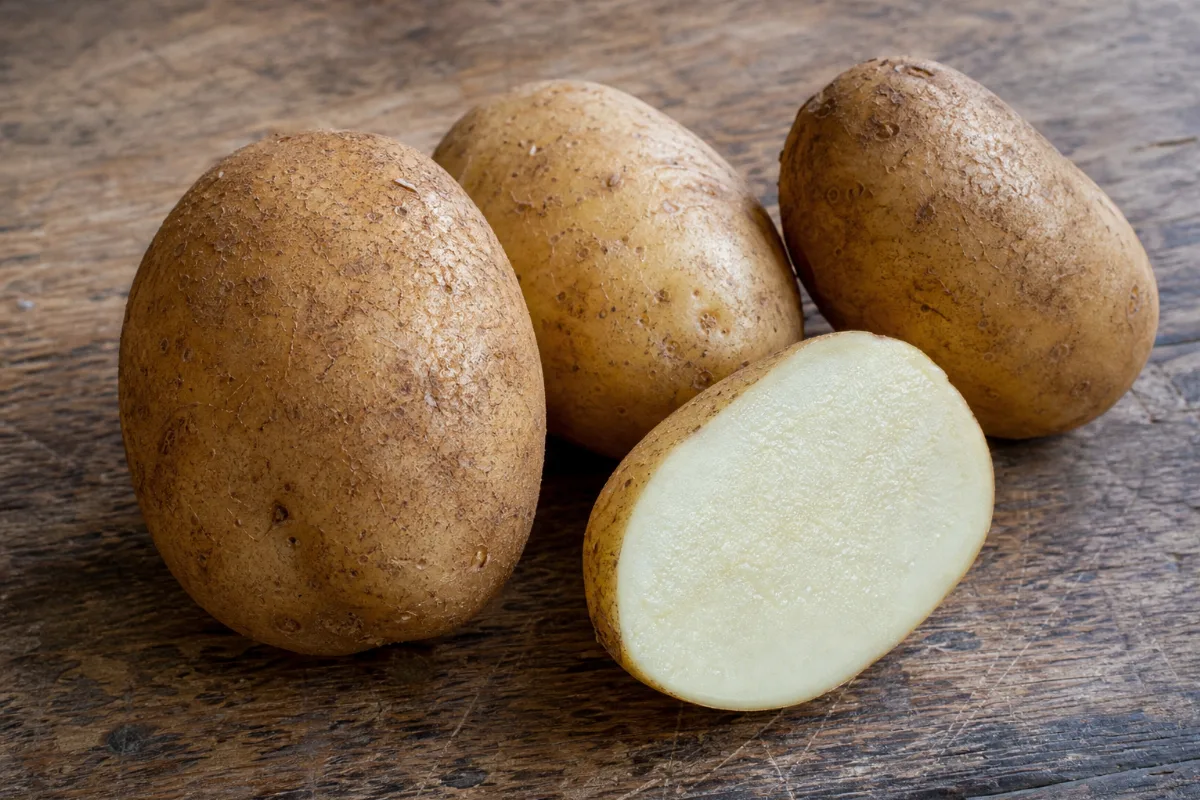
The potato (Solanum tuberosum) is the underground tuber of a plant in the nightshade family (Solanaceae). The tuber is the part eaten, usually cooked. People eat potatoes as an everyday starchy staple that also supplies potassium, vitamin C and vitamin B6. This page keeps the whole food apart from supplements and from hype, and it separates how a potato is cooked from the potato itself. It is information, not a plan for what to eat.
Read this first
- Green or sprouting potatoes: the World Health Organization (WHO) says potatoes make natural toxins called solanines, and levels are higher in sprouts, the bitter peel and green parts. Do not eat green or sprouting parts, and store potatoes in a dark, cool, dry place. [5]
- Kidney disease and some blood pressure medicines: potatoes are a good potassium source. MedlinePlus says too much potassium in the blood can cause dangerous heart rhythms, that poor kidney function is a common cause, and that ACE inhibitors, ARBs and potassium-sparing diuretics can raise levels. Ask your care team if this applies to you. [4]
- Allergy: any food can cause an allergic reaction. For trouble breathing or swelling of the face or throat, call 911. See food allergy basics and emergency signs.
- 5 A DAY: in the UK, the NHS does not count potatoes toward the 5 A DAY because they are a starchy food. [2]
- Evidence in one line: how a potato is cooked seems to matter more than the potato. In large observational studies, french fries are linked with higher diabetes risk, while baked, boiled or mashed potatoes are not clearly linked. Observation cannot prove cause. [10][11]
What is in it (USDA values)
| Nutrient | Per 100 g | Per 1 medium potato, raw, with skin (213 g) | % Daily Value per serving |
|---|---|---|---|
| Energy | 77 kcal | 164 kcal | n/a |
| Fiber | 2.1 g | 4.5 g | 16% |
| Total sugars | 0.82 g | 1.7 g | n/a |
| Vitamin C | 19.7 mg | 42 mg | 47% |
| Potassium | 425 mg | 905 mg | 19% |
| Vitamin B6 | 0.30 mg | 0.64 mg | 38% |
| Copper | 0.11 mg | 0.23 mg | 26% |
| Manganese | 0.15 mg | 0.32 mg | 14% |
| Magnesium | 23 mg | 49 mg | 12% |
| Iron | 0.81 mg | 1.7 mg | 10% |
| Folate (DFE) | 15 mcg | 32 mcg | 8% |
| Vitamin K | 2 mcg | 4 mcg | 4% |
| Vitamin A (RAE) | 0 mcg | 0 mcg | 0% |
Source: USDA FoodData Central, potatoes, flesh and skin, raw (SR Legacy, item 170026). [1] % Daily Value uses the FDA 2016 Daily Values; values vary with variety, ripeness and storage. Per-serving figures are our arithmetic from the USDA per-100 g values. These are raw values; boiling, baking or frying changes them, and adding oil, butter or salt changes the food again.
The main plant compound we can source here is starch. Some starch resists digestion in the small intestine and is called resistant starch; the amount in a food depends heavily on how it is prepared. [17] A 2026 trial measured total phenolic compounds in cooked potato in the lab, but we did not read a human trial showing a health effect of potato phenolics, so we make no claim about them. [18]
What research says
| Health goal | What the sources found | Strength of evidence | What was studied |
|---|---|---|---|
| Preventing scurvy (vitamin C deficiency) | NHS says lack of vitamin C can lead to scurvy, that the body cannot store the vitamin, and it lists potatoes as a source. One medium raw potato gives about 47% of the Daily Value (USDA). [7][1] | Established (for the vitamin; potatoes are one source) | Vitamin C in general, not a potato trial |
| Type 2 diabetes risk | In three US cohorts (205,107 people), each three extra weekly servings of french fries went with a 20% higher rate of type 2 diabetes, while baked, boiled or mashed potatoes showed no significant link (hazard ratio 1.01). [10] A harmonized analysis of seven US cohorts found no link for total potatoes and a modest rise for fried potatoes. [11] A 2025 meta-analysis of 103 studies found fried potato intake linked to higher diabetes risk (RR 1.16) and a small link for non-fried potatoes (RR 1.05). [12] | Mixed (observational; cannot prove cause) | Large cohort studies of usual diet; mostly US and European adults |
| Blood sugar when potato replaces rice | In a 12-week crossover trial of 24 adults with type 2 diabetes, 100 g of baked white potato daily did not worsen blood sugar, lipids or blood pressure compared with calorie-matched white rice. [15] | Insufficient evidence (one small trial) | Baked potato versus rice, adults with type 2 diabetes |
| Blood pressure | The 2025 meta-analysis found no link between total potato intake and hypertension (RR 1.07, not significant). [12] The seven-cohort analysis found fried potatoes linked with 10% higher risk of hypertension, but not baked, boiled or mashed. [13] A Chinese cohort found higher hypertension risk with potato eating. [21] | Mixed | Cohort studies; cooking method differs by country |
| Heart disease and early death | Total potato intake was not linked to heart disease or stroke in the 2025 meta-analysis. [12][13] A Norwegian cohort of 77,297 people, mostly eating boiled potatoes, found 12% lower all-cause death with 14 or more potatoes a week compared with 6 or fewer. [14] | Mixed (observational) | Cohorts; the Norwegian one mostly boiled potatoes |
| Resistant starch from cooked-and-cooled potatoes | A review says resistant starch depends on preparation. [17] A 2026 acute trial found that hard-cooked potato eaten with rice lowered the blood sugar rise after the meal, which the authors tied to more retained resistant starch. [18] Proper evidence not found in the sources we read for a trial of cooled potatoes and long-term health. | Insufficient evidence | Single-meal tests; lab measures |
| Treating any disease with potatoes | Proper evidence not found in the sources we read. | No good evidence of benefit | N/A |
Eaten as food vs taken as a supplement or extract. The findings above are about potatoes eaten as food. Resistant potato starch is also sold as a powder. In one randomized trial in 70 healthy adults, 3.5 g a day for four weeks changed some gut bacteria and stool measures compared with placebo. [19] That is a concentrated starch, not a potato, and a result for the powder does not tell us what eating potatoes does. We do not cover potato supplements.
How much is a normal serving
- NHS: 80 g of fresh, canned or frozen fruit or vegetables is one portion of the 5 A DAY, but potatoes do not count because they are a starchy food. Sweet potatoes, parsnips and turnips do count. [2] See sweet potatoes, carrots and orange vegetables.
- WHO: at least 400 g of fruits and vegetables a day for people older than 10 (fact sheet date 26 January 2026). [3] The WHO figure is about fruits and vegetables in general; we did not read whether WHO counts potatoes in it, so we make no claim.
- The USDA household portions are 0.5 cup diced (75 g), 1 small potato (170 g), 1 medium (213 g) and 1 large (369 g), all raw. [1]
- These are official figures, information only, not a prescription.
- Cooking: a 2022 review says boiling and long cooking in water can lower water-soluble nutrients such as vitamin C and folate, while steaming or microwaving may keep more. [20] It notes that findings are inconsistent for some nutrients. We did not find potato-specific numbers we could verify.
Safety, allergy and medicines
- Green and sprouted potatoes (solanine): WHO says solanines and chaconine are natural glycoalkaloids in potatoes and other nightshades, usually at low levels but higher in sprouts, the bitter peel and green parts. They form when the plant is stressed, for example by bruising, light or microbes. WHO advises storing potatoes in a dark, cool, dry place and not eating green or sprouting parts. [5] A case report describes that acute poisoning from green or sprouted potatoes mainly causes vomiting, diarrhea and stomach pain, with fever, fast pulse, low blood pressure and nerve symptoms at higher doses, and calls poisoning rare. [6] A 2026 review notes that glycoalkaloids are toxic above a certain level and that agricultural and storage conditions can raise them. [8] The WHO page does not say whether peeling or cooking removes them, so we make no claim. Seek medical care for severe symptoms.
- Potassium, kidney disease and medicines: one medium raw potato has 905 mg potassium (19% of the Daily Value). [1] MedlinePlus says people with kidney problems, especially on dialysis, may need to limit high-potassium foods, and that ACE inhibitors, ARBs and potassium-sparing diuretics (spironolactone, triamterene, amiloride) can raise blood potassium. A care team can say whether a limit is needed. [4] See foods, kidney disease, potassium and oxalates and foods and medicine interactions.
- Acrylamide in fried and baked potato foods: the US National Cancer Institute says acrylamide forms when foods with the amino acid asparagine, such as potatoes, are heated to high temperatures with certain sugars, and that french fries and potato chips are major dietary sources. [9] It adds that many human studies have not found consistent evidence that dietary acrylamide is linked to any type of cancer, that estimating intake is hard, and that rodent studies have linked acrylamide to cancers; the US National Toxicology Program considers it reasonably anticipated to be a human carcinogen. [9] The FDA says acrylamide forms during frying, roasting and baking. [23] NCI lists shorter cooking time, blanching before frying and avoiding refrigeration of raw potatoes as ways to lower levels. [9] Note that WHO's storage advice (cool, dark, dry) and the acrylamide note on refrigeration are different questions; neither source gives a single fridge temperature. [5][9]
- French fries, chips and sodium: the cohort studies above link french fries with higher type 2 diabetes risk and fried potatoes with higher hypertension risk. [10][13] A cohort in which fries and chips were eaten also found higher fasting glucose and insulin. [16] This is observational; fries differ from boiled potatoes in oil, salt and portion size as well as in cooking method. We did not read a source separating those factors.
- Diabetes and blood sugar: the evidence above is mixed; people with diabetes who take insulin or other medicines should ask their team how potatoes fit their meals. See foods for blood sugar control.
- Allergy: any food can cause an allergic reaction. For trouble breathing or swelling of the face or throat, call 911. We did not read a source on how common potato allergy is, so we make no claim.
- Pregnancy: Proper evidence not found in the sources we read on potatoes in pregnancy. See foods in pregnancy.
- Pesticide residues: we did not read a source on potato residues, so we make no claim.
Choosing, storing and food safety
- Pick potatoes without bruises or damage, and cut away bruised areas, as the FDA advises for produce. [22] WHO links bruising to solanine formation, so avoid green or sprouting parts. [5]
- Rinse produce under running water, including produce you will peel; do not use soap or produce wash. Washing lowers bacteria but does not remove them. Scrub firm produce with a clean brush. [22]
- Store in a dark, cool, dry place (WHO). [5]
- Cooked leftovers: see food storage, leftovers and food safety basics.
Related pages
Health connections for Potatoes
What research links to eating or drinking this food, and how strong the evidence is. Many studies are observational or use juice, powder, oil or extracts rather than the food as eaten; each card says which.
Vitamin C intake and scurvy prevention
Deficiency linkOne medium raw potato supplies about 47% of the Daily Value for vitamin C (USDA). A long-term lack of vitamin C causes scurvy.
Supplements: Not about supplements: eating vitamin C foods prevents deficiency; there is no potato trial.
Potassium source
Established roleA medium raw potato has about 905 mg potassium (19% of the Daily Value). MedlinePlus lists potatoes, especially with the skin on, as a good source.
Supplements: Not about supplements; no potato-specific blood pressure trial was found.
French fries versus baked, boiled or mashed potatoes and type 2 diabetes
Preliminary or mixedIn large US cohorts, more french fries went with higher type 2 diabetes risk, while baked, boiled or mashed potatoes showed no significant link.
Supplements: Not about supplements; observational studies of usual diet.
Blood sugar when potato replaces white rice
Preliminary or mixedOne 12-week crossover trial of 24 adults with type 2 diabetes found baked potato did not worsen blood sugar, lipids or blood pressure versus calorie-matched white rice.
Supplements: Not about supplements; one small trial only.
Blood pressure, heart disease and early death
Preliminary or mixedTotal potato intake was not linked to hypertension, heart disease or stroke in a 2025 meta-analysis; fried potatoes were linked with 10% higher hypertension risk in one cohort analysis, and a Norwegian cohort eating mostly boiled potatoes found lower all-cause death.
Supplements: Not about supplements.
Resistant starch when potatoes are cooked and cooled
Preliminary or mixedResistant starch content depends on preparation. A 2026 acute trial found hard-cooked potato eaten with rice lowered the blood sugar rise after the meal, linked by the authors to retained resistant starch.
Supplements: A resistant potato starch powder changed some gut bacteria in a 4-week placebo-controlled trial (70 healthy adults); that is a concentrated starch, not a potato.
Not counted toward 5 A DAY
Not enough evidenceThe NHS does not count potatoes toward the 5 A DAY because they are a starchy food; sweet potatoes, parsnips and turnips do count.
Supplements: Not applicable; this is food guidance.
Connected topics
Open a group to see how each topic connects and how strong the evidence is.
Health goals (1)
- Blood Sugar BalancePreliminary or mixed
Fries versus non-fried potatoes matter in cohort studies; one small trial found baked potato similar to white rice for people with type 2 diabetes.
Body systems (2)
- Kidney & UrinaryDocumented risk
Potassium handling depends on the kidneys; ask the kidney team about potatoes if you are on a potassium limit.
- Blood Sugar SupportPreliminary or mixed
Observational and small trial evidence on potatoes and blood sugar is mixed and depends on cooking method.
Body parts (2)
Root causes (3)
- Nutrient DeficiencyDeficiency link
Potatoes supply vitamin C (about 47% of the Daily Value per medium potato); lack of vitamin C causes scurvy. Potatoes are one source among many foods.
- Blood Sugar ImbalancePreliminary or mixed
Frequent french fries were linked with higher type 2 diabetes risk in cohorts; baked, boiled or mashed potatoes were not clearly linked. Observational only.
- Medication Side EffectsDocumented risk
Potatoes are high in potassium; ACE inhibitors, ARBs and potassium-sparing diuretics can raise blood potassium, so ask your care team about high-potassium foods.
Biomarkers (1)
- Blood GlucosePreliminary or mixed
In one small trial, baked potato did not worsen glycemic measures versus white rice in adults with type 2 diabetes; cooking and meal context matter.
Conditions & symptoms (5)
- HyperkalemiaDocumented risk
Potatoes are high in potassium; people with kidney disease or on ACE inhibitors, ARBs or potassium-sparing diuretics may need to watch high-potassium foods.
- Kidney DiseasesDocumented risk
MedlinePlus says people with poor kidney function, especially on dialysis, should limit high-potassium foods; a care team can say whether a limit is needed.
- ScurvyDeficiency link
Scurvy comes from a lack of vitamin C; potatoes are one dietary source (about 47% of the Daily Value per medium potato).
- Diabetes Mellitus, Non-Insulin-DependentPreliminary or mixed
Cohorts link french fries with higher type 2 diabetes risk but not baked, boiled or mashed potatoes; one small trial found baked potato similar to white rice. Not a treatment.
- Essential HypertensionPreliminary or mixed
Total potato intake was not linked to hypertension in a meta-analysis; fried potatoes were linked to higher risk in one analysis. Observational only.
Documented risks and interactions (3)
- Green and sprouted potatoes (solanine). WHO says solanines are higher in sprouts, the bitter peel and green parts and advises not eating green or sprouting parts and storing potatoes dark, cool and dry. Poisoning mainly causes vomiting, diarrhea and stomach pain and is rare.
- Acrylamide in fried and baked potato foods. Acrylamide forms when potatoes are heated to high temperatures; french fries and chips are major sources. Rodent studies link it to cancer, but human studies have not found consistent evidence of cancer risk from dietary acrylamide.
- Potassium, kidney disease and some blood pressure medicines. People with poor kidney function may need to limit high-potassium foods, and ACE inhibitors, ARBs and potassium-sparing diuretics can raise blood potassium (MedlinePlus). Potatoes are a high-potassium food.
Frequently asked questions
Do potatoes count as one of your 5 a day?
Not in the UK. The NHS says potatoes do not count because they are a starchy food, while sweet potatoes, parsnips and turnips do. [2]
Are potatoes bad for people with diabetes?
It depends on how they are cooked. In large cohorts french fries were linked with higher type 2 diabetes risk, while baked, boiled or mashed potatoes were not clearly linked. These studies cannot prove cause. [10][11] One small trial found baked potato did not worsen blood sugar compared with white rice. [15] Ask your care team about your own meals.
Are french fries worse than boiled potatoes?
In observational studies, fried potatoes were linked with higher risks of diabetes and, in one analysis, hypertension, while non-fried potatoes mostly were not. [10][13] Fries also form more acrylamide when heated at high temperatures. [9]
Are green or sprouted potatoes dangerous?
WHO says green parts and sprouts have higher solanine levels and advises not eating them. [5] Poisoning mainly causes vomiting, diarrhea and stomach pain and is described as rare. [6]
Do cooled potatoes have more resistant starch?
Resistant starch depends on preparation, and a 2026 trial linked retained resistant starch in hard-cooked potato to a smaller blood sugar rise after a meal. [17][18] Proper evidence not found for a trial of cooled potatoes and long-term health.
References
- U.S. Department of Agriculture. Potatoes, flesh and skin, raw, FoodData Central item 170026 (SR Legacy). April 2018 release. Read 2026-10-23.
- NHS. 5 A DAY: what counts. Last reviewed 9 June 2026. Read 2026-10-23.
- World Health Organization. Healthy diet fact sheet. 26 January 2026. Read 2026-10-23.
- MedlinePlus. Potassium in diet. Review date 30 April 2026. Read 2026-10-23.
- World Health Organization. Natural toxins in food. 10 March 2023. Read 2026-10-23.
- Alsubaie MM et al. A challenging case of suspected solanine toxicity in an eleven-year-old Saudi boy. J Family Med Prim Care 2022. PMID 36387661. Abstract read 2026-10-23.
- NHS. Vitamin C. Last reviewed 3 August 2020. Read 2026-10-23.
- Glycoalkaloids in potatoes: exploring health effects, analytical techniques, occurrence, mitigation measures. Food Chem Toxicol 2026. PMID 41106768. Abstract read 2026-10-23.
- National Cancer Institute. Acrylamide and Cancer Risk. Last reviewed 5 December 2017. Read 2026-10-23.
- Mousavi SM et al. Total and specific potato intake and risk of type 2 diabetes: results from three US cohort studies and a substitution meta-analysis of prospective cohorts. BMJ 2025. PMID 40769531. Abstract read 2026-10-23.
- Djousse L et al. Potato Consumption and Risk of Type 2 Diabetes Mellitus: A Harmonized Analysis of 7 Prospective Cohorts. J Nutr 2024. PMID 39289134. Abstract read 2026-10-23.
- Su Y et al. Potato Intake and the Risk of Overweight/Obesity, Hypertension, Diabetes, and Cardiovascular Disease: A Systematic Review and Meta-analysis of Observational Studies. Nutr Rev 2025. PMID 39527022. Abstract read 2026-10-23.
- Djousse L et al. Potato Consumption and Risk of Cardiovascular Disease in a Harmonized Analysis of Seven Prospective Cohorts. Nutrients 2025. PMID 39940309. Abstract read 2026-10-23.
- Arnesen EK et al. Potato Consumption and All-Cause and Cardiovascular Disease Mortality - A Long-Term Follow-Up of a Norwegian Cohort. J Nutr 2024. PMID 38763265. Abstract read 2026-10-23.
- Akhavan NS et al. The Comparative Effects of White Potato and White Rice Consumption on Measures of Cardiometabolic Health in Individuals with Type 2 Diabetes Mellitus and Features of Metabolic Syndrome. Curr Dev Nutr 2025. PMID 40927748. Abstract read 2026-10-23.
- Pokharel P et al. Associations of Vegetable and Potato Intakes With Markers of Type 2 Diabetes Risk in the AusDiab Cohort. J Clin Endocrinol Metab 2025. PMID 38747471. Abstract read 2026-10-23.
- Raigond P et al. Resistant starch in food: a review. J Sci Food Agric 2015. PMID 25331334. Abstract read 2026-10-23.
- Minimally Cooked Potato Improved Glycemic Response Across Two Meals and Insulin Sensitivity of Rice-Potato Mixed Meals: A Randomized Controlled Acute Trial. Nutrients 2026. PMID 41901148. Abstract read 2026-10-23.
- Consumption of Solnul resistant potato starch produces a prebiotic effect in a randomized, placebo-controlled clinical trial. Nutrients 2023. PMID 37049425. Abstract read 2026-10-23.
- Cooking at home to retain nutritional quality and minimise nutrient losses: a focus on vegetables, potatoes and pulses. Nutr Bull 2022. PMID 36299246. Abstract read 2026-10-23.
- Huang M et al. Potato consumption is prospectively associated with risk of hypertension: an 11.3-year longitudinal cohort study. Clin Nutr 2019. PMID 30025746. Abstract read 2026-10-23.
- U.S. Food and Drug Administration. Selecting and Serving Produce Safely. Content current as of 5 March 2024. Read 2026-10-23.
- U.S. Food and Drug Administration. Acrylamide. Content current as of 5 March 2024. Read 2026-10-23.