Onions: Nutrients, What Research Shows and Safety
Onions (Allium cepa) as food: USDA nutrients, what studies show on quercetin and blood pressure, blood sugar and IBS, plus onion allergy and a warning for pets.
Content last updated . This page has not been medically reviewed.
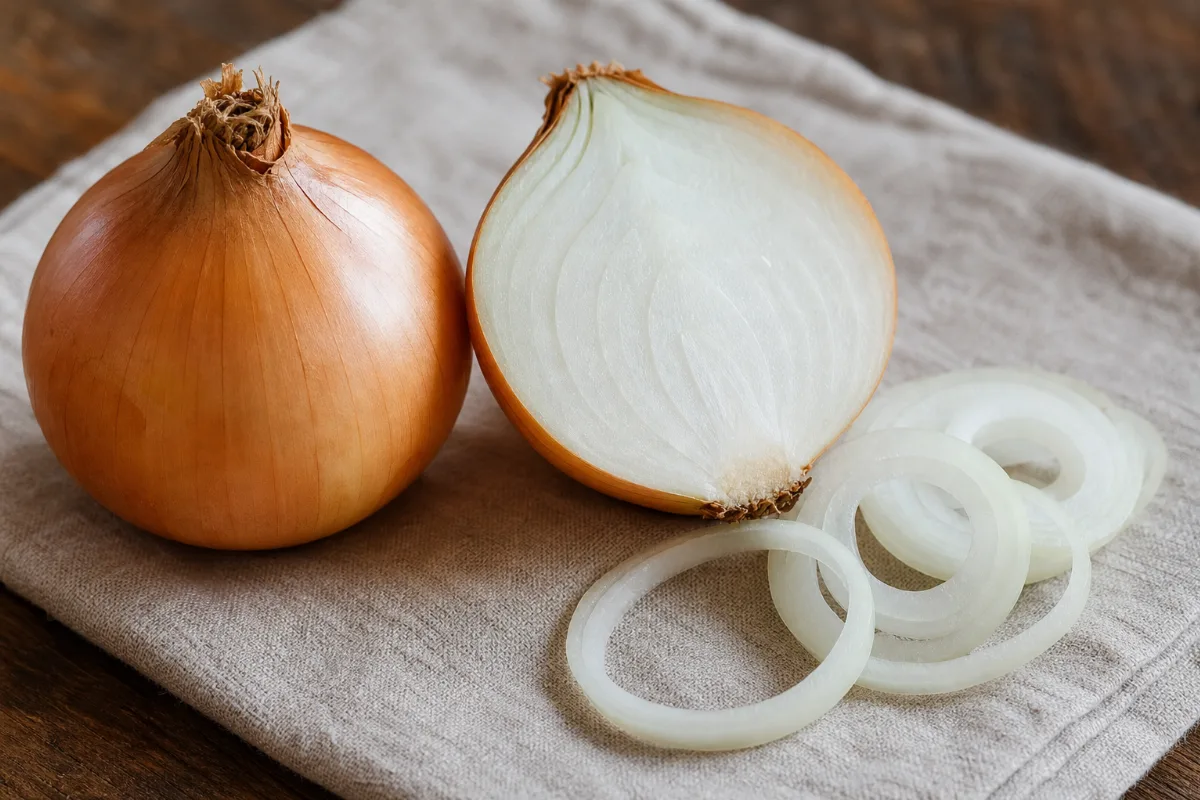
Onions are the bulbs of Allium cepa, a plant in the onion family (Amaryllidaceae, Allium group). People eat the bulb raw, cooked or pickled, mostly for flavor. Some also eat it for health because it contains sulfur compounds and a plant pigment called quercetin. This page keeps the food apart from supplements and from hype, and says plainly where the evidence is thin. For the whole onion family, see our overview of onions, garlic and allium vegetables.
Read this first
- Gut comfort: onions are the highest-fructan food in a 2024 measurement of 40 common foods. Fructans are a type of FODMAP (short carbohydrates that ferment quickly) and can worsen symptoms in some people with irritable bowel syndrome (IBS). [1][2]
- Allergy is uncommon but real: one report describes anaphylaxis after cooked onion. For trouble breathing or swelling of the face or throat, call 911. [3]
- Pets: the ASPCA lists onion as toxic to dogs, cats and horses. Do not feed it to them. [4]
- Evidence in one line: onions are a low-calorie flavoring vegetable; quercetin supplements lowered blood pressure a little in trials, but we found no trial showing that eating onions treats or prevents a disease.
What is in it (USDA values)
| Nutrient | Per 100 g | Per 1 cup, chopped (160 g) | % Daily Value per serving |
|---|---|---|---|
| Energy | 40 kcal | 64 kcal | n/a |
| Fiber | 1.7 g | 2.7 g | 10% |
| Total sugars | 4.24 g | 6.8 g | n/a |
| Vitamin C | 7.4 mg | 11.8 mg | 13% |
| Vitamin B6 | 0.12 mg | 0.19 mg | 11% |
| Manganese | 0.13 mg | 0.21 mg | 9% |
| Folate (DFE) | 19 µg | 30 µg | 8% |
| Copper | 0.04 mg | 0.06 mg | 7% |
| Potassium | 146 mg | 234 mg | 5% |
| Calcium | 23 mg | 37 mg | 3% |
| Vitamin K | 0.4 µg | 0.6 µg | 1% |
| Vitamin A (RAE) | 0 µg | 0 µg | 0% |
Source: USDA FoodData Central, onions, raw (SR Legacy, item 170000). [5] USDA household portions include 1 cup chopped (160 g), 1 medium onion (110 g) and 1 large onion (150 g). Per-serving figures are our own arithmetic from the per-100 g values. % Daily Value uses the FDA 2016 Daily Values; values vary with variety, ripeness and storage.
Reviews describe onions as containing organosulfur compounds and flavonoids, and lab chemistry confirms quercetin and related flavonols in minced onion. [6][7] Those are mostly laboratory and mechanism findings; the 2025 review itself lists low bioavailability (how little reaches the body) and limited clinical validation as problems. [6] USDA lists no meaningful vitamin A and only trace carotenoids in raw onion. [5]
What research says
| Health goal | What the sources found | Strength of evidence | What was studied |
|---|---|---|---|
| Blood pressure | Two meta-analyses of randomized trials found quercetin supplements lowered systolic pressure by about 2 to 3 mmHg (7 trials in 2016; 17 trials in 2020). [8][9] A 2022 meta-analysis (10 trials) agreed. [10] | Promising but limited (effect is small; tested as quercetin, not as onions) | Quercetin supplements or quercetin-enriched extracts, adults |
| Blood sugar | The 2020 meta-analysis found no significant change in glucose with quercetin supplements. [9] We found no human trial of eating onions that we could read. | Insufficient evidence | Supplements; no onion-food trial found |
| Weight and body fat | A 2023 meta-analysis of 5 trials in people with obesity found lower weight, BMI, waist size and triglycerides with onion products. Four of the five used onion peel extract; one used onion. [11] | Promising but limited | Mostly peel extract, adults with obesity |
| Cancer risk | A 2021 meta-analysis of 22 studies found no significant link between high allium vegetable intake and overall cancer risk (RR 0.97). [12] A 2011 meta-analysis linked high intake to lower stomach cancer risk but cited confounding. [13] | Mixed (observational) | Allium vegetables as a group, not onions alone |
| Low mood | Two large cohorts followed people for years: in a Chinese cohort, more onion intake went with fewer depressive symptoms (hazard ratio about 0.78); in the UK Biobank the trend was not significant (p = 0.07). [14] | Insufficient evidence (observational) | Food-frequency or recall data, adults |
| Antioxidant and anti-inflammatory effects | Reviewed mechanisms in cells and animals; clinical validation is limited. [6] | Lab or animal only | Extracts and isolated compounds |
Eaten as food vs taken as a supplement or extract. The blood pressure and weight results come from quercetin capsules or onion peel extracts. A result for a capsule does not carry over to the onion on your plate. The food studies (cancer, mood) are observational, which means they find patterns but cannot prove cause: people who eat more onions may also eat and live differently in other ways. [12][14] We found no trial of eating whole onions that gave a clear health result.
How much is a normal serving
- The WHO healthy-diet fact sheet (26 January 2026) says people older than 10 should eat at least 400 g of fruits and vegetables a day. [15]
- The NHS "5 A DAY" guide (last reviewed 9 June 2026) counts 80 g of fresh, canned or frozen vegetables as one portion. [16]
- USDA's household portions for onions are listed above (for example 1 medium onion, 110 g). [5]
- These are official figures for information, not a prescription for you.
- Cooking changes allium compounds in ways that depend on the method, time and temperature, and the authors say more research is needed for each vegetable. [17] We found no source on how cooking changes the vitamins in onions, so we make no claim.
Safety, allergy and medicines
- FODMAPs and IBS. A 2024 study measured the fructan content of 40 common foods and found it highest in onion (1.97 g per 100 g fresh weight). [1] Fructans ferment quickly and can worsen symptoms in people with IBS. [1] A 2024 umbrella review of trials found a low-FODMAP diet improved IBS symptoms overall, though it noted possible effects on gut bacteria. [2] The NHS says a dietitian may recommend this diet if general changes have not helped. [18] Whether a given person reacts, and to how much onion, is individual: ask a dietitian instead of cutting foods out alone.
- Food allergy. Handling onion can cause skin rash, runny nose or asthma, but reactions to eating it are reported only rarely. A 2019 report describes a 35-year-old man with anaphylaxis after cooked onion and suggests some allergen parts survive heat. [3] See food allergy basics and emergency signs. Call 911 for trouble breathing or swelling of the face or throat. Because this is one case report, we cannot say how common it is.
- Pets. The ASPCA lists onion as toxic to dogs, cats and horses; signs include vomiting, red blood cell breakdown, blood in urine, weakness and a fast heart rate. [4] A laboratory study fed cooked onions to dogs and found hemolytic anemia (red blood cells breaking down). [19] The ASPCA page does not say whether raw, cooked or powdered onion is worse. If a pet ate onion, call a veterinarian or ASPCA Poison Control at (888) 426-4435 (a fee may apply). [4]
- Blood sugar and diabetes. USDA lists 9.34 g of carbohydrate and 4.24 g of sugars per 100 g of raw onion. [5] We found no onion-specific human trial on blood sugar that we could read, so we make no claim that onions lower it. People taking diabetes medicines should keep to their care team's advice; see foods for blood sugar control.
- Medicines and supplements. Quercetin or onion-peel capsules are different products from the food. We read no source on interactions with onions as food, so we make no claim either way; a pharmacist can check any supplement.
- Kidney disease and potassium. USDA lists 146 mg of potassium per 100 g (3% of the Daily Value). [5] People on a restricted-potassium plan should follow their own team's list; see foods, kidney disease, potassium and oxalates.
- Pregnancy. The sources we read did not single out onions eaten in meals; ask your prenatal care provider about your whole diet.
- Pesticide residues. We did not read an onion-specific source, so we say nothing about residue levels.
Choosing, storing and food safety
- Washing. The FDA says to rinse produce under running water, not with soap, detergent or produce washes, and to dry it with a clean towel. Washing reduces germs but does not remove them. [20]
- Cut onion. Refrigerate cut or packaged produce, and keep perishable produce at 40°F or below. [20]
- Cutting boards. After handling raw meat, wash boards and knives before cutting vegetables. [20]
Related pages
Health connections for Onions
What research links to eating or drinking this food, and how strong the evidence is. Many studies are observational or use juice, powder, oil or extracts rather than the food as eaten; each card says which.
Quercetin and blood pressure
Preliminary or mixedMeta-analyses of trials found small drops in blood pressure (about 2 to 3 mmHg) with quercetin supplements. Onion is a source of quercetin, but these trials did not test eating onions.
Supplements: Supplement results do not carry over to the food.
Weight and body fat
Preliminary or mixedA meta-analysis of 5 trials in people with obesity found lower weight, BMI, waist size and triglycerides; 4 of 5 used onion peel extract.
Supplements: Results are mainly for peel extracts.
Cancer risk and allium vegetables
Preliminary or mixedA 2021 meta-analysis found no significant link between high allium vegetable intake and overall cancer risk; an older meta-analysis linked intake to lower stomach cancer risk with confounding noted.
Supplements: Observational studies cannot prove cause.
Blood sugar claims
Not enough evidenceNo human trial of eating onions on blood sugar was found; a meta-analysis of quercetin supplements found no significant glucose change.
Supplements: No good evidence of benefit from onions as food.
Low mood and onion intake
Not enough evidenceOne cohort linked more onion intake to fewer depressive symptoms; in a second cohort the trend was not significant.
Supplements: Observational; cannot show cause.
Antioxidant and anti-inflammatory effects
Lab or animal research onlyReviews describe organosulfur compounds and flavonoids in onions acting on oxidative stress pathways in cells and animals; clinical validation is limited.
Supplements: Lab and animal findings only.
Fiber and vitamin C from onions
Established roleOne cup chopped (160 g) gives about 10% of the Daily Value for fiber, 13% for vitamin C and 11% for vitamin B6 (USDA).
Supplements: Not a supplement question.
Connected topics
Open a group to see how each topic connects and how strong the evidence is.
Health goals (3)
- Digestive SupportDocumented risk
Onion can trigger symptoms in some people with IBS because of fructans.
- Blood Pressure SupportPreliminary or mixed
Small blood pressure drops with quercetin supplements; onion as food was not tested in those trials.
- Weight ManagementPreliminary or mixed
A meta-analysis of 5 trials found lower weight and waist size, mostly with onion peel extract.
Body systems (4)
- Digestive SystemDocumented risk
Onion is high in fructans, which can worsen symptoms in some people with irritable bowel syndrome.
- Gut HealthDocumented risk
Fructans (FODMAPs) in onion can bother some people with IBS; individual tolerance varies.
- Cardiovascular SystemPreliminary or mixed
Quercetin supplements lowered blood pressure slightly in trials; this was not shown for eating onions.
- Heart & CirculationPreliminary or mixed
Quercetin supplements lowered blood pressure slightly in trials; this was not shown for eating onions.
Body parts (1)
- GutDocumented risk
Fructans ferment quickly in the gut and can cause symptoms in IBS.
Conditions & symptoms (4)
- Irritable Bowel SyndromeDocumented risk
Onion is high in fructans (FODMAPs) that can worsen IBS symptoms in some people; a dietitian can guide a low FODMAP plan.
- Food AllergyDocumented risk
Allergy to eating onion is rare but reported, including a case of anaphylaxis after cooked onion.
- Food AnaphylaxisDocumented risk
One case report of anaphylaxis after cooked onion; call 911 for trouble breathing or swelling of the face or throat.
- ObesityPreliminary or mixed
A 2023 meta-analysis of 5 trials found lower weight and waist size, mostly with onion peel extract rather than the food.
Documented risks and interactions (3)
- Fructans (FODMAPs) and IBS symptoms. Onion had the highest fructan content of 40 common foods measured. Fructans can worsen symptoms in some people with irritable bowel syndrome.
- Onion allergy. Allergy to eating onion is reported rarely; one case of anaphylaxis after cooked onion is described, and handling onion can cause skin and breathing symptoms.
- Toxic to dogs, cats and horses. The ASPCA lists onion as toxic to pets; a laboratory study in dogs found red blood cell breakdown after cooked onion.
Frequently asked questions
Do onions lower blood pressure?
Not shown for the food itself. Meta-analyses of trials found small drops (about 2 to 3 mmHg) with quercetin supplements, not with eating onions. [8][9][10]
Are onions bad for IBS?
They can be. Onion had the highest fructan content of 40 foods measured in 2024, and fructans can worsen IBS symptoms in some people. [1] A dietitian can help work out how much, if any, you need to limit. [18]
Can you be allergic to onion?
Yes, though it is uncommon. One report describes anaphylaxis after cooked onion. [3] Call 911 for trouble breathing or swelling of the face or throat.
Can dogs and cats eat onion?
No. The ASPCA lists onion as toxic to dogs, cats and horses. [4] If a pet ate some, call a veterinarian or poison control.
Do onions help with blood sugar or diabetes?
We found no human trial of eating onions that showed this. A meta-analysis of quercetin supplements found no significant glucose change. [9]
References
- Ferjančič B et al. Fructan content in most commonly consumed Slovenian foods and estimation of daily fructan consumption. Front Nutr 2024. PMID 39155934. Abstract read 2026-10-23.
- Khalighi Sikaroudi M et al. Effects of a low FODMAP diet on the symptom management of patients with irritable bowel syndrome: a systematic umbrella review with the meta-analysis of clinical trials. Food Funct 2024. PMID 38711328. Abstract read 2026-10-23.
- Albanesi M et al. Immunological characterization of onion (Allium cepa) allergy. Postepy Dermatol Alergol 2019. PMID 30858787. Abstract read 2026-10-23.
- ASPCA. Onion (toxic and non-toxic plants). No date shown. Read 2026-10-23.
- U.S. Department of Agriculture. FoodData Central: Onions, raw (SR Legacy, item 170000). April 2018 release. Read 2026-10-23.
- Ahmed HGMD et al. Beyond seasoning: nutrients, bioactive ingredients and healthcare effects of Allium vegetables. Front Nutr 2025. PMID 41425624. Abstract read 2026-10-23.
- Fokuhl VK et al. Singlet oxygen generated by quercetin and gallic acid leads to oxidative fragmentation of flavonols in onions and leek. 2026. PMID 41642180. Abstract read 2026-10-23.
- Serban MC et al. Effects of quercetin on blood pressure: a systematic review and meta-analysis of randomized controlled trials. J Am Heart Assoc 2016. PMID 27405810. Abstract read 2026-10-23.
- Huang H et al. Effect of quercetin supplementation on plasma lipid profiles, blood pressure, and glucose levels: a systematic review and meta-analysis. Nutr Rev 2020. PMID 31940027. Abstract read 2026-10-23.
- Popiolek-Kalisz J, Fornal E. The effects of quercetin supplementation on blood pressure: meta-analysis. Curr Probl Cardiol 2022. PMID 35948195. Abstract read 2026-10-23.
- Chung MY et al. Antiobesity effects of onion (Allium cepa) in subjects with obesity: systematic review and meta-analysis. Food Sci Nutr 2023. PMID 37576046. Abstract read 2026-10-23.
- Zhang Q et al. Allium vegetables, garlic supplements, and risk of cancer: a systematic review and meta-analysis. Front Nutr 2021. PMID 35402472. Abstract read 2026-10-23.
- Zhou Y et al. Consumption of large amounts of Allium vegetables reduces risk for gastric cancer in a meta-analysis. Gastroenterology 2011. PMID 21473867. As summarized on this site's allium page; read 2026-10-23.
- Yang H et al. The longitudinal association between onion consumption and risk of depressive symptoms: results from the TCLSIH Cohort study and the UK Biobank. Food Funct 2023. PMID 36477763. Abstract read 2026-10-23.
- World Health Organization. Healthy diet fact sheet. 26 January 2026. Read 2026-10-23.
- NHS. 5 A DAY: what counts. Last reviewed 9 June 2026. Read 2026-10-23.
- Katırcıoğlu B, Navruz-Varlı S. Effects of different preparation and cooking processes on the bioactive molecules of Allium vegetables. Front Nutr 2024. PMID 38962447. Abstract read 2026-10-23.
- NHS. IBS: further help and support. Last reviewed 17 March 2025. Read 2026-10-23.
- Tang X, Xia Z, Yu J. An experimental study of hemolysis induced by onion (Allium cepa) poisoning in dogs. J Vet Pharmacol Ther 2008. PMID 18307506. Abstract read 2026-10-23.
- U.S. Food and Drug Administration. Selecting and Serving Produce Safely. Current as of 5 March 2024. Read 2026-10-23.