Black seed (nigella): Flavor, Cooking Use and Health Facts
Black seed (nigella, kalonji) is peppery, bitter and a little onion-like, sprinkled on breads and tempered in oil for curries and pickles; blood pressure and blood sugar trials used supplements, and it may affect some medicines.
Content last updated . This page has not been medically reviewed.
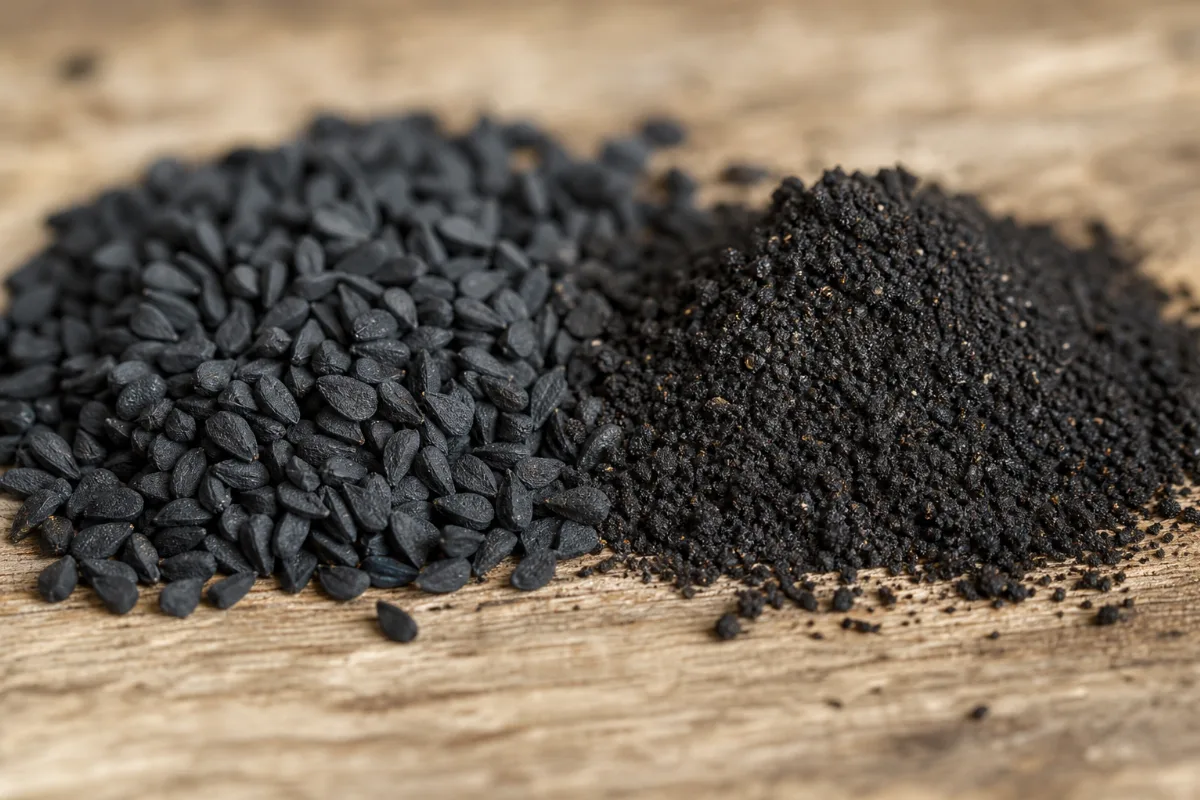
In the kitchen at a glance
Flavor:BitterEarthyHot / pungent
Aroma: Faintly herbal when raw; nutty, peppery and a little like onion and oregano once heated.
Used in: baking, curries, pickling, vegetables, soups and stews
Usual amount in food: About 1/2 to 1 teaspoon of whole seeds per dish, according to one cooking guide; USDA SR Legacy has no entry for this spice.
What it is
Black seed is the seed of Nigella sativa, a small annual plant in the buttercup family. [2] It is native from southeastern Europe through West Asia and is grown in Europe, India and North Africa. [2] The seeds form inside an inflated pod, and they are small, hard and black. [2]The names are confusing. "Black cumin" is often used for nigella, but it is not cumin. Another plant, Bunium persicum (kala jeera), is also sold as black cumin and tastes smokier. The two are not interchangeable. [3] Other names for nigella are kalonji, black caraway and black onion seed. [2][3]
Flavor and aroma
Raw seeds smell faintly herbal and taste of little. [3] Heat changes them. Toasted or fried in oil, they turn peppery and a little bitter, with a thyme- or oregano-like note and a faint onion smell. [3][4] They have a light crunch when whole. Grinding loses the crunch and the aroma fades faster. [3]The seed's aroma compounds include thymoquinone, p-cymene, carvacrol and thymol. [2] That is a list of what was found in the seed, not a taste test. Oils make up about a third to two fifths of the seed. [2]
The flavor is strong, so cooks use it in small amounts as a savory edge, not heat. [4] It pairs with flatbreads, lentils, vegetables, yogurt and pickles. [3][4]
How it is used in cooking
Whole seeds are the usual form. Ground seed is also used in spice mixes. [4]- Breads: pressed on naan, kulcha, paratha, Turkish pastries and Middle Eastern flatbreads before baking. [3]
- Bengali cooking: one of five seeds in panch phoron, with cumin, fennel, fenugreek and mustard or a similar fifth seed. [3] See cumin, fenugreek, mustard seed and fennel seed.
- Pickles: added to the pickling oil, where it gives up flavor slowly over weeks. [3]
- Curries, dal and vegetables: tempered in hot oil or ghee at the start. [3] Dry-roasted seeds also season curries, vegetables and pulses. [2]
- Other: salads, raita and yogurt, North African stews and spice pastes, and in Palestine a bitter paste called qizha. [2][4]
When to add it: a few seconds in hot oil, then remove it once it sizzles and darkens a little, because it can scorch and turn acrid fast. [3] For breads, press it onto raw dough so the oven toasts it. [3]
Substitutes (approximate): black sesame for the look and crunch, but milder and nuttier; mustard seed for tempering; cumin or fennel in blends. Dried oregano with black pepper copies the flavor roughly. Do not swap one-for-one with cumin, caraway or onion powder. [3][4]
Normal food amounts
| Measure | Grams | Source |
|---|---|---|
| 1 teaspoon, whole seeds | Not found | USDA SR Legacy has no entry for this spice |
| Typical recipe amount | About 1/2 to 1 teaspoon per dish | One cooking guide [3] |
| Bread or pastry | 1 to 2 tablespoons in dough for a batch, plus a sprinkle on top | Same guide's recipes [3] |
The same guide says to start with about half as much ground seed as whole seed. [3]
USDA SR Legacy has no entry for nigella, so we give no nutrient numbers for a teaspoon and do not call it a good source of anything. A teaspoon of seeds is mostly flavor.
Buying, storing and preparing
- Forms: whole seeds are the most common. Powder, oil and capsules are also sold, and capsules are often measured by thymoquinone. Powder loses strength faster than whole seed. [4]
- Check the name: look for Nigella sativa or "kalonji" on the label, so you do not get Bunium persicum by mistake. [3]
- Shelf life: cooking guides give different figures: 12 to 18 months in one, and 2 to 3 years for whole seed in another. [3][4] We found no official figure. Both say a cool, dark, airtight place away from the stove. Ground seed keeps about 4 to 6 months for best flavor. [3]
- Grinding: the sources we read give no method. Grinding only before use keeps more aroma. [3]
- Quality problems: the sources we read do not describe adulteration or contamination of nigella seed.
Health: what research says
Eating black seed in cooking is different from taking concentrated products, and almost all the human research is on the second.Food amounts vs supplements
| In normal cooking | In supplements and extracts | |
|---|---|---|
| Typical amount | About 1/2 to 1 teaspoon per dish (one cooking guide) [3] | Trials used 200 to 4,600 mg a day for 1 to 48 weeks [9] |
| What studies mostly used | We found no trial of seed used as a spice | Powder, oil and extracts, in adults [6][7][8][9] |
| What we can say about benefit | Nothing, as no studies of cooking amounts were found | Small average drops in blood pressure and blood sugar markers in pooled trials [6][7][8] |
| Main safety limit | The US lists the seed as generally recognized as safe as a spice [5] | Possible effect on drugs cleared by liver enzymes; skin reactions to the oil [1] |
What the evidence shows
| Use | What the sources found | Strength of evidence | Form and population |
|---|---|---|---|
| Blood pressure | A 2016 pooling of 11 trials (860 adults, about 8 weeks) found systolic pressure 3.3 mmHg and diastolic 2.8 mmHg lower than comparison groups. Powder worked better than oil. [6] A 2023 update found about 3.1 and 2.7 mmHg lower, with large differences between trials. [7] MSK calls small-study results conflicting. [1] | Mixed | Powder and oil supplements; adults [6][7] |
| Blood sugar | A 2026 pooling of 31 trials (2,145 adults with metabolic disease) found lower fasting glucose and HbA1c. Authors say study quality varied. [8] | Promising but limited | Supplements; adults with metabolic disease [8] |
| Insulin resistance and waist size | The same 31-trial review found no significant effect. [8] An 82-trial review reported better insulin sensitivity overall, so reviews differ. [9] | Mixed | Supplements; adults [8][9] |
| Weight and heart risk markers | The 31-trial review found small drops in body weight and BMI. [8] The 82-trial review (5,026 adults) called it a promising add-on, with no firm conclusion on its own. [9] | Promising but limited | Supplements; adults [8][9] |
| Asthma, arthritis, digestion, fatty liver | MSK lists small trials of oral extract or oil; we did not read them. [1] | Insufficient evidence | Extract or oil [1] |
| Knee pain | MSK says topical oil helped in small trials, but oral seed powder did not. [1] | Insufficient evidence | Oil on skin; powder by mouth [1] |
| Cancer | MSK says it has not been shown to treat cancer in humans; findings are from animals and labs. [1] | Lab or animal only | Extracts, lab and animal [1] |
| Seed used as a spice | No study found | Insufficient evidence | Food amounts |
For supplement forms, trials and interactions in depth, see the full herb guide: Black seed.
Official statements
- FDA (US), eCFR 21 CFR 182.10: the list of spices and natural seasonings generally recognized as safe includes "Cumin, black (black caraway)" and "Caraway, black (black cumin)", both listed as Nigella sativa. [5]
- MSK (US): has not been shown to treat cancer in humans; larger studies needed. [1]
- LactMed (US NIH): no valid trials for milk supply; no infant data. [11]
- EMA, EFSA, WHO: we did not find or open a statement from these bodies.
Related pages
Health connections for Black seed (nigella)
What research links to this spice, and how strong the evidence is. Most studies use concentrated extracts or doses far above what you eat; each card says which.
Blood pressure (small average fall)
Preliminary or mixedPooled trials of black seed supplements found blood pressure about 3 mmHg lower on average than comparison groups, with large differences between trials.
Supplements: Small and inconsistent effect from powder, oil or extract supplements; not studied at spice amounts. Not a substitute for blood pressure treatment.
Blood sugar (adults with metabolic disease)
Preliminary or mixedA 2026 pooling of 31 trials found lower fasting glucose and HbA1c with black seed supplements, but study quality varied.
Supplements: Supplement trials only; not studied at spice amounts. Not a replacement for diabetes care.
Body weight and heart risk markers
Preliminary or mixedReviews of trials found small drops in body weight and BMI and called black seed a possible add-on for heart risk markers.
Supplements: Supplement trials; surrogate markers, short duration; reviews disagree on insulin sensitivity.
Asthma, arthritis, digestion and fatty liver
Not enough evidenceMSK lists small trials of oral extract or oil for these uses; we did not read the trials.
Supplements: Insufficient evidence from the sources read.
Knee pain (oil on skin versus seed powder by mouth)
Not enough evidenceMSK says topical oil relieved knee osteoarthritis pain in small trials but oral seed powder did not.
Supplements: Insufficient evidence; oral powder did not help in the trial MSK describes.
Antioxidant and anti-inflammatory effects in the lab
Lab or animal research onlyIn lab and animal work, thymoquinone and the oil show antioxidant and anti-inflammatory activity.
Supplements: Lab or animal findings only.
Cancer (not shown in humans)
Lab or animal research onlyAnimal studies show less tumor growth; MSK says black seed has not been shown to treat cancer in humans.
Supplements: Lab or animal findings only.
Breastfeeding: no valid trials, no infant data
Not enough evidenceLactMed says traditional use to raise milk is not supported by valid trials and there is no data on infant safety.
Supplements: No trials; unknown.
Connected topics
Open a group to see how each topic connects and how strong the evidence is.
Health goals (5)
- Blood Pressure SupportPreliminary or mixed
Pooled supplement trials found small average falls in blood pressure (about 3 mmHg) with large differences between trials; not studied at spice amounts.
- Blood Sugar BalancePreliminary or mixed
A 2026 pooling of 31 trials found lower fasting glucose and HbA1c with supplements in adults with metabolic disease; study quality varied.
- Heart HealthPreliminary or mixed
Reviews of supplement trials found small changes in blood pressure and other heart risk markers; the authors call for better trials.
- Metabolic HealthPreliminary or mixed
Supplement trials in adults with metabolic disease found small improvements in glucose, weight and blood pressure; not shown for cooking amounts.
- Weight ManagementPreliminary or mixed
The 31-trial review found small drops in body weight and BMI with supplements, but no effect on waist size.
Body systems (6)
- Blood Sugar SupportPreliminary or mixed
Supplement trials found lower fasting glucose and HbA1c on average; quality varied.
- Cardiovascular SystemPreliminary or mixed
Pooled supplement trials found small average falls in blood pressure (about 3 mmHg) with large differences between trials; not studied at spice amounts.
- Heart & CirculationPreliminary or mixed
Pooled supplement trials found small average falls in blood pressure (about 3 mmHg) with large differences between trials; not studied at spice amounts.
- Integumentary SystemDocumented risk
The oil on skin has caused contact dermatitis and, in one report, a severe reaction.
- Metabolism & WeightPreliminary or mixed
Small average drops in body weight and BMI in pooled supplement trials.
- Reproductive SystemDocumented risk
A mouse study of an extract during pregnancy showed smaller litters and delayed pup reflexes; no human data found, so caution is advised.
Body parts (3)
- Blood VesselsPreliminary or mixed
Small average falls in blood pressure in pooled supplement trials.
- Reproductive OrgansDocumented risk
Mouse pregnancy study: smaller litters, longer pregnancy; no human data.
- SkinDocumented risk
The oil on skin has caused contact dermatitis and, in one report, a severe reaction.
Functional actions (3)
- AntioxidantLab or animal research only
MSK describes antioxidant activity of thymoquinone in animal models; not shown in people.
- Blood Sugar RegulationPreliminary or mixed
Supplement trials found lower fasting glucose and HbA1c on average.
- Cardiovascular SupportPreliminary or mixed
Pooled supplement trials found small average falls in blood pressure (about 3 mmHg) with large differences between trials; not studied at spice amounts.
Root causes (2)
- Medication Side EffectsDocumented risk
MSK says it inhibits liver enzymes CYP2D6 and CYP3A4 and thymoquinone weakened warfarin's action in a study; relevance for people unknown.
- Blood Sugar ImbalancePreliminary or mixed
Supplement trials in adults with metabolic disease found lower glucose and HbA1c on average.
Biomarkers (2)
- Blood GlucosePreliminary or mixed
Fasting glucose was lower on average in the 31-trial review of supplements.
- HbA1cPreliminary or mixed
HbA1c was about 0.56 lower on average in the 31-trial review of supplements.
Conditions & symptoms (4)
- Contact DermatitisDocumented risk
The oil on the skin has caused contact dermatitis; this concerns the oil, not the seed in food.
- Diabetes Mellitus, Non-Insulin-DependentPreliminary or mixed
Pooled trials in adults with metabolic disease found lower fasting glucose and HbA1c; quality varied. Reviews of type 2 diabetes alone were not read.
- Essential HypertensionPreliminary or mixed
Pooled supplement trials found small average falls in blood pressure (about 3 mmHg) with large differences between trials. Not a replacement for treatment.
- ObesityPreliminary or mixed
The 31-trial review found small drops in body weight and BMI with supplements; no effect on waist size.
Documented risks and interactions (4)
- Medicine interactions (liver enzymes, warfarin). MSK says it inhibits CYP2D6 and CYP3A4 and may raise levels of drugs cleared by them; thymoquinone weakened warfarin's action in one study.
- Skin reactions to the oil. Contact dermatitis after oil on the skin; one case of a severe reaction (DRESS) needing corticosteroids.
- Pregnancy caution (mouse data). In pregnant mice an extract reduced litter size, lengthened pregnancy and delayed pup reflexes; the authors urge caution. No human data found.
- Liver and kidney effects at high doses (rats). High doses damaged rat liver and kidneys; MSK says human data are lacking.
Frequently asked questions
What does black seed taste like?
Raw, it has little flavor. Toasted or fried, it is peppery and a little bitter, with a faint onion smell and an oregano-like note. [3][4]
Is black seed the same as black cumin?
Often the names are used for the same seed, but black cumin can also mean a different plant, Bunium persicum, which tastes smokier. Check for Nigella sativa or kalonji. [3]
How much is normal?
One cooking guide suggests about 1/2 to 1 teaspoon per dish. [3] We found no USDA weight per teaspoon.
Is it safe in pregnancy?
We found no human data. A mouse study of an extract showed smaller litters and delayed reflexes in pups, so the authors urge caution. [10] Ask your midwife or doctor about supplements.
Can I take it with medicines?
In cooking amounts, the sources we read name no problem. As a supplement, MSK warns of effects on drugs cleared by liver enzymes and a lab effect on warfarin. [1] Ask a pharmacist.
Does it lower blood pressure or blood sugar?
Pooled trials of powder, oil and extracts found small average drops, but quality and results varied. [6][7][8] It is not a treatment.
More details: evidence, limits and cautions
The details behind this page: cautions, limits of the evidence and where sources disagree. Open any note to read it.
Safety note at a glance
Safety in more detail
- Medicines: MSK says N. sativa inhibits CYP2D6 and CYP3A4 and may raise levels of drugs cleared by them, and that thymoquinone weakened warfarin's action in one study. It adds that the meaning for people is unknown. [1] Pooled trials found lower blood pressure and blood sugar, so ask about those medicines too. [7][8]
- Pregnancy: in pregnant mice, an extract reduced litter size, lengthened pregnancy and delayed reflexes in the pups. The authors urge caution. [10] This is animal work, not proof for people. MSK does not address pregnancy. [1] We found no human pregnancy data.
- Breastfeeding: LactMed says black seed is used traditionally to raise milk, but no valid clinical trials support this. There are no data on transfer into milk or infant safety. [11]
- Children: the sources we read do not describe use of the seed as a spice in children.
- Allergy: pure oil on the skin has caused contact dermatitis, and one report describes a severe reaction needing steroids. [1][11] The sources we read describe no food allergy to the seed.
- Liver and kidney: high doses damaged the liver and kidneys of rats; MSK says human data are lacking. [1] We could not verify trial reviews on liver and kidney tests.
- Surgery: the sources we read do not describe a surgery warning. Tell the surgical team about any supplement.
- Quality and contamination: supplement content varies by product, and capsules are often standardized to thymoquinone. [4]
- Amounts that cause trouble: the sources we read give no amount that causes harm in people. MSK mentions rat studies only. [1]
References
- Memorial Sloan Kettering Cancer Center (US) — Nigella sativa (About Herbs). https://www.mskcc.org/cancer-care/integrative-medicine/herbs/nigella-sativa (accessed 2026-10-24)
- Wikipedia — Nigella sativa. https://en.wikipedia.org/wiki/Nigella_sativa (accessed 2026-10-24)
- Umami Cart — What Are Nigella Seeds? (retail cooking guide). https://www.umamicart.com/what-are-nigella-seeds/ (accessed 2026-10-24)
- Beyond Chutney — Kalonji (Nigella Seeds). https://beyondchutney.com/kalonji-nigella-seeds/ (accessed 2026-10-24)
- US eCFR — 21 CFR 182.10, spices and other natural seasonings and flavorings. https://www.ecfr.gov/current/title-21/chapter-I/subchapter-B/part-182/subpart-A/section-182.10 (accessed 2026-10-24)
- Sahebkar A et al. — Nigella sativa (black seed) and blood pressure: systematic review and meta-analysis. J Hypertens 2016; abstract read via Europe PMC. https://pubmed.ncbi.nlm.nih.gov/27512971/ (accessed 2026-10-24)
- Antihypertensive effects of Nigella sativa supplementation: updated systematic review and meta-analysis. Phytother Res 2023; abstract read via Europe PMC. https://pubmed.ncbi.nlm.nih.gov/37341696/ (accessed 2026-10-24)
- Nigella sativa supplementation and cardiometabolic health in patients with metabolic diseases: GRADE-assessed systematic review and meta-analysis. Endocrinol Diabetes Metab 2026; abstract read via Europe PMC. https://pubmed.ncbi.nlm.nih.gov/41858302/ (accessed 2026-10-24)
- Nigella sativa and cardiovascular risk factors: GRADE-assessed systematic review and dose-response meta-analysis of 82 trials. Pharmacol Res 2025; abstract read via Europe PMC. https://pubmed.ncbi.nlm.nih.gov/40714301/ (accessed 2026-10-24)
- Effect of Nigella sativa consumption during pregnancy on fertility, morphology and behaviors of mouse offspring. Birth Defects Res 2025 (mice); abstract read via Europe PMC. https://pubmed.ncbi.nlm.nih.gov/40944695/ (accessed 2026-10-24)
- LactMed, NIH (US) — Black Seed; read via Europe PMC record. https://pubmed.ncbi.nlm.nih.gov/30000936/ (accessed 2026-10-24)