Ajwain (carom seed): Flavor, Cooking Use and Health Facts
Ajwain (carom seed) is sharp, bitter and thyme-like and is fried in oil for breads and tarka; research is limited, and its oil is strong and not for swallowing.
Content last updated . This page has not been medically reviewed.
In the kitchen at a glance
Flavor:BitterHot / pungentEarthy
Aroma: Strongly thyme-like, with an oregano and anise edge.
Used in: baking, curries, tea and drinks
Usual amount in food: We found no source for a usual recipe amount; a small pinch goes a long way because a few seeds can dominate a dish.
What it is
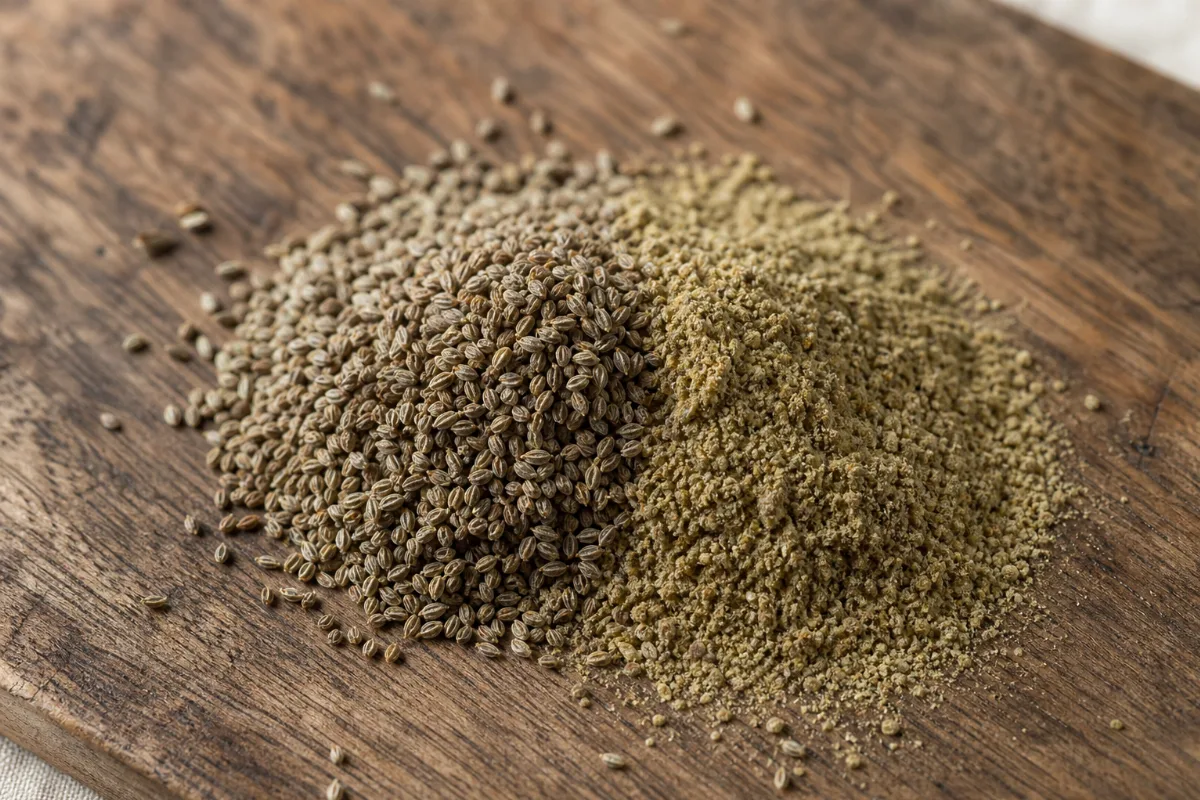
Ajwain is Trachyspermum ammi, a plant in the carrot family (Apiaceae). [1] The "seeds" are really small dried fruits. [2] They are pale brown and oval, and look a little like caraway, cumin or fennel seeds. [2] Ajwain grows in dry soil in India, Iran, Pakistan, Afghanistan and parts of northern Africa. Gujarat and Rajasthan in India are known for growing it. [2] Other names are carom, ajowan, bishop's weed and thymol seeds. [2]Flavor and aroma
Ajwain tastes bitter and sharp, with notes like anise and oregano. It smells like thyme, but stronger and less gentle. [2] The thyme smell comes from thymol, the main compound in the oil. [2][3] Steam-distilled oil is mainly thymol, with smaller amounts of gamma-terpinene and p-cymene. [2] In a study of 14 seed samples from Iran, thymol made up about 60% to 96% of the oil, so strength varies. [4]Even a few seeds can take over a dish. [2] Frying or dry-roasting the seeds softens the bite and gives a more complex aroma. [2] The sources we read name breads, tea and tarka as its main partners.
How it is used in cooking
Ajwain is used whole. The sources we read do not describe a ground form.- Tarka (chaunk): the seeds are fried in ghee or oil, often with other spices, and poured over the dish near the end of cooking. [2]
- Breads: kneaded or sprinkled into naan and paratha. In Afghanistan it is sprinkled on bread and biscuits. [2]
- Tea and mouth freshener: added to hot tea, or dried with lemon juice and black pepper and eaten after meals. [2]
The sources we read give no substitutes, so we offer none. Because the flavor is so strong, add a small pinch and taste before adding more. [2]
Normal food amounts
USDA SR Legacy has no entry for ajwain, so we have no official gram weight per teaspoon and no nutrient table. We did not invent one.| Measure | Grams | Source |
|---|---|---|
| 1 teaspoon | Not found | USDA SR Legacy has no entry for this spice |
| Typical recipe amount | Not found | We opened no source that states one |
Because a small pinch flavors a whole dish, ajwain is used for taste, not as a source of nutrients.
Buying, storing and preparing
- Forms: whole seeds are the usual form. Ajwain oil and extracts are made for other uses, not for the kitchen. [2]
- Quality: the seeds should be small, pale brown and strongly thyme-scented. Oil strength differs between seed sources. [4]
- Storing and shelf life: the sources we read do not give a shelf life or storage advice. Because the aroma comes from a volatile oil, a closed jar in a cool, dry place is sensible.
- Preparing: frying in hot fat or dry-roasting for a short time brings out the aroma. [2]
- Quality problems: we found no source on adulteration or contamination of ajwain.
Health: what research says
Eating ajwain in a dish is very different from using concentrated oil, extract or cream.Food amounts vs supplements
| In normal cooking | In supplements and extracts | |
|---|---|---|
| Typical amount | No usual amount found; a pinch | No official amount found |
| What studies mostly used | We found no human trial of seeds eaten as food | Creams (one 10%) and oil on the skin; lab and rat extracts [5][6][7][9] |
| What we can say about benefit | No good evidence of any benefit has been shown for cooking amounts | Small, mixed results for skin creams; nothing proven for swallowing [5][6] |
| Main safety limit | Pregnancy is flagged in one general encyclopedia [2] | Thymol-rich oil is corrosive and harmful in large amounts [3][8] |
What the evidence shows
| Use | What the sources found | Strength of evidence | Form and population |
|---|---|---|---|
| Burning pain in the feet | A 4-week trial in 92 people found less burning, numbness and tingling with a 10% ajwain cream than with placebo. [5] | Promising but limited | Cream on the skin; adults with nerve pain |
| Nerve symptoms after chemotherapy | A 60-person trial found no statistically significant difference from placebo cream after 4 weeks. [6] | No good evidence of benefit | Cream; people with cancer |
| Pain from a numbing spray before dental injections | In 52 children aged 6 to 10, ajwain oil on the gums gave lower pain scores than a lidocaine spray; the oil strength was not stated. [7] | Insufficient evidence | Oil on the gums; children |
| Indigestion, bloating, cough, period pain | A 2026 review lists traditional uses but says clinical studies remain limited. [9] | Insufficient evidence | Not applicable |
| Germ-fighting and antioxidant effects | Seed oil and extracts act on bacteria and show antioxidant activity in lab tests. [4] | Lab or animal only | Lab dishes |
Traditional use is not proof of benefit. We found no human trial of ajwain eaten or drunk for digestion. For supplement forms, trials and interactions in depth, see the full herb guide: Ajwain.
Official statements
- We did not find an ajwain monograph or statement from EMA, EFSA, FDA, WHO or NCCIH. We did not open any such page that covered this spice.
- A US EPA review of thymol in 2009, as quoted on Wikipedia, concluded minimal toxicity; this is about thymol use, not ajwain seeds. [3]
Related pages
Health connections for Ajwain (carom seed)
What research links to this spice, and how strong the evidence is. Most studies use concentrated extracts or doses far above what you eat; each card says which.
Burning foot pain (nerve pain), skin cream
Preliminary or mixedOne 4-week trial in 92 people found less burning, numbness and tingling with a 10% ajwain cream than with placebo.
Supplements: Skin-cream finding only, one small trial; no study of food amounts. It does not replace medical care for nerve pain.
Nerve symptoms after chemotherapy
Preliminary or mixedA 60-person pilot trial found no statistically significant difference from placebo cream after 4 weeks; the authors judged the cream ineffective for these symptoms.
Supplements: No benefit shown for this use; skin cream only; strength not stated in the abstract.
Pain before dental injections in children
Preliminary or mixedIn 52 children aged 6 to 10, ajwain oil on the gums gave lower pain scores than a lidocaine spray. The abstract does not state the oil strength or report side effects.
Supplements: Oil applied in a dental setting, small trial; not a food or supplement finding. Strong oils are hazardous to children if swallowed.
Germ-fighting and antioxidant activity in the lab
Lab or animal research onlySeed oil and extracts from 14 Iranian seed samples showed antioxidant and antibacterial activity against two bacteria in lab tests.
Supplements: Lab findings only; they do not show benefit in people.
Traditional use for stomach pain, diarrhoea and period pain
Not enough evidenceA 2026 review lists traditional uses but says clinical investigations remain limited. We found no human trial of ajwain taken by mouth.
Supplements: Insufficient evidence for food or supplement forms.
Connected topics
Open a group to see how each topic connects and how strong the evidence is.
Body systems (2)
- Nervous SystemPreliminary or mixed
One trial of a 10% skin cream found less burning foot pain; a second trial in people with chemotherapy nerve symptoms found no benefit. Not shown for seeds in food.
- Pain & InflammationPreliminary or mixed
Small trials of ajwain cream and oil on the skin and gums gave mixed results. Not shown for food amounts.
Body parts (2)
- Nervous SystemPreliminary or mixed
Skin-cream trials for nerve pain gave mixed results; not shown for food.
- SkinPreliminary or mixed
The creams in the nerve-pain trials were applied to the skin; they test a local effect, not a skin benefit. Thymol oil can burn skin when concentrated.
Functional actions (2)
- AntioxidantLab or animal research only
Seed oil and extracts showed antioxidant activity in lab tests; this does not show benefit in people.
- Pain ReliefPreliminary or mixed
Small trials of cream or oil applied locally gave mixed results; no trial of seeds eaten as food.
Root causes (1)
- Medication Side EffectsDocumented risk
Wikipedia says an anti-clotting action may matter with antiplatelet or anti-inflammatory medicines. We found no official statement; ask a pharmacist.
Conditions & symptoms (1)
- Peripheral NeuropathyPreliminary or mixed
A 92-person trial of a 10% skin cream found less burning foot pain; a 60-person trial in chemotherapy nerve symptoms found no significant benefit.
Documented risks and interactions (3)
- Possible effect on blood clotting (reported, not verified). Wikipedia says an anti-clotting action may matter for people taking anti-inflammatory pain medicines or antiplatelet drugs. We could not check the primary source.
- Pregnancy caution (reported, not verified). Wikipedia says pregnant women should avoid ajwain because of possible effects on fetal development. We found no official statement.
- Thymol oil toxicity if swallowed. A poison-center page says thymol is corrosive, can cause painless chemical burns, and after swallowing or skin exposure can affect the nervous system, blood and heart. Essential oils can cause chemical lung injury if aspirated.
Frequently asked questions
Is ajwain the same as carom seed?
Yes. Carom, ajowan and ajwain are names for the fruit of Trachyspermum ammi. [1][2]
What does it taste like?
Bitter and sharp, with thyme, oregano and anise notes. A few seeds can dominate a dish. [2]
How much is normal?
We found no source that states a usual amount, and USDA has no entry for it. Start with a small pinch and taste.
Is it safe in pregnancy?
We found no official statement. Wikipedia says pregnant women should avoid it. [2] Ask your midwife or doctor.
Can I take it with medicines?
No official statement was found. Wikipedia mentions a possible anti-clotting action that could matter with antiplatelet or anti-inflammatory medicines. [2] Ask a pharmacist.
Does ajwain help digestion?
It is a traditional use, but we found no human trial of ajwain eaten or drunk for digestion. [9]
More details: evidence, limits and cautions
The details behind this page: cautions, limits of the evidence and where sources disagree. Open any note to read it.
Safety note at a glance
Safety in more detail
- Medicines: Wikipedia says people taking anti-inflammatory pain medicine or antiplatelet drugs may be affected by an anti-clotting action. [2] It gives no source we could check. We found no official statement. Ask a pharmacist.
- Pregnancy: Wikipedia says pregnant women should avoid ajwain because of possible effects on the fetus. [2] We found no official body that gives a pregnancy statement. Ask a midwife or doctor.
- Breastfeeding: the sources we read do not describe breastfeeding.
- Children: the only child trial used the oil on the gums, and it did not report side effects. [7] Strong essential oils can cause chemical lung injury if a small amount of liquid goes into the airway. [8]
- Allergy: ajwain is in the carrot family. [1] The sources we read do not describe allergy or cross-reactions.
- Liver and kidney: the sources we read do not describe liver or kidney problems in people.
- Surgery: the sources we read give no surgery statement. Wikipedia mentions a possible anti-clotting action. [2] Tell your surgical team about any ajwain product.
- Quality and contamination: we found no data on ajwain adulteration or contamination.
- Amounts that cause trouble: Wikipedia says high oral amounts can be fatal. [2] A poison-center page says thymol is corrosive, can cause painless chemical burns and can affect the nervous system, blood and heart after swallowing. [8] That page is about thymol and thyme oil in general, not ajwain. Thymol carries a "harmful if swallowed" label. [3]
References
- GBIF — Species match: Trachyspermum ammi (accepted name, family Apiaceae). https://api.gbif.org/v1/species/match?name=Trachyspermum%20ammi (accessed 2026-10-24)
- Wikipedia — Ajwain (general encyclopedia; secondary source). https://en.wikipedia.org/wiki/Ajwain (accessed 2026-10-24)
- Wikipedia — Thymol (secondary source). https://en.wikipedia.org/wiki/Thymol (accessed 2026-10-24)
- Thymol screening, phenolic contents, antioxidant and antibacterial activities of Iranian populations of Trachyspermum ammi. Sci Rep 2022; abstract read via Europe PMC. https://pubmed.ncbi.nlm.nih.gov/36123425/ (accessed 2026-10-24)
- Trachyspermum ammi 10% topical cream versus placebo on neuropathic pain: a randomized, double-blind, placebo-controlled trial. Neurol Sci 2016; abstract read via Europe PMC. https://pubmed.ncbi.nlm.nih.gov/27166709/ (accessed 2026-10-24)
- Exploring the effectiveness of ajwain cream in treating taxane-induced peripheral neuropathy in cancer patients: a pilot trial. Indian J Palliat Care 2024; abstract read via Europe PMC. https://pubmed.ncbi.nlm.nih.gov/38633679/ (accessed 2026-10-24)
- Effectiveness of topical ajwain oil in reducing pain during local anaesthesia administration in paediatric dental patients. J Oral Biol Craniofac Res 2025; abstract read via Europe PMC. https://pubmed.ncbi.nlm.nih.gov/40989143/ (accessed 2026-10-24)
- Tennessee Poison Center, Vanderbilt University Medical Center — What are the commonly used but potentially toxic essential oils? (2016). https://www.vumc.org/poison-control/toxicology-question-week/may-3-2016-what-are-commonly-used-potentially-toxic-essential-oils (accessed 2026-10-24)
- Biomedical and industrial applications of Trachyspermum ammi-derived nanoparticles: a comprehensive review. Discov Nano 2026; abstract read via Europe PMC. https://pubmed.ncbi.nlm.nih.gov/41547697/ (accessed 2026-10-24)