Natural Psychedelics · Compound
Salvinorin A
Salvinorin A (C23H28O8) · also called Divinorin A; the main active compound of Salvia divinorum
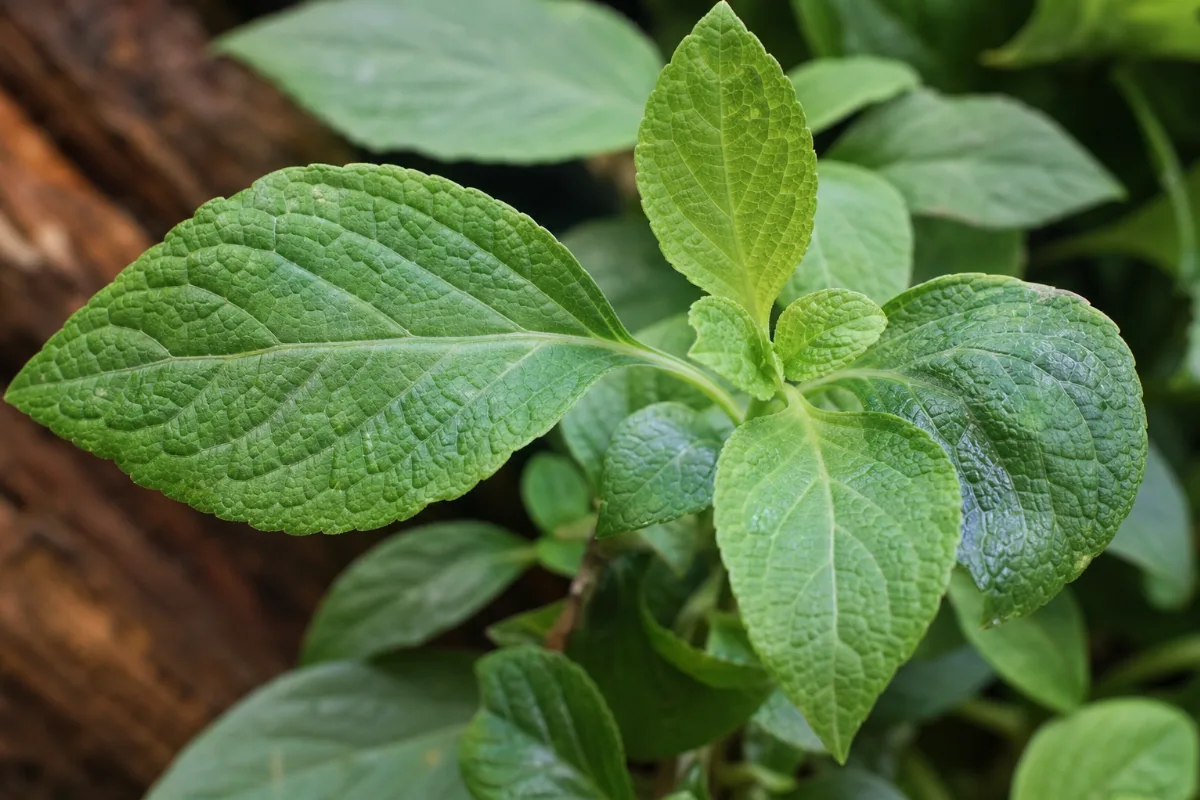
Salvinorin A is the main active compound in the sage-family plant Salvia divinorum. It works on kappa opioid receptors, not the serotonin receptors that psilocybin and LSD target. Small studies in healthy volunteers found intense, very short changes in perception. No treatment has been proven, and no approved medicine exists. The main caution: the effect can be sudden and overwhelming, and street products vary in strength.
General information, not medical advice. Last substantive update · Not medically reviewed. A named clinician has not signed off on this page. How this page is made
About Salvinorin A
Salvinorin A is a single chemical from Salvia divinorum, a sage-family plant from Oaxaca, Mexico. It switches on kappa opioid receptors. In careful studies with a few healthy volunteers it caused intense but very short experiences. It has not been shown to treat anything, and it is not an approved medicine.
What it is
Salvinorin A is a diterpene, a plant chemical built from isoprene units. PubChem lists its formula as C23H28O8. Reviews call it the first highly selective kappa opioid receptor agonist found that has no nitrogen in its structure.
The plant has been used by the Mazatec people of Oaxaca, Mexico for centuries. Leaf preparations and the isolated compound are not the same thing, and tradition is not the same as laboratory research.
How it works, and why it is not a classic psychedelic
NIDA says classic psychedelics such as psilocybin and LSD mainly act on serotonin 5-HT2A receptors. Salvia mainly activates kappa opioid receptors instead.
Volunteer ratings still overlap partly with classic hallucinogens, including mystical-type items in one small study, but the experience was described as dissociative and unlike other drugs. Do not assume it behaves like psilocybin, and it is not an opioid painkiller.
What the research shows
A 2026 systematic review found 12 trials with 174 volunteers, mostly hallucinogen-experienced and mostly given inhaled salvinorin A. Effects began within seconds and were over within about 30 minutes. No serious adverse events were reported, and vital signs were mostly stable. Anxiety and distress occurred in some people.
Brain studies showed lower cortical blood flow and more slow-wave activity during the experience. Stress hormones rose in one study. There was no euphoria in another.
Animal studies point to possible effects on pain, addiction and stroke, with conflicting results on depression. These are early and animal-only. A review says side effects may limit clinical use.
Who uses it, and what products are like
In a US national survey, salvia use was most common at ages 18 to 25 and among people who use other drugs; depression and anxiety were also linked with use. NIDA reports 0.8% of US 8th, 10th and 12th graders used salvia in the past year in 2022.
Lab tests of commercial products found wide differences in strength between brands, at least one label that did not match, and extracts much stronger than raw leaf.
Legal status (not legal advice)
Laws differ by country and change. In Canada, salvia and salvinorin A are in Schedule IV of the Controlled Drugs and Substances Act (2015 order); trafficking, production and importation are prohibited, and the order states simple possession is not. In the US, we did not find salvia named in the federal Schedule I list; many US states have their own rules, which we did not verify. Other countries were not verified.
Medicinal status: we found no regulator-approved medicine containing salvinorin A.
Talk to a professional
If you have a mental health condition, take medicines, or are worried about your own or someone else's use, talk to a doctor or pharmacist.
At a glance
Traditional uses history, not proof
- The Mazatec people of Oaxaca, Mexico have used the plant for centuries for divination and spiritual healing, according to pharmacology reviews (Grundmann 2007).
- Hofmann and Wasson collected the first flowering specimen in 1962 (Casselman 2014).
- This page does not describe ceremonies. See the traditional-contexts page for context.
Studied for research
- Acute effects in healthy volunteers: well described, fast and intense (moderate certainty that the pattern is real; not a benefit)
- Brain activity during the experience: measured in small studies (low)
- Pain, addiction and stroke: animal research only (very low)
- Depression: animal results conflict (insufficient)
Main compounds
- Salvinorin A (C23H28O8)
- Salvinorin B (related compound)
Common forms
- Studied as the isolated compound given by researchers; leaf products and extracts are different and were not the studied product
Research links: NIDA: Hallucinogens · PubChem: Salvinorin A · Canada Gazette: SOR/2015-209 · eCFR: 21 CFR 1308.11 · Research Library · Genes & Biomarkers Library
What it is and its history
- Name
- Salvinorin A (PubChem title); also called divinorin A
- Other names
- Divinorin A; Salvinorin
- Common names
- Salvinorin A (English); Salvia, Sage of the Diviners (plant names) (English)
- Chemical class
- Neoclerodane diterpenoid (a terpene-type natural product). The review calls it the first reported psychoactive diterpene. The source plant is in the mint family, Lamiaceae.
- Related or similar compounds
- Name: Salvinorin B; Note: A related compound; the primate imaging study made radio-labelled salvinorin A from salvinorin B.; Name: Other Salvia (sage) species; Note: Common garden and culinary sages are different plants. Salvinorin A is not a feature of them in the sources read.
Traditional use and history history, not clinical proof
| Tradition or era | Documented use | Source |
|---|---|---|
| Mazatec people of Oaxaca, Mexico | The plant has been used for centuries by Mazatec people for divination and spiritual healing, according to pharmacology reviews. Details of ceremonies are not given here. | p17628834 |
| 1962 | Ethnopharmacologists Hofmann and Wasson collected the first flowering specimen in Oaxaca, allowing the species to be identified. | p24315983 |
| Late 20th century to today | Salvinorin A became known as a highly selective kappa opioid receptor agonist without nitrogen in its structure; the plant became a recreational drug in the US and Europe in the 2000s. | p17628834 |
| 2011 onward | Controlled human studies of inhaled salvinorin A began to be published. | p21131142 |
History shows how a substance was used or discovered. It does not show that a product works or is safe today.
What is inside, and how it may work
What it contains and how those compounds act in cells and animals. Laboratory and animal mechanisms are not proven effects in people.
Main compounds
| Compound | Family | Where it is concentrated | Activity studied | Level of evidence |
|---|---|---|---|---|
| Salvinorin A PubChem 128563 | neoclerodane diterpenoid | Leaf of Salvia divinorum (per reviews) Varies widely between products (see Safety tab) | Selective, high-efficacy kappa opioid receptor agonist 7 2 | Review |
Mechanisms, receptors and pathways
| Target or pathway | Gene or receptor | What was found | Level |
|---|---|---|---|
| Kappa opioid receptor | kappa opioid receptor (KOR) | Salvinorin A is a highly selective KOR agonist. KOR normally works with the brain's dynorphin system. Human brain-imaging and EEG findings in healthy volunteers are consistent with large drops in cortical activity. 7 16 15 | Human, animal and lab |
| Stress hormone axis | pituitary hormone release | Inhaled salvinorin A raised cortisol and prolactin in healthy volunteers. 19 | Human data |
| Serotonin 2A receptor (not the main route) | 5-HT2A | NIDA says classic psychedelics mainly act on 5-HT2A receptors and that salvia works differently, mainly on kappa opioid receptors. Human subjective ratings still overlap partly with classic hallucinogens. 15 11 | Guidance and human |
Absorption, metabolism and elimination
- Absorption
- Inhaled: effects begin within seconds and peak at 1 to 2 minutes. Sublingual use gave slower onset and longer duration; oral dosing was inactive in one study (2026 systematic review).
- Distribution
- In baboons, rapid brain uptake peaking at about 40 seconds, highest in the cerebellum with notable amounts in the visual cortex (PET imaging).
- Metabolism
- At least two modes of metabolism and excretion (kidney and bile) in baboons; human metabolism data were not read.
- Elimination
- Brain clearance half-life about 8 minutes in baboons; half-life about one hour in animals overall (preclinical meta-analysis); human effects over within about 30 minutes.
- Bioavailability
- Not reported in the abstracts read.
Isolated compounds versus whole extracts
Almost all human studies used pure salvinorin A given by researchers. Leaf preparations and enhanced extracts differ in strength and contain other compounds; they were not the studied product.
Nutritional composition
Salvinorin A is not a nutrient and has no nutritional role.
1 moderate certainty1 low certainty3 very low certainty1 not enough evidence
What is Salvinorin A good for?
These are research areas, not treatments. Certainty shows how sure we are of the finding, and most of it is from animals.
Benefits, one by one
Each card is a research question, not a promise. Tap a goal to filter. Open a card to see the studies, doses and limits.
What salvinorin A does in people (controlled studies)
Moderate certaintyIn small, tightly supervised studies, inhaled salvinorin A produced intense, very short changes in perception and body sense. They peaked within minutes and mostly faded within about 20 to 30 minutes. This is research on what the compound does, not a treatment.
5 studiesNot summarised here. Studied only as the isolated compound given by r…
Studies, doses and limits
What the trials found
A 2026 systematic review found 12 trials with 174 mostly hallucinogen-experienced volunteers. Four to ten people per trial in the studies we read in detail.
Results
Peak effects at about 1 to 2 minutes; over within about 30 minutes. Disorientation, anxiety and distress in some people; no serious adverse events; vital signs mostly stable. Participants described disrupted balance and body sense, vivid imagery and strong dissociation. Memory for events during the session was impaired.
Effect sizes as reported
Descriptive: no treatment outcome was measured.
Why this rating
Several small blinded studies agree on the broad profile (fast, intense, dissociative), but each has only 4 to 10 people and they are all experienced volunteers.
Form and dose studied
Not summarised here. Studied only as the isolated compound given by researchers in supervised settings.
Who was studied
Healthy adults, mostly with previous hallucinogen experience, in supportive research settings.
Limits
Very small samples; experienced volunteers; short follow-up; not the plant, not street products, and not repeated use.
Why researchers looked
Researchers wanted to know what a kappa opioid receptor drug does in people, because it works differently from classic psychedelics such as psilocybin.
Traditional use
The Mazatec people of Oaxaca, Mexico have used the plant for centuries in healing and spiritual contexts (Casselman 2014; Grundmann 2007). That is a separate matter from laboratory research on the isolated compound.
Proposed mechanism Human and review
Salvinorin A is a selective kappa opioid receptor agonist. It does not mainly act on the serotonin 5-HT2A receptor that classic psychedelics target (NIDA).
A proposed mechanism does not show that the effect happens in people.
Some people felt anxiety and distress. The experience can leave a person unable to respond. Real-world safety is on the Safety tab.
Brain activity and body awareness during the experience
Low certaintyBrain recordings in healthy volunteers showed a marked fall in activity across much of the cortex while salvinorin A was active. Volunteers also reported a loss of contact with the outside world and, at the highest level tested, with their own body.
2 studiesNot summarised here. Studied only as the isolated compound given by r…
Studies, doses and limits
What the trials found
Two small crossover or placebo-controlled studies in healthy volunteers.
Results
More delta and gamma and less alpha EEG activity; lower blood flow in many cortical areas and higher flow in parts of the medial temporal lobe and cerebellum. Body awareness followed an inverted-U pattern (more at lower levels, loss at the highest).
Effect sizes as reported
Descriptive.
Why this rating
Mechanism-focused work in small groups; sample size for the brain-scan study is not given in the abstract.
Form and dose studied
Not summarised here. Studied only as the isolated compound given by researchers in supervised settings.
Who was studied
Healthy volunteers with psychedelic experience.
Limits
Tiny samples; no clinical outcome; findings describe minutes of drug action.
Why researchers looked
To understand how kappa opioid receptors shape consciousness, perception and the sense of owning one's body.
Traditional use
The Mazatec people of Oaxaca, Mexico have used the plant for centuries in healing and spiritual contexts (Casselman 2014; Grundmann 2007). That is a separate matter from laboratory research on the isolated compound.
Proposed mechanism Human imaging
Kappa opioid receptor activation is linked by the authors to gating of sight and sound and to changes in body awareness.
A proposed mechanism does not show that the effect happens in people.
No dysphoria was reported in the brain-scan study, while other studies report anxiety and distress in some people.
Pain and inflammation (animal studies)
Very low certaintyIn animals, salvinorin A reduced pain-like behaviour and inflammation. No human trial has tested it for pain.
1 studiesNot summarised here. Studied only as the isolated compound given by r…
Studies, doses and limits
What the trials found
None. Proper evidence not found for a human treatment trial.
Results
A 2025 systematic review of 82 animal studies (10 in the meta-analysis) reported pain-relieving and anti-inflammatory effects.
Effect sizes as reported
Not applicable to people.
Why this rating
Animal research only; the review says side effects may limit clinical use.
Form and dose studied
Not summarised here. Studied only as the isolated compound given by researchers in supervised settings.
Who was studied
Laboratory animals.
Limits
Animal results often fail to carry over to people.
Why researchers looked
Kappa opioid receptors are involved in pain, and researchers hoped for pain relief without the main problems of classic opioids.
Traditional use
The Mazatec people of Oaxaca, Mexico have used the plant for centuries in healing and spiritual contexts (Casselman 2014; Grundmann 2007). That is a separate matter from laboratory research on the isolated compound.
Proposed mechanism Animal research
Kappa opioid receptor agonism in animal models.
A proposed mechanism does not show that the effect happens in people.
The same review found anxiety-like behaviour and impaired movement and thinking in animals.
Addiction-related behaviour (animal studies)
Very low certaintyIn animal models of addiction, salvinorin A and related compounds reduced drug-seeking behaviour. This has not been tested in people.
1 studiesNot summarised here. Studied only as the isolated compound given by r…
Studies, doses and limits
What the trials found
None.
Results
The 2025 review reported anti-addiction effects in animal models.
Effect sizes as reported
Not applicable to people.
Why this rating
Animal research only.
Form and dose studied
Not summarised here. Studied only as the isolated compound given by researchers in supervised settings.
Who was studied
Laboratory animals.
Limits
Not tested in people with addiction.
Why researchers looked
Kappa opioid receptors are part of the brain's stress and reward system.
Traditional use
The Mazatec people of Oaxaca, Mexico have used the plant for centuries in healing and spiritual contexts (Casselman 2014; Grundmann 2007). That is a separate matter from laboratory research on the isolated compound.
Proposed mechanism Animal research
Kappa opioid receptor agonism in animal models.
A proposed mechanism does not show that the effect happens in people.
Animal toxicity findings (anxiety-like behaviour, impaired movement and thinking) are in the same review.
Brain injury and stroke models (animal studies)
Very low certaintySalvinorin A showed brain-protective effects in animal models of stroke-type injury. No human data.
1 studiesNot summarised here. Studied only as the isolated compound given by r…
Studies, doses and limits
What the trials found
None.
Results
The 2025 review lists neuroprotective effects and says findings support potential for stroke in animals; lower doses were used in stroke models.
Effect sizes as reported
Not applicable to people.
Why this rating
Animal research only.
Form and dose studied
Not summarised here. Studied only as the isolated compound given by researchers in supervised settings.
Who was studied
Laboratory animals.
Limits
Not tested in people.
Why researchers looked
Researchers looked for compounds that protect brain tissue after loss of blood supply.
Traditional use
The Mazatec people of Oaxaca, Mexico have used the plant for centuries in healing and spiritual contexts (Casselman 2014; Grundmann 2007). That is a separate matter from laboratory research on the isolated compound.
Proposed mechanism Animal research
Kappa opioid receptor agonism in animal models.
A proposed mechanism does not show that the effect happens in people.
See animal toxicity findings above.
Depression and mood (animal studies, mixed)
Not enough evidenceAnimal results on depression are inconsistent: some studies found antidepressant-like effects and others found depression-like effects. Kappa receptor activation is generally linked with aversion and low mood, so this is not a promising lead on current evidence.
2 studiesNot summarised here. Studied only as the isolated compound given by r…
Studies, doses and limits
What the trials found
None. In a controlled human study the compound did not produce euphoria (Ranganathan 2012).
Results
The 2025 review: both antidepressant and depressogenic outcomes reported.
Effect sizes as reported
Not applicable to people.
Why this rating
Inconsistent animal results and no human trials.
Form and dose studied
Not summarised here. Studied only as the isolated compound given by researchers in supervised settings.
Who was studied
Laboratory animals.
Limits
No clinical data.
Why researchers looked
Kappa receptors are part of the stress system, so researchers asked whether blocking or activating them changes mood.
Traditional use
The Mazatec people of Oaxaca, Mexico have used the plant for centuries in healing and spiritual contexts (Casselman 2014; Grundmann 2007). That is a separate matter from laboratory research on the isolated compound.
Proposed mechanism Animal research
Kappa opioid receptor activation can cause aversion and loss of pleasure in preclinical models; results with salvinorin A are mixed.
A proposed mechanism does not show that the effect happens in people.
Mood and anxiety effects in some volunteers are described in the human studies.
Connections to the rest of health
How Salvinorin A connects to the rest of our health knowledge graph. Every link says what kind of connection it is. A safety link (for example to the liver) is a warning, not a benefit. A study that merely mentions a topic never creates a benefit link.
Explore every connection: goals, body systems, organs, symptoms, genes
B. Body systems
C. Body parts and organs
I. Biomarkers
| Connected to | Kind of connection | Evidence status | Context | Studies |
|---|---|---|---|---|
| Brain wave pattern (EEG) | Biological association | Low certainty | Measured in trials: changed. A lab change is not the same as a health benefit. | 16 19 |
| Blood flow in the brain (SPECT) | Biological association | Low certainty | Measured in trials: lowered in the cortex, raised in some deeper areas. A lab change is not the same as a health benefit. | 16 |
| Stress hormones (cortisol, prolactin) | Biological association | Low certainty | Measured in trials: raised. A lab change is not the same as a health benefit. | 19 |
| Heart rate and blood pressure | Biological association | Moderate certainty | Measured in trials: little change. A lab change is not the same as a health benefit. | 11 23 |
| Behaviour tests in animals (pain, drug-seeking, mood) | Biological association | Very low certainty | Measured in trials: mixed. A lab change is not the same as a health benefit. | 22 |
J. Genes, receptors and enzymes
| Connected to | Kind of connection | Evidence status | Context | Studies |
|---|---|---|---|---|
| Kappa opioid receptor (OPRK1) | Preliminary mechanism | Review | Main target of salvinorin A. | 7 |
L. Active compounds
Each connection is stored with the ingredient, the connected record, the kind of connection, the evidence status, the supporting studies, the preparation or compound involved, and a review date (last reviewed October 25, 2026).
Evidence at a glance: what changed in 2 lab markers
Tap a number to show only those markers. Counts are markers, not people.
The evidence
The research centre for Salvinorin A. Every record here was checked against PubMed or the publisher's page; we never list a study we have not verified.
Evidence by outcome
Bars show how many studies we found for each outcome, not how well it works. People are added up across trials only (reviews are not added, to avoid double counting).
How we rate evidence
High certainty
Several well-run trials or reviews agree; further research is unlikely to change the picture much.
Moderate certainty
Good trials point the same way, but some doubt remains.
Low certainty
Small, short or inconsistent trials. The finding could change with better research.
Very low certainty
Very little or very weak human data. Treat as a possibility only.
Mixed findings
Trials or reviews disagree with each other.
Not enough evidence
Not enough human research to say either way.
Evidence against
Good research found no benefit, or found harm.
We take the reviewers' own risk-of-bias and GRADE statements where they exist, and otherwise judge from study size, design, consistency, directness and whether a product matches what is sold. Many publications do not make evidence high. Method note: We read abstracts of the PubMed papers cited, the PubChem record, and the US and Canadian legal texts, on 2026-10-25. One letter without an abstract (Przekop 2009) was cited by title only.
Study library: every study we checked 23
| Study | Design | People | Product, dose, length | Result |
|---|---|---|---|---|
| Calado 2025 Salvinorin A and Salvia divinorum: Toxicology, Pharmacological Profile, and Therapeutic Potential. International Journal of Molecular Sciences · PMID 40565052 · DOI |
Narrative review review |
Review of toxic and therapeutic effects, recreational use and legal status | Salvia divinorum and salvinorin A n/a Not summarised here Single session · vs n/a |
The abstract says the review covers toxic and therapeutic effects, recreational use, global consumption trends and legal status. The abstract gives no numbers or findings; only the abstract was read. n/a Methods, limits and fundingOutcomes: Overview of risks and potential Limitations: Abstract only; no findings were taken from the full text. Funding and conflicts: Not stated in the abstract Read: abstract |
| Casselman 2014 From local to global-fifty years of research on Salvia divinorum. Journal of Ethnopharmacology · PMID 24315983 · DOI |
Narrative review review |
Fifty years of research on Salvia divinorum | Salvia divinorum n/a Not summarised here Single session · vs n/a |
Hofmann and Wasson collected the first flowering specimen in Oaxaca in 1962. Traditional use is confined to a very small region of Mexico and is well documented for the Mazatec; modern use is not. Salvinorin A is the first reported psychoactive diterpene. Most pharmacology is from animals; published human studies had reported no harm within the range tested; more toxicology needed. n/a Methods, limits and fundingOutcomes: History, ethnobotany, chemistry, pharmacology Limitations: Review search ended in 2013. Funding and conflicts: Not stated in the abstract Read: abstract |
| Chambers 2023 Rapid Detection and Quantification of Hallucinogenic Salvinorin A in Commercial Salvia divinorum Products by DART-HRMS. ACS Omega · PMID 36643502 · DOI |
Laboratory analysis n/a |
Commercial salvia products analysed in a lab | Raw leaves and enhanced leaf extracts n/a Not summarised here Single session · vs n/a |
Enhanced leaf extracts contained much more salvinorin A than raw leaves. The paper presents a fast testing method. n/a Methods, limits and fundingOutcomes: Salvinorin A content Limitations: Lab method paper; a small set of products. Funding and conflicts: Not stated in the abstract Read: abstract |
| El-Khoury 2015 The Association of Salvia divinorum and Psychotic Disorders: A Review of the Literature and Case Series. Journal of Psychoactive Drugs · PMID 26317561 · DOI |
Case series and review |
2 Two patients plus literature review |
Salvia divinorum use n/a Not summarised here Single session · vs n/a |
The authors hypothesise that salvia use could be associated with psychotic disorders and advise clinicians to ask about it. They state more research is needed to assess any relationship. Possible association; not shown to be causal Methods, limits and fundingOutcomes: Link to psychosis Limitations: Two case reports; no control group; cannot show cause. Funding and conflicts: Not stated in the abstract Read: abstract |
| El-Khoury 2018 Case series: Salvia divinorum as a potential addictive hallucinogen. American Journal on Addictions · PMID 29596726 · DOI |
Case series |
2 Two patients with enduring, pervasive salvia use |
Salvia divinorum use n/a Not summarised here Single session · vs n/a |
Two patients had an enduring and pervasive pattern of salvia use. The authors say clinicians should be mindful of the potential for a use disorder, especially in young people who use several substances. Case reports only Methods, limits and fundingOutcomes: Use pattern Limitations: Two patients; cannot give a rate. Funding and conflicts: Not stated in the abstract Read: abstract |
| Government of Canada 2015 Canada Gazette Part II: Order Adding Salvia divinorum to Schedule IV of the CDSA (SOR/2015-209) Canada Gazette, Part II, 12 August 2015 · Source |
Regulation n/a |
Canadian law | n/a n/a n/a n/a · vs n/a |
The order adds Salvia divinorum, its preparations and derivatives (including salvinorin A) to Schedule IV of the Controlled Drugs and Substances Act. It prohibits production, trafficking, possession for the purpose of trafficking, importation, exportation and possession for the purpose of exportation unless authorised. The text states simple possession is not prohibited. In force 180 days after publication. Methods, limits and fundingOutcomes: Controlled-substance status of Salvia divinorum and salvinorin A Limitations: 2015 order; a 2018 order (SOR/2018-70) later reworded the item and was not read. Check the current schedule. Read: full-text |
| Grundmann 2007 Salvia divinorum and salvinorin A: an update on pharmacology and analytical methodology. Planta Medica · PMID 17628834 · DOI |
Narrative review review |
Review of pharmacology, toxicology and analytical methods | Salvia divinorum and salvinorin A n/a Not summarised here Single session · vs n/a |
Notes use by the Mazatec culture for centuries; salvinorin A was the first highly selective non-nitrogenous kappa opioid agonist found. Animal studies showed rapid onset and short half-lives and no evidence of short- or long-term toxicity at that time. Calls for many more investigations. n/a Methods, limits and fundingOutcomes: Pharmacology and safety overview Limitations: 2007 review; older than the human studies from 2011 onward. Funding and conflicts: Not stated in the abstract Read: abstract |
| Hernández-Bello 2015 Salvinorin A content in legal high products of Salvia divinorum sold in Mexico. Forensic Science International · PMID 25710779 · DOI |
Laboratory analysis n/a |
Commercial products sold in Mexico | Dried leaf extracts sold as legal highs n/a Not summarised here Single session · vs n/a |
Content varied widely between brands, one brand's measured amount did not agree with its label, and very high-strength products had appeared. The authors say lack of regulation and variability could be a health problem. n/a Methods, limits and fundingOutcomes: Salvinorin A content versus label Limitations: Products from one country, tested around 2015. Funding and conflicts: Not stated in the abstract Read: abstract |
| Hooker 2008 Pharmacokinetics of the potent hallucinogen, salvinorin A in primates parallels the rapid onset and short duration of effects in humans. NeuroImage · PMID 18434204 · DOI |
Animal imaging animal |
6 6 adult female baboons |
Radio-labelled salvinorin A (PET scans) n/a Not summarised here Single session · vs n/a |
Very rapid brain uptake with a peak at about 40 seconds and clearance with a half-life of about 8 minutes. Highest concentrations in the cerebellum, with notable amounts in the visual cortex. Naloxone did not significantly change brain levels. At least two routes of metabolism and excretion (kidney and bile). Fast in, fast out in primates Methods, limits and fundingOutcomes: Brain uptake and clearance Limitations: Six baboons; not human data. Funding and conflicts: Not stated in the abstract Read: abstract |
| Hutton 2016 "Quite a Profoundly Strange Experience": An Analysis of the Experiences of Salvia divinorum Users. Journal of Psychoactive Drugs · PMID 27176133 · DOI |
Qualitative survey |
167 167 salvia users among 393 respondents, New Zealand, 2010-2011 |
Self-reported salvia use n/a Not summarised here Single session · vs n/a |
Themes were the effects of salvia, the importance of set and setting, and whether the experience was pleasurable. Participants were drug-experienced, and use was intermittent and seen as a novel experience. Descriptive Methods, limits and fundingOutcomes: User experiences Limitations: Online questionnaire; self-selected respondents. Funding and conflicts: Not stated in the abstract Read: abstract |
| Johnson 2011 Human psychopharmacology and dose-effects of salvinorin A, a kappa opioid agonist hallucinogen present in the plant Salvia divinorum. Drug and Alcohol Dependence · PMID 21131142 · DOI |
Double blind placebo controlled |
4 4 healthy adults who used hallucinogens |
Inhaled salvinorin A in supportive research conditions n/a Not summarised here Single session · vs Placebo |
Effects peaked at 2 minutes and were no longer clearly present at about 20 minutes. Higher exposure raised scores on a mystical-type experience scale and a classic-hallucinogen rating scale. Heart rate and blood pressure did not rise significantly. Participants described disrupted balance and body sense, childhood memories, cartoon-like imagery and contact with entities. Unique profile with some similarity to classic hallucinogens Methods, limits and fundingOutcomes: Subjective effects, mystical-type experience, vital signs Limitations: Only 4 people, all experienced with hallucinogens, in a prepared setting. Funding and conflicts: Not stated in the abstract Read: abstract |
| MacLean 2013 Dose-related effects of salvinorin A in humans: dissociative, hallucinogenic, and memory effects. Psychopharmacology · PMID 23135605 · DOI |
Randomised double blind placebo controlled |
8 8 healthy hallucinogen-using adults |
Inhaled salvinorin A n/a Not summarised here Single session · vs Placebo |
Effects peaked at about 2 minutes and faded quickly. Strong dissociative effects and impaired recall and recognition memory. Some overlap with classic hallucinogens. No evidence of persisting adverse effects at 1 month. Participants said the effects felt different from other drugs. Unique profile with dissociation and memory impairment Methods, limits and fundingOutcomes: Subjective, physiological and memory effects; 1-month follow-up Limitations: 8 experienced people; one month follow-up only. Funding and conflicts: Not stated in the abstract Read: abstract |
| Maqueda 2015 Salvinorin-A Induces Intense Dissociative Effects, Blocking External Sensory Perception and Modulating Interoception and Sense of Body Ownership in Humans. International Journal of Neuropsychopharmacology · PMID 26047623 · DOI |
Placebo controlled dose escalation |
8 8 healthy volunteers with psychedelic experience |
Vaporised salvinorin A vs placebo n/a Not summarised here Single session · vs Placebo |
Disconnection from external reality, elaborate visions and sounds, changed body awareness. Lower exposures raised body sensations; the highest led to a sense of complete loss of contact with the body. Authors link this to the kappa opioid receptor. Intense dissociative effects Methods, limits and fundingOutcomes: Hallucinogen and altered-state questionnaires, body awareness Limitations: 8 people, all with psychedelic experience. Funding and conflicts: Not stated in the abstract Read: abstract |
| NCBI PubChem 2026 PubChem: Salvinorin A, CID 128563 PubChem REST API · Source |
Database n/a |
Chemical record | n/a n/a n/a n/a · vs n/a |
PubChem CID 128563, title "Salvinorin A", formula C23H28O8, molecular weight 432.5, CAS 83729-01-5 in the synonym list. IUPAC name: methyl (2S,4aR,6aR,7R,9S,10aS,10bR)-9-acetyloxy-2-(furan-3-yl)-6a,10b-dimethyl-4,10-dioxo-2,4a,5,6,7,8,9,10a-octahydro-1H-benzo[f]isochromene-7-carboxylate. Methods, limits and fundingOutcomes: Name, formula, structure Limitations: A database record retrieved 2026-10-25. Read: API |
| National Institute on Drug Abuse 2026 NIDA: Hallucinogens (Psychedelic and Dissociative Drugs) NIDA · Source |
Authoritative guidance n/a |
General public | n/a n/a n/a n/a · vs n/a |
Says salvia primarily activates kappa opioid receptors, unlike classic psychedelics; leaves are typically chewed, juiced, smoked or vaporised; 0.8% of US 8th, 10th and 12th graders reported past-year use in the 2022 Monitoring the Future survey. The page does not address salvia's legal status and has no salvia-specific risk section. Methods, limits and fundingOutcomes: Mechanism, use and legal status of salvia Limitations: Page citation date 8 January 2026 (footer also says April 2023). Read: full-text |
| Ona 2022 The Kappa Opioid Receptor and the Sleep of Reason: Cortico-Subcortical Imbalance Following Salvinorin-A. International Journal of Neuropsychopharmacology · PMID 34537829 · DOI |
Double blind randomised crossover |
Healthy volunteers (two sub-studies) | Salvinorin A vs placebo n/a Not summarised here Single session · vs n/a |
EEG showed more delta and gamma and less alpha activity. Blood flow fell in many cortical regions and rose in parts of the medial temporal lobe (amygdala, hippocampal gyrus) and cerebellum. Subjective effects looked like other psychotomimetic drugs but clearly dissociative; no dysphoric effects were reported. Marked drop in cortical activity during the experience Methods, limits and fundingOutcomes: EEG, brain blood flow (SPECT), subjective effects Limitations: Sample sizes are not given in the abstract; short-lived effects only. Funding and conflicts: Not stated in the abstract Read: abstract |
| Perron 2012 Use of Salvia divinorum in a nationally representative sample. American Journal of Drug and Alcohol Abuse · PMID 21834614 · DOI |
Cross sectional survey |
55623 US National Survey on Drug Use and Health 2008 |
Self-reported salvia use n/a Not summarised here Single session · vs n/a |
Salvia use was most common at ages 18 to 25 and among people with risk-taking behaviour or other illicit drug use (especially other hallucinogens or ecstasy). Self-reported depression and anxiety were also linked with use. Association only Methods, limits and fundingOutcomes: Who uses salvia Limitations: Survey from 2008; self-report; cannot show cause. Funding and conflicts: Not stated in the abstract Read: abstract |
| Przekop 2009 Persistent psychosis associated with salvia divinorum use. American Journal of Psychiatry · PMID 19570943 · DOI |
Case report |
Case report (letter) | Salvia divinorum use n/a Not summarised here Single session · vs n/a |
Title only: this is a letter with no abstract on PubMed. Only the title was read; no findings are taken from it. n/a Methods, limits and fundingOutcomes: Persistent psychosis Limitations: Not read beyond the title. Funding and conflicts: Not stated Read: citation-only |
| Ranganathan 2012 Dose-related behavioral, subjective, endocrine, and psychophysiological effects of the κ opioid agonist Salvinorin A in humans. Biological Psychiatry · PMID 22817868 · DOI |
Randomised crossover double blind |
10 10 healthy adults who had used salvia before |
Inhaled salvinorin A vs placebo n/a Not summarised here Single session · vs n/a |
Psychotomimetic and dissociative effects; raised cortisol and prolactin; reduced resting EEG spectral power. No euphoria, no cognitive deficits and no change in vital signs. Effects were transient. Well tolerated with no acute or delayed adverse events reported. Authors suggest a low addictive potential. Transient dissociative and perceptual effects Methods, limits and fundingOutcomes: Behaviour, perception, cognition, hormones, EEG, vital signs Limitations: 10 experienced users; short follow-up; low-addiction suggestion is the authors' inference. Funding and conflicts: Not stated in the abstract Read: abstract |
| Travis 2012 A Report of Nausea and Vomiting with Discontinuation of Chronic Use of Salvia divinorum. Case Reports in Medicine · PMID 22611407 · DOI |
Case report |
1 One 51-year-old woman |
Smoked salvia herb for 3 to 4 months n/a Not summarised here Single session · vs n/a |
She developed nausea, vomiting, diarrhoea and belly discomfort about 48 hours after stopping. Tests were essentially normal; she was released after one day. The authors say it may be a withdrawal-type reaction. Possible withdrawal-type symptoms in one person Methods, limits and fundingOutcomes: Symptoms after stopping Limitations: One case; cause not established. Funding and conflicts: Not stated in the abstract Read: abstract |
| US Drug Enforcement Administration / eCFR 2026 US eCFR: 21 CFR 1308.11 Schedule I eCFR · Source |
Regulation n/a |
US federal law | n/a n/a n/a n/a · vs n/a |
A search of the Schedule I text (version dated 2026-10-20) found neither "salvia" nor "salvinorin" named in it. Methods, limits and fundingOutcomes: Whether salvia or salvinorin A is named in Schedule I Limitations: Only Schedule I was checked in this round; other schedules and the DEA's other lists were not read. Absence from a list is not a statement that something is legal. Read: full-text |
| Zürrer 2025 The translational potential of salvinorin A: systematic review and meta-analysis of preclinical studies. Translational Psychiatry · PMID 41073402 · DOI |
Systematic review animal |
82 animal studies in the review, 10 in the meta-analysis | Salvinorin A in animal models n/a Not summarised here Single session · vs n/a |
Animal models of pain, stroke-type injury, addiction and depression. Pain-relieving, anti-inflammatory, brain-protective and anti-addiction effects were reported. Depression findings were inconsistent (both antidepressant-like and depression-like outcomes). Toxic effects included anxiety-like behaviour and impaired movement and thinking, with little effect on vital signs. Half-life in animals about one hour. Authors say side effects may limit clinical use. Supports potential for pain, addiction and stroke in animals only Methods, limits and fundingOutcomes: Therapeutic effects, toxic effects and pharmacokinetics in animals Limitations: Animal studies only; results may not carry over to people. Funding and conflicts: Not stated in the abstract Read: abstract |
| Zürrer 2026 Salvinorin A in humans: A systematic review of pharmacokinetics, pharmacodynamics, and safety. Journal of Psychopharmacology · PMID 42638533 · DOI |
Systematic review |
174 12 clinical trials in healthy, mostly hallucinogen-experienced volunteers |
Inhaled (mostly), sublingual or oral salvinorin A n/a Not summarised here Single session · vs n/a |
12 trials, 174 participants. Onset within seconds, peak at 1 to 2 minutes, effects over within 30 minutes when inhaled. Sublingual use gave slower onset and longer effects; oral dosing was inactive in one study. No serious adverse events. Vital signs largely stable, with occasional mild rises in blood pressure or heart rate. Disorientation, anxiety and distress in some participants, alongside some reports of positive subjective change. Long-term adverse effects were rare and abuse potential appeared low. Distinct human profile compared with serotonergic psychedelics Methods, limits and fundingOutcomes: Pharmacokinetics, effects, safety and longer-term effects Limitations: Small, varied studies in healthy experienced volunteers; may not apply to other people or to street products; review authors call for cautious further study. Funding and conflicts: Not stated in the abstract Read: abstract |
What we do not know yet
- No treatment trials in patients.
- Human studies are tiny and in experienced volunteers.
- No data on repeated use, pregnancy, children or older adults, or interactions.
- Legal status outside Canada and US Schedule I not verified.
How new research is added
New studies are found by a saved PubMed search and are placed in a review queue. A person checks each one before it is added.
Lab markers
What changed in blood or saliva tests during trials. A changed number is not the same as feeling or being healthier, and we give no "normal ranges".
Other 5
Brain wave pattern (EEG)
Changed in trials
Electrical activity of the brain recorded from the scalp.
Low certaintyResults and what it means
Why it was measured
It shows how a drug changes overall brain activity.
Statistical vs. clinical meaning
Describes the drug effect; it is not a health benefit or a risk marker.
Safety implication
None known from these studies.
Blood flow in the brain (SPECT)
Lowered in the cortex, raised in some deeper areas in trials
A scan that shows how much blood reaches different parts of the brain.
Low certaintyResults and what it means
Why it was measured
Blood flow is a rough sign of how active a brain area is.
Statistical vs. clinical meaning
Describes the acute drug effect only.
Safety implication
None known from this study.
| Study | Result | People | Product |
|---|---|---|---|
| 16 | Blood flow fell in frontal, temporal, parietal and occipital cortex; rose in parts of the medial temporal lobe (amygdala, hippocampal gyrus) and cerebellum. | Healthy volunteers | Salvinorin A vs placebo |
Stress hormones (cortisol, prolactin)
Raised in trials
Hormones that rise with stress and with some brain-signalling drugs.
Low certaintyResults and what it means
Why it was measured
Kappa opioid receptors influence the stress system.
Statistical vs. clinical meaning
Shows a measurable body response; clinical meaning is unknown.
Safety implication
Not assessed beyond the session.
| Study | Result | People | Product |
|---|---|---|---|
| 19 | Plasma cortisol and prolactin increased after inhaled salvinorin A. | 10 healthy previous salvia users | Inhaled salvinorin A vs placebo |
Heart rate and blood pressure
Little change in trials
Basic vital signs.
Moderate certaintyResults and what it means
Why it was measured
A basic safety check in drug studies.
Statistical vs. clinical meaning
Reassuring for the short sessions studied; not proof of safety in people with heart conditions or in other settings.
Safety implication
Healthy volunteers only.
Behaviour tests in animals (pain, drug-seeking, mood)
Mixed results in trials
Standard tests in rodents and other animals that look at pain responses, drug-seeking and mood-like behaviour.
Very low certaintyResults and what it means
Why it was measured
Used to decide whether a compound is worth testing in people.
Statistical vs. clinical meaning
Animal results only; they are a reason to study further, not evidence of benefit in people.
Safety implication
Anxiety-like behaviour and impaired movement and thinking were seen in animals.
| Study | Result | People | Product |
|---|---|---|---|
| 22 | Pain, inflammation and addiction-like behaviour improved in several models; depression-like outcomes were inconsistent. | 82 animal studies (10 in the meta-analysis) | Salvinorin A in animals |
Safety
What studies and official sources say about side effects, medicines and who should check first. Each point shows what kind of evidence it comes from.
Main points to know 5
- Fast and overwhelming. Inhaled salvinorin A can cause intense, sudden changes in perception, a loss of contact with surroundings and body, and disorientation within seconds. In controlled studies some volunteers felt anxiety and distress. Out of a lab, a person in this state can fall or be hurt, which is why NIDA links psychedelic and dissociative drugs to injury when judgment is impaired. Systematic review and authoritative guidance 23 15
- Never drive or do anything that needs alertness. Effects in studies lasted minutes, but the sudden loss of awareness makes any task that needs attention dangerous during that time. No driving studies were found. Expert inference from human studies 23 12
- Mental health warnings. Case reports describe psychosis and patterns of repeated use after salvia use. They cannot show that salvia caused them. People with a personal or family history of psychosis should be especially careful and talk to a clinician. Case reports 4 5 18
- Controlled studies are not the real world. The human studies used a pure compound, healthy experienced volunteers, a prepared setting and a researcher present. Street products, enhanced extracts and use alone are different, and their strength varies and may not match labels. Systematic review and product analysis 23 8 3
- No approved medicine. No regulator approval of salvinorin A or salvia as a medicine was found in the sources read. Therapeutic ideas are animal research only. Review 22 1
Side effects 5
| Effect | How often | Severity and recovery | Evidence |
|---|---|---|---|
| Disorientation, anxiety and distress Seen in supervised research with healthy volunteers. | In subsets of participants (no rate in the abstract) | mild to severe, short-lived Wears off within about 30 minutes in studies | Systematic review 23 |
| Strong dissociation and loss of contact with surroundings and body Maximal ratings or unresponsiveness were frequently seen at high exposures. | Common at higher exposures in the small studies | intense Wears off quickly | Controlled trial 13 12 11 |
| Memory impairment during the session Impaired recall and recognition memory. | Dose-related in one study of 8 people | temporary No persisting effects at 1 month in that study | Controlled trial 12 |
| Mild rises in blood pressure or heart rate Two small studies saw no significant change. | Occasional | mild Short-lived | Systematic review 23 11 |
| Nausea, vomiting and belly symptoms after stopping regular use Possible withdrawal-type reaction after months of daily smoking; cause not established. | One case report | moderate Settled in about a day with symptom treatment | Case report 20 |
Liver
No source read reports liver injury from salvinorin A. LiverTox and other liver sources were not checked.
How often. Unknown; not studied in the sources read.
Monitoring. No agency advice found.
This is a safety connection. It is not evidence that Salvinorin A supports liver health.
Medicines and supplements 2
| With | Why it matters | Importance | Evidence | What to do |
|---|---|---|---|---|
| Alcohol, sedatives and other mind-altering drugs recreational | Unknown; combined impairment is the concern. | No interaction studies were found. Survey data show salvia use clusters with other illicit drug use. | Observational Not enough evidence 17 | Do not combine; ask a doctor or pharmacist. |
| Prescription medicines (including antipsychotics, antidepressants and opioids) medicine | Unknown. Salvinorin A acts on kappa opioid receptors, so overlap with opioid medicines is possible in theory. | Proper evidence not found. No interaction studies were read. | Theoretical Not enough evidence 15 | Ask a doctor or pharmacist before any use. |
Who should check first 2
| Situation | Advice | Evidence |
|---|---|---|
| Personal or family history of psychosis or schizophrenia | Case reports link salvia use with psychosis; cause is not proven. Clinicians are advised to ask about salvia use in people with psychotic illness. | Case reports 4 18 |
| Heart conditions, seizures, or serious mental illness | These groups were excluded from the controlled studies, so safety is unknown. Speak to a clinician. | Expert inference 23 |
Overdose, product quality and regulators
Summary. In controlled studies of healthy volunteers, serious harms were not reported, but studies were few and small. Animals showed anxiety-like behaviour and impaired movement and thinking.
Psychosis and mental health. Case reports and a case series describe psychosis after salvia use (cause not shown). A national US survey found salvia use linked with depression and anxiety, without showing cause.
Dependence. Controlled studies suggest low abuse potential, but case series describe enduring, pervasive use in a few patients and one case of withdrawal-type symptoms. Rates are unknown.
Cannabis hyperemesis syndrome. Not applicable.
Driving and impairment. Sudden loss of awareness; no driving studies were found.
Adolescents. NIDA reports 0.8% of US 8th, 10th and 12th graders used salvia in the past year (2022 survey). The US national survey found use most common at ages 18 to 25. Safety in young people was not studied.
Pregnancy and breastfeeding. Proper evidence not found. Not studied.
Older adults. Proper evidence not found.
Children accidental ingestion. Proper evidence not found.
Overdose response. Not defined by the sources read. See urgent signs.
Genotoxicity. Not reviewed.
Products sold as salvia vary a lot in strength, and some labels did not match what was in the product. Enhanced extracts contain much more salvinorin A than raw leaves.
Brand variability and labels (Mexico). Salvinorin A content varied widely between brands; one brand's measured content did not agree with its label; very high-strength products had appeared. 8
Enhanced extracts vs raw leaves (commercial products). Enhanced leaf extracts contained far more salvinorin A than raw leaves. 3
| Body | Action | Date |
|---|---|---|
| Government of Canada (Controlled Drugs and Substances Act) (Canada) | Salvia divinorum, its preparations and derivatives, including salvinorin A, were added to Schedule IV in 2015. Production, trafficking, importation and exportation are prohibited unless authorised; the order states simple possession is not prohibited. A 2018 order later reworded the item; check the current schedule. source | 2015-08-12 |
| US Drug Enforcement Administration (21 CFR 1308.11) (United States (federal)) | The Schedule I list does not name Salvia divinorum or salvinorin A (text searched, version dated 2026-10-20). Other federal lists were not read here. US states set their own rules, and many states restrict salvia; state rules were not verified. source | 2026-10-20 |
| National Institute on Drug Abuse (United States) | NIDA's hallucinogens page describes salvia as acting mainly on kappa opioid receptors and does not address its legal status. source | 2026-01-08 |
When to get medical help
- Someone very confused, extremely agitated, having a seizure, or who cannot be roused after salvia use: call emergency services (911 in the US and Canada; 999 in the UK; 112 in the EU).
- US Poison Help: 1-800-222-1222 (number carried over from the earlier page and not re-verified in this round).
- Ongoing hallucinations, paranoia or confusion lasting hours or days after use needs urgent medical attention.
If someone may be poisoned or in a crisis, contact a clinician or emergency service straight away. In the US, Poison Control is 1-800-222-1222.
General information only, not medical advice. Ask a clinician or pharmacist before use, especially with medicines, in pregnancy or with a health condition. See the Natural Remedy Safety guide.
Frequently asked questions
What is salvinorin A?
Is it a psychedelic like psilocybin or LSD?
How long do the effects last?
In studies of inhaled salvinorin A, effects began within seconds, peaked at 1 to 2 minutes and were over within about 30 minutes.
What did human studies find?
Is it safe?
Is it addictive?
Can it treat depression, pain or addiction?
No. It has only been tested in animals for these, with conflicting results on depression. No human treatment trial was found.
Is salvinorin A an approved medicine?
We found no regulator approval in the sources we read.
Is it legal?
Do products contain what the label says?
Is the plant the same as the pure compound?
What should I do in an emergency?
If someone is very confused, extremely agitated, having a seizure or cannot be roused, call emergency services (911 in the US and Canada, 999 in the UK, 112 in the EU).
Explore by health goal
Editorial transparency
- Written by
- AlternativeMed editorial team. Research compiled with AI assistance, then checked against PubMed records.
- Medical review
- None. This page has not been reviewed by a physician or pharmacist.
- First published
- 2026-10-25
- Last substantive update
- 2026-10-25
- How we research
- We read abstracts of the PubMed papers cited, the PubChem record, and the US and Canadian legal texts, on 2026-10-25. One letter without an abstract (Przekop 2009) was cited by title only.
- How we rate evidence
- See "How we rate evidence" in the Evidence tab.
- Independence
- No product is promoted on this page. No affiliate links are shown, and none will be added.
Sources 23
Each source was opened and checked. Where we read only the abstract, it says so. The small numbers in the text point here.
- Calado S, et al. Salvinorin A and Salvia divinorum: Toxicology, Pharmacological Profile, and Therapeutic Potential.. International Journal of Molecular Sciences. 2025. PMID 40565052. DOI 10.3390/ijms26125588. (abstract)
- Casselman I, et al. From local to global-fifty years of research on Salvia divinorum.. Journal of Ethnopharmacology. 2014. PMID 24315983. DOI 10.1016/j.jep.2013.11.032. (abstract)
- Chambers MI, et al. Rapid Detection and Quantification of Hallucinogenic Salvinorin A in Commercial Salvia divinorum Products by DART-HRMS.. ACS Omega. 2023. PMID 36643502. DOI 10.1021/acsomega.2c06106. (abstract)
- El-Khoury J, et al. The Association of Salvia divinorum and Psychotic Disorders: A Review of the Literature and Case Series.. Journal of Psychoactive Drugs. 2015. PMID 26317561. DOI 10.1080/02791072.2015.1073815. (abstract)
- El-Khoury J, et al. Case series: Salvia divinorum as a potential addictive hallucinogen.. American Journal on Addictions. 2018. PMID 29596726. DOI 10.1111/ajad.12715. (abstract)
- Government of Canada. Canada Gazette Part II: Order Adding Salvia divinorum to Schedule IV of the CDSA (SOR/2015-209). Canada Gazette, Part II, 12 August 2015. 2015. (full-text)
- Grundmann O, et al. Salvia divinorum and salvinorin A: an update on pharmacology and analytical methodology.. Planta Medica. 2007. PMID 17628834. DOI 10.1055/s-2007-981566. (abstract)
- Hernández-Bello R, et al. Salvinorin A content in legal high products of Salvia divinorum sold in Mexico.. Forensic Science International. 2015. PMID 25710779. DOI 10.1016/j.forsciint.2015.01.038. (abstract)
- Hooker JM, et al. Pharmacokinetics of the potent hallucinogen, salvinorin A in primates parallels the rapid onset and short duration of effects in humans.. NeuroImage. 2008. PMID 18434204. DOI 10.1016/j.neuroimage.2008.03.003. (abstract)
- Hutton F, et al. "Quite a Profoundly Strange Experience": An Analysis of the Experiences of Salvia divinorum Users.. Journal of Psychoactive Drugs. 2016. PMID 27176133. DOI 10.1080/02791072.2016.1179376. (abstract)
- Johnson MW, et al. Human psychopharmacology and dose-effects of salvinorin A, a kappa opioid agonist hallucinogen present in the plant Salvia divinorum.. Drug and Alcohol Dependence. 2011. PMID 21131142. DOI 10.1016/j.drugalcdep.2010.11.005. (abstract)
- MacLean KA, et al. Dose-related effects of salvinorin A in humans: dissociative, hallucinogenic, and memory effects.. Psychopharmacology. 2013. PMID 23135605. DOI 10.1007/s00213-012-2912-9. (abstract)
- Maqueda AE, et al. Salvinorin-A Induces Intense Dissociative Effects, Blocking External Sensory Perception and Modulating Interoception and Sense of Body Ownership in Humans.. International Journal of Neuropsychopharmacology. 2015. PMID 26047623. DOI 10.1093/ijnp/pyv065. (abstract)
- NCBI PubChem. PubChem: Salvinorin A, CID 128563. PubChem REST API. 2026. (API)
- National Institute on Drug Abuse. NIDA: Hallucinogens (Psychedelic and Dissociative Drugs). NIDA. 2026. (full-text)
- Ona G, et al. The Kappa Opioid Receptor and the Sleep of Reason: Cortico-Subcortical Imbalance Following Salvinorin-A.. International Journal of Neuropsychopharmacology. 2022. PMID 34537829. DOI 10.1093/ijnp/pyab063. (abstract)
- Perron BE, et al. Use of Salvia divinorum in a nationally representative sample.. American Journal of Drug and Alcohol Abuse. 2012. PMID 21834614. DOI 10.3109/00952990.2011.600397. (abstract)
- Przekop P, et al. Persistent psychosis associated with salvia divinorum use.. American Journal of Psychiatry. 2009. PMID 19570943. DOI 10.1176/appi.ajp.2009.08121759. (citation-only)
- Ranganathan M, et al. Dose-related behavioral, subjective, endocrine, and psychophysiological effects of the κ opioid agonist Salvinorin A in humans.. Biological Psychiatry. 2012. PMID 22817868. DOI 10.1016/j.biopsych.2012.06.012. (abstract)
- Travis CR, et al. A Report of Nausea and Vomiting with Discontinuation of Chronic Use of Salvia divinorum.. Case Reports in Medicine. 2012. PMID 22611407. DOI 10.1155/2012/543747. (abstract)
- US Drug Enforcement Administration / eCFR. US eCFR: 21 CFR 1308.11 Schedule I. eCFR. 2026. (full-text)
- Zürrer WE, et al. The translational potential of salvinorin A: systematic review and meta-analysis of preclinical studies.. Translational Psychiatry. 2025. PMID 41073402. DOI 10.1038/s41398-025-03638-3. (abstract)
- Zürrer WE, et al. Salvinorin A in humans: A systematic review of pharmacokinetics, pharmacodynamics, and safety.. Journal of Psychopharmacology. 2026. PMID 42638533. DOI 10.1177/02698811261473385. (abstract)