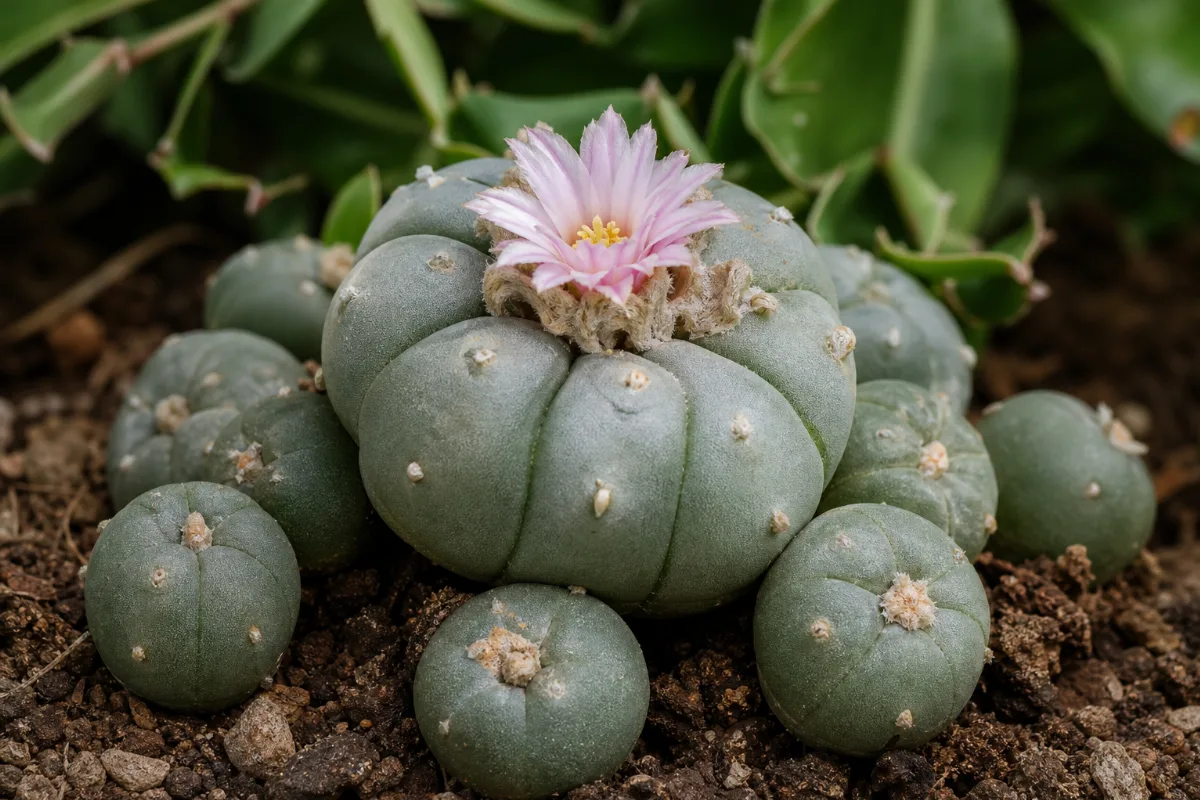
Natural Psychedelics · Compound
Mescaline
2-(3,4,5-trimethoxyphenyl)ethanamine (mescaline), C11H17NO3 · also called Mescaline, 3,4,5-trimethoxyphenethylamine, mescalina (Spanish)
Mescaline is the main psychoactive molecule in the peyote cactus, and is also found in San Pedro cacti. It causes a strong, long-lasting psychedelic state through the serotonin 5-HT2A receptor. Small trials in healthy volunteers show dose-related effects, nausea and higher blood pressure, but no approved medicine was found and its value for any health condition is not known. Mescaline is illegal in many places; peyote has a separate legal exemption in the US for Native American Church ceremonies.
General information, not medical advice. Last substantive update · Not medically reviewed. A named clinician has not signed off on this page. Wording about the Native American Church and other Indigenous traditions has not yet had Indigenous review. How this page is made
About Mescaline
Mescaline is the psychoactive molecule of peyote and San Pedro cacti. Modern trials in healthy volunteers describe its effects and short-term safety. No trial shows that it treats any condition, and it is illegal in many places.
What mescaline is
Mescaline is a small plant molecule (a phenethylamine alkaloid). It is the main psychoactive compound of the peyote cactus and is found in San Pedro cacti (genus Echinopsis). A 2023 review dates evidence of use of such cacti back about 5,700 years.
It works mainly on the serotonin 5-HT2A receptor, like LSD and psilocybin. In a randomized trial, a drug that blocks that receptor reduced the effects.
The compound is not the cactus
Studies in the clinic used purified mescaline hydrochloride. Peyote and San Pedro are different things: they contain other alkaloids, and their mescaline content varies a lot. In 14 San Pedro cacti it ranged from 0.053% to 4.7% of dry weight.
Nothing on this page helps anyone identify or find a cactus. For the plants, see the peyote and San Pedro pages.
What the research shows
In healthy volunteers, mescaline causes strong psychedelic effects that last longer than LSD or psilocybin, with a 3.5 hour half-life in the body. About half of a dose leaves in urine unchanged.
Whether it helps any health condition is not known. A 2026 systematic review found only 10 analysable studies of variable quality, and clinician reviews say controlled trials in patients are lacking.
All psychedelic trials have a blinding problem: people know when they have taken a strong drug, which can inflate results. Read the guide on how to read a psychedelic trial.
Tradition and respect
Peyote is used in religious ceremonies of the Native American Church and by other Indigenous peoples of North America. Mesoamerican cultures including the Olmec, Zapotec, Maya and Aztec used peyote, with archaeological evidence going back over 5,000 years. Some San Pedro cacti are used by South American shamans.
These are living traditions. This page covers the chemical only. It is not evidence for the ceremonies, and it gives no guidance for them. For the plant, its traditions and its conservation, see the peyote pages.
Legal status
Laws differ by country and change. In the United States, mescaline and peyote are both in Schedule I. A separate federal rule says the peyote listing does not apply to the nondrug use of peyote in bona fide religious ceremonies of the Native American Church. It is written about peyote and that Church, not as a general permission. In the UK, mescaline is named in Schedule 2 of the Misuse of Drugs Act 1971. Other countries were not checked.
At a glance
Traditional uses history, not proof
- Peyote has been used in healing and religious ceremonies in Mesoamerica for more than 5,000 years, according to archaeological evidence
- Peyote is used in religious ceremonies of the Native American Church; US federal rule 1307.31 recognises this for the Church
- Some San Pedro cacti are used by South American shamans in traditional medicine
- These are traditions of the whole cactus, not of the purified compound
Studied for research
- Psychedelic effects in healthy volunteers: moderate certainty
- Depression and other mental health conditions: insufficient
- Alcohol and nicotine use: insufficient
- Self-reported meaning and mood (survey): very low
- Long-term peyote users, thinking and mental health: low
- Psychosis-like state as a research model: low
- Rat and lab research: very low
Main compounds
- Mescaline, C11H17NO3 (PubChem CID 4076)
- 3,4,5-Trimethoxyphenylacetic acid (CID 70372): the main breakdown product
- Pellotine, anhalonidine and hordenine: other peyote alkaloids
Common forms
- Purified mescaline hydrochloride in clinical trials
- Natural component of peyote and San Pedro cacti
- Seized material has contained a mescaline analogue
Research links: PubChem: Mescaline · US eCFR: 21 CFR 1308.11 Schedule I · US eCFR: 21 CFR 1307.31 Native American Church · Mescaline: the forgotten psychedelic, 2023 review (PubMed) · Acute dose-dependent effects of mescaline, 2024 trial (PubMed) · Research Library · Genes & Biomarkers Library
What it is and its history
- Name
- Mescaline
- Chemical name
- 2-(3,4,5-trimethoxyphenyl)ethanamine
- Other names
- Mescaline; 3,4,5-Trimethoxyphenethylamine; 3,4,5-Trimethoxybenzeneethanamine; Mescalin; Mezcaline
- Common names
- Mescaline (English); Mescalina (Spanish)
- Formula
- C11H17NO3
- Molecular weight
- 211.26
- CAS number
- 54-04-6
- PubChem ID
- 4076
- Chemical class
- Phenethylamine alkaloid: a small plant molecule related to the body's own dopamine, not a tryptamine like psilocybin
- How the plant makes it
- In peyote, the plant builds mescaline from the amino acid L-tyrosine. A cytochrome P450 makes L-DOPA, a decarboxylase makes dopamine, and four O-methyltransferases add the methoxy groups. The pathway was described as near-complete in 2023.
- Where it is found
- Peyote cactus (Lophophora williamsii) and cacti of the genus Echinopsis ("San Pedro"), according to a 2023 review.; All 14 San Pedro taxa/cultivars tested contained mescaline, from 0.053% to 4.7% of dry weight.
- Related or similar compounds
- Name: 3,4,5-Trimethoxyphenylacetic acid; Note: PubChem CID 70372, C11H14O5. The main breakdown product of mescaline in the body, no psychoactive effect is described in the sources read.; Name: N,N-Diformylmescaline; Note: A mescaline analogue found in two police seizures in Australia; it appeared to turn into mescaline in acid.
Traditional use and history history, not clinical proof
| Tradition or era | Documented use | Source |
|---|---|---|
| Mesoamerica (Olmec, Zapotec, Maya, Aztec) | A 2015 review of archaeological and ethnohistorical evidence says archaeological evidence of peyote use dates back over 5,000 years, and that these cultures used peyote among other substances in healing rituals and religious ceremonies. | Carod-Artal 2015 (PubMed abstract read) |
| Evidence of use, general | A 2023 pharmacology review dates the evidence of mescaline-cactus use back about 5,700 years. | Vamvakopoulou 2023 (abstract read) |
| Native American Church (North America) | US federal rule 1307.31 refers to the nondrug use of peyote in bona fide religious ceremonies of the Native American Church. Origins and history of the Church were not read. Needs Indigenous/cultural review by the owner. | 21 CFR 1307.31 (eCFR) |
| South America (San Pedro) | Some San Pedro (Echinopsis) cacti are used for diagnostic and therapeutic purposes by South American shamans in traditional medicine, and the cacti with the highest mescaline are the ones most associated with documented shamanic use. | Ogunbodede 2010 (abstract read) |
| Early psychiatry (Paris, 1930) | An unpublished case notes mescaline given by two psychiatrists in 1930, four years before their official publication. It was exploratory, and the patient improved after fever therapy, not mescaline. | Hendrickx 2026 (abstract read) |
| Isolation and research history | Mescaline was isolated from peyote more than 120 years ago (Watkins 2023) and is described as the first psychedelic isolated and synthesized (Olejnikova-Ladislavova 2024). Research stalled after prohibition in the early 1970s (Vamvakopoulou 2023). The name of the chemist who first isolated it is NOT verified (not in any abstract read). | Watkins 2023; Olejnikova-Ladislavova 2024; Vamvakopoulou 2023 |
History shows how a substance was used or discovered. It does not show that a product works or is safe today.
What is inside, and how it may work
What it contains and how those compounds act in cells and animals. Laboratory and animal mechanisms are not proven effects in people.
Main compounds
| Compound | Family | Where it is concentrated | Activity studied | Level of evidence |
|---|---|---|---|---|
| Mescaline PubChem 4076 | Phenethylamine | Peyote cactus and San Pedro cactus stem tissue, per the studies read San Pedro: 0.053% to 4.7% of dry weight across 14 taxa; peyote content not read | Serotonin 5-HT2A agonist; main psychoactive compound of peyote 24 15 10 | Human data |
| 3,4,5-Trimethoxyphenylacetic acid PubChem 70372 | Phenylacetic acid (metabolite) | Not applicable (made in the body) About 31% of a dose in urine over 24 to 30 hours | Main breakdown product; no activity described in the sources read 13 3 | Human data |
| Pellotine, anhalonidine, hordenine (other peyote alkaloids) | Peyote alkaloids | Peyote cactus Not read | Named as biologically active; effects not described in the abstract 4 | Review mention only |
| N,N-Diformylmescaline | Mescaline analogue | Not a plant compound; found in police seizures Not applicable | Possible prodrug of mescaline (lab stability study only) 5 | Lab |
Mechanisms, receptors and pathways
| Target or pathway | Gene or receptor | What was found | Level |
|---|---|---|---|
| Serotonin 5-HT2A receptor | HTR2A (5-HT2A) | Mescaline's main psychedelic effects are mediated through 5-HT2A. In a randomized trial the 5-HT2A blocker ketanserin reduced and shortened the effects. Peyote review: 5-HT2A activation leads to calcium release from the endoplasmic reticulum. 10 4 24 | Human data |
| Serotonin 5-HT2C receptor | HTR2C (5-HT2C) | A smaller contribution to behavioural effects in rats. 16 | Animal research |
| Other receptors | 5-HT1A, 5-HT2B, alpha-1A/2A adrenergic, D1/2/3 dopamine | Mescaline also binds these receptors according to the abstracts of a review and a rat study; the role in humans is not established. 24 16 | Lab |
| Noradrenaline release in heart tissue | n/a | Unlike ephedrine and MDMA, mescaline did not increase contraction of isolated mouse or human atrial tissue. 14 | Lab |
Absorption, metabolism and elimination
- Absorption
- Given by mouth, mescaline hydrochloride reached its peak in plasma within about 2 hours in healthy volunteers, with a short lag time. Levels rose in proportion to the amount given. Oral bioavailability is at least 53%.
- Distribution
- Not described in the sources read.
- Metabolism
- Mainly broken down by oxidative deamination to 3,4,5-trimethoxyphenylacetic acid (31% of the dose in urine over 24 to 30 hours). Several minor metabolites exist.
- Elimination
- Plasma half-life about 3.5 hours at all research levels. About 53% of the dose left in urine unchanged over 24 to 30 hours.
- Bioavailability
- At least 53% by mouth, limited by first-pass metabolism (modelling of two phase I trials in 49 healthy participants). Not studied for peyote or San Pedro.
1 moderate certainty2 low certainty3 very low certainty2 not enough evidence
What is Mescaline good for?
What has been studied and how strong the evidence is. The strongest evidence is only that mescaline causes psychedelic effects in healthy volunteers. For every health use, evidence is low, very low or insufficient.
Benefits, one by one
Each card is a research question, not a promise. Tap a goal to filter. Open a card to see the studies, doses and limits.
Psychedelic effects in healthy volunteers (supervised research)
Moderate certaintyIn two small placebo-controlled trials in healthy adults, mescaline produced psychedelic effects that grew with the amount given and lasted much longer than LSD or psilocybin. A drug that blocks the serotonin 5-HT2A receptor reduced them.
3 studiesOral mescaline hydrochloride given once in a research clinic, at seve…
Studies, doses and limits
What the trials found
Two randomized, double-blind, placebo-controlled crossover trials in healthy adults: 16 people in one and 32 in the other. A pooled safety analysis covered 48 people and 96 doses.
Results
In the dose-finding trial, subjective effects increased with the amount given, and the average duration rose from 6.4 to 14 hours across the research levels. Ketanserin reduced and shortened the effects of the highest level. In the comparison trial, mescaline, LSD and psilocybin gave comparable subjective effects on several scales. Mean duration was 11.1 hours for mescaline, 8.2 for LSD and 4.9 for psilocybin. Positive subjective effects were higher than negative ones at every level in the pooled analysis.
Effect sizes as reported
No qualitative difference from LSD or psilocybin was found in the kind of altered state. Mescaline lasts about two to three times longer than psilocybin.
Why this rating
Randomized, double-blind, placebo-controlled and consistent between two trials, but small, short and in healthy screened volunteers. This is evidence for what mescaline does, not for any health benefit.
Form and dose studied
Oral mescaline hydrochloride given once in a research clinic, at several research levels. This is not peyote or San Pedro cactus. Levels are not listed here.
Who was studied
Healthy adults, screened and supervised.
Limits
Healthy volunteers only, small numbers, and the trials were not designed to treat anything. Participants knew they had taken something strong (functional unblinding is likely with psychedelics).
Why researchers looked
Mescaline was the first classic psychedelic to be isolated, but almost no modern controlled research existed. Researchers ran trials to measure what it does and how safe it is in a clinic before anyone tests it in patients.
Traditional use
Mescaline-containing cacti have been used in ceremony and healing by Indigenous peoples for a very long time (peyote by peoples including those of the Native American Church; San Pedro cacti in South America). That is the use of whole cacti inside a tradition. It is not the same as a lab-made or purified compound, and it is not evidence that mescaline works as a medicine.
Proposed mechanism Human data
Mescaline activates the serotonin 5-HT2A receptor. When volunteers also took ketanserin, a 5-HT2A blocker, the effects were reduced and shortened.
A proposed mechanism does not show that the effect happens in people.
This is a description of research, not advice to use mescaline. It is illegal in many places and carries real risks. See the Safety tab.
Depression and other mental health conditions
Not enough evidenceSome older reports and small studies describe better mood or well-being after mescaline or mescaline-containing cacti. No modern controlled trial in patients has tested it, so nobody knows whether it works.
3 studiesMescaline-containing cacti (peyote, San Pedro) and mescaline itself, …
Studies, doses and limits
What the trials found
A 2026 systematic review found 66 studies that met its inclusion criteria, but only 10 were suitable for analysis. A 2026 clinician primer says there is a lack of controlled clinical trials of mescaline in patient groups.
Results
The systematic review reports improvements in depression scales, well-being, nicotine dependence, alcohol use and obsessions in some included studies. The authors say the literature is limited and of highly variable quality, so no firm conclusion can be drawn. A 2023 review describes improved well-being and mental health conditions in naturalistic or religious settings.
Effect sizes as reported
No effect sizes are given in the abstracts read.
Why this rating
Mostly old reports, case series and naturalistic settings of very variable quality. No modern randomized trial in people with a mental health condition was found in the sources read.
Form and dose studied
Mescaline-containing cacti (peyote, San Pedro) and mescaline itself, in a mix of settings. Not comparable across studies.
Who was studied
Mixed: patients and users in the 10 analysable studies.
Limits
Reports are not controlled, often not confirmed by lab testing, and open to expectancy and selection bias. The effects reported may not come from mescaline.
Why researchers looked
Because mescaline works on the same serotonin receptor as psilocybin, which is being tested for depression, researchers ask whether mescaline might act in a similar way.
Traditional use
Mescaline-containing cacti have been used in ceremony and healing by Indigenous peoples for a very long time (peyote by peoples including those of the Native American Church; San Pedro cacti in South America). That is the use of whole cacti inside a tradition. It is not the same as a lab-made or purified compound, and it is not evidence that mescaline works as a medicine.
Proposed mechanism Human data
Activation of 5-HT2A receptors is the proposed route, as for other classic psychedelics. How that could change mood in patients has not been shown for mescaline.
A proposed mechanism does not show that the effect happens in people.
Do not use mescaline to treat depression, anxiety or any other condition. If you have a mental health condition, talk to a doctor about treatments that have been tested.
Alcohol and nicotine use
Not enough evidenceA review notes that mescaline might help people overcome alcohol use, and a systematic review lists lower alcohol use and nicotine dependence among reported effects. This rests on old and uncontrolled reports.
2 studiesPeyote use in ceremony and mescaline in other settings; not comparabl…
Studies, doses and limits
What the trials found
No modern controlled trial was found. The 2026 systematic review lists changes in alcohol use and nicotine dependence among reported effects.
Results
The abstracts read do not give numbers for alcohol or nicotine outcomes.
Effect sizes as reported
No numbers in the abstracts read.
Why this rating
Reports only, from the 10 analysable studies in the systematic review and from older observations summarised in a narrative review.
Form and dose studied
Peyote use in ceremony and mescaline in other settings; not comparable.
Who was studied
Mixed groups, including Native American Church members.
Limits
No controlled trials, unclear what people actually took, and many people also used other support. Ceremonial context matters and cannot be separated from the cactus.
Why researchers looked
Reports from Native American Church members and from early clinical work raised the question of whether mescaline-containing peyote helps people with alcohol problems.
Traditional use
Some Native American Church members describe peyote ceremonies as part of recovery from alcohol use. That is a community and religious practice; it is credited to the people who hold it and is outside what clinical evidence can test. This needs Indigenous/cultural review by the owner.
Proposed mechanism Pharmacological theory
Not established for mescaline in people. Possible links to 5-HT2A signalling are theory only.
A proposed mechanism does not show that the effect happens in people.
Do not use mescaline or peyote to treat alcohol or nicotine problems. Talk to a doctor about treatments that have been tested.
Self-reported spiritual meaning and mood in people who had used mescaline (survey)
Very low certaintyIn an online survey of about 450 English-speaking adults who had used mescaline, most said they used it for spiritual reasons or to feel closer to nature, and many with a mental health condition said it improved afterwards. A survey cannot show that mescaline caused the change.
1 studiesSelf-reported peyote, San Pedro and other mescaline sources. Not an i…
Studies, doses and limits
What the trials found
A web survey of about 452 people. Self-reported experiences, mostly with peyote or San Pedro.
Results
74% used it for spiritual exploration or to connect with nature. Drug craving was reported by 9%. Legal or psychological problems were each reported by about 1%, and none sought medical attention. About half reported a psychiatric condition, and more than 67% of them said it improved after their most memorable experience.
Effect sizes as reported
Percentages are self-reported and not adjusted.
Why this rating
Self-selected online survey, recall bias, no way to check what was taken, and no comparison group.
Form and dose studied
Self-reported peyote, San Pedro and other mescaline sources. Not an isolated compound.
Who was studied
English-speaking adults who chose to answer.
Limits
People who had bad experiences may be missing from the sample. Reports of improvement are not proof of benefit.
Why researchers looked
Because controlled trials are scarce, researchers asked people who had used mescaline what they experienced and why.
Traditional use
Mescaline-containing cacti have been used in ceremony and healing by Indigenous peoples for a very long time (peyote by peoples including those of the Native American Church; San Pedro cacti in South America). That is the use of whole cacti inside a tradition. It is not the same as a lab-made or purified compound, and it is not evidence that mescaline works as a medicine.
Proposed mechanism None
No mechanism tested in a survey.
A proposed mechanism does not show that the effect happens in people.
This is a description of research, not advice to use mescaline. It is illegal in many places and carries real risks. See the Safety tab.
Thinking and mental health in long-term religious peyote users
Low certaintyA study of Navajo adults found no memory, attention or mental health deficits in people who regularly used peyote in Native American Church ceremonies, compared with Navajo adults who used little or no peyote.
1 studiesWhole peyote cactus in Native American Church ceremonies, not isolate…
Studies, doses and limits
What the trials found
One cross-sectional study of 176 Navajo adults aged 18 to 45.
Results
Compared with people using little or no peyote, alcohol or other substances, the peyote group had no significant deficits on a mental health inventory or ten neuropsychological tests. A formerly alcohol-dependent group did show deficits. Lifetime peyote use was not linked to test performance within the peyote group.
Effect sizes as reported
Test scores were not significantly different; no figures given in the abstract.
Why this rating
One observational study of one community. It cannot show cause and effect, and it excludes people who stopped because of problems.
Form and dose studied
Whole peyote cactus in Native American Church ceremonies, not isolated mescaline.
Who was studied
61 Navajo Native American Church members who regularly used peyote, compared with 36 formerly alcohol-dependent and 79 minimal-use Navajo adults.
Limits
The authors say the findings may not generalize to illicit hallucinogen users. Selection effects are possible.
Why researchers looked
Many worry that regular psychedelic use damages thinking. Researchers tested this in a community with a long, regulated religious use.
Traditional use
Peyote is used in religious ceremonies of the Native American Church and by other Indigenous peoples of North America. Findings here describe one community and its ceremonial setting. This needs Indigenous/cultural review by the owner.
Proposed mechanism None
Not tested.
A proposed mechanism does not show that the effect happens in people.
This does not mean peyote or mescaline is safe for everyone. See the Safety tab.
A research tool for studying psychosis-like states
Low certaintyIn 1992, 12 healthy men given mescaline developed a temporary psychosis-like state. Brain scans showed more activity in the front of the brain. This is a study of what mescaline does, not a treatment.
1 studiesOral mescaline given once in a research setting; amount not listed he…
Studies, doses and limits
What the trials found
One 1992 experiment in 12 healthy men.
Results
Mescaline produced an acute psychotic state 3.5 to 4 hours after intake on two rating scales, specific effects in the visual system, lower right-hemisphere function on a face task, and a hyperfrontal SPECT pattern that correlated with psychotic symptoms.
Effect sizes as reported
No numbers in the abstract.
Why this rating
Single small old study, healthy men only.
Form and dose studied
Oral mescaline given once in a research setting; amount not listed here.
Who was studied
12 healthy men.
Limits
Very small, old methods, no placebo group named in the abstract. It shows that mescaline can cause psychosis-like states, which is also a safety point.
Why researchers looked
Researchers have used psychedelics to model aspects of psychosis in healthy volunteers, to learn about conditions such as schizophrenia.
Traditional use
None. This is a laboratory model, not a traditional use.
Proposed mechanism Human data
Brain imaging (SPECT) showed a hyperfrontal pattern correlated with psychotic symptoms, mainly on the right side.
A proposed mechanism does not show that the effect happens in people.
People with psychosis, mania or a family history of them should not use psychedelics. See the Safety tab.
Behaviour and receptors in rats (animal research)
Very low certaintyIn rats, mescaline changed activity and the filtering of sudden sounds, mostly through the 5-HT2A receptor. A review also reports anxiolytic-like and prosocial effects in animals. This is animal research only.
2 studiesMescaline injected under the skin of male Wistar rats.
Studies, doses and limits
What the trials found
None in this entry. See the first entry for human data.
Results
At the highest research level, mescaline caused hyperactivity in rats. Startle-filtering deficits were normalised by a 5-HT2A blocker. A review adds anxiolytic-like effects, more prosocial behaviour and more locomotion in animals.
Effect sizes as reported
p values given in the abstract, but no effect sizes.
Why this rating
Rats only. Amounts per kilogram in rats do not translate to people, and animal anxiety tests do not predict human treatment.
Form and dose studied
Mescaline injected under the skin of male Wistar rats.
Who was studied
Adult male rats.
Limits
One strain, one sex, acute tests only.
Why researchers looked
Animal work helps show which receptors carry mescaline effects, since this is hard to test in people.
Traditional use
None.
Proposed mechanism Animal research
The rat study used receptor blockers: the 5-HT2A blocker corrected the startle-filtering deficits and most blockers reduced the hyperactivity; 5-HT2C played a smaller part.
A proposed mechanism does not show that the effect happens in people.
Do not use animal results to guide use in people.
Heart muscle in the lab (mouse and human tissue)
Very low certaintyUnlike ephedrine and MDMA, mescaline did not increase the force of contraction of mouse or human atrial heart tissue in a lab bath. It tells us nothing about blood pressure in a living person, which does rise in trials.
1 studiesMescaline applied to isolated tissue.
Studies, doses and limits
What the trials found
None in this entry.
Results
Mescaline alone, or with phosphodiesterase inhibitors, did not increase force in mouse left atria or human right atria.
Effect sizes as reported
Not applicable (no effect).
Why this rating
Isolated tissue in a bath. Human atrial tissue came from heart surgery patients.
Form and dose studied
Mescaline applied to isolated tissue.
Who was studied
Mouse atria and human atrial tissue.
Limits
Does not predict heart rhythm or blood pressure in a living person.
Why researchers looked
Phenethylamines such as mescaline can act like stimulants, so researchers checked directly on heart tissue.
Traditional use
None.
Proposed mechanism Lab
Ephedrine, norephedrine and MDMA acted by releasing noradrenaline (indirect sympathomimetic action); mescaline did not do this in the atria.
A proposed mechanism does not show that the effect happens in people.
Blood pressure and heart rate did rise in the human trials; see the Safety tab.
Connections to the rest of health
How Mescaline connects to the rest of our health knowledge graph. Every link says what kind of connection it is. A safety link (for example to the liver) is a warning, not a benefit. A study that merely mentions a topic never creates a benefit link.
Explore every connection: goals, body systems, organs, symptoms, genes
B. Body systems
| Connected to | Kind of connection | Evidence status | Context | Studies |
|---|---|---|---|---|
| Nervous System | Biological association | Moderate certainty | Studied for: Psychedelic effects in healthy volunteers (supervised research) Studied for: Depression and other mental health conditions | 10 12 11 17 24 18 23 7 9 16 |
| Stress Mood | Biological association | Not enough evidence | Studied for: Depression and other mental health conditions Studied for: Alcohol and nicotine use | 17 24 18 9 |
| Cardiovascular System | Biological association | Very low certainty | Studied for: Heart muscle in the lab (mouse and human tissue) | 14 |
C. Body parts and organs
| Connected to | Kind of connection | Evidence status | Context | Studies |
|---|---|---|---|---|
| Heart and blood pressure | Adverse effect or risk | Moderate certainty | Blood pressure and heart rate rose in trials; no data in heart disease. Preparation or compound: Oral mescaline hydrochloride in healthy volunteers |
11 10 26 |
| Brain and mind | Adverse effect or risk | Moderate certainty | Strong altered states; psychosis-like states in a 1992 experiment; flashbacks in 2% of doses. Preparation or compound: Oral mescaline |
9 11 |
| Stomach | Adverse effect or risk | Moderate certainty | Nausea was dose-limiting; vomiting was frequent at the highest research level. Preparation or compound: Oral mescaline |
11 10 |
I. Biomarkers
| Connected to | Kind of connection | Evidence status | Context | Studies |
|---|---|---|---|---|
| Psychedelic experience ratings (self-report scales) | Biological association | Moderate certainty | Measured in trials: raised. A lab change is not the same as a health benefit. | 10 12 |
| How long the acute effects last | Biological association | Moderate certainty | Measured in trials: longer. A lab change is not the same as a health benefit. | 10 12 13 |
| Oxytocin in blood | Biological association | Low certainty | Measured in trials: raised. A lab change is not the same as a health benefit. | 12 |
| Scores on depression scales | Biological association | Not enough evidence | Measured in trials: lowered. A lab change is not the same as a health benefit. | 17 |
| Psychosis rating scale scores (BPRS and Paranoid Depression Scale) | Biological association | Low certainty | Measured in trials: raised. A lab change is not the same as a health benefit. | 9 |
| Frontal brain activity on SPECT scans | Biological association | Low certainty | Measured in trials: raised. A lab change is not the same as a health benefit. | 9 |
| Memory, attention and mental health test scores | Biological association | Low certainty | Measured in trials: no-change. A lab change is not the same as a health benefit. | 7 |
| Rat movement and startle-filtering | Biological association | Very low certainty | Measured in trials: altered. A lab change is not the same as a health benefit. | 16 |
| Force of contraction of heart atrial tissue | Biological association | Very low certainty | Measured in trials: no-change. A lab change is not the same as a health benefit. | 14 |
L. Active compounds
| Connected to | Kind of connection | Evidence status | Context | Studies |
|---|---|---|---|---|
| Mescaline | Biological association | Human | Serotonin 5-HT2A agonist; main psychoactive compound of peyote Preparation or compound: Peyote cactus and San Pedro cactus stem tissue, per the studies read |
24 15 10 |
| 3,4,5-Trimethoxyphenylacetic acid | Biological association | Human | Main breakdown product; no activity described in the sources read Preparation or compound: Not applicable (made in the body) |
13 3 |
| Pellotine, anhalonidine, hordenine (other peyote alkaloids) | Biological association | Review mention only | Named as biologically active; effects not described in the abstract Preparation or compound: Peyote cactus |
4 |
| N,N-Diformylmescaline | Biological association | Lab | Possible prodrug of mescaline (lab stability study only) Preparation or compound: Not a plant compound; found in police seizures |
5 |
Each connection is stored with the ingredient, the connected record, the kind of connection, the evidence status, the supporting studies, the preparation or compound involved, and a review date (last reviewed October 25, 2026).
Evidence at a glance: what changed in 7 lab markers
Tap a number to show only those markers. Counts are markers, not people.
The evidence
The research centre for Mescaline. Every record here was checked against PubMed or the publisher's page; we never list a study we have not verified.
Evidence by outcome
Bars show how many studies we found for each outcome, not how well it works. People are added up across trials only (reviews are not added, to avoid double counting).
How we rate evidence
High certainty
Several well-run trials or reviews agree; further research is unlikely to change the picture much.
Moderate certainty
Good trials point the same way, but some doubt remains.
Low certainty
Small, short or inconsistent trials. The finding could change with better research.
Very low certainty
Very little or very weak human data. Treat as a possibility only.
Mixed findings
Trials or reviews disagree with each other.
Not enough evidence
Not enough human research to say either way.
Evidence against
Good research found no benefit, or found harm.
We take the reviewers' own risk-of-bias and GRADE statements where they exist, and otherwise judge from study size, design, consistency, directness and whether a product matches what is sold. Many publications do not make evidence high. Method note: We searched PubMed and read the abstracts of every study listed, read the US federal rules and the UK schedule, and read PubChem for chemical identity. We say which sources we could not read.
Study library: every study we checked 26
| Study | Design | People | Product, dose, length | Result |
|---|---|---|---|---|
| Albert 2026 Psychedelic exposure in pregnancy: a scoping review to inform perinatal drug safety and clinical counseling. Ther Adv Drug Saf · PMID 41930230 · DOI |
Scoping review |
Prenatal exposure to MDMA, psilocybin, LSD, mescaline/peyote and DMT/ayahuasca (23 human sources, 1968-2020) | Mescaline/peyote (1 source) and other psychedelics Various Varied Varied · vs None |
Twenty-three primary human sources met inclusion: MDMA 11, LSD 11, mescaline/peyote 1. None were found for psilocybin or DMT/ayahuasca. The evidence is mostly small cohorts and case reports with self-reported exposure and other-drug confounding. The authors say it is not possible to reliably estimate risks of miscarriage, birth defects or child development, and that absence of data should not be read as evidence of safety. Only one eligible human source for mescaline/peyote; risk cannot be estimated Methods, limits and fundingOutcomes: Maternal, obstetric, neonatal, congenital anomaly and child outcomes Limitations: Scoping review without risk-of-bias assessment. Funding and conflicts: Not stated in the abstract. Read: abstract |
| Carod-Artal 2015 Hallucinogenic drugs in pre-Columbian Mesoamerican cultures. Neurologia · PMID 21893367 · DOI |
Historical review human (history) |
Archaeological and ethnohistorical record of Mesoamerica | Peyote and other psychoactive plants and fungi Not applicable Not applicable Not applicable · vs None |
Hallucinogenic cactus, plants and mushrooms were used in healing rituals and religious ceremonies in Mesoamerica. The Olmec, Zapotec, Maya and Aztec used peyote, among other substances. Archaeological evidence of peyote use dates back over 5,000 years. Local shamans and healers still use such substances in ritual ceremonies. Peyote use in Mesoamerica is documented for more than 5,000 years Methods, limits and fundingOutcomes: History of use Limitations: Historical review. Does not cover North American peoples of the Native American Church. Funding and conflicts: Not stated in the abstract. Read: abstract |
| Dinis-Oliveira 2019 Pharmacokinetic and Pharmacodynamic Aspects of Peyote and Mescaline: Clinical and Forensic Repercussions. Curr Mol Pharmacol · PMID 30318013 · DOI |
Narrative review human (review) |
Review of pharmacokinetics and pharmacodynamics of mescaline and peyote | Mescaline and peyote Isolated compound and cactus Not applicable (review) Not applicable · vs None |
Effects are mainly attributed to serotonin 5-HT2A-C receptors and are similar to LSD and psilocybin (euphoria, hallucinations, depersonalization, psychoses). As a phenethylamine, signs and symptoms are also consistent with a sympathomimetic effect. Mescaline is mainly metabolized to trimethoxyphenylacetic acid by oxidative deamination, with several minor metabolites. Most reports had no confirmation of exposure because toxicology testing is not widely available. Addiction and dependence are practically absent and most intoxications appear mild and unlikely to be life-threatening. Review: dependence practically absent, most poisonings mild, but exposure mostly unconfirmed Methods, limits and fundingOutcomes: Metabolism, mechanism, clinical and forensic aspects Limitations: Narrative review. Most underlying reports did not confirm what was taken. The abstract gives no rates. Funding and conflicts: Not stated in the abstract. Read: abstract |
| Doesburg-van Kleffens 2023 An Overview on the Hallucinogenic Peyote and Its Alkaloid Mescaline: The Importance of Context, Ceremony and Culture. Molecules · PMID 38138432 · DOI |
Narrative review human, lab (review) |
Review of peyote and mescaline | Peyote cactus and mescaline Peyote cactus Not applicable Not applicable · vs None |
Peyote contains several active alkaloids, such as pellotine, anhalonidine, hordenine and mescaline. Mescaline produces its psychoactive effects by activating the 5-HT2A receptor, leading to release of calcium from the endoplasmic reticulum. The outcome of taking a psychedelic depends strongly on mindset and context, including ceremony and culture. Peyote holds several alkaloids; context shapes the experience Methods, limits and fundingOutcomes: Metabolism, mechanism, clinical applications and context Limitations: Narrative review without numbers in the abstract. Funding and conflicts: Not stated in the abstract. Read: abstract |
| Gallagher 2023 N,N-Diformylmescaline: A novel analogue of mescaline detected in Queensland. Drug Test Anal · PMID 36245421 · DOI |
Forensic chemistry n/a |
Two unrelated seizures in Australia | N,N-diformylmescaline (a mescaline analogue) Seized material Not applicable Not applicable · vs None |
N,N-diformylmescaline was detected in two unrelated seizures in Australia. It was unstable under acidic and basic conditions and broke down to N-formylmescaline, and on longer exposure to acid to mescaline, which suggests it may be a prodrug of mescaline. A mescaline analogue was found in seized material, so products sold under the name may not be what they seem Methods, limits and fundingOutcomes: Identification and stability of the compound Limitations: Chemistry report; nothing about effects or harm in people. Funding and conflicts: Not stated in the abstract. Read: abstract |
| Halman 2024 Drug-drug interactions involving classic psychedelics: A systematic review. J Psychopharmacol · PMID 37982394 · DOI |
Systematic review |
Humans given a classic psychedelic with another drug (52 studies from 36 reports) | Classic psychedelics (LSD, psilocybin, mescaline, DMT, 5-MeO-DMT, ayahuasca) Various Varied Varied · vs None |
7,102 records screened; 52 studies from 36 reports identified (32 LSD, 10 psilocybin, 4 mescaline, 3 DMT, 2 5-MeO-DMT, 1 ayahuasca). Combined with other drugs, effects were sometimes attenuated, sometimes potentiated and sometimes unchanged. Apart from a few case reports, no serious adverse drug events were described. Only 4 human mescaline interaction studies exist; the abstract does not say what the mescaline studies found Methods, limits and fundingOutcomes: Interaction outcomes between psychedelics and other drugs Limitations: The abstract does not separate results by psychedelic, so mescaline-specific findings were not read. Funding and conflicts: Not stated in the abstract. Read: abstract |
| Halpern 2005 Psychological and cognitive effects of long-term peyote use among Native Americans. Biol Psychiatry · PMID 16271313 · DOI |
Observational comparison |
176 Navajo adults aged 18 to 45: 61 Native American Church members who regularly used peyote, 36 formerly alcohol-dependent and sober, 79 with minimal substance use |
Peyote (cactus) used in Native American Church ceremonies Peyote cactus Regular religious use; amounts not given in the abstract Lifetime use compared · vs Navajo adults with minimal use; former alcohol-dependent group |
Compared with Navajos with minimal substance use, the peyote group showed no significant deficits on the mental health inventory or any neuropsychological measure, whereas the formerly alcohol-dependent group showed significant deficits (p < .05) on every scale of the inventory and on two neuropsychological measures. Within the peyote group, lifetime peyote use was not significantly associated with test performance. The authors say the findings may not generalize to illicit hallucinogen users. No psychological or cognitive deficits found in regular religious peyote users Methods, limits and fundingOutcomes: Rand Mental Health Inventory and ten neuropsychological tests of memory and attention/executive function Limitations: Cross-sectional, not randomized; cannot show that peyote caused any benefit. Applies to ceremonial use in one community, not to isolated mescaline or illicit use. Funding and conflicts: Not stated in the abstract. Read: abstract |
| Hendrickx 2026 The first applications of mescaline in psychiatry: The case of Madame Louise Francoise R. and its contemporary relevance. Neuropharmacology · PMID 41101522 · DOI |
Historical case human (history) |
1 One patient treated in Paris in 1930 |
Mescaline by injection under the skin Isolated compound Early experimental use (amounts not given here) Single experiment · vs None |
The original notes describe a patient given mescaline in 1930 by Henri Claude and Henri Ey at Sainte-Anne, four years before their official publication. The intent was exploratory rather than curative. The clinical improvement that followed came after fever therapy rather than mescaline. The authors say early psychedelic trials were often diagnostic, exploratory and ethically fragile. Early psychiatric use of mescaline was exploratory; the one case improved after another treatment Methods, limits and fundingOutcomes: Historical clinical notes Limitations: One historical case. Funding and conflicts: Not stated in the abstract. Read: abstract |
| Hermle 1992 Mescaline-induced psychopathological, neuropsychological, and neurometabolic effects in normal subjects: experimental psychosis as a tool for psychiatric research. Biol Psychiatry · PMID 1467389 · DOI |
Experimental human |
12 12 healthy male volunteers |
Oral mescaline Not stated in the abstract. Single research administration (level not listed on this page) Single session · vs Intraindividual comparison |
Mescaline produced an acute psychotic state 3.5 to 4 hours after intake on the Brief Psychiatric Rating Scale and the Paranoid Depression Scale. A questionnaire showed specific effects in the visual system. A face/nonface task showed lower right-hemisphere function. SPECT imaging showed a hyperfrontal pattern, stronger in the right hemisphere, that correlated with psychotic symptoms. Acute psychosis-like state in healthy men; a research model, not a treatment Methods, limits and fundingOutcomes: Psychiatric rating scales (BPRS, Paranoid Depression Scale), altered-states questionnaire, face task, SPECT brain imaging Limitations: Twelve men only, no placebo group named in the abstract, 1992 methods. Shows what mescaline can do, not a benefit. Funding and conflicts: Not stated in the abstract. Read: abstract |
| Klaiber 2024 Acute dose-dependent effects of mescaline in a double-blind placebo-controlled study in healthy subjects. Transl Psychiatry · PMID 39349427 · DOI |
Randomized controlled trial |
16 16 healthy adults (8 women) |
Oral mescaline hydrochloride, and mescaline plus the 5-HT2A blocker ketanserin Not stated in the abstract. Single oral doses at several research levels (levels not listed on this page) Single sessions, with sampling up to 30 hours · vs Placebo; ketanserin co-administration |
Mescaline caused dose-dependent subjective effects above the lowest level tested. Blood pressure rose above the lowest level, with no further difference between mid and high levels; heart rate rose dose-dependently. Plasma levels peaked about 2 hours after the dose and the half-life was about 3.5 hours. Average duration of subjective effects increased from 6.4 to 14 hours across the levels. Nausea and vomiting were frequent at the highest level. Ketanserin reduced and shortened the effects of the highest level, which suggests the effects are mainly caused by 5-HT2A receptors. Dose-dependent psychedelic effects, blood pressure and heart rate increases, nausea at high levels, 5-HT2A-mediated Methods, limits and fundingOutcomes: Subjective, autonomic and adverse effects; pharmacokinetics Limitations: Only 16 healthy adults in a research clinic. Not a patient trial. No ceiling in subjective effect was found, but tolerability fell at the highest levels. Funding and conflicts: Not stated in the abstract. Read: abstract |
| Klaiber 2024 Safety pharmacology of acute mescaline administration in healthy participants. Br J Clin Pharmacol · PMID 39587436 · DOI |
Pooled analysis of rcts |
48 48 healthy participants, 96 mescaline administrations in two double-blind placebo-controlled studies |
Oral mescaline hydrochloride Not stated in the abstract. Single oral administrations at six research levels (levels not listed on this page) Single sessions; liver, kidney, blood counts and flashbacks checked at end of studies · vs Placebo |
Positive subjective effects increased dose-dependently and were higher than negative effects at all levels. Systolic blood pressure stayed below 180 mmHg in all participants. Of all administrations, diastolic blood pressure above 100 mmHg occurred in 6%, heart rate above 100 beats/min in 3% and body temperature above 38 degrees C in 5%. The number of acute adverse effects rose from 51 at the lowest level to 180 at the highest. Nausea was dose-limiting. Kidney and liver function and blood cell counts stayed normal. Flashbacks were reported after 2% of administrations. The authors conclude single doses were safe in a controlled clinical setting for acute psychological and physical harm in healthy participants. Mild-to-moderate cardiovascular changes, nausea dose-limiting, normal liver and kidney tests in healthy people in a clinic Methods, limits and fundingOutcomes: Acute and subacute adverse effects, blood pressure, heart rate, temperature, liver and kidney function, blood counts, flashbacks Limitations: Healthy, screened volunteers under supervision. Says nothing about people with heart, mental health or other conditions, or about cactus products. Funding and conflicts: Not stated in the abstract. Read: abstract |
| Ley 2023 Comparative acute effects of mescaline, lysergic acid diethylamide, and psilocybin in a randomized, double-blind, placebo-controlled cross-over study in healthy participants. Neuropsychopharmacology · PMID 37231080 · DOI |
Randomized controlled trial |
32 32 healthy participants |
Oral mescaline, LSD and psilocybin at moderate-to-high research levels Not stated in the abstract. Moderate-to-high single oral research levels of each drug (not listed here) Single sessions · vs Placebo and each other |
Subjective effects of mescaline, LSD and psilocybin at the higher mescaline level were comparable across several scales. Autonomic effects were moderate. Tolerability was comparable, with mescaline causing slightly more subacute adverse effects (12 to 24 hours after) than LSD or psilocybin. Mean effect duration was 11.1 hours for mescaline, 8.2 for LSD and 4.9 for psilocybin. Plasma half-life of mescaline and LSD was about 3.5 hours. Mescaline and LSD, but not psilocybin, raised circulating oxytocin; none changed plasma BDNF. The authors found no evidence of qualitative differences in the altered states. Similar subjective experience to LSD and psilocybin; mescaline lasts longest (mean 11.1 hours) Methods, limits and fundingOutcomes: Acute subjective and autonomic effects, tolerability, pharmacokinetics, oxytocin, BDNF Limitations: Healthy volunteers, small crossover study in a research clinic. Registered NCT04227756. Funding and conflicts: Not stated in the abstract. Registration: NCT04227756 Read: abstract |
| Mueller 2025 Pharmacokinetics, Pharmacodynamics, and Urinary Recovery of Oral Mescaline Hydrochloride in Healthy Participants. Clin Pharmacokinet · PMID 40658345 · DOI |
Pooled analysis of trials |
49 49 healthy participants, 105 single administrations from two phase I trials |
Oral mescaline hydrochloride Not stated in the abstract. Single oral administrations across a research range (levels not listed on this page) 24 to 30 hours of urine collection · vs None (modelling) |
Total exposure and peak concentration increased in proportion to dose; the peak was reached within about 2 hours and the half-life was 3.5 hours. Effects began at about 1 hour. Predicted effect intensity and duration rose with dose, from 13% and 2.8 hours at the lowest level to 89% and 15 hours at the highest. Over 24 to 30 hours, 53% of the dose was excreted unchanged in urine and 31% as the main metabolite 3,4,5-trimethoxyphenylacetic acid. The authors infer an oral bioavailability of at least 53%, limited by first-pass metabolism. Half-life 3.5 hours; effects last from about 3 up to 15 hours depending on level; 53% leaves unchanged in urine Methods, limits and fundingOutcomes: Plasma levels, effect modelling, urinary recovery Limitations: Healthy volunteers; modelling of data from two trials (NCT04227756, NCT04849013). Not tested in patients or with cactus. Funding and conflicts: Not stated in the abstract. Registration: NCT04227756; NCT04849013 Read: abstract |
| Neumann 2023 Cardiac effects of ephedrine, norephedrine, mescaline, and 3,4-methylenedioxymethamphetamine (MDMA) in mouse and human atrial preparations. Naunyn Schmiedebergs Arch Pharmacol · PMID 36319858 · DOI |
Lab study mouse, human tissue |
Isolated mouse atria and human atrial tissue obtained during cardiac surgery | Mescaline applied to isolated heart tissue Isolated compound Concentration series in the lab Minutes to hours in a tissue bath · vs Ephedrine, norephedrine, MDMA, isoprenaline |
Ephedrine, norephedrine and MDMA increased force of contraction in mouse and human atrial tissue, with an indirect sympathomimetic action. Mescaline alone, or with phosphodiesterase inhibitors, did not increase force in mouse left atria or human right atria. Mescaline did not raise contraction force in isolated human atrial tissue Methods, limits and fundingOutcomes: Force of contraction and beating rate Limitations: Isolated tissue in a bath. Says nothing about blood pressure or heart rhythm in a living person. Funding and conflicts: Not stated in the abstract. Read: abstract |
| Ogunbodede 2010 New mescaline concentrations from 14 taxa/cultivars of Echinopsis spp. (Cactaceae) ("San Pedro") and their relevance to shamanic practice. J Ethnopharmacol · PMID 20637277 · DOI |
Lab analysis plant |
Stem tissue of 14 San Pedro cactus taxa/cultivars | Mescaline in San Pedro cactus stem tissue Cortical stem chlorenchyma Not applicable Not applicable · vs None |
All 14 taxa/cultivars contained mescaline. Concentrations spanned two orders of magnitude, from 0.053% to 4.7% by dry weight. The plants with the highest concentrations, particularly Echinopsis pachanoi from Peru, were the ones most associated with documented shamanic use. Mescaline content varies about 90-fold between San Pedro cacti Methods, limits and fundingOutcomes: Mescaline concentration by HPLC Limitations: Plant chemistry only; no information about effects in people. Relation to shamanic use is an association. Funding and conflicts: Not stated in the abstract. Read: abstract |
| Olejnikova-Ladislavova 2024 Mescaline-induced behavioral alterations are mediated by 5-HT2A and 5-HT2C receptors in rats. Pharmacol Biochem Behav · PMID 39547368 · DOI |
Animal research rat |
Adult male Wistar rats | Mescaline given under the skin Isolated compound Three dose levels in rats (levels not listed here) Acute tests · vs Selective receptor blockers |
The highest mescaline level caused hyperactivity, which most receptor blockers reversed. The startle-filtering deficits were selectively normalized by the 5-HT2A blocker, and a 5-HT2C blocker partly reversed a small deficit at lower levels. The authors conclude mescaline-induced behaviour changes are mainly mediated by the 5-HT2A receptor, with less contribution from 5-HT2C. In rats, 5-HT2A is the main route for mescaline behaviour changes Methods, limits and fundingOutcomes: Movement in an open field; startle-filtering (prepulse inhibition) Limitations: Rats only; the doses per kilogram are not comparable to human use. Funding and conflicts: Not stated in the abstract. Read: abstract |
| Shaw 2026 The Ethnopharmacological Use of Mescaline for Psychiatric Disorders: A Systematic Review. Int J Mol Sci · PMID 41977267 · DOI |
Systematic review |
Patients and users in studies of mescaline or mescaline-containing cacti (peyote, San Pedro) across psychiatric conditions | Mescaline and mescaline-containing cacti (peyote, San Pedro) Cactus and isolated compound Varied by study Varied by study · vs Varied by study |
Of 2,770 references, 66 met inclusion criteria and only 10 were suitable for analysis. Studies reported improvements in depression scales, well-being, nicotine dependence, alcohol use and obsessions. A Bayesian analysis found hypertension, headache, nausea and vomiting were frequently reported. The authors say the literature is limited and of highly variable quality, so no firm conclusions can be drawn, and that more research is needed on the safety profile. Possible improvements reported in a handful of studies; quality highly variable; no firm conclusions Methods, limits and fundingOutcomes: Depression scales, well-being, nicotine dependence, alcohol use, obsessions; frequency of somatic effects Limitations: Only 10 of 66 included studies were analysable; study types, products and settings differ. The abstract does not name the studies or give effect sizes. Funding and conflicts: Not stated in the abstract. Read: abstract |
| Tabaac 2026 Psychedelic Therapy: A Primer for Primary Care Clinicians-Mescaline. Am J Ther · PMID 42299720 · DOI |
Narrative review human (review) |
Clinician review | Mescaline Not applicable Not applicable Not applicable · vs None |
The authors say there is a lack of controlled clinical trials of mescaline in patient populations and that most modern safety data come from healthy volunteers, so safety in people with cardiovascular, metabolic or psychiatric conditions is unclear. Psychological risks, the long duration of action and long-term safety in therapy are uncertain. Randomized placebo-controlled studies in healthy participants show dose-dependent effects with moderate, transient autonomic stimulation and no serious medical complications under controlled conditions. No controlled trials in patients; healthy-volunteer safety looks favourable under supervision Methods, limits and fundingOutcomes: Evidence and safety summary Limitations: Review. No numbers given in the abstract. Funding and conflicts: Not stated in the abstract. Read: abstract |
| UK Parliament / The National Archives 2026 UK Misuse of Drugs Act 1971, Schedule 2 (legislation.gov.uk) legislation.gov.uk, read 2026-10-25 · Source |
Authoritative guidance n/a |
n/a | n/a n/a n/a n/a · vs n/a |
Mescaline is named in the list of controlled drugs in Schedule 2 of the Act. The Schedule also covers compounds structurally derived from mescaline by certain substitutions. Mescaline is named in the list of controlled drugs in Schedule 2 of the Act. The Schedule also covers compounds structurally derived from mescaline by certain substitutions. Methods, limits and fundingOutcomes: UK legal listing Limitations: The class heading and the legal effects of the listing were not read; only the listing was confirmed. Not legal advice. Funding and conflicts: n/a Read: full-text |
| US Drug Enforcement Administration via eCFR 2026 US eCFR: 21 CFR 1308.11 Schedule I (text version dated 2026-10-01) Electronic Code of Federal Regulations, read 2026-10-25 · Source |
Authoritative guidance n/a |
n/a | n/a n/a n/a n/a · vs n/a |
Schedule I hallucinogenic substances list (24) Mescaline, drug code 7381, and (26) Peyote, drug code 7415, meaning all parts of the plant presently classified botanically as Lophophora williamsii. Schedule I hallucinogenic substances list (24) Mescaline, drug code 7381, and (26) Peyote, drug code 7415, meaning all parts of the plant presently classified botanically as Lophophora williamsii. Methods, limits and fundingOutcomes: US legal listing Limitations: US federal rule only; state and other countries differ. Not legal advice. Funding and conflicts: n/a Read: full-text |
| US Drug Enforcement Administration via eCFR 2026 US eCFR: 21 CFR 1307.31 Native American Church Electronic Code of Federal Regulations, read 2026-10-25 · Source |
Authoritative guidance n/a |
n/a | n/a n/a n/a n/a · vs n/a |
The listing of peyote as a controlled substance in Schedule I does not apply to the nondrug use of peyote in bona fide religious ceremonies of the Native American Church, and members so using peyote are exempt from registration. Anyone who manufactures peyote for, or distributes it to, the Native American Church must register annually and comply with other requirements of law. The listing of peyote as a controlled substance in Schedule I does not apply to the nondrug use of peyote in bona fide religious ceremonies of the Native American Church, and members so using peyote are exempt from registration. Anyone who manufactures peyote for, or distributes it to, the Native American Church must register annually and comply with other requirements of law. Methods, limits and fundingOutcomes: US religious exemption Limitations: The rule is about peyote and the Native American Church. It is not a general permission for mescaline or other cacti. Not legal advice. Funding and conflicts: n/a Read: full-text |
| US National Library of Medicine (PubChem) 2026 PubChem: Mescaline (CID 4076) and 3,4,5-trimethoxyphenylacetic acid (CID 70372) PubChem REST API (retrieved 2026-10-25) · Source |
Authoritative guidance n/a |
n/a | n/a n/a n/a n/a · vs n/a |
CID 4076: Mescaline, C11H17NO3, molecular weight 211.26, IUPAC name 2-(3,4,5-trimethoxyphenyl)ethanamine, InChIKey RHCSKNNOAZULRK-UHFFFAOYSA-N, CAS 54-04-6 in the synonym list. CID 70372: 3,4,5-trimethoxyphenylacetic acid, C11H14O5, molecular weight 226.23. CID 4076: Mescaline, C11H17NO3, molecular weight 211.26, IUPAC name 2-(3,4,5-trimethoxyphenyl)ethanamine, InChIKey RHCSKNNOAZULRK-UHFFFAOYSA-N, CAS 54-04-6 in the synonym list. CID 70372: 3,4,5-trimethoxyphenylacetic acid, C11H14O5, molecular weight 226.23. Methods, limits and fundingOutcomes: Chemical identity Limitations: Database records identify the molecules; they say nothing about effects. Funding and conflicts: n/a Read: full-text |
| Uthaug 2022 The epidemiology of mescaline use: Pattern of use, motivations for consumption, and perceived consequences, benefits, and acute and enduring subjective effects. J Psychopharmacol · PMID 33949246 · DOI |
Survey |
452 About 452 English-speaking adults who had used mescaline |
Peyote, San Pedro and other mescaline sources (self-reported) Cactus products and others Self-reported; not collected here Retrospective · vs None |
Most respondents used mescaline infrequently (once a year or less), for spiritual exploration or to connect with nature (74%). Drug craving was reported by 9%; legal or psychological problems each by about 1%; none sought medical attention. Mystical-type effects were rated moderate, ego dissolution and insight slight, and challenging effects very slight. About half reported a psychiatric condition and more than 67% of them reported improvement after their most memorable experience. Most had used peyote or San Pedro. Self-reported spiritual benefit, low reported problems, and perceived mental health improvement Methods, limits and fundingOutcomes: Patterns of use, motivations, perceived benefits and harms Limitations: Self-selected online survey, recall bias and no way to check what people took. Cannot show that mescaline caused any improvement. Funding and conflicts: Not stated in the abstract. Read: abstract |
| Vamvakopoulou 2023 Mescaline: The forgotten psychedelic. Neuropharmacology · PMID 36252614 · DOI |
Narrative review human, rat, mouse (review) |
Review of animal and human research on mescaline | Mescaline (mainly from peyote and Echinopsis cacti) Isolated compound and cactus use Not applicable (review) Not applicable · vs None |
Mescaline is a serotonin 5-HT2A/2C receptor agonist; its main hallucinogenic effects are mediated by 5-HT2A. It also binds alpha-1A/2A noradrenaline and D1/2/3 dopamine receptors. In animals it has anxiolytic-like effects and increases prosocial behaviour. In humans in a naturalistic or religious setting it can cause euphoria, hallucinations, improvements in well-being and mental health conditions, and psychotomimetic effects. The authors say it appears safe, with most intoxications mild and easily treatable, and that improved well-being and an ability to overcome alcoholism make it potentially beneficial in clinical settings. Narrative review: mixed mechanisms, animal results and mostly old or naturalistic human reports Methods, limits and fundingOutcomes: Pharmacology and behavioural effects of mescaline Limitations: Narrative review, not systematic; the human findings come largely from naturalistic and religious settings, not controlled trials. The abstract gives no numbers. Funding and conflicts: Not stated in the abstract. Read: abstract |
| Watkins 2023 Elucidation of the mescaline biosynthetic pathway in peyote (Lophophora williamsii). Plant J · PMID 37675639 · DOI |
Lab biochemistry plant |
Peyote gene discovery, recombinant enzymes and engineered yeast | Mescaline biosynthesis in peyote Not applicable Not applicable Not applicable · vs None |
The authors describe a near-complete route from L-tyrosine to mescaline in peyote: a cytochrome P450 that makes L-DOPA, a decarboxylase that makes dopamine, and four substrate-specific O-methyltransferases. Mescaline was isolated from peyote over 120 years ago, but the pathway had not been known until this work. Peyote makes mescaline from the amino acid tyrosine through dopamine Methods, limits and fundingOutcomes: Enzymes that make mescaline Limitations: Plant biochemistry; says nothing about effects in people. Funding and conflicts: Not stated in the abstract. Read: abstract |
| Wsół 2023 Cardiovascular safety of psychedelic medicine: current status and future directions. Pharmacol Rep · PMID 37874530 · DOI |
Narrative review human, animal (review) |
Review of experimental and human data on psilocybin, LSD, DMT, ayahuasca and mescaline | Classic psychedelics including mescaline Various Not applicable (review) Not applicable · vs None |
Psychedelics are generally considered physiologically safe with low toxicity. Their serotonin-receptor activity could in theory cause cardiotoxicity (5-HT2A/2B, 5-HT4), affect platelet aggregation and be proarrhythmic, and they have significant sympathomimetic effects. Experimental studies are inconsistent. Clinical trials point to relative cardiovascular safety in healthy volunteers, but data are insufficient for microdosing and there is a lack of data in people with cardiovascular disease. Relative cardiovascular safety in healthy volunteers; no data in people with heart disease Methods, limits and fundingOutcomes: Cardiovascular safety Limitations: Narrative review covering several drugs; mescaline-specific numbers are not in the abstract. Funding and conflicts: Not stated in the abstract. Read: abstract |
What we do not know yet
- What the evidence supports: strong psychedelic effects in healthy volunteers; everything else is low, very low or insufficient.
- No modern randomized trial of mescaline in patients with any condition.
- No safety data for people with heart, blood pressure or mental health conditions, or for children, teens and older adults.
- Almost nothing is known about the cactus products compared with purified mescaline.
- Interactions with medicines are barely studied: only 4 human studies.
- The UN 1971 Convention listing and laws outside the US and UK were not checked.
How new research is added
New studies are found by a saved PubMed search and placed in a review queue. A person reads each one before it changes any evidence rating or safety wording. New publications can change what this page says.
Lab markers
What changed in blood or saliva tests during trials. A changed number is not the same as feeling or being healthier, and we give no "normal ranges".
Other 9
Psychedelic experience ratings (self-report scales)
Raised in trials
Questionnaires and visual scales on which people rate how strong an altered state of consciousness feels.
Moderate certaintyResults and what it means
Why it was measured
They are the main measure of what a psychedelic does in a trial.
Statistical vs. clinical meaning
Two small randomized trials agree.
Safety implication
Strong altered states are the reason supervision is needed.
| Study | Result | People | Product |
|---|---|---|---|
| 10 | Subjective effects rose with the amount given and were reduced by a 5-HT2A blocker. | 16 healthy adults | Oral mescaline at several research levels, and with ketanserin |
| 12 | Subjective effects of mescaline were comparable to LSD and psilocybin on several scales. | 32 healthy adults | Oral mescaline, LSD, psilocybin, placebo |
How long the acute effects last
Longer in trials
Hours from onset until the altered state has gone, in a controlled clinic.
Moderate certaintyResults and what it means
Why it was measured
Length matters for supervision and for safety, for example how long judgement and driving are affected.
Statistical vs. clinical meaning
Consistent across three analyses of the same group of trials.
Safety implication
A long effect means a long period of impairment.
| Study | Result | People | Product |
|---|---|---|---|
| 10 | Average duration of subjective effects rose from 6.4 to 14 hours across the research levels. | 16 healthy adults | Oral mescaline |
| 12 | Mean duration: mescaline 11.1 hours, LSD 8.2 hours, psilocybin 4.9 hours. | 32 healthy adults | Oral mescaline, LSD, psilocybin |
| 13 | Modelled effect duration rose from 2.8 hours to 15 hours from the lowest to the highest research level. | 49 healthy adults | Oral mescaline hydrochloride |
Oxytocin in blood
Raised in trials
A hormone linked to bonding and social behaviour.
Low certaintyResults and what it means
Why it was measured
Researchers asked whether mescaline changes social-bonding chemistry, as MDMA does.
Statistical vs. clinical meaning
One trial; the meaning of a rise in blood oxytocin is not known.
Safety implication
No safety implication stated in the abstract.
| Study | Result | People | Product |
|---|---|---|---|
| 12 | Mescaline and LSD, but not psilocybin, raised circulating oxytocin. None changed BDNF. | 32 healthy adults | Oral mescaline, LSD, psilocybin, placebo |
Scores on depression scales
Lowered in trials
Questionnaires that rate low mood.
Not enough evidenceResults and what it means
Why it was measured
They are the usual outcome in antidepressant research.
Statistical vs. clinical meaning
No numbers or study names in the abstract; mostly old and uncontrolled reports.
Safety implication
Cannot guide care.
| Study | Result | People | Product |
|---|---|---|---|
| 17 | Some included studies reported improvements in depression scales; the quality of the literature was highly variable. | Patients and users in 10 analysable studies | Mescaline or mescaline-containing cacti, various settings |
Psychosis rating scale scores (BPRS and Paranoid Depression Scale)
Raised in trials
Clinician and self-rated scales that measure symptoms such as paranoia and unusual thinking.
Low certaintyResults and what it means
Why it was measured
They measure how far a drug produces psychosis-like symptoms.
Statistical vs. clinical meaning
Single old experiment.
Safety implication
The rise shows a psychosis risk.
| Study | Result | People | Product |
|---|---|---|---|
| 9 | Mescaline produced an acute psychotic state 3.5 to 4 hours after intake. | 12 healthy men | Oral mescaline, once |
Frontal brain activity on SPECT scans
Raised in trials
A scan that shows blood flow, a rough sign of brain activity.
Low certaintyResults and what it means
Why it was measured
It shows which brain areas the drug changes.
Statistical vs. clinical meaning
Single small 1992 experiment.
Safety implication
Research finding only.
| Study | Result | People | Product |
|---|---|---|---|
| 9 | A hyperfrontal pattern, stronger on the right, correlated with psychotic symptoms. | 12 healthy men | Oral mescaline, once |
Memory, attention and mental health test scores
No clear change in trials
Standard tests of memory, attention, executive function and mental health.
Low certaintyResults and what it means
Why it was measured
They measure lasting harm to thinking.
Statistical vs. clinical meaning
One cross-sectional study.
Safety implication
Does not show safety for other settings.
| Study | Result | People | Product |
|---|---|---|---|
| 7 | No significant deficits in regular religious peyote users compared with minimal-use Navajo adults. | 61 peyote users vs 79 minimal-use controls | Regular ceremonial peyote |
Rat movement and startle-filtering
Altered in trials
Open-field activity and the ability to filter a sudden sound after a weaker warning sound.
Very low certaintyResults and what it means
Why it was measured
They are standard animal tests for psychedelic and psychosis-like effects.
Statistical vs. clinical meaning
Rats only.
Safety implication
No human implication.
| Study | Result | People | Product |
|---|---|---|---|
| 16 | Highest level caused hyperactivity; startle-filtering deficits were normalised by a 5-HT2A blocker. | Adult male Wistar rats | Mescaline under the skin, with receptor blockers |
Force of contraction of heart atrial tissue
No clear change in trials
How strongly isolated heart muscle contracts in a lab bath.
Very low certaintyResults and what it means
Why it was measured
It tells whether a drug stimulates heart muscle directly.
Statistical vs. clinical meaning
Isolated tissue only.
Safety implication
Does not rule out heart effects in living people.
| Study | Result | People | Product |
|---|---|---|---|
| 14 | Mescaline did not increase force in mouse or human atrial preparations, unlike ephedrine, norephedrine and MDMA. | Mouse atria and human atrial tissue | Mescaline in a tissue bath |
Safety
What studies and official sources say about side effects, medicines and who should check first. Each point shows what kind of evidence it comes from.
Main points to know 5
- Mescaline is illegal in many places, and no approved medicine was found. In the United States mescaline and peyote are both Schedule I. No regulator-approved mescaline medicine was found in the sources read. Modern controlled research is limited to small trials in healthy volunteers, so safety in patients is not known. Authoritative guidance 20 18
- Blood pressure and heart rate go up, and people with heart disease have not been studied. In healthy volunteers mescaline raised blood pressure and heart rate. Systolic pressure stayed below 180 mmHg in all 48 participants, but diastolic pressure went above 100 in 6% of doses. No data exist in people with heart disease or high blood pressure. Human trial 11 10 26
- Nausea and vomiting are common, and the effects last many hours. Nausea was the dose-limiting effect in trials, and vomiting was frequent at the highest research level. A 2026 review also lists headache among frequently reported effects. The altered state lasts about 6 to 15 hours depending on amount, so judgement is affected for most of a day. Human trial 11 10 13 17
- Frightening or psychosis-like states can happen, and mental health risk groups are unstudied. In a 1992 experiment, mescaline produced an acute psychosis-like state in healthy men. A pharmacology review lists psychoses among effects. Flashbacks were reported after 2% of doses in the pooled trial analysis. Safety in people with psychiatric conditions is described as unclear. Human trial 9 3 11 18
- You cannot know the strength or contents of a cactus or powder. Mescaline content in San Pedro cacti varied about 90-fold, from 0.053% to 4.7% of dry weight. Peyote holds other active alkaloids. A new mescaline-like chemical was found in police seizures in Australia. Most poisoning reports had no confirmation of what was taken. Lab analysis 15 4 5 3
Side effects 7
| Effect | How often | Severity and recovery | Evidence |
|---|---|---|---|
| Nausea and vomiting In healthy volunteers in a clinic. | Nausea was dose-limiting; vomiting was frequent at the highest research level | moderate Settled within the session in trials | Human trial 11 10 |
| Higher blood pressure and faster heart rate Healthy, screened volunteers; people with heart conditions were not studied. | Diastolic above 100 mmHg in 6% of doses; heart rate above 100 in 3%; temperature above 38 C in 5% | moderate Returned to normal after the session in the trials | Human trial 11 |
| Headache From the 2026 systematic review (Bayesian analysis); no figure in the abstract. | Listed among frequently reported effects | mild Not described | Systematic review 17 |
| Psychosis-like state, paranoia, frightening experiences A research experiment; real-world rates are unknown. | Seen as a group result in the 12 men of the 1992 experiment; individual rates not given | severe Temporary in the experiment | Human trial 9 3 |
| Next-day adverse effects (12 to 24 hours later) Tolerability was otherwise comparable. | Slightly more with mescaline than LSD or psilocybin in one trial | mild Not described | Human trial 12 |
| Flashbacks Documented at the end of the studies. | 2% of doses in the pooled analysis | mild to moderate Not described | Human trial 11 |
| Craving or problems with use Self-selected survey; a pharmacology review says dependence is practically absent. | In an online survey, craving 9%; legal or psychological problems about 1% each | mild Not described | Survey 23 |
Liver
In a pooled analysis of 96 doses in 48 healthy participants, liver and kidney function and blood cell counts stayed normal. No human case of liver injury from mescaline was found in the sources read, and LiverTox was not read. This does not cover peyote or San Pedro products, or long-term use. 11
How often. No rate for liver harm in real-world use was found.
Monitoring. No agency monitoring advice was read.
This is a safety connection. It is not evidence that Mescaline supports liver health.
Medicines and supplements 5
| With | Why it matters | Importance | Evidence | What to do |
|---|---|---|---|---|
| Other drugs in general (antidepressants, antipsychotics, mood stabilisers, sedatives, recreational drugs) prescription and other | A systematic review of classic psychedelics found that combinations were sometimes attenuated, sometimes potentiated and sometimes unchanged, with no serious events apart from a few case reports. Only 4 of the 52 studies were on mescaline, and the abstract does not say what they found. | Unknown for mescaline specifically. | Systematic review Not enough evidence 6 | Tell a doctor or pharmacist about every medicine and supplement before any psychedelic is considered. Do not combine on your own. |
| 5-HT2A blockers such as ketanserin (a research drug) research drug | Ketanserin blocks the receptor mescaline acts on; in a randomized trial it reduced and shortened the effects of the highest research level. | Shows the 5-HT2A receptor carries the effects; ketanserin is not a rescue treatment. | Human trial Moderate certainty 10 | This is a research finding, not a safety tool. |
| Stimulants and other drugs that raise blood pressure or heart rate stimulant | Mescaline raises blood pressure and heart rate and has sympathomimetic signs (pharmacology review). No study tested it with stimulants. | Unknown; adding effects on the heart is plausible but not shown. | Theory from pharmacology Not enough evidence 3 11 | Avoid combining. This rests on mescaline's own cardiovascular effects, not on a tested combination. |
| Drugs that block the enzymes that break mescaline down (such as MAO inhibitors) prescription | Mescaline is mainly broken down by oxidative deamination (review). In theory a drug that blocks such enzymes could raise levels. No human study was read. | Unknown. | Theory from pharmacology Not enough evidence 3 | Talk to a pharmacist before any combination. Marked as not verified. |
| Alcohol and other psychoactive substances recreational | No controlled study of mescaline with alcohol or other substances was read. | Unknown. | Gap Not enough evidence 6 | Do not assume a combination is safe. |
Who should check first 6
| Situation | Advice | Evidence |
|---|---|---|
| Heart disease, high blood pressure, stroke or arrhythmia | Not studied. Mescaline raises blood pressure and heart rate. Ask a cardiologist; do not assume safety. | Gap 26 18 11 |
| Psychosis, bipolar disorder or mania, or a family history of them | Not studied in trials. Mescaline caused a psychosis-like state in healthy men, and clinician reviews say safety with psychiatric conditions is unclear. Talk to a psychiatrist; do not self-treat. | Human trial 9 18 |
| Pregnancy and breastfeeding | Only one human source on mescaline or peyote in pregnancy was found in a 2026 review, and the authors say risk cannot be estimated. Absence of data does not mean safety. Breastfeeding data were not found. Ask your doctor. | Gap 1 |
| Driving, machinery and other safety-critical tasks | Effects last about 6 to 15 hours in trials, so thinking, vision and coordination are affected for most of a day. This is an inference from duration data; no driving study was read. | Inference 10 13 |
| Children, teens and older adults | No trials were found in these groups. A pharmacology review notes that illicit use has been described in adolescents and young adults. | Gap 3 |
| People taking regular medicines | Interaction data are thin (4 human studies). Ask a pharmacist. | Gap 6 |
Overdose, product quality and regulators
Summary. Poisoning with mescaline is described as usually mild and unlikely to be life-threatening, but almost all reports lacked confirmation of what was taken. Data on rare serious harm are poor.
Animal. In rats, high doses caused hyperactivity and startle-filtering deficits. This was a behaviour study, not a toxicity study.
Human doses studied. Single oral doses at several research levels in 48 healthy people in a clinic; levels are not listed on this page. No serious medical complications were reported in the trials.
High dose or long term signals. The highest research levels caused more adverse effects (nausea above all). No long-term safety data for repeated use were read. A study of regular ceremonial peyote users found no memory or attention deficits.
Overdose response. Not described in the sources read beyond the statement that most intoxications are mild.
Genotoxicity. Not tested in the sources read.
Toxic or hazardous parts. Not applicable to the compound. Peyote and San Pedro contain other alkaloids besides mescaline.
Environmental. Not applicable.
Cactus and powder products vary widely and cannot be checked by eye. Chemical analogues have been found in seizures.
Mescaline content in cacti. In 14 San Pedro cacti, mescaline ranged from 0.053% to 4.7% of dry weight, so no plant has a typical level. 15
Other alkaloids in peyote. Peyote contains pellotine, anhalonidine and hordenine as well as mescaline. 4
Analogue found in seizures. N,N-diformylmescaline was detected in two unrelated seizures in Australia and appeared to turn into mescaline in acid, which suggests it may be a prodrug. 5
No confirmation of what was taken. A pharmacology review says most reports about mescaline had no confirmation of exposure. 3
| Body | Action | Date |
|---|---|---|
| US Drug Enforcement Administration (21 CFR 1308.11, Schedule I) (United States) | Lists mescaline (drug code 7381) and peyote (drug code 7415, all parts of Lophophora williamsii) in Schedule I. source | 2026-10-25 |
| US Drug Enforcement Administration (21 CFR 1307.31, Native American Church) (United States) | States that the Schedule I listing of peyote does not apply to the nondrug use of peyote in bona fide religious ceremonies of the Native American Church, and that members so using it are exempt from registration. People who manufacture or distribute peyote for the Church must register. source | 2026-10-25 |
| UK Misuse of Drugs Act 1971, Schedule 2 (United Kingdom) | Names mescaline in the Schedule 2 list of controlled drugs. source | 2026-10-25 |
When to get medical help
- Chest pain, trouble breathing, a seizure, fainting, a very high temperature, or someone who is dangerously agitated, confused or cannot be woken: call your local emergency number now (911 in the US).
- Poisoning or an unknown cactus or powder swallowed: in the United States call Poison Help at 1-800-222-1222. Outside the US, call your local poison centre or emergency number.
- Thoughts of suicide or harming others, or a severe mental health crisis: in the United States call or text 988. Elsewhere use your local emergency number.
- Vomiting that will not stop, or being unable to keep fluids down.
- Do not leave someone alone who is very frightened, confused or unwell.
If someone may be poisoned or in a crisis, contact a clinician or emergency service straight away. In the US, Poison Control is 1-800-222-1222.
General information only, not medical advice. Ask a clinician or pharmacist before use, especially with medicines, in pregnancy or with a health condition. See the Natural Remedy Safety guide.
Frequently asked questions
What is mescaline?
Is mescaline the same as peyote?
Is mescaline a medicine?
Does mescaline treat depression or addiction?
Not shown. A 2026 systematic review found limited, variable-quality reports of improved mood, alcohol use and nicotine dependence, with no firm conclusions. Do not use it for any condition.
How long do the effects last?
How is it different from LSD and psilocybin?
In a trial in 32 healthy volunteers the kind of experience was not clearly different. Mescaline lasted longest, caused slightly more adverse effects the following day, and raised oxytocin like LSD but unlike psilocybin.
What are the main risks?
Is mescaline addictive?
Is it safe in pregnancy?
Not known. A 2026 review found only one human source on mescaline or peyote in pregnancy and said risk cannot be estimated. Ask a doctor.
Does long-term use damage thinking?
In one study of Navajo adults who regularly used peyote in Native American Church ceremonies, no memory, attention or mental health deficits were found compared with controls. This does not apply to other settings.
Can mescaline interact with medicines?
Explore by health goal
Editorial transparency
- Written by
- AlternativeMed editorial team. Research compiled with AI assistance, then checked against PubMed records.
- Medical review
- None. This page has not been reviewed by a physician or pharmacist.
- First published
- 2026-10-25
- Last substantive update
- 2026-10-25
- How we research
- We searched PubMed and read the abstracts of every study listed, read the US federal rules and the UK schedule, and read PubChem for chemical identity. We say which sources we could not read.
- How we rate evidence
- See "How we rate evidence" in the Evidence tab.
- Independence
- No product is promoted on this page. No affiliate links are shown, and none will be added. This page is information, not a recommendation to use mescaline.
Sources 26
Each source was opened and checked. Where we read only the abstract, it says so. The small numbers in the text point here.
- Albert OM, Arthur A. Psychedelic exposure in pregnancy: a scoping review to inform perinatal drug safety and clinical counseling.. Ther Adv Drug Saf. 2026. PMID 41930230. DOI 10.1177/20420986261436104. (abstract)
- Carod-Artal FJ. Hallucinogenic drugs in pre-Columbian Mesoamerican cultures.. Neurologia. 2015. PMID 21893367. DOI 10.1016/j.nrl.2011.07.003. (abstract)
- Dinis-Oliveira RJ, Pereira CL, da Silva DD. Pharmacokinetic and Pharmacodynamic Aspects of Peyote and Mescaline: Clinical and Forensic Repercussions.. Curr Mol Pharmacol. 2019. PMID 30318013. DOI 10.2174/1874467211666181010154139. (abstract)
- Doesburg-van Kleffens M, Zimmermann-Klemd AM, Grundemann C. An Overview on the Hallucinogenic Peyote and Its Alkaloid Mescaline: The Importance of Context, Ceremony and Culture.. Molecules. 2023. PMID 38138432. DOI 10.3390/molecules28247942. (abstract)
- Gallagher R, McLaughlin MG, Blakey K et al. N,N-Diformylmescaline: A novel analogue of mescaline detected in Queensland.. Drug Test Anal. 2023. PMID 36245421. DOI 10.1002/dta.3390. (abstract)
- Halman A, Kong G, Sarris J et al. Drug-drug interactions involving classic psychedelics: A systematic review.. J Psychopharmacol. 2024. PMID 37982394. DOI 10.1177/02698811231211219. (abstract)
- Halpern JH, Sherwood AR, Hudson JI et al. Psychological and cognitive effects of long-term peyote use among Native Americans.. Biol Psychiatry. 2005. PMID 16271313. DOI 10.1016/j.biopsych.2005.06.038. (abstract)
- Hendrickx M, Dampierre A, Drouin E et al. The first applications of mescaline in psychiatry: The case of Madame Louise Francoise R. and its contemporary relevance.. Neuropharmacology. 2026. PMID 41101522. DOI 10.1016/j.neuropharm.2025.110707. (abstract)
- Hermle L, Funfgeld M, Oepen G et al. Mescaline-induced psychopathological, neuropsychological, and neurometabolic effects in normal subjects: experimental psychosis as a tool for psychiatric research.. Biol Psychiatry. 1992. PMID 1467389. DOI 10.1016/0006-3223(92)90059-9. (abstract)
- Klaiber A, Schmid Y, Becker AM et al. Acute dose-dependent effects of mescaline in a double-blind placebo-controlled study in healthy subjects.. Transl Psychiatry. 2024. PMID 39349427. DOI 10.1038/s41398-024-03116-2. (abstract)
- Klaiber A, Humbert-Droz M, Ley L et al. Safety pharmacology of acute mescaline administration in healthy participants.. Br J Clin Pharmacol. 2024. PMID 39587436. DOI 10.1111/bcp.16349. (abstract)
- Ley L, Holze F, Arikci D et al. Comparative acute effects of mescaline, lysergic acid diethylamide, and psilocybin in a randomized, double-blind, placebo-controlled cross-over study in healthy participants.. Neuropsychopharmacology. 2023. PMID 37231080. DOI 10.1038/s41386-023-01607-2. (abstract)
- Mueller L, Klaiber A, Ley L et al. Pharmacokinetics, Pharmacodynamics, and Urinary Recovery of Oral Mescaline Hydrochloride in Healthy Participants.. Clin Pharmacokinet. 2025. PMID 40658345. DOI 10.1007/s40262-025-01544-x. (abstract)
- Neumann J, Azatsian K, Hohm C et al. Cardiac effects of ephedrine, norephedrine, mescaline, and 3,4-methylenedioxymethamphetamine (MDMA) in mouse and human atrial preparations.. Naunyn Schmiedebergs Arch Pharmacol. 2023. PMID 36319858. DOI 10.1007/s00210-022-02315-2. (abstract)
- Ogunbodede O, McCombs D, Trout K et al. New mescaline concentrations from 14 taxa/cultivars of Echinopsis spp. (Cactaceae) ("San Pedro") and their relevance to shamanic practice.. J Ethnopharmacol. 2010. PMID 20637277. DOI 10.1016/j.jep.2010.07.021. (abstract)
- Olejnikova-Ladislavova L, Fujakova-Lipski M, Sichova K et al. Mescaline-induced behavioral alterations are mediated by 5-HT2A and 5-HT2C receptors in rats.. Pharmacol Biochem Behav. 2024. PMID 39547368. DOI 10.1016/j.pbb.2024.173903. (abstract)
- Shaw J, Yong A, Lee J et al. The Ethnopharmacological Use of Mescaline for Psychiatric Disorders: A Systematic Review.. Int J Mol Sci. 2026. PMID 41977267. DOI 10.3390/ijms27073081. (abstract)
- Tabaac BJ, Shinozuka K, Fadel M et al. Psychedelic Therapy: A Primer for Primary Care Clinicians-Mescaline.. Am J Ther. 2026. PMID 42299720. DOI 10.1097/MJT.0000000000002160. (abstract)
- UK Parliament / The National Archives. UK Misuse of Drugs Act 1971, Schedule 2 (legislation.gov.uk). legislation.gov.uk, read 2026-10-25. 2026. (full-text)
- US Drug Enforcement Administration via eCFR. US eCFR: 21 CFR 1308.11 Schedule I (text version dated 2026-10-01). Electronic Code of Federal Regulations, read 2026-10-25. 2026. (full-text)
- US Drug Enforcement Administration via eCFR. US eCFR: 21 CFR 1307.31 Native American Church. Electronic Code of Federal Regulations, read 2026-10-25. 2026. (full-text)
- US National Library of Medicine (PubChem). PubChem: Mescaline (CID 4076) and 3,4,5-trimethoxyphenylacetic acid (CID 70372). PubChem REST API (retrieved 2026-10-25). 2026. (full-text)
- Uthaug MV, Davis AK, Haas TF et al. The epidemiology of mescaline use: Pattern of use, motivations for consumption, and perceived consequences, benefits, and acute and enduring subjective effects.. J Psychopharmacol. 2022. PMID 33949246. DOI 10.1177/02698811211013583. (abstract)
- Vamvakopoulou IA, Narine KAD, Campbell I et al. Mescaline: The forgotten psychedelic.. Neuropharmacology. 2023. PMID 36252614. DOI 10.1016/j.neuropharm.2022.109294. (abstract)
- Watkins JL, Li Q, Yeaman S et al. Elucidation of the mescaline biosynthetic pathway in peyote (Lophophora williamsii).. Plant J. 2023. PMID 37675639. DOI 10.1111/tpj.16447. (abstract)
- Wsół A. Cardiovascular safety of psychedelic medicine: current status and future directions.. Pharmacol Rep. 2023. PMID 37874530. DOI 10.1007/s43440-023-00539-4. (abstract)