Euglena: Nutrients, What Research Shows and Safety
Euglena, a single-celled alga rich in paramylon beta-glucan: what Japanese and Korean trials found on colds and immunity, EU novel-food safety opinions, and how thin the human evidence is.
Content last updated . This page has not been medically reviewed.
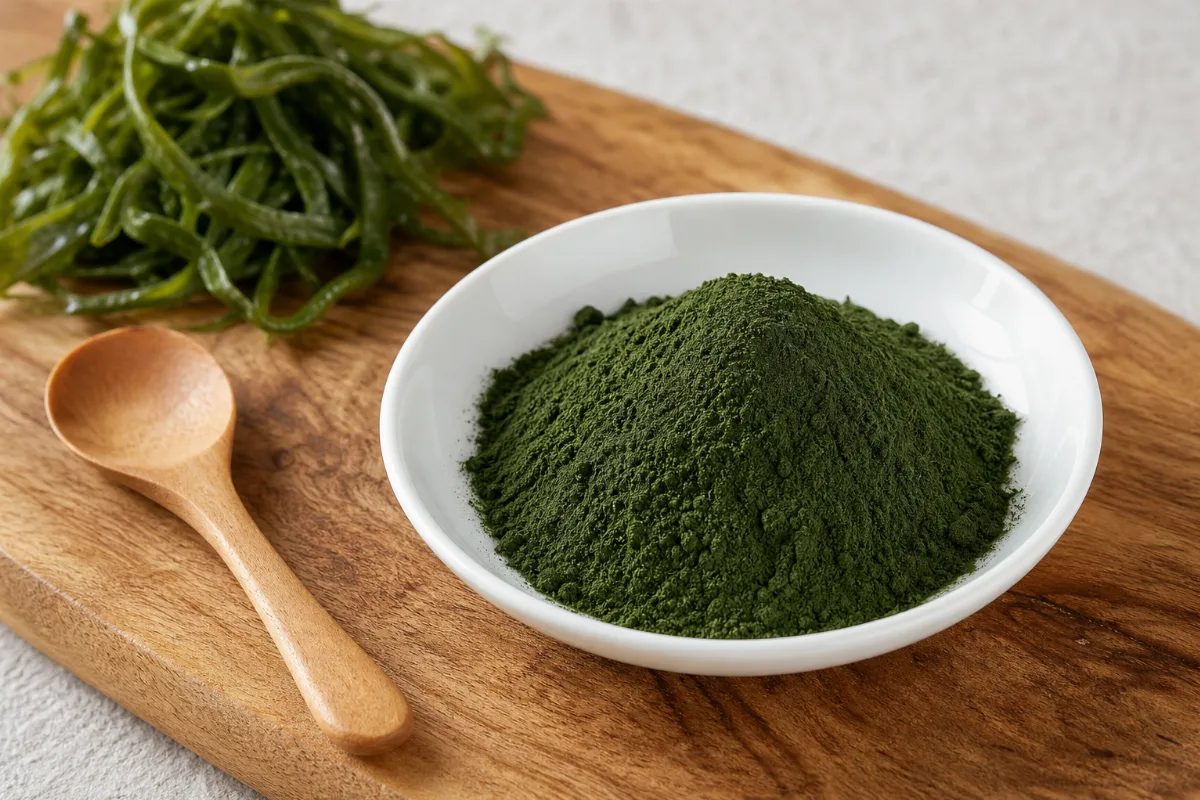
Euglena (Euglena gracilis) is a single-celled organism found in fresh water. It is a microalga that has some animal-like features, and it stores energy as paramylon, a type of beta-glucan, which is a fiber-like sugar chain. [1] [2] [10] It has been produced on an industrial scale as an ingredient for functional foods and cosmetics. [11] Most Euglena products are dried powders or capsules, not a traditional food. This page keeps the whole dried alga apart from isolated paramylon and from hype.
Read this first
- Human evidence is thin. The best trials are 8-to-12-week studies in healthy adults in Japan and Korea, mostly with fewer than 200 people. They measured immune blood markers, cold-like symptoms, mood, sleep or body fat, and results are modest or limited to subgroups. [4] [5] [6] [7] [8]
- Regulators have judged it safe at the uses they reviewed. The European Food Safety Authority (EFSA) concluded that dried whole-cell Euglena gracilis and isolated paramylon are each safe at the proposed uses and use levels, based on lab and animal safety studies. [1] [2] That is a safety opinion, not proof of a health benefit.
- We found no sourced warnings for pregnancy, breastfeeding, medicines or allergy, and also no sourced reassurance. Proper evidence not found in the sources we read. Ask a clinician or pharmacist, especially during pregnancy, with immune-suppressing medicines or with an autoimmune disease.
- Most "benefits" online (cancer, colitis, stroke, obesity, antiviral) come from mice or lab dishes. [9] [12] [13] [14]
- If you get hives, swelling of the face or throat, or trouble breathing after any new food or supplement, call 911 (or your local emergency number).
What is in it (USDA values)
No USDA entry for this food. USDA FoodData Central (SR Legacy) has no Euglena item, so there are no official per-serving nutrient values to show. These are the composition facts we read:
| Item | What the source says | Source |
|---|---|---|
| Dried whole-cell Euglena (made by fermentation) | More than 50% is beta-glucan | EFSA [1] |
| Isolated paramylon | At least 95% beta-glucan, with small amounts of protein, fat, ash and moisture | EFSA [2] |
| Other nutrients | Described as containing vitamins, minerals, amino acids and unsaturated fatty acids; no amounts given in the abstract | Review [10] |
Paramylon is an insoluble beta-1,3-glucan. [6] The immune effects in the trials below were measured in blood. We found no trial that tested isolated paramylon against whole Euglena. The compound evidence is partly from humans (below) and partly from the lab and mice. [4] [5] [6] [12]
What research says
| Health goal | What the sources found | Strength of evidence | What was studied |
|---|---|---|---|
| Immune markers | 700 mg a day of Euglena powder for 8 weeks raised natural killer cell activity in healthy Korean adults versus placebo [6]. 1,000 mg a day for 8 weeks raised a dendritic cell marker (CD86) in 181 Japanese adults versus placebo [4] | Promising but limited (blood markers, not illness) | Powder or capsules; healthy adults aged 20 to 70 |
| Common cold symptoms | In a 2025 Japanese trial, Euglena capsules for 8 weeks gave fewer cumulative days of cold-like symptoms and fewer severe symptoms in weeks 5 to 8 [5]. In the 2026 trial, cold symptoms were a secondary, exploratory outcome and were lower with Euglena [4] | Promising but limited (two trials, symptom diaries, same country) | Healthy adults, capsules, 8 weeks |
| Body fat and blood sugar | In 36 overweight Japanese adults, paramylon-rich Euglena (2.6 g paramylon a day, 12 weeks) did not change visceral fat overall; fat fell in men on subgroup analysis; blood HbA1c and adiponectin differed from placebo [7] | Insufficient evidence (small, subgroup result) | Capsules of paramylon-rich Euglena powder |
| Mood, stress and sleep | A 12-week Japanese trial reported better autonomic balance under a mental workload task, mood scores and sleep ratings with Euglena [8] | Promising but limited (one trial, self-rated measures) | Adults aged 20 to 64 |
| Gut health, ulcerative colitis, obesity, stroke, cancer, antiviral | Better outcomes in mice or lab gut-fermentation models [9] [12] [13] [14] [15] | Lab or animal only | Mice, cell and fermentation models; extracts |
We did not read funding statements in these abstracts, so we cannot say who paid. Several trials tested products from specific Euglena strains or makers, so results may not apply to all products. A 2023 review of Euglena and influenza describes the immune and antiviral work and mixes lab and animal findings; it is not a human trial. [10]
Eaten as food vs taken as paramylon or extract. The whole dried alga, isolated paramylon (≥95% beta-glucan) and water extracts are different products. The EU assessed whole cells and paramylon separately. [1] [2] Mouse cancer and colitis studies often used extracts or purified paramylon, not what is sold as food powder. [9] [13] [14]
How much is a normal serving
There is no official serving for Euglena. USDA lists none and we found no health agency portion. Amounts used in the human trials we read were 700 mg a day of powder [6], 1,000 mg a day [4] and a paramylon-rich powder giving 2.6 g paramylon a day [7], for 8 to 12 weeks. These are trial amounts for information, not a recommendation. EFSA's safety opinion was tied to the proposed uses and use levels in the application, not to a general serving. [1]
Safety, allergy and medicines
- Regulatory safety: EFSA's panel found no adverse effects in a 90-day rat study up to 3,300 mg of dried Euglena per kg body weight a day; margins of exposure to the highest intake estimates ranged from 33 for infants to 192 for adults, which the panel judged sufficient. It concluded the dried whole-cell alga is safe at the proposed uses. [1] It also noted that E. gracilis has "qualified presumption of safety" status for production purposes only. [1]
- Paramylon: no toxicity in studies up to 5,000 mg per kg body weight a day; EFSA concluded it is safe under the proposed uses and use levels. [2]
- Earlier toxicity work: a 2016 study of a dried Euglena product found it was not genotoxic in two tests, and rats fed it for the subchronic period had no treatment-related effects. [3] These are animal and lab results.
- Trials: the 2023 and 2025-2026 trials reported no adverse events, no clinically meaningful lab changes, or judged the product safe. [4] [5] [6] They were short and in healthy adults.
- Children and infants: EFSA's assessment covered the general population including children from 12 months in food supplements. [1] We found no trial in children.
- Pregnancy and breastfeeding, allergy, medicines, autoimmune disease, kidney or thyroid disease, contamination: Proper evidence not found in the sources we read.
- Iodine and B12: we found no source giving iodine or vitamin B12 values for Euglena, so we make no claim about either.
Choosing, storing and food safety
- Look for the species name (Euglena gracilis), the form (whole-cell powder or isolated paramylon), and the amount per serving on the label.
- Check whether a product claims immune or disease benefits. The human evidence is limited to the studies above.
- We found no agency storage or contamination guidance for Euglena; follow the label and see heavy metals and contaminants in foods for general points.
Related pages
Health connections for Euglena
What research links to eating or drinking this food, and how strong the evidence is. Many studies are observational or use juice, powder, oil or extracts rather than the food as eaten; each card says which.
Euglena and immune blood markers
Preliminary or mixedIn healthy adults, 700 mg a day for 8 weeks raised natural killer cell activity (Korea) and 1,000 mg a day for 8 weeks raised a dendritic cell marker (Japan) versus placebo.
Supplements: Blood markers in healthy adults, not illness outcomes; funding not stated in abstracts.
Euglena and common cold symptoms
Preliminary or mixedTwo Japanese 8-week trials in healthy adults found fewer cold-like symptom days (2025) and fewer symptoms as an exploratory outcome (2026).
Supplements: Short trials with self-reported symptoms from one country.
Euglena and body fat or blood sugar
Preliminary or mixedIn 36 overweight Japanese adults, paramylon-rich Euglena did not change visceral fat overall; men fell on subgroup analysis; HbA1c and adiponectin differed from placebo.
Supplements: Small trial, subgroup result.
Euglena and mood, stress and sleep
Preliminary or mixedOne 12-week Japanese trial reported better autonomic balance under workload, mood scores and sleep ratings.
Supplements: One trial, self-rated measures.
Euglena and gut health, colitis, obesity, stroke, cancer: lab and mice
Lab or animal research onlyMouse and lab fermentation studies report effects on gut bacteria, colitis, obesity, stroke damage and smoke-induced lung tumors. No matching human trial found.
Supplements: Animal or lab only.
Euglena in pregnancy, breastfeeding, allergy, medicines and contamination
Not enough evidenceProper evidence not found in the sources we read.
Supplements: Ask a clinician or pharmacist.
Connected topics
Open a group to see how each topic connects and how strong the evidence is.
Health goals (3)
- Immune SupportPreliminary or mixed
Two small trials in healthy adults found higher immune markers and fewer cold-like symptoms; both short and from East Asia.
- Sleep QualityPreliminary or mixed
The same single trial reported better sleep ratings.
- Stress ReductionPreliminary or mixed
One 12-week trial reported better autonomic balance and psychological scores under a mental workload task.
Body systems (2)
- Immune SupportPreliminary or mixed
Immune blood markers rose in trials of Euglena powder; illness prevention is not proven.
- Immune SystemPreliminary or mixed
Natural killer cell activity and a dendritic cell marker rose in healthy adults.
Body parts (1)
- Immune SystemPreliminary or mixed
Blood immune markers changed in two 8-week trials.
Functional actions (1)
- Immune ModulationPreliminary or mixed
Paramylon-rich Euglena changed immune markers in humans; mouse studies suggest wider effects.
Conditions & symptoms (1)
- Common ColdPreliminary or mixed
Two 8-week trials in healthy Japanese adults found fewer cold-like symptoms with Euglena; short, symptom diaries.
Documented risks and interactions (1)
- Safety assessment and novel-food status of Euglena. EFSA judged dried whole-cell Euglena gracilis and isolated paramylon safe at the proposed uses and use levels, from a 90-day rat study (no adverse effect up to 3,300 mg/kg a day for the dried alga) and compositional data. Dried alga is more than 50% beta-glucan; paramylon is at least 95%.
Frequently asked questions
What is paramylon?
Paramylon is a beta-1,3-glucan, a sugar chain that Euglena stores in granules. The EU assessed isolated paramylon as a novel food with at least 95% beta-glucan. [2]
Does Euglena prevent colds?
Two Japanese trials in healthy adults found fewer cold-like symptoms with Euglena over 8 weeks. [4] [5] That is promising but limited: the trials were short, used self-reported symptoms, and came from one country.
Is Euglena approved in Europe and Japan?
EFSA gave positive safety opinions for dried whole-cell Euglena gracilis and for paramylon as novel foods. [1] [2] We did not read a Japanese government source on its food status, so we do not state one, though industry reviews describe it as used in functional foods. [10] [11]
Does it help with weight or blood sugar?
One 12-week trial of 36 overweight adults found no overall change in visceral fat; changes appeared in a subgroup of men, and HbA1c differed from placebo. [7] Mouse studies were more positive but do not show the same in people. [14]
Is it safe in pregnancy or with medicines?
Proper evidence not found in the sources we read. Ask a clinician or pharmacist.
References
- EFSA Panel on Nutrition, Novel Foods and Food Allergens. Safety of dried whole cell Euglena gracilis as a novel food pursuant to Regulation (EU) 2015/2283. EFSA Journal (year listed as 2020 by Europe PMC; abstract read). Read 2026-10-24.
- EFSA Panel on Nutrition, Novel Foods and Food Allergens. Safety of paramylon as a novel food pursuant to Regulation (EU) 2015/2283. EFSA Journal 2023 (abstract read via Europe PMC). Read 2026-10-24.
- Genotoxicity and subchronic toxicity evaluation of dried Euglena gracilis ATCC PTA-123017. 2016 (abstract read via Europe PMC). Read 2026-10-24.
- Incorporating Euglena gracilis into the habitual diet modulates immune function and reduces common cold-like symptoms: a randomized controlled trial. 2026 (abstract read via Europe PMC). Read 2026-10-24.
- Nakashima A et al. Euglena gracilis suppresses cold symptoms in healthy individuals: a double-blind, randomized, placebo-controlled trial. 2025 (abstract read via Europe PMC). Read 2026-10-24.
- Park SY et al. Euglena gracilis powder supplementation enhanced immune function through natural killer cell activity in apparently healthy participants: a randomized, double-blind, placebo-controlled trial. 2023 (abstract read via Europe PMC). Read 2026-10-24.
- Aoe S et al. Effects of paramylon-rich Euglena gracilis EOD-1 powder on visceral fat obesity in moderately obese Japanese adults. 2023 (abstract read via Europe PMC). Read 2026-10-24.
- Nakashima A et al. Effects of Euglena gracilis intake on mood and autonomic activity under mental workload, and subjective sleep quality: a randomized, double-blind, placebo-controlled trial. 2020 (abstract read via Europe PMC). Read 2026-10-24.
- Euglena gracilis extract protects from tobacco smoke carcinogen-induced lung cancer by altering gut microbiota metabolome. 2023 (mouse study; abstract read via Europe PMC). Read 2026-10-24.
- Activation of immune and antiviral effects by Euglena extracts: a review. 2023 (abstract read via Europe PMC). Read 2026-10-24.
- Genetic engineering strategies for Euglena gracilis and its industrial contribution to sustainable development goals: a review. 2020 (abstract read via Europe PMC). Read 2026-10-24.
- Euglena gracilis polysaccharide modulated gut dysbiosis of obese individuals via acetic acid in an in vitro fermentation model. 2025 (abstract read via Europe PMC). Read 2026-10-24.
- Beta-1,3-glucans from Euglena gracilis protects against ulcerative colitis via modulating the gut barrier, T-cell immunity and gut microbiota. 2025 (mouse and lab study; abstract read via Europe PMC). Read 2026-10-24.
- Euglena attenuates high-fat-diet-induced obesity and especially glucose intolerance. 2024 (mouse study; abstract read via Europe PMC). Read 2026-10-24.
- Neuroprotective effect of beta-1,3-glucans-rich Euglena gracilis against ischemic stroke in middle-aged mice fed with a high-fat-high-fructose diet. 2025 (mouse study; abstract read via Europe PMC). Read 2026-10-24.