Dunaliella: Nutrients, What Research Shows and Safety
Dunaliella, a microalga rich in natural beta-carotene: the smokers and lung cancer warning, what small trials found, and how regulators treat it as a color and supplement.
Content last updated . This page has not been medically reviewed.
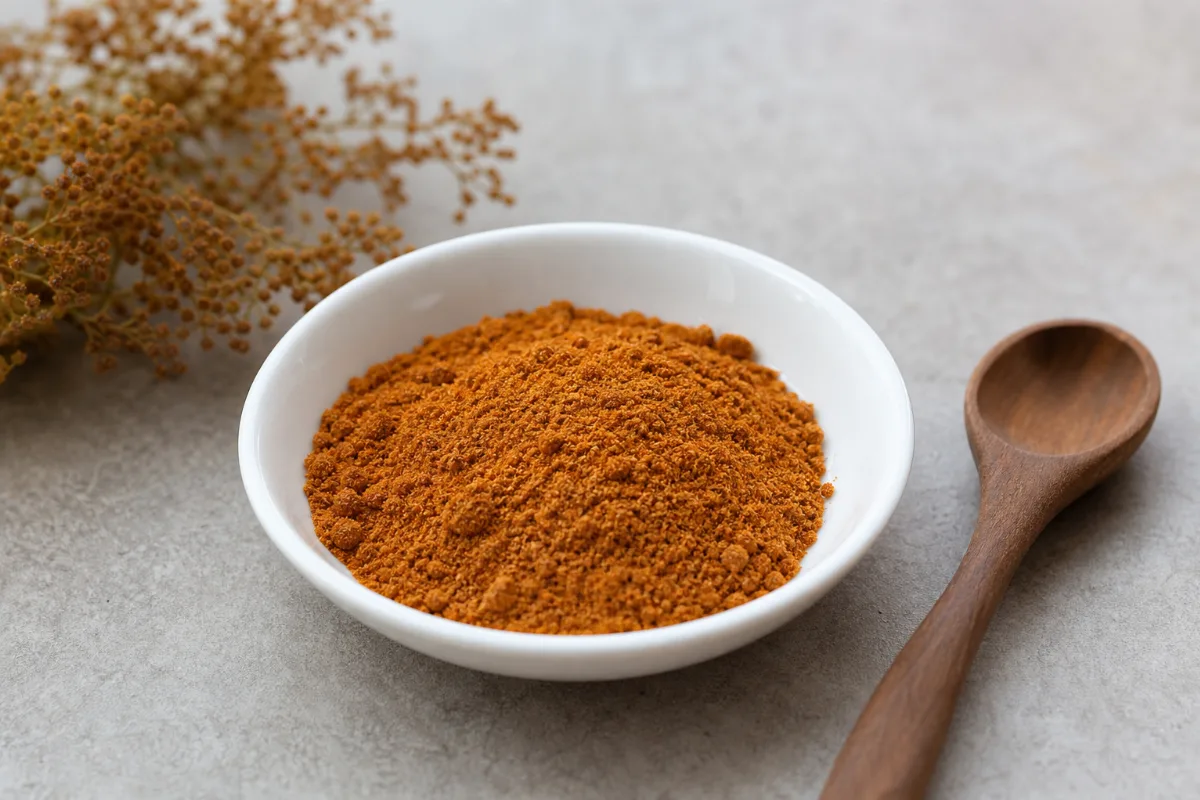
Dunaliella (Dunaliella salina and the related D. bardawil) is a tiny green salt-loving alga. When it is grown under stress in very salty water, its cells fill with orange beta-carotene. It is not an everyday food like nori or wakame. It is sold as a dried powder, as softgels or extracts, and as a natural source of beta-carotene for coloring foods. [13] [14] This page keeps the alga apart from hype and from the pills tested in older cancer trials.
Read this first
- If you smoke, used to smoke, or worked with asbestos, ask a clinician before taking any beta-carotene product. In two large randomized trials, beta-carotene pills were linked to more lung cancer: 18% more in Finnish male smokers (ATBC) and a relative risk of 1.28 in smokers and asbestos-exposed workers (CARET, which also gave vitamin A). [1] [2] The NCCIH says the strongest evidence of an increase was in people already at high risk of lung cancer. [4] Those trials did not test Dunaliella. We found no trial that tested Dunaliella in smokers, so we do not know if algae-derived beta-carotene behaves differently. This is a caution, not proof of harm from the alga.
- Beta-carotene pills have not been shown to prevent cancer or heart disease. The US Preventive Services Task Force concluded with moderate certainty that the harms of beta-carotene supplements outweigh the benefits for preventing those diseases in adults who are not pregnant. [5]
- Human evidence for Dunaliella itself is small: one crossover trial in retinitis pigmentosa (29 people finished) and one one-week asthma test (38 people). [9] [10] Nothing here is proven treatment.
- Food status is unclear in the sources we read. One review says the US FDA approved Dunaliella as GRAS; another paper says it is under FDA evaluation for food use. We could not find the notice itself. [13] [14]
- Pregnancy, breastfeeding, children and medicines: Proper evidence not found in the sources we read. Ask a clinician or pharmacist.
What is in it (USDA values)
No USDA entry for this food. USDA FoodData Central (SR Legacy) has no Dunaliella item, so there are no official per-serving nutrient values to show. The numbers below come from papers we read. They describe the dried alga, and they vary with strain, salt level, light and growing method.
| Nutrient or compound | What the papers say | Note |
|---|---|---|
| Beta-carotene | Cells can hold about 8% to 14% of their dry weight under suitable growing conditions [13] [14] | This range is quoted from earlier literature, not measured in those papers |
| Carotenoid isomers | D. bardawil beta-carotene is about equal parts all-trans and 9-cis forms [10] | The papers we read do not say what this mix means for human health |
| Protein | Authors say 50% to 80% of the protein, by dry weight, is essential amino acids [13] | Quoted from other work; no serving figure |
| Cell wall | Easier to digest than other microalgae because it lacks a rigid cellulose wall [13] | Authors' statement, not a human digestion test |
The main compound is beta-carotene, a plant pigment the body can turn into vitamin A. [15] The NHS lists carrots, sweet potato, spinach, mango and apricots as everyday food sources. [15] A related species, D. tertiolecta, is described as rich in carotenoids and chlorophylls, but the human evidence we read concerns beta-carotene only. [16]
What research says
| Health goal | What the sources found | Strength of evidence | What was studied |
|---|---|---|---|
| Lung cancer prevention | Beta-carotene pills raised lung cancer risk in smokers and asbestos-exposed workers [1] [2]; excess risk stayed above 1.0 about six years after pills stopped, but was no longer statistically significant [3]. A 2023 pooled analysis of 8 trials found no effect on overall cancer but 19% more lung cancer [7]; a 2022 one found 16% more, 21% in smokers and asbestos workers [6] | No good evidence of benefit; evidence of harm in high-risk groups | Beta-carotene supplements (not Dunaliella), 5 to 8 years in the largest trials |
| Retinitis pigmentosa (an inherited eye disease) | In a 2013 crossover trial, 300 mg a day of 9-cis-rich Dunaliella powder (about 20 mg beta-carotene) for 90 days gave a small rise in a retina electrical signal (+8.4 vs -0.9 microvolts); no significant difference in visual field or acuity [9] | Promising but limited (small, short, one research group) | 29 adults who finished; powder in capsules |
| Exercise-induced asthma | After one week of 64 mg a day of Dunaliella beta-carotene, 20 of 38 people (53%) were protected from the usual drop in lung function after exercise [10] | Promising but limited (1999, short test) | 38 patients with exercise-induced asthma |
| Death from any cause | A Cochrane review of 78 antioxidant trials found, in trials at low risk of bias, 5% higher death risk with beta-carotene (RR 1.05) [8] | Evidence of harm for supplements in general | Beta-carotene pills in healthy people and people with disease |
| Antioxidant, cholesterol, immune claims | Seen in cell tests, rats and farm animals [13] [16] | Lab or animal only | Extracts and biomass in cells or animals; no human trial found |
We did not read who paid for the two human trials, and the abstracts do not say. The amount in the retinitis pigmentosa trial (about 20 mg beta-carotene) is the same as the daily amount in the ATBC smokers trial. [1] [9] Researchers ran it under medical supervision; that is not a reason to copy it.
Eaten as food vs taken as supplement or color. There is no tradition of eating plates of Dunaliella. What people meet is (a) dried biomass or extracts sold as supplements, and (b) beta-carotene used as a food color. The US color additive rule for beta-carotene allows it to be "prepared synthetically or obtained from natural sources" for coloring foods in general. [12] The EU defines "mixed carotenes" as plant carotenes and algal carotenes. [11]
How much is a normal serving
There is no official serving. USDA lists none, and we found no health agency serving for Dunaliella. Amounts from the sources are information, not a prescription:
- EFSA (2012) said using beta-carotene as a food color is not of safety concern provided intake from additive use and supplements is no more than the amount from foods that naturally contain it, about 5 to 10 mg a day, which keeps total beta-carotene under 15 mg a day, the supplement level at which studies it reviewed saw no added cancer risk. [11]
- Trial amounts were 20 mg (ATBC), 30 mg (CARET), about 20 mg (retinitis pigmentosa trial) and 64 mg for one week (asthma test) of beta-carotene a day. [1] [2] [9] [10]
- The NHS sets no upper limit for beta-carotene, but advises keeping total vitamin A (retinol) at or below 1.5 mg (1,500 micrograms) a day on average over many years, because more may weaken bones. [15]
Safety, allergy and medicines
- Smokers and asbestos exposure: see "Read this first." [1] [2] [4] [6] [7]
- Cancer treatment: the NCCIH says antioxidant supplements may not be OK during cancer treatment; check with the care team. [4]
- Food color amounts: EFSA could not set a numerical acceptable daily intake for mixed carotenes or beta-carotene and could not conclude on the safety of mixed carotenes [E 160a(i)] in its 2012 re-evaluation, noting the specifications were inadequate. [11]
- Rodent studies: EFSA noted rodents convert beta-carotene to vitamin A much more efficiently than people, so rodent safety studies may not carry over. [11] An in-vitro and rat paper found the alga was not toxic to gut cells and did not change liver enzymes in rats; it was not a human study. [13]
- Pregnancy and breastfeeding: Proper evidence not found in the sources we read. The NHS advises avoiding liver and liver products in pregnancy because of vitamin A, but says nothing about beta-carotene. [15]
- Allergy, contamination (heavy metals, other algae in the culture), medicine interactions: Proper evidence not found in the sources we read. Quality varies by producer. If you get hives, swelling of the face or throat, or trouble breathing, call 911 (or your local emergency number).
Choosing, storing and food safety
- Look for a label that lists the species, the amount of beta-carotene per serving, and whether the product is a powder, softgel or extract. We found no regulator's buying advice for Dunaliella.
- A paper on water extracts reported that raw biomass had a sea or fish odor for 45% of 30 untrained tasters. [14] That is a taste point, not a safety point.
- We found no storage guidance from an agency. Follow the label.
Related pages
Health connections for Dunaliella
What research links to eating or drinking this food, and how strong the evidence is. Many studies are observational or use juice, powder, oil or extracts rather than the food as eaten; each card says which.
Dunaliella powder (9-cis beta-carotene) and retinitis pigmentosa
Preliminary or mixedIn one 2013 crossover trial, 29 adults who took 9-cis-rich Dunaliella powder for 90 days had a small rise in one retina signal; visual field and acuity did not differ from placebo.
Supplements: Small, short, one research group; not a proven treatment.
Dunaliella beta-carotene and exercise-induced asthma
Preliminary or mixedAfter one week of 64 mg a day of Dunaliella beta-carotene, 20 of 38 patients (53%) were protected from the usual drop in lung function after exercise.
Supplements: A 1999 short test; no later large trial found in sources read.
Dunaliella: antioxidant, cholesterol and immune claims
Lab or animal research onlyCell, rat and farm-animal studies report antioxidant and other effects; we found no human trial.
Supplements: Lab or animal findings only.
Dunaliella as a food: composition and legal status
Not enough evidenceReviews quote beta-carotene at 8-14% of dry weight under suitable growing conditions. One review says FDA approved Dunaliella as GRAS; another says it is under FDA evaluation; the EU list of approved microalgae in one review did not include it. We could not read a notice.
Supplements: Status unclear in sources read.
Dunaliella during pregnancy, breastfeeding, with medicines, allergy and contamination
Not enough evidenceProper evidence not found in the sources we read. NCCIH says antioxidant supplements may not be OK during cancer treatment.
Supplements: Ask a clinician.
Connected topics
Open a group to see how each topic connects and how strong the evidence is.
Body systems (1)
- Respiratory HealthPreliminary or mixed
A one-week 1999 test found 20 of 38 patients protected from exercise-induced asthma with Dunaliella beta-carotene.
Body parts (2)
- LungsDocumented risk
Beta-carotene pills raised lung cancer risk in smokers and asbestos-exposed workers (ATBC, CARET). Dunaliella itself was not tested in those trials; caution for high-risk people.
- EyesPreliminary or mixed
One small crossover trial of 9-cis-rich Dunaliella powder in retinitis pigmentosa saw a small rise in a retina test but no change in visual field or acuity.
Functional actions (1)
- AntioxidantLab or animal research only
Antioxidant effects were seen in cell and animal work; human proof of benefit is missing.
Conditions & symptoms (2)
- Lung CancerDocumented risk
Beta-carotene supplements increased lung cancer risk in smokers and asbestos-exposed workers; Dunaliella was not tested.
- Retinitis PigmentosaPreliminary or mixed
One small crossover trial; a retina test changed, vision tests did not.
Documented risks and interactions (2)
- Dunaliella and beta-carotene supplements: lung cancer in smokers. Beta-carotene pills raised lung cancer risk in smokers and asbestos-exposed workers in ATBC (18% more) and CARET (relative risk 1.28, with vitamin A). Pooled analyses agree. These trials did not test Dunaliella; we found no trial of Dunaliella in smokers.
- Beta-carotene as a food color: EFSA and FDA. EFSA (2012) could not set an acceptable daily intake and said use as a color is not a safety concern if intake from additive and supplement use stays within about 5-10 mg a day; the US allows beta-carotene from natural sources as a color additive.
Frequently asked questions
Is natural beta-carotene from Dunaliella safer than synthetic?
We did not find a study that compares them for lung cancer. The smoker trials tested beta-carotene pills, not algae, and the NCCIH says high doses in supplements may act differently from the smaller amounts in food. [1] [2] [4] So the question is open.
Should smokers avoid Dunaliella supplements?
Ask a clinician first. Beta-carotene pills raised lung cancer risk in smokers and asbestos-exposed workers in two large trials, and the NCCIH says the clearest rise was in that group. [1] [2] [4]
Does Dunaliella help eyes or asthma?
Two small studies hint at it. A 2013 trial in retinitis pigmentosa saw a small gain in one retina test but not in vision tests, and a one-week 1999 test protected 20 of 38 asthma patients from exercise-triggered symptoms. [9] [10] These are not enough to recommend it.
Is Dunaliella approved as a food?
The sources disagree or are unclear: one review says the FDA approved it as GRAS, another says it is under FDA evaluation, and a review says only Arthrospira and two Chlorella species are approved in the EU. [13] [14] Beta-carotene itself is an approved food color in the US and EU, with limits on how it is read. [11] [12]
Is it safe in pregnancy?
Proper evidence not found in the sources we read. Ask a clinician.
References
- ATBC Cancer Prevention Study Group. The effect of vitamin E and beta carotene on the incidence of lung cancer and other cancers in male smokers. N Engl J Med 1994 (abstract read via Europe PMC). Read 2026-10-24.
- Omenn GS et al. Effects of a combination of beta carotene and vitamin A on lung cancer and cardiovascular disease (CARET). N Engl J Med 1996 (abstract read). Read 2026-10-24.
- Goodman GE et al. CARET: incidence of lung cancer and cardiovascular disease mortality during 6-year follow-up after stopping supplements. J Natl Cancer Inst 2004 (abstract read). Read 2026-10-24.
- NCCIH. Antioxidants: in depth. Read 2026-10-24.
- US Preventive Services Task Force. Vitamin, mineral, and multivitamin supplementation to prevent cardiovascular disease and cancer: recommendation statement. JAMA 2022 (abstract read). Read 2026-10-24.
- Kordiak J et al. Role of beta-carotene in lung cancer primary chemoprevention: systematic review with meta-analysis and meta-regression. Nutrients 2022 (abstract read). Read 2026-10-24.
- Association between beta-carotene supplementation and risk of cancer: a meta-analysis of randomized controlled trials. Nutr Rev 2023 (abstract read). Read 2026-10-24.
- Bjelakovic G et al. Antioxidant supplements for prevention of mortality in healthy participants and patients with various diseases. Cochrane Database Syst Rev 2012 (abstract read). Read 2026-10-24.
- Treatment with 9-cis beta-carotene-rich powder in patients with retinitis pigmentosa: a randomized crossover trial. JAMA Ophthalmol 2013 (abstract read via Europe PMC). Read 2026-10-24.
- Prevention of exercise-induced asthma by a natural isomer mixture of beta-carotene. 1999 (abstract read via Europe PMC). Read 2026-10-24.
- EFSA Panel on Food Additives and Nutrient Sources. Scientific opinion on the re-evaluation of mixed carotenes (E 160a(i)) and beta-carotene (E 160a(ii)) as a food additive. EFSA Journal 2012 (abstract read via Europe PMC). Read 2026-10-24.
- US Code of Federal Regulations. 21 CFR 73.95 Beta-carotene (color additive). Read 2026-10-24.
- Hyrslova I et al. Functional properties of Dunaliella salina and its positive effect on probiotics. Marine Drugs 2022. Read 2026-10-24.
- Tuning the bioactive properties of Dunaliella salina water extracts by ultrasound-assisted extraction. Marine Drugs 2023. Read 2026-10-24.
- NHS. Vitamin A. Read 2026-10-24.
- Nanoencapsulated Dunaliella tertiolecta extract and beta-carotene in liposomal carriers. 2025 (abstract read via Europe PMC; a different Dunaliella species, in a lab model). Read 2026-10-24.