Nut Milks (Almond, Cashew and Others): Nutrients, What Research Shows and Safety
Almond, cashew and other nut milks: how little nut they contain, what fortification and added sugar add, USDA values, and cautions for allergy and for babies and toddlers.
Content last updated . This page has not been medically reviewed.
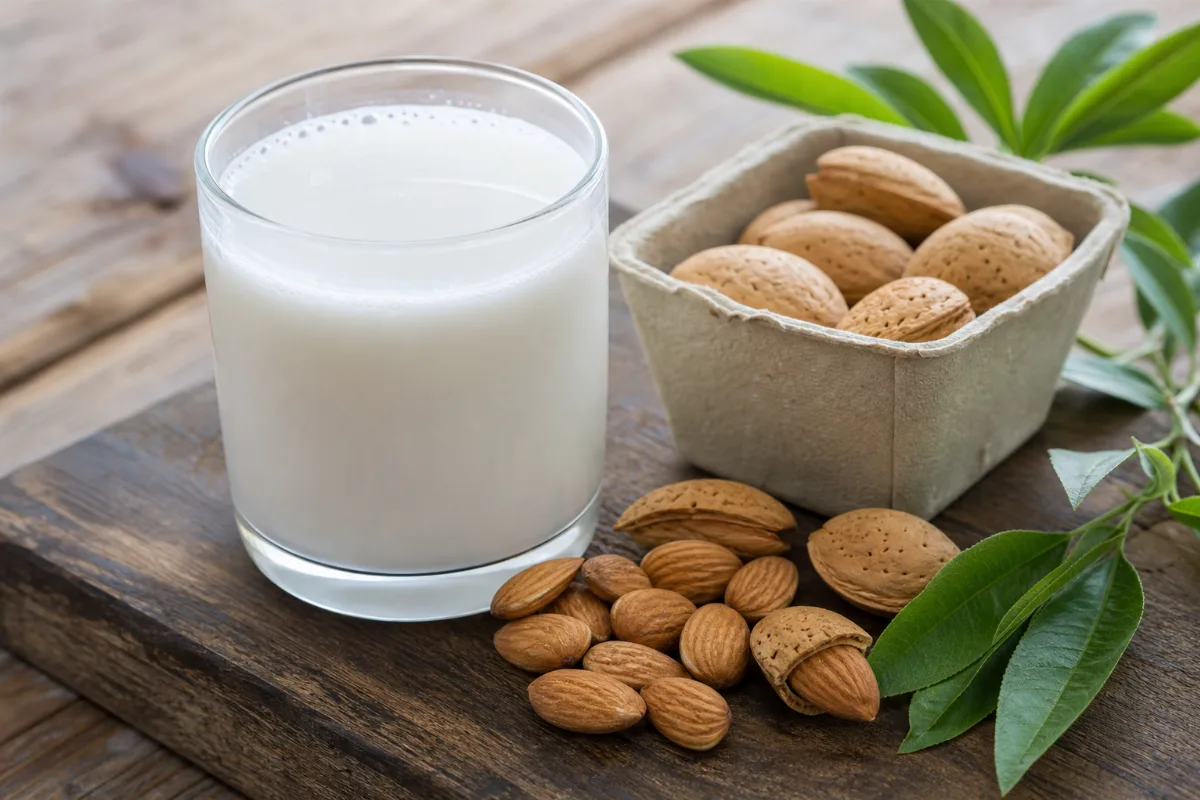
Nut milks are drinks made from ground nuts and water. The best known is almond milk (almond is Prunus dulcis, a tree in the rose family); cashew milk (Anacardium occidentale) and other nut drinks are sold too. What you drink is a processed, mostly-water product, not a glass of nuts. This page looks at what is in a typical carton, what the sources say about fortification, added sugar and labeling, and who should be careful. It keeps nut milk apart from eating whole nuts, and from hype. It is information only, not a plan for what to drink.
Read this first
- Nut milk is made from a tree nut. Anyone with an almond, cashew or other tree nut allergy should avoid it unless an allergist says otherwise. In the U.S., tree nuts are one of nine major food allergens and the label must name the nut. [13] For trouble breathing or swelling of the throat, call 911 (or your local emergency number). [13][14]
- Nut milk is not a milk replacement for babies under 1. The NHS says babies under 12 months need breast milk or first infant formula. [6] For ages 1 to 5, ask a pediatrician. [6][7]
- Commercial almond milk is mostly water. A label survey found almond content from just over 2% to about 10%. [3] USDA lists 0.4 g of protein per 100 g in unsweetened almond milk. [1]
- Calcium, vitamin D, B12 and other nutrients in these drinks are mostly added by the maker, and amounts vary from brand to brand. [10][11] Read the label.
- The sweetened vanilla kind carries about 15 g of sugars per cup, against about 2 g in the unsweetened kind (USDA total sugars). [1][2]
What is in it (USDA values)
USDA lists two almond drinks. Their cups are not the same weight in the USDA file (262 g and 240 g), so the two columns are not exactly the same volume.
| Nutrient | Unsweetened, shelf stable: per 100 g | Unsweetened: per 1 cup (262 g) | % Daily Value per cup | Sweetened vanilla: per 100 g | Sweetened vanilla: per 1 cup (240 g) | % Daily Value per cup |
|---|---|---|---|---|---|---|
| Energy | 15 kcal | 39 kcal | no DV | 38 kcal | 91 kcal | no DV |
| Total fat | 0.96 g | 2.5 g | 3% | 1.04 g | 2.5 g | 3% |
| Protein | 0.4 g | 1.1 g | 2% | 0.42 g | 1.0 g | 2% |
| Total sugars | 0.81 g | 2.1 g | no DV | 6.25 g | 15 g | no DV |
| Fiber | 0.2 g | 0.5 g | 2% | 0.4 g | 1.0 g | 3% |
| Calcium | 184 mg | 482 mg | 37% | 188 mg | 451 mg | 35% |
| Vitamin E (alpha-tocopherol) | 6.33 mg | 16.6 mg | 111% | 2.81 mg | 6.7 mg | 45% |
| Vitamin A (RAE) | 0 mcg | 0 mcg | 0% | 63 mcg | 151 mcg | 17% |
| Riboflavin (B2) | 0.01 mg | 0.03 mg | 2% | 0.177 mg | 0.43 mg | 33% |
| Zinc | 0.06 mg | 0.16 mg | 1% | 0.63 mg | 1.5 mg | 14% |
| Sodium | 72 mg | 189 mg | 8% | 63 mg | 151 mg | 7% |
| Potassium | 67 mg | 176 mg | 4% | 50 mg | 120 mg | 3% |
Source: USDA FoodData Central, "Beverages, almond milk, unsweetened, shelf stable" (FDC 174832) [1] and "Beverages, almond milk, sweetened, vanilla flavor, ready-to-drink" (FDC 168751) [2]. Per-cup numbers are the per-100-g values times the USDA cup weight, and %DV is that amount divided by the FDA Daily Value. % Daily Value uses the FDA 2016 Daily Values; values vary with brand and recipe. These are two USDA records, not every product on the shelf. USDA lists total sugars, not added sugars, for these items.
USDA's entries do not say which nutrients were added. We did not read the product labels behind these records, so we do not say which values come from fortification. Vitamin D and B12 are not listed in these two USDA records. We did not read a source on plant compounds in nut milks, so we describe none.
How much nut is really in it
There is no single standard. In one label review of more than 40 almond milks sold in Australia, the almond content on the labels ranged from just over 2% to roughly 10%. [3] A rough check with USDA numbers points the same way: the unsweetened drink has 0.4 g protein per 100 g [1], and raw almonds have 21.15 g per 100 g [17]. If all of the protein came from almonds, that is about 2% almonds by weight. That is our own arithmetic, not a measured nut content, and a maker may add other ingredients. Cashew and other nut milks: Proper evidence not found in the sources we read on how much nut they contain.What research says
| Question | What the sources found | Strength of evidence | What was studied |
|---|---|---|---|
| How does it compare with cow's milk and soy drink? | Soy drinks had a composition most like milk; almond, coconut, oat and rice drinks averaged under 1.1 g protein per 100 mL. Only soy matched milk's amino acids. Except calcium-fortified soy, none was broadly comparable to milk. [8] | Laboratory analysis of selected products | New Zealand products |
| How much do products vary? | A review of 122 plant drinks from 22 sources found protein from 0.06 to 12.43 g and calcium from 0 to about 1,253 mg per 100 mL; salt was the most common added ingredient. [9] | Compositional review | Published product data |
| Is the fortification consistent? | A U.S. survey of 90 plant milk products (almond, cashew, coconut, hemp, oat, pea, rice, soy) found amounts of vitamin A, vitamin D, calcium and potassium differed across brands, and varied even within one brand's single lot. [10] | Laboratory survey | U.S. market |
| Does swapping dairy for plant drinks change nutrient intake? | A modelling study using Australian survey data estimated that replacing cow's milk with unfortified plant drinks would raise the share of people with low riboflavin, B12 and iodine intakes. [11] | Computer modelling, not a trial | Australian population data; most Australian plant drinks are not fortified with those nutrients |
| Does extra calcium help or hurt the added vitamin D? | A lab digestion model found high calcium levels reduced how much vitamin D became available for absorption in a fortified almond milk. [12] | Lab model only | Almond milk made in the lab |
| Health benefits of nut milk itself | We found no trials of almond or cashew milk as a drink in the sources we read. Proper evidence not found in the sources we read. Heart and weight findings for whole nuts do not carry over. | Insufficient evidence | none |
Eaten as food versus as a drink. Trials on nuts used whole or ground nuts. They say little about a drink that contains perhaps a few percent nut. See Nuts and seeds for heart health for the whole-nut trials.
Fortification: calcium, vitamin D and B12
- The NHS names unsweetened calcium-fortified soya, pea and oat drinks as calcium sources for vegans, and unsweetened fortified soya drinks as sources of B12 and vitamin D. [5] That NHS page does not name almond drinks. [5]
- In the U.S. market survey, nutrient amounts differed across brands and lots, so the label is the guide. [10]
- We could not read the NIH Office of Dietary Supplements fact sheets (the site blocked us), so we do not quote them on fortified milks.
- Whether vitamin B12 or iodine is added to a given drink: not shown in the USDA records we read; check the label. [1][2][11]
Added sugar
USDA lists total sugars of 6.25 g per 100 g for the sweetened vanilla drink and 0.81 g for the unsweetened one. [1][2] USDA does not split added sugars in these records. FDA sets the Daily Value for added sugars at 50 g a day, and the Dietary Guidelines for Americans advise keeping added sugars under 10% of calories. [16] Sugars that occur naturally in milk, fruit and vegetables are not counted as added. [16]Thickeners and gums
Some nut milks contain carrageenan, a seaweed-derived thickener. The Tufts Health & Nutrition Letter says it stops the nut particles settling, that animal and cell studies raised gut-inflammation questions, that human studies of those concerns have not been done, and that FDA and other regulators have judged it safe at current levels. [15] This is a newsletter summary; we did not read FDA's own document. Other gums: Proper evidence not found in the sources we read.Labeling: what FDA says
In February 2023 FDA issued draft guidance on plant-based milk alternatives. It says names such as "soy milk" and "almond milk" have become common or usual names, and it recommends a voluntary nutrient statement when a product with "milk" in its name differs from milk in nutrients, compared with USDA nutrient criteria for fluid milk substitutes. [4] It is a draft, not a final rule. [4] The FDA page we read does not list which nutrients the statement would cover. [4] Environmental claims (water use, carbon) are not covered on this page; we did not review them.How much is a normal serving
USDA gives 1 cup as the household portion for both drinks (262 g and 240 g in the files). [1][2] That is a measure, not a prescription. Energy per cup is about 39 kcal unsweetened and 91 kcal sweetened. [1][2] Shake the carton: in a lab test, protein and calcium in some plant drinks differed between shaken and unshaken samples. [8]Safety, allergy and medicines
- Tree nut allergy. Tree nuts are a major U.S. allergen, and labels must name the specific nut, such as almonds. [13] The NHS lists almonds and cashews among nuts that can cause allergy; for sudden swelling of the lips, mouth or throat or fast, difficult breathing it advises calling 999 (UK). [14] In the U.S., stop eating the food, decide whether epinephrine is needed, and get medical care. [13] Nut milk contains the allergen; allergy to the nut is the same allergy. See nut and seed allergy basics and food allergy basics.
- Babies under 1. The NHS says babies need breast milk or first infant formula until at least 1 year. [6]
- Toddlers. From age 1 the NHS says unsweetened, calcium-fortified plant drinks (soya, oat, almond) can be given as part of a balanced diet, but not rice drinks to under-5s because of arsenic; ask a health visitor or doctor if there is a milk allergy. [6] A 2021 JAMA Pediatrics commentary says most authorities advise against plant drinks as a milk substitute for young children, that they are generally lower in energy, protein and fat than cow's milk, and that Canada advises against them under age 2. [7] Advice differs by country; ask a pediatrician. See foods for babies and toddlers.
- Milk allergy. Nut milk does not contain cow's milk protein, but we did not read a source on cross-contact in factories; read the label.
- Medicines. We did not find a source we could read on medicine interactions with nut milk. A pharmacist can check. See foods and medicine interactions.
Choosing, storing and food safety
- Look at the label for protein, calcium, added sugar and salt (see Added sugars, sodium and saturated fat on labels).
- Shelf-stable cartons and chilled cartons differ in storage. We did not read an official source on how long an opened carton keeps, so follow the label and see food storage and leftovers.
Related pages
Health connections for Nut Milks (Almond, Cashew and Others)
What research links to eating or drinking this food, and how strong the evidence is. Many studies are observational or use juice, powder, oil or extracts rather than the food as eaten; each card says which.
How little nut is in commercial nut milk
Not enough evidenceA label review of over 40 almond milks found about 2% to 10% almonds. USDA's unsweetened record has 0.4 g protein per 100 g against 21 g in raw almonds.
Supplements: No trials of nut milk as a drink were found in the sources read.
Fortification: calcium, vitamin D and B12
Preliminary or mixedMany plant drinks have nutrients added, and amounts differ by brand and even by lot. NHS names fortified soya, pea and oat drinks, not almond, as vegan sources of calcium and B12.
Supplements: Applies to the fortified drink only; no claim for supplements.
Protein compared with dairy milk and soy drink
Preliminary or mixedAlmond drinks averaged under 1.1 g protein per 100 mL in a New Zealand analysis; only calcium-fortified soy was broadly comparable to cow's milk.
Supplements: Not applicable.
Replacing dairy with unfortified plant drinks
Preliminary or mixedAustralian modelling estimated more people with low riboflavin, B12 and iodine intake if cow's milk were replaced by unfortified plant drinks.
Supplements: Modelling study, not a trial.
Calcium and vitamin D together in fortified almond milk
Lab or animal research onlyA lab digestion model found high calcium reduced vitamin D bioaccessibility in a fortified almond milk.
Supplements: Lab model only.
FDA labeling of plant-based milk alternatives
Not enough evidenceFDA's February 2023 draft guidance says names such as almond milk are common or usual names and recommends a voluntary nutrient statement comparing with milk.
Supplements: Not applicable.
Carrageenan and gums
Lab or animal research onlyA Tufts newsletter says carrageenan keeps almond particles suspended, that animal and cell findings raised gut-inflammation questions with no human studies, and that FDA and other regulators judge it safe at current levels.
Supplements: Not applicable.
Connected topics
Open a group to see how each topic connects and how strong the evidence is.
Root causes (1)
- Nutrient DeficiencyPreliminary or mixed
Australian modelling found replacing cow's milk with unfortified plant drinks could raise low intakes of riboflavin, B12 and iodine; fortification varies by product.
Habits (1)
- Balanced NutritionDocumented risk
Nut milk contents differ greatly by brand, so reading the label for protein, calcium and added sugar matters when it replaces dairy.
Conditions & symptoms (1)
- Food AllergyDocumented risk
Nut milk is made from a tree nut; tree nuts are a major allergen and must be named on U.S. labels.
Documented risks and interactions (3)
- Added sugar in sweetened nut milk. USDA lists about 15 g total sugars per cup of the sweetened vanilla drink versus about 2 g unsweetened. FDA's Daily Value for added sugars is 50 g a day.
- Tree nut allergy. Nut milk is made from a tree nut, so a nut allergy applies. U.S. labels must name the tree nut.
- Not a milk replacement for babies; caution for young children. NHS: babies under 1 need breast milk or first infant formula. From 1, unsweetened calcium-fortified plant drinks can be part of a balanced diet. A JAMA Pediatrics commentary says most authorities advise against plant drinks as a milk substitute for young children.
Frequently asked questions
How much almond is in almond milk?
Often very little. A label review of over 40 almond milks found about 2% to 10% almonds. [3] Unsweetened USDA data show 0.4 g protein per 100 g, against 21 g in raw almonds. [1][17]
Is almond milk as nutritious as cow's milk or soy milk?
Not in protein. In a New Zealand analysis, almond drinks averaged under 1.1 g protein per 100 mL, and only calcium-fortified soy was broadly comparable to milk. [8] Calcium depends on added calcium, which varies by brand. [10]
Can I give almond milk to my baby or toddler instead of milk?
Not under 1 year: the NHS says babies need breast milk or first infant formula. [6] After 1, the NHS allows unsweetened, calcium-fortified plant drinks within a balanced diet, but other bodies are more cautious. [6][7] Ask your pediatrician.
Is nut milk safe if I have a nut allergy?
No, not unless an allergist has cleared it. It is made from the nut, and U.S. labels must name tree nuts. [13] For trouble breathing or swelling of the face or throat, call 911. [13][14]
Does the sweetened kind have a lot of sugar?
USDA lists about 15 g of total sugars in a cup of sweetened vanilla almond milk, against about 2 g unsweetened. [1][2] FDA's Daily Value for added sugars is 50 g a day. [16]
References
- U.S. Department of Agriculture. FoodData Central: Beverages, almond milk, unsweetened, shelf stable (SR Legacy, FDC 174832). April 2018 release. Read 2026-10-23.
- U.S. Department of Agriculture. FoodData Central: Beverages, almond milk, sweetened, vanilla flavor, ready-to-drink (SR Legacy, FDC 168751). April 2018 release. Read 2026-10-23.
- CHOICE (Australian consumer group). Almond milk. Read 2026-10-23 (first 100,000 characters of the page; consumer testing, not a peer-reviewed study).
- U.S. Food and Drug Administration. Plant-Based Milk and Animal Food Alternatives. Describes the February 2023 draft guidance. Read 2026-10-23.
- NHS (UK). The vegan diet. Read 2026-10-23.
- NHS (UK). Drinks and cups for babies and young children. Read 2026-10-23.
- Bodnar LM, Jimenez EY, Baker SS. Plant-Based Beverages in the Diets of Infants and Young Children. JAMA Pediatrics 2021;175(6):555-556. Read 2026-10-23.
- Nutritional assessment of plant-based beverages in comparison to bovine milk. Front Nutr 2022. PMID 36003838. Abstract read 2026-10-23 (via Europe PMC).
- An Overview on Nutritional Aspects of Plant-Based Beverages Used as Substitutes for Cow's Milk. Nutrients 2021. PMID 34444815. Abstract read 2026-10-23 (via Europe PMC).
- Market Basket Survey of the Micronutrients Vitamin A, Vitamin D, Calcium, and Potassium in Eight Types of Commercial Plant-Based Milk Alternatives from United States Markets. 2023. PMID 36712962. Abstract read 2026-10-23 (via Europe PMC).
- Time to consider more than just calcium? The impact on protein, riboflavin, vitamin B12 and iodine intake of replacing cows' milk with plant-based milk-like drinks: an Australian usual intake dietary modelling study. 2025. PMID 40407926. Abstract read 2026-10-23 (via Europe PMC).
- Fortification of Plant-Based Milk with Calcium May Reduce Vitamin D Bioaccessibility: An In Vitro Digestion Study. 2021. PMID 33787251. Abstract read 2026-10-23 (via Europe PMC).
- U.S. Food and Drug Administration. Food Allergies. Read 2026-10-23.
- NHS (UK). Food allergy. Read 2026-10-23.
- Tufts Health & Nutrition Letter. Q. I see carrageenan on the ingredient list of my organic almond milk. What is this, why do they add it, and is it safe?. Undated page. Read 2026-10-23.
- U.S. Food and Drug Administration. Added Sugars on the Nutrition Facts Label. Read 2026-10-23.
- U.S. Department of Agriculture. FoodData Central: Nuts, almonds (SR Legacy, FDC 170567). April 2018 release. Read 2026-10-23 (values from the project's USDA file).