Cashews: Nutrients, What Research Shows and Safety
Cashews as a food: USDA nutrients, what trials found on cholesterol, blood pressure and diabetes, plus tree nut allergy, oxalate and choking safety facts.
Content last updated . This page has not been medically reviewed.
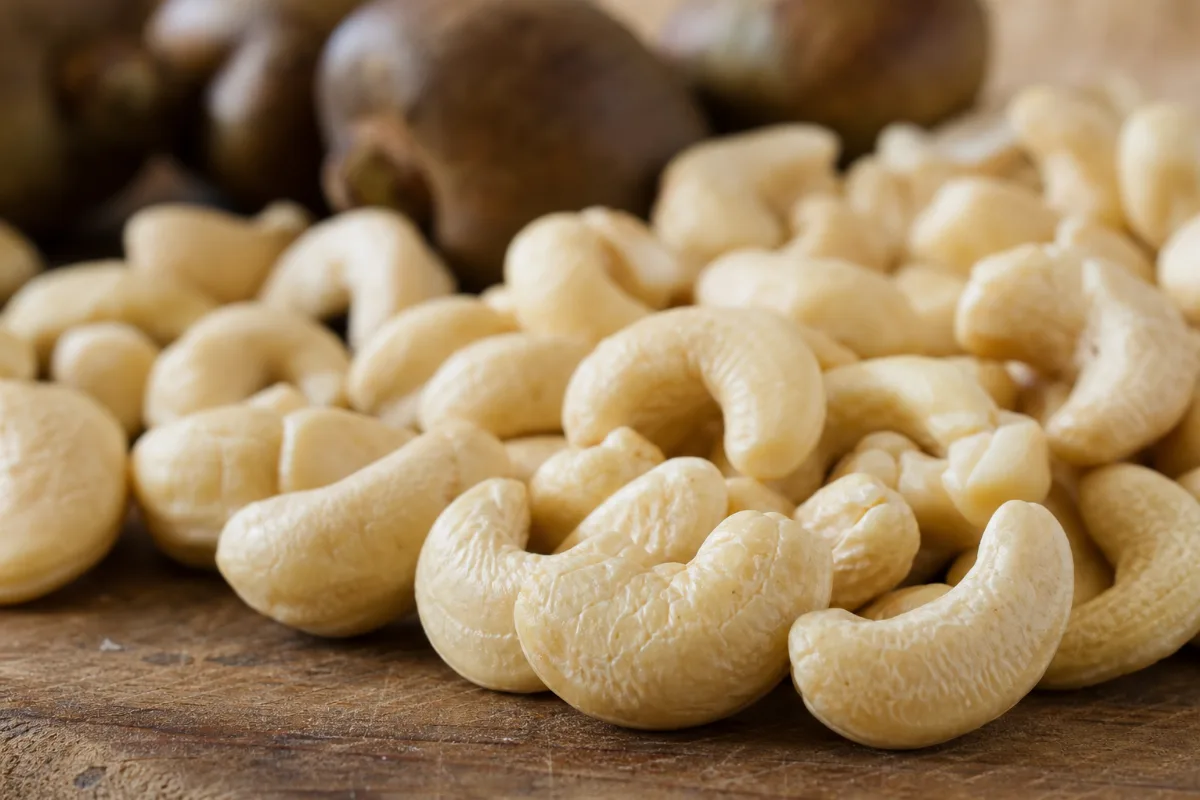
Cashews are the kernels of the cashew tree, Anacardium occidentale, which belongs to the Anacardiaceae family (the same family as mango and pistachio). The part we eat is the kernel, a seed; it is sold shelled. People eat cashews for their fats, protein and minerals such as copper and magnesium. This page covers cashews as a food. It keeps them apart from oils and supplements, and from hype. It is information only, not a plan for what to eat.
Read this first
- Cashews are a tree nut, and tree nut allergy can be severe. In a small case series, two people developed anaphylaxis within 10 minutes of eating only a few pieces of cashew. [6] For trouble breathing or swelling of the face, lips or throat, call 911 (or your local emergency number). [11]
- Whole nuts, and nut butter in chunks or spoonfuls, are listed by the CDC as choking hazards for young children. [12]
- Cashews are energy dense: about 157 kcal in one ounce (28 g). [1]
- Evidence in short: pooled analyses of trials suggest nuts in general lower LDL cholesterol. [8] For cashews specifically, results are mixed. [2][3][4] A small blood pressure effect was seen in a pooled analysis, but not in every trial. [4][5]
What is in it (USDA values)
| Nutrient | Per 100 g | Per 1 ounce (28.35 g, USDA portion) | % Daily Value per serving |
|---|---|---|---|
| Energy | 553 kcal | 157 kcal | no DV |
| Total fat | 43.85 g | 12.4 g | 16% |
| Saturated fat | 7.78 g | 2.2 g | 11% |
| Protein | 18.22 g | 5.2 g | 10% |
| Fiber | 3.3 g | 0.94 g | 3% |
| Vitamin E (alpha-tocopherol) | 0.9 mg | 0.26 mg | 2% |
| Magnesium | 292 mg | 83 mg | 20% |
| Selenium | 19.9 mcg | 5.6 mcg | 10% |
| Zinc | 5.78 mg | 1.64 mg | 15% |
| Copper | 2.195 mg | 0.62 mg | 69% |
| Manganese | 1.655 mg | 0.47 mg | 20% |
| Phosphorus | 593 mg | 168 mg | 13% |
| Potassium | 660 mg | 187 mg | 4% |
| Thiamin (B1) | 0.423 mg | 0.12 mg | 10% |
Source: USDA FoodData Central, "Nuts, cashew nuts, raw" (FDC 170162). [1] Per-serving numbers are the per-100-g values times 0.2835, and %DV is that amount divided by the FDA Daily Value. % Daily Value uses the FDA 2016 Daily Values; values vary with variety, growing place, roasting and storage.
Copper is the standout: one ounce gives about two thirds of the Daily Value. MedlinePlus lists nuts among good copper sources and says people normally get enough copper from food. [13] USDA also lists about 24 g of monounsaturated fat per 100 g. [1] We did not read a source that measured plant compounds such as polyphenols in cashews, so we do not describe any here.
What research says
| Health goal | What the sources found | Strength of evidence | What was studied |
|---|---|---|---|
| LDL cholesterol, tree nuts overall | A pooled analysis of 61 trials (2,582 adults) found tree nuts lowered total cholesterol, LDL, apolipoprotein B and triglycerides; dose mattered more than nut type. [8] | Promising but limited (blood-test outcome, not heart attacks) | Many tree nuts, mostly not cashews; funded by NIH |
| LDL cholesterol, cashews | One controlled-feeding trial (51 adults with raised LDL, 28-64 g a day for 28 days, versus potato chips) found LDL 4.8% lower with cashews versus 1.2% higher with the control. [2] A later controlled-feeding trial (42 adults, 42 g a day for 4 weeks) found no change in LDL or other lipids. [3] A 2020 pooled analysis of trials (392 people) found no effect on lipids. [4] | Mixed | Whole cashews added to diets; the 2019 trial was funded by cashew and nut industry councils [3] |
| Blood pressure | The 2020 pooled analysis found systolic pressure 3.39 mmHg lower and no change in diastolic. [4] The 2019 trial found no blood pressure change. [3] A 12-week trial in 300 adults with type 2 diabetes found systolic pressure fell 4.9 mmHg with 30 g of cashews a day versus 1.7 mmHg in controls. [5] | Promising but limited | Small to medium trials, 4-12 weeks |
| Blood sugar | The 12-week trial in adults with type 2 diabetes found no difference in blood sugar measures, body weight or most other lipids; HDL cholesterol rose 1.7 mg/dL versus 0.1 mg/dL. [5] | Insufficient evidence | One 300-person trial in people with type 2 diabetes in India |
| Body weight, nuts overall | A pooled analysis of 33 nut trials found no significant effect of nut-enriched diets on weight, BMI or waist. [9] | Mixed to reassuring (not cashew-specific) | Trials of mixed nuts |
| Memory, cancer, other diseases | We did not find trials of cashews as food for these in the sources we read. Proper evidence not found in the sources we read. | Insufficient evidence | none |
Eaten as food versus other forms. All of the trials above used whole cashews as a food, in diets that otherwise stayed similar. None used cashew oil, extract or a supplement, so these results say nothing about those products. An observational link (people who eat nuts are healthier) is not proof that the nuts caused it.
Heart-health label claim. FDA allows a qualified health claim for some nuts at 1.5 ounces a day within a diet low in saturated fat and cholesterol. We could not read FDA's 2003 letter on nuts, so we do not say whether cashews are covered. The 2017 FDA letter on macadamia nuts says the claim is disqualified above 4.0 g saturated fat per 50 g of nuts. [14] USDA lists cashews at 7.78 g saturated fat per 100 g. [1]
How much is a normal serving
The USDA household portion for cashews is 1 ounce (28 g), which has about 157 kcal. [1] This is the figure from the USDA file, not a prescription. The trials above used about 28 to 64 g a day in different studies. [2][3][5] Eating more or less is a choice for you and your clinician or dietitian. The numbers above are for raw cashews; roasted, salted or oil-roasted products differ, so check the label. We did not find, in the sources we read, a study comparing health effects of raw and roasted cashews.Safety, allergy and medicines
- Tree nut allergy. The NHS lists cashews among the tree nuts that can cause food allergy; reactions can start right away or later and can involve several parts of the body. [10] MedlinePlus says allergies to peanuts, tree nuts and shellfish tend to last a lifetime, and that any serious reaction after eating needs 911. [11] See nut and seed allergy basics.
- Cashew and pistachio. A case series of four people with cashew allergy (three had anaphylaxis) found IgE antibody binding to cashew and pistachio was blocked by both nuts in two cases, which points to cross-reactivity. [6] It is a very small series.
- Peanut is a different allergy. Peanut is a legume, not a tree nut. We did not read a source on how often the two overlap, so ask an allergist.
- Oxalate and kidneys. A 2026 case report describes a 78-year-old man with chronic kidney disease whose kidney function worsened sharply after about a year of eating 3 to 4 ounces of cashews daily; the biopsy showed calcium oxalate crystals. [7] This is one case report. It does not show that normal amounts cause kidney stones. People with kidney disease or past stones should ask their clinician.
- Choking in young children. The CDC lists whole or chopped nuts and seeds, and nut butter in chunks or spoonfuls, as potential choking hazards for young children. [12] See foods for babies and toddlers.
- Calories. One ounce is about 157 kcal. [1] Pooled trials of nuts in general did not show weight gain. [9]
- Medicines. We did not find a source we could read describing medicine interactions with cashews as a food, so we make no claim either way. A pharmacist can check. See foods and medicine interactions.
- Raw cashews. Cashews sold as "raw" have normally been heated; we did not read an official source on this, so we do not describe it further.
Choosing, storing and food safety
- We did not read an official source on rancidity or mold in cashews. For storage, mold and aflatoxin basics, see storing nuts and seeds.
- Check the label for added salt, oil and flavorings, and for allergy warnings on shared equipment.
Related pages
Health connections for Cashews
What research links to eating or drinking this food, and how strong the evidence is. Many studies are observational or use juice, powder, oil or extracts rather than the food as eaten; each card says which.
Copper, magnesium and other minerals
Established roleOne ounce gives about two thirds of the copper Daily Value and about a fifth of magnesium and manganese, by USDA data.
Supplements: Applies to the whole food; no claim for mineral supplements.
Tree nuts and LDL cholesterol
Preliminary or mixedA pooled analysis of 61 trials found tree nuts lowered LDL cholesterol; for cashews specifically one feeding trial found lower LDL and a later one found no change.
Supplements: Results are for whole nuts as food; none used cashew oil or extracts.
Blood pressure
Preliminary or mixedA pooled analysis found systolic pressure about 3.4 mmHg lower with cashews; a 4-week feeding trial found no change.
Supplements: Whole cashews as food only.
Type 2 diabetes: HDL and blood sugar
Preliminary or mixedIn a 300-person 12-week trial in India, HDL cholesterol rose slightly and systolic pressure fell more than in controls; blood sugar measures did not differ.
Supplements: One trial; no blood sugar benefit shown.
Body weight and calories
Preliminary or mixedOne ounce has about 157 kcal. Pooled nut trials found no significant weight change.
Supplements: Whole nuts only.
Cancer, memory and other diseases
Not enough evidenceNo trial in the sources we read tested cashews as food for these. Proper evidence not found in the sources we read.
Supplements: None.
Connected topics
Open a group to see how each topic connects and how strong the evidence is.
Health goals (3)
- Blood Pressure SupportPreliminary or mixed
Systolic pressure was about 3.4 mmHg lower in a pooled analysis; one 4-week trial saw no change.
- Cholesterol BalancePreliminary or mixed
Tree nuts in general lower LDL in pooled trials; for cashews the trials are mixed.
- Heart HealthPreliminary or mixed
Blood-test changes only; no trial in the sources we read measured heart attacks with cashews.
Body systems (4)
- Immune SystemDocumented risk
Allergic reactions to cashew can be severe (anaphylaxis).
- Cardiovascular SystemPreliminary or mixed
Cholesterol and blood pressure results are mixed and are blood tests, not disease outcomes.
- Heart & CirculationPreliminary or mixed
Same evidence as for the cardiovascular system.
- Kidney & UrinaryDocumented risk
One case report of oxalate kidney injury with very large daily amounts in a man with kidney disease.
Body parts (2)
Biomarkers (1)
- LDL CholesterolPreliminary or mixed
Lower in one feeding trial, unchanged in another and in a pooled analysis.
Conditions & symptoms (2)
- Food AllergyDocumented risk
Cashew is a tree nut; allergy can be severe and tends to last a lifetime.
- Food AnaphylaxisDocumented risk
Two people in a case series had anaphylaxis within 10 minutes of a few cashew pieces. Call 911 for trouble breathing or swelling.
Documented risks and interactions (4)
- Tree nut allergy (cashew). Cashew allergy can be severe: two people in a case series had anaphylaxis within 10 minutes of a few pieces. Tree nut allergies tend to last a lifetime.
- Cashew and pistachio cross-reactivity. Antibody tests in a small case series showed cashew and pistachio cross-react.
- Oxalate and kidneys. A 2026 case report describes kidney injury with calcium oxalate crystals in a man with kidney disease who ate 3 to 4 ounces of cashews daily for a year.
- Choking in young children. The CDC lists whole or chopped nuts and chunky nut butter as choking hazards for young children.
Frequently asked questions
Do cashews lower cholesterol?
Results for cashews are mixed. One feeding trial found LDL 4.8% lower; a later one and a pooled analysis found no effect on lipids. [2][3][4] Nuts overall do lower LDL in pooled trials. [8]
Do cashews lower blood pressure?
A pooled analysis found systolic pressure about 3.4 mmHg lower, and a diabetes trial found a larger fall than controls, but a 4-week feeding trial found no change. [4][5][3]
Are cashews safe if I am allergic to other tree nuts?
Not necessarily. Cashew allergy can be severe, and a case series found cross-reactivity between cashew and pistachio. [6] An allergist can test which nuts are safe for you. Call 911 for trouble breathing or swelling. [11]
Can cashews cause kidney problems?
One case report links very large daily amounts over a year to oxalate kidney injury in a man who already had kidney disease. [7] It does not show harm from ordinary servings.
Do cashews make you gain weight?
Cashews are energy dense (about 157 kcal per ounce). [1] But a pooled analysis of 33 trials found nut-enriched diets did not significantly change weight, BMI or waist size. [9]
References
- U.S. Department of Agriculture. FoodData Central: Nuts, cashew nuts, raw (SR Legacy, FDC 170162). April 2018 release. Read 2026-10-23.
- Mah E et al. Cashew consumption reduces total and LDL cholesterol: a randomized, crossover, controlled-feeding trial. Am J Clin Nutr 2017. PMID 28356271. Abstract read 2026-10-23 (via Europe PMC).
- Baer DJ et al. Consumption of cashew nuts does not influence blood lipids or other markers of cardiovascular disease in humans: a randomized controlled trial. Am J Clin Nutr 2019. PMID 30753323. Abstract read 2026-10-23 (via Europe PMC).
- Jalali M et al. The effects of cashew nut intake on lipid profile and blood pressure: a systematic review and meta-analysis of randomized controlled trials. Complement Ther Med 2020. PMID 32444052. Abstract read 2026-10-23.
- Mohan V et al. A 12-week randomized controlled trial of cashew nuts in Asian Indians with type 2 diabetes, examining HDL cholesterol and systolic blood pressure. J Nutr 2018. PMID 29378038. Abstract read 2026-10-23.
- Hasegawa M et al. Clinical features of four cases with cashew nut allergy and cross-reactivity between cashew nut and pistachio. Allergol Int 2009. PMID 19240380. Abstract read 2026-10-23.
- Ramrattan A et al. The Kidneys Went Nuts: Oxalate Nephropathy From Excessive Cashew Nut Consumption. Kidney Med 2026. PMID 42211689. Abstract read 2026-10-23.
- Del Gobbo LC et al. Effects of tree nuts on blood lipids, apolipoproteins, and blood pressure: systematic review, meta-analysis, and dose-response of 61 controlled intervention trials. Am J Clin Nutr 2015. PMID 26561616. Abstract read 2026-10-23.
- Flores-Mateo G et al. Nut intake and adiposity: meta-analysis of clinical trials. Am J Clin Nutr 2013. PMID 23595878. Abstract read 2026-10-23.
- NHS (UK). Food allergy. Read 2026-10-23.
- MedlinePlus. Food allergy. Read 2026-10-23.
- Centers for Disease Control and Prevention. Choking hazards for young children. Read 2026-10-23.
- MedlinePlus. Copper in diet. Read 2026-10-23.
- U.S. Food and Drug Administration. Letter responding to the qualified health claim petition for macadamia nuts and reduced risk of coronary heart disease. July 24, 2017. Read 2026-10-23.