Tofu: Nutrients, What Research Shows and Safety
Tofu as a food: USDA calcium, protein and iron values, what research says about soy, cholesterol and heart health, plus soy allergy, MAOI and thyroid medicine cautions.
Content last updated . This page has not been medically reviewed.
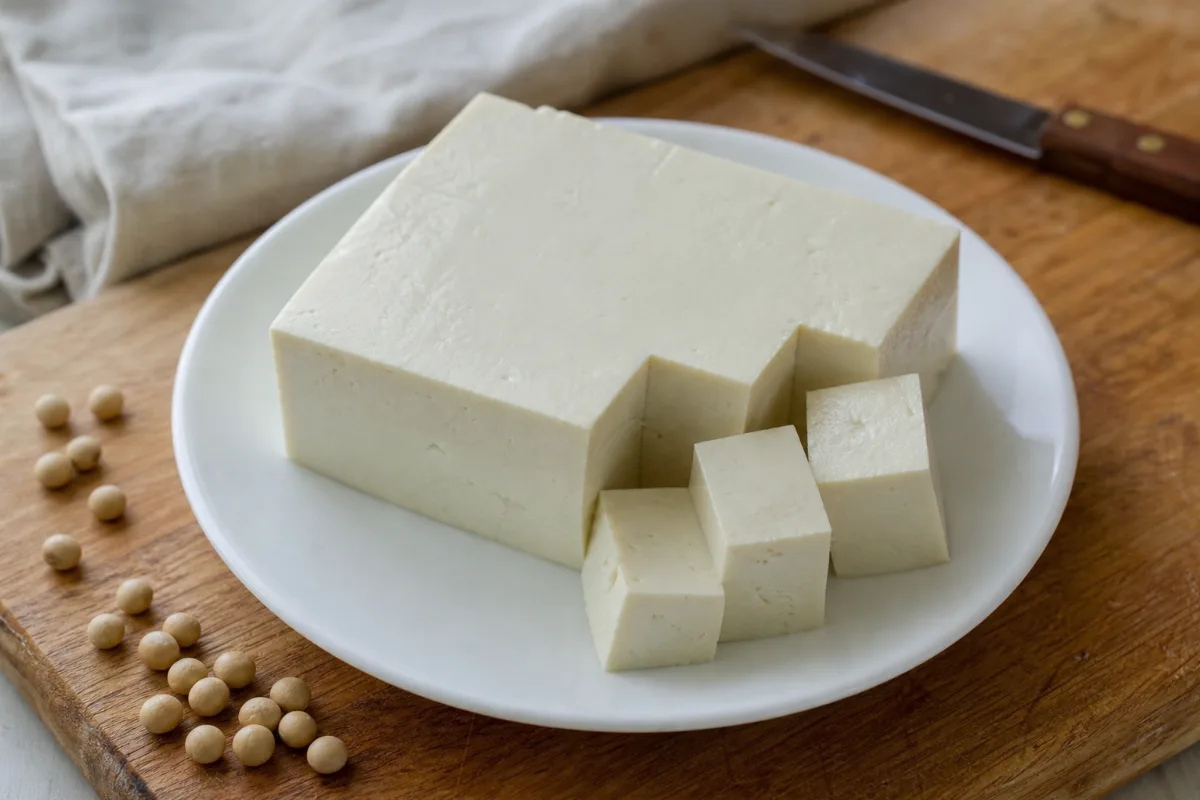
Tofu is a soft curd made from soybeans (Glycine max, a legume). The soybeans are turned into soy milk, which is then set with a setting agent such as calcium sulfate or nigari. [1] [2] People eat it as a plant protein, as a source of calcium when it is set with calcium, and because soy foods have been studied for cholesterol and heart health. This page keeps tofu apart from soy protein or isoflavone supplements, and apart from hype. For the wider soy picture, see Soy foods.
Read this first
- Soy is a major food allergen. The FDA names soybeans among the nine major allergens. For trouble breathing, swelling of the face, lips or throat, or any serious whole-body reaction, call 911 (or your local emergency number). [4] [5]
- MAOI antidepressants: NCCIH reports that soy foods high in tyramine, such as tofu and soy sauce, have been linked to dangerously high blood pressure in people taking MAOIs. Ask a pharmacist. [3]
- Evidence in one line: soy protein in place of other protein lowers LDL cholesterol a little in trials; people who eat tofu more often had a lower heart disease risk in large observational studies, which cannot prove cause. [6] [8]
- Pregnancy: NCCIH says soy in amounts greater than those commonly found in foods may be unsafe. [3]
- Thyroid tablets: evidence that soy affects levothyroxine is thin, mostly case reports. Ask your prescriber. [13]
What is in it (USDA values)
The values below are for raw, regular tofu prepared with calcium sulfate (USDA FoodData Central item 172476, SR Legacy). [1] The serving column is the USDA household portion of 0.5 cup, 124 g. [1] USDA also lists firm tofu prepared with calcium sulfate and magnesium chloride (nigari), item 172448, with a different profile: per 100 g it has 78 kcal, 9.04 g protein, 201 mg calcium and 1.61 mg iron, and its 0.5 cup portion is 126 g. [2]
| Nutrient | Per 100 g | Per 0.5 cup (124 g) | % Daily Value per serving |
|---|---|---|---|
| Energy | 76 kcal | 94 kcal | not set |
| Protein | 8.08 g | 10.0 g | 20% |
| Total fat | 4.78 g | 5.9 g | 8% |
| Saturated fat | 0.691 g | 0.86 g | 4% |
| Carbohydrate | 1.87 g | 2.3 g | 1% |
| Fiber | 0.3 g | 0.4 g | 1% |
| Calcium | 350 mg | 434 mg | 33% |
| Iron | 5.36 mg | 6.7 mg | 37% |
| Manganese | 0.605 mg | 0.75 mg | 33% |
| Copper | 0.193 mg | 0.24 mg | 27% |
| Selenium | 8.9 mcg | 11 mcg | 20% |
| Phosphorus | 97 mg | 120 mg | 10% |
| Magnesium | 30 mg | 37 mg | 9% |
| Zinc | 0.8 mg | 0.99 mg | 9% |
| Sodium | 7 mg | 8.7 mg | 0% |
% Daily Value uses the FDA 2016 Daily Values; values vary with the setting agent, firmness, brand and added ingredients. The serving figures are the 100 g values multiplied by 1.24. The calcium figure depends on the setting agent: the two USDA items above show 350 mg and 201 mg per 100 g, so read the label of your product. [1] [2] Tofu is not a fiber source (0.3 g per 100 g in this item). [1]
Plant compounds: soybeans contain isoflavones, which NCCIH describes as plant compounds similar in structure to estrogen. [3] A lab analysis of 30 soybean varieties found total isoflavones of 0.16% to 0.25% in types grown for tofu, higher than in edamame types. [15] That is laboratory chemistry, not a health result.
What research says
| Health goal | What the sources found | Strength of evidence | What was studied |
|---|---|---|---|
| LDL cholesterol | A pooled analysis of 46 trials found soy protein (median 25 g a day for a median of 6 weeks) lowered LDL by 4.76 mg/dL compared with other protein. [6] NCCIH says replacing other protein with soy protein may lower cholesterol slightly. [3] | Established, small effect, for soy protein in place of other protein | Soy protein in many forms, adults; not tofu alone |
| Replacing animal protein with plant protein | A pooled analysis of 112 trials found LDL fell by 0.16 mmol/L when plant protein replaced animal protein (moderate-quality evidence). [7] | Established for the lipid measure, tofu not analyzed alone | Plant proteins of many kinds, including soy |
| Coronary heart disease | In three large US cohorts (8,359 cases), eating tofu at least once a week was linked to a lower risk than eating it less than once a month (hazard ratio 0.82, 95% CI 0.70 to 0.95). Soy milk was not significantly linked. [8] A 2017 pooled analysis of observational studies found a borderline link for tofu (relative risk 0.80, 95% CI 0.64 to 1.00). [9] | Promising but limited (observational, not proof of cause) | Tofu eaten as food, mostly US adults; funded by US public grants [8] |
| Menopause symptoms | A 2025 pooled analysis of soy isoflavone studies found a small overall benefit but no significant effect on hot flushes. [10] | Mixed; small effect | Isoflavone preparations, mostly small studies |
| Breast cancer | NCCIH reports a link between higher soy intake and lower breast cancer risk in Asian and Asian-American women, in observational studies, and says soy supplements have not been shown to lower risk. [3] A 2022 pooled analysis also found an inverse link with isoflavone intake. [12] A 2019 pooled analysis linked soy intake before diagnosis with slightly better overall survival and found no significant link after diagnosis. [11] | Promising but limited (observational) | Soy foods and isoflavones; tofu not analyzed alone |
| Bone health, blood sugar, weight | Proper evidence not found in the sources we read. | Insufficient evidence | Not applicable |
Eaten as food vs taken as a supplement. The cholesterol trials compared soy protein with other protein, so the result describes a swap, not an add-on. [6] NCCIH separates soy foods from soy protein and isoflavone supplements and says effects may differ by product. [3] Most heart disease evidence for tofu is observational. We did not check the funding of every review; the LDL analysis lists public research funding and one author at a soy nutrition institute. [6]
How much is a normal serving
The USDA household portions for the regular tofu item are 0.5 cup (124 g, about 94 kcal) or 0.25 block (116 g). [1] This is information from USDA data, not a prescription. USDA's firm tofu item lists 0.5 cup as 126 g and 0.2 block as 91 g, so block sizes differ by product. [2] Check the package for the serving size.
Safety, allergy and medicines
- Allergy. Soybeans are one of the major allergens US labels must name. [4] MedlinePlus lists soy among the most common food allergies, mostly in children, and says to call 911 or the local emergency number for serious or whole-body reactions, especially wheezing or trouble breathing. [5] See Food allergy basics and emergency signs.
- MAOIs. NCCIH names tofu and soy sauce as high-tyramine soy foods linked to dangerously high blood pressure with MAOI antidepressants. [3] The page does not give amounts. Ask a pharmacist.
- Thyroid tablets (levothyroxine). A 2023 review found mainly case reports, one randomized crossover study with no difference, and too little data on liquid forms. The authors thought any effect likely has little clinical impact. [13] Do not change a medicine on your own.
- Pregnancy and breastfeeding. NCCIH says soy in amounts greater than those commonly found in foods may be unsafe in pregnancy, and little is known about larger amounts while breastfeeding. [3] See Foods in pregnancy: what official bodies advise.
- Digestion. NCCIH lists bloating, constipation, diarrhea and nausea as possible side effects of soy. [3] NIDDK names legumes among foods that can cause gas. [14]
- Hormone-sensitive conditions. The sources we read do not tell an individual how much soy is right. Ask your clinician or cancer care team.
- Kidney disease and medicine timing. See Foods, kidney disease, potassium and oxalates and Foods and medicine interactions. We did not read a source that gives tofu-specific advice for either.
Choosing, storing and food safety
- Plain tofu has little sodium in the USDA data (7 mg per 100 g), but marinated, smoked or seasoned products can differ. [1] Read the label for sodium and allergens.
- If calcium is why you eat tofu, check whether the label says it is set with calcium. The two USDA items above differ by about 150 mg of calcium per 100 g. [1] [2]
- Follow the package directions for refrigeration and the use-by date.
Related pages
Health connections for Tofu
What research links to eating or drinking this food, and how strong the evidence is. Many studies are observational or use juice, powder, oil or extracts rather than the food as eaten; each card says which.
Tofu as a source of plant protein, calcium and iron
Established roleUSDA lists 10 g protein, 434 mg calcium (33% of the Daily Value) and 6.7 mg iron (37%) in 0.5 cup (124 g) of regular tofu set with calcium sulfate, about 94 kcal. Calcium depends on the setting agent.
Supplements: Dietary role only; mineral supplements are a separate question.
Soy protein and LDL cholesterol
Clinically supportedIn 46 pooled trials, soy protein in place of other protein lowered LDL by about 4.76 mg/dL (median 25 g a day for 6 weeks). The trials did not test tofu alone.
Supplements: The result is for soy protein replacing other protein; it is a small change and not a treatment.
Tofu and coronary heart disease (observational)
Preliminary or mixedIn three large US cohorts, eating tofu at least once a week was linked with a lower coronary heart disease risk than eating it less than once a month (hazard ratio 0.82). A 2017 pooled analysis found a borderline link for tofu (relative risk 0.80, 95% CI 0.64 to 1.00).
Supplements: Observational; cannot prove cause.
Plant protein in place of animal protein and blood lipids
Clinically supportedA pooled analysis of 112 trials found LDL fell by 0.16 mmol/L when plant protein replaced animal protein (moderate-quality evidence). Tofu was not analyzed alone.
Supplements: Result is for the lipid measure and the swap, not a disease outcome.
Soy isoflavones and menopause symptoms
Preliminary or mixedA 2025 pooled analysis of soy isoflavone studies found a small overall symptom benefit but no significant effect on hot flushes. NCCIH calls the effect on hot flashes small and inconsistent.
Supplements: Studies used isoflavone preparations, not tofu.
Soy and breast cancer (observational)
Preliminary or mixedNCCIH says higher soy intake is linked with lower breast cancer risk in Asian and Asian-American women in observational studies; soy supplements have not been shown to lower risk. A 2019 pooled analysis linked soy intake before diagnosis with slightly better overall survival.
Supplements: Observational studies of soy foods and isoflavones; no trial of tofu.
Connected topics
Open a group to see how each topic connects and how strong the evidence is.
Health goals (3)
- Cholesterol BalanceClinically supported
In pooled trials, soy protein in place of other protein lowered LDL cholesterol by a small amount. The trials used soy protein, not this food alone.
- Heart HealthPreliminary or mixed
In three large US cohorts, eating tofu at least weekly was linked with a lower coronary heart disease risk (hazard ratio 0.82). It is observational, so it cannot prove tofu is the cause.
- Menopause SupportPreliminary or mixed
A 2025 pooled analysis of soy isoflavone studies found a small overall benefit but no significant effect on hot flushes. Studies used isoflavone preparations, so the result may not apply to this food.
Body systems (4)
- Cardiovascular SystemClinically supported
Soy protein in place of other protein lowers LDL cholesterol slightly in pooled trials. Heart disease outcomes are only observational.
- Heart & CirculationPreliminary or mixed
In three large US cohorts, eating tofu at least weekly was linked with a lower coronary heart disease risk (hazard ratio 0.82). It is observational, so it cannot prove tofu is the cause.
- Immune SystemDocumented risk
Soy is a major food allergen. Reactions range from hives to anaphylaxis; call 911 for trouble breathing or swelling of the face or throat.
- Digestive SystemDocumented risk
NCCIH lists bloating, constipation, diarrhea and nausea as possible side effects of soy, and NIDDK names legumes among foods that cause gas.
Body parts (1)
- HeartPreliminary or mixed
In three large US cohorts, eating tofu at least weekly was linked with a lower coronary heart disease risk (hazard ratio 0.82). It is observational, so it cannot prove tofu is the cause.
Functional actions (1)
- Cardiovascular SupportClinically supported
Soy protein lowers LDL cholesterol slightly in pooled trials when it replaces other protein.
Root causes (1)
- Medication Side EffectsDocumented risk
NCCIH reports tyramine-rich soy foods such as tofu linked with dangerously high blood pressure in people taking MAOI antidepressants. A 2023 review found thin evidence on soy and levothyroxine tablets.
Habits (1)
- Balanced NutritionEstablished role
A plant protein and fiber food that can fit into a varied diet. This is a general dietary role, not a treatment.
Biomarkers (1)
- LDL CholesterolClinically supported
Soy protein in place of other protein lowered LDL by about 4.76 mg/dL in a pooled analysis of 46 trials (median 25 g a day, 6 weeks).
Conditions & symptoms (5)
- Food AllergyDocumented risk
Soybeans are a major food allergen. For trouble breathing or swelling of the face or throat, call 911 or the local emergency number.
- Coronary Heart DiseasePreliminary or mixed
In three large US cohorts, eating tofu at least weekly was linked with a lower risk of coronary heart disease (hazard ratio 0.82). It is observational and cannot prove cause.
- FlatulenceDocumented risk
NIDDK names legumes, including beans, among foods that can cause gas.
- Hot FlushesPreliminary or mixed
A 2025 pooled analysis of soy isoflavone studies found no significant effect on hot flushes; NCCIH calls any effect small and inconsistent.
- HypercholesterolemiaClinically supported
Soy protein in place of other protein lowers LDL cholesterol slightly in pooled trials. It is not a treatment for high cholesterol.
Documented risks and interactions (5)
- Soy allergy. Soybeans are one of nine major food allergens named by the FDA. Reactions can be severe; for trouble breathing or swelling of the face or throat, call 911 or the local emergency number.
- Tofu, tyramine and MAOI antidepressants. NCCIH reports that soy foods high in tyramine, such as tofu and soy sauce, have been linked to dangerously high blood pressure in people taking MAOIs.
- Soy and thyroid medicine (levothyroxine). A 2023 review found mainly case reports of soy affecting levothyroxine tablet absorption, one randomized crossover study with no difference, and too little data on liquid forms.
- Soy in pregnancy and breastfeeding. NCCIH says soy in amounts greater than those commonly found in foods may be unsafe in pregnancy, and little is known about larger amounts while breastfeeding.
- Gas, bloating and other digestive effects. NCCIH lists bloating, constipation, diarrhea and nausea as possible side effects of soy. NIDDK names legumes among foods that can cause gas.
Frequently asked questions
Is tofu good for lowering cholesterol?
Soy protein in place of other protein lowered LDL by about 4.76 mg/dL on average in a pooled analysis of 46 trials, a small change. [6] Those trials did not test tofu on its own.
Does eating tofu lower the risk of heart disease?
In three large US cohorts, people who ate tofu at least weekly had a lower coronary heart disease risk than those who ate it rarely (hazard ratio 0.82). [8] This is observational, so it cannot prove tofu is the cause.
Is tofu safe with an MAOI antidepressant?
NCCIH reports a link between tyramine-rich soy foods such as tofu and dangerously high blood pressure with MAOIs. [3] Ask a pharmacist before eating it.
Is tofu a good source of calcium?
Regular tofu prepared with calcium sulfate has 350 mg per 100 g in USDA data, but another USDA tofu item has 201 mg, so it depends on the product. [1] [2]
Can people with a soy allergy eat tofu?
No. Tofu is made from soybeans, a major allergen. [4] For trouble breathing or swelling of the face or throat, call 911 or your local emergency number. [5]
References
- U.S. Department of Agriculture. Tofu, raw, regular, prepared with calcium sulfate (FDC 172476), FoodData Central, SR Legacy, April 2018. Read 2026-10-24.
- U.S. Department of Agriculture. Tofu, firm, prepared with calcium sulfate and magnesium chloride (nigari) (FDC 172448), FoodData Central, SR Legacy, April 2018. Read 2026-10-24.
- National Center for Complementary and Integrative Health. Soy: Usefulness and Safety, last updated April 2025. Read 2026-10-24.
- U.S. Food and Drug Administration. Food Allergies, content current March 2026. Read 2026-10-24.
- MedlinePlus. Food allergy, reviewed October 2024. Read 2026-10-24.
- A Meta-Analysis of 46 Studies Identified by the FDA Demonstrates that Soy Protein Decreases Circulating LDL and Total Cholesterol Concentrations in Adults. J Nutr 2019. PMID 31006811. Read 2026-10-24.
- Effect of Plant Protein on Blood Lipids: A Systematic Review and Meta-Analysis of Randomized Controlled Trials. J Am Heart Assoc 2017. PMID 29263032. Read 2026-10-24.
- Isoflavone Intake and the Risk of Coronary Heart Disease in US Men and Women: Results From 3 Prospective Cohort Studies. Circulation 2020. PMID 32200662. Read 2026-10-24.
- Association between consumption of soy and risk of cardiovascular disease: A meta-analysis of observational studies. Eur J Prev Cardiol 2017. PMID 28067550. Read 2026-10-24.
- Effects of soy isoflavones on menopausal symptoms in perimenopausal women: a systematic review and meta-analysis. PeerJ 2025. PMID 40718787. Read 2026-10-24.
- Soy and isoflavones consumption and breast cancer survival and recurrence: a systematic review and meta-analysis. Eur J Nutr 2019. PMID 30382332. Read 2026-10-24.
- Soy Isoflavones and Breast Cancer Risk: A Meta-analysis. In Vivo 2022. PMID 35241506. Read 2026-10-24.
- Interference or Noninterference Between Soy and Levothyroxine: That Is the Question. A Narrative Review of Literature. Endocr Pract 2023. PMID 37633413. Read 2026-10-24.
- National Institute of Diabetes and Digestive and Kidney Diseases. Eating, Diet, and Nutrition for Gas in the Digestive Tract, reviewed June 2021. Read 2026-10-24.
- Wu Q et al. LC/UV/ESI-MS analysis of isoflavones in Edamame and Tofu soybeans. J Agric Food Chem 2004. PMID 15137811. Read 2026-10-24.