Refried Beans: Nutrients, What Research Shows and Safety
Refried beans as a food: USDA values for traditional and fat-free canned, sodium, fiber and fat, leftover safety for homemade, what pooled bean trials found on LDL cholesterol.
Content last updated . This page has not been medically reviewed.
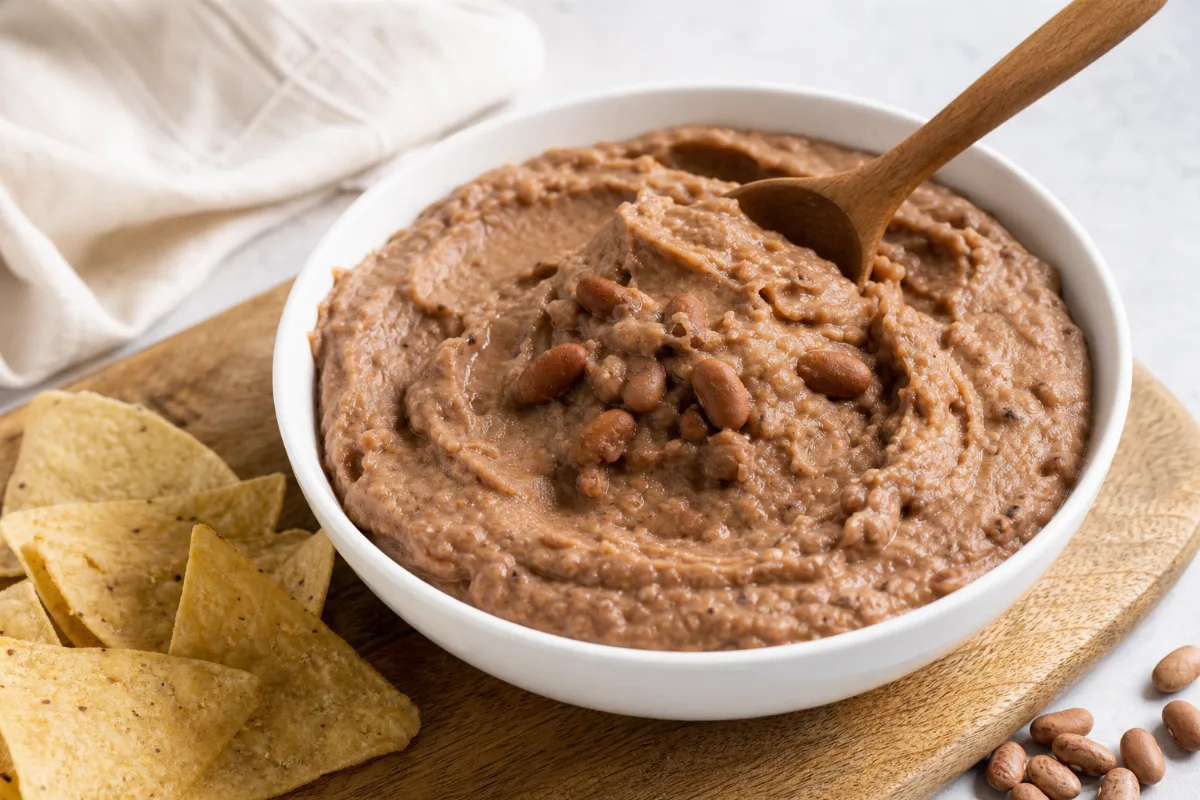
Refried beans are cooked beans (common beans, Phaseolus vulgaris, in the pea family) mashed and cooked with fat and seasoning. They are sold in cans or made at home, and they are eaten as a side, in burritos and as a dip. People choose them for fiber and plant protein. This page covers the prepared dish. It keeps the cooked, seasoned food apart from raw beans and from hype, and it looks closely at two things that vary by product: sodium and the fat used.
Read this first
- Canned refried beans are already cooked. The FDA says the low PHA (lectin) levels in canned and properly cooked beans will not affect you. [3] Raw or undercooked dried beans are the lectin risk, mainly red kidney beans. See lectins in beans.
- Sodium is the number to watch. USDA lists 881 mg of sodium in a cup of traditional canned refried beans (38% of the Daily Value) and 808 mg in a cup of the fat-free item (35%). [1] [2] Fat-free does not mean low-sodium.
- Homemade leftovers: the CDC says to refrigerate leftovers within 2 hours of cooking and to reheat to 165 degrees Fahrenheit or hotter before serving. [5]
- Evidence in one line: pooled trials of beans and other pulses show a small LDL cholesterol drop. Refried beans themselves were not tested in what we read. [6]
- Allergy: for trouble breathing or swelling of the face or throat after any food, call 911 (or your local emergency number). [10]
What is in it (USDA values)
Two USDA items (SR Legacy) describe canned refried beans:
- Refried beans, canned, traditional style (FDC 172438) [1]: household portions 1 cup (238 g) and 1 can (442 g).
- Refried beans, canned, fat-free (FDC 172465) [2]: household portions 1 cup (231 g) and 1 can (445 g).
| Nutrient | Traditional, per 100 g | Traditional, per 1 cup (238 g) | Fat-free, per 100 g | Fat-free, per 1 cup (231 g) | % Daily Value per cup (traditional / fat-free) |
|---|---|---|---|---|---|
| Energy | 90 kcal | 214 kcal | 79 kcal | 182 kcal | no DV |
| Protein | 4.98 g | 11.9 g | 5.34 g | 12.3 g | 24% / 25% |
| Total fat | 2.01 g | 4.78 g | 0.45 g | 1.04 g | 6% / 1% |
| Saturated fat | 0.631 g | 1.5 g | 0.093 g | 0.215 g | 8% / 1% |
| Carbohydrate | 13.55 g | 32.2 g | 13.5 g | 31.2 g | 12% / 11% |
| Total sugars | 0.54 g | 1.29 g | 0.61 g | 1.41 g | no DV |
| Fiber | 3.7 g | 8.81 g | 4.7 g | 10.9 g | 31% / 39% |
| Sodium | 370 mg | 881 mg | 350 mg | 808 mg | 38% / 35% |
| Potassium | 319 mg | 759 mg | 344 mg | 795 mg | 16% / 17% |
| Iron | 1.44 mg | 3.43 mg | 1.62 mg | 3.74 mg | 19% / 21% |
| Magnesium | 35 mg | 83.3 mg | 38 mg | 87.8 mg | 20% / 21% |
| Manganese | 0.289 mg | 0.688 mg | 0.326 mg | 0.753 mg | 30% / 33% |
| Copper | 0.129 mg | 0.307 mg | 0.163 mg | 0.377 mg | 34% / 42% |
| Folate (DFE) | 11 mcg | 26.2 mcg | 57 mcg | 132 mcg | 7% / 33% |
% Daily Value uses the FDA 2016 Daily Values (sodium 2,300 mg, saturated fat 20 g, fiber 28 g). [4] The cup columns are the per-100 g values multiplied by the portion weight. USDA lists trans fat at 0.016 g per 100 g in the traditional item and 0 g in the fat-free item. [1] [2] Values vary by brand and recipe, and the USDA data do not say which fat the traditional item contains; the ingredient list on your can will. A homemade version made with your own beans, fat and salt will have different numbers.
Plant compounds: the sources we read do not measure specific compounds in refried beans. Beans contain resistant starch and oligosaccharides that gut bacteria ferment, which causes gas in some people. [7]
What research says
| Health goal | What the sources found | Strength of evidence | What was studied |
|---|---|---|---|
| LDL cholesterol | A pooled analysis of 26 randomized trials (1,037 people) found diets emphasizing pulses, at a median of 130 g a day, lowered LDL by 0.17 mmol/L compared with similar diets without pulses; the authors list public funding. [6] | Promising but limited (pulses as a group, not refried beans) | Randomized trials of at least 3 weeks |
| Heart disease and long-term outcomes | Harvard's Nutrition Source reports lower coronary artery disease risk with about 4 servings of legumes a week in observational data, and says diabetes evidence is mixed. [7] | Mixed (observational; cannot prove cause) | Cohort studies of legumes in general |
| Gas and bloating | In three feeding studies of pinto beans, black-eyed peas and baked beans (not refried), fewer than half of people reported more gas in the first week. [8] | Promising but limited | Small feeding studies |
| Fat and sodium content of the dish | USDA data show the fat-free item has 0.45 g of fat per 100 g against 2.01 g, and similar sodium (350 versus 370 mg per 100 g). [1] [2] | Established (measured food composition) | USDA analysis of two canned products |
| Weight, blood sugar, blood pressure | Proper evidence not found in the sources we read for refried beans. | Insufficient evidence | Not applicable |
The beans versus the added fat and salt. Trials of pulses used plain cooked pulses. Added fat and salt change the food, so do not assume the same results. We did not read a trial of refried beans. The feeding studies' funding was not stated in the abstract we read.
How much is a normal serving
USDA household portions are 1 cup (238 g, about 214 kcal for the traditional item; 231 g, about 182 kcal for fat-free) or 1 whole can (442 g or 445 g). [1] [2] The NHS says 80 g of beans counts as one of your 5 A DAY, but only once a day however much you eat. [9] This is information, not a prescription.
Safety, allergy and medicines
- Homemade refried beans and leftovers. The CDC page on C. perfringens food poisoning says to keep cooked food at 140 degrees Fahrenheit or hotter, or refrigerate at 40 degrees or colder; to refrigerate leftovers within 2 hours (1 hour if the food is in air above 90 degrees); and to reheat leftovers to 165 degrees or hotter. It also says foods cooked in large batches and held at unsafe temperatures have been linked to outbreaks. The page does not mention beans. [5]
- Cooking dried beans first. If you start from dried beans, cook them as bean-cooking guidance says; the FDA advises soaking dried kidney beans at least 5 hours and boiling in fresh water for at least 30 minutes. That advice is about kidney beans, and we have not seen a source extending it to other beans. [3] See lectins in beans and soaking and cooking times.
- Sodium. About 38% of the Daily Value in a cup of traditional canned refried beans. [1] [4] People advised to limit sodium should check labels. See added sugars, sodium and saturated fat on labels.
- Fat. The traditional item has 1.5 g of saturated fat per cup (8% of the Daily Value). [1] [4] Fat type depends on the brand or recipe.
- Digestion. Gas, bloating and cramping can occur; see beans, gas, FODMAP and digestion. [7] [8]
- Allergy. Read the label; the FDA lists nine major allergens, and canned products can include other ingredients. [11] MedlinePlus says to call 911 or your local emergency number for a serious or whole-body reaction, especially wheezing or trouble breathing. [10] See food allergy basics and emergency signs.
- Kidney disease. USDA lists 759 mg of potassium and 219 mg of phosphorus in a cup of the traditional item. [1] We did not read bean-specific kidney advice. See foods, kidney disease, potassium and oxalates.
- Medicines, pregnancy, children: proper evidence not found in the sources we read. See foods and medicine interactions and foods in pregnancy.
Choosing, storing and food safety
- Compare the sodium and ingredient list on the label, including the type of fat. USDA shows fat-free and traditional products with similar sodium. [1] [2]
- Follow the can's directions for opened cans; refrigerate leftovers promptly. [5]
- See canned beans and dried vs canned beans, soaking and sodium.
Related pages
Health connections for Refried Beans
What research links to eating or drinking this food, and how strong the evidence is. Many studies are observational or use juice, powder, oil or extracts rather than the food as eaten; each card says which.
Beans and LDL cholesterol (pulses as a group)
Clinically supportedA pooled analysis of 26 trials found pulse-emphasizing diets lowered LDL by 0.17 mmol/L. Refried beans were not tested alone.
Supplements: Defined outcome; plain cooked pulses.
Fiber, protein and minerals
Established roleA cup of traditional canned refried beans has 8.81 g fiber (31% DV), 11.9 g protein, 0.307 mg copper and 13.8 mcg selenium; fat-free has 10.9 g fiber and 132 mcg folate.
Supplements: Nutrient content of the food; brands differ.
Gas and bloating
Preliminary or mixedIn feeding studies of pinto beans, black-eyed peas and baked beans, fewer than half reported more gas in the first week. Refried beans were not tested.
Supplements: Small studies of other bean dishes.
Beans, heart disease and long-term health
Preliminary or mixedHarvard reports lower coronary artery disease risk with about 4 servings of legumes a week in observational data; diabetes evidence mixed.
Supplements: Observational; legumes in general.
Connected topics
Open a group to see how each topic connects and how strong the evidence is.
Health goals (1)
- Cholesterol BalanceClinically supported
Pooled pulse trials show a small LDL drop; refried beans with added fat and salt were not tested.
Body systems (1)
- Digestive SystemPreliminary or mixed
Fermentable fibers in beans can cause gas in some people.
Biomarkers (1)
- LDL CholesterolClinically supported
Pooled pulse trials found LDL 0.17 mmol/L lower.
Conditions & symptoms (3)
- FlatulencePreliminary or mixed
Beans can cause gas in some people.
- Food PoisoningDocumented risk
Homemade or catering-size batches held at unsafe temperatures can cause C. perfringens food poisoning per CDC general guidance; canned beans are cooked.
- HypercholesterolemiaClinically supported
Pulses lower LDL a little in pooled trials; not a treatment.
Documented risks and interactions (3)
- Sodium in canned refried beans. USDA lists 881 mg sodium in a cup of the traditional item (38% DV) and 808 mg in the fat-free item (35%).
- Homemade leftovers and food poisoning. The CDC says to refrigerate leftovers within 2 hours (1 hour above 90 F), hold hot food at 140 F or above, reheat to 165 F or above, and notes large batches held at unsafe temperatures have caused outbreaks. The page does not mention beans.
- Canned beans and lectin safety. The FDA says low PHA levels in canned and properly cooked beans will not affect you.
Frequently asked questions
Are refried beans healthy?
They give fiber and plant protein: USDA lists 8.81 g of fiber and 11.9 g of protein in a cup of the traditional canned item. They also carry sodium (881 mg per cup). [1] Fat type depends on the brand.
Are fat-free refried beans lower in sodium?
Not in the USDA data: 350 mg per 100 g against 370 mg for the traditional item. [1] [2]
Are canned refried beans safe to eat without cooking?
The FDA says the low PHA levels in canned and properly cooked beans will not affect you. [3]
How long can homemade refried beans sit out?
The CDC says to refrigerate leftovers within 2 hours of cooking (1 hour in hot weather above 90 degrees Fahrenheit) and reheat to 165 degrees or hotter. [5]
Do refried beans lower cholesterol?
Pooled trials of pulses as a group found a small LDL drop of 0.17 mmol/L. [6] Refried beans were not tested separately.
References
- U.S. Department of Agriculture. FoodData Central: Refried beans, canned, traditional style (SR Legacy, FDC 172438). April 2018 release. Read 2026-10-24.
- U.S. Department of Agriculture. FoodData Central: Refried beans, canned, fat-free (SR Legacy, FDC 172465). April 2018 release. Read 2026-10-24.
- U.S. Food and Drug Administration. Natural Toxins in Food. Content current as of 26 September 2024. Read 2026-10-24.
- U.S. Food and Drug Administration. Daily Value on the Nutrition and Supplement Facts Labels. Content current as of 5 March 2024. Read 2026-10-24.
- Centers for Disease Control and Prevention. Preventing C. perfringens Food Poisoning. Page dated 3 April 2024. Read 2026-10-24.
- Ha V et al. Effect of dietary pulse intake on established therapeutic lipid targets for cardiovascular risk reduction: a systematic review and meta-analysis of randomized controlled trials. CMAJ 2014 (abstract read via Europe PMC). Read 2026-10-24.
- Harvard T.H. Chan School of Public Health. The Nutrition Source: Legumes. No update date shown on the page. Read 2026-10-24.
- Winham DM, Hutchins AM. Perceptions of flatulence from bean consumption among adults in 3 feeding studies. Nutr J 2011 (abstract read via Europe PMC). Read 2026-10-24.
- NHS. 5 A DAY: what counts?. Last reviewed 9 June 2026. Read 2026-10-24.
- MedlinePlus. Food allergy. Reviewed 29 October 2024. Read 2026-10-24.
- U.S. Food and Drug Administration. Food Allergies. Content current as of 11 March 2026. Read 2026-10-24.