Falafel: Nutrients, What Research Shows and Safety
Falafel as a food: USDA values for home-prepared fried patties, fat and calories, acrylamide and frying, who must check for fava beans (G6PD deficiency), allergy and sauces.
Content last updated . This page has not been medically reviewed.
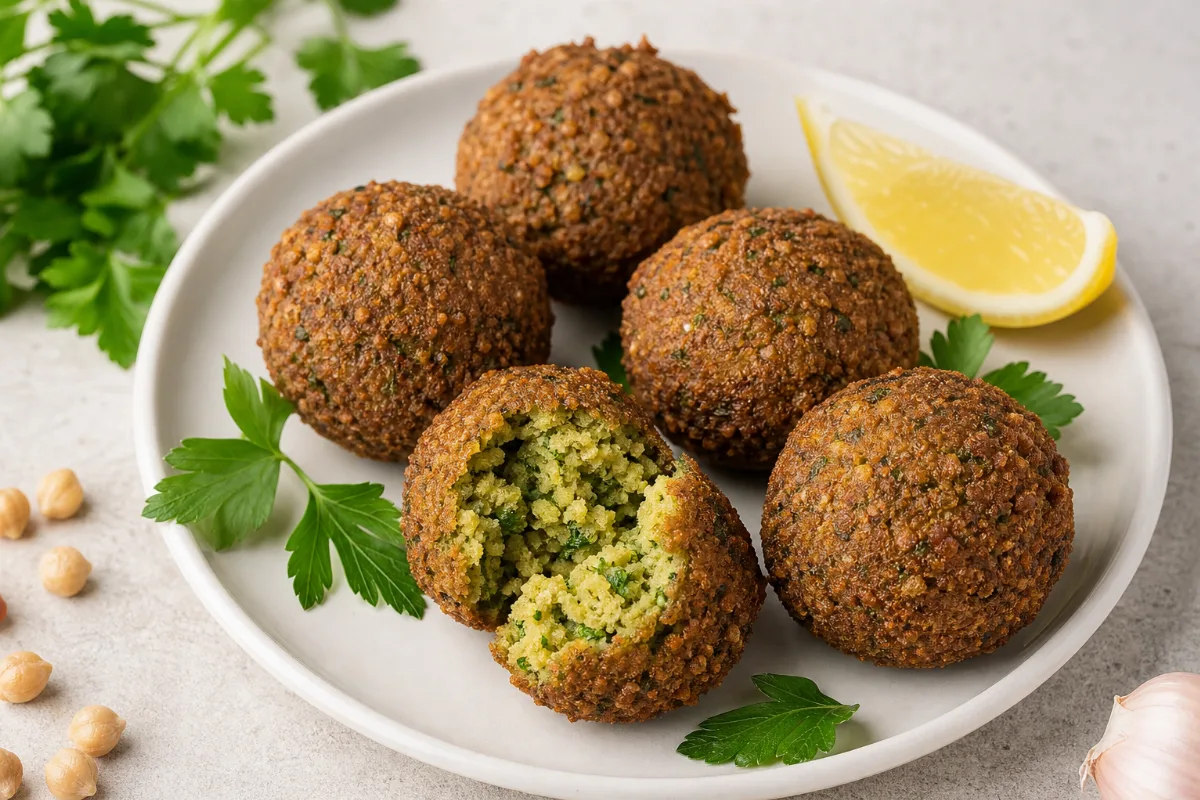
Falafel are small fried patties or balls made from ground chickpeas (Cicer arietinum, a legume in the pea family), herbs and spices. They are eaten in wraps, with salads and as a snack. People choose them for plant protein and fiber from the chickpeas, but the deep frying adds fat and calories. This page covers falafel as a prepared food. It keeps the fried dish apart from plain cooked chickpeas, and puts safety points first where they apply.
Read this first
- Fava beans: falafel is usually described as chickpea-based, but if a recipe or product includes fava (broad) beans, people with G6PD deficiency should avoid it. MedlinePlus Genetics lists eating fava beans as a trigger for hemolytic anemia in G6PD deficiency. [5] A 2023 review says cooking does not guarantee safety: cases have followed boiled and fried beans. [6] The review does not mention falafel, so check the ingredients.
- Frying makes it energy dense. USDA lists 333 kcal and 17.8 g of fat per 100 g of home-prepared falafel; one patty (17 g) is about 57 kcal. [1]
- Acrylamide: the FDA says acrylamide forms during high-temperature cooking such as frying, and that there is no consistent evidence of cancer risk in people from dietary exposure. [3] A 2024 study of falafel in Tehran found higher acrylamide with high-temperature frying and concluded the health risk was not significant. [2]
- Evidence in one line: pooled trials of beans and other pulses show a small LDL cholesterol drop. Falafel was not tested, and frying changes the food. [7]
- Allergy: for trouble breathing or swelling of the face or throat after any food, call 911 (or your local emergency number). [9]
What is in it (USDA values)
The values are for falafel, home-prepared (USDA FoodData Central item 172455, SR Legacy). [1] The only USDA household portion is 1 patty, about 2-1/4 inches across, 17 g. USDA lists no fiber or sugars value for this item. Commercial and restaurant falafel differ.
| Nutrient | Per 100 g | Per patty (17 g) | % Daily Value per patty |
|---|---|---|---|
| Energy | 333 kcal | 56.6 kcal | no DV |
| Protein | 13.31 g | 2.26 g | 5% |
| Total fat | 17.8 g | 3.03 g | 4% |
| Saturated fat | 2.383 g | 0.405 g | 2% |
| Monounsaturated fat | 10.171 g | 1.73 g | no DV |
| Polyunsaturated fat | 4.16 g | 0.707 g | no DV |
| Carbohydrate | 31.84 g | 5.41 g | 2% |
| Sodium | 294 mg | 50 mg | 2% |
| Potassium | 585 mg | 99.5 mg | 2% |
| Iron | 3.42 mg | 0.581 mg | 3% |
| Magnesium | 82 mg | 13.9 mg | 3% |
| Manganese | 0.691 mg | 0.117 mg | 5% |
| Folate (DFE) | 104 mcg | 17.7 mcg | 4% |
% Daily Value uses the FDA 2016 Daily Values. [4] The patty column is the per-100 g value multiplied by 0.17. Three patties (51 g) would be about 170 kcal; that is our multiplication, not a USDA portion. USDA also lists a high vitamin D value for this item (9.67 mcg per 100 g), which we left out of the table because it looks unusual for a chickpea food and we could not verify it. Values vary a lot with the recipe, the oil and how much fat the patties absorb.
Plant compounds: the sources we read do not measure specific compounds in falafel. Chickpeas contain resistant starch and oligosaccharides that gut bacteria ferment, which causes gas in some people. [8]
What research says
| Health goal | What the sources found | Strength of evidence | What was studied |
|---|---|---|---|
| LDL cholesterol | A pooled analysis of 26 randomized trials (1,037 people) found diets emphasizing pulses (beans, chickpeas, lentils, peas), at a median of 130 g a day, lowered LDL by 0.17 mmol/L compared with similar diets without pulses; the authors list public funding. [7] | Promising but limited (pulses as a group; not fried falafel) | Randomized trials of at least 3 weeks, mostly plain cooked pulses |
| Fried food and heart health | A 2015 review found some studies linked fried food to heart disease, diabetes, high blood pressure or obesity and others did not; it mentions "four or more times per week" as linked to higher risk, and says details about the frying oil and method are often missing. [10] | Mixed (observational; cannot prove cause) | Studies of fried foods in general, not falafel |
| Acrylamide in falafel | In commercial falafel from Tehran, acrylamide averaged 1.23 mg/kg (range 0.12 to 3.75). It averaged 0.73 mg/kg with lower temperature, electric oven and low oil, and 1.72 mg/kg with high-temperature gas frying with the patties immersed in oil. Canola oil gave the highest average and soybean oil the lowest. The authors concluded there is no significant health risk from falafel. [2] | Established for the measured levels in those samples | One lab study, one city, commercial falafel |
| Heart disease and long-term outcomes | Harvard's Nutrition Source reports lower coronary artery disease risk with about 4 servings of legumes a week in observational data. [8] | Mixed (legumes in general, not fried falafel) | Cohort studies |
| Weight, blood sugar | Proper evidence not found in the sources we read for falafel. | Insufficient evidence | Not applicable |
The chickpeas versus the frying. The benefits in pulse trials came from plain cooked pulses. Deep frying adds fat and calories and can form acrylamide. We did not read a study that compares baked and fried falafel for health outcomes.
How much is a normal serving
The only USDA household portion is 1 patty (17 g, about 57 kcal). [1] How many patties are in a wrap or plate varies, so the label or menu is the better guide. This is information, not a prescription.
Safety, allergy and medicines
- Fava beans and G6PD deficiency (favism). MedlinePlus Genetics says about 400 million people worldwide have G6PD deficiency, it is most common in parts of Africa, Asia, the Mediterranean and the Middle East, many people never have symptoms, and people with the condition should avoid fava beans. [5] A 2023 review says symptoms such as jaundice and dark urine usually appear about one to three days after eating beans, that boiled and fried beans have caused cases, and that medical care should be sought promptly if dark urine or jaundice follows. [6] See fava beans. Ask the cook or read the ingredients if you have G6PD deficiency.
- Is the chickpea mix cooked enough? Many recipes use soaked chickpeas that are not boiled first. We did not find a source that tests how well frying inactivates lectins or trypsin inhibitors in that mix, and the FDA's bean-safety guidance concerns kidney beans, so we make no claim either way. [11]
- Acrylamide and frying. See the table: levels were higher with high-temperature frying and varied by oil. [2] [3] For general frying and oil questions see smoke points and cooking with oil.
- Fat and sodium. USDA lists 17.8 g of fat and 294 mg of sodium per 100 g. [1] Sauces, pita and toppings add more, and we reviewed none.
- Allergy. Falafel is often served with sauces or coatings. The FDA lists nine major allergens, including sesame, soy and wheat; read labels or ask. [12] MedlinePlus says to call 911 or your local emergency number for a serious or whole-body reaction. [9] Chickpea allergy is covered in legume allergy. See also food allergy basics and emergency signs.
- Digestion. Gas and bloating can occur; see beans, gas, FODMAP and digestion. [8]
- Kidney disease. USDA lists 585 mg of potassium and 192 mg of phosphorus per 100 g. [1] We did not read falafel-specific kidney advice. See foods, kidney disease, potassium and oxalates.
- Medicines, pregnancy, children: proper evidence not found in the sources we read. See foods and medicine interactions and foods in pregnancy.
Choosing, storing and food safety
- Ask what the patties are made of (chickpeas, fava beans or both), what oil is used, and whether the sauces contain sesame or other allergens.
- Oven-baked falafel had lower acrylamide than high-temperature immersion frying in the Tehran study, though that study compared commercial products with other differences too. [2]
- We did not read storage or reheating guidance specific to falafel. See hummus and chickpeas for related foods.
Related pages
Health connections for Falafel
What research links to eating or drinking this food, and how strong the evidence is. Many studies are observational or use juice, powder, oil or extracts rather than the food as eaten; each card says which.
Fried food and heart health
Preliminary or mixedA 2015 review found some studies linked fried food to heart disease, diabetes, hypertension or obesity and others did not; four or more times a week was linked to higher risk; frying oil details were often missing.
Supplements: Observational; cannot prove cause.
Chickpeas and LDL cholesterol (pulses as a group)
Preliminary or mixedA pooled analysis of 26 trials found pulse-emphasizing diets lowered LDL by 0.17 mmol/L. Fried falafel was not tested.
Supplements: Plain cooked pulses; downgraded because frying changes the food.
Protein and minerals from chickpeas
Established roleUSDA lists 13.31 g protein, 82 mg magnesium, 3.42 mg iron and 104 mcg folate per 100 g of home-prepared falafel; a patty is small.
Supplements: Nutrient content; varies by recipe.
Gas and bloating
Preliminary or mixedLegumes contain resistant starch and oligosaccharides that ferment in the colon and can cause gas in some people.
Supplements: General legume statement.
Is the soaked, unboiled chickpea mix cooked enough?
Not enough evidenceWe did not find a source testing whether frying inactivates lectins or trypsin inhibitors in the typical soaked chickpea mix; FDA bean guidance concerns kidney beans.
Supplements: Proper evidence not found in the sources we read.
Connected topics
Open a group to see how each topic connects and how strong the evidence is.
Body systems (1)
- Digestive SystemPreliminary or mixed
Fermentable fibers in chickpeas can cause gas in some people.
Conditions & symptoms (2)
- FavismDocumented risk
Applies only if the falafel contains fava beans; people with G6PD deficiency should avoid fava beans.
- FlatulencePreliminary or mixed
Legumes can cause gas in some people.
Documented risks and interactions (3)
- Fava beans and G6PD deficiency (favism). If a falafel recipe or product includes fava (broad) beans, people with G6PD deficiency should avoid it. MedlinePlus Genetics lists fava beans as a trigger; a 2023 review says cooked, boiled and fried beans have caused cases and seek care if dark urine or jaundice follows. The review does not mention falafel.
- Frying, calories and fat. USDA lists 333 kcal and 17.8 g fat per 100 g of home-prepared falafel (one 17 g patty is about 57 kcal).
- Acrylamide in fried falafel. The FDA says acrylamide forms in frying, roasting and baking and that there is no consistent evidence of cancer risk in people from dietary exposure. A 2024 study of falafel in Tehran found a mean of 1.23 mg/kg (0.12 to 3.75), higher with high-temperature immersion frying, and concluded no significant health risk.
Frequently asked questions
Is falafel healthy?
It starts from chickpeas, which give fiber and protein, but deep frying adds fat: USDA lists 17.8 g of fat and 333 kcal per 100 g. [1] A 2015 review found fried food and health outcomes mixed, with details on oil often missing. [10]
Does falafel contain acrylamide?
A 2024 study of falafel in Tehran found an average of 1.23 mg/kg, higher with high-temperature immersion frying, and the authors concluded the risk was not significant. [2] The FDA says acrylamide forms in frying and that there is no consistent evidence of cancer risk in people from dietary exposure. [3]
Can people with G6PD deficiency eat falafel?
Falafel is usually chickpea-based, but if it contains fava beans, MedlinePlus Genetics says people with G6PD deficiency should avoid fava beans. [5] Ask or check the ingredients.
Is baked falafel healthier than fried?
In one study, falafel cooked at lower temperature in an electric oven with low oil had lower acrylamide than high-temperature immersion frying. [2] We did not find a study of health outcomes.
Can I eat falafel with a sesame allergy?
Check sauces and coatings: sesame is a major US allergen. [12] For trouble breathing or swelling, call 911 or your local emergency number. [9]
References
- U.S. Department of Agriculture. FoodData Central: Falafel, home-prepared (SR Legacy, FDC 172455). April 2018 release. Read 2026-10-24.
- Faraji F, Shahidi SA, Shariatifar N, Ahmadi M. Evaluation of acrylamide concentration in commercial falafel available in Tehran City by different cooking methods: a health risk assessment study. Food Chem X 2024 (abstract read via Europe PMC). Read 2026-10-24.
- U.S. Food and Drug Administration. Acrylamide. Content current as of 5 March 2024. Read 2026-10-24.
- U.S. Food and Drug Administration. Daily Value on the Nutrition and Supplement Facts Labels. Content current as of 5 March 2024. Read 2026-10-24.
- MedlinePlus Genetics. Glucose-6-phosphate dehydrogenase deficiency. Last updated 12 April 2023. Read 2026-10-24.
- Beretta A, Manuelli M, Cena H. Favism: Clinical Features at Different Ages. Nutrients 2023. Read 2026-10-24.
- Ha V et al. Effect of dietary pulse intake on established therapeutic lipid targets for cardiovascular risk reduction: a systematic review and meta-analysis of randomized controlled trials. CMAJ 2014 (abstract read via Europe PMC). Read 2026-10-24.
- Harvard T.H. Chan School of Public Health. The Nutrition Source: Legumes. No update date shown on the page. Read 2026-10-24.
- MedlinePlus. Food allergy. Reviewed 29 October 2024. Read 2026-10-24.
- Gadiraju TV, Patel Y, Gaziano JM, Djousse L. Fried Food Consumption and Cardiovascular Health: A Review of Current Evidence. Nutrients 2015 (abstract read via Europe PMC). Read 2026-10-24.
- U.S. Food and Drug Administration. Natural Toxins in Food. Content current as of 26 September 2024. Read 2026-10-24.
- U.S. Food and Drug Administration. Food Allergies. Content current as of 11 March 2026. Read 2026-10-24.