Cranberry Beans (Borlotti): Nutrients, What Research Shows and Safety
Cranberry (borlotti) beans as a food: USDA values, why raw beans need real cooking, what pooled bean trials found on cholesterol and blood sugar, gas, and allergy.
Content last updated . This page has not been medically reviewed.
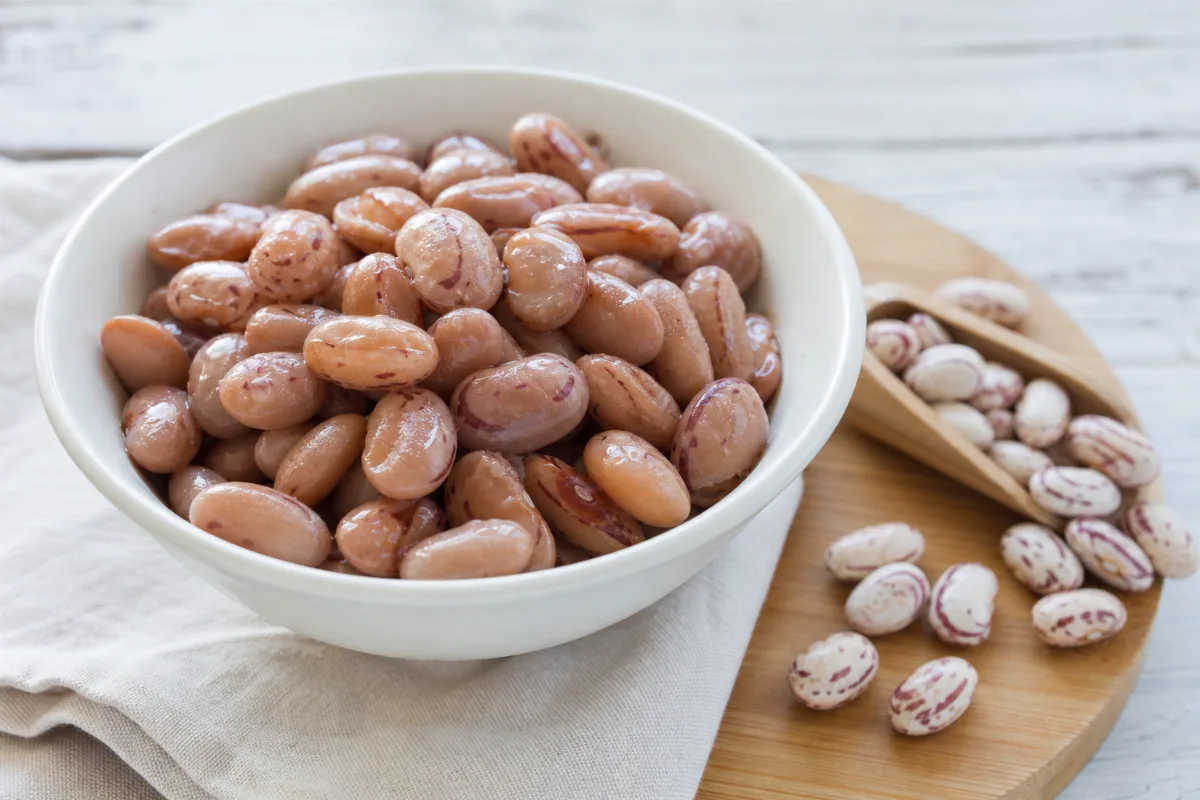
Cranberry beans are the seeds of the common bean plant, Phaseolus vulgaris (pea family). They have cream-colored skins with red-pink streaks and are also sold as borlotti or Roman beans. They are eaten dried and cooked, or canned, in soups, stews, pasta dishes and salads, mostly for fiber, plant protein and folate. This page covers the whole bean as food, keeps cooking safety in view, and keeps the food apart from extracts and supplements.
Read this first
- Cook dried beans properly. Cranberry beans are the same species as kidney beans. In a 2021 laboratory study raw borlotti beans had about the same lectin activity as raw kidney beans (13,312 versus 13,214 units per gram), and none was detected after a 12-hour soak and 45 minutes of boiling. [3] The FDA says raw or undercooked beans can cause nausea, severe vomiting and diarrhea, and advises soaking at least 5 hours then boiling in fresh water at least 30 minutes. [4] Health Canada's shorter 10-minute boil is written for dry red kidney beans. [5] We read no poisoning report about cranberry beans and no boil time written for them, so see "Choosing, storing and food safety".
- Canned beans are already cooked. The FDA says the low lectin (PHA) levels in canned and properly cooked kidney beans will not affect you. [4] We read no cranberry-bean-specific statement, but canned beans are cooked in the can. [5]
- Evidence in one line: pooled trials of pulses as a group show a small LDL cholesterol drop and, in some analyses, lower blood sugar markers. Studies of cranberry beans alone are not in what we read. [8] [9]
- Digestion: beans contain carbohydrates that gut bacteria ferment, so gas and bloating are common. People on a low-FODMAP plan are usually asked to limit them for a short time. [12] [14]
- Allergy: we did not read a source on cranberry bean allergy. For trouble breathing or swelling of the face or throat after any food, call 911 (or your local emergency number). [15]
What is in it (USDA values)
The main columns are for cranberry (roman) beans, mature seeds, boiled without salt (USDA FoodData Central item 173736, SR Legacy) [1]. The serving is the USDA household portion, 1 cup cooked (177 g). The last column is the same bean dry and uncooked (item 175189) [2]; do not compare it with the cooked columns, because cooking adds water. Canned beans usually contain salt and are a different product.
| Nutrient | Cooked, per 100 g | Cooked, per 1 cup (177 g) | % Daily Value per cup | Dry (raw), per 100 g |
|---|---|---|---|---|
| Energy | 136 kcal | 241 kcal | no DV | 335 kcal |
| Total fat | 0.46 g | 0.814 g | 1% | 1.23 g |
| Saturated fat | 0.119 g | 0.211 g | 1% | 0.316 g |
| Carbohydrate | 24.46 g | 43.3 g | 16% | 60.05 g |
| Fiber | 8.6 g | 15.2 g | 54% | 24.7 g |
| Protein | 9.34 g | 16.5 g | 33% | 23.03 g |
| Folate (DFE) | 207 mcg | 366 mcg | 92% | 604 mcg |
| Copper | 0.231 mg | 0.409 mg | 45% | 0.794 mg |
| Thiamin (B1) | 0.21 mg | 0.372 mg | 31% | 0.747 mg |
| Manganese | 0.37 mg | 0.655 mg | 28% | 0.92 mg |
| Magnesium | 50 mg | 88.5 mg | 21% | 156 mg |
| Iron | 2.09 mg | 3.70 mg | 21% | 5.0 mg |
| Phosphorus | 135 mg | 239 mg | 19% | 372 mg |
| Zinc | 1.14 mg | 2.02 mg | 18% | 3.63 mg |
| Potassium | 387 mg | 685 mg | 15% | 1332 mg |
| Calcium | 50 mg | 88.5 mg | 7% | 127 mg |
| Selenium | 1.3 mcg | 2.30 mcg | 4% | 12.7 mcg |
| Sodium | 1 mg | 1.77 mg | 0% | 6 mg |
% Daily Value uses the FDA 2016 Daily Values; the cup column is the 100 g value multiplied by 1.77. USDA lists no Daily Value for energy. Values vary with variety, growing place and cooking time.
Plant compounds: a 2020 laboratory study of borlotti beans found that cooking and soaking at home released little of the bean's polyphenols, while a lab model of starch and protein digestion released about twenty times more (40.4 versus 2.22 mg gallic acid equivalents per gram). Extracts of the cooked beans lowered two inflammation markers by 25% and 40% in mouse immune cells. [7] That is cell work, not a result in people. The authors note their long digestion step may not match the human gut. [7] Beans also contain lectins, phytic acid and tannins, which animal and cell studies suggest can reduce mineral absorption; Harvard calls this theory and says human research is very limited. [6]
What research says
| Health goal | What the sources found | Strength of evidence | What was studied |
|---|---|---|---|
| LDL cholesterol | A pooled analysis of 26 randomized trials (1,037 people) found diets emphasizing pulses, at a median of 130 g a day, lowered LDL by 0.17 mmol/L. Apolipoprotein B and non-HDL cholesterol did not change. Funded by the Canadian Institutes of Health Research. [8] | Promising but limited (pulses as a group; cranberry beans not separated) | Randomized trials, mixed pulses |
| Blood sugar | Pooled trials found lower fasting glucose and insulin when pulses were eaten alone, and lower glycosylated proteins in low-glycemic-index and high-fiber diets. [9] | Promising but limited | Trials in people with and without diabetes, mixed pulses |
| Body weight | A pooled analysis of 21 trials (940 people) found diets with pulses (median 132 g a day) gave 0.34 kg more weight loss over a median of 6 weeks. [10] | Promising but limited (a small effect) | Randomized trials, mixed pulses |
| Blood pressure | A pooled analysis of 16 trials found no significant overall change in blood pressure (certainty low). Systolic pressure fell in the subgroup with overweight or obesity. [11] | Mixed | Randomized trials, mixed legumes |
| Heart disease and long-term outcomes | Harvard reports about a 14% lower coronary artery disease risk with legumes four times a week in a mostly observational meta-analysis; evidence on cancer is less conclusive in people, and on diabetes it is mixed. [12] | Mixed (observational; cannot prove cause) | Cohort studies, mixed legumes |
| Antioxidant or anti-inflammatory effects of bean polyphenols | Seen in mouse cells treated with borlotti bean extracts. [7] | Lab or animal only | Cell model, cooked bean extract |
| Raw or undercooked bean poisoning | Lectin activity was high in raw borlotti beans and not detected after soaking and boiling in one lab study. [3] | Established for beans of this species in general (documented risk); no cranberry-bean poisoning report read | Lab measurement |
Eaten as food vs taken as an extract. The trials above used pulses eaten as food. The extract result is from a cell model. Observational findings show an association, not proof that beans cause the difference. We did not read who funded most of the pooled analyses.
How much is a normal serving
The USDA household portion is 1 cup of cooked cranberry beans (177 g), with about 241 kcal, 16.5 g of protein and 15.2 g of fiber (see the table). [1] The NHS counts 80 g of beans and pulses as one portion and says they count only once a day toward 5 A DAY, however much you eat. [13] The cholesterol trials used a median of about 130 g of pulses a day. [8] Harvard cites about 3 cups of legumes a week in the U.S. Dietary Guidelines. [12] This is information, not a prescription.
Safety, allergy and medicines
- Raw or undercooked beans (lectins). The FDA says phytohaemagglutinin (PHA) is a lectin found in raw or undercooked beans and at high levels can cause nausea, severe vomiting and diarrhea. [4] Health Canada says symptoms usually start within 1 to 3 hours and pass fairly quickly. [5] Harvard adds that raw beans simmered at low heat, as in a slow cooker, will not lose all their lectins. [6] Do not eat dry beans raw or only warmed through.
- How often and how bad for this bean. We read no poisoning report that names cranberry or borlotti beans. Health Canada says the main concern is red kidney beans. [5] Beans of this species had similar raw lectin activity in the lab. [3]
- Digestion. Resistant starch and oligosaccharides ferment in the colon and can cause gas, bloating and cramping. [12] A hospital low-FODMAP leaflet names beans and pulses as the main source of galacto-oligosaccharides and says the restriction is temporary, usually four to six weeks. [14] See beans, gas, FODMAPs and digestion.
- Allergy: we read no source on cranberry bean allergy. Reactions can include hives, swelling and trouble breathing; anaphylaxis is a medical emergency, call 911. [15] See food allergy basics and emergency signs and legume allergy and cross-reactivity.
- Kidney disease, medicines, pregnancy, children: USDA lists 685 mg of potassium and 239 mg of phosphorus in a cup of cooked beans (15% and 19% of the Daily Value). [1] We read no source on bean limits for kidney disease, on medicines, or on pregnancy for this bean. See foods, kidney disease, potassium and oxalates, food and medicine interactions and foods in pregnancy, and ask a clinician.
- If someone gets sick after eating beans: see poisoning: what to do first.
Choosing, storing and food safety
- Dried beans: the FDA says soak beans at least 5 hours, then boil in fresh water at least 30 minutes. [4] Health Canada gives soaking for at least 5 hours and a vigorous boil of at least 10 minutes for dry red kidney beans. [5] The lab study that found no lectin in borlotti used a 12-hour soak and 45-minute boil, and its authors call that Danish guidance sufficient for beans and lentils. [3] The sources differ and none gives a cranberry-bean time on its own, so follow your national food-safety authority; the FDA figure is the longest we read. See soaking and cooking times for dried beans and lentils.
- Canned beans are cooked in the can; check labels for added sodium. [12] See dried vs canned beans, soaking and sodium.
- Slow cookers: Health Canada says not for dry red kidney beans. [5] Harvard says low-heat simmering may leave lectins in raw beans. [6] Boil first.
Related pages
Health connections for Cranberry Beans (Borlotti)
What research links to eating or drinking this food, and how strong the evidence is. Many studies are observational or use juice, powder, oil or extracts rather than the food as eaten; each card says which.
Cranberry beans as a source of fiber, folate and minerals
Established roleCooked cranberry beans supply fiber, plant protein and folate. USDA lists 15.2 g fiber, 366 mcg folate (92% of the Daily Value) and 16.5 g protein in 1 cup (177 g).
Supplements: Food source only. We read no trial showing cranberry beans correct a deficiency.
Cranberry beans and cholesterol, blood sugar or weight
Not enough evidencePooled randomized trials of pulses as a group found a small LDL drop (0.17 mmol/L), lower fasting glucose and insulin, and 0.34 kg more weight loss. We read no trial that lists Cranberry beans.
Supplements: Not applicable.
Cranberry beans and blood pressure
Preliminary or mixedA pooled analysis of 16 trials of legumes found no significant overall change in blood pressure (certainty low), with a fall in systolic pressure only in people with overweight or obesity.
Supplements: Not applicable.
Borlotti bean polyphenols and inflammation markers
Lab or animal research onlyIn a lab model, digestion of cooked borlotti beans released about 20 times more polyphenols than cooking, and extracts lowered two inflammation markers in mouse immune cells. This is cell work, not a result in people.
Supplements: Not applicable.
Connected topics
Open a group to see how each topic connects and how strong the evidence is.
Body systems (2)
- Digestive SystemDocumented risk
Raw or undercooked beans carry lectins that can cause vomiting and diarrhea, and beans ferment in the gut to cause gas and bloating in some people. Both are documented but avoidable with cooking and, for gas, smaller portions.
- Gut HealthDocumented risk
Raw or undercooked beans carry lectins that can cause vomiting and diarrhea, and beans ferment in the gut to cause gas and bloating in some people. Both are documented but avoidable with cooking and, for gas, smaller portions.
Body parts (1)
- GutDocumented risk
Raw or undercooked beans carry lectins that can cause vomiting and diarrhea, and beans ferment in the gut to cause gas and bloating in some people. Both are documented but avoidable with cooking and, for gas, smaller portions.
Root causes (1)
- Nutrient DeficiencyEstablished role
Cooked cranberry beans are a food source of folate (92% of the Daily Value per cup). MedlinePlus says low folate is linked to birth defects such as spina bifida. Beans are not a treatment for deficiency.
Conditions & symptoms (3)
- FlatulenceDocumented risk
Beans contain carbohydrates that gut bacteria ferment; gas and bloating are common.
- Food PoisoningDocumented risk
The FDA says PHA in raw or undercooked beans can cause nausea, severe vomiting and diarrhea. Beans of this species had high raw lectin activity in a lab study; no cranberry-bean poisoning report was read.
- Irritable Bowel SyndromeDocumented risk
A hospital low-FODMAP leaflet for adults with IBS-type symptoms names beans and pulses as the main source of galacto-oligosaccharides and asks to limit them temporarily, usually 4 to 6 weeks.
Documented risks and interactions (4)
- Raw or undercooked beans and lectin (PHA) poisoning. The FDA says PHA in raw or undercooked beans can cause nausea, severe vomiting and diarrhea and advises a 5-hour soak and a 30-minute boil. In a lab study raw borlotti beans had lectin activity similar to raw kidney beans, and none was detected after a 12-hour soak and 45-minute boil. We read no poisoning report for cranberry beans.
- Gas, bloating and FODMAPs. Cranberry beans can cause gas like other beans. People on a low-FODMAP plan are usually asked to limit beans for 4 to 6 weeks with a dietitian.
- Potassium and phosphorus for people with kidney disease. USDA lists 685 mg potassium and 239 mg phosphorus in 1 cup (177 g) of cooked cranberry beans (15% and 19% of the Daily Value). We read no source on bean limits in kidney disease.
- Legume allergy emergency signs. We read no source on cranberry bean allergy. Food allergy can cause hives, swelling and trouble breathing; anaphylaxis is a medical emergency, so call 911 or your local emergency number.
Frequently asked questions
Are cranberry beans the same as borlotti beans?
They are sold under both names, and both are Phaseolus vulgaris. USDA lists the food as "cranberry (roman)" beans. [1] The lectin and polyphenol studies we read used borlotti beans; cultivars can differ. [3] [7]
Can raw cranberry beans make you sick?
Raw beans of this species carry high lectin activity in the lab, and the FDA says PHA in raw or undercooked beans can cause nausea, severe vomiting and diarrhea. [3] [4] Soak and boil dry beans; we read no cranberry-bean poisoning report.
How long should dried cranberry beans be boiled?
No source we read gives a time just for them. The FDA says at least 30 minutes after a 5-hour soak, while Health Canada says at least 10 minutes for red kidney beans. [4] [5] Check your local authority.
Do cranberry beans lower cholesterol?
Pooled trials of pulses as a group found a small LDL drop of 0.17 mmol/L at about one serving a day. [8] That is not specific to cranberry beans and is not a treatment for high cholesterol.
Do cranberry beans cause gas?
They can, because gut bacteria ferment their oligosaccharides and resistant starch. [12] Soaking dried beans for at least three hours and then cooking them may reduce this, according to Harvard. [12]
References
- U.S. Department of Agriculture. FoodData Central: Beans, cranberry (roman), mature seeds, cooked, boiled, without salt (SR Legacy, FDC 173736). April 2018 release. Read 2026-10-24.
- U.S. Department of Agriculture. FoodData Central: Beans, cranberry (roman), mature seeds, raw (SR Legacy, FDC 175189). April 2018 release. Read 2026-10-24.
- Adamcová A, Laursen KH, Ballin NZ. Lectin activity in commonly consumed plant-based foods: calling for method harmonization and risk assessment. Foods 2021;10(11):2796. Read 2026-10-24.
- U.S. Food and Drug Administration. Natural Toxins in Food. Content current as of 2024-09-26. Read 2026-10-24.
- Health Canada. Lectins in Dry Legumes. Page details dated 2017-05-04. Read 2026-10-24.
- Harvard T.H. Chan School of Public Health. Lectins (The Nutrition Source). Last reviewed January 2022. Read 2026-10-24.
- Perez-Hernandez LM et al. Starch digestion enhances bioaccessibility of anti-inflammatory polyphenols from borlotti beans (Phaseolus vulgaris). Nutrients 2020;12(2):295. Funded by CONACYT (Mexico). Read 2026-10-24.
- Ha V et al. Effect of dietary pulse intake on established therapeutic lipid targets for cardiovascular risk reduction: a systematic review and meta-analysis of randomized controlled trials. CMAJ 2014 (abstract read via Europe PMC). Read 2026-10-24.
- Sievenpiper JL et al. Effect of non-oil-seed pulses on glycaemic control: a systematic review and meta-analysis of randomised controlled experimental trials in people with and without diabetes. Diabetologia 2009 (abstract read via Europe PMC). Read 2026-10-24.
- Kim SJ et al. Effects of dietary pulse consumption on body weight: a systematic review and meta-analysis of randomized controlled trials. Am J Clin Nutr 2016 (abstract read via Europe PMC). Read 2026-10-24.
- Reyneke GL et al. The effect of non-oil seed legume intake on blood pressure: a systematic review and meta-analysis of randomized controlled trials. Adv Nutr 2023 (abstract read via Europe PMC). Read 2026-10-24.
- Harvard T.H. Chan School of Public Health. The Nutrition Source: Legumes. No update date shown on the page. Read 2026-10-24.
- NHS. 5 A DAY: what counts?. Last reviewed 9 June 2026. Read 2026-10-24.
- Cambridge University Hospitals NHS Foundation Trust. Low FODMAP diet: reducing fermentable carbohydrates in your diet. Patient leaflet approved 14 Aug 2025. Read 2026-10-24.
- MedlinePlus. Food allergy. Last updated 19 November 2025. Read 2026-10-24.