Kidney Beans: Nutrients, What Research Shows and Safety
Kidney beans as a food: USDA nutrient values, why raw or undercooked red kidney beans can cause poisoning, safe cooking, what pooled trials found on cholesterol, gas.
Content last updated . This page has not been medically reviewed.
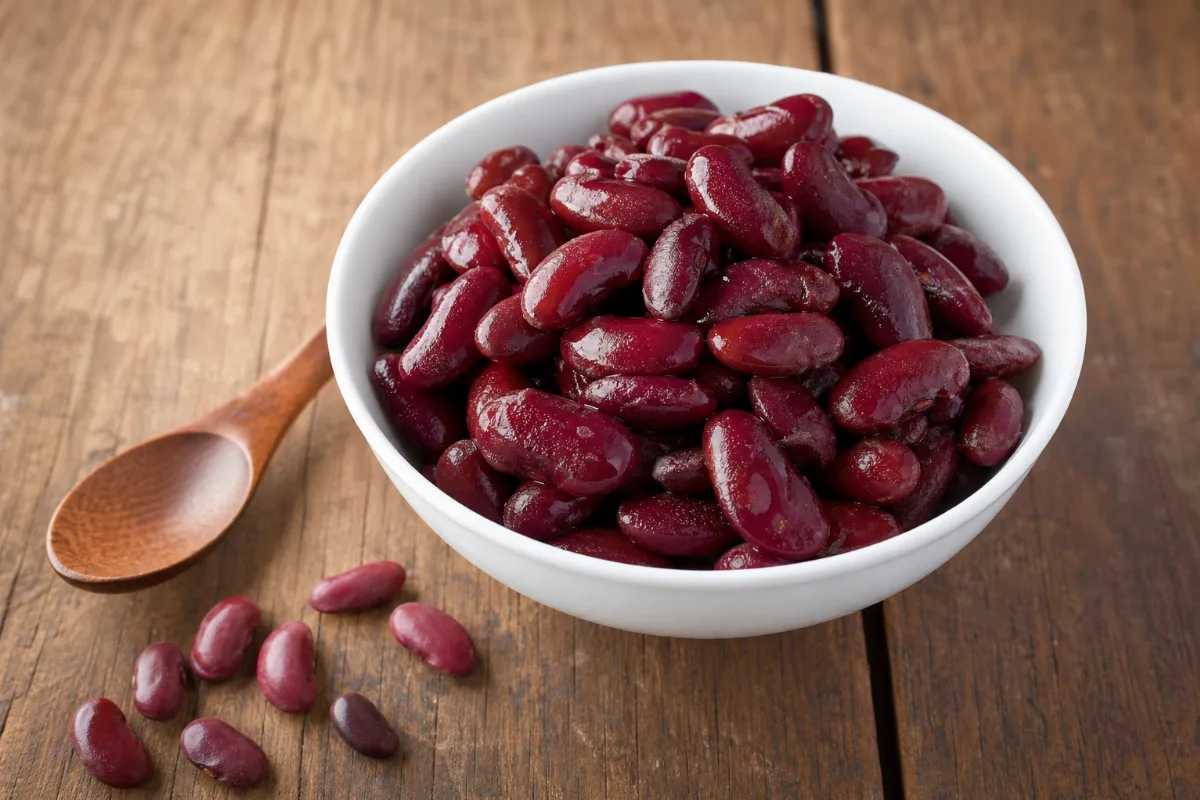
Kidney beans are the seeds of the common bean plant, Phaseolus vulgaris (pea family). They are sold dried, canned or cooked, and the best known kind is the dark red bean used in chili, rice dishes and salads. People eat them for fiber, plant protein and folate. This page covers the whole bean as food. It keeps cooking safety first, and keeps the food apart from extracts and supplements made from beans.
Read this first
- Food safety first. Raw or undercooked red kidney beans contain a lectin called phytohaemagglutinin (PHA). Health Canada says most reported illnesses involved undercooked red kidney beans, with nausea, vomiting and diarrhea starting about 1 to 3 hours after eating. [1]
- Dried beans need proper cooking. The FDA advises soaking for at least 5 hours, then boiling in fresh water for at least 30 minutes. [2] Health Canada gives a shorter boil of at least 10 minutes after the same soaking. [1] Sources differ, so see "Choosing, storing and food safety" below. Do not cook dried kidney beans in a slow cooker. [1]
- Canned kidney beans are already cooked. The FDA says the low PHA levels in canned and properly cooked beans will not affect you. [2]
- Evidence in one line: pooled trials of beans and other pulses show a small drop in LDL cholesterol, and eating beans is linked to better heart health in observational studies. Studies on kidney beans alone are scarce in what we read. [3] [4]
- Allergy: we did not read a source on kidney bean allergy. For trouble breathing or swelling of the face or throat after any food, call 911 (or your local emergency number). [5]
What is in it (USDA values)
The main columns are for red kidney beans, mature seeds, boiled without salt (USDA FoodData Central item 175194, SR Legacy) [6]. The serving is the USDA household portion of 1 cup cooked (177 g). The last column is the same bean dry and uncooked (item 175193) [7]; do not compare it with the cooked columns, because cooking adds water. The USDA raw item is "all types" of kidney beans and the cooked item is red kidney beans, boiled without salt. Canned beans, which usually contain salt, are a different product with different values.
| Nutrient | Cooked, per 100 g | Cooked, per 1 cup (177 g) | % Daily Value per cup | Dry (raw), per 100 g |
|---|---|---|---|---|
| Energy | 127 kcal | 225 kcal | no DV | 333 kcal |
| Total fat | 0.5 g | 0.885 g | 1% | 0.83 g |
| Saturated fat | 0.072 g | 0.127 g | 1% | 0.12 g |
| Carbohydrate | 22.8 g | 40.4 g | 15% | 60 g |
| Fiber | 7.4 g | 13.1 g | 47% | 24.9 g |
| Total sugars | 0.32 g | 0.566 g | no DV | 2.23 g |
| Protein | 8.67 g | 15.3 g | 31% | 23.6 g |
| Folate (DFE) | 130 mcg | 230 mcg | 58% | 394 mcg |
| Manganese | 0.477 mg | 0.844 mg | 37% | 1.02 mg |
| Copper | 0.242 mg | 0.428 mg | 48% | 0.958 mg |
| Thiamin (B1) | 0.16 mg | 0.283 mg | 24% | 0.529 mg |
| Magnesium | 45 mg | 79.7 mg | 19% | 140 mg |
| Phosphorus | 142 mg | 251 mg | 20% | 407 mg |
| Iron | 2.94 mg | 5.2 mg | 29% | 8.2 mg |
| Potassium | 403 mg | 713 mg | 15% | 1406 mg |
| Zinc | 1.07 mg | 1.89 mg | 17% | 2.79 mg |
| Calcium | 28 mg | 49.6 mg | 4% | 143 mg |
| Selenium | 1.2 mcg | 2.12 mcg | 4% | 3.2 mcg |
| Vitamin B6 | 0.12 mg | 0.212 mg | 12% | 0.397 mg |
| Vitamin K | 8.4 mcg | 14.9 mcg | 12% | 19 mcg |
| Sodium | 2 mg | 3.54 mg | 0% | 24 mg |
% Daily Value uses the FDA 2016 Daily Values; the cup column is the 100 g value multiplied by 1.77. USDA lists no Daily Value for energy or sugars. Values vary with variety, growing place and cooking time. A dash means USDA has no value.
Plant compounds: the one measured in kidney beans by the sources we read is PHA. A 2025 laboratory study estimated that dark red kidney beans hold about 223 mg of active PHA per gram of dry bean, and that commercially canned beans had more than 99% less. [8] The same sources describe PHA as a poison when beans are raw or undercooked, not a benefit. Beans also contain resistant starch and sugars called oligosaccharides that gut bacteria ferment; this causes gas in some people. [4] Phytic acid, tannins and lectins in legumes can reduce mineral absorption, and soaking, germination and fermentation lower them. [9] We did not find a measure of how much this matters in a mixed diet.
What research says
| Health goal | What the sources found | Strength of evidence | What was studied |
|---|---|---|---|
| LDL cholesterol | A pooled analysis of 26 randomized trials (1,037 people) found diets emphasizing pulses (beans, chickpeas, lentils, peas), at a median of 130 g a day, lowered LDL by 0.17 mmol/L versus similar diets without pulses. Apolipoprotein B and non-HDL cholesterol did not change significantly. [3] | Promising but limited (pulses as a group; kidney beans alone not separated in what we read) | Randomized trials of at least 3 weeks, mixed pulses |
| Blood sugar | Pooled trials of pulses found lower fasting glucose and insulin when pulses were eaten alone, and lower HbA1c in low-glycemic-index diets, but results varied a lot between trials. [10] A 2026 review found that pulses gave lower after-meal glucose than other starchy foods such as wheat products or white rice in 28 of 40 studies. [11] | Promising but limited | Trials in people with and without diabetes; mixed pulses |
| Body weight | A pooled analysis of 21 trials (940 people) found diets with pulses (median about 132 g a day) gave 0.34 kg more weight loss over a median of 6 weeks. [12] | Promising but limited (a small average effect) | Randomized trials, mixed pulses |
| Blood pressure | A pooled analysis of 16 trials found no significant overall effect of legume intake on blood pressure (certainty low). A lower systolic pressure was seen in the subgroup with overweight or obesity. [13] | Mixed | Randomized trials, mixed legumes |
| Heart disease and other long-term outcomes | Harvard's Nutrition Source reports lower coronary artery disease risk with about 4 servings of legumes a week in a mostly observational meta-analysis. For cancer it says human evidence is less conclusive than animal and cell studies, and for diabetes results are mixed. [4] | Mixed (observational; cannot prove cause) | Cohort studies and pooled cohort data, mixed legumes |
| Raw or undercooked kidney bean poisoning | In the UK, 50 suspected incidents between 1976 and 1989 were reviewed. Nine were confirmed by finding the lectin in the beans, and the beans were often eaten raw or after too little heat. [14] In a 2018 French outbreak, about 200 of 1,700 diners fell ill after chili made with undercooked raw kidney beans. [15] | Established (documented risk) | Outbreak and incident reports |
| Extracts and supplements | Supplements made from white kidney bean extract are a different product from the cooked food. We did not review trials of them for this page. | Not assessed here | See the white kidney bean herb page |
Eaten as food vs taken as an extract. The trials in the table used cooked pulses as food. Most were small or short. The abstracts we read did not say who funded them. Observational findings show an association, not proof that beans cause the difference.
How much is a normal serving
The USDA household portion is 1 cup of cooked kidney beans (177 g), with about 225 kcal, 15.3 g of protein and 13.1 g of fiber (see the table). [6] The NHS counts 80 g of beans and pulses as one portion and says they count only once a day toward 5 A DAY, however much you eat. [16] Trials in the cholesterol analysis used a median of about 130 g of pulses a day. [3] This is information, not a prescription; your own needs depend on your health and your care team.
Safety, allergy and medicines
- Raw or undercooked beans (lectin poisoning). PHA is a lectin found at high levels in raw red kidney beans. Health Canada lists extreme nausea first, then vomiting and diarrhea, sometimes belly pain, usually 1 to 3 hours after eating; hospital treatment is rarely needed and symptoms pass fairly quickly. [1] The 2018 French outbreak had a median incubation of 3.3 hours, and the chili held PHA above the potentially toxic dose (400 hemagglutinating units per gram) while the raw beans measured 66,667 units per gram. [15]
- How little it takes. The Australian Food Safety Information Council says as few as four or five raw beans can cause severe stomach ache, vomiting and diarrhea. [17] A 2025 laboratory paper cites reports that four or five soaked raw dark red kidney beans can cause food poisoning. [8]
- Slow cookers. Health Canada says slow cookers do not get hot enough to destroy lectins and should not be used for dried red kidney beans. [1] The Australian council warns that low-temperature cooking may not destroy the toxin, and that badly cooked beans can be more toxic than raw ones. [17]
- If someone gets sick after eating beans: see the poisoning: what to do first page. For severe symptoms or a young child who is very unwell, call your local emergency number.
- Digestion. Resistant starch and oligosaccharides ferment in the colon and can cause gas, bloating and cramping in some people. [4] In three feeding studies of pinto beans, black-eyed peas and baked beans (kidney beans were not tested), fewer than half of people noticed more gas with pinto or baked beans in the first week, and the authors concluded concern about gas may be exaggerated. [18]
- Allergy: the sources we read for this page do not describe kidney bean allergy. Food allergy can cause hives, swelling and trouble breathing; anaphylaxis is a medical emergency, call 911. [5] See food allergy basics and emergency signs.
- Kidney disease, medicines, pregnancy, children: USDA lists 713 mg of potassium and 251 mg of phosphorus in a cup of cooked kidney beans (15% and 20% of the Daily Value). [6] We did not read a source on beans and kidney disease limits, warfarin (cooked kidney beans have 12% of the vitamin K Daily Value per cup), or pregnancy. See foods, kidney disease, potassium and oxalates, food and medicine interactions and foods in pregnancy, and ask a clinician.
Choosing, storing and food safety
- Dried beans: the FDA says to soak at least 5 hours, then boil in fresh water for at least 30 minutes. [2] Health Canada says soak in 2 to 3 times the volume of water for at least 5 hours, discard the soaking water, then boil vigorously for at least 10 minutes. [1] The Australian council also gives soaking for at least 5 hours and a brisk boil of at least 10 minutes in fresh water. [17] The sources differ on boiling time; the FDA figure is the longer one.
- Canned beans can be eaten without further cooking. [1] [17] A 2025 laboratory study found commercially canned beans had more than 99% less active PHA than dry dark red kidney beans. [8] We did not read a source on the sodium in canned beans; see dried vs canned beans, soaking and sodium.
- Sprouted or raw bean products: see raw sprouts and undercooked foods for the risks the site covers.
Related pages
Health connections for Kidney Beans
What research links to eating or drinking this food, and how strong the evidence is. Many studies are observational or use juice, powder, oil or extracts rather than the food as eaten; each card says which.
Beans and LDL cholesterol (pulses as a group)
Clinically supportedPooled randomized trials found that about one serving a day of pulses lowered LDL cholesterol by 0.17 mmol/L compared with similar diets without pulses.
Supplements: Applies to LDL cholesterol as a measured outcome for pulses as a group, not to heart attacks and not to kidney beans alone.
Beans and blood sugar
Preliminary or mixedPooled trials found lower fasting glucose and insulin, and lower after-meal glucose than wheat or white rice in most studies, but results varied a lot.
Supplements: Whole pulses in diets; not a treatment for diabetes.
Beans and body weight
Preliminary or mixedDiets with pulses gave a small extra weight loss of 0.34 kg on average over about 6 weeks in pooled trials.
Supplements: Small average effect in short trials.
Beans, heart disease and long-term health
Preliminary or mixedObservational studies link eating legumes about 4 times a week with lower coronary artery disease risk. Association is not proof of cause. Cancer evidence is mostly animal and cell studies.
Supplements: Observational data on legumes as a group.
Gas, bloating and digestion
Preliminary or mixedResistant starch and oligosaccharides in beans are fermented by gut bacteria and can cause gas, bloating and cramping in some people. In feeding studies of other beans, fewer than half noticed more gas in the first week.
Supplements: Studies used other beans (pinto, baked, black-eyed peas), not kidney beans.
Folate, fiber and protein from kidney beans
Established roleA cup of cooked red kidney beans gives about 58% of the folate Daily Value, 47% of fiber and 31% of protein, per USDA data.
Supplements: Food source; no claim that beans prevent deficiency diseases.
Phytates, lectins and mineral absorption
Lab or animal research onlyLegumes contain phytic acid, tannins and lectins that can reduce mineral absorption. Soaking, germination and fermentation lower them. We did not find how much this matters in a mixed diet.
Supplements: Review of processing methods, not a trial in people.
Connected topics
Open a group to see how each topic connects and how strong the evidence is.
Health goals (4)
- Cholesterol BalanceClinically supported
Pooled trials of pulses as a group found a small drop in LDL cholesterol. Kidney beans alone were not separated in the sources we read.
- Blood Sugar BalancePreliminary or mixed
Pooled trials of pulses found lower fasting glucose and lower after-meal glucose than wheat or white rice, with large differences between trials.
- Heart HealthPreliminary or mixed
Observational studies link eating legumes with lower coronary artery disease risk; this is an association, not proof.
- Weight ManagementPreliminary or mixed
Pooled trials found about 0.34 kg extra weight loss with pulse-containing diets over about 6 weeks, a small effect.
Body systems (2)
- Blood Sugar SupportPreliminary or mixed
Pooled trials show lower fasting glucose and after-meal glucose responses for pulses as a group.
- Metabolism & WeightPreliminary or mixed
Pooled trials show a small average weight effect for pulses as a group.
Functional actions (1)
- Blood Sugar RegulationPreliminary or mixed
Pulses lowered fasting glucose and after-meal glucose in pooled studies; results varied.
Root causes (1)
- Nutrient DeficiencyEstablished role
Cooked kidney beans are a source of folate, fiber, iron and protein per USDA; this is a food source, not a treatment for deficiency.
Biomarkers (2)
- LDL CholesterolClinically supported
Pooled trials of pulses as a group lowered LDL by 0.17 mmol/L (95% CI 0.09 to 0.25).
- Blood GlucosePreliminary or mixed
Pulses alone lowered fasting glucose in pooled trials, with large unexplained differences between trials.
Conditions & symptoms (2)
- Food PoisoningDocumented risk
Raw or undercooked red kidney beans can cause poisoning from the lectin PHA. Proper boiling or canning removes the risk.
- FlatulencePreliminary or mixed
Beans contain fermentable fibers that cause gas in some people.
Documented risks and interactions (1)
- Raw and undercooked kidney bean poisoning. Raw or undercooked red kidney beans contain the lectin PHA. It causes nausea, vomiting and diarrhea about 1 to 3 hours after eating. Boiling destroys it; canned beans are already cooked.
Frequently asked questions
Can kidney beans really poison you?
Yes, if they are raw or undercooked. The lectin PHA is highest in raw red kidney beans, and illness has followed undercooked beans in salads, casseroles and chili. [1] Properly boiled beans and canned beans are not a concern. [2]
How long should dried kidney beans be boiled?
The FDA says soak for at least 5 hours, then boil in fresh water for at least 30 minutes. [2] Health Canada gives at least 10 minutes of vigorous boiling after soaking. [1] The sources do not agree on the time, so check both.
Can I cook dried kidney beans in a slow cooker?
Health Canada says no: slow cookers do not get hot enough to destroy the lectin. [1]
Do kidney beans lower cholesterol?
Pooled trials of pulses as a group found a small LDL drop of 0.17 mmol/L at about one serving a day. [3] This is not specific to kidney beans and is not a treatment for high cholesterol.
Do kidney beans cause gas?
They can, because of resistant starch and oligosaccharides that gut bacteria ferment. [4] In feeding studies of pinto and baked beans, fewer than half of people noticed more gas in the first week. [18]
References
- Health Canada. Lectins in Dry Legumes. Page details dated 2017-05-04. Read 2026-10-24.
- U.S. Food and Drug Administration. Natural Toxins in Food. Content current as of 2024-09-26. Read 2026-10-24.
- Ha V et al. Effect of dietary pulse intake on established therapeutic lipid targets for cardiovascular risk reduction: a systematic review and meta-analysis of randomized controlled trials. CMAJ 2014 (abstract read via Europe PMC). Read 2026-10-24.
- Harvard T.H. Chan School of Public Health. The Nutrition Source: Legumes. No update date shown on the page. Read 2026-10-24.
- MedlinePlus. Food allergy. Read 2026-10-24.
- U.S. Department of Agriculture. FoodData Central: Beans, kidney, red, mature seeds, cooked, boiled, without salt (SR Legacy, FDC 175194). April 2018 release. Read 2026-10-24.
- U.S. Department of Agriculture. FoodData Central: Beans, kidney, all types, mature seeds, raw (SR Legacy, FDC 175193). April 2018 release. Read 2026-10-24.
- Toward Standardized Measurement of Active Phytohemagglutinin in Common Bean, Phaseolus vulgaris, L.. Foods 2025 (abstract read via Europe PMC). Read 2026-10-24.
- Janahar JJ et al. Nutritional and Functional Attributes of Legumes: A Review of Processing Methods and Their Impacts. 2026 (abstract read via Europe PMC). Read 2026-10-24.
- Sievenpiper JL et al. Effect of non-oil-seed pulses on glycaemic control: a systematic review and meta-analysis of randomised controlled experimental trials in people with and without diabetes. 2009 (abstract read via Europe PMC). Read 2026-10-24.
- Schiemann TB et al. Acute Effects of Non-Oil-Seed Pulses on Parameters of Cardiometabolic Health: A Systematic Review of Human Intervention Studies. Nutr Rev 2026 (abstract read via Europe PMC). Read 2026-10-24.
- Kim SJ et al. Effects of dietary pulse consumption on body weight: a systematic review and meta-analysis of randomized controlled trials. 2016 (abstract read via Europe PMC). Read 2026-10-24.
- Reyneke GL et al. The Effect of Non-Oil Seed Legume Intake on Blood Pressure: A Systematic Review and Meta-Analysis of Randomized Controlled Trials. Adv Nutr 2023 (abstract read via Europe PMC). Read 2026-10-24.
- Rodhouse JC et al. Red kidney bean poisoning in the UK: an analysis of 50 suspected incidents between 1976 and 1989. 1990 (abstract read via Europe PMC). Read 2026-10-24.
- From Foodborne Disease Outbreak (FBDO) to Investigation: The Plant Toxin Trap, Brittany, France, 2018. Toxins 2023 (abstract read via Europe PMC). Read 2026-10-24.
- NHS. 5 A DAY: what counts?. Read 2026-10-24.
- Food Safety Information Council (Australia). Kidney beans. No date shown. Read 2026-10-24.
- Winham DM, Hutchins AM. Perceptions of flatulence from bean consumption among adults in 3 feeding studies. Nutr J 2011 (abstract read via Europe PMC). Read 2026-10-24.