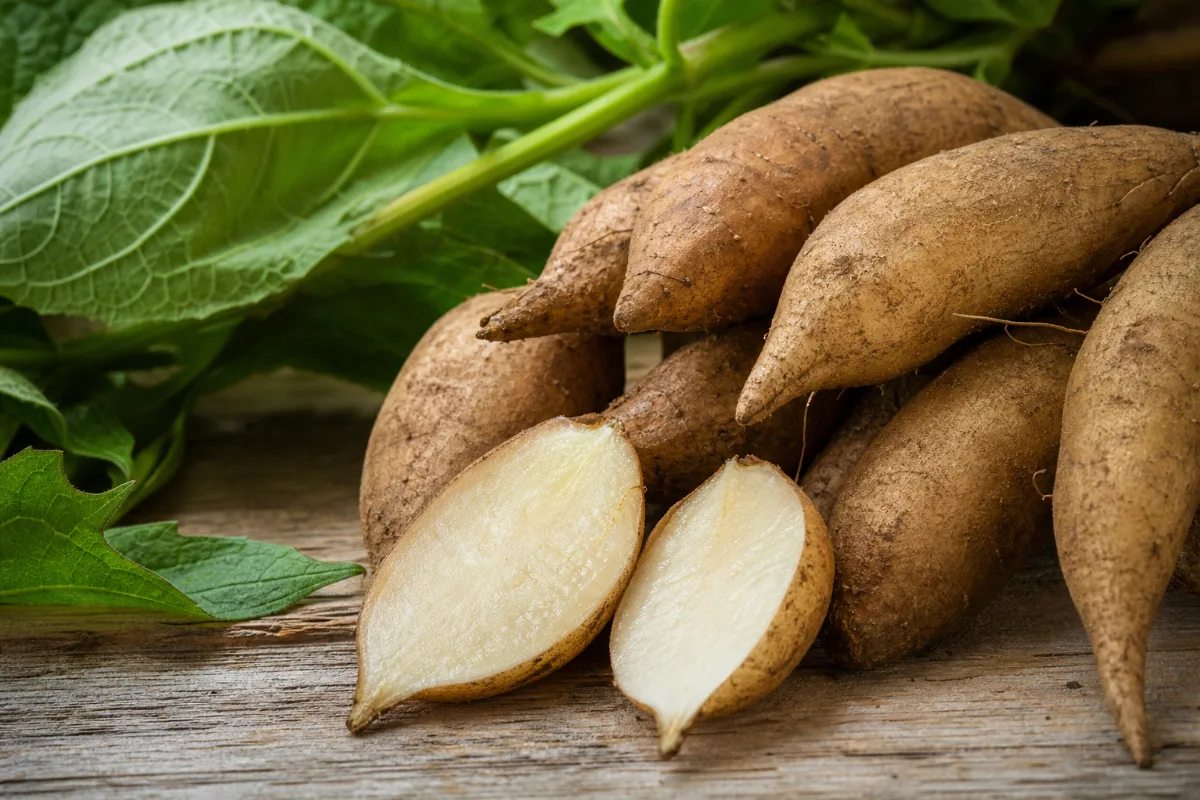
Herbs & Botanicals · Andean sweet root and leaf tea
Yacon
Smallanthus sonchifolius · also called Yacon root, yacón, llacón, aricoma, ajipa, yacon syrup, yacon leaf tea
Yacon is an Andean plant. Its sweet, crisp root is eaten like a fruit and made into a syrup rich in prebiotic fibre, and its leaves are brewed as tea. It is studied for weight, blood sugar and bowel regularity, but the evidence is small, mostly on the root syrup, and mixed. The leaf has not been tested for safety in people, and rat studies disagree about kidney harm. If you take diabetes medicines, speak to your doctor first.
General information, not medical advice. Last substantive update · Not medically reviewed. A named clinician has not signed off on this page. How this page is made
About Yacon
Yacon (Smallanthus sonchifolius) is an Andean root plant. Its tubers are sweet and rich in fructooligosaccharides, fibres that gut bacteria ferment. Syrup, flour and leaf tea are sold as supplements. Trials are small and mostly in women. Pooled analyses suggest a possible small fall in weight and softer, more frequent stools, but results for blood sugar and cholesterol are mixed. The leaf is a different material, with compounds linked to kidney and cell toxicity in animal and lab work, and no human leaf safety data.
What it is
Yacon is a perennial plant in the daisy family, native to the Andes. The thick storage roots are crunchy and sweet. They are eaten fresh, dried into flour or boiled down into a dark syrup.
The leaves are brewed as a tea in the Andes. The leaves and the root contain different substances, so they should be thought of as two separate products.
What makes it distinctive
The root stores much of its sugar as fructooligosaccharides (FOS), inulin-type fibres that people digest poorly. Gut bacteria ferment them, which is why yacon is called a prebiotic.
The leaf is rich in phenolic acids such as chlorogenic acid and in a bitter group of compounds called sesquiterpene lactones, including enhydrin. These have lowered blood sugar in rats and have also been linked to toxicity.
Historical and current uses
The leaf has been used as a medicinal tea in the Andes since pre-Columbian times. Folk use for diabetes, digestive and kidney complaints is described in several countries.
Today the syrup is sold for weight, sugar balance and bowel regularity. No regulator statement on yacon was found.
What the research shows
A 120-day trial in obese women found lower weight, waist, fasting insulin and LDL cholesterol with syrup. A trial in 40 women found lower sugar and insulin after one breakfast. A pooled analysis of seven randomised trials found no significant overall effect on glucose, insulin or cholesterol, and another found lower weight but not lower BMI or waist.
In healthy volunteers, syrup sped the gut in a two-week crossover trial and a ten-day pilot found more bowel movements and more Bifidobacterium. No trial was done in people with constipation or diabetes in the studies we read, and no human trial of leaf tea was found.
At a glance
Traditional uses history, not proof
- Andes: the sweet root eaten like a fruit; the leaves brewed as a medicinal tea since pre-Columbian times
- Folk medicine in several countries for diabetes, digestive and kidney complaints
Studied for research
- Body weight, low certainty (pooled analyses lean towards a small fall, with limited study quality)
- Insulin and blood sugar, low to very low certainty (mixed: positive single trials, null pooled analysis)
- Bowel regularity, low certainty (small studies in healthy people)
- Leaf extracts for blood sugar, insufficient (rat and cell studies only)
Main compounds
- Fructooligosaccharides and inulin-type fibres (root; concentrated in syrup)
- Chlorogenic acid, caffeic acid and related phenolic acids (mainly leaf)
- Enhydrin and other sesquiterpene lactones (leaf)
Common forms
- Root syrup, the form used in most trials
- Dried root flour and fresh root
- Leaf tea and leaf extracts (studied in animals and cells)
Research links: Systematic review of yacon syrup in humans (Nutrients, 2025) · Meta-analysis of yacon on glucose and blood fats (2025) · Renal toxicity of yacon leaf extracts in rats (2011) · Research Library · Genes & Biomarkers Library
The plant and its history
- Accepted scientific name
- Smallanthus sonchifolius (Poepp. & Endl.) H.Rob.
- Naming authority
- (Poepp. & Endl.) H.Rob., published in Phytologia 39(1): 51 (1978) (GBIF).
- Synonyms
- Not listed in this file. GBIF shows the name as accepted; synonyms were not retrieved.
- Common names
- Yacon (English); Yacón (Spanish); Llacón (Spanish); Aricoma (Spanish); Ajipa (Spanish); Poire de terre (French); Batata-yacon (Portuguese)
- Botanical family
- Asteraceae (daisy family).
- Classification
- Plantae > Asterales > Asteraceae > Smallanthus > Smallanthus sonchifolius
- Native range
- Andean region of South America (stated in the 2025 Frontiers in Nutrition abstract).
- Habitat
- Not verified in a source read.
- What the plant looks like
- Roots: Tuberous storage roots eaten as a sweet, crisp 'functional fruit' (Fitoterapia 2026 abstract). The root is the source of syrup and flour.; Stems: Not verified.; Leaves: Leaves are used to make tea in the Andes and contain sesquiterpene lactones (2012 and 2023 abstracts).; Flowers: Not verified.; Fruit: Not applicable; the 'fruit' name refers to the root.
- Cultivation
- Not verified from a source read.
- Harvest and processing
- Not verified. The abstracts note that the root is turned into syrup (a concentrated source of fructooligosaccharides) and into flour.
- Look-alikes and adulterants
- Name: Jicama (Pachyrhizus erosus); Note: A different root vegetable, sometimes called jícama in Spanish, and GBIF lists 'jícama' as a Spanish name for yacon too. Check the Latin name on any product.
- Sustainability and conservation
- Not verified. No IUCN assessment was retrieved.
Traditional use and history history, not clinical proof
| Tradition or era | Documented use | Source |
|---|---|---|
| Andean region, pre-Columbian to present | Leaves have been used since pre-Columbian times to prepare a medicinal tea, according to a 2012 abstract. The root has been eaten as a sweet fruit-like food. | p23000115 |
| Folk medicine in several countries | Roots and leaves used by people with diabetes, digestive or kidney disorders (2020 abstract). Brazil is named in a 2011 abstract as one place where it is used as an anti-diabetic herb. | p32325177 |
| Modern | Root syrup, flour and leaf teas are sold as supplements. Not verified against a regulator document; none was found. | s-regulators-yacon-not-found |
Traditional use shows how a plant was used. It does not show that a supplement works or is safe today.
What is inside, and how it may work
What the plant contains and how those compounds act in cells and animals. Laboratory and animal mechanisms are not proven effects in people.
Main compounds
| Compound | Family | Where it is concentrated | Activity studied | Level of evidence |
|---|---|---|---|---|
| Fructooligosaccharides and inulin-type fructans (FOS) | prebiotic fibres | Root, especially concentrated in syrup One trial states 14 g of FOS in 40 g of syrup (a labelled quantity for that trial's product). A representative FOS, 6-kestose, is PubChem CID 9914062. | Fermented by gut bacteria; thought to drive the bowel, fullness and sugar effects. 1 16 20 | Human data |
| Chlorogenic acid PubChem 1794427 | phenolic acid (hydroxycinnamic ester) | Leaf | Part of the butanol leaf fraction that lowered glucose in rats; the lactone-free chlorogenic-acid leaf extract caused fewer kidney problems in rats. 4 18 20 | Animal research |
| Caffeic acid and dicaffeoylquinic acids PubChem 689043 | phenolic acids | Leaf | Found in the most active glucose-lowering leaf fraction in rats. 4 20 | Animal research |
| Enhydrin PubChem 5281441 | sesquiterpene lactone | Leaf (main lactone) | Lowered after-meal glucose in rats and is also suspected of toxicity; cells lost viability as concentration rose. 4 2 7 20 | Animal research |
| Enhydrofolin and other sesquiterpene lactones | sesquiterpene lactones | Leaf Nine sesquiterpene lactones and two acyclic diterpene acids reported in one leaf analysis. | Suggested by the 2011 rat study authors as the main toxic compounds; proposed, not proven. 8 7 18 | Animal research |
| Other root components | mixed | Root 82 chemical components were identified in yacon root in one pilot paper. | Phenolic compounds are also mentioned as contributors. 12 11 | Other |
Mechanisms, receptors and pathways
| Target or pathway | Gene or receptor | What was found | Level |
|---|---|---|---|
| Gut fermentation and the gut bacteria | Bifidobacterium; Escherichia-Shigella | Yacon root raised Bifidobacterium and lowered Escherichia-Shigella in 11 healthy adults; bile-acid and taurine-related metabolites rose. 12 | Human data |
| After-meal sugar and insulin | Not established | Syrup lowered after-meal glucose and insulin in one trial. The 2025 review proposes the effect depends on each person's gut bacteria. Mechanism is unproven. 1 13 | Human data |
| Leaf extract and blood sugar in rats | Not established | Leaf extracts and enhydrin lowered glucose in normal and diabetic rats and raised plasma insulin in diabetic rats. 4 9 | Animal research |
| Kidney cell fibrosis and inflammation | TGF-beta1, TNF-alpha, SMAD2/3/4/7 | Leaf extract lowered TGF-beta1, TNF-alpha and MDA and changed SMAD expression in cultured kidney cells in high glucose. 17 | Laboratory research |
| Cell toxicity and DNA damage | DNA (micronucleus and comet assays) | Leaf extracts and a crude lactone mixture reduced cell viability and raised DNA-damage markers in cell lines. 8 7 6 | Laboratory research |
Absorption, metabolism and elimination
- Absorption
- No human absorption data for yacon compounds were found. It is commonly said that FOS are not digested in the small bowel; that general statement was not verified in a source read for this file.
- Distribution
- Not found.
- Metabolism
- Fermentation in the large bowel is the proposed route for FOS (p41452254 shows bacterial and metabolite changes after yacon root).
- Elimination
- Not found.
- Bioavailability
- Not established in humans for chlorogenic acid, enhydrin or other leaf compounds.
Isolated compounds versus whole extracts
Results cannot be mixed across forms. Syrup (concentrated FOS) produced most of the metabolic and gut results in people; dried root and flour were studied less; fresh root was eaten as a food; leaf extracts were tested only in animals and cells. The leaf's main lactone, enhydrin, lowered glucose in rats and is also a suspected toxic component, so the same compound may be both the active and the risky part.
Nutritional composition
Yacon root is described in a trial abstract as low in calories (Geyer 2008) and is not a source of a vitamin or mineral that this review checked. The nutrient content of syrup versus fresh root was not verified.
6 low certainty3 very low certainty2 not enough evidence
What is Yacon good for?
The main proposed uses and how strong the human evidence is for each. 'Low' is the best rating any yacon use reached here. 'Very low' and 'insufficient' mean few, small, mixed or animal-only studies, and none of these is a proven treatment for you. Most human trials used the root syrup, so results may not carry over to flour, fresh root or leaf. Ratings are this profile's own reading, not formal grades. Diabetes and kidney conditions need a doctor.
Benefits, one by one
Each card is a research question, not a promise. Tap a goal to filter. Open a card to see the studies, doses and limits.
Insulin resistance (yacon syrup)
Low certaintyIn one 120-day trial in obese women, yacon syrup lowered fasting insulin and an insulin-resistance score. A later pooled analysis of seven trials found no clear overall change in insulin. The evidence is small and mixed.
3 studiesRoot syrup (best trial); flour and other root forms in some pooled st…
Studies, doses and limits
What the trials found
Genta 2009 (placebo-controlled, 120 days, obese pre-menopausal women): fasting insulin and HOMA-IR fell; fasting glucose did not. Pereira 2025 (systematic review, 7 trials, 161 people) reported reductions in fasting insulin and HOMA-IR. Nilghaz 2025 (meta-analysis of 7 RCTs, 239 people) found no significant overall effect on insulin (p=0.76) or HOMA-IR (p=0.42).
Results
Positive in the best single long trial and one review; null in the largest pooled analysis.
Effect sizes as reported
Genta 2009: significant falls in fasting insulin and HOMA-IR (values not in the abstract). Nilghaz 2025: insulin p=0.76, HOMA-IR p=0.42.
Why this rating
Small trials, mostly women, mixed results between reviews, short follow-up. No reviewer certainty grade was given.
Form and dose studied
Root syrup (best trial); flour and other root forms in some pooled studies. The leaf was not tested in people.
Who was studied
Obese or overweight women in the main trial; some healthy adults in other trials.
Limits
Different reviews pick different trials and disagree. Only abstracts were read. Not shown to treat diabetes or insulin resistance.
Why researchers looked
The root syrup is very rich in FOS, which may change how the body handles sugar.
Traditional use
In the Andes the sweet, crisp root is eaten like a fruit. Syrup and flour are modern products made from it.
Proposed mechanism Pharmacological theory
Yacon root is rich in fructooligosaccharides (FOS, inulin-type fibres). People cannot digest them well, so gut bacteria ferment them. This is thought to underlie the fullness, gut and sugar effects, but it has not been proven in these trials.
A proposed mechanism does not show that the effect happens in people.
Can lower blood sugar. People on diabetes drugs should speak to their doctor first (see Safety tab).
Blood sugar after a meal
Low certaintyIn one crossover trial of 40 women, yacon syrup eaten with breakfast gave lower blood sugar at 30 minutes and lower insulin for the first 45 minutes. A review called short-term results inconsistent.
2 studiesYacon root syrup with a meal.
Studies, doses and limits
What the trials found
Adriano 2019 (randomised, double-blind crossover, 40 women, one breakfast with 40 g syrup vs placebo): glucose lower at 30 min, insulin lower at 15, 30 and 45 min, triglycerides unchanged. Pereira 2025 says acute results across trials were inconsistent, possibly because of differences in people's gut bacteria.
Results
A one-meal effect in one trial; other short trials disagreed.
Effect sizes as reported
Lower glucose at 30 min and lower insulin at 15 to 45 min versus placebo (values not in the abstract).
Why this rating
One well-designed but short crossover trial; the review calls the pattern inconsistent.
Form and dose studied
Yacon root syrup with a meal.
Who was studied
Healthy and mildly obese women.
Limits
A single meal. It does not show that yacon helps people with diabetes. Only the abstract was read.
Why researchers looked
People hoped a sweet syrup that is mostly fibre-like sugars might not push blood sugar up as much.
Traditional use
In the Andes the sweet, crisp root is eaten like a fruit. Syrup and flour are modern products made from it.
Proposed mechanism Pharmacological theory
Yacon root is rich in fructooligosaccharides (FOS, inulin-type fibres). People cannot digest them well, so gut bacteria ferment them. This is thought to underlie the fullness, gut and sugar effects, but it has not been proven in these trials.
A proposed mechanism does not show that the effect happens in people.
A drop in sugar after a meal matters for people who take diabetes medicines (see Safety tab).
Type 2 diabetes: fasting glucose and HbA1c
Very low certaintyA small review of yacon flour reported lower glucose and HbA1c, but a pooled analysis of seven randomised trials found no significant overall effect on fasting glucose. Yacon has not been shown to treat diabetes.
2 studiesMostly flour or syrup from the root. No human trial of leaf tea for d…
Studies, doses and limits
What the trials found
Silva 2024 (systematic review of 7 studies of yacon flour): reported lower glucose, HbA1c and glycation products, and asked for more trials; the abstract does not give how many were human randomised trials. Nilghaz 2025 (meta-analysis, 7 RCTs): fasting glucose not significantly changed overall (p=0.33), but lower with use beyond 8 weeks in subgroups.
Results
Hints of benefit in subgroups and in a low-quality review; null overall.
Effect sizes as reported
Silva 2024: narrative. Nilghaz 2025: fasting glucose p=0.33 overall.
Why this rating
Heterogeneous products and populations, few trials, subgroup findings only, and the reviews contradict each other.
Form and dose studied
Mostly flour or syrup from the root. No human trial of leaf tea for diabetes was read.
Who was studied
Adults with diabetes or metabolic syndrome in some trials.
Limits
Do not read this as a diabetes treatment. Subgroup results are less reliable. Only abstracts were read.
Why researchers looked
Yacon root and leaf are used in folk practice by people with diabetes.
Traditional use
Roots and leaves have been used in folk medicine by people with diabetes, digestive and kidney complaints (per Moreira Szokalo 2020 abstract).
Proposed mechanism Pharmacological theory
Yacon root is rich in fructooligosaccharides (FOS, inulin-type fibres). People cannot digest them well, so gut bacteria ferment them. This is thought to underlie the fullness, gut and sugar effects, but it has not been proven in these trials.
A proposed mechanism does not show that the effect happens in people.
Leaf products carry separate safety questions, including a rat study showing kidney damage (see Safety tab).
Body weight and waist size
Low certaintyA 2026 pooled analysis of seven trials found lower body weight with yacon but no clear change in BMI, waist or CRP. A different pooled analysis found a lower BMI. The studies were small and of limited quality.
3 studiesMostly root syrup; also flour and other root products.
Studies, doses and limits
What the trials found
Porbafrani 2026 (meta-analysis, 7 RCTs, 246 people): weight WMD -8.22 kg (CI -16.01 to -0.43), BMI and waist not significant. Pan 2025 (meta-analysis, 12 studies): BMI SMD -0.81 (CI -1.54 to -0.08); weight and waist only 'tended' to fall; the authors flag limited quality. Genta 2009: weight, waist and BMI fell in obese women over 120 days.
Results
Small average falls in weight, inconsistent across measures.
Effect sizes as reported
Weight -8.22 kg (CI -16.01 to -0.43); BMI SMD -0.81 (CI -1.54 to -0.08); waist -3.73 cm (ns).
Why this rating
Consistent direction for weight, but wide confidence intervals, small trials, limited study quality, and BMI/waist results disagree.
Form and dose studied
Mostly root syrup; also flour and other root products.
Who was studied
Mostly women, often 40 and over, overweight or obese.
Limits
The weight result is surprisingly large for such studies and its range almost touches zero; read with caution. Only abstracts were read.
Why researchers looked
FOS may increase fullness and slow gut transit, which could help people eat less.
Traditional use
In the Andes the sweet, crisp root is eaten like a fruit. Syrup and flour are modern products made from it.
Proposed mechanism Pharmacological theory
Yacon root is rich in fructooligosaccharides (FOS, inulin-type fibres). People cannot digest them well, so gut bacteria ferment them. This is thought to underlie the fullness, gut and sugar effects, but it has not been proven in these trials.
A proposed mechanism does not show that the effect happens in people.
Yacon is not a weight-loss drug. Gas and loose stools are possible (see Safety tab).
Fullness (satiety)
Low certaintyTwo sources report that yacon syrup made people feel fuller, but this was a side finding rather than the main goal.
2 studiesYacon root syrup.
Studies, doses and limits
What the trials found
Genta 2009 (placebo-controlled, 120 days) reported increased satiety. Pereira 2025 (systematic review) reported improved satiety and appetite regulation with longer interventions, particularly in women.
Results
Positive in the main trial and the review.
Effect sizes as reported
Qualitative; no numbers in the abstracts.
Why this rating
Self-reported fullness, small trials, no reviewer grade.
Form and dose studied
Yacon root syrup.
Who was studied
Mostly women.
Limits
Fullness scores are subjective. Only abstracts were read.
Why researchers looked
Slowly fermented fibres can make a meal feel more filling.
Traditional use
In the Andes the sweet, crisp root is eaten like a fruit. Syrup and flour are modern products made from it.
Proposed mechanism Pharmacological theory
Yacon root is rich in fructooligosaccharides (FOS, inulin-type fibres). People cannot digest them well, so gut bacteria ferment them. This is thought to underlie the fullness, gut and sugar effects, but it has not been proven in these trials.
A proposed mechanism does not show that the effect happens in people.
None specific.
Cholesterol and blood fats
Very low certaintyOne long trial found lower LDL cholesterol, and a review agreed. The largest pooled analysis found no clear overall effect on cholesterol or triglycerides, apart from some subgroup changes after more than eight weeks.
3 studiesRoot syrup and other root products.
Studies, doses and limits
What the trials found
Genta 2009: LDL cholesterol fell; total cholesterol and triglycerides did not. Pereira 2025: LDL fell. Nilghaz 2025 (7 RCTs, 239 people): no significant overall change in total cholesterol (p=0.17), LDL (p=0.12), HDL (p=0.42) or triglycerides (p=0.75); in subgroups LDL fell with more than 8 weeks of use, mainly in women and people over 40, and HDL rose in people 40 and over.
Results
Mixed: positive in single trials, null overall.
Effect sizes as reported
Nilghaz 2025: all overall p-values above 0.1.
Why this rating
Contradictory sources and subgroup-only positives.
Form and dose studied
Root syrup and other root products.
Who was studied
Adults, mostly women.
Limits
Cholesterol numbers are a marker, not a heart outcome. Only abstracts were read.
Why researchers looked
Fibre-like sugars can change fats in the gut and liver.
Traditional use
In the Andes the sweet, crisp root is eaten like a fruit. Syrup and flour are modern products made from it.
Proposed mechanism Pharmacological theory
Yacon root is rich in fructooligosaccharides (FOS, inulin-type fibres). People cannot digest them well, so gut bacteria ferment them. This is thought to underlie the fullness, gut and sugar effects, but it has not been proven in these trials.
A proposed mechanism does not show that the effect happens in people.
None specific.
Inflammation marker (CRP)
Low certaintyIn a pooled analysis of seven trials, yacon did not change the inflammation marker CRP.
1 studiesYacon products from the root.
Studies, doses and limits
What the trials found
Porbafrani 2026: CRP WMD -0.07 mg/L (CI -1.96 to 1.81, p=0.939), no effect.
Results
No effect.
Effect sizes as reported
CRP -0.07 mg/L (CI -1.96 to 1.81).
Why this rating
A pooled analysis of small trials found no change; the wide interval means a small effect cannot be excluded.
Form and dose studied
Yacon products from the root.
Who was studied
Adults in 7 RCTs.
Limits
Only the abstract was read.
Why researchers looked
Obesity is linked to inflammation, so CRP was checked alongside weight.
Traditional use
In the Andes the sweet, crisp root is eaten like a fruit. Syrup and flour are modern products made from it.
Proposed mechanism Pharmacological theory
Yacon root is rich in fructooligosaccharides (FOS, inulin-type fibres). People cannot digest them well, so gut bacteria ferment them. This is thought to underlie the fullness, gut and sugar effects, but it has not been proven in these trials.
A proposed mechanism does not show that the effect happens in people.
None specific.
Bowel regularity and constipation
Low certaintyYacon root and syrup have been found to speed the gut and make stools softer and more frequent in small studies. No trial was done in people who actually have constipation.
4 studiesRoot syrup and fresh or dried root.
Studies, doses and limits
What the trials found
Geyer 2008 (placebo-controlled crossover, 16 healthy adults, 2 weeks): whole-gut transit time fell from 59.7 to 38.4 hours (p<0.001); stool frequency and softness moved in the right direction but not significantly; bloating was not significantly more common than on placebo. Pan 2026 (pilot, 11 healthy adults, 10 days): bowel movement frequency rose with no noticeable adverse effects. Pan 2025 (meta-analysis, 12 studies): stools softer (SMD 0.94) and defecation easier (SMD 4.03), with limited study quality. Genta 2009: defecation frequency rose.
Results
Faster transit and more bowel movements in healthy volunteers.
Effect sizes as reported
Transit time 59.7 to 38.4 h (p<0.001); stool softness SMD 0.94 (CI 0.08 to 1.80); defecation SMD 4.03 (CI 0.54 to 7.52).
Why this rating
Small trials in healthy people, wide intervals, limited study quality. No constipation patients were studied.
Form and dose studied
Root syrup and fresh or dried root.
Who was studied
Healthy adults.
Limits
Healthy-volunteer findings may not apply to people with constipation. Only abstracts were read.
Why researchers looked
FOS draws water into the bowel and is fermented, which can loosen stools.
Traditional use
In the Andes the sweet, crisp root is eaten like a fruit. Syrup and flour are modern products made from it.
Proposed mechanism Pharmacological theory
FOS are fermented by gut bacteria, producing acids and gas that can soften stools and speed movement through the bowel.
A proposed mechanism does not show that the effect happens in people.
The same effect can cause loose stools or diarrhoea in some people (see Safety tab).
Gut bacteria (prebiotic effect)
Very low certaintyIn a ten-day pilot of 11 healthy adults, yacon root increased Bifidobacterium and reduced Escherichia-Shigella. This is early and small.
2 studiesFresh or dried yacon root; syrup in the review.
Studies, doses and limits
What the trials found
Pan 2026 (pilot, 11 healthy adults, 10 days, DNA sequencing of stool): Bifidobacterium rose; Escherichia-Shigella fell; bile-acid and taurine-related metabolites rose. Pereira 2025 (systematic review): longer syrup use was linked to more microbiota change, and short-term sugar results varied with a person's starting gut bacteria.
Results
Shifts in bacteria seen in a tiny pilot and described in a review.
Effect sizes as reported
Qualitative; no numbers in the abstracts.
Why this rating
Eleven people, no clear control group stated, ten days. A change in bacteria does not prove a health benefit.
Form and dose studied
Fresh or dried yacon root; syrup in the review.
Who was studied
Healthy adults.
Limits
A pilot. Only abstracts were read.
Why researchers looked
FOS are prebiotics, meaning food for helpful gut bacteria.
Traditional use
In the Andes the sweet, crisp root is eaten like a fruit. Syrup and flour are modern products made from it.
Proposed mechanism Preliminary mechanism
FOS reaching the large bowel are fermented selectively by bacteria such as Bifidobacterium.
A proposed mechanism does not show that the effect happens in people.
None specific.
Leaf extracts and blood sugar (lab and animal only)
Not enough evidenceYacon leaf extracts lowered blood sugar and blood fats in rats. No human trial of the leaf was found. The same leaves also show toxicity signals in animals and cells, so this is a research lead, not a use.
2 studiesLeaf aqueous and organic extracts in rats. Not applicable to people.
Studies, doses and limits
What the trials found
No human trial. Rat studies: an aqueous leaf extract lowered glucose, glycosylated haemoglobin and fats in rats with fructose-induced metabolic syndrome (Nagalievska 2025); organic leaf extracts and pure enhydrin lowered after-meal glucose and, over 8 weeks, helped diabetic rats (Genta 2010).
Results
Glucose-lowering in rats.
Effect sizes as reported
Rat figures only, for example glucose -10.33% (Nagalievska 2025).
Why this rating
Animal data only; no human trial found.
Form and dose studied
Leaf aqueous and organic extracts in rats. Not applicable to people.
Who was studied
Rats.
Limits
Results in rats do not carry over to people. Rat studies also disagree on whether the leaf extract harms the kidney.
Why researchers looked
Leaf tea is the traditional Andean preparation used by people with diabetes.
Traditional use
Leaves have been used since pre-Columbian times in the Andes to prepare a medicinal tea (per Barcellona 2012 abstract).
Proposed mechanism Animal research
Rat work points to phenolic compounds such as chlorogenic and caffeic acids and the sesquiterpene lactone enhydrin as the glucose-lowering parts. Enhydrin is also a suspected toxic part.
A proposed mechanism does not show that the effect happens in people.
Do not treat leaf extracts or teas as a diabetes remedy. See Safety tab.
Diabetic kidney disease (cell study only)
Not enough evidenceIn kidney cells grown in high sugar, a yacon leaf extract lowered inflammation and scarring signals. This is a test-tube result only and says nothing about people.
2 studiesLeaf extract in cultured cells.
Studies, doses and limits
What the trials found
No human or animal study of this use was read. Widowati 2023 treated cultured kidney mesangial cells grown in high glucose with leaf extract.
Results
Lower inflammation and scarring signals in cells.
Effect sizes as reported
Qualitative.
Why this rating
Cell culture only.
Form and dose studied
Leaf extract in cultured cells.
Who was studied
Cultured cells.
Limits
A rat study found the opposite concern: kidney damage with leaf extracts (see Safety tab).
Why researchers looked
Researchers looked for leads for diabetic kidney complications.
Traditional use
None reported for this use.
Proposed mechanism Laboratory research
The extract lowered TGF-beta1, TNF-alpha and MDA in cultured cells and shifted SMAD gene signals.
A proposed mechanism does not show that the effect happens in people.
Not a reason to use leaf products if you have kidney disease.
Connections to the rest of health
How Yacon connects to the rest of our health knowledge graph. Every link says what kind of connection it is. A safety link (for example to the liver) is a warning, not a benefit. A study that merely mentions a topic never creates a benefit link.
Explore every connection: goals, body systems, organs, symptoms, genes
A. Wellness goals
| Connected to | Kind of connection | Evidence status | Context | Studies |
|---|---|---|---|---|
| Blood Sugar Balance | Potential benefit | Low certainty | Insulin resistance (yacon syrup): In one 120-day trial in obese women, yacon syrup lowered fasting insulin and an insulin-resistance score. A later pooled analysis of seven trials found no clear overall change in insulin. The evidence is small and mixed. Blood sugar after a meal: In one crossover trial of 40 women, yacon syrup eaten with breakfast gave lower blood sugar at 30 minutes and lower insulin for the first 45 minutes. A review called short-term results inconsistent. | 3 13 10 1 |
| Metabolic Health | Potential benefit | Low certainty | Insulin resistance (yacon syrup): In one 120-day trial in obese women, yacon syrup lowered fasting insulin and an insulin-resistance score. A later pooled analysis of seven trials found no clear overall change in insulin. The evidence is small and mixed. Body weight and waist size: A 2026 pooled analysis of seven trials found lower body weight with yacon but no clear change in BMI, waist or CRP. A different pooled analysis found a lower BMI. The studies were small and of limited quality. | 3 13 10 14 11 |
| Blood Sugar Balance | Preliminary mechanism | Very low certainty | Type 2 diabetes: fasting glucose and HbA1c: A small review of yacon flour reported lower glucose and HbA1c, but a pooled analysis of seven randomised trials found no significant overall effect on fasting glucose. Yacon has not been shown to treat diabetes. Leaf extracts and blood sugar (lab and animal only): Yacon leaf extracts lowered blood sugar and blood fats in rats. No human trial of the leaf was found. The same leaves also show toxicity signals in animals and cells, so this is a research lead, not a use. | 16 10 9 4 |
| Metabolic Health | Preliminary mechanism | Very low certainty | Type 2 diabetes: fasting glucose and HbA1c: A small review of yacon flour reported lower glucose and HbA1c, but a pooled analysis of seven randomised trials found no significant overall effect on fasting glucose. Yacon has not been shown to treat diabetes. | 16 10 |
| Weight Management | Potential benefit | Low certainty | Body weight and waist size: A 2026 pooled analysis of seven trials found lower body weight with yacon but no clear change in BMI, waist or CRP. A different pooled analysis found a lower BMI. The studies were small and of limited quality. Fullness (satiety): Two sources report that yacon syrup made people feel fuller, but this was a side finding rather than the main goal. | 14 11 3 13 |
| Digestive Support | Potential benefit | Low certainty | Fullness (satiety): Two sources report that yacon syrup made people feel fuller, but this was a side finding rather than the main goal. Bowel regularity and constipation: Yacon root and syrup have been found to speed the gut and make stools softer and more frequent in small studies. No trial was done in people who actually have constipation. | 3 13 5 12 11 |
| Cholesterol Balance | Biological association | Very low certainty | Cholesterol and blood fats: One long trial found lower LDL cholesterol, and a review agreed. The largest pooled analysis found no clear overall effect on cholesterol or triglycerides, apart from some subgroup changes after more than eight weeks. | 3 10 13 |
| Heart Health | Biological association | Very low certainty | Cholesterol and blood fats: One long trial found lower LDL cholesterol, and a review agreed. The largest pooled analysis found no clear overall effect on cholesterol or triglycerides, apart from some subgroup changes after more than eight weeks. | 3 10 13 |
| Inflammation Balance | Biological association | Low certainty | Inflammation marker (CRP): In a pooled analysis of seven trials, yacon did not change the inflammation marker CRP. | 14 |
| Gut Health | Potential benefit | Low certainty | Bowel regularity and constipation: Yacon root and syrup have been found to speed the gut and make stools softer and more frequent in small studies. No trial was done in people who actually have constipation. | 5 12 11 3 |
| Gut Health | Biological association | Very low certainty | Gut bacteria (prebiotic effect): In a ten-day pilot of 11 healthy adults, yacon root increased Bifidobacterium and reduced Escherichia-Shigella. This is early and small. | 12 13 |
| Digestive Support | Biological association | Very low certainty | Gut bacteria (prebiotic effect): In a ten-day pilot of 11 healthy adults, yacon root increased Bifidobacterium and reduced Escherichia-Shigella. This is early and small. | 12 13 |
| Inflammation Balance | Preliminary mechanism | Not enough evidence | Diabetic kidney disease (cell study only): In kidney cells grown in high sugar, a yacon leaf extract lowered inflammation and scarring signals. This is a test-tube result only and says nothing about people. | 17 18 |
B. Body systems
| Connected to | Kind of connection | Evidence status | Context | Studies |
|---|---|---|---|---|
| Digestive system | Adverse effect or risk | Low certainty | Gas, bloating and softer stools from the FOS; mild in the trials read. Preparation or compound: Root syrup and root |
13 5 |
| Metabolism Weight | Biological association | Low certainty | Studied for: Insulin resistance (yacon syrup) Studied for: Blood sugar after a meal | 3 13 10 1 16 14 11 9 4 |
| Endocrine System | Biological association | Very low certainty | Studied for: Type 2 diabetes: fasting glucose and HbA1c | 16 10 |
| Digestive System | Biological association | Low certainty | Studied for: Fullness (satiety) Studied for: Bowel regularity and constipation | 3 13 5 12 11 |
| Cardiovascular System | Biological association | Very low certainty | Studied for: Cholesterol and blood fats | 3 10 13 |
| Immune System | Biological association | Low certainty | Studied for: Inflammation marker (CRP) | 14 |
| Urinary System | Biological association | Not enough evidence | Studied for: Diabetic kidney disease (cell study only) | 17 18 |
C. Body parts and organs
| Connected to | Kind of connection | Evidence status | Context | Studies |
|---|---|---|---|---|
| Kidneys | Adverse effect or risk | Mixed findings | Kidney damage in one 90-day rat study, none in another. No human data. Preparation or compound: Leaf aqueous extract (rats) |
18 2 |
| Liver | Adverse effect or risk | Not enough evidence | A multi-plant review lists toxicity signals without naming which belong to yacon. Preparation or compound: Leaf extracts |
15 |
D. Symptoms
| Connected to | Kind of connection | Evidence status | Context | Studies |
|---|---|---|---|---|
| Constipation | Biological association | Low certainty | Faster gut transit and more bowel movements in healthy volunteers; no constipation trial. Preparation or compound: Yacon root syrup or root |
5 12 11 |
| Type 2 diabetes | Preliminary mechanism | Very low certainty | Mixed results; pooled randomised analysis not significant overall. Not shown to treat diabetes. Preparation or compound: Yacon root syrup or flour |
10 16 |
| Overweight and obesity | Potential benefit | Low certainty | Lower body weight in a 2026 pooled analysis; BMI and waist not significant. Preparation or compound: Yacon root syrup or root |
14 11 |
I. Biomarkers
| Connected to | Kind of connection | Evidence status | Context | Studies |
|---|---|---|---|---|
| Blood glucose | Drug or supplement interaction | Very low certainty | Possible add-on effect with diabetes drugs; no interaction study. Preparation or compound: Root syrup and leaf extracts |
1 9 |
| Fasting insulin | Biological association | Low certainty | Measured in trials: mixed. A lab change is not the same as a health benefit. | 3 10 |
| HOMA-IR (insulin resistance score) | Biological association | Low certainty | Measured in trials: mixed. A lab change is not the same as a health benefit. | 3 10 |
| Fasting blood glucose | Biological association | Very low certainty | Measured in trials: mixed. A lab change is not the same as a health benefit. | 3 10 |
| Blood glucose after breakfast | Biological association | Low certainty | Measured in trials: lowered. A lab change is not the same as a health benefit. | 1 13 |
| HbA1c (average blood sugar over about three months) | Biological association | Very low certainty | Measured in trials: lowered. A lab change is not the same as a health benefit. | 16 |
| Body weight | Biological association | Low certainty | Measured in trials: lowered. A lab change is not the same as a health benefit. | 14 |
| Body mass index (BMI) | Biological association | Very low certainty | Measured in trials: mixed. A lab change is not the same as a health benefit. | 14 11 |
| Waist circumference | Biological association | Low certainty | Measured in trials: no-change. A lab change is not the same as a health benefit. | 14 |
| LDL cholesterol | Biological association | Very low certainty | Measured in trials: mixed. A lab change is not the same as a health benefit. | 3 10 |
| C-reactive protein (CRP) | Biological association | Low certainty | Measured in trials: no-change. A lab change is not the same as a health benefit. | 14 |
| Whole-gut transit time | Biological association | Low certainty | Measured in trials: lowered. A lab change is not the same as a health benefit. | 5 |
| Bowel movement frequency | Biological association | Low certainty | Measured in trials: raised. A lab change is not the same as a health benefit. | 12 3 5 |
| Stool softness and stool pH | Biological association | Low certainty | Measured in trials: mixed. A lab change is not the same as a health benefit. | 11 |
| Bifidobacterium in stool | Biological association | Very low certainty | Measured in trials: raised. A lab change is not the same as a health benefit. | 12 |
J. Genes, receptors and enzymes
| Connected to | Kind of connection | Evidence status | Context | Studies |
|---|---|---|---|---|
| TGF-B1 (transforming growth factor beta 1) | Preliminary mechanism | In vitro | Lowered by leaf extract in high-glucose kidney cells. | 17 |
| SMAD2, SMAD3, SMAD4 (down) and SMAD7 (up) | Preliminary mechanism | In vitro | Expression shifts in the same cell study. | 17 |
K. Biological pathways
| Connected to | Kind of connection | Evidence status | Context | Studies |
|---|---|---|---|---|
| Primary bile acid biosynthesis; taurine and hypotaurine metabolism | Preliminary mechanism | Human | Metabolites rose after yacon root in 11 healthy adults. | 12 |
L. Active compounds
| Connected to | Kind of connection | Evidence status | Context | Studies |
|---|---|---|---|---|
| Fructooligosaccharides and inulin-type fructans (FOS) | Biological association | Human | Fermented by gut bacteria; thought to drive the bowel, fullness and sugar effects. Preparation or compound: Root, especially concentrated in syrup |
1 16 20 |
| Chlorogenic acid | Biological association | Animal | Part of the butanol leaf fraction that lowered glucose in rats; the lactone-free chlorogenic-acid leaf extract caused fewer kidney problems in rats. Preparation or compound: Leaf |
4 18 20 |
| Caffeic acid and dicaffeoylquinic acids | Biological association | Animal | Found in the most active glucose-lowering leaf fraction in rats. Preparation or compound: Leaf |
4 20 |
| Enhydrin | Biological association | Animal | Lowered after-meal glucose in rats and is also suspected of toxicity; cells lost viability as concentration rose. Preparation or compound: Leaf (main lactone) |
4 2 7 20 |
| Enhydrofolin and other sesquiterpene lactones | Biological association | Animal | Suggested by the 2011 rat study authors as the main toxic compounds; proposed, not proven. Preparation or compound: Leaf |
8 7 18 |
| Other root components | Biological association | Other | Phenolic compounds are also mentioned as contributors. Preparation or compound: Root |
12 11 |
Each connection is stored with the ingredient, the connected record, the kind of connection, the evidence status, the supporting studies, the preparation or compound involved, and a review date (last reviewed October 25, 2026).
Evidence at a glance: what changed in 14 lab markers
Tap a number to show only those markers. Counts are markers, not people.
The evidence
The research centre for Yacon. Every record here was checked against PubMed or the publisher's page; we never list a study we have not verified.
Evidence by outcome
Bars show how many studies we found for each outcome, not how well it works. People are added up across trials only (reviews are not added, to avoid double counting).
How we rate evidence
High certainty
Several well-run trials or reviews agree; further research is unlikely to change the picture much.
Moderate certainty
Good trials point the same way, but some doubt remains.
Low certainty
Small, short or inconsistent trials. The finding could change with better research.
Very low certainty
Very little or very weak human data. Treat as a possibility only.
Mixed findings
Trials or reviews disagree with each other.
Not enough evidence
Not enough human research to say either way.
Evidence against
Good research found no benefit, or found harm.
We take the reviewers' own risk-of-bias and GRADE statements where they exist, and otherwise judge from study size, design, consistency, directness and whether a product matches what is sold. Many publications do not make evidence high. Method note: We searched PubMed and checked identity records (GBIF, PubChem) and looked for NIH NCCIH, EMA, LiverTox and LactMed pages on yacon, none of which could be opened or found. We recorded each study's design, people, product and result as reported. Only abstracts were read. Certainty ratings are the compiler's own reading, not formal grades. No study is cited that we could not verify.
Study library: every study we checked 21
| Study | Design | People | Product, dose, length | Result |
|---|---|---|---|---|
| Adriano 2019 Yacon syrup reduces postprandial glycemic response to breakfast: A randomized, crossover, double-blind clinical trial. Food Research International · PMID 31732062 · DOI |
Controlled trial |
40 40 women (20 normal weight, 20 grade I obese) |
Yacon root syrup (40 g syrup, stated as 14 g fructooligosaccharides) with breakfast root 40 g of syrup with one breakfast Single meal, two visits at least a week apart · vs Placebo syrup |
Glucose was lower than placebo at 30 minutes; insulin was lower at 15, 30 and 45 minutes; triglycerides were not different. Lower glucose at 30 min; lower insulin at 15 to 45 min (values not in the abstract) Methods, limits and fundingOutcomes: Glucose, insulin and triglyceride after breakfast Limitations: One meal only. Does not show benefit in diabetes or long-term control. Only the abstract was read. Funding and conflicts: Not stated in the abstract. Registration: RBR-33wf46 Read: abstract |
| Barcellona 2012 Safety assessment of aqueous extract from leaf Smallanthus sonchifolius and its main active lactone, enhydrin. Journal of Ethnopharmacology · PMID 23000115 · DOI |
Animal research animal |
Adult Wistar rats; four cell lines | 10% yacon leaf decoction and pure enhydrin leaf Acute: single doses up to 14.0 g/kg (decoction) and 0.32 g/kg (enhydrin); 90 days: 0.07 to 0.28 g decoction/kg and 0.4 to 8.0 mg enhydrin/kg (rat) Acute 14 days; sub-chronic 90 days · vs Untreated rats |
Cells lost viability as concentration rose. In rats there were no deaths or signs of toxicity after a single dose, and no blood, chemistry or tissue changes after 90 days. No toxic findings in rats at the doses tested Methods, limits and fundingOutcomes: Deaths, behaviour, blood counts, blood chemistry, organ weights, tissue Limitations: Rat study; its conclusion that the decoction is safe is limited to rats at those doses and contradicts p20951787. Only the abstract was read. Funding and conflicts: Not stated in the abstract. Read: abstract |
| Genta 2009 Yacon syrup: beneficial effects on obesity and insulin resistance in humans. Clinical Nutrition · PMID 19254816 · DOI |
Controlled trial |
Obese, slightly dyslipidaemic pre-menopausal women (sample size not given in the abstract) | Yacon root syrup (fructooligosaccharide-rich) root Two levels: 0.29 g and 0.14 g fructooligosaccharides per kg body weight per day 120 days · vs Placebo |
Weight, waist circumference and BMI fell; fasting insulin and HOMA-IR fell; defecation frequency and satiety rose; fasting glucose and most blood fats did not change, apart from LDL cholesterol, which fell. The authors say the lower of the two syrup levels had no unwanted gut effects. Significant falls in body weight, waist, BMI, fasting insulin and HOMA-IR (exact values not in the abstract) Methods, limits and fundingOutcomes: Weight, waist, BMI, fasting glucose, insulin, HOMA-IR, lipids, bowel habit, satiety, tolerance Limitations: Only the abstract was read, so sample size and numbers are not stated here. Small, women only, one location. Funding and conflicts: Not stated in the abstract. Read: abstract |
| Genta 2010 Hypoglycemic activity of leaf organic extracts from Smallanthus sonchifolius: Constituents of the most active fractions. Chemico-Biological Interactions · PMID 20211156 · DOI |
Animal research animal |
Normal, temporarily high-sugar and streptozotocin-diabetic rats | Yacon leaf organic extracts and pure enhydrin leaf Various (rat doses) Single doses; 8 weeks in diabetic rats · vs Untreated rats |
Methanol, butanol and chloroform extracts and pure enhydrin lowered after-meal glucose in rats, and daily use for 8 weeks improved glucose control in diabetic rats. The butanol extract contained caffeic acid, chlorogenic acid and three dicaffeoylquinic acids. Qualitative in the abstract Methods, limits and fundingOutcomes: Blood glucose, insulin, glucose tolerance, extract chemistry Limitations: Rat study only. Only the abstract was read. Funding and conflicts: Not stated in the abstract. Read: abstract |
| Geyer 2008 Effect of yacon (Smallanthus sonchifolius) on colonic transit time in healthy volunteers. Digestion · PMID 18781073 · DOI |
Controlled trial |
16 16 healthy adults (8 men, 8 women) |
Yacon root syrup (stated as 6.4 g fructooligosaccharides per day) root 20 g of syrup daily 2 weeks, crossover with 2-week wash-out · vs Placebo |
Transit time fell from 59.7 to 38.4 hours (p<0.001). Stool frequency and softness moved in the right direction but not significantly. Bloating was not reported significantly more often than on placebo. Transit time 59.7 +/- 4.3 h to 38.4 +/- 4.2 h Methods, limits and fundingOutcomes: Whole-gut transit time (marker technique), stool frequency and consistency, side effects Limitations: Sixteen healthy people for two weeks; not tested in people with constipation. Only the abstract was read. Funding and conflicts: Not stated in the abstract. Read: abstract |
| Martinez-Oliveira 2021 Evaluation In Vitro of Toxicity of Hydroalcoholic Extract of Leaves and Roots from Yacon (Smallanthus sonchifolius). Journal of Medicinal Food · PMID 33179973 · DOI |
Laboratory research in-vitro |
Human white blood cell cultures and a mouse fibroblast line | Yacon leaf and root hydroalcoholic extracts leaf and root 1 to 500 micrograms per mL (cell culture) Not stated · vs Controls |
No toxic or mutagenic effect in white blood cells. The leaf extract was toxic to the fibroblast line at higher concentrations and triggered cell death at all concentrations; DNA damage appeared at higher concentrations of leaf and, at the highest, root extract. Qualitative in the abstract Methods, limits and fundingOutcomes: Cell viability, DNA damage, mutagenicity, apoptosis Limitations: Cells only; the authors say animal and human studies are needed. Only the abstract was read. Funding and conflicts: Not stated in the abstract. Read: abstract |
| Moreira Szokalo 2020 Toxicogenetic evaluation of Smallanthus sonchifolius (yacon) as a herbal medicine. Journal of Ethnopharmacology · PMID 32325177 · DOI |
Laboratory research in-vitro |
CHO-K1 and HepG2 cells | Yacon leaf aqueous extract prepared like a tea bag infusion leaf Cell culture concentrations Not stated · vs Controls |
Enhydrin and its dimer enhydrofolin were the main sesquiterpene lactones. Rising concentrations were toxic to both cell lines and increased micronuclei (a DNA-damage marker). The authors nonetheless concluded that tea-style use was acceptable; that conclusion goes beyond what cell tests can show. Qualitative in the abstract Methods, limits and fundingOutcomes: Cell toxicity, micronucleus test for DNA damage, leaf chemistry Limitations: Cells only. The authors' reassuring conclusion is not supported by human data. Only the abstract was read. Funding and conflicts: Declared no conflict of interest. Read: abstract |
| Moreira Szokalo 2023 Chemical profile and toxicogenetic safety assessment of Smallanthus sonchifolius (yacon) organic extracts. Natural Product Research · PMID 36469689 · DOI |
Laboratory research in-vitro |
Cultured cells | Yacon leaf ethanol extract and a crude sesquiterpene lactone mixture leaf Various (cell culture) Not stated · vs Controls |
Nine sesquiterpene lactones and two diterpene acids were found. Cell viability fell as extract concentration rose; the crude lactone mixture increased DNA damage at every dose tested, while only the highest extract dose differed from controls. Qualitative in the abstract Methods, limits and fundingOutcomes: Cell viability (MTT), DNA damage (comet assay), leaf chemistry Limitations: Cells only; concentrations are not comparable to what a person takes. Only the abstract was read. Funding and conflicts: Not stated in the abstract. Read: abstract |
| Nagalievska 2025 Effects of yacon on carbohydrates and lipid metabolism, oxidative-nitrative stress markers changes in rats with experimental metabolic syndrome. Heliyon · PMID 39925358 · DOI |
Animal research animal |
Male Wistar rats with fructose-induced metabolic syndrome | Yacon leaf aqueous extract leaf 500 mg per kg body weight (rat) 7 and 14 days · vs Untreated model animals |
After 14 days the extract lowered glucose, glycosylated haemoglobin, triglycerides, cholesterol and LDL, and raised HDL, in rats. e.g. glucose -10.33%, glycosylated haemoglobin -61.58%, triglycerides -50.35% (rats) Methods, limits and fundingOutcomes: Glucose, glycosylated haemoglobin, blood fats, antioxidant enzymes Limitations: Rats, two weeks. Not evidence for people. Only the abstract was read. Funding and conflicts: No competing interests declared. Read: abstract |
| Nilghaz 2025 The Effect of Yacon Consumption on Glycemic Control and Lipid Profiles: A Systematic Review and Meta-Analysis of Randomised Controlled Trials. Endocrinology, Diabetes & Metabolism · PMID 41152200 · DOI |
Meta-analysis |
239 Adults in 7 randomised trials |
Yacon consumption (syrup, flour and other root forms) root Various Various · vs Placebo or control |
No significant overall effect on any measure (fasting glucose p=0.33; insulin p=0.76; HOMA-IR p=0.42; total cholesterol p=0.17; LDL p=0.12; HDL p=0.42; triglycerides p=0.75). Subgroups: lower fasting glucose and LDL with more than 8 weeks of use, and higher HDL in those 40 and over. Overall null; subgroup effects are secondary findings Methods, limits and fundingOutcomes: Fasting glucose, insulin, HOMA-IR, total, LDL and HDL cholesterol, triglycerides Limitations: Only 7 trials and 239 people; subgroup findings are less reliable than the main result. Only the abstract was read. Funding and conflicts: No conflicts declared. Registration: PROSPERO CRD420251028504 Read: abstract |
| Pan 2025 Yacon root is a functional food beneficial for human health: a meta-analysis of clinical trials. Frontiers in Nutrition · PMID 41459090 · DOI |
Meta-analysis |
Adults in 12 clinical studies (total n not in the abstract) | Yacon root products root Various Various · vs Control |
BMI fell (SMD -0.81); stool pH fell (SMD -1.12); stools were softer (SMD 0.94); defecation was easier (SMD 4.03). Weight, waist, after-meal glucose and triglycerides only 'tended' to fall. The authors say the included studies were of limited quality. BMI SMD -0.81; stool pH SMD -1.12; stool softness SMD 0.94; defecation SMD 4.03 (BMI -1.54 to -0.08; stool pH -1.61 to -0.62; softness 0.08 to 1.80; defecation 0.54 to 7.52) Methods, limits and fundingOutcomes: BMI, stool pH and softness, defecation, fibre intake, weight, waist, after-meal glucose, triglycerides Limitations: Authors flag limited study quality. The abstract's interval for fibre intake (0.18, -0.99) looks reversed, a printing slip. Only the abstract was read. Funding and conflicts: No conflicts declared. Registration: PROSPERO CRD42024606929 Read: abstract |
| Pan 2026 Yacon (Smallanthus sonchifolius) Root Increases Bowel Movement Frequency in Healthy Adults via Modulating Gut Microbiota and Intestinal Metabolites: A Pilot Study. Molecular Nutrition & Food Research · PMID 41452254 · DOI |
Pilot trial |
11 11 healthy adults |
Yacon root root Not stated in the abstract 10 days · vs No separate control group stated in the abstract |
Bowel movement frequency rose with no noticeable adverse effects; Bifidobacterium rose and Escherichia-Shigella fell. Significant rise in bowel movement frequency (values not in the abstract) Methods, limits and fundingOutcomes: Bowel movement frequency, gut bacteria (metagenomics), gut metabolites Limitations: Eleven people for ten days. Pilot only. Only the abstract was read. Funding and conflicts: Not stated in the abstract. Read: abstract |
| Pereira 2025 Impacts of Yacon Syrup (Smallanthus sonchifolius) on Human Health: A Systematic Review of Scientific Evidence from the Last Decade. Nutrients · PMID 40077758 · DOI |
Systematic review |
161 Healthy, overweight or obese people in 7 clinical trials |
Yacon root syrup root Various Various · vs Placebo or control |
Fasting insulin, HOMA-IR and LDL cholesterol fell; satiety and gut transit improved. Single-dose (acute) results on after-meal glucose and insulin were inconsistent, possibly because of each person's gut bacteria. Mild gut discomfort was reported and eased with continued use. Narrative; no pooled effect size in the abstract Methods, limits and fundingOutcomes: Fasting insulin, HOMA-IR, LDL cholesterol, satiety, transit time, gut bacteria, side effects Limitations: Seven small studies; the review says more research is needed on optimal use and long-term safety. No formal certainty grade in the abstract. Funding and conflicts: No conflicts declared. Read: abstract |
| Porbafrani 2026 The Effects of Yacon Consumption on Body Weight and C-reactive Protein: A Systematic Review and Meta-analysis of Randomized Controlled Trials. Current Therapeutic Research · PMID 41685137 · DOI |
Meta-analysis |
246 Adults in 7 randomised trials |
Yacon consumption root Various Various · vs Placebo or control |
Body weight fell (WMD -8.22 kg). BMI, waist and CRP showed no significant change. Weight loss was clearer in people 40 and over, in women and with use beyond 8 weeks. Weight WMD -8.22 kg; BMI WMD -1.48 kg/m2 (ns); waist WMD -3.73 cm (ns); CRP WMD -0.07 mg/L (ns) (Weight -16.01 to -0.43; BMI -4.11 to 1.14; waist -10.18 to 2.72; CRP -1.96 to 1.81) Methods, limits and fundingOutcomes: Body weight, BMI, waist circumference, CRP Limitations: The weight confidence interval almost touches zero, and the size of the fall looks large for such studies, so it should be read with caution. Only the abstract was read. Funding and conflicts: No conflicts declared. Read: abstract |
| Saputri 2026 Multitarget Pharmacological Mechanisms and Safety Profiles of Six Ethnobotanically Prioritized Indonesian Medicinal Plants for Cardiometabolic Disorders: A Systematic Review. Drug Design, Development and Therapy · PMID 42746347 · DOI |
Systematic review mixed |
66 studies Six plants including yacon (S. sonchifolius): computer, cell, animal and some clinical studies |
Six plants; yacon is one varies Various Various · vs Various |
Yacon, Tithonia and Leucaena showed strong anti-diabetic activity in cells but with liver, kidney or reproductive toxicity signals that may limit use. The abstract does not say which signal belongs to which plant. Evidence was largely preclinical and not standardised. Narrative Methods, limits and fundingOutcomes: Mechanisms and safety signals Limitations: Abstract does not separate yacon's findings; full text not read, so do not rely on it for any yacon-specific toxicity claim. Funding and conflicts: No conflicts declared. Read: abstract |
| Silva 2024 Effects of Smallanthus sonchifolius Flour on Metabolic Parameters: A Systematic Review. Pharmaceuticals (Basel) · PMID 38794228 · DOI |
Systematic review |
7 studies of yacon flour (people and others; breakdown not in the abstract) | Yacon root flour root Various Various · vs Various |
The authors report that flour can lower glucose, HbA1c, advanced glycation end-products, blood fats, body fat, weight and waist, and improve gut bacteria and antioxidant status. They ask for more trials. Narrative; no pooled numbers in the abstract Methods, limits and fundingOutcomes: Glucose, HbA1c, blood fats, body fat, weight, waist, gut bacteria, antioxidant status Limitations: Only seven studies, some perhaps not randomised human trials; the abstract does not say how many were human RCTs. Only the abstract was read. Funding and conflicts: No conflicts declared. Read: abstract |
| Widowati 2023 Protective effect of yacon leaves extract (Smallanthus sonchifolius (Poepp.) H. Rob) through antifibrosis, anti-inflammatory, and antioxidant mechanisms toward diabetic nephropathy. Research in Pharmaceutical Sciences · PMID 37593160 · DOI |
Laboratory research in-vitro |
Cultured kidney mesangial cells exposed to high glucose | Yacon leaf extract leaf 5, 10 and 50 micrograms per mL (cell culture) 5 days · vs Untreated high-glucose cells |
The extract lowered TGF-beta1, TNF-alpha and MDA and shifted SMAD gene expression in the cells. Qualitative in the abstract Methods, limits and fundingOutcomes: TGF-beta1, TNF-alpha, MDA, SMAD gene expression Limitations: Cell culture only; says nothing about safety or benefit in a kidney patient. Only the abstract was read. Funding and conflicts: No conflict of interest declared. Read: abstract |
| de Oliveira 2011 Renal toxicity caused by oral use of medicinal plants: the yacon example. Journal of Ethnopharmacology · PMID 20951787 · DOI |
Animal research animal |
Wistar rats (numbers per group not in the abstract) | Three yacon leaf extracts: aqueous (tea-style), leaf-rinse (rich in sesquiterpene lactones) and a polar extract (rich in chlorogenic acids, no lactones detected) leaf 10, 50 and 100 mg/kg (aqueous); 10 and 100 mg/kg (leaf-rinse) in rats 90 days · vs Untreated rats |
Rats given the aqueous and leaf-rinse extracts showed blood changes (creatinine 7.0 mg/dL, glucose 212.0 mg/dL, albumin 2.8 g/dL) that pointed to kidney damage, confirmed on kidney tissue. The polar, chlorogenic-acid extract changed some blood values but caused no serious organ lesions. The authors concluded the sesquiterpene lactones are the main toxic compounds and advised against oral use of the leaves for diabetes. Creatinine 7.0 mg/dL, glucose 212.0 mg/dL, albumin 2.8 g/dL in treated rats (no control values given in the abstract) Methods, limits and fundingOutcomes: Blood chemistry, kidney histology Limitations: Rat study; a conflicting rat study from another group (p23000115) found no harm. Only the abstract was read. Funding and conflicts: Not stated in the abstract. Read: abstract |
| s-gbif-smallanthus-sonchifolius GBIF Backbone: Smallanthus sonchifolius (Poepp. & Endl.) H.Rob. (usageKey 3145311) · Source |
Reference database n/a |
Methods, limits and fundingRead: full-text | ||
| s-pubchem-yacon-compounds PubChem compound records: chlorogenic acid (CID 1794427), enhydrin (CID 5281441), 6-kestose (CID 9914062), caffeic acid (CID 689043) · Source |
Reference database n/a |
Methods, limits and fundingRead: full-text | ||
| s-regulators-yacon-not-found Regulator check for yacon (NCCIH, EMA/HMPC, LiverTox, LactMed): not found / not opened · Source |
Search note n/a |
Methods, limits and fundingRead: not-opened |
What we do not know yet
- What the evidence supports: a possible small fall in body weight, and faster gut transit in healthy people, both low certainty. Nothing about yacon is rated above low.
- What is uncertain: reviews disagree on glucose, insulin, cholesterol and BMI; the long positive trial was in obese women, and the pooled analyses found no significant overall change.
- No randomised trial of yacon leaf tea in people was found, and no human safety study of the leaf. The two 90-day rat studies of leaf extracts disagree about kidney harm.
- No trial in people with diagnosed type 2 diabetes, constipation or irritable bowel syndrome was read, so claims for these uses are not supported by direct tests.
- No pregnancy, breastfeeding or child data, and no study of yacon with diabetes medicines.
- No regulator statement (NCCIH, EMA/HMPC, LiverTox, LactMed) on yacon was read. The NCCIH address returned 404 and the EMA search required a login.
- A multi-plant toxicity review that includes yacon was read only as an abstract; its yacon-specific findings are unknown.
- Only abstracts were read for every study. Numbers not in the abstracts are left out rather than guessed.
- Dosage and product comparison are not covered yet. For amounts, ask a doctor or pharmacist.
How new research is added
New studies are found by a saved PubMed search and are placed in a review queue. A person reads each one before it changes any evidence rating, safety wording or dose information. New publications never change ratings automatically.
Lab markers
What changed in blood or saliva tests during trials. A changed number is not the same as feeling or being healthier, and we give no "normal ranges".
Metabolic 7
Fasting insulin
Mixed results in trials
Insulin in the blood after an overnight fast.
Low certaintyResults and what it means
Why it was measured
Higher fasting insulin is a sign the body is working harder to control sugar.
Statistical vs. clinical meaning
A fall in a lab value is not the same as better health.
Safety implication
Can add to the effect of diabetes medicines.
Fasting blood glucose
Mixed results in trials
Sugar in the blood after an overnight fast.
Very low certaintyResults and what it means
Why it was measured
The main day-to-day measure in diabetes.
Statistical vs. clinical meaning
Overall null; subgroup fall is less reliable.
Safety implication
A fall could matter for people on diabetes drugs.
Blood glucose after breakfast
Lowered in trials
Sugar in the blood in the two hours after a meal.
Low certaintyResults and what it means
Why it was measured
Sharp rises after meals are a concern in diabetes.
Statistical vs. clinical meaning
One meal in one trial; a review called results across trials inconsistent.
Safety implication
Possible additive effect with diabetes drugs.
| Study | Result | People | Product |
|---|---|---|---|
| 1 | Lower than placebo at 30 minutes. | 40 women | 40 g yacon syrup with breakfast, single meal |
HbA1c (average blood sugar over about three months)
Lowered in trials
A blood test that reflects average sugar over weeks.
Very low certaintyResults and what it means
Why it was measured
The standard long-term control measure in diabetes.
Statistical vs. clinical meaning
Reported in a narrative review; not found in the pooled randomised analysis.
Safety implication
See Safety tab on diabetes drugs.
| Study | Result | People | Product |
|---|---|---|---|
| 16 | A systematic review of yacon flour reported lower HbA1c; the abstract gives no numbers. | People in 7 studies of yacon flour | Yacon root flour |
Body weight
Lowered in trials
Weight in kilograms.
Low certaintyBody mass index (BMI)
Mixed results in trials
Weight relative to height.
Very low certaintyResults and what it means
Why it was measured
A common summary of body size.
Statistical vs. clinical meaning
Two pooled analyses disagree.
Safety implication
None specific.
LDL cholesterol
Mixed results in trials
Often called 'bad' cholesterol.
Very low certaintyResults and what it means
Why it was measured
Linked to heart disease risk.
Statistical vs. clinical meaning
Single trial positive; pooled analysis null overall.
Safety implication
None specific.
Inflammatory 1
C-reactive protein (CRP)
No clear change in trials
A blood marker of inflammation.
Low certaintyOther 6
HOMA-IR (insulin resistance score)
Mixed results in trials
A calculated score from fasting glucose and insulin.
Low certaintyResults and what it means
Why it was measured
Used in research as a rough index of insulin resistance.
Statistical vs. clinical meaning
A research estimate, not a diagnosis.
Safety implication
None specific.
Waist circumference
No clear change in trials
Distance around the waist.
Low certaintyWhole-gut transit time
Lowered in trials
Hours for material to pass through the digestive tract, measured with small marker pellets.
Low certaintyResults and what it means
Why it was measured
A direct measure of how fast the gut moves.
Statistical vs. clinical meaning
A clear change but in 16 healthy people for 2 weeks.
Safety implication
Faster transit can mean looser stools.
| Study | Result | People | Product |
|---|---|---|---|
| 5 | 59.7 +/- 4.3 h to 38.4 +/- 4.2 h (p<0.001). | 16 healthy adults | Yacon root syrup, 2 weeks, crossover |
Bowel movement frequency
Raised in trials
How often a person passes stool.
Low certaintyResults and what it means
Why it was measured
The everyday sign of regularity.
Statistical vs. clinical meaning
Mixed between trials; statistically significant in some, not in others.
Safety implication
More frequent stools may be loose.
Stool softness and stool pH
Mixed results in trials
How soft the stool is and how acidic it is.
Low certaintyResults and what it means
Why it was measured
Fermentation makes stool more acidic and softer.
Statistical vs. clinical meaning
Pooled from studies the authors rate as limited quality.
Safety implication
Loose stools are a possible side effect.
| Study | Result | People | Product |
|---|---|---|---|
| 11 | Softer stools (SMD 0.94, CI 0.08 to 1.80); lower stool pH (SMD -1.12, CI -1.61 to -0.62). | Adults, 12 studies | Yacon root products |
Bifidobacterium in stool
Raised in trials
A group of gut bacteria considered helpful.
Very low certaintyResults and what it means
Why it was measured
FOS are expected to feed these bacteria.
Statistical vs. clinical meaning
Tiny pilot; a bacteria count is not a health outcome.
Safety implication
None specific.
| Study | Result | People | Product |
|---|---|---|---|
| 12 | Abundance rose; Escherichia-Shigella fell (values not in abstract). | 11 healthy adults | Yacon root, 10 days |
Safety
What studies and official sources say about side effects, medicines and who should check first. Each point shows what kind of evidence it comes from.
Main points to know 5
- Syrup, root and leaf are different products with different safety questions. Most human trials used the root syrup or root. The leaves are a separate material that contains sesquiterpene lactones (such as enhydrin) the root does not. Leaf extracts have caused kidney damage in one 90-day rat study, while another rat study found no harm. Leaf tea and leaf extracts have not been tested for safety in people. Animal research 18 2 5
- Leaf: conflicting animal evidence on the kidneys. One group gave rats tea-style leaf extracts for 90 days and saw high blood creatinine and kidney damage on tissue examination; its authors advised against oral use of the leaves for diabetes. Another group gave rats a 10% leaf decoction or pure enhydrin for 90 days and found no blood, chemistry or tissue changes. The two have not been reconciled (different extracts and doses). Neither is a human study. If you have kidney disease, ask your doctor before using any leaf product. Animal research 18 2
- Possible low blood sugar with diabetes medicines. Yacon syrup lowered glucose and insulin after a meal in one trial, and leaf extracts lowered glucose in rats. So taking it with insulin or tablets for diabetes could in theory add to their effect. No interaction study was found. If you use diabetes medicines, talk to your doctor or pharmacist first and ask how to watch your blood sugar. Pharmacological theory 1 9
- Gas, bloating and loose stools from the fibre. The fibres in yacon (FOS) are fermented in the bowel, so wind, bloating and loose stools are the expected side effects. Trials and reviews reported mostly mild gut discomfort that eased with continued use. One trial states that the lower of its two syrup levels had no unwanted gut effects, which implies the higher level did. Systematic review 13 3 5
- Pregnancy and breastfeeding: not studied. No study of yacon in pregnancy or breastfeeding was found. A multi-plant review that includes yacon notes reproductive toxicity signals in animal or cell work for the group of plants, without saying which apply to yacon. Medicinal use is not recommended in pregnancy or breastfeeding without medical advice. Authoritative guidance 15 21
Side effects 4
| Effect | How often | Severity and recovery | Evidence |
|---|---|---|---|
| Bloating, wind or mild stomach discomfort In a crossover trial of 16 healthy adults bloating was not reported significantly more often than on placebo. No frequency figures are in the abstracts. | Not established | mild Reported to ease with continued use in the 2025 review | Systematic review 13 5 |
| Loose stools or diarrhoea Softer stools and faster bowel transit are among the reported effects. The 2009 trial names the lower of its two syrup levels as the one without unwanted gut effects, which implies the higher level caused some. | Not established | mild to moderate Presumed reversible when intake is stopped; not stated in the abstracts | Controlled trial 3 11 |
| Low blood sugar (in people using diabetes medicines) No case of low blood sugar was found in the abstracts read; this is a precaution based on the glucose-lowering results. | Not established | potentially serious Usually reversible with sugar, but needs medical advice | Pharmacological theory 1 |
| Kidney injury (leaf extracts, rats) Seen in one 90-day rat study and not in another. Not seen or tested in people. | Not established | serious in the study Not stated | Animal research 18 2 |
Liver
No human case of liver injury from yacon was found in the sources read. No LiverTox entry for yacon was confirmed. A multi-plant review lists liver, kidney or reproductive toxicity signals for a group of plants including yacon without naming which belong to yacon. In the two rat 90-day studies, one reported some changed blood values with a chlorogenic-acid leaf extract but no serious organ lesions, and the other saw no changes. 15 18 2
How often. No frequency of liver injury in people is available. Not finding reports is not proof of safety.
Monitoring. No agency monitoring advice was found. Seek care for yellow skin or eyes, dark urine or marked fatigue.
This is a safety connection. It is not evidence that Yacon supports liver health.
Medicines and supplements 4
| With | Why it matters | Importance | Evidence | What to do |
|---|---|---|---|---|
| Insulin and diabetes tablets (for example metformin or sulfonylureas) prescription | Theory: yacon products can lower glucose and insulin after a meal, so the effects could add up. | One trial found lower after-meal glucose and insulin with syrup; pooled analyses of fasting glucose were null overall. No human study tested yacon together with diabetes drugs. | Pharmacological theory Very low certainty 1 10 | Tell your doctor or pharmacist before using yacon and ask how to monitor your blood sugar. Never stop or change diabetes medicines on your own. |
| Other blood-sugar-lowering herbs or supplements herb | Theory: more than one glucose-lowering product could add up. | No interaction study found; leaf extracts lowered glucose in rats. | Pharmacological theory Not enough evidence 9 4 | Avoid combining several blood-sugar products without medical advice. |
| Laxatives and other medicines that loosen the bowel prescription | Theory: FOS speed bowel transit, which could add to laxatives. | Transit time fell in a small crossover trial; no combined-use study found. | Pharmacological theory Not enough evidence 5 | Ask a pharmacist if you use laxatives regularly. |
| Medicines that can harm the kidneys prescription | Theory based on rat kidney toxicity with leaf extracts. | No human data. Conflicting rat results. | Animal research Not enough evidence 18 2 | If you have kidney disease or take medicines that affect the kidneys, ask your doctor before using any yacon leaf product. |
Who should check first 6
| Situation | Advice | Evidence |
|---|---|---|
| Using insulin or diabetes tablets | Not an absolute ban, but speak to your doctor first because of the chance of low blood sugar. | Pharmacological theory 1 |
| Kidney disease (for leaf products) | Avoid leaf tea and leaf extracts unless your doctor agrees, because of the rat kidney finding. No human data exist. | Animal research 18 |
| Pregnancy and breastfeeding | No safety data. Avoid medicinal use unless your doctor agrees. | Authoritative guidance 21 |
| Sensitive bowel, irritable bowel syndrome or intolerance to fermentable fibres (FODMAPs) | Fermentable fibres such as FOS can trigger symptoms in some people. Not tested in yacon trials in these groups. | Pharmacological theory 13 |
| Allergy to daisy-family plants (Asteraceae) or past reaction to yacon | Yacon belongs to the daisy family. No yacon-specific allergy report was found in the sources read; avoid if you have reacted to it before. | Pharmacological theory 19 |
| Children | No trials in children were found. | Authoritative guidance 21 |
Overdose, product quality and regulators
Summary. The root has been eaten as a food in the Andes and used in human trials without serious problems reported in the abstracts. The leaf is the concern: it contains sesquiterpene lactones such as enhydrin, linked to toxicity in some animal and cell studies, though results conflict.
Animal. Rats, 90 days: aqueous and leaf-rinse leaf extracts led to raised creatinine and kidney damage (de Oliveira 2011); a chlorogenic-acid-rich leaf extract without lactones caused some blood changes but no serious organ lesions. Separately, a 10% leaf decoction and pure enhydrin caused no deaths in single doses (up to 14.0 g/kg and 0.32 g/kg) and no blood, chemistry or tissue changes in 90 days (Barcellona 2012).
Human doses studied. Human trials used root syrup, flour or root; the abstracts report mild gut effects. No human toxicity study of leaf was found.
High dose or long term signals. Cell studies: leaf extracts reduced cell viability and raised DNA-damage markers at higher concentrations; a crude lactone mixture raised DNA damage at all tested doses. Root extract caused DNA damage only at the highest concentration in one study. Laboratory concentrations cannot be turned into amounts for people.
Overdose response. No overdose case in people was found.
Genotoxicity. Cell tests (micronucleus and comet assays) showed DNA-damage signals with leaf extracts at higher concentrations. One group nonetheless judged tea-style use acceptable; we do not treat that as shown safe because it rests on cell tests.
Toxic plant parts. Leaf: sesquiterpene lactones (enhydrin and related compounds) are the suspected toxic components according to the 2011 rat study authors; this is suggested, not proven. Root: no toxic constituent identified in the sources read.
No study of contamination or substitution in yacon syrups, flours or leaf teas was found.
| Body | Action | Date |
|---|
When to get medical help
- Very little urine, swelling of the legs, face or eyelids, or back pain after using leaf products.
- Shaking, sweating, confusion or fainting (possible low blood sugar), especially if you use diabetes medicines.
- Yellow skin or eyes or dark urine.
- Severe or lasting stomach pain, ongoing diarrhoea or vomiting with signs of dehydration.
- Swelling of the lips or throat, hives or trouble breathing (possible allergy).
Stop the supplement and contact a clinician or emergency service. In the US, Poison Control is 1-800-222-1222.
General information only, not medical advice. Ask a clinician or pharmacist before use, especially with medicines, in pregnancy or with a health condition. See the Natural Remedy Safety guide.
Frequently asked questions
What is yacon?
Does yacon syrup help you lose weight?
Does yacon lower blood sugar or treat diabetes?
Can I take yacon with diabetes medicines?
Does yacon cause gas, bloating or diarrhoea?
Is yacon good for constipation?
Is yacon leaf tea safe?
Not established. No safety study of leaf tea in people was found. In rats, one 90-day study found kidney damage with tea-style leaf extracts, and another found no harm. Cell studies show toxicity and DNA-damage signals at higher concentrations. If you have kidney disease, ask your doctor before using leaf products.
Is the syrup the same as the root or the leaf?
Is yacon safe in pregnancy or when breastfeeding?
Can yacon harm the kidneys or liver?
In people, no case was found. In rats, leaf extracts caused kidney damage in one study and not in another. A review of six plants that includes yacon lists liver, kidney or reproductive toxicity signals for the group without naming which belong to yacon. This is a gap in knowledge, not proof of harm.
Why do the reviews disagree?
How much should I take?
This profile does not give amounts. Ask a doctor or pharmacist, especially if you take diabetes medicines or have kidney disease.
Explore by health goal
Blood Sugar BalanceMetabolic HealthDigestive SupportWeight ManagementInflammation BalanceGut HealthCholesterol BalanceHeart Health
Editorial transparency
- Written by
- AlternativeMed editorial team. Research compiled with AI assistance, then checked against PubMed records.
- Medical review
- None. This page has not been reviewed by a physician or pharmacist.
- First published
- 2026-10-25
- Last substantive update
- 2026-10-25
- How we research
- We searched PubMed and checked identity records (GBIF, PubChem) and looked for NIH NCCIH, EMA, LiverTox and LactMed pages on yacon, none of which could be opened or found. We recorded each study's design, people, product and result as reported. Only abstracts were read. Certainty ratings are the compiler's own reading, not formal grades. No study is cited that we could not verify.
- How we rate evidence
- See "How we rate evidence" in the Evidence tab.
- Independence
- No product is promoted on this page. No affiliate links are shown. If one is added later it will be labelled and kept apart from the evidence.
Sources 21
Each source was opened and checked. Where we read only the abstract, it says so. The small numbers in the text point here.
- Adriano LS, Dionisio AP, Abreu FAP, et al.. Yacon syrup reduces postprandial glycemic response to breakfast: A randomized, crossover, double-blind clinical trial.. Food Research International. 2019. PMID 31732062. DOI 10.1016/j.foodres.2019.108682. (abstract)
- Barcellona CS, Cabrera WM, Honore SM, et al.. Safety assessment of aqueous extract from leaf Smallanthus sonchifolius and its main active lactone, enhydrin.. Journal of Ethnopharmacology. 2012. PMID 23000115. DOI 10.1016/j.jep.2012.09.021. (abstract)
- Genta S, Cabrera W, Habib N, et al.. Yacon syrup: beneficial effects on obesity and insulin resistance in humans.. Clinical Nutrition. 2009. PMID 19254816. DOI 10.1016/j.clnu.2009.01.013. (abstract)
- Genta SB, Cabrera WM, Mercado MI, et al.. Hypoglycemic activity of leaf organic extracts from Smallanthus sonchifolius: Constituents of the most active fractions.. Chemico-Biological Interactions. 2010. PMID 20211156. DOI 10.1016/j.cbi.2010.03.004. (abstract)
- Geyer M, Manrique I, Degen L, Beglinger C. Effect of yacon (Smallanthus sonchifolius) on colonic transit time in healthy volunteers.. Digestion. 2008. PMID 18781073. DOI 10.1159/000155214. (abstract)
- Martinez-Oliveira P, Zuravski L, de Oliveira MF, et al.. Evaluation In Vitro of Toxicity of Hydroalcoholic Extract of Leaves and Roots from Yacon (Smallanthus sonchifolius).. Journal of Medicinal Food. 2021. PMID 33179973. DOI 10.1089/jmf.2020.0131. (abstract)
- Moreira Szokalo RA, Redko F, Ulloa J, et al.. Toxicogenetic evaluation of Smallanthus sonchifolius (yacon) as a herbal medicine.. Journal of Ethnopharmacology. 2020. PMID 32325177. DOI 10.1016/j.jep.2020.112854. (abstract)
- Moreira Szokalo RA, Ulloa J, Tulino MS, et al.. Chemical profile and toxicogenetic safety assessment of Smallanthus sonchifolius (yacon) organic extracts.. Natural Product Research. 2023. PMID 36469689. DOI 10.1080/14786419.2022.2153361. (abstract)
- Nagalievska M, Vilkiv K, Mishchenko L, et al.. Effects of yacon on carbohydrates and lipid metabolism, oxidative-nitrative stress markers changes in rats with experimental metabolic syndrome.. Heliyon. 2025. PMID 39925358. DOI 10.1016/j.heliyon.2025.e42147. (abstract)
- Nilghaz M, Sheikhhossein F, Samarin MM, et al.. The Effect of Yacon Consumption on Glycemic Control and Lipid Profiles: A Systematic Review and Meta-Analysis of Randomised Controlled Trials.. Endocrinology, Diabetes & Metabolism. 2025. PMID 41152200. DOI 10.1002/edm2.70121. (abstract)
- Pan LH, Yao ZW, Hu WF, et al.. Yacon root is a functional food beneficial for human health: a meta-analysis of clinical trials.. Frontiers in Nutrition. 2025. PMID 41459090. DOI 10.3389/fnut.2025.1739768. (abstract)
- Pan LH, Hu WF, Fu ZY, et al.. Yacon (Smallanthus sonchifolius) Root Increases Bowel Movement Frequency in Healthy Adults via Modulating Gut Microbiota and Intestinal Metabolites: A Pilot Study.. Molecular Nutrition & Food Research. 2026. PMID 41452254. DOI 10.1002/mnfr.70358. (abstract)
- Pereira MF, Soares IC, Cabral MM, et al.. Impacts of Yacon Syrup (Smallanthus sonchifolius) on Human Health: A Systematic Review of Scientific Evidence from the Last Decade.. Nutrients. 2025. PMID 40077758. DOI 10.3390/nu17050888. (abstract)
- Porbafrani F, Samadi M, Parastouei K. The Effects of Yacon Consumption on Body Weight and C-reactive Protein: A Systematic Review and Meta-analysis of Randomized Controlled Trials.. Current Therapeutic Research. 2026. PMID 41685137. DOI 10.1016/j.curtheres.2025.100817. (abstract)
- Saputri FA, Febriyanti RM, Zazuli Z, et al.. Multitarget Pharmacological Mechanisms and Safety Profiles of Six Ethnobotanically Prioritized Indonesian Medicinal Plants for Cardiometabolic Disorders: A Systematic Review.. Drug Design, Development and Therapy. 2026. PMID 42746347. DOI 10.2147/DDDT.S630547. (abstract)
- Silva IFD, Bragante WR, Junior RCM, et al.. Effects of Smallanthus sonchifolius Flour on Metabolic Parameters: A Systematic Review.. Pharmaceuticals (Basel). 2024. PMID 38794228. DOI 10.3390/ph17050658. (abstract)
- Widowati W, Tjokropranoto R, Onggowidjaja P, et al.. Protective effect of yacon leaves extract (Smallanthus sonchifolius (Poepp.) H. Rob) through antifibrosis, anti-inflammatory, and antioxidant mechanisms toward diabetic nephropathy.. Research in Pharmaceutical Sciences. 2023. PMID 37593160. DOI 10.4103/1735-5362.371589. (abstract)
- de Oliveira RB, de Paula DA, Rocha BA, et al.. Renal toxicity caused by oral use of medicinal plants: the yacon example.. Journal of Ethnopharmacology. 2011. PMID 20951787. DOI 10.1016/j.jep.2010.10.019. (abstract)
- . GBIF Backbone: Smallanthus sonchifolius (Poepp. & Endl.) H.Rob. (usageKey 3145311). . . (full-text)
- . PubChem compound records: chlorogenic acid (CID 1794427), enhydrin (CID 5281441), 6-kestose (CID 9914062), caffeic acid (CID 689043). . . (full-text)
- . Regulator check for yacon (NCCIH, EMA/HMPC, LiverTox, LactMed): not found / not opened. . . (not-opened)