Herbs & Botanicals · Traditional cough and sleep herb
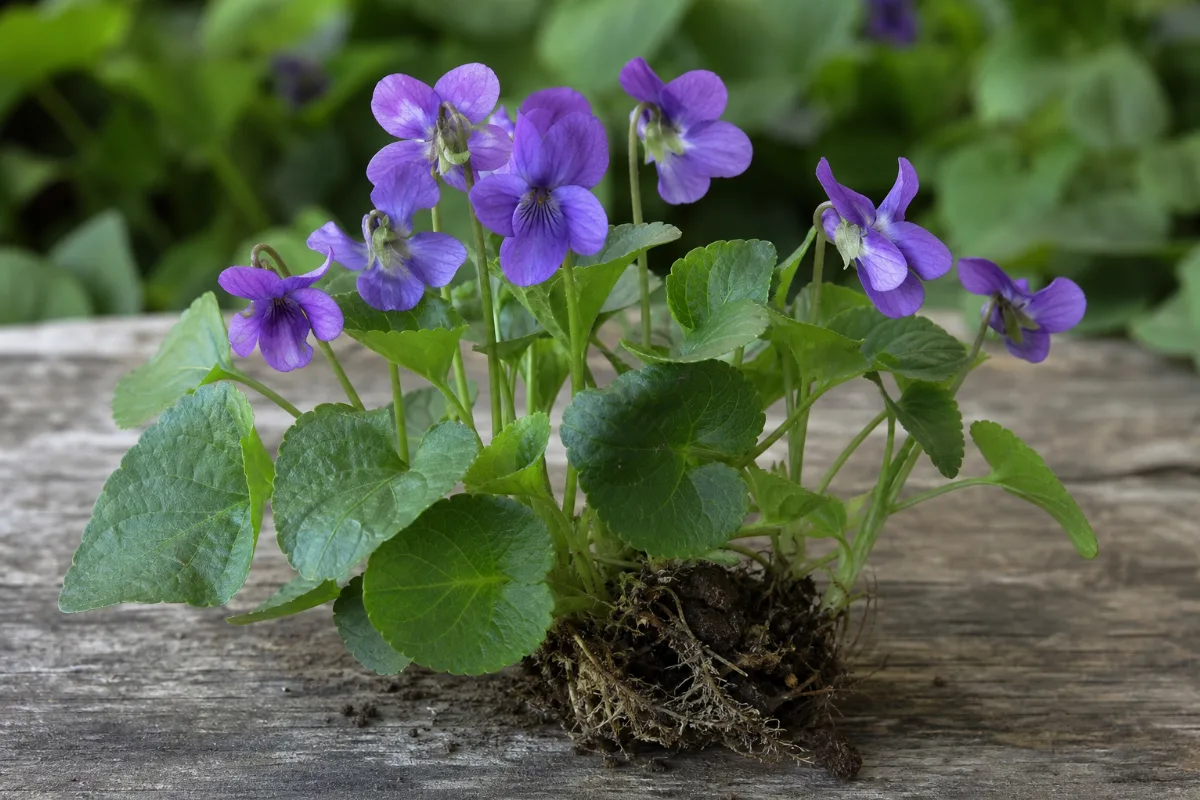
Sweet violet
Viola odorata · also called English violet, garden violet, banafsheh
Sweet violet is a fragrant spring flower used for centuries as a syrup or tea for coughs. A few small trials, mostly from Iran, suggest it may ease cough and poor sleep, but the research is thin. The root can make you vomit, so avoid it. Ask a doctor first if you are pregnant or sensitive to aspirin.
General information, not medical advice. Last substantive update · Not medically reviewed. A named clinician has not signed off on this page. How this page is made
About Sweet violet
Sweet violet (Viola odorata) is a fragrant garden flower used as a syrup for coughs. A few small trials, mostly from Iran, suggest benefits for cough and sleep, but the evidence is low to very low certainty. The root is emetic; ask a doctor if pregnant or aspirin-sensitive.
What it is
Sweet violet (Viola odorata) is a small spring-flowering plant of the violet family, also called English violet. Flowers and leaves are made into syrup, tea or oil. The root has also been used.
It contains saponins, mucilage, anthocyanins, cyclotide peptides and salicylates.
What the research shows
Evidence is sparse. We found about eight small human trials, nearly all from Iran. The best-supported finding is faster cough relief in children with asthma using violet flower syrup, and lower insomnia scores in a pooled analysis of five small trials.
Single small trials suggest benefits for COVID-19 symptoms, constipation and fever. One trial of a three-herb tablet cannot tell us about violet alone, and one rhinitis trial has no abstract to read.
Lab studies of cyclotides and extracts show antibacterial and cell effects, but these are not human results.
At a glance
Traditional uses history, not proof
- Coughs, bronchitis and chest colds, as a syrup or tea
- Constipation and fever in Persian medicine
- Sleeplessness, as violet oil nose drops
Studied for research
- Cough in children with asthma: low certainty, one trial
- Sleep: low certainty, small trials
- COVID-19 symptoms, constipation and fever: very low certainty, one small trial each
Main compounds
- Saponins and mucilage
- Anthocyanins and rutosides
- Cyclotides (plant peptides)
- Salicylates
Common forms
- Flower syrup
- Flower or leaf tea
- Violet oil
Research links: Trial: violet flower syrup for cough in children with asthma · Meta-analysis: Viola odorata for insomnia (2022) · GBIF: Viola odorata · Research Library · Genes & Biomarkers Library
The plant and its history
- Accepted scientific name
- Viola odorata L.
- Naming authority
- Accepted in the GBIF backbone (key 5331181), exact match, checked 2026-10-25.
- Common names
- Sweet violet (English); English violet (English); Garden violet (English); Banafsheh (Persian)
- Botanical family
- Violaceae (violet family)
- Classification
- Plantae > Malpighiales > Violaceae > Viola > Viola odorata
- Native range
- Europe including Britain, North Africa, western Asia (plant database).
- Habitat
- Fields, hedgerows and woodland, especially on chalky soils (plant database).
- What the plant looks like
- Roots: Not verified.; Stems: Not verified.; Leaves: Not verified.; Flowers: Fragrant violet flowers; description not verified.; Fruit: Not verified.
- Cultivation
- Grown as a garden plant; details not verified.
- Harvest and processing
- Flowers picked in spring for syrup; roots dried in autumn (plant database). Not verified further.
- Look-alikes and adulterants
- Name: Viola tricolor (heartsease, wild pansy); Note: Different species with its own EU monograph for skin; see the heartsease page.; Name: African violet (Saintpaulia); Note: A houseplant from a different family; not a medicinal violet.
- Sustainability and conservation
- Not assessed.
Traditional use and history history, not clinical proof
| Tradition or era | Documented use | Source |
|---|---|---|
| European and Persian traditional medicine | Flower syrup, tea and oil for cough, chest colds, constipation, sleeplessness and fever; root as a strong expectorant and emetic. | s-pfaf-viola-odorata |
| Modern trials (Iran, 2014 to 2024) | Small trials of syrup and oil for cough, COVID symptoms, sleep, constipation and fever. | p25954025 |
Traditional use shows how a plant was used. It does not show that a supplement works or is safe today.
What is inside, and how it may work
What the plant contains and how those compounds act in cells and animals. Laboratory and animal mechanisms are not proven effects in people.
Main compounds
| Compound | Family | Where it is concentrated | Activity studied | Level of evidence |
|---|---|---|---|---|
| Saponins | triterpenoid glycosides | All parts Not given | Named in a 2026 review; possible mucus-loosening and gut-irritating effect is theory. 7 | Pharmacological theory |
| Cyclotides (e.g. cycloviolacin O2) | cyclic plant peptides | Leaves Not given | Lab studies show antibacterial and cell-killing effects; not shown in people. 7 | Laboratory research |
| Methyl salicylate PubChem 4133 | salicylate ester | All parts Not given | Source of the aspirin-type caution; amount unknown. 7 6 | Pharmacological theory |
| Salicylic acid PubChem 338 | phenolic acid | All parts except rhizome Not given | Reported in the review; amount unknown. 7 6 | Pharmacological theory |
| Mucilage | polysaccharides | Flowers and leaves Not given | Soothing, softening (emollient) in theory. 7 | Pharmacological theory |
| Anthocyanins and rutosides | pigments / flavonoid glycosides | Flowers Not given | Antioxidant in lab tests only. Rutin itself is PubChem CID 5280805. 7 | Laboratory research |
| Violine | alkaloid (as named in the database) | Root Not given | Described as emetic and purgative at higher amounts. 8 | Authoritative guidance |
Mechanisms, receptors and pathways
| Target or pathway | Gene or receptor | What was found | Level |
|---|---|---|---|
| Mucus and airway comfort | Not known | Mucilage and saponins are proposed to soothe and loosen. Not shown in the cough trial. 7 | Pharmacological theory |
| Cell and bacteria membranes | Not applicable | Cyclotides disrupt membranes in lab tests (antibacterial, cell-killing). Lab only. 7 | Laboratory research |
Absorption, metabolism and elimination
- Absorption
- Not studied.
- Distribution
- Not studied.
- Metabolism
- Not studied.
- Elimination
- Not studied.
- Bioavailability
- Unknown. Cyclotides are peptides and may be broken down by digestion, but we found no study.
Isolated compounds versus whole extracts
All human trials used whole-plant syrup or oil. No isolated compound has been tested in people.
Nutritional composition
An edible flower and herb, not a nutrient source. Plant databases list vitamins A and C in trace amounts; not verified.
3 low certainty4 very low certainty2 not enough evidence
What is Sweet violet good for?
The main proposed uses and how strong the human evidence is for each. For sweet violet, every use rests on small trials, so no rating is better than low.
Benefits, one by one
Each card is a research question, not a promise. Tap a goal to filter. Open a card to see the studies, doses and limits.
Chronic insomnia (violet oil and extracts, small trials)
Low certaintyA pooled analysis of five small trials found lower insomnia scores with violet products than placebo. The products differed (nose-drop oil, syrup, extract) and the people studied were mostly Iranian. Placebo groups also improved.
2 studiesSyrup, oil and nose drops were used in the trials; amounts are not re…
Studies, doses and limits
What the trials found
A 2022 meta-analysis (224 people, 5 trials) found lower PSQI (-4.67) and ISI (-6.30) scores than placebo, but not for time to fall asleep. One 75-person trial of violet oil nose drops found it beat both almond oil and placebo, though all groups improved.
Results
PSQI total mean difference -4.67; sleep quality -0.91; sleep duration -0.77; ISI -6.30. No clear change in sleep latency or efficiency.
Effect sizes as reported
Mean differences from the meta-analysis abstract; confidence intervals not given.
Why this rating
Small trials, different products, self-rated scores, one region, and the abstract does not give a risk-of-bias rating. A placebo response is large in insomnia studies.
Form and dose studied
Syrup, oil and nose drops were used in the trials; amounts are not reproduced here. Ask a doctor or pharmacist about amounts.
Who was studied
Adults with chronic insomnia.
Limits
Different products and routes were pooled. No long-term follow-up. Larger blinded trials from other countries are missing.
Why researchers looked
Violet oil is an old Persian remedy for poor sleep.
Traditional use
Persian medicine uses violet oil as nose drops and the flowers as a syrup for sleeplessness.
Proposed mechanism Unknown
Not known. Lab and animal work is not enough to say how it might act on sleep.
A proposed mechanism does not show that the effect happens in people.
Nose drops and oral syrup are not the same exposure. See Safety.
Sleep quality in menopausal women (syrup)
Very low certaintyOne triple-blind trial in menopausal women found much lower sleep-problem scores after one month of violet syrup than placebo. Nearly a third of women were left out of the final analysis, so treat it as a lead, not proof.
1 studiesSyrup, oil and nose drops were used in the trials; amounts are not re…
Studies, doses and limits
What the trials found
118 women were enrolled and 84 analysed. PSQI after one month was 4.9 with violet syrup and 8.1 with placebo (starting scores 9.2 and 8.4).
Results
PSQI about 3 points lower than placebo (4.9 vs 8.1).
Effect sizes as reported
P < 0.001 reported; no confidence interval in the abstract.
Why this rating
One trial, high exclusions (34 of 118), self-rated questionnaire, no sleep-lab measure.
Form and dose studied
Syrup, oil and nose drops were used in the trials; amounts are not reproduced here. Ask a doctor or pharmacist about amounts.
Who was studied
Menopausal women in Iran.
Limits
Exclusions can inflate a result; one centre; no safety figures in the abstract.
Why researchers looked
Sleep problems are common in menopause and violet syrup is a traditional sleep remedy.
Traditional use
Persian medicine uses violet flower syrup as a calming drink.
Proposed mechanism Unknown
Not known.
A proposed mechanism does not show that the effect happens in people.
Syrup is sugar-based. Side effects were not reported in the abstract.
Cough in children with intermittent asthma (flower syrup)
Low certaintyIn one double-blind trial of 182 Iranian children, cough went away faster when violet flower syrup was given with their usual reliever inhaler than with placebo. It is one trial and does not show better asthma control.
2 studiesSyrup, oil and nose drops were used in the trials; amounts are not re…
Studies, doses and limits
What the trials found
182 children aged 2 to 12; syrup or placebo added to a short-acting reliever. Time to more than half cough reduction (P = .001) and to full suppression (P < .001) was shorter with violet syrup. Younger children seemed to benefit more.
Results
Shorter time to cough relief; the abstract gives no number of days.
Effect sizes as reported
No confidence interval in the abstract.
Why this rating
One randomized trial, abstract only, single country, no side-effect information read, and the effect was on cough only.
Form and dose studied
Syrup, oil and nose drops were used in the trials; amounts are not reproduced here. Ask a doctor or pharmacist about amounts.
Who was studied
Children 2 to 12 with intermittent asthma using a reliever.
Limits
Not shown to replace asthma treatment. Syrup recipe not described in the abstract. Side effects unknown to us.
Why researchers looked
Sweet violet is a classic European and Persian cough herb.
Traditional use
Flower and leaf syrups and teas have been used for coughs and bronchitis; the mucilage is thought to soothe the throat.
Proposed mechanism Pharmacological theory
Mucilage may coat irritated tissue and saponins may loosen mucus; both are theory, not shown in this trial.
A proposed mechanism does not show that the effect happens in people.
Syrup contains sugar. Children's asthma needs a doctor's plan.
Childhood asthma, three-herb tablet that includes sweet violet
Very low certaintyA tablet of liquorice, sweet violet and turpeth improved cough and asthma-control scores in 60 children compared with placebo. Because liquorice is in the mix, this tells us little about violet itself.
1 studiesSyrup, oil and nose drops were used in the trials; amounts are not re…
Studies, doses and limits
What the trials found
60 children and adolescents; tablet or placebo added to guideline asthma treatment for a month. Cough number and severity, activity limits and the Asthma Control Questionnaire were better with the tablet.
Results
Group differences reported; numbers not in the abstract.
Effect sizes as reported
Not in the abstract.
Why this rating
Three-herb product; cannot assign effect to violet; small; abstract only.
Form and dose studied
Syrup, oil and nose drops were used in the trials; amounts are not reproduced here. Ask a doctor or pharmacist about amounts.
Who was studied
Children and adolescents with mild-to-moderate asthma.
Limits
Different species and a combination, so not evidence for sweet violet alone.
Why researchers looked
Traditional chest herbs were combined as an add-on to asthma treatment.
Traditional use
Traditional respiratory mixture.
Proposed mechanism Unknown
Not known for the mix.
A proposed mechanism does not show that the effect happens in people.
Liquorice has its own cautions (blood pressure, potassium).
Symptoms of COVID-19 added to usual care (syrup)
Very low certaintyIn 108 outpatients, cough, muscle aches, headache and diarrhea improved faster with violet syrup than placebo. Both groups improved, and this is not an antiviral treatment.
1 studiesSyrup, oil and nose drops were used in the trials; amounts are not re…
Studies, doses and limits
What the trials found
54 per group, 7 days, self-rated scores. Cough (P = 0.025), myalgia (P = 0.036), headache (P = 0.037) and diarrhea (P = 0.044) decreased more with violet syrup. Breathlessness showed no clear difference.
Results
Small differences; no sizes in the abstract.
Effect sizes as reported
Borderline P values; several outcomes tested.
Why this rating
One small trial, self-rated, several outcomes tested, side effects not reported in the abstract.
Form and dose studied
Syrup, oil and nose drops were used in the trials; amounts are not reproduced here. Ask a doctor or pharmacist about amounts.
Who was studied
Adult outpatients with COVID-19 in Iran, 2020s.
Limits
Not tested against newer variants or vaccination status. Not a substitute for care.
Why researchers looked
Persian medicine uses violet for respiratory infections.
Traditional use
Traditional use for chest infections and fevers.
Proposed mechanism Unknown
Not known.
A proposed mechanism does not show that the effect happens in people.
Report any worsening breathing to a doctor.
Functional constipation in children (flower syrup)
Low certaintyIn 140 children, violet flower syrup improved constipation about as much as a standard laxative over four weeks. There was no placebo group, so we cannot say the syrup caused the improvement.
2 studiesSyrup, oil and nose drops were used in the trials; amounts are not re…
Studies, doses and limits
What the trials found
140 children aged 4 to 10, syrup vs polyethylene glycol for four weeks. Both improved on all measures; no clear group difference at the end. The laxative group had more side effects.
Results
Similar improvement to the standard laxative.
Effect sizes as reported
No effect sizes in the abstract.
Why this rating
No placebo; 133 of 140 analysed; syrup contains sugar; abstract does not list side effects.
Form and dose studied
Syrup, oil and nose drops were used in the trials; amounts are not reproduced here. Ask a doctor or pharmacist about amounts.
Who was studied
Children 4 to 10 with functional constipation.
Limits
Unblinded comparison with an active drug.
Why researchers looked
Violet flowers are a traditional gentle laxative.
Traditional use
Persian medicine lists violet flower for constipation.
Proposed mechanism Pharmacological theory
Mucilage may soften stool; theory only.
A proposed mechanism does not show that the effect happens in people.
Possible added effect with laxatives (database note). See Safety.
Allergic rhinitis (flower oil)
Not enough evidenceA double-blind trial of violet flower oil in adults with hay-fever-type symptoms exists, but PubMed shows no abstract, so we could not read its results. We rate it insufficient.
1 studiesSyrup, oil and nose drops were used in the trials; amounts are not re…
Studies, doses and limits
What the trials found
Only the title was read. Results unknown.
Results
Not read.
Effect sizes as reported
Not read.
Why this rating
The record has no abstract.
Form and dose studied
Syrup, oil and nose drops were used in the trials; amounts are not reproduced here. Ask a doctor or pharmacist about amounts.
Who was studied
Adults with allergic rhinitis.
Limits
We cannot say whether it helped or harmed.
Why researchers looked
Violet oil is a traditional nose remedy.
Traditional use
Persian medicine uses violet oil in the nose.
Proposed mechanism Unknown
Not known.
A proposed mechanism does not show that the effect happens in people.
Unknown.
Fever in children with low white cells (oil rubbed on the navel)
Very low certaintyIn 41 children with fever during cancer treatment, violet oil rubbed around the navel lowered temperature at 30 minutes and meant fewer children needed paracetamol. It is a very small and unusual setting.
1 studiesSyrup, oil and nose drops were used in the trials; amounts are not re…
Studies, doses and limits
What the trials found
41 febrile children; temperature fell at 30 minutes with violet oil (P = 0.005), not with placebo; 5 vs 17 children needed rescue paracetamol (P = 0.001).
Results
5 of the violet group vs 17 of the placebo group needed paracetamol (group sizes not in the abstract).
Effect sizes as reported
Not in the abstract.
Why this rating
41 children, one hospital, four hours, a very specific illness.
Form and dose studied
Syrup, oil and nose drops were used in the trials; amounts are not reproduced here. Ask a doctor or pharmacist about amounts.
Who was studied
Children with fever and neutropenia on cancer treatment.
Limits
Not applicable to ordinary childhood fever. Children with fever and cancer need hospital care.
Why researchers looked
Violet oil is an old fever remedy in Persian medicine.
Traditional use
Persian medicine uses violet oil on the skin for fever.
Proposed mechanism Unknown
Not known.
A proposed mechanism does not show that the effect happens in people.
Skin oil; patch reactions not reported.
Traditional cough and chest remedy (not trial-tested)
Not enough evidenceSweet violet flowers and leaves have long been used as a syrup or tea for coughs and bronchitis. Apart from the child cough trial above, this rests on tradition.
3 studiesSyrup, oil and nose drops were used in the trials; amounts are not re…
Studies, doses and limits
What the trials found
No trial other than the one above.
Results
None.
Effect sizes as reported
None.
Why this rating
Traditional use only. No EU monograph was found for sweet violet.
Form and dose studied
Syrup, oil and nose drops were used in the trials; amounts are not reproduced here. Ask a doctor or pharmacist about amounts.
Who was studied
General adult use in folk medicine.
Limits
Tradition does not prove it works or that it is safe.
Why researchers looked
A long folk-medicine record.
Traditional use
Flowers and leaves for respiratory and digestive complaints; the root is said to be a stronger expectorant but is also emetic.
Proposed mechanism Pharmacological theory
Mucilage soothes; saponins may act on mucus. Lab or theory only.
A proposed mechanism does not show that the effect happens in people.
Do not use the root. See Safety.
Connections to the rest of health
How Sweet violet connects to the rest of our health knowledge graph. Every link says what kind of connection it is. A safety link (for example to the liver) is a warning, not a benefit. A study that merely mentions a topic never creates a benefit link.
Explore every connection: goals, body systems, organs, symptoms, genes
A. Wellness goals
| Connected to | Kind of connection | Evidence status | Context | Studies |
|---|---|---|---|---|
| Sleep Quality | Low certainty | Chronic insomnia (violet oil and extracts, small trials): A pooled analysis of five small trials found lower insomnia scores with violet products than placebo. The products differed (nose-drop oil, syrup, extract) and the people studied were mostly Iranian. Placebo groups also improved. Sleep quality in menopausal women (syrup): One triple-blind trial in menopausal women found much lower sleep-problem scores after one month of violet syrup than placebo. Nearly a third of women were left out of the final analysis, so treat it as a lead, not proof. | 4 2 5 | |
| Menopause Support | Very low certainty | Sleep quality in menopausal women (syrup): One triple-blind trial in menopausal women found much lower sleep-problem scores after one month of violet syrup than placebo. Nearly a third of women were left out of the final analysis, so treat it as a lead, not proof. | 5 | |
| Breathing Support | Traditional use | Low certainty | Cough in children with intermittent asthma (flower syrup): In one double-blind trial of 182 Iranian children, cough went away faster when violet flower syrup was given with their usual reliever inhaler than with placebo. It is one trial and does not show better asthma control. Childhood asthma, three-herb tablet that includes sweet violet: A tablet of liquorice, sweet violet and turpeth improved cough and asthma-control scores in 60 children compared with placebo. Because liquorice is in the mix, this tells us little about violet itself. | 9 7 10 15 8 11 |
| Immune Support | Very low certainty | Symptoms of COVID-19 added to usual care (syrup): In 108 outpatients, cough, muscle aches, headache and diarrhea improved faster with violet syrup than placebo. Both groups improved, and this is not an antiviral treatment. | 1 | |
| Digestive Support | Traditional use | Low certainty | Functional constipation in children (flower syrup): In 140 children, violet flower syrup improved constipation about as much as a standard laxative over four weeks. There was no placebo group, so we cannot say the syrup caused the improvement. | 14 8 |
| Immune Support | Traditional use | Very low certainty | Fever in children with low white cells (oil rubbed on the navel): In 41 children with fever during cancer treatment, violet oil rubbed around the navel lowered temperature at 30 minutes and meant fewer children needed paracetamol. It is a very small and unusual setting. | 13 |
B. Body systems
| Connected to | Kind of connection | Evidence status | Context | Studies |
|---|---|---|---|---|
| Respiratory system | Traditional use | Low certainty | One trial in children with asthma cough; traditional chest remedy. Preparation or compound: Flower syrup |
9 |
| Nervous System | Biological association | Low certainty | Studied for: Chronic insomnia (violet oil and extracts, small trials) Studied for: Sleep quality in menopausal women (syrup) | 4 2 5 |
| Reproductive System | Biological association | Very low certainty | Studied for: Sleep quality in menopausal women (syrup) | 5 |
| Respiratory System | Biological association | Low certainty | Studied for: Cough in children with intermittent asthma (flower syrup) Studied for: Childhood asthma, three-herb tablet that includes sweet violet | 9 7 10 1 15 8 11 |
| Immune System | Biological association | Very low certainty | Studied for: Symptoms of COVID-19 added to usual care (syrup) Studied for: Allergic rhinitis (flower oil) | 1 15 13 |
| Digestive System | Biological association | Low certainty | Studied for: Functional constipation in children (flower syrup) | 14 8 |
I. Biomarkers
| Connected to | Kind of connection | Evidence status | Context | Studies |
|---|---|---|---|---|
| Pittsburgh Sleep Quality Index (PSQI) | Biological association | Low certainty | Measured in trials: lowered. A lab change is not the same as a health benefit. | 5 4 |
| Insomnia Severity Index (ISI) | Biological association | Low certainty | Measured in trials: lowered. A lab change is not the same as a health benefit. | 4 2 |
| Time to cough relief | Biological association | Low certainty | Measured in trials: lowered. A lab change is not the same as a health benefit. | 9 |
| Symptom severity scores (visual analogue scale) | Biological association | Very low certainty | Measured in trials: lowered. A lab change is not the same as a health benefit. | 1 |
| Armpit temperature and rescue paracetamol | Biological association | Very low certainty | Measured in trials: lowered. A lab change is not the same as a health benefit. | 13 |
| Constipation measures (stool frequency, consistency, retention) | Biological association | Low certainty | Measured in trials: improved. A lab change is not the same as a health benefit. | 14 |
L. Active compounds
| Connected to | Kind of connection | Evidence status | Context | Studies |
|---|---|---|---|---|
| Saponins | Biological association | Pharmacological theory | Named in a 2026 review; possible mucus-loosening and gut-irritating effect is theory. Preparation or compound: All parts |
7 |
| Cyclotides (e.g. cycloviolacin O2) | Biological association | In vitro | Lab studies show antibacterial and cell-killing effects; not shown in people. Preparation or compound: Leaves |
7 |
| Methyl salicylate | Biological association | Pharmacological theory | Source of the aspirin-type caution; amount unknown. Preparation or compound: All parts |
7 6 |
| Salicylic acid | Biological association | Pharmacological theory | Reported in the review; amount unknown. Preparation or compound: All parts except rhizome |
7 6 |
| Mucilage | Biological association | Pharmacological theory | Soothing, softening (emollient) in theory. Preparation or compound: Flowers and leaves |
7 |
| Anthocyanins and rutosides | Biological association | In vitro | Antioxidant in lab tests only. Rutin itself is PubChem CID 5280805. Preparation or compound: Flowers |
7 |
| Violine | Biological association | Authoritative guidance | Described as emetic and purgative at higher amounts. Preparation or compound: Root |
8 |
Each connection is stored with the ingredient, the connected record, the kind of connection, the evidence status, the supporting studies, the preparation or compound involved, and a review date (last reviewed October 25, 2026).
Evidence at a glance: what changed in 5 lab markers
Tap a number to show only those markers. Counts are markers, not people.
The evidence
The research centre for Sweet violet. Every record here was checked against PubMed or the publisher's page; we never list a study we have not verified.
Evidence by outcome
Bars show how many studies we found for each outcome, not how well it works. People are added up across trials only (reviews are not added, to avoid double counting).
How we rate evidence
High certainty
Several well-run trials or reviews agree; further research is unlikely to change the picture much.
Moderate certainty
Good trials point the same way, but some doubt remains.
Low certainty
Small, short or inconsistent trials. The finding could change with better research.
Very low certainty
Very little or very weak human data. Treat as a possibility only.
Mixed findings
Trials or reviews disagree with each other.
Not enough evidence
Not enough human research to say either way.
Evidence against
Good research found no benefit, or found harm.
We take the reviewers' own risk-of-bias and GRADE statements where they exist, and otherwise judge from study size, design, consistency, directness and whether a product matches what is sold. Many publications do not make evidence high. Method note: We started from our existing sweet violet summary, then read the PubMed abstract of every trial cited and searched the full text of a 2026 review. We checked the plant name in GBIF and compounds in PubChem. Not verified: EU monograph (none found, search blocked), LiverTox and LactMed (not opened), FDA, NCCIH, Commission E and WHO. One trial (allergic rhinitis) has no abstract. Certainty ratings are the compiler's reading.
Study library: every study we checked 15
| Study | Design | People | Product, dose, length | Result |
|---|---|---|---|---|
| Adel Mehraban 2023 Efficacy and safety of add-on Viola odorata L. in the treatment of COVID-19: A randomized double-blind controlled trial J Ethnopharmacol 304:116058 · PMID 36535329 · DOI |
Controlled trial |
108 Adult COVID-19 outpatients, Isfahan, Iran |
Violet syrup added to usual care flower (syrup) Not reproduced here 7 days · vs Placebo syrup plus usual care |
All symptoms improved in both groups. Cough (P = 0.025), muscle ache (P = 0.036), headache (P = 0.037) and diarrhea (P = 0.044) fell more with violet syrup. Breathlessness did not differ. Small, borderline P values; no effect sizes in the abstract Methods, limits and fundingOutcomes: Self-rated symptom scores (visual analogue scale) for dyspnea, cough, myalgia, headache, diarrhea after 7 days Limitations: Self-rated scores, 7 days, 54 per group, many outcomes tested without clear correction. The abstract says patients were phoned daily to check side effects but does not report them. Done during an early COVID period; findings may not apply now. Funding and conflicts: Authors declare no competing interests Read: abstract |
| Feyzabadi 2018 Efficacy of Violet oil, a traditional Iranian formula, in patients with chronic insomnia: A randomized, double-blind, placebo-controlled study J Ethnopharmacol · PMID 29217495 · DOI |
Controlled trial |
75 Adults with chronic insomnia, Mashhad, Iran |
Violet oil (Viola odorata in almond or sesame oil) as nose drops aerial parts extract in oil Not reproduced here 30 days · vs Almond oil nose drops, and a placebo solution |
Scores improved in all three groups, including placebo. Violet oil improved most (ISI P < 0.002; PSQI P < 0.001). The effect was larger on sleep quality than on sleep amount. Violet oil better than almond oil and placebo; no effect sizes in the abstract Methods, limits and fundingOutcomes: PSQI and Insomnia Severity Index Limitations: Small, single centre. Placebo group also improved. Nose-drop oil, not the syrup. The abstract's claim of no serious side effects has no numbers. Funding and conflicts: Not stated in the abstract Read: abstract |
| GBIF Secretariat 2026 GBIF backbone match: Viola odorata L. GBIF species API (usageKey 5331181) · Source |
Database entry review |
Not applicable | Not applicable not applicable Not reproduced here Not reproduced here · vs Not applicable |
Viola odorata L., status ACCEPTED, exact match, family Violaceae, order Malpighiales. Checked 2026-10-25. Not applicable Methods, limits and fundingOutcomes: Accepted name check Limitations: Name check only. Funding and conflicts: Public database Read: api |
| Huang 2022 The Efficacy of V. odorata Extract in the Treatment of Insomnia: A Systematic Review and Meta-Analysis Front Neurol 13:730311 · PMID 35734476 · DOI |
Meta-analysis |
224 Adults with chronic insomnia; 4 articles / 5 trials, mostly Iranian |
Viola odorata products (oil, nasal, syrup, extract) flower and other parts as used in each trial Not reproduced here Not reproduced here · vs Placebo |
Total PSQI mean difference -4.67 (P = 0.0002); sleep quality -0.91; sleep duration -0.77; ISI -6.30 (P = 0.009). No clear change in sleep latency, efficiency, disturbances or daytime function. Lower sleep-problem scores than placebo Methods, limits and fundingOutcomes: PSQI total and parts, Insomnia Severity Index (ISI) Limitations: Only 5 small trials, 224 people, different products and routes. The abstract gives no risk-of-bias or GRADE rating. Self-rated outcomes. Funding and conflicts: No competing interests declared Read: abstract |
| Karimi 2024 Effects of Viola odorata syrup on sleep quality in menopausal women: a randomized, triple-blind, controlled trial Sleep Breath 28(3):1137-1144 · PMID 38177831 · DOI |
Controlled trial |
118 Menopausal women, Mashhad, Iran (84 analysed) |
Violet syrup flower (syrup) Not reproduced here 1 month · vs Placebo syrup |
PSQI after one month 4.9 +/- 1.9 with violet syrup vs 8.1 +/- 2.1 with placebo (P < 0.001); starting scores 9.2 and 8.4. About 3 points lower PSQI than placebo Methods, limits and fundingOutcomes: Pittsburgh Sleep Quality Index (PSQI), lower is better Limitations: 34 of 118 women (29%) were left out of the analysis (withdrawal, irregular use, errors). That can bias the result. Self-rated sleep only. Registered as IRCT20180514039660N1. Funding and conflicts: Not stated in the abstract Read: abstract |
| NCBI PubChem 2026 PubChem compound records: salicylic acid (CID 338), methyl salicylate (CID 4133), rutin (CID 5280805) PubChem REST name lookup · Source |
Database entry review |
Not applicable | Not applicable not applicable Not reproduced here Not reproduced here · vs Not applicable |
CIDs returned by name lookup 2026-10-25. Not applicable Methods, limits and fundingOutcomes: Compound identifiers Limitations: Identifier check only; says nothing about the plant's content. Funding and conflicts: Public database Read: api |
| Plants (Basel) review 2026 Sweet Violet (Viola odorata L.): Botanical, Horticultural, Pharmacological, and Economic Aspects Plants (Basel), PMC13610408 · Source |
Narrative review review |
Not applicable (reviews lab, animal and some human work) | Viola odorata flowers, leaves and other parts whole plant Not reproduced here Not reproduced here · vs Not applicable |
Lists saponins, methyl salicylate, mucilage, anthocyanins, rutosides and cyclotides; salicylic acid in all parts except the rhizome; flowers and leaves used for respiratory and digestive ailments. Mostly lab and traditional claims. Not applicable Methods, limits and fundingOutcomes: Traditional uses, constituents, pharmacology Limitations: Narrative review; most findings are lab-based. Read by text search of the full text, not line by line; the safety content of this review was not found. Funding and conflicts: Not stated Read: full-text-searched |
| Plants For A Future 2026 Sweet Violet (Viola odorata) - Plants For A Future database Plant database page · Source |
Database entry review |
Not applicable | Viola odorata roots, seeds, flowers root, seed, flower Not reproduced here Not reproduced here · vs Not applicable |
Lists known hazards as 'may cause vomiting' and 'possible additive effect with laxatives'; says the roots contain the alkaloid violine, strongly emetic and purgative at higher amounts; seeds diuretic and purgative. Not applicable Methods, limits and fundingOutcomes: Uses and known hazards Limitations: Secondary database, not a safety study; no primary citation checked. Funding and conflicts: Not stated Read: full-page |
| Qasemzadeh 2015 The Effect of Viola odorata Flower Syrup on the Cough of Children With Asthma: A Double-Blind, Randomized Controlled Trial J Evid Based Complement Altern Med 20(4):287-91 · PMID 25954025 · DOI |
Controlled trial |
182 Children aged 2 to 12 years with intermittent asthma, Iran |
Violet flower syrup (Viola odorata) added to a short-acting beta-agonist flower Not reproduced here Not reproduced here · vs Placebo syrup plus the same reliever |
Time to more than 50% cough reduction (P = .001) and to full cough suppression (P < .001) was shorter with violet syrup than placebo. Benefit was larger in younger children. Shorter time to cough relief; the abstract gives no minutes or days and no confidence interval Methods, limits and fundingOutcomes: Time to 50% and 100% cough reduction Limitations: Single country, abstract only read. No side-effect data in the abstract. Cough was the outcome, not asthma control. Product make-up not described in the abstract. Funding and conflicts: Not stated in the abstract Read: abstract |
| Rabbani 2022 The Efficacy of an Oral Formulation of Glycyrrhiza glabra, Viola odorata, and Operculina turpethum as an Add-on Therapy for Mild-to-moderate Childhood Asthma: A Randomized Placebo-Controlled Clinical Trial J Res Pharm Pract · PMID 37304220 · DOI |
Controlled trial |
60 Children and adolescents with mild-to-moderate asthma, Iran |
Three-herb tablet (liquorice, sweet violet, turpeth) added to standard asthma treatment mixed (not stated for violet) Not reproduced here 1 month · vs Placebo tablets |
Spirometry and activity limits improved; only cough number and severity, activity limits and the control score differed between groups. Better cough and control scores than placebo for the combination Methods, limits and fundingOutcomes: Cough, breathlessness, spirometry, Asthma Control Questionnaire Limitations: Three-herb product, so any effect cannot be assigned to violet. Liquorice is active on its own. Small trial. Funding and conflicts: No conflicts declared Read: abstract |
| Search record 2026 EMA / HMPC herbal monograph search for Viola odorata or Violae odoratae radix EMA site search (blocked, 401) and web search restricted to ema.europa.eu · Source |
Search record review |
Not applicable | Not applicable not applicable Not reproduced here Not reproduced here · vs Not applicable |
No monograph for Viola odorata or its root turned up. The EMA search page itself refused the request, so this is not proof that none exists. Not applicable Methods, limits and fundingOutcomes: Whether an EU monograph exists Limitations: Absence of a search hit is not proof. The EU monograph that does exist is for Viola tricolor (heartsease), a different plant. Funding and conflicts: Not applicable Read: not-found |
| Search record 2026 NCBI Bookshelf check for LiverTox or LactMed entries on sweet violet NCBI Bookshelf search · Source |
Search record review |
Not applicable | Not applicable not applicable Not reproduced here Not reproduced here · vs Not applicable |
A Bookshelf search returned unrelated records; no LiverTox or LactMed page for sweet violet was opened. Not verified. Not applicable Methods, limits and fundingOutcomes: Whether LiverTox or LactMed cover the plant Limitations: Search only; individual records not opened. Funding and conflicts: Not applicable Read: not-found |
| Tafazoli 2020 The Effect of Viola Odorata L. Oil for Fever in Children: A Randomized Triple-blinded Placebo-controlled Clinical Trial Curr Drug Discov Technol · PMID 31250761 · DOI |
Controlled trial |
41 Children with fever and low white cells (febrile neutropenia) during cancer treatment, Shiraz, Iran |
Violet oil rubbed around the navel oil (plant part not stated in the abstract) Not reproduced here 4 hours · vs Placebo |
Temperature fell at 30 minutes with violet oil (P = 0.005), not with placebo. Rescue paracetamol was needed by 5 children vs 17 (P = 0.001). Fewer children needed paracetamol Methods, limits and fundingOutcomes: Armpit temperature at 30, 60 and 240 minutes; rescue paracetamol Limitations: Only 41 children, a very specific group, short follow-up. Safety conclusion in the abstract is not backed by reported numbers. Funding and conflicts: Not stated in the abstract Read: abstract |
| Tavassoli 2021 Effectiveness of Viola Flower Syrup Compared with Polyethylene Glycol in Children with Functional Constipation: A Randomized, Active-Controlled Clinical Trial Evid Based Complement Alternat Med 2021:9915289 · PMID 34552657 · DOI |
Controlled trial |
140 Children aged 4 to 10 years with functional constipation (Rome III), Tehran |
Violet flower syrup flower (syrup) Not reproduced here 4 weeks · vs Polyethylene glycol (a standard laxative); no placebo |
Both groups improved on all measures versus baseline (P < 0.001). No clear difference between groups at the end. The laxative group had more side effects. Similar improvement to the standard laxative Methods, limits and fundingOutcomes: Constipation measures (stool frequency, consistency, retention, etc.) Limitations: No placebo group, so improvement may partly be time or diet. 133 of 140 analysed. Syrup contains sugar. Abstract does not list the side effects. Funding and conflicts: Authors declare no conflicts Read: abstract |
| Yazdi 2020 Efficacy of Sweet Violet (Viola odorata) flower oil on the symptoms of adults with allergic rhinitis: A double-blind randomized placebo-controlled clinical trial Complement Ther Med 51:102408 · PMID 32507426 · DOI |
Controlled trial |
Adults with allergic rhinitis, Iran | Violet flower oil flower (oil) Not reproduced here Not known · vs Placebo |
No result read: PubMed holds no abstract for this record, so only the title is known. Not read Methods, limits and fundingOutcomes: Allergic rhinitis symptoms Limitations: Title only. We cannot state its results, size or side effects. Funding and conflicts: Not known Read: title-only |
What we do not know yet
- No EU monograph, LiverTox or LactMed page found or read for sweet violet.
- No trials outside Iran or in adults for cough.
- No safety data for pregnancy, breastfeeding or blood thinners.
- Salicylate and saponin content of syrups is unknown.
How new research is added
New studies are found by a saved PubMed search and reviewed before the page is updated.
Lab markers
What changed in blood or saliva tests during trials. A changed number is not the same as feeling or being healthier, and we give no "normal ranges".
Other 6
Pittsburgh Sleep Quality Index (PSQI)
Lowered in trials
A 19-question self-rated sleep score from 0 to 21; lower is better.
Low certaintyResults and what it means
Why it was measured
Tracks how well people say they sleep.
Statistical vs. clinical meaning
Self-rated, not a lab marker. Pooling mixed products.
Safety implication
Not reported.
| Study | Result | People | Product |
|---|---|---|---|
| 5 | PSQI 4.9 +/- 1.9 with violet syrup vs 8.1 +/- 2.1 with placebo after one month (P < 0.001). | 84 menopausal women analysed (of 118), Iran | Violet syrup vs placebo syrup |
| 4 | Total PSQI mean difference -4.67 vs placebo (P = 0.0002). | 224 people with chronic insomnia, 5 trials | Violet oil, syrup or extracts vs placebo |
Insomnia Severity Index (ISI)
Lowered in trials
A 7-question self-rated insomnia score; lower is better.
Low certaintyResults and what it means
Why it was measured
Tracks insomnia severity.
Statistical vs. clinical meaning
Large placebo response; small trials.
Safety implication
Not reported.
| Study | Result | People | Product |
|---|---|---|---|
| 4 | ISI mean difference -6.30 vs placebo (P = 0.009). | Chronic insomnia, pooled trials | Violet products vs placebo |
| 2 | ISI differed between violet oil, almond oil and placebo groups (P < 0.002); all groups improved; violet oil improved most. | 75 adults with chronic insomnia, Iran | Violet oil nose drops for 30 days |
Time to cough relief
Lowered in trials
How long until cough fell by more than half or stopped completely.
Low certaintyResults and what it means
Why it was measured
The trial's main outcome.
Statistical vs. clinical meaning
Parent- or clinician-reported cough, not a lung test.
Safety implication
Not reported in the abstract.
| Study | Result | People | Product |
|---|---|---|---|
| 9 | Time to more than 50% reduction (P = .001) and to full suppression (P < .001) was shorter with violet syrup than placebo. | 182 children with intermittent asthma, Iran | Violet flower syrup plus reliever vs placebo plus reliever |
Symptom severity scores (visual analogue scale)
Lowered in trials
A line scale where patients mark how bad each symptom is.
Very low certaintyResults and what it means
Why it was measured
Tracks symptom recovery.
Statistical vs. clinical meaning
Self-rated, many outcomes tested.
Safety implication
Side effects not reported in the abstract.
| Study | Result | People | Product |
|---|---|---|---|
| 1 | Cough P = 0.025, myalgia P = 0.036, headache P = 0.037, diarrhea P = 0.044 fell more with violet syrup than placebo at day 7. | 108 COVID-19 outpatients | Violet syrup add-on vs placebo syrup |
Armpit temperature and rescue paracetamol
Lowered in trials
Body temperature taken under the arm, plus how many children needed a fever-reducing medicine.
Very low certaintyResults and what it means
Why it was measured
Tracks fever control.
Statistical vs. clinical meaning
Tiny, specialised trial.
Safety implication
Not reported.
| Study | Result | People | Product |
|---|---|---|---|
| 13 | Temperature fell at 30 minutes with violet oil (P = 0.005), not with placebo; 5 vs 17 children needed paracetamol (P = 0.001). | 41 febrile neutropenic children | Violet oil on the navel vs placebo |
Constipation measures (stool frequency, consistency, retention)
Improved in trials
Standard bowel symptoms recorded over four weeks.
Low certaintyResults and what it means
Why it was measured
Tracks bowel function.
Statistical vs. clinical meaning
No placebo group.
Safety implication
The laxative group had more side effects (details not in the abstract).
| Study | Result | People | Product |
|---|---|---|---|
| 14 | Both groups improved (P < 0.001); no clear difference between violet syrup and the laxative at four weeks. | 133 children analysed (of 140) | Violet flower syrup vs polyethylene glycol |
Safety
What studies and official sources say about side effects, medicines and who should check first. Each point shows what kind of evidence it comes from.
Main points to know 5
- The root and seeds are the risky parts. A plant database says the root contains an alkaloid, violine, that is strongly emetic (causes vomiting) and purgative at higher amounts, and that the seeds are purgative. Avoid root and seed preparations. Flowers and leaves in the trials were given as a syrup or oil. Authoritative guidance 8
- Salicylate sensitivity. A 2026 review reports methyl salicylate and salicylic acid in the plant (all parts except the rhizome). If you must avoid aspirin or are allergic to it, ask a doctor or pharmacist first. No human reaction report was found and the amount is not known. Pharmacological theory 7
- Possible stomach and bowel upset. The plant contains saponins, which can irritate the gut in some plants. Our database source lists 'may cause vomiting' and a possible added effect with laxatives. No trial we read gave frequencies. Authoritative guidance 8 7
- Pregnancy and breastfeeding: unknown. No pregnancy or breastfeeding safety data were found. Avoid medicinal amounts. Insufficient 12 11
- Not the same as heartsease or African violet. Sweet violet (Viola odorata) is a different plant from heartsease or wild pansy (Viola tricolor), which has its own EU monograph, and from African violet (Saintpaulia), a houseplant with no medicinal use. Cautions and evidence do not carry across. Authoritative guidance 3
Side effects 3
| Effect | How often | Severity and recovery | Evidence |
|---|---|---|---|
| Vomiting or purging (root, seeds; higher amounts) From a plant database; no case series found. | Not established | moderate Not reported | Authoritative guidance 8 |
| Side effects in the trials The constipation trial said the laxative group had more side effects than the syrup group. The COVID trial phoned patients daily to check for side effects but the abstract gives no result. The abstracts of the other trials say nothing about side effects. | Not reported in the abstracts | unknown Not reported | Controlled trial 9 1 5 14 |
| Allergic or skin reaction No case report found in PubMed searches for Viola odorata with adverse, toxicity or allergy terms. | Not established | unknown Not reported | Insufficient |
Liver
No liver injury case from sweet violet was found, and no LiverTox page was opened. Absence of reports is not proof of safety. 12
How often. No data.
Monitoring. No agency advice found. People with liver disease should ask a doctor first.
This is a safety connection. It is not evidence that Sweet violet supports liver health.
Medicines and supplements 4
| With | Why it matters | Importance | Evidence | What to do |
|---|---|---|---|---|
| Laxatives drug | Plant database lists a possible added effect. | Unknown | Authoritative guidance Not enough evidence 8 | Mention violet use to your pharmacist if you take laxatives. |
| Aspirin and other salicylate or NSAID medicines drug | The plant contains salicylates; the amount in preparations is unknown. | Unknown | Pharmacological theory Not enough evidence 7 | If aspirin-sensitive, ask a pharmacist. |
| Blood thinners (warfarin, anticoagulants) drug | Salicylates can affect bleeding in large amounts; no study of violet with anticoagulants exists. Not shown. | Unknown | Pharmacological theory Not enough evidence 7 | Tell your doctor before using it if you take anticoagulants. |
| Asthma reliever inhaler drug | The cough trial gave syrup alongside a reliever; no interaction was reported in the abstract. | None reported | Controlled trial Low certainty 9 | Do not replace asthma treatment. |
Who should check first 4
| Situation | Advice | Evidence |
|---|---|---|
| Root or seed preparations | Avoid. | Authoritative guidance 8 |
| Aspirin or salicylate allergy | Ask a doctor or pharmacist first. | Pharmacological theory 7 |
| Pregnancy and breastfeeding | Safety not established; avoid. | Insufficient 12 |
| Young children | Trials used syrup in children from age 2 under study conditions; ask a pediatrician. Safety was not systematically assessed in the abstracts. | Controlled trial 9 14 |
Overdose, product quality and regulators
Summary. No human toxicity study was found. The root is described as emetic.
Animal. Not read.
Human doses studied. Not reproduced.
High dose or long term signals. None found; long-term safety unknown.
Overdose response. Vomiting and purging are described for roots at higher amounts (database).
Genotoxicity. Not read.
Toxic plant parts. Root (violine, emetic and purgative) and seeds (purgative), per a plant database. Flowers and leaves are eaten and used in syrups.
No contamination or adulteration study found.
| Body | Action | Date |
|---|
When to get medical help
- Hives, facial or throat swelling, or trouble breathing after using it.
- Repeated vomiting, severe belly pain or diarrhea after any violet preparation, especially root.
- Fast or worsening breathing in a child with asthma.
Stop the supplement and contact a clinician or emergency service. In the US, Poison Control is 1-800-222-1222.
General information only, not medical advice. Ask a clinician or pharmacist before use, especially with medicines, in pregnancy or with a health condition. See the Natural Remedy Safety guide.
Frequently asked questions
What is sweet violet used for?
Does sweet violet help cough?
One trial in 182 children with asthma found cough cleared faster with violet flower syrup plus a reliever than with placebo. It is one trial, so certainty is low.
Does it help sleep?
Did it help with COVID-19?
One small trial found faster improvement in cough, aches, headache and diarrhea, but both groups improved. It is not an antiviral.
Is it a laxative?
Is the root safe?
No. A plant database describes the root as emetic and purgative. Avoid the root and seeds.
Can I use it if I am aspirin-sensitive?
Violet contains salicylates, so ask a doctor or pharmacist first. How much is in syrups or oils is unknown.
Is it safe in pregnancy or breastfeeding?
Safety has not been established and we found no data. Avoid medicinal amounts.
Does it interact with blood thinners?
No study exists. Because it contains salicylates, tell your doctor if you take blood thinners.
Is sweet violet the same as heartsease or African violet?
No. Heartsease (Viola tricolor) is a different species with its own EU monograph, and African violet is an unrelated houseplant.
Is there an EU monograph?
We found none for Viola odorata. One exists for Viola tricolor. Our search was not exhaustive.
Explore by health goal
Breathing SupportSleep QualityImmune SupportMenopause SupportDigestive Support
Editorial transparency
- Written by
- AlternativeMed editorial team. Research compiled with AI assistance, then checked against PubMed records.
- Medical review
- None. This page has not been reviewed by a physician or pharmacist.
- First published
- 2026-10-25
- Last substantive update
- 2026-10-25
- How we research
- We started from our existing sweet violet summary, then read the PubMed abstract of every trial cited and searched the full text of a 2026 review. We checked the plant name in GBIF and compounds in PubChem. Not verified: EU monograph (none found, search blocked), LiverTox and LactMed (not opened), FDA, NCCIH, Commission E and WHO. One trial (allergic rhinitis) has no abstract. Certainty ratings are the compiler's reading.
- How we rate evidence
- See "How we rate evidence" in the Evidence tab.
- Independence
- No product is promoted on this page. No affiliate links are shown.
Sources 15
Each source was opened and checked. Where we read only the abstract, it says so. The small numbers in the text point here.
- Adel Mehraban MS, Shirzad M, Mohammad Taghizadeh Kashani L, et al.. Efficacy and safety of add-on Viola odorata L. in the treatment of COVID-19: A randomized double-blind controlled trial. J Ethnopharmacol 304:116058. 2023. PMID 36535329. DOI 10.1016/j.jep.2022.116058. (abstract)
- Feyzabadi Z, Rezaeitalab F, Badiee S, et al.. Efficacy of Violet oil, a traditional Iranian formula, in patients with chronic insomnia: A randomized, double-blind, placebo-controlled study. J Ethnopharmacol. 2018. PMID 29217495. DOI 10.1016/j.jep.2017.11.036. (abstract)
- GBIF Secretariat. GBIF backbone match: Viola odorata L.. GBIF species API (usageKey 5331181). 2026. (api)
- Huang S, Huang Q, Zhou Z, et al.. The Efficacy of V. odorata Extract in the Treatment of Insomnia: A Systematic Review and Meta-Analysis. Front Neurol 13:730311. 2022. PMID 35734476. DOI 10.3389/fneur.2022.730311. (abstract)
- Karimi FZ, Nazari N, Lotfi F, et al.. Effects of Viola odorata syrup on sleep quality in menopausal women: a randomized, triple-blind, controlled trial. Sleep Breath 28(3):1137-1144. 2024. PMID 38177831. DOI 10.1007/s11325-023-02979-x. (abstract)
- NCBI PubChem. PubChem compound records: salicylic acid (CID 338), methyl salicylate (CID 4133), rutin (CID 5280805). PubChem REST name lookup. 2026. (api)
- Plants (Basel) review. Sweet Violet (Viola odorata L.): Botanical, Horticultural, Pharmacological, and Economic Aspects. Plants (Basel), PMC13610408. 2026. (full-text-searched)
- Plants For A Future. Sweet Violet (Viola odorata) - Plants For A Future database. Plant database page. 2026. (full-page)
- Qasemzadeh MJ, Sharifi H, Hamedanian M, et al.. The Effect of Viola odorata Flower Syrup on the Cough of Children With Asthma: A Double-Blind, Randomized Controlled Trial. J Evid Based Complement Altern Med 20(4):287-91. 2015. PMID 25954025. DOI 10.1177/2156587215584862. (abstract)
- Rabbani F, Raeisi M, Keivanfar M, et al.. The Efficacy of an Oral Formulation of Glycyrrhiza glabra, Viola odorata, and Operculina turpethum as an Add-on Therapy for Mild-to-moderate Childhood Asthma: A Randomized Placebo-Controlled Clinical Trial. J Res Pharm Pract. 2022. PMID 37304220. DOI 10.4103/jrpp.jrpp_77_22. (abstract)
- Search record. EMA / HMPC herbal monograph search for Viola odorata or Violae odoratae radix. EMA site search (blocked, 401) and web search restricted to ema.europa.eu. 2026. (not-found)
- Search record. NCBI Bookshelf check for LiverTox or LactMed entries on sweet violet. NCBI Bookshelf search. 2026. (not-found)
- Tafazoli V, Shahriari M, Heydari M, et al.. The Effect of Viola Odorata L. Oil for Fever in Children: A Randomized Triple-blinded Placebo-controlled Clinical Trial. Curr Drug Discov Technol. 2020. PMID 31250761. DOI 10.2174/1570163816666190620142256. (abstract)
- Tavassoli S, Eftekhari K, Karimi M, et al.. Effectiveness of Viola Flower Syrup Compared with Polyethylene Glycol in Children with Functional Constipation: A Randomized, Active-Controlled Clinical Trial. Evid Based Complement Alternat Med 2021:9915289. 2021. PMID 34552657. DOI 10.1155/2021/9915289. (abstract)
- Yazdi N, Kardooni M, Namjuyan F, et al.. Efficacy of Sweet Violet (Viola odorata) flower oil on the symptoms of adults with allergic rhinitis: A double-blind randomized placebo-controlled clinical trial. Complement Ther Med 51:102408. 2020. PMID 32507426. DOI 10.1016/j.ctim.2020.102408. (title-only)