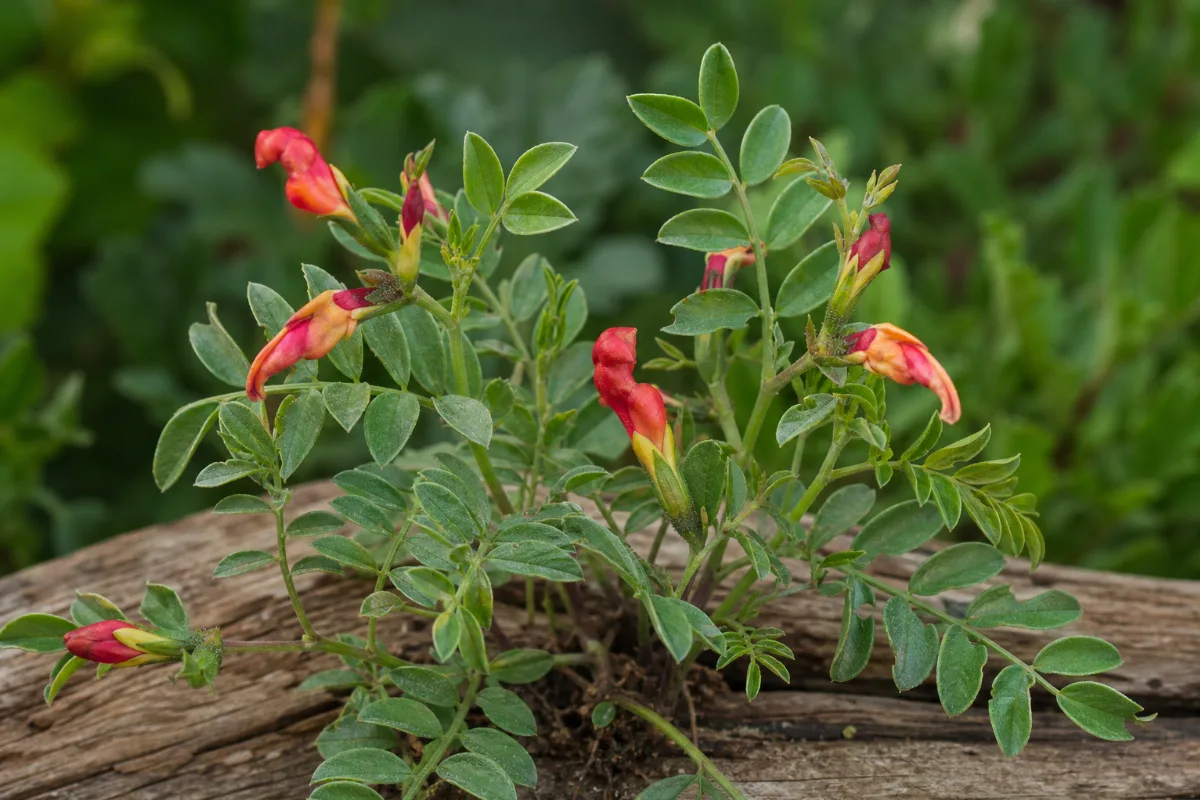
Herbs & Botanicals · South African traditional remedy
Sutherlandia
Lessertia frutescens (formerly Sutherlandia frutescens) · also called Cancer bush, kankerbos, balloon pea
Sutherlandia, also called cancer bush, is a South African shrub whose leaves are used as a tonic and taken as tea, powder or capsules. People use it for stress, appetite, diabetes, HIV and cancer. Human research is small: there is no proof it treats cancer, and it did not improve HIV markers in one trial. The most important caution is that it lowered the level of an HIV medicine in a study of healthy men, so talk to your doctor before combining it with any medicine.
General information, not medical advice. Last substantive update · Not medically reviewed. A named clinician has not signed off on this page. How this page is made
About Sutherlandia
Sutherlandia is a South African shrub used as a traditional tonic. Human research is small and shows no clear benefit. The safety story matters most: it lowered an HIV medicine's levels in healthy men, a possible interaction with tuberculosis prevention medicine was seen, and the "cancer bush" name is not backed by human evidence.
What it is
Sutherlandia is a shrub of the pea family from the drier parts of southern Africa. Its accepted botanical name is Lessertia frutescens, and the older name Sutherlandia frutescens is still widely used. The leaf is dried and taken as tea, powder or capsules.
The leaf contains amino acids such as GABA and canavanine, a sugar-like compound called pinitol, and plant saponins and flavonoids. Products and plant varieties vary a lot in their chemistry.
What the research shows
Only two small controlled trials in people exist, and both were safety studies. In 25 healthy adults, three months of leaf powder was tolerated and people reported better appetite. In 107 adults with HIV, 24 weeks did not change viral load or CD4 count.
For cancer, stress, blood sugar and inflammation there are only cell and animal studies. A 2025 critical review concluded that the evidence for cancer does not support recommending the plant.
At a glance
Traditional uses history, not proof
- Bitter tonic and "blood purifier"
- Cancer tonic (since the 1890s)
- Colds, fever, appetite, stress and anxiety
Studied for research
- HIV-related immune markers, insufficient
- Cancer, insufficient (lab only)
- Stress and anxiety, insufficient
- Blood sugar, insufficient
- Inflammation and antioxidant effects, insufficient
- Appetite, very low
- Short-term tolerability in healthy adults, low
Main compounds
- L-canavanine
- GABA
- Pinitol
- Triterpenoid saponins (sutherlandiosides)
- Flavonol glycosides
Common forms
- Leaf tea
- Dried leaf powder or capsules
- Tablets
- Water or alcohol extracts
Research links: Memorial Sloan Kettering: Sutherlandia frutescens · Safety trial in adults with HIV (PubMed) · Effect on atazanavir levels in healthy men (PubMed) · Critical review of the cancer claim (PubMed) · Safety trial in healthy adults (PubMed) · Lab screening of drug interactions (PubMed) · Research Library · Genes & Biomarkers Library
The plant and its history
- Accepted scientific name
- Lessertia frutescens
- Naming authority
- (L.) Goldblatt & J.C.Manning
- Synonyms
- Sutherlandia frutescens (L.) R.Br.
- Common names
- Cancer bush (English); Sutherlandia (English); Balloon pea (English); Kankerbos (Afrikaans)
- Botanical family
- Fabaceae
- Classification
- Plantae > Tracheophyta > Magnoliopsida > Fabales > Fabaceae (pea family) > Lessertia (Sutherlandia is the older name) > frutescens
- Native range
- A 2008 review gives South Africa, Lesotho, southern Namibia and southeastern Botswana. Memorial Sloan Kettering says South Africa and the coast of West Africa; the two do not match and the West Africa claim was not confirmed.
- Habitat
- Drier regions of southern Africa (Gernandt 2025).
- What the plant looks like
- Roots: Not covered in the sources read.; Stems: A shrub (MSK, van Wyk 2008).; Leaves: Leaf is the main plant part used in the trials.; Flowers: Not covered in the sources read.; Fruit: Not covered in the sources read.; Note: Detailed plant description not checked.
- Cultivation
- Not covered in the sources read.
- Harvest and processing
- Dried leaf, powder, tablets and extracts; water and ethanol extracts differ in chemistry.
- Look-alikes and adulterants
- Name: Sutherlandia tomentosa; Note: A second species along the Cape coast, per the 2008 review (nomenclature may be treated under Lessertia).
- Sustainability and conservation
- Not assessed here.
Traditional use and history history, not clinical proof
| Tradition or era | Documented use | Source |
|---|---|---|
| Southern African traditional medicine | Used as a bitter tonic or "blood purifier", for poor appetite, indigestion, colds, influenza, fever, diabetes, kidney and liver conditions, backache, rheumatoid arthritis, urinary infections, stress and anxiety, and as a cancer tonic since at least 1895; also applied to wounds, haemorrhoids and eye infections. | p18761068 |
| Recent decades | Promoted by some health programmes for people with HIV in South Africa. | p15927053 |
| Regulators | No EMA/HMPC monograph found (NOT verified). | s-msk-sutherlandia |
Traditional use shows how a plant was used. It does not show that a supplement works or is safe today.
What is inside, and how it may work
What the plant contains and how those compounds act in cells and animals. Laboratory and animal mechanisms are not proven effects in people.
Main compounds
| Compound | Family | Where it is concentrated | Activity studied | Level of evidence |
|---|---|---|---|---|
| L-canavanine PubChem 439202 | non-protein amino acid | leaf (per the 2008 review) | Arginine look-alike that can be built into proteins in lab studies. Linked in alfalfa to lupus-like illness (theory for Sutherlandia). Not detectable in blood in a 3-month healthy-adult trial. 22 9 1 | Human data |
| GABA (gamma-aminobutyric acid) PubChem 119 | amino acid | leaf | Calming brain chemical; whether swallowing the plant raises GABA in the brain was not shown. 22 11 | Pharmacological theory |
| Pinitol PubChem 164619 | cyclitol (sugar-like compound) | leaf | Linked to blood-sugar effects in lab work; in a gut-cell test it lowered atazanavir uptake. CID flagged: PubChem's record for this CID is titled ononitol, so the pinitol identity is NOT fully verified. 16 22 20 | Laboratory research |
| Triterpenoid saponins (sutherlandiosides, SU1) | cycloartane triterpene glycosides | leaf | Sutherlandiosides were the chemical features that best separated water and ethanol extracts; the triterpenoid fraction increased atazanavir uptake in cells (opposite to the water extract). 4 16 22 | Laboratory research |
| Flavonol glycosides (sutherlandins) | flavonoids | leaf | Present in water and methanol extracts; antioxidant role proposed. 16 19 | Laboratory research |
Mechanisms, receptors and pathways
| Target or pathway | Gene or receptor | What was found | Level |
|---|---|---|---|
| Drug-metabolising enzymes (CYP3A4/5 and others) | CYP3A4, CYP3A5, CYP1A2, CYP2B6, CYP2C8/9/19, pregnane X receptor | Extracts inhibited several CYP enzymes (with time-dependent inhibition of CYP3A4) and activated the pregnane X receptor about twofold; rat and cell work suggests induction after repeated exposure. 5 2 13 14 | Laboratory research |
| Drug transporters | P-glycoprotein, BCRP, OATP1B1, OATP1B3 | Extracts inhibited P-gp (19 to 31 percent of verapamil's activity in one assay; weakly in another) and OATP transporters. 13 5 | Laboratory research |
| Atazanavir absorption in people | Gut active absorption process (modelled) | Population modelling of 12 healthy men suggests Sutherlandia reduced atazanavir exposure through the active absorption process. 17 15 | Human data |
| Oxidative stress and inflammatory signalling | Reactive oxygen species, microglial signalling | Ethanolic extracts lowered reactive oxygen species in rodent brain cells. 6 | Laboratory research |
| Cancer cell growth | Various (not summarised) | Slowed growth of some cancer cells in dishes, but a 2025 critical review found many studies used excessively high concentrations or lacked controls; no animal or human proof. 8 19 | Laboratory research |
| Insulin resistance and lipid metabolism | Not specified | In insulin-resistant rats extract lowered insulin and lipids; in fat cells it reduced triglyceride accumulation. 10 | Animal research |
Absorption, metabolism and elimination
- Absorption
- Plant compounds' absorption in people was not measured. L-canavanine was undetectable in blood after 3 months of leaf powder. Sutherlandia changed atazanavir absorption in 12 healthy men.
- Distribution
- Not studied in people.
- Metabolism
- The extract inhibits or may induce CYP3A4/5 depending on the test.
- Elimination
- Not described in the sources read.
- Bioavailability
- Not known for any Sutherlandia compound.
Isolated compounds versus whole extracts
Human trials used dried leaf (capsules or tablets). Lab work used water or ethanol extracts and single compounds; they gave different results. For atazanavir, the water extract and pinitol lowered uptake while the triterpenoid fraction raised it. The water extract was also less toxic than the ethanol extract in zebrafish embryos. So "Sutherlandia" is not one product, and results from one preparation may not fit another.
Nutritional composition
Sutherlandia is a medicinal plant, usually taken as tea or capsules, not a food or nutrient source. The leaf contains amino acids including GABA and canavanine and the sugar-like compound pinitol.
1 low certainty1 very low certainty5 not enough evidence
What is Sutherlandia good for?
The main proposed uses and how strong the human evidence is for each. "Low" means a small study; "very low" means one weak finding; "insufficient" means too little human evidence to judge. None of these uses is well supported.
Benefits, one by one
Each card is a research question, not a promise. Tap a goal to filter. Open a card to see the studies, doses and limits.
Support for people living with HIV (immune markers)
Not enough evidenceSutherlandia is widely used in South Africa by people with HIV. The one controlled trial in people with HIV was a safety study. It found no change in HIV viral load or CD4 immune cell counts over 24 weeks. It is not a replacement for HIV medicines, and it can lower the levels of at least one HIV medicine (see the Safety tab).
2 studiesDried Sutherlandia plant material in capsules in the trial. This page…
Studies, doses and limits
What the trials found
Wilson 2015 (PLoS ONE): 107 adults with HIV and CD4 counts above 350 took Sutherlandia dried plant material or placebo for 24 weeks (final comparison: 54 vs 53). HIV viral load did not change and CD4 counts were similar in both arms. Days of infection-related events were higher in the Sutherlandia arm (about 9 vs 5 days, p=0.045), put down to two tuberculosis cases among people also taking isoniazid. Mills 2005 (Nutrition Journal) reviewed the field and found no efficacy trials at that time.
Results
No benefit on viral load or CD4 count; a small safety signal around tuberculosis prevention medicine.
Effect sizes as reported
Viral load: no change reported. CD4 count: similar between arms at 24 weeks. Infection burden 5.0 (SD 5.5) vs 9.0 (SD 12.7) days, p=0.045 (higher in the Sutherlandia arm).
Why this rating
One safety trial, not designed to show benefit; it showed no change in the markers measured, so there is no evidence of benefit and some evidence of a problem.
Form and dose studied
Dried Sutherlandia plant material in capsules in the trial. This page does not suggest amounts.
Who was studied
Adults with HIV with CD4 above 350 in South Africa.
Limits
Single trial, 24 weeks, not powered to show benefit or rare harms; a co-author works for a South African company (AIK Innovations); the infection result rests on two cases.
Why researchers looked
Local health programmes in South Africa promoted the plant for HIV, so researchers wanted to know whether it is safe and whether it changes immune markers.
Traditional use
Used as a general tonic and for colds, influenza and fever; use for HIV and AIDS grew up in southern Africa in recent decades.
Proposed mechanism Laboratory research
Lab studies suggest antioxidant, anti-inflammatory and immune-related effects. None of this has been shown to control HIV in people.
A proposed mechanism does not show that the effect happens in people.
Do not use Sutherlandia in place of antiretroviral treatment. Tell your HIV clinic if you use it. See Safety.
Cancer (the "cancer bush" claim)
Not enough evidenceThe nickname "cancer bush" comes from traditional use as a tonic, and from lab studies on cancer cells. There is no human evidence that Sutherlandia treats, prevents or cures cancer. A 2025 critical review concluded it should not currently be recommended for cancer. Anyone with cancer should not replace or delay treatment with it.
4 studiesNot applicable.
Studies, doses and limits
What the trials found
No clinical trial of Sutherlandia as a cancer treatment was found. Memorial Sloan Kettering says whether it could treat cancer has not been studied in humans, and mentions only case reports of reduced fatigue (we did not read those reports). Gernandt 2025 (Planta Medica) reviewed the cancer-cell literature against accepted guidelines and found many studies lacked positive controls and selectivity tests or used excessively high concentrations; it concluded that Sutherlandia does not show acceptable activity or selectivity and should not currently be recommended. Ndjoubi 2025 (Plants) is a broader review that describes promising lab findings.
Results
Cell-dish findings only; no human treatment evidence.
Effect sizes as reported
None in humans.
Why this rating
Only laboratory evidence of uneven quality, and a critical review calls it unconvincing. The name "cancer bush" is not evidence.
Form and dose studied
Not applicable.
Who was studied
None studied in people for cancer.
Limits
No human cancer trials; lab concentrations may not be reachable in the body; possible interactions with cancer medicines are not studied.
Why researchers looked
It has been used as a cancer tonic in southern Africa since at least 1895, according to a 2008 review, which prompted cell studies.
Traditional use
Used as a tonic and "blood purifier" and, since the 1890s, for internal cancers and to prevent cancer.
Proposed mechanism Laboratory research
Extracts slowed growth of some cancer cells in dishes. Many such studies used very high concentrations and did not test whether healthy cells were spared.
A proposed mechanism does not show that the effect happens in people.
Tell the cancer care team before using it: it affects enzymes that process many medicines and its interactions with cancer drugs are untested.
Stress, anxiety and mood
Not enough evidenceSutherlandia is traditionally used for stress and anxiety. It contains GABA, a calming brain chemical, but there are no human trials for stress, anxiety or mood.
3 studiesNot applicable.
Studies, doses and limits
What the trials found
No human trial of Sutherlandia for stress, anxiety or mood was found. In the 3-month healthy-adult pilot, the Sutherlandia group reported better appetite but the abstract does not report mood scores.
Results
None in people.
Effect sizes as reported
None.
Why this rating
No human studies; animal and cell findings only.
Form and dose studied
Not applicable.
Who was studied
None.
Limits
No human data for this use.
Why researchers looked
The 2008 review lists use as an anti-stress medicine ('musa-pelo) and notes GABA and canavanine among its amino acids.
Traditional use
Used as an anti-stress and anti-anxiety remedy in traditional medicine.
Proposed mechanism Animal research
The leaf contains GABA, but whether it reaches the brain after swallowing the plant is not shown. Rodent cell and animal studies report effects on stress and inflammation signalling.
A proposed mechanism does not show that the effect happens in people.
GABA-related sedation has not been studied for the plant; ask a pharmacist if you take sedatives or sleep medicines.
General tolerability in healthy adults
Low certaintyThis is a safety result, not a benefit. In 25 healthy adults, three months of Sutherlandia leaf powder caused no more side effects than placebo. People on Sutherlandia reported better appetite. The study was small.
1 studiesLeaf powder capsules in the trial. This page does not suggest amounts.
Studies, doses and limits
What the trials found
Johnson 2007 (PLoS Clinical Trials): 25 healthy adults, 12 on 400 mg leaf-powder capsules twice daily and 13 on placebo for 3 months. No significant differences in adverse events or in physical, vital, blood and biomarker measures. Appetite was reported better with Sutherlandia (p=0.01). A few measures (respiration rate, platelets, MCH, MCHC, total protein, albumin) differed but stayed in the normal range and were judged not clinically relevant.
Results
Well tolerated in a small, short pilot.
Effect sizes as reported
Appetite: p=0.01. Other differences small and within normal ranges.
Why this rating
Small randomized pilot in healthy people; not a test of benefit and too small to detect rare harms.
Form and dose studied
Leaf powder capsules in the trial. This page does not suggest amounts.
Who was studied
Healthy adults in South Africa.
Limits
25 people, 3 months; healthy people only.
Why researchers looked
To check basic safety before larger trials.
Traditional use
Leaf tea and powder are used widely in South Africa.
Proposed mechanism Human data
Not known. L-canavanine, a compound some reports link to Sutherlandia, was not detectable in the participants' blood.
A proposed mechanism does not show that the effect happens in people.
Healthy-person tolerability does not carry over to people taking medicines.
Blood sugar and insulin resistance
Not enough evidenceTraditionally used for diabetes. Rat and cell studies suggest effects on insulin and fat metabolism. No human trial has tested it for diabetes or blood sugar, so it cannot be recommended for this.
3 studiesNot applicable.
Studies, doses and limits
What the trials found
No human trial for diabetes or glucose control was found. MacKenzie 2012 (Phytotherapy Research) gave Sutherlandia to rats on a high-fat diet for 4 weeks: lower body weight, insulin, free fatty acids and triglycerides than rats on the diet alone.
Results
Animal and cell findings only.
Effect sizes as reported
Rat study reported p<0.05 differences; numbers not read beyond the abstract.
Why this rating
No human data.
Form and dose studied
Not applicable.
Who was studied
None studied in people.
Limits
Rats and cells only.
Why researchers looked
Diabetes is on the list of traditional uses, and the plant contains the sugar-like compound pinitol, which has been linked to blood sugar effects in lab work.
Traditional use
Used for diabetes in traditional medicine (MSK; van Wyk 2008).
Proposed mechanism Animal research
In insulin-resistant rats and fat cells, extract lowered insulin, free fatty acids and triglycerides and raised glucose use.
A proposed mechanism does not show that the effect happens in people.
If a plant lowers blood sugar, it could add to diabetes medicines and cause low blood sugar. This is a theoretical concern, not shown in people. Ask your doctor or pharmacist if you take diabetes medicines.
Inflammation and antioxidant effects
Not enough evidenceExtracts calm inflammation signals and act as antioxidants in lab and animal studies. That can be a double-edged finding: researchers worry that an antioxidant could interfere with some medicines. No human trial has measured inflammation or antioxidant markers.
3 studiesNot applicable.
Studies, doses and limits
What the trials found
No human trial measured inflammation or oxidative stress. Folk 2016 summarised rodent cell findings and suggested the antioxidant effect could interfere with isoniazid.
Results
Lab findings only.
Effect sizes as reported
None in people.
Why this rating
Lab and animal evidence only.
Form and dose studied
Not applicable.
Who was studied
None.
Limits
No human trials; authors of the hypothesis paper include researchers from the 2015 trial.
Why researchers looked
Traditional use for arthritis, fever and wounds, plus antioxidant compounds in the leaf.
Traditional use
Used for fever, backache, rheumatoid arthritis and inflamed wounds (van Wyk 2008).
Proposed mechanism Laboratory research
Extracts lowered reactive oxygen species and inflammatory signalling in rodent cells.
A proposed mechanism does not show that the effect happens in people.
Possible interference with isoniazid is discussed on the Safety tab.
Appetite
Very low certaintyIn the 3-month pilot in healthy adults, people taking Sutherlandia reported better appetite than people on placebo. This was a secondary result in a small safety study, so it is a hint only.
2 studiesLeaf powder capsules in the trial. No amounts suggested here.
Studies, doses and limits
What the trials found
Johnson 2007: 25 healthy adults; Sutherlandia group reported improved appetite vs placebo (p=0.01) over 3 months, among many measures tested.
Results
Self-reported better appetite in a pilot.
Effect sizes as reported
p=0.01 for appetite as reported.
Why this rating
One secondary finding in 25 healthy people among many measures tested.
Form and dose studied
Leaf powder capsules in the trial. No amounts suggested here.
Who was studied
Healthy adults.
Limits
Small, self-reported, not the main aim, and not repeated.
Why researchers looked
Poor appetite is the first use listed in traditional medicine for the plant.
Traditional use
Used as a bitter tonic for poor appetite and indigestion.
Proposed mechanism Pharmacological theory
Not known.
A proposed mechanism does not show that the effect happens in people.
Appetite changes could matter for people with diabetes or on weight-related medicines; not studied.
Connections to the rest of health
How Sutherlandia connects to the rest of our health knowledge graph. Every link says what kind of connection it is. A safety link (for example to the liver) is a warning, not a benefit. A study that merely mentions a topic never creates a benefit link.
Explore every connection: goals, body systems, organs, symptoms, genes
A. Wellness goals
| Connected to | Kind of connection | Evidence status | Context | Studies |
|---|---|---|---|---|
| Immune Support | Traditional use | Not enough evidence | Support for people living with HIV (immune markers): Sutherlandia is widely used in South Africa by people with HIV. The one controlled trial in people with HIV was a safety study. It found no change in HIV viral load or CD4 immune cell counts over 24 weeks. It is not a replacement for HIV medicines, and it can lower the levels of at least one HIV medicine (see the Safety tab). Cancer (the "cancer bush" claim): The nickname "cancer bush" comes from traditional use as a tonic, and from lab studies on cancer cells. There is no human evidence that Sutherlandia treats, prevents or cures cancer. A 2025 critical review concluded it should not currently be recommended for cancer. Anyone with cancer should not replace or delay treatment with it. | 21 12 8 19 22 11 |
| Stress Reduction | Traditional use | Not enough evidence | Stress, anxiety and mood: Sutherlandia is traditionally used for stress and anxiety. It contains GABA, a calming brain chemical, but there are no human trials for stress, anxiety or mood. | 22 19 9 |
| Anxiety Support | Traditional use | Not enough evidence | Stress, anxiety and mood: Sutherlandia is traditionally used for stress and anxiety. It contains GABA, a calming brain chemical, but there are no human trials for stress, anxiety or mood. | 22 19 9 |
| Calm Relaxation | Traditional use | Not enough evidence | Stress, anxiety and mood: Sutherlandia is traditionally used for stress and anxiety. It contains GABA, a calming brain chemical, but there are no human trials for stress, anxiety or mood. | 22 19 9 |
| Blood Sugar Balance | Traditional use | Not enough evidence | Blood sugar and insulin resistance: Traditionally used for diabetes. Rat and cell studies suggest effects on insulin and fat metabolism. No human trial has tested it for diabetes or blood sugar, so it cannot be recommended for this. | 10 22 11 |
| Metabolic Health | Traditional use | Not enough evidence | Blood sugar and insulin resistance: Traditionally used for diabetes. Rat and cell studies suggest effects on insulin and fat metabolism. No human trial has tested it for diabetes or blood sugar, so it cannot be recommended for this. | 10 22 11 |
| Inflammation Balance | Preliminary mechanism | Not enough evidence | Inflammation and antioxidant effects: Extracts calm inflammation signals and act as antioxidants in lab and animal studies. That can be a double-edged finding: researchers worry that an antioxidant could interfere with some medicines. No human trial has measured inflammation or antioxidant markers. | 6 22 19 |
B. Body systems
| Connected to | Kind of connection | Evidence status | Context | Studies |
|---|---|---|---|---|
| Immune System | Biological association | Not enough evidence | Studied for: Support for people living with HIV (immune markers) Studied for: Cancer (the "cancer bush" claim) | 21 12 8 19 22 11 6 |
| Nervous System | Biological association | Not enough evidence | Studied for: Stress, anxiety and mood | 22 19 9 |
| Stress Mood | Biological association | Not enough evidence | Studied for: Stress, anxiety and mood | 22 19 9 |
| Digestive System | Biological association | Low certainty | Studied for: General tolerability in healthy adults Studied for: Appetite | 9 22 |
| Metabolism Weight | Biological association | Not enough evidence | Studied for: Blood sugar and insulin resistance | 10 22 11 |
| Endocrine System | Biological association | Not enough evidence | Studied for: Blood sugar and insulin resistance | 10 22 11 |
G. Root causes and contributing factors
| Connected to | Kind of connection | Evidence status | Context | Studies |
|---|---|---|---|---|
| Medication Side Effects | Drug or supplement interaction | Low certainty | Lower atazanavir exposure in 12 healthy men; possible interaction with isoniazid in one trial. Lower atazanavir exposure in healthy men; possible isoniazid signal in one trial. Preparation or compound: Sutherlandia leaf (whole plant) |
17 21 |
I. Biomarkers
| Connected to | Kind of connection | Evidence status | Context | Studies |
|---|---|---|---|---|
| CD4 T-cell count | Biological association | Low certainty | Measured in trials: no-change. A lab change is not the same as a health benefit. | 21 |
| HIV viral load | Biological association | Low certainty | Measured in trials: no-change. A lab change is not the same as a health benefit. | 21 17 |
| Routine blood tests (healthy adults) | Biological association | Low certainty | Measured in trials: mixed. A lab change is not the same as a health benefit. | 9 |
J. Genes, receptors and enzymes
| Connected to | Kind of connection | Evidence status | Context | Studies |
|---|---|---|---|---|
| CYP3A4 / CYP3A5 | Preliminary mechanism | In vitro | Lab inhibition and, in rats and cells, induction; relevant to many medicines. | 5 2 14 |
| ABCB1 (P-glycoprotein) | Preliminary mechanism | Human | Inhibited in lab assays; modelled gut absorption effect on atazanavir in people. | 13 15 |
L. Active compounds
| Connected to | Kind of connection | Evidence status | Context | Studies |
|---|---|---|---|---|
| L-canavanine | Biological association | Human | Arginine look-alike that can be built into proteins in lab studies. Linked in alfalfa to lupus-like illness (theory for Sutherlandia). Not detectable in blood in a 3-month healthy-adult trial. Preparation or compound: leaf (per the 2008 review) |
22 9 1 |
| GABA (gamma-aminobutyric acid) | Biological association | Pharmacological theory | Calming brain chemical; whether swallowing the plant raises GABA in the brain was not shown. Preparation or compound: leaf |
22 11 |
| Pinitol | Biological association | In vitro | Linked to blood-sugar effects in lab work; in a gut-cell test it lowered atazanavir uptake. CID flagged: PubChem's record for this CID is titled ononitol, so the pinitol identity is NOT fully verified. Preparation or compound: leaf |
16 22 20 |
| Triterpenoid saponins (sutherlandiosides, SU1) | Biological association | In vitro | Sutherlandiosides were the chemical features that best separated water and ethanol extracts; the triterpenoid fraction increased atazanavir uptake in cells (opposite to the water extract). Preparation or compound: leaf |
4 16 22 |
| Flavonol glycosides (sutherlandins) | Biological association | In vitro | Present in water and methanol extracts; antioxidant role proposed. Preparation or compound: leaf |
16 19 |
Each connection is stored with the ingredient, the connected record, the kind of connection, the evidence status, the supporting studies, the preparation or compound involved, and a review date (last reviewed October 25, 2026).
Evidence at a glance: what changed in 3 lab markers
Tap a number to show only those markers. Counts are markers, not people.
The evidence
The research centre for Sutherlandia. Every record here was checked against PubMed or the publisher's page; we never list a study we have not verified.
Evidence by outcome
Bars show how many studies we found for each outcome, not how well it works. People are added up across trials only (reviews are not added, to avoid double counting).
How we rate evidence
High certainty
Several well-run trials or reviews agree; further research is unlikely to change the picture much.
Moderate certainty
Good trials point the same way, but some doubt remains.
Low certainty
Small, short or inconsistent trials. The finding could change with better research.
Very low certainty
Very little or very weak human data. Treat as a possibility only.
Mixed findings
Trials or reviews disagree with each other.
Not enough evidence
Not enough human research to say either way.
Evidence against
Good research found no benefit, or found harm.
We take the reviewers' own risk-of-bias and GRADE statements where they exist, and otherwise judge from study size, design, consistency, directness and whether a product matches what is sold. Many publications do not make evidence high. Method note: We started from our earlier evidence summary for Sutherlandia, read the Memorial Sloan Kettering monograph, and read PubMed abstracts for every study cited. Plant names were checked in GBIF and compound records in PubChem (the pinitol record is flagged as not fully verified). Not found or not read: EMA/HMPC, NCCIH, WHO, LactMed and a LiverTox chapter. All studies were read as abstracts only. Certainty ratings are the compiler's reading.
Study library: every study we checked 22
| Study | Design | People | Product, dose, length | Result |
|---|---|---|---|---|
| Akaogi 2006 Role of non-protein amino acid L-canavanine in autoimmunity Autoimmunity Reviews · PMID 16890899 · DOI |
Narrative review animal |
Review of alfalfa and L-canavanine and lupus-like illness | L-canavanine (found in alfalfa; also reported in Sutherlandia) n/a n/a n/a · vs n/a |
Reports lupus-like illness in a volunteer who ate alfalfa seed and in monkeys fed alfalfa sprouts, relapsing on L-canavanine re-challenge; some mouse strains worsened and others did not. Cases of lupus linked to alfalfa tablets remain controversial and epidemiological data are sparse. This is about alfalfa, not Sutherlandia. Biological reason for caution in autoimmune disease; not tested for Sutherlandia. Methods, limits and fundingOutcomes: Autoimmunity Limitations: About alfalfa, not Sutherlandia; relevance to Sutherlandia is by shared compound only. Read: abstract |
| Awortwe 2014 Inhibition of major drug metabolizing CYPs by common herbal medicines used by HIV/AIDS patients in Africa-- implications for herb-drug interactions Drug Metabolism Letters · PMID 24475926 · DOI |
Laboratory research in-vitro |
Recombinant enzyme assays | Herbal extracts including Lessertia frutescens not stated n/a n/a · vs n/a |
CYP1A2 and CYP3A4 were the most inhibited. L. frutescens showed clear time-dependent inhibition of CYP3A4. The authors say herb-drug interactions are possible if maximum in vivo concentrations are reached. Lab sign of CYP3A4 inhibition. Methods, limits and fundingOutcomes: CYP inhibition Limitations: Laboratory only. Funding and conflicts: No conflict of interest declared. Read: abstract |
| Brown 2008 Impact of traditional medicinal plant extracts on antiretroviral drug absorption Journal of Ethnopharmacology · PMID 18640255 · DOI |
Laboratory research in-vitro |
Caco-2 cell monolayers | Water extracts of Hypoxis hemerocallidea and Sutherlandia frutescens; L-canavanine not stated n/a n/a · vs Verapamil (positive control) |
Hypoxis extract and L-canavanine reduced the efflux of nevirapine (p<=0.05). The Sutherlandia extract itself did not differ significantly from control. Sutherlandia extract: no significant effect on nevirapine transport in this lab model. Methods, limits and fundingOutcomes: Nevirapine transport across intestinal cells Limitations: Laboratory only; shows results differ between tests. Read: abstract |
| Chen 2018 Comparative cardio and developmental toxicity induced by the popular medicinal extract of Sutherlandia frutescens (L.) R.Br. detected using a zebrafish Tuebingen embryo model BMC Complementary and Alternative Medicine · PMID 30290800 · DOI |
Animal research animal |
Zebrafish embryos | 80 percent ethanol and water extracts of Sutherlandia frutescens not stated 0 to 200 micrograms per mL in the water Up to 24 hours post fertilization (and chronic exposure) · vs Untreated embryos |
At high concentrations both extracts caused bleeding and pericardial cysts, and chronic exposure caused pericardial oedema, yolk sac swelling and other abnormal development. The water extract was less toxic than the ethanol extract. Developmental toxicity in fish embryos at high concentrations. Methods, limits and fundingOutcomes: Embryo development and heart toxicity Limitations: Zebrafish embryos; not a direct measure of risk in human pregnancy. Read: abstract |
| Fasinu 2013 The potential of Sutherlandia frutescens for herb-drug interaction Drug Metabolism and Disposition · PMID 23209194 · DOI |
Laboratory research in-vitro |
Human liver microsomes, hepatocytes and transporter cell lines | Crude Sutherlandia frutescens extracts not stated n/a n/a · vs Standard inhibitors |
Extracts inhibited several CYP enzymes, including CYP3A4/5 (IC50 about 17.5 to 28.3 micrograms per mL) and showed time-dependent inhibition of CYP3A4/5. They slowed midazolam clearance in hepatocytes by 40 percent, and inhibited P-gp (weakly, IC50 324.8 micrograms per mL), OATP1B1 and OATP1B3. The authors say interactions are possible if enough extract reaches the body. Broad lab inhibition of drug-processing enzymes and transporters. Methods, limits and fundingOutcomes: CYP enzymes, midazolam clearance, P-gp, BCRP, OATP1B1 and OATP1B3 Limitations: Laboratory only; concentrations may be higher than reached in people. Read: abstract |
| Folk 2016 Does Concurrent Use of Some Botanicals Interfere with Treatment of Tuberculosis? Neuromolecular Medicine · PMID 27155670 · DOI |
Narrative review in-vitro |
Rodent cell and animal findings plus discussion of the 2015 trial | Sutherlandia ethanolic extracts not stated n/a n/a · vs n/a |
The authors (some also authors of the 2015 trial) suggest antioxidant botanicals could interfere with how isoniazid is activated. In rodent cells Sutherlandia extracts lowered reactive oxygen species and inflammatory signalling. As a precaution they recommend people on isoniazid avoid antioxidant botanicals or supplements. A cautionary hypothesis, not a proven interaction. Methods, limits and fundingOutcomes: Oxidative stress, immune signalling Limitations: Hypothesis paper; authors include researchers from the 2015 trial. Read: abstract |
| GBIF 2026 GBIF backbone: Lessertia frutescens (L.) Goldblatt & J.C.Manning GBIF · Source |
Database record n/a |
Sutherlandia / Lessertia frutescens n/a n/a n/a · vs n/a |
Retrieved 2026-10-25 via the GBIF species match API: Lessertia frutescens (L.) Goldblatt & J.C.Manning, usageKey 5633333, status ACCEPTED, family Fabaceae. Sutherlandia frutescens (L.) R.Br. (key 5358193) is a SYNONYM pointing to the accepted key 5633333. Methods, limits and fundingRead: api-record | |
| Gernandt 2025 The "Cancer Bush" Sutherlandia (syn. Lessertia) frutescens. An Example of Promotional Research, or Is There Scientific Merit? Planta Medica · PMID 40763763 · DOI |
Systematic review in-vitro |
Published studies on antiproliferative (anti-cancer-cell) effects | Sutherlandia / Lessertia not stated n/a n/a · vs n/a |
Found that while some in vitro studies suggest antiproliferative effects, many lacked positive controls and selectivity tests or used excessively high concentrations. Very few well-designed studies exist and no rigorous in vivo or clinical trials. The authors conclude the plant does not show acceptable bioactivity or selectivity and, considering possible herb-drug interactions, should not currently be recommended. Critical review: the cancer claim is not supported. Methods, limits and fundingOutcomes: Quality of cancer-related studies against established guidelines Limitations: Authors' own judgment of the literature; abstract only read. Funding and conflicts: No conflict of interest declared. Read: abstract |
| Johnson 2007 A randomized, double-blind, placebo-controlled trial of Lessertia frutescens in healthy adults PLoS Clinical Trials · PMID 17476314 · DOI |
Controlled trial |
25 Healthy adults without known disease |
Sutherlandia (Lessertia frutescens) leaf powder capsules leaf 400 mg capsules twice daily (as reported) 3 months · vs Placebo capsules |
No significant differences in general adverse events or in physical, vital, blood and biomarker measures. Participants on Sutherlandia reported better appetite than placebo (p=0.01). Lower respiration rate, higher platelets, MCH, MCHC, total protein and albumin than placebo, all within normal ranges and judged not clinically relevant. L-canavanine was undetectable in participant plasma. Tolerated for 3 months in 25 healthy adults; appetite reported as improved. Methods, limits and fundingOutcomes: Adverse events (primary); physical, vital, blood and biomarker measures; plasma canavanine Limitations: Small pilot, 12 vs 13 people, short. Cannot show rare harms or benefit. Funding and conflicts: No competing interests declared. Read: abstract |
| MacKenzie 2012 Effect of Sutherlandia frutescens on the lipid metabolism in an insulin resistant rat model and 3T3-L1 adipocytes Phytotherapy Research · PMID 22422585 · DOI |
Animal research animal |
Insulin-resistant rats on a high-fat diet and fat cells in a dish | Sutherlandia frutescens not stated 50 mg per kg body weight per day (rats) 4 weeks · vs High-fat diet alone |
Treated rats had lower body weight and lower plasma insulin, free fatty acids and triglycerides. In fat cells the extract lowered triglyceride build-up and raised glucose use. Animal and cell signal only. Methods, limits and fundingOutcomes: Body weight, insulin, free fatty acids, triglycerides Limitations: Rats and cells; not shown in people. Read: abstract |
| Memorial Sloan Kettering Cancer Center 2022 Sutherlandia frutescens (herb monograph) Memorial Sloan Kettering Cancer Center · Source |
Authoritative guidance n/a |
Sutherlandia / Lessertia frutescens n/a n/a n/a · vs n/a |
Read 2026-10-25. Says it is a shrub native to South Africa and the coast of West Africa (this differs from the 2008 review range). Traditional uses: diabetes, chickenpox, wounds, cancer. Whether it could treat cancer has not been studied in humans. Lists common adverse reactions as diarrhoea, dry mouth and dizziness, and rare sweating and vomiting at high doses. Advises people taking isoniazid to avoid it; reports reduced atazanavir exposure in people; notes lab CYP3A4 and P-glycoprotein inhibition and a rat study of CYP3A2 induction lowering nevirapine; clinical relevance not determined. Methods, limits and fundingLimitations: Hospital monograph, not a regulator. Mixes human, animal and lab findings; cited numbers were checked against the primary abstracts where possible. Read: web-page | |
| Mills 2005 African herbal medicines in the treatment of HIV: Hypoxis and Sutherlandia. An overview of evidence and pharmacology Nutrition Journal · PMID 15927053 · DOI |
Narrative review |
Review of evidence for African potato and Sutherlandia | Hypoxis and Sutherlandia not stated n/a n/a · vs n/a |
The review found no clinical trials of efficacy and low-level evidence of harm that identifies a potential for drug interactions with antiretrovirals. It urges validated information for traditional healers and patients. No trials of efficacy existed in 2005; interaction concerns. Methods, limits and fundingOutcomes: Evidence and safety for HIV use Limitations: Narrative review, now out of date for trials done since. Read: abstract |
| Mills 2005 Impact of African herbal medicines on antiretroviral metabolism AIDS · PMID 15627040 · DOI |
Laboratory research in-vitro |
Laboratory cells and enzymes | Hypoxis and Sutherlandia extracts not stated n/a n/a · vs Verapamil (positive control) |
Both extracts significantly affected CYP3A4 metabolism and activated the pregnane X receptor about twofold. P-glycoprotein expression was inhibited, with Sutherlandia showing 19 to 31 percent of the activity of verapamil. The authors warn that giving herbal medicines with antiretrovirals may risk treatment failure, viral resistance or drug toxicity. Lab warning signal for antiretroviral interactions. Methods, limits and fundingOutcomes: CYP3A4 metabolism, pregnane X receptor, P-glycoprotein Limitations: Laboratory only; short research letter. Read: abstract |
| Minocha 2011 Effect of short term and chronic administration of Sutherlandia frutescens on pharmacokinetics of nevirapine in rats International Journal of Pharmaceutics · PMID 21545833 · DOI |
Animal research animal |
Sprague Dawley rats and LS-180 cells | Sutherlandia frutescens not stated 12 mg/kg (rats) Single dose or 5 days · vs Nevirapine alone |
No change with a single dose. After 5 days, nevirapine AUC and Cmax fell by about 50 percent (p<0.05), with a 2 to 3 fold rise in CYP3A2 mRNA in liver and gut. In human LS-180 cells, the extract raised CYP3A4 mRNA and activity, like rifampicin. The authors say a clinical interaction is possible but untested. Animal and cell signal that repeated use may speed up CYP3A4 (the opposite of the inhibition seen elsewhere). Methods, limits and fundingOutcomes: Nevirapine blood levels; CYP3A2/CYP3A4 expression Limitations: Rats and cells; not shown in people. Read: abstract |
| Muller 2018 Identification of Mechanism and Pathway of the Interaction between the African Traditional Medicine, Sutherlandia Frutescens, and the Antiretroviral Protease Inhibitor, Atazanavir, in Human Subjects Using Population Pharmacokinetic (PK) Analysis Journal of Pharmacy & Pharmaceutical Sciences · PMID 30158052 · DOI |
Pharmacokinetic modelling |
12 Same healthy men as the 2013 study (re-analysis) |
Sutherlandia tablets (Phyto Nova Sutherlandia SU1) for two weeks with atazanavir plant material in tablets Not stated in abstract Two weeks · vs Before Sutherlandia |
A two-compartment model with a dual absorption process fitted best. The model suggested Sutherlandia reduced atazanavir exposure by inhibiting the active absorption process. Atazanavir is moved by P-glycoprotein and processed by CYP3A4 and CYP3A5. Supports a gut-absorption mechanism for the lower atazanavir levels. Methods, limits and fundingOutcomes: Population pharmacokinetic model of atazanavir Limitations: Modelling of the same small dataset; mechanism is a hypothesis. Read: abstract |
| Müller 2012 Interactions between phytochemical components of Sutherlandia frutescens and the antiretroviral, atazanavir in vitro: implications for absorption and metabolism Journal of Pharmacy & Pharmaceutical Sciences · PMID 22579002 · DOI |
Laboratory research in-vitro |
Caco-2 cell monolayers and human liver microsomes | Water and methanol extracts, triterpenoid and flavonol glycoside fractions, L-canavanine, L-GABA, D-pinitol not stated n/a n/a · vs Atazanavir alone |
Aqueous extract and D-pinitol reduced atazanavir accumulation in cells (implying lower absorption); the triterpenoid fraction did the opposite. Both extracts inhibited atazanavir metabolism in liver microsomes while the triterpenoid fraction enhanced it. The authors conclude the plant may change atazanavir absorption and metabolism. Mixed lab effects; different compounds pull in different directions. Methods, limits and fundingOutcomes: Atazanavir accumulation and metabolism Limitations: Laboratory only. Read: abstract |
| Müller 2013 Effect of the African Traditional Medicine, Sutherlandia frutescens, on the Bioavailability of the Antiretroviral Protease Inhibitor, Atazanavir Evidence-Based Complementary and Alternative Medicine · PMID 24416065 · DOI |
Pharmacokinetic study |
12 Twelve healthy men |
Sutherlandia frutescens milled plant material (tablets in the follow-up analysis) given for two weeks, then with a single dose of atazanavir aerial plant material (part not stated in abstract) Not stated in abstract Two weeks of twice-daily Sutherlandia; atazanavir single doses before and after · vs Same men before Sutherlandia |
Geometric mean ratios with Sutherlandia vs without: Cmax 0.783 (0.609 to 1.00) and AUC 0.801 (0.634 to 1.01). Both intervals fell below the 0.8 to 1.25 no-effect range the authors used, and they concluded Sutherlandia significantly reduced atazanavir bioavailability, which may lead to sub-therapeutic levels and reduced anti-HIV effect. About a 20 percent lower atazanavir exposure on average. (AUC ratio 0.801 (0.634-1.01); Cmax ratio 0.783 (0.609-1.00)) Methods, limits and fundingOutcomes: Atazanavir plasma levels (AUC 0-24 h and Cmax) Limitations: Twelve healthy men, not people with HIV; before-and-after design without placebo; the intervals touch 1.0, so the finding rests on the authors' no-effect range. Clinical effect on HIV control not measured. Read: abstract |
| NIH LiverTox 2026 LiverTox (NIH) search for Sutherlandia / Lessertia NIH LiverTox · Source |
Database record n/a |
Sutherlandia / Lessertia frutescens n/a n/a n/a · vs n/a |
A quick Bookshelf search on 2026-10-25 returned generic hits, and no Sutherlandia or Lessertia chapter was identified. Not confirmed either way. Methods, limits and fundingLimitations: Absence not proven. Read: not-found | |
| Ndjoubi 2025 Phytochemistry, Ethnopharmacology, and Pharmacology of Lessertia frutescens (Cancer Bush): A Comprehensive Review Plants (Basel) · PMID 40733322 · DOI |
Narrative review in-vitro |
78 included articles from 154 found | Lessertia frutescens leaf and aerial parts n/a n/a · vs n/a |
Describes amino acids, fatty acids, sugars, flavonoid glycosides, cycloartenol glycosides and oleanane-type saponins, and reports cancer-cell, immune, antioxidant, anti-inflammatory, antidiabetic, neuroprotective, anti-stress and antimicrobial findings from mostly laboratory studies. Broad lab picture; promising candidate in the authors' words. Methods, limits and fundingOutcomes: Chemistry and pharmacology Limitations: Narrative review of mostly laboratory work. Funding and conflicts: No conflicts declared. Read: abstract |
| PubChem 2026 PubChem lookups: L-canavanine, gamma-aminobutyric acid, pinitol PubChem · Source |
Database record n/a |
Sutherlandia / Lessertia frutescens n/a n/a n/a · vs n/a |
Checked 2026-10-25 with the PubChem API. L-canavanine: CID 439202 (C5H12N4O3, title Canavanine). Gamma-aminobutyric acid: CID 119 (C4H9NO2). Pinitol: a name search for 'pinitol' returns CID 164619 (C7H14O6), but that record's title is 'Ononitol, (+)-', so the pinitol identity of this CID is flagged as NOT fully verified. Methods, limits and fundingRead: api-record | |
| Wilson 2015 Consumption of Sutherlandia frutescens by HIV-Seropositive South African Adults: An Adaptive Double-Blind Randomized Placebo Controlled Trial PLoS ONE · PMID 26186450 · DOI |
Controlled trial |
107 Adults with HIV, CD4 count above 350 cells per microlitre |
Sutherlandia frutescens dried plant material leaf (dried plant material; part not specified in abstract) Stage 1 tested three amounts twice daily; final analysis compared the highest (1,200 mg twice daily) with placebo 24 weeks · vs Placebo |
HIV viral load did not change and CD4 count was similar in both arms at 24 weeks. Burden of infection (days of infection-related events) was greater in the Sutherlandia arm (5.0 (SD 5.5) vs 9.0 (SD 12.7) days, p=0.045), attributed to two tuberculosis cases in people taking isoniazid preventive therapy. The authors call for further evaluation of a possible interaction and found no other safety issues. No change in viral load or CD4 count; more infection days in the Sutherlandia arm, driven by two TB cases on isoniazid. Methods, limits and fundingOutcomes: Safety; HIV viral load; CD4 count; days of infection-related events (burden of infection) Limitations: Safety-focused, not designed to show benefit; the TB signal is two cases. 133 were randomized across two stages; 107 analysed in the final comparison. A co-author is employed by AIK Innovations (a South African company). Funding and conflicts: Co-author employed by AIK Innovations (Pty) Ltd; the authors state no products or patents to declare. Read: abstract |
| van Wyk 2008 A review of the taxonomy, ethnobotany, chemistry and pharmacology of Sutherlandia frutescens (Fabaceae) Journal of Ethnopharmacology · PMID 18761068 · DOI |
Narrative review |
Review | Sutherlandia frutescens leaf and aerial parts n/a n/a · vs n/a |
Describes the plant as native to South Africa, Lesotho, southern Namibia and southeastern Botswana, with three subspecies and wide chemical variation. Lists traditional uses (appetite, indigestion, colds, fever, diabetes, internal cancers, stress and anxiety) including use as a cancer tonic since at least 1895. Names the amino acids canavanine and GABA, the cyclitol pinitol, flavonols and triterpene saponins as key compounds. Lab and animal work showed several activities; animal studies and a small clinical study showed no sign of toxicity. It says enough preclinical data exist to justify controlled clinical studies. Traditional and lab picture only. Methods, limits and fundingOutcomes: Taxonomy, traditional uses, chemistry, pharmacology Limitations: 2008 review; trials since then are small. Read: abstract |
What we do not know yet
- No controlled trial of Sutherlandia for cancer, stress, blood sugar or inflammation.
- No interaction study in people with HIV on regular treatment.
- No data in pregnancy, breastfeeding or children.
- No product contamination analysis was read.
- EMA/HMPC, NCCIH, WHO, LactMed and LiverTox documents were not found or read.
How new research is added
New studies are found by a saved PubMed search and placed in a review queue. A person reads each one before it changes any rating or safety wording.
Lab markers
What changed in blood or saliva tests during trials. A changed number is not the same as feeling or being healthier, and we give no "normal ranges".
Other 3
CD4 T-cell count
No clear change in trials
A count of immune cells that HIV attacks. It is used to judge how damaged the immune system is.
Low certaintyResults and what it means
Why it was measured
The main marker of immune health in HIV.
Statistical vs. clinical meaning
No difference in a marker that was mainly a safety check.
Safety implication
No sign Sutherlandia replaces HIV treatment.
| Study | Result | People | Product |
|---|---|---|---|
| 21 | CD4 count was similar in the Sutherlandia and placebo arms at 24 weeks. | Adults with HIV, CD4 above 350, South Africa | Sutherlandia dried plant material vs placebo, 24 weeks |
HIV viral load
No clear change in trials
The amount of HIV in the blood. Effective HIV medicines push it down.
Low certaintyResults and what it means
Why it was measured
A direct marker of whether HIV is controlled.
Statistical vs. clinical meaning
No change means no sign of benefit; the trial was not designed to prove benefit.
Safety implication
Lower atazanavir levels seen in a separate study could in theory make viral load worse in people on that medicine; this was not measured.
| Study | Result | People | Product |
|---|---|---|---|
| 21 | Viral load did not change with Sutherlandia vs placebo over 24 weeks. | Adults with HIV, CD4 above 350, South Africa | Sutherlandia dried plant material vs placebo, 24 weeks |
Routine blood tests (healthy adults)
Mixed results in trials
Standard blood counts and chemistry, such as platelets, albumin and total protein.
Low certaintyResults and what it means
Why it was measured
A basic safety screen in the healthy-adult pilot.
Statistical vs. clinical meaning
Small differences inside normal ranges; not a benefit.
Safety implication
No safety flag in a small pilot. Liver and kidney values are not separately reported in the abstract.
| Study | Result | People | Product |
|---|---|---|---|
| 9 | A few values (platelets, MCH, MCHC, total protein, albumin) were slightly higher with Sutherlandia than placebo, all within normal ranges and judged not clinically relevant. No significant differences in other blood measures. L-canavanine was undetectable in blood. | 25 healthy adults | Sutherlandia leaf powder capsules vs placebo, 3 months |
Safety
What studies and official sources say about side effects, medicines and who should check first. Each point shows what kind of evidence it comes from.
Main points to know 4
- HIV medicines: Sutherlandia lowered atazanavir levels in healthy men. In 12 healthy men, two weeks of Sutherlandia lowered the exposure to the HIV medicine atazanavir by about 20 percent on average (ratio 0.80, interval 0.63 to 1.01). The authors warned this could lead to levels too low to fight HIV. A follow-up model suggested the plant reduces the medicine's absorption in the gut. Lab studies add that extracts can inhibit CYP3A4 and P-glycoprotein, and one rat study found the opposite effect (faster clearance of nevirapine after 5 days). The result in people who actually have HIV has not been tested. Anyone taking HIV treatment should not add Sutherlandia without their HIV clinic. Controlled trial 17 15 13 5 2 14 11
- Tuberculosis prevention medicine (isoniazid). In the 24-week trial in adults with HIV, two people taking Sutherlandia while on isoniazid preventive therapy developed tuberculosis, which accounted for the higher number of infection days in that arm. The authors asked for more study. A later paper by researchers including the trial authors suggested antioxidant plants could interfere with how isoniazid is activated. This is a signal from two cases plus a hypothesis, not a proven interaction. Memorial Sloan Kettering advises people on isoniazid to avoid it. Controlled trial 21 6 11
- "Cancer bush" does not mean it treats cancer. There is no human evidence that Sutherlandia treats or cures cancer. A 2025 critical review said it should not currently be recommended for cancer. Do not delay or replace cancer treatment, and tell the cancer care team if you use it, because it affects drug-processing enzymes in the lab. Systematic review 8 11
- Short human safety data only. A 3-month trial in 25 healthy adults and a 24-week trial in 107 adults with HIV found no other safety problems than the interaction signals above. Both are small. Long-term safety, safety in pregnancy, in children and with many common medicines has not been studied. Controlled trial 9 21
Side effects 4
| Effect | How often | Severity and recovery | Evidence |
|---|---|---|---|
| Diarrhoea, dry mouth, dizziness Listed as common by Memorial Sloan Kettering without a frequency or primary source; the 3-month healthy-adult trial found no significant difference in adverse events from placebo. | Not established | mild Not described | Authoritative guidance 11 |
| Sweating and vomiting Listed as rare at high doses by Memorial Sloan Kettering; no frequency given. | Not established | mild to moderate Not described | Authoritative guidance 11 |
| Possible loss of HIV medicine effect (lower atazanavir levels) Found in 12 healthy men; clinical effect in people with HIV is unknown. | Not established | potentially serious Unknown | Controlled trial 17 15 |
| Tuberculosis in two people on isoniazid preventive therapy Whether Sutherlandia caused the TB is not known; the authors called for further evaluation. | 2 cases among people taking Sutherlandia in a trial of 107 | serious Not described | Controlled trial 21 |
Liver
No report of liver injury from Sutherlandia was found in the sources we read, and a LiverTox chapter was not identified in a quick search. The healthy-adult trial reported no clinically relevant differences in blood chemistry over 3 months, but the abstract does not list liver enzymes separately. The plant affects liver enzymes (CYP3A4 and others) in the lab, which matters for medicines, not as proof of liver injury. 9 18
How often. No frequency can be given.
Monitoring. No agency monitoring advice was found.
This is a safety connection. It is not evidence that Sutherlandia supports liver health.
Medicines and supplements 6
| With | Why it matters | Importance | Evidence | What to do |
|---|---|---|---|---|
| HIV antiretroviral medicines, especially atazanavir (and other protease inhibitors or drugs handled by CYP3A4 and P-glycoprotein) prescription | Reduced absorption in the gut (human pharmacokinetic model); lab inhibition of CYP3A4 and P-glycoprotein; possible enzyme induction in rats. | About 20 percent lower atazanavir exposure in 12 healthy men; the same effect was not tested in people with HIV. Lab and animal results point in different directions for different drugs, so the net effect for any one medicine is unpredictable. | Controlled trial Low certainty 17 15 13 5 2 16 14 | Do not combine without the HIV clinic. Do not stop HIV medicine to take Sutherlandia. |
| Nevirapine prescription | Rat study: faster clearance after 5 days, with more CYP3A2 and, in human cells, more CYP3A4. A human gut-cell test of the water extract showed no significant effect on its transport. | Nevirapine blood levels fell by about 50 percent in rats after 5 days; not tested in people. | Animal research Very low certainty 14 3 11 | Same as for other HIV medicines: ask the HIV clinic. |
| Isoniazid (tuberculosis prevention or treatment) prescription | Hypothesised: antioxidant activity could interfere with how the drug is activated. | Two TB cases among people on isoniazid taking Sutherlandia in one trial. | Controlled trial Very low certainty 21 6 11 | Avoid combining; ask the TB or HIV clinic. Memorial Sloan Kettering advises avoidance. |
| Other medicines handled by CYP3A4, P-glycoprotein or OATP transporters (for example many cancer, heart, sedative and transplant medicines) prescription | Lab inhibition of CYP3A4/5 (including time-dependent), slower midazolam clearance in liver cells, and inhibition of P-gp, OATP1B1 and OATP1B3. | Laboratory concentrations may be higher than those reached in the body, and one cell and rat study points the other way (induction). The practical effect for a given medicine is unknown. | Laboratory research Very low certainty 5 2 13 14 | Tell your doctor or pharmacist before using Sutherlandia with any prescription, especially those with a narrow safe range. |
| Diabetes medicines and insulin prescription | Theoretical: the plant is traditionally used for diabetes and rat studies show insulin and lipid changes. | No human study. Possible extra blood-sugar lowering has not been shown. | Pharmacological theory Not enough evidence 10 11 | If you take diabetes medicines, ask your doctor or pharmacist and check glucose as advised. |
| Immune-suppressing medicines and conditions where the immune system is overactive (autoimmune disease) prescription | Theoretical: the plant contains L-canavanine (an amino acid that in alfalfa has been linked to lupus-like illness) and has immune-related lab effects. | Never tested for Sutherlandia. In healthy adults L-canavanine was not detectable in blood after 3 months of leaf powder, which weakens but does not remove the concern. Evidence is from alfalfa and animals. | Pharmacological theory Not enough evidence 1 9 | If you have lupus or another autoimmune condition, or take immune-suppressing medicine, ask your specialist before using it. |
Who should check first 4
| Situation | Advice | Evidence |
|---|---|---|
| Taking antiretroviral medicines (especially atazanavir) or isoniazid | Do not add Sutherlandia without the treating clinic's agreement. | Controlled trial 17 21 11 |
| Cancer treatment, or thinking of using it instead of cancer treatment | Do not delay or replace treatment. Tell the oncologist about any plant product. | Systematic review 8 11 |
| Autoimmune disease such as lupus, or taking immune-suppressing medicine | Ask the specialist first; this is a precaution based on a compound shared with alfalfa, not a proven risk. | Pharmacological theory 1 |
| Pregnancy, breastfeeding and young children | Avoid unless a clinician agrees; no human safety data were found. | Animal research 4 |
Overdose, product quality and regulators
Summary. The healthy-adult and HIV trials reported no clear toxicity. The best toxicity signal is in zebrafish embryos at high extract concentrations. Human long-term toxicity is not studied.
Animal. Zebrafish embryos exposed to ethanol or water extracts developed bleeding and heart-area swelling at high concentrations and abnormal development with chronic exposure; the water extract was less toxic. The 2008 review states animal studies showed no indication of toxicity.
Human doses studied. Leaf powder capsules for 3 months in healthy adults; dried plant material for 24 weeks in adults with HIV. Trial amounts are not a recommendation.
High dose or long term signals. Memorial Sloan Kettering lists sweating and vomiting at high doses as rare; no source gives a frequency. No long-term human data.
Overdose response. Not described in the sources read.
Genotoxicity. Not tested in the sources read.
Toxic plant parts. Leaf and aerial parts are used. No part-by-part toxicity data were found.
No analysis of contamination (metals, pesticides, adulterants) in Sutherlandia products was read. The plant is chemically very variable, so products can differ a lot.
Chemical variability. A 2008 review says the plant is chemically, genetically and geographically extremely variable and has three subspecies. 22
Metals, pesticides, adulterants. Not found in the sources read (NOT verified).
| Body | Action | Date |
|---|---|---|
| Memorial Sloan Kettering Cancer Center (United States) | Herb monograph: lists interactions with isoniazid, atazanavir and drugs handled by CYP3A4 and P-glycoprotein; says use for cancer has not been studied in humans. source | 2022 |
When to get medical help
- Cough lasting weeks, night sweats, fever or weight loss in someone taking isoniazid or living with HIV (possible tuberculosis): see a clinic.
- Rising HIV viral load or falling CD4 count after starting Sutherlandia: tell the HIV clinic.
- Severe vomiting, severe dizziness or fainting.
- Swelling of the face or throat, hives or trouble breathing (allergy): call emergency services.
Stop the supplement and contact a clinician or emergency service. In the US, Poison Control is 1-800-222-1222.
General information only, not medical advice. Ask a clinician or pharmacist before use, especially with medicines, in pregnancy or with a health condition. See the Natural Remedy Safety guide.
Frequently asked questions
What is Sutherlandia?
Does Sutherlandia cure or treat cancer?
Is Sutherlandia a treatment for HIV?
Can Sutherlandia interact with HIV medicines?
Yes, it may. In 12 healthy men it lowered exposure to atazanavir by about 20 percent on average. Lab tests also show effects on CYP3A4 and P-glycoprotein, and a rat study suggests it could speed up clearance of nevirapine. These effects have not been tested in people with HIV, so talk to your HIV clinic before combining.
What about tuberculosis medicine?
Does Sutherlandia affect blood sugar or diabetes medicines?
Is Sutherlandia safe for people with autoimmune disease?
We do not know. The plant contains L-canavanine, which in alfalfa has been linked to lupus-like illness. This has not been tested for Sutherlandia, and L-canavanine was not detectable in the blood of healthy adults after three months of leaf powder. If you have lupus or take immune-suppressing medicine, ask your specialist first.
Is Sutherlandia safe in pregnancy and breastfeeding?
No human safety data were found. In zebrafish embryos, high extract concentrations caused abnormal development. This does not show risk in human pregnancy, but it is a reason to avoid it unless a clinician agrees.
What are the side effects?
Is Sutherlandia hard on the liver?
Does Sutherlandia help with stress or anxiety?
When should I stop and see a doctor?
Explore by health goal
Immune SupportStress ReductionAnxiety SupportCalm RelaxationBlood Sugar BalanceMetabolic HealthInflammation Balance
Editorial transparency
- Written by
- AlternativeMed editorial team. Research compiled with AI assistance, then checked against PubMed records.
- Medical review
- None. This page has not been reviewed by a physician or pharmacist.
- First published
- 2026-10-25
- Last substantive update
- 2026-10-25
- How we research
- We started from our earlier evidence summary for Sutherlandia, read the Memorial Sloan Kettering monograph, and read PubMed abstracts for every study cited. Plant names were checked in GBIF and compound records in PubChem (the pinitol record is flagged as not fully verified). Not found or not read: EMA/HMPC, NCCIH, WHO, LactMed and a LiverTox chapter. All studies were read as abstracts only. Certainty ratings are the compiler's reading.
- How we rate evidence
- See "How we rate evidence" in the Evidence tab.
- Independence
- No product is promoted on this page. No affiliate links are shown.
Sources 22
Each source was opened and checked. Where we read only the abstract, it says so. The small numbers in the text point here.
- Akaogi J, Barker T, Kuroda Y, et al.. Role of non-protein amino acid L-canavanine in autoimmunity. Autoimmunity Reviews. 2006. PMID 16890899. DOI 10.1016/j.autrev.2005.12.004. (abstract)
- Awortwe C, Bouic PJ, Masimirembwa CM, et al.. Inhibition of major drug metabolizing CYPs by common herbal medicines used by HIV/AIDS patients in Africa-- implications for herb-drug interactions. Drug Metabolism Letters. 2014. PMID 24475926. DOI 10.2174/1872312808666140129123210. (abstract)
- Brown L, Heyneke O, Brown D, et al.. Impact of traditional medicinal plant extracts on antiretroviral drug absorption. Journal of Ethnopharmacology. 2008. PMID 18640255. DOI 10.1016/j.jep.2008.06.028. (abstract)
- Chen L, Xu M, Gong Z, et al.. Comparative cardio and developmental toxicity induced by the popular medicinal extract of Sutherlandia frutescens (L.) R.Br. detected using a zebrafish Tuebingen embryo model. BMC Complementary and Alternative Medicine. 2018. PMID 30290800. DOI 10.1186/s12906-018-2303-9. (abstract)
- Fasinu PS, Gutmann H, Schiller H, et al.. The potential of Sutherlandia frutescens for herb-drug interaction. Drug Metabolism and Disposition. 2013. PMID 23209194. DOI 10.1124/dmd.112.049593. (abstract)
- Folk WR, Smith A, Song H, et al.. Does Concurrent Use of Some Botanicals Interfere with Treatment of Tuberculosis?. Neuromolecular Medicine. 2016. PMID 27155670. DOI 10.1007/s12017-016-8402-1. (abstract)
- GBIF. GBIF backbone: Lessertia frutescens (L.) Goldblatt & J.C.Manning. GBIF. 2026. (api-record)
- Gernandt N, van der Kooy F. The "Cancer Bush" Sutherlandia (syn. Lessertia) frutescens. An Example of Promotional Research, or Is There Scientific Merit?. Planta Medica. 2025. PMID 40763763. DOI 10.1055/a-2654-6280. (abstract)
- Johnson Q, Syce J, Nell H, et al.. A randomized, double-blind, placebo-controlled trial of Lessertia frutescens in healthy adults. PLoS Clinical Trials. 2007. PMID 17476314. DOI 10.1371/journal.pctr.0020016. (abstract)
- MacKenzie J, Koekemoer TC, Roux S, et al.. Effect of Sutherlandia frutescens on the lipid metabolism in an insulin resistant rat model and 3T3-L1 adipocytes. Phytotherapy Research. 2012. PMID 22422585. DOI 10.1002/ptr.4653. (abstract)
- Memorial Sloan Kettering Cancer Center. Sutherlandia frutescens (herb monograph). Memorial Sloan Kettering Cancer Center. 2022. (web-page)
- Mills E, Cooper C, Seely D, et al.. African herbal medicines in the treatment of HIV: Hypoxis and Sutherlandia. An overview of evidence and pharmacology. Nutrition Journal. 2005. PMID 15927053. DOI 10.1186/1475-2891-4-19. (abstract)
- Mills E, Foster BC, van Heeswijk R, et al.. Impact of African herbal medicines on antiretroviral metabolism. AIDS. 2005. PMID 15627040. DOI 10.1097/00002030-200501030-00013. (abstract)
- Minocha M, Mandava NK, Kwatra D, et al.. Effect of short term and chronic administration of Sutherlandia frutescens on pharmacokinetics of nevirapine in rats. International Journal of Pharmaceutics. 2011. PMID 21545833. DOI 10.1016/j.ijpharm.2011.04.051. (abstract)
- Muller AC, Ducharme MP, Kanfer I. Identification of Mechanism and Pathway of the Interaction between the African Traditional Medicine, Sutherlandia Frutescens, and the Antiretroviral Protease Inhibitor, Atazanavir, in Human Subjects Using Population Pharmacokinetic (PK) Analysis. Journal of Pharmacy & Pharmaceutical Sciences. 2018. PMID 30158052. DOI 10.18433/jpps30068. (abstract)
- Müller AC, Patnala S, Kis O, et al.. Interactions between phytochemical components of Sutherlandia frutescens and the antiretroviral, atazanavir in vitro: implications for absorption and metabolism. Journal of Pharmacy & Pharmaceutical Sciences. 2012. PMID 22579002. DOI 10.18433/j3ns3x. (abstract)
- Müller AC, Skinner MF, Kanfer I. Effect of the African Traditional Medicine, Sutherlandia frutescens, on the Bioavailability of the Antiretroviral Protease Inhibitor, Atazanavir. Evidence-Based Complementary and Alternative Medicine. 2013. PMID 24416065. DOI 10.1155/2013/324618. (abstract)
- NIH LiverTox. LiverTox (NIH) search for Sutherlandia / Lessertia. NIH LiverTox. 2026. (not-found)
- Ndjoubi KO, Sharma R, Hussein AA. Phytochemistry, Ethnopharmacology, and Pharmacology of Lessertia frutescens (Cancer Bush): A Comprehensive Review. Plants (Basel). 2025. PMID 40733322. DOI 10.3390/plants14142086. (abstract)
- PubChem. PubChem lookups: L-canavanine, gamma-aminobutyric acid, pinitol. PubChem. 2026. (api-record)
- Wilson D, Goggin K, Williams K, et al.. Consumption of Sutherlandia frutescens by HIV-Seropositive South African Adults: An Adaptive Double-Blind Randomized Placebo Controlled Trial. PLoS ONE. 2015. PMID 26186450. DOI 10.1371/journal.pone.0128522. (abstract)
- van Wyk BE, Albrecht C. A review of the taxonomy, ethnobotany, chemistry and pharmacology of Sutherlandia frutescens (Fabaceae). Journal of Ethnopharmacology. 2008. PMID 18761068. DOI 10.1016/j.jep.2008.08.003. (abstract)