Herbs & Botanicals · Southern African root tonic
African potato
Hypoxis hemerocallidea · also called Star lily, yellow stars, magic muthi, Hypoxis rooperi
African potato is the corm of a yellow star-shaped flower from southern Africa, used for generations as an immune and prostate tonic. There are no good trials showing it boosts immunity or treats HIV, and the prostate evidence is for one plant sterol, not the corm. The key caution: lab studies suggest it can change how the body handles some medicines, and a trial in people with HIV was stopped over blood-marrow concerns, so talk to your HIV clinic or pharmacist first.
General information, not medical advice. Last substantive update · Not medically reviewed. A named clinician has not signed off on this page. How this page is made
About African potato
African potato (Hypoxis hemerocallidea) is a southern African plant whose corm is used for immunity, the prostate and many other complaints. Evidence of benefit in people is thin; safety questions around HIV medicines, pregnancy and wild harvesting matter most.
What it is
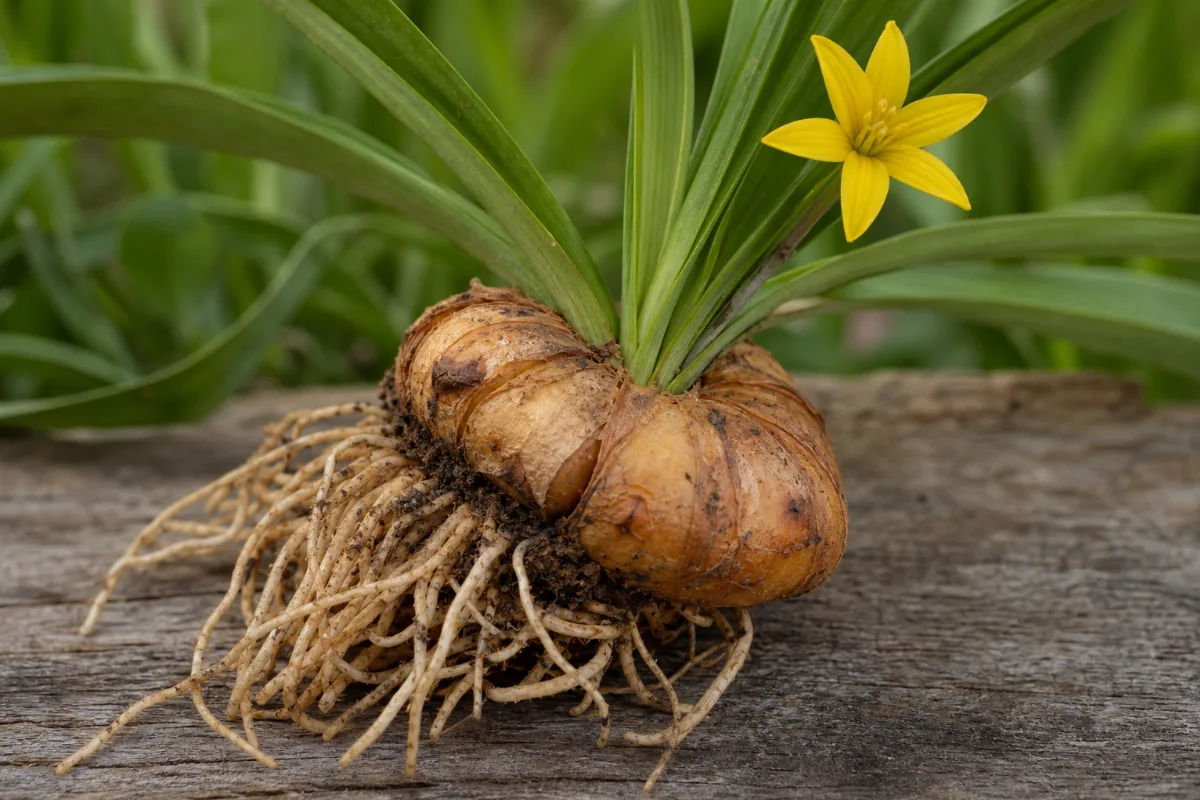
African potato is the underground corm of Hypoxis hemerocallidea, a plant with bright yellow star-shaped flowers and strap-like leaves that grows wild across southern Africa. It is not a potato. Older papers call it Hypoxis rooperi, which is the same plant.
Several related Hypoxis species are sold under the same name, including Hypoxis colchicifolia, which is a different species.
What makes it distinctive
The main compound, hypoxoside, is changed by gut bacteria into rooperol, an antioxidant. The corm also holds plant sterols such as beta-sitosterol. Lab studies show extracts can block some drug-processing enzymes, which is why it matters for people on medicines.
What people use it for
Traditional healers have used it for centuries for urinary infection, weak heart, tumours and nervous complaints, and today it is sold for immunity and prostate health. It is widely used by people living with HIV in southern Africa.
What the research shows
There are no efficacy trials for immunity or HIV. Human studies are small: two drug-level studies in healthy volunteers (10 and 16 people) and a 10-day safety pilot in 26 people with HIV. The only strong trials are Cochrane-reviewed prostate trials of the isolated sterol beta-sitosterol, not the corm. Everything else is lab or animal work.
At a glance
Traditional uses history, not proof
- Immune tonic and general strengthening
- Urinary infection and prostate complaints
- Heart weakness, internal tumours and nervous disorders
- Wasting illness, barrenness, impotence and intestinal parasites
Studied for research
- Immune support: insufficient evidence (tradition and lab work only)
- HIV/AIDS claims: no efficacy trial; one trial stopped over a safety concern
- CD4 and viral markers: very low certainty (old uncontrolled report)
- Enlarged prostate: low certainty for the isolated sterol, none for the corm
- Antioxidant, inflammation, blood sugar and cancer cells: lab and animal only
Main compounds
- Hypoxoside, converted by gut bacteria to rooperol (antioxidant)
- Plant sterols such as beta-sitosterol
- Saponins, terpenoids and tannins (roles unknown)
Common forms
- Traditional corm decoction (tea)
- Capsules and tablets
- Hypoxoside tablets used in research
- Isolated beta-sitosterol products (not the same thing)
Research links: Systematic review of chemistry and pharmacology (2020) · Cochrane review of beta-sitosterols for enlarged prostate · HIV evidence overview (2005) · Efavirenz interaction study (2008) · Research Library · Genes & Biomarkers Library
The plant and its history
- Accepted scientific name
- Hypoxis hemerocallidea Fisch., C.A.Mey. & Avé-Lall.
- Naming authority
- Fisch., C.A.Mey. & Avé-Lall.
- Synonyms
- Hypoxis rooperi T.Moore (GBIF synonym; used in older papers and in the 2020 review)
- Common names
- African potato (English); Star lily (English); Yellow stars (English); Magic muthi (English); Inkomfe, ilabatheka (Zulu (per Mills 2005))
- Botanical family
- Hypoxidaceae (star-lily family).
- Classification
- Plantae > Hypoxidaceae > Hypoxis > Hypoxis hemerocallidea
- Native range
- Southern Africa, mainly South Africa, Lesotho, Mozambique and Zimbabwe, and further into East Africa (2020 review; not independently verified).
- Habitat
- Grows wild; the 2020 review describes it as most common in southern Africa.
- What the plant looks like
- Roots: The medicinal part is the tuberous rootstock (corm).; Stems: Not described in sources read.; Leaves: Green, strap-like leaves (2005 and 2020 reviews).; Flowers: Bright yellow star-shaped flowers.; Fruit: Not described in sources read.
- Cultivation
- Not verified. One paper on seed dormancy suggests cultivation research exists (not read).
- Harvest and processing
- Corms are dug for traditional decoctions and processed into capsules and tablets; details of processing were not read.
- Look-alikes and adulterants
- Name: Hypoxis colchicifolia; Note: A separate accepted species that Mills 2005 says is also popular as a remedy and herbal tea. Species in products are often not stated.; Name: Other Hypoxis species (for example H. obtusa, H. rigidula, H. acuminata); Note: Sold or studied as "African potato" in places; a lopinavir study used H. obtusa and a genotoxicity study tested four species. Results may not transfer between species.
- Sustainability and conservation
- Not assessed here. A 2026 survey says some medicinal plants in South Africa are declining through over-harvesting, trade and habitat loss, but the abstract gives no status for this species.
Traditional use and history history, not clinical proof
| Tradition or era | Documented use | Source |
|---|---|---|
| Zulu and southern African traditional medicine | Rootstocks used for centuries for urinary infection, heart weakness, internal tumours and nervous disorders (2005 review); the 2020 review adds wasting illness, impotence, barrenness, bad dreams and intestinal parasites, and use to enhance immunity. | p15927053 |
| Modern commercial use | Sold over the counter for the prostate and as an immune booster; trade has expanded greatly (Drewes 2008). Recommended by some health ministries for HIV despite no efficacy trials (Mills 2005). | p18602776 |
| Regulatory monographs (EMA/HMPC, WHO) | No monograph found or read. NOT verified. | p32527245 |
Traditional use shows how a plant was used. It does not show that a supplement works or is safe today.
What is inside, and how it may work
What the plant contains and how those compounds act in cells and animals. Laboratory and animal mechanisms are not proven effects in people.
Main compounds
| Compound | Family | Where it is concentrated | Activity studied | Level of evidence |
|---|---|---|---|---|
| Hypoxoside PubChem 6438448 | norlignan diglucoside | corm not reported | Main compound of the corm. Converted by gut bacteria (beta-glucosidase) to rooperol. Used in research tablets. 15 5 6 | In vitro / animal / small human safety studies |
| Rooperol PubChem 6438989 | norlignan aglycone | formed in the gut from hypoxoside not reported | Antioxidant in the lab; inhibited CYP3A4/3A5/19 in a lab assay; cancer-cell effects in the lab. 16 5 9 1 | In vitro |
| Beta-sitosterol PubChem 222284 | plant sterol | corm not reported | Isolated beta-sitosterol improved urinary symptoms in men with BPH in a Cochrane review (isolated sterol, not corm). Poorly absorbed (2020 review: oral bioavailability no more than 5% in humans). 17 11 5 | Human trials for the isolated sterol only |
| Other sterols, stanols, terpenoids, saponins, cardiac glycosides, tannins | mixed | corm not reported | Listed by the 2020 review from screening studies; roles unknown. 5 | Not established |
Mechanisms, receptors and pathways
| Target or pathway | Gene or receptor | What was found | Level |
|---|---|---|---|
| Conversion of hypoxoside to rooperol | Gut bacterial beta-glucosidase | Hypoxoside is converted rapidly to rooperol in the gut (2020 review). 5 | In vitro / animal |
| CYP450 drug-metabolising enzymes | CYP3A4, CYP3A5, CYP2C9, CYP1A2, CYP2B6 and others | Water and other extracts inhibited these enzymes in human liver preparations; rooperol and stigmasterol were active in a separate enzyme assay. 2 9 | In vitro |
| Drug transporters | P-glycoprotein (ABCB1), OATP1B1/1B3 (SLCO1B1/1B3) | Hypoxoside-rich extracts induced P-glycoprotein in a colon cell line; water extract inhibited OATP1B1/1B3 uptake. 9 2 | In vitro |
| Antioxidant, immune-modulating, blood-sugar and anti-inflammatory effects | Not defined | Reported in preclinical studies; mechanisms unknown according to the 2020 review. 5 1 | In vitro / animal |
Absorption, metabolism and elimination
- Absorption
- Beta-sitosterol is poorly absorbed (oral bioavailability no more than 5% in humans, 2020 review). Hypoxoside itself is changed in the gut.
- Distribution
- Not found in the sources read.
- Metabolism
- Hypoxoside is converted to rooperol by gut bacteria; in humans the metabolites in blood are conjugates (glucuronide and sulphate) per the 2005 and 2020 reviews (second-hand).
- Elimination
- Elimination half-lives of metabolites up to about 50 hours were described in the 2005 review (second-hand; not verified).
- Bioavailability
- Not established for the corm products.
Isolated compounds versus whole extracts
The prostate evidence is for isolated beta-sitosterol, not the whole corm. The HIV safety pilot used hypoxoside tablets, not the traditional decoction. The efavirenz study used a decoction. Results from one form cannot be assumed for another.
Nutritional composition
The corm is a traditional medicine, not a recognised nutrient source; no verified nutrient content was read.
1 low certainty1 very low certainty4 not enough evidence1 evidence against
What is African potato good for?
What African potato has been studied for and how strong the human evidence is. For this herb, "insufficient" means there is not enough good human research to say whether it works.
Benefits, one by one
Each card is a research question, not a promise. Tap a goal to filter. Open a card to see the studies, doses and limits.
Immune support (traditional tonic)
Not enough evidenceAfrican potato is mainly used as an immune tonic in southern Africa. The 2020 review found the exact way it might work is unknown and says more research is needed. We found no human trial showing that it improves immunity.
2 studiesCorm, as tea/decoction, capsules or hypoxoside tablets. This page doe…
Studies, doses and limits
What the trials found
The 2020 systematic review (30 articles, mostly lab and animal) lists immunomodulation among the lab findings and found no human trial of immune benefit.
Results
No human evidence of benefit.
Effect sizes as reported
Not shown in people.
Why this rating
Based on tradition, lab and animal work; no controlled human trial in the sources read.
Form and dose studied
Corm, as tea/decoction, capsules or hypoxoside tablets. This page does not compare products or give amounts; ask a doctor or pharmacist.
Who was studied
Not studied in healthy adults in the sources read.
Limits
Review of a mostly preclinical literature; abstracts and parts of the full text read.
Why researchers looked
The corm has a long history as a general tonic, and lab work suggests immune effects.
Traditional use
In southern Africa the corm is used traditionally as an immune tonic and for wasting illness, urinary infection, heart weakness and many other complaints (2020 review).
Proposed mechanism Preliminary mechanism
Not settled. Preclinical studies report immune-modulating effects. Hypoxoside is changed by gut bacteria into rooperol, an antioxidant.
A proposed mechanism does not show that the effect happens in people.
Do not use as a replacement for medical treatment. See the Safety tab, especially if you take HIV medicines.
HIV and AIDS treatment claims
Evidence againstAfrican potato is promoted for people with HIV, and some public health programmes have recommended it. A 2005 evidence overview found no clinical trials proving it works. It also reported that a trial of the extract in people with HIV/AIDS was stopped by its safety committee because of apparent bone marrow suppression, which supporters disputed. It must never replace HIV medicines.
2 studiesCorm, as tea/decoction, capsules or hypoxoside tablets. This page doe…
Studies, doses and limits
What the trials found
Mills 2005 (narrative review): no efficacy trials exist; low-level evidence of harm points to possible interactions with antiretroviral drugs; one extract trial in HIV/AIDS was stopped for apparent bone marrow suppression (second-hand; trial report not read).
Results
Efficacy not shown. A trial in HIV/AIDS patients was stopped for apparent bone marrow suppression, a decision supporters disputed.
Effect sizes as reported
No trial of benefit found; one trial stopped over a safety signal (details not read).
Why this rating
No controlled trial shows benefit, and the only trial described in the sources was ended on a safety concern. We use "against" for the claim that it treats HIV; this is not a statement about every possible use.
Form and dose studied
Corm, as tea/decoction, capsules or hypoxoside tablets. This page does not compare products or give amounts; ask a doctor or pharmacist.
Who was studied
People with HIV/AIDS in southern Africa.
Limits
The stopped trial is described in one sentence of a 2005 review; its own report, the numbers and the dispute were not read, so the reason and size of the problem are unverified.
Why researchers looked
It is widely used by people living with HIV in southern Africa, so its effect and safety matter.
Traditional use
Zulu healers have long used the rootstock for many illnesses; use for HIV is a modern extension reported in the 2005 overview.
Proposed mechanism Preliminary mechanism
Not settled. Lab work shows effects on drug-processing enzymes, which is a safety question rather than a benefit.
A proposed mechanism does not show that the effect happens in people.
People with HIV should not stop or delay antiretroviral treatment. Tell your HIV clinic or pharmacist before using it. See the Safety tab.
CD4 count and viral markers in HIV
Very low certaintyA review of the older literature says one researcher gave a methanol extract of African potato to people with HIV over two years in the mid-1990s and reported that CD4 counts stayed stable while a viral protein (p24 antigen) went down. This is a second-hand, uncontrolled report. We did not find a published trial showing that CD4 counts rise or fall because of the herb.
1 studiesCorm, as tea/decoction, capsules or hypoxoside tablets. This page doe…
Studies, doses and limits
What the trials found
Reported in the 2020 review's full text from an older, uncontrolled study; the original paper was not read.
Results
CD4 reported stable and p24 antigen lower in an older uncontrolled series; no controlled data.
Effect sizes as reported
CD4 "remained stable"; p24 antigen "decreased" (as described in the review; no numbers given in our sources).
Why this rating
Uncontrolled, second-hand, from the 1990s, with no numbers; no placebo group.
Form and dose studied
Corm, as tea/decoction, capsules or hypoxoside tablets. This page does not compare products or give amounts; ask a doctor or pharmacist.
Who was studied
People with HIV in the 1990s series.
Limits
We could not verify the original. Concerns about CD4 counts falling in people using the herb were raised to us, but we found no primary report of a CD4 decline in the sources read; this remains unverified.
Why researchers looked
CD4 cells are a main marker of how well the immune system is coping in HIV.
Proposed mechanism Preliminary mechanism
Not established.
A proposed mechanism does not show that the effect happens in people.
Do not use CD4 counts as a reason to swap HIV medicines for this herb.
Enlarged prostate: isolated beta-sitosterol (not the corm)
Low certaintyA Cochrane review of 4 trials (519 men) found that the plant sterol beta-sitosterol improved urinary symptoms and urine flow, but did not shrink the prostate. Beta-sitosterol is one of the sterols in African potato, but these trials tested the isolated sterol, not the corm.
2 studiesCorm, as tea/decoction, capsules or hypoxoside tablets. This page doe…
Studies, doses and limits
What the trials found
Wilt (Cochrane 2000): 4 randomised, double-blind, placebo-controlled trials, 519 men, 4 to 26 weeks.
Results
IPSS symptom score -4.9 points (2 studies); peak flow +3.91 mL/s (4 studies); residual volume -28.62 mL (4 studies); no change in prostate size; drop-out 7.8% vs 8.0% placebo.
Effect sizes as reported
Better symptom scores and flow for the isolated sterol.
Why this rating
Randomised and blinded, but small, short, over 25 years old, only 2 trials had symptom scores, and the product was an isolated sterol, not African potato. The abstract gives no GRADE rating; "low" is our judgement.
Form and dose studied
Corm, as tea/decoction, capsules or hypoxoside tablets. This page does not compare products or give amounts; ask a doctor or pharmacist.
Who was studied
Men with benign prostatic hyperplasia.
Limits
The result cannot be transferred to the whole corm. Long-term effectiveness and safety are not known (reviewers). A newer update was not checked.
Why researchers looked
African potato is best known for the prostate, and its sterols are the basis of that reputation.
Traditional use
The 2008 review calls the plant a well-known remedy for benign prostate hyperplasia (BPH).
Proposed mechanism Preliminary mechanism
Plant sterols such as beta-sitosterol are thought to act on the prostate, but the abstract does not settle how.
A proposed mechanism does not show that the effect happens in people.
Urinary symptoms can have serious causes (including prostate cancer); get them checked by a doctor before self-treating.
Enlarged prostate: the African potato corm itself
Not enough evidenceWe found no controlled trial of African potato corm products in men with an enlarged prostate. The traditional reputation rests on its sterols and on the isolated beta-sitosterol trials.
2 studiesCorm, as tea/decoction, capsules or hypoxoside tablets. This page doe…
Studies, doses and limits
What the trials found
None found in the sources read for the corm; the sterol trials are described above.
Results
No human evidence for the corm.
Effect sizes as reported
Not shown.
Why this rating
No trial of the corm for this use in the sources read.
Form and dose studied
Corm, as tea/decoction, capsules or hypoxoside tablets. This page does not compare products or give amounts; ask a doctor or pharmacist.
Who was studied
Not studied.
Limits
Absence of a trial in our sources does not prove none exists; we searched narrowly.
Why researchers looked
The plant is sold for the prostate in several countries.
Traditional use
The 2008 review says the over-the-counter trade has expanded enormously.
Proposed mechanism Preliminary mechanism
Not established.
A proposed mechanism does not show that the effect happens in people.
As above: see a doctor for prostate symptoms.
Antioxidant, anti-inflammatory and blood-sugar effects (lab and animal only)
Not enough evidenceHypoxoside is changed by gut bacteria into rooperol, which acts as an antioxidant in the lab. Cell and animal studies report antioxidant, anti-inflammatory and blood-sugar-lowering effects. We found no human trial for any of these.
2 studiesCorm, as tea/decoction, capsules or hypoxoside tablets. This page doe…
Studies, doses and limits
What the trials found
Matyanga 2020 and Drewes 2008 summarise cell and animal studies only.
Results
None in people.
Effect sizes as reported
Not applicable.
Why this rating
Laboratory and animal data only.
Form and dose studied
Corm, as tea/decoction, capsules or hypoxoside tablets. This page does not compare products or give amounts; ask a doctor or pharmacist.
Who was studied
Cells and animals.
Limits
Rat studies in the 2020 review also reported raised creatinine and lower filtration at some doses, and liver-enzyme changes at high doses in diabetic rats, so animal findings are not all favourable.
Why researchers looked
Rooperol is chemically a strong antioxidant, which prompted lab research.
Traditional use
Not applicable (lab research).
Proposed mechanism Preclinical
Gut bacteria convert hypoxoside to rooperol; rooperol scavenges free radicals in the lab.
A proposed mechanism does not show that the effect happens in people.
Do not use as a blood-sugar treatment; if you take diabetes medicines, ask your doctor first.
Cancer cells (lab research)
Not enough evidenceLab work has tested hypoxoside, rooperol and extracts against cancer cells. An older Phase I study of hypoxoside in cancer patients (described in a 2005 review) looked at safety only. We found no trial showing that African potato helps people with cancer.
2 studiesCorm, as tea/decoction, capsules or hypoxoside tablets. This page doe…
Studies, doses and limits
What the trials found
Drewes 2008 reports activity against cancerous and premalignant cells in the lab; Mills 2005 describes a Phase I safety trial in cancer patients that found no toxicity (second-hand).
Results
None for benefit.
Effect sizes as reported
Not applicable.
Why this rating
Cell-based work and one old safety-only trial reported second-hand.
Form and dose studied
Corm, as tea/decoction, capsules or hypoxoside tablets. This page does not compare products or give amounts; ask a doctor or pharmacist.
Who was studied
Cancer cell lines; a small Phase I study described in a review.
Limits
The Phase I trial report was not read. Not a basis for using the herb during cancer treatment.
Why researchers looked
Rooperol was tested as a possible cancer drug precursor.
Traditional use
Traditionally used for "testicular tumours" and "internal tumours" (2020 and 2005 reviews).
Proposed mechanism Preclinical
Rooperol acts on cancer cells in the lab; no human mechanism is established.
A proposed mechanism does not show that the effect happens in people.
Tell your oncology team before using it; see the Safety tab.
Connections to the rest of health
How African potato connects to the rest of our health knowledge graph. Every link says what kind of connection it is. A safety link (for example to the liver) is a warning, not a benefit. A study that merely mentions a topic never creates a benefit link.
Explore every connection: goals, body systems, organs, symptoms, genes
A. Wellness goals
| Connected to | Kind of connection | Evidence status | Context | Studies |
|---|---|---|---|---|
| Immune Support | Not enough evidence | Immune support (traditional tonic): African potato is mainly used as an immune tonic in southern Africa. The 2020 review found the exact way it might work is unknown and says more research is needed. We found no human trial showing that it improves immunity. CD4 count and viral markers in HIV: A review of the older literature says one researcher gave a methanol extract of African potato to people with HIV over two years in the mid-1990s and reported that CD4 counts stayed stable while a viral protein (p24 antigen) went down. This is a second-hand, uncontrolled report. We did not find a published trial showing that CD4 counts rise or fall because of the herb. | 5 1 | |
| Immune Support | Evidence against | HIV and AIDS treatment claims: African potato is promoted for people with HIV, and some public health programmes have recommended it. A 2005 evidence overview found no clinical trials proving it works. It also reported that a trial of the extract in people with HIV/AIDS was stopped by its safety committee because of apparent bone marrow suppression, which supporters disputed. It must never replace HIV medicines. | 7 5 | |
| Mens Vitality | Low certainty | Enlarged prostate: isolated beta-sitosterol (not the corm): A Cochrane review of 4 trials (519 men) found that the plant sterol beta-sitosterol improved urinary symptoms and urine flow, but did not shrink the prostate. Beta-sitosterol is one of the sterols in African potato, but these trials tested the isolated sterol, not the corm. Enlarged prostate: the African potato corm itself: We found no controlled trial of African potato corm products in men with an enlarged prostate. The traditional reputation rests on its sterols and on the isolated beta-sitosterol trials. | 11 5 1 | |
| Cellular Protection | Not enough evidence | Antioxidant, anti-inflammatory and blood-sugar effects (lab and animal only): Hypoxoside is changed by gut bacteria into rooperol, which acts as an antioxidant in the lab. Cell and animal studies report antioxidant, anti-inflammatory and blood-sugar-lowering effects. We found no human trial for any of these. Cancer cells (lab research): Lab work has tested hypoxoside, rooperol and extracts against cancer cells. An older Phase I study of hypoxoside in cancer patients (described in a 2005 review) looked at safety only. We found no trial showing that African potato helps people with cancer. | 5 1 7 | |
| Inflammation Balance | Not enough evidence | Antioxidant, anti-inflammatory and blood-sugar effects (lab and animal only): Hypoxoside is changed by gut bacteria into rooperol, which acts as an antioxidant in the lab. Cell and animal studies report antioxidant, anti-inflammatory and blood-sugar-lowering effects. We found no human trial for any of these. | 5 1 |
B. Body systems
| Connected to | Kind of connection | Evidence status | Context | Studies |
|---|---|---|---|---|
| Immune System | Biological association | Not enough evidence | Studied for: Immune support (traditional tonic) Studied for: HIV and AIDS treatment claims | 5 1 7 |
| Blood System | Biological association | Evidence against | Studied for: HIV and AIDS treatment claims | 7 5 |
| Reproductive System | Biological association | Low certainty | Studied for: Enlarged prostate: isolated beta-sitosterol (not the corm) Studied for: Enlarged prostate: the African potato corm itself | 11 5 1 |
| Kidney Urinary | Biological association | Low certainty | Studied for: Enlarged prostate: isolated beta-sitosterol (not the corm) | 11 5 |
E. Health conditions
| Connected to | Kind of connection | Evidence status | Context | Studies |
|---|---|---|---|---|
| HIV/AIDS | Low certainty | No efficacy trial; a trial was stopped for apparent bone marrow suppression (second-hand). No efficacy trial; one trial stopped for apparent bone marrow suppression (second-hand). Preparation or compound: African potato extracts |
7 | |
| Pregnancy and breastfeeding | Very low certainty | No safety data; muscle-relaxing effect on rat uterus. Preparation or compound: African potato |
5 |
I. Biomarkers
| Connected to | Kind of connection | Evidence status | Context | Studies |
|---|---|---|---|---|
| CD4 T-cell count | Biological association | Measured in trials: no-clear-change. A lab change is not the same as a health benefit. | ||
| p24 antigen | Biological association | Measured in trials: lowered. A lab change is not the same as a health benefit. | ||
| International Prostate Symptom Score (IPSS) | Biological association | Measured in trials: lowered. A lab change is not the same as a health benefit. | ||
| Peak urine flow | Biological association | Measured in trials: raised. A lab change is not the same as a health benefit. | ||
| Residual urine volume | Biological association | Measured in trials: lowered. A lab change is not the same as a health benefit. | ||
| Prostate size | Biological association | Measured in trials: no-clear-change. A lab change is not the same as a health benefit. |
J. Genes, receptors and enzymes
| Connected to | Kind of connection | Evidence status | Context | Studies |
|---|---|---|---|---|
| CYP3A4 / CYP3A5 | Preliminary mechanism | In vitro | Inhibited by extracts in the lab; relevant to many drugs. | 2 9 |
| ABCB1 (P-glycoprotein) | Preliminary mechanism | In vitro | Induction by hypoxoside-rich extracts in a cell line. | 9 |
| SLCO1B1 / SLCO1B3 (OATP1B1/1B3) | Preliminary mechanism | In vitro | Uptake inhibited by the water extract. | 2 |
L. Active compounds
| Connected to | Kind of connection | Evidence status | Context | Studies |
|---|---|---|---|---|
| Hypoxoside | Biological association | In vitro / animal / small human safety studies | Main compound of the corm. Converted by gut bacteria (beta-glucosidase) to rooperol. Used in research tablets. Preparation or compound: corm |
15 5 6 |
| Rooperol | Biological association | In vitro | Antioxidant in the lab; inhibited CYP3A4/3A5/19 in a lab assay; cancer-cell effects in the lab. Preparation or compound: formed in the gut from hypoxoside |
16 5 9 1 |
| Beta-sitosterol | Biological association | Human trials for the isolated sterol only | Isolated beta-sitosterol improved urinary symptoms in men with BPH in a Cochrane review (isolated sterol, not corm). Poorly absorbed (2020 review: oral bioavailability no more than 5% in humans). Preparation or compound: corm |
17 11 5 |
| Other sterols, stanols, terpenoids, saponins, cardiac glycosides, tannins | Biological association | Not established | Listed by the 2020 review from screening studies; roles unknown. Preparation or compound: corm |
5 |
Each connection is stored with the ingredient, the connected record, the kind of connection, the evidence status, the supporting studies, the preparation or compound involved, and a review date (last reviewed October 25, 2026).
Evidence at a glance: what changed in 4 lab markers
Tap a number to show only those markers. Counts are markers, not people.
The evidence
The research centre for African potato. Every record here was checked against PubMed or the publisher's page; we never list a study we have not verified.
Evidence by outcome
Bars show how many studies we found for each outcome, not how well it works. People are added up across trials only (reviews are not added, to avoid double counting).
How we rate evidence
High certainty
Several well-run trials or reviews agree; further research is unlikely to change the picture much.
Moderate certainty
Good trials point the same way, but some doubt remains.
Low certainty
Small, short or inconsistent trials. The finding could change with better research.
Very low certainty
Very little or very weak human data. Treat as a possibility only.
Mixed findings
Trials or reviews disagree with each other.
Not enough evidence
Not enough human research to say either way.
Evidence against
Good research found no benefit, or found harm.
We take the reviewers' own risk-of-bias and GRADE statements where they exist, and otherwise judge from study size, design, consistency, directness and whether a product matches what is sold. Many publications do not make evidence high. Method note: We searched PubMed and checked GBIF and PubChem for African potato. Most sources were abstracts only; some second-hand claims are marked. No study is cited that we could not verify.
Study library: every study we checked 17
| Study | Design | People | Product, dose, length | Result |
|---|---|---|---|---|
| Drewes 2008 Hypoxis hemerocallidea - not merely a cure for benign prostate hyperplasia J Ethnopharmacol · PMID 18602776 · DOI |
Narrative review preclinical |
Review of extracts and constituents (mostly laboratory) | Hypoxis hemerocallidea extract, phytosterols, hypoxoside and rooperol corm not extracted not extracted · vs see results |
The authors say extracts and their constituents are being applied to antioxidant, anti-inflammatory, anti-diabetic and anti-convulsant uses and present new evidence of activity against cancerous and premalignant cells in the lab, and that over-the-counter trade has expanded greatly. Qualitative (not applicable) Methods, limits and fundingOutcomes: Reported applications and market growth Limitations: Short abstract only; laboratory-based claims; no human outcomes in the abstract. Funding and conflicts: Not read Read: abstract |
| Fasinu 2013 The potential of Hypoxis hemerocallidea for herb-drug interaction Pharm Biol · PMID 23844611 · DOI |
Laboratory research in vitro |
Human liver microsomes and cells over-expressing transporter proteins (laboratory) | Water extract of Hypoxis hemerocallidea corm corm not extracted 20-minute incubations · vs positive-control inhibitors |
The extract inhibited CYP1A2, 2A6, 2B6, 2C8, 2C9 and CYP3A4/5, and the transporters OATP1B1 and OATP1B3. The authors say gut concentrations above these levels are achievable at traditional amounts and that the results point to potential herb-drug interactions if enough extract is absorbed. IC50 for CYP3A4/5 185.4 ug/mL; CYP2C9 156 ug/mL; CYP2B6 98.5 ug/mL; OATP1B1 93.4 ug/mL (not given in abstract) Methods, limits and fundingOutcomes: Inhibition of CYP enzymes and transporters (IC50) Limitations: Laboratory work only; it cannot show what happens in a person. Effects on P-glycoprotein and BCRP were tested but the abstract does not report a result. Funding and conflicts: Not read Read: abstract |
| Gwaza 2013 Co-administration of a commonly used Zimbabwean herbal treatment (African potato) does not alter the pharmacokinetics of lopinavir/ritonavir Int J Infect Dis · PMID 23587599 · DOI |
Pharmacokinetic study |
16 16 adult volunteers |
African potato product from Zimbabwe, named in the abstract as Hypoxis obtusa (not H. hemerocallidea), taken with lopinavir/ritonavir corm not extracted 7 days of African potato after 14 days of lopinavir/ritonavir · vs same people before African potato |
No change in lopinavir exposure, peak or trough with African potato; the combination was well tolerated. No change reported (numbers not given in the abstract) (not given in abstract) Methods, limits and fundingOutcomes: Lopinavir exposure (AUC), peak (Cmax) and trough level Limitations: This used a different species (Hypoxis obtusa) from the one this page covers, so it does not settle the question for H. hemerocallidea. Sixteen volunteers, one week, not described as people with HIV. Funding and conflicts: Not read Read: abstract |
| Matlala 2026 Ethnobotanical documentation and conservation assessment of medicinal plants in the Bojanala District, North-West Province, South Africa BMC Complement Med Ther · PMID 42186037 · DOI |
Survey human (survey) |
37 37 indigenous knowledge holders in six communities, October 2024 to March 2025 |
Survey of 51 medicinal plant species, including Hypoxis hemerocallidea varies not extracted not extracted · vs not applicable |
Hypoxis hemerocallidea was among the five most-cited species. The authors say 63% of the species are Least Concern, but some are declining because of overharvesting, trade and habitat loss, and they recommend monitoring and sustainable harvesting. Use Value for H. hemerocallidea 0.405 (not applicable) Methods, limits and fundingOutcomes: Plants cited, use value, conservation status Limitations: Regional survey of 37 people; the abstract does not give a conservation status for H. hemerocallidea specifically, so the decline wording applies to some of the surveyed species, not necessarily this one. Funding and conflicts: Not read Read: abstract |
| Matyanga 2020 African potato (Hypoxis hemerocallidea): a systematic review of its chemistry, pharmacology and ethno medicinal properties BMC Complement Med Ther · PMID 32527245 · DOI |
Systematic review mixed (human and preclinical) |
30 articles from PubMed, Cochrane and Google Scholar plus 3 web pages (search to October 2018); mostly laboratory and animal work | African potato corm and extracts (Hypoxis hemerocallidea, also written H. rooperi) corm not extracted not extracted · vs see results |
The corm is used traditionally for wasting illness, urinary infection, heart weakness and to boost immunity. Hypoxoside is converted by gut bacteria to rooperol, an antioxidant. Preclinical work showed immune, antioxidant, blood-sugar, anti-inflammatory and other effects. Common side effects are nausea and vomiting. In vitro it inhibited several liver enzymes (including CYP3A4) and induced P-glycoprotein; in people it did not alter efavirenz or lopinavir/ritonavir levels. The authors say the mechanisms are unknown and more research is needed. Narrative synthesis; no pooled numbers (not applicable) Methods, limits and fundingOutcomes: Chemistry, pharmacology, side effects, drug interactions Limitations: Not a formal meta-analysis; mostly lab and animal studies; authors searched only three sources; abstract read plus selected passages of the full text through Europe PMC. Some statements (CD4 stability in an uncontrolled HIV report, rat kidney findings, safety data gaps) come from the full text and are second-hand accounts of older papers. Funding and conflicts: Not read Read: abstract + parts of full text |
| Matyanga 2021 Impact of acute, oral ingestion of hypoxoside from African potato on hepatic and renal function tests in HIV infected patients on combination antiretroviral therapy J Herb Med · PMID 33585170 · DOI |
Open label pilot |
26 26 people with HIV in Zimbabwe taking tenofovir, lamivudine and efavirenz (85% women; median age 43) |
African potato tablets standardised to hypoxoside corm not extracted 10 days · vs same people before treatment (pre-post, no placebo) |
No statistical change in liver enzymes, bilirubin, creatinine, eGFR or electrolytes. A small rise in total protein and a small fall in blood urea nitrogen (both p=0.04) were noted. The authors call the short exposure safe and ask for longer studies in more people. No significant change in liver or kidney tests; total protein up, urea nitrogen down (p=0.04) (not given in abstract) Methods, limits and fundingOutcomes: Liver tests (ALT, AST, ALP, GGT, albumin, bilirubin), kidney tests (eGFR, urea, creatinine), electrolytes Limitations: Small, open-label, no control group, only 10 days; the authors did not measure whether the tablets changed antiretroviral levels or CD4 counts. Hypoxoside tablets are not the same as the traditional decoction. Funding and conflicts: Not read; two authors also wrote the 2020 review Read: abstract |
| Mills 2005 African herbal medicines in the treatment of HIV: Hypoxis and Sutherlandia. An overview of evidence and pharmacology Nutr J · PMID 15927053 · DOI |
Narrative review mixed (human and preclinical) |
Overview of African potato (Hypoxis) and Sutherlandia for HIV; no new participants | African potato (Hypoxis hemerocallidea) corm and hypoxoside corm not extracted not extracted · vs see results |
Despite popularity and ministry-of-health support, no clinical trials of efficacy exist, and low-level evidence of harm points to possible interactions with antiretroviral drugs. The full text says a safety monitoring committee ended a trial of the extract in people with HIV/AIDS citing apparent bone marrow suppression, and that supporters of the herb disputed this. It also describes an earlier Phase I trial of hypoxoside in cancer patients that found no toxicity, and a lab study in which Hypoxis inhibited CYP3A4. Narrative review; no pooled numbers (not applicable) Methods, limits and fundingOutcomes: Pharmacology, toxicology, evidence in HIV Limitations: Narrative review from 2005; the trial that was stopped is described in one sentence and its own report was not read, so the reason and the numbers are second-hand. Two authors also worked on the herb-drug studies cited on this page. Funding and conflicts: Not read Read: abstract + parts of full text |
| Mogatle 2008 Effect of African potato (Hypoxis hemerocallidea) on the pharmacokinetics of efavirenz S Afr Med J · PMID 19374071 |
Pharmacokinetic study |
10 10 healthy volunteers (not people with HIV) |
Traditionally prepared African potato decoction (Hypoxis hemerocallidea) with a single efavirenz tablet corm not extracted 14 days of decoction · vs same people before the decoction (sequential, no placebo) |
Efavirenz levels were not significantly changed after 14 days of the decoction. The authors concluded co-administration is unlikely to affect clinical use of efavirenz. Geometric mean ratio: Cmax 97.30, AUC 102.82 (100 = no change) (90% CI: Cmax 78.81 to 120.14; AUC 89.04 to 118.80) Methods, limits and fundingOutcomes: Efavirenz peak level (Cmax) and exposure (AUC 0-48 h) Limitations: Ten healthy people, single efavirenz dose, not people on long-term treatment; the interval around the result is wide enough that a modest change cannot be excluded; one preparation only. Funding and conflicts: Authors include researchers who also wrote the HIV herb overview; funding not read Read: abstract |
| Nair 2007 In vitro evaluation of human cytochrome P450 and P-glycoprotein-mediated metabolism of some phytochemicals in extracts and formulations of African potato Phytomedicine · PMID 17336049 · DOI |
Laboratory research in vitro |
Enzyme assays and a colon cancer cell line (laboratory) | African potato extracts, formulations, hypoxoside, rooperol and plant sterols corm not extracted not extracted · vs see results |
Several extracts, the sterol stigmasterol and the norlignans (especially rooperol) inhibited CYP3A4, 3A5 and 19. Extracts rich in hypoxoside strongly induced P-glycoprotein compared with ritonavir. The authors call extrapolation to clinical effects speculative but say the data should be heeded as a signal of possible interactions. Qualitative (inhibition of CYP3A4/3A5/19; P-glycoprotein induction) (not applicable) Methods, limits and fundingOutcomes: CYP3A4, 3A5 and 19 activity; P-glycoprotein efflux Limitations: Laboratory only; concentrations may not reflect what reaches the blood. Funding and conflicts: Not read Read: abstract |
| Verschaeve 2013 Investigation into the genotoxicity of water extracts from Hypoxis species and a commercially available Hypoxis preparation Phytother Res · PMID 22592975 · DOI |
Laboratory research in vitro |
Human liver cancer cells (HepG2) in the laboratory | Water extracts of four Hypoxis species (H. hemerocallidea, H. colchicifolia, H. rigidula, H. acuminata) and a commercial Hypoxis preparation corm not extracted not extracted · vs see results |
None of the extracts was genotoxic in both the comet and cytome assays. No genotoxicity in both assays (not applicable) Methods, limits and fundingOutcomes: DNA damage (comet assay) and micronucleus (cytome) assays Limitations: Cells in a dish only; says nothing about long-term use in people. Funding and conflicts: Not read Read: abstract |
| Wilt 2000 Beta-sitosterols for benign prostatic hyperplasia Cochrane Database Syst Rev · PMID 10796740 · DOI |
Systematic review |
519 519 men with benign prostatic hyperplasia in 4 randomised, placebo-controlled, double-blind trials lasting 4 to 26 weeks |
Isolated beta-sitosterol preparations (three non-glucosidic, one beta-sitosteryl glucoside); NOT whole African potato isolated plant sterol not extracted not extracted · vs placebo |
Beta-sitosterols improved urinary symptom scores and flow measures but did not reduce prostate size. Drop-out was similar to placebo (7.8% vs 8.0%). The reviewers say long-term effectiveness and safety are not known. IPSS -4.9 points (2 studies); peak flow +3.91 mL/s (4 studies); residual volume -28.62 mL (4 studies) (IPSS 95% CI -6.3 to -3.5; peak flow 0.91 to 6.90; residual volume -41.42 to -15.83) Methods, limits and fundingOutcomes: Urinary symptom score (IPSS), peak flow, residual volume, prostate size, side effects Limitations: Review published in 2000; the trials were short; they tested the isolated sterol, not African potato; the abstract gives no GRADE rating. A later update was not checked. Funding and conflicts: Not read Read: abstract |
| s-gbif-colchicifolia GBIF: Hypoxis colchicifolia Baker (key 2853001) · Source |
Reference database n/a |
Methods, limits and fundingRead: full-text | ||
| s-gbif-hemerocallidea GBIF: Hypoxis hemerocallidea Fisch., C.A.Mey. & Avé-Lall. (key 2852840) · Source |
Reference database n/a |
Methods, limits and fundingRead: full-text | ||
| s-gbif-rooperi GBIF: Hypoxis rooperi T.Moore (key 2852842) · Source |
Reference database n/a |
Methods, limits and fundingRead: full-text | ||
| s-pubchem-hypoxoside PubChem: Hypoxoside (CID 6438448) · Source |
Reference database n/a |
Methods, limits and fundingRead: full-text | ||
| s-pubchem-rooperol PubChem: Rooperol (CID 6438989) · Source |
Reference database n/a |
Methods, limits and fundingRead: full-text | ||
| s-pubchem-sitosterol PubChem: beta-Sitosterol (CID 222284) · Source |
Reference database n/a |
Methods, limits and fundingRead: full-text |
What we do not know yet
- No randomised trial of African potato for immunity or HIV.
- The trial stopped for apparent bone marrow suppression has not been read at source.
- No drug-level study in people with HIV on long-term treatment.
- No safety data for pregnancy, breastfeeding, children or chemotherapy.
- No prostate trial of the corm itself, and no product testing for species or contaminants.
How new research is added
New studies are found by a saved PubMed search and are placed in a review queue. A person reads each one before it changes any evidence rating or safety wording.
Lab markers
What changed in blood or saliva tests during trials. A changed number is not the same as feeling or being healthier, and we give no "normal ranges".
Other 6
CD4 T-cell count
No-clear-change in trials
A blood count of the immune cells (CD4 T cells) that HIV attacks; doctors use it to judge immune health.
Results and what it means
Why it was measured
Used to see whether HIV treatment or a remedy affects immune health.
| Study | Result | People | Product |
|---|---|---|---|
| 5 | Reported as stable over two years in an older uncontrolled series (second-hand; no numbers) | People with HIV (1990s series described in the review) | Methanolic extract of Hypoxis hemerocallidea corm |
p24 antigen
Lowered in trials
A protein from the HIV virus measured in blood as a sign of virus activity.
Results and what it means
Why it was measured
A marker of how active the virus is.
| Study | Result | People | Product |
|---|---|---|---|
| 5 | Reported to decrease in the same uncontrolled series (second-hand; no numbers) | People with HIV (1990s series described in the review) | Methanolic extract of Hypoxis hemerocallidea corm |
International Prostate Symptom Score (IPSS)
Lowered in trials
A questionnaire score of urinary symptoms; a lower score means fewer symptoms.
Results and what it means
Why it was measured
Standard measure of enlarged-prostate symptoms.
| Study | Result | People | Product |
|---|---|---|---|
| 11 | -4.9 points (95% CI -6.3 to -3.5), 2 studies | Men with BPH | Isolated beta-sitosterol (not African potato corm) |
Peak urine flow
Raised in trials
How fast urine flows at its fastest, in millilitres per second.
Results and what it means
Why it was measured
Slower flow is a sign of prostate blockage.
| Study | Result | People | Product |
|---|---|---|---|
| 11 | +3.91 mL/s (95% CI 0.91 to 6.90), 4 studies | Men with BPH | Isolated beta-sitosterol (not African potato corm) |
Residual urine volume
Lowered in trials
Urine left in the bladder after passing water.
Results and what it means
Why it was measured
Higher leftover volume suggests incomplete emptying.
| Study | Result | People | Product |
|---|---|---|---|
| 11 | -28.62 mL (95% CI -41.42 to -15.83), 4 studies | Men with BPH | Isolated beta-sitosterol (not African potato corm) |
Prostate size
No-clear-change in trials
The volume of the prostate gland.
Results and what it means
Why it was measured
Enlargement causes symptoms.
| Study | Result | People | Product |
|---|---|---|---|
| 11 | Did not reduce prostate size | Men with BPH | Isolated beta-sitosterol (not African potato corm) |
Safety
What studies and official sources say about side effects, medicines and who should check first. Each point shows what kind of evidence it comes from.
Main points to know 4
- People taking HIV medicines: ask your HIV clinic or pharmacist first. In the lab, African potato extracts blocked drug-processing enzymes (including CYP3A4) and altered the P-glycoprotein transporter, which could change levels of some HIV drugs. In two small volunteer studies (10 and 16 people) it did not change efavirenz or lopinavir levels, but one of them used a different species (Hypoxis obtusa), neither involved people on long-term treatment, and only two drugs were tested. A real-world effect on other HIV drugs, or in people with HIV, is unknown. Laboratory research 2 9 8 3 5
- A trial in HIV/AIDS was stopped over bone marrow concerns. A 2005 review reports that a safety monitoring committee ended a trial of the extract in people with HIV/AIDS because of apparent bone marrow suppression, and that supporters of the herb disputed this. We did not read the trial report, so the facts are second-hand. It is a reason to be careful, not proof of harm. We found no primary report of CD4 counts falling; a report of stable counts exists but is old and uncontrolled. Other observational 7 5
- Not enough safety data for pregnancy, breastfeeding or children. The 2020 review says no study has shown safety in children or in pregnant or breastfeeding women. Rat uterus studies in the review found muscle-relaxing effects, which is another reason to avoid it unless a doctor agrees. Expert opinion 5
- Wild plants, look-alike species and over-harvesting. Several Hypoxis species are sold as African potato (H. hemerocallidea, H. colchicifolia and others), and the species in a product is often not stated. Wild corms are widely harvested; surveys describe some medicinal plants in South Africa as declining through over-harvesting and trade. Other observational 4 10 12 7
Side effects 5
| Effect | How often | Severity and recovery | Evidence |
|---|---|---|---|
| Nausea and vomiting The 2020 review calls these the common side effects. | Not given. | mild Reported to subside over time | Authoritative guidance 5 |
| Anxiety, nausea, vomiting and diarrhoea in one person given hypoxoside Described as possibly related; the trial otherwise found no clinical, blood or chemical toxicity. | 1 recipient in a Phase I trial in cancer patients (reported second-hand) | moderate Not stated | Case report 7 |
| Apparent bone marrow suppression (reason a trial in HIV/AIDS was stopped) Second-hand; the finding was disputed by supporters. Report not read. | Not given. | severe Unknown | Other observational 7 |
| Raised creatinine and lower kidney filtration in rats Rat studies in the 2020 review; relevance to people is not known. | Animal data | unknown Unknown | Animal research 5 |
| Small changes in total protein and blood urea nitrogen Seen in a 10-day pilot in people with HIV; the authors judged no clinically significant liver or kidney change. | Both p=0.04 in 26 people | mild Not stated | Human trial 6 |
Liver
No case of liver injury from African potato was found in the sources read. In a 10-day pilot of 26 people with HIV taking tenofovir, lamivudine and efavirenz, hypoxoside tablets did not change liver tests. Rat studies in the 2020 review reported liver-enzyme changes at high doses in diabetic rats. The NCBI LiverTox record was not located or read, so the absence of cases here is not proof of safety. 6 5
How often. Unknown. No case reports were read.
Monitoring. No agency monitoring advice was found.
This is a safety connection. It is not evidence that African potato supports liver health.
Medicines and supplements 5
| With | Why it matters | Importance | Evidence | What to do |
|---|---|---|---|---|
| HIV antiretroviral medicines (including efavirenz and lopinavir/ritonavir) prescription | In the lab, extracts inhibited CYP3A4 and other enzymes and induced P-glycoprotein; both affect how many HIV drugs are cleared. | Lab data suggest a possible interaction; two small volunteer studies found no change in efavirenz (10 people) or lopinavir (16 people, a different Hypoxis species). People on long-term treatment were not studied for drug levels. | Laboratory research Low certainty 2 9 8 3 | Tell your HIV clinic or pharmacist before use. Do not stop or swap antiretrovirals for African potato. |
| Efavirenz specifically prescription | Pharmacokinetic volunteer study. | Cmax ratio 97.30 and AUC ratio 102.82 (100 = no change); wide intervals, 10 healthy people, one dose. | Human trial Low certainty 8 | Reassuring but small; not a guarantee for people with HIV on long-term treatment. |
| Other medicines cleared by CYP3A4 or moved by transporters (for example some immune-suppressing, heart and cholesterol medicines) prescription | Extract inhibited CYP3A4/5 and the OATP1B1/1B3 uptake transporters in the lab. | Theoretical: lab concentrations only; no study of these drugs with African potato was found. | Laboratory research Very low certainty 2 9 | Ask a pharmacist before combining with prescription medicines. |
| Chemotherapy and other cancer medicines prescription | Theoretical, through the same enzymes and transporters. No study found. | No data. The herb has been promoted for cancer, which is not supported by human trials. | Theoretical Very low certainty 2 1 | Tell your cancer team before using it; do not use it in place of treatment. |
| Diabetes medicines prescription | Blood-sugar lowering was reported in rats. | Animal data only; no human interaction study found. | Animal research Very low certainty 5 | If you use insulin or tablets for diabetes, ask your doctor before trying it. |
Who should check first 6
| Situation | Advice | Evidence |
|---|---|---|
| Taking HIV medicines | Ask your HIV clinic or pharmacist first. Lab data suggest an interaction; limited human data found no change for two drugs. | Laboratory research 2 8 3 |
| Having HIV and thinking of using it instead of antiretroviral treatment | Do not. No trial shows benefit and a trial was stopped on a safety concern. | Other observational 7 |
| Having chemotherapy or other cancer treatment | Tell your cancer team first; no safety data alongside treatment were found. | Theoretical 1 |
| Pregnancy or breastfeeding | Avoid unless a doctor advises; no safety data exist. | Expert opinion 5 |
| Children | Avoid; no safety data exist. | Expert opinion 5 |
| Kidney disease | Ask your doctor first; rat studies suggested kidney effects and none has been ruled out in people. | Animal research 5 |
Overdose, product quality and regulators
Summary. No toxic dose has been established in people. The corm is the part used. A review reports that screening of corm extracts found cardiac glycosides, saponins and tannins, whose significance for people is not known. A lab test did not find the water extracts to be genotoxic.
Animal. Rat studies reported raised creatinine and lower kidney filtration, and liver-enzyme changes at high doses in diabetic rats (2020 review).
Human doses studied. Not given here. No safe upper amount has been established.
High dose or long term signals. Long-term human safety is unknown (2020 review, 10-day pilot).
Overdose response. Not found.
Genotoxicity. Water extracts of four Hypoxis species and a commercial preparation were not genotoxic in two cell assays (human liver cells).
Toxic plant parts. No toxic part is documented. Leaves and flowers are not the medicinal part and were not assessed.
Products can be wrong-species, mixed or untested. We found no heavy-metal or microbial testing of African potato products in the sources read.
Species confusion. GBIF treats Hypoxis hemerocallidea and Hypoxis colchicifolia as separate accepted species, and H. rooperi as a synonym of H. hemerocallidea. Mills 2005 says H. hemerocallidea and H. colchicifolia are both popular remedies. A lopinavir study used H. obtusa. Results for one species may not apply to another. 13 12 14 7 3
Wild harvesting. A 2026 survey of 51 plant species in South Africa found some medicinal plants are declining because of over-harvesting, trade and habitat loss; the abstract does not give a status for this species. 4
Product content. Commercial products differ in plant content and directions (from our earlier summary; not re-checked). Hypoxoside tablets used in research are not the same as the traditional decoction. 6 5
| Body | Action | Date |
|---|---|---|
| South African / southern African health ministries (South Africa and neighbours) | A 2005 review says African potato was recommended by ministries of health for use in HIV, despite no efficacy trials. A later claim that South Africa ended this was not verified. source | 2005 |
When to get medical help
- Unusual bruising or bleeding, fever, repeated infections or extreme tiredness while using it (possible blood-count problems): see a doctor promptly, especially if you have HIV.
- Yellow skin or eyes, dark urine or pale stools: stop and get medical care.
- Swelling, much less urine than usual, or flank pain (possible kidney problem): get care.
- Rash, swelling of the face or lips or trouble breathing: get emergency help.
- A rise in viral load or a drop in CD4 count on your HIV tests after starting it: tell your clinic at once.
Stop the supplement and contact a clinician or emergency service. In the US, Poison Control is 1-800-222-1222.
General information only, not medical advice. Ask a clinician or pharmacist before use, especially with medicines, in pregnancy or with a health condition. See the Natural Remedy Safety guide.
Frequently asked questions
What is African potato?
Does African potato boost the immune system?
There is no good human evidence that it does. It is mainly used this way in tradition, and the 2020 review says how it might work is unknown and more research is needed.
Can African potato treat HIV?
No trial shows that it does. A 2005 review found no efficacy trials and reported that a trial in people with HIV/AIDS was stopped over apparent bone marrow suppression, which supporters disputed. It must never replace HIV medicines.
Is it safe with HIV medicines?
Unknown. Lab studies suggest it could change how some drugs are handled by the body. Two small studies in healthy volunteers found no change in efavirenz or lopinavir levels, but one used a different species and people on long-term treatment were not tested. Ask your HIV clinic or pharmacist first.
Was there a concern about CD4 counts?
An older uncontrolled report described CD4 counts staying stable, and we found no primary report of a fall. The concern that counts could drop is unverified, but no controlled study has checked, so tell your clinic if you use it.
Does African potato help an enlarged prostate?
Is it safe during chemotherapy?
Is it safe in pregnancy or breastfeeding?
No safety data exist for pregnancy, breastfeeding or children, and rat studies found muscle-relaxing effects on the uterus. Avoid unless a doctor advises.
What are the side effects?
Is African potato endangered?
We did not find a status for this species. A 2026 survey says some medicinal plants in South Africa are declining from over-harvesting and trade, so wild-dug corms are a concern.
Is Hypoxis hemerocallidea the same as Hypoxis colchicifolia?
Can I ask someone about amounts?
Yes. We do not give amounts here because no reliable human dosing evidence was found. Ask a doctor or pharmacist, especially if you take medicines.
Explore by health goal
Immune SupportMens VitalityCellular ProtectionInflammation Balance
Editorial transparency
- Written by
- AlternativeMed editorial team. Research compiled with AI assistance, then checked against PubMed records.
- Medical review
- None. This page has not been reviewed by a physician or pharmacist.
- First published
- 2026-10-25
- Last substantive update
- 2026-10-25
- How we research
- We searched PubMed and checked GBIF and PubChem for African potato. Most sources were abstracts only; some second-hand claims are marked. No study is cited that we could not verify.
- How we rate evidence
- See "How we rate evidence" in the Evidence tab.
- Independence
- No product is promoted on this page. No affiliate links are shown. If one is added later it will be labelled and kept apart from the evidence.
Sources 17
Each source was opened and checked. Where we read only the abstract, it says so. The small numbers in the text point here.
- Drewes SE, Elliot E, Khan F, Dhlamini JT, Gcumisa MS. Hypoxis hemerocallidea - not merely a cure for benign prostate hyperplasia. J Ethnopharmacol. 2008. PMID 18602776. DOI 10.1016/j.jep.2008.05.027. (abstract)
- Fasinu PS, Gutmann H, Schiller H, Bouic PJ, Rosenkranz B. The potential of Hypoxis hemerocallidea for herb-drug interaction. Pharm Biol. 2013. PMID 23844611. DOI 10.3109/13880209.2013.796393. (abstract)
- Gwaza L, Aweeka F, Greenblatt R, Lizak P, Huang L, Guglielmo BJ. Co-administration of a commonly used Zimbabwean herbal treatment (African potato) does not alter the pharmacokinetics of lopinavir/ritonavir. Int J Infect Dis. 2013. PMID 23587599. DOI 10.1016/j.ijid.2013.02.017. (abstract)
- Matlala ME, Sinorita C, Kola E, Ramarumo LJ. Ethnobotanical documentation and conservation assessment of medicinal plants in the Bojanala District, North-West Province, South Africa. BMC Complement Med Ther. 2026. PMID 42186037. DOI 10.1186/s12906-026-05396-1. (abstract)
- Matyanga CMJ, Morse GD, Gundidza M, Nhachi CFB. African potato (Hypoxis hemerocallidea): a systematic review of its chemistry, pharmacology and ethno medicinal properties. BMC Complement Med Ther. 2020. PMID 32527245. DOI 10.1186/s12906-020-02956-x. (abstract + parts of full text)
- Matyanga CMJ, Morse GD, Gundidza M, Ndawana B, Reid A, Chitsike I, et al.. Impact of acute, oral ingestion of hypoxoside from African potato on hepatic and renal function tests in HIV infected patients on combination antiretroviral therapy. J Herb Med. 2021. PMID 33585170. DOI 10.1016/j.hermed.2021.100427. (abstract)
- Mills E, Cooper C, Seely D, Kanfer I. African herbal medicines in the treatment of HIV: Hypoxis and Sutherlandia. An overview of evidence and pharmacology. Nutr J. 2005. PMID 15927053. DOI 10.1186/1475-2891-4-19. (abstract + parts of full text)
- Mogatle S, Skinner M, Mills E, Kanfer I. Effect of African potato (Hypoxis hemerocallidea) on the pharmacokinetics of efavirenz. S Afr Med J. 2008. PMID 19374071. (abstract)
- Nair VD, Foster BC, Arnason JT, Mills EJ, Kanfer I. In vitro evaluation of human cytochrome P450 and P-glycoprotein-mediated metabolism of some phytochemicals in extracts and formulations of African potato. Phytomedicine. 2007. PMID 17336049. DOI 10.1016/j.phymed.2006.12.004. (abstract)
- Verschaeve L, Mertens B, Ndhlala AR, Anthonissen R, Gorissen B, Van Staden J. Investigation into the genotoxicity of water extracts from Hypoxis species and a commercially available Hypoxis preparation. Phytother Res. 2013. PMID 22592975. DOI 10.1002/ptr.4732. (abstract)
- Wilt T, Ishani A, MacDonald R, Stark G, Mulrow C, Lau J. Beta-sitosterols for benign prostatic hyperplasia. Cochrane Database Syst Rev. 2000. PMID 10796740. DOI 10.1002/14651858.CD001043. (abstract)
- . GBIF: Hypoxis colchicifolia Baker (key 2853001). . . (full-text)
- . GBIF: Hypoxis hemerocallidea Fisch., C.A.Mey. & Avé-Lall. (key 2852840). . . (full-text)
- . GBIF: Hypoxis rooperi T.Moore (key 2852842). . . (full-text)
- . PubChem: Hypoxoside (CID 6438448). . . (full-text)
- . PubChem: Rooperol (CID 6438989). . . (full-text)
- . PubChem: beta-Sitosterol (CID 222284). . . (full-text)