Herbs & Botanicals · Bitter Chinese root
Ku shen
Sophora flavescens · also called Kushen, ku shen, shrubby sophora
Ku shen is the bitter root of a Chinese shrub, used for liver, gut and skin problems described as heat and damp. Trials in China suggest it may lower hepatitis B virus markers and help colitis when combined with other herbs, but most trials were poor quality. Its main alkaloids, matrine and oxymatrine, can cause dizziness and vomiting in overdose, and may harm the liver and nerves. Do not use it in place of prescribed treatment, and talk to your doctor first.
General information, not medical advice. Last substantive update · Not medically reviewed. A named clinician has not signed off on this page. How this page is made
About Ku shen
Ku shen is a bitter root of Chinese medicine. Trials in China suggest possible effects on hepatitis B virus markers and ulcerative colitis, but the quality is poor. The safety side matters most: its alkaloids can cause dizziness, vomiting, palpitations in overdose, and animal and case-report data point to risks for the liver and nervous system.
What it is
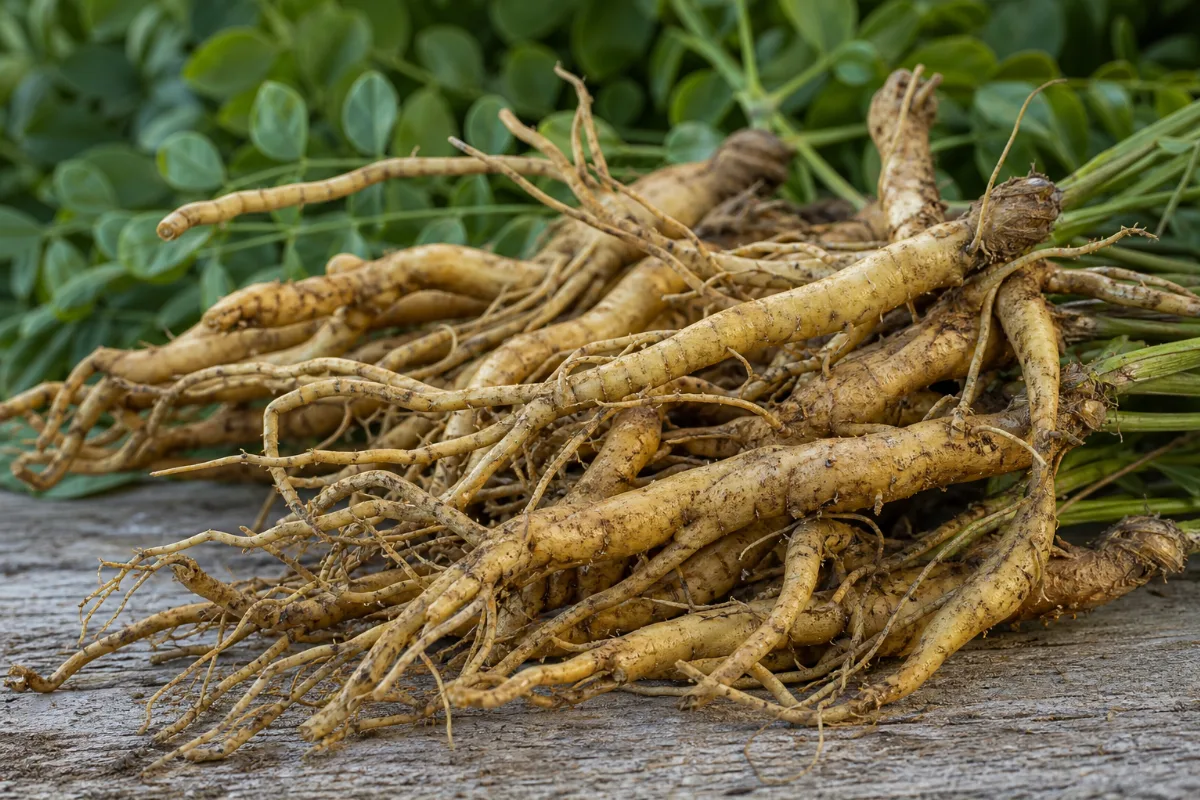
Ku shen (Sophora flavescens, family Fabaceae) is a shrub; the dried root is the part used. The name literally means bitter root. The root contains alkaloids called matrine and oxymatrine, plus many flavonoids.
It is taken as a decoction, capsules or tablets. In China, purified oxymatrine and matrine are also given as capsules and injections, and a vaginal gel is used. Evidence for one form does not carry over to another.
What the research shows
For hepatitis B, Cochrane reviewed 35 trials with 3,556 people. Fewer people had detectable virus markers, but every trial had a high risk of bias, certainty was very low, and no trial measured deaths, liver complications or quality of life. Reviews of oral oxymatrine reach a similar view: possible benefit on markers but poor-quality evidence and unproven safety.
For ulcerative colitis, 8 trials of Kushen-based herb mixtures found more remission than 5-ASA, but they were mixtures and quality was not reported. A small psoriasis trial and a pooled analysis of a vaginal gel for HPV are also positive but limited.
At a glance
Traditional uses history, not proof
- Heat-damp conditions in Chinese medicine
- Jaundice, liver disease and diarrhoea
- Itchy, weepy skin conditions
Studied for research
- Chronic hepatitis B virus markers, very low
- Ulcerative colitis (herbal formulas), very low
- High-risk HPV (vaginal gel), low
- Plaque psoriasis (oxymatrine injection), very low
- Skin disease and cancer research, insufficient
Main compounds
- Matrine
- Oxymatrine
- Kurarinone and other flavonoids
Common forms
- Dried root decoction
- Root extract capsules or tablets
- Purified oxymatrine (capsule or injection, in China)
- Kushen gel
Research links: Cochrane review: root versus placebo or no treatment in hepatitis B (PubMed) · Cochrane review: root versus other drugs in hepatitis B (PubMed) · Kushen-based formulas in ulcerative colitis (PubMed) · Sophora alkaloid poisoning in Hong Kong (PubMed) · Matrine toxicity and pharmacology review (PubMed) · Kushen gel for high-risk HPV (PubMed) · Research Library · Genes & Biomarkers Library
The plant and its history
- Accepted scientific name
- Sophora flavescens
- Naming authority
- Aiton
- Common names
- Ku shen (Chinese (pinyin)); Kushen (English); Shrubby sophora (English); Radix Sophorae flavescentis (Latin (drug name))
- Botanical family
- Fabaceae
- Classification
- Plantae > Tracheophyta > Magnoliopsida > Fabales > Fabaceae (pea family) > Sophora > flavescens
- Native range
- Not found in the sources read.
- Habitat
- Not covered in the sources read.
- What the plant looks like
- Roots: The root is the medicinal part (Sophorae Flavescentis Radix).; Stems: Not covered.; Leaves: Not covered.; Flowers: Not covered.; Fruit: Not covered.; Note: Plant description not checked in the sources read.
- Cultivation
- Not covered in the sources read.
- Harvest and processing
- Dried root; used as decoction, capsules, tablets and extracts, and as purified alkaloids for injection in China. Details not checked.
- Look-alikes and adulterants
- Name: Sophora subprostrata / Sophora tonkinensis (shan dou gen); Note: A different Sophora species whose root is also used in Chinese medicine and also contains matrine and oxymatrine. A 2003 case report of child poisonings involved this species. Its exact naming was not checked here.
- Sustainability and conservation
- Not assessed here.
Traditional use and history history, not clinical proof
| Tradition or era | Documented use | Source |
|---|---|---|
| Chinese medicine | The root is used as a bitter, cold herb for 'damp-heat' conditions, including jaundice and liver disease, intestinal infection and diarrhoea, and itchy, weepy skin conditions. | p33362558 |
| Modern China | Purified matrine and oxymatrine are used clinically by mouth and by injection, and Kushen gel for HPV is studied. | p33041782 |
| Regulators | EMA/HMPC, NCCIH, WHO and LiverTox documents were not located. | s-regulators-not-found |
Traditional use shows how a plant was used. It does not show that a supplement works or is safe today.
What is inside, and how it may work
What the plant contains and how those compounds act in cells and animals. Laboratory and animal mechanisms are not proven effects in people.
Main compounds
| Compound | Family | Where it is concentrated | Activity studied | Level of evidence |
|---|---|---|---|---|
| Matrine PubChem 91466 | quinolizidine alkaloid | root | Studied for antiviral, anti-inflammatory and anticancer actions in the lab; low oral bioavailability and short half-life; linked to liver and nervous-system toxicity in animals. 18 13 | Animal research |
| Oxymatrine PubChem 24864132 | quinolizidine alkaloid (N-oxide of matrine) | root | Used in China for hepatitis B and tested in psoriasis; shown to protect colon in animal colitis models; induced a liver enzyme (CYP2B1) in rats. 10 20 12 19 13 | Human data |
| Kurarinone and other prenylated flavonoids PubChem 11982640 | flavonoid | root | The root contains many flavonoids with lab anti-inflammatory activity. Isoxanthohumol, one of them, worsened liver inflammation in a sensitive mouse model. 9 13 | Animal research |
Mechanisms, receptors and pathways
| Target or pathway | Gene or receptor | What was found | Level |
|---|---|---|---|
| Antiviral and immune actions | Not specified | Oxymatrine and matrine are reported to have antiviral and anti-inflammatory properties in lab work. These are proposed explanations for the hepatitis B findings, not proven in people. 18 | Laboratory research |
| Gut inflammation | TNF-alpha, IL-6, IL-1 beta, oxidative stress markers | In 13 animal colitis studies matrine-type alkaloids lowered inflammatory markers and colon damage. Computer analysis of ku shen formulas for ulcerative colitis points to IL-6 and the PI3K-Akt pathway (network pharmacology, not human evidence). 12 1 | Animal research |
| Liver enzyme induction | CYP2B1/2 via constitutive androstane receptor (CAR); P-glycoprotein and CYP3A (extract) | Matrine and oxymatrine induced CYP2B1 in rats and activated human CAR in cells; a Sophora extract raised P-glycoprotein and CYP3A activity and lowered indinavir levels in rats. 19 17 | Animal research |
| Liver injury | NLRP3 inflammasome (isoxanthohumol); calcium handling (matrine) | Isoxanthohumol enhanced inflammasome activation in a sensitive mouse model; matrine had two-way effects on liver enzymes across 24 rodent studies. 9 4 | Animal research |
Absorption, metabolism and elimination
- Absorption
- The matrine review says oral bioavailability of matrine is low. Human data were not read.
- Distribution
- Not described in the abstracts read.
- Metabolism
- Matrine and oxymatrine altered liver enzymes in rats; oxymatrine is the N-oxide form of matrine.
- Elimination
- Short half-life of matrine per the review.
- Bioavailability
- Low (matrine, per the review abstract).
Isolated compounds versus whole extracts
Most evidence is for different things: Cochrane reviewed the root and its preparations, a second review looked at oral oxymatrine, the psoriasis trial used injected oxymatrine, and the colitis trials used multi-herb formulas. Evidence for one form cannot be transferred to another. Compound Kushen Injection, a mixed injection, is a separate product.
Nutritional composition
Ku shen is a medicinal root, not a food or nutrient, and is very bitter. It is not a source of vitamins or minerals.
1 low certainty3 very low certainty2 not enough evidence
What is Ku shen good for?
The main studied uses and how strong the human evidence is for each. "Low" means a small or weak body of research; "very low" means poor-quality trials; "insufficient" means too little human evidence to judge. None of these uses is well supported.
Benefits, one by one
Each card is a research question, not a promise. Tap a goal to filter. Open a card to see the studies, doses and limits.
Chronic hepatitis B (virus markers)
Very low certaintyKu shen root, and the purified alkaloid oxymatrine taken from it, has been studied in China for chronic hepatitis B. Pooled trials show fewer people with detectable virus markers, but the trials were of poor quality and no one has shown that patients live longer or feel better. It is not a replacement for prescribed hepatitis B treatment.
4 studiesDried root preparations, root extract capsules or tablets, and purifi…
Studies, doses and limits
What the trials found
Cochrane (Liang 2019) pooled 35 trials with 3,556 people comparing the root with placebo or with nothing. Nearly all trials added the root to another treatment given to both groups, and used many forms (capsules, tablets, drips, injections). Fewer people had detectable HBV-DNA and HBeAg, but every trial was at high risk of bias, certainty was very low, and no trial measured deaths from hepatitis B, liver complications or quality of life. A second Cochrane review (10 trials, 898 people) compared the root with other drugs or herbs: it could not tell whether HBV-DNA differed, and found fewer people with detectable HBeAg, again at very low certainty. A review of oral oxymatrine (52 trials, 5,227 people) found benefit on virus markers and liver enzymes but called the trial quality poor and the safety unproven. One placebo-controlled multicentre trial (Lu 2003, 216 people, 24 weeks) found about 38 to 43 percent had HBV-DNA turn negative on oxymatrine capsules or injection versus 7.5 percent on placebo; side-effect rates were similar across groups.
Results
Fewer people with detectable virus markers in many low-quality trials; no evidence yet on survival, liver complications or how patients feel.
Effect sizes as reported
HBV-DNA detectable: RR 0.61 (29 trials, 2,914 people). HBeAg detectable: RR 0.71 (20 trials, 2,129 people). Versus other drugs: HBV-DNA RR 1.14 (8 trials), HBeAg RR 0.86 (7 trials). Lu 2003: HBV-DNA negative 38.6% (capsule), 43.3% (injection), 7.5% (placebo).
Why this rating
Cochrane judged every trial at high risk of bias and certainty very low; outcomes are surrogate virus markers. Individual older trials look better but are short and small.
Form and dose studied
Dried root preparations, root extract capsules or tablets, and purified oxymatrine capsules or injections, often added to standard antiviral treatment. This page does not suggest amounts.
Who was studied
Adults and a few children with chronic hepatitis B in China.
Limits
Trials were mostly Chinese, many with no funding information (24 of 35 in one review), added to other treatments, and did not measure patient outcomes. Results for oral oxymatrine and for the whole root cannot be assumed to be the same.
Why researchers looked
Hepatitis B affects the liver for years. Ku shen is widely used in China for liver disease, so researchers have tried it alongside standard treatment.
Traditional use
In Chinese medicine the root is a bitter, cold herb used for heat-damp conditions, including jaundice and liver disease.
Proposed mechanism Laboratory research
Lab studies suggest oxymatrine and matrine have antiviral and anti-inflammatory actions. This has not been proved to be how it works in people.
A proposed mechanism does not show that the effect happens in people.
Do not use ku shen in place of prescribed hepatitis B medicine. Matrine and oxymatrine can harm the liver in animals; see the Safety tab.
Ulcerative colitis
Very low certaintyChinese herbal formulas containing ku shen have been compared with the standard drug 5-ASA in people with ulcerative colitis. A pooled analysis of 8 trials found higher remission rates. These were mixtures of herbs, not ku shen alone, and the abstract does not report trial quality. Oxymatrine's gut effects in animals look strong, but that is animal data.
3 studiesKushen-based herbal formulas (decoction or similar) in the trials; pu…
Studies, doses and limits
What the trials found
A 2020 meta-analysis (Chen) of 8 randomised trials with 983 people with ulcerative colitis of the 'damp-heat' pattern found Kushen-based formulas gave higher clinical remission than 5-ASA treatment (RR 1.20, 95% CI 1.04 to 1.38) and a borderline lower rate of adverse events (RR 0.63, 0.39 to 1.01). The formulas combined ku shen with other herbs, so the effect cannot be credited to ku shen alone. A 2026 animal review of 13 studies found large reductions in colon damage with matrine and oxymatrine, with the authors asking for high-quality studies before clinical use.
Results
Possibly higher remission in combination formulas than with 5-ASA in China-based trials; effect of ku shen alone not known.
Effect sizes as reported
Clinical remission RR 1.20 (95% CI 1.04 to 1.38); adverse events RR 0.63 (0.39 to 1.01). Animal histology score SMD -3.47.
Why this rating
Combination formulas, one TCM subtype, 983 people, risk of bias and GRADE not reported in the abstract, comparison with another drug rather than placebo.
Form and dose studied
Kushen-based herbal formulas (decoction or similar) in the trials; purified alkaloids in animal work. This page does not suggest amounts.
Who was studied
Adults with mild to moderate ulcerative colitis of the TCM damp-heat pattern, in China.
Limits
No placebo-controlled trial found. Abstract-level reading only. Ulcerative colitis can become serious and needs medical care; herbs should not replace prescribed treatment.
Why researchers looked
Ku shen is used in Chinese medicine for bloody, mucus-filled diarrhoea described as 'damp-heat'.
Traditional use
The root is traditionally used for damp-heat in the intestines, including dysentery-like illness.
Proposed mechanism Animal research
In mice and rats with induced colitis, matrine-type alkaloids reduce colon damage and inflammation markers (13 animal studies pooled). Human trials of the pure alkaloids were not found.
A proposed mechanism does not show that the effect happens in people.
Do not stop colitis medicine. Tell your gastroenterologist if you use any herbal formula. See Safety.
Persistent high-risk HPV infection (vaginal Kushen gel)
Low certaintyA vaginal gel containing Kushen has been tested for women with persistent high-risk HPV. A 2025 pooled analysis of 9 trials found more women cleared the virus, but the certainty was low. This is about particular gel products, not about taking ku shen by mouth.
1 studiesVaginal gels containing Kushen extract. This page does not suggest am…
Studies, doses and limits
What the trials found
Li 2025 pooled 9 randomised trials with 872 women. HPV clearance was higher with Kushen gel-based treatment than with controls (RR 1.51, 95% CI 1.28 to 1.78), and viral load, recurrence and vaginal bleeding were lower. Adverse events were mild and self-limiting. The GRADE certainty for clearance was low.
Results
More clearance of high-risk HPV with a vaginal gel in small trials; low certainty.
Effect sizes as reported
HPV clearance RR 1.51; viral load MD -0.70; recurrence OR 0.21; bleeding OR 0.29.
Why this rating
Authors' own GRADE rating for the main outcome was low; trials were small and from China.
Form and dose studied
Vaginal gels containing Kushen extract. This page does not suggest amounts.
Who was studied
Women with high-risk HPV infection in China.
Limits
Specific products; the pooled result may not apply to other products. Abstract-level reading. Cervical screening and follow-up still apply.
Why researchers looked
There is no drug that cures HPV infection, so gels are tried in China to help the body clear it.
Traditional use
Ku shen is used in Chinese medicine, including as a wash, for genital 'damp-heat' conditions.
Proposed mechanism Laboratory research
Lab work reports antiviral and anti-inflammatory activity of root compounds. This is not proof of how the gel works.
A proposed mechanism does not show that the effect happens in people.
Do not skip cervical screening or follow-up. Stop and ask a clinician if there is pain, burning, rash or new bleeding.
Plaque psoriasis (oxymatrine injection)
Very low certaintyOne small trial in China compared injected oxymatrine (a purified alkaloid from ku shen root) with the drug acitretin in 67 people with severe plaque psoriasis. Both improved skin scores, and relapse was lower after oxymatrine. It is one trial with no placebo, and it used an injection, not the herb.
2 studiesOxymatrine injection in the trial; this is not the same as taking the…
Studies, doses and limits
What the trials found
Zhou 2017 (British Journal of Dermatology) randomised 67 adults with severe plaque psoriasis to oxymatrine injections (0.6 g a day for 8 weeks) or acitretin capsules and followed them for another 24 weeks. Skin scores (PASI), skin grade and quality-of-life scores improved in both groups, with no significant difference in PASI 50 (the main outcome). By week 32 relapse was lower with oxymatrine (P < 0.001), and fewer adverse reactions and metabolic abnormalities were seen than with acitretin. The trial was single-blinded.
Results
Similar early skin improvement to acitretin, less relapse and fewer reported side effects in one small trial.
Effect sizes as reported
PASI 50 not different between groups; relapse at week 32 lower with oxymatrine (P < 0.001).
Why this rating
One small, single-blinded trial of an injected purified alkaloid against another drug, with no placebo and no independent repeat.
Form and dose studied
Oxymatrine injection in the trial; this is not the same as taking the root. This page does not suggest amounts.
Who was studied
Adults with severe plaque psoriasis in China.
Limits
Single trial, 67 people, abstract-level reading, funding not stated in the abstract. The abstract notes only minor adverse effects, but Sophora alkaloids can cause dizziness, vomiting and palpitations at high exposure (Safety tab).
Why researchers looked
Ku shen is a traditional skin herb in China; oxymatrine is one of its main alkaloids.
Traditional use
The root is used in Chinese medicine, often as a wash or decoction, for itchy, weeping or scaly skin described as 'damp-heat'.
Proposed mechanism Laboratory research
Lab studies report anti-inflammatory actions of root alkaloids. How this relates to psoriasis in people has not been shown.
A proposed mechanism does not show that the effect happens in people.
Do not stop psoriasis treatment. Injected products are medicines that need a prescriber.
Eczema, itchy and weepy skin conditions (traditional use)
Not enough evidenceKu shen has long been used in China for itchy and weepy skin conditions. We did not find a controlled human trial of the plain root for eczema or similar conditions in our search, so this use is not proven.
1 studiesNot applicable. This page does not suggest amounts.
Studies, doses and limits
What the trials found
None found in the searches run for this page. The psoriasis trial above used an injection of one alkaloid.
Results
No human evidence found for the plain root.
Effect sizes as reported
None available.
Why this rating
No eligible human trials were found in our search.
Form and dose studied
Not applicable. This page does not suggest amounts.
Who was studied
Not applicable.
Limits
A narrow search; Chinese-language trials may exist that we did not find.
Why researchers looked
Traditional use is the reason it keeps being studied.
Traditional use
Used as a bitter, cold herb for damp-heat skin conditions, typically as a wash or decoction.
Proposed mechanism Laboratory research
Anti-inflammatory and antimicrobial activity of root compounds has been seen in lab studies only.
A proposed mechanism does not show that the effect happens in people.
Do not apply or swallow root products on broken or inflamed skin without advice; cases of skin reactions are reported with intravenous products (Safety tab).
Cancer-related research (laboratory and animal)
Not enough evidenceMatrine and other compounds from the root slow cancer cells in the lab and in animals. That does not show that ku shen treats cancer in people. Mixed Chinese injections that contain ku shen are used alongside cancer treatment in China, and have their own trials that we did not assess here.
1 studiesNot applicable. This page does not suggest amounts.
Studies, doses and limits
What the trials found
A 2020 review of the pharmacology of matrine describes anticancer properties from laboratory and animal work, and also reports serious toxicity (liver and nervous system) that limits clinical use. No controlled trial of ku shen root or purified matrine in cancer patients was assessed for this page.
Results
Lab and animal findings only.
Effect sizes as reported
None available.
Why this rating
Only laboratory and animal data were read. Trials of the mixed Compound Kushen Injection exist and were not reviewed.
Form and dose studied
Not applicable. This page does not suggest amounts.
Who was studied
Not applicable.
Limits
Does not cover Compound Kushen Injection trials or meta-analyses.
Why researchers looked
The alkaloids kill cancer cells in dishes, so many papers are written about them.
Traditional use
Not a traditional use in the usual sense; it is a modern research area in China.
Proposed mechanism Laboratory research
Cell and animal studies report effects on cancer-cell growth and cell death pathways. Human relevance is unproven.
A proposed mechanism does not show that the effect happens in people.
Do not replace or delay cancer treatment. Tell the cancer care team about any ku shen product, because of its possible toxicity and liver-enzyme effects.
Connections to the rest of health
How Ku shen connects to the rest of our health knowledge graph. Every link says what kind of connection it is. A safety link (for example to the liver) is a warning, not a benefit. A study that merely mentions a topic never creates a benefit link.
Explore every connection: goals, body systems, organs, symptoms, genes
A. Wellness goals
| Connected to | Kind of connection | Evidence status | Context | Studies |
|---|---|---|---|---|
| Liver Support | Traditional use | Very low certainty | Chronic hepatitis B (virus markers): Ku shen root, and the purified alkaloid oxymatrine taken from it, has been studied in China for chronic hepatitis B. Pooled trials show fewer people with detectable virus markers, but the trials were of poor quality and no one has shown that patients live longer or feel better. It is not a replacement for prescribed hepatitis B treatment. | 7 8 15 10 |
| Immune Support | Traditional use | Very low certainty | Chronic hepatitis B (virus markers): Ku shen root, and the purified alkaloid oxymatrine taken from it, has been studied in China for chronic hepatitis B. Pooled trials show fewer people with detectable virus markers, but the trials were of poor quality and no one has shown that patients live longer or feel better. It is not a replacement for prescribed hepatitis B treatment. Persistent high-risk HPV infection (vaginal Kushen gel): A vaginal gel containing Kushen has been tested for women with persistent high-risk HPV. A 2025 pooled analysis of 9 trials found more women cleared the virus, but the certainty was low. This is about particular gel products, not about taking ku shen by mouth. | 7 8 15 10 6 |
| Gut Health | Traditional use | Very low certainty | Ulcerative colitis: Chinese herbal formulas containing ku shen have been compared with the standard drug 5-ASA in people with ulcerative colitis. A pooled analysis of 8 trials found higher remission rates. These were mixtures of herbs, not ku shen alone, and the abstract does not report trial quality. Oxymatrine's gut effects in animals look strong, but that is animal data. | 1 12 2 |
| Digestive Support | Traditional use | Very low certainty | Ulcerative colitis: Chinese herbal formulas containing ku shen have been compared with the standard drug 5-ASA in people with ulcerative colitis. A pooled analysis of 8 trials found higher remission rates. These were mixtures of herbs, not ku shen alone, and the abstract does not report trial quality. Oxymatrine's gut effects in animals look strong, but that is animal data. | 1 12 2 |
| Inflammation Balance | Traditional use | Very low certainty | Ulcerative colitis: Chinese herbal formulas containing ku shen have been compared with the standard drug 5-ASA in people with ulcerative colitis. A pooled analysis of 8 trials found higher remission rates. These were mixtures of herbs, not ku shen alone, and the abstract does not report trial quality. Oxymatrine's gut effects in animals look strong, but that is animal data. | 1 12 2 |
| Womens Wellness | Traditional use | Low certainty | Persistent high-risk HPV infection (vaginal Kushen gel): A vaginal gel containing Kushen has been tested for women with persistent high-risk HPV. A 2025 pooled analysis of 9 trials found more women cleared the virus, but the certainty was low. This is about particular gel products, not about taking ku shen by mouth. | 6 |
| Healthy Skin | Traditional use | Very low certainty | Plaque psoriasis (oxymatrine injection): One small trial in China compared injected oxymatrine (a purified alkaloid from ku shen root) with the drug acitretin in 67 people with severe plaque psoriasis. Both improved skin scores, and relapse was lower after oxymatrine. It is one trial with no placebo, and it used an injection, not the herb. Eczema, itchy and weepy skin conditions (traditional use): Ku shen has long been used in China for itchy and weepy skin conditions. We did not find a controlled human trial of the plain root for eczema or similar conditions in our search, so this use is not proven. | 20 3 |
| Cellular Protection | Not enough evidence | Cancer-related research (laboratory and animal): Matrine and other compounds from the root slow cancer cells in the lab and in animals. That does not show that ku shen treats cancer in people. Mixed Chinese injections that contain ku shen are used alongside cancer treatment in China, and have their own trials that we did not assess here. | 18 |
B. Body systems
| Connected to | Kind of connection | Evidence status | Context | Studies |
|---|---|---|---|---|
| Hepatic System | Biological association | Very low certainty | Studied for: Chronic hepatitis B (virus markers) | 7 8 15 10 |
| Immune System | Biological association | Very low certainty | Studied for: Chronic hepatitis B (virus markers) Studied for: Persistent high-risk HPV infection (vaginal Kushen gel) | 7 8 15 10 6 18 |
| Digestive System | Biological association | Very low certainty | Studied for: Ulcerative colitis | 1 12 2 |
| Reproductive Health | Biological association | Low certainty | Studied for: Persistent high-risk HPV infection (vaginal Kushen gel) | 6 |
| Skin Hair Beauty | Biological association | Very low certainty | Studied for: Plaque psoriasis (oxymatrine injection) Studied for: Eczema, itchy and weepy skin conditions (traditional use) | 20 3 |
G. Root causes and contributing factors
| Connected to | Kind of connection | Evidence status | Context | Studies |
|---|---|---|---|---|
| Medication Side Effects | Drug or supplement interaction | Very low certainty | Lower indinavir levels in rats; one prolonged QT case with ciprofloxacin. Preparation or compound: Ku shen root extract and matrine/oxymatrine |
17 3 |
I. Biomarkers
| Connected to | Kind of connection | Evidence status | Context | Studies |
|---|---|---|---|---|
| HBV-DNA (hepatitis B viral load) | Biological association | Very low certainty | Measured in trials: decrease. A lab change is not the same as a health benefit. | 7 10 8 |
| HBeAg (hepatitis B e-antigen) | Biological association | Very low certainty | Measured in trials: decrease. A lab change is not the same as a health benefit. | 7 8 |
| ALT and AST (liver enzymes) | Biological association | Low certainty | Measured in trials: decrease. A lab change is not the same as a health benefit. | 10 15 |
| Clinical remission in ulcerative colitis | Biological association | Very low certainty | Measured in trials: increase. A lab change is not the same as a health benefit. | 1 |
| High-risk HPV clearance | Biological association | Low certainty | Measured in trials: increase. A lab change is not the same as a health benefit. | 6 |
| PASI (Psoriasis Area and Severity Index) | Biological association | Very low certainty | Measured in trials: decrease. A lab change is not the same as a health benefit. | 20 |
J. Genes, receptors and enzymes
L. Active compounds
| Connected to | Kind of connection | Evidence status | Context | Studies |
|---|---|---|---|---|
| Matrine | Biological association | Animal | Studied for antiviral, anti-inflammatory and anticancer actions in the lab; low oral bioavailability and short half-life; linked to liver and nervous-system toxicity in animals. Preparation or compound: root |
18 13 |
| Oxymatrine | Biological association | Human | Used in China for hepatitis B and tested in psoriasis; shown to protect colon in animal colitis models; induced a liver enzyme (CYP2B1) in rats. Preparation or compound: root |
10 20 12 19 13 |
| Kurarinone and other prenylated flavonoids | Biological association | Animal | The root contains many flavonoids with lab anti-inflammatory activity. Isoxanthohumol, one of them, worsened liver inflammation in a sensitive mouse model. Preparation or compound: root |
9 13 |
Each connection is stored with the ingredient, the connected record, the kind of connection, the evidence status, the supporting studies, the preparation or compound involved, and a review date (last reviewed October 25, 2026).
The evidence
The research centre for Ku shen. Every record here was checked against PubMed or the publisher's page; we never list a study we have not verified.
Evidence by outcome
Bars show how many studies we found for each outcome, not how well it works. People are added up across trials only (reviews are not added, to avoid double counting).
How we rate evidence
High certainty
Several well-run trials or reviews agree; further research is unlikely to change the picture much.
Moderate certainty
Good trials point the same way, but some doubt remains.
Low certainty
Small, short or inconsistent trials. The finding could change with better research.
Very low certainty
Very little or very weak human data. Treat as a possibility only.
Mixed findings
Trials or reviews disagree with each other.
Not enough evidence
Not enough human research to say either way.
Evidence against
Good research found no benefit, or found harm.
We take the reviewers' own risk-of-bias and GRADE statements where they exist, and otherwise judge from study size, design, consistency, directness and whether a product matches what is sold. Many publications do not make evidence high. Method note: We started from our earlier evidence summary for ku shen and read PubMed abstracts for every study cited. Plant names were checked in GBIF and compounds in PubChem. Not found or not read: EMA/HMPC, NCCIH, WHO, LactMed and LiverTox documents. All studies were read as abstracts only. Certainty ratings are the compiler's reading, using the reviewers' own GRADE where given.
Study library: every study we checked 20
| Study | Design | People | Product, dose, length | Result |
|---|---|---|---|---|
| Chen 2020 Efficacy and Safety of Sophora flavescens (Kushen) Based Traditional Chinese Medicine in the Treatment of Ulcerative Colitis: Clinical Evidence and Potential Mechanisms. Frontiers in Pharmacology · PMID 33362558 · DOI |
Meta-analysis |
983 People with ulcerative colitis of the TCM 'damp-heat accumulation' type (8 randomised trials) |
Kushen-based Chinese medicine formulas (Kushen combined with other herbs) root plus other herbs Varied Varied · vs 5-aminosalicylic acid (5-ASA) treatment |
Higher clinical remission with Kushen-based formulas than with 5-ASA, and fewer adverse events (borderline). A network-pharmacology computer analysis was added (not human evidence). Clinical remission RR 1.20; adverse events RR 0.63 (Remission 1.04 to 1.38 (p=0.02); adverse events 0.39 to 1.01 (p=0.06)) Methods, limits and fundingOutcomes: Clinical remission rate; adverse events Limitations: Combination formulas, not Kushen alone. The abstract does not report trial quality or GRADE. Trial population restricted to one TCM pattern. Only the abstract was read. Funding and conflicts: Not stated in the abstract. Read: abstract |
| Chen 2025 Evaluation of the safety and efficacy of Sophorae Flavescentis Radix extract in the treatment of inflammatory bowel disease based on zebrafish models. Frontiers in Immunology · PMID 41394814 · DOI |
Animal study animal |
Zebrafish colitis models | Kushen (Sophorae Flavescentis Radix) extract root extract Low versus supra-therapeutic in zebrafish Not stated in abstract · vs Untreated zebrafish |
Very high doses caused liver damage in zebrafish. Low doses reduced gut inflammation markers in the model. Dose-dependent: benefit at low dose, liver harm at very high dose (Not applicable) Methods, limits and fundingOutcomes: Liver structure, gut inflammation markers Limitations: Zebrafish only. Does not show anything about people. Funding and conflicts: Not stated in the abstract. Read: abstract |
| Chow 2025 Acute Sophora alkaloid poisoning in Hong Kong. Toxicon · PMID 39824462 · DOI |
Case series |
83 Patients reported to the Hong Kong Poison Control Centre from emergency departments, July 2008 to June 2021 |
Sophora alkaloids (matrine, oxymatrine, sophoridine); 77.1% of cases from Sophora flavescens root and root products Excessive dose in 39.0% of cases Acute exposure · vs None |
90.4% had minor effects. Dizziness 83.1%, vomiting 72.3%, palpitations 32.5%. No acute liver or kidney injury and no skin reactions after oral use. Care was supportive. One person needed cardiac monitoring for prolonged QT interval after also taking ciprofloxacin. Minor effects in 90.4% of 83 cases (Not applicable) Methods, limits and fundingOutcomes: Clinical presentations, management and outcomes Limitations: Retrospective hospital poison-centre data; not a measure of how often harm occurs; hospital presentations only; authors call for more study of skin reactions and liver toxicity with real-world products. Funding and conflicts: Not stated in the abstract. Read: abstract |
| Feng 2024 The dynamic equilibrium between the protective and toxic effects of matrine in the development of liver injury: a systematic review and meta-analysis. Frontiers in Pharmacology · PMID 38348397 · DOI |
Meta-analysis animal |
657 24 rodent studies (657 rodents) |
Matrine from the root of Sophora flavescens root-derived alkaloid 10 to 69.1 mg/kg range described in rodents Short · vs Control rodents |
Matrine had two-way effects on liver enzymes in rodents. Liver protection and low toxicity were seen in some dose and timing ranges; toxicity in others. Laboratory mechanism work was added. Two-way effects on ALT and AST (Not given) Methods, limits and fundingOutcomes: ALT, AST, oxidative stress and inflammation markers Limitations: Rodent studies only; cannot be turned into human dose advice. Funding and conflicts: Not stated in the abstract. Read: abstract |
| GBIF Secretariat 2026 Sophora flavescens Aiton (GBIF backbone record) GBIF · Source |
Database record n/a |
Sophora flavescens n/a n/a n/a · vs n/a |
Read 2026-10-25 through the GBIF species match API: accepted name Sophora flavescens Aiton, key 2959073, family Fabaceae, order Fabales, kingdom Plantae. Methods, limits and fundingLimitations: Taxonomy record only. Read: web-page | |
| Li 2025 Kushen gel for the treatment of high-risk human papillomavirus infection: a systematic review and meta-analysis. Frontiers in Medicine · PMID 41281996 · DOI |
Meta-analysis |
872 Women with high-risk HPV infection (9 randomised trials) |
Kushen gel-based interventions (vaginal gel containing Kushen) root (extract in a gel) Not summarised Varied · vs Controls (varied) |
Better HPV clearance, lower viral load and recurrence with Kushen gel. Reported adverse events were mild and self-limiting. GRADE certainty for HPV clearance was low. HPV clearance RR 1.51; viral load MD -0.70; recurrence OR 0.21; vaginal bleeding OR 0.29 (Clearance 1.28 to 1.78; viral load -0.85 to -0.56; recurrence 0.09 to 0.52) Methods, limits and fundingOutcomes: HPV clearance, viral load, recurrence, bleeding, adverse events Limitations: Specific gel products, not the plain root; low certainty; trials small and mostly from China. Funding and conflicts: Not stated in the abstract. Read: abstract |
| Liang 2019 Radix Sophorae flavescentis versus no intervention or placebo for chronic hepatitis B. Cochrane Database of Systematic Reviews · PMID 30941748 · DOI |
Systematic review |
3556 People with chronic hepatitis B (35 trials; 2 included children up to 14; 2 had cirrhosis) |
Radix Sophorae flavescentis (Sophora flavescens root) preparations: capsules, tablets, intravenous, intramuscular and acupoint injection root Varied by trial; not summarised here 1 to 24 months · vs Placebo or no intervention; 34 of 35 trials added the herb to a co-treatment given to both groups |
All 35 trials at high risk of bias; certainty very low for all outcomes. Fewer people had detectable HBV-DNA and HBeAg. No deaths and no serious adverse events were reported where assessed. Quality of life, hepatitis B-related deaths and illness were not reported. Detectable HBV-DNA: RR 0.61 (29 trials, 2914 people). Detectable HBeAg: RR 0.71 (20 trials, 2129 people). Non-serious adverse events: RR 1.10 (10 trials, 1050 people). (HBV-DNA RR 0.61, 95% CI 0.55 to 0.68; HBeAg RR 0.71, 0.66 to 0.76; non-serious adverse events RR 1.10, 0.76 to 1.59) Methods, limits and fundingOutcomes: All-cause mortality, serious adverse events, quality of life (primary); HBV-DNA and HBeAg detection (surrogate) Limitations: Reviewers advise caution: high risk of bias, surrogate outcomes only, 432 further trials could not be assessed for lack of methods information, 24 of 35 trials gave no funding information. Funding and conflicts: Authors declared no conflicts of interest. Read: abstract |
| Liang 2019 Radix Sophorae flavescentis versus other drugs or herbs for chronic hepatitis B. Cochrane Database of Systematic Reviews · PMID 31232459 · DOI |
Systematic review |
898 People with chronic hepatitis B (10 trials) |
Radix Sophorae flavescentis oral capsules, intravenous, intramuscular and acupoint injection root Varied 1 to 12 months · vs Lamivudine, adefovir, interferon, tiopronin, thymosin or other Chinese herbs |
All 10 trials at high risk of bias; very low certainty. Unclear whether the root changed detectable HBV-DNA when compared with other drugs. Fewer people had detectable HBeAg. HBV-DNA RR 1.14 (8 trials, 719 people); HBeAg RR 0.86 (7 trials, 588 people); non-serious adverse events RR 0.86 (2 trials, 163 people) (HBV-DNA 0.81 to 1.63; HBeAg 0.75 to 0.98; adverse events 0.42 to 1.75) Methods, limits and fundingOutcomes: Same outcomes as the placebo review Limitations: No trial reported deaths, quality of life, serious adverse events or hepatitis B complications. Seven of 10 trials gave no funding information. Funding and conflicts: Not stated in the abstract. Read: abstract |
| Lin 2022 Isoxanthohumol, a component of Sophora flavescens, promotes the activation of the NLRP3 inflammasome and induces idiosyncratic hepatotoxicity. Journal of Ethnopharmacology · PMID 34740771 · DOI |
Animal study animal |
Cells and mice with a model of inflammation-linked liver sensitivity | Isoxanthohumol (a flavonoid from Sophora flavescens) root compound Not summarised Not summarised · vs Control mice |
The flavonoid isoxanthohumol made liver inflammation worse in a susceptible mouse model, at doses that were not toxic on their own. The authors suggest it may be a risk factor for unpredictable liver injury from Sophora flavescens. Raised ALT, AST, TNF and IL-1 beta in the model (Not applicable) Methods, limits and fundingOutcomes: Inflammasome activation, liver enzymes Limitations: Mouse and cell study; no human data. Funding and conflicts: Not stated in the abstract. Read: abstract |
| Lu 2003 Oxymatrine therapy for chronic hepatitis B: a randomized double-blind and placebo-controlled multi-center trial. World Journal of Gastroenterology · PMID 14606080 · DOI |
Controlled trial |
216 Adults with chronic hepatitis B, China (multicentre) |
Oxymatrine capsules (108 people) or oxymatrine injection (36 people, used as positive control) or placebo (72 people) root-derived alkaloid (oxymatrine) Not summarised here 24 weeks · vs Placebo |
ALT normal in 76.5% (capsule), 83.3% (injection) and 40.0% (placebo). HBV-DNA negative in 38.6%, 43.3% and 7.5%; HBeAg negative in 31.9%, 39.3% and 6.5%. Adverse drug reaction rates 7.77%, 6.67% and 8.82%, with no significant difference. Both oxymatrine groups clearly better than placebo on these markers; no significant difference between capsule and injection (Not given) Methods, limits and fundingOutcomes: ALT normalisation, HBV-DNA and HBeAg negative conversion, response rates, adverse reactions Limitations: Short (24 weeks), 2003 trial; viral markers rather than patient outcomes; blinding of an injection versus capsule arm is not explained in the abstract; 17 people dropped or excluded. Funding and conflicts: Not stated in the abstract. Read: abstract |
| Lu 2014 Developmental toxicity and neurotoxicity of two matrine-type alkaloids, matrine and sophocarpine, in zebrafish (Danio rerio) embryos/larvae. Reproductive Toxicology · PMID 24911943 · DOI |
Animal study animal |
Zebrafish embryos and larvae | Matrine and sophocarpine root-derived alkaloids EC50 145 mg/L (malformations) and LC50 240 mg/L (death) for matrine 0 to 96/120 hours after fertilisation · vs Unexposed embryos |
Both alkaloids caused malformations and death. Movement and swimming were reduced at concentrations below those that caused death or malformations, which the authors read as neurotoxic potential. Matrine EC50 145 mg/L, LC50 240 mg/L (Not applicable) Methods, limits and fundingOutcomes: Malformations, death, movement Limitations: Fish embryos in water at high concentrations; not evidence for human pregnancy. Funding and conflicts: Not stated in the abstract. Read: abstract |
| Lu 2026 Protective effects and possible mechanisms of matrine-type alkaloids (matrine and oxymatrine) in animal models of ulcerative colitis: a preclinical systematic review and meta-analysis. Frontiers in Pharmacology · PMID 42568705 · DOI |
Meta-analysis animal |
13 animal studies of experimental colitis | Matrine and oxymatrine root-derived alkaloids Varied Varied · vs Control animals |
Animals given matrine-type alkaloids had less colon damage and lower inflammation markers. The authors say high-quality studies are needed before clinical translation. Histology score SMD -3.47; TNF-alpha SMD -2.88 (Histology -4.83 to -2.11; TNF-alpha -3.50 to -2.26) Methods, limits and fundingOutcomes: Disease activity, colon damage, inflammatory markers Limitations: Animal data only. Large effect sizes in animal reviews are often overstated. Funding and conflicts: Not stated in the abstract. Read: abstract |
| National Library of Medicine 2026 PubChem records for matrine (CID 91466) and oxymatrine (CID 24864132) PubChem · Source |
Database record n/a |
Sophora flavescens n/a n/a n/a · vs n/a |
Read 2026-10-25 through the PubChem API: matrine C15H24N2O (CID 91466); oxymatrine C15H24N2O2 (CID 24864132); kurarinone C26H30O6 (CID 11982640). Methods, limits and fundingLimitations: Chemistry records only. Read: web-page | |
| Search attempt 2026 EMA/HMPC, NCCIH, LiverTox, LactMed and WHO documents for Sophora flavescens: none located n/a · Source |
Not found n/a |
Sophora flavescens n/a n/a n/a · vs n/a |
No monograph for ku shen was found at Memorial Sloan Kettering (page returned not found) or located at the other bodies in a brief search. A LiverTox page address tried was not confirmed to be about this herb and was not used. Methods, limits and fundingLimitations: Absence of a located page does not mean no document exists. Read: not-found | |
| Song 2016 Oral oxymatrine preparation for chronic hepatitis B: A systematic review of randomized controlled trials. Chinese Journal of Integrative Medicine · PMID 26016455 · DOI |
Systematic review |
5227 People with chronic hepatitis B (52 randomised trials; 51 in meta-analyses) |
Oral oxymatrine capsules or tablets root-derived alkaloid (oxymatrine) Varied Varied · vs Mostly standard treatment or other drugs (abstract does not list comparators) |
Statistically significant effects on clearing virus markers and normalising liver enzymes, but methodological quality and quality of evidence were poor, and safety of oral oxymatrine was not confirmed. Benefit direction only in the abstract; the abstract gives no pooled numbers (Not given in the abstract) Methods, limits and fundingOutcomes: Clearance of HBV-DNA, HBsAg, HBeAg; normalisation of ALT and AST; safety Limitations: Poor quality trials; safety unproven according to the review's own conclusion. Abstract gives no numbers. Funding and conflicts: Not stated in the abstract. Read: abstract |
| Wang 2003 Movement disorders possibly induced by traditional chinese herbs. European Neurology · PMID 14530621 · DOI |
Case series |
4 Four children (ages 9 to 15) after overdoses of herbal decoctions, China |
Decoctions of Sophora subprostrata root (a different Sophora species) in 3 children; one child took a different herb (herba serissae) root (Sophora subprostrata) Overdose, amount not given in the abstract Not stated · vs None |
Three children given Sophora subprostrata root decoctions in overdose had convulsions, mental changes and dystonia, with abnormal areas in the basal ganglia on scans. The authors suggested matrine and oxymatrine as the likely cause. 3 of 4 cases relevant (Not applicable) Methods, limits and fundingOutcomes: Neurological signs, CT and MRI Limitations: Tiny case series, causation only suggested; species is Sophora subprostrata (also called Sophora tonkinensis), not S. flavescens; one of the four cases involved a different herb. Funding and conflicts: Not stated in the abstract. Read: abstract |
| Yang 2012 Impact of the herbal medicine Sophora flavescens on the oral pharmacokinetics of indinavir in rats: the involvement of CYP3A and P-glycoprotein. PLoS ONE · PMID 22359586 · DOI |
Animal study animal |
Rats | Sophora flavescens extract; oxymatrine also tested root extract 0.158 and 0.63 g/kg extract with indinavir 40 mg/kg 7 days, twice daily · vs Indinavir alone |
Taking Sophora extract with indinavir lowered indinavir blood levels dose-dependently (AUC down 55% to 83%) and raised P-glycoprotein and CYP3A activity in rats. Oxymatrine alone also lowered indinavir levels. Indinavir AUC down 55% to 83%; Cmax down 38% to 78% (Not given) Methods, limits and fundingOutcomes: Indinavir blood levels Limitations: Rat study; human effect unknown. Funding and conflicts: Not stated in the abstract. Read: abstract |
| You 2020 A Systematic Review of the Pharmacology, Toxicology and Pharmacokinetics of Matrine. Frontiers in Pharmacology · PMID 33041782 · DOI |
Narrative review review |
Mostly laboratory and animal studies, with some clinical reports | Matrine (alkaloid from Sophora flavescens and Sophora tonkinensis) root-derived alkaloid Not applicable Not applicable · vs Not applicable |
Describes anticancer, anti-inflammatory, antiviral and other properties, but says published studies indicate serious adverse effects, mainly liver toxicity and neurotoxicity, that limit clinical use. Oral bioavailability is low and half-life short. Narrative statements only (Not applicable) Methods, limits and fundingOutcomes: Pharmacology, toxicity and pharmacokinetics of matrine Limitations: Review of mostly non-human work; abstract read here, with the earlier summary reading about the first 100,000 of 218,000 characters of the full text. Funding and conflicts: Not stated in the abstract. Read: abstract |
| Yuan 2010 Effects of matrine and oxymatrine on catalytic activity of cytochrome p450s in rats. Basic & Clinical Pharmacology & Toxicology · PMID 20524938 · DOI |
Animal study animal |
Rats and CV-1 cells | Matrine and oxymatrine root-derived alkaloids Matrine 15 to 150 mg/kg; oxymatrine 36 to 360 mg/kg in rats 14 days · vs Untreated rats |
Both alkaloids increased the activity of the liver enzyme CYP2B1 in rats, through activation of the receptor CAR. Matrine at the highest dose mildly lowered CYP3A1 and slightly raised CYP2E1. CYP2B1 induction in rats (Not applicable) Methods, limits and fundingOutcomes: Liver enzyme (CYP450) activity and expression Limitations: Rat and cell data; human relevance not tested. Funding and conflicts: Not stated in the abstract. Read: abstract |
| Zhou 2017 Efficacy of oxymatrine for treatment and relapse suppression of severe plaque psoriasis: results from a single-blinded randomized controlled clinical trial. British Journal of Dermatology · PMID 28112799 · DOI |
Controlled trial |
67 Adults with severe plaque psoriasis, China |
Oxymatrine injections (0.6 g per day) root-derived alkaloid (oxymatrine), injected 0.6 g per day (as reported) 8 weeks treatment, 24 weeks follow-up · vs Acitretin capsules |
Both treatments reduced PASI, skin grade and DLQI by week 8. PASI 50 did not differ between groups. By week 32, relapse was lower with oxymatrine (P < 0.001). Fewer adverse reactions and fewer metabolic abnormalities than with acitretin. Relapse lower with oxymatrine at week 32 (P < 0.001); PASI 50 similar (Not given in the abstract) Methods, limits and fundingOutcomes: PASI 50 at week 32 (primary); skin grade; DLQI; adverse effects Limitations: Small (67 people), single-blinded, no placebo, compared with another drug, injected purified alkaloid (not the plain root). Funding and conflicts: Not stated in the abstract. Read: abstract |
What we do not know yet
- No high-quality, placebo-controlled trial of ku shen root measuring deaths or liver complications in hepatitis B.
- No trial of ku shen alone in ulcerative colitis.
- No human interaction studies.
- No data in pregnancy, breastfeeding or children.
- EMA/HMPC, NCCIH, WHO, LiverTox and LactMed documents for ku shen were not found or read.
How new research is added
New studies are found by a saved PubMed search and placed in a review queue. A person reads each one before it changes any rating or safety wording.
Lab markers
What changed in blood or saliva tests during trials. A changed number is not the same as feeling or being healthier, and we give no "normal ranges".
Other 6
HBV-DNA (hepatitis B viral load)
Decrease in trials
The amount of hepatitis B virus genetic material in blood. It shows how actively the virus is multiplying.
Very low certaintyResults and what it means
Why it was measured
The main marker of whether hepatitis B treatment is working on the virus.
Statistical vs. clinical meaning
Lower than none or placebo; no clear advantage over standard drugs. The reviewers regard it as a non-validated surrogate outcome.
Safety implication
This is a lab marker, not proof of better health. High risk of bias in all trials.
| Study | Result | People | Product |
|---|---|---|---|
| 7 | Fewer people had detectable HBV-DNA with the root (RR 0.61, 29 trials, 2,914 people), at very low certainty. | Chronic hepatitis B, 35 trials | Ku shen root preparations vs placebo or no intervention |
| 10 | HBV-DNA became negative in 38.6% (oxymatrine capsule), 43.3% (injection) and 7.5% (placebo). | 216 adults with chronic hepatitis B | Oxymatrine capsule or injection vs placebo, 24 weeks |
| 8 | No clear difference in detectable HBV-DNA against other drugs or herbs (RR 1.14, 0.81 to 1.63). | 898 people, 10 trials | Ku shen vs lamivudine, adefovir, interferon and others |
HBeAg (hepatitis B e-antigen)
Decrease in trials
A blood marker linked to active hepatitis B virus multiplication.
Very low certaintyResults and what it means
Why it was measured
Used with HBV-DNA to follow hepatitis B treatment.
Statistical vs. clinical meaning
A small shift in a marker that is not itself a patient outcome. Not a clinical outcome.
Safety implication
High risk of bias in every trial.
| Study | Result | People | Product |
|---|---|---|---|
| 7 | Fewer people had detectable HBeAg (RR 0.71, 20 trials, 2,129 people). | Chronic hepatitis B | Ku shen root preparations vs placebo or no intervention |
| 8 | Fewer people had detectable HBeAg against other drugs or herbs (RR 0.86, 0.75 to 0.98, 7 trials). | 588 people | Ku shen vs other drugs or herbs |
ALT and AST (liver enzymes)
Decrease in trials
Enzymes that rise in the blood when liver cells are inflamed or damaged.
Low certaintyResults and what it means
Why it was measured
Used to follow liver inflammation in hepatitis.
Statistical vs. clinical meaning
Liver enzymes fell in treated people in poor-quality trials. Not a final health outcome.
Safety implication
Liver enzymes also rose in some animal studies of matrine (see Safety tab), so a fall in people on treatment is not a safety guarantee.
| Study | Result | People | Product |
|---|---|---|---|
| 10 | ALT normalised in 76.5% (capsule), 83.3% (injection) and 40.0% (placebo). | 216 adults with chronic hepatitis B | Oxymatrine capsule or injection vs placebo, 24 weeks |
| 15 | Oral oxymatrine was linked to more normal ALT and AST in 52 trials, but the review called the quality poor. | 5,227 people, 52 trials | Oral oxymatrine vs various controls |
Clinical remission in ulcerative colitis
Increase in trials
Fewer or no symptoms (such as bloody stools), as defined by each trial.
Very low certaintyResults and what it means
Why it was measured
The main goal of treating ulcerative colitis.
Statistical vs. clinical meaning
About one fifth more people in remission in pooled combination-formula trials. Patient-centred outcome, but low certainty.
Safety implication
Trial quality not reported in the abstract; formulas were mixtures.
| Study | Result | People | Product |
|---|---|---|---|
| 1 | Remission was higher with Kushen-based formulas than with 5-ASA (RR 1.20, 1.04 to 1.38). | 983 people, 8 trials | Kushen-based herbal formulas vs 5-ASA |
High-risk HPV clearance
Increase in trials
Whether a repeat test no longer finds high-risk HPV.
Low certaintyResults and what it means
Why it was measured
The aim of HPV treatment is clearance of persistent infection.
Statistical vs. clinical meaning
More women tested negative for high-risk HPV. Closer to a patient outcome, but still uses test results.
Safety implication
Authors' own GRADE rating was low.
| Study | Result | People | Product |
|---|---|---|---|
| 6 | Clearance higher with Kushen gel-based treatment (RR 1.51, 1.28 to 1.78). | 872 women, 9 trials | Vaginal Kushen gel vs controls |
PASI (Psoriasis Area and Severity Index)
Decrease in trials
A score doctors use to rate how much skin is affected by psoriasis and how severe it is.
Very low certaintyResults and what it means
Why it was measured
The standard way to measure psoriasis improvement.
Statistical vs. clinical meaning
Skin scores improved to a similar extent as with another drug. PASI is a clinician-rated score of skin disease.
Safety implication
One small single-blinded trial.
| Study | Result | People | Product |
|---|---|---|---|
| 20 | PASI fell significantly in both groups by week 8; PASI 50 was similar in the oxymatrine and acitretin groups; relapse at week 32 was lower with oxymatrine. | 67 adults with severe plaque psoriasis | Oxymatrine injection vs acitretin, 8 weeks plus 24 weeks follow-up |
Safety
What studies and official sources say about side effects, medicines and who should check first. Each point shows what kind of evidence it comes from.
Main points to know 5
- Overdose of Sophora alkaloids causes dizziness, vomiting and palpitations. In 83 poison-centre cases in Hong Kong (2008 to 2021), most from ku shen (Sophora flavescens), 90.4 percent had minor effects. The most common were dizziness (83.1 percent), vomiting (72.3 percent) and palpitations (32.5 percent). An excessive dose was common (39.0 percent). Care was supportive, and no one needed organ support. One person with a prolonged QT interval on the heart tracing was also taking ciprofloxacin. Case series 3
- Seizures and brain changes after overdose were reported in children with a related root. A 2003 report described three children aged 9 to 12 who took overdoses of decoctions of Sophora subprostrata root (a different species, also called S. tonkinensis, that shares the alkaloids matrine and oxymatrine). They had convulsions, mental changes and muscle spasm disorders, and scans showed changes in deep brain areas. The authors suggested matrine and oxymatrine as the likely cause. This is a tiny case series and cause is not proven; none involved ku shen itself. A 2020 review says neurotoxicity and liver toxicity are the main adverse effects that limit clinical use of matrine, based mostly on animal work. Case report 16 18
- Liver injury: shown in animals and cells, not seen in the Hong Kong cases. Matrine and other root compounds can injure the liver in rodents, in zebrafish at very high doses, and in cell tests, and one flavonoid made liver inflammation worse in a sensitive mouse model. A meta-analysis of 24 rodent studies found two-way effects on liver enzymes. The Hong Kong poison-centre series saw no acute liver or kidney injury. The authors mention isolated human case reports but we did not read them. In the hepatitis B trials reviewed by Cochrane, no serious adverse events were reported where they were measured, but the evidence was very low certainty. Animal research 4 2 9 3 7
- Not studied in pregnancy or breastfeeding. No human pregnancy or breastfeeding data were found. Matrine caused malformations and death in zebrafish embryos at high concentrations. Avoid unless a clinician agrees. Animal research 11
- Good-quality long-term human safety data are missing. Most hepatitis B and ulcerative colitis trials were small, from China and at high risk of bias, so they cannot rule out rare harms. The review of oral oxymatrine said safety was not confirmed. Systematic review 7 15 1
Side effects 6
| Effect | How often | Severity and recovery | Evidence |
|---|---|---|---|
| Dizziness Cases were people who came to emergency departments, often after excessive doses, so this is not the rate in ordinary users. | 83.1% of 83 poison-centre cases | mild Settled with supportive care in most | Case series 3 |
| Vomiting Same limit as above. | 72.3% of 83 poison-centre cases | mild to moderate Settled with supportive care in most | Case series 3 |
| Palpitations One person needed cardiac-unit monitoring for prolonged QT interval after also taking ciprofloxacin. | 32.5% of 83 poison-centre cases | mild to moderate Not described | Case series 3 |
| Convulsions, mental changes, muscle spasm disorders (overdose) Cause only suggested by the authors. | 3 children in one case report (S. subprostrata root, not ku shen) | serious Not described in the abstract | Case report 16 |
| Skin reactions with intravenous products The Hong Kong authors state that no adverse skin reactions were seen after oral use, in contrast to intravenous use; they call for more study of the real-world risk. We did not read the primary reports on injections. | Not established | not described Not described | Case series 3 |
| Adverse events in hepatitis B trials Very low certainty; 9 of 19 reporting trials had zero events in both groups. | Non-serious events RR 1.10 vs placebo or no treatment (10 trials) | mostly not serious Not described | Systematic review 7 |
Liver
We did not find a LiverTox chapter for ku shen. Evidence of liver harm is from rodents, zebrafish and cells; the Hong Kong poison-centre series saw no acute liver injury, and the authors say liver toxicity seen in animals and in isolated human case reports needs further study. The flavonoid isoxanthohumol made liver inflammation worse in a sensitive mouse model, which fits the idea of rare, unpredictable liver reactions. A meta-analysis of 24 rodent studies found matrine can both protect and injure the liver depending on dose and timing. People with liver disease use ku shen in China, which makes this a particular concern: it can be hard to tell the herb's effect on liver tests from the disease's. 4 2 9 3 14
How often. No frequency can be given for human liver injury.
Monitoring. No agency monitoring advice was found. Anyone with liver disease using it should talk to the treating doctor about liver tests.
This is a safety connection. It is not evidence that Ku shen supports liver health.
Medicines and supplements 5
| With | Why it matters | Importance | Evidence | What to do |
|---|---|---|---|---|
| Ciprofloxacin and other medicines that lengthen the QT interval prescription | Not known; one person had a prolonged QT interval after ciprofloxacin plus Sophora alkaloids. | One case in the Hong Kong series; cause not shown. | Case series Very low certainty 3 | Ask a doctor or pharmacist before combining it with any medicine that affects heart rhythm. |
| HIV protease inhibitors such as indinavir, and other medicines handled by CYP3A or P-glycoprotein prescription | In rats, a Sophora extract raised P-glycoprotein and CYP3A activity. | Rats on the extract had indinavir blood levels (AUC) 55% to 83% lower. Not tested in people. | Animal research Very low certainty 17 | Do not combine with HIV medicines without the HIV clinic. |
| Medicines cleared by liver enzymes (CYP2B and others) prescription | Matrine and oxymatrine increased CYP2B1 activity in rats through the receptor CAR; matrine at the top dose slightly lowered CYP3A1. | Rat and cell data only; effect in people unknown. | Animal research Very low certainty 19 | Ask a pharmacist if you take a medicine with a narrow safety margin. |
| Medicines or herbs that can injure the liver prescription | Possible added liver stress (theory based on animal and cell findings). | Not tested in people. | Theoretical Very low certainty 4 9 | Avoid stacking it with other liver-stressing products unless your doctor agrees. |
| Standard hepatitis B, colitis or psoriasis medicines prescription | Not applicable; most trials added the herb to standard treatment. | No interaction was reported, but the trials were not designed to look for one. | Systematic review Very low certainty 7 1 | Use alongside, not instead of, prescribed treatment, and tell your doctor. |
Who should check first 6
| Situation | Advice | Evidence |
|---|---|---|
| Pregnancy and breastfeeding | Avoid unless a clinician agrees; no human safety data and malformations in zebrafish embryos at high concentrations. | Animal research 11 |
| Liver disease or abnormal liver tests | Ask the treating doctor first; liver toxicity in animals and cells. | Animal research 4 9 |
| Seizure disorders or taking medicines that lower the seizure threshold | Ask a doctor first; convulsions were reported after overdoses of a related Sophora root in children (cause not proven). | Case report 16 18 |
| Children | Avoid unless a doctor agrees; the convulsion reports were in children, though with a related species at overdose. | Case report 16 |
| Heart rhythm problems or taking medicines that lengthen the QT interval | Ask a doctor first; palpitations were common in overdose and one QT case was recorded. | Case series 3 |
| Taking HIV medicines | Do not add without the HIV clinic. | Animal research 17 |
Overdose, product quality and regulators
Summary. The alkaloids matrine and oxymatrine (and related ones) are the main toxicity concern. The best human information is a Hong Kong poison-centre review of 83 cases, mostly mild, and a small set of children with a related root. Animal work points to the nervous system and liver. Zebrafish embryos showed malformations.
Animal. Matrine caused malformations and death in zebrafish embryos at 145 mg/L and 240 mg/L respectively (EC50 and LC50), with reduced swimming at lower levels. Supra-therapeutic ku shen extract damaged zebrafish liver. Rodent work shows two-way liver effects of matrine.
Human doses studied. Trials used capsules, tablets, drips and injections of root preparations or oxymatrine for 1 to 24 months. Amounts are not given on this page.
High dose or long term signals. Excessive doses were common in the Hong Kong cases (39.0 percent). Long-term safety data in people are missing.
Overdose response. Hong Kong cases were managed with supportive care; none needed stomach decontamination, organ support or dialysis.
Genotoxicity. Not tested in the sources read.
Toxic plant parts. The root is the medicinal part and the source of the alkaloids; other parts were not assessed.
No analysis of contamination (metals, pesticides) or adulteration in ku shen products was found. A different Sophora species (S. subprostrata or S. tonkinensis) with the same alkaloids is also used in Chinese medicine, so the species on the label matters.
Different species with the same alkaloids. The Hong Kong series included other Sophora alkaloid sources (S. flavescens accounted for 77.1 percent), and the child case report involved S. subprostrata root. Which species a product contains can change the picture. 3 16
| Body | Action | Date |
|---|
When to get medical help
- Seizure, loss of consciousness, severe confusion or abnormal muscle spasms: call emergency services.
- Fainting, chest pain, a racing or irregular heartbeat.
- Yellow skin or eyes, dark urine, pale stools, or severe tiredness with belly pain.
- Persistent vomiting or severe dizziness.
- Swelling of the face or throat, or trouble breathing.
Stop the supplement and contact a clinician or emergency service. In the US, Poison Control is 1-800-222-1222.
General information only, not medical advice. Ask a clinician or pharmacist before use, especially with medicines, in pregnancy or with a health condition. See the Natural Remedy Safety guide.
Frequently asked questions
What is ku shen?
Does ku shen help hepatitis B?
What about oxymatrine for hepatitis B?
Does it help ulcerative colitis?
Does a Kushen gel clear HPV?
A 2025 pooled analysis of 9 trials in 872 women found better clearance with a vaginal Kushen gel, with low certainty. It is about specific gel products. Keep up cervical screening.
Is it good for skin conditions?
It is used traditionally for itchy skin. One small trial found injected oxymatrine helped psoriasis about as well as the drug acitretin, but there is no controlled trial of the plain root for skin conditions in our search.
What are the side effects?
Can ku shen harm the liver?
Can it cause seizures?
Can I take it with other medicines?
Is it safe in pregnancy or breastfeeding?
No human data were found. Matrine caused malformations in zebrafish embryos at high concentrations. Avoid it unless a clinician agrees.
Explore by health goal
Immune SupportHealthy SkinLiver SupportGut HealthDigestive SupportInflammation BalanceWomens WellnessCellular Protection
Editorial transparency
- Written by
- AlternativeMed editorial team. Research compiled with AI assistance, then checked against PubMed records.
- Medical review
- None. This page has not been reviewed by a physician or pharmacist.
- First published
- 2026-10-25
- Last substantive update
- 2026-10-25
- How we research
- We started from our earlier evidence summary for ku shen and read PubMed abstracts for every study cited. Plant names were checked in GBIF and compounds in PubChem. Not found or not read: EMA/HMPC, NCCIH, WHO, LactMed and LiverTox documents. All studies were read as abstracts only. Certainty ratings are the compiler's reading, using the reviewers' own GRADE where given.
- How we rate evidence
- See "How we rate evidence" in the Evidence tab.
- Independence
- No product is promoted on this page. No affiliate links are shown.
Sources 20
Each source was opened and checked. Where we read only the abstract, it says so. The small numbers in the text point here.
- Chen M, Ding Y, Tong Z. Efficacy and Safety of Sophora flavescens (Kushen) Based Traditional Chinese Medicine in the Treatment of Ulcerative Colitis: Clinical Evidence and Potential Mechanisms.. Frontiers in Pharmacology. 2020. PMID 33362558. DOI 10.3389/fphar.2020.603476. (abstract)
- Chen X, Cui M, Li J, et al.. Evaluation of the safety and efficacy of Sophorae Flavescentis Radix extract in the treatment of inflammatory bowel disease based on zebrafish models.. Frontiers in Immunology. 2025. PMID 41394814. DOI 10.3389/fimmu.2025.1722777. (abstract)
- Chow TK, Lam RPK, Chan CK, et al.. Acute Sophora alkaloid poisoning in Hong Kong.. Toxicon. 2025. PMID 39824462. DOI 10.1016/j.toxicon.2025.108251. (abstract)
- Feng W, Kao TC, Jiang J, et al.. The dynamic equilibrium between the protective and toxic effects of matrine in the development of liver injury: a systematic review and meta-analysis.. Frontiers in Pharmacology. 2024. PMID 38348397. DOI 10.3389/fphar.2024.1353234. (abstract)
- GBIF Secretariat. Sophora flavescens Aiton (GBIF backbone record). GBIF. 2026. (web-page)
- Li Q, Huang W, Du X, et al.. Kushen gel for the treatment of high-risk human papillomavirus infection: a systematic review and meta-analysis.. Frontiers in Medicine. 2025. PMID 41281996. DOI 10.3389/fmed.2025.1707853. (abstract)
- Liang N, Kong Z, Ma SS, et al.. Radix Sophorae flavescentis versus no intervention or placebo for chronic hepatitis B.. Cochrane Database of Systematic Reviews. 2019. PMID 30941748. DOI 10.1002/14651858.CD013089.pub2. (abstract)
- Liang N, Kong Z, Lu CL, et al.. Radix Sophorae flavescentis versus other drugs or herbs for chronic hepatitis B.. Cochrane Database of Systematic Reviews. 2019. PMID 31232459. DOI 10.1002/14651858.CD013106.pub2. (abstract)
- Lin L, Chen Y, Li Q, et al.. Isoxanthohumol, a component of Sophora flavescens, promotes the activation of the NLRP3 inflammasome and induces idiosyncratic hepatotoxicity.. Journal of Ethnopharmacology. 2022. PMID 34740771. DOI 10.1016/j.jep.2021.114796. (abstract)
- Lu LG, Zeng MD, Mao YM, et al.. Oxymatrine therapy for chronic hepatitis B: a randomized double-blind and placebo-controlled multi-center trial.. World Journal of Gastroenterology. 2003. PMID 14606080. DOI 10.3748/wjg.v9.i11.2480. (abstract)
- Lu ZG, Li MH, Wang JS, et al.. Developmental toxicity and neurotoxicity of two matrine-type alkaloids, matrine and sophocarpine, in zebrafish (Danio rerio) embryos/larvae.. Reproductive Toxicology. 2014. PMID 24911943. DOI 10.1016/j.reprotox.2014.05.015. (abstract)
- Lu S, Yang H, Wang S, et al.. Protective effects and possible mechanisms of matrine-type alkaloids (matrine and oxymatrine) in animal models of ulcerative colitis: a preclinical systematic review and meta-analysis.. Frontiers in Pharmacology. 2026. PMID 42568705. DOI 10.3389/fphar.2026.1870457. (abstract)
- National Library of Medicine. PubChem records for matrine (CID 91466) and oxymatrine (CID 24864132). PubChem. 2026. (web-page)
- Search attempt. EMA/HMPC, NCCIH, LiverTox, LactMed and WHO documents for Sophora flavescens: none located. n/a. 2026. (not-found)
- Song WJ, Luo J, Wu T, et al.. Oral oxymatrine preparation for chronic hepatitis B: A systematic review of randomized controlled trials.. Chinese Journal of Integrative Medicine. 2016. PMID 26016455. DOI 10.1007/s11655-015-2143-0. (abstract)
- Wang XP, Yang RM. Movement disorders possibly induced by traditional chinese herbs.. European Neurology. 2003. PMID 14530621. DOI 10.1159/000073056. (abstract)
- Yang JM, Ip SP, Xian Y, et al.. Impact of the herbal medicine Sophora flavescens on the oral pharmacokinetics of indinavir in rats: the involvement of CYP3A and P-glycoprotein.. PLoS ONE. 2012. PMID 22359586. DOI 10.1371/journal.pone.0031312. (abstract)
- You L, Yang C, Du Y, et al.. A Systematic Review of the Pharmacology, Toxicology and Pharmacokinetics of Matrine.. Frontiers in Pharmacology. 2020. PMID 33041782. DOI 10.3389/fphar.2020.01067. (abstract)
- Yuan F, Chen J, Wu WJ, et al.. Effects of matrine and oxymatrine on catalytic activity of cytochrome p450s in rats.. Basic & Clinical Pharmacology & Toxicology. 2010. PMID 20524938. DOI 10.1111/j.1742-7843.2010.00596.x. (abstract)
- Zhou H, Shi HJ, Yang J, et al.. Efficacy of oxymatrine for treatment and relapse suppression of severe plaque psoriasis: results from a single-blinded randomized controlled clinical trial.. British Journal of Dermatology. 2017. PMID 28112799. DOI 10.1111/bjd.15316. (abstract)