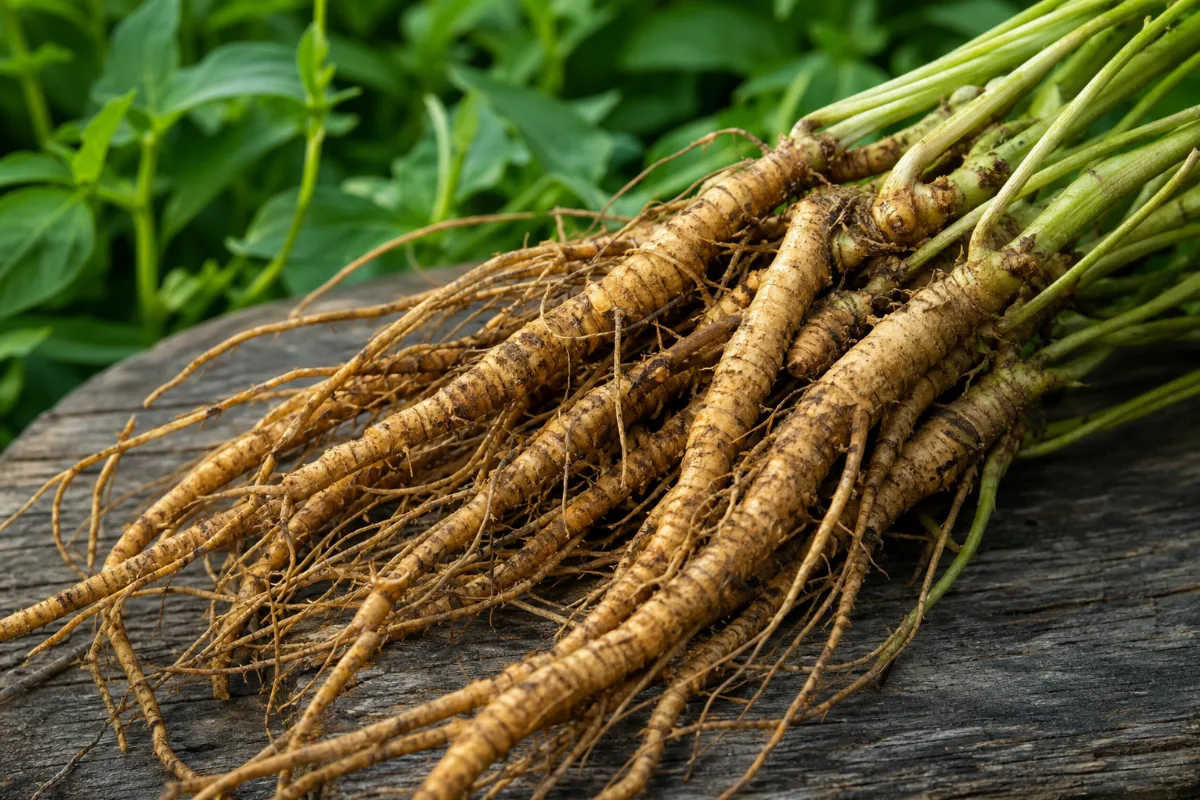
Herbs & Botanicals · Traditional Chinese root
Baikal Skullcap
Scutellaria baicalensis (root) · also called Chinese skullcap, huang qin
Baikal skullcap, or huang qin, is the dried root of a mint-family plant used in Chinese and Japanese medicine, usually inside herbal formulas. It has been studied for mood, blood sugar and as a helper during cancer treatment. No trial of the root alone was found, and the small trials of formulas and extracts are rated very low certainty. The key caution is rare but real liver injury, so see a doctor for yellow skin or dark urine.
General information, not medical advice. Last substantive update · Not medically reviewed. A named clinician has not signed off on this page. How this page is made
About Baikal Skullcap
Baikal skullcap has a long traditional reputation but no trial of the root alone was found. Human research is small and very low certainty, covering formulas, isolated baicalin or baicalein, and branded or combination products. The safety record is the clearest part: liver injury, lung inflammation with Sho-saiko-to, and open questions about medicines and pregnancy.
What it is
Baikal skullcap (huang qin) is the dried root of Scutellaria baicalensis Georgi, a plant in the mint family. It is not American skullcap (Scutellaria lateriflora), which is a different herb. This page keeps the whole root, the isolated compounds baicalin and baicalein, and formulas such as Xiao Chai Hu Tang (Sho-saiko-to) and PHY906 apart, because their results do not carry over.
What the research shows
A Cochrane review found the effect of Xiao Chai Hu Tang on hepatitis B unclear (very low certainty). A phase I trial found PHY906 did not change chemotherapy drug levels, and a single-arm phase II trial in liver cancer was inconclusive. One crossover trial added the herb to metformin and reported better glucose tolerance, with raised liver enzymes in some people. Two mood trials used a branded extract and a combination product, and both involved sponsors. One 374-person baicalin trial reported large changes in blood fats, but it is unreplicated and has an apparent inconsistency.
How it may work
Baicalin, baicalein and wogonin reduce inflammation and oxidative stress in cells and animals, and some act on the GABA-A receptor. Baicalein blocked an enzyme (UGT1A1) that clears an irinotecan metabolite in lab tests. Baicalin is poorly absorbed. None of this proves a benefit in people.
At a glance
Traditional uses history, not proof
- Traditional Chinese medicine: to clear heat; the root was also used to protect the fetus and avoid miscarriage
- Chinese and Japanese formulas: Xiao Chai Hu Tang (Sho-saiko-to)
- PHY906, a four-herb formula from a classic recipe for gut complaints
Studied for research
- Low mood (branded extract), very low
- Stress and mood (combination product), very low
- Cancer chemotherapy support (PHY906), very low
- Chronic hepatitis B (formula), very low
- Type 2 diabetes with metformin, very low
- Blood fats and inflammation (baicalin), very low
- Gum health (gargle), very low
- Osteoarthritis, insufficient
- Pregnancy protection, insufficient (traditional only)
Main compounds
- Baicalin and baicalein (flavones)
- Wogonin and oroxylin A
- Wogonoside and oroxyloside
Common forms
- Dried root, decoction or powder
- Extracts (baicalin content varies)
- Isolated baicalin or baicalein
- Formulas: Xiao Chai Hu Tang, Sho-saiko-to, PHY906
- Not the same as American skullcap
Research links: Xiao Chai Hu Tang for chronic hepatitis B, Cochrane (2019) · Skullcap liver injury, case report (2012) · Skullcap liver injury incidence and ABCB1 gene (2026) · Flavocoxid (Limbrel) liver injury, case series (2012) · Japanese herbal medicine pneumonitis, 73 patients (2017) · Scutellaria and saffron for mood (2025) · Research Library · Genes & Biomarkers Library
The plant and its history
- Accepted scientific name
- Scutellaria baicalensis Georgi
- Naming authority
- Georgi. ACCEPTED in the GBIF backbone (species key 7309014). NCBI Taxonomy search returned id 65409.
- Synonyms
- Not retrieved; the GBIF synonym list was not pulled.
- Common names
- Baikal skullcap (English); Chinese skullcap (English); Huang qin (Scutellariae Radix) (Chinese (pinyin)); Ougon (Japanese (Kampo name for the root))
- Botanical family
- Lamiaceae (the mint family, which also includes sage, thyme and basil).
- Classification
- Plantae > Tracheophyta > Magnoliopsida > Lamiales > Lamiaceae > Scutellaria > Scutellaria baicalensis
- Native range
- Not verified in the sources read.
- Habitat
- Not verified.
- What the plant looks like
- Roots: The dried root (Scutellariae Radix) is the part used; botanical detail was not verified.; Stems: Not verified.; Leaves: Not verified.; Flowers: Not verified.; Fruit: Not verified.
- Cultivation
- Not verified.
- Harvest and processing
- Not verified.
- Look-alikes and adulterants
- Name: Scutellaria lateriflora L. (American skullcap); Note: A different species used in Western herbalism, with its own liver-injury reports. Covered on its own page (skullcap). Not the same herb.
- Sustainability and conservation
- Not verified.
Traditional use and history history, not clinical proof
| Tradition or era | Documented use | Source |
|---|---|---|
| Traditional Chinese medicine | The dried root (huang qin) is used to clear heat and, per a 2023 review, to protect the fetus and avoid miscarriage for thousands of years. It is mostly used inside multi-herb formulas. | p36216728 |
| Chinese and Japanese formulas | Xiao Chai Hu Tang (Japanese Sho-saiko-to) is a seven-herb formula containing the root, bupleurum, pinellia, ginseng, jujube, licorice and ginger; widely given for chronic hepatitis in Japan. PHY906 is a four-herb formula said to descend from an 1,800-year-old recipe for gut complaints. | p14713367 |
| EMA/HMPC and other regulators | No EMA monograph was found; Wikipedia and other secondary history was not used. | s-ema-scutellaria |
Traditional use shows how a plant was used. It does not show that a supplement works or is safe today.
What is inside, and how it may work
What the plant contains and how those compounds act in cells and animals. Laboratory and animal mechanisms are not proven effects in people.
Main compounds
| Compound | Family | Where it is concentrated | Activity studied | Level of evidence |
|---|---|---|---|---|
| Baicalin PubChem 64982 | Flavone glucuronide | Root | Main root flavone; anti-inflammatory and antioxidant in lab and animals; poorly absorbed and broken down in the gut. 10 22 9 | Laboratory research |
| Baicalein PubChem 5281605 | Flavone (aglycone) | Root | Positive modulator of the benzodiazepine site of GABA-A in lab tests; blocked SN-38 glucuronidation in vitro; tested as tablets in healthy people. 19 28 15 9 | Human (safety and kinetics) and in vitro |
| Wogonin PubChem 5281703 | Flavone (aglycone) | Root | Positive GABA-A benzodiazepine-site modulator in lab tests; crosses into mouse brain. 19 9 | Animal research |
| Oroxylin A PubChem 5320315 | Flavone (aglycone) | Root | Highest brain uptake of six root flavones in mice; described as a GABA-A antagonist that may offset the others. 19 9 | Animal research |
| Wogonoside and oroxyloside | Flavone glucuronides | Root | Passed into mouse brain in the same study. 19 | Animal research |
| Flavocoxid (baicalin + catechins) | Proprietary blend | Not the whole root | Marketed as a COX/5-LOX inhibitor; linked to liver injury; recalled in the US in 2018. 11 31 | Human (case series) |
Mechanisms, receptors and pathways
| Target or pathway | Gene or receptor | What was found | Level |
|---|---|---|---|
| GABA-A receptor (benzodiazepine site) | GABA-A | Baicalein, wogonin and baicalin positively modulate the site in lab tests; oroxylin A blocks it; the whole extract did not reduce anxiety in mice. 19 | Lab animal |
| Drug glucuronidation (UGT1A1) | UGT1A1 | Baicalein competitively inhibited SN-38 glucuronidation in human liver microsomes. 28 | Lab |
| Inflammation and oxidative stress | COX, 5-LOX, NF-kB, TNF-alpha | Baicalin and flavocoxid reduce these in cells and animals; a small human study of flavocoxid showed lower serum IL-1 beta and TNF-alpha in some boys. 10 31 | Lab animal; small human |
| Gut microbiota | Lactobacillus, Akkermansia | In a human trial with metformin, these bacteria increased with the herb; a link to blood sugar is not shown. 29 | Human (small) |
| Drug transporter and liver injury susceptibility | ABCB1 rs2032582 | C/C genotype was over-represented in confirmed skullcap liver injury in a Chinese Han group. 20 30 | Human (genetic association) |
Absorption, metabolism and elimination
- Absorption
- Baicalin is hydrolysed in the gut and has low bioavailability. In healthy people, single baicalein tablets reached peak blood levels of about 280-845 ng/mL across the doses studied, with less than proportional exposure.
- Distribution
- All six main flavones crossed into the mouse brain; oroxylin A most.
- Metabolism
- Baicalin undergoes gut hydrolysis and enterohepatic recycling; metabolism is complex. Baicalein inhibits UGT1A1-type glucuronidation in vitro. Sho-saiko-to lowered human CYP1A2 and xanthine oxidase activity.
- Elimination
- Half-life of baicalein tablets 7.8 to 14.9 hours in healthy people.
- Bioavailability
- Low for baicalin per review; nano-formulations improve it in preclinical work only.
Isolated compounds versus whole extracts
The whole root, a standardised extract, baicalin (capsule trial), baicalein tablets (phase I healthy volunteers), flavocoxid (baicalin + catechin blend) and formulas (Xiao Chai Hu Tang / Sho-saiko-to with seven herbs; PHY906 with four herbs) are different products. Results and warnings do not transfer between them. The liver case reports involve the root, a joint supplement and the baicalin-catechin product; the pneumonitis reports involve Sho-saiko-to.
Nutritional composition
Baikal skullcap root is a medicinal herb, not a food, and is not a source of any nutrient. The flavones are plant compounds with no recommended intake.
7 very low certainty7 not enough evidence
What is Baikal Skullcap good for?
The main studied uses and how strong the human evidence is. Unless stated, results are for formulas, isolated compounds or branded and combination products, not for the plain root.
Benefits, one by one
Each card is a research question, not a promise. Tap a goal to filter. Open a card to see the studies, doses and limits.
Low mood (mild to moderate depressive symptoms)
Very low certaintyOne six-week trial of 180 people found better mood scores with a branded Scutellaria root extract than with placebo, and a larger gain when it was combined with saffron. Only the abstract was read and it gives no numbers.
1 studiesBranded Scutellaria root extract (SCUTELL'UP) and a saffron combinati…
Studies, doses and limits
What the trials found
Dormal 2025 (n = 180, 6 weeks, placebo-controlled, four groups: Scutellaria extract, saffron extract, both, placebo; Beck Depression Inventory). The authors call it the first human evidence for the Scutellaria extract. The funders helped design the study and write the report.
Results
The authors report a positive effect of the Scutellaria extract alone on mood and a stronger effect for the combination. No effect sizes in the abstract.
Effect sizes as reported
Not available from the abstract.
Why this rating
One industry-linked trial of a branded extract, abstract only, no effect size, no replication. People had mild symptoms, not diagnosed depression.
Form and dose studied
Branded Scutellaria root extract (SCUTELL'UP) and a saffron combination (SAFFR'UP).
Who was studied
Adults with mild-to-moderate depressive symptoms.
Limits
Single trial; funder involvement in design and writing; no long-term data; not a treatment for depression.
Why researchers looked
Animal studies suggest antidepressant-like effects, so a human trial was run.
Traditional use
Huang qin, the dried root of Scutellaria baicalensis, is used in traditional Chinese medicine to 'clear heat' and 'drain damp-heat'. It is nearly always taken inside a multi-herb formula.
Proposed mechanism Preliminary mechanism
Not established. Lab work suggests flavones act on brain signalling and inflammation.
A proposed mechanism does not show that the effect happens in people.
Minimal adverse effects reported over 6 weeks. Liver injury has been reported with the root and with products containing it. See the safety section.
Stress and mood in healthy stressed adults (combination product)
Very low certaintyA 15-day crossover trial of a product containing Scutellaria root, hawthorn, magnesium and chromium reported lower mood disturbance and trait anxiety. Because four ingredients were taken together, the Scutellaria root alone cannot be judged.
1 studiesFixed combination of S. baicalensis root extract, Crataegus laevigata…
Studies, doses and limits
What the trials found
Dodd 2025: 43 stressed but healthy adults (35 analysed) took the supplement and a placebo, each for 15 days, in crossover order. The sponsor is A. Vogel AG and one author works there.
Results
After 15 days, lower total mood disturbance, anger/hostility and trait anxiety scores. A higher share had a 30% or greater gain in social satisfaction after 7 days. No serious adverse effects.
Effect sizes as reported
Numbers not in the abstract.
Why this rating
Four-ingredient product, small crossover trial, sponsor-linked, only 15 days.
Form and dose studied
Fixed combination of S. baicalensis root extract, Crataegus laevigata fruit extract, magnesium and chromium.
Who was studied
Subjectively stressed healthy adults aged 18-75.
Limits
Combination product; 35 analysed; short; sponsor-linked; no sleep benefit reported in the abstract.
Why researchers looked
Chronic stress affects mood, thinking and sleep, and this combination was tested for those.
Traditional use
Huang qin, the dried root of Scutellaria baicalensis, is used in traditional Chinese medicine to 'clear heat' and 'drain damp-heat'. It is nearly always taken inside a multi-herb formula.
Proposed mechanism Preliminary mechanism
Not established.
A proposed mechanism does not show that the effect happens in people.
No serious adverse effects reported in 15 days.
Attention and working memory under stress (combination product)
Not enough evidenceIn the same combination trial, people made fewer errors on a counting task after one dose and did better on a subtraction task during a stress test. Effects were less consistent without the stress test.
1 studiesSame combination as above.
Studies, doses and limits
What the trials found
Dodd 2025, as above.
Results
Fewer serial-3 subtraction errors after an acute dose; more correct serial-7 answers during the stressor, irrespective of dose.
Effect sizes as reported
Numbers not in the abstract.
Why this rating
Single small trial of a four-ingredient product; effects inconsistent without the stressor; root alone untested.
Form and dose studied
Same combination as above.
Who was studied
Stressed healthy adults.
Limits
Cannot separate the root from hawthorn, magnesium and chromium.
Why researchers looked
Stress can lower attention and working memory.
Traditional use
Huang qin, the dried root of Scutellaria baicalensis, is used in traditional Chinese medicine to 'clear heat' and 'drain damp-heat'. It is nearly always taken inside a multi-herb formula.
Proposed mechanism Preliminary mechanism
Not established.
A proposed mechanism does not show that the effect happens in people.
None beyond those listed for the trial.
Anxiety and calming (laboratory and animal only)
Not enough evidenceSome flavones in the root act on the brain's GABA-A receptor, the same receptor family that benzodiazepines act on. In mice, though, a whole-root extract did not reduce anxiety, probably because another flavone blocks that receptor. No human trial of the root alone for anxiety was found.
2 studiesWhole-root extract in mice.
Studies, doses and limits
What the trials found
None for the root alone. The 2025 combination trial reported lower trait anxiety, but that product had four ingredients.
Results
Mouse study: all six main flavones reached the brain, but the extract had no significant anti-anxiety effect at the doses tested.
Effect sizes as reported
No human effect sizes.
Why this rating
Animal and lab evidence only; the one animal test of the whole extract was negative for anxiety.
Form and dose studied
Whole-root extract in mice.
Who was studied
Mice.
Limits
Animal work does not predict human effect. Sedation in people has not been measured in the sources read.
Why researchers looked
Baicalein, wogonin and baicalin positively modulate the benzodiazepine binding site in lab tests.
Traditional use
Huang qin, the dried root of Scutellaria baicalensis, is used in traditional Chinese medicine to 'clear heat' and 'drain damp-heat'. It is nearly always taken inside a multi-herb formula.
Proposed mechanism Laboratory research
Baicalein, wogonin and baicalin enhance the benzodiazepine site of GABA-A receptors in lab tests; oroxylin A (high brain uptake) blocks it and may cancel the effect.
A proposed mechanism does not show that the effect happens in people.
Possible additive drowsiness with sedatives is theory only; see the safety section.
Antidepressant-like effects in animals (not a human result)
Not enough evidenceA pooled analysis of 13 animal studies found that Scutellaria baicalensis and its compounds reduced depression-like behaviour in rodents.
1 studiesRoot and its compounds, various.
Studies, doses and limits
What the trials found
None from this review. It covers animals only.
Results
Sucrose preference SMD -2.80 (95% CI -4.03 to -1.57); open-field SMD -2.38 (-3.53 to -1.23); novelty-suppressed feeding SMD -2.98 (-3.94 to -2.02); moderate risk of bias and marked heterogeneity.
Effect sizes as reported
SMD -2.80, -2.38, -2.98 (animals)
Why this rating
Animal evidence with high heterogeneity; no reliable human translation.
Form and dose studied
Root and its compounds, various.
Who was studied
Rodent depression models.
Limits
Animals only.
Why researchers looked
Many classical formulas for emotional complaints include Huang qin.
Traditional use
Huang qin, the dried root of Scutellaria baicalensis, is used in traditional Chinese medicine to 'clear heat' and 'drain damp-heat'. It is nearly always taken inside a multi-herb formula.
Proposed mechanism Animal research
Reviewers propose anti-inflammatory and neuro-signalling effects (animal data).
A proposed mechanism does not show that the effect happens in people.
None for people from this source.
Sleep
Not enough evidenceNo human trial of Scutellaria baicalensis alone for sleep was found. In the 2025 saffron trial, the sleep benefit was credited to saffron, not to the Scutellaria extract.
2 studiesNot applicable.
Studies, doses and limits
What the trials found
None found for the root alone.
Results
The abstract of the 2025 mood trial states that saffron improved sleep quality; it makes no such claim for the Scutellaria extract.
Effect sizes as reported
None.
Why this rating
No direct human data.
Form and dose studied
Not applicable.
Who was studied
Not applicable.
Limits
No evidence either way.
Why researchers looked
Because some root flavones act on GABA-A receptors, sleep has been suggested as a use.
Traditional use
Huang qin, the dried root of Scutellaria baicalensis, is used in traditional Chinese medicine to 'clear heat' and 'drain damp-heat'. It is nearly always taken inside a multi-herb formula.
Proposed mechanism Pharmacological theory
Theory based on GABA-A activity; the one mouse test of the whole extract was negative for anxiety.
A proposed mechanism does not show that the effect happens in people.
If a sedative effect exists, it adds to alcohol and sedative medicines; this is unmeasured.
Cancer chemotherapy support (PHY906, a four-herb formula)
Very low certaintyPHY906 is a four-herb formula that includes Baikal skullcap root. A phase I trial found it safe alongside colorectal cancer chemotherapy and found no change in chemotherapy drug levels. A single-arm phase II trial in liver cancer was inconclusive about benefit. Neither trial tests skullcap alone.
2 studiesPHY906 standardised formula (four herbs); not the same as skullcap ro…
Studies, doses and limits
What the trials found
Kummar 2011: phase I, double-blind, randomised, placebo-controlled, cross-over study with irinotecan, 5-FU and leucovorin; PHY906 did not alter drug levels. Changou 2021: single-arm phase II, 39 people with liver cancer and hepatitis B on capecitabine.
Results
Phase II: stable disease in 46.2%; median progression-free survival 1.5 months; median overall survival 6 months; 6-month survival 51.3%; common adverse events included anaemia, diarrhoea, fatigue, higher AST and bilirubin. The authors conclude PHY906 raises capecitabine's therapeutic index, but a single-arm trial cannot show that.
Effect sizes as reported
6-month survival 51.3% (single arm, no comparison)
Why this rating
Safety-focused phase I with no patient-benefit results in the abstract; single-arm phase II with no control; both linked to the formula's developers.
Form and dose studied
PHY906 standardised formula (four herbs); not the same as skullcap root or baicalin.
Who was studied
Adults with advanced colorectal or liver cancer on chemotherapy.
Limits
No comparison group in phase II; formula of four herbs; developer-linked authors; only abstracts read.
Why researchers looked
The formula is based on an 1,800-year-old recipe used for diarrhoea, cramps and vomiting; it was developed to ease chemotherapy side effects.
Traditional use
Huang qin, the dried root of Scutellaria baicalensis, is used in traditional Chinese medicine to 'clear heat' and 'drain damp-heat'. It is nearly always taken inside a multi-herb formula. PHY906 is a standardised four-herb formula based on a classic recipe.
Proposed mechanism Animal research
Not established in people. Mouse studies reported protection from irinotecan weight loss.
A proposed mechanism does not show that the effect happens in people.
Raised AST and bilirubin were among the adverse events in the liver cancer trial (cancer and chemotherapy are confounders). Talk to the cancer team before any herb; see interactions.
Chronic hepatitis B (Xiao Chai Hu Tang / Sho-saiko-to formula)
Very low certaintyXiao Chai Hu Tang is a seven-herb formula that contains Baikal skullcap root. A Cochrane review found its effect on hepatitis B unclear, with very low certainty evidence.
1 studiesDifferent forms of the seven-herb formula, 3 to 8 months.
Studies, doses and limits
What the trials found
Cochrane review 2019: 10 randomised trials (934 people); 5 trials (490 people) gave data; all from China and all at high risk of bias.
Results
Detectable HBV DNA: RR 0.62 (0.45-0.85; 3 trials, 222 people); HBeAg RR 0.72 (0.50-1.02); non-serious adverse events RR 0.43 (0.02-11.98). No trial measured death, serious adverse events or quality of life.
Effect sizes as reported
RR 0.62 for HBV DNA
Why this rating
The reviewers rate every outcome very-low certainty and conclude the effect remains unclear.
Form and dose studied
Different forms of the seven-herb formula, 3 to 8 months.
Who was studied
People with chronic hepatitis B, mostly in China.
Limits
Surrogate outcomes only; high risk of bias; formula not root; the root has itself been linked to liver injury.
Why researchers looked
The formula is traditionally used for liver conditions and is widely used in Japan as Sho-saiko-to.
Traditional use
Huang qin, the dried root of Scutellaria baicalensis, is used in traditional Chinese medicine to 'clear heat' and 'drain damp-heat'. It is nearly always taken inside a multi-herb formula.
Proposed mechanism Pharmacological theory
Not established.
A proposed mechanism does not show that the effect happens in people.
The formula is linked to lung inflammation (pneumonitis), especially with interferon; see the safety section.
Blood sugar in type 2 diabetes (root added to metformin)
Very low certaintyOne small crossover trial in people already on metformin found lower glucose tolerance results (that is, better handling of sugar) when Baikal skullcap was added than with placebo, but some people had high liver enzymes.
1 studiesBaikal skullcap preparation with metformin.
Studies, doses and limits
What the trials found
Shin 2020: randomised, placebo-controlled crossover (8 weeks each, 4-week washout) in people with type 2 diabetes already taking metformin.
Results
Glucose tolerance was lower in the herb group than placebo; TNF-alpha expression fell; some participants had high liver enzymes after the herb. The abstract gives no numbers or sample size.
Effect sizes as reported
Not available from the abstract.
Why this rating
One small trial, abstract only, no effect size, with a liver-enzyme signal.
Form and dose studied
Baikal skullcap preparation with metformin.
Who was studied
Adults with type 2 diabetes on metformin.
Limits
Single trial; short; add-on to metformin; liver-enzyme rises in some people.
Why researchers looked
The root is traditionally used for 'wasting-thirst' conditions and has been studied for diabetes in the lab.
Traditional use
Huang qin, the dried root of Scutellaria baicalensis, is used in traditional Chinese medicine to 'clear heat' and 'drain damp-heat'. It is nearly always taken inside a multi-herb formula.
Proposed mechanism Preliminary mechanism
The authors report effects on gut bacteria (more Lactobacillus and Akkermansia) and on inflammation (lower TNF-alpha RNA). Whether this causes the sugar effect is not shown.
A proposed mechanism does not show that the effect happens in people.
Raised liver enzymes in some participants. People with diabetes on glucose-lowering drugs should ask a clinician (possible additive effect).
Blood fats and inflammation (isolated baicalin, one trial)
Very low certaintyOne 374-person Chinese trial of isolated baicalin reported lower triglycerides, cholesterol and inflammation markers in people with both heart disease and rheumatoid arthritis. The results are unusually large and have not been replicated, so they are treated with caution.
1 studiesIsolated baicalin capsule/tablet (500 mg daily as reported); not the …
Studies, doses and limits
What the trials found
Hang 2018: 374 people randomised to baicalin or placebo for 12 weeks.
Results
Triglycerides 1.12 vs 1.87 mmol/L; total cholesterol 2.87 vs 3.22 mmol/L; hs-CRP 1.64 vs 3.9 mg/dL; good/moderate EULAR response 71% vs 53%. The LDL line as printed lists a higher value for baicalin, which looks like a reporting problem.
Effect sizes as reported
See results
Why this rating
Single-centre, unreplicated, very large effects, printing inconsistency in the abstract, product source unclear.
Form and dose studied
Isolated baicalin capsule/tablet (500 mg daily as reported); not the whole root.
Who was studied
Adults with coronary artery disease and rheumatoid arthritis.
Limits
Cannot be generalised; isolated compound; one report.
Why researchers looked
Baicalin is the main root compound and has anti-inflammatory activity in the lab.
Traditional use
Huang qin, the dried root of Scutellaria baicalensis, is used in traditional Chinese medicine to 'clear heat' and 'drain damp-heat'. It is nearly always taken inside a multi-herb formula.
Proposed mechanism Laboratory research
Lab work shows anti-inflammatory effects; not shown to explain this result.
A proposed mechanism does not show that the effect happens in people.
Baicalin-containing products have been linked to liver injury (flavocoxid).
Gum and mouth health (compound gargle)
Very low certaintyOne trial of 110 people with braces found less plaque and gum bleeding after three months with a compound gargle containing Baikal skullcap than with salt water.
1 studiesCompound Scutellaria baicalensis gargle used once a day (rinse, not s…
Studies, doses and limits
What the trials found
Zhang 2024: 55 people per group, randomised, 3 months.
Results
Plaque index, pocket depth and bleeding index lower in the gargle group (P < .05); some oral bacteria differed.
Effect sizes as reported
P < .05; no effect sizes in the abstract
Why this rating
Compound product, one centre, saline comparator, abstract only.
Form and dose studied
Compound Scutellaria baicalensis gargle used once a day (rinse, not swallowed).
Who was studied
People with fixed orthodontic braces.
Limits
Other ingredients not listed in the abstract.
Why researchers looked
The root has antibacterial activity in the lab.
Traditional use
Huang qin, the dried root of Scutellaria baicalensis, is used in traditional Chinese medicine to 'clear heat' and 'drain damp-heat'. It is nearly always taken inside a multi-herb formula.
Proposed mechanism Laboratory research
Lab antibacterial effects; not shown in this trial.
A proposed mechanism does not show that the effect happens in people.
A rinse; liver and pneumonitis reports concern swallowed products.
Joint pain and osteoarthritis (baicalin-catechin product, withdrawn)
Not enough evidenceA baicalin and catechin blend (flavocoxid, sold as Limbrel) was marketed for osteoarthritis. No good evidence of benefit was found in the sources read, and the US product was recalled in 2018 over safety reports.
3 studiesFlavocoxid blend (baicalin + catechins), a medical food, not the root.
Studies, doses and limits
What the trials found
A small non-randomised one-year study in boys with Duchenne muscular dystrophy (17 treated) found the blend well tolerated and mixed biomarker changes; function results were non-significant. No osteoarthritis trial was read.
Results
Serum IL-1 beta and TNF-alpha fell only in the add-on-to-steroids group; function measures were non-significant trends.
Effect sizes as reported
See results
Why this rating
No osteoarthritis efficacy trial was read; the safety record includes liver injury.
Form and dose studied
Flavocoxid blend (baicalin + catechins), a medical food, not the root.
Who was studied
Boys with DMD (the study read).
Limits
Small; open; not osteoarthritis.
Why researchers looked
Baicalin was proposed to block the COX and 5-LOX inflammation enzymes.
Traditional use
Huang qin, the dried root of Scutellaria baicalensis, is used in traditional Chinese medicine to 'clear heat' and 'drain damp-heat'. It is nearly always taken inside a multi-herb formula.
Proposed mechanism Laboratory research
Lab work: flavocoxid inhibits COX, 5-LOX, NF-kB and TNF-alpha pathways.
A proposed mechanism does not show that the effect happens in people.
Liver injury in a US case series; recall in 2018.
Anti-inflammatory and antioxidant effects (laboratory and animal only)
Not enough evidenceReviews describe baicalin and related flavones reducing inflammation and oxidative stress in cells and animals. Poor absorption and a lack of clinical testing limit what this means for people.
2 studiesBaicalin, baicalein, wogonin.
Studies, doses and limits
What the trials found
None for the root alone.
Results
Reviews (2019, 2026) state low bioavailability and insufficient clinical validation.
Effect sizes as reported
No human effect sizes.
Why this rating
Preclinical only.
Form and dose studied
Baicalin, baicalein, wogonin.
Who was studied
Cells and animals.
Limits
Poor solubility and absorption.
Why researchers looked
The lab activity is the main reason the compounds are studied.
Traditional use
Huang qin, the dried root of Scutellaria baicalensis, is used in traditional Chinese medicine to 'clear heat' and 'drain damp-heat'. It is nearly always taken inside a multi-herb formula.
Proposed mechanism Laboratory research
Modulates oxidative-stress and inflammatory signalling in cells and animals.
A proposed mechanism does not show that the effect happens in people.
No human benefit shown.
Pregnancy support (traditional use; laboratory only)
Not enough evidenceIn traditional Chinese medicine the root is called a pregnancy-stabilising herb and was used to prevent miscarriage. Reviews of this idea describe laboratory and animal work, not human trials. This is a traditional use, not proven protection, and it is not a reason to take the herb in pregnancy.
2 studiesRoot and baicalin.
Studies, doses and limits
What the trials found
No human trials in the reviews' abstracts.
Results
Both reviews describe experimental models and limits for clinical use; no human outcome is reported.
Effect sizes as reported
None.
Why this rating
Traditional use plus lab studies; no human safety or benefit data in the abstracts.
Form and dose studied
Root and baicalin.
Who was studied
Experimental models.
Limits
No human data; safety in pregnancy not shown.
Why researchers looked
Ancient use to 'clear heat and protect the fetus'.
Traditional use
Traditional Chinese medicine: protect the fetus, avoid miscarriage (Fang 2023).
Proposed mechanism Laboratory research
Lab models point to immune and inflammatory effects at the mother-baby interface.
A proposed mechanism does not show that the effect happens in people.
Pregnant women should not use it unsupervised; see the safety section.
Connections to the rest of health
How Baikal Skullcap connects to the rest of our health knowledge graph. Every link says what kind of connection it is. A safety link (for example to the liver) is a warning, not a benefit. A study that merely mentions a topic never creates a benefit link.
Explore every connection: goals, body systems, organs, symptoms, genes
A. Wellness goals
| Connected to | Kind of connection | Evidence status | Context | Studies |
|---|---|---|---|---|
| Mood Balance | Potential benefit | Very low certainty | Low mood (mild to moderate depressive symptoms): One six-week trial of 180 people found better mood scores with a branded Scutellaria root extract than with placebo, and a larger gain when it was combined with saffron. Only the abstract was read and it gives no numbers. Stress and mood in healthy stressed adults (combination product): A 15-day crossover trial of a product containing Scutellaria root, hawthorn, magnesium and chromium reported lower mood disturbance and trait anxiety. Because four ingredients were taken together, the Scutellaria root alone cannot be judged. | 16 14 |
| Stress Reduction | Potential benefit | Very low certainty | Stress and mood in healthy stressed adults (combination product): A 15-day crossover trial of a product containing Scutellaria root, hawthorn, magnesium and chromium reported lower mood disturbance and trait anxiety. Because four ingredients were taken together, the Scutellaria root alone cannot be judged. | 14 |
| Anxiety Support | Potential benefit | Very low certainty | Stress and mood in healthy stressed adults (combination product): A 15-day crossover trial of a product containing Scutellaria root, hawthorn, magnesium and chromium reported lower mood disturbance and trait anxiety. Because four ingredients were taken together, the Scutellaria root alone cannot be judged. | 14 |
| Cognitive Performance | Potential benefit | Not enough evidence | Attention and working memory under stress (combination product): In the same combination trial, people made fewer errors on a counting task after one dose and did better on a subtraction task during a stress test. Effects were less consistent without the stress test. | 14 |
| Mental Clarity | Potential benefit | Not enough evidence | Attention and working memory under stress (combination product): In the same combination trial, people made fewer errors on a counting task after one dose and did better on a subtraction task during a stress test. Effects were less consistent without the stress test. | 14 |
| Anxiety Support | Preliminary mechanism | Not enough evidence | Anxiety and calming (laboratory and animal only): Some flavones in the root act on the brain's GABA-A receptor, the same receptor family that benzodiazepines act on. In mice, though, a whole-root extract did not reduce anxiety, probably because another flavone blocks that receptor. No human trial of the root alone for anxiety was found. | 19 14 |
| Calm Relaxation | Preliminary mechanism | Not enough evidence | Anxiety and calming (laboratory and animal only): Some flavones in the root act on the brain's GABA-A receptor, the same receptor family that benzodiazepines act on. In mice, though, a whole-root extract did not reduce anxiety, probably because another flavone blocks that receptor. No human trial of the root alone for anxiety was found. | 19 14 |
| Mood Balance | Preliminary mechanism | Not enough evidence | Antidepressant-like effects in animals (not a human result): A pooled analysis of 13 animal studies found that Scutellaria baicalensis and its compounds reduced depression-like behaviour in rodents. | 26 |
| Better Sleep | Traditional use | Not enough evidence | Sleep: No human trial of Scutellaria baicalensis alone for sleep was found. In the 2025 saffron trial, the sleep benefit was credited to saffron, not to the Scutellaria extract. | 16 19 |
| Immune Support | Preliminary mechanism | Very low certainty | Cancer chemotherapy support (PHY906, a four-herb formula): PHY906 is a four-herb formula that includes Baikal skullcap root. A phase I trial found it safe alongside colorectal cancer chemotherapy and found no change in chemotherapy drug levels. A single-arm phase II trial in liver cancer was inconclusive about benefit. Neither trial tests skullcap alone. | 25 12 |
| Liver Support | Traditional use | Very low certainty | Chronic hepatitis B (Xiao Chai Hu Tang / Sho-saiko-to formula): Xiao Chai Hu Tang is a seven-herb formula that contains Baikal skullcap root. A Cochrane review found its effect on hepatitis B unclear, with very low certainty evidence. | 24 |
| Blood Sugar Balance | Potential benefit | Very low certainty | Blood sugar in type 2 diabetes (root added to metformin): One small crossover trial in people already on metformin found lower glucose tolerance results (that is, better handling of sugar) when Baikal skullcap was added than with placebo, but some people had high liver enzymes. | 29 |
| Cholesterol Balance | Potential benefit | Very low certainty | Blood fats and inflammation (isolated baicalin, one trial): One 374-person Chinese trial of isolated baicalin reported lower triglycerides, cholesterol and inflammation markers in people with both heart disease and rheumatoid arthritis. The results are unusually large and have not been replicated, so they are treated with caution. | 21 |
| Inflammation Balance | Potential benefit | Very low certainty | Blood fats and inflammation (isolated baicalin, one trial): One 374-person Chinese trial of isolated baicalin reported lower triglycerides, cholesterol and inflammation markers in people with both heart disease and rheumatoid arthritis. The results are unusually large and have not been replicated, so they are treated with caution. | 21 |
| Heart Health | Potential benefit | Very low certainty | Blood fats and inflammation (isolated baicalin, one trial): One 374-person Chinese trial of isolated baicalin reported lower triglycerides, cholesterol and inflammation markers in people with both heart disease and rheumatoid arthritis. The results are unusually large and have not been replicated, so they are treated with caution. | 21 |
| Digestive Support | Potential benefit | Very low certainty | Gum and mouth health (compound gargle): One trial of 110 people with braces found less plaque and gum bleeding after three months with a compound gargle containing Baikal skullcap than with salt water. | 33 |
| Joint Support | Adverse effect or risk | Not enough evidence | Joint pain and osteoarthritis (baicalin-catechin product, withdrawn): A baicalin and catechin blend (flavocoxid, sold as Limbrel) was marketed for osteoarthritis. No good evidence of benefit was found in the sources read, and the US product was recalled in 2018 over safety reports. | 31 11 1 |
| Inflammation Balance | Preliminary mechanism | Not enough evidence | Anti-inflammatory and antioxidant effects (laboratory and animal only): Reviews describe baicalin and related flavones reducing inflammation and oxidative stress in cells and animals. Poor absorption and a lack of clinical testing limit what this means for people. | 10 22 |
| Womens Wellness | Traditional use | Not enough evidence | Pregnancy support (traditional use; laboratory only): In traditional Chinese medicine the root is called a pregnancy-stabilising herb and was used to prevent miscarriage. Reviews of this idea describe laboratory and animal work, not human trials. This is a traditional use, not proven protection, and it is not a reason to take the herb in pregnancy. | 18 13 |
| Fertility Support | Traditional use | Not enough evidence | Pregnancy support (traditional use; laboratory only): In traditional Chinese medicine the root is called a pregnancy-stabilising herb and was used to prevent miscarriage. Reviews of this idea describe laboratory and animal work, not human trials. This is a traditional use, not proven protection, and it is not a reason to take the herb in pregnancy. | 18 13 |
B. Body systems
| Connected to | Kind of connection | Evidence status | Context | Studies |
|---|---|---|---|---|
| Hepatic / liver system | Adverse effect or risk | Low certainty | Reported liver injury; dose and gene signals in one population. Preparation or compound: Root, decoctions, joint supplements, baicalin-catechin product |
32 20 11 |
| Respiratory system | Adverse effect or risk | Low certainty | Interstitial pneumonitis reports. Preparation or compound: Sho-saiko-to (formula) |
17 23 |
| Stress Mood | Biological association | Very low certainty | Studied for: Low mood (mild to moderate depressive symptoms) Studied for: Stress and mood in healthy stressed adults (combination product) | 16 14 26 |
| Nervous System | Biological association | Not enough evidence | Studied for: Attention and working memory under stress (combination product) Studied for: Anxiety and calming (laboratory and animal only) | 14 19 |
| Sleep Recovery | Biological association | Not enough evidence | Studied for: Sleep | 16 19 |
| Immune System | Biological association | Very low certainty | Studied for: Cancer chemotherapy support (PHY906, a four-herb formula) Studied for: Anti-inflammatory and antioxidant effects (laboratory and animal only) | 25 12 10 22 |
| Hepatic System | Biological association | Very low certainty | Studied for: Chronic hepatitis B (Xiao Chai Hu Tang / Sho-saiko-to formula) | 24 |
| Metabolism Weight | Biological association | Very low certainty | Studied for: Blood sugar in type 2 diabetes (root added to metformin) | 29 |
| Cardiovascular System | Biological association | Very low certainty | Studied for: Blood fats and inflammation (isolated baicalin, one trial) | 21 |
| Integumentary System | Biological association | Very low certainty | Studied for: Gum and mouth health (compound gargle) | 33 |
| Musculoskeletal System | Biological association | Not enough evidence | Studied for: Joint pain and osteoarthritis (baicalin-catechin product, withdrawn) | 31 11 1 |
| Reproductive System | Biological association | Not enough evidence | Studied for: Pregnancy support (traditional use; laboratory only) | 18 13 |
C. Body parts and organs
I. Biomarkers
| Connected to | Kind of connection | Evidence status | Context | Studies |
|---|---|---|---|---|
| ALT | Adverse effect or risk | Low certainty | Raised ALT in injury cases. Preparation or compound: Root and baicalin products |
11 30 |
| AST | Adverse effect or risk | Low certainty | Raised AST in injury cases and in some trial participants. Preparation or compound: Root |
30 29 |
| Beck Depression Inventory score | Biological association | Very low certainty | Measured in trials: lowered. A lab change is not the same as a health benefit. | 16 |
| Total mood disturbance and trait anxiety | Biological association | Very low certainty | Measured in trials: lowered. A lab change is not the same as a health benefit. | 14 |
| Serial subtraction errors (attention and working memory) | Biological association | Not enough evidence | Measured in trials: mixed. A lab change is not the same as a health benefit. | 14 |
| Detectable hepatitis B virus DNA | Biological association | Very low certainty | Measured in trials: lowered. A lab change is not the same as a health benefit. | 24 |
| HBeAg | Biological association | Very low certainty | Measured in trials: no-change. A lab change is not the same as a health benefit. | 24 |
| Glucose tolerance | Biological association | Very low certainty | Measured in trials: lowered. A lab change is not the same as a health benefit. | 29 |
| Triglycerides, total cholesterol, LDL | Biological association | Very low certainty | Measured in trials: lowered. A lab change is not the same as a health benefit. | 21 |
| High-sensitivity C-reactive protein (hs-CRP) | Biological association | Very low certainty | Measured in trials: lowered. A lab change is not the same as a health benefit. | 21 |
| Plaque index and gum bleeding index | Biological association | Very low certainty | Measured in trials: lowered. A lab change is not the same as a health benefit. | 33 |
J. Genes, receptors and enzymes
| Connected to | Kind of connection | Evidence status | Context | Studies |
|---|---|---|---|---|
| ABCB1 (rs2032582) | Preliminary mechanism | Human (association) | Higher liver-injury odds with the C allele in one Chinese study. | 20 30 |
| UGT1A1 | Preliminary mechanism | In vitro | Baicalein inhibits SN-38 glucuronidation in vitro. | 28 |
| CYP1A2 | Preliminary mechanism | Human (formula) | Activity fell 16% with Sho-saiko-to in volunteers. | 27 |
K. Biological pathways
| Connected to | Kind of connection | Evidence status | Context | Studies |
|---|---|---|---|---|
| GABA-A receptor signalling | Preliminary mechanism | Lab animal | Benzodiazepine-site flavones; mixed effects. | 19 |
L. Active compounds
| Connected to | Kind of connection | Evidence status | Context | Studies |
|---|---|---|---|---|
| Baicalin | Biological association | In vitro | Main root flavone; anti-inflammatory and antioxidant in lab and animals; poorly absorbed and broken down in the gut. Preparation or compound: Root |
10 22 9 |
| Baicalein | Biological association | Human (safety and kinetics) and in vitro | Positive modulator of the benzodiazepine site of GABA-A in lab tests; blocked SN-38 glucuronidation in vitro; tested as tablets in healthy people. Preparation or compound: Root |
19 28 15 9 |
| Wogonin | Biological association | Animal | Positive GABA-A benzodiazepine-site modulator in lab tests; crosses into mouse brain. Preparation or compound: Root |
19 9 |
| Oroxylin A | Biological association | Animal | Highest brain uptake of six root flavones in mice; described as a GABA-A antagonist that may offset the others. Preparation or compound: Root |
19 9 |
| Wogonoside and oroxyloside | Biological association | Animal | Passed into mouse brain in the same study. Preparation or compound: Root |
19 |
| Flavocoxid (baicalin + catechins) | Biological association | Human (case series) | Marketed as a COX/5-LOX inhibitor; linked to liver injury; recalled in the US in 2018. Preparation or compound: Not the whole root |
11 31 |
Each connection is stored with the ingredient, the connected record, the kind of connection, the evidence status, the supporting studies, the preparation or compound involved, and a review date (last reviewed October 25, 2026).
Evidence at a glance: what changed in 9 lab markers
Tap a number to show only those markers. Counts are markers, not people.
The evidence
The research centre for Baikal Skullcap. Every record here was checked against PubMed or the publisher's page; we never list a study we have not verified.
Evidence by outcome
Bars show how many studies we found for each outcome, not how well it works. People are added up across trials only (reviews are not added, to avoid double counting).
How we rate evidence
High certainty
Several well-run trials or reviews agree; further research is unlikely to change the picture much.
Moderate certainty
Good trials point the same way, but some doubt remains.
Low certainty
Small, short or inconsistent trials. The finding could change with better research.
Very low certainty
Very little or very weak human data. Treat as a possibility only.
Mixed findings
Trials or reviews disagree with each other.
Not enough evidence
Not enough human research to say either way.
Evidence against
Good research found no benefit, or found harm.
We take the reviewers' own risk-of-bias and GRADE statements where they exist, and otherwise judge from study size, design, consistency, directness and whether a product matches what is sold. Many publications do not make evidence high. Method note: We searched PubMed and read each abstract directly, and checked taxonomy through GBIF and compound IDs through PubChem. EMA, NCCIH and Memorial Sloan Kettering pages were not found, LiverTox could not be read, and LactMed, Commission E and WHO were not checked. Full texts were mostly not read. This is stated where it matters.
Study library: every study we checked 33
| Study | Design | People | Product, dose, length | Result |
|---|---|---|---|---|
| 2018 Primus recall of Limbrel (company notice published by FDA), 2018 · Source |
Authoritative guidance |
unspecified |
Per the earlier summary record held for this herb, the company announced a voluntary nationwide recall of all lots of the prescription medical food Limbrel in 2018 at the FDA's request; the company disputed how serious the reports were. This page was not reopened in this round and the notice does not name baicalin. Methods, limits and fundingRead: summary-only | |
| 2026 LiverTox (NIDDK) entry on skullcap / Scutellaria (not read) · Source |
Authoritative guidance |
unspecified |
The NCBI Bookshelf page https://www.ncbi.nlm.nih.gov/books/NBK548164/ returned a browser check (reCAPTCHA) twice and could not be read, so no LiverTox statement is used. Whether that page is the Scutellaria entry was not confirmed. Methods, limits and fundingRead: not-found | |
| 2026 LactMed (NLM) entry for Scutellaria (not checked) · Source |
Authoritative guidance |
unspecified |
LactMed was not searched in this round (budget cap). Treated as unknown. Methods, limits and fundingRead: not-found | |
| 2026 GBIF species match: Scutellaria baicalensis Georgi · Source |
Database record |
unspecified |
GBIF species match API, 2026-10-25: Scutellaria baicalensis Georgi, status ACCEPTED, species key 7309014, family Lamiaceae, order Lamiales, class Magnoliopsida. NCBI Taxonomy search returned id 65409 for the name (the summary record itself was not opened because of a rate limit). Methods, limits and fundingRead: full-text | |
| 2026 AlternativeMed page on American skullcap (Scutellaria lateriflora) · Source |
Internal page |
unspecified |
Our own American skullcap page treats Scutellaria lateriflora as a different plant with its own liver-injury reports; used here only to keep the two separate. Not an external source. Methods, limits and fundingRead: summary-only | |
| 2026 EMA / HMPC herbal monograph for Scutellariae baicalensis radix (not found) · Source |
Authoritative guidance |
unspecified |
No EMA/HMPC monograph was found: the guessed EMA herbal page returned 404 on 2026-10-25. This is 'not found', not proof that none exists. Methods, limits and fundingRead: not-found | |
| 2026 NCCIH page on Baikal skullcap (not found) · Source |
Authoritative guidance |
unspecified |
No NCCIH page on Baikal skullcap or Chinese skullcap was found; the guessed page https://www.nccih.nih.gov/health/skullcap returned 404 on 2026-10-25. Methods, limits and fundingRead: not-found | |
| 2026 Memorial Sloan Kettering herb page for Scutellaria (not found) · Source |
Authoritative guidance |
unspecified |
Guessed MSK herb pages (skullcap, chinese-skullcap) returned 404 on 2026-10-25; nothing was read. Methods, limits and fundingRead: not-found | |
| 2026 PubChem records: baicalin, baicalein, wogonin, oroxylin A · Source |
Database record |
unspecified |
PubChem name look-ups 2026-10-25: baicalin CID 64982 (C21H18O11); baicalein CID 5281605 (C15H10O5); wogonin CID 5281703 (C16H12O5); oroxylin A CID 5320315 (C16H12O5). Wogonoside and oroxyloside CIDs were not looked up. Methods, limits and fundingRead: full-text | |
| Ahmed 2026 Baicalin: A comprehensive review of its molecular mechanisms and pharmacological activities. Naunyn Schmiedebergs Arch Pharmacol · PMID 42133065 · DOI |
Narrative review mixed |
Review | Baicalin isolated compound varied varied · vs none |
Describes anti-inflammatory, antioxidant, anticancer, antimicrobial, immune, metabolic and skin effects, mostly preclinical. States that clinical translation is held back by poor solubility, limited bioavailability and insufficient clinical validation, and that well-designed trials are needed. not applicable (NA) Methods, limits and fundingOutcomes: Mechanisms and activities Limitations: Narrative review; mostly preclinical evidence. Funding and conflicts: No competing interests declared. Read: abstract |
| Chalasani 2012 Acute liver injury due to flavocoxid (Limbrel), a medical food for osteoarthritis: a case series. Ann Intern Med · PMID 22711078 · DOI |
Case series |
4 Four adults (all women, 57-68) in the US Drug-Induced Liver Injury Network |
Flavocoxid (Limbrel): baicalin from S. baicalensis plus catechins from Acacia catechu isolated compounds not stated injury began within 1-3 months · vs none |
4 of 877 enrolled network patients had suspected flavocoxid injury. Mean peak ALT 1268 U/L; mean peak bilirubin 160.7 umol/L. Normal within 3-12 weeks of stopping; no liver failure or chronic injury. Causality highly likely in 3, possible in 1. not applicable (NA) Methods, limits and fundingOutcomes: ALT, ALP, bilirubin, outcome Limitations: Frequency and mechanism could not be assessed. A baicalin-catechin blend, not the whole root. Funding and conflicts: Three authors declared no financial conflicts (others not listed in the abstract). Read: abstract |
| Changou 2021 A Phase II Clinical Trial on the Combination Therapy of PHY906 Plus Capecitabine in Hepatocellular Carcinoma. Oncologist · PMID 33140457 · DOI |
Single arm trial |
39 Adults in Taiwan with advanced hepatocellular carcinoma and hepatitis B |
PHY906 (pharmaceutical-grade four-herb formula) plus capecitabine root (in formula) as in trial protocol 21-day cycles · vs none (single arm) |
39 completed. Stable disease in 46.2%. Median progression-free survival 1.5 months; median overall survival 6 months; 6-month survival 51.3%. Common adverse events: lower haemoglobin, diarrhoea, pain, fatigue, higher AST and bilirubin. 6-month survival 51.3% (NA) Methods, limits and fundingOutcomes: 6-month survival, progression-free and overall survival, safety Limitations: Open-label, single arm, no comparison group, so the claim that PHY906 improves capecitabine cannot be tested. Formula of four herbs. Funding and conflicts: Authors include employees of Yiviva Inc. and the Sino-American Cancer Foundation, which are linked to PHY906 (affiliations listed in the paper). Read: abstract |
| Deng 2024 Pharmacological and toxicological characteristics of baicalin in preventing spontaneous abortion and recurrent pregnancy loss: A multi-level critical review. Heliyon · PMID 39640688 · DOI |
Narrative review mixed |
Review (network pharmacology and laboratory literature) | Baicalin and baicalein root compounds varied varied · vs none |
Says the root has been used for thousands of years as a 'pregnancy-stabilizing herb' and discusses baicalin's bioavailability and limits for clinical use. The abstract reports no human trial. not applicable (NA) Methods, limits and fundingOutcomes: Mechanisms at the mother-baby interface; limits for clinical use Limitations: Mechanistic review; abstract only. Funding and conflicts: No conflicts declared. Read: abstract |
| Dodd 2025 Effects of a Scutellaria baicalensis/Crataegus laevigata, magnesium and chromium supplement on stressed individuals: A randomised, double-blind, placebo-controlled, crossover trial. J Psychopharmacol · PMID 41194549 · DOI |
Controlled trial |
43 Subjectively stressed but healthy adults aged 18-75 (35 analysed) |
Combination supplement: S. baicalensis root extract + Crataegus laevigata (hawthorn) fruit extract + magnesium + chromium root (in combination) two tablets (bolus) then regular use (study design) 15 days · vs placebo |
Fewer serial-3 subtraction errors after one dose; better serial-7 performance under the stressor; after 15 days lower total mood disturbance, anger/hostility and trait anxiety. Cognitive effects were less consistent without the stressor. No serious adverse effects. see results (NA) Methods, limits and fundingOutcomes: Mood, anxiety, sleep, cognition with and without a stress task Limitations: Combination product, so the root alone cannot be judged. Small, short, crossover; 8 of 43 not analysed. Funding and conflicts: Sponsor A. Vogel AG; one author is a sponsor employee who helped with protocol and writing. Registration: NCT05757050 Read: abstract |
| Dong 2021 Safety, tolerability, pharmacokinetics, and food effect of baicalein tablets in healthy Chinese subjects: A single-center, randomized, double-blind, placebo-controlled, single-dose phase I study. J Ethnopharmacol · PMID 33753147 · DOI |
Controlled trial |
80 Healthy Chinese adults |
Baicalein tablets (isolated compound) isolated compound single doses of 100-800 mg tested (study design) single dose · vs placebo |
Three randomised single-dose studies (60 safety, 40 PK, 10 food-effect). 56 adverse events in 32 of 80 evaluable people; all mild and resolved untreated. Most common: higher hs-CRP and triglycerides. Peak levels (Cmax) rose from 280 to 845 ng/mL across 200-600 mg and fell at 800 mg; half-life 7.8-14.9 h; exposure rose less than in proportion to dose. see results (NA) Methods, limits and fundingOutcomes: Safety, pharmacokinetics, food effect Limitations: Single dose only, healthy people, short follow-up, no information on repeated use. Developer-linked authors. Funding and conflicts: Authors include employees of CSPC ZhongQi Pharmaceutical Technology, the tablet developer. Read: abstract |
| Dormal 2025 The Effects of Combined Scutellaria and Saffron Supplementation on Mood Regulation in Participants with Mild-to-Moderate Depressive Symptoms: A Randomized, Double-Blind, Placebo-Controlled Study. Nutrients · PMID 40077679 · DOI |
Controlled trial |
180 Adults with mild-to-moderate depressive symptoms |
Scutellaria extract alone (SCUTELL'UP), saffron alone, or both (SAFFR'UP) root extract not stated in the abstract 6 weeks · vs placebo |
The authors report a positive effect of the scutellaria extract alone on mood, and a larger effect for the combination, versus placebo. Minimal adverse effects. The abstract gives no numbers. not in abstract (not in abstract) Methods, limits and fundingOutcomes: Beck Depression Inventory; anxiety, emotional state, well-being, sleep Limitations: Branded products; only the abstract was read; no effect sizes available; short. Not a diagnosed-depression population. Funding and conflicts: Funders took part in study design and in writing the report; they did not take part in data collection or analysis. Read: abstract |
| Enomoto 2017 Japanese herbal medicine-induced pneumonitis: A review of 73 patients. Respir Investig · PMID 28274529 · DOI |
Case series |
73 73 patients in 59 published reports (1996-2015) |
Japanese herbal medicines (Sho-saiko-to 26%, Sairei-to 16%, others) that commonly contain skullcap (ougon) and licorice root (in formulas) varied 89% within 3 months · vs none |
89% developed pneumonitis within 3 months. 36% recovered by stopping the herb; the rest needed immunosuppressive treatment; 13 patients (18%) needed ventilation; 3 (4%) died. not applicable (NA) Methods, limits and fundingOutcomes: Pneumonitis course Limitations: Literature review of reports; no denominator, so no rate; the formulas also contain licorice and other herbs, so skullcap cannot be singled out. Funding and conflicts: Not stated. Read: abstract |
| Fang 2023 Effectiveness of Scutellaria baicalensis Georgi root in pregnancy-related diseases: A review. J Integr Med · PMID 36216728 · DOI |
Narrative review mixed |
Review of traditional use and mostly laboratory work | S. baicalensis root and its flavonoids root varied varied · vs none |
States that the root was used in ancient China to clear heat, protect the fetus and avoid miscarriage. Reviews mechanisms in recurrent spontaneous abortion, pre-eclampsia, preterm birth, fetal growth restriction and gestational diabetes; the abstract describes experimental models and potential targets, not human trials. not applicable (NA) Methods, limits and fundingOutcomes: Traditional use and mechanisms in pregnancy-related disorders Limitations: Narrative review; abstract only; no human safety data in the abstract. Funding and conflicts: Not stated. Read: abstract |
| Fong 2017 Brain Uptake of Bioactive Flavones in Scutellariae Radix and Its Relationship to Anxiolytic Effect in Mice. Mol Pharm · PMID 28426226 · DOI |
Animal research animal |
Mice (n = 18 per group) | Scutellariae Radix extract and six flavones root extract 600 and 1200 mg/kg twice daily in mice not stated · vs vehicle |
All six flavones (baicalein, wogonin, oroxylin A and their glucuronides) crossed into the brain. Baicalein, wogonin and baicalin are positive modulators of the benzodiazepine site of GABA-A receptors, but the extract showed no significant anxiolytic effect; oroxylin A, a GABA-A antagonist with the highest brain uptake, may have cancelled the others. no significant anxiolytic effect (NA) Methods, limits and fundingOutcomes: Brain levels of flavones; elevated plus maze Limitations: Mice only; one extract. Funding and conflicts: Not stated. Read: abstract |
| Fu 2026 ABCB1 rs2032582 as a potential biomarker for predicting Scutellaria baicalensis Georgi-drug induced liver injury in humans. J Ethnopharmacol · PMID 42665171 · DOI |
Cohort study |
Hospital outpatients in four Shanghai traditional-medicine hospitals; plus 12 rechallenge-proven cases, 20 replication cases, 25 other-DILI cases, 60 controls | Scutellaria baicalensis (prescribed herb) root above vs below 10 g/day (pharmacopoeia range) varied · vs non-cases / other DILI / population controls |
Confirmed incidence 0.095% (72 of 75,564 treated). Daily amounts above 10 g raised the risk (adjusted OR 2.210, 95% CI 1.185-4.122). ABCB1 rs2032582 C/C genotype in 58.3% of cases vs 4.5% of other-DILI cases and 16.3% of controls; C-allele OR 8.30 vs other-DILI and 3.70 vs controls. OR 2.210 (dose); OR 8.30 and 3.70 (genotype) (1.185-4.122 (dose)) Methods, limits and fundingOutcomes: Incidence of confirmed liver injury; dose relation; ABCB1 genotype Limitations: Abstract only. Chinese Han hospital population; retrospective incidence; small genetic groups; not a usable clinical test. Funding and conflicts: No conflicts declared. Read: abstract |
| Hang 2018 Baicalin reduces blood lipids and inflammation in patients with coronary artery disease and rheumatoid arthritis: a randomized, double-blind, placebo-controlled trial. Lipids Health Dis · PMID 29935544 · DOI |
Controlled trial |
374 Adults with both coronary artery disease and rheumatoid arthritis (Wuxi, China) |
Baicalin (isolated compound) isolated compound 500 mg daily 12 weeks · vs placebo |
Triglycerides 1.12 vs 1.87 mmol/L; total cholesterol 2.87 vs 3.22 mmol/L; LDL 1.38 vs 1.16 mmol/L as printed (the LDL line lists a higher value for baicalin, which looks like a reporting problem); hs-CRP 1.64 vs 3.9 mg/dL; good or moderate EULAR response 71% vs 53%. as reported, baicalin vs placebo (not given) Methods, limits and fundingOutcomes: Lipids, cardiotrophin-1, hs-CRP, EULAR response Limitations: Single centre, one report, no replication found. The effect sizes are very large and the abstract has an apparent inconsistency in the LDL figure. Source and purity of the baicalin not stated. Isolated compound, not the whole root. Funding and conflicts: Authors declare no competing interests. Read: abstract |
| Huang 2019 Pharmacokinetics and Bioavailability Enhancement of Baicalin: A Review. Eur J Drug Metab Pharmacokinet · PMID 30209794 · DOI |
Narrative review mixed |
Review | Baicalin isolated compound varied varied · vs none |
Baicalin is hydrolysed in the gut, recycled between gut and liver, moved by transporters and metabolised in a complex way. It has low bioavailability. It may interact with other drugs by competing for metabolic enzymes and protein binding. Nano-scale delivery systems improved absorption in preclinical work only. not applicable (NA) Methods, limits and fundingOutcomes: Pharmacokinetics Limitations: Review; abstract only. Funding and conflicts: Not stated. Read: abstract |
| Ishizaki 1996 Pneumonitis during interferon and/or herbal drug therapy in patients with chronic active hepatitis. Eur Respir J · PMID 8980988 · DOI |
Case series |
4 Four people with chronic active hepatitis |
Sho-saiko-to and/or interferon root (in formula) not stated not stated · vs none |
Four cases of acute interstitial pneumonia due to interferon, Sho-saiko-to, or both. A lymphocyte test was positive to Sho-saiko-to in one patient. All responded to prednisolone; the authors suggest an allergic-immune cause. not applicable (NA) Methods, limits and fundingOutcomes: Pneumonitis features and response Limitations: Four cases; formula of seven herbs. Funding and conflicts: Not stated. Read: abstract |
| Kong 2019 Xiao Chai Hu Tang, a herbal medicine, for chronic hepatitis B. Cochrane Database Syst Rev · PMID 31697415 · DOI |
Systematic review |
934 People with chronic hepatitis B (10 trials, 934 people; 5 trials, 490 people gave usable data) |
Xiao Chai Hu Tang (Sho-saiko-to), a seven-herb formula root (in formula) varied 3-8 months · vs no intervention |
Detectable HBV DNA: RR 0.62 (95% CI 0.45-0.85; 3 trials, 222 people), very-low certainty. HBeAg: RR 0.72 (0.50-1.02), very-low. Non-serious adverse events uncertain (RR 0.43, 0.02-11.98). No trial measured death, serious adverse events or quality of life. All trials were high risk of bias and done in China. RR 0.62 for HBV DNA (0.45-0.85) Methods, limits and fundingOutcomes: HBV DNA, HBeAg, adverse events, mortality, quality of life Limitations: The reviewers rate all outcomes very-low certainty and say the clinical effect remains unclear. Formula, not the root alone. Funding and conflicts: No conflicts declared by the authors; 8 of 10 trials reported no funding information. Read: abstract |
| Kummar 2011 A phase I study of the chinese herbal medicine PHY906 as a modulator of irinotecan-based chemotherapy in patients with advanced colorectal cancer. Clin Colorectal Cancer · PMID 21859559 · DOI |
Controlled trial |
Adults with advanced colorectal cancer on weekly irinotecan, 5-FU and leucovorin (IFL) | PHY906 (four-herb formula containing Scutellaria baicalensis root) root (in formula) not given here not stated in the abstract · vs placebo, cross-over |
Phase I multicentre, double-blind, randomised, placebo-controlled, dose-escalation, cross-over study. PHY906 did not change the pharmacokinetics of 5-FU, irinotecan or SN-38. The abstract gives no side-effect results for people; the mouse work (protection from irinotecan weight loss) is animal only. not applicable (NA) Methods, limits and fundingOutcomes: Safety and tolerability of PHY906 with chemotherapy; chemotherapy drug levels Limitations: The abstract does not report patient side-effect outcomes or sample size. Four-herb formula, not the root alone. Funding and conflicts: Authors include staff linked to the company developing PHY906 (affiliations not stated in the abstract); funding not stated. Read: abstract |
| Ma 2024 The effect of scutellaria baicalensis and its active ingredients on major depressive disorder: a systematic review and meta-analysis of literature in pre-clinical research. Front Pharmacol · PMID 38572433 · DOI |
Meta-analysis animal |
13 Animal models of depression |
Scutellaria baicalensis and its active compounds root varied varied · vs control animals |
13 animal studies pooled. Sucrose preference SMD -2.80 (95% CI -4.03 to -1.57); open field SMD -2.38 (-3.53 to -1.23); novelty-suppressed feeding SMD -2.98 (-3.94 to -2.02). Moderate risk of bias; marked heterogeneity. SMD -2.80 / -2.38 / -2.98 (as listed) Methods, limits and fundingOutcomes: Sucrose preference, open field, novelty-suppressed feeding Limitations: Animals only. Heterogeneous. Does not show benefit in people. Funding and conflicts: No conflicts declared. Read: abstract |
| Saruwatari 2003 The in-vivo effects of sho-saiko-to, a traditional Chinese herbal medicine, on two cytochrome P450 enzymes (1A2 and 3A) and xanthine oxidase in man. J Pharm Pharmacol · PMID 14713367 · DOI |
Other trial |
26 Healthy volunteers |
Sho-saiko-to (seven-herb formula including Scutellaria root) root (in formula) 2.5 g twice daily 5 days · vs own baseline |
CYP1A2 activity fell 16% (P=0.001) and xanthine oxidase 25% on day 1 and 20% on day 5 (P<0.0001); CYP3A tended to fall (P=0.146, not significant). -16% CYP1A2; -20 to -25% XO (NA) Methods, limits and fundingOutcomes: CYP1A2, CYP3A and xanthine oxidase activity by urine tests Limitations: Whole seven-herb formula, so skullcap's share is unknown; healthy volunteers; before-after design without placebo. Funding and conflicts: Not stated. Read: abstract |
| Satoh 2018 Inhibitory Effects of Baicalein Derived from Japanese Traditional Herbal Medicine on SN-38 Glucuronidation. J Pharm Pharm Sci · PMID 29891024 · DOI |
Laboratory research in-vitro |
Human liver microsomes and recombinant UGT enzymes | Baicalein (from beta-glucuronidase-treated Kampo formulas TJ-14 and TJ-114) isolated compound lab concentrations lab · vs none |
Baicalein competitively inhibited glucuronidation of SN-38 (the active irinotecan metabolite) in human liver microsomes; inhibition constant printed as 8.70 +/- 3.24 mM in the abstract. SN-38 glucuronidation is mainly UGT1A1. competitive inhibition (NA) Methods, limits and fundingOutcomes: Inhibition of SN-38 glucuronidation Limitations: Test tube only. Not shown in people. The unit printed in the abstract (mM) looks unusually high and was not checked against the full paper. Funding and conflicts: Not stated. Read: abstract |
| Shin 2020 Combined effects of Scutellaria baicalensis with metformin on glucose tolerance of patients with type 2 diabetes via gut microbiota modulation. Am J Physiol Endocrinol Metab · PMID 31770016 · DOI |
Controlled trial |
Adults with type 2 diabetes already taking metformin (Korea) | Scutellaria baicalensis (herbal preparation) added to metformin root 3.52 g/day (as reported) 8 weeks per period, 4-week washout, cross-over · vs placebo |
Glucose tolerance was lower in the herb group than the placebo group and TNF-alpha RNA expression fell. Lactobacillus and Akkermansia rose. Some people had high liver enzyme levels after the herb. numbers not in the abstract (NA) Methods, limits and fundingOutcomes: Glucose tolerance, TNF-alpha expression, gut bacteria, liver enzymes Limitations: Abstract gives no sample size or effect sizes. Short. Combined with metformin. Liver enzyme rises in some participants. Funding and conflicts: Not stated in the abstract. Read: abstract |
| Tang 2025 ABCB1 rs2032582 variant is potentially linked with Scutellariae Radix-induced liver injury: A case report. Medicine (Baltimore) · PMID 41431018 · DOI |
Case report |
1 50-year-old woman hospitalised with liver injury |
Scutellariae Radix herbal decoction root not stated not stated · vs none |
Diagnosed after other causes were excluded and with a similar earlier episode. ALT and AST fell by more than 50% by day 8 after stopping, and were basically normal at discharge. The ABCB1 rs2032582 variant was found. not applicable (NA) Methods, limits and fundingOutcomes: ALT, AST, genotype Limitations: One case; a gene variant seen in one person proves nothing alone. Decoction may have contained other herbs (not stated in the abstract). Funding and conflicts: No conflicts declared. Read: abstract |
| Vita 2021 A Phase I/II Study of Flavocoxid, an Oral NF-kB Inhibitor, in Duchenne Muscular Dystrophy. Brain Sci · PMID 33467104 · DOI |
Non randomised trial |
34 Boys with Duchenne muscular dystrophy |
Flavocoxid (baicalin + catechin blend) isolated compounds 250 or 500 mg by body weight (study design) 1 year · vs untreated controls |
Well tolerated and no dropouts in 17 treated boys. Serum IL-1 beta and TNF-alpha fell only in the add-on-to-steroids group; function measures showed only non-significant trends. not applicable (NA) Methods, limits and fundingOutcomes: Safety, tolerability, inflammation markers, function Limitations: Small, not blinded, no placebo. Exploratory. Flavocoxid is not the root. Funding and conflicts: No conflicts declared. Read: abstract |
| Yang 2012 Herbal hepatoxicity from Chinese skullcap: A case report. World J Hepatol · PMID 22855699 · DOI |
Case report |
1 Elderly woman taking a joint supplement |
Move Free Advanced (glucosamine, chondroitin, Chinese skullcap, black catechu) root (in product) not stated not stated · vs none |
Cholestatic hepatitis improved on stopping the supplement, returned on restarting, and biopsy fit acute drug-induced liver injury; recovery again on stopping. not applicable (NA) Methods, limits and fundingOutcomes: Liver tests, biopsy Limitations: One case; multi-ingredient product (black catechu is also present); the skullcap link is by positive rechallenge and literature review. Funding and conflicts: Not stated in the abstract. Read: abstract |
| Zhang 2024 A study on the impact of gargling with compound Scutellaria baicalensis Georgi on oral health and microflora changes in fixed orthodontic patients: An experimental study. Medicine (Baltimore) · PMID 39183390 · DOI |
Controlled trial |
110 People with fixed braces (Zhejiang, China) |
Compound gargle containing S. baicalensis not stated once daily 3 months · vs 0.9% saline gargle |
Plaque index, pocket depth and bleeding index were lower in the gargle group than the saline group at 3 months (P < .05); some oral bacteria differed. P < .05 (NA) Methods, limits and fundingOutcomes: Plaque index, gum bleeding index, pocket depth, oral bacteria Limitations: Compound product (other ingredients not stated in the abstract); one centre; saline as comparator; no effect sizes in abstract. Funding and conflicts: No conflicts declared. Read: abstract |
What we do not know yet
- No trial of Baikal skullcap root on its own for any condition.
- Both mood trials used branded or combination products with sponsor involvement.
- PHY906 trials: no control group in phase II and developer-linked authors.
- No frequency data for liver injury outside one Shanghai group.
- No human data on pregnancy, breastfeeding, children, sedation or bleeding interactions.
- LiverTox and LactMed were not read; EMA and NCCIH pages were not found.
How new research is added
New studies are found by a saved PubMed search and placed in a review queue. A person checks each one before it is added.
Lab markers
What changed in blood or saliva tests during trials. A changed number is not the same as feeling or being healthier, and we give no "normal ranges".
Metabolic 1
Triglycerides, total cholesterol, LDL
Lowered in trials
Blood fats linked to heart disease risk.
Very low certaintyResults and what it means
Why it was measured
Heart-risk markers.
Statistical vs. clinical meaning
Marker change is not proof of fewer heart events; single unreplicated trial.
Safety implication
Baicalin products linked to liver injury.
| Study | Result | People | Product |
|---|---|---|---|
| 21 | Triglycerides 1.12 vs 1.87 mmol/L; total cholesterol 2.87 vs 3.22 mmol/L (baicalin vs placebo); the LDL line as printed is inconsistent | CAD + rheumatoid arthritis | Baicalin 12 weeks |
Inflammatory 1
High-sensitivity C-reactive protein (hs-CRP)
Lowered in trials
A blood marker of inflammation.
Very low certaintyOther 7
Beck Depression Inventory score
Lowered in trials
A questionnaire in which people rate depressive symptoms; higher scores mean more symptoms.
Very low certaintyResults and what it means
Why it was measured
The main outcome of the 2025 mood trial.
Statistical vs. clinical meaning
A symptom score, not a diagnosis; size of change and clinical meaning were not available.
Safety implication
Minimal adverse effects reported.
| Study | Result | People | Product |
|---|---|---|---|
| 16 | The authors report improvement with Scutellaria extract alone and more with the combination versus placebo; no values in the abstract. | 180 adults with mild-to-moderate depressive symptoms | Branded Scutellaria root extract, 6 weeks |
Total mood disturbance and trait anxiety
Lowered in trials
Questionnaire scores for overall mood problems, anger and long-standing anxiety.
Very low certaintyResults and what it means
Why it was measured
Measures how stressed people feel.
Statistical vs. clinical meaning
Statistically reported; clinical size unknown.
Safety implication
No serious adverse effects reported.
| Study | Result | People | Product |
|---|---|---|---|
| 14 | Lower total mood disturbance, anger/hostility and trait anxiety after 15 days versus placebo; no numbers in the abstract. | 35 analysed stressed adults | Four-ingredient supplement incl. Scutellaria root extract |
Serial subtraction errors (attention and working memory)
Mixed results in trials
A counting-backwards task used to test attention and working memory, with and without a stressor.
Not enough evidenceResults and what it means
Why it was measured
Used to see whether the product helps thinking under stress.
Statistical vs. clinical meaning
A lab task score, not everyday function.
Safety implication
None reported.
| Study | Result | People | Product |
|---|---|---|---|
| 14 | Fewer serial-3 errors after one dose; more correct serial-7 answers during the stressor; less consistent without the stressor. | Stressed adults | Four-ingredient supplement |
Detectable hepatitis B virus DNA
Lowered in trials
Whether virus genetic material can be found in the blood.
Very low certaintyResults and what it means
Why it was measured
A surrogate for how active the infection is.
Statistical vs. clinical meaning
A lab marker, not survival or liver outcomes; Cochrane rates it very-low certainty.
Safety implication
Formula; liver-injury reports exist for the root.
| Study | Result | People | Product |
|---|---|---|---|
| 24 | RR 0.62 (95% CI 0.45-0.85) for still-detectable HBV DNA; 3 trials, 222 people | Chronic hepatitis B | Xiao Chai Hu Tang (formula) vs no intervention |
HBeAg
No clear change in trials
A hepatitis B marker linked to high infectivity.
Very low certaintyResults and what it means
Glucose tolerance
Lowered in trials
How the body clears sugar after a glucose challenge.
Very low certaintyResults and what it means
Why it was measured
Core measure in type 2 diabetes.
Statistical vs. clinical meaning
Direction reported; size unknown.
Safety implication
Some participants had raised liver enzymes.
| Study | Result | People | Product |
|---|---|---|---|
| 29 | Glucose tolerance result lower with the herb than placebo; no values in the abstract | Type 2 diabetes on metformin | Baikal skullcap preparation, 8 weeks |
Plaque index and gum bleeding index
Lowered in trials
Dentist scores for plaque on teeth and gum bleeding.
Very low certaintyResults and what it means
Why it was measured
Gum health measures.
Statistical vs. clinical meaning
Statistical difference; clinical size unknown.
Safety implication
None reported in the abstract.
| Study | Result | People | Product |
|---|---|---|---|
| 33 | Lower plaque index, pocket depth and bleeding index than saline at 3 months (P < .05); no values in the abstract | People with braces | Compound gargle once daily |
Safety
What studies and official sources say about side effects, medicines and who should check first. Each point shows what kind of evidence it comes from.
Main points to know 4
- Liver injury has been reported with the root and with products containing it. Case reports with positive rechallenge, a US case series of a baicalin-catechin product, and a 2026 Shanghai hospital study confirm that liver injury can occur. The Shanghai study found it in about 1 in 1,050 treated people (72 of 75,564) and higher risk with daily amounts above 10 g, and a gene variant (ABCB1 rs2032582) was over-represented in cases. Most cases recovered after stopping. Case report 32 30 20 11
- The Sho-saiko-to formula, which contains the root, has caused lung inflammation. A review of 73 Japanese herbal medicine pneumonitis cases found Sho-saiko-to the most common cause (26%). Of 73 patients, 13 needed ventilation and 3 died. The formula also contains licorice and bupleurum, so the cause cannot be pinned on skullcap alone. Case series 17 23
- Pregnancy, breastfeeding and children: no human safety data. The root is traditionally used to protect pregnancy, but the sources read describe only lab work. No human safety study was found. Do not use unsupervised. Traditional use 18 13
- Evidence is for products, not the plain herb. Trial safety comes from single-dose baicalein tablets in 80 healthy people (mild adverse events), a combination supplement, a branded extract and formulas. Long-term safety of the whole root is not established. Controlled trial 15 14 16
Side effects 5
| Effect | How often | Severity and recovery | Evidence |
|---|---|---|---|
| Raised liver enzymes, hepatitis, cholestasis, jaundice Higher risk was seen above 10 g/day. In the diabetes trial some people had raised liver enzymes. Products tested included baicalin-catechin and joint supplements with other ingredients. | 0.095% (72 of 75,564 treated) in one Shanghai hospital study; the rate in other settings is unknown | mild to severe Recovered after stopping in the cases read; returned on restarting in one report | Cohort study 20 32 30 11 |
| Interstitial pneumonitis (with Sho-saiko-to and similar formulas) 89% began within 3 months. | No rate; 73 cases in the review | moderate to life-threatening 36% recovered by stopping; others needed immunosuppressive treatment; 4% died | Case series 17 23 |
| Mild adverse events in healthy volunteers (single doses of baicalein) Most common: higher hs-CRP and triglycerides. Single dose only. | 32 of 80 people had at least one event, 28 of 68 on baicalein vs 4 of 12 on placebo | mild Resolved without treatment | Controlled trial 15 |
| Diarrhoea, anaemia, fatigue, higher AST and bilirubin (PHY906 with capecitabine) In people with advanced liver cancer on chemotherapy, so many causes. | Not given | not stated Not stated | Single arm trial 12 |
| Drowsiness (theoretical) Based on GABA-A lab findings; not measured in people. | Not known | unknown Unknown | Pharmacological theory 19 |
Liver
Liver injury is the most important single-herb safety issue. A woman with a joint supplement containing Chinese skullcap and black catechu had cholestatic hepatitis that cleared on stopping, returned on restarting and cleared again. A 2025 report describes a woman with a skullcap decoction injury and a prior similar episode. A 2026 multi-hospital study in Shanghai counted 72 confirmed cases among 75,564 treated people, found higher risk above 10 g/day, and found the ABCB1 C/C genotype in 58.3% of cases (4.5% in other drug-injury cases, 16.3% in controls). A US network reported four women with injury linked to flavocoxid, a baicalin-catechin product, which cleared within 3 to 12 weeks of stopping. LiverTox could not be read, so its rating is not given here. 32 30 20 11 2
How often. About 1 in 1,050 treated people in one Shanghai hospital study (0.095%); a different, flavocoxid-specific figure is 4 cases among 877 enrolled patients in a network (not a rate of use). No frequency for plain supplements.
Monitoring. No official monitoring advice was found. Anyone with liver disease, or who takes other liver-risk products, should ask a clinician first. Stop and seek care for jaundice, dark urine or severe itching. The ABCB1 finding is a research result, not a usable test.
- Yang 2012 (World J Hepatol).
- Tang 2025 (Medicine).
- Fu 2026 (J Ethnopharmacol).
- Chalasani 2012 (Ann Intern Med).
This is a safety connection. It is not evidence that Baikal Skullcap supports liver health.
Medicines and supplements 8
| With | Why it matters | Importance | Evidence | What to do |
|---|---|---|---|---|
| Interferon (with Sho-saiko-to) drug | Unknown; case reports suggest an allergic-immune reaction. | Possibly serious: lung inflammation (pneumonitis) can be severe and has been fatal in reviews of Japanese herbal medicines. | Case series Low certainty 23 17 | Do not combine Sho-saiko-to with interferon. Report new cough, fever or breathlessness at once. |
| Irinotecan (SN-38 clearance) drug | Baicalein competitively blocked UGT1A1-type glucuronidation of SN-38, the active irinotecan metabolite, in human liver microsomes. In the human phase I trial, PHY906 did not change irinotecan or SN-38 levels. | Lab signal only for baicalein; no human change was found for the PHY906 formula. | Laboratory research Very low certainty 28 25 | Tell the cancer team about any herb or supplement before chemotherapy. |
| Drugs cleared by CYP1A2 (for example caffeine) or xanthine oxidase drug | In healthy volunteers, the seven-herb formula Sho-saiko-to lowered CYP1A2 activity by 16% and xanthine oxidase by 20-25%. CYP3A tended lower but not significantly. | Small average change; may matter for narrow-range drugs. The formula contains six other herbs, so skullcap's share is unknown. | Other trial Low certainty 27 | Ask a pharmacist before combining formulas with CYP1A2-dependent medicines. |
| Other medicines (general enzyme and protein-binding competition) drug | A review says baicalin may compete for metabolic enzymes and protein binding. No specific human interaction was named in the abstract. | Unquantified. | Pharmacological theory Very low certainty 22 | Ask a pharmacist; no specific CYP or UGT interaction with the whole herb is confirmed in people in the sources read. |
| Metformin and other glucose-lowering drugs drug | Added to metformin, the herb was reported to improve glucose tolerance in one trial, which could add to the drug's effect. | Possible additive sugar-lowering; unmeasured for low-sugar events. | Controlled trial Very low certainty 29 | People using diabetes medicines should tell their doctor before using it; liver enzymes rose in some participants. |
| Liver-affecting medicines, alcohol or other herbs drug | Additive liver strain is plausible because the root is itself linked to liver injury. | Unquantified. | Pharmacological theory Very low certainty 32 20 | Avoid combining with other liver-risk products unless a clinician agrees; see the liver section. |
| Benzodiazepines, sleep aids, alcohol, other sedatives drug | Baicalein, wogonin and baicalin act as positive modulators at the benzodiazepine site of GABA-A receptors in lab tests. In mice the whole-root extract did not reduce anxiety because oroxylin A (a GABA-A blocker) may cancel the effect. | Additive drowsiness is theoretical. No human sedation data were found. | Pharmacological theory Very low certainty 19 | Be careful when driving or combining with sedatives until you know how you react. |
| Anticoagulants and antiplatelet drugs (warfarin, aspirin, clopidogrel, apixaban) drug | Anti-platelet or anti-clotting effects of baicalein are suggested by lab theory. The searches done here found no human study or case report of a bleeding interaction. | Unknown; no human signal found. | Pharmacological theory Not enough evidence | Tell the prescriber and stop the herb ahead of surgery only on medical advice. Absence of reports is not proof of safety. |
Who should check first 6
| Situation | Advice | Evidence |
|---|---|---|
| Existing liver disease, or a past episode of liver injury with this herb | Avoid unless a specialist agrees. Rechallenge caused repeat injury in a published case. | Case report 32 30 |
| Taking interferon (for the Sho-saiko-to formula) | Avoid the combination. | Case series 23 |
| Pregnancy | Avoid unsupervised use. Traditional use for threatened miscarriage is documented in reviews, but no human safety or benefit trial was found; lab work cannot show safety. | Traditional use 18 13 |
| Breastfeeding | No data were found; LactMed was not checked. Avoid unless a clinician advises. | Authoritative guidance 3 |
| Children | No safety data for the root. A small non-randomised study in boys with muscular dystrophy found the baicalin-catechin blend well tolerated for a year, but this is not the root. | Non randomised trial 31 |
| Planned surgery or bleeding disorders / anticoagulant use | Tell the care team. No human bleeding interaction was found; this is precaution, not an established risk. | Pharmacological theory |
Overdose, product quality and regulators
Summary. The liver is the main concern, with a dose signal above 10 g/day and a genetic susceptibility signal in one population.
Animal. No animal toxicity study was read in this round.
Human doses studied. Single baicalein doses of 100-800 mg in healthy volunteers; trials ran from 15 days to a year with other products. The 2026 study used the Chinese pharmacopoeia range (10 g/day or less) as its reference.
High dose or long term signals. Daily amounts above 10 g increased liver-injury risk (adjusted OR 2.210). Long-term safety of the root is not established.
Overdose response. Not found.
Genotoxicity. Not covered in the sources read.
Toxic plant parts. The root is the part used. Toxicity of aerial parts was not covered.
Species mix-ups and multi-ingredient products are the main quality worries; no contaminant testing data were found.
Species confusion. Scutellaria baicalensis (Baikal or Chinese skullcap, huang qin) is a different plant from American skullcap, Scutellaria lateriflora. Product names such as 'skullcap' or 'Chinese skullcap' can blur them. Our own American skullcap page covers its liver reports separately. 4 5
Multi-ingredient products. The liver case reports involved a joint supplement (with black catechu and glucosamine) and a baicalin-catechin product, so the herb alone is not proven to be the culprit. 32 11
Heavy metals, pesticides, adulteration. No source read covers contamination testing of skullcap root products.
| Body | Action | Date |
|---|
When to get medical help
- Yellow skin or eyes, dark urine, pale stools, severe itching or pain in the upper right abdomen: stop and seek care the same day.
- New fever, dry cough or shortness of breath, especially in the first 3 months of a Sho-saiko-to or similar formula: stop and seek care at once.
- Unusual bleeding or bruising if you take blood thinners (precaution only).
Stop the supplement and contact a clinician or emergency service. In the US, Poison Control is 1-800-222-1222.
General information only, not medical advice. Ask a clinician or pharmacist before use, especially with medicines, in pregnancy or with a health condition. See the Natural Remedy Safety guide.
Frequently asked questions
What is Baikal skullcap?
Is it the same as American skullcap?
Is there good evidence it works?
Can it harm the liver?
What are the signs of liver trouble?
What is the lung risk with Sho-saiko-to?
What is the difference between the root, baicalin and a formula?
Does it interact with medicines?
Possibly. In healthy volunteers the Sho-saiko-to formula lowered CYP1A2 and xanthine oxidase activity. Baicalein blocked an irinotecan-clearing enzyme in lab tests, but the PHY906 formula did not change irinotecan levels in a human trial. These are different types of evidence. Ask a pharmacist, especially for chemotherapy, diabetes or anticoagulant medicines.
Can it make you drowsy?
Some root flavones act on the same receptor family as benzodiazepines in lab tests, so extra drowsiness with sedatives is a theory. No human sedation data were found, and a mouse study of the whole extract found no calming effect.
Does it thin the blood?
No human bleeding interaction was found in the sources read. This is not proof of safety. Tell your care team before surgery or if you take anticoagulants or antiplatelet drugs.
Is it safe in pregnancy or breastfeeding?
Explore by health goal
Mood BalanceAnxiety SupportInflammation BalanceStress ReductionCognitive PerformanceMental ClarityCalm RelaxationBetter SleepImmune SupportLiver SupportBlood Sugar BalanceCholesterol BalanceHeart HealthDigestive SupportJoint SupportWomens WellnessFertility Support
Editorial transparency
- Written by
- AlternativeMed editorial team. Research compiled with AI assistance, then checked against the original sources.
- Medical review
- None. This page has not been reviewed by a physician or pharmacist.
- First published
- 2026-10-25
- Last substantive update
- 2026-10-25
- How we research
- We searched PubMed and read each abstract directly, and checked taxonomy through GBIF and compound IDs through PubChem. EMA, NCCIH and Memorial Sloan Kettering pages were not found, LiverTox could not be read, and LactMed, Commission E and WHO were not checked. Full texts were mostly not read. This is stated where it matters.
- How we rate evidence
- See "How we rate evidence" in the Evidence tab.
- Independence
- No product is promoted on this page. No affiliate links are shown. Several trials are linked to sponsors or developers, which is flagged where known.
Sources 33
Each source was opened and checked. Where we read only the abstract, it says so. The small numbers in the text point here.
- . Primus recall of Limbrel (company notice published by FDA), 2018. . 2018. (summary-only)
- . LiverTox (NIDDK) entry on skullcap / Scutellaria (not read). . 2026. (not-found)
- . LactMed (NLM) entry for Scutellaria (not checked). . 2026. (not-found)
- . GBIF species match: Scutellaria baicalensis Georgi. . 2026. (full-text)
- . AlternativeMed page on American skullcap (Scutellaria lateriflora). . 2026. (summary-only)
- . EMA / HMPC herbal monograph for Scutellariae baicalensis radix (not found). . 2026. (not-found)
- . NCCIH page on Baikal skullcap (not found). . 2026. (not-found)
- . Memorial Sloan Kettering herb page for Scutellaria (not found). . 2026. (not-found)
- . PubChem records: baicalin, baicalein, wogonin, oroxylin A. . 2026. (full-text)
- Ahmed MK, Abdel-Dayem SIA, Abdelrazek NA, et al.. Baicalin: A comprehensive review of its molecular mechanisms and pharmacological activities.. Naunyn Schmiedebergs Arch Pharmacol. 2026. PMID 42133065. DOI 10.1007/s00210-026-05378-7. (abstract)
- Chalasani N, Vuppalanchi R, Navarro V, et al.. Acute liver injury due to flavocoxid (Limbrel), a medical food for osteoarthritis: a case series.. Ann Intern Med. 2012. PMID 22711078. DOI 10.7326/0003-4819-156-12-201206190-00006. (abstract)
- Changou CA, Shiah HS, Chen LT, et al.. A Phase II Clinical Trial on the Combination Therapy of PHY906 Plus Capecitabine in Hepatocellular Carcinoma.. Oncologist. 2021. PMID 33140457. DOI 10.1002/onco.13582. (abstract)
- Deng L, Jin Y, Zheng X, et al.. Pharmacological and toxicological characteristics of baicalin in preventing spontaneous abortion and recurrent pregnancy loss: A multi-level critical review.. Heliyon. 2024. PMID 39640688. DOI 10.1016/j.heliyon.2024.e38633. (abstract)
- Dodd F, Weishaupt R, Katumba PKM, et al.. Effects of a Scutellaria baicalensis/Crataegus laevigata, magnesium and chromium supplement on stressed individuals: A randomised, double-blind, placebo-controlled, crossover trial.. J Psychopharmacol. 2025. PMID 41194549. DOI 10.1177/02698811251381261. (abstract)
- Dong R, Li L, Gao H, et al.. Safety, tolerability, pharmacokinetics, and food effect of baicalein tablets in healthy Chinese subjects: A single-center, randomized, double-blind, placebo-controlled, single-dose phase I study.. J Ethnopharmacol. 2021. PMID 33753147. DOI 10.1016/j.jep.2021.114052. (abstract)
- Dormal V, Suchareau M, Copine S, et al.. The Effects of Combined Scutellaria and Saffron Supplementation on Mood Regulation in Participants with Mild-to-Moderate Depressive Symptoms: A Randomized, Double-Blind, Placebo-Controlled Study.. Nutrients. 2025. PMID 40077679. DOI 10.3390/nu17050809. (abstract)
- Enomoto Y, Nakamura Y, Enomoto N, et al.. Japanese herbal medicine-induced pneumonitis: A review of 73 patients.. Respir Investig. 2017. PMID 28274529. DOI 10.1016/j.resinv.2016.11.007. (abstract)
- Fang DN, Zheng CW, Ma YL. Effectiveness of Scutellaria baicalensis Georgi root in pregnancy-related diseases: A review.. J Integr Med. 2023. PMID 36216728. DOI 10.1016/j.joim.2022.09.005. (abstract)
- Fong SYK, Li C, Ho YC, et al.. Brain Uptake of Bioactive Flavones in Scutellariae Radix and Its Relationship to Anxiolytic Effect in Mice.. Mol Pharm. 2017. PMID 28426226. DOI 10.1021/acs.molpharmaceut.7b00029. (abstract)
- Fu L, Ji L, Yan X, et al.. ABCB1 rs2032582 as a potential biomarker for predicting Scutellaria baicalensis Georgi-drug induced liver injury in humans.. J Ethnopharmacol. 2026. PMID 42665171. DOI 10.1016/j.jep.2026.122329. (abstract)
- Hang Y, Qin X, Ren T, et al.. Baicalin reduces blood lipids and inflammation in patients with coronary artery disease and rheumatoid arthritis: a randomized, double-blind, placebo-controlled trial.. Lipids Health Dis. 2018. PMID 29935544. DOI 10.1186/s12944-018-0797-2. (abstract)
- Huang T, Liu Y, Zhang C. Pharmacokinetics and Bioavailability Enhancement of Baicalin: A Review.. Eur J Drug Metab Pharmacokinet. 2019. PMID 30209794. DOI 10.1007/s13318-018-0509-3. (abstract)
- Ishizaki T, Sasaki F, Ameshima S, et al.. Pneumonitis during interferon and/or herbal drug therapy in patients with chronic active hepatitis.. Eur Respir J. 1996. PMID 8980988. DOI 10.1183/09031936.96.09122691. (abstract)
- Kong Z, Liang N, Yang GL, et al.. Xiao Chai Hu Tang, a herbal medicine, for chronic hepatitis B.. Cochrane Database Syst Rev. 2019. PMID 31697415. DOI 10.1002/14651858.CD013090.pub2. (abstract)
- Kummar S, Copur MS, Rose M, et al.. A phase I study of the chinese herbal medicine PHY906 as a modulator of irinotecan-based chemotherapy in patients with advanced colorectal cancer.. Clin Colorectal Cancer. 2011. PMID 21859559. DOI 10.1016/j.clcc.2011.03.003. (abstract)
- Ma Y, Zhou X, Zhang F, et al.. The effect of scutellaria baicalensis and its active ingredients on major depressive disorder: a systematic review and meta-analysis of literature in pre-clinical research.. Front Pharmacol. 2024. PMID 38572433. DOI 10.3389/fphar.2024.1313871. (abstract)
- Saruwatari J, Nakagawa K, Shindo J, et al.. The in-vivo effects of sho-saiko-to, a traditional Chinese herbal medicine, on two cytochrome P450 enzymes (1A2 and 3A) and xanthine oxidase in man.. J Pharm Pharmacol. 2003. PMID 14713367. DOI 10.1211/0022357022061. (abstract)
- Satoh T, Igarashi A, Tanno M, et al.. Inhibitory Effects of Baicalein Derived from Japanese Traditional Herbal Medicine on SN-38 Glucuronidation.. J Pharm Pharm Sci. 2018. PMID 29891024. DOI 10.18433/jpps29783. (abstract)
- Shin NR, Gu N, Choi HS, et al.. Combined effects of Scutellaria baicalensis with metformin on glucose tolerance of patients with type 2 diabetes via gut microbiota modulation.. Am J Physiol Endocrinol Metab. 2020. PMID 31770016. DOI 10.1152/ajpendo.00221.2019. (abstract)
- Tang Y, Fu L, Ren X, et al.. ABCB1 rs2032582 variant is potentially linked with Scutellariae Radix-induced liver injury: A case report.. Medicine (Baltimore). 2025. PMID 41431018. DOI 10.1097/MD.0000000000046431. (abstract)
- Vita GL, Sframeli M, Licata N, et al.. A Phase I/II Study of Flavocoxid, an Oral NF-kB Inhibitor, in Duchenne Muscular Dystrophy.. Brain Sci. 2021. PMID 33467104. DOI 10.3390/brainsci11010115. (abstract)
- Yang L, Aronsohn A, Hart J, et al.. Herbal hepatoxicity from Chinese skullcap: A case report.. World J Hepatol. 2012. PMID 22855699. DOI 10.4254/wjh.v4.i7.231. (abstract)
- Zhang P, Chen SG, Wang JT, et al.. A study on the impact of gargling with compound Scutellaria baicalensis Georgi on oral health and microflora changes in fixed orthodontic patients: An experimental study.. Medicine (Baltimore). 2024. PMID 39183390. DOI 10.1097/MD.0000000000039397. (abstract)