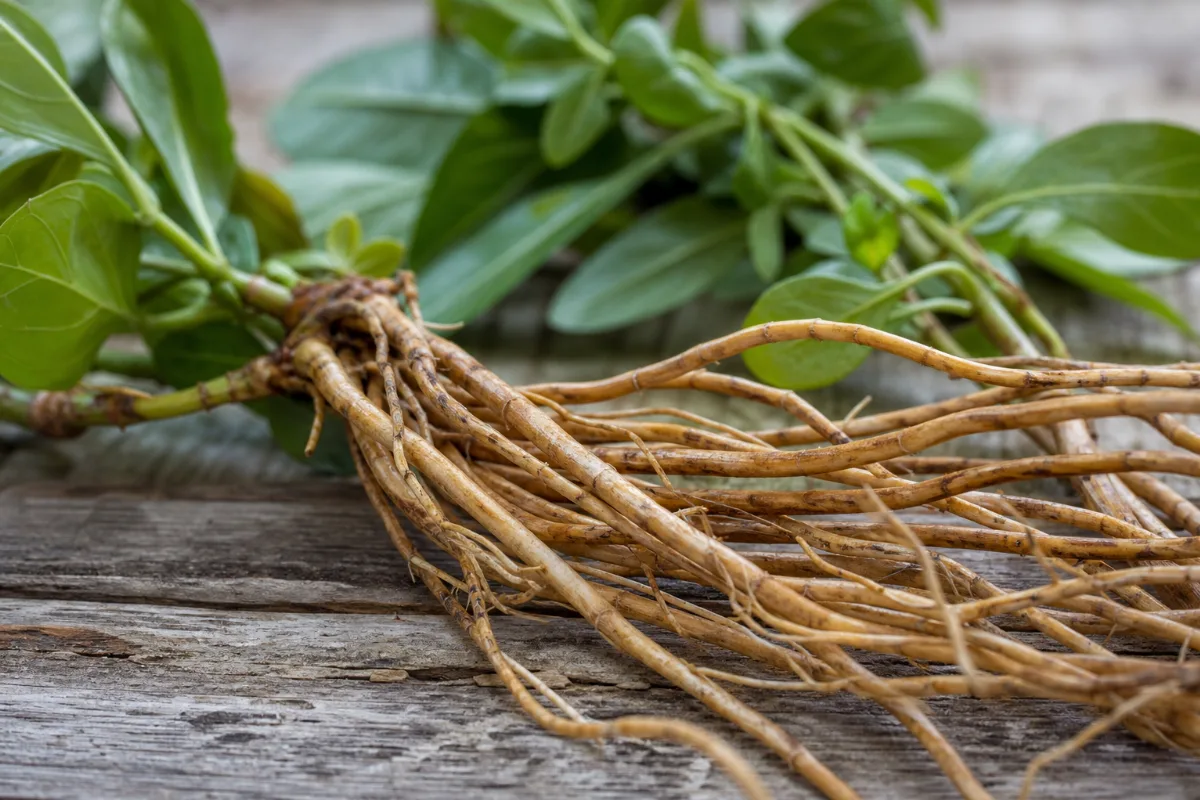
Herbs & Botanicals · Ayurvedic cooling root
Sariva
Hemidesmus indicus · also called Indian sarsaparilla, anantmul, anantamul, sariva
Sariva is the root of an Indian climbing plant, used in Ayurveda as a cooling, 'blood purifying' herb for skin, fever and urinary complaints. Research in people is almost nonexistent; nearly all findings come from rats and lab dishes. It is not the same plant as Western sarsaparilla. The key caution is that its effects on blood sugar, kidneys and medicines are untested in people.
General information, not medical advice. Last substantive update · Not medically reviewed. A named clinician has not signed off on this page. How this page is made
About Sariva
Sariva is the root of Hemidesmus indicus, a traditional Ayurvedic cooling and 'blood purifying' herb. Evidence in people is essentially absent; safety is unstudied.
What it is
Sariva, also called Indian sarsaparilla or anantmul, is the root of Hemidesmus indicus, a climber in the Apocynaceae family. The root contains an aromatic aldehyde (2-hydroxy-4-methoxybenzaldehyde), triterpenes such as lupeol and tannins.
Not the same as Western sarsaparilla
Sarsaparilla sold in the West is usually Smilax, a different plant in a different family. Sariva is also a different plant from Cryptolepis. Check the Latin name on the label. Our page on true sarsaparilla covers Smilax.
What it is used for
Traditionally for skin diseases, fever, urinary complaints, inflammation and as a 'blood purifier'. Nandy and colleagues' 2020 review lists many more uses, and no human trial in its abstract.
What the research shows
We found no human trial of the root. The one human item is a Sri Lankan food test of a leaf porridge, which had a low glycaemic index. The rest is rats and dishes: a root compound lowered blood sugar, an extract improved liver markers after alcohol, extracts protected kidneys from two toxic drugs, and an isolated compound acted against MRSA. Each of these may or may not hold in people.
At a glance
Traditional uses history, not proof
- Skin diseases and 'blood purifying'
- Fever and cooling
- Urinary complaints
- Inflammation and joint pain
Studied for research
- Blood sugar: rat compound and one leaf-porridge food test, very low
- Liver protection: rats only
- Kidney protection and urine output: rats only, studies disagree
- Germ-killing and cancer-cell effects: laboratory only
- Skin, blood purifying, fever: traditional only, no trial
Main compounds
- 2-Hydroxy-4-methoxybenzaldehyde
- Lupeol
- Beta-amyrin palmitate
- Tannins
Common forms
- Dried root powder
- Root decoction
- Syrup or cooling drink
- Multi-herb Ayurvedic formulas
- Lab extracts
Research links: PubMed: Indian Sarsaparilla review of ethnobotany, chemistry and pharmacology (2020) · PubMed: Bioactive and therapeutic potential of the root (2013) · PubMed: Beta-amyrin palmitate lowers glucose in rats (2014) · PubMed: Green leafy porridges and glycaemic response (2013) · PubMed: Natriuretic and saluretic effects in rats (2011) · Research Library · Genes & Biomarkers Library
The plant and its history
- Accepted scientific name
- Hemidesmus indicus (L.) R.Br.
- Naming authority
- GBIF backbone: accepted species, exact match, confidence 97 (usageKey 8125676).
- Common names
- Sariva (Sanskrit/Hindi); Indian sarsaparilla (English); Anantmul (Hindi)
- Botanical family
- Apocynaceae (dogbane family). Older papers say Asclepiadaceae.
- Classification
- Plantae > Gentianales > Apocynaceae > Hemidesmus > Hemidesmus indicus
- Native range
- Not verified in a source read. The reviews describe use across the Indian subcontinent.
- Habitat
- Not verified.
- What the plant looks like
- Roots: The root (tuberous root) is the part used. Further description not verified.; Stems: Not verified.; Leaves: Leaves are eaten as porridge in Sri Lanka in one study.; Flowers: Not verified.; Fruit: Not verified.
- Cultivation
- Not verified.
- Harvest and processing
- Root is dried and powdered or boiled as a decoction (traditional). Not verified in a source read.
- Look-alikes and adulterants
- Name: Sarsaparilla (Smilax species); Note: Different plant, different family; sold as sarsaparilla in the West.; Name: Cryptolepis and other roots; Note: Different plants. Whether some are traded as sariva substitutes was not verified; a DNA-barcoding paper reports that substitutes exist.
- Sustainability and conservation
- Not verified.
Traditional use and history history, not clinical proof
| Tradition or era | Documented use | Source |
|---|---|---|
| Ayurveda and Indian traditional medicine | Root used for skin disease, fever, urinary disease, inflammation, as a 'blood purifier' and cooling herb. Also used in European medicine per the 2020 review. | p32007632 |
Traditional use shows how a plant was used. It does not show that a supplement works or is safe today.
What is inside, and how it may work
What the plant contains and how those compounds act in cells and animals. Laboratory and animal mechanisms are not proven effects in people.
Main compounds
| Compound | Family | Where it is concentrated | Activity studied | Level of evidence |
|---|---|---|---|---|
| 2-Hydroxy-4-methoxybenzaldehyde PubChem 69600 | aromatic aldehyde | Root | Acted against S. aureus and MRSA in dishes. 19 7 | Laboratory research |
| Lupeol PubChem 259846 | triterpene | Root (per our summary) | Studied in the lab; a triterpene found in the root. 20 3 | Laboratory research |
| Beta-amyrin palmitate PubChem 13915599 | triterpene ester | Root | Lowered glucose in rats. 18 10 | Animal research |
| Tannins | polyphenols | Root | Listed among constituents in our summary; no single PubChem record (a mixed class) and the figures were not read. 3 | Unspecified |
Mechanisms, receptors and pathways
| Target or pathway | Gene or receptor | What was found | Level |
|---|---|---|---|
| Bacterial cell membrane | Not specified | The isolated aldehyde damaged S. aureus membranes and removed preformed biofilm in dishes. 7 | Laboratory research |
| Mitochondrial pathway of cell death | Bax/Bcl-2 ratio | Root preparation reduced mitochondrial membrane potential in leukemia cells. 5 | Laboratory research |
| Gut glucose entry | Not specified | The isolated compound appears to block glucose entry from the gut in rats. 10 | Animal research |
Absorption, metabolism and elimination
- Absorption
- No human data.
- Distribution
- Not established.
- Metabolism
- Not established.
- Elimination
- Not established.
- Bioavailability
- Unknown.
Isolated compounds versus whole extracts
Most lab findings come from isolated compounds (the aldehyde, beta-amyrin palmitate) or solvent extracts. Traditional root powder and decoction have not been tested in the same way, so results do not carry over.
Nutritional composition
Not used as a food in the sources read, apart from leaf porridge in Sri Lanka and a sweet cooling drink in India (traditional).
1 very low certainty8 not enough evidence
What is Sariva good for?
The main proposed uses and how strong the human evidence is for each. 'Insufficient' means there are no human studies. Ratings are this profile's own reading, not formal grades.
Benefits, one by one
Each card is a research question, not a promise. Tap a goal to filter. Open a card to see the studies, doses and limits.
Skin conditions and the traditional 'blood purifier' idea
Not enough evidenceSariva root is a classic Ayurvedic 'blood purifier' and is used for skin diseases, fever and inflammation. We found no human trial of it for any skin condition. The idea is traditional only.
2 studiesTraditional forms are root powder and decoction. Studies used lab ext…
Studies, doses and limits
What the trials found
The 2020 and 2013 reviews list skin disease and blood purifying as traditional uses. Neither abstract describes a human trial. We found no controlled human study.
Results
No human results.
Effect sizes as reported
No effect sizes exist for people.
Why this rating
Traditional use only, with no controlled human data.
Form and dose studied
Traditional forms are root powder and decoction. Studies used lab extracts that differ from these.
Who was studied
None in people.
Limits
Cannot say whether it helps, harms or does nothing for skin disease. Skin disease needs proper diagnosis.
Why researchers looked
In Ayurveda the root is used for skin diseases, leprosy and psoriasis, and as a cooling, 'blood-cleansing' herb.
Traditional use
Used across India in traditional medicine, in decoctions, syrups and cooling drinks. 'Blood purifier' is a traditional term, not a measurable body process.
Proposed mechanism Preliminary mechanism
Reviews credit antioxidant, anti-inflammatory and antimicrobial activity seen in lab and animal work. None of this has been shown to clear skin disease in people.
A proposed mechanism does not show that the effect happens in people.
See the Safety tab. Do not use it in place of treatment for a skin condition, blood disease or infection.
Fever, 'cooling' and inflammation
Not enough evidenceSariva is known as a cooling herb for fever and inflammation in Ayurveda. The reviews list fever and inflammation among its traditional uses and lab findings, but no human fever or inflammation trial was found.
2 studiesNot applicable.
Studies, doses and limits
What the trials found
No human trial found. The 2013 review abstract lists antipyretic and anti-inflammatory activity from 'in vivo and in vitro studies' only.
Results
No human results.
Effect sizes as reported
None for people.
Why this rating
No human data.
Form and dose studied
Not applicable.
Who was studied
None in people.
Limits
A fever that lasts needs a doctor.
Why researchers looked
Fever and heat-related complaints are among the oldest uses.
Traditional use
Drunk as a decoction or sweet cooling drink in India.
Proposed mechanism Animal research
Reviews report anti-inflammatory and antipyretic activity in animals and cells.
A proposed mechanism does not show that the effect happens in people.
See the Safety tab.
Liver protection (animal studies)
Not enough evidenceIn rats given alcohol for 60 days, a root extract moved liver damage markers back towards normal. This has not been tested in people. Reviews list liver protection as a main property, but all of it is from animals and cells.
3 studiesEthanol root extract in rats.
Studies, doses and limits
What the trials found
No human study. Rat study: ethanol root extract, last 30 days of a 60-day ethanol feeding.
Results
Liver marker enzymes and fat oxidation were raised by ethanol; the extract brought antioxidant enzymes near normal and raised protein levels (rats).
Effect sizes as reported
No numbers are quoted here because only the abstract was read and it is truncated.
Why this rating
Rat evidence only. A separate toxicity study reported 'nonspecific changes in liver' (see Safety), so liver effects point both ways.
Form and dose studied
Ethanol root extract in rats.
Who was studied
Rats.
Limits
Rat results often do not carry over to people.
Why researchers looked
Ayurvedic 'blood purifier' use overlaps with liver complaints.
Traditional use
Not a documented traditional liver remedy in the sources we read; the link is mainly from lab studies.
Proposed mechanism Animal research
The authors link the effect to less fat oxidation and better antioxidant enzyme levels in rat liver.
A proposed mechanism does not show that the effect happens in people.
A different animal study found nonspecific liver changes. Do not use it to 'protect' the liver while drinking alcohol.
Blood sugar
Very low certaintyA compound from the root lowered blood sugar in rats. In people, the only data is a food test: a porridge made with sariva leaf had a low glycaemic index. That does not show the herb treats diabetes. Do not replace diabetes care with it.
3 studiesIsolated compound and leaf porridge. Neither is the usual root powder…
Studies, doses and limits
What the trials found
One human food test (volunteers, Sri Lanka; health status not in the abstract): sariva leaf porridge had a glycaemic index of 40 +/- 8 (low) and peak blood glucose fell 25 percent or more compared with the glucose control, as with the other leafy porridges tested. The porridge also contains rice and coconut milk, and the abstract frames these as leafy porridges, so the plant part is likely leaf rather than root (not confirmed). No trial in people with diabetes was found.
Results
Rat compound: lowered glucose in normal, alloxan-diabetic and streptozotocin-diabetic rats. Porridge: low glycaemic index.
Effect sizes as reported
Glycaemic index 40 +/- 8 for the leaf porridge; animal effect sizes not in the abstract.
Why this rating
One small food test on leaf (not root) and animal work on a single isolated compound.
Form and dose studied
Isolated compound and leaf porridge. Neither is the usual root powder or decoction.
Who was studied
Volunteers eating test meals (porridge); rats (compound).
Limits
Not a treatment trial. Root has not been tested for blood sugar in people.
Why researchers looked
Diabetes is on the traditional list of uses.
Traditional use
Listed among traditional uses in the 2020 review.
Proposed mechanism Animal research
In rats the isolated compound beta-amyrin palmitate appeared to block glucose entering from the gut.
A proposed mechanism does not show that the effect happens in people.
Could add to glucose-lowering medicines, in theory. Tell your diabetes team before using it.
Kidneys and urinary complaints (animal studies)
Not enough evidenceExtracts protected rat kidneys from two kidney-toxic drugs, and one rat study found a diuretic (water-passing) effect while another found none. No human study exists. The urinary use is traditional.
4 studiesRoot powder, water and ethanol extracts in rats.
Studies, doses and limits
What the trials found
No human study. Animal studies only (see results).
Results
Rats: gentamicin kidney injury improved with root powder; cisplatin kidney injury improved (serum urea 41.3 to 34.54 mg/dL, creatinine 1.1 to 0.76 mg/dL with H. indicus extract). Urine output rose in one rat study (higher dose of water or ethanol extract) but another study of water extract found no significant diuretic effect.
Effect sizes as reported
See results; rat numbers only.
Why this rating
Animal only, and the diuretic findings disagree.
Form and dose studied
Root powder, water and ethanol extracts in rats.
Who was studied
Rats and mice.
Limits
Rat findings do not tell us how it acts in people with kidney disease.
Why researchers looked
Urinary disease and burning urine are traditional uses.
Traditional use
Used traditionally in urinary complaints.
Proposed mechanism Animal research
Reports of antioxidant protection in rat kidney tissue; possible effects on salt and water handling were mixed.
A proposed mechanism does not show that the effect happens in people.
If you have kidney disease or take a diuretic, lithium or a kidney-toxic drug, ask a clinician before using it. Do not assume it is protective.
Germ-killing effects in the laboratory
Not enough evidenceIn dishes, a compound from the root (2-hydroxy-4-methoxybenzaldehyde) acted against Staphylococcus aureus including MRSA, and a root extract slowed herpes simplex viruses. This has not been tested in people with infections.
3 studiesIsolated compound and extract in dishes.
Studies, doses and limits
What the trials found
No human trial.
Results
Lab: minimum inhibitory concentration 1024 ug/mL for the isolated compound; about 80 percent of preformed MRSA biofilm removed; made MRSA more sensitive to tetracycline in dishes.
Effect sizes as reported
Lab numbers only.
Why this rating
Lab studies on an isolated compound and a hydroalcoholic extract.
Form and dose studied
Isolated compound and extract in dishes.
Who was studied
Bacteria and viruses in cell cultures.
Limits
Concentrations that work in a dish may not be reachable in the body.
Why researchers looked
Skin infections, sexually transmitted infections and fever are traditional uses.
Traditional use
The root is used in traditional treatment of infections.
Proposed mechanism Laboratory research
The compound damaged bacterial cell membranes and removed most of a preformed MRSA biofilm in dishes; the extract blocked early steps of herpes virus infection in cells.
A proposed mechanism does not show that the effect happens in people.
Do not use it to treat an infection; see a clinician.
Cancer cells in the laboratory
Not enough evidenceA root preparation killed leukemia and colorectal cancer cells in culture and boosted three chemotherapy drugs in cells. This is cell-culture work only. It does not show that the herb treats cancer.
2 studiesRoot preparations in cell culture.
Studies, doses and limits
What the trials found
No human trial.
Results
Lab: killed leukemia cell lines; enhanced methotrexate, 6-thioguanine and cytarabine in cells; induced immunogenic death markers in DLD1 colorectal cells.
Effect sizes as reported
Not quantified here.
Why this rating
Cell culture only.
Form and dose studied
Root preparations in cell culture.
Who was studied
Human cancer cell lines.
Limits
Cells in a dish are not people. No animal-to-human step shown.
Why researchers looked
Cancer is on the traditional list of uses.
Traditional use
Listed in the 2020 review among traditional uses.
Proposed mechanism Laboratory research
In leukemia cells the preparation reduced mitochondrial membrane potential and raised the Bax/Bcl-2 ratio; in colorectal cells it triggered signs of immunogenic cell death.
A proposed mechanism does not show that the effect happens in people.
If you have cancer or take chemotherapy, tell your oncology team before using it, because it may change how drugs act.
Antioxidant activity
Not enough evidenceThe 2013 review calls antioxidant and antimicrobial effects the best documented, but this means test-tube and animal measures. It is not proof of any health benefit in people.
2 studiesExtracts.
Studies, doses and limits
What the trials found
No human trial.
Results
None for people.
Effect sizes as reported
None.
Why this rating
Lab and animal measures only.
Form and dose studied
Extracts.
Who was studied
Not applicable.
Limits
Antioxidant tests do not predict health effects.
Why researchers looked
General 'cleansing' and cooling uses.
Traditional use
Not separate from the traditional uses above.
Proposed mechanism Laboratory research
Phenolic and triterpene compounds neutralise free radicals in test tubes.
A proposed mechanism does not show that the effect happens in people.
None specific.
Gut water absorption and diarrhoea (rat)
Not enough evidenceIn rat gut, the root's water extract increased absorption of water, sodium and potassium, which led the authors to suggest it for oral rehydration drinks. This is an idea, not a tested treatment. The ethanol extract did the opposite.
2 studiesWater extract of the root, not tested in people.
Studies, doses and limits
What the trials found
No human trial.
Results
Rat gut sac: water extract raised water, sodium and potassium absorption; ethanol extract lowered them; no effect on gut motility in mice.
Effect sizes as reported
Not quantified here.
Why this rating
One rat paper.
Form and dose studied
Water extract of the root, not tested in people.
Who was studied
Rats and mice.
Limits
Results depend on the extract used.
Why researchers looked
Dysentery and diarrhoea appear among traditional uses.
Traditional use
Listed in the 2020 review.
Proposed mechanism Animal research
The water extract appeared to increase absorption of water and salts across rat jejunum.
A proposed mechanism does not show that the effect happens in people.
Do not use it in place of rehydration salts or care for diarrhoea.
Connections to the rest of health
How Sariva connects to the rest of our health knowledge graph. Every link says what kind of connection it is. A safety link (for example to the liver) is a warning, not a benefit. A study that merely mentions a topic never creates a benefit link.
Explore every connection: goals, body systems, organs, symptoms, genes
A. Wellness goals
| Connected to | Kind of connection | Evidence status | Context | Studies |
|---|---|---|---|---|
| Healthy Skin | Traditional use | Not enough evidence | Skin conditions and the traditional 'blood purifier' idea: Sariva root is a classic Ayurvedic 'blood purifier' and is used for skin diseases, fever and inflammation. We found no human trial of it for any skin condition. The idea is traditional only. | 11 3 |
| Detoxification Support | Traditional use | Not enough evidence | Skin conditions and the traditional 'blood purifier' idea: Sariva root is a classic Ayurvedic 'blood purifier' and is used for skin diseases, fever and inflammation. We found no human trial of it for any skin condition. The idea is traditional only. | 11 3 |
| Inflammation Balance | Traditional use | Not enough evidence | Fever, 'cooling' and inflammation: Sariva is known as a cooling herb for fever and inflammation in Ayurveda. The reviews list fever and inflammation among its traditional uses and lab findings, but no human fever or inflammation trial was found. | 3 11 |
| Liver Support | Potential benefit | Not enough evidence | Liver protection (animal studies): In rats given alcohol for 60 days, a root extract moved liver damage markers back towards normal. This has not been tested in people. Reviews list liver protection as a main property, but all of it is from animals and cells. | 14 1 11 |
| Blood Sugar Balance | Potential benefit | Very low certainty | Blood sugar: A compound from the root lowered blood sugar in rats. In people, the only data is a food test: a porridge made with sariva leaf had a low glycaemic index. That does not show the herb treats diabetes. Do not replace diabetes care with it. | 10 15 11 |
| Detoxification Support | Potential benefit | Not enough evidence | Kidneys and urinary complaints (animal studies): Extracts protected rat kidneys from two kidney-toxic drugs, and one rat study found a diuretic (water-passing) effect while another found none. No human study exists. The urinary use is traditional. | 8 13 6 4 |
| Immune Support | Potential benefit | Not enough evidence | Germ-killing effects in the laboratory: In dishes, a compound from the root (2-hydroxy-4-methoxybenzaldehyde) acted against Staphylococcus aureus including MRSA, and a root extract slowed herpes simplex viruses. This has not been tested in people with infections. | 7 2 3 |
| Cellular Protection | Potential benefit | Not enough evidence | Cancer cells in the laboratory: A root preparation killed leukemia and colorectal cancer cells in culture and boosted three chemotherapy drugs in cells. This is cell-culture work only. It does not show that the herb treats cancer. | 5 16 |
| Cellular Protection | Not enough evidence | Antioxidant activity: The 2013 review calls antioxidant and antimicrobial effects the best documented, but this means test-tube and animal measures. It is not proof of any health benefit in people. | 3 11 | |
| Digestive Support | Not enough evidence | Gut water absorption and diarrhoea (rat): In rat gut, the root's water extract increased absorption of water, sodium and potassium, which led the authors to suggest it for oral rehydration drinks. This is an idea, not a tested treatment. The ethanol extract did the opposite. | 4 11 |
B. Body systems
| Connected to | Kind of connection | Evidence status | Context | Studies |
|---|---|---|---|---|
| Integumentary System | Biological association | Not enough evidence | Studied for: Skin conditions and the traditional 'blood purifier' idea Studied for: Antioxidant activity | 11 3 |
| Immune System | Biological association | Not enough evidence | Studied for: Fever, 'cooling' and inflammation Studied for: Germ-killing effects in the laboratory | 3 11 7 2 5 16 |
| Hepatic System | Biological association | Not enough evidence | Studied for: Liver protection (animal studies) | 14 1 11 |
| Endocrine System | Biological association | Very low certainty | Studied for: Blood sugar | 10 15 11 |
| Urinary System | Biological association | Not enough evidence | Studied for: Kidneys and urinary complaints (animal studies) | 8 13 6 4 |
| Digestive System | Biological association | Not enough evidence | Studied for: Gut water absorption and diarrhoea (rat) | 4 11 |
I. Biomarkers
| Connected to | Kind of connection | Evidence status | Context | Studies |
|---|---|---|---|---|
| Blood glucose | Biological association | Very low certainty | Measured in trials: lowered. A lab change is not the same as a health benefit. | 10 15 |
| Kidney markers (urea, creatinine) | Biological association | Not enough evidence | Measured in trials: lowered. A lab change is not the same as a health benefit. | 13 |
| Urine output (rats) | Biological association | Mixed findings | Measured in trials: raised. A lab change is not the same as a health benefit. | 6 4 |
| Liver damage markers | Biological association | Not enough evidence | Measured in trials: lowered. A lab change is not the same as a health benefit. | 14 1 |
| Bacterial growth (S. aureus MIC) | Biological association | Not enough evidence | Measured in trials: lowered. A lab change is not the same as a health benefit. | 7 |
| Cancer cell survival | Biological association | Not enough evidence | Measured in trials: lowered. A lab change is not the same as a health benefit. | 5 |
K. Biological pathways
| Connected to | Kind of connection | Evidence status | Context | Studies |
|---|---|---|---|---|
| Intrinsic (mitochondrial) apoptosis | Preliminary mechanism | In vitro | Bax/Bcl-2 ratio and mitochondrial depolarisation in leukemia cells. | 5 |
L. Active compounds
| Connected to | Kind of connection | Evidence status | Context | Studies |
|---|---|---|---|---|
| 2-Hydroxy-4-methoxybenzaldehyde | Biological association | In vitro | Acted against S. aureus and MRSA in dishes. Preparation or compound: Root |
19 7 |
| Lupeol | Biological association | In vitro | Studied in the lab; a triterpene found in the root. Preparation or compound: Root (per our summary) |
20 3 |
| Beta-amyrin palmitate | Biological association | Animal | Lowered glucose in rats. Preparation or compound: Root |
18 10 |
| Tannins | Biological association | Unspecified | Listed among constituents in our summary; no single PubChem record (a mixed class) and the figures were not read. Preparation or compound: Root |
3 |
Each connection is stored with the ingredient, the connected record, the kind of connection, the evidence status, the supporting studies, the preparation or compound involved, and a review date (last reviewed October 25, 2026).
Evidence at a glance: what changed in 6 lab markers
Tap a number to show only those markers. Counts are markers, not people.
The evidence
The research centre for Sariva. Every record here was checked against PubMed or the publisher's page; we never list a study we have not verified.
Evidence by outcome
Bars show how many studies we found for each outcome, not how well it works. People are added up across trials only (reviews are not added, to avoid double counting).
How we rate evidence
High certainty
Several well-run trials or reviews agree; further research is unlikely to change the picture much.
Moderate certainty
Good trials point the same way, but some doubt remains.
Low certainty
Small, short or inconsistent trials. The finding could change with better research.
Very low certainty
Very little or very weak human data. Treat as a possibility only.
Mixed findings
Trials or reviews disagree with each other.
Not enough evidence
Not enough human research to say either way.
Evidence against
Good research found no benefit, or found harm.
We take the reviewers' own risk-of-bias and GRADE statements where they exist, and otherwise judge from study size, design, consistency, directness and whether a product matches what is sold. Many publications do not make evidence high. Method note: We started from our existing sariva summary, re-read PubMed abstracts for the main studies and added a handful of new ones on diuretic effect, gut action, a food test and product quality. We checked the GBIF accepted name and PubChem compounds. Certainty ratings are the compiler's reading. No study is cited that we could not verify.
Study library: every study we checked 22
| Study | Design | People | Product, dose, length | Result |
|---|---|---|---|---|
| Austin 2002 Acute and sub-acute toxicity studies of Hemidesmus indicus var. pubescens R.Br. Anc Sci Life · PMID 22557084 |
Animal research animal |
Crude aqueous ethanolic root extract, oral and intraperitoneal | Methods, limits and fundingFunding and conflicts: Not stated in the abstract. Read: abstract | |
| Bonvicini 2018 Hemidesmus indicus (L.) R. Br. extract inhibits the early step of herpes simplex type 1 and type 2 replication. New Microbiol · PMID 29874387 |
Laboratory research virus/cells |
Hydroalcoholic root extract against HSV-1 and HSV-2 in cell culture | Methods, limits and fundingFunding and conflicts: Not stated in the abstract. Read: abstract | |
| Das 2013 The bioactive and therapeutic potential of Hemidesmus indicus R. Br. (Indian Sarsaparilla) root. Phytother Res · PMID 22887725 · DOI |
Narrative review n/a |
Review | Methods, limits and fundingFunding and conflicts: Not stated in the abstract. Read: abstract | |
| Evans 2004 Enhancement in the absorption of water and electrolytes from rat intestine by Hemidesmus indicus R. Br. root (water extract). Phytother Res · PMID 15305307 · DOI |
Animal research rat/mouse |
Rat jejunal sac; rats; mice | Methods, limits and fundingFunding and conflicts: Not stated in the abstract. Read: abstract | |
| Fimognari 2011 Mitochondrial pathway mediates the antileukemic effects of Hemidesmus indicus, a promising botanical drug. PLoS One · PMID 21738701 · DOI |
Laboratory research human cells |
Leukemia cell lines | Methods, limits and fundingFunding and conflicts: Not stated in the abstract. Read: abstract | |
| Gadge 2011 Natriuretic and saluretic effects of Hemidesmus indicus R. Br. root extracts in rats. Indian J Pharmacol · PMID 22144781 · DOI |
Animal research rat |
Dehydrated rats, single dose | Methods, limits and fundingFunding and conflicts: Not stated in the abstract. Read: abstract | |
| Kannappan 2023 Antibacterial activity of 2-hydroxy-4-methoxybenzaldehyde and its possible mechanism against Staphylococcus aureus. J Appl Microbiol · PMID 37422440 · DOI |
Laboratory research bacteria |
S. aureus including MRSA in dishes | Methods, limits and fundingFunding and conflicts: Not stated in the abstract. Read: abstract | |
| Kotnis 2004 Renoprotective effect of Hemidesmus indicus, a herbal drug used in gentamicin-induced renal toxicity. Nephrology (Carlton) · PMID 15189175 · DOI |
Animal research rat/mouse |
Mice (toxicity) and rats (gentamicin kidney injury) | Methods, limits and fundingFunding and conflicts: Not stated in the abstract. Read: abstract | |
| Kulhari 2013 Investigation of heavy metals in frequently utilized medicinal plants collected from environmentally diverse locations of north western India. Springerplus · PMID 24386622 · DOI |
Laboratory survey n/a |
Stem and leaf samples of ten medicinal plants including H. indicus, Haryana and Rajasthan | Methods, limits and fundingFunding and conflicts: Not stated in the abstract. Read: abstract | |
| Nair 2014 Promising anti-diabetes mellitus activity in rats of beta-amyrin palmitate isolated from Hemidesmus indicus roots. Eur J Pharmacol · PMID 24726843 · DOI |
Animal research rat |
Normal rats and alloxan- or streptozotocin-diabetic rats | Methods, limits and fundingFunding and conflicts: Not stated in the abstract. Read: abstract | |
| Nandy 2020 Indian Sarsaparilla (Hemidesmus indicus): Recent progress in research on ethnobotany, phytochemistry and pharmacology. J Ethnopharmacol · PMID 32007632 · DOI |
Narrative review n/a |
Review of the literature up to 2019 | Methods, limits and fundingFunding and conflicts: Not stated in the abstract. Read: abstract | |
| Rai 2012 DNA barcoding of authentic and substitute samples of herb of the family Asparagaceae and Asclepiadaceae based on the ITS2 region. J Ayurveda Integr Med · PMID 23125510 · DOI |
Laboratory method n/a |
Dry root samples, authentic and substitute | Methods, limits and fundingFunding and conflicts: Not stated in the abstract. Read: abstract | |
| Sandeep 2010 Amelioration of cisplatin-induced nephrotoxicity by extracts of Hemidesmus indicus and Acorus calamus. Pharm Biol · PMID 20645815 · DOI |
Animal research rat |
Rats given cisplatin | Methods, limits and fundingFunding and conflicts: Not stated in the abstract. Read: abstract | |
| Saravanan 2008 Hemidesmus indicus protects against ethanol-induced liver toxicity. Cell Mol Biol Lett · PMID 17952378 · DOI |
Animal research rat |
Rats given ethanol for 60 days | Methods, limits and fundingFunding and conflicts: Not stated in the abstract. Read: abstract | |
| Senadheera SPAS 2013 Green leafy porridges: how good are they in controlling glycaemic response? Int J Food Sci Nutr · PMID 22849311 · DOI |
Controlled trial |
Volunteers eating test meals (number and health status not in the abstract) | Methods, limits and fundingFunding and conflicts: Not stated in the abstract. Read: abstract | |
| Turrini 2018 Hemidesmus indicus induces immunogenic death in human colorectal cancer cells. Oncotarget · PMID 29849952 · DOI |
Laboratory research human cells |
DLD1 colorectal cancer cell line, monocytes and dendritic cells | Methods, limits and fundingFunding and conflicts: Not stated in the abstract. Read: abstract | |
| s-gbif-hemidesmus GBIF Backbone Taxonomy: Hemidesmus indicus (L.) R.Br. (usageKey 8125676) · Source |
Database record n/a |
Methods, limits and fundingRead: full-record | ||
| s-pubchem-amyrin-palmitate PubChem: Beta-Amyrin Palmitate (CID 13915599, C46H80O2) · Source |
Database record n/a |
Methods, limits and fundingRead: full-record | ||
| s-pubchem-hmb PubChem: 2-Hydroxy-4-methoxybenzaldehyde (CID 69600, C8H8O3) · Source |
Database record n/a |
Methods, limits and fundingRead: full-record | ||
| s-pubchem-lupeol PubChem: Lupeol (CID 259846, C30H50O) · Source |
Database record n/a |
Methods, limits and fundingRead: full-record | ||
| s-regulators-none Regulator search: EMA/HMPC, NCCIH, LiverTox, LactMed for Hemidesmus indicus · Source |
Search record n/a |
Methods, limits and fundingRead: searched-not-found | ||
| s-site-sarsaparilla alternativemed.com: Sarsaparilla (Smilax) page · Source |
Site page n/a |
Methods, limits and fundingRead: status-checked |
What we do not know yet
- No human trial of the root for any use.
- No human safety, pregnancy, breastfeeding or interaction data.
- Rat studies disagree on diuretic effect and have not been repeated.
- No EMA, NCCIH, LiverTox or LactMed entry found; WHO monograph not read.
- Quality and standardisation of commercial products unknown.
How new research is added
New studies are found by a saved PubMed search and placed into the data files, then this page is rebuilt.
Lab markers
What changed in blood or saliva tests during trials. A changed number is not the same as feeling or being healthier, and we give no "normal ranges".
Metabolic 1
Blood glucose
Lowered in trials
Sugar in the blood.
Very low certaintyResults and what it means
Why it was measured
Tracks diabetes control.
Statistical vs. clinical meaning
A test-meal and animal finding; not a treatment result.
Safety implication
Could add to diabetes medicines (theory).
| Study | Result | People | Product |
|---|---|---|---|
| 10 | Lowered in normal and diabetic rats by an isolated compound (no numbers in the abstract) | Rats | Beta-amyrin palmitate from the root |
| 15 | Peak glucose reduced by 25 percent or more versus glucose control after a leaf porridge; glycaemic index 40 +/- 8 | Volunteers eating test meals | H. indicus leaf porridge with rice and coconut milk |
Organ function 1
Liver damage markers
Lowered in trials
Blood or tissue markers of liver damage.
Not enough evidenceResults and what it means
Why it was measured
Used to detect liver injury.
Statistical vs. clinical meaning
Rat finding only; another animal toxicity paper reported nonspecific liver changes.
Safety implication
See Safety tab.
| Study | Result | People | Product |
|---|---|---|---|
| 14 | Ethanol raised liver marker enzymes; the extract brought related measures towards normal (abstract truncated, no numbers read) | Rats fed ethanol | Ethanol root extract |
Other 4
Kidney markers (urea, creatinine)
Lowered in trials
Waste products the kidneys clear.
Not enough evidenceResults and what it means
Urine output (rats)
Raised in trials
How much urine is made.
Mixed findingsResults and what it means
Why it was measured
A sign of a diuretic effect.
Statistical vs. clinical meaning
Two rat studies disagree.
Safety implication
Might matter with water pills or lithium (theory).
Bacterial growth (S. aureus MIC)
Lowered in trials
The lowest concentration that stops growth in a dish.
Not enough evidenceResults and what it means
Why it was measured
Lab measure of antibacterial strength.
Statistical vs. clinical meaning
A high MIC suggests modest potency; lab only.
Safety implication
None known.
| Study | Result | People | Product |
|---|---|---|---|
| 7 | MIC 1024 ug/mL; about 80 percent of preformed MRSA biofilm removed | S. aureus and MRSA in dishes | Isolated 2-hydroxy-4-methoxybenzaldehyde |
Cancer cell survival
Lowered in trials
How many cells stay alive after treatment.
Not enough evidenceResults and what it means
Why it was measured
Lab measure of killing cells.
Statistical vs. clinical meaning
Cell culture only.
Safety implication
May alter how chemotherapy works (cells only).
| Study | Result | People | Product |
|---|---|---|---|
| 5 | Cell death with loss of mitochondrial membrane potential and higher Bax/Bcl-2 ratio; enhanced three chemotherapy drugs | Leukemia cell lines | Root preparation |
Safety
What studies and official sources say about side effects, medicines and who should check first. Each point shows what kind of evidence it comes from.
Main points to know 6
- There is almost no human safety information. We found no human safety trial, no case report of harm, no interaction study and no regulator document for sariva (Hemidesmus indicus). That is an absence of data, not proof it is safe. Use with caution and tell your doctor or pharmacist. Absence of evidence 21 11
- Animal studies point to possible liver changes. One rat extract study reported 'nonspecific changes in liver'. Another rat study found a liver-protective effect. Neither tells us about people. If you have liver disease, ask a clinician first. Animal research 1 14
- Diabetes medicines. A root compound lowered blood sugar in rats, and a leaf porridge had a low glycaemic index in a food test. In theory sariva could add to the effect of diabetes medicines and cause low blood sugar. Not shown in people. Pharmacological theory 10 15
- Water pills, kidney disease and lithium. Rat studies disagree on whether root extracts act as a diuretic. If it does change salt and water handling, it could in theory matter with water pills, with kidney disease and with lithium, whose blood levels depend on salt and water balance. No human data exist. Pharmacological theory 6 4
- Pregnancy and breastfeeding: avoid unless a clinician agrees. No pregnancy or breastfeeding data were found. Menorrhagia (heavy periods) appears among its traditional uses, which does not show safety. Avoid unless a clinician agrees. Absence of evidence 11 21
- Do not confuse it with Western sarsaparilla (Smilax). Sariva (Indian sarsaparilla) is Hemidesmus indicus, a plant in the Apocynaceae family. 'Sarsaparilla' sold in the West is usually Smilax, a different plant. Check the Latin name on the label. Database record 17 22
Side effects 3
| Effect | How often | Severity and recovery | Evidence |
|---|---|---|---|
| No human adverse effects recorded in the sources read The 2020 review abstract covers toxicology but gives no human adverse-event data. | Not established | unknown unknown | Absence of evidence 21 11 |
| Nonspecific liver changes in animals The abstract gives no species, dose or detail. | Not established | unknown unknown | Animal research 1 |
| Low acute toxicity in mice Root powder was called relatively safe in mice up to 7 g per kg body weight. This cannot be turned into a safe human amount. | Not established | none seen at tested levels not applicable | Animal research 8 |
Liver
No LiverTox entry was found (an NCBI Books search returned no match). There is no human liver case report in the sources read. In animals, one extract study reported nonspecific liver changes and another reported protection against ethanol injury. Human liver safety is unknown. 1 14 21
How often. No frequency is available.
Monitoring. No agency monitoring advice was found. Stop and seek care for yellow skin or eyes, dark urine, pale stools or severe tiredness.
This is a safety connection. It is not evidence that Sariva supports liver health.
Medicines and supplements 5
| With | Why it matters | Importance | Evidence | What to do |
|---|---|---|---|---|
| Diabetes medicines (insulin, metformin, sulfonylureas and others) prescription | A root compound lowered glucose in rats and appeared to block gut glucose entry; a leaf porridge had a low glycaemic index. | Unknown in people; the concern is low blood sugar. | Pharmacological theory Not enough evidence 10 15 | Tell your diabetes team before using it and check blood sugar as advised. |
| Diuretics ('water pills'), lithium and other kidney-cleared medicines prescription | One rat study found more urine and urinary sodium and potassium; another found no diuretic effect. | Unknown. Lithium blood levels depend on salt and water balance, so any herb that shifts it is a theoretical concern. | Pharmacological theory Not enough evidence 6 4 | Ask a pharmacist, especially if you take lithium. |
| Blood thinners (warfarin, apixaban, rivaroxaban) and antiplatelets (aspirin, clopidogrel) prescription | No data on platelet or clotting effects of sariva were found. | Unknown. Absence of data does not mean no interaction. | Absence of evidence Not enough evidence 21 | Tell the clinician who manages your blood thinner. |
| Chemotherapy and kidney-toxic drugs (cisplatin, gentamicin) prescription | In cells the root preparation enhanced three chemotherapy drugs; in rats extracts reduced cisplatin and gentamicin kidney injury. | Unknown in people. It might change drug effect or toxicity. | Laboratory research Not enough evidence 5 8 13 | Do not combine with cancer treatment unless your oncology team agrees. |
| Other herbs and Ayurvedic formulas herb | Sariva is an ingredient in several multi-herb formulas, so combined effects and side effects cannot be credited to it alone. | Unknown. | Clinical judgement Not enough evidence 11 | Show product labels to your pharmacist. |
Who should check first 4
| Situation | Advice | Evidence |
|---|---|---|
| Pregnancy and breastfeeding | Avoid unless a clinician agrees. No data were found. | Absence of evidence 21 |
| Children | No data. Ask a paediatrician. | Absence of evidence 21 |
| Liver disease, kidney disease | Ask a clinician first; human safety unknown and animal liver signals are mixed. | Animal research 1 14 |
| Diabetes treated with medicine, or lithium treatment | Talk to your prescriber first. | Pharmacological theory 10 6 |
Overdose, product quality and regulators
Summary. Only animal data exist. Mice tolerated root powder up to 7 g per kg body weight in one study, and a separate extract study reported nonspecific liver changes.
Animal. Mice: 'relatively safe up to 7 g/kg' (root powder). Another study of an aqueous-ethanolic extract gave oral and injected doses and reported nonspecific changes in liver; details are not in the abstract.
Human doses studied. No human dose studies of the root were found.
High dose or long term signals. Not studied in people.
Overdose response. Not described.
Genotoxicity. Not found in sources read.
Toxic plant parts. Root is the part used. Toxicity of stem, leaf or latex was not found; leaves are eaten as porridge in Sri Lanka in one study, which does not show safety.
Ayurvedic herbs are often misidentified or substituted, and a DNA-barcoding paper found H. indicus can be told from substitute samples. A survey of stems and leaves of ten Indian plants including H. indicus found chromium above the WHO limit in some industrial-area samples, naming two other plants. Quality of commercial sariva was not tested.
Substitution. Ayurvedic herbal drugs are often misidentified or adulterated; DNA barcoding can separate H. indicus from substitute samples (substitute plants not named in the abstract). 12
Heavy metals. Heavy metals (Mn, Cr, Pb, Fe, Cd, Co, Zn, Ni, Hg) were measured in stem and leaf of ten plants including H. indicus; all but chromium were within limits, and over-limit chromium was named only for Bacopa and Withania. 9
Name confusion. Hemidesmus indicus (Apocynaceae) is a different plant from Smilax sarsaparilla and from Cryptolepis. Whether Cryptolepis or other roots are sold under the name sariva was not verified. 17 22
| Body | Action | Date |
|---|
When to get medical help
- Yellow skin or eyes, very dark urine, pale stools or severe tiredness (possible liver trouble).
- Signs of low blood sugar if you take diabetes medicine: shaking, sweating, confusion.
- Rash, swelling of the face or throat, or trouble breathing (allergic reaction).
- Much less urine, or swelling in the legs.
Stop the supplement and contact a clinician or emergency service. In the US, Poison Control is 1-800-222-1222.
General information only, not medical advice. Ask a clinician or pharmacist before use, especially with medicines, in pregnancy or with a health condition. See the Natural Remedy Safety guide.
Frequently asked questions
What is sariva?
Does sariva purify the blood?
Is there any human research?
Does it lower blood sugar?
Does it protect the liver?
Is it a diuretic, and is it safe for the kidneys?
Is it the same as sarsaparilla?
Is it safe in pregnancy or while breastfeeding?
No safety data were found. Avoid it unless a clinician agrees.
Can it interact with medicines?
Does it kill bacteria or cancer?
Are there quality problems with products?
How much should I take?
This page does not give amounts, because the evidence is too weak to set them. Ask a doctor or pharmacist, especially if you take medicines or have liver or kidney disease.
Explore by health goal
Detoxification SupportCellular ProtectionHealthy SkinInflammation BalanceLiver SupportBlood Sugar BalanceImmune SupportDigestive Support
Editorial transparency
- Written by
- AlternativeMed editorial team. Research compiled with AI assistance, then checked against PubMed records and plant and chemical databases.
- Medical review
- None. This page has not been reviewed by a physician or pharmacist.
- First published
- 2026-10-25
- Last substantive update
- 2026-10-25
- How we research
- We started from our existing sariva summary, re-read PubMed abstracts for the main studies and added a handful of new ones on diuretic effect, gut action, a food test and product quality. We checked the GBIF accepted name and PubChem compounds. Certainty ratings are the compiler's reading. No study is cited that we could not verify.
- How we rate evidence
- See "How we rate evidence" in the Evidence tab.
- Independence
- No product is promoted on this page. No affiliate links are shown.
Sources 22
Each source was opened and checked. Where we read only the abstract, it says so. The small numbers in the text point here.
- Austin A, Jegadeesan M. Acute and sub-acute toxicity studies of Hemidesmus indicus var. pubescens R.Br.. Anc Sci Life. 2002. PMID 22557084. (abstract)
- Bonvicini F, Lianza M, Mandrone M, et al.. Hemidesmus indicus (L.) R. Br. extract inhibits the early step of herpes simplex type 1 and type 2 replication.. New Microbiol. 2018. PMID 29874387. (abstract)
- Das S, Bisht SS. The bioactive and therapeutic potential of Hemidesmus indicus R. Br. (Indian Sarsaparilla) root.. Phytother Res. 2013. PMID 22887725. DOI 10.1002/ptr.4788. (abstract)
- Evans DA, Rajasekharan S, Subramoniam A. Enhancement in the absorption of water and electrolytes from rat intestine by Hemidesmus indicus R. Br. root (water extract).. Phytother Res. 2004. PMID 15305307. DOI 10.1002/ptr.1402. (abstract)
- Fimognari C, Lenzi M, Ferruzzi L, et al.. Mitochondrial pathway mediates the antileukemic effects of Hemidesmus indicus, a promising botanical drug.. PLoS One. 2011. PMID 21738701. DOI 10.1371/journal.pone.0021544. (abstract)
- Gadge NB, Jalalpure SS. Natriuretic and saluretic effects of Hemidesmus indicus R. Br. root extracts in rats.. Indian J Pharmacol. 2011. PMID 22144781. DOI 10.4103/0253-7613.89833. (abstract)
- Kannappan A, Jothi R, Tian X, et al.. Antibacterial activity of 2-hydroxy-4-methoxybenzaldehyde and its possible mechanism against Staphylococcus aureus.. J Appl Microbiol. 2023. PMID 37422440. DOI 10.1093/jambio/lxad144. (abstract)
- Kotnis MS, Patel P, Menon SN, et al.. Renoprotective effect of Hemidesmus indicus, a herbal drug used in gentamicin-induced renal toxicity.. Nephrology (Carlton). 2004. PMID 15189175. DOI 10.1111/j.1440-1797.2004.00247.x. (abstract)
- Kulhari A, Sheorayan A, Bajar S, et al.. Investigation of heavy metals in frequently utilized medicinal plants collected from environmentally diverse locations of north western India.. Springerplus. 2013. PMID 24386622. DOI 10.1186/2193-1801-2-676. (abstract)
- Nair SA, Sabulal B, Radhika J, et al.. Promising anti-diabetes mellitus activity in rats of beta-amyrin palmitate isolated from Hemidesmus indicus roots.. Eur J Pharmacol. 2014. PMID 24726843. DOI 10.1016/j.ejphar.2014.03.050. (abstract)
- Nandy S, Mukherjee A, Pandey DK, et al.. Indian Sarsaparilla (Hemidesmus indicus): Recent progress in research on ethnobotany, phytochemistry and pharmacology.. J Ethnopharmacol. 2020. PMID 32007632. DOI 10.1016/j.jep.2020.112609. (abstract)
- Rai PS, Bellampalli R, Dobriyal RM, et al.. DNA barcoding of authentic and substitute samples of herb of the family Asparagaceae and Asclepiadaceae based on the ITS2 region.. J Ayurveda Integr Med. 2012. PMID 23125510. DOI 10.4103/0975-9476.100177. (abstract)
- Sandeep D, Krishnan Nair CK. Amelioration of cisplatin-induced nephrotoxicity by extracts of Hemidesmus indicus and Acorus calamus.. Pharm Biol. 2010. PMID 20645815. DOI 10.3109/13880200903116048. (abstract)
- Saravanan N, Nalini N. Hemidesmus indicus protects against ethanol-induced liver toxicity.. Cell Mol Biol Lett. 2008. PMID 17952378. DOI 10.2478/s11658-007-0032-z. (abstract)
- Senadheera SPAS, Ekanayake S. Green leafy porridges: how good are they in controlling glycaemic response?. Int J Food Sci Nutr. 2013. PMID 22849311. DOI 10.3109/09637486.2012.710895. (abstract)
- Turrini E, Catanzaro E, Muraro MG, et al.. Hemidesmus indicus induces immunogenic death in human colorectal cancer cells.. Oncotarget. 2018. PMID 29849952. DOI 10.18632/oncotarget.25325. (abstract)
- . GBIF Backbone Taxonomy: Hemidesmus indicus (L.) R.Br. (usageKey 8125676). . . (full-record)
- . PubChem: Beta-Amyrin Palmitate (CID 13915599, C46H80O2). . . (full-record)
- . PubChem: 2-Hydroxy-4-methoxybenzaldehyde (CID 69600, C8H8O3). . . (full-record)
- . PubChem: Lupeol (CID 259846, C30H50O). . . (full-record)
- . Regulator search: EMA/HMPC, NCCIH, LiverTox, LactMed for Hemidesmus indicus. . . (searched-not-found)
- . alternativemed.com: Sarsaparilla (Smilax) page. . . (status-checked)