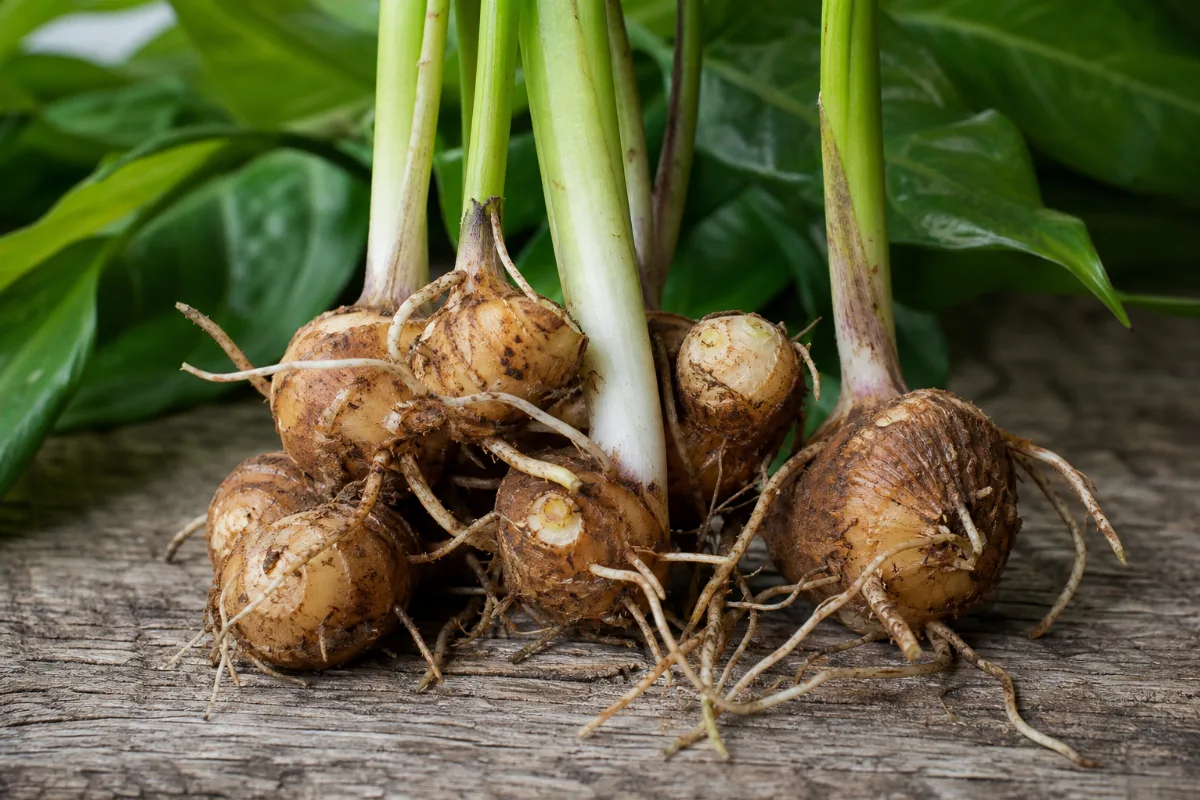
Herbs & Botanicals · Chinese herb for nausea and phlegm
Pinellia
Pinellia ternata · also called Ban xia, banxia, pinellia tuber
Pinellia is the tuber of an Asian plant, used in Chinese medicine for nausea, vomiting, cough and phlegm. Human evidence comes only from multi-herb formulas, where it was linked with better control of chemotherapy nausea when added to usual drugs. The raw tuber is toxic and must never be eaten, and pregnancy is a standing caution.
General information, not medical advice. Last substantive update · Not medically reviewed. A named clinician has not signed off on this page. How this page is made
About Pinellia
Pinellia (ban xia) is the tuber of Pinellia ternata, a Chinese herb for nausea, cough and phlegm. It is used only after processing, because the raw tuber contains needle-like calcium oxalate crystals and a lectin that badly irritate the mouth, throat and gut. The best human evidence is a meta-analysis of 22 trials of pinellia-containing formulas added to chemotherapy anti-nausea drugs, rated low certainty. Pregnancy, aconite remedies, sedatives and blood thinners all need caution. Ask a doctor or pharmacist about amounts.
What it is
Pinellia is the tuber of Pinellia ternata, a plant of the arum family used in Chinese, Japanese and Korean medicine. In Chinese it is called ban xia. It is sold as a dried tuber, as granules and inside multi-herb formulas.
It is used only in processed form. Treated forms are named by the material used (for example ginger-processed, alum-processed).
What makes it distinctive
The raw tuber carries needle-shaped calcium oxalate crystals and a lectin protein. Together they cause strong irritation, which is why traditional processing with ginger, alum, lime or licorice exists.
The tuber also contains alkaloids, volatile oils and many other compounds. Reviews list 107 to 212 of them.
Historical and current uses
Chinese medicine uses pinellia to clear phlegm and to stop vomiting. It appears in many classical formulas.
Today it is mostly a part of formulas. That tells us it is used, not that each use works.
What the research shows
A 2023 meta-analysis of 22 trials with 1,787 patients found pinellia-containing formulas, added to standard anti-nausea drugs, gave better nausea control and fewer drug side effects than the drugs alone. The trials were small, the formulas differed and pinellia cannot be separated from the other herbs. We rate it low certainty.
For cough, phlegm, sleep and other uses, support is traditional or from animal and lab work. A 2025 review found only four clinical trials of pinellia for any use and calls clinical safety data scarce.
At a glance
Traditional uses history, not proof
- Chinese medicine: nausea, vomiting and a full stomach
- Cough and thick phlegm
- Used only as a processed tuber, usually inside formulas
- Sometimes used in sleep formulas
Studied for research
- Chemotherapy nausea (as part of formulas): low certainty
- Everyday nausea: insufficient evidence
- Cough and phlegm: insufficient evidence
- Sleep, inflammation, tumours: lab and animal only
Main compounds
- Calcium oxalate needle crystals (irritant)
- A lectin protein (inflammatory)
- Alkaloids, including nucleoside alkaloids
- Volatile oils, organic acids and polysaccharides
Common forms
- Raw tuber (toxic, not for use)
- Processed tuber (with ginger, alum, lime or licorice)
- Decoction or granules in formulas
- Multi-herb formulas
Research links: PubMed: Pinellia · Meta-analysis: pinellia formulas for chemotherapy nausea (Phytomedicine 2023) · Review: processing methods that reduce toxicity (J Ethnopharmacol 2022) · Systematic review: Pinelliae Rhizoma (Chin J Nat Med 2025) · Research Library · Genes & Biomarkers Library
The plant and its history
- Accepted scientific name
- Pinellia ternata (Thunb.) Makino
- Naming authority
- (Thunb.) Makino
- Synonyms
- Pinellia ternata (Thunb.) Breitenb. (older authority used in many papers)
- Common names
- pinellia (English); ban xia, banxia (Chinese (pinyin)); Pinelliae Rhizoma (pharmacopoeial Latin); hange (Japanese); banha (Korean)
- Botanical family
- Araceae (arum family), which commonly contains calcium oxalate crystals.
- Classification
- Plantae > Tracheophyta > Liliopsida > Alismatales > Araceae > Pinellia > Pinellia ternata
- Native range
- Not verified in the sources read.
- Habitat
- Not verified.
- What the plant looks like
- Roots: Small round tuber (corm), the medicinal part.; Stems: Not verified.; Leaves: Not verified.; Flowers: Not verified.; Fruit: Not verified.
- Cultivation
- Not verified.
- Harvest and processing
- Dried tuber (Pinelliae Rhizoma) is processed with ginger juice, alum, licorice or lime before oral use (p36087845).
- Look-alikes and adulterants
- Name: Other arum-family tubers (e.g. Pinellia pedatisecta); Note: Our earlier summary noted these can be mixed into products. Summary-only; NOT verified this round.
- Sustainability and conservation
- Not assessed.
Traditional use and history history, not clinical proof
| Tradition or era | Documented use | Source |
|---|---|---|
| Traditional Chinese medicine | Used for 'removing dampness-phlegm' and 'bringing down counterflow and checking vomiting', in classical formulas. | p36087845 |
| East Asia (China, Japan, Korea) | A widely used herb for cough, phlegm, nausea, infection and asthma, in dispensing granules, classical prescriptions and herbal formulas. | p39855824 |
| Ancient Chinese herbal classic | Recorded in an early Chinese materia medica (from our earlier summary; not re-verified). | p38058630 |
Traditional use shows how a plant was used. It does not show that a supplement works or is safe today.
What is inside, and how it may work
What the plant contains and how those compounds act in cells and animals. Laboratory and animal mechanisms are not proven effects in people.
Main compounds
| Compound | Family | Where it is concentrated | Activity studied | Level of evidence |
|---|---|---|---|---|
| Calcium oxalate (needle crystals) PubChem 33005 | mineral salt | tuber not reported | Needle-like crystals are a main cause of irritation; processing aims to remove or damage them. 6 12 | Review |
| Lectin (about 12 kDa protein) | protein | tuber not reported | Pro-inflammatory; damaged mitochondria in mouse immune cells. 1 6 | Laboratory research |
| Alkaloids (including nucleoside alkaloids) | alkaloid | tuber not reported | 15 alkaloids were found among 33 compounds in raw extract; suggested to drive sedation in mice. 4 6 | Animal research |
| Other constituents | mixed | tuber not reported | Reviews list 107 to 212 compounds: volatile oils, amino acids, organic acids, flavonoids, polysaccharides, cerebrosides and others. 9 2 | Review |
Mechanisms, receptors and pathways
| Target or pathway | Gene or receptor | What was found | Level |
|---|---|---|---|
| Irritation of mucous membranes | not applicable | Calcium oxalate crystals and lectin together cause irritation; processing damages both. 6 | Review |
| Macrophage inflammation and mitochondria | mannose receptor (MRC2); ATP5B | The purified lectin entered cells through MRC2, damaged mitochondria and raised inflammatory signals. 1 | Laboratory research |
| Sleep | not studied | Raw extract was sedative in mice with more REM sleep. 4 | Animal research |
Absorption, metabolism and elimination
- Absorption
- No human data found.
- Distribution
- No human data found.
- Metabolism
- No human data found.
- Elimination
- No human data found.
- Bioavailability
- Not established in people.
Isolated compounds versus whole extracts
Toxicity depends on the crystals and lectin, which processing changes, so raw tuber, processed tuber and isolated compounds are not interchangeable. Human nausea data come from multi-herb formulas, not pinellia alone.
Nutritional composition
A nutrient table is not meaningful for this medicinal tuber.
1 low certainty5 not enough evidence
What is Pinellia good for?
The traditional uses and how strong the human evidence is for each. For pinellia, "insufficient" means no controlled human trial of pinellia alone was found.
Benefits, one by one
Each card is a research question, not a promise. Tap a goal to filter. Open a card to see the studies, doses and limits.
Nausea and vomiting after chemotherapy (as part of formulas)
Low certaintyFormulas that contain pinellia, added to standard anti-nausea drugs, did better than the drugs alone in a meta-analysis of 22 trials. The trials were small and mostly open to bias, and pinellia was only one herb in each formula. Pinellia on its own has not been shown to help.
3 studiesMulti-herb decoctions or granules given with standard anti-nausea dru…
Studies, doses and limits
What the trials found
A 2023 meta-analysis (p37099981) pooled 22 randomised trials with 1,787 patients. Pinellia-containing traditional formulas plus a 5-HT3 anti-nausea drug gave a higher clinical response than the drug alone (risk ratio 1.46, 95% CI 1.37 to 1.57), better appetite and fewer drug side effects. The authors say trial quality was limited and more high-quality trials are needed. A 2026 review (s-ajtr-cinv) cites similar pooled results; we read it only in part and did not open the original meta-analyses.
Results
Added to standard anti-nausea drugs, pinellia-containing formulas were linked with better nausea control in small, mostly unblinded trials.
Effect sizes as reported
Clinical response risk ratio 1.46 (95% CI 1.37 to 1.57); appetite 1.77; acute and delayed vomiting 1.23; side effects of the anti-nausea drug 0.50.
Why this rating
The trials were small and hard to blind, the formulas differed, and pinellia cannot be separated from the other herbs in them.
Form and dose studied
Multi-herb decoctions or granules given with standard anti-nausea drugs. Pinellia alone was not tested in this meta-analysis.
Who was studied
Adults having chemotherapy, in Chinese trials.
Limits
Formula contents and the processing of the pinellia differ between trials.
Why researchers looked
Pinellia is a classic Chinese herb for stopping vomiting and settling the stomach.
Traditional use
In traditional Chinese medicine it is said to 'bring down rebellious qi' and stop vomiting.
Proposed mechanism Preliminary mechanism
Not established.
A proposed mechanism does not show that the effect happens in people.
Never replace prescribed anti-nausea medicine. Tell your cancer team before using any herbal formula; some herbs can interfere with cancer drugs.
Everyday nausea and vomiting (traditional use)
Not enough evidencePinellia has been used for vomiting and stomach upset in Chinese medicine for a very long time, almost always as processed tuber inside a formula. Reviews describe this use but we found no trial of pinellia alone for nausea.
2 studiesProcessed tuber in formulas. Raw tuber is not used by mouth.
Studies, doses and limits
What the trials found
A 2025 systematic review (p39855824) found only four clinical trials of pinellia for any use (epilepsy in children, nausea and vomiting, soft tissue injury, chronic sinus tract) and calls clinical safety data scarce. We read the abstract only.
Results
No pinellia-alone human result was found for this use.
Effect sizes as reported
None available.
Why this rating
Human evidence is limited to formulas, and the reviews rely mostly on animal and lab work.
Form and dose studied
Processed tuber in formulas. Raw tuber is not used by mouth.
Who was studied
Not applicable.
Limits
Review abstract only; cited trials not opened.
Why researchers looked
It is one of the best-known anti-vomiting herbs in Chinese practice.
Traditional use
Used in many classical formulas for nausea, vomiting and a full stomach.
Proposed mechanism Animal study
Reviews list stomach-protecting and anti-vomiting effects in animals, but also note that raw tuber can itself cause vomiting.
A proposed mechanism does not show that the effect happens in people.
Raw tuber can cause vomiting and throat damage. Only ever processed forms, and only under a trained practitioner.
Cough and phlegm (traditional use)
Not enough evidencePinellia is a standard Chinese herb for phlegm and cough. Reviews report cough-calming and phlegm-clearing effects in animals, but we found no human trial of pinellia alone for these uses.
3 studiesProcessed tuber in formulas.
Studies, doses and limits
What the trials found
No human trial of pinellia for cough was found in the reviews we read (p38058630, p39855824). A mouse study of pinellia with processed aconite reported better phlegm clearing and less coughing (p24079248).
Results
Animal and traditional-use evidence only.
Effect sizes as reported
None available for people.
Why this rating
No human trial in the sources read; animal findings do not show benefit in people.
Form and dose studied
Processed tuber in formulas.
Who was studied
Mice (animal work).
Limits
Mouse data cannot be applied to people.
Why researchers looked
The herb is classed as one that 'dries dampness and transforms phlegm'.
Traditional use
Used in classical formulas for phlegm, cough and wheeze.
Proposed mechanism Animal study
Mouse studies report cough relief and more airway secretion; the mechanism is unclear.
A proposed mechanism does not show that the effect happens in people.
Cough that lasts weeks, brings up blood or comes with breathlessness needs a medical check.
Sleep and sedation (mouse study)
Not enough evidenceRaw tuber extract made mice less active and lengthened REM sleep in one mouse study. This is animal work. It matters mainly because it hints at a sedative effect that could add to sleep medicines.
2 studiesLab extract of the unprocessed tuber in mice.
Studies, doses and limits
What the trials found
No human study was found.
Results
Mice were calmer and spent longer in REM sleep at the highest amount tested (p36166133).
Effect sizes as reported
Not applicable to people.
Why this rating
One mouse study, no human data.
Form and dose studied
Lab extract of the unprocessed tuber in mice.
Who was studied
Mice.
Limits
Animal data only; the extract was of raw tuber, which is not safe for people to swallow.
Why researchers looked
Some Chinese practice uses pinellia in formulas for insomnia.
Traditional use
Pinellia is used in some traditional sleep formulas.
Proposed mechanism Animal study
A 2023 mouse study found 15 alkaloids among 33 compounds and suggested they drive the effect.
A proposed mechanism does not show that the effect happens in people.
Possible added drowsiness with sedatives, sleep medicines and alcohol, by theory.
Anti-inflammatory, anti-tumour and stomach effects (lab and animal)
Not enough evidenceReviews list anti-tumour, anti-inflammatory, anti-ulcer and anti-diarrhoea effects of pinellia in cells and animals. None of this has been shown in people.
2 studiesVarious lab extracts and isolated compounds.
Studies, doses and limits
What the trials found
No human trial of these uses was found in the reviews read.
Results
Lab and animal activity only (p38058630, p39855824).
Effect sizes as reported
None.
Why this rating
Cell and animal work only.
Form and dose studied
Various lab extracts and isolated compounds.
Who was studied
Cells and animals.
Limits
Most lab activity never becomes a treatment.
Why researchers looked
Many compounds in the tuber have been tested in the lab.
Traditional use
Used traditionally for swellings, sores and stomach complaints.
Proposed mechanism Preliminary mechanism
Reviews describe about 107 to 212 compounds, including alkaloids, organic acids and polysaccharides, with many lab effects.
A proposed mechanism does not show that the effect happens in people.
Do not use pinellia instead of medical treatment for tumours, ulcers or inflammation.
Epilepsy in children and other small trials
Not enough evidenceA 2025 review says only four clinical trials of pinellia exist, including one for epilepsy in children, one for soft tissue injury and one for chronic sinus tract. We did not read these trials, so we make no claim about them.
1 studiesUnknown.
Studies, doses and limits
What the trials found
The review states these trials exist (p39855824). Their results were not available to us.
Results
Unknown.
Effect sizes as reported
None.
Why this rating
Trial details unread; reviews call clinical evidence scarce.
Form and dose studied
Unknown.
Who was studied
Children (epilepsy trial), per the review.
Limits
Abstract only.
Why researchers looked
Pinellia has anti-seizure effects in animals.
Traditional use
Used in some traditional formulas for convulsions and phlegm.
Proposed mechanism Animal study
Not established.
A proposed mechanism does not show that the effect happens in people.
Seizure disorders must be treated by a doctor. Do not give pinellia to a child.
Connections to the rest of health
How Pinellia connects to the rest of our health knowledge graph. Every link says what kind of connection it is. A safety link (for example to the liver) is a warning, not a benefit. A study that merely mentions a topic never creates a benefit link.
Explore every connection: goals, body systems, organs, symptoms, genes
A. Wellness goals
| Connected to | Kind of connection | Evidence status | Context | Studies |
|---|---|---|---|---|
| Digestive Support | Traditional use | Low certainty | Nausea and vomiting after chemotherapy (as part of formulas): Formulas that contain pinellia, added to standard anti-nausea drugs, did better than the drugs alone in a meta-analysis of 22 trials. The trials were small and mostly open to bias, and pinellia was only one herb in each formula. Pinellia on its own has not been shown to help. Everyday nausea and vomiting (traditional use): Pinellia has been used for vomiting and stomach upset in Chinese medicine for a very long time, almost always as processed tuber inside a formula. Reviews describe this use but we found no trial of pinellia alone for nausea. | 8 14 2 9 |
| Lung Support | Traditional use | Not enough evidence | Cough and phlegm (traditional use): Pinellia is a standard Chinese herb for phlegm and cough. Reviews report cough-calming and phlegm-clearing effects in animals, but we found no human trial of pinellia alone for these uses. | 9 2 5 |
| Breathing Support | Traditional use | Not enough evidence | Cough and phlegm (traditional use): Pinellia is a standard Chinese herb for phlegm and cough. Reviews report cough-calming and phlegm-clearing effects in animals, but we found no human trial of pinellia alone for these uses. | 9 2 5 |
| Better Sleep | Preliminary mechanism | Not enough evidence | Sleep and sedation (mouse study): Raw tuber extract made mice less active and lengthened REM sleep in one mouse study. This is animal work. It matters mainly because it hints at a sedative effect that could add to sleep medicines. | 4 2 |
| Inflammation Balance | Preliminary mechanism | Not enough evidence | Anti-inflammatory, anti-tumour and stomach effects (lab and animal): Reviews list anti-tumour, anti-inflammatory, anti-ulcer and anti-diarrhoea effects of pinellia in cells and animals. None of this has been shown in people. | 9 2 |
| Digestive Support | Preliminary mechanism | Not enough evidence | Anti-inflammatory, anti-tumour and stomach effects (lab and animal): Reviews list anti-tumour, anti-inflammatory, anti-ulcer and anti-diarrhoea effects of pinellia in cells and animals. None of this has been shown in people. | 9 2 |
| Brain Health | Traditional use | Not enough evidence | Epilepsy in children and other small trials: A 2025 review says only four clinical trials of pinellia exist, including one for epilepsy in children, one for soft tissue injury and one for chronic sinus tract. We did not read these trials, so we make no claim about them. | 2 |
B. Body systems
| Connected to | Kind of connection | Evidence status | Context | Studies |
|---|---|---|---|---|
| Digestive System | Biological association | Low certainty | Studied for: Nausea and vomiting after chemotherapy (as part of formulas) Studied for: Everyday nausea and vomiting (traditional use) | 8 14 2 9 |
| Respiratory System | Biological association | Not enough evidence | Studied for: Cough and phlegm (traditional use) | 9 2 5 |
| Nervous System | Biological association | Not enough evidence | Studied for: Sleep and sedation (mouse study) Studied for: Epilepsy in children and other small trials | 4 2 |
| Immune System | Biological association | Not enough evidence | Studied for: Anti-inflammatory, anti-tumour and stomach effects (lab and animal) | 9 2 |
D. Symptoms
| Connected to | Kind of connection | Evidence status | Context | Studies |
|---|---|---|---|---|
| Pregnancy | Contraindication | Not enough evidence | Metabolic disturbance in placenta and amniotic fluid in rats; no verified human data. Rat metabolic changes; no verified human data. Preparation or compound: Raw and ginger-processed tuber (rat study) |
7 |
| Drowsiness | Adverse effect or risk | Not enough evidence | Sedative effect in mice. Preparation or compound: Raw tuber extract (mice) |
4 |
| Chemotherapy-induced nausea | Potential benefit | Low certainty | Formulas containing pinellia added to standard drugs; not pinellia alone. Preparation or compound: Multi-herb formulas |
8 |
J. Genes, receptors and enzymes
| Connected to | Kind of connection | Evidence status | Context | Studies |
|---|---|---|---|---|
| Mannose receptor C-type 2 (MRC2) | Preliminary mechanism | In vitro | Mediated lectin uptake in mouse cells. | 1 |
L. Active compounds
| Connected to | Kind of connection | Evidence status | Context | Studies |
|---|---|---|---|---|
| Calcium oxalate (needle crystals) | Biological association | Review | Needle-like crystals are a main cause of irritation; processing aims to remove or damage them. Preparation or compound: tuber |
6 12 |
| Lectin (about 12 kDa protein) | Biological association | In vitro | Pro-inflammatory; damaged mitochondria in mouse immune cells. Preparation or compound: tuber |
1 6 |
| Alkaloids (including nucleoside alkaloids) | Biological association | Animal | 15 alkaloids were found among 33 compounds in raw extract; suggested to drive sedation in mice. Preparation or compound: tuber |
4 6 |
| Other constituents | Biological association | Review | Reviews list 107 to 212 compounds: volatile oils, amino acids, organic acids, flavonoids, polysaccharides, cerebrosides and others. Preparation or compound: tuber |
9 2 |
Each connection is stored with the ingredient, the connected record, the kind of connection, the evidence status, the supporting studies, the preparation or compound involved, and a review date (last reviewed October 25, 2026).
The evidence
The research centre for Pinellia. Every record here was checked against PubMed or the publisher's page; we never list a study we have not verified.
Evidence by outcome
Bars show how many studies we found for each outcome, not how well it works. People are added up across trials only (reviews are not added, to avoid double counting).
How we rate evidence
High certainty
Several well-run trials or reviews agree; further research is unlikely to change the picture much.
Moderate certainty
Good trials point the same way, but some doubt remains.
Low certainty
Small, short or inconsistent trials. The finding could change with better research.
Very low certainty
Very little or very weak human data. Treat as a possibility only.
Mixed findings
Trials or reviews disagree with each other.
Not enough evidence
Not enough human research to say either way.
Evidence against
Good research found no benefit, or found harm.
We take the reviewers' own risk-of-bias and GRADE statements where they exist, and otherwise judge from study size, design, consistency, directness and whether a product matches what is sold. Many publications do not make evidence high. Method note: We started from our earlier pinellia summary, then checked PubMed records and looked for regulator pages. Most sources were abstracts only. Details carried over from the earlier summary and not re-opened are marked summary-only. No study is cited that we could not verify.
Study library: every study we checked 14
| Study | Design | People | Product, dose, length | Result |
|---|---|---|---|---|
| Huang 2026 Pinellia ternata lectin induces mitochondrial damage and inflammation in RAW264.7 cells via mannose receptor-mediated endocytosis Toxicol Appl Pharmacol · PMID 42498248 · DOI |
Laboratory research in-vitro |
RAW264.7 mouse macrophage cells | Purified 12 kDa tuber lectin tuber not extracted not extracted · vs none |
The lectin entered cells through a mannose receptor, damaged mitochondria and amplified inflammatory responses. Cell-level mechanism. (not reported in abstract) Methods, limits and fundingLimitations: Cell study only. Funding and conflicts: not read Read: abstract |
| Liang 2025 Pinelliae Rhizoma: a systematic review on botany, ethnopharmacology, phytochemistry, preclinical and clinical evidence Chin J Nat Med · PMID 39855824 · DOI |
Systematic review mixed |
Pinellia ternata dried tuber: botany, preclinical and clinical evidence | Dried tuber (Pinelliae Rhizoma) and prescriptions tuber not extracted not extracted · vs none |
Lists 107 compounds and many pharmacological effects. Metabonomic studies suggest raw tuber may be cardiotoxic and toxic in pregnancy, with no apparent liver or kidney toxicity. Pharmacokinetic data are limited. Clinical safety data are scarce: only four clinical trials (paediatric epilepsy, nausea and vomiting, soft tissue injury, chronic sinus tract). No effect sizes. (not reported in abstract) Methods, limits and fundingLimitations: Abstract read; full text and its four clinical trials not read. Funding and conflicts: not read Read: abstract |
| Lim 2009 Single Oral Dose Toxicity Study of Pinelliae Rhizoma Aqueous Extract in ICR Mice Toxicol Res · PMID 32038833 · DOI |
Animal study animal |
ICR mice, both sexes | Freeze-dried water extract of the tuber, single oral amounts tuber not extracted not extracted · vs none |
No deaths or clinical signs at the amounts tested. Dose-dependent fatty changes in the liver at the two highest amounts, which the authors call slight liver toxicity. Mild liver fat change in mice at high amounts. (not reported in abstract) Methods, limits and fundingLimitations: Single-amount mouse test. The abstract gives mg/kg and ml/kg units inconsistently. Funding and conflicts: not read Read: abstract |
| Lin 2023 Raw Pinelliae Rhizoma: examination of sedative and hypnotic effects in mice and chemical analysis Sleep Breath · PMID 36166133 · DOI |
Animal study animal |
Mice | Raw tuber extract tuber not extracted not extracted · vs none |
Mice given the extract were less active and had longer REM sleep at the highest amount. 33 compounds were found, 15 of them alkaloids, which the authors suggest drive the effect. Sedation and more REM sleep in mice. (not reported in abstract) Methods, limits and fundingLimitations: Mouse study. Funding and conflicts: not read Read: abstract |
| Liu 2013 [Study on efficacy of compatibility between aconiti radix cocta and Pinelliae Rhizoma on basis of uniform design method] Zhongguo Zhong Yao Za Zhi · PMID 24079248 |
Animal study animal |
Mice | Processed aconite root with Pinelliae Rhizoma, in different ratios tuber not extracted not extracted · vs none |
The two herbs, one of the traditional "eighteen incompatible pairs", reduced each other's pain and anti-inflammatory effects and the combination increased airway secretion and cough relief in mice, depending on ratio. It did not test toxicity. Mixed antagonism and synergy by ratio. (not reported in abstract) Methods, limits and fundingLimitations: Mouse study; not a human interaction study; does not test safety. Funding and conflicts: not read Read: abstract |
| Peng 2022 A review of traditional and current processing methods used to decrease the toxicity of the rhizome of Pinellia ternata in traditional Chinese medicine J Ethnopharmacol · PMID 36087845 · DOI |
Narrative review mixed |
Pinellia tuber processing methods | Raw and processed (Fuzhi) tuber tuber not extracted not extracted · vs none |
Raw tuber cannot be taken by mouth. Toxic components are needle-like calcium oxalate crystals and lectin proteins. Toxic effects include death in animals, inflammation, conjunctival irritation, pregnancy toxicity, teratogenicity, visceral toxicity, loss of voice and vomiting. Processing with ginger juice, alum, licorice and lime removes or damages the crystals and lectin. The authors note flaws in current processing that remain to be solved. No effect sizes. (not reported in abstract) Methods, limits and fundingLimitations: Abstract read; methods differ between makers; mostly animal and chemical work. Funding and conflicts: not read Read: abstract |
| Xie 2016 Effects of Pinellia ternata (Thunb.) Berit. on the metabolomic profiles of placenta and amniotic fluid in pregnant rats J Ethnopharmacol · PMID 26923539 · DOI |
Animal study animal |
Pregnant Sprague-Dawley rats | Raw tuber (Banxia) suspension and ginger-processed (Jiang Banxia) decoction, 1.434 g/kg/day tuber not extracted not extracted · vs none |
Placenta weight and tissue looked the same as controls, but 20 metabolites changed in placenta and amniotic fluid (fat, amino acid and sugar pathways) with both raw and ginger-processed forms. The authors say human data on safety in pregnancy are contradictory and confusing. Metabolic disturbance in placenta and amniotic fluid. (not reported in abstract) Methods, limits and fundingLimitations: Rat study; says nothing direct about women. Funding and conflicts: not read Read: abstract |
| Zhai 2023 Pinellia ternata-containing traditional Chinese medicine combined with 5-HT3RAs for chemotherapy-induced nausea and vomiting: A PRISMA-compliant systematic review and meta-analysis Phytomedicine · PMID 37099981 · DOI |
Meta-analysis |
1787 1,787 patients with chemotherapy-induced nausea and vomiting (22 RCTs) |
Pinellia-containing TCM formulas plus 5-HT3 antagonists tuber (in formulas) not extracted not extracted · vs none |
Clinical effective rate RR 1.46 (95% CI 1.37-1.57); appetite RR 1.77 (1.42-2.20); acute and delayed vomiting RR 1.23 (1.12-1.36); side effects of the 5-HT3 drug RR 0.50 (0.42-0.59). Authors call for more high-quality trials. Higher response with formula plus drug than drug alone. (RR 1.46, 95% CI 1.37-1.57) Methods, limits and fundingLimitations: Abstract read. Formulas varied; pinellia not isolated; trial quality limited per the authors. Funding not read. Funding and conflicts: not read Read: abstract |
| Zou 2023 A review of the research progress on Pinellia ternata (Thunb.) Breit.: Botany, traditional uses, phytochemistry, pharmacology, toxicity and quality control Heliyon · PMID 38058630 · DOI |
Narrative review mixed |
Pinellia ternata tuber: literature review | Tuber and preparations tuber not extracted not extracted · vs none |
About 212 constituents isolated, including alkaloids, volatile oils, amino acids and organic acids. Pharmacology is mostly in vitro and in vivo. The review says extracts can cause irritant toxicity, cardiotoxicity, hepatotoxicity and embryonic toxicity, and that processing and herb pairing can reduce toxicity. No effect sizes. (not reported in abstract) Methods, limits and fundingLimitations: Abstract read this round; full text read earlier only in part (our earlier summary). Mostly animal and lab work. Funding and conflicts: not read Read: abstract |
| n/a 2026 Searches for official monographs (EMA/HMPC, NCCIH, LiverTox, LactMed, WHO, Commission E) n/a · Source |
Not found n/a |
n/a | n/a n/a not extracted not extracted · vs none |
Our earlier work found no NCCIH, EMA, WHO, MedlinePlus or LiverTox page for pinellia (an NCCIH/MSK page returned 404). The Chinese Pharmacopoeia is known to us only through search summaries. We did not re-check this round. n/a (not reported in abstract) Methods, limits and fundingLimitations: Not a complete search. Absence of a page we found is not proof none exists. Funding and conflicts: not read Read: search only |
| n/a 2026 No interaction study found: anticoagulants, sedatives, cancer drugs n/a · Source |
Not found n/a |
n/a | n/a n/a not extracted not extracted · vs none |
We searched PubMed for pinellia with anticoagulants, warfarin, platelets and sedatives and found no human interaction study. Sedative effects in mice (p36166133) and a lab CYP3A signal for a pinellia-containing formula (summary-only, from our earlier work) are the basis for the cautions on this page. n/a (not reported in abstract) Methods, limits and fundingLimitations: Absence of evidence is not evidence of safety. Funding and conflicts: not read Read: search only |
| n/a 2026 PubChem: calcium oxalate (CID 33005) n/a · Source |
Reference database n/a |
n/a | n/a n/a not extracted not extracted · vs none |
PubChem name search on 2026-10-25 returned CID 33005, formula C2CaO4. n/a (not reported in abstract) Methods, limits and fundingLimitations: Compound record only. Funding and conflicts: not read Read: full text |
| n/a 2026 GBIF Backbone: Pinellia ternata (Thunb.) Makino (usage key 8678824) n/a · Source |
Reference database n/a |
n/a | n/a n/a not extracted not extracted · vs none |
GBIF API match on 2026-10-25: exact match, status ACCEPTED, family Araceae, order Alismatales, class Liliopsida, phylum Tracheophyta. n/a (not reported in abstract) Methods, limits and fundingLimitations: Taxonomic record only. Heliyon and other papers use the older authority (Thunb.) Breit. Funding and conflicts: not read Read: full text |
| not extracted 2026 Progress in traditional Chinese medicine for chemotherapy-induced nausea and vomiting, based on the theory of Fuzheng Quxie and Hewei Jiangni Am J Transl Res · Source |
Narrative review mixed |
Review of TCM for chemotherapy nausea | Pinellia-containing formulas tuber (in formulas) not extracted not extracted · vs none |
Cited in our earlier summary as describing meta-analyses of 16 and 22 trials in which pinellia-containing formulas added to usual anti-nausea drugs improved control. Summary-only: we did not re-open it. The 22-trial meta-analysis is read directly as p37099981. Not extracted. (not reported in abstract) Methods, limits and fundingLimitations: Summary-only; second-hand citation of meta-analyses. Funding and conflicts: not read Read: summary-only |
What we do not know yet
- No human trial of pinellia alone for any use.
- Only abstracts were read this round; formula contents of the nausea trials vary.
- No verified human data in pregnancy, breastfeeding or children.
- No human interaction study with aconite, sedatives, blood thinners or cancer drugs.
- No official monograph or LiverTox/LactMed entry confirmed.
- How much toxicity remains after each processing method is unclear.
How new research is added
New studies are found by a saved PubMed search and are placed in a review queue. A person reads each one before it changes any evidence rating or safety wording.
Lab markers
What changed in blood or saliva tests during trials. A changed number is not the same as feeling or being healthier, and we give no "normal ranges".
Safety
What studies and official sources say about side effects, medicines and who should check first. Each point shows what kind of evidence it comes from.
Main points to know 5
- Never take the raw tuber. Reviews say the raw tuber cannot be taken by mouth. Needle-shaped calcium oxalate crystals and a lectin protein irritate the mouth, throat and stomach and can cause inflammation, vomiting and loss of voice. Cell work shows the lectin damages immune cells. Chinese practice uses only processed tuber, and even those forms showed some harm in animal tests. Narrative review 6 9 1 7
- Processed does not mean risk-free. Processing with ginger juice, alum, licorice or lime is meant to remove or damage the crystals and lectin. Methods differ between makers and the review authors say flaws remain. A bottle labelled pinellia may be raw, partly processed or well processed, and a buyer cannot tell which. Narrative review 6 9
- Pregnancy: avoid unless a doctor who knows the herb agrees. Pinellia is used in Chinese formulas for nausea, and it is said to be used for pregnancy nausea too, but we could not confirm that in a source we read and found no human trial or safety study in pregnancy. A rat study found metabolic changes in placenta and amniotic fluid with both raw and ginger-processed tuber, and reviews report toxicity to the embryo in animals. The rat study authors say human safety information is contradictory and confusing. Treat it as unsafe unless a qualified clinician says otherwise. Animal study 7 2 9 10
- Aconite: traditionally 'incompatible'. Pinellia and aconite (fuzi, wutou) are one of the classical 'eighteen incompatible pairs' in Chinese medicine. A mouse study found the pair changed each other's effects, but it did not test safety, and the rule is debated. Do not combine them without an experienced practitioner. Animal study 5
- Medicines: little is known. No human interaction study was found for anticoagulants (such as warfarin), sedatives or other drugs. A mouse study found sedative effects, so extra drowsiness with sedatives, sleep medicines or alcohol is possible in theory. Theory 4 11
Side effects 5
| Effect | How often | Severity and recovery | Evidence |
|---|---|---|---|
| Burning, numbness or swelling of mouth and throat; hoarse voice (raw tuber) Listed by the processing review as toxic effects (inflammation, loss of voice, vomiting). Case counts not available. | Not established | moderate to severe unknown | Narrative review 6 |
| Vomiting and stomach irritation (raw tuber) Ironically the processed herb is used to stop vomiting. | Not established | moderate unknown | Narrative review 6 9 |
| Eye irritation on contact with raw tuber Conjunctival irritation is listed among the toxic effects. | Not established | unknown unknown | Narrative review 6 |
| Possible drowsiness (theory from mouse data) Seen with raw extract in mice. | Not established | unknown unknown | Animal study 4 |
| Fewer side effects of the anti-nausea drug when a pinellia formula was added RR 0.50; formulas, not pinellia alone; the authors call for better trials. | Not established | n/a n/a | Meta-analysis 8 |
Liver
No human case of liver injury from pinellia and no LiverTox entry were found. Reviews disagree: one lists hepatotoxicity among animal findings, another says metabolic studies showed no apparent liver or kidney toxicity. A single-amount mouse test found mild fatty change in the liver at the highest amounts. 9 2 3 10
How often. Unknown.
Monitoring. No agency monitoring advice was found. Stop and get medical advice if you develop yellow skin or eyes, dark urine or severe tiredness.
This is a safety connection. It is not evidence that Pinellia supports liver health.
Medicines and supplements 4
| With | Why it matters | Importance | Evidence | What to do |
|---|---|---|---|---|
| Aconite (fuzi, wutou) and related herbs herb | Classical 'incompatible pair'. In mice the two altered each other's effects. | Unknown in people; safety was not tested. | Animal study Not enough evidence 5 | Do not combine unless an experienced practitioner has prescribed both. |
| Sedatives, sleep medicines, alcohol prescription and other | Theory: raw extract was sedative in mice. | Unknown. | Animal study Not enough evidence 4 11 | Ask a pharmacist or doctor before combining. |
| Blood thinners (warfarin, antiplatelets) prescription | No data. The caution rests on the fact that pinellia is sold in multi-herb mixes and no one has studied the combination. | Unknown. | Theory Not enough evidence 11 | Tell your prescriber if you take any blood thinner before using pinellia, and do not start or stop without advice. |
| Cancer drugs prescription | Our earlier work noted a lab signal on a liver drug-handling enzyme (CYP3A) for a pinellia-containing formula; summary-only and not a human result. | Unknown. | Laboratory research Not enough evidence 8 11 | Tell your cancer team before using any herbal formula. |
Who should check first 5
| Situation | Advice | Evidence |
|---|---|---|
| Raw or unprocessed tuber | Do not take by mouth. | Narrative review 6 |
| Pregnancy or trying to conceive | Avoid unless a qualified clinician advises. Animal data show embryo-related harm; no verified human safety data. | Animal study 7 9 2 |
| Breastfeeding and children | Avoid; no data found (no LactMed entry found). | Insufficient data 10 |
| Taking aconite-containing remedies | Do not combine without an experienced practitioner. | Animal study 5 |
| Liver or heart disease | Ask a doctor first; animal studies of raw tuber raised heart and liver concerns. | Animal study 9 2 3 |
Overdose, product quality and regulators
Summary. The tuber is toxic when raw; processing reduces this but methods vary.
Animal. Raw tuber caused toxicity in rats and mice, including heart, embryo and irritant effects in reviews. A single-amount mouse test with a water extract found no deaths but mild liver fat change at high amounts.
Human doses studied. Not stated here. Amounts belong with a clinician.
High dose or long term signals. Unknown in people.
Overdose response. No reliable overdose report was read this round; seek urgent care for throat swelling, difficulty breathing or swallowing, or persistent vomiting.
Genotoxicity. Not found.
Toxic plant parts. The raw tuber (corm) is the toxic and medicinal part. The plant belongs to the arum family, which commonly contains calcium oxalate crystals.
Look-alike arum plants and variable processing are the main product concerns. No contamination survey was read.
Look-alike plants. Our earlier summary noted that other arum-family tubers (such as Pinellia pedatisecta) can be mixed in. Summary-only; not re-checked. 2
Processing differences. Makers process the tuber differently (ginger, alum, lime, licorice), so toxicity of a product is not guaranteed. 6
| Body | Action | Date |
|---|
When to get medical help
- Swelling of the lips, tongue or throat, or trouble breathing or swallowing
- Severe or lasting vomiting, or belly pain
- Fainting, very slow or irregular heartbeat
- Yellow skin or eyes, dark urine or severe tiredness
- Any vaginal bleeding or cramping in pregnancy
Stop the supplement and contact a clinician or emergency service. In the US, Poison Control is 1-800-222-1222.
General information only, not medical advice. Ask a clinician or pharmacist before use, especially with medicines, in pregnancy or with a health condition. See the Natural Remedy Safety guide.
Frequently asked questions
What is pinellia used for?
Does pinellia stop nausea?
Only formulas containing it have been tested. In a meta-analysis of 22 trials they improved nausea control when added to standard drugs after chemotherapy, with low certainty. Pinellia alone has not been tested.
Why is the raw tuber toxic?
Does processing make it safe?
Is pinellia safe in pregnancy?
Can I use pinellia while breastfeeding or for a child?
Avoid it. No data were found.
Can pinellia be combined with aconite?
They are a traditional incompatible pair in Chinese medicine. A mouse study found they change each other's effects, but safety was not tested. Do not combine them without an experienced practitioner.
Does pinellia interact with blood thinners or sedatives?
Does pinellia help cough or phlegm?
Is pinellia bad for the liver or heart?
Can it help me sleep?
Raw extract was sedative in mice. There is no human evidence, and the raw tuber is not safe to take.
Should I use pinellia instead of my anti-nausea medicine?
No. The studies tested it as an add-on. Talk to your care team before adding any herbal formula.
Explore by health goal
Digestive SupportLung SupportBreathing SupportBetter SleepInflammation BalanceBrain Health
Editorial transparency
- Written by
- AlternativeMed editorial team. Research compiled with AI assistance, then checked against PubMed records.
- Medical review
- None. This page has not been reviewed by a physician or pharmacist.
- First published
- 2026-10-25
- Last substantive update
- 2026-10-25
- How we research
- We started from our earlier pinellia summary, then checked PubMed records and looked for regulator pages. Most sources were abstracts only. Details carried over from the earlier summary and not re-opened are marked summary-only. No study is cited that we could not verify.
- How we rate evidence
- See "How we rate evidence" in the Evidence tab.
- Independence
- No product is promoted on this page. No affiliate links are shown. If one is added later it will be labelled and kept apart from the evidence.
Sources 14
Each source was opened and checked. Where we read only the abstract, it says so. The small numbers in the text point here.
- Huang Y, Li J, Lu Y, Cao J et al.. Pinellia ternata lectin induces mitochondrial damage and inflammation in RAW264.7 cells via mannose receptor-mediated endocytosis. Toxicol Appl Pharmacol. 2026. PMID 42498248. DOI 10.1016/j.taap.2026.117970. (abstract)
- Liang Z, Wei J, Chan S, Zhang S et al.. Pinelliae Rhizoma: a systematic review on botany, ethnopharmacology, phytochemistry, preclinical and clinical evidence. Chin J Nat Med. 2025. PMID 39855824. DOI 10.1016/S1875-5364(25)60807-7. (abstract)
- Lim YK, Park JH, Seo BL et al.. Single Oral Dose Toxicity Study of Pinelliae Rhizoma Aqueous Extract in ICR Mice. Toxicol Res. 2009. PMID 32038833. DOI 10.5487/TR.2009.25.3.147. (abstract)
- Lin S, Chen H, Nie B et al.. Raw Pinelliae Rhizoma: examination of sedative and hypnotic effects in mice and chemical analysis. Sleep Breath. 2023. PMID 36166133. DOI 10.1007/s11325-022-02714-y. (abstract)
- Liu CF, Tan SF, Wang DH et al.. [Study on efficacy of compatibility between aconiti radix cocta and Pinelliae Rhizoma on basis of uniform design method]. Zhongguo Zhong Yao Za Zhi. 2013. PMID 24079248. (abstract)
- Peng W, Li N, Jiang E, Zhang C et al.. A review of traditional and current processing methods used to decrease the toxicity of the rhizome of Pinellia ternata in traditional Chinese medicine. J Ethnopharmacol. 2022. PMID 36087845. DOI 10.1016/j.jep.2022.115696. (abstract)
- Xie HH, Xu JY, Xie T, Meng X et al.. Effects of Pinellia ternata (Thunb.) Berit. on the metabolomic profiles of placenta and amniotic fluid in pregnant rats. J Ethnopharmacol. 2016. PMID 26923539. DOI 10.1016/j.jep.2016.02.030. (abstract)
- Zhai X, He Q, Chen M, Yu L et al.. Pinellia ternata-containing traditional Chinese medicine combined with 5-HT3RAs for chemotherapy-induced nausea and vomiting: A PRISMA-compliant systematic review and meta-analysis. Phytomedicine. 2023. PMID 37099981. DOI 10.1016/j.phymed.2023.154823. (abstract)
- Zou T, Wang J, Wu X, Yang K et al.. A review of the research progress on Pinellia ternata (Thunb.) Breit.: Botany, traditional uses, phytochemistry, pharmacology, toxicity and quality control. Heliyon. 2023. PMID 38058630. DOI 10.1016/j.heliyon.2023.e22153. (abstract)
- n/a. Searches for official monographs (EMA/HMPC, NCCIH, LiverTox, LactMed, WHO, Commission E). n/a. 2026. (search only)
- n/a. No interaction study found: anticoagulants, sedatives, cancer drugs. n/a. 2026. (search only)
- n/a. PubChem: calcium oxalate (CID 33005). n/a. 2026. (full text)
- n/a. GBIF Backbone: Pinellia ternata (Thunb.) Makino (usage key 8678824). n/a. 2026. (full text)
- not extracted. Progress in traditional Chinese medicine for chemotherapy-induced nausea and vomiting, based on the theory of Fuzheng Quxie and Hewei Jiangni. Am J Transl Res. 2026. (summary-only)