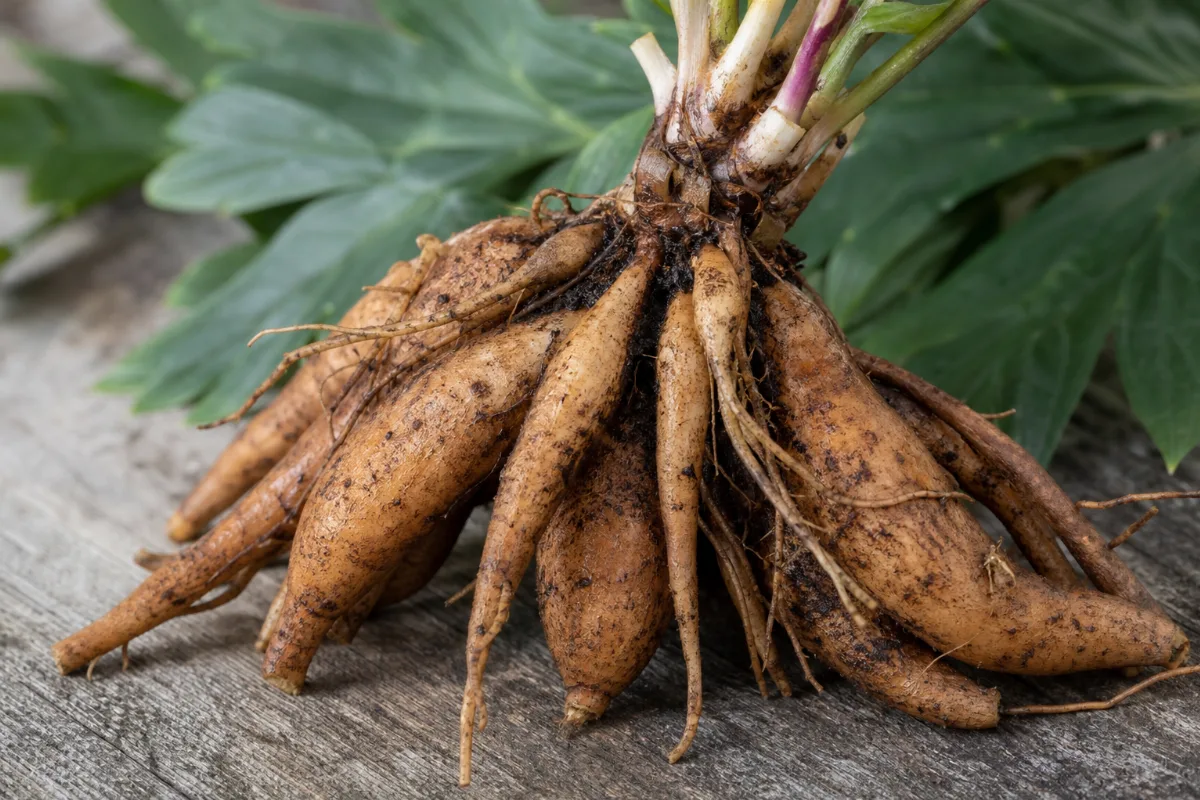
Herbs & Botanicals · Deadly poisonous plant
Aconite
Aconitum napellus; A. carmichaelii · also called Monkshood, wolfsbane, fu zi, chuan wu, cao wu
Aconite is a poisonous plant, and one of the most dangerous used in herbal medicine. A small amount of the raw root can cause fatal heart rhythm problems and nerve damage. Chinese medicine uses a processed root (fu zi) inside formulas, but poisonings and deaths still occur. The best human evidence is for mixed heart-failure products, not aconite itself. Do not use it on your own; if you may have been exposed, call Poison Control at 1-800-222-1222 or emergency services.
General information, not medical advice. Last substantive update · Not medically reviewed. A named clinician has not signed off on this page. How this page is made
About Aconite
Aconite (monkshood, wolfsbane; Aconitum napellus, and in China A. carmichaelii, whose processed root is fu zi) is among the most poisonous plants in herbal medicine. Its alkaloids aconitine, mesaconitine and hypaconitine can cause fatal heart rhythm problems and nerve damage from small exposures. Processing reduces the toxic alkaloids but does not remove the risk. The best human evidence is a large trial of an 11-herb heart-failure capsule that includes fu zi, and weak trials of a fu zi and ginseng injection; neither shows what aconite does alone. Pregnancy, heart disease and many medicines make it worse. Ask a doctor or pharmacist; do not self-treat.
The danger comes first
Aconitum plants contain alkaloids that keep sodium channels open in heart and nerve cells. Poisoning starts with tingling around the mouth, then vomiting and dangerous ventricular heart rhythms. In a review of 65 severe case reports, 10 died; those cases were selected for severity, so this does not describe all exposures.
People have been poisoned by raw root, medicinal wine, teas, herbal medicine and even a restaurant dish made with mislabelled spice powder. There is no specific antidote, and treatment is intensive hospital care. If anyone may have been exposed, call Poison Control at 1-800-222-1222 (US) or emergency services right away.
What it is
Aconite is a buttercup-family plant (Ranunculaceae). Chinese medicine uses A. carmichaelii (fu zi, chuan wu) and A. kusnezoffii (cao wu).
The root is the main medicinal part, but all parts of the plant are toxic.
What makes it distinctive
The toxic diester alkaloids aconitine, mesaconitine and hypaconitine are also the main active compounds. Traditional processing turns them into monoester alkaloids that are far less toxic in mice, which is why the margin between benefit and harm is so narrow.
Claims that processing makes it safe are not borne out: in Hong Kong, 52 poisonings were traced to over-prescribing, aconite given by mistake, and poorly processed herb.
Historical and current uses
Chinese medicine uses processed fu zi for cold limbs, weak circulation, joint pain and digestive coldness, always in formulas. Some Alaskan peoples historically used aconite as a hunting poison.
That tells us it is used, not that each use is safe or effective.
What the research shows
A 2024 trial of 3,110 people found an 11-herb capsule that includes processed fu zi reduced heart-failure hospital stays and heart deaths (combined outcome 25.0% vs 30.0%, HR 0.78). Because it is an 11-herb product, the benefit cannot be credited to aconite. Reviews of a fu zi and ginseng injection (99 and 61 trials) were positive but based on weak trials. We rate these low certainty for aconite.
A Chinese meta-analysis of 70 trials reports benefit in rheumatoid arthritis, but we read only the abstract and rate it very low. Other uses rest on traditional use or lab and animal work.
At a glance
Traditional uses history, not proof
- Chinese medicine: processed fu zi for cold limbs, weak circulation and heart weakness
- Painful, stiff joints and arthritis
- Always processed and inside formulas, prescribed by clinicians
- Historically used as a hunting poison by some Alaskan peoples
Studied for research
- Heart failure (mixed products with fu zi): low certainty
- Rheumatoid arthritis (Chinese trials): very low certainty
- Other small trials: insufficient
- Anti-inflammatory, immune and anti-tumour effects: lab and animal only
Main compounds
- Aconitine, mesaconitine, hypaconitine (very toxic)
- Less toxic monoester alkaloids formed by processing
- Many other diterpenoid alkaloids
Common forms
- Raw root or powder (most dangerous)
- Medicinal liquors and teas (dangerous)
- Processed fu zi in formulas (clinician-supervised, still risky)
- Hospital injections and patent capsules (mixed products)
Research links: PubMed: Aconitum · Review: Aconitum carmichaelii, clinical and regulatory synthesis (Front Pharmacol 2026) · Case series: mass poisoning from a mislabelled spice (Clin Toxicol 2025) · Case series: aconite poisoning in Hong Kong (Drug Saf 2012) · UK list of banned and restricted herbal ingredients · Research Library · Genes & Biomarkers Library
The plant and its history
- Accepted scientific name
- Aconitum napellus L. (monkshood); medicinal Chinese species A. carmichaelii Debeaux (fuzi, chuanwu) and A. kusnezoffii Rchb. (caowu)
- Naming authority
- L.; Debeaux; Rchb.
- Common names
- aconite (English); monkshood (English); wolfsbane (English); fu zi (processed lateral root of A. carmichaelii) (Chinese); chuan wu (Chinese); cao wu (Chinese)
- Botanical family
- Ranunculaceae (buttercup family). The order and class shown are standard for this family and were not returned by our GBIF match.
- Classification
- Plantae > Tracheophyta > Magnoliopsida > Ranunculales > Ranunculaceae > Aconitum > Aconitum napellus
- Native range
- Not verified in the sources read. The North American review confirms native wild Aconitum species exist there.
- Habitat
- Not verified.
- What the plant looks like
- Roots: Tuberous roots; the mother root and daughter (lateral) roots are used differently in Chinese medicine.; Stems: Not verified.; Leaves: Not verified.; Flowers: Not verified (the name monkshood refers to the hooded flower).; Fruit: Not verified.
- Cultivation
- Not verified.
- Harvest and processing
- Chinese practice processes the root (soaking, steaming, prolonged boiling) to break down toxic alkaloids; reviews describe it but this page gives no method.
- Look-alikes and adulterants
- Name: Sand ginger (Kaempferia galanga) spice; Note: Aconite root powder was mislabelled as sand ginger in a Toronto poisoning (p40637172).; Name: Other Aconitum species; Note: Alkaloid levels differ widely between species, so species identity matters (p42440987).
- Sustainability and conservation
- Not assessed.
Traditional use and history history, not clinical proof
| Tradition or era | Documented use | Source |
|---|---|---|
| Traditional Chinese medicine | Processed fuzi is used for cardiovascular, rheumatic, digestive and pain conditions, always processed and inside formulas, and is described as having a narrow margin of safety. | p42440987 |
| Alaskan Native peoples (historical) | Aconitum-derived poisons were used in whale hunting. | p42738638 |
| Traditional pairing rules | Aconite is on the Chinese list of herbs not to be combined with certain others, including pinellia and fritillaria. | p34650616 |
Traditional use shows how a plant was used. It does not show that a supplement works or is safe today.
What is inside, and how it may work
What the plant contains and how those compounds act in cells and animals. Laboratory and animal mechanisms are not proven effects in people.
Main compounds
| Compound | Family | Where it is concentrated | Activity studied | Level of evidence |
|---|---|---|---|---|
| Aconitine PubChem 245005 | diester diterpenoid alkaloid (C19) | root not reported | Main toxic alkaloid; keeps sodium channels open in heart and nerve cells. 1 11 22 | Review |
| Mesaconitine PubChem 16401314 | diester diterpenoid alkaloid (C19) | root not reported | Toxic, binds the same sodium channel site. 1 11 22 | Review |
| Hypaconitine PubChem 91973803 | diester diterpenoid alkaloid (C19) | root not reported | Toxic, similar actions. 1 11 22 | Review |
| Benzoylaconine and other monoester alkaloids | monoester diterpenoid alkaloids | processed root not reported | Formed when processing breaks the diesters down; about 38 times less toxic than aconitine in mice. 11 15 | Review |
Mechanisms, receptors and pathways
| Target or pathway | Gene or receptor | What was found | Level |
|---|---|---|---|
| Voltage-gated sodium channels (heart and nerve) | site 2 of the channel alpha subunit | Alkaloids lock channels open, causing sodium and then calcium overload and arrhythmia. Human poisoning data fit this. 1 11 | Review |
| Mitochondria and oxidative stress | not applicable | Review of lab work: mitochondrial dysfunction and oxidative stress contribute to toxicity in several organs. 15 | Lab/animal |
| Pain channels TRPA1 and TRPV1 | TRPA1, TRPV1 | In mice with cancer bone pain, aconitine reduced pain behaviours. Animal data only. 11 | Animal research |
Absorption, metabolism and elimination
- Absorption
- Alcohol raised absorption in human poisoning data cited by a review (p42440987).
- Distribution
- In mice, alkaloids reach the heart; inflammation raised levels.
- Metabolism
- CYP3A4 and the P-gp pump are named as main routes of metabolism and efflux (reviews); the human evidence is indirect.
- Elimination
- Slow when kidneys fail: half-life about 109.5 hours in one patient with stage V kidney disease.
- Bioavailability
- Not established.
Isolated compounds versus whole extracts
Fuzi preparations and pure alkaloids behave differently: processing changes the alkaloid mix and lowers toxicity, and formulas contain other herbs. Benefits shown for multi-herb products (such as the 11-herb capsule) cannot be credited to aconite, while toxicity is clearly linked to the diester alkaloids.
Nutritional composition
A nutrient table is not meaningful for this poisonous medicinal root.
2 low certainty1 very low certainty3 not enough evidence
What is Aconite good for?
Traditional uses and how strong the human evidence is for each. For aconite, even the best-rated entries are mixed products, not aconite alone. This is information, not a recommendation: aconite should not be self-treated.
Benefits, one by one
Each card is a research question, not a promise. Tap a goal to filter. Open a card to see the studies, doses and limits.
Heart failure outcomes (as one part of a standardised 11-herb capsule)
Low certaintyOne large, well-run Chinese trial of an 11-herb capsule that includes processed fuzi found fewer hospital stays for heart failure and fewer heart deaths when added to standard care. The result belongs to the whole capsule, not to aconite itself.
2 studiesStandardised commercial capsule in China. Not an aconite supplement.
Studies, doses and limits
What the trials found
One randomised, double-blind, placebo-controlled trial of 3,110 people (p39095596). Fuzi was a major component but not the only one.
Results
Combined outcome of heart-failure hospitalisation or cardiovascular death: 25.02% with the capsule vs 30.03% with placebo (HR 0.78, 95% CI 0.68 to 0.90). All-cause death: HR 0.84 (0.70 to 1.01), not significant.
Effect sizes as reported
HR 0.78 (0.68 to 0.90).
Why this rating
The trial itself is large and double-blind, but the product has 11 herbs, so the effect cannot be credited to aconite. We rate the certainty for aconite itself as low.
Form and dose studied
Standardised commercial capsule in China. Not an aconite supplement.
Who was studied
Adults with heart failure and reduced ejection fraction, China.
Limits
Mixed product; Chinese hospitals only; funding not read.
Why researchers looked
Fuzi has been used in Chinese formulas for weak heart function with cold limbs.
Traditional use
Processed fuzi appears in many classical Chinese formulas for 'collapse of yang' (weak circulation, cold limbs); this tradition is described in the 2026 synthesis (p42440987).
Proposed mechanism Preliminary mechanism
Not established for fuzi. Lab work shows alkaloids act on heart sodium and calcium channels; the same actions cause the poisoning.
A proposed mechanism does not show that the effect happens in people.
Aconite is a dangerous poison. Do not self-treat. Processed fuzi is a clinician-supervised product in China; raw or home-prepared aconite has caused deaths. Never replace heart failure medicine.
Heart failure (Shenfu injection: red ginseng plus processed fuzi, given in hospital)
Low certaintyReviews of many small Chinese trials say a hospital injection of red ginseng and processed fuzi, added to usual care, improved heart-function measures. Most trials were weak, and the injection is not a food or supplement.
3 studiesHospital injection. Not a supplement.
Studies, doses and limits
What the trials found
Two meta-analyses of randomised trials: 99 trials (p22611430) and 61 trials with 5,505 people with acute heart failure (p36646027).
Results
Better clinical effect rate, heart rate, NT-proBNP and 6-minute walk in the 2012 review; better ejection fraction and effect rate and fewer adverse events in the 2023 review. Both sets of authors say many trials were poor.
Effect sizes as reported
2023 review: ejection fraction SMD 0.85 (95% CI 0.77 to 0.92); effect rate RR 1.21 (1.18 to 1.24).
Why this rating
The 2023 authors rated the listed outcomes 'moderate' by GRADE, but the trials were mostly poor quality, unblinded and from China, and the injection has two herbs. We downgrade to low for aconite.
Form and dose studied
Hospital injection. Not a supplement.
Who was studied
Adults with heart failure in China.
Limits
Poor-quality trials, possible publication bias, a mixed product.
Why researchers looked
Used in Chinese hospitals for severe heart failure and shock.
Traditional use
Shenfu is a classical two-herb pairing for sudden weakness and cold limbs.
Proposed mechanism Preliminary mechanism
Not established.
A proposed mechanism does not show that the effect happens in people.
Aconite is a dangerous poison. Do not self-treat. Processed fuzi is a clinician-supervised product in China; raw or home-prepared aconite has caused deaths.
Cold limbs, weak circulation and 'collapse' (traditional use of processed fuzi)
Not enough evidenceIn Chinese medicine, processed fuzi is a main herb for cold hands and feet and weak circulation. No controlled trial of fuzi alone for this was found.
1 studiesProcessed root inside formulas, prescribed by clinicians in China.
Studies, doses and limits
What the trials found
None for fuzi alone. The 2026 review says the strongest evidence is for standardised formulas.
Results
No trial results for this use.
Effect sizes as reported
None.
Why this rating
Traditional use only; no controlled trial of fuzi alone.
Form and dose studied
Processed root inside formulas, prescribed by clinicians in China.
Who was studied
Not applicable.
Limits
No human data for fuzi alone.
Why researchers looked
One of the oldest uses of fuzi.
Traditional use
Called a 'warming' herb that 'restores yang'; used inside formulas, never alone.
Proposed mechanism Preliminary mechanism
Not established.
A proposed mechanism does not show that the effect happens in people.
Aconite is a dangerous poison. Do not self-treat. Processed fuzi is a clinician-supervised product in China; raw or home-prepared aconite has caused deaths.
Joint pain and rheumatoid arthritis (processed aconite in Chinese formulas)
Very low certaintyA Chinese meta-analysis of 70 small trials says aconite herbs, alone or with usual drugs, improved arthritis outcomes and cut drug side effects. We could read only the abstract, the trials are likely weak, and aconite poisoning is a real risk. Certainty is very low.
2 studiesProcessed root in decoctions, pills or patent medicines, in China.
Studies, doses and limits
What the trials found
A meta-analysis combining 21 trials of aconitum alone and 49 of aconitum plus Western medicine (p29552838). The 2026 review calls evidence for specific formulas such as Guizhi-Fuzi and Fuzi decoction provisional and mostly mechanistic.
Results
The authors report better efficacy and fewer drug adverse events than conventional treatment alone. Their model scored the combination as higher benefit but higher risk.
Effect sizes as reported
Not extracted from the abstract.
Why this rating
Abstract only, in a Chinese journal; trial quality, blinding, aconite type and processing are not described.
Form and dose studied
Processed root in decoctions, pills or patent medicines, in China.
Who was studied
Adults with rheumatoid arthritis, China.
Limits
Likely small, unblinded trials; benefit-risk model is the authors' own.
Why researchers looked
Aconite herbs are a long-standing Chinese remedy for painful, cold, stiff joints.
Traditional use
Classical formulas such as Guizhi-Fuzi decoction are used for arthritis and painful joints (described in p42440987).
Proposed mechanism Animal study
Lab and animal work suggests aconitine acts on pain-related ion channels (TRPA1, TRPV1); the same nerve actions cause numbness and poisoning.
A proposed mechanism does not show that the effect happens in people.
Aconite is a dangerous poison. Do not self-treat. Processed fuzi is a clinician-supervised product in China; raw or home-prepared aconite has caused deaths. Over-the-counter pain use of aconite is dangerous.
Other small trials (gut problems in sepsis, bowel cancer care)
Not enough evidenceTwo small randomised trials of multi-herb decoctions containing fuzi were described as preliminary: 75 people with gut problems in sepsis and 100 with advanced bowel cancer on chemotherapy. They cannot show what aconite does.
1 studiesDecoctions with other herbs.
Studies, doses and limits
What the trials found
Second-hand: described in the 2026 synthesis (p42440987); we did not open the trials.
Results
The review calls the results exploratory, with unclear blinding and no way to separate fuzi from other herbs.
Effect sizes as reported
Not extracted.
Why this rating
Two small mixed-formula trials, not read directly.
Form and dose studied
Decoctions with other herbs.
Who was studied
Adults, China.
Limits
Not read directly.
Why researchers looked
Fuzi decoctions are used in Chinese medicine for cold digestive conditions.
Traditional use
Fuzi-Lizhong and Sini decoctions.
Proposed mechanism Preliminary mechanism
Not established.
A proposed mechanism does not show that the effect happens in people.
Aconite is a dangerous poison. Do not self-treat. Processed fuzi is a clinician-supervised product in China; raw or home-prepared aconite has caused deaths.
Anti-inflammatory, immune, anti-tumour, allergy and kidney effects (lab and animal only)
Not enough evidenceLab and animal studies report many effects of aconite compounds. None has been shown in people, and the review warns that killing tumour cells in a dish says nothing about safe use.
3 studiesIsolated compounds and extracts in the lab.
Studies, doses and limits
What the trials found
None in people. The 2026 review describes this literature as dominated by in vitro, animal and formula-level work (p42440987).
Results
Lab and animal findings only.
Effect sizes as reported
None.
Why this rating
Cells and animals only.
Form and dose studied
Isolated compounds and extracts in the lab.
Who was studied
Cells and animals.
Limits
Often tested at amounts that would not be safe in people.
Why researchers looked
Many fuzi compounds have been tested in cells and animals.
Traditional use
Used traditionally for allergic rhinitis and kidney swelling in named formulas.
Proposed mechanism Animal study
Sodium-channel, inflammatory-signalling and mitochondrial pathways in lab models.
A proposed mechanism does not show that the effect happens in people.
Aconite is a dangerous poison. Do not self-treat. Processed fuzi is a clinician-supervised product in China; raw or home-prepared aconite has caused deaths.
Connections to the rest of health
How Aconite connects to the rest of our health knowledge graph. Every link says what kind of connection it is. A safety link (for example to the liver) is a warning, not a benefit. A study that merely mentions a topic never creates a benefit link.
Explore every connection: goals, body systems, organs, symptoms, genes
A. Wellness goals
| Connected to | Kind of connection | Evidence status | Context | Studies |
|---|---|---|---|---|
| Heart Health | Traditional use | Low certainty | Heart failure outcomes (as one part of a standardised 11-herb capsule): One large, well-run Chinese trial of an 11-herb capsule that includes processed fuzi found fewer hospital stays for heart failure and fewer heart deaths when added to standard care. The result belongs to the whole capsule, not to aconite itself. Heart failure (Shenfu injection: red ginseng plus processed fuzi, given in hospital): Reviews of many small Chinese trials say a hospital injection of red ginseng and processed fuzi, added to usual care, improved heart-function measures. Most trials were weak, and the injection is not a food or supplement. | 2 11 13 12 |
| Healthy Circulation | Traditional use | Not enough evidence | Cold limbs, weak circulation and 'collapse' (traditional use of processed fuzi): In Chinese medicine, processed fuzi is a main herb for cold hands and feet and weak circulation. No controlled trial of fuzi alone for this was found. | 11 |
| Joint Support | Traditional use | Very low certainty | Joint pain and rheumatoid arthritis (processed aconite in Chinese formulas): A Chinese meta-analysis of 70 small trials says aconite herbs, alone or with usual drugs, improved arthritis outcomes and cut drug side effects. We could read only the abstract, the trials are likely weak, and aconite poisoning is a real risk. Certainty is very low. | 14 11 |
| Mobility Support | Traditional use | Very low certainty | Joint pain and rheumatoid arthritis (processed aconite in Chinese formulas): A Chinese meta-analysis of 70 small trials says aconite herbs, alone or with usual drugs, improved arthritis outcomes and cut drug side effects. We could read only the abstract, the trials are likely weak, and aconite poisoning is a real risk. Certainty is very low. | 14 11 |
| Digestive Support | Traditional use | Not enough evidence | Other small trials (gut problems in sepsis, bowel cancer care): Two small randomised trials of multi-herb decoctions containing fuzi were described as preliminary: 75 people with gut problems in sepsis and 100 with advanced bowel cancer on chemotherapy. They cannot show what aconite does. | 11 |
| Inflammation Balance | Preliminary mechanism | Not enough evidence | Anti-inflammatory, immune, anti-tumour, allergy and kidney effects (lab and animal only): Lab and animal studies report many effects of aconite compounds. None has been shown in people, and the review warns that killing tumour cells in a dish says nothing about safe use. | 11 15 7 |
| Immune Support | Preliminary mechanism | Not enough evidence | Anti-inflammatory, immune, anti-tumour, allergy and kidney effects (lab and animal only): Lab and animal studies report many effects of aconite compounds. None has been shown in people, and the review warns that killing tumour cells in a dish says nothing about safe use. | 11 15 7 |
B. Body systems
| Connected to | Kind of connection | Evidence status | Context | Studies |
|---|---|---|---|---|
| Cardiovascular System | Biological association | Low certainty | Studied for: Heart failure outcomes (as one part of a standardised 11-herb capsule) Studied for: Heart failure (Shenfu injection: red ginseng plus processed fuzi, given in hospital) | 2 11 13 12 |
| Musculoskeletal System | Biological association | Very low certainty | Studied for: Joint pain and rheumatoid arthritis (processed aconite in Chinese formulas) | 14 11 |
| Digestive System | Biological association | Not enough evidence | Studied for: Other small trials (gut problems in sepsis, bowel cancer care) | 11 |
| Immune System | Biological association | Not enough evidence | Studied for: Anti-inflammatory, immune, anti-tumour, allergy and kidney effects (lab and animal only) | 11 15 7 |
| Nervous System | Biological association | Not enough evidence | Studied for: Anti-inflammatory, immune, anti-tumour, allergy and kidney effects (lab and animal only) | 11 15 7 |
D. Symptoms
E. Health conditions
| Connected to | Kind of connection | Evidence status | Context | Studies |
|---|---|---|---|---|
| Ventricular arrhythmia | Documented | Main cause of death in poisoning. Preparation or compound: Aconite alkaloids |
4 1 5 | |
| Plant poisoning | Documented | Case series from Toronto and Hong Kong. Raw or poorly processed root; many case reports. Preparation or compound: Raw or poorly processed root |
5 3 | |
| Heart failure | Potential benefit | Low certainty | Multi-herb products containing fu zi; not aconite alone. Preparation or compound: Multi-herb products |
2 13 |
J. Genes, receptors and enzymes
K. Biological pathways
L. Active compounds
| Connected to | Kind of connection | Evidence status | Context | Studies |
|---|---|---|---|---|
| Aconitine | Biological association | Review | Main toxic alkaloid; keeps sodium channels open in heart and nerve cells. Preparation or compound: root |
1 11 22 |
| Mesaconitine | Biological association | Review | Toxic, binds the same sodium channel site. Preparation or compound: root |
1 11 22 |
| Hypaconitine | Biological association | Review | Toxic, similar actions. Preparation or compound: root |
1 11 22 |
| Benzoylaconine and other monoester alkaloids | Biological association | Review | Formed when processing breaks the diesters down; about 38 times less toxic than aconitine in mice. Preparation or compound: processed root |
11 15 |
Each connection is stored with the ingredient, the connected record, the kind of connection, the evidence status, the supporting studies, the preparation or compound involved, and a review date (last reviewed October 25, 2026).
The evidence
The research centre for Aconite. Every record here was checked against PubMed or the publisher's page; we never list a study we have not verified.
Evidence by outcome
Bars show how many studies we found for each outcome, not how well it works. People are added up across trials only (reviews are not added, to avoid double counting).
How we rate evidence
High certainty
Several well-run trials or reviews agree; further research is unlikely to change the picture much.
Moderate certainty
Good trials point the same way, but some doubt remains.
Low certainty
Small, short or inconsistent trials. The finding could change with better research.
Very low certainty
Very little or very weak human data. Treat as a possibility only.
Mixed findings
Trials or reviews disagree with each other.
Not enough evidence
Not enough human research to say either way.
Evidence against
Good research found no benefit, or found harm.
We take the reviewers' own risk-of-bias and GRADE statements where they exist, and otherwise judge from study size, design, consistency, directness and whether a product matches what is sold. Many publications do not make evidence high. Method note: We started from our earlier aconite summary, then checked PubMed records, the UK government list and GBIF. The 2026 Tan et al. review was read from full text for the sections cited; most other sources were abstracts. Regulatory details outside the UK are second-hand and marked unverified. No study is cited that we could not verify.
Study library: every study we checked 23
| Study | Design | People | Product, dose, length | Result |
|---|---|---|---|---|
| Chan 2009 Aconite poisoning Clin Toxicol (Phila) · PMID 19514874 · DOI |
Narrative review Aconitum sp. |
Clinical toxicology review of aconite poisoning (literature to Feb 2009) | Aconite roots and herbal decoctions root (all plant parts toxic) not extracted not extracted · vs none |
Aconitine and related alkaloids are highly toxic to heart and nerves. The wild plant (roots especially) is extremely toxic. Main causes of death are refractory ventricular arrhythmias and asystole; overall in-hospital mortality 5.5%. Management is supportive; there is no specific antidote. No effect sizes. (not reported in abstract) Methods, limits and fundingLimitations: Older narrative review; mortality figure depends on which cases were reported. Funding and conflicts: not read Read: abstract |
| Cheang I et al. 2024 The traditional Chinese medicine Qiliqiangxin in heart failure with reduced ejection fraction: a randomized, double-blind, placebo-controlled trial Nat Med · PMID 39095596 · DOI |
RCT multi-herb incl. A. carmichaelii |
3110 3,110 adults with heart failure and reduced ejection fraction, 133 Chinese hospitals |
Qiliqiangxin capsules: a standardised 11-herb product (processed fuzi is one major component) multi-herb not extracted not extracted · vs none |
Added to standard heart failure care, the capsule cut the composite of heart-failure hospitalisation or cardiovascular death: 25.02% vs 30.03% (HR 0.78, 95% CI 0.68 to 0.90). All-cause death did not differ significantly (HR 0.84, 0.70 to 1.01). Adverse events were comparable to placebo. HR 0.78 (0.68 to 0.90) for the combined outcome. (not reported in abstract) Methods, limits and fundingLimitations: A mixed product: benefit cannot be credited to fuzi. Funding and conflicts not read. Median follow-up 18.3 months. Funding and conflicts: not read Read: abstract |
| Chen SP et al. 2012 Aconite poisoning over 5 years: a case series in Hong Kong and lessons towards herbal safety Drug Saf · PMID 22631223 · DOI |
Case series Aconitum sp. |
52 52 confirmed aconite poisoning cases, Hong Kong, 2004 to 2009 |
Aconite herbs in Chinese medicine root not extracted not extracted · vs none |
Nerve symptoms in 94.2%, heart in 88.5%, gut in 59.6%. Severity: 11.5% severe, 32.7% moderate, 55.8% mild. Causes: prescribed above the recommended amount 32.7%; aconite dispensed by mistake ('hidden' poisoning) 32.7%; inadequately processed herb 13.5%; dispensing error 3.9%. No deaths recorded. 52 cases; 0 deaths. (not reported in abstract) Methods, limits and fundingLimitations: Retrospective, from one reference laboratory; cases found by urine testing, so mild or untested cases may be missed. Funding and conflicts: not read Read: abstract |
| Coulson JM et al. 2017 The management of ventricular dysrhythmia in aconite poisoning Clin Toxicol (Phila) · PMID 28421842 · DOI |
Systematic review of case reports Aconitum sp. |
65 65 case reports of probable aconite poisoning with ventricular dysrhythmia (1966 to 2016) |
Aconite (various) root not extracted not extracted · vs none |
54 of 65 developed ventricular tachycardia, 15 ventricular fibrillation, 6 torsades de pointes. 10 died (15%). Heart rhythm problems tracked with plasma alkaloid levels. Treatment reports were varied and anecdotal. 10 of 65 died (15%) among selected severe cases. (not reported in abstract) Methods, limits and fundingLimitations: Case reports are selected for severity, so the 15% figure overstates risk across all exposures. Abstract read. Funding and conflicts: not read Read: abstract |
| Kent JT et al. 2025 Mass aconite poisoning from a mislabelled spice product Clin Toxicol (Phila) · PMID 40637172 · DOI |
Case series Aconitum sp. (unprocessed) |
11 11 patients at two Toronto-area hospitals poisoned by a restaurant chicken dish |
Unprocessed aconite root powder mislabelled as sand ginger (aconitine 0.55%) root not extracted not extracted · vs none |
Eleven people presented within 8 hours. Mouth tingling 91%; nausea, vomiting, belly pain 64%; refractory ventricular rhythm problems 73% needing sodium bicarbonate, amiodarone and vasopressors; two needed ventilation for 48 hours; none died. Ventricular dysrhythmia in 8 of 11 (73%). (not reported in abstract) Methods, limits and fundingLimitations: Retrospective, single event, small; shows what can happen, not how often. Funding and conflicts: not read Read: abstract |
| Kharlamb L et al. 2026 Pharmacological, Toxicological, Phytochemical and Ethnobotanical Insights into North American Aconitum Species Molecules · PMID 42738638 · DOI |
Narrative review A. delphiniifolium, A. columbianum |
North American Aconitum species | Aconitum (North American species) whole plant not extracted not extracted · vs none |
Review of wild North American species. Little documented medical use; some groups in Alaska historically used aconite poisons for whale hunting. At least fifteen diterpenoid alkaloids found in two species. Direct pharmacology studies are lacking. No effect sizes. (not reported in abstract) Methods, limits and fundingLimitations: Abstract read; no human data. Funding and conflicts: not read Read: abstract |
| Lin Y et al. 2025 Assessment of potential disease-drug interactions when prescribed Fuzi for rheumatoid arthritis treatment, with focus on the pharmacokinetics of aconitine, mesaconitine, and hypaconitine J Ethnopharmacol · PMID 40769444 · DOI |
Animal study mouse |
Mice with collagen-induced arthritis | Fuzi preparations and pure alkaloids lateral root not extracted not extracted · vs none |
In arthritic mice the liver enzyme Cyp3a11 (human CYP3A4 counterpart) and the P-glycoprotein pump were lower, and blood and heart levels of aconitine, mesaconitine and hypaconitine rose, with more heart-damage markers. This hints that inflammation or interacting drugs that slow CYP3A4 or P-gp could raise exposure. Mice only. No effect sizes. (not reported in abstract) Methods, limits and fundingLimitations: Animal data; not shown in people. Funding and conflicts: not read Read: abstract |
| Liu CF et al. 2013 [Study on efficacy of compatibility between aconiti radix cocta and Pinelliae Rhizoma on basis of uniform design method] Zhongguo Zhong Yao Za Zhi · PMID 24079248 |
Animal study mouse |
Mice | Combined decoction of processed aconite root and Pinelliae Rhizoma root and tuber not extracted not extracted · vs none |
In mice the two herbs worked against each other for pain and swelling at some ratios and worked together for phlegm secretion and cough at others. Safety of the combination was not tested. No effect sizes. (not reported in abstract) Methods, limits and fundingLimitations: Mouse study; not a human safety test. Funding and conflicts: not read Read: abstract |
| Liu W et al. 2021 Studies on the Incompatibility between Bulbus fritillariae and Radix aconiti praeparata Based on the P-gp Evid Based Complement Alternat Med · PMID 34650616 · DOI |
Animal and lab study rat |
Rats and cell models | Fritillaria bulb with processed aconite root bulb and root not extracted not extracted · vs none |
The two are a traditional 'incompatible pair'. With fritillaria, a toxic aconite compound (benzoylmesaconine) crossed the rat gut more easily; fritillaria alkaloids blocked the P-glycoprotein pump. Authors say they should not be used together. No effect sizes. (not reported in abstract) Methods, limits and fundingLimitations: Rat and cell work only. Funding and conflicts: not read Read: abstract |
| Oshima Y et al. 2026 Charcoal hemoperfusion for aconite poisoning: Insights from a CKD case and complementary simulation experiments J Toxicol Sci · PMID 42543583 · DOI |
Case report + lab simulation Aconitum sp. |
1 One patient with severe kidney disease with aconite poisoning |
Aconite (DDAs) root not extracted not extracted · vs none |
Her alkaloid levels fell during charcoal hemoperfusion; without good kidney function, clearance of the toxins was very slow (half-life about 109.5 hours). No effect sizes. (not reported in abstract) Methods, limits and fundingLimitations: Single case; supports that poor kidney function slows clearance, not general safety. Funding and conflicts: not read Read: abstract |
| Tan RY et al. 2026 Aconitum carmichaelii: a clinical-regulatory synthesis of traditional use, toxicological evidence, and global safety governance Front Pharmacol · PMID 42440987 · DOI |
Narrative review A. carmichaelii |
Literature on Aconitum carmichaelii (fuzi): traditional use, toxicology, regulation | Processed lateral root (fuzi) and fuzi-containing formulas lateral root not extracted not extracted · vs none |
Structured but narrative review (searched to Dec 2025). Poisoning data consistently link excess or poorly processed exposure to heart and nerve toxicity. The strongest human evidence is for standardised proprietary formulas, not fuzi alone. Lists pharmacopoeia and regulatory approaches by country. Full text read (PMC13333762) for the sections quoted; reference list not checked. No effect sizes. (not reported in abstract) Methods, limits and fundingLimitations: Narrative synthesis, no pooled analysis; most benefit claims rest on lab, animal or multi-herb data. Regulatory table is second-hand for each country. Funding and conflicts: not read Read: full text (most sections) |
| Tao L et al. 2023 Efficacy and Safety of Shenfu Injection on Acute Heart Failure: A Systematic Review and Meta-Analysis Phytomedicine · PMID 36646027 · DOI |
Systematic review and meta analysis multi-herb incl. A. carmichaelii |
5505 61 randomised trials, 5,505 people with acute heart failure |
Shenfu injection plus usual care vs usual care multi-herb injection not extracted not extracted · vs none |
Better total clinical effective rate (RR 1.21, 95% CI 1.18 to 1.24) and ejection fraction (SMD 0.85, 0.77 to 0.92). Fewer adverse events (3.59% vs 9.20%). The authors graded evidence for these outcomes as moderate but say quality of some trials was poor and results need caution. Ejection fraction SMD 0.85 (0.77 to 0.92). (not reported in abstract) Methods, limits and fundingLimitations: Many included trials of poor quality; a two-herb injection; reviewers' GRADE is 'moderate' for the listed outcomes. Funding and conflicts: not read Read: abstract |
| Wen-Ting S et al. 2012 Chinese medicine shenfu injection for heart failure: a systematic review and meta-analysis Evid Based Complement Alternat Med · PMID 22611430 · DOI |
Systematic review and meta analysis multi-herb incl. A. carmichaelii |
99 randomised trials of Shenfu injection (red ginseng + processed fuzi) in heart failure | Shenfu injection multi-herb injection not extracted not extracted · vs none |
Added to routine care, Shenfu injection was linked with better clinical effect rate, mortality, heart rate, NT-proBNP and 6-minute walk distance. No serious adverse effects were reported. The authors say most trials lacked methodological rigor. No effect sizes. (not reported in abstract) Methods, limits and fundingLimitations: Most trials weak; searched to 2011; a two-herb injection, not fuzi alone. Funding and conflicts: not read Read: abstract |
| Zhang XM et al. 2018 [Aconitum in treatment of rheumatoid arthritis: benefit-risk assessment] Zhongguo Zhong Yao Za Zhi · PMID 29552838 · DOI |
Meta analysis (benefit risk model) Aconitum sp. |
21 trials of aconitum alone and 49 trials of aconitum plus Western medicines in rheumatoid arthritis | Aconitum herbs (Chinese medicine) root not extracted not extracted · vs none |
The authors report better efficacy and fewer drug side effects than conventional treatment alone, both for aconitum alone and combined. Their model scored combined use as higher benefit but also higher risk. Article is in Chinese with an English abstract. Not extracted. (not reported in abstract) Methods, limits and fundingLimitations: Abstract only; trial quality and aconite type/processing not stated in the abstract; Chinese trials often small and unblinded. Funding and conflicts: not read Read: abstract |
| Zhang Y et al. 2026 Toxicology and detoxification processing of Fuzi (Aconitum carmichaelii Debeaux lateral root): a comprehensive review integrating historical perspectives and modern research Front Pharmacol · PMID 42147340 · DOI |
Narrative review A. carmichaelii |
Toxicology and processing of fuzi | Fuzi (processed lateral root) lateral root not extracted not extracted · vs none |
Diester-diterpenoid alkaloids act on voltage-gated sodium channels and cause damage in heart, liver, kidney, nervous system and reproductive organs in lab work. Traditional processing breaks them into less toxic compounds. The authors say much modern toxicology research is flawed (poorly defined material, no controls, models of doubtful relevance), but confirm that poorly processed fuzi poses severe heart and nerve risks. No effect sizes. (not reported in abstract) Methods, limits and fundingLimitations: Abstract read. Review quality assessed by its authors as limited for many primary studies. Funding and conflicts: not read Read: abstract |
| Zhao Q et al. 2026 Aconitine accidental poisoning: two case reports and literature review Int J Emerg Med · PMID 42778893 · DOI |
Case report Aconitum sp. |
2 Two middle-aged patients poisoned by herbal preparations containing aconitine |
Herbal preparations containing aconitine (A. carmichaelii, A. kusnezoffii types) root not extracted not extracted · vs none |
Both had significant cardiac arrhythmias. One had cardiac arrest and died after family chose to withdraw life support; the other recovered after ventilation and was discharged. No effect sizes. (not reported in abstract) Methods, limits and fundingLimitations: Two cases plus narrative review. Funding and conflicts: not read Read: abstract |
| Zhao Z et al. 2026 Seizures Secondary to Aconitum Plant Poisoning: a case report J Med Case Rep · PMID 42888428 · DOI |
Case report A. kusnezoffii |
1 One 53-year-old man, homemade aconite liquor |
Homemade liquor infused with Aconitum kusnezoffii (caowu) root not extracted not extracted · vs none |
Ventricular tachycardia to fibrillation and cardiac arrest, then seizures on days 4 to 6 from direct brain toxicity. Recovered and was discharged on day 13. No effect sizes. (not reported in abstract) Methods, limits and fundingLimitations: Single case. Funding and conflicts: not read Read: abstract |
| n/a 2014 UK government: Banned and restricted herbal ingredients (published 18 December 2014) GOV.UK · Source |
Regulator list n/a |
n/a | n/a n/a not extracted not extracted · vs none |
Row 'All Aconitum species including Aconitum napellus': prescription-only medicine and Human Medicines Regulations 2012 Schedule 20 (Parts II and III). Internal use: no permitted dose unless made available by a prescription from a registered doctor or dentist. External products: 1.3% or below. A. carmichaelii and fuzi are not named; the page does not say whether the row covers them explicitly. n/a (not reported in abstract) Methods, limits and fundingLimitations: Page shows only the 2014 publication date; may have been revised. Read via web fetch on 2026-10-25. Funding and conflicts: not read Read: full text |
| n/a 2026 Searches for EMA/HMPC, FDA, NCCIH, LiverTox, LactMed, WHO and Commission E pages on aconite n/a · Source |
Not found n/a |
n/a | n/a n/a not extracted not extracted · vs none |
One web search for UK, US and German status found the UK list (read) and only unapproved homeopathic product labels for the US. No FDA herbal rule, no Commission E monograph, no EMA/HMPC monograph, NCCIH, LiverTox or LactMed page was found or read. The 2026 Tan review says aconite is generally absent from US/Canada/European pharmacopoeial monographs and is treated cautiously. n/a (not reported in abstract) Methods, limits and fundingLimitations: A single search is not a complete check; absence of a result is not proof none exists. Funding and conflicts: not read Read: search only |
| n/a 2026 No human interaction study found: digoxin, antiarrhythmics, QT-prolonging drugs, CYP3A4/P-gp drugs n/a · Source |
Not found n/a |
n/a | n/a n/a not extracted not extracted · vs none |
PubMed searches for aconite with CYP3A4/P-gp and herb-drug interactions returned lab and animal work only (for example p40769444). No human interaction study and no case report of a drug interaction was read. Cautions on this page for digoxin, rhythm drugs and QT drugs are by pharmacology (the toxin acts on heart sodium channels), not from a study. n/a (not reported in abstract) Methods, limits and fundingLimitations: Absence of evidence is not evidence of safety. Funding and conflicts: not read Read: search only |
| n/a 2026 Skin absorption of Aconitum sap: no source read n/a · Source |
Not found n/a |
n/a | n/a n/a not extracted not extracted · vs none |
A PubMed search for skin or dermal absorption poisoning from Aconitum returned nothing relevant. The concern that handling the plant or sap can cause numbness is widely repeated but NOT verified here. n/a (not reported in abstract) Methods, limits and fundingLimitations: Not verified. Funding and conflicts: not read Read: search only |
| n/a 2026 PubChem: aconitine (CID 245005), mesaconitine (CID 16401314), hypaconitine (CID 91973803) n/a · Source |
Reference database n/a |
n/a | n/a n/a not extracted not extracted · vs none |
PubChem name search 2026-10-25: aconitine C34H47NO11; mesaconitine C33H45NO11; hypaconitine C33H45NO10. n/a (not reported in abstract) Methods, limits and fundingLimitations: Compound records only. Funding and conflicts: not read Read: full text |
| n/a 2026 GBIF Backbone: Aconitum napellus L. (3033665), A. carmichaelii Debeaux (3033673), A. kusnezoffii Rchb. (7277127) n/a · Source |
Reference database n/a |
n/a | n/a n/a not extracted not extracted · vs none |
GBIF API matches on 2026-10-25: all three exact matches, status ACCEPTED, family Ranunculaceae. n/a (not reported in abstract) Methods, limits and fundingLimitations: Taxonomic record only. NCBI not queried. Funding and conflicts: not read Read: full text |
What we do not know yet
- No controlled trial of aconite or fu zi alone for any use.
- Benefit evidence comes from multi-herb products; aconite's share is unknown.
- No human interaction studies.
- No verified pregnancy, breastfeeding or children data.
- Skin absorption not verified.
- Regulatory status outside the UK is second-hand; no FDA, EMA, Commission E, NCCIH or LiverTox page found.
How new research is added
New studies are found by a saved PubMed search and are placed in a review queue. A person reads each one before it changes any evidence rating or safety wording.
Lab markers
What changed in blood or saliva tests during trials. A changed number is not the same as feeling or being healthier, and we give no "normal ranges".
Safety
What studies and official sources say about side effects, medicines and who should check first. Each point shows what kind of evidence it comes from.
Main points to know 5
- Among the most dangerous plants in herbal medicine. Aconitine and related alkaloids are highly toxic to the heart and nerves. Poisoning can cause life-threatening ventricular arrhythmia within hours. Reviews describe poisoning cases and deaths from raw root, home-made liquors, teas, spices and herbal medicine. There is no specific antidote. Narrative review 1 4 11
- Poisoning has followed small, ordinary exposures. In Toronto, 11 people were poisoned by one chicken dish seasoned with root powder mislabelled as sand ginger; 8 had refractory ventricular rhythm problems, though none died. Reviews give very small amounts of the pure alkaloid as dangerous, but figures differ between sources, so we give none. Case series 5 11
- Processing lowers the risk but does not remove it. Traditional processing breaks the most toxic alkaloids into much less toxic ones. Poisonings still happen with processed products: in Hong Kong, 52 poisonings were traced to over-prescribing, aconite handed out by mistake, and poorly processed herb. Case series 3 15 11
- Not for self-treatment. Do not buy, prepare or take aconite on your own, in any form. Raw or home-made preparations are the most dangerous, and alcohol makes absorption worse. If anyone may have swallowed any part or preparation, call Poison Control (US 1-800-222-1222) or emergency services at once; do not wait for symptoms. Narrative review 1 11
- Heart and nerve effects can follow each other. A case report shows ventricular fibrillation followed days later by seizures from direct brain toxicity, so recovery from the first danger does not end the risk. Case report 17
Side effects 5
| Effect | How often | Severity and recovery | Evidence |
|---|---|---|---|
| Tingling or numbness around the mouth, face and limbs Often the first sign. | 91% of 11 people in the Toronto series; nerve symptoms in 94% of 52 Hong Kong cases | moderate to severe usually reversible | Case series 5 3 |
| Dangerous heart rhythms (ventricular tachycardia, fibrillation, torsades de pointes), low blood pressure, slow heart rate, cardiac arrest Main cause of death. In 65 selected case reports with ventricular rhythm problems, 10 died; in-hospital mortality of 5.5% was given in an earlier review. These are not rates for all exposures. | 73% of 11 in Toronto; 88.5% of 52 in Hong Kong had heart toxicity | life-threatening unknown | Case series 5 3 4 |
| Nausea, vomiting, belly pain, diarrhoea | 64% in Toronto; 59.6% in Hong Kong | mild to moderate usually reversible | Case series 5 3 |
| Muscle weakness, breathing failure needing a ventilator | 2 of 11 ventilated for 48 hours in Toronto | severe unknown | Case series 5 1 |
| Seizures (delayed, from direct brain toxicity) One reported case. | Not established | severe resolved in one reported case | Case report 17 |
Liver
Lab and animal studies in a 2026 review report that the toxic alkaloids damage the liver and kidneys as well as the heart and nerves. We found no LiverTox entry (not searched directly) and no human case series of liver injury that we read. The Chinese Pharmacopoeia is said to advise caution in people with severe liver or kidney disease. A case report shows that kidney failure slowed the clearance of aconite alkaloids. 15 11 10 19
How often. Unknown.
Monitoring. No agency advice was found. Poisoning is a medical emergency, not a liver-monitoring problem.
This is a safety connection. It is not evidence that Aconite supports liver health.
Medicines and supplements 6
| With | Why it matters | Importance | Evidence | What to do |
|---|---|---|---|---|
| Digoxin and other heart-rhythm medicines (antiarrhythmics) drug | Aconite alkaloids keep heart sodium channels open and trigger ventricular arrhythmias. Combining them with other drugs that change heart rhythm could add risk. This is reasoning from how the poison works; no study tested it. | Unknown in people; potentially serious. | Theoretical Not enough evidence 20 4 | Do not combine. If you already take heart medicine, tell your doctor about any herbal product. |
| Medicines that prolong the QT interval drug | Same reasoning: aconite poisoning can cause torsades de pointes, a QT-linked rhythm. No study tested the combination. | Unknown; potentially serious. | Theoretical Not enough evidence 20 4 | Do not combine. |
| Drugs or conditions that slow CYP3A4 or the P-glycoprotein pump drug | Reviews say CYP3A4 and P-gp clear the toxic alkaloids. In arthritic mice, lower Cyp3a11 and P-gp meant higher alkaloid levels in blood and heart. Licorice stimulates these systems in lab work. Not tested in people. | Unknown in people. | Animal study Very low certainty 7 11 20 | Ask a pharmacist before combining with any herb or medicine. |
| Alcohol (medicinal liquors) other | Alcohol raised absorption of aconitine; in a Chinese analysis cited by the 2026 review, medicinal liquors were the most common poisoning route (62%). | Human poisoning data. | Narrative review Low certainty 11 17 | Never use aconite in alcohol. |
| Pinellia (ban xia) herb | A classical 'incompatible pair' in Chinese medicine. In mice the two herbs changed each other's effects; safety was not tested. | Unknown in people. | Animal study Not enough evidence 8 | Do not combine unless an experienced practitioner directs it. |
| Fritillaria (bei mu) herb | Another traditional incompatible pair. In rats, a toxic aconite compound crossed the gut more easily with fritillaria, which blocked the P-gp pump. | Unknown in people. | Animal study Very low certainty 9 | Do not combine unless an experienced practitioner directs it. |
Who should check first 5
| Situation | Advice | Evidence |
|---|---|---|
| Raw, unprocessed or home-made aconite in any form | Do not take. Poisoning and deaths are documented. | Case series 5 1 3 |
| Pregnancy | Chinese and Taiwanese pharmacopoeias advise caution with processed fuzi in pregnancy. Lab studies report reproductive toxicity. Avoid. | Regulatory statement 11 15 |
| Existing heart rhythm problems or advanced heart disease | Higher risk; stay away. | Narrative review 11 |
| Severe liver or kidney disease | Clearance of the alkaloids is impaired; higher risk. | Narrative review 11 10 |
| Children and breastfeeding | No safety data found. Avoid. | Not found 11 19 |
Overdose, product quality and regulators
Summary. All parts of the plant contain the toxic alkaloids, roots especially. The risky ones are the diester alkaloids aconitine, mesaconitine and hypaconitine, which act on sodium channels in heart and nerve cells. Their breakdown products are much less toxic (benzoylaconine about 38 times less in mice). The gap between a harmful and a useful amount is very narrow.
Animal. Lab and animal work reports damage to heart, liver, kidney, nervous system and reproductive organs.
Human doses studied. Not given. We give no amounts; reported lethal figures differ between sources.
High dose or long term signals. Unknown for long-term low exposure; the 2026 review calls long-term safety unresolved.
Overdose response. Call Poison Control (US 1-800-222-1222) or emergency services immediately. Treatment in hospital is supportive; reports describe heart-rhythm drugs, CPR and hemoperfusion in severe cases, with no specific antidote.
Genotoxicity. Not found.
Toxic plant parts. All parts, roots and tubers most. Handling the plant and sap: skin absorption is NOT verified in our sources.
Mislabelling, wrong species and variable processing are major problems.
Mislabelled spice. Unprocessed aconite root powder (0.55% aconitine) sold as sand ginger poisoned 11 diners in Toronto. 5
Dispensing errors. In Hong Kong, aconite herb was dispensed by mistake in one third of 52 poisoning cases. 3
Finished products over limits. The 2026 review reports a recall in Australia of a Jin Gui Shen Qi Wan product above the alkaloid limit, and products over limits in Malaysia and Australia. Second-hand. 11
Species differences. Different Aconitum species carry very different alkaloid levels. 11
| Body | Action | Date |
|---|---|---|
| UK government (MHRA list of banned and restricted herbal ingredients) (United Kingdom) | All Aconitum species including A. napellus: prescription-only and Schedule 20 of the Human Medicines Regulations. No permitted internal dose unless prescribed by a registered doctor or dentist; external products 1.3% or below. source | published 18 December 2014 |
When to get medical help
- Tingling or numbness of the mouth, face or limbs after any contact with aconite
- Palpitations, a very slow, fast or irregular heartbeat, chest pain or fainting
- Vomiting, belly pain, sweating, dizziness or weakness
- Trouble breathing or a seizure
- Call Poison Control (US 1-800-222-1222) or emergency services immediately; do not wait for symptoms to build.
Stop the supplement and contact a clinician or emergency service. In the US, Poison Control is 1-800-222-1222.
General information only, not medical advice. Ask a clinician or pharmacist before use, especially with medicines, in pregnancy or with a health condition. See the Natural Remedy Safety guide.
Frequently asked questions
Is aconite safe?
What happens in aconite poisoning?
What should I do if someone may have swallowed it?
Does processing make it safe?
Can it be absorbed through the skin?
Some sources repeat this concern. We did not find a source to verify it, so we cannot confirm or rule it out. Avoid handling the wild plant without advice.
What is fuzi?
Does aconite help heart failure?
Does aconite help arthritis or pain?
Chinese trials combined in one meta-analysis report benefit, but we could read only an abstract, trial quality is unclear, and the risk of poisoning is real. We rate it very low certainty.
Does aconite interact with medicines?
Can aconite be combined with pinellia or fritillaria?
Is aconite safe in pregnancy or breastfeeding?
Explore by health goal
Heart HealthHealthy CirculationJoint SupportMobility SupportDigestive SupportInflammation BalanceImmune Support
Editorial transparency
- Written by
- AlternativeMed editorial team. Research compiled with AI assistance, then checked against PubMed records.
- Medical review
- None. This page has not been reviewed by a physician or pharmacist.
- First published
- 2026-10-25
- Last substantive update
- 2026-10-25
- How we research
- We started from our earlier aconite summary, then checked PubMed records, the UK government list and GBIF. The 2026 Tan et al. review was read from full text for the sections cited; most other sources were abstracts. Regulatory details outside the UK are second-hand and marked unverified. No study is cited that we could not verify.
- How we rate evidence
- See "How we rate evidence" in the Evidence tab.
- Independence
- No product is promoted on this page. No affiliate links are shown.
Sources 23
Each source was opened and checked. Where we read only the abstract, it says so. The small numbers in the text point here.
- Chan TY. Aconite poisoning. Clin Toxicol (Phila). 2009. PMID 19514874. DOI 10.1080/15563650902904407. (abstract)
- Cheang I et al.. The traditional Chinese medicine Qiliqiangxin in heart failure with reduced ejection fraction: a randomized, double-blind, placebo-controlled trial. Nat Med. 2024. PMID 39095596. DOI 10.1503/cmaj.200077. (abstract)
- Chen SP et al.. Aconite poisoning over 5 years: a case series in Hong Kong and lessons towards herbal safety. Drug Saf. 2012. PMID 22631223. DOI 10.2165/11597470-000000000-00000. (abstract)
- Coulson JM et al.. The management of ventricular dysrhythmia in aconite poisoning. Clin Toxicol (Phila). 2017. PMID 28421842. DOI 10.1080/15563650.2017.1291944. (abstract)
- Kent JT et al.. Mass aconite poisoning from a mislabelled spice product. Clin Toxicol (Phila). 2025. PMID 40637172. DOI 10.1080/15563650.2025.2526115. (abstract)
- Kharlamb L et al.. Pharmacological, Toxicological, Phytochemical and Ethnobotanical Insights into North American Aconitum Species. Molecules. 2026. PMID 42738638. DOI 10.1016/j.taap.2012.11.024. (abstract)
- Lin Y et al.. Assessment of potential disease-drug interactions when prescribed Fuzi for rheumatoid arthritis treatment, with focus on the pharmacokinetics of aconitine, mesaconitine, and hypaconitine. J Ethnopharmacol. 2025. PMID 40769444. DOI 10.1016/j.jep.2025.120350. (abstract)
- Liu CF et al.. [Study on efficacy of compatibility between aconiti radix cocta and Pinelliae Rhizoma on basis of uniform design method]. Zhongguo Zhong Yao Za Zhi. 2013. PMID 24079248. (abstract)
- Liu W et al.. Studies on the Incompatibility between Bulbus fritillariae and Radix aconiti praeparata Based on the P-gp. Evid Based Complement Alternat Med. 2021. PMID 34650616. DOI 10.1016/j.placenta.2010.06.014. (abstract)
- Oshima Y et al.. Charcoal hemoperfusion for aconite poisoning: Insights from a CKD case and complementary simulation experiments. J Toxicol Sci. 2026. PMID 42543583. DOI 10.2131/jts.51.413. (abstract)
- Tan RY et al.. Aconitum carmichaelii: a clinical-regulatory synthesis of traditional use, toxicological evidence, and global safety governance. Front Pharmacol. 2026. PMID 42440987. DOI 10.1021/acs.jnatprod.8b01039. (full text (most sections))
- Tao L et al.. Efficacy and Safety of Shenfu Injection on Acute Heart Failure: A Systematic Review and Meta-Analysis. Phytomedicine. 2023. PMID 36646027. DOI 10.1016/j.phymed.2023.154641. (abstract)
- Wen-Ting S et al.. Chinese medicine shenfu injection for heart failure: a systematic review and meta-analysis. Evid Based Complement Alternat Med. 2012. PMID 22611430. DOI 10.1155/2012/713149. (abstract)
- Zhang XM et al.. [Aconitum in treatment of rheumatoid arthritis: benefit-risk assessment]. Zhongguo Zhong Yao Za Zhi. 2018. PMID 29552838. DOI 10.19540/j.cnki.cjcmm.20171106.007. (abstract)
- Zhang Y et al.. Toxicology and detoxification processing of Fuzi (Aconitum carmichaelii Debeaux lateral root): a comprehensive review integrating historical perspectives and modern research. Front Pharmacol. 2026. PMID 42147340. DOI 10.19540/j.cnki.cjcmm.20240814.301. (abstract)
- Zhao Q et al.. Aconitine accidental poisoning: two case reports and literature review. Int J Emerg Med. 2026. PMID 42778893. DOI 10.1001/jama.297.8.894. (abstract)
- Zhao Z et al.. Seizures Secondary to Aconitum Plant Poisoning: a case report. J Med Case Rep. 2026. PMID 42888428. DOI 10.12998/wjcc.v12.i21.4842. (abstract)
- n/a. UK government: Banned and restricted herbal ingredients (published 18 December 2014). GOV.UK. 2014. (full text)
- n/a. Searches for EMA/HMPC, FDA, NCCIH, LiverTox, LactMed, WHO and Commission E pages on aconite. n/a. 2026. (search only)
- n/a. No human interaction study found: digoxin, antiarrhythmics, QT-prolonging drugs, CYP3A4/P-gp drugs. n/a. 2026. (search only)
- n/a. Skin absorption of Aconitum sap: no source read. n/a. 2026. (search only)
- n/a. PubChem: aconitine (CID 245005), mesaconitine (CID 16401314), hypaconitine (CID 91973803). n/a. 2026. (full text)
- n/a. GBIF Backbone: Aconitum napellus L. (3033665), A. carmichaelii Debeaux (3033673), A. kusnezoffii Rchb. (7277127). n/a. 2026. (full text)