Herbs & Botanicals · Traditional women's-health herb
Nut grass
Cyperus rotundus · also called Mustaka, xiang fu, nutgrass, purple nutsedge
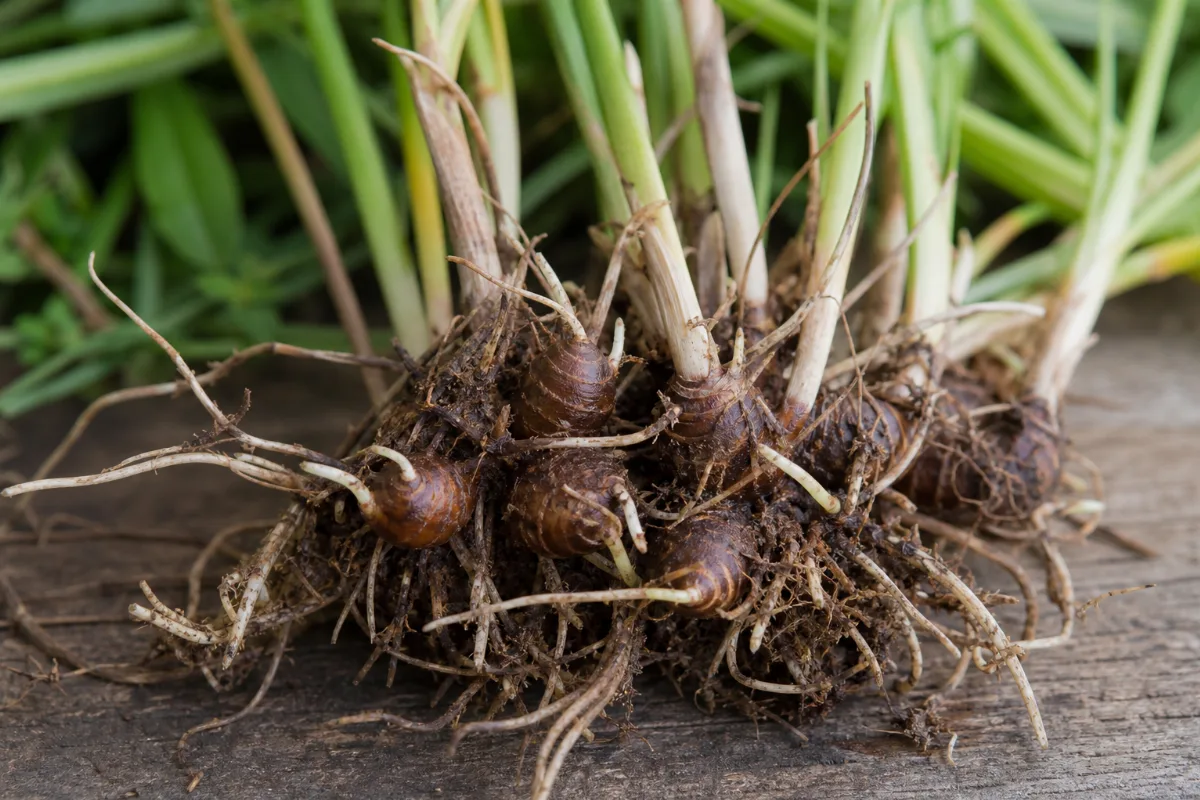
Nut grass, called mustaka in Ayurveda and xiang fu in Chinese medicine, is a root-like rhizome from a sedge plant. It is used traditionally for period problems and stomach complaints. Two small company trials of one extract reported weight loss, but little else has been tested in people. It is not tiger nut, and it should be avoided in pregnancy unless a doctor agrees.
General information, not medical advice. Last substantive update · Not medically reviewed. A named clinician has not signed off on this page. How this page is made
About Nut grass
Nut grass (Cyperus rotundus) is a sedge whose dried rhizome is a leading herb in traditional gynecology and digestive care. Two small company trials of one extract reported weight loss. Most other claims are traditional or from animals. Avoid it in pregnancy unless a doctor agrees.
What it is
Nut grass (Cyperus rotundus) is a sedge, a grass-like plant that is a weed in many countries. Its underground rhizome is the part used as medicine, called mustaka in Ayurveda and xiang fu in Chinese medicine.
It is not tiger nut (Cyperus esculentus), a different species whose small tubers are eaten as a food and drink. The two are easy to mix up because the Latin names share the first word.
The rhizome contains aromatic oils such as cyperene, cyperotundone and alpha-cyperone, plus flavonoids.
What the research shows
Chinese medicine calls it the 'holy medicine' of gynecology and uses it for irregular periods, pain and stomach complaints. We found no human trial of nut grass alone for any of these.
The only human trials are two small 90-day studies of one branded extract in adults with obesity. Both reported more weight and waist loss than placebo, and better blood fats. Both were run by the extract's maker, and the larger one also gave piperine, a diet and exercise advice to everyone.
Reviews of Chinese herbal formulas for PCOS and infertility found better pregnancy rates, and nut grass is one of many herbs in those formulas, so they say nothing about the herb alone. Blood sugar, liver and mood findings come from rats and cell dishes.
At a glance
Traditional uses history, not proof
- Irregular or painful periods (Chinese medicine, 'holy medicine' of gynecology)
- Stomach ache, indigestion and fullness
- 'Soothing the liver' and relieving low mood, in Chinese medicine
Studied for research
- Weight and waist: two small industry-linked trials of one extract, low certainty
- Blood fats: side result of the same trials, very low certainty
- PCOS and fertility: only as part of multi-herb formulas
- Blood sugar, liver, mood and pain: lab and animal only
Main compounds
- Cyperene and cyperotundone (rhizome oil)
- Alpha-cyperone
- Flavonoids such as quercetin; stilbenes in the branded extract
Common forms
- Dried rhizome
- Decoction in multi-herb formulas
- Branded standardised extract capsule
Research links: Review: Cyperi Rhizoma ethnomedicine, phytochemistry and pharmacology (2022) · Weight trial of the extract with piperine (2025) · GBIF: Cyperus rotundus · Research Library · Genes & Biomarkers Library
The plant and its history
- Accepted scientific name
- Cyperus rotundus L.
- Naming authority
- Accepted in the GBIF backbone (key 2714818), exact match. Not the same as Cyperus esculentus L. (tiger nut, GBIF key 2716226), a separate accepted species.
- Common names
- Nut grass (English); Nutgrass (English); Purple nutsedge (English); Mustaka (Sanskrit); Musta (Sanskrit); Xiang fu (Chinese (pinyin)); Cyperi rhizoma (Latin (drug name))
- Botanical family
- Cyperaceae (sedge family), a grass-like family, not a true grass and not a nut-bearing tree.
- Classification
- Plantae > Poales > Cyperaceae > Cyperus > Cyperus rotundus
- Native range
- Not verified from a primary source read. It is a weed in over 90 countries (summary-only, IUCN).
- Habitat
- Fields and disturbed ground; spreads by underground tubers (summary-only).
- What the plant looks like
- Roots: Rhizomes and small tubers underground are the medicinal part (Cyperi Rhizoma).; Stems: Not verified.; Leaves: Not verified.; Flowers: Not verified.; Fruit: Not verified.
- Cultivation
- Not verified. Mostly a weed.
- Harvest and processing
- Traditional processing: cleaned, boiled or steamed, then dried (summary-only).
- Look-alikes and adulterants
- Name: Cyperus esculentus (tiger nut, chufa); Note: A separate accepted species with an edible tuber eaten as a food and drink. EFSA found its oil safe as a food. Not the medicinal nut grass; do not mix up research on the two.; Name: Other Cyperus species and an unrelated rhizome; Note: The 2022 review warns of substitutes that must be carefully identified (summary-only).
- Sustainability and conservation
- Not applicable: an invasive weed (summary-only).
Traditional use and history history, not clinical proof
| Tradition or era | Documented use | Source |
|---|---|---|
| Traditional Chinese medicine | Xiang fu: soothes the liver, relieves depression, regulates qi and periods, relieves pain. Called the 'holy medicine' of gynecology. | p36278199 |
| Ayurveda | Mustaka is a traditional Ayurvedic herb. The specific uses were not verified in a source read for this profile. | p36278199 |
Traditional use shows how a plant was used. It does not show that a supplement works or is safe today.
What is inside, and how it may work
What the plant contains and how those compounds act in cells and animals. Laboratory and animal mechanisms are not proven effects in people.
Main compounds
| Compound | Family | Where it is concentrated | Activity studied | Level of evidence |
|---|---|---|---|---|
| Cyperene PubChem 12308843 | sesquiterpene (volatile oil) | Rhizome Not given | Named in our earlier summary as a main volatile compound; no effect shown in people. 10 | Laboratory research |
| Cyperotundone PubChem 118722630 | sesquiterpene ketone | Rhizome Not given | Named in our earlier summary; no effect shown in people. 10 | Laboratory research |
| Alpha-cyperone PubChem 6452086 | sesquiterpene ketone | Rhizome Not given | Studied in cells and animals for inflammation and other effects. Not shown in people. 10 | Laboratory research |
| Quercetin PubChem 5280343 | flavonoid | Tuber Not given | Reported as the main flavonoid in one tuber extract (47.8%); lab and rat effects only. 1 10 | Animal research |
| Piceatannol, scirpusin A and scirpusin B | stilbenes | Rhizome 5% total stilbenoids and 6 to 8% stilbenes in the branded extracts | The marker compounds of the branded weight extract. Reduced fat-cell formation in a dish and weight gain in mice; human trials used the whole extract. 7 8 | Controlled trial |
Mechanisms, receptors and pathways
| Target or pathway | Gene or receptor | What was found | Level |
|---|---|---|---|
| Fat-cell formation | Adipogenesis (3T3-L1 adipocytes) | Stilbene-standardised extract reduced fat-cell formation in a dish and weight gain in obese mice. 7 | Laboratory research |
| Sugar and fat digestion enzymes | DPP-4, PTP1B, lipase, alpha-amylase | Tuber extract inhibited these enzymes in the lab and improved markers in diabetic rats. 1 | Animal research |
| Drug-metabolising gene switch | PXR / CYP3A4 | Three fractions mildly activated PXR-driven CYP3A4 in human liver cells in a dish. 11 | Laboratory research |
Absorption, metabolism and elimination
- Absorption
- Not studied in people for nut grass compounds. The 2025 trial added piperine, sold as a bioavailability enhancer.
- Distribution
- Not studied.
- Metabolism
- Not studied in people.
- Elimination
- Not studied.
- Bioavailability
- Unknown.
Isolated compounds versus whole extracts
Human trials tested one branded rhizome extract, not the whole root. Traditional use is the whole rhizome, usually boiled with other herbs. Results from one do not carry over to the other.
Nutritional composition
The medicinal rhizome is not a nutrient source. Do not confuse with tiger nut (Cyperus esculentus), an edible tuber rich in oleic-acid oil.
1 low certainty2 very low certainty6 not enough evidence
What is Nut grass good for?
The main proposed uses and how strong the human evidence is for each. 'Insufficient' means there is not enough research to say. For nut grass, no use has more than low-certainty human evidence.
Benefits, one by one
Each card is a research question, not a promise. Tap a goal to filter. Open a card to see the studies, doses and limits.
Weight management in obesity (branded extract)
Low certaintyTwo small 90-day trials of one branded nut grass extract reported more weight and waist loss than placebo. Both were run by the extract's maker, and the larger one also gave piperine, a diet plan and exercise advice to everyone. Nobody else has repeated them.
2 studiesBranded rhizome extract (about 5 to 8% stilbenes); the 2025 trial add…
Studies, doses and limits
What the trials found
A 2022 pilot (30 adults, 90 days) and a 2025 trial (96 adults, 90 days) of Cyperus rotundus rhizome extract. Both are placebo-controlled and double-blind. Both lists maker employees among the authors.
Results
2022 pilot: weight, waist circumference and BMI fell more than placebo and no adverse effects were reported. 2025 trial (extract plus piperine, with diet and exercise advice for all): greater falls in weight, BMI, waist and hip circumference than placebo; no adverse events.
Effect sizes as reported
Significant differences reported; exact figures and confidence intervals were not in the abstracts read.
Why this rating
Two small, short trials from the same company, with a branded product. One included piperine and lifestyle advice. No independent replication, and exact numbers were not checked beyond the abstracts.
Form and dose studied
Branded rhizome extract (about 5 to 8% stilbenes); the 2025 trial added piperine. This is not the raw root or tea. Ask a doctor or pharmacist about amounts.
Who was studied
Adults with obesity (BMI 30 and above), 90 days.
Limits
Industry-linked, 90 days only, results apply to one extract and not to raw rhizome or tea. Long-term weight change is unknown.
Why researchers looked
Lab work suggested the stilbene compounds in the rhizome (piceatannol, scirpusin A and B) reduce fat-cell formation, so a standardised extract was tested.
Traditional use
Not a traditional weight-loss herb. Traditional use is for gut, liver-qi and menstrual complaints.
Proposed mechanism Laboratory research
Stilbene compounds reduced fat-cell formation in a dish and weight gain in obese mice. Not shown to be the reason for any effect in people.
A proposed mechanism does not show that the effect happens in people.
Reported as well tolerated, but these trials were small. See Safety for the unknowns.
Blood fats (cholesterol and triglycerides)
Very low certaintyIn the same two company trials, blood fat results improved more with the extract than with placebo. This is a side result of weight trials, not a test of the extract as a cholesterol treatment.
2 studiesSame branded extract as above. Ask a doctor or pharmacist about amoun…
Studies, doses and limits
What the trials found
The 2022 pilot reported a significant improvement in the serum lipid profile; the 2025 trial reported better lipid profiles and Apolipoprotein B-100. Details by marker were not in the abstracts read.
Results
Improvements in lipid profile and ApoB-100 versus placebo, in people with obesity.
Effect sizes as reported
Not quantified in the abstracts read. Our earlier summary of the 2025 full text noted total cholesterol and triglycerides fell more than with placebo while LDL and HDL differences were not significant (summary-only).
Why this rating
Secondary outcomes, industry-linked, single product, and some markers did not differ (summary-only).
Form and dose studied
Same branded extract as above. Ask a doctor or pharmacist about amounts.
Who was studied
Adults with obesity.
Limits
Not designed for people with high cholesterol. No independent data. Do not replace prescribed cholesterol medicine.
Why researchers looked
Blood fats were secondary outcomes in the obesity trials.
Traditional use
None specific.
Proposed mechanism Pharmacological theory
Not established. Possibly linked to the weight change.
A proposed mechanism does not show that the effect happens in people.
Tell your doctor about any supplement if you take cholesterol medicine.
Low mood and stress (traditional use, lab and animal findings only)
Not enough evidenceChinese medicine uses xiang fu to 'soothe the liver and relieve depression'. That is an old description, not a trial result. We found no human trial of nut grass for mood.
1 studiesNot tested in people.
Studies, doses and limits
What the trials found
No human trial of nut grass alone for mood or depression was found.
Results
No human result. A 2025 study of mixed volatile herbal extracts and emotional states exists but was not read.
Effect sizes as reported
None for people.
Why this rating
Traditional description and animal work only.
Form and dose studied
Not tested in people.
Who was studied
Not applicable.
Limits
Animal studies cannot show an effect on human mood. Do not use in place of care for depression.
Why researchers looked
The 2022 review lists antidepressant effects among reported pharmacology, mostly in animals.
Traditional use
In classical Chinese medicine, 'liver qi stagnation' covers mood swings, chest tightness and period pain.
Proposed mechanism Laboratory research
Animal and lab studies suggest several plant chemicals act on stress and inflammation pathways. Not shown in people.
A proposed mechanism does not show that the effect happens in people.
Low mood that lasts more than two weeks, or thoughts of self-harm, need a doctor.
Irregular or painful periods (traditional use)
Not enough evidenceIn Chinese medicine xiang fu is called the 'holy medicine' of gynecology and is used for irregular periods and period pain. That is traditional use. We found no human trial of nut grass on its own for period problems.
1 studiesUsually a decoction in multi-herb formulas. Ask a doctor or pharmacis…
Studies, doses and limits
What the trials found
The 2022 review describes the traditional use. Human studies found were of multi-herb formulas, where nut grass cannot be separated out.
Results
No result for nut grass alone.
Effect sizes as reported
None.
Why this rating
Traditional use only; no controlled human trial of the single herb.
Form and dose studied
Usually a decoction in multi-herb formulas. Ask a doctor or pharmacist about amounts.
Who was studied
Adults.
Limits
Painful or heavy periods can have causes that need a doctor. Traditional use is not a safety record. See Safety for hormone and pregnancy cautions.
Why researchers looked
It is one of the most used herbs in traditional gynecology.
Traditional use
Classical Chinese texts: regulates qi and periods, relieves pain. Usually boiled with other herbs in formulas.
Proposed mechanism Laboratory research
Not established in people. Lab work reports pain-relieving and anti-inflammatory effects.
A proposed mechanism does not show that the effect happens in people.
Do not use in place of medical care for painful, heavy or missed periods.
PCOS and fertility (inside multi-herb formulas)
Very low certaintyTwo reviews of Chinese herbal formulas found better pregnancy rates than usual care or placebo, and nut grass was among the most used herbs. But the formulas contain many herbs, so the reviews cannot say what nut grass did.
2 studiesMany different formulas; no single nut grass preparation. Ask a docto…
Studies, doses and limits
What the trials found
A 2026 meta-analysis of 72 trials (5,308 women with obesity-related PCOS) and a 2024 meta-analysis of 18 trials (2,662 women with infertility). Cyperus rotundus was part of a common herb combination in the first and the third most used herb in the second.
Results
PCOS review: formulas plus usual care improved clinical pregnancy rate (OR 3.03, 95% CI 2.05 to 4.48, moderate certainty); efficacy rate OR 3.73 (low); HOMA-IR, BMI, testosterone and LH/FSH ratio improved (very low to low). Infertility review: higher pregnancy rate than placebo, adverse events mild and infrequent.
Effect sizes as reported
OR 3.03 for pregnancy in the PCOS review; applies to whole formulas.
Why this rating
The reviews' own certainty ranged from very low to moderate for formulas, with high heterogeneity and publication bias. For nut grass itself there is no evidence.
Form and dose studied
Many different formulas; no single nut grass preparation. Ask a doctor or pharmacist about amounts.
Who was studied
Women with PCOS or infertility in Chinese trials.
Limits
Cannot separate nut grass from other herbs. Mostly small Chinese trials. High heterogeneity and publication bias.
Why researchers looked
Nut grass often appears in formulas for infertility and PCOS.
Traditional use
Used in East Asian formulas for 'liver qi' and 'kidney deficiency' patterns.
Proposed mechanism Pharmacological theory
Not established. Mixed formulas.
A proposed mechanism does not show that the effect happens in people.
Hormone-related conditions need a doctor. See Safety.
Digestive complaints (traditional use)
Not enough evidenceThe rhizome is traditionally used for stomach ache, indigestion and a feeling of fullness. We found no human trial for any digestive condition.
1 studiesTraditional decoctions. Ask a doctor or pharmacist about amounts.
Studies, doses and limits
What the trials found
No human trial found.
Results
None.
Effect sizes as reported
None.
Why this rating
Traditional use only.
Form and dose studied
Traditional decoctions. Ask a doctor or pharmacist about amounts.
Who was studied
Adults.
Limits
No trial, so benefit and safety for stomach complaints are unknown.
Why researchers looked
Listed among traditional uses in the 2022 review.
Traditional use
Spleen and stomach 'qi stagnation' and hernia pain in Chinese medicine; similar uses in Ayurveda (mustaka).
Proposed mechanism Pharmacological theory
Not established.
A proposed mechanism does not show that the effect happens in people.
Ongoing stomach pain, vomiting blood or black stools need a doctor.
Blood sugar (lab and animal findings only)
Not enough evidenceNut grass extracts blocked sugar- and fat-digesting enzymes in the lab and improved markers in diabetic rats. We found no human trial for blood sugar.
2 studiesNot tested in people.
Studies, doses and limits
What the trials found
No human trial for blood sugar or diabetes was found.
Results
Animal and lab only.
Effect sizes as reported
None for people.
Why this rating
Lab and rat work only.
Form and dose studied
Not tested in people.
Who was studied
Not applicable.
Limits
Animal and lab results often do not carry over to people.
Why researchers looked
Reviews list blood-sugar-lowering effects among reported animal findings.
Traditional use
Not a traditional diabetes remedy in the sources read.
Proposed mechanism Animal research
Tuber extract rich in quercetin and luteolin compounds inhibited DPP-4, PTP1B, lipase and alpha-amylase in the lab, and raised liver glycogen in diabetic rats.
A proposed mechanism does not show that the effect happens in people.
If you take diabetes medicine, a blood-sugar effect could in theory add to it. See Safety.
Liver protection (lab and animal findings only)
Not enough evidenceIn rats with chemically injured livers, a nut grass extract brought liver blood markers back toward normal. This has not been tested in people with liver disease.
1 studiesNot tested in people.
Studies, doses and limits
What the trials found
No human liver study found.
Results
Animal and cell results only.
Effect sizes as reported
None for people.
Why this rating
Rats and cell lines only.
Form and dose studied
Not tested in people.
Who was studied
Not applicable.
Limits
Do not use as treatment for hepatitis or fatty liver.
Why researchers looked
Traditionally used to 'soothe the liver', which is a Chinese-medicine idea and not a measured liver benefit.
Traditional use
The 'liver' in Chinese medicine is a function pattern, not only the organ.
Proposed mechanism Animal research
Extract fractions protected liver cells and rat livers after carbon tetrachloride injury. Mild activation of the CYP3A4 gene switch in liver cells.
A proposed mechanism does not show that the effect happens in people.
Hepatitis or liver disease needs a doctor. See Safety for the liver and drug-enzyme notes.
Pain and inflammation (lab and animal findings only)
Not enough evidenceReviews report calming effects on inflammation and pain in lab and animal studies. None of this is shown in people.
1 studiesNot tested in people.
Studies, doses and limits
What the trials found
No human trial found.
Results
None.
Effect sizes as reported
None for people.
Why this rating
Lab and animal only.
Form and dose studied
Not tested in people.
Who was studied
Not applicable.
Limits
Cannot show benefit for any human pain.
Why researchers looked
Terpenes such as cyperene and cyperotundone and flavonoids are plausible calming chemicals.
Traditional use
Used for pain in Chinese medicine (chest pain, hernia pain, period pain).
Proposed mechanism Laboratory research
Cell and animal findings only.
A proposed mechanism does not show that the effect happens in people.
Severe or sudden pain needs a doctor.
Connections to the rest of health
How Nut grass connects to the rest of our health knowledge graph. Every link says what kind of connection it is. A safety link (for example to the liver) is a warning, not a benefit. A study that merely mentions a topic never creates a benefit link.
Explore every connection: goals, body systems, organs, symptoms, genes
A. Wellness goals
| Connected to | Kind of connection | Evidence status | Context | Studies |
|---|---|---|---|---|
| Weight Management | Potential benefit | Low certainty | Weight management in obesity (branded extract): Two small 90-day trials of one branded nut grass extract reported more weight and waist loss than placebo. Both were run by the extract's maker, and the larger one also gave piperine, a diet plan and exercise advice to everyone. Nobody else has repeated them. Blood fats (cholesterol and triglycerides): In the same two company trials, blood fat results improved more with the extract than with placebo. This is a side result of weight trials, not a test of the extract as a cholesterol treatment. | 7 8 |
| Metabolic Health | Potential benefit | Low certainty | Weight management in obesity (branded extract): Two small 90-day trials of one branded nut grass extract reported more weight and waist loss than placebo. Both were run by the extract's maker, and the larger one also gave piperine, a diet plan and exercise advice to everyone. Nobody else has repeated them. Blood fats (cholesterol and triglycerides): In the same two company trials, blood fat results improved more with the extract than with placebo. This is a side result of weight trials, not a test of the extract as a cholesterol treatment. | 7 8 |
| Mood Support | Traditional use | Not enough evidence | Low mood and stress (traditional use, lab and animal findings only): Chinese medicine uses xiang fu to 'soothe the liver and relieve depression'. That is an old description, not a trial result. We found no human trial of nut grass for mood. | 13 |
| Womens Wellness | Traditional use | Not enough evidence | Irregular or painful periods (traditional use): In Chinese medicine xiang fu is called the 'holy medicine' of gynecology and is used for irregular periods and period pain. That is traditional use. We found no human trial of nut grass on its own for period problems. PCOS and fertility (inside multi-herb formulas): Two reviews of Chinese herbal formulas found better pregnancy rates than usual care or placebo, and nut grass was among the most used herbs. But the formulas contain many herbs, so the reviews cannot say what nut grass did. | 13 12 5 |
| Digestive Support | Traditional use | Not enough evidence | Digestive complaints (traditional use): The rhizome is traditionally used for stomach ache, indigestion and a feeling of fullness. We found no human trial for any digestive condition. | 13 |
| Metabolic Health | Preliminary mechanism | Not enough evidence | Blood sugar (lab and animal findings only): Nut grass extracts blocked sugar- and fat-digesting enzymes in the lab and improved markers in diabetic rats. We found no human trial for blood sugar. | 1 13 |
| Liver Support | Preliminary mechanism | Not enough evidence | Liver protection (lab and animal findings only): In rats with chemically injured livers, a nut grass extract brought liver blood markers back toward normal. This has not been tested in people with liver disease. | 11 |
| Inflammation Balance | Preliminary mechanism | Not enough evidence | Pain and inflammation (lab and animal findings only): Reviews report calming effects on inflammation and pain in lab and animal studies. None of this is shown in people. | 13 |
B. Body systems
| Connected to | Kind of connection | Evidence status | Context | Studies |
|---|---|---|---|---|
| Reproductive health | Contraindication | Not enough evidence | Traditional gynecology use; no pregnancy or breastfeeding safety data. Preparation or compound: Rhizome |
13 |
| Metabolism & weight | Drug or supplement interaction | Not enough evidence | Possible additive effect with diabetes medicines (animal data only). Preparation or compound: Rhizome extract |
1 |
| Reproductive health | Traditional use | Not enough evidence | Traditional gynecology use; no pregnancy or breastfeeding safety data. Preparation or compound: Rhizome |
13 |
| Metabolism & weight | Potential benefit | Low certainty | Two small industry-linked trials; low certainty. Preparation or compound: Branded rhizome extract |
7 8 |
| Metabolism Weight | Biological association | Low certainty | Studied for: Weight management in obesity (branded extract) Studied for: Blood fats (cholesterol and triglycerides) | 7 8 1 13 |
| Nervous System | Biological association | Not enough evidence | Studied for: Low mood and stress (traditional use, lab and animal findings only) | 13 |
| Reproductive Health | Biological association | Not enough evidence | Studied for: Irregular or painful periods (traditional use) Studied for: PCOS and fertility (inside multi-herb formulas) | 13 12 5 |
| Digestive System | Biological association | Not enough evidence | Studied for: Digestive complaints (traditional use) Studied for: Liver protection (lab and animal findings only) | 13 11 |
| Immune System | Biological association | Not enough evidence | Studied for: Pain and inflammation (lab and animal findings only) | 13 |
I. Biomarkers
| Connected to | Kind of connection | Evidence status | Context | Studies |
|---|---|---|---|---|
| Body weight, BMI and waist circumference | Biological association | Low certainty | Measured in trials: lowered. A lab change is not the same as a health benefit. | 7 8 |
| Blood lipid profile (cholesterol, triglycerides, ApoB-100) | Biological association | Very low certainty | Measured in trials: improved. A lab change is not the same as a health benefit. | 7 8 |
| Clinical pregnancy rate (from multi-herb formulas) | Biological association | Very low certainty | Measured in trials: raised. A lab change is not the same as a health benefit. | 12 5 |
L. Active compounds
| Connected to | Kind of connection | Evidence status | Context | Studies |
|---|---|---|---|---|
| Cyperene | Biological association | In vitro | Named in our earlier summary as a main volatile compound; no effect shown in people. Preparation or compound: Rhizome |
10 |
| Cyperotundone | Biological association | In vitro | Named in our earlier summary; no effect shown in people. Preparation or compound: Rhizome |
10 |
| Alpha-cyperone | Biological association | In vitro | Studied in cells and animals for inflammation and other effects. Not shown in people. Preparation or compound: Rhizome |
10 |
| Quercetin | Biological association | Animal | Reported as the main flavonoid in one tuber extract (47.8%); lab and rat effects only. Preparation or compound: Tuber |
1 10 |
| Piceatannol, scirpusin A and scirpusin B | Biological association | Rct | The marker compounds of the branded weight extract. Reduced fat-cell formation in a dish and weight gain in mice; human trials used the whole extract. Preparation or compound: Rhizome |
7 8 |
Each connection is stored with the ingredient, the connected record, the kind of connection, the evidence status, the supporting studies, the preparation or compound involved, and a review date (last reviewed October 25, 2026).
The evidence
The research centre for Nut grass. Every record here was checked against PubMed or the publisher's page; we never list a study we have not verified.
Evidence by outcome
Bars show how many studies we found for each outcome, not how well it works. People are added up across trials only (reviews are not added, to avoid double counting).
How we rate evidence
High certainty
Several well-run trials or reviews agree; further research is unlikely to change the picture much.
Moderate certainty
Good trials point the same way, but some doubt remains.
Low certainty
Small, short or inconsistent trials. The finding could change with better research.
Very low certainty
Very little or very weak human data. Treat as a possibility only.
Mixed findings
Trials or reviews disagree with each other.
Not enough evidence
Not enough human research to say either way.
Evidence against
Good research found no benefit, or found harm.
We take the reviewers' own risk-of-bias and GRADE statements where they exist, and otherwise judge from study size, design, consistency, directness and whether a product matches what is sold. Many publications do not make evidence high. Method note: We started from our existing nut grass summary, then read the abstract of every PubMed study cited, checked plant names in GBIF and compounds in PubChem, and searched NCBI Bookshelf for LiverTox and LactMed (no entry found). Not verified: EMA, NCCIH, FDA, WHO and Commission E were not searched again; the IUCN page and details from the full text of the 2022 review come from our earlier summary. Certainty ratings are the compiler's reading.
Study library: every study we checked 13
| Study | Design | People | Product, dose, length | Result |
|---|---|---|---|---|
| Abdella 2024 Antiobesity and antidiabetes effects of Cyperus rotundus rhizomes presenting protein tyrosine phosphatase, dipeptidyl peptidase 4, metabolic enzymes, stress oxidant and inflammation inhibitory potential Heliyon · PMID 38486768 · DOI |
Animal study animal |
Test-tube enzyme assays and diabetic rats | Tuber extract of Cyperus rotundus (rich in quercetin and luteolin compounds) tuber Not reproduced here |
Extract blocked digestive and blood-sugar-related enzymes (DPP-4, PTP1B, lipase, alpha-amylase) in the lab. In diabetic rats it reduced inflammatory enzyme activity, raised antioxidant enzymes and raised liver glycogen. Lab and animal only Methods, limits and fundingOutcomes: Enzyme inhibition, antioxidant enzymes, glycogen Limitations: Rat and enzyme work. Not tested in people with diabetes. Funding and conflicts: A competing-interest statement is present; its content was cut off in the record read Read: abstract |
| EFSA Panel on Nutrition 2024 Safety of Tiger nuts (Cyperus esculentus) oil as a novel food pursuant to Regulation (EU) 2015/2283 EFSA J · PMID 39606089 · DOI |
Authoritative guidance |
General population (food safety opinion) | Cold-pressed oil from tiger nuts (Cyperus esculentus) tuber (tiger nut) Not reproduced here |
EFSA says tiger nut (Cyperus esculentus) is an edible tuber with a history of food use, and finds its cold-pressed oil safe under the proposed conditions of use. This is a different species from Cyperus rotundus (nut grass) and says nothing about the medicinal rhizome. Food-safety opinion for a different species Methods, limits and fundingLimitations: About a different species and a refined oil. Cited only to show the two plants are not the same. Funding and conflicts: Public regulator Read: abstract |
| GBIF Secretariat 2026 GBIF Backbone: Cyperus rotundus L. (usageKey 2714818) GBIF species match API, checked 2026-10-25 · Source |
Reference database n/a |
n/a | n/a n/a Not reproduced here |
Exact match, ACCEPTED species, family Cyperaceae, order Poales. Identity confirmed Methods, limits and fundingLimitations: Synonym list not pulled. Funding and conflicts: Public database Read: full-text |
| GBIF Secretariat 2026 GBIF Backbone: Cyperus esculentus L. (usageKey 2716226) GBIF species match API, checked 2026-10-25 · Source |
Reference database n/a |
n/a | n/a n/a Not reproduced here |
Exact match, ACCEPTED species (separate from Cyperus rotundus), family Cyperaceae, order Poales. Identity confirmed; a different accepted species Methods, limits and fundingLimitations: Synonym list not pulled. Funding and conflicts: Public database Read: full-text |
| Hyun 2024 Herbal therapeutics for female infertility: A systematic review and meta-analysis J Ethnopharmacol · PMID 37778518 · DOI |
Systematic review |
2662 18 randomised trials, 2,662 women with infertility |
East Asian herbal medicine formulas; Cyperus rotundus (Xiangfuzi) was the third most used single herb various Not reproduced here |
Cyperus rotundus (Xiangfuzi) was the third most frequently used herb across the included formulas, after Cuscuta chinensis and Angelica gigas. Pooled analysis found a higher pregnancy rate with herbal medicine than placebo; adverse events were generally mild and infrequent. Reporting quality by CONSORT was poor. Higher pregnancy rate with mixed herbal formulas; not specific to Cyperus Methods, limits and fundingOutcomes: Pregnancy rate, adverse events Limitations: Mixed formulas; Cyperus cannot be separated from the other herbs. Poor reporting quality. Searches ended July 2021. Funding and conflicts: No competing interests declared Read: abstract |
| IUCN Invasive Species Specialist Group 2026 Cyperus rotundus species profile (IUCN Global Invasive Species Database) IUCN GISD · Source |
Reference database n/a |
n/a | n/a n/a Not reproduced here |
Per our earlier summary: the plant is a weed in over 90 countries and spreads through underground tubers. Page not re-opened for this profile. Context only Methods, limits and fundingLimitations: Summary-only: not re-opened. Funding and conflicts: Public database Read: summary-only |
| Majeed 2022 The Anti-Obesity Potential of Cyperus rotundus Extract Containing Piceatannol, Scirpusin A and Scirpusin B from Rhizomes: Preclinical and Clinical Evaluations Diabetes Metab Syndr Obes · PMID 35177914 · DOI |
Controlled trial |
30 30 adults with obesity (BMI 30 to 40), 90 days |
Branded Cyperus rotundus rhizome extract standardised to 5% stilbenoids (piceatannol, scirpusin A and B) versus placebo rhizome Not reproduced here 90 days · vs Placebo |
Pilot trial: body weight fell, with significant decreases in waist circumference and BMI and a significant improvement in the blood-fat profile in the extract group, with no adverse effects reported. The same paper also tested the extract in fat cells and obese mice (lab and animal results). Reduction in weight, waist and BMI; exact numbers not in the abstract Methods, limits and fundingOutcomes: Body weight, waist, BMI, blood fats, safety Limitations: Pilot of 30 people. Exact effect sizes and confidence intervals not in the abstract. Authors are all employed by the maker; patents declared. One branded extract, not the raw root. Funding and conflicts: All authors affiliated with Sami Labs/Sabinsa, which makes the extract; patents declared (industry-linked) Read: abstract |
| Majeed 2025 Efficacy and safety of Cyperus rotundus extract on weight management in obese individuals: A randomized, double-blind, placebo-controlled study Medicine (Baltimore) · PMID 41305713 · DOI |
Controlled trial |
96 96 adults with obesity, 90 days, all given a prescribed diet and exercise plan |
Branded Cyperus rotundus extract (6 to 8% stilbenes) combined with piperine, versus placebo rhizome Not reproduced here 90 days · vs Placebo plus diet and exercise advice |
Compared with placebo, the extract-plus-piperine group had significantly greater falls in body weight, BMI, waist and hip circumference, and improvements in blood fats and Apolipoprotein B-100. No adverse events were reported and laboratory values stayed in the normal range. Greater reductions in weight and waist than placebo; exact numbers not in the abstract Methods, limits and fundingOutcomes: Weight, BMI, waist, hip, waist-hip ratio, blood fats, ApoB-100, safety Limitations: Both groups followed diet and exercise advice, so the extract was an add-on. Piperine was in the product, so the effect of the extract alone is unknown. Exact numbers not in the abstract. 90 days only. Most authors are employed by the maker. Funding and conflicts: Six of eight authors affiliated with Sami-Sabinsa/Sabinsa, which makes the extract (industry-linked) Read: abstract |
| NCBI 2026 NCBI Bookshelf search for Cyperus rotundus with LiverTox and LactMed NCBI Bookshelf (esearch), checked 2026-10-25 · Source |
Reference database n/a |
n/a | n/a n/a Not reproduced here |
Both searches returned 0 records, so no LiverTox or LactMed entry for this herb was found. No entry found Methods, limits and fundingLimitations: A search miss is not proof that no record exists under another name. Funding and conflicts: Public database Read: full-text |
| NCBI PubChem 2026 PubChem compound records: (-)-cyperene (CID 12308843), cyperotundone (CID 118722630), (+)-alpha-cyperone (CID 6452086), quercetin (CID 5280343) PubChem PUG REST, checked 2026-10-25 · Source |
Reference database n/a |
n/a | n/a n/a Not reproduced here |
Records exist and match the named compounds and formulas (cyperene C15H24; cyperotundone and alpha-cyperone C15H22O; quercetin C15H10O7). Identity of compounds confirmed Methods, limits and fundingLimitations: Confirms the compound exists, not that it is in a given product. Funding and conflicts: Public database Read: full-text |
| Parvez 2019 The in vitro and in vivo anti-hepatotoxic, anti-hepatitis B virus and hepatic CYP450 modulating potential of Cyperus rotundus Saudi Pharm J · PMID 31061625 · DOI |
Animal study animal |
Human liver cell lines and Wistar rats | Ethanol extract and fractions of Cyperus rotundus rhizome rhizome Not reproduced here |
In rats injured with carbon tetrachloride, the extract normalised liver blood markers (AST, ALT, GGT, ALP, bilirubin). In liver cells the fractions mildly activated the receptor PXR that drives the drug-metabolising gene CYP3A4. The authors argue this suggests safe use with drugs; we treat it only as a hint that drug-handling enzymes could be affected. Lab and animal only Methods, limits and fundingOutcomes: Liver markers, anti-hepatitis B activity, CYP3A4 reporter Limitations: Rat and cell-dish work. Mild CYP3A4 activation in cells could, in theory, change levels of some medicines; it was not tested in people. Funding and conflicts: Not stated in the abstract Read: abstract |
| Tang 2026 Traditional herbal medicine for obesity-related polycystic ovary syndrome: a meta-analysis and data mining study Front Pharmacol · PMID 41640680 · DOI |
Systematic review |
5308 72 randomised trials, 5,308 women with obesity-related PCOS |
Traditional herbal medicine formulas (many different) added to conventional treatment; Cyperus rotundus appeared in the most common herb combination various Not reproduced here |
In pooled results, herbal formulas plus usual treatment beat usual treatment alone for clinical efficacy rate (OR 3.73, low certainty) and clinical pregnancy rate (OR 3.03, moderate certainty), with better HOMA-IR, BMI, testosterone and LH/FSH ratio (low or very low certainty). Heterogeneity was high (I2 up to 89.3%) and publication bias was noted. The data-mining step linked Poria cocos, Citrus reticulata, Atractylodes lancea and Cyperus rotundus as the strongest core combination. Pregnancy rate OR 3.03 (moderate certainty) for mixed formulas; not specific to Cyperus (Pregnancy rate OR 3.03, 95% CI 2.05 to 4.48; efficacy OR 3.73, 95% CI 3.12 to 4.46) Methods, limits and fundingOutcomes: Clinical efficacy, pregnancy rate, HOMA-IR, BMI, testosterone, LH/FSH Limitations: The result is for many different formulas, not for Cyperus rotundus alone. High heterogeneity and publication bias. Most trials come from Chinese medicine settings. Funding and conflicts: No competing interests declared Registration: PROSPERO CRD420251111078 Read: abstract |
| Wang 2022 Systematic review of ethnomedicine, phytochemistry, and pharmacology of Cyperi Rhizoma Front Pharmacol · PMID 36278199 · DOI |
Systematic review animal |
Not applicable (traditional use plus mostly lab and animal studies) | Cyperi Rhizoma (dried rhizome of Cyperus rotundus) and its extracts rhizome Not reproduced here |
Abstract: traditional use to soothe the liver, relieve depression, regulate qi and periods, and relieve pain; known as the 'holy medicine' of gynecology. Main constituents are volatile oil, flavonoids and terpenes. Reported lab and animal effects include antidepressant, blood-sugar-lowering, antioxidant, anti-inflammatory, fever-lowering and pain-relieving effects. Our earlier summary of the full text adds that most pharmacology is animal, cell or computer work, few clinical studies exist, and that safe clinical dose and human safety still need study (summary-only). Descriptive review; no pooled human result Methods, limits and fundingOutcomes: Traditional uses, chemistry, pharmacology Limitations: Only the abstract was re-opened for this profile; statements from the full text come from our earlier summary (summary-only). Narrative review, not a Cochrane-type review. Funding and conflicts: No competing interests declared Read: abstract |
What we do not know yet
- No human trial of nut grass alone for periods, PCOS, fertility, digestion, blood sugar or liver.
- No independent trial of the weight extract; both trials come from its maker.
- No pregnancy, breastfeeding, hormone, clotting or liver safety data.
- EMA, NCCIH, WHO and Commission E were not re-searched.
- Allergy and long-term safety are unstudied.
How new research is added
New studies are found by a saved PubMed search and reviewed before the page is updated.
Lab markers
What changed in blood or saliva tests during trials. A changed number is not the same as feeling or being healthier, and we give no "normal ranges".
Metabolic 1
Body weight, BMI and waist circumference
Lowered in trials
Simple body measures used to track obesity: weight, body mass index and waist size.
Low certaintyResults and what it means
Why it was measured
Primary outcomes in both company trials.
Statistical vs. clinical meaning
Statistically significant in the abstracts, but small, short, industry-linked trials; size of the real-world change is unknown.
Safety implication
No adverse events reported in either trial.
| Study | Result | People | Product |
|---|---|---|---|
| 7 | Weight, waist and BMI fell significantly with the extract versus placebo; numbers not in the abstract. | 30 adults with obesity, 90 days | Branded rhizome extract (5% stilbenoids) |
| 8 | Weight, BMI, waist and hip circumference fell significantly more than with placebo; numbers not in the abstract. | 96 adults with obesity, 90 days, all on diet and exercise advice | Branded rhizome extract plus piperine |
Other 2
Blood lipid profile (cholesterol, triglycerides, ApoB-100)
Improved in trials
Blood fats linked to heart and blood-vessel risk.
Very low certaintyResults and what it means
Why it was measured
Secondary outcome in both trials.
Statistical vs. clinical meaning
A side result, not a proven cholesterol effect.
Safety implication
Lab values stayed in the normal range per the abstract.
| Study | Result | People | Product |
|---|---|---|---|
| 8 | Lipid profile and Apolipoprotein B-100 improved versus placebo; LDL and HDL differences were not significant in our earlier summary of the full text (summary-only). | 96 adults with obesity | Branded rhizome extract plus piperine |
Clinical pregnancy rate (from multi-herb formulas)
Raised in trials
The share of women who became pregnant during the trials.
Very low certaintyResults and what it means
Why it was measured
Main outcome in reviews of herbal treatment for PCOS and infertility.
Statistical vs. clinical meaning
A clinical outcome, but for formulas of many herbs; nothing here is specific to nut grass.
Safety implication
Pregnancy safety of the herb itself is not established. See Safety.
| Study | Result | People | Product |
|---|---|---|---|
| 12 | Pooled OR 3.03 (95% CI 2.05 to 4.48), moderate certainty, for herbal formulas added to usual PCOS care. | 72 trials, 5,308 women with obesity-related PCOS | Many herbal formulas; Cyperus rotundus in a common combination |
| 5 | Higher pregnancy rate than placebo; mild and infrequent adverse events. | 18 trials, 2,662 women with infertility | East Asian herbal formulas; Cyperus rotundus the third most used herb |
Safety
What studies and official sources say about side effects, medicines and who should check first. Each point shows what kind of evidence it comes from.
Main points to know 8
- Pregnancy and breastfeeding: no safety data. Nut grass is used in traditional gynecology, including for pregnancy-related complaints, but we found no pregnancy or breastfeeding safety data and no LactMed record. Traditional use is not a safety record. Avoid it unless your doctor or midwife agrees. Authoritative guidance 13 9
- Hormone-related conditions. It is traditionally used for irregular or painful periods and appears in herbal formulas for PCOS and infertility. We found no study that measured its effect on estrogen, progesterone or other hormones in people. If you have a hormone-sensitive condition (such as some breast, uterine or ovarian cancers, endometriosis or fibroids), or take hormone treatments or fertility drugs, ask your doctor first. Pharmacological theory 13 12
- Blood sugar medicines. Extracts lowered blood-sugar-related markers in diabetic rats and blocked sugar-digesting enzymes in the lab. No human data exist. In theory it could add to diabetes medicines. If you take insulin or tablets for diabetes, ask your doctor before using it and check your sugar as advised. Animal research 1
- Blood thinners. We found no report of nut grass changing clotting or interacting with warfarin or other blood thinners. That is an absence of data, not proof of safety. Tell your prescriber if you take a blood thinner or have a bleeding disorder, especially before surgery. Pharmacological theory 13
- Liver. We found no human case of liver injury and no LiverTox record. In rats it protected the liver. Not finding reports is not proof of safety. Stop and seek care if you get yellow eyes or skin, dark urine or severe tiredness. Animal research 11 9
- Allergy. We found no allergy report for nut grass in the sources we read, but allergy has not been studied. Stop if you get itching, rash, swelling or trouble breathing. Do not assume a nut allergy applies: nut grass is a sedge, not a tree nut. Insufficient 13
- Nut grass is not tiger nut. Cyperus rotundus (nut grass, mustaka, xiang fu) is a different species from Cyperus esculentus (tiger nut, chufa). Tiger nut is an edible tuber eaten as a food and as a drink, and EFSA found its oil safe as a food. That opinion does not apply to the medicinal nut grass rhizome. Check the Latin name on any product. Authoritative guidance 3 4 2
- Little human safety data. The two weight trials reported no adverse events in about 126 people for 90 days, but they were small and made by the maker. A review says safe clinical amounts and human safety still need study. Ask a doctor or pharmacist about amounts. Controlled trial 7 8 13
Side effects 4
| Effect | How often | Severity and recovery | Evidence |
|---|---|---|---|
| No adverse events in the two weight trials Branded extract (the larger trial with piperine). Small, short and industry-linked, so rare effects would be missed. | None reported in 30 and 96 adults over 90 days | none reported Not applicable | Controlled trial 7 8 |
| Mild adverse events in herbal formulas for infertility Mixed formulas; cannot be assigned to nut grass. | Described as generally mild and infrequent | mild Not reported | Systematic review 5 |
| Allergic or skin reaction Nothing found in the sources we read. | Not established | unknown Not reported | Insufficient 13 |
| Stomach upset Not reported in the trials read; the aromatic terpenes could in theory upset some stomachs. Theory only. | Not established | unknown Not reported | Insufficient 13 |
Liver
No case of liver injury from nut grass was found in the sources read, and the NCBI Bookshelf search found no LiverTox record. In rats injured with carbon tetrachloride, an extract improved liver blood markers. Not finding reports is not proof of safety. 11 9
How often. No data.
Monitoring. No agency monitoring advice found. People with liver disease should ask a doctor first.
This is a safety connection. It is not evidence that Nut grass supports liver health.
Medicines and supplements 5
| With | Why it matters | Importance | Evidence | What to do |
|---|---|---|---|---|
| Diabetes medicines (insulin, metformin, sulfonylureas) drug | Extract blocked sugar-related enzymes in the lab and improved markers in diabetic rats. | Unknown in people | Animal research Not enough evidence 1 | Ask your doctor before combining; watch for low blood sugar. |
| Blood thinners (warfarin, other anticoagulants, antiplatelets) drug | No clotting effect of nut grass was found in our reading. Flavonoids as a class can sometimes affect platelets; theory only. | Unknown; no report found | Pharmacological theory Not enough evidence 13 | Tell your prescriber. Not tested. |
| Medicines cleared by the liver enzyme CYP3A4 drug | Fractions mildly activated the PXR switch that raises CYP3A4 in human liver cells in a dish. In theory this could lower levels of some medicines. | Unknown; not tested in people | Laboratory research Not enough evidence 11 | Ask a pharmacist if you take transplant, HIV, cancer, birth control or other narrow-margin medicines. |
| Hormone treatments and fertility drugs drug | Traditional use for periods; no hormone measurement in people for nut grass alone. | Unknown | Pharmacological theory Not enough evidence 13 12 | Ask your doctor, especially for hormone-sensitive conditions. |
| Weight-loss and cholesterol medicines drug | The trial extract was given with piperine, which can change how the body absorbs some medicines. Interactions were not studied. | Unknown | Pharmacological theory Not enough evidence 8 | Ask a pharmacist before combining. |
Who should check first 7
| Situation | Advice | Evidence |
|---|---|---|
| Pregnancy and breastfeeding | Avoid unless your doctor or midwife agrees; safety is unknown. | Authoritative guidance 13 9 |
| Known allergy to nut grass or other sedges | Do not use. | Insufficient 13 |
| Hormone-sensitive conditions or fertility treatment | Ask your doctor first. | Pharmacological theory 12 |
| Diabetes treated with medicine | Ask your doctor first and monitor blood sugar. | Animal research 1 |
| Blood thinners or a bleeding disorder, or planned surgery | Tell your prescriber. | Pharmacological theory 13 |
| Liver disease | Ask a doctor first. | Insufficient 11 |
| Children | No safety data found; do not give without a doctor's advice. | Insufficient 13 |
Overdose, product quality and regulators
Summary. No human toxicity study was found. Mouse tests in our earlier summary showed no toxic signs, but a review says the safe clinical amount and human safety still need study.
Animal. Mice showed no toxic signs in tests described in the review (summary-only).
Human doses studied. Not reproduced. Two 90-day trials of a branded extract reported no adverse events.
High dose or long term signals. None found; long-term safety unknown.
Overdose response. No overdose report found.
Genotoxicity. Not found in the sources read.
Toxic plant parts. No toxic plant part is described in the sources read. The rhizome is the part used.
The main quality risk is mix-ups. A review warns that other Cyperus species and an unrelated rhizome can be substituted. No heavy-metal or pesticide study was found.
Nut grass versus tiger nut. Cyperus rotundus and Cyperus esculentus are two separate accepted species in GBIF. Tiger nut is a food tuber; nut grass is the medicinal rhizome. Results for one cannot be applied to the other. 3 4 2
Substitutes. Our earlier summary of the 2022 review notes other Cyperus species and an unrelated rhizome may be substituted and must be carefully identified (summary-only). 13
Wild weed. Nut grass is a weed in over 90 countries (summary-only). Wild plants from roadsides or fields may carry pesticides or pollution. 6
When to get medical help
- Yellow eyes or skin, dark urine or severe tiredness
- Swelling of the face or lips, hives or trouble breathing
- Very low blood sugar signs if you take diabetes medicine: shaking, sweating, confusion
- Unusual bleeding or bruising if you take a blood thinner
- Vaginal bleeding, severe pelvic pain, or a missed period when pregnancy is possible
Stop the supplement and contact a clinician or emergency service. In the US, Poison Control is 1-800-222-1222.
General information only, not medical advice. Ask a clinician or pharmacist before use, especially with medicines, in pregnancy or with a health condition. See the Natural Remedy Safety guide.
Frequently asked questions
What is nut grass used for?
Traditionally for irregular or painful periods, stomach complaints and low mood in Chinese medicine, and for similar complaints in Ayurveda. These are traditional uses, not proven by trials.
Is nut grass the same as tiger nut?
What are mustaka and xiang fu?
They are the Ayurvedic and Chinese names for the dried rhizome of Cyperus rotundus.
Does nut grass help with weight loss?
Does it help period problems?
It is a classic traditional herb for them, but we found no human trial of nut grass alone. See a doctor for heavy, painful or missed periods.
Does it affect hormones?
Is it safe in pregnancy or breastfeeding?
Can I take it with diabetes medicine?
No human data exist. Extracts lowered blood-sugar markers in diabetic rats, so an added effect is possible in theory. Ask your doctor first and check your blood sugar as advised.
Is it safe with blood thinners?
We found no report either way. That is a gap, not proof of safety. Tell your prescriber.
Can it harm the liver?
Can I be allergic to it?
Allergy has not been studied, and we found no report. Stop if you get a rash, swelling or trouble breathing. It is a sedge, not a tree nut.
Do the animal studies on mood and cancer cells matter?
Not yet. They are lab and animal results and do not show a benefit in people.
Explore by health goal
Metabolic HealthWeight ManagementWomens WellnessMood SupportDigestive SupportLiver SupportInflammation Balance
Editorial transparency
- Written by
- AlternativeMed editorial team. Research compiled with AI assistance, then checked against PubMed records.
- Medical review
- None. This page has not been reviewed by a physician or pharmacist.
- First published
- 2026-10-25
- Last substantive update
- 2026-10-25
- How we research
- We started from our existing nut grass summary, then read the abstract of every PubMed study cited, checked plant names in GBIF and compounds in PubChem, and searched NCBI Bookshelf for LiverTox and LactMed (no entry found). Not verified: EMA, NCCIH, FDA, WHO and Commission E were not searched again; the IUCN page and details from the full text of the 2022 review come from our earlier summary. Certainty ratings are the compiler's reading.
- How we rate evidence
- See "How we rate evidence" in the Evidence tab.
- Independence
- No product is promoted on this page. No affiliate links are shown.
Sources 13
Each source was opened and checked. Where we read only the abstract, it says so. The small numbers in the text point here.
- Abdella FIA, Toumi A, Boudriga S, Alanazi TYA, Alshamari AK, Alrashdi AA, Hamden K. Antiobesity and antidiabetes effects of Cyperus rotundus rhizomes presenting protein tyrosine phosphatase, dipeptidyl peptidase 4, metabolic enzymes, stress oxidant and inflammation inhibitory potential. Heliyon. 2024. PMID 38486768. DOI 10.1016/j.heliyon.2024.e27598. (abstract)
- EFSA Panel on Nutrition, Novel Foods and Food Allergens (NDA); Turck D, et al.. Safety of Tiger nuts (Cyperus esculentus) oil as a novel food pursuant to Regulation (EU) 2015/2283. EFSA J. 2024. PMID 39606089. DOI 10.2903/j.efsa.2024.9102. (abstract)
- GBIF Secretariat. GBIF Backbone: Cyperus rotundus L. (usageKey 2714818). GBIF species match API, checked 2026-10-25. 2026. (full-text)
- GBIF Secretariat. GBIF Backbone: Cyperus esculentus L. (usageKey 2716226). GBIF species match API, checked 2026-10-25. 2026. (full-text)
- Hyun JY, Jung HS, Park JY. Herbal therapeutics for female infertility: A systematic review and meta-analysis. J Ethnopharmacol. 2024. PMID 37778518. DOI 10.1016/j.jep.2023.117258. (abstract)
- IUCN Invasive Species Specialist Group. Cyperus rotundus species profile (IUCN Global Invasive Species Database). IUCN GISD. 2026. (summary-only)
- Majeed M, Nagabhushanam K, Bhat B, Ansari M, Pandey A, Bani S, Mundkur L. The Anti-Obesity Potential of Cyperus rotundus Extract Containing Piceatannol, Scirpusin A and Scirpusin B from Rhizomes: Preclinical and Clinical Evaluations. Diabetes Metab Syndr Obes. 2022. PMID 35177914. DOI 10.2147/DMSO.S348412. (abstract)
- Majeed A, Majeed S, Devarajan TV, Narasinga Rao SSVV, Gudimallam S, Ramanujappa M, Thazhathidath S, Mundkur L. Efficacy and safety of Cyperus rotundus extract on weight management in obese individuals: A randomized, double-blind, placebo-controlled study. Medicine (Baltimore). 2025. PMID 41305713. DOI 10.1097/MD.0000000000045666. (abstract)
- NCBI. NCBI Bookshelf search for Cyperus rotundus with LiverTox and LactMed. NCBI Bookshelf (esearch), checked 2026-10-25. 2026. (full-text)
- NCBI PubChem. PubChem compound records: (-)-cyperene (CID 12308843), cyperotundone (CID 118722630), (+)-alpha-cyperone (CID 6452086), quercetin (CID 5280343). PubChem PUG REST, checked 2026-10-25. 2026. (full-text)
- Parvez MK, Al-Dosari MS, Arbab AH, Niyazi S. The in vitro and in vivo anti-hepatotoxic, anti-hepatitis B virus and hepatic CYP450 modulating potential of Cyperus rotundus. Saudi Pharm J. 2019. PMID 31061625. DOI 10.1016/j.jsps.2019.02.003. (abstract)
- Tang L, Liu H, Pang Y, Wang G, Wang Z, Lv T. Traditional herbal medicine for obesity-related polycystic ovary syndrome: a meta-analysis and data mining study. Front Pharmacol. 2026. PMID 41640680. DOI 10.3389/fphar.2025.1738172. (abstract)
- Wang F, Zhang S, Zhang J, Yuan F. Systematic review of ethnomedicine, phytochemistry, and pharmacology of Cyperi Rhizoma. Front Pharmacol. 2022. PMID 36278199. DOI 10.3389/fphar.2022.965902. (abstract)