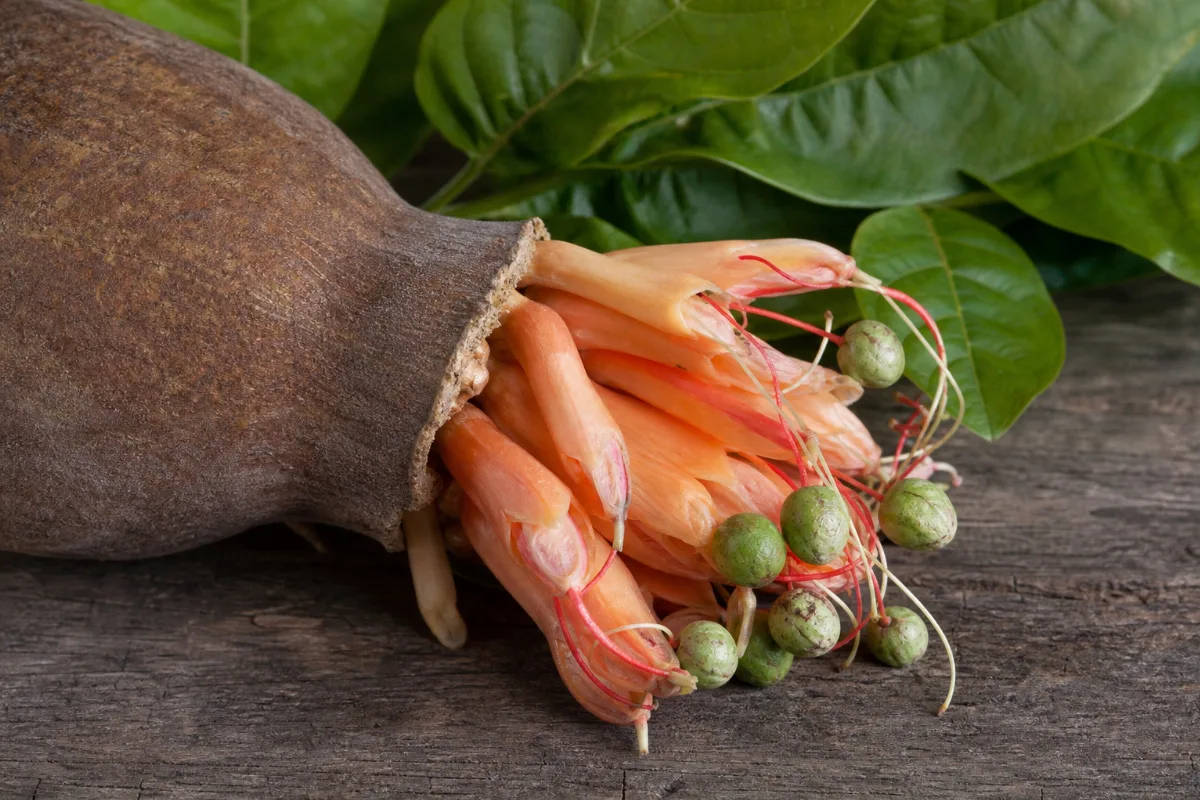
Herbs & Botanicals · African skin-remedy tree
Sausage tree (kigelia)
Kigelia africana · also called Sausage tree, kigelia
Sausage tree is an African tree with long, heavy, sausage-shaped fruit. Creams from the fruit and bark are used for skin problems and sold in some skin products. The evidence is only test-tube and rat studies; we found no human trials. The raw fruit is described as poisonous, and any skin lesion or suspected skin cancer needs a clinician, not a home cream.
General information, not medical advice. Last substantive update · Not medically reviewed. A named clinician has not signed off on this page. How this page is made
About Sausage tree (kigelia)
Sausage tree (Kigelia africana) is an African tree with large sausage-shaped fruit. Creams made from the fruit and bark are used for skin problems and sold in some skin and body products. Evidence is thin: lab and rat studies only, with no human trials found. The raw fruit pulp is described as poisonous and able to blister the mouth and skin. Skin growths and suspected skin cancer need a clinician. Do not use in pregnancy or breastfeeding. Ask a doctor or pharmacist before any use.
What it is
Sausage tree is Kigelia africana, a tree of the trumpet-creeper family (Bignoniaceae) found across tropical Africa. The name comes from its long, heavy fruit. The fruit, bark, leaves and roots are all used in traditional medicine.
Older papers and some products call it Kigelia pinnata. This is treated as the same plant.
What makes it distinctive
The plant contains about 150 compounds, including iridoids such as verminoside, naphthoquinones, isocoumarins and phenylethanoid glycosides. Some of the naphthoquinones are said to be unique to this species. Lab work found the fruit compounds affect melanoma and breast cancer cells, but no one has shown what the compounds do in people.
Historical and current uses
Across Africa, the fruit and bark are used on skin disease, wounds, freckles and growths, and taken for rheumatism, malaria, diabetes and fertility problems. A handful of skin creams are sold, but the reviews note many products are not standardised.
What the research shows
We found no human trial for any use. Test-tube studies show fruit extracts closing a scratch in skin cells faster, lowering inflammation signals and killing cancer cells, including melanoma cells. Rat studies show lower blood sugar and smaller prostates. The extracts also harmed normal cells in the lab, and one test of the extract against malaria parasites found it largely inactive.
At a glance
Traditional uses history, not proof
- Fruit or bark creams and ointments for eczema, psoriasis, acne, wounds and freckles
- Fruit preparations used on skin growths, sun-damage spots and, in some traditions, skin cancer
- Bark and fruit for rheumatism, malaria, diabetes and fertility complaints in parts of Africa
- Roasted seeds eaten in times of famine; fresh fruit is never eaten
Studied for research
- Skin conditions: traditional use, no human trial
- Wound healing: one cell-culture study, very low certainty
- Skin growths and cancer: cell-toxicity tests only
- Cancer cells in the lab: potent but also harms normal cells
- Blood sugar: rat and enzyme studies
- Prostate size: one rat study
- Malaria: one lab test, weak
Main compounds
- Iridoids: verminoside
- Naphthoquinones: kigelinone, pinnatal, kigelinol (listed in a review)
- Furonaphthoquinones and isocoumarins (kigelin)
- Phenylethanoid glycosides: verbascoside
Common forms
- Fruit or bark cream or ointment
- Cosmetic fruit extract
- Traditional fruit and bark preparations
- Laboratory extracts (water, methanol, hexane)
Research links: Review of Kigelia africana (2020) · Phytochemistry and pharmacology review (2016) · Fruit compounds against melanoma cells (2010) · Wound-healing cell study (2023) · Research Library · Genes & Biomarkers Library
The plant and its history
- Accepted scientific name
- Kigelia africana (Lam.) Benth.
- Naming authority
- (Lam.) Benth.
- Synonyms
- Kigelia pinnata (Jacq.) DC.
- Common names
- Sausage tree (English); Kigelia (English)
- Botanical family
- Bignoniaceae (the trumpet-creeper family).
- Classification
- Plantae > not checked > not checked > not checked > Bignoniaceae > Kigelia > Kigelia africana
- Native range
- Tropical Africa (stated in p37300855); a pan-African distribution is stated in p27220655.
- Habitat
- Not verified here.
- What the plant looks like
- Roots: Not examined here.; Stems: Stem bark is used traditionally.; Leaves: Leaves are used in some preparations.; Flowers: Flowers are attractive and used as ornamentals per the 2020 review; not otherwise described here.; Fruit: Large sausage-shaped fruit (the common name); the pulp is described as toxic when fresh. Seeds are roasted and eaten in famine in some regions per the 2020 review.
- Cultivation
- Not verified here.
- Harvest and processing
- The fruit is not eaten fresh; traditional preparations include dried or processed fruit, creams and ointments (p32549404).
- Look-alikes and adulterants
- Name: Spathodea campanulata (African tulip tree); Note: Another Bignoniaceae tree sometimes studied alongside Kigelia; some extracts in the lab studies were mixtures of the two (p42387045).
- Sustainability and conservation
- Not assessed.
Traditional use and history history, not clinical proof
| Tradition or era | Documented use | Source |
|---|---|---|
| African traditional medicine | Fruit, bark, leaf and root used across Africa for skin disorders, wounds, rheumatism, psoriasis, eczema, diarrhoea, malaria, diabetes and as an aphrodisiac; fruit creams for freckles; use for skin cancer and sun-damage spots reported. | p32549404 |
| Modern commercial products | Used in a handful of skin formulations and supplements; many are not standardised. | p27220655 |
| Food in times of famine | Roasted seeds eaten; fruit pulp not eaten fresh. | p32549404 |
Traditional use shows how a plant was used. It does not show that a supplement works or is safe today.
What is inside, and how it may work
What the plant contains and how those compounds act in cells and animals. Laboratory and animal mechanisms are not proven effects in people.
Main compounds
| Compound | Family | Where it is concentrated | Activity studied | Level of evidence |
|---|---|---|---|---|
| Verminoside PubChem 12000883 | iridoid glycoside | fruit | Lowered inflammatory signals in macrophage cells; no irritation in a lab skin model. 17 11 | Laboratory research |
| Verbascoside PubChem 5281800 | phenylethanoid glycoside | fruit | Described as an antioxidant in reviews. 2 11 | Laboratory research |
| Kigelinone and related naphthoquinones (pinnatal, kigelinol) | naphthoquinone | stem bark, root, fruit | Listed in the 2020 review's compound table; pinnatal, isopinnatal, kigelinol and isokigelinol are said to be unique to this species. Not tested individually in what we read. No PubChem record was found by name for kigelinone. 12 | Not tested |
| Furonaphthoquinones (e.g. 2-(1-hydroxyethyl)naphtho[2,3-b]furan-4,9-dione) | naphthoquinone | fruit | The most potent group against melanoma and breast cancer cells in a 2010 lab study; also made synthetically. 5 | Laboratory research |
| Kigelin and demethylkigelin | isocoumarin | fruit | Isolated from the fruit by bioactivity-guided fractionation; cytotoxicity of the fractions in melanoma cells. 5 | Laboratory research |
| Lapachol PubChem 3884 | naphthoquinone | not detected in stem bark extract | Tested as a possible constituent; was not detected in the bark extract in 1994. 6 11 | Laboratory research |
Mechanisms, receptors and pathways
| Target or pathway | Gene or receptor | What was found | Level |
|---|---|---|---|
| Cell death in cancer cell lines | not established | Fruit extracts killed or slowed several cancer cell lines and changed many cancer-related proteins; they also harmed some normal cells. 8 14 5 | Laboratory research |
| Inflammation signals (nitric oxide, iNOS, COX-2, cytokines) | iNOS, COX-2, IL-1 beta, IL-6, TNF-alpha | Lowered in cells and enzyme assays by fruit extracts or verminoside. 17 13 | Laboratory research |
| Starch-digesting enzyme | alpha-glucosidase | Fruit fractions inhibited it in the test tube. 10 | Laboratory research |
| Androgen levels in prostate | testosterone, DHT | A fat-soluble fruit extract lowered prostate testosterone and DHT in rats. 16 | Animal research |
Absorption, metabolism and elimination
- Absorption
- No human or animal absorption data were found in the sources read.
- Distribution
- Not studied.
- Metabolism
- Not studied. A rat study of a mixture containing Kigelia reported no overt effect on CYP-related markers (p32549404).
- Elimination
- Not studied.
- Bioavailability
- Unknown.
Isolated compounds versus whole extracts
Nearly all published activity is from crude fruit or leaf extracts in solvents or from isolated compounds. Which compound causes the cell effects is unknown, and crude extracts harm normal cells too. Traditional creams are not standardised.
Nutritional composition
Not a food. Roasted seeds are eaten in some regions in famine; the fruit pulp is not eaten fresh. No nutrient data in the sources read.
3 very low certainty5 not enough evidence1 evidence against
What is Sausage tree (kigelia) good for?
What sausage tree is used for and how strong the evidence is. Everything here is traditional use or lab and animal work, and several rows carry a safety warning. Nothing here is advice to use it.
Benefits, one by one
Each card is a research question, not a promise. Tap a goal to filter. Open a card to see the studies, doses and limits.
Eczema, psoriasis, acne and other skin problems (traditional use)
Not enough evidenceIn parts of Africa, creams or ointments made from the fruit or bark are used for eczema, psoriasis, acne and sores. Reviews list these as traditional uses. No trial in people was found.
4 studiesFruit or bark creams and ointments, and extracts in some cosmetic pro…
Studies, doses and limits
What the trials found
No controlled human trial on eczema, psoriasis or acne was found in PubMed. The Ethiopian paper is a records review and mentions Kigelia in one sentence without data.
Results
No human results exist. The Ethiopian psoriasis paper says traditional plants such as Kigelia africana have 'partial benefits' but presents no evidence for that (p33368850). The reviews conclude many traditional uses remain merely claims (p32549404).
Effect sizes as reported
No effect sizes available.
Why this rating
Traditional use and lab data only; no trial.
Form and dose studied
Fruit or bark creams and ointments, and extracts in some cosmetic products. No amounts are given here.
Who was studied
None studied.
Limits
Traditional preparations are not standardised, and the reviews say commercial products often are not either (p32549404). We read abstracts, and the 2020 review's full text for safety wording only.
Why researchers looked
A long-standing African folk remedy for skin disease, and now an ingredient in some skin products.
Traditional use
Reviews list fruit use for psoriasis, eczema, acne, boils, fungal infections and wounds (p32549404, p27220655). A hospital records study from Ethiopia says some psoriasis patients use Kigelia africana, but it gives no results for it (p33368850).
Proposed mechanism Laboratory research
No mechanism has been shown in people. In lab work, fruit compounds such as verminoside lower inflammatory signals in cells (p16309308).
A proposed mechanism does not show that the effect happens in people.
Raw fruit pulp is described as toxic and able to blister skin. Do not put raw pulp on the skin. Skin problems that do not heal or change need a clinician.
Wound healing (cell-culture result)
Very low certaintyIn one lab study, a leaf-and-fruit extract closed a scratch in human skin cells a day sooner than untreated cells. This has not been tested on wounds in people.
2 studiesMethanol extract of leaf and fruit, in the culture dish.
Studies, doses and limits
What the trials found
None in people or animals found.
Results
Scratched HaCaT skin cells treated with the extract closed completely in 48 hours versus 72 hours untreated; scratched BJ fibroblasts closed in 72 hours versus 96 hours. Extract up to 300 ug/ml was very low in toxicity to these cells (p37300855).
Effect sizes as reported
24 hours faster closure in two cell types; no statistics given in the abstract.
Why this rating
One cell-culture study; the authors say effectiveness was not shown in people.
Form and dose studied
Methanol extract of leaf and fruit, in the culture dish.
Who was studied
Human cell lines (not people).
Limits
Scratch tests do not reproduce real wounds, infection or scarring. Abstract only.
Why researchers looked
Wound dressing is one of the oldest listed uses of the fruit, bark and leaf.
Traditional use
Reviews list the unripe fruit, fruit and leaf as wound dressings in several African countries (p32549404, p27220655).
Proposed mechanism Laboratory research
Not understood. The study identified many molecules in the extract but did not show which one, if any, speeds closure.
A proposed mechanism does not show that the effect happens in people.
Cell tests cannot tell you whether a cream is safe on open wounds. See the Safety tab.
Skin growths, sun-damage spots and skin cancer (traditional claim)
Not enough evidenceThe fruit is traditionally rubbed on skin growths, sun-damage spots (solar keratoses) and skin cancer. In test tubes, fruit and bark extracts harmed melanoma cells, but no one has shown that a Kigelia cream treats skin cancer. Any skin lesion needs a clinician, not home treatment.
4 studiesFruit and bark extracts in the lab; traditional creams in the field.
Studies, doses and limits
What the trials found
No human trial of a Kigelia product on skin cancer or solar keratoses was found. No cases series were found either.
Results
Fruit fractions were toxic to human melanoma cells in the test tube (p20560113). A dichloromethane bark extract inhibited melanoma cell growth, dose-dependently (p7997471). Killing cancer cells in a dish is common to many toxic substances and does not show a safe or effective cream.
Effect sizes as reported
Lab potency only.
Why this rating
Test-tube cell toxicity only; no animal or human evidence of treating skin cancer found.
Form and dose studied
Fruit and bark extracts in the lab; traditional creams in the field.
Who was studied
None studied.
Limits
The authors of the lab work caution that crude extracts also harmed normal cells in related work (p42387045). Untreated or wrongly self-treated skin cancer can grow or spread.
Why researchers looked
Fruit extracts are described in traditional medicine for skin cancer; this led to lab screening against melanoma cells (p20560113).
Traditional use
The 2020 review lists crude fruit creams and use for solar keratoses and skin cancer among traditional uses (p32549404). One lab team started from this use (p20560113).
Proposed mechanism Laboratory research
Furonaphthoquinones and other fruit compounds killed melanoma cells in culture. A 1994 study found a bark extract more active on melanoma lines than a kidney cancer line (p7997471, p20560113).
A proposed mechanism does not show that the effect happens in people.
Do not self-treat any skin spot, lump, sore or mole. See a clinician (a doctor or dermatologist). Using a home cream may delay a proper diagnosis.
Skin care and anti-ageing creams
Not enough evidenceKigelia extract is sold in some skin and body creams, and traditionally used for freckles and skin tone. We found no human test of these products. One lab skin model found the fruit extract did not irritate.
3 studiesCosmetic fruit extracts; amounts in products vary and are not listed …
Studies, doses and limits
What the trials found
No cosmetic trial was found.
Results
In a 3D reconstituted human epidermis model, the crude fruit extract and verminoside did not change cell viability, did not release inflammatory mediators and did not change tissue structure (p16309308).
Effect sizes as reported
No effect sizes.
Why this rating
Lab skin model only; nothing in people.
Form and dose studied
Cosmetic fruit extracts; amounts in products vary and are not listed here.
Who was studied
None studied.
Limits
A lab skin model is not a patch test on people. Cosmetic ingredient status and any regulator review were not verified.
Why researchers looked
It is a known cosmetic ingredient, and a handful of skin formulations are on the market (p27220655).
Traditional use
Crude fruit creams for freckles are listed in the 2020 review (p32549404).
Proposed mechanism Laboratory research
Verminoside, an iridoid in the fruit, lowered inflammatory signals in cells; the fruit extract caused no irritation in a lab skin model (p16309308).
A proposed mechanism does not show that the effect happens in people.
Skin allergy is possible with any plant product; stop and ask a clinician if skin reddens or blisters.
Cancer cells in the lab (breast, colon, liver, lung and others)
Not enough evidenceFruit extracts killed several kinds of human cancer cells in test tubes, and one extract made a chemotherapy drug work better in colon cancer cells. They also harmed normal cells. No studies in animals with cancer or in people were found.
3 studiesFruit and leaf extracts in culture, sometimes combined with another p…
Studies, doses and limits
What the trials found
No human or animal cancer study was found.
Results
Several fruit and leaf extracts were potent against liver, breast, colon and lung cancer cell lines (IC50 below 0.7 ug/ml for three extracts), but organic extracts were more toxic to normal Vero cells, so the authors describe a limited therapeutic window (p42387045). In HT-29 colon cancer cells a fruit extract worked synergistically with cisplatin (p41515404).
Effect sizes as reported
IC50 values and selectivity indexes in cell lines; no clinical effect sizes.
Why this rating
Test-tube cell work only; crude extracts also harm normal cells.
Form and dose studied
Fruit and leaf extracts in culture, sometimes combined with another plant.
Who was studied
Cell lines only.
Limits
No safe or effective amount in people can be taken from cell data. Authors of the 2026 study say crude forms are not ready for clinical use.
Why researchers looked
Traditional use of the fruit in cancer led to lab screening.
Traditional use
Togo and other records list the fruit for cancer (p32549404); a 2026 systematic review of African cancer plants exists but was not read here.
Proposed mechanism Laboratory research
Fruit compounds including naphthoquinones and iridoids change many cancer-related proteins in cells (p41515404).
A proposed mechanism does not show that the effect happens in people.
Do not use any herbal product instead of cancer treatment. Tell your cancer team before taking any herb.
Inflammation and antioxidant activity (lab)
Not enough evidenceIn test-tube and cell tests, fruit extracts lowered some inflammation signals and showed antioxidant activity. Results varied between extracts. Nothing was tested in people.
3 studiesFruit extracts; one was mixed with another species.
Studies, doses and limits
What the trials found
No human study found.
Results
Methanol, water and acetone fruit extracts showed antioxidant and anti-inflammatory activity in assays, with mixed results between extracts and concentrations; all were safe on Vero cells to 200 ug/ml (p32655661).
Effect sizes as reported
Assay values only.
Why this rating
Lab assays only, mixed results between extracts.
Form and dose studied
Fruit extracts; one was mixed with another species.
Who was studied
None studied.
Limits
Lab anti-inflammatory activity often does not carry over to people.
Why researchers looked
The fruit and bark are used traditionally for pain, rheumatism and swelling.
Traditional use
Reviews list rheumatism and inflammation among traditional uses (p32549404, p27220655).
Proposed mechanism Laboratory research
Lab data show lower nitric oxide, COX-2 and some cytokines (p32655661) and iridoid verminoside lowering iNOS in macrophage cells (p16309308).
A proposed mechanism does not show that the effect happens in people.
See the Safety tab.
Blood sugar (lab and rat results)
Very low certaintyA fruit fraction lowered blood sugar in diabetic rats, and fruit fractions slowed a starch-digesting enzyme in a test tube. No human study was found, so it should not replace diabetes care.
3 studiesFruit extracts and fractions in the lab.
Studies, doses and limits
What the trials found
No human trial found.
Results
In diabetic rats a hexane fruit fraction lowered fasting glucose and improved blood-count measures (red cells, packed cell volume) after 28 days (p32462092). In the test tube an ethyl acetate fraction inhibited alpha-glucosidase by about 90% at 500 ug/ml (p38867199).
Effect sizes as reported
Rat and enzyme results only.
Why this rating
Rat study and enzyme assays; nothing in people.
Form and dose studied
Fruit extracts and fractions in the lab.
Who was studied
Diabetic rats.
Limits
Rat results do not give an effect in people. Combined effects with diabetes medicines are unstudied; blood sugar could in theory fall too far.
Why researchers looked
Traditional use of the fruit and bark for diabetes is listed in reviews.
Traditional use
The 2020 review lists diabetes among the traditional uses (p32549404); a 2024 review lists antidiabetic activity (p37921076).
Proposed mechanism Laboratory research
Enzyme (alpha-glucosidase) inhibition in the test tube (p38867199).
A proposed mechanism does not show that the effect happens in people.
Anyone on diabetes medicine should ask a doctor or pharmacist first.
Prostate and male reproductive health (rat results)
Very low certaintyA fat-soluble fruit extract shrank enlarged prostates in rats. Traditional records also list fertility and sexual uses. No human studies were found.
2 studiesHexane (lipid and sterol) fruit extract.
Studies, doses and limits
What the trials found
No human trial found.
Results
In testosterone-treated rats the hexane fruit extract reduced prostate weight, prostate testosterone and DHT and the tissue changes, more than the beta-sitosterol comparison (p36776546).
Effect sizes as reported
Rat results only.
Why this rating
One rat study.
Form and dose studied
Hexane (lipid and sterol) fruit extract.
Who was studied
Male rats.
Limits
Rats given injected testosterone are a research model. An anti-androgenic action could matter for hormone-sensitive conditions and fertility.
Why researchers looked
The fruit is traditionally used for sexual and fertility complaints (p32549404).
Traditional use
Fertility and aphrodisiac uses are listed in the 2020 review (p32549404).
Proposed mechanism Animal research
The authors suggest a partial anti-androgenic action in rats (p36776546).
A proposed mechanism does not show that the effect happens in people.
People with prostate symptoms need a proper diagnosis.
Malaria (lab result: weak)
Evidence againstKigelia is traditionally used in parts of Africa for malaria. In a 2026 lab test the extract was largely inactive against the malaria parasite.
2 studies70% hydroethanolic extract.
Studies, doses and limits
What the trials found
No human trial found.
Results
Kigelia extract had IC50 above 100 ug/ml against malaria parasites (largely inactive); other plants in the same study were more active (p41360366).
Effect sizes as reported
IC50 above 100 ug/ml.
Why this rating
The one lab test found weak or no activity.
Form and dose studied
70% hydroethanolic extract.
Who was studied
Parasite cultures.
Limits
One lab test; a different extract could behave differently.
Why researchers looked
Used for malaria in Uganda and other regions.
Traditional use
The 2026 study tested a plant widely used for malaria in eastern Uganda (p41360366).
Proposed mechanism Laboratory research
None shown.
A proposed mechanism does not show that the effect happens in people.
Malaria is dangerous. Get tested and treated by a clinician; do not rely on a herb.
Connections to the rest of health
How Sausage tree (kigelia) connects to the rest of our health knowledge graph. Every link says what kind of connection it is. A safety link (for example to the liver) is a warning, not a benefit. A study that merely mentions a topic never creates a benefit link.
Explore every connection: goals, body systems, organs, symptoms, genes
A. Wellness goals
| Connected to | Kind of connection | Evidence status | Context | Studies |
|---|---|---|---|---|
| Healthy Skin | Not enough evidence | Eczema, psoriasis, acne and other skin problems (traditional use): In parts of Africa, creams or ointments made from the fruit or bark are used for eczema, psoriasis, acne and sores. Reviews list these as traditional uses. No trial in people was found. | 12 2 9 17 | |
| Healthy Skin | Very low certainty | Wound healing (cell-culture result): In one lab study, a leaf-and-fruit extract closed a scratch in human skin cells a day sooner than untreated cells. This has not been tested on wounds in people. Skin growths, sun-damage spots and skin cancer (traditional claim): The fruit is traditionally rubbed on skin growths, sun-damage spots (solar keratoses) and skin cancer. In test tubes, fruit and bark extracts harmed melanoma cells, but no one has shown that a Kigelia cream treats skin cancer. Any skin lesion needs a clinician, not home treatment. | 7 12 5 6 14 17 2 | |
| Cellular Protection | Not enough evidence | Skin growths, sun-damage spots and skin cancer (traditional claim): The fruit is traditionally rubbed on skin growths, sun-damage spots (solar keratoses) and skin cancer. In test tubes, fruit and bark extracts harmed melanoma cells, but no one has shown that a Kigelia cream treats skin cancer. Any skin lesion needs a clinician, not home treatment. Cancer cells in the lab (breast, colon, liver, lung and others): Fruit extracts killed several kinds of human cancer cells in test tubes, and one extract made a chemotherapy drug work better in colon cancer cells. They also harmed normal cells. No studies in animals with cancer or in people were found. | 5 6 12 14 8 13 17 2 | |
| Inflammation Balance | Not enough evidence | Inflammation and antioxidant activity (lab): In test-tube and cell tests, fruit extracts lowered some inflammation signals and showed antioxidant activity. Results varied between extracts. Nothing was tested in people. | 13 17 2 | |
| Blood Sugar Balance | Very low certainty | Blood sugar (lab and rat results): A fruit fraction lowered blood sugar in diabetic rats, and fruit fractions slowed a starch-digesting enzyme in a test tube. No human study was found, so it should not replace diabetes care. | 3 10 1 | |
| Metabolic Health | Very low certainty | Blood sugar (lab and rat results): A fruit fraction lowered blood sugar in diabetic rats, and fruit fractions slowed a starch-digesting enzyme in a test tube. No human study was found, so it should not replace diabetes care. | 3 10 1 | |
| Mens Vitality | Very low certainty | Prostate and male reproductive health (rat results): A fat-soluble fruit extract shrank enlarged prostates in rats. Traditional records also list fertility and sexual uses. No human studies were found. | 16 12 | |
| Immune Support | Evidence against | Malaria (lab result: weak): Kigelia is traditionally used in parts of Africa for malaria. In a 2026 lab test the extract was largely inactive against the malaria parasite. | 15 12 |
B. Body systems
| Connected to | Kind of connection | Evidence status | Context | Studies |
|---|---|---|---|---|
| Integumentary System | Biological association | Not enough evidence | Studied for: Eczema, psoriasis, acne and other skin problems (traditional use) Studied for: Wound healing (cell-culture result) | 12 2 9 17 7 5 6 14 |
| Immune System | Biological association | Not enough evidence | Studied for: Cancer cells in the lab (breast, colon, liver, lung and others) Studied for: Inflammation and antioxidant activity (lab) | 14 8 12 13 17 2 15 |
| Endocrine System | Biological association | Very low certainty | Studied for: Blood sugar (lab and rat results) | 3 10 1 |
| Reproductive System | Biological association | Very low certainty | Studied for: Prostate and male reproductive health (rat results) | 16 12 |
E. Health conditions
| Connected to | Kind of connection | Evidence status | Context | Studies |
|---|---|---|---|---|
| Skin cancer | Not enough evidence | Lab-only cell toxicity; clinician needed for any lesion. Cell toxicity only; clinician needed for any lesion. Preparation or compound: Fruit/bark creams |
5 6 | |
| Psoriasis | Traditional use | Not enough evidence | Traditional use only; no trial. Preparation or compound: Fruit/bark cream |
12 9 |
I. Biomarkers
| Connected to | Kind of connection | Evidence status | Context | Studies |
|---|---|---|---|---|
| scratch-closure-time | Biological association | Very low certainty | Measured in trials: shorter with the extract in cells. A lab change is not the same as a health benefit. | |
| cancer-cell-viability | Biological association | Very low certainty | Measured in trials: lower viability in cancer cells, but also in some normal cells. A lab change is not the same as a health benefit. | |
| fasting-blood-glucose-rats | Biological association | Very low certainty | Measured in trials: lower in treated diabetic rats. A lab change is not the same as a health benefit. | |
| prostate-weight-rats | Biological association | Very low certainty | Measured in trials: lower with the extract. A lab change is not the same as a health benefit. |
J. Genes, receptors and enzymes
L. Active compounds
| Connected to | Kind of connection | Evidence status | Context | Studies |
|---|---|---|---|---|
| Verminoside | Biological association | In vitro | Lowered inflammatory signals in macrophage cells; no irritation in a lab skin model. Preparation or compound: fruit |
17 11 |
| Verbascoside | Biological association | In vitro | Described as an antioxidant in reviews. Preparation or compound: fruit |
2 11 |
| Kigelinone and related naphthoquinones (pinnatal, kigelinol) | Biological association | Not tested | Listed in the 2020 review's compound table; pinnatal, isopinnatal, kigelinol and isokigelinol are said to be unique to this species. Not tested individually in what we read. No PubChem record was found by name for kigelinone. Preparation or compound: stem bark, root, fruit |
12 |
| Furonaphthoquinones (e.g. 2-(1-hydroxyethyl)naphtho[2,3-b]furan-4,9-dione) | Biological association | In vitro | The most potent group against melanoma and breast cancer cells in a 2010 lab study; also made synthetically. Preparation or compound: fruit |
5 |
| Kigelin and demethylkigelin | Biological association | In vitro | Isolated from the fruit by bioactivity-guided fractionation; cytotoxicity of the fractions in melanoma cells. Preparation or compound: fruit |
5 |
| Lapachol | Biological association | In vitro | Tested as a possible constituent; was not detected in the bark extract in 1994. Preparation or compound: not detected in stem bark extract |
6 11 |
Each connection is stored with the ingredient, the connected record, the kind of connection, the evidence status, the supporting studies, the preparation or compound involved, and a review date (last reviewed October 25, 2026).
The evidence
The research centre for Sausage tree (kigelia). Every record here was checked against PubMed or the publisher's page; we never list a study we have not verified.
Evidence by outcome
Bars show how many studies we found for each outcome, not how well it works. People are added up across trials only (reviews are not added, to avoid double counting).
How we rate evidence
High certainty
Several well-run trials or reviews agree; further research is unlikely to change the picture much.
Moderate certainty
Good trials point the same way, but some doubt remains.
Low certainty
Small, short or inconsistent trials. The finding could change with better research.
Very low certainty
Very little or very weak human data. Treat as a possibility only.
Mixed findings
Trials or reviews disagree with each other.
Not enough evidence
Not enough human research to say either way.
Evidence against
Good research found no benefit, or found harm.
We take the reviewers' own risk-of-bias and GRADE statements where they exist, and otherwise judge from study size, design, consistency, directness and whether a product matches what is sold. Many publications do not make evidence high. Method note: We searched PubMed, read the abstracts, searched the full text of a 2020 review for safety wording, and checked GBIF and PubChem. No study is cited that we could not verify.
Study library: every study we checked 17
| Study | Design | People | Product, dose, length | Result |
|---|---|---|---|---|
| Abbas 2024 Therapeutic importance of Kigelia africana subsp. africana: an alternative medicine. Nat Prod Res · PMID 37921076 · DOI |
Narrative review review |
Literature review | Kigelia africana subsp. africana extracts various not extracted not extracted · vs untreated or control |
About 145 compounds. Reported anti-inflammatory, antioxidant, antimicrobial, antidiabetic, antineoplastic and anti-urolithic activities in experimental work; a toxicity section is listed in the abstract but its findings were not shown there. narrative; no pooled effect (not applicable) Methods, limits and fundingOutcomes: Traditional uses, compounds, activities, toxicity Limitations: Abstract only; toxicity findings not visible in the abstract. Funding and conflicts: Not stated in the abstract. Read: abstract |
| Bello 2016 Kigelia africana (Lam.) Benth. (Sausage tree): Phytochemistry and pharmacological review of a quintessential African traditional medicinal plant. J Ethnopharmacol · PMID 27220655 · DOI |
Narrative review review |
Literature review | Kigelia africana extracts and compounds all parts not extracted not extracted · vs untreated or control |
Traditional uses include wounds, rheumatism, psoriasis, diarrhoea and skin care. About 150 compounds (iridoids, naphthoquinones, flavonoids, terpenes, phenylethanoid glycosides). Lab work reports anti-inflammatory, analgesic, antioxidant and anticancer activity. A handful of skin formulations are sold. Many traditional uses have not been tested scientifically; clinical relevance and toxicity remain to be worked out. narrative; no pooled effect (not applicable) Methods, limits and fundingOutcomes: Traditional uses, compounds, pharmacology Limitations: Abstract only. Narrative review; the authors themselves ask for human and toxicity studies. Funding and conflicts: Not stated in the abstract. Read: abstract |
| Fagbohun 2020 Changes in the biochemical, hematological and histopathological parameters in STZ-Induced diabetic rats and the ameliorative effect of Kigelia africana fruit extract. Heliyon · PMID 32462092 · DOI |
Animal research rat |
25 Streptozotocin-induced diabetic rats, 5 groups of 5 |
Hexane fraction of an ethanol fruit extract fruit not extracted not extracted · vs untreated or control |
The hexane fraction lowered fasting blood glucose significantly and improved blood-count measures (packed cell volume, MCH, MCHC, red cells) in diabetic rats; liver and kidney tissue were examined (abstract does not state the tissue findings here). lower glucose in diabetic rats (not applicable) Methods, limits and fundingOutcomes: Fasting blood glucose, blood counts, liver and kidney tissue after 28 days Limitations: Abstract only. Rats; one fraction of an extract; says nothing about people. Funding and conflicts: Not stated in the abstract. Read: abstract |
| GBIF Secretariat 2026 GBIF species match: Kigelia africana (Lam.) Benth. GBIF API · Source |
Database record not applicable |
not applicable | Kigelia africana (Lam.) Benth. is ACCEPTED (key 3172561), family Bignoniaceae, exact match (checked 2026-10-25). Kigelia pinnata (Jacq.) DC. (key 3172562) is returned as a SYNONYM whose accepted name is K. africana subsp. africana (key 7298549). Methods, limits and fundingOutcomes: Accepted name and family Read: database record | |
| Higgins 2010 Growth inhibitory activity of extracted material and isolated compounds from the fruits of Kigelia pinnata. Planta Med · PMID 20560113 · DOI |
Laboratory research in-vitro |
Human melanoma cells; two human breast cancer cell lines | Fruit fractions, isolated compounds and synthetic look-alikes fruit not extracted not extracted · vs untreated or control |
Started from the traditional use of the fruit for skin cancer. Fractions were toxic to melanoma cells in the test tube. Isolated: isocoumarins (kigelin, demethylkigelin), fatty acids, a furonaphthoquinone and ferulic acid. The most potent synthetic series were furonaphthoquinones, which also affected two breast cancer lines. lab cytotoxicity only (not applicable) Methods, limits and fundingOutcomes: Cytotoxicity (MTT assay) Limitations: Abstract only. Test-tube work; shows cell toxicity, not treatment of skin cancer. Funding and conflicts: Not stated in the abstract. Read: abstract |
| Houghton 1994 Activity of extracts of Kigelia pinnata against melanoma and renal carcinoma cell lines. Planta Med · PMID 7997471 · DOI |
Laboratory research in-vitro |
Four human melanoma cell lines and one kidney cancer cell line | Water, ethanol and dichloromethane extracts stem bark and fruit not extracted not extracted · vs untreated or control |
The dichloromethane stem bark extract and lapachol (a compound tested for comparison) showed significant growth inhibition; activity was dose-dependent and weaker after 1 hour of exposure. Melanoma lines were more sensitive to the bark extract than the kidney line. Lapachol was not detected in the bark extract. lab growth inhibition only (not applicable) Methods, limits and fundingOutcomes: Growth inhibition (IC50) Limitations: Abstract only. Cell lines only; 1994 study. Funding and conflicts: Not stated in the abstract. Read: abstract |
| Karatay 2023 Methanolic extract of Kigelia africana and wound healing: an in vitro study. J Wound Care · PMID 37300855 · DOI |
Laboratory research in-vitro |
Human skin cell lines (HaCaT keratinocytes and BJ fibroblasts) | Methanolic extract (KAE) at 2 ug/ml leaf and fruit not extracted not extracted · vs untreated or control |
Mechanically scratched HaCaT cells treated with the extract closed completely in 48 hours versus 72 hours untreated; treated BJ cells closed in 72 hours versus 96 hours. Concentrations up to 300 ug/ml had very low toxicity to these cells. faster scratch closure in cells (24 hours) (not applicable) Methods, limits and fundingOutcomes: Scratch closure time; cell toxicity Limitations: Abstract only. Cell culture, not people or wounds. Leaf and fruit extract combined. Identified molecules included cholesterol sulfate, embelin and a phthalate. Funding and conflicts: Not stated in the abstract. Read: abstract |
| Mihaylova 2025 Integrative Evaluation of Kigelia africana Fruit Extract: Broad-Spectrum Anticancer Activity, Synergism with Cisplatin and Mechanistic Insights in Colorectal Carcinoma. Molecules · PMID 41515404 · DOI |
Laboratory research in-vitro |
HT-29 human colorectal cancer cells | Fruit extract alone and with cisplatin fruit not extracted not extracted · vs untreated or control |
The extract moderately changed many cancer-related proteins and acted synergistically with cisplatin in the cancer cells; 14 compounds including phenolic acids, naphthoquinones and iridoids were identified. lab synergy only (not applicable) Methods, limits and fundingOutcomes: Cell death, 42 cancer-related proteins, synergy with cisplatin Limitations: Abstract only. Cell lines only. Funding and conflicts: Not stated in the abstract. Read: abstract |
| Morrone 2022 Psoriasis in Tigray, Ethiopia: Focusing on available treatments. Dermatol Ther · PMID 33368850 · DOI |
Retrospective record review human (records review) |
954 954 people with psoriasis seen at three Ethiopian dermatology centres 2005-2016 |
Standard care; the paper mentions Kigelia africana as a traditional plant used by some patients not stated not extracted not extracted · vs untreated or control |
The paper is about psoriasis care in Ethiopia. It states in one sentence that in poorer rural areas patients use traditional plants such as Kigelia africana "shown to have partial benefits", but gives no data on Kigelia in this study. no Kigelia data (not applicable) Methods, limits and fundingOutcomes: Clinical features and available treatments Limitations: Abstract only. Kigelia was not tested; the statement is background, not a result. Funding and conflicts: Not stated in the abstract. Read: abstract |
| Muyenga 2024 Kigelia africana fruit fractions inhibit in vitro alpha-glucosidase activity: a potential natural alpha-glucosidase inhibitor. BMC Complement Med Ther · PMID 38867199 · DOI |
Laboratory research in-vitro |
Test-tube enzyme assays | Fractions of an aqueous fruit extract fruit not extracted not extracted · vs untreated or control |
The aqueous extract inhibited alpha-glucosidase by 64% at 500 ug/ml and the ethyl acetate fraction by about 90% (IC50 about 10 ug/ml); alpha-amylase inhibition was low. The authors call it a potential lead for antidiabetic agents. enzyme inhibition in the test tube (not applicable) Methods, limits and fundingOutcomes: Alpha-glucosidase and alpha-amylase inhibition Limitations: Abstract only. Enzyme tests only; no cells, animals or people. Funding and conflicts: Not stated in the abstract. Read: abstract |
| NCBI PubChem 2026 PubChem: verminoside (CID 12000883) and verbascoside (CID 5281800) PubChem API · Source |
Database record not applicable |
not applicable | Verminoside CID 12000883, C24H28O13. Verbascoside CID 5281800, C29H36O15. Lapachol CID 3884, C15H14O3. Ferulic acid CID 445858, C10H10O4. 8-Hydroxy-2-(1-hydroxyethyl)naphtho[2,3-b]furan-4,9-dione CID 442752 (name match only; not claimed to be kigelinone). No PubChem record was found by the name 'kigelinone' or 'kigelin'. Methods, limits and fundingOutcomes: Compound identity Read: database record | |
| Nabatanzi 2020 Ethnobotany, Phytochemistry and Pharmacological Activity of Kigelia africana (Lam.) Benth. (Bignoniaceae). Plants (Basel) · PMID 32549404 · DOI |
Narrative review review |
125 125 literature sources on Kigelia africana |
Kigelia africana plant parts, mostly fruit fruit, bark, leaf, root not extracted not extracted · vs untreated or control |
Traditional uses include skin disorders, cancer and gynaecological complaints. About 150 compounds are reported; the fruit is the part most studied. Many commercial products are not standardised. Many traditional uses remain merely claims. In the full text: the fruit pulp is said to be inedible and toxic and to blister the tongue and skin; fruits are never eaten fresh and are said to be very poisonous, especially when young; a 30-day rat study of a herbal mixture containing Kigelia showed dose-related falls in white cell counts but no liver or CYP changes; some traditional records list the bark or leaf as an abortifacient. narrative; no pooled effect (not applicable) Methods, limits and fundingOutcomes: Traditional uses, compounds, lab and animal activity, toxicity, products Limitations: Abstract only (the 2020 review's full text was also searched for safety wording). Narrative review of mostly lab and animal work; no pooled effect. Funding and conflicts: Not stated in the abstract. Read: full text (searched for safety wording) |
| Nabatanzi 2020 Antioxidant and Anti-Inflammatory Activities of Kigelia africana (Lam.) Benth. Evid Based Complement Alternat Med · PMID 32655661 · DOI |
Laboratory research in-vitro |
Test-tube enzyme assays; cultured cells | Methanol, water and acetone fruit extracts (one methanol extract was mixed with Spathodea campanulata leaf) fruit not extracted not extracted · vs untreated or control |
Extracts showed antioxidant activity and lowered some inflammatory signals (nitric oxide, COX-2, IL-1 beta, IL-6, TNF-alpha) in test-tube and cell assays, with mixed results across extracts and concentrations. All were safe on Vero cells up to 200 ug/ml. Authors conclude the extracts have good antioxidant and anti-inflammatory activity in the lab. lab only (not applicable) Methods, limits and fundingOutcomes: Antioxidant activity; COX-2, 15-LOX, nitric oxide, cytokines Limitations: Abstract only. Mixed results between extracts; one tested extract was a two-species mix. Funding and conflicts: Not stated in the abstract. Read: abstract |
| Nabatanzi 2026 Cytotoxicity and synergistic anticancer activity of Kigelia africana (Lam.) Benth. and Spathodea campanulata P. Beauv. polyherbal extracts. Sci Rep · PMID 42387045 · DOI |
Laboratory research in-vitro |
Four human cancer cell lines (liver, breast, colon, lung) and non-cancer Vero monkey kidney cells | Water, ethanol, methanol and acetone extracts, alone and combined with Spathodea campanulata leaf and fruit not extracted not extracted · vs untreated or control |
Several extracts (hot-water fruit macerate, acetone fruit extract, a methanolic mix) were potent against cancer cell lines in the test tube (IC50 below 0.7 ug/ml). Organic extracts were more toxic to the normal Vero cells; the authors say the crude extracts have a limited therapeutic window and call for isolating active compounds. lab potency only (not applicable) Methods, limits and fundingOutcomes: Cell viability (IC50) and selectivity index Limitations: Abstract only. Test-tube work; combination extracts with another species; no animals or people. Funding and conflicts: Not stated in the abstract. Read: abstract |
| Obakiro 2026 In vitro antiplasmodial activity, acute toxicity and phytochemical quantification of selected medicinal plants used for the management of uncomplicated malaria in eastern Uganda. J Ethnopharmacol · PMID 41360366 · DOI |
In vitro and animal rat and in-vitro |
Malaria parasite cultures; Wistar rats (acute oral toxicity, OECD 423) | 70% hydroethanolic extract of Kigelia africana (one of five plants) not stated in the abstract not extracted not extracted · vs untreated or control |
K. africana was largely inactive against the malaria parasite (IC50 above 100 ug/ml). The Kigelia extract showed no severe signs of acute toxicity in rats (estimated LD50 above 2000 mg/kg); the authors reported moderate toxicity for two of the other plants. not active in lab test; no severe acute toxicity in rats (not applicable) Methods, limits and fundingOutcomes: Antiplasmodial IC50; acute toxicity Limitations: Abstract only. Five plants tested; the rat result applies to this extract in rats only and does not give a safe amount for people. Funding and conflicts: Not stated in the abstract. Read: abstract |
| Occhiuto 2023 Pharmacological Effects of the Lipidosterolic Extract from Kigelia africana Fruits in Experimental Benign Prostatic Hyperplasia Induced by Testosterone in Sprague Dawley Rats. J Exp Pharmacol · PMID 36776546 · DOI |
Animal research rat |
Sprague Dawley rats with testosterone-induced prostate enlargement | Hexane (lipid and sterol) extract fruit not extracted not extracted · vs untreated or control |
The extract reduced prostate weight, prostate testosterone and DHT levels and tissue changes in the rats, to a greater degree than the beta-sitosterol comparison; authors suggest a partial anti-androgenic action. lower prostate weight in rats (not applicable) Methods, limits and fundingOutcomes: Prostate weight, prostate testosterone and DHT, tissue structure Limitations: Abstract only. Rats only; injected-testosterone model. Funding and conflicts: Not stated in the abstract. Read: abstract |
| Picerno 2005 Anti-inflammatory activity of verminoside from Kigelia africana and evaluation of cutaneous irritation in cell cultures and reconstituted human epidermis. J Nat Prod · PMID 16309308 · DOI |
Laboratory research in-vitro |
Mouse macrophage cell line; cell monolayers; reconstituted human epidermis (3D lab skin model) | Polar fruit extract; verminoside; verbascoside fruit not extracted not extracted · vs untreated or control |
Verminoside lowered inflammatory signals (iNOS, nitric oxide) in stimulated macrophage cells. The crude fruit extract and verminoside did not reduce cell viability, did not trigger release of pro-inflammatory messengers and did not change the structure of the lab-grown human epidermis. no irritation in lab skin model (not applicable) Methods, limits and fundingOutcomes: Nitric oxide and iNOS release; cell viability; irritation markers Limitations: Abstract only. A laboratory skin model is not a person; not tested on broken skin or over time. Funding and conflicts: Not stated in the abstract. Read: abstract |
What we do not know yet
- No human trial of any Kigelia product for any use.
- No data on skin allergy or irritation in people.
- No clinical or poison-centre reports on the toxic fruit.
- No human pregnancy, breastfeeding, child, liver or interaction data.
- EMA, FDA, LactMed and LiverTox were not read; NCCIH has no page.
- Only abstracts of research papers were read, plus parts of the 2020 review's full text for safety wording.
How new research is added
New studies are found by a saved PubMed search and are placed in a review queue. A person reads each one before it changes any evidence rating or safety wording.
Lab markers
What changed in blood or saliva tests during trials. A changed number is not the same as feeling or being healthier, and we give no "normal ranges".
Other 4
scratch-closure-time
Shorter with the extract in cells in trials
Time for human skin cells to close an artificial scratch in a dish.
Very low certaintyResults and what it means
Why it was measured
A lab stand-in for wound closing.
Statistical vs. clinical meaning
A dish test; does not show wounds heal faster in people.
| Study | Result | People | Product |
|---|---|---|---|
| 7 | HaCaT cells closed in 48 versus 72 hours; BJ cells in 72 versus 96 hours. | Human skin cell lines | Methanol leaf and fruit extract versus untreated |
cancer-cell-viability
Lower viability in cancer cells, but also in some normal cells in trials
How many cancer cells survive after contact with an extract (IC50 = concentration that kills half).
Very low certaintyResults and what it means
Why it was measured
A lab screen for toxicity to cancer cells.
Statistical vs. clinical meaning
Dish results; not a treatment effect.
| Study | Result | People | Product |
|---|---|---|---|
| 14 | Three extracts had IC50 below 0.7 ug/ml on cancer lines; organic extracts were more toxic to normal Vero cells. | Human cancer cell lines and Vero cells | Kigelia and Spathodea extracts |
fasting-blood-glucose-rats
Lower in treated diabetic rats in trials
Blood sugar after fasting, measured in diabetic rats.
Very low certaintyResults and what it means
Why it was measured
Main outcome in the rat diabetes study.
Statistical vs. clinical meaning
Rat only.
| Study | Result | People | Product |
|---|---|---|---|
| 3 | Hexane fruit fraction lowered fasting glucose in streptozotocin-diabetic rats over 28 days. | Diabetic rats | Hexane fraction of fruit extract |
prostate-weight-rats
Lower with the extract in trials
Weight of the prostate in rats given testosterone.
Very low certaintyResults and what it means
Why it was measured
Main measure of enlargement in the model.
Statistical vs. clinical meaning
Rat only.
| Study | Result | People | Product |
|---|---|---|---|
| 16 | Lipidosterolic extract reduced prostate weight and DHT. | Rats | Hexane fruit extract |
Safety
What studies and official sources say about side effects, medicines and who should check first. Each point shows what kind of evidence it comes from.
Main points to know 6
- Raw or young fruit is poisonous and can blister. The 2020 review says the fruit pulp is said to be inedible and toxic, may act as an intoxicant or purgative, and may blister the tongue and skin. The fruits are never eaten fresh and are said to be very poisonous, especially when young. This comes from traditional reports cited by the review; we found no clinical case reports of poisoning. Narrative review 12
- Skin lesions and skin cancer need a clinician, not a home cream. Kigelia is traditionally used on skin growths and said to be used for skin cancer. Only test-tube cell work exists. No trial shows a cream treats skin cancer or sun-damage spots. Self-treating a lesion can delay a correct diagnosis, and lab work shows crude extracts also harm normal cells. Laboratory research 5 6 14 12
- No human safety data. We found no human trial, case report or poison-centre report for any Kigelia product. The reviews say toxicity and side effects of extracts and isolated compounds still need to be studied. Animal tests so far are limited (see Toxicity). Narrative review 2 12
- Pregnancy and breastfeeding: avoid. Traditional records list the bark and leaf as abortifacients and anti-implantation agents in some regions, and the fruit is also used in pregnancy-related traditions. No human safety study exists, so avoid in pregnancy and breastfeeding. Narrative review 12
- Products are often not standardised. The review says commercial Kigelia products are often not fully standardised, so strength and content may vary. Narrative review 12
- Not shown to treat any disease. Do not stop prescribed treatment for cancer, diabetes, psoriasis or malaria in favour of Kigelia. Evidence is from cells and rats only. Other 12 15
Side effects 4
| Effect | How often | Severity and recovery | Evidence |
|---|---|---|---|
| Blistering of the tongue and skin from raw fruit pulp From traditional descriptions cited in a review; not from case reports. | Not established | moderate Not stated. | Narrative review 12 |
| Intoxicant or purgative effect from the fruit pulp (sickness, diarrhoea) The review says the pulp 'may have' these effects; details not given. | Not established | unknown Not stated. | Narrative review 12 |
| Lower white blood cell counts (rat study of a herbal mixture containing Kigelia) The mixture, not Kigelia alone; effect in people unknown. | Not established | unknown Partial recovery by day 30 in rats, per the review. | Animal research 12 |
| Skin irritation or allergy from creams A lab-grown human skin model showed no irritation from the fruit extract or verminoside, but no human patch test was found. Any plant product can cause allergy. | Not established | unknown Not stated. | Laboratory research 17 |
Liver
We found no human liver injury report for Kigelia and no LiverTox entry (not found when searched). In a 30-day rat study of a herbal mixture containing Kigelia, liver enzymes (AST, ALT, ALP) did not change, per the 2020 review. That is not the same as proof of liver safety in people. Absence of reports may simply mean it is rarely taken in studied populations. 12
How often. Unknown. No human cases found.
Monitoring. No official advice found. Anyone with liver disease should ask a clinician before using it. Yellow skin or eyes, dark urine or pale stools need urgent medical care.
This is a safety connection. It is not evidence that Sausage tree (kigelia) supports liver health.
Medicines and supplements 3
| With | Why it matters | Importance | Evidence | What to do |
|---|---|---|---|---|
| Medicines processed by liver enzymes cytochrome P450 liver enzymes (CYP) | In the rat study of a mixture containing Kigelia, tests of CYP-related markers (zoxazolamine and pentobarbital timing) showed no overt effect, per the 2020 review. No human or isolated-enzyme study of Kigelia was found. | Unknown. The rat result is reassuring but limited to one mixture; it cannot be applied to people. | Animal research Very low certainty 12 | Ask a pharmacist before combining with prescription medicines. |
| Insulin, metformin, sulfonylureas, acarbose diabetes medicines | Theoretical only. Fruit fractions lowered blood sugar in diabetic rats and inhibited a digestion enzyme in the test tube. | Unknown; could in theory add to the glucose-lowering effect. | Theoretical Very low certainty 3 10 | Tell your diabetes care team before use. |
| Cisplatin and other cancer medicines chemotherapy | In colon cancer cells a fruit extract acted synergistically with cisplatin (lab only). Nothing is known in patients. | Unknown. It could interfere with or add to chemotherapy effects or side effects. | Laboratory research Very low certainty 8 | Tell your cancer team before use. |
Who should check first 6
| Situation | Advice | Evidence |
|---|---|---|
| Pregnancy and breastfeeding | Avoid. No safety data; traditional records list abortifacient and anti-implantation uses. | Narrative review 12 |
| Eating raw, unripe or fresh fruit pulp | Avoid. Described as poisonous and able to blister mouth and skin. | Narrative review 12 |
| Any unexplained skin spot, growth, mole or sore, including suspected skin cancer | See a clinician. Do not self-treat with Kigelia. | Other 5 6 |
| Liver disease | Ask a clinician first; no human data. | Insufficient 12 |
| Children | Avoid; no data. | Insufficient 12 |
| Diabetes treated with medicine, or cancer treatment | Ask your doctor before use. | Theoretical 3 8 |
Overdose, product quality and regulators
Summary. The raw fruit pulp is described as toxic and irritating. A 2026 rat acute-toxicity test of a 70% hydroethanolic Kigelia extract showed no severe signs, with an estimated lethal dose above 2000 mg/kg. The review also cites a methanol fruit extract that caused deaths in rats at very high doses (from the summary we hold; not re-checked in the full text).
Animal. Rats: no severe acute signs, LD50 above 2000 mg/kg (p41360366). A 30-day rat study of a mixture showed dose-related lower white cell counts but no liver or kidney enzyme change (p32549404).
Human doses studied. None reported here.
High dose or long term signals. No long-term safety data in animals or people were found; sub-chronic and chronic studies are needed.
Overdose response. No overdose data. Seek urgent help after eating raw fruit with severe vomiting, diarrhoea, mouth or skin blistering.
Genotoxicity. Not studied in the sources read.
Toxic plant parts. Fruit pulp, especially unripe fruit, is the part described as toxic. Roasted seeds are eaten in famine in some regions per the review. Bark, leaf and root are used in traditional preparations; their toxicity is not described.
We found no contamination or adulteration report specific to Kigelia. The review says commercial products are often not standardised. Cosmetic products may contain several other ingredients.
Standardisation. Many commercial Kigelia products are not fully standardised, so content of active compounds may vary. 12
Name mix-ups. K. pinnata is a name seen in older papers and products for the same plant; GBIF treats it as a synonym of K. africana subsp. africana. Preparations from other species are not interchangeable. 4
| Body | Action | Date |
|---|
When to get medical help
- Any skin spot, sore or mole that bleeds, grows, changes colour or does not heal
- Blistering or severe pain of the mouth or skin after raw fruit contact
- Severe vomiting or diarrhoea after eating the fruit
- Yellow skin or eyes, dark urine or pale stools
- Swelling of the face or lips, or trouble breathing after using a cream
Stop the supplement and contact a clinician or emergency service. In the US, Poison Control is 1-800-222-1222.
General information only, not medical advice. Ask a clinician or pharmacist before use, especially with medicines, in pregnancy or with a health condition. See the Natural Remedy Safety guide.
Frequently asked questions
What is sausage tree?
What is it traditionally used for?
Does it treat skin cancer?
Is the raw fruit safe to eat?
No. A 2020 review says the fruit pulp is described as toxic, may blister the tongue and skin, and is said to be very poisonous when young. It is never eaten fresh.
Is it safe on the skin?
Does it help wounds?
One cell-culture study found faster scratch closure in skin cells. It has not been tested on wounds in people.
Can it harm the liver?
No human liver injury report was found, and a rat study of a mixture containing Kigelia showed no liver enzyme change. That does not prove safety in people. Anyone with liver disease should ask a clinician.
Is it safe in pregnancy or breastfeeding?
Avoid. There is no human safety data, and traditional records list the bark and leaf as abortifacients in some regions.
Does it interact with medicines?
Does it help diabetes?
Do the lab cancer results mean it works?
Explore by health goal
Healthy SkinCellular ProtectionInflammation BalanceBlood Sugar BalanceMetabolic HealthMens VitalityImmune Support
Editorial transparency
- Written by
- AlternativeMed editorial team. Research compiled with AI assistance, then checked against PubMed records.
- Medical review
- None. This page has not been reviewed by a physician or pharmacist.
- First published
- 2026-10-25
- Last substantive update
- 2026-10-25
- How we research
- We searched PubMed, read the abstracts, searched the full text of a 2020 review for safety wording, and checked GBIF and PubChem. No study is cited that we could not verify.
- How we rate evidence
- See "How we rate evidence" in the Evidence tab.
- Independence
- No product is promoted on this page. No affiliate links are shown. If one is added later it will be labelled and kept apart from the evidence.
Sources 17
Each source was opened and checked. Where we read only the abstract, it says so. The small numbers in the text point here.
- Abbas Z, Mustafa S, Khan MF, Khan MA, Massey S, Dev K, Khan A, Parveen S, Husain SA. Therapeutic importance of Kigelia africana subsp. africana: an alternative medicine.. Nat Prod Res. 2024. PMID 37921076. DOI 10.1080/14786419.2023.2273914. (abstract)
- Bello I, Shehu MW, Musa M, Zaini Asmawi M, Mahmud R. Kigelia africana (Lam.) Benth. (Sausage tree): Phytochemistry and pharmacological review of a quintessential African traditional medicinal plant.. J Ethnopharmacol. 2016. PMID 27220655. DOI 10.1016/j.jep.2016.05.049. (abstract)
- Fagbohun OF, Awoniran PO, Babalola OO, Agboola FK, Msagati TAM. Changes in the biochemical, hematological and histopathological parameters in STZ-Induced diabetic rats and the ameliorative effect of Kigelia africana fruit extract.. Heliyon. 2020. PMID 32462092. DOI 10.1016/j.heliyon.2020.e03989. (abstract)
- GBIF Secretariat. GBIF species match: Kigelia africana (Lam.) Benth.. GBIF API. 2026. (database record)
- Higgins CA, Bell T, Delbederi Z, Feutren-Burton S, McClean B, O'Dowd C, Watters W, Armstrong P, Waugh D, van den Berg H. Growth inhibitory activity of extracted material and isolated compounds from the fruits of Kigelia pinnata.. Planta Med. 2010. PMID 20560113. DOI 10.1055/s-0030-1250046. (abstract)
- Houghton PJ, Photiou A, Uddin S, Shah P, Browning M, Jackson SJ, Retsas S. Activity of extracts of Kigelia pinnata against melanoma and renal carcinoma cell lines.. Planta Med. 1994. PMID 7997471. DOI 10.1055/s-2006-959525. (abstract)
- Karatay KB, Muftuler FZB, Law B, Aras O. Methanolic extract of Kigelia africana and wound healing: an in vitro study.. J Wound Care. 2023. PMID 37300855. DOI 10.12968/jowc.2023.32.6.392. (abstract)
- Mihaylova R, Bebrivenski N, Zheleva-Dimitrova D, Simeonova R, Singh N, Konstantinov S, Momekov G. Integrative Evaluation of Kigelia africana Fruit Extract: Broad-Spectrum Anticancer Activity, Synergism with Cisplatin and Mechanistic Insights in Colorectal Carcinoma.. Molecules. 2025. PMID 41515404. DOI 10.3390/molecules31010107. (abstract)
- Morrone A, Dell'Anna ML, Cristaudo A, Wubayehu T, Godefay H, Barnabas GA, Dassoni F, Padovese V, Latini O, Lotti T, Saraceni P, Di Domenico EG, Lora V. Psoriasis in Tigray, Ethiopia: Focusing on available treatments.. Dermatol Ther. 2022. PMID 33368850. DOI 10.1111/dth.14718. (abstract)
- Muyenga TA, Bamitale SKD, Kibuule D, Sithole S, Mukanganyama S, Rudolph C, Venables L, Hattingh AC, van de Venter M, Ezeala CC. Kigelia africana fruit fractions inhibit in vitro alpha-glucosidase activity: a potential natural alpha-glucosidase inhibitor.. BMC Complement Med Ther. 2024. PMID 38867199. DOI 10.1186/s12906-024-04510-5. (abstract)
- NCBI PubChem. PubChem: verminoside (CID 12000883) and verbascoside (CID 5281800). PubChem API. 2026. (database record)
- Nabatanzi A, Nkadimeng SM, Lall N, Kabasa JD, McGaw LJ. Ethnobotany, Phytochemistry and Pharmacological Activity of Kigelia africana (Lam.) Benth. (Bignoniaceae).. Plants (Basel). 2020. PMID 32549404. DOI 10.3390/plants9060753. (full text (searched for safety wording))
- Nabatanzi A, Nkadimeng SM, Lall N, Kabasa JD, McGaw LJ. Antioxidant and Anti-Inflammatory Activities of Kigelia africana (Lam.) Benth.. Evid Based Complement Alternat Med. 2020. PMID 32655661. DOI 10.1155/2020/4352084. (abstract)
- Nabatanzi A, Lall N, McGaw L. Cytotoxicity and synergistic anticancer activity of Kigelia africana (Lam.) Benth. and Spathodea campanulata P. Beauv. polyherbal extracts.. Sci Rep. 2026. PMID 42387045. DOI 10.1038/s41598-026-59464-0. (abstract)
- Obakiro SB, Nabitandikwa C, Kiyimba K, Ocan M, Gavamukulya Y, Andima M, Lukwago TW, Maseruka R, Chebijira M, Opio M, Hokello JF, Kibuule D, Nabatanzi A, Orena S, Waako P, Owor RO. In vitro antiplasmodial activity, acute toxicity and phytochemical quantification of selected medicinal plants used for the management of uncomplicated malaria in eastern Uganda.. J Ethnopharmacol. 2026. PMID 41360366. DOI 10.1016/j.jep.2025.121015. (abstract)
- Occhiuto C, Santoro G, Tranchida PQ, Bono G, Occhiuto F. Pharmacological Effects of the Lipidosterolic Extract from Kigelia africana Fruits in Experimental Benign Prostatic Hyperplasia Induced by Testosterone in Sprague Dawley Rats.. J Exp Pharmacol. 2023. PMID 36776546. DOI 10.2147/JEP.S383699. (abstract)
- Picerno P, Autore G, Marzocco S, Meloni M, Sanogo R, Aquino RP. Anti-inflammatory activity of verminoside from Kigelia africana and evaluation of cutaneous irritation in cell cultures and reconstituted human epidermis.. J Nat Prod. 2005. PMID 16309308. DOI 10.1021/np058046z. (abstract)