Herbs & Botanicals · Amazon caffeine leaf tea
Guayusa
Ilex guayusa · also called Guayusa tea, wayus (Achuar), runa tea (a brand name)
Guayusa is the leaf of an Amazon holly tree, drunk as a morning tea for its caffeine. Two small trials of one branded extract found better mood, energy and focus for a few hours, but they did not compare it with plain caffeine. Most other claims come from lab or animal work. The main caution is caffeine: it can raise blood pressure, and pregnant people should count it toward the daily caffeine limit.
General information, not medical advice. Last substantive update · Not medically reviewed. A named clinician has not signed off on this page. How this page is made
About Guayusa
Guayusa (Ilex guayusa) is an Amazon holly leaf drunk as a caffeine tea. It is a relative of yerba mate but a different species. Human research is two small single-dose trials of one branded extract and a small absorption study. The main cautions are caffeine effects on blood pressure and pregnancy, and stimulant interactions.
What it is
Guayusa is the leaf of Ilex guayusa, a tree of the upper Amazon in Ecuador, Colombia and Peru. It belongs to the holly family, as does yerba mate (a different species, with its own page). It is not guarana, which is an unrelated plant.
The leaf is drunk as a tea or made into powder, water extract or a standardised extract sold in drinks and capsules.
Traditional and current uses
Amazonian peoples have long drunk it early in the morning as a stimulant. It is also recorded for colds and stomach complaints. These are traditional uses, not trial results.
Today it is sold as an energy and focus drink.
What is in it and how it works
The main stimulant is caffeine. A water extract held 19.8 to 57.7 mg per 100 mL in batch tests, against 8.6 to 14.5 mg for yerba mate extract. It also holds theobromine, chlorogenic acids and triterpenoids.
Caffeine blocks adenosine receptors, which lowers drowsiness. Whether the other compounds add anything is not shown. In one small trial guayusa and plain caffeine gave the same blood caffeine levels but a different adrenaline response.
What the research shows
Two crossover trials in healthy adults tested one extract once. Mood, energy and self-rated focus were better than placebo for a few hours, results on thinking tasks were mixed, and the extract maker funded both trials. No trial compared it with the same amount of plain caffeine.
We found no human study of blood sugar, appetite or weight; the blood sugar evidence comes from rats and test tubes.
At a glance
Traditional uses history, not proof
- Amazonian peoples (Ecuador): a morning stimulant drink and ceremonial tea.
- Also recorded for colds, stomach complaints, and as a diuretic or emetic (Noriega 2025 review; Natural Medicines).
Studied for research
- Mood, energy and tiredness after one dose, low
- Self-rated focus and clarity, low
- Thinking and reaction tasks, mixed
- Self-rated stress coping, very low
- Smaller adrenaline rise than synthetic caffeine, very low
- Blood sugar, insufficient (rats and lab only)
- Antioxidant and anti-inflammatory activity, insufficient (lab only)
- Appetite and weight, insufficient (no studies)
Main compounds
- Caffeine, the main stimulant
- Chlorogenic acids, antioxidant phenols
- Theobromine, a milder relative of caffeine
- Triterpenoids such as ursolic acid and amyrin esters
Common forms
- Leaf tea (infusion)
- Strong leaf decoction (traditional)
- Leaf powder or water-extract concentrate
- Standardised extract (capsule or drink)
Research links: Review of guayusa history, chemistry and biological activity (Noriega 2025) · Dose-response trial on mood, thinking and blood pressure (Helwig 2024) · Irish food safety authority opinion on guayusa extract (2017) · Research Library · Genes & Biomarkers Library
The plant and its history
- Accepted scientific name
- Ilex guayusa Loes.
- Naming authority
- Loesener (the author abbreviation 'Loes.' in GBIF). GBIF exact match, usageKey 5534620, status ACCEPTED; NCBI Taxonomy taxid 872003 (checked 2026-10-25).
- Common names
- Guayusa (English / Spanish); Wayus (Achuar) (Achuar); Guayusa tea (English)
- Botanical family
- Aquifoliaceae, the holly family, which also includes yerba mate (Ilex paraguariensis).
- Classification
- Plantae > Tracheophyta > Magnoliopsida > Aquifoliales > Aquifoliaceae > Ilex > Ilex guayusa
- Native range
- Western Amazon basin of Ecuador, Colombia and Peru (Nutrients 2023 trial introduction, FSAI says several Amazonian countries). Grows wild and in cultivation.
- Habitat
- Tropical evergreen tree of the upper Amazon basin (trial introduction). Not verified from a botanical source.
- What the plant looks like
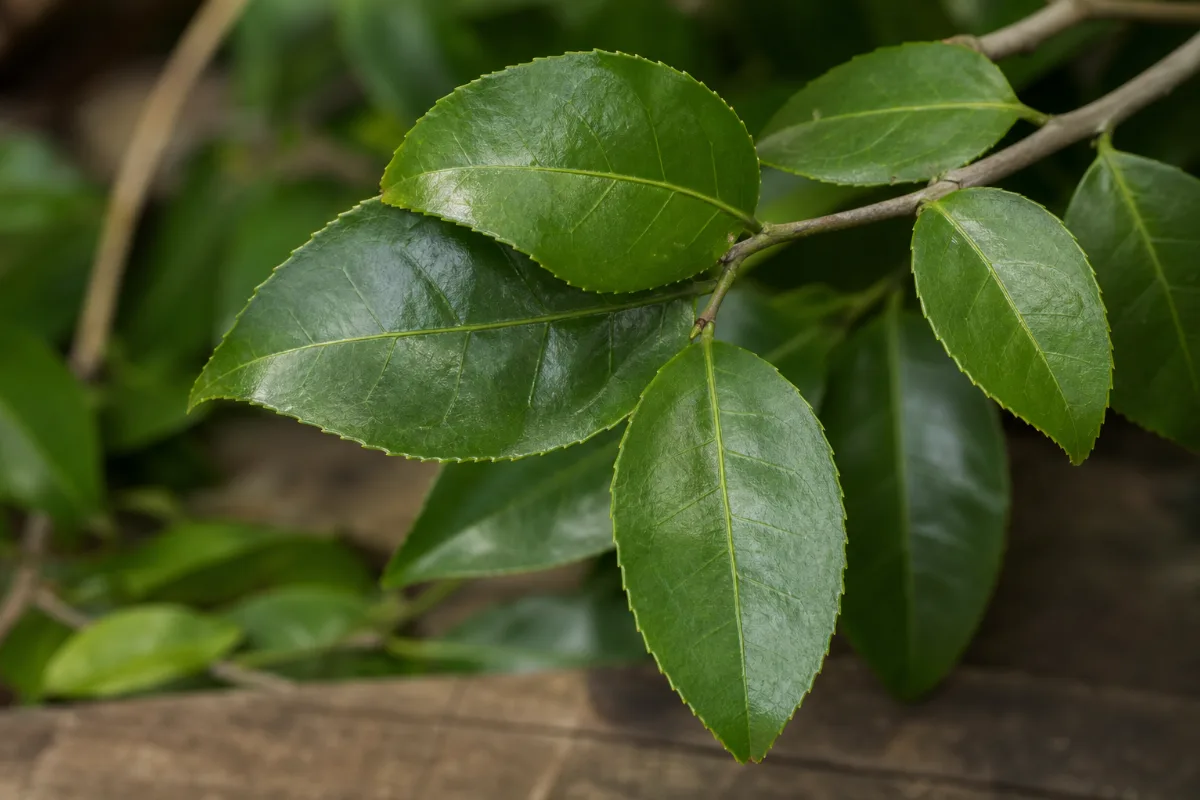
- Leaves: Leaves are the part used; no botanical description was read.
- Cultivation
- Part of traditional gardens of Amazonian peoples and mestizo settlers (Noriega 2025 review, abstract).
- Harvest and processing
- Industrial drying described by the FSAI: leaves aerated for about 20 hours to cut moisture by about 40%, dried at 58 C for 5 hours to under 8% moisture, then milled. Plant age and sunlight change the chemistry (2026 Food Chem title, not read).
- Look-alikes and adulterants
- Name: Yerba mate (Ilex paraguariensis); Note: A close relative with its own page. The FSAI found guayusa water extract had more caffeine (19.8-57.7 vs 8.6-14.5 mg per 100 mL) and different chlorogenic acid and theobromine levels. Mate research should not be assumed to apply to guayusa.; Name: Yaupon (Ilex vomitoria); Note: Another caffeinated North American holly. No source about it was read; it is not covered here.; Name: Guarana (Paullinia cupana); Note: A different, unrelated Amazonian caffeine plant; the name sounds similar but it is a different species and family.
- Sustainability and conservation
- Not assessed in the sources read.
The plant and the parts used

Traditional use and history history, not clinical proof
| Tradition or era | Documented use | Source |
|---|---|---|
| Amazonian peoples, Ecuador | Consumed for centuries, even thousands of years, as an early morning stimulant drink and ceremonial tea; also for colds, stomach complaints and other purposes (Noriega 2025 review). | p40649351 |
| Modern novel food assessment | A 2020 review argued continuous consumption in Ecuador gave a history of safe use for EU novel food purposes. This is a published argument, not a regulatory decision. | p31366209 |
| EU / Ireland 2017 | FSAI substantial equivalence opinion on a water extract, compared with yerba mate extract. | s-fsai-guayusa-2017 |
| United States 2019 | GRAS notices for two guayusa leaf extracts (seen in search results only; NOT verified). | s-fda-grn-guayusa |
Traditional use shows how a plant was used. It does not show that a supplement works or is safe today.
What is inside, and how it may work
What the plant contains and how those compounds act in cells and animals. Laboratory and animal mechanisms are not proven effects in people.
Main compounds
| Compound | Family | Where it is concentrated | Activity studied | Level of evidence |
|---|---|---|---|---|
| Caffeine PubChem 2519 | methylxanthine alkaloid | Leaf 19.8-57.7 mg per 100 mL in batches of one water extract (FSAI); 20% by weight in the trial extract (full text). | Main stimulant; blocks adenosine receptors. 4 6 20 | Human data |
| Theobromine PubChem 5429 | methylxanthine alkaloid | Leaf 0.14-2.0 mg per 100 mL in the same extract batches (FSAI). | Mild stimulant related to caffeine; effects of the amounts here not studied. 4 7 20 | Human data |
| Chlorogenic acids (caffeoylquinic acids) PubChem 1794427 | phenolic acids | Leaf 9.9-72.4 mg per 100 mL in the water extract (FSAI); about 30% by weight in the trial extract. | Antioxidant in lab tests; main compounds in guayusa tea by mass spectrometry; human effects not shown. 4 19 6 20 | Laboratory research |
| Ursolic acid and alpha-amyrin esters PubChem 64945 | pentacyclic triterpenoids | Leaf Ursolic acid 0.7-1% and amyrin esters up to 0.5% (guayusa and mate). | Extracts activated the TGR5 receptor in a lab assay. 2 20 | Laboratory research |
| Quercetin and kaempferol glycosides | flavonoids | Leaf Quercetin glucosides 2-5% and kaempferols 1-3% in the trial extract (full text). | Antioxidant in lab tests. 6 | Laboratory research |
Mechanisms, receptors and pathways
| Target or pathway | Gene or receptor | What was found | Level |
|---|---|---|---|
| Adenosine receptor blockade | Adenosine receptors | Caffeine blocks adenosine receptors in dopamine-rich areas, which reduces drowsiness (trial introduction). 9 6 | Human data |
| Smaller adrenaline rise than synthetic caffeine | Adrenergic response | Urinary epinephrine rose less after guayusa than after synthetic caffeine in 12 men. 8 | Human data |
| Alpha-glucosidase inhibition | Digestive enzyme | Hydroethanolic extracts blocked alpha-glucosidase in a test tube (best IC50 68.05 ug/mL); no human data. 23 | Laboratory research |
| TGR5 activation | TGR5 (GPBAR1) | Ursolic acid-type triterpenoid extracts activated TGR5 in a lab assay; the paper links TGR5 to energy use and insulin sensitivity. 2 | Laboratory research |
| Antioxidant and anti-inflammatory cell effects | Nitric oxide production | Nitric oxide reduced by 10-30% in mouse immune cells; 60-80% protection in a cell antioxidant assay. 19 | Laboratory research |
Absorption, metabolism and elimination
- Absorption
- Caffeine from a guayusa extract was bioequivalent to synthetic caffeine for Cmax and AUC in 12 men (90% CI within 80-125%).
- Distribution
- Not read.
- Metabolism
- Caffeine is a sensitive CYP1A2 substrate in general (modelling paper); not studied with guayusa.
- Elimination
- Not read.
- Bioavailability
- See absorption; no data on chlorogenic acids or other compounds in people were read.
Isolated compounds versus whole extracts
The trial extract (about 20% caffeine and 30% chlorogenic acids by weight) is far more concentrated than tea. A water extract of leaf held 19.8-57.7 mg caffeine per 100 mL. In 12 men guayusa and synthetic caffeine gave the same caffeine blood levels but different adrenaline responses, which hints that whole-leaf compounds may matter, but this is one small trial. No trial compared guayusa with the same amount of caffeine for thinking or mood.
Nutritional composition
The FSAI found water extract low in protein, fat, carbohydrate (0.2-0.3 g per 100 mL) and sugars, so it is not a nutrient source.
1 mixed findings2 low certainty2 very low certainty5 not enough evidence
What is Guayusa good for?
The main proposed uses and how strong the human evidence is for each. 'Low' means small or inconsistent studies, 'very low' means one small or unclear study, 'mixed' means results go both ways, and 'insufficient' means not enough to judge. Results come from specific extracts and may not apply to tea.
Benefits, one by one
Each card is a research question, not a promise. Tap a goal to filter. Open a card to see the studies, doses and limits.
Mood, energy and tiredness after one dose
Low certaintyIn a 25-person trial, a guayusa leaf extract (600 mg, with about 120 mg caffeine) gave better mood scores, less tiredness and more perceived energy than placebo for a short time. A higher dose did not improve mood further. Most of this is likely to be caffeine.
3 studiesStandardized leaf extract (AmaTea Max); not tea. Amounts are in the s…
Studies, doses and limits
What the trials found
One randomized, double-blind, placebo-controlled crossover trial in 25 healthy adults (Helwig 2024) tested 600 mg and 1200 mg of a branded guayusa extract. The 600 mg dose improved total mood disturbance, fatigue-inertia and perceived energy against placebo. A second crossover trial in 40 adults (La Monica 2023) found higher self-rated mood and productivity 1 and 2 hours after a 650 mg dose.
Results
Total mood disturbance -6.9 (SE 2.6, p=0.034), fatigue-inertia -2.84 (p=0.008), perceived energy +13.00 (p=0.02) with 600 mg versus placebo. The abstract lists these gains for the 600 mg dose only.
Effect sizes as reported
Differences are given in survey points with standard errors, not standardized effect sizes; no confidence intervals in the abstract.
Why this rating
Our own reading. Two small single-dose trials point the same way, but both used the same branded extract, both were funded at least in part by its maker, neither compared guayusa with the same amount of plain caffeine, and nothing longer than a few hours was tested.
Form and dose studied
Standardized leaf extract (AmaTea Max); not tea. Amounts are in the study records, not given as advice.
Who was studied
Healthy adults aged about 18 to 50; no older adults, children, pregnant people or people with illness were tested.
Limits
Single doses, small groups, one product, a placebo that also made some people feel more focused, and many outcomes tested at once.
Why researchers looked
Guayusa is a caffeine-containing leaf drunk as a morning stimulant, so researchers tested whether an extract lifts mood and energy.
Traditional use
Used among Amazonian peoples as an early-morning drink (Noriega 2025 review). Traditional use is not clinical evidence.
Proposed mechanism Pharmacological theory
Caffeine blocks adenosine receptors in the brain, which reduces drowsiness. The guayusa extract in the trial also held chlorogenic acids (about 30% by weight) and other polyphenols; whether these add anything is not shown.
A proposed mechanism does not show that the effect happens in people.
Blood pressure rose 4 to 5 mmHg, women reported more jitteriness at the higher dose, and some people had dry mouth or tremor.
Self-rated focus, mental clarity and concentration
Low certaintyIn a 40-person crossover trial, people rated their mental clarity, focus, concentration and productivity higher 1 and 2 hours after a guayusa extract than after placebo. Placebo also raised focus ratings at 1 hour, so part of this is expectation.
2 studiesBranded leaf extract, one dose.
Studies, doses and limits
What the trials found
La Monica 2023 (n=40, crossover, single 650 mg extract dose, tests at baseline, 1 hour and 2 hours): the extract improved self-rated clarity, focus, concentration, mood and productivity and had higher ratings than placebo and Lion's Mane for clarity, focus, concentration and productivity.
Results
Reported as p<0.05 for the self-rated measures at 1 and 2 hours; numbers are not in the abstract.
Effect sizes as reported
Not given in the abstract.
Why this rating
Our own reading. One trial of one branded extract, funded in part by its maker, rating scales that are easy to influence, a placebo that also raised ratings, and no equal-caffeine comparison.
Form and dose studied
Branded leaf extract, one dose.
Who was studied
Healthy adults who usually had 240 mg caffeine a day or less.
Limits
Self-reports; people who usually have more caffeine were not tested; effects beyond 2 hours are unknown.
Why researchers looked
Caffeine is known to affect alertness, so the trial asked people how they felt as well as testing tasks.
Traditional use
Guayusa is drunk before dawn in Amazonian tradition to start the day (Noriega 2025 review; summary-only on this point).
Proposed mechanism Pharmacological theory
Likely the caffeine effect on adenosine receptors; the paper does not isolate any other compound as the cause.
A proposed mechanism does not show that the effect happens in people.
Blood pressure was higher after the extract than after placebo; dry mouth or tremor in two of 40 people.
Thinking and reaction-time tasks
Mixed findingsResults on timed thinking tasks are mixed. After one dose some tasks were faster or more accurate, but on one task (No-go) accuracy was lower. Gains in motor and reaction speed were seen at both doses in another trial.
2 studiesBranded leaf extract, single doses.
Studies, doses and limits
What the trials found
La Monica 2023 found better Serial 7s attempts, more correct N-Back responses and faster reaction times, with fewer correct responses on No-go trials. Helwig 2024 found faster motor and psychomotor speed with 600 mg, and faster psychomotor speed and a faster hop-test reaction time with 1200 mg; the abstract does not list memory or attention results.
Results
600 mg: motor speed +4.52 (p=0.008), psychomotor speed +7.20 (p=0.005). 1200 mg: psychomotor speed +5.08 (p=0.045), hop-test reaction time -0.106 (p=0.026).
Effect sizes as reported
Reported as differences in test units; no confidence intervals in the abstracts.
Why this rating
Our own reading. Some tests improved, one got worse, many tests were run, and the same branded extract was used in both trials.
Form and dose studied
Branded leaf extract, single doses.
Who was studied
Healthy adults only.
Limits
A handful of p values just under 0.05 among many tests; no caffeine-only arm; no long-term testing.
Why researchers looked
To see whether the stimulant effect shows up on objective tests, not only in how people feel.
Traditional use
No traditional claim about test performance.
Proposed mechanism Pharmacological theory
Probably the caffeine effect on alertness and reaction speed. Other leaf compounds may play a part, which was not tested.
A proposed mechanism does not show that the effect happens in people.
See the safety tab: blood pressure rises and jitteriness.
Self-rated ability to cope with stress
Very low certaintyOne trial reported that people rated their ability to tolerate stress higher 1 hour after the guayusa extract. It is one small rating; no stress test or stress hormone was measured.
1 studiesBranded leaf extract.
Studies, doses and limits
What the trials found
La Monica 2023 abstract: the extract improved the ability to tolerate stress at 1 hour (p<0.05).
Results
Single survey item at one time point.
Effect sizes as reported
Not given.
Why this rating
Our own reading. One survey item in one small trial of a branded extract.
Form and dose studied
Branded leaf extract.
Who was studied
Healthy adults.
Limits
Single survey question; easily influenced by expectation; no physiological stress measure.
Why researchers looked
Part of the questionnaire in the focus trial.
Traditional use
Not a traditional claim in the sources read.
Proposed mechanism Pharmacological theory
Not explained in the paper.
A proposed mechanism does not show that the effect happens in people.
Caffeine can raise anxiety and jitteriness in some people.
Traditional morning stimulant drink
Not enough evidenceGuayusa has been drunk for centuries in the western Amazon as a morning tea. This is traditional use, not proof of benefit.
2 studiesLeaf infusion (tea) traditionally.
Studies, doses and limits
What the trials found
Ethnobotanical records and a safe-use review; no trial of the traditional drink.
Results
None measured.
Effect sizes as reported
n/a
Why this rating
Traditional use only.
Form and dose studied
Leaf infusion (tea) traditionally.
Who was studied
Amazonian communities.
Limits
Historical records, not controlled studies.
Why researchers looked
Guayusa has a long history of use, which regulators consider when judging food safety.
Traditional use
Used among Amazonian peoples as a morning drink and for colds and stomach complaints (Noriega 2025 review).
Proposed mechanism Traditional use
Caffeine, with theobromine, chlorogenic acids and other compounds.
A proposed mechanism does not show that the effect happens in people.
A 2020 review found no history of adverse effects or safety notifications but also says the chemistry is still being worked out.
Blood sugar
Not enough evidenceNo human study of blood sugar was found. A 3-week study in diabetic rats and some test-tube work are the only evidence.
4 studiesTea in rats; extracts in lab tests.
Studies, doses and limits
What the trials found
None found.
Results
In 6 diabetic rats given guayusa tea for 21 days versus 7 untreated, vascular sympathetic modulation was kept higher and correlated with lower final glucose (r=-0.81); the authors suggest guayusa may mitigate metabolic and autonomic dysfunction. Not a human result.
Effect sizes as reported
Rat correlation only.
Why this rating
Animal and lab work only; tiny rat groups.
Form and dose studied
Tea in rats; extracts in lab tests.
Who was studied
Female diabetic rats.
Limits
13 rats, one tea concentration, results do not apply to people.
Why researchers looked
Leaf extracts block a sugar-digesting enzyme in the lab, and guayusa contains triterpenoids that switch on a receptor involved in energy use.
Traditional use
The 2025 review lists anti-diabetic among the pharmacological uses reported for guayusa.
Proposed mechanism Laboratory research
In the test tube, hydroethanolic leaf extracts blocked alpha-glucosidase (best IC50 68.05 ug/mL) but not alpha-amylase. Ursolic acid-type extracts activated the TGR5 receptor.
A proposed mechanism does not show that the effect happens in people.
If it did lower glucose it could add to diabetes medicine; no human data.
Antioxidant and anti-inflammatory activity (lab only)
Not enough evidenceGuayusa tea is rich in plant phenols and showed antioxidant and anti-inflammatory activity in test-tube and cell tests, with about half the peroxyl-radical capacity of true tea (Camellia sinensis). No benefit has been shown in people.
2 studiesCommercial tea preparations.
Studies, doses and limits
What the trials found
None found.
Results
Polyphenols 54.39 to 67.23 mg GAE per g dry mass; 60 to 80% protection in a cell antioxidant assay.
Effect sizes as reported
n/a
Why this rating
Lab assays do not show a health benefit.
Form and dose studied
Commercial tea preparations.
Who was studied
None (cells).
Limits
Lab only.
Why researchers looked
New tea ingredient with phenolic compounds.
Traditional use
Traditional uses include colds and stomach complaints (review).
Proposed mechanism Laboratory research
Caffeoylquinic acids (chlorogenic-acid type) were the main compounds; nitric oxide was reduced by 10 to 30% in mouse immune cells.
A proposed mechanism does not show that the effect happens in people.
None specific.
Smaller adrenaline rise than synthetic caffeine
Very low certaintyIn 12 healthy men given the same amount of caffeine (200 mg), the guayusa extract gave similar caffeine blood levels to synthetic caffeine but a smaller rise in urinary epinephrine (adrenaline). Blood pressure and heart rate did not differ from synthetic caffeine in that trial.
2 studiesGuayusa leaf extract delivering 200 mg caffeine.
Studies, doses and limits
What the trials found
Krieger 2016: crossover, 12 men, guayusa extract vs green coffee extract vs synthetic caffeine, 200 mg caffeine each. Absorption was bioequivalent. Epinephrine rose +0.5 with guayusa versus +2.78 ug/gCr with synthetic caffeine (p=0.04).
Results
Epinephrine +0.5 vs +2.78 ug/gCr (p=0.04); blood pressure and heart rate changes not significantly different from synthetic caffeine (p 0.094 to 0.910).
Effect sizes as reported
One urinary marker.
Why this rating
Our own reading. One crossover trial of 12 men, one marker among several, funding not read. The 2024 trial found blood pressure rose after guayusa versus placebo, so heart effects are not ruled out.
Form and dose studied
Guayusa leaf extract delivering 200 mg caffeine.
Who was studied
Healthy adult men.
Limits
Small, single dose, men only; a lower urinary marker does not mean fewer side effects.
Why researchers looked
To compare natural caffeine sources with synthetic caffeine for safety and absorption.
Traditional use
None.
Proposed mechanism Pharmacological theory
Unknown. Whether other leaf compounds modify caffeine's effects was not tested.
A proposed mechanism does not show that the effect happens in people.
Do not read this as guayusa being safer than caffeine.
Traditional uses for colds, stomach complaints, diuretic or emetic
Not enough evidenceTraditional uses beyond a stimulant tea include colds, stomach complaints, as a diuretic and as an emetic. None has been tested in people.
2 studiesStrong leaf decoction or tea traditionally.
Studies, doses and limits
What the trials found
None.
Results
n/a
Effect sizes as reported
n/a
Why this rating
Traditional use only.
Form and dose studied
Strong leaf decoction or tea traditionally.
Who was studied
n/a
Limits
No controlled study.
Why researchers looked
Ethnobotanical records.
Traditional use
Recorded in Amazonian communities (Noriega 2025 review; Natural Medicines notes diuretic, emetic and stimulant history).
Proposed mechanism Traditional use
Not established.
A proposed mechanism does not show that the effect happens in people.
An emetic use means very strong preparations may upset the stomach; this is a traditional record, not a study.
Appetite and weight
Not enough evidenceWe found no human appetite or weight trial of guayusa.
1 studiesn/a
Studies, doses and limits
What the trials found
None found in PubMed (guayusa in title or abstract, 36 records).
Results
n/a
Effect sizes as reported
n/a
Why this rating
No studies.
Form and dose studied
n/a
Who was studied
n/a
Limits
n/a
Why researchers looked
Caffeine-containing leaves are often marketed for weight control.
Traditional use
No traditional claim found in the sources read.
Proposed mechanism Pharmacological theory
Not studied.
A proposed mechanism does not show that the effect happens in people.
In rats a very high dose of concentrate lowered body weight, comparable to a caffeine control; this is not a human weight result.
Connections to the rest of health
How Guayusa connects to the rest of our health knowledge graph. Every link says what kind of connection it is. A safety link (for example to the liver) is a warning, not a benefit. A study that merely mentions a topic never creates a benefit link.
Explore every connection: goals, body systems, organs, symptoms, genes
A. Wellness goals
| Connected to | Kind of connection | Evidence status | Context | Studies |
|---|---|---|---|---|
| Energy boost | Potential benefit | Low certainty | More perceived energy for a few hours in a small funder-supported trial. Mood, energy and tiredness after one dose: In a 25-person trial, a guayusa leaf extract (600 mg, with about 120 mg caffeine) gave better mood scores, less tiredness and more perceived energy than placebo for a short time. A higher dose did not improve mood further. Most of this is likely to be caffeine. Preparation or compound: Guayusa leaf extract |
6 9 16 |
| Reduce Fatigue | Potential benefit | Low certainty | Mood, energy and tiredness after one dose: In a 25-person trial, a guayusa leaf extract (600 mg, with about 120 mg caffeine) gave better mood scores, less tiredness and more perceived energy than placebo for a short time. A higher dose did not improve mood further. Most of this is likely to be caffeine. | 6 9 16 |
| Mood Balance | Potential benefit | Low certainty | Mood, energy and tiredness after one dose: In a 25-person trial, a guayusa leaf extract (600 mg, with about 120 mg caffeine) gave better mood scores, less tiredness and more perceived energy than placebo for a short time. A higher dose did not improve mood further. Most of this is likely to be caffeine. | 6 9 16 |
| Better Focus | Potential benefit | Low certainty | Self-rated focus, mental clarity and concentration: In a 40-person crossover trial, people rated their mental clarity, focus, concentration and productivity higher 1 and 2 hours after a guayusa extract than after placebo. Placebo also raised focus ratings at 1 hour, so part of this is expectation. | 9 16 |
| Mental Clarity | Potential benefit | Low certainty | Self-rated focus, mental clarity and concentration: In a 40-person crossover trial, people rated their mental clarity, focus, concentration and productivity higher 1 and 2 hours after a guayusa extract than after placebo. Placebo also raised focus ratings at 1 hour, so part of this is expectation. | 9 16 |
| Cognitive Performance | Potential benefit | Mixed findings | Thinking and reaction-time tasks: Results on timed thinking tasks are mixed. After one dose some tasks were faster or more accurate, but on one task (No-go) accuracy was lower. Gains in motor and reaction speed were seen at both doses in another trial. | 6 9 |
| Peak Performance | Potential benefit | Mixed findings | Thinking and reaction-time tasks: Results on timed thinking tasks are mixed. After one dose some tasks were faster or more accurate, but on one task (No-go) accuracy was lower. Gains in motor and reaction speed were seen at both doses in another trial. | 6 9 |
| Stress Reduction | Potential benefit | Very low certainty | Self-rated ability to cope with stress: One trial reported that people rated their ability to tolerate stress higher 1 hour after the guayusa extract. It is one small rating; no stress test or stress hormone was measured. | 9 |
| Energy Boost | Traditional use | Not enough evidence | Traditional morning stimulant drink: Guayusa has been drunk for centuries in the western Amazon as a morning tea. This is traditional use, not proof of benefit. | 17 22 |
| Blood Sugar Balance | Preliminary mechanism | Not enough evidence | Blood sugar: No human study of blood sugar was found. A 3-week study in diabetic rats and some test-tube work are the only evidence. | 11 23 2 17 |
| Inflammation Balance | Preliminary mechanism | Not enough evidence | Antioxidant and anti-inflammatory activity (lab only): Guayusa tea is rich in plant phenols and showed antioxidant and anti-inflammatory activity in test-tube and cell tests, with about half the peroxyl-radical capacity of true tea (Camellia sinensis). No benefit has been shown in people. | 19 17 |
| Healthy Aging | Preliminary mechanism | Not enough evidence | Antioxidant and anti-inflammatory activity (lab only): Guayusa tea is rich in plant phenols and showed antioxidant and anti-inflammatory activity in test-tube and cell tests, with about half the peroxyl-radical capacity of true tea (Camellia sinensis). No benefit has been shown in people. | 19 17 |
| Energy Boost | Biological association | Very low certainty | Smaller adrenaline rise than synthetic caffeine: In 12 healthy men given the same amount of caffeine (200 mg), the guayusa extract gave similar caffeine blood levels to synthetic caffeine but a smaller rise in urinary epinephrine (adrenaline). Blood pressure and heart rate did not differ from synthetic caffeine in that trial. | 8 6 |
| Digestive Support | Traditional use | Not enough evidence | Traditional uses for colds, stomach complaints, diuretic or emetic: Traditional uses beyond a stimulant tea include colds, stomach complaints, as a diuretic and as an emetic. None has been tested in people. | 17 16 |
| Immune Support | Traditional use | Not enough evidence | Traditional uses for colds, stomach complaints, diuretic or emetic: Traditional uses beyond a stimulant tea include colds, stomach complaints, as a diuretic and as an emetic. None has been tested in people. | 17 16 |
| Weight Management | Preliminary mechanism | Not enough evidence | Appetite and weight: We found no human appetite or weight trial of guayusa. | 7 |
B. Body systems
| Connected to | Kind of connection | Evidence status | Context | Studies |
|---|---|---|---|---|
| Cardiovascular system | Adverse effect or risk | Moderate certainty | Blood pressure rose 4 to 5 mmHg after a single dose in two small trials. Preparation or compound: Guayusa leaf extract (caffeine) |
6 9 |
| Nervous System | Biological association | Low certainty | Studied for: Mood, energy and tiredness after one dose Studied for: Self-rated focus, mental clarity and concentration | 6 9 16 17 22 8 |
| Stress Mood | Biological association | Low certainty | Studied for: Mood, energy and tiredness after one dose Studied for: Self-rated ability to cope with stress | 6 9 16 |
| Metabolism Weight | Biological association | Not enough evidence | Studied for: Blood sugar Studied for: Appetite and weight | 11 23 2 17 7 |
| Endocrine System | Biological association | Not enough evidence | Studied for: Blood sugar | 11 23 2 17 |
| Immune System | Biological association | Not enough evidence | Studied for: Antioxidant and anti-inflammatory activity (lab only) | 19 17 |
| Cardiovascular System | Biological association | Very low certainty | Studied for: Smaller adrenaline rise than synthetic caffeine | 8 6 |
| Digestive System | Biological association | Not enough evidence | Studied for: Traditional uses for colds, stomach complaints, diuretic or emetic | 17 16 |
E. Health conditions
I. Biomarkers
| Connected to | Kind of connection | Evidence status | Context | Studies |
|---|---|---|---|---|
| Mood disturbance, fatigue and perceived energy survey scores | Biological association | Low certainty | Measured in trials: improved (single 600 mg dose). A lab change is not the same as a health benefit. | 6 |
| Motor, psychomotor speed and reaction time | Biological association | Low certainty | Measured in trials: faster. A lab change is not the same as a health benefit. | 6 9 |
| N-Back, Serial 7s and No-go task scores | Biological association | Mixed findings | Measured in trials: mixed (some better, No-go accuracy lower). A lab change is not the same as a health benefit. | 9 |
| Blood pressure (systolic and diastolic) | Biological association | Moderate certainty | Measured in trials: raised (an adverse effect, not a benefit). A lab change is not the same as a health benefit. | 6 9 |
| Heart rate and QTc interval | Biological association | Low certainty | Measured in trials: no change seen. A lab change is not the same as a health benefit. | 6 8 |
| Urinary epinephrine | Biological association | Very low certainty | Measured in trials: smaller rise than synthetic caffeine. A lab change is not the same as a health benefit. | 8 |
| Blood glucose (rat study) | Biological association | Not enough evidence | Measured in trials: final glucose correlated with nerve modulation (rats). A lab change is not the same as a health benefit. | 11 |
J. Genes, receptors and enzymes
| Connected to | Kind of connection | Evidence status | Context | Studies |
|---|---|---|---|---|
| CYP1A2 | Preliminary mechanism | Pharmacological theory | Main liver enzyme that breaks down caffeine; strong inhibitors such as fluvoxamine raise caffeine levels in models. | 1 |
| Adenosine receptors | Preliminary mechanism | Human | Target of caffeine. | 9 |
| TGR5 | Preliminary mechanism | In vitro | Activated by guayusa triterpenoid extracts in the lab. | 2 |
L. Active compounds
| Connected to | Kind of connection | Evidence status | Context | Studies |
|---|---|---|---|---|
| Caffeine | Biological association | Human | Main stimulant; blocks adenosine receptors. Preparation or compound: Leaf |
4 6 20 |
| Theobromine | Biological association | Human | Mild stimulant related to caffeine; effects of the amounts here not studied. Preparation or compound: Leaf |
4 7 20 |
| Chlorogenic acids (caffeoylquinic acids) | Biological association | In vitro | Antioxidant in lab tests; main compounds in guayusa tea by mass spectrometry; human effects not shown. Preparation or compound: Leaf |
4 19 6 20 |
| Ursolic acid and alpha-amyrin esters | Biological association | In vitro | Extracts activated the TGR5 receptor in a lab assay. Preparation or compound: Leaf |
2 20 |
| Quercetin and kaempferol glycosides | Biological association | In vitro | Antioxidant in lab tests. Preparation or compound: Leaf |
6 |
Each connection is stored with the ingredient, the connected record, the kind of connection, the evidence status, the supporting studies, the preparation or compound involved, and a review date (last reviewed October 25, 2026).
The evidence
The research centre for Guayusa. Every record here was checked against PubMed or the publisher's page; we never list a study we have not verified.
Evidence by outcome
Bars show how many studies we found for each outcome, not how well it works. People are added up across trials only (reviews are not added, to avoid double counting).
How we rate evidence
High certainty
Several well-run trials or reviews agree; further research is unlikely to change the picture much.
Moderate certainty
Good trials point the same way, but some doubt remains.
Low certainty
Small, short or inconsistent trials. The finding could change with better research.
Very low certainty
Very little or very weak human data. Treat as a possibility only.
Mixed findings
Trials or reviews disagree with each other.
Not enough evidence
Not enough human research to say either way.
Evidence against
Good research found no benefit, or found harm.
We take the reviewers' own risk-of-bias and GRADE statements where they exist, and otherwise judge from study size, design, consistency, directness and whether a product matches what is sold. Many publications do not make evidence high. Method note: We searched PubMed for guayusa (36 records), read the abstracts of the key studies and the full text of the two mood and focus trials, read the Irish food safety opinion, the NHS caffeine advice and a consumer drug reference newsletter page, and checked plant names in GBIF and NCBI Taxonomy and compounds in PubChem. Not verified: EU Novel Food Catalogue, FDA GRAS letters (seen in search summaries only), EMA, NCCIH, LiverTox, LactMed, Commission E and WHO (none found or opened). Certainty ratings are the compiler's own reading, not formal grades. No study is cited that we could not verify.
Study library: every study we checked 23
| Study | Design | People | Product, dose, length | Result |
|---|---|---|---|---|
| Britz 2019 Physiologically-Based Pharmacokinetic Models for CYP1A2 Drug-Drug Interaction Prediction: A Modeling Network of Fluvoxamine, Theophylline, Caffeine, Rifampicin, and Midazolam. CPT Pharmacometrics Syst Pharmacol · PMID 30762305 · DOI |
Modelling n/a |
Computer models checked against published clinical interaction studies | Caffeine (not guayusa) as a sensitive CYP1A2 substrate; fluvoxamine as strong CYP1A2 inhibitor n/a n/a n/a · vs n/a |
Describes caffeine as a sensitive index substrate of the liver enzyme CYP1A2 and fluvoxamine as a strong inhibitor; the models predicted most observed interaction values within twofold. n/a Methods, limits and fundingOutcomes: Prediction of drug-drug interactions through CYP1A2 Limitations: About caffeine and drugs in general, not guayusa; a modelling paper. Funding and conflicts: Not stated in the abstract. Read: abstract |
| Chianese 2019 Bioactive triterpenoids from the caffeine-rich plants guayusa and mate. Food Res Int · PMID 30599971 · DOI |
Laboratory research in-vitro |
Plant chemistry and a lab receptor assay | Guayusa and mate leaf extracts leaf n/a n/a · vs n/a |
Guayusa and mate share a triterpenoid profile with ursolic acid at 0.7 to 1% and amyrin esters up to 0.5%. Ursolic acid-type extracts activated TGR5, a receptor involved in energy use and insulin response. n/a Methods, limits and fundingOutcomes: Triterpenoid content; TGR5 receptor activity Limitations: Lab only; no human or animal outcome. Funding and conflicts: Not stated in the abstract. Read: abstract |
| European Medicines Agency 2026 EMA/HMPC herbal monograph for Ilex guayusa: not found European Medicines Agency · Source |
Regulatory record n/a |
Ilex guayusa leaf |
No guayusa monograph was found in web searches. Methods, limits and fundingLimitations: The EMA site was not searched directly; absence is not confirmed. (A separate EU herbal monograph exists for yerba mate, a different species.) Read: not-found | |
| Food Safety Authority of Ireland (FSAI) 2017 Substantial equivalence opinion: Ilex guayusa Food Safety Authority of Ireland (FSAI) · Source |
Authoritative guidance n/a |
Ilex guayusa leaf |
On an application from Runa LLC (February 2017), FSAI judged an aqueous extract of dried guayusa leaves substantially equivalent to aqueous yerba mate extract, which was on the EU market before 1997. Batch figures per 100 mL: caffeine 19.8-57.7 mg (mate 8.6-14.5), theobromine 0.14-2.0 mg (mate 1.5-2.4), chlorogenic acids 9.9-72.4 mg (mate 22.5-43.4). Heavy metals were within limits. Methods, limits and fundingLimitations: One company's application; a two-page opinion; says nothing on pregnancy or interactions; covers a water extract only. Read: full-text | |
| GBIF 2026 GBIF backbone: Ilex guayusa Loes. GBIF · Source |
Database n/a |
Ilex guayusa leaf |
Exact match, accepted species, usageKey 5534620, family Aquifoliaceae, order Aquifoliales (checked 2026-10-25). Methods, limits and fundingLimitations: Taxonomy only. Read: full-text | |
| Helwig 2024 Acute, dose-response effects of guayusa leaf extract on mood, cognitive and motor-cognitive performance, and blood pressure, heart rate, and ventricular repolarization. J Int Soc Sports Nutr · PMID 39014963 · DOI |
Controlled trial |
25 Healthy adults, mean age 28 (9 men, 16 women) |
Guayusa leaf extract (AmaTea Max, Applied Food Sciences): 600 mg (120 mg caffeine) or 1200 mg (240 mg caffeine) in the full text leaf 600 mg or 1200 mg, single dose Three visits, single dose each (crossover) · vs Placebo |
The 600 mg dose improved total mood disturbance, fatigue, perceived energy, motor speed and psychomotor speed versus placebo. The 1200 mg dose improved psychomotor speed and a hop-test reaction time. Jitteriness rose with dose in women only. Both doses raised systolic and diastolic blood pressure by 4 to 5 mmHg. Heart rate and QTc were not changed. 600 mg: mood disturbance -6.9 +/- 2.6 (p=0.034); fatigue-inertia -2.84 +/- 0.89 (p=0.008); perceived energy +13.00 +/- 4.49 (p=0.02). Blood pressure +4 to 5 mmHg (p<=0.022). QTc no change (p=0.31). Methods, limits and fundingOutcomes: Mood, perceived jitteriness, energy and focus, cognitive and motor-cognitive tests, blood pressure, heart rate, QT interval Limitations: Small, healthy, single doses only; no caffeine-only comparison, so effects cannot be separated from caffeine; many tests so some results may be chance. Funding and conflicts: Abstract says no conflict reported. The full text says the work was funded mainly by Applied Food Sciences (maker of the extract) and also by a US NIH award (UL1TR002537). Read: full-text |
| Kapp RW Jr 2016 General and Genetic Toxicology of Guayusa Concentrate (Ilex guayusa). Int J Toxicol · PMID 26811391 · DOI |
Animal research animal |
Rats; human lymphocytes and bacteria in lab tests | Standardised liquid guayusa concentrate leaf 1,200, 2,500 and 5,000 mg/kg/day in a 90-day rat study; caffeine control 150 mg/kg/day 90 days · vs Caffeine control and untreated |
Negative in Ames and chromosome tests. Oral LD50 above 5,000 mg/kg in female rats. In rats the concentrate caused lower body weight, fat pads and triglycerides, higher AST, ALT and cholesterol and salivary gland enlargement, all comparable to the caffeine control; no extra toxicity from other components. n/a Methods, limits and fundingOutcomes: Genotoxicity, acute toxicity, 90-day toxicity Limitations: Animal and lab results at very high doses; the liver enzyme rises matched caffeine but their meaning for people is unknown. Funding and conflicts: Not stated in the abstract (labelled non-government research support). Read: abstract |
| Krieger 2016 The Safety, Pharmacokinetics, and Nervous System Effects of Two Natural Sources of Caffeine in Healthy Adult Males. Clin Transl Sci · PMID 27320048 · DOI |
Controlled trial |
12 Healthy adult men |
Guayusa leaf extract versus green coffee extract versus synthetic caffeine, each giving 200 mg caffeine leaf 200 mg caffeine from each source, single dose Single dose per period (crossover) · vs Synthetic caffeine |
No significant change in blood pressure or heart rate versus synthetic caffeine. Caffeine absorption from guayusa and green coffee was bioequivalent to synthetic caffeine by FDA standards. Guayusa was linked to a smaller rise in epinephrine than synthetic caffeine (+0.5 vs +2.78 ug/gCr, p=0.04). Epinephrine +0.5 vs +2.78 ug/gCr (p=0.04) Methods, limits and fundingOutcomes: Blood pressure, heart rate, caffeine blood levels, urinary neurotransmitters Limitations: Only 12 men; single dose; one marker of many; the meaning of a lower urinary epinephrine is unclear. Funding and conflicts: Not stated in the abstract; funding not read. Read: abstract |
| La Monica 2023 Acute Effects of Naturally Occurring Guayusa Tea and Nordic Lion's Mane Extracts on Cognitive Performance. Nutrients · PMID 38140277 · DOI |
Controlled trial |
40 Healthy men and women aged 18 to 50 who usually had 240 mg caffeine a day or less |
Guayusa extract (AmaTea Max); a separate Nordic Lion's Mane arm (not covered here) leaf 650 mg, single dose Three visits, tested at baseline, 1 hour and 2 hours (crossover) · vs Placebo (and Lion's Mane arm) |
Guayusa improved several N-Back, Serial 7s and Go reaction measures and self-rated clarity, focus, concentration, mood and productivity, but lowered the percent correct on No-go trials. Placebo also improved self-rated focus and concentration at 1 hour. Guayusa uniquely raised blood pressure. Three of 40 people had mild events (dry mouth or tremor with guayusa; headache with placebo). Several p values at or below 0.05; no effect sizes in the abstract. Methods, limits and fundingOutcomes: Go/No-go, N-Back and Serial 7s tasks, self-rated clarity, focus, concentration, mood, productivity, blood pressure Limitations: Small, short, single dose, no caffeine-only comparison; the full text reports about 130 mg caffeine in the study dose in the discussion; many outcomes tested. Funding and conflicts: Full text: funded in part by Applied Food Sciences (maker of the extract); data available only with the sponsor's permission. Read: full-text |
| McCreedy 2018 Effects of maternal caffeine consumption on the breastfed child: a systematic review. Swiss Med Wkly · PMID 30294771 · DOI |
Systematic review |
5 Five studies of breastfeeding mothers and infants (small) |
Maternal caffeine (not guayusa) n/a n/a n/a · vs n/a |
Small studies found no significant effect on infant heart rate or sleep; one found fewer fully breastfed infants at 6 months. The authors judged the evidence scant, inconsistent and inconclusive for recommendations. n/a Methods, limits and fundingOutcomes: Infant heart rate, sleep, colic, breastfeeding rate Limitations: Caffeine in general, not guayusa; five small studies of limited quality. Funding and conflicts: Not stated in the abstract. Read: abstract |
| Mello 2025 Ilex Guayusa Tea Improves Glycaemia and Autonomic Modulation in Female Streptozotocin-Induced Diabetic Rats. Pharmaceuticals (Basel) · PMID 40143095 · DOI |
Animal research animal |
13 Female diabetic Wistar rats (7 untreated, 6 given tea) |
Guayusa tea leaf 3.0 g/L tea ad libitum 21 days · vs Untreated diabetic rats |
Untreated diabetic rats had rising glucose and falling weight; tea-drinking rats kept more sympathetic modulation, which was linked to lower glucose. No differences in pressure, heart rate or oxidative stress. Correlation of sympathetic variability with final glucose r=-0.81 (p=0.002) Methods, limits and fundingOutcomes: Blood glucose, body mass, blood pressure, heart rate variability, oxidative stress Limitations: 13 rats; one dose; rat result, not a human result. Funding and conflicts: No conflicts reported. Read: abstract |
| NCBI 2026 NCBI Taxonomy: Ilex guayusa NCBI · Source |
Database n/a |
Ilex guayusa leaf |
Species record, taxid 872003 (checked 2026-10-25 through the NCBI taxonomy API). Methods, limits and fundingLimitations: Taxonomy only. Read: full-text | |
| NCCIH (NIH) 2026 NCCIH page on guayusa: not found NCCIH (NIH) · Source |
Regulatory record n/a |
Ilex guayusa leaf |
No NCCIH page on guayusa was found. Methods, limits and fundingLimitations: Search results only; not confirmed on the site. Read: not-found | |
| NHS (UK) 2026 Foods to avoid in pregnancy (caffeine section) NHS (UK) · Source |
Authoritative guidance n/a |
Ilex guayusa leaf |
Advises no more than 200 mg of caffeine a day in pregnancy and links too much caffeine to higher chance of miscarriage and stillbirth. Examples: instant coffee about 100 mg a cup, black or green tea about 75 mg a cup, 250 mL energy drink about 80 mg. Methods, limits and fundingLimitations: Does not mention guayusa; says nothing on breastfeeding. Read: full-text | |
| NIH LiverTox / LactMed 2026 LiverTox and LactMed entries for guayusa: not found NIH LiverTox / LactMed · Source |
Regulatory record n/a |
Ilex guayusa leaf |
No LiverTox or LactMed entry for guayusa was found. The NCBI Bookshelf pages blocked automated opening, so the LactMed Caffeine record was not read. Methods, limits and fundingLimitations: Absence not confirmed; the page links are general database addresses. Read: not-found | |
| Natural Medicines (Therapeutic Research Center) 2025 New Monograph Spotlight: Ilex guayusa Natural Medicines (Therapeutic Research Center), newsletter page · Source |
Authoritative guidance n/a |
Ilex guayusa leaf |
Calls guayusa likely safe as a drink and generally well tolerated; lists possible raised blood pressure, jitteriness, tolerance and dependence from caffeine; lists a major interaction with ephedrine and other stimulants; says a single 600-650 mg extract dose may modestly help some cognitive and motor measures; evidence for other uses is limited and insufficient. Methods, limits and fundingLimitations: A newsletter excerpt, not the full subscriber monograph. It did not mention pregnancy, breastfeeding, MAOIs or CYP1A2 on the page read. Read: full-text | |
| Noriega 2025 Guayusa (Ilex guayusa Loes.) Ancestral Plant of Ecuador: History, Traditional Uses, Chemistry, Biological Activity, and Potential Industrial Uses. Molecules · PMID 40649351 · DOI |
Narrative review n/a |
Review of lab, animal and ethnobotanical work | Guayusa leaf leaf n/a n/a · vs n/a |
Names xanthine alkaloids, terpenes and phenolic compounds as main metabolites. Lists stimulant, analgesic, antioxidant, antimicrobial, anti-inflammatory and anti-diabetic uses from ethnobotany and lab work. n/a Methods, limits and fundingOutcomes: History, traditional uses, chemistry and biological activity Limitations: Narrative review; mostly lab, animal and traditional-use work; not a systematic review. Funding and conflicts: No conflicts reported. Read: abstract |
| Paladines-Santacruz 2021 Acute oral toxicity of a novel functional drink based on Ilex guayusa, Vernonanthura patens, and cocoa husk. Toxicol Rep · PMID 33854951 · DOI |
Animal research animal |
Mice | Three-ingredient drink (guayusa, Vernonanthura patens leaf, cocoa husk), not guayusa alone leaf (mixed product) 2,000 mg/kg, single dose Single dose · vs None |
No deaths, signs of toxicity or organ changes at the single dose. n/a Methods, limits and fundingOutcomes: Acute toxicity Limitations: A blend of three plants in mice, one dose. Funding and conflicts: No competing interests declared. Read: abstract |
| Pardau 2017 Antioxidant and anti-inflammatory properties of Ilex guayusa tea preparations: a comparison to Camellia sinensis teas. Food Funct · PMID 29134218 · DOI |
Laboratory research in-vitro |
Lab chemistry and cell tests | Commercial guayusa tea preparations (Runa) leaf n/a n/a · vs Camellia sinensis teas |
Guayusa teas held 54.39 to 67.23 mg GAE per g dry mass of polyphenols, with peroxyl radical capacity about half that of the Camellia sinensis teas, similar cell antioxidant protection (60 to 80%) and nitric oxide reduced by 10 to 30% in mouse immune cells. Main compounds were caffeoylquinic acids. n/a Methods, limits and fundingOutcomes: Polyphenols, antioxidant capacity, cell antioxidant and anti-inflammatory tests Limitations: Lab and cell tests only; does not show a benefit in people. Funding and conflicts: Not stated in the abstract. Read: abstract |
| PubChem 2026 PubChem compound records: caffeine, theobromine, chlorogenic acid, ursolic acid, alpha-amyrin PubChem · Source |
Database n/a |
Ilex guayusa leaf |
CIDs checked 2026-10-25: caffeine 2519, theobromine 5429, chlorogenic acid 1794427, ursolic acid 64945, alpha-amyrin 73170. Methods, limits and fundingLimitations: Identity only. Read: full-text | |
| US Food and Drug Administration 2019 FDA GRAS notices GRN 000869 (aqueous guayusa leaf extract) and GRN 000870 (hydroethanolic guayusa leaf extract) US Food and Drug Administration · Source |
Authoritative guidance n/a |
Ilex guayusa leaf |
Seen only in web search results: two 2019 notices from Applied Food Sciences for guayusa leaf extracts in bars and beverages at stated limits; trade press describes FDA's reply as a no-questions letter. Methods, limits and fundingLimitations: The FDA letters themselves could not be opened (links returned 404). Wording and dates not verified. A GRAS notice review is not an FDA approval. Read: summary-only | |
| Wise 2020 A critical review of the composition and history of safe use of guayusa: a stimulant and antioxidant novel food. Crit Rev Food Sci Nutr · PMID 31366209 · DOI |
Narrative review n/a |
Review of taxonomy, chemistry, toxicology, ethnobotany and history of use | Guayusa leaf leaf n/a n/a · vs n/a |
Concludes the known chemistry presents no greater risk than green tea or yerba mate, that broad consumption has no history of adverse effects or safety notifications, and that understanding of its chemistry is still early. n/a Methods, limits and fundingOutcomes: Safety assessment for novel food purposes Limitations: Authors are in favour of an EU authorisation case; history of use is not a substitute for trials; chemistry still incompletely known. Funding and conflicts: Not stated in the abstract; funding not read. Read: abstract |
| de Los Monteros-Silva 2025 Unlocking the Ilex guayusa Potential: Volatile Composition, Antioxidant, Antidiabetic, and Hemolytic Activities, with In Silico Molecular Docking and ADMET Analysis of Hydroethanolic Extracts. Molecules · PMID 41097306 · DOI |
Laboratory research in-vitro |
Lab tests on leaf extracts from three sites in Ecuador, young and old leaves | Hydroethanolic guayusa leaf extracts leaf n/a n/a · vs n/a |
Phenol content differed by site and leaf age. No sample blocked alpha-amylase or caused hemolysis; alpha-glucosidase was blocked (best IC50 68.05 ug/mL). n/a Methods, limits and fundingOutcomes: Phenols, antioxidant tests, enzyme inhibition, hemolysis, computer docking Limitations: Lab and computer modelling only. Funding and conflicts: No conflicts reported. Read: abstract |
What we do not know yet
- What the evidence supports: mood, energy and self-rated focus are low; thinking tasks mixed; stress coping and adrenaline very low; blood sugar, antioxidant effects and appetite insufficient.
- What is uncertain: all mind trials used one branded extract from the funder, in healthy adults, after a single dose, without a plain-caffeine comparison.
- Not found: a glucose or appetite trial in people, pregnancy data, drug-interaction studies, EMA, NCCIH, LiverTox and LactMed entries. Not opened: the EU Novel Food Catalogue and the FDA GRAS letters.
How new research is added
New studies are found by a saved PubMed search and are placed in a review queue. A person reads each one before it changes any evidence rating or safety wording.
Lab markers
What changed in blood or saliva tests during trials. A changed number is not the same as feeling or being healthier, and we give no "normal ranges".
Metabolic 1
Blood glucose (rat study)
Final glucose correlated with nerve modulation (rats) in trials
Sugar in the blood.
Not enough evidenceResults and what it means
Why it was measured
Diabetic rat model.
Statistical vs. clinical meaning
Animal only.
Safety implication
None established.
| Study | Result | People | Product |
|---|---|---|---|
| 11 | Correlation between vascular sympathetic variability and final glucose r=-0.81 (p=0.002); the group difference in glucose itself is not given in the abstract. | 13 diabetic rats | Guayusa tea 3.0 g/L for 21 days |
Other 6
Mood disturbance, fatigue and perceived energy survey scores
Improved (single 600 mg dose) in trials
Points on a mood questionnaire and a rating scale of how energetic a person feels.
Low certaintyResults and what it means
Why it was measured
Main outcome of the 25-person trial.
Statistical vs. clinical meaning
Short-lived survey changes; they say how people felt for a few hours, not whether health changed.
Safety implication
Jitteriness increased with dose in women.
| Study | Result | People | Product |
|---|---|---|---|
| 6 | Total mood disturbance -6.9 +/- 2.6 (p=0.034); fatigue-inertia -2.84 +/- 0.89 (p=0.008); perceived energy +13.00 +/- 4.49 (p=0.02) versus placebo. | 25 healthy adults | Guayusa extract 600 mg single dose |
Motor, psychomotor speed and reaction time
Faster in trials
How fast a person moves, responds to a signal or completes a motor-cognitive task.
Low certaintyResults and what it means
Why it was measured
Objective tests of alertness.
Statistical vs. clinical meaning
Test-room speed; not shown to change driving, work or sport.
Safety implication
None specific.
| Study | Result | People | Product |
|---|---|---|---|
| 6 | 600 mg: motor speed +4.52 (p=0.008), psychomotor speed +7.20 (p=0.005); 1200 mg: psychomotor speed +5.08 (p=0.045), hop-test reaction time -0.106 (p=0.026). | 25 healthy adults | Guayusa extract, single dose |
| 9 | Faster Go stimulus reaction time and N-Back reaction time versus placebo (p<=0.05), numbers not in the abstract. | 40 healthy adults | Guayusa extract 650 mg, single dose |
N-Back, Serial 7s and No-go task scores
Mixed (some better, No-go accuracy lower) in trials
Memory, counting and impulse-control tasks done at a computer.
Mixed findingsResults and what it means
Why it was measured
Standard short cognitive tests.
Statistical vs. clinical meaning
Mixed picture; one task got worse.
Safety implication
Lower No-go accuracy hints at less impulse control on that task; the paper does not say what this means.
| Study | Result | People | Product |
|---|---|---|---|
| 9 | Improved Serial 7s attempts, N-Back total score and correct responses; reduced percent correct on No-go trials (p<=0.05); numbers not in the abstract. | 40 healthy adults | Guayusa extract 650 mg, single dose |
Blood pressure (systolic and diastolic)
Raised (an adverse effect, not a benefit) in trials
Pressure in the arteries when the heart beats and rests.
Moderate certaintyResults and what it means
Why it was measured
Caffeine is known to raise blood pressure; both human trials checked it.
Statistical vs. clinical meaning
A few mmHg for a few hours in healthy adults; matters more for people with high blood pressure.
Safety implication
People with high blood pressure should ask a clinician before using caffeinated extracts.
| Study | Result | People | Product |
|---|---|---|---|
| 6 | Both 600 mg and 1200 mg of extract raised systolic and diastolic pressure by 4 to 5 mmHg (p<=0.022) versus placebo. | 25 healthy adults | Guayusa extract, single dose |
| 9 | The guayusa extract uniquely raised blood pressure from baseline compared with placebo and Lion's Mane (numbers not in the abstract). | 40 healthy adults | Guayusa extract 650 mg |
Heart rate and QTc interval
No change seen in trials
Heart rate and a heart-rhythm timing measure on an ECG.
Low certaintyResults and what it means
Why it was measured
Safety check for a stimulant.
Statistical vs. clinical meaning
No rhythm signal in healthy adults after single doses; people with rhythm problems were not tested.
Safety implication
Caffeine can affect rhythm in susceptible people; ask a doctor.
Urinary epinephrine
Smaller rise than synthetic caffeine in trials
Adrenaline passed in urine, adjusted for creatinine.
Very low certaintyResults and what it means
Why it was measured
Marker of stimulation of the stress-hormone system.
Statistical vs. clinical meaning
A single marker in a small trial.
Safety implication
None established.
| Study | Result | People | Product |
|---|---|---|---|
| 8 | +0.5 vs +2.78 ug/gCr (p=0.04). | 12 healthy men | Guayusa extract vs synthetic caffeine, 200 mg caffeine each |
Safety
What studies and official sources say about side effects, medicines and who should check first. Each point shows what kind of evidence it comes from.
Main points to know 5
- Guayusa is a caffeine plant: expect caffeine effects. A water extract of guayusa leaf held 19.8 to 57.7 mg caffeine per 100 mL in batch tests reviewed by the Irish food safety authority, against 8.6 to 14.5 mg for yerba mate extract. In one trial a 600 mg extract carried about 120 mg caffeine and a 1,200 mg extract about 240 mg. Blood pressure rose 4 to 5 mmHg, women reported more jitteriness at the higher dose, and some people had dry mouth or tremor. Count guayusa toward your daily caffeine total. Controlled trial 4 6 9
- Pregnancy: caffeine limits apply; nothing guayusa-specific was found. The NHS advises no more than 200 mg of caffeine a day in pregnancy and links too much caffeine to higher chance of miscarriage and stillbirth. The 1,200 mg extract in one trial already held about 240 mg caffeine. No pregnancy study of guayusa, and no guayusa statement from a regulator on pregnancy, was found. The Natural Medicines page read did not address pregnancy. Authoritative guidance 14 6 16
- Do not combine with ephedrine or other stimulants without medical advice. A consumer drug reference lists a major interaction with ephedrine and says other stimulants may add the same heart and blood-vessel risks, including raised blood pressure, heart attack, seizure and stroke. This is guidance based on caffeine, not a guayusa case report. Authoritative guidance 16
- People with high blood pressure, heart-rhythm problems, anxiety or sleep trouble should ask first. Both small human trials showed a blood pressure rise after one dose in healthy adults. People with these conditions were not tested. This is a precaution drawn from known caffeine effects. Controlled trial 6 9 16
- Safe-use record is good but not trial-based. A 2020 review found no history of adverse effects or safety notifications with broad consumption and rated its chemistry no greater risk than green tea or yerba mate, while noting that the chemistry is not fully mapped. A consumer drug reference calls guayusa likely safe as a drink. Neither is a long-term safety trial. Authoritative guidance 22 16
Side effects 4
| Effect | How often | Severity and recovery | Evidence |
|---|---|---|---|
| Raised blood pressure (about 4 to 5 mmHg after one dose) Seen in both trials; healthy adults only. | Not established | mild Single-dose trials; recovery time not stated in the abstracts | Controlled trial 6 9 |
| Jitteriness (higher in women at the larger dose) Jitteriness increased with dose in women only in the 25-person trial. | Not established | mild Not stated | Controlled trial 6 |
| Dry mouth, tremor Mild events reported in the 40-person trial. | 2 of 40 people in the guayusa condition (headache in 1 on placebo) | mild Not stated | Controlled trial 9 |
| Tolerance and psychological dependence (caffeine effects) Listed by a consumer drug reference as possible effects of caffeine; not measured in guayusa trials. | Not established | not stated Not stated | Authoritative guidance 16 |
Liver
No LiverTox entry for guayusa was found, and no human case of liver injury from guayusa was found in our PubMed searches. In a 90-day rat study of a guayusa concentrate at very high doses, blood AST and ALT rose; the rise was comparable to a rat group given caffeine alone, and the authors saw no extra toxicity from other components. A single-dose mouse study of a three-plant drink showed no organ changes. None of this proves liver safety in people. 15 7 18
How often. No frequency of human liver injury available; no cases found.
Monitoring. No agency monitoring advice found. Seek care for yellow skin or eyes, dark urine or severe tiredness.
This is a safety connection. It is not evidence that Guayusa supports liver health.
Medicines and supplements 6
| With | Why it matters | Importance | Evidence | What to do |
|---|---|---|---|---|
| Ephedrine and other stimulants (including other caffeine products) prescription and supplements | Caffeine and other stimulants each raise heart rate, blood pressure and nervous system activity; effects can add together. | A consumer drug reference rates the ephedrine interaction as major and lists risks of high blood pressure, heart attack, seizure, stroke and death. This is guidance about caffeine in general. | Authoritative guidance Low certainty 16 | Do not combine without asking a doctor or pharmacist. |
| Coffee, tea, energy drinks, guarana, yerba mate and other caffeine sources food and supplements | Caffeine adds up across products. | Total daily caffeine counts, especially in pregnancy (NHS 200 mg a day limit). | Authoritative guidance Low certainty 14 4 | Add them up; guayusa tea and extracts vary in caffeine. |
| Medicines that slow caffeine breakdown through the CYP1A2 liver enzyme (fluvoxamine is a strong example) prescription | Caffeine is a sensitive index substrate of CYP1A2; a strong inhibitor such as fluvoxamine is modelled to raise caffeine levels. | Shown by computer models checked against clinical studies of caffeine, not studied with guayusa. A consumer reference page read for guayusa did not mention CYP1A2. | Pharmacological theory Not enough evidence 1 | If you take fluvoxamine or a similar medicine, ask your pharmacist about caffeine. |
| MAOI antidepressants prescription | General caution for caffeine and other stimulants with MAOIs. | No source about guayusa and MAOIs was found or read; the consumer reference page did not mention MAOIs. This is flagged only as a general precaution. | Pharmacological theory Not enough evidence 16 | Ask the prescriber or pharmacist before using caffeine-containing herbs with an MAOI. |
| Blood pressure medicines prescription | Guayusa extract raised blood pressure by 4 to 5 mmHg in healthy adults after one dose. | Whether this affects people on blood pressure medicines was not studied. | Controlled trial Low certainty 6 9 | Tell your prescriber and check your blood pressure if you start using it. |
| Diabetes medicines prescription | Rat and test-tube work suggest possible blood sugar effects. | No human data, so any interaction is unknown. | Animal research Not enough evidence 11 23 | Tell your prescriber. |
Who should check first 5
| Situation | Advice | Evidence |
|---|---|---|
| Pregnancy | Keep total caffeine under 200 mg a day (NHS) and ask a midwife or doctor. No guayusa-specific data were found. | Authoritative guidance 14 |
| Breastfeeding | No guayusa data. A systematic review of caffeine and breastfed infants found only five small studies with no significant effect on infant heart rate or sleep in the direct studies, and called the evidence scant and inconclusive. Ask a clinician. | Systematic review 10 15 |
| High blood pressure, heart rhythm disorders | Ask a doctor before use; the extract raised blood pressure in healthy adults. | Controlled trial 6 9 |
| Anxiety, panic disorder or insomnia | Caffeine can worsen these. No guayusa study in these groups; this is a general caffeine precaution. | Pharmacological theory 16 |
| Children and teenagers | No trials in children were found. Ask a pediatrician about caffeine. | Authoritative guidance 16 |
Overdose, product quality and regulators
Summary. A guayusa concentrate was negative in bacterial and human-cell genotoxicity tests, had an oral LD50 above 5,000 mg/kg in female rats, and in 90-day rat studies at 1,200 to 5,000 mg/kg a day caused effects comparable to a caffeine control group. A three-plant guayusa drink was low-toxicity in mice after one dose. All animal and lab work.
Animal. 90-day rat study of a concentrate (Kapp 2016): lower body weight, fat pads and triglycerides, higher AST, ALT and cholesterol, salivary gland enlargement, all comparable to caffeine alone. Mouse acute study (2021): no toxicity at 2,000 mg/kg of a three-ingredient drink.
Human doses studied. Single doses of extracts in trials; tea has long traditional use. Amounts are not given as advice.
High dose or long term signals. No long-term human safety trial was found.
Overdose response. No guayusa overdose reports were found. Too much caffeine of any kind can cause palpitations, tremor and anxiety.
Genotoxicity. Negative in Ames and human lymphocyte chromosome tests for one concentrate (Kapp 2016).
Toxic plant parts. The leaf is the part used. Other parts were not assessed; no source on toxic plant parts was found.
Batch tests for one company's water extract showed lead, arsenic, cadmium and mercury within regulatory limits and no yeast, mould, E. coli or Salmonella of concern (FSAI). No independent testing of supplements was found. No cases of adulteration were found. Strength varies: caffeine ranged from 19.8 to 57.7 mg per 100 mL across batches, and the 2016 absorption trial and the 2024 trial used extracts with defined caffeine content.
Caffeine strength varies. 19.8 to 57.7 mg per 100 mL in batches of one water extract; the FSAI says this reflects natural variation with place, cultivation and leaf age. 4
Metals and microbes in one company's batches. Heavy metals within limits and microbial tests negative in batches supplied by the applicant. 4
Leaf age and growing place change chemistry. Phenol content differed by site and by young versus old leaf in Ecuador samples. 23
| Body | Action | Date |
|---|---|---|
| Food Safety Authority of Ireland (FSAI) (Ireland / EU) | 2017 opinion: an aqueous extract of dried guayusa leaves is substantially equivalent to aqueous yerba mate extract, which was on the EU market before 1997, for use as an infusion and in food supplements. This is an opinion on one company's application. source | 2017 |
| NHS (UK) (United Kingdom) | General pregnancy advice: no more than 200 mg of caffeine a day. Does not mention guayusa. source | Page current 2026 |
| Natural Medicines (consumer drug reference) (United States) | Newsletter excerpt: likely safe as a drink; major interaction with ephedrine; caffeine can raise blood pressure and cause jitteriness, tolerance and dependence; evidence for uses other than a modest single-dose effect is limited and insufficient. source | August 2025 |
When to get medical help
- Chest pain, a racing or irregular heartbeat, fainting or severe headache after a caffeinated product: get urgent medical care.
- Seizure, severe agitation or confusion, especially if combined with other stimulants such as ephedrine.
- Swelling of the face, lips or throat, trouble breathing or widespread hives: call emergency services.
- Vomiting that will not stop or signs of dehydration after a very strong preparation.
- Yellow skin or eyes, dark urine or severe tiredness.
Stop the supplement and contact a clinician or emergency service. In the US, Poison Control is 1-800-222-1222.
General information only, not medical advice. Ask a clinician or pharmacist before use, especially with medicines, in pregnancy or with a health condition. See the Natural Remedy Safety guide.
Frequently asked questions
Is guayusa the same as yerba mate?
No. They are related hollies, but different species. In a 2017 Irish opinion, guayusa water extract was judged substantially equivalent to yerba mate extract for food use, yet it held more caffeine (19.8 to 57.7 versus 8.6 to 14.5 mg per 100 mL).
How much caffeine does guayusa have compared with coffee?
Does guayusa give energy and focus?
Is it smoother than coffee, with no jitters?
Does guayusa contain L-theanine?
No source we read reports it. Claims of a theanine-like calm effect are not supported by anything we found.
Does it raise blood pressure?
Is it safe in pregnancy or while breastfeeding?
What medicines does it interact with?
Can it lower blood sugar?
Is it legal and approved as a food?
Is it safe for the liver?
Explore by health goal
Energy BoostReduce FatigueMood BalanceBetter FocusMental ClarityCognitive PerformancePeak PerformanceStress ReductionBlood Sugar BalanceInflammation BalanceHealthy AgingDigestive SupportImmune SupportWeight Management
Editorial transparency
- Written by
- AlternativeMed editorial team. Research compiled with AI assistance, then checked against PubMed records.
- Medical review
- None. This page has not been reviewed by a physician or pharmacist.
- First published
- 2026-10-25
- Last substantive update
- 2026-10-25
- How we research
- We searched PubMed for guayusa (36 records), read the abstracts of the key studies and the full text of the two mood and focus trials, read the Irish food safety opinion, the NHS caffeine advice and a consumer drug reference newsletter page, and checked plant names in GBIF and NCBI Taxonomy and compounds in PubChem. Not verified: EU Novel Food Catalogue, FDA GRAS letters (seen in search summaries only), EMA, NCCIH, LiverTox, LactMed, Commission E and WHO (none found or opened). Certainty ratings are the compiler's own reading, not formal grades. No study is cited that we could not verify.
- How we rate evidence
- See "How we rate evidence" in the Evidence tab.
- Independence
- No product is promoted on this page. No affiliate links are shown. If one is added later it will be labelled and kept apart from the evidence.
Sources 23
Each source was opened and checked. Where we read only the abstract, it says so. The small numbers in the text point here.
- Britz H, Hanke N, Volz AK, et al.. Physiologically-Based Pharmacokinetic Models for CYP1A2 Drug-Drug Interaction Prediction: A Modeling Network of Fluvoxamine, Theophylline, Caffeine, Rifampicin, and Midazolam.. CPT Pharmacometrics Syst Pharmacol. 2019. PMID 30762305. DOI 10.1002/psp4.12397. (abstract)
- Chianese G, Golin-Pacheco SD, Taglialatela-Scafati O, et al.. Bioactive triterpenoids from the caffeine-rich plants guayusa and mate.. Food Res Int. 2019. PMID 30599971. DOI 10.1016/j.foodres.2018.10.005. (abstract)
- European Medicines Agency. EMA/HMPC herbal monograph for Ilex guayusa: not found. European Medicines Agency. 2026. (not-found)
- Food Safety Authority of Ireland (FSAI). Substantial equivalence opinion: Ilex guayusa. Food Safety Authority of Ireland (FSAI). 2017. (full-text)
- GBIF. GBIF backbone: Ilex guayusa Loes.. GBIF. 2026. (full-text)
- Helwig NJ, Schwager LE, Berry AC, et al.. Acute, dose-response effects of guayusa leaf extract on mood, cognitive and motor-cognitive performance, and blood pressure, heart rate, and ventricular repolarization.. J Int Soc Sports Nutr. 2024. PMID 39014963. DOI 10.1080/15502783.2024.2379424. (full-text)
- Kapp RW Jr, Mendes O, Roy S, et al.. General and Genetic Toxicology of Guayusa Concentrate (Ilex guayusa).. Int J Toxicol. 2016. PMID 26811391. DOI 10.1177/1091581815625594. (abstract)
- Krieger DR, Kalman DS, Feldman S, et al.. The Safety, Pharmacokinetics, and Nervous System Effects of Two Natural Sources of Caffeine in Healthy Adult Males.. Clin Transl Sci. 2016. PMID 27320048. DOI 10.1111/cts.12403. (abstract)
- La Monica MB, Raub B, Ziegenfuss EJ, et al.. Acute Effects of Naturally Occurring Guayusa Tea and Nordic Lion's Mane Extracts on Cognitive Performance.. Nutrients. 2023. PMID 38140277. DOI 10.3390/nu15245018. (full-text)
- McCreedy A, Bird S, Brown LJ, et al.. Effects of maternal caffeine consumption on the breastfed child: a systematic review.. Swiss Med Wkly. 2018. PMID 30294771. DOI 10.4414/smw.2018.14665. (abstract)
- Mello TC, Dias DDS, Bernardes N, et al.. Ilex Guayusa Tea Improves Glycaemia and Autonomic Modulation in Female Streptozotocin-Induced Diabetic Rats.. Pharmaceuticals (Basel). 2025. PMID 40143095. DOI 10.3390/ph18030316. (abstract)
- NCBI. NCBI Taxonomy: Ilex guayusa. NCBI. 2026. (full-text)
- NCCIH (NIH). NCCIH page on guayusa: not found. NCCIH (NIH). 2026. (not-found)
- NHS (UK). Foods to avoid in pregnancy (caffeine section). NHS (UK). 2026. (full-text)
- NIH LiverTox / LactMed. LiverTox and LactMed entries for guayusa: not found. NIH LiverTox / LactMed. 2026. (not-found)
- Natural Medicines (Therapeutic Research Center), newsletter page. New Monograph Spotlight: Ilex guayusa. Natural Medicines (Therapeutic Research Center), newsletter page. 2025. (full-text)
- Noriega P, Moreno E, Falcon A, et al.. Guayusa (Ilex guayusa Loes.) Ancestral Plant of Ecuador: History, Traditional Uses, Chemistry, Biological Activity, and Potential Industrial Uses.. Molecules. 2025. PMID 40649351. DOI 10.3390/molecules30132837. (abstract)
- Paladines-Santacruz G, Orellana-Manzano A, Sarmiento G, et al.. Acute oral toxicity of a novel functional drink based on Ilex guayusa, Vernonanthura patens, and cocoa husk.. Toxicol Rep. 2021. PMID 33854951. DOI 10.1016/j.toxrep.2021.03.026. (abstract)
- Pardau MD, Pereira ASP, Apostolides Z, et al.. Antioxidant and anti-inflammatory properties of Ilex guayusa tea preparations: a comparison to Camellia sinensis teas.. Food Funct. 2017. PMID 29134218. DOI 10.1039/c7fo01067b. (abstract)
- PubChem. PubChem compound records: caffeine, theobromine, chlorogenic acid, ursolic acid, alpha-amyrin. PubChem. 2026. (full-text)
- US Food and Drug Administration. FDA GRAS notices GRN 000869 (aqueous guayusa leaf extract) and GRN 000870 (hydroethanolic guayusa leaf extract). US Food and Drug Administration. 2019. (summary-only)
- Wise G, Negrin A. A critical review of the composition and history of safe use of guayusa: a stimulant and antioxidant novel food.. Crit Rev Food Sci Nutr. 2020. PMID 31366209. DOI 10.1080/10408398.2019.1643286. (abstract)
- de Los Monteros-Silva NE, Martinez-Palacios K, Jimenez AM, et al.. Unlocking the Ilex guayusa Potential: Volatile Composition, Antioxidant, Antidiabetic, and Hemolytic Activities, with In Silico Molecular Docking and ADMET Analysis of Hydroethanolic Extracts.. Molecules. 2025. PMID 41097306. DOI 10.3390/molecules30193885. (abstract)