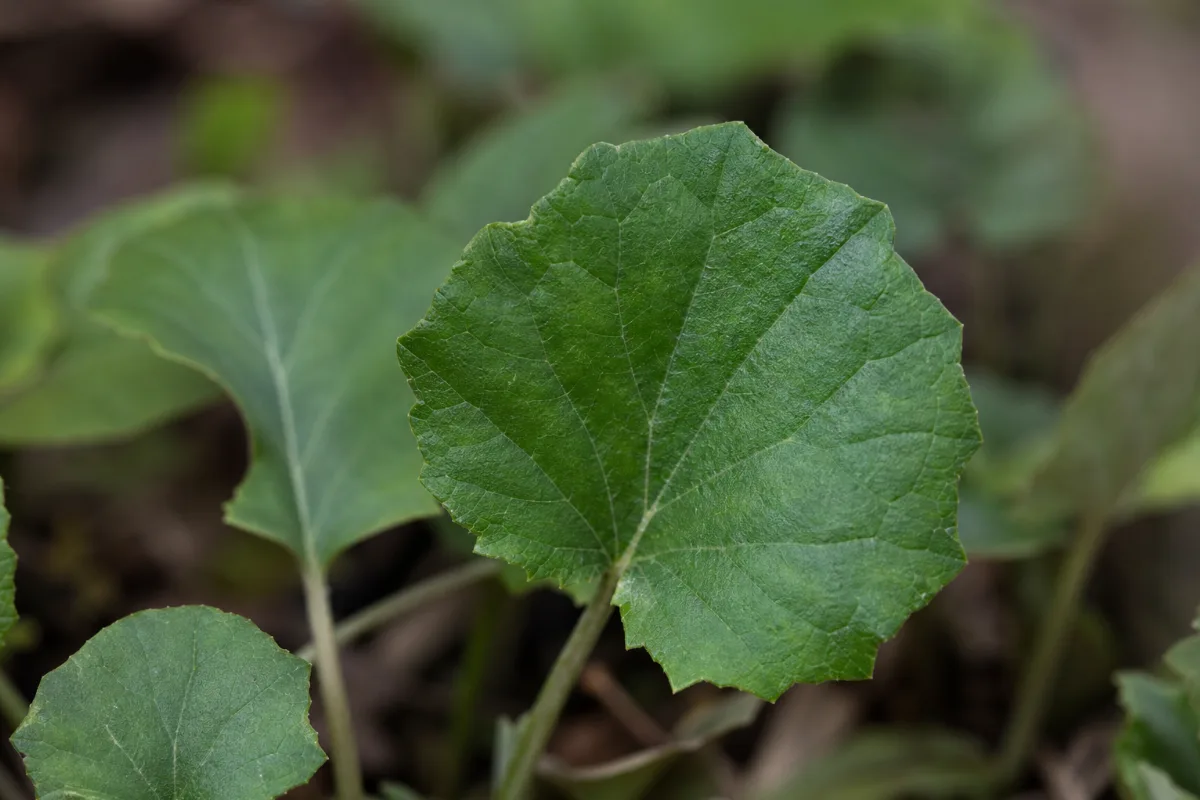
Herbs & Botanicals · Traditional cough herb with a liver warning
Coltsfoot
Tussilago farfara · also called Coltsfoot, coltsfoot leaf, Kuandonghua (the dried flower bud, in Chinese medicine)
Coltsfoot is a yellow-flowered plant of the daisy family. Its leaf and flower bud have long been used in teas and syrups for coughs and sore throats. No human trial was found, so we do not know if it works. It contains pyrrolizidine alkaloids, natural toxins that can badly damage the liver, caused liver tumours in rats, and are especially dangerous in pregnancy and for children. Do not use it without talking to a doctor.
General information, not medical advice. Last substantive update · Not medically reviewed. A named clinician has not signed off on this page. How this page is made
About Coltsfoot
Coltsfoot (Tussilago farfara) is a daisy-family plant traditionally used for coughs and sore throats. The evidence for any benefit is only tradition plus mouse and cell studies. The safety picture is serious: coltsfoot contains pyrrolizidine alkaloids (PAs) such as senkirkine, which can injure the liver's small blood vessels, caused liver tumours in rats, and are especially dangerous for babies, children and in pregnancy. Several countries limit PAs in medicines to tiny amounts, and the EU herbal committee recommends no more than 0.35 micrograms a day for adults for at most 14 days. Quality is a further risk: the PA level cannot be seen, and plant mix-ups and stalk adulteration have been documented. Avoid it in pregnancy, breastfeeding, childhood and liver disease, and ask a doctor or pharmacist before any use.
Safety first: the liver
Coltsfoot contains pyrrolizidine alkaloids, mainly senkirkine and a trace of senecionine. Toxic PAs of this kind are changed by the liver into reactive substances that damage the lining of small liver blood vessels. This can cause veno-occlusive disease (belly swelling, jaundice, painful enlarged liver) and cirrhosis. The EU herbal committee says the amount that causes harm is unclear and people differ widely.
In a 1976 rat study, young coltsfoot flowers in the diet caused liver tumours in 8 of 12 rats on the highest diet. This is animal evidence and does not show cancer in people.
What it is
Coltsfoot (Tussilago farfara L.) is an accepted species in the daisy family (Asteraceae). The leaf is used in some traditions and the dried flower bud, called Kuandonghua, in Chinese medicine.
It is a different plant from butterbur, which has its own page. Products of either plant should not be treated as interchangeable.
What makes it distinctive
The plant holds over 150 chemicals, including phenolic acids, a pectin-type polysaccharide and a compound called tussilagone. In mice, a mix of bud phenolic acids cut induced coughing more than any single one.
Only the flower bud, not the flower stalk, worked in the mouse cough test. The stalk and rhizome also carry more PAs, and they are common impurities in bud products.
How strong is the evidence?
There is no human trial of coltsfoot for cough, sore throat, asthma or bronchitis in our searches. Reviews call for well-designed studies and safety work before any clinical use.
Case reports of harm are weak too. A systematic review of 11 case reports about comfrey, coltsfoot or borage said the plants were often not properly identified. The best-known infant case followed a tea made from a look-alike plant, not coltsfoot. So the real human risk of true coltsfoot is unknown, while the PA content is certain.
What regulators say
Germany limited PAs in medicines in 1992 to 1 microgram a day for at most 6 weeks a year (or 0.1 microgram a day with no time limit). Belgium bars internal PA medicines and Austria requires proof of no PA in the final product. The EMA in 2014 recommended no more than 0.35 micrograms a day for adults for at most 14 days. These country rules are as reported by the EMA and were not checked in their own texts.
We found no NCCIH, MSK or coltsfoot-specific EMA page. LiverTox and LactMed were not read, and Health Canada, FDA and TGA actions on coltsfoot specifically were not confirmed.
At a glance
Traditional uses history, not proof
- Coughs, sore throat, bronchitis and asthma, in European folk medicine and, as the dried flower bud (Kuandonghua), in traditional Chinese medicine
- Eaten as a vegetable in some places (a 2021 review)
Studied for research
- Cough and throat complaints: traditional use only; no human trial found (insufficient evidence)
- Cough and phlegm in mice: early animal findings (insufficient evidence for people)
- Lung inflammation from smoke in mice: animal findings only (insufficient evidence for people)
- Anti-inflammatory and antioxidant effects in cells: lab only
Main compounds
- Senkirkine and senecionine: liver-toxic pyrrolizidine alkaloids (PAs); senkirkine is the main one
- Tussilagone: a bud compound studied in the lab
- Caffeoylquinic acids and rutin: plant chemicals that reduced cough in mice (isolated compounds)
- A pectin-type polysaccharide (gummy fibre) isolated from the flower bud: lab only
Common forms
- Dried leaf tea and flower bud preparations (traditional)
- Syrups, lozenges, capsules and extracts exist, but PA content varies and is not shown on labels; none were studied in people
Research links: EMA HMPC public statement on herbal products containing toxic unsaturated PAs (2014) · Systematic review of case reports for borage, coltsfoot and comfrey (Fitoterapia, 2020) · Carcinogenic activity of coltsfoot in rats (Gan, 1976) · Research Library · Genes & Biomarkers Library
The plant and its history
- Accepted scientific name
- Tussilago farfara L.
- Naming authority
- L. (Linnaeus), per GBIF
- Common names
- Coltsfoot (English); Kuandonghua (flower bud) (Chinese (pinyin))
- Botanical family
- Asteraceae (the daisy family).
- Classification
- Plantae > Tracheophyta > Magnoliopsida > Asterales > Asteraceae > Tussilago > Tussilago farfara
- Native range
- Not covered by the sources read; reviews describe use in European and Chinese medicine.
- Habitat
- Not covered by the sources read.
- What the plant looks like
- Roots: Rhizome (underground stem): in the flower-bud pieces test the rhizome was a PA-rich impurity.; Stems: Flower stalk (pedicel, rachis) is a non-medicinal part and a PA-rich adulterant of the flower bud.; Leaves: Leaves are used in some traditions. Look-alike confusion is easiest after flowering.; Flowers: The flower buds are the part used in traditional Chinese medicine (Kuandonghua).; Fruit: Not described in the sources read.
- Cultivation
- Not covered by the sources read.
- Harvest and processing
- The Farfarae Flos quality study found 17.5% to 41.3% of tested pieces were flower stalk and rhizome impurities, which should be separated from the bud.
- Look-alikes and adulterants
- Name: Adenostyles alliariae (Alpendost); Note: A different plant easily confused with coltsfoot after flowering; gathered by mistake for an infant's tea that contained seneciphylline-type PAs. GBIF lists Adenostyles alliariae (Gouan) A.Kern. as an accepted name.; Name: Butterbur (Petasites species); Note: A different daisy-family genus with its own PAs and its own page; coltsfoot and butterbur are not the same plant or product.
- Sustainability and conservation
- Not covered by the sources read.
Traditional use and history history, not clinical proof
| Tradition or era | Documented use | Source |
|---|---|---|
| Traditional European and Chinese medicine | Reviews say coltsfoot has long been used for respiratory conditions and inflammation, and eaten as a vegetable in many parts of the world. In Chinese medicine the dried flower bud (Kuandonghua) is used for cough, asthma and bronchitis. | p33069788 |
| Modern regulation | The EMA's 2014 PA statement and the German 1992 limits restrict PA content in medicines. A claim that a German expert committee once approved coltsfoot for throat problems and later withdrew it came only from a secondary web page and is NOT verified. | s-ema-hmpc-pa-statement-2014 |
Traditional use shows how a plant was used. It does not show that a supplement works or is safe today.
What is inside, and how it may work
What the plant contains and how those compounds act in cells and animals. Laboratory and animal mechanisms are not proven effects in people.
Main compounds
| Compound | Family | Where it is concentrated | Activity studied | Level of evidence |
|---|---|---|---|---|
| Tussilagone PubChem 13919185 | sesquiterpene | flower bud | A characteristic bud compound; broken down partly by CYP3A4 in test-tube work. 22 13 | Laboratory research |
| Senkirkine PubChem 5281752 | pyrrolizidine alkaloid (otonecine type) | flower bud and flowers; more in stalk and rhizome impurities | Liver-toxic; blamed for liver tumours in rats. 8 9 11 13 | Animal research |
| Senecionine PubChem 5280906 | pyrrolizidine alkaloid | trace amounts | Liver-toxic PA found as a trace in coltsfoot. 9 3 13 | Laboratory research |
| Chlorogenic acid and dicaffeoylquinic acids (3,5-; 3,4-; 4,5-) PubChem 1794427 | phenolic acids (caffeoylquinic acids) | flower bud | Reduced induced cough in mice, best as a mixture. 3,5-dicaffeoylquinic acid is CID 6474310. 19 10 13 | Animal research |
| Rutin PubChem 5280805 | flavonoid | flower bud | Higher in flower bud than stalk; possible contributor to the mouse cough effect. 10 13 | Animal research |
| Polysaccharide TFPB1 (pectin-type) | rhamnogalacturonan polysaccharide | flower bud | 37.8 kDa fibre; slowed lung cancer cells in a dish. A throat-soothing action was not tested. 15 | Laboratory research |
Mechanisms, receptors and pathways
| Target or pathway | Gene or receptor | What was found | Level |
|---|---|---|---|
| Nrf2, NF-kB and the NLRP3 inflammasome | NFE2L2 (Nrf2), NFKB, NLRP3 | An alcohol extract of flower buds raised Nrf2 and blocked NF-kB and NLRP3 activation in smoke-exposed mice and in cells. 20 | Animal research |
| Akt pathway and cell death | AKT, caspase-3, BAX, BCL2 | The flower-bud polysaccharide lowered Akt activity and raised cell-death signals in A549 cells. 15 | Laboratory research |
| PA metabolic activation (toxicity) | liver cytochrome P450 enzymes | PAs are activated in the liver into reactive pyrrole compounds that bind proteins and DNA and injure liver vessel lining cells. 7 21 | Human data |
| Tussilagone metabolism | CYP3A4 | CYP3A4 adds hydroxyl groups to tussilagone in test-tube systems. 22 | Laboratory research |
Absorption, metabolism and elimination
- Absorption
- No human data. The EMA says ingested PAs will be absorbed and metabolised.
- Distribution
- No coltsfoot data.
- Metabolism
- Rats: tussilagone and a tussilagin ester were hydrolysed, oxidised and demethylated; senkirkine and senecionine mainly demethylated, N-methylated, oxidised and reduced. Human liver microsomes: nine tussilagone metabolites, eight only in human material.
- Elimination
- The EMA says PAs are eliminated within 24 hours, so symptoms may appear well after exposure.
- Bioavailability
- No human blood-level data were found.
Isolated compounds versus whole extracts
In mice the mixture of four caffeoylquinic acids cut cough more (61.7%) than any single compound (best 58.0%), and the flower bud worked while the stalk did not. For toxicity, individual PAs differ in strength, so one PA figure does not describe a whole plant.
Nutritional composition
A review says coltsfoot has been eaten as a vegetable in some places, but it is not a nutritional food and no nutrient data were read. Its PA content makes food use a poor idea.
6 not enough evidence
What is Coltsfoot good for?
The main proposed uses and how strong the human evidence is for each. For coltsfoot there is none, so every row is rated "insufficient": traditional use, mouse and cell studies only. That is not proof that it fails, and it is not a reason to take the risk. Read the Safety tab first. Ratings are this profile's own reading.
Benefits, one by one
Each card is a research question, not a promise. Tap a goal to filter. Open a card to see the studies, doses and limits.
Coughs and sore throat: traditional use only
Not enough evidencePeople have used coltsfoot leaf and flower bud for coughs for a very long time. No human trial of it was found, so we cannot say whether it works.
2 studiesNot covered: no human study of any form or amount was found.
Studies, doses and limits
What the trials found
The 2021 and 2020 reviews describe traditional use and lab and animal findings; neither reports a human trial in the abstract. Our PubMed searches for coltsfoot clinical trials returned no human trials.
Results
No human results exist in the sources read.
Effect sizes as reported
None.
Why this rating
Traditional use plus animal data only. Nothing in people.
Form and dose studied
Not covered: no human study of any form or amount was found.
Who was studied
None studied.
Limits
Absence of trials means unknown, not proven useless. Not safe to assume because it is natural.
Why researchers looked
It is one of the best-known traditional cough plants in Europe and in Chinese medicine, where the flower bud is called Kuandonghua.
Traditional use
Reviews say coltsfoot (and in China the dried flower buds) has long been used for coughs, bronchitis and asthma, and in some places eaten as a vegetable.
Proposed mechanism Pharmacological theory
The leaf and bud contain a pectin-type polysaccharide (a gummy fibre), caffeoylquinic acids and a compound called tussilagone. Whether any of these soothes a cough in people has not been tested.
A proposed mechanism does not show that the effect happens in people.
Coltsfoot can contain liver-toxic pyrrolizidine alkaloids (PAs). See the Safety tab first: this use should not be tried without a doctor's advice.
Asthma and bronchitis: traditional use only
Not enough evidenceIn traditional Chinese medicine the dried flower bud is also used for asthma and bronchitis. No human trial was found.
1 studiesNot covered.
Studies, doses and limits
What the trials found
Described in the Farfarae Flos review; no human trial reported in the abstract.
Results
No human results in the sources read.
Effect sizes as reported
None.
Why this rating
Traditional use only. Do not use coltsfoot in place of asthma medicine.
Form and dose studied
Not covered.
Who was studied
None studied.
Limits
Asthma can be serious. A herb with an unproven effect should never replace prescribed treatment.
Why researchers looked
Respiratory complaints are the main traditional use of the flower bud (Farfarae Flos).
Traditional use
The 2020 review describes use for cough, asthma, and acute or chronic bronchitis.
Proposed mechanism Preliminary mechanism
Reviews report effects on the respiratory system in lab and animal studies.
A proposed mechanism does not show that the effect happens in people.
Coltsfoot can contain liver-toxic pyrrolizidine alkaloids (PAs). See the Safety tab first: this use should not be tried without a doctor's advice.
Cough and phlegm in mice
Not enough evidenceIn mice, extracts or isolated compounds from the flower bud reduced induced coughing and increased airway fluid. This is an early lab clue and not proof for people.
2 studiesMouse doses were of isolated compounds, not a tea or capsule, and can…
Studies, doses and limits
What the trials found
No human data. Two mouse studies: one with four isolated caffeoylquinic acids (10 and 20 mg/kg by mouth daily for 3 days) and one with water extracts of flower bud versus flower stalk.
Results
The mixture of four caffeoylquinic acids cut ammonia-induced cough frequency by 61.7%; the best single compound cut it by 58.0%. Expectorant sign (phenol red output) rose up to 35.7% with the best single compound. In the second study the flower bud extract worked and the stalk (rachis) did not.
Effect sizes as reported
Cough frequency down 61.7% (mixture) and 58.0% (4,5-dicaffeoylquinic acid) vs control in mice.
Why this rating
Animal evidence only; mouse cough models do not predict human results.
Form and dose studied
Mouse doses were of isolated compounds, not a tea or capsule, and cannot be compared with human use.
Who was studied
Mice only.
Limits
Short 3-day mouse tests; no human test. Plant part matters: the stalk was inactive and counts as an adulterant.
Why researchers looked
Researchers tested the flower bud in mice to see which parts of the plant explain the traditional cough use.
Traditional use
Matches the traditional cough use of the flower bud.
Proposed mechanism Animal research
Caffeoylquinic acids from the flower bud acted together; the mixture worked better than any single one in mice.
A proposed mechanism does not show that the effect happens in people.
Coltsfoot can contain liver-toxic pyrrolizidine alkaloids (PAs). See the Safety tab first: this use should not be tried without a doctor's advice.
Lung inflammation from smoke (mice and cells)
Not enough evidenceAn alcohol extract of the flower bud calmed cigarette-smoke lung inflammation in mice. People have not been tested.
2 studiesAlcohol extract in mice; not a tea.
Studies, doses and limits
What the trials found
No human data. One mouse and cell study of an ethanol extract of flower buds.
Results
Smoke-exposed mice given the extract had lower inflammatory factors (TNF-alpha, IL-1 beta) and a lower oxidative-stress marker (MDA) in lung tissue than smoke-exposed mice without it. Numbers were not read beyond the abstract.
Effect sizes as reported
Direction reported as lower inflammation; sizes not read.
Why this rating
One animal and cell study; no human trial.
Form and dose studied
Alcohol extract in mice; not a tea.
Who was studied
Mice and cell lines.
Limits
One study; lab and animal only.
Why researchers looked
Smoke and air-pollution lung inflammation is a target for herbal cough and bronchitis remedies.
Traditional use
Fits the traditional use for respiratory inflammation.
Proposed mechanism Animal research
The extract raised the protective protein Nrf2 and blocked NF-kB and the NLRP3 inflammasome in the study.
A proposed mechanism does not show that the effect happens in people.
Coltsfoot can contain liver-toxic pyrrolizidine alkaloids (PAs). See the Safety tab first: this use should not be tried without a doctor's advice.
Anti-inflammatory, antioxidant and other lab effects
Not enough evidenceReviews list anti-inflammatory, antioxidant, blood-sugar and nerve-protective effects of coltsfoot in cells and animals. None of it has been shown in people.
2 studiesNot applicable.
Studies, doses and limits
What the trials found
No human data. The 2021 review concludes that some traditional uses are supported by cell and animal studies and calls for well-designed studies and safety work before clinical use.
Results
Lab and animal activity reported; no human results.
Effect sizes as reported
Not applicable.
Why this rating
Cell and animal findings only.
Form and dose studied
Not applicable.
Who was studied
None studied.
Limits
Reviews summarise many different extracts and models; quality varies and the review warns that strict quality control is missing in many studies.
Why researchers looked
Researchers screened the leaf and bud for activity because the plant holds over 150 chemicals.
Traditional use
Not a separate traditional use; reviews link these findings to the traditional use for inflammatory conditions.
Proposed mechanism Laboratory research
Many compounds are involved (sesquiterpenes, phenolic acids, flavonoids). No single mechanism is established.
A proposed mechanism does not show that the effect happens in people.
Coltsfoot can contain liver-toxic pyrrolizidine alkaloids (PAs). See the Safety tab first: this use should not be tried without a doctor's advice.
Polysaccharide (gummy fibre) from the flower bud
Not enough evidenceA pectin-type fibre has been isolated from the flower bud. It slowed lung cancer cells in a dish. Whether it soothes a throat or cough was not tested.
1 studiesNot applicable.
Studies, doses and limits
What the trials found
No human data; one test-tube study.
Results
TFPB1 (37.8 kDa; rhamnose, galacturonic acid, glucose, galactose, arabinose) slowed cancer-cell growth in culture.
Effect sizes as reported
Not applicable.
Why this rating
Test-tube only.
Form and dose studied
Not applicable.
Who was studied
Cell line only.
Limits
The study is about cancer cells, not about throat soothing. It does not show a cancer treatment.
Why researchers looked
Coltsfoot is often described as containing mucilage; researchers purified one polysaccharide and characterised it.
Traditional use
Mucilage-rich plants are traditionally used for throat irritation; this was not tested here.
Proposed mechanism Laboratory research
In the dish the polysaccharide reduced the Akt signal and raised cell-death markers in A549 lung cancer cells.
A proposed mechanism does not show that the effect happens in people.
Coltsfoot can contain liver-toxic pyrrolizidine alkaloids (PAs). See the Safety tab first: this use should not be tried without a doctor's advice.
Connections to the rest of health
How Coltsfoot connects to the rest of our health knowledge graph. Every link says what kind of connection it is. A safety link (for example to the liver) is a warning, not a benefit. A study that merely mentions a topic never creates a benefit link.
Explore every connection: goals, body systems, organs, symptoms, genes
A. Wellness goals
| Connected to | Kind of connection | Evidence status | Context | Studies |
|---|---|---|---|---|
| Inflammation Balance | Preliminary mechanism | Not enough evidence | Lung inflammation from smoke (mice and cells): An alcohol extract of the flower bud calmed cigarette-smoke lung inflammation in mice. People have not been tested. Anti-inflammatory, antioxidant and other lab effects: Reviews list anti-inflammatory, antioxidant, blood-sugar and nerve-protective effects of coltsfoot in cells and animals. None of it has been shown in people. | 20 2 12 |
B. Body systems
| Connected to | Kind of connection | Evidence status | Context | Studies |
|---|---|---|---|---|
| Liver (veno-occlusive disease) | Adverse effect or risk | Moderate certainty | Established for toxic PAs generally; coltsfoot-specific human cases are uncertain. Established for toxic PAs; coltsfoot-specific human cases are uncertain. Preparation or compound: PA-containing coltsfoot (senkirkine); also PA look-alike teas |
5 18 1 |
| Respiratory system (cough, bronchitis) | Traditional use | Not enough evidence | Traditional use; mouse cough effects; no human trial. Preparation or compound: Leaf and flower bud (Kuandonghua) |
2 12 19 |
| Respiratory System | Biological association | Not enough evidence | Studied for: Coughs and sore throat: traditional use only Studied for: Asthma and bronchitis: traditional use only | 2 12 19 10 20 |
| Immune System | Biological association | Not enough evidence | Studied for: Anti-inflammatory, antioxidant and other lab effects Studied for: Polysaccharide (gummy fibre) from the flower bud | 2 12 15 |
E. Health conditions
| Connected to | Kind of connection | Evidence status | Context | Studies |
|---|---|---|---|---|
| Liver cancer (rats) | Adverse effect or risk | Low certainty | Animal evidence only; not classifiable as carcinogenic to humans per IARC as quoted by the EMA. Preparation or compound: Young coltsfoot flowers (rat diet) |
8 5 |
| Pregnancy and breastfeeding | Contraindication | Low certainty | Fatal fetal liver case after maternal PA intake (plant not coltsfoot-specific). Preparation or compound: Any PA-containing herb |
16 5 |
I. Biomarkers
| Connected to | Kind of connection | Evidence status | Context | Studies |
|---|---|---|---|---|
| Cough frequency in ammonia-exposed mice | Biological association | Not enough evidence | Measured in trials: lowered. A lab change is not the same as a health benefit. | 19 10 |
| Lung inflammatory factors (TNF-alpha, IL-1 beta) in smoke-exposed mice | Biological association | Not enough evidence | Measured in trials: lowered. A lab change is not the same as a health benefit. | 20 |
J. Genes, receptors and enzymes
| Connected to | Kind of connection | Evidence status | Context | Studies |
|---|---|---|---|---|
| NLRP3 / NF-kB / Nrf2 | Preliminary mechanism | Animal | Targets of the flower-bud extract in mouse lungs. | 20 |
| CYP3A4 | Preliminary mechanism | In vitro | Breaks down tussilagone in vitro; P450 enzymes also activate PAs. | 22 5 |
| AKT1 | Preliminary mechanism | In vitro | Reduced signalling in lung cancer cells with the polysaccharide. | 15 |
L. Active compounds
| Connected to | Kind of connection | Evidence status | Context | Studies |
|---|---|---|---|---|
| Tussilagone | Biological association | In vitro | A characteristic bud compound; broken down partly by CYP3A4 in test-tube work. Preparation or compound: flower bud |
22 13 |
| Senkirkine | Biological association | Animal | Liver-toxic; blamed for liver tumours in rats. Preparation or compound: flower bud and flowers; more in stalk and rhizome impurities |
8 9 11 13 |
| Senecionine | Biological association | In vitro | Liver-toxic PA found as a trace in coltsfoot. Preparation or compound: trace amounts |
9 3 13 |
| Chlorogenic acid and dicaffeoylquinic acids (3,5-; 3,4-; 4,5-) | Biological association | Animal | Reduced induced cough in mice, best as a mixture. 3,5-dicaffeoylquinic acid is CID 6474310. Preparation or compound: flower bud |
19 10 13 |
| Rutin | Biological association | Animal | Higher in flower bud than stalk; possible contributor to the mouse cough effect. Preparation or compound: flower bud |
10 13 |
| Polysaccharide TFPB1 (pectin-type) | Biological association | In vitro | 37.8 kDa fibre; slowed lung cancer cells in a dish. A throat-soothing action was not tested. Preparation or compound: flower bud |
15 |
Each connection is stored with the ingredient, the connected record, the kind of connection, the evidence status, the supporting studies, the preparation or compound involved, and a review date (last reviewed October 25, 2026).
Evidence at a glance: what changed in 2 lab markers
Tap a number to show only those markers. Counts are markers, not people.
The evidence
The research centre for Coltsfoot. Every record here was checked against PubMed or the publisher's page; we never list a study we have not verified.
Evidence by outcome
Bars show how many studies we found for each outcome, not how well it works. People are added up across trials only (reviews are not added, to avoid double counting).
How we rate evidence
High certainty
Several well-run trials or reviews agree; further research is unlikely to change the picture much.
Moderate certainty
Good trials point the same way, but some doubt remains.
Low certainty
Small, short or inconsistent trials. The finding could change with better research.
Very low certainty
Very little or very weak human data. Treat as a possibility only.
Mixed findings
Trials or reviews disagree with each other.
Not enough evidence
Not enough human research to say either way.
Evidence against
Good research found no benefit, or found harm.
We take the reviewers' own risk-of-bias and GRADE statements where they exist, and otherwise judge from study size, design, consistency, directness and whether a product matches what is sold. Many publications do not make evidence high. Method note: We searched PubMed, read the full EMA/HMPC pyrrolizidine alkaloid statement, and read abstracts of the studies cited, recording design, people, product and result as reported. LiverTox could not be opened, NCCIH and MSK pages for coltsfoot were not found, and regulatory points that came through the EMA text are marked as second-hand. Certainty ratings are the compiler's own reading unless a review's own rating is quoted. One paper (Roulet 1988) has no abstract and only its title was read. No study is cited that we could not verify.
Study library: every study we checked 23
| Study | Design | People | Product, dose, length | Result |
|---|---|---|---|---|
| Avila 2020 A systematic review and quality assessment of case reports of adverse events for borage (Borago officinalis), coltsfoot (Tussilago farfara) and comfrey (Symphytum officinale). Fitoterapia · PMID 32105669 · DOI |
Systematic review |
11 case reports (none involved borage) about comfrey, coltsfoot or borage | Comfrey, coltsfoot and borage preparations unspecified not applicable not applicable · vs not applicable |
Nine of 11 reports were assessed for causality and showed some degree of association between the herb and the harm. Poor identification of the species swallowed was a major source of uncertainty, with three levels of identity confusion: substitution of the whole herb, no proper botanical identification, and blaming one PA on comfrey or coltsfoot when other toxic plants also contain it. The authors conclude the cases are an unreliable base for judging the oral safety of comfrey and coltsfoot and suggest toxicology studies of whole preparations are more informative. Case reports of coltsfoot harm are weak evidence either way. Methods, limits and fundingOutcomes: Reliability of PA-related harm case reports Limitations: Funded by the UK National Institute of Medical Herbalists, a practitioner body (the authors say it had no role). The conclusion that case reports are unreliable does not mean the plant is safe: PA content and animal cancer data still stand. Abstract only read. Funding and conflicts: Funding by National Institute of Medical Herbalists (UK); authors declare no conflict Read: abstract |
| Chen 2021 A review of the ethnobotanical value, phytochemistry, pharmacology, toxicity and quality control of Tussilago farfara L. (coltsfoot) J Ethnopharmacol · PMID 33069788 · DOI |
Review |
Narrative review of traditional use, chemistry, lab and animal studies, toxicity and quality control | Coltsfoot (Tussilago farfara) leaves and buds leaf+flower bud not applicable not applicable · vs not applicable |
Says coltsfoot has long been used for respiratory and inflammatory complaints and eaten as a vegetable. Many traditional uses are supported by cell or animal work (anti-inflammatory, nerve-protective, anti-diabetic, antioxidant). Over 150 chemicals found, including pyrrolizidine alkaloids. Adverse events followed collection of the wrong plant. Calls for strict botanical identification and quality control, and for well-designed studies to ensure safety before clinical use. Narrative review; no human trial results are reported in the abstract. Methods, limits and fundingOutcomes: Traditional uses, pharmacology, toxicity, quality control Limitations: Narrative review, methods not systematic, abstract only read; the review's human-clinical section was not checked. Read: abstract |
| Cheng 2018 Screening and identification of metabolites of two kinds of main active ingredients and hepatotoxic pyrrolizidine alkaloids in rat after lavage Farfarae Flos extract by UHPLC-Q-TOF-MS mass spectrometry. Biomed Chromatogr · PMID 28702943 · DOI |
Animal study animal |
Rats given Farfarae Flos extract by stomach tube | Farfarae Flos (flower bud) extract flower bud |
Found 35, 37, 18 and 9 metabolites of tussilagone, methyl-butyric acid tussilagin ester, senkirkine and senecionine. Senkirkine and senecionine were mainly demethylated, N-methylated, oxidised and reduced. Shows how rats process the active compounds and the two PAs. Methods, limits and fundingOutcomes: Metabolites of tussilagone, a tussilagin ester, senkirkine and senecionine Limitations: Rat data; human handling not studied here. Read: abstract |
| EFSA CONTAM Panel; Knutsen 2017 Risks for human health related to the presence of pyrrolizidine alkaloids in honey, tea, herbal infusions and food supplements. EFSA J · PMID 32625569 · DOI |
Authoritative guidance |
General population, food and supplement exposure | Pyrrolizidine alkaloids in tea, herbal infusions, honey, supplements unspecified not applicable not applicable · vs not applicable |
Set a reference point of 237 micrograms per kg body weight per day for cancer risk. Concluded there is a possible concern for human health, particularly for frequent and high consumers of tea and herbal infusions. Food supplements based on PA-producing plants could give exposure less than 100 times lower than doses known to cause severe short-term toxicity. Listed 17 PAs to monitor. Possible health concern for frequent high consumers of PA-containing herbal infusions. Methods, limits and fundingOutcomes: Risk characterisation Limitations: General food opinion; coltsfoot is not named in the abstract read. Abstract read through PubMed. Read: abstract |
| EMA Committee on Herbal Medicinal Products (HMPC); document EMA/HMPC/893108/2011 2014 Public statement on the use of herbal medicinal products containing toxic, unsaturated pyrrolizidine alkaloids (PAs) EMA (ema.europa.eu), adopted 24 November 2014 (final) · Source |
Authoritative guidance |
Regulators and makers of herbal medicines | Herbal medicinal products with toxic unsaturated PAs unspecified |
Full text read (PDF text extracted locally on 2026-10-25). Says hepatotoxicity from toxic unsaturated PAs is established, the dose-effect relationship is unclear, and susceptibility varies widely; exposure should be kept as low as practically achievable. Recommends for oral herbal medicines no more than 0.35 micrograms of toxic unsaturated PAs a day for adults (50 kg) for at most 14 days (0.007 micrograms per kg body weight), and 0.14 micrograms a day for a 20 kg child. Pregnant and breastfeeding women are said to be covered by the same limit with suitable label wording. Reports Germany 1992 limits (1 microgram a day for at most 6 weeks a year, or 0.1 microgram a day without time limit), Belgium (no internal PA medicines marketed), Austria (must show no PA in the final product), the FDA 2001 advice to remove comfrey and other PA-containing supplements, and Food Standards Australia New Zealand's provisional 1 microgram per kg per day (2001). Quotes IARC: sufficient or limited animal evidence of carcinogenicity for senkirkine and for extracts of Tussilago farfara, but not classifiable as carcinogenic to humans. Cites a fatal liver injury in a child born to a woman who consumed 20 to 30 micrograms of PAs a day in pregnancy, and notes P450 enzyme induction by herbal products could enhance PA toxicity. It is a general PA statement: it is not a coltsfoot monograph. Methods, limits and fundingLimitations: General statement on PAs; literature cut-off July 2011. Country rules and the FDA, IARC and FSANZ points are as reported inside this EMA text and were not read in their own primary documents. Read: full-text |
| GBIF Secretariat 2026 GBIF backbone: Tussilago farfara L. GBIF species API (api.gbif.org), retrieved 2026-10-25 · Source |
Database record |
Plant taxonomy | Tussilago farfara unspecified |
Accepted species, key 3149879, authority L., family Asteraceae, order Asterales, genus Tussilago. Methods, limits and fundingLimitations: Database record. Read: full-text |
| He 2021 Metabolism-mediated cytotoxicity and genotoxicity of pyrrolizidine alkaloids. Arch Toxicol · PMID 34003343 · DOI |
Review |
Review of cell, animal and human PA toxicity | Pyrrolizidine alkaloids and PA N-oxides unspecified not applicable not applicable · vs not applicable |
PAs must be activated by the body's metabolism into compounds that bind to proteins and DNA, which causes cell damage and gene damage. Different PAs differ in how strongly they are activated, so toxic strength differs between PAs. Mechanism review. Methods, limits and fundingOutcomes: Mechanism of toxicity Limitations: General PA review; not specific to coltsfoot. Read: abstract |
| Hirono 1976 Carcinogenic activity of coltsfoot, Tussilago farfara L. Gan · PMID 1269853 |
Animal study animal |
Inbred ACI rats; groups of 10-12 | Young, pre-blooming coltsfoot flowers mixed into the diet flower bud 32% of diet for 4 days then 16% (group I); 8% (group II); 4% (group III) Group I to end of experiment; groups II and III 600 days · vs Normal diet |
8 of 12 rats on the highest diet developed hemangioendothelial sarcoma of the liver; 1 of 10 on the 8% diet; none on the 4% diet. The authors' chemical work suggested the cause was most probably senkirkine, a liver-toxic pyrrolizidine alkaloid. Dose-related liver tumours in rats at high diet levels; none at 4%. Methods, limits and fundingOutcomes: Liver tumours (hemangioendothelial sarcoma) Limitations: Animal study, 1976, diets of many percent of the animals' food, so not comparable to a human cup of tea. Shows the plant's flowers can cause cancer in rats; it does not give a human risk figure. Abstract only read. Read: abstract |
| Jiang 2009 Determination of senkirkine and senecionine in Tussilago farfara using microwave-assisted extraction and pressurized hot water extraction with liquid chromatography tandem mass spectrometry. Talanta · PMID 19559918 · DOI |
Lab analysis in-vitro |
Tussilago farfara (Kuan Donghua) plant material | Tussilago farfara plant material and extracts unspecified not applicable not applicable · vs not applicable |
Reports that the herb contains toxic pyrrolizidine alkaloids, mainly senkirkine and traces of senecionine, and develops a lab method to measure them. Identifies the main PAs in coltsfoot. Methods, limits and fundingOutcomes: Method to measure PAs Limitations: Method paper; the abstract gives no PA amounts per gram of herb. Read: abstract |
| Li 2012 Metabolomic profiling of the flower bud and rachis of Tussilago farfara with antitussive and expectorant effects on mice. J Ethnopharmacol · PMID 22210102 · DOI |
Animal study animal |
Mice | Water extracts of flower bud and of rachis (flower stalk) flower bud vs rachis oral water extract (amount not read) · vs control |
Flower bud extract lengthened the time before coughing, reduced cough frequency and raised tracheal phenol red output; the rachis did not. The authors conclude only the flower bud should be used and that the stalk is an adulterant to be removed. Flower bud, not stalk, reduced coughing in mice. Methods, limits and fundingOutcomes: Ammonia-induced cough; phenol red output in the trachea Limitations: Mouse study; shows plant-part differences matter. No human data. Read: abstract |
| Li 2022 Effect of Adulteration on Quality and Preliminary Risk Assessment of the Decoction Pieces of Farfarae Flos Based on the Determination of Hepatotoxic Pyrrolizidine Alkaloids by UHPLC-MS/MS. J AOAC Int · PMID 35866688 · DOI |
Lab analysis in-vitro |
20 20 batches of Farfarae Flos decoction pieces from different habitats |
Farfarae Flos (flower bud) decoction pieces, with pedicel and rhizome impurities flower bud not applicable not applicable · vs not applicable |
Impurities (mainly pedicel and rhizome) made up 17.51% to 41.27% of the pieces. PA content in the impurities was significantly higher than in the flower bud. Estimated daily intake was 5.34 to 16.59 micrograms per kg per day, far above the 0.007 micrograms per kg per day safety reference. The authors concluded that at least 80% of samples had safety risks, and that the more adulterated the batch, the worse the exposure. Adulteration with non-bud plant parts raised PA exposure. Methods, limits and fundingOutcomes: PA content, estimated daily intake, margin of exposure Limitations: Chinese pharmacy decoction pieces, not Western tea; exposure was estimated from the standard traditional daily amount, which this page does not repeat. Abstract only read. Read: abstract |
| Liu 2020 Farfarae Flos: A review of botany, traditional uses, phytochemistry, pharmacology, and toxicology. J Ethnopharmacol · PMID 32526340 · DOI |
Review |
Narrative review of the dried flower buds used in traditional Chinese medicine (Kuandonghua) | Farfarae Flos (dried flower buds of Tussilago farfara) flower bud not applicable not applicable · vs not applicable |
Flower buds long used in traditional Chinese medicine for cough, asthma and bronchitis. About 175 compounds isolated. Reported effects on the respiratory, cardiovascular and digestive systems, plus antioxidant, anti-inflammatory and nerve-protective activity (lab and animal). The authors say the herb is safe in the traditional dose range but that the potential toxicity of the pyrrolizidine alkaloids needs more attention. No human trial results in the abstract. Methods, limits and fundingOutcomes: Traditional uses, chemistry, pharmacology, toxicology Limitations: Narrative review. The 'safe in the traditional dose range' statement is the authors' view and is not backed by human safety data in the abstract. Abstract only read. Read: abstract |
| NCBI PubChem 2026 PubChem compound records for tussilagone, senkirkine, senecionine, chlorogenic acid, 3,5-dicaffeoylquinic acid and rutin PubChem PUG REST (pubchem.ncbi.nlm.nih.gov), retrieved 2026-10-25 · Source |
Database record in-vitro |
Chemistry | Named compounds unspecified |
CIDs confirmed by name lookup: tussilagone 13919185 (C23H34O5); senkirkine 5281752 (C19H27NO6); senecionine 5280906 (C18H25NO5); chlorogenic acid 1794427; 3,5-dicaffeoylquinic acid 6474310; rutin 5280805; seneciphylline 5281750 (C18H23NO5). Methods, limits and fundingLimitations: Database lookups confirm names and formulas only; whether each compound occurs in coltsfoot comes from the papers cited. Read: full-text |
| NCBI Taxonomy 2026 NCBI Taxonomy search: Tussilago farfara NCBI Taxonomy (eutils esearch), retrieved 2026-10-25 · Source |
Database record |
Plant taxonomy | Tussilago farfara unspecified |
The search returned taxonomy ID 118778 for Tussilago farfara. Rank and lineage were not opened separately. Methods, limits and fundingLimitations: Search hit only. Read: summary-only |
| Qu 2018 Structural characterization of a polysaccharide from the flower buds of Tussilago farfara, and its effect on proliferation and apoptosis of A549 human non-small lung cancer cell line. Int J Biol Macromol · PMID 29505876 · DOI |
Laboratory research in-vitro |
A549 human lung cancer cells in culture | Purified polysaccharide TFPB1 from flower buds flower bud |
TFPB1 (37.8 kDa) is a pectin-type polysaccharide with a rhamnogalacturonan backbone (rhamnose, galacturonic acid, glucose, galactose, arabinose). It slowed growth of the lung cancer cells and increased cell death in the dish, partly through the Akt pathway. Describes one flower-bud polysaccharide; lab only. Methods, limits and fundingOutcomes: Polysaccharide structure; cell growth and death Limitations: Cancer-cell test-tube study. It does not test soothing of throat or cough. Read: abstract |
| Rasenack 2003 Veno-occlusive disease in a fetus caused by pyrrolizidine alkaloids of food origin. Fetal Diagn Ther · PMID 12835579 · DOI |
Case report |
1 One preterm baby delivered by caesarean section; mother's household used a herbal mixture for cooking |
Herbal cooking mixture with high pyrrolizidine alkaloid content (plant not named in the abstract) unspecified |
The baby had an enlarged liver and fluid in the belly and died soon after birth. Post-mortem showed veno-occlusive disease typical of PA poisoning and PAs were found in the liver. The herbal mixture used for cooking at home had high PA levels. The EMA statement, citing this report, says the mother had taken 20 to 30 micrograms of PAs a day in pregnancy. Fatal fetal liver damage linked to PAs in a herb mixture. Methods, limits and fundingOutcomes: Fetal liver disease Limitations: Single case. The abstract does not say coltsfoot was involved, so it shows the pregnancy danger of PAs in general, not of coltsfoot itself. Read: abstract |
| Roulet 1988 Hepatic veno-occlusive disease in newborn infant of a woman drinking herbal tea. J Pediatr · PMID 3346784 · DOI |
Case report |
1 One newborn whose mother drank herbal tea |
Herbal tea (contents not stated in the record read) unspecified |
PubMed holds no abstract for this paper. Only the title was read: it reports veno-occlusive disease in a newborn infant of a woman who drank herbal tea. Whether coltsfoot was in the tea was NOT verified here. Not read Methods, limits and fundingOutcomes: Liver disease in a newborn Limitations: Title only; the plant, dose and outcome were not read. Listed as a possible newborn case; do not treat as proven for coltsfoot. Read: title-only |
| Sperl 1995 Reversible hepatic veno-occlusive disease in an infant after consumption of pyrrolizidine-containing herbal tea. Eur J Pediatr · PMID 7720737 · DOI |
Case report |
1 One boy, 18 months old, who drank a herbal tea mixture from age 3 months |
Peppermint plus a plant the mother thought was coltsfoot; analysis found seneciphylline PAs leaf Estimated at least 60 micrograms per kg body weight per day of the PA mixture 15 months · vs none |
The boy developed portal hypertension and severe ascites; liver biopsy showed veno-occlusive disease without cirrhosis. The tea had high PA levels. Leaf analysis showed the parents had gathered Adenostyles alliariae (Alpendost) instead of coltsfoot; the two plants are easily confused after flowering. He recovered fully within 2 months on conservative treatment. Case report: PA tea poisoning in an infant, probably from a look-alike plant and not from coltsfoot. Methods, limits and fundingOutcomes: Liver disease Limitations: Single case. The plant was the wrong species, so this case shows the danger of PA teas and plant mix-ups, not of true coltsfoot. Read: abstract |
| Wu 2016 Antitussive, expectorant, and anti-inflammatory activities of four caffeoylquinic acids isolated from Tussilago farfara. Pharm Biol · PMID 26439905 · DOI |
Animal study animal |
Mice | Four caffeoylquinic acids isolated from flower bud extract, and their mixture flower bud 10 and 20 mg/kg by mouth once daily 3 days · vs untreated/control |
All four compounds cut cough; the 4,5-dicaffeoylquinic acid cut cough frequency by 58.0%, and the mixture by 61.7%. All raised phenol red secretion (expectorant sign); 3,5-dicaffeoylquinic acid by 35.7%. Compound 4 cut airway white cells by 49.7%. Mouse cough reduced by up to 61.7% with the mixture of compounds. Methods, limits and fundingOutcomes: Ammonia-induced cough frequency; phenol red secretion in the airway; white cells in airway wash fluid Limitations: Mouse study with isolated compounds, not a tea. No human data. Read: abstract |
| Xu 2022 The ethanol extract of flower buds of Tussilago farfara L. attenuates cigarette smoke-induced lung inflammation through regulating NLRP3 inflammasome, Nrf2, and NF-κB. J Ethnopharmacol · PMID 34601084 · DOI |
Animal study animal |
Mice exposed to cigarette smoke for 2 weeks; plus cell models | Ethanol extract of flower buds flower bud 2 weeks of smoke exposure · vs control |
The extract reduced smoke-induced rise in inflammatory factors and MDA in mouse lungs, and reduced inflammation and reactive oxygen species in cells. It increased the protein Nrf2 and blocked NF-kB and NLRP3 inflammasome activation. Anti-inflammatory effects in mouse lungs and cells. Methods, limits and fundingOutcomes: Inflammatory factors (TNF-alpha, IL-1 beta), oxidative stress marker MDA, lung tissue Limitations: Mouse and cell study using an alcohol extract; not shown in people. Read: abstract |
| Yang 2019 Pyrrolizidine alkaloids-induced hepatic sinusoidal obstruction syndrome: Pathogenesis, clinical manifestations, diagnosis, treatment, and outcomes. World J Gastroenterol · PMID 31391770 · DOI |
Review |
Review of PA-induced liver sinusoidal obstruction syndrome (veno-occlusive disease) | Pyrrolizidine alkaloids unspecified not applicable not applicable · vs not applicable |
Reactive PA breakdown products damage the liver's small blood-vessel lining cells. It typically shows as painful enlarged liver, fluid in the belly (ascites) and jaundice; most patients have abnormal liver tests. Treatments used include fluid management, blood thinners, steroids, a shunt procedure and liver transplantation. Clinical description of the syndrome. Methods, limits and fundingOutcomes: Clinical picture of PA liver injury Limitations: General PA review; no coltsfoot-specific data in the abstract. Read: abstract |
| Zhang 2015 Comparative metabolism of tussilagone in rat and human liver microsomes using ultra-high-performance liquid chromatography coupled with high-resolution LTQ-Orbitrap mass spectrometry. Rapid Commun Mass Spectrom · PMID 26467116 · DOI |
Lab analysis in-vitro |
Rat and human liver microsomes and recombinant CYP enzymes | Tussilagone (pure compound) flower bud |
Nine metabolites in rat and human liver microsomes; eight appeared only in the human preparation. The liver enzyme CYP3A4 had an important role in adding hydroxyl groups to tussilagone in the test tube. Tussilagone is broken down partly by CYP3A4 in vitro. Methods, limits and fundingOutcomes: Metabolites and enzymes involved Limitations: Test-tube study; no human blood levels or drug-interaction data. Read: abstract |
| Şeremet 2016 Oral toxicity study of certain plant extracts containing pyrrolizidine alkaloids. Rom J Morphol Embryol · PMID 28002518 |
Animal study animal |
Rats (acute test per OECD 423); 28-day test used only Senecio vernalis and Symphytum extracts | Dry extracts of Tussilago farfara, Petasites hybridus, Senecio vernalis, Symphytum officinale (acute test) unspecified 28-day test: 250 mg/kg by mouth (Senecio and Symphytum only) Acute test; 28 days · vs control |
In the acute test the dry extracts fell in GHS category V (LD50 above 5000 mg/kg). In the 28-day test, only the Senecio and Symphytum extracts were given; no deaths, no signs of toxicity, no significant blood-test differences, and non-specific tissue changes. The authors say longer studies are needed. No liver toxicity in a 28-day animal test of other PA plants; coltsfoot itself was only in the acute test. Methods, limits and fundingOutcomes: Acute toxicity; 28-day liver and bile function Limitations: The 28-day test did not include coltsfoot, and 28 days is short for a cancer-type risk. Do not read this as proof that coltsfoot is safe. Abstract only read. Read: abstract |
What we do not know yet
- What the evidence supports: PAs are in coltsfoot, young flowers caused liver tumours in rats, and PA liver toxicity is well established. Benefits are not supported by any human data.
- What is uncertain: the true human risk of real coltsfoot, because case reports are unreliable and involved look-alikes; PA levels in real products.
- No human trial of coltsfoot was found for any use.
- No coltsfoot-specific EMA monograph, NCCIH page or MSK page was found; LiverTox and LactMed were not read; Health Canada, FDA and TGA actions on coltsfoot were not confirmed.
- German, Belgian, Austrian, FDA and FSANZ rules were read second-hand through the EMA statement.
- No source on PA-free coltsfoot cultivars was found.
- Only abstracts were read for most studies; the EMA statement was read in full. Amounts and product comparison are not covered here; ask a doctor or pharmacist.
How new research is added
New studies are found by a saved PubMed search and are placed in a review queue. A person reads each one before it changes any evidence rating or safety wording. New publications never change ratings automatically.
Lab markers
What changed in blood or saliva tests during trials. A changed number is not the same as feeling or being healthier, and we give no "normal ranges".
Other 2
Cough frequency in ammonia-exposed mice
Lowered in trials
How many times mice cough after being exposed to ammonia vapour, a standard animal cough test.
Not enough evidenceResults and what it means
Why it was measured
Used to screen antitussive (cough-calming) herbs.
Statistical vs. clinical meaning
Animal test result; not a measure of benefit in people.
Safety implication
None for this measure; see Safety for PAs.
Lung inflammatory factors (TNF-alpha, IL-1 beta) in smoke-exposed mice
Lowered in trials
Signalling proteins that rise when the lung is inflamed.
Not enough evidenceResults and what it means
Why it was measured
Used to see whether an extract calms lung inflammation in animals.
Statistical vs. clinical meaning
Animal result; not a clinical outcome.
Safety implication
None for this measure.
| Study | Result | People | Product |
|---|---|---|---|
| 20 | Extract suppressed the smoke-induced rise in TNF-alpha and IL-1 beta and in MDA (numbers not read) | Mice exposed to cigarette smoke for 2 weeks | Ethanol extract of flower buds |
Safety
What studies and official sources say about side effects, medicines and who should check first. Each point shows what kind of evidence it comes from.
Main points to know 5
- Coltsfoot contains liver-toxic pyrrolizidine alkaloids (PAs). Analysis shows coltsfoot contains the pyrrolizidine alkaloids senkirkine (the main one) and traces of senecionine. The EU herbal committee (HMPC) says toxic PAs of this kind cause liver damage, including blocked liver veins (veno-occlusive disease) and cirrhosis, and that the dose-effect relationship is unclear and people differ widely in sensitivity. You cannot see or taste the PA content, and it varies between products. Authoritative guidance 5 9 3
- Coltsfoot flowers caused liver cancer in rats. In a 1976 rat study, young coltsfoot flowers in the diet caused liver tumours (hemangioendothelial sarcoma) in 8 of 12 rats on the highest diet and 1 of 10 on a lower one; none at the lowest. The authors blamed senkirkine. The EMA statement quotes IARC as finding sufficient or limited animal evidence for senkirkine and for Tussilago farfara extracts, but the compounds are not classifiable as carcinogenic to humans. Cancer in people has not been shown. Animal research 8 5
- Avoid in pregnancy, breastfeeding and for children. The EMA says children, pregnant and breastfeeding women are sensitive groups for PAs. It cites a fatal liver injury in a baby born to a woman who consumed 20 to 30 micrograms of PAs a day in pregnancy (a herbal cooking mixture, not shown to be coltsfoot). A newborn case after the mother drank herbal tea was also reported (Roulet 1988, title only read). An 18-month-old child recovered from liver vein disease after a PA tea, but the plant was a look-alike, not coltsfoot. Case report 16 17 18 5
- Case reports about coltsfoot are weak, but that is not reassurance. A systematic review of 11 case reports about comfrey, coltsfoot or borage found the plant swallowed was often not identified properly, so harm could not be firmly pinned on coltsfoot. The authors call the case reports unreliable evidence. That means the true human risk of coltsfoot itself is unknown, not that it is safe: the plant does contain PAs and caused cancer in rats. Systematic review 1
- Several countries limit PAs in medicines. Germany since 1992: no more than 1 microgram of PAs a day for at most 6 weeks a year, or 0.1 microgram a day without a time limit. Belgium: no internal PA medicines marketed. Austria: the maker must show no PA in the final product. EMA 2014: no more than 0.35 micrograms a day (adult) for at most 14 days. These limits are tiny; in one study of flower-bud pieces, estimated PA intake was far above the safety reference. Authoritative guidance 5 11
Side effects 3
| Effect | How often | Severity and recovery | Evidence |
|---|---|---|---|
| Liver injury: veno-occlusive disease (painful enlarged liver, fluid in the belly, jaundice) No frequency for coltsfoot exists. Attribution to coltsfoot specifically is uncertain in the reports because the plant was often not verified. | Not established | severe Sometimes reversible after stopping (an infant recovered in 2 months); can cause cirrhosis or death | Case report 18 21 1 |
| Fluid in the belly (ascites) and raised pressure in the liver's blood vessels (portal hypertension) From a PA tea whose plant was a coltsfoot look-alike. | Not established | severe Recovered in one infant case | Case report 18 |
| Other side effects of coltsfoot in people (stomach upset, allergy, etc.) No human trial of coltsfoot was found, so no side-effect rates are available. | Not established | unknown unknown | Insufficient |
Liver
Liver injury is the main safety issue. Toxic PAs are activated in the liver into reactive compounds that attach to proteins and DNA and destroy the lining of small liver blood vessels. This produces veno-occlusive disease (also called hepatic sinusoidal obstruction syndrome). The EMA calls PA poisoning an 'iceberg disease': few apparent cases, many silent ones, and symptoms can appear days or months after exposure, so the cause may be missed or blamed on alcohol. The EMA says a single episode and possibly long low-level exposure may lead to cirrhosis. Coltsfoot-specific proof in people is thin: the most-cited infant case involved a look-alike plant, and a review rated the case reports unreliable. LiverTox: no coltsfoot entry was found or read. 5 21 7 18 1
How often. No rate of liver injury from coltsfoot was found. The EMA says PA poisoning is under-recognised.
Monitoring. No agency monitoring advice for coltsfoot was found. Anyone who used PA-containing herbs and develops belly swelling, jaundice or unexplained liver test changes should tell their doctor about the herb.
- .
- .
- .
- .
This is a safety connection. It is not evidence that Coltsfoot supports liver health.
Medicines and supplements 5
| With | Why it matters | Importance | Evidence | What to do |
|---|---|---|---|---|
| Other PA-containing plants or products (comfrey, unprocessed butterbur, some herbal teas and honey) herbs and supplements | PA exposure adds up from all sources. | Higher total exposure; the EMA and EFSA treat the total PA intake as what matters. | Authoritative guidance Moderate certainty 5 4 | Do not combine PA-containing herbs. Ask a doctor or pharmacist. |
| Medicines or herbs that switch on liver P450 enzymes (the EMA says many herbal medicinal products do; examples were not given in the text read) drugs and herbs that induce liver enzymes (P450) | PAs need P450 activation to become toxic, so more P450 activity could raise toxicity. | Theoretical: the EMA says P450 induction could significantly enhance PA toxicity. No coltsfoot study tested this. | Pharmacological theory Very low certainty 5 7 | Ask a doctor or pharmacist before combining with enzyme-inducing medicines. |
| Medicines broken down by CYP3A4 drugs processed by CYP3A4 | In test-tube work CYP3A4 helps break down tussilagone, so competition is conceivable. | Unknown. In-vitro only; no human interaction study. | Laboratory research Very low certainty 22 | Tell your pharmacist if you use coltsfoot while on medicines with a narrow safety margin. |
| Alcohol, high-dose paracetamol (acetaminophen), other liver-toxic medicines alcohol and liver-stressing drugs | Added strain on an organ PAs can already damage; the EMA also notes PA liver damage can be mistaken for alcohol damage. | Plausible, not studied for coltsfoot. | Pharmacological theory Very low certainty 5 | Avoid combining; ask a doctor. |
| Various other medicines (cough, asthma, blood thinners, diabetes, blood pressure) | None established | No human interaction study was found for coltsfoot, so absence of reports is not evidence of safety. | Insufficient Not enough evidence | Ask a doctor or pharmacist before use. |
Who should check first 5
| Situation | Advice | Evidence |
|---|---|---|
| Pregnancy | Avoid. PAs can reach the baby: a fatal fetal liver case followed maternal PA intake of 20 to 30 micrograms a day, according to the EMA. This advice comes from the general PA statement; no coltsfoot-specific agency page was found. | Case report 16 5 |
| Breastfeeding | Avoid. The EMA names breastfeeding women as a sensitive group; no data on PAs from coltsfoot in human milk were found. LactMed: not found or read. | Authoritative guidance 5 |
| Children and infants | Do not give. The EMA states children are particularly vulnerable and sets a lower daily limit by body weight. | Authoritative guidance 5 18 |
| Existing liver disease, heavy alcohol use, or taking liver-toxic medicines | Avoid; the liver is the organ PAs damage. This is reasoning from PA toxicity; no coltsfoot study in people with liver disease exists. | Pharmacological theory 5 21 |
| Long-term or frequent use | Avoid. The EMA's limits are for at most 14 days; EFSA flags frequent high consumers of herbal infusions. | Authoritative guidance 5 4 |
Overdose, product quality and regulators
Summary. The concern is liver damage and possible cancer from PAs. Real products vary and the PA content is invisible to the buyer.
Animal. Rats fed young coltsfoot flowers for up to 600 days developed liver sarcomas at the highest diets (8 of 12 on 32% then 16% of diet; 1 of 10 on 8%; none on 4%). A 2016 Romanian test found dry extracts of several PA plants in the lowest acute-toxicity class (LD50 above 5000 mg/kg), and a 28-day test of other PA plants (not coltsfoot) found no liver toxicity; the authors say longer studies are needed.
Human doses studied. No human trial of coltsfoot was found. Nothing here is a safe amount.
High dose or long term signals. In the infant case, estimated PA intake was at least 60 micrograms per kg per day for 15 months (PAs from a look-alike plant). The EMA estimates the lowest intake causing veno-occlusive disease in a person at 0.015 mg per kg a day, from comfrey self-medication.
Overdose response. No coltsfoot overdose data were found.
Genotoxicity. PAs form DNA adducts after liver activation and are described as genotoxic; potency differs between individual PAs. The EMA says some PAs could be possible human carcinogens.
Toxic plant parts. Flower buds and young flowers contain PAs (rat study; Farfarae Flos analysis). In 20 batches of Chinese flower-bud pieces, the flower stalk (pedicel) and rhizome impurities held significantly more PAs than the bud. Leaf PA content amounts were not read.
The main quality problems are PA content that varies, plant mix-ups and adulteration with non-bud plant parts. No PA-free coltsfoot cultivar or certified PA-free product was found in the sources read.
Mistaken plant. The infant tea case involved Adenostyles alliariae gathered instead of coltsfoot; the two are easily confused after flowering. A review lists three kinds of identity confusion in case reports. 18 1
Adulteration of flower-bud pieces. In 20 batches, impurities (mainly stalk and rhizome) were 17.51% to 41.27% of the pieces and carried more PAs; the authors judged at least 80% of samples risky by their margin-of-exposure calculation. 11
Which PAs. Senkirkine is the main PA and senecionine a trace; seneciphylline was the main PA in the look-alike tea. 9 18
Plant part and any possible benefit. Only the flower bud, not the flower stalk, reduced cough in mice, so stalk adulteration adds PAs without adding the studied effect. 10
| Body | Action | Date |
|---|---|---|
| EMA Committee on Herbal Medicinal Products (HMPC) (European Union) | Public statement (final, 24 Nov 2014) on herbal medicines with toxic unsaturated PAs: exposure should be as low as practically achievable; short-term oral limit 0.35 micrograms a day for adults (50 kg), at most 14 days; 0.14 micrograms a day for a 20 kg child; same limit covers pregnancy and breastfeeding with suitable label wording. A general PA statement, not a coltsfoot monograph; no coltsfoot-specific EMA or HMPC monograph was found. source | 2014-11-24 |
| EFSA CONTAM Panel (European Union) | 2017 opinion: possible concern for frequent and high consumers of tea and herbal infusions; food supplements from PA plants may give exposure within 100-fold of doses causing severe short-term toxicity. source | 2017-07 |
When to get medical help
- Yellow skin or eyes, dark urine or pale stools: stop the herb and get medical care.
- A swollen or painful belly, especially on the right side under the ribs, or rapid weight gain from fluid.
- Vomiting, severe tiredness or confusion.
- In a baby or child: swollen belly, poor feeding or yellow skin after any herbal tea. Seek urgent care and tell the doctor about the tea.
- If pregnant and you have taken coltsfoot or an unlabelled herbal tea, tell your midwife or doctor.
Stop the supplement and contact a clinician or emergency service. In the US, Poison Control is 1-800-222-1222.
General information only, not medical advice. Ask a clinician or pharmacist before use, especially with medicines, in pregnancy or with a health condition. See the Natural Remedy Safety guide.
Frequently asked questions
Is coltsfoot safe?
Not reliably. It contains liver-toxic pyrrolizidine alkaloids, young flowers caused liver tumours in rats, and regulators set very low limits for these alkaloids in medicines. Real human risk from coltsfoot itself is unknown because case reports are unreliable, but that is not a sign of safety. Talk to a doctor first.
Does coltsfoot work for coughs?
What are pyrrolizidine alkaloids (PAs)?
Can coltsfoot cause liver damage?
Can coltsfoot cause cancer?
Is coltsfoot safe in pregnancy or breastfeeding?
Can children have coltsfoot tea or syrup?
Does coltsfoot interact with medicines?
Are there PA-free coltsfoot products?
Why do mix-ups matter?
What did regulators say?
The EMA recommends keeping PA exposure as low as practicable, with a short-term limit of 0.35 micrograms a day for adults. Germany, Belgium and Austria have rules as reported by the EMA. We found no coltsfoot-specific NCCIH page or EMA monograph.
Can coltsfoot replace my cough or asthma medicine?
No. Nothing shows it works in people, and asthma and long coughs need proper medical care. Ask a doctor or pharmacist about safer options.
Explore by health goal
Editorial transparency
- Written by
- AlternativeMed editorial team. Research compiled with AI assistance, then checked against PubMed records.
- Medical review
- None. This page has not been reviewed by a physician or pharmacist.
- First published
- 2026-10-25
- Last substantive update
- 2026-10-25
- How we research
- We searched PubMed, read the full EMA/HMPC pyrrolizidine alkaloid statement, and read abstracts of the studies cited, recording design, people, product and result as reported. LiverTox could not be opened, NCCIH and MSK pages for coltsfoot were not found, and regulatory points that came through the EMA text are marked as second-hand. Certainty ratings are the compiler's own reading unless a review's own rating is quoted. One paper (Roulet 1988) has no abstract and only its title was read. No study is cited that we could not verify.
- How we rate evidence
- See "How we rate evidence" in the Evidence tab.
- Independence
- No product is promoted on this page. No affiliate links are shown. If one is added later it will be labelled and kept apart from the evidence.
Sources 23
Each source was opened and checked. Where we read only the abstract, it says so. The small numbers in the text point here.
- Avila C, Breakspear I, Hawrelak J, et al.. A systematic review and quality assessment of case reports of adverse events for borage (Borago officinalis), coltsfoot (Tussilago farfara) and comfrey (Symphytum officinale).. Fitoterapia. 2020. PMID 32105669. DOI 10.1016/j.fitote.2020.104519. (abstract)
- Chen S, Dong L, Quan H, et al.. A review of the ethnobotanical value, phytochemistry, pharmacology, toxicity and quality control of Tussilago farfara L. (coltsfoot). J Ethnopharmacol. 2021. PMID 33069788. DOI 10.1016/j.jep.2020.113478. (abstract)
- Cheng X, Liao M, Diao X, et al.. Screening and identification of metabolites of two kinds of main active ingredients and hepatotoxic pyrrolizidine alkaloids in rat after lavage Farfarae Flos extract by UHPLC-Q-TOF-MS mass spectrometry.. Biomed Chromatogr. 2018. PMID 28702943. DOI 10.1002/bmc.4047. (abstract)
- EFSA CONTAM Panel; Knutsen HK, Alexander J, et al.. Risks for human health related to the presence of pyrrolizidine alkaloids in honey, tea, herbal infusions and food supplements.. EFSA J. 2017. PMID 32625569. DOI 10.2903/j.efsa.2017.4908. (abstract)
- EMA Committee on Herbal Medicinal Products (HMPC); document EMA/HMPC/893108/2011. Public statement on the use of herbal medicinal products containing toxic, unsaturated pyrrolizidine alkaloids (PAs). EMA (ema.europa.eu), adopted 24 November 2014 (final). 2014. (full-text)
- GBIF Secretariat. GBIF backbone: Tussilago farfara L.. GBIF species API (api.gbif.org), retrieved 2026-10-25. 2026. (full-text)
- He Y, Zhu L, Ma J, et al.. Metabolism-mediated cytotoxicity and genotoxicity of pyrrolizidine alkaloids.. Arch Toxicol. 2021. PMID 34003343. DOI 10.1007/s00204-021-03060-w. (abstract)
- Hirono I, Mori H, Culvenor CC. Carcinogenic activity of coltsfoot, Tussilago farfara L.. Gan. 1976. PMID 1269853. (abstract)
- Jiang Z, Liu F, Goh JJ, et al.. Determination of senkirkine and senecionine in Tussilago farfara using microwave-assisted extraction and pressurized hot water extraction with liquid chromatography tandem mass spectrometry.. Talanta. 2009. PMID 19559918. DOI 10.1016/j.talanta.2009.04.028. (abstract)
- Li ZY, Zhi HJ, Xue SY, et al.. Metabolomic profiling of the flower bud and rachis of Tussilago farfara with antitussive and expectorant effects on mice.. J Ethnopharmacol. 2012. PMID 22210102. DOI 10.1016/j.jep.2011.12.027. (abstract)
- Li AP, Shi YP. Effect of Adulteration on Quality and Preliminary Risk Assessment of the Decoction Pieces of Farfarae Flos Based on the Determination of Hepatotoxic Pyrrolizidine Alkaloids by UHPLC-MS/MS.. J AOAC Int. 2022. PMID 35866688. DOI 10.1093/jaoacint/qsac088. (abstract)
- Liu C, Wu H, Wang L, et al.. Farfarae Flos: A review of botany, traditional uses, phytochemistry, pharmacology, and toxicology.. J Ethnopharmacol. 2020. PMID 32526340. DOI 10.1016/j.jep.2020.113038. (abstract)
- NCBI PubChem. PubChem compound records for tussilagone, senkirkine, senecionine, chlorogenic acid, 3,5-dicaffeoylquinic acid and rutin. PubChem PUG REST (pubchem.ncbi.nlm.nih.gov), retrieved 2026-10-25. 2026. (full-text)
- NCBI Taxonomy. NCBI Taxonomy search: Tussilago farfara. NCBI Taxonomy (eutils esearch), retrieved 2026-10-25. 2026. (summary-only)
- Qu H, Yang W, Li J. Structural characterization of a polysaccharide from the flower buds of Tussilago farfara, and its effect on proliferation and apoptosis of A549 human non-small lung cancer cell line.. Int J Biol Macromol. 2018. PMID 29505876. DOI 10.1016/j.ijbiomac.2018.03.005. (abstract)
- Rasenack R, Müller C, Kleinschmidt M, et al.. Veno-occlusive disease in a fetus caused by pyrrolizidine alkaloids of food origin.. Fetal Diagn Ther. 2003. PMID 12835579. DOI 10.1159/000070799. (abstract)
- Roulet M, Laurini R, Rivier L, et al.. Hepatic veno-occlusive disease in newborn infant of a woman drinking herbal tea.. J Pediatr. 1988. PMID 3346784. DOI 10.1016/s0022-3476(88)80330-5. (title-only)
- Sperl W, Stuppner H, Gassner I, et al.. Reversible hepatic veno-occlusive disease in an infant after consumption of pyrrolizidine-containing herbal tea.. Eur J Pediatr. 1995. PMID 7720737. DOI 10.1007/BF01991912. (abstract)
- Wu QZ, Zhao DX, Xiang J, et al.. Antitussive, expectorant, and anti-inflammatory activities of four caffeoylquinic acids isolated from Tussilago farfara.. Pharm Biol. 2016. PMID 26439905. DOI 10.3109/13880209.2015.1075048. (abstract)
- Xu LT, Wang T, Fang KL, et al.. The ethanol extract of flower buds of Tussilago farfara L. attenuates cigarette smoke-induced lung inflammation through regulating NLRP3 inflammasome, Nrf2, and NF-κB.. J Ethnopharmacol. 2022. PMID 34601084. DOI 10.1016/j.jep.2021.114694. (abstract)
- Yang XQ, Ye J, Li X, et al.. Pyrrolizidine alkaloids-induced hepatic sinusoidal obstruction syndrome: Pathogenesis, clinical manifestations, diagnosis, treatment, and outcomes.. World J Gastroenterol. 2019. PMID 31391770. DOI 10.3748/wjg.v25.i28.3753. (abstract)
- Zhang XS, Ren W, Bian BL, et al.. Comparative metabolism of tussilagone in rat and human liver microsomes using ultra-high-performance liquid chromatography coupled with high-resolution LTQ-Orbitrap mass spectrometry.. Rapid Commun Mass Spectrom. 2015. PMID 26467116. DOI 10.1002/rcm.7262. (abstract)
- Şeremet OC, Bărbuceanu F, Ionică FE, et al.. Oral toxicity study of certain plant extracts containing pyrrolizidine alkaloids.. Rom J Morphol Embryol. 2016. PMID 28002518. (abstract)