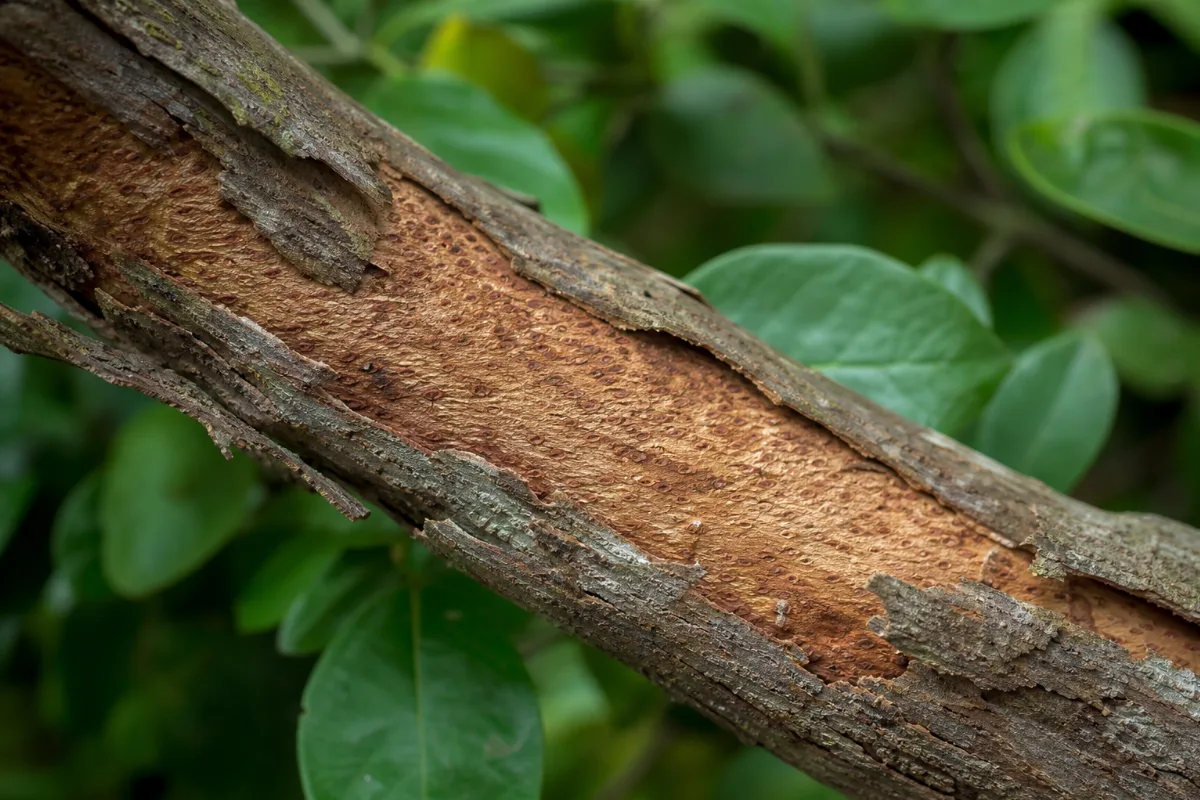
Herbs & Botanicals · Quinine-bearing bitter bark
Cinchona Bark
Cinchona officinalis (also C. pubescens, C. calisaya) · also called Cinchona, Peruvian bark, Jesuit's bark, quinine bark, Cinchonae cortex (pharmacy name)
Cinchona bark is the bitter bark of South American trees and the natural source of quinine, a prescription malaria medicine. Doctors prescribe the purified drug for malaria; no trial has tested the bark itself. Quinine can cause serious blood, heart, hearing and allergy problems, and US regulators advise against it for leg cramps. Whole bark, tonic water and prescription quinine are not the same, but all carry quinine-type risks, so ask a doctor or pharmacist first.
General information, not medical advice. Last substantive update · Not medically reviewed. A named clinician has not signed off on this page. How this page is made
About Cinchona Bark
Cinchona bark is the natural source of quinine. No trial of the bark exists. The evidence is about purified quinine, which treats malaria but carries serious risks, so safety comes first.
Safety first: what the warnings say
The US prescribing information for quinine carries a boxed warning. Using quinine for night-time leg cramps may cause serious and life-threatening blood reactions, including low platelets and a kidney-damaging condition called HUS/TTP, and the risk outweighs any potential benefit. MedlinePlus also says quinine should not be used for night-time leg cramps. A news report says the US drug regulator took action against unapproved quinine products in December 2006; we could not open the FDA announcement itself, so treat that detail as not verified.
Quinine can also lengthen the heart's QT interval and cause dangerous rhythms, release insulin and cause low blood sugar (a particular concern in pregnancy), and cause allergic reactions that can be severe. Almost everyone who takes quinine has some cinchonism: ringing in the ears, hearing loss, dizziness, blurred or colour-changed vision. Most of this reverses when quinine stops, but lasting vision loss has been described.
Bark contains quinine-type alkaloids, but no study measured how often these reactions happen with bark. Treat them as possible. People with a long QT interval, G6PD deficiency, myasthenia gravis, optic neuritis, a past reaction to quinine, quinidine or mefloquine, or severe liver disease should not use quinine. Pregnancy and breastfeeding need a doctor's advice. Interactions with digoxin, warfarin, QT-lengthening medicines and drugs that change CYP3A4 are on the Safety tab.
Bark, tonic water and prescription quinine are different
Prescription quinine sulfate is a purified drug taken for malaria under a doctor's care. Tonic water is a drink flavoured with a small amount of quinine; US food rules cap it at 83 parts per million and require it to be on the label. That cap is a legal limit, not a promise that any amount is safe for everyone. Case reports describe serious blood problems after heavy tonic water drinking, and one review of 26 reports of reactions to quinine drinks found mostly allergic, skin and blood reactions.
Cinchona bark is the whole material, with several alkaloids in amounts that vary by species and tree. It is not interchangeable with the drug or the drink. We do not give amounts for any of them. Ask a doctor or pharmacist.
What it is
Cinchona bark comes from several South American trees of the coffee family (Cinchona officinalis, C. pubescens, C. calisaya and others). The bark holds quinine, quinidine, cinchonine and cinchonidine. Quinine treats malaria; quinidine is used as a heart-rhythm medicine.
History: the Jesuit's bark
A medical history review describes how the bark reached Europe in the 17th century and became the first effective malaria treatment. Over about 400 years use moved from bark extracts to purified quinine and controlled trials. Today use of quinine has declined largely because of its toxicity, but it is still prescribed for severe malaria, in places with limited resources, and in pregnancy.
What the evidence shows
Malaria: quinine is an established prescription treatment, but we read no trial for this page, so the rating rests on regulator wording. Cramps: a Cochrane review of 23 trials (1586 people) found quinine cut cramp number by 28 percent and cramp days by 20 percent over two weeks, with cramp intensity down 10 percent; the reviewers call this low to moderate quality evidence. A 2025 trial in seven people with ALS found milder cramps. Appetite and digestion: no trial of the bark.
What regulators say
US FDA: quinine sulfate is approved for malaria only and carries the boxed warning above. The EU herbal committee (HMPC) has no monograph for cinchona bark that we could find; a secondary source lists it as not processed. A German Commission E monograph for appetite and digestion is reported second-hand and is not verified. NCCIH, LiverTox and LactMed entries were not found or could not be opened.
At a glance
Traditional uses history, not proof
- South American use of the bark is described in medical reviews; a reference article says the bark was mixed with sweetened water to prevent shivering.
- Brought to Europe in the 17th century and used against malaria fever, where it became the first effective treatment.
- Older European reference books list the bark as a bitter tonic for loss of appetite and indigestion (secondary source, not verified).
- Quinine, its main alkaloid, was used for decades for night-time leg cramps; regulators now warn against this.
Studied for research
- Malaria: prescription quinine is a treatment; not shown for bark (moderate, for the drug only)
- Night-time leg cramps: small benefit in trials of quinine, but serious risks outweigh it (mixed; official advice against)
- Cramps in ALS: one trial of seven people (insufficient)
- Appetite and indigestion: traditional use only, no trial (insufficient)
- Babesiosis: sometimes treated with quinine under a doctor (insufficient evidence read)
Main compounds
- Quinine
- Quinidine (a heart-rhythm drug in its own right)
- Cinchonine
- Cinchonidine
Common forms
- Whole bark (traditional; strength varies)
- Tonic water (low quinine, flavouring)
- Prescription quinine sulfate (a purified drug)
Research links: US prescribing information for quinine sulfate (FDA label via openFDA) · MedlinePlus: quinine · Cochrane review: quinine for muscle cramps · US rule on quinine in drinks (21 CFR 172.575) · Research Library · Genes & Biomarkers Library
The plant and its history
- Accepted scientific name
- Cinchona officinalis L.
- Naming authority
- Accepted species in the GBIF backbone (key 2901250). Cinchona pubescens Vahl (key 2901294) and Cinchona calisaya Wedd. (key 2901375) are also accepted species in GBIF.
- Synonyms
- A secondary reference lists Cinchona succirubra as a synonym used for the red bark; its current GBIF status was not checked.
- Common names
- Cinchona; Peruvian bark; Jesuit's bark; fever tree; quinine bark; Cinchonae cortex (pharmacy name) (English / Latin)
- Botanical family
- Rubiaceae (coffee family), per GBIF.
- Classification
- Plantae > Rubiaceae > Cinchona > Cinchona officinalis
- Native range
- The Andes of South America (a review says the tree is native to the Andes; GBIF range not retrieved).
- Habitat
- Not verified beyond the above.
- What the plant looks like
- Cultivation
- Not verified.
- Harvest and processing
- Bark is stripped from the tree and dried; details not verified.
- Look-alikes and adulterants
- Name: Tonic water; Note: A drink flavoured with purified quinine; not bark.; Name: Prescription quinine sulfate; Note: A purified drug, not bark.
Traditional use and history history, not clinical proof
| Tradition or era | Documented use | Source |
|---|---|---|
| Andes of South America | Bark use is thought to have started with Quechua people in Peru and Bolivia; a reference article says the Peruvians mixed ground bark with sweetened water to prevent shivering. | p32644745 |
| 17th century Europe | Brought to Europe, largely by Jesuits, and used for malaria in Rome; became the first effective malaria treatment and was central to colonial history. | p30477182 |
| 19th to 20th century | Medicine moved from bark extracts to purified alkaloids and chemical synthesis, and then to controlled trials. A case report says quinine has been used for night-time leg cramps since the 1930s; regulators now warn against that use. | p27293443 |
| German Commission E | A secondary source reports use of the bark as a bitter tonic for loss of appetite and digestive complaints. NOT verified at source. | s-altmeyers-cinchonae-cortex |
Traditional use shows how a plant was used. It does not show that a supplement works or is safe today.
What is inside, and how it may work
What the plant contains and how those compounds act in cells and animals. Laboratory and animal mechanisms are not proven effects in people.
Main compounds
| Compound | Family | Where it is concentrated | Activity studied | Level of evidence |
|---|---|---|---|---|
| Quinine PubChem 3034034 | quinoline (cinchona) alkaloid | Bark A secondary reference says quinine is 30 to 60 percent of the bark's total alkaloids (5 to 15 percent of the bark). | Antimalarial; lengthens QT; releases insulin; bitter taste. 17 2 15 | Human data |
| Quinidine PubChem 441074 | quinoline (cinchona) alkaloid | Bark Not given in sources read. | Heart-rhythm drug in its own right; a mirror-image partner of quinine. Same family of cautions. 17 5 | Human data |
| Cinchonine PubChem 90454 | quinoline (cinchona) alkaloid | Bark Not given. | Bark alkaloid; effects in people were not found. 17 2 | Laboratory research |
| Cinchonidine PubChem 101744 | quinoline (cinchona) alkaloid | Bark Not given. | Bark alkaloid; effects in people were not found. 17 2 | Laboratory research |
Mechanisms, receptors and pathways
| Target or pathway | Gene or receptor | What was found | Level |
|---|---|---|---|
| Insulin release from the pancreas | pancreatic beta cell | Intravenous quinine raised insulin and lowered glucose in seven healthy fasting volunteers. 20 9 | Human data |
| Immune reaction to quinine (platelets and kidney small vessels) | quinine-dependent antibodies | In 18 of 19 patients with quinine-induced thrombotic microangiopathy, quinine-dependent antibodies reacted with platelets or neutrophils. 11 | Human data |
| Heart electrical conduction | cardiac repolarisation (QT, PR, QRS) | Quinine causes concentration-dependent lengthening of QT, PR and QRS (label). 15 | Human data |
| Drug metabolism enzymes | CYP3A4, CYP2D6, P-glycoprotein | Quinine is mainly broken down by CYP3A4, is a P-glycoprotein substrate, and inhibits CYP3A4 and CYP2D6 (label). 15 | Human data |
| Digoxin handling | digoxin clearance | Quinine lowered digoxin total body clearance by 26 percent in six people. 19 | Human data |
Absorption, metabolism and elimination
- Absorption
- For purified quinine: taken by mouth; antacids with aluminium or magnesium may delay or reduce absorption (label). No data on absorption of quinine from bark.
- Distribution
- Quinine crosses the placenta; cord blood levels were about a third of the mother's in eight women (label).
- Metabolism
- Mainly CYP3A4 in the liver, with other enzymes contributing (label). Smoking lowered quinine exposure in one label study.
- Elimination
- Half-life about 12 hours in non-smokers versus 7.5 in heavy smokers after a single dose in healthy men (label); longer in severe liver or kidney impairment (label advises dose changes).
- Bioavailability
- No data for cinchona bark or tonic water in the sources read.
Isolated compounds versus whole extracts
Cinchona bark is a mixture of alkaloids (quinine, quinidine, cinchonine, cinchonidine) and other compounds. Nearly all the human evidence and the formal warnings concern purified quinine. Whole bark has not been tested in trials, so its effects, strength and risks cannot be assumed to match the purified drug, but the same alkaloids are present and the same cautions should be assumed.
Nutritional composition
Cinchona bark is not a food or a source of nutrients. It is a bitter medicinal bark; tonic water gets its bitter taste from added quinine.
1 moderate certainty1 mixed findings3 not enough evidence
What is Cinchona Bark good for?
The main proposed uses and how strong the human evidence is. The evidence is for purified quinine, not the bark.
Benefits, one by one
Each card is a research question, not a promise. Tap a goal to filter. Open a card to see the studies, doses and limits.
Malaria (prescription quinine, not the bark)
Moderate certaintyQuinine, first found in cinchona bark, is a prescription medicine that treats malaria under a doctor's care. The proof is for the purified drug. It has not been shown for bark, powder or tea.
3 studiesNo amounts or preparation advice are given on this page. Ask a doctor…
Studies, doses and limits
What the trials found
MedlinePlus and the US drug label say quinine is used with other medicines to treat malaria and should not be used to prevent it. A medical history review says quinine is still prescribed in places with fewer resources, in severe malaria and in pregnant women. We did not read a trial or systematic review of quinine for malaria for this page, so we give no effect numbers.
Results
No trial or review was read. Regulator and reference wording only.
Effect sizes as reported
None given; the evidence is regulatory approval and clinical use.
Why this rating
Authoritative sources agree the purified drug is a malaria treatment, but we read no trial or formal grade. It applies to the prescription drug only, not to cinchona bark.
Form and dose studied
No amounts or preparation advice are given on this page. Ask a doctor or pharmacist.
Who was studied
People with malaria, treated by a doctor.
Limits
Not shown for bark, tea, tincture or tonic water. Malaria is a serious infection that needs medical care; do not self-treat.
Why researchers looked
Cinchona bark was the first effective treatment for malaria in Europe, and its main alkaloid, quinine, is still used for malaria.
Traditional use
A medical history review describes the bark's South American origin and its arrival in Europe in the 17th century, where it became central to malaria treatment.
Proposed mechanism Pharmacological theory
Quinine acts against the malaria parasite. This page does not explain the mechanism further.
A proposed mechanism does not show that the effect happens in people.
The same drug carries serious risks of blood, heart and allergic reactions (see the Safety tab).
Night-time leg cramps (quinine: not advised)
Mixed findingsQuinine slightly reduces cramps in trials, but the US drug label says the serious risks outweigh any benefit for this use. It is not a recommended remedy.
4 studiesNo amounts or preparation advice are given on this page. Ask a doctor…
Studies, doses and limits
What the trials found
A Cochrane review of 23 randomised trials (1586 people) tested purified quinine against placebo and other treatments. Against placebo, quinine cut the number of cramps by 28 percent over two weeks, cramp intensity by 10 percent and cramp days by 20 percent; cramp duration did not change significantly. More people on quinine had minor side effects, mainly stomach and gut symptoms. The trials did not find a significant rise in major side effects, but one person had low platelets. The authors say serious reactions can rarely be fatal, which is why some countries restrict prescribing. The US label's boxed warning and MedlinePlus both advise against quinine for leg cramps.
Results
Fewer cramps and slightly weaker cramps with purified quinine in trials; no cinchona bark trial was found.
Effect sizes as reported
Cramp number -28%, cramp intensity -10%, cramp days -20% versus placebo; minor adverse events risk difference 3% (95% CI 0% to 6%); major adverse events 0% (95% CI -1% to 2%). Cochrane authors call the cramp number and days evidence low quality and intensity moderate quality.
Why this rating
Small benefit in trials (low to moderate quality) against serious harm reported outside the trials and official advice against use for cramps.
Form and dose studied
No amounts or preparation advice are given on this page. Ask a doctor or pharmacist.
Who was studied
Adults mostly; people with cramps from any cause.
Limits
Trials were short (up to about 60 days) and could not detect rare serious reactions. Nothing was tested with cinchona bark or tonic water.
Why researchers looked
Quinine has been used for night-time leg cramps for decades, which led to many trials and many reports of harm.
Traditional use
Home use of quinine and, in some places, tonic water for cramps.
Proposed mechanism Pharmacological theory
Not explained in the sources read.
A proposed mechanism does not show that the effect happens in people.
FDA boxed warning: serious and life-threatening blood reactions. Case reports of blood-clotting disorders after quinine pills and after heavy tonic water drinking.
Muscle cramps in motor neurone disease (ALS)
Not enough evidenceA tiny trial in seven people with ALS found fewer and milder cramps on quinine. It is far too small to guide treatment.
1 studiesNo amounts or preparation advice are given on this page. Ask a doctor…
Studies, doses and limits
What the trials found
A 2025 randomised double-blind crossover trial in Switzerland gave quinine sulfate or placebo to people with ALS and daily cramps. Seven people were analysed. Cramp intensity fell by 48 percent (p = 0.042) and daytime cramps fell (p = 0.024). Two had mild ringing in the ears. The authors say larger studies are needed, especially for serious side effects.
Results
Cramp intensity down 48% (p = 0.042) in seven people; daytime cramp count down (p = 0.024).
Effect sizes as reported
Cramp intensity -48%; no confidence interval in the abstract.
Why this rating
Seven participants only; the authors say the result cannot be generalised and serious side effects were not assessed.
Form and dose studied
No amounts or preparation advice are given on this page. Ask a doctor or pharmacist.
Who was studied
Adults with ALS under specialist care.
Limits
Seven people; purified quinine, not bark.
Why researchers looked
Cramps are common and distressing in ALS, and doctors have tried quinine for them.
Traditional use
None found.
Proposed mechanism Pharmacological theory
Not explained in the paper.
A proposed mechanism does not show that the effect happens in people.
Quinine can cause ringing in the ears (mild in two people) and the serious reactions described on the Safety tab.
Loss of appetite and indigestion (bitter tonic, traditional)
Not enough evidenceCinchona bark is a bitter herb that old European reference books list for poor appetite and indigestion. We found no human trial of the bark for this, so we cannot say whether it works.
1 studiesNo amounts or preparation advice are given on this page. Ask a doctor…
Studies, doses and limits
What the trials found
No clinical trial of cinchona bark for appetite or digestion was found in a PubMed search. An EU herbal committee (HMPC) monograph was not found: a secondary encyclopedia lists the HMPC as 'not processed'. The Commission E wording was not read directly, so treat it as NOT verified.
Results
No human trial found.
Effect sizes as reported
Not applicable.
Why this rating
No trial. Only a secondary summary of an old German monograph, which we could not check at source.
Form and dose studied
No amounts or preparation advice are given on this page. Ask a doctor or pharmacist.
Who was studied
Adults, if used at all. A secondary source says not recommended under age 12 for lack of data.
Limits
Bark strength varies, and the bark contains quinine-type alkaloids that can cause the serious reactions described on the Safety tab.
Why researchers looked
Bitter herbs are traditionally taken to stimulate appetite and digestion.
Traditional use
German Commission E (as summarised by a secondary encyclopedia) lists cinchona bark for loss of appetite and digestive complaints such as wind and bloating.
Proposed mechanism Pharmacological theory
Not tested or verified on this page.
A proposed mechanism does not show that the effect happens in people.
Allergy, pregnancy, stomach ulcers and bleeding or platelet problems are listed as cautions (secondary source), and the quinine warnings apply.
Babesiosis (tick-borne infection)
Not enough evidenceDoctors sometimes prescribe quinine, with other medicines, for babesiosis, a serious tick-borne infection. This is a hospital matter, not a home remedy.
1 studiesNo amounts or preparation advice are given on this page. Ask a doctor…
Studies, doses and limits
What the trials found
MedlinePlus says quinine is sometimes used to treat babesiosis and asks people to talk to a doctor about the risks. No trial or review was read for this page.
Results
No trial read.
Effect sizes as reported
Not applicable.
Why this rating
Mentioned in drug information only; no study read.
Form and dose studied
No amounts or preparation advice are given on this page. Ask a doctor or pharmacist.
Who was studied
People with babesiosis under medical care.
Limits
No evidence read; not for bark.
Why researchers looked
Babesiosis parasites resemble malaria parasites.
Traditional use
None.
Proposed mechanism Pharmacological theory
Not covered here.
A proposed mechanism does not show that the effect happens in people.
Same serious reactions as other uses.
Connections to the rest of health
How Cinchona Bark connects to the rest of our health knowledge graph. Every link says what kind of connection it is. A safety link (for example to the liver) is a warning, not a benefit. A study that merely mentions a topic never creates a benefit link.
Explore every connection: goals, body systems, organs, symptoms, genes
A. Wellness goals
| Connected to | Kind of connection | Evidence status | Context | Studies |
|---|---|---|---|---|
| Immune Support | Demonstrated clinical effect | Moderate certainty | Malaria (prescription quinine, not the bark): Quinine, first found in cinchona bark, is a prescription medicine that treats malaria under a doctor's care. The proof is for the purified drug. It has not been shown for bark, powder or tea. | 16 15 5 |
| Muscle Recovery | Traditional use | Mixed findings | Night-time leg cramps (quinine: not advised): Quinine slightly reduces cramps in trials, but the US drug label says the serious risks outweigh any benefit for this use. It is not a recommended remedy. | 4 15 16 12 |
| Muscle Recovery | Potential benefit | Not enough evidence | Muscle cramps in motor neurone disease (ALS): A tiny trial in seven people with ALS found fewer and milder cramps on quinine. It is far too small to guide treatment. | 18 |
| Digestive Support | Traditional use | Not enough evidence | Loss of appetite and indigestion (bitter tonic, traditional): Cinchona bark is a bitter herb that old European reference books list for poor appetite and indigestion. We found no human trial of the bark for this, so we cannot say whether it works. | 2 |
| Immune Support | Traditional use | Not enough evidence | Babesiosis (tick-borne infection): Doctors sometimes prescribe quinine, with other medicines, for babesiosis, a serious tick-borne infection. This is a hospital matter, not a home remedy. | 16 |
B. Body systems
| Connected to | Kind of connection | Evidence status | Context | Studies |
|---|---|---|---|---|
| Heart rhythm | Adverse effect or risk | Moderate certainty | QT lengthening and torsades de pointes; case of dangerous rhythm with quinine from three sources. QT lengthening and dangerous rhythms; a case with quinine from three sources. Preparation or compound: Quinine (drug); tonic water |
15 13 |
| Platelets, clotting and kidneys | Adverse effect or risk | Moderate certainty | Low platelets, HUS/TTP and DIC. Preparation or compound: Quinine (drug); tonic water |
11 7 10 21 15 |
| Hearing, vision and balance | Adverse effect or risk | Moderate certainty | Cinchonism: ringing, hearing loss, vision changes. Preparation or compound: Quinine (drug) |
3 15 |
| Blood sugar | Adverse effect or risk | Moderate certainty | Insulin release and low blood sugar. Preparation or compound: Quinine (drug) |
20 9 15 |
| Immune System | Biological association | Moderate certainty | Studied for: Malaria (prescription quinine, not the bark) Studied for: Babesiosis (tick-borne infection) | 16 15 5 |
| Musculoskeletal System | Biological association | Mixed findings | Studied for: Night-time leg cramps (quinine: not advised) | 4 15 16 12 |
| Nervous System | Biological association | Not enough evidence | Studied for: Muscle cramps in motor neurone disease (ALS) | 18 |
| Digestive System | Biological association | Not enough evidence | Studied for: Loss of appetite and indigestion (bitter tonic, traditional) | 2 |
G. Root causes and contributing factors
| Connected to | Kind of connection | Evidence status | Context | Studies |
|---|---|---|---|---|
| Medicine side effects and interactions | Drug or supplement interaction | Moderate certainty | Interacts with digoxin, warfarin, QT drugs and CYP3A4 drugs. Preparation or compound: Quinine (drug) |
19 15 |
I. Biomarkers
| Connected to | Kind of connection | Evidence status | Context | Studies |
|---|---|---|---|---|
| Number of cramps (two weeks) | Biological association | Low certainty | Measured in trials: lowered. A lab change is not the same as a health benefit. | 4 |
| Cramp intensity in ALS (diary rating) | Biological association | Not enough evidence | Measured in trials: lowered. A lab change is not the same as a health benefit. | 18 |
| Blood sugar and insulin after quinine (a safety measure) | Biological association | Low certainty | Measured in trials: lowered. A lab change is not the same as a health benefit. | 20 15 |
| QT interval on the heart tracing (a safety measure) | Biological association | Moderate certainty | Measured in trials: raised. A lab change is not the same as a health benefit. | 15 13 |
J. Genes, receptors and enzymes
| Connected to | Kind of connection | Evidence status | Context | Studies |
|---|---|---|---|---|
| CYP3A4 | Preliminary mechanism | Human | Main enzyme that clears quinine; blockers raise and inducers lower levels. | 15 |
| CYP2D6 | Preliminary mechanism | Human | Quinine blocks it, which can raise levels of other drugs. | 15 |
| G6PD | Preliminary mechanism | Human | G6PD deficiency is a label contraindication because of haemolysis. | 15 |
L. Active compounds
| Connected to | Kind of connection | Evidence status | Context | Studies |
|---|---|---|---|---|
| Quinine | Biological association | Human | Antimalarial; lengthens QT; releases insulin; bitter taste. Preparation or compound: Bark |
17 2 15 |
| Quinidine | Biological association | Human | Heart-rhythm drug in its own right; a mirror-image partner of quinine. Same family of cautions. Preparation or compound: Bark |
17 5 |
| Cinchonine | Biological association | In vitro | Bark alkaloid; effects in people were not found. Preparation or compound: Bark |
17 2 |
| Cinchonidine | Biological association | In vitro | Bark alkaloid; effects in people were not found. Preparation or compound: Bark |
17 2 |
Each connection is stored with the ingredient, the connected record, the kind of connection, the evidence status, the supporting studies, the preparation or compound involved, and a review date (last reviewed October 25, 2026).
The evidence
The research centre for Cinchona Bark. Every record here was checked against PubMed or the publisher's page; we never list a study we have not verified.
Evidence by outcome
Bars show how many studies we found for each outcome, not how well it works. People are added up across trials only (reviews are not added, to avoid double counting).
How we rate evidence
High certainty
Several well-run trials or reviews agree; further research is unlikely to change the picture much.
Moderate certainty
Good trials point the same way, but some doubt remains.
Low certainty
Small, short or inconsistent trials. The finding could change with better research.
Very low certainty
Very little or very weak human data. Treat as a possibility only.
Mixed findings
Trials or reviews disagree with each other.
Not enough evidence
Not enough human research to say either way.
Evidence against
Good research found no benefit, or found harm.
We take the reviewers' own risk-of-bias and GRADE statements where they exist, and otherwise judge from study size, design, consistency, directness and whether a product matches what is sold. Many publications do not make evidence high. Method note: We started from our existing cinchona summary, read the current US quinine prescribing information through the openFDA service, the MedlinePlus quinine page and the US regulation on quinine in drinks, checked the plant names in GBIF and compounds in PubChem, and read PubMed abstracts for the studies cited. A news report and a secondary encyclopedia were used for the FDA 2006 action and the German Commission E monograph and are marked as not verified at source. NCCIH had no page; LiverTox and LactMed were blocked; no EU herbal monograph was found. Several case reports have short abstracts with no numbers. Funding and conflicts could not be read from most abstracts. Certainty ratings are the compiler's own reading, not formal grades, except where the reviewers' own are quoted. No study is cited that we could not verify.
Study library: every study we checked 21
| Study | Design | People | Product, dose, length | Result |
|---|---|---|---|---|
| Abed 2016 Quinine-Induced Disseminated Intravascular Coagulation Case Rep Med · PMID 27293443 · DOI |
Case report |
1 A middle-aged woman |
Quinine taken as a home remedy for night-time leg cramps none Not given on this page Not applicable · vs Not applicable |
Coagulopathy was linked to quinine; stopping it led to complete recovery. The authors say many patients still regard quinine as a harmless home remedy. Single case Methods, limits and fundingOutcomes: Blood clotting Limitations: One person. Funding and conflicts: Not stated in abstract Read: abstract |
| Altmeyers.org 2026 Cinchonae cortex (Altmeyer's Encyclopedia, naturopathy entry) Altmeyers encyclopedia · Source |
Secondary reference authoritative-guidance |
Cinchona bark as a herbal drug | Cinchona bark (Cinchonae cortex) bark Not given on this page Not applicable · vs Not applicable |
Lists a German Commission E monograph for loss of appetite and digestive complaints such as wind and bloating. Lists contraindications of pregnancy, allergy to quinine-type alkaloids and stomach or gut ulcers; not recommended under age 12 for lack of data. Lists rare allergic reactions and, rarely, bleeding from low platelets. States the bark contains 5 to 15 percent bitter alkaloids, of which 30 to 60 percent is quinine, and gives EU herbal committee (HMPC) and ESCOP status as 'not processed'. Secondary summary of a monograph Methods, limits and fundingOutcomes: Traditional indications, safety notes, alkaloid content, regulatory status Limitations: Secondary encyclopedia entry: the Commission E text and European Pharmacopoeia were NOT opened. Treat as NOT verified. Funding and conflicts: Not applicable Read: full-text |
| Bykowski 2023 Cinchonism StatPearls (NCBI Bookshelf) · PMID 32644745 |
Review (study guide) authoritative-guidance |
Reference article on poisoning symptoms from quinine-type (quinoline) drugs | Quinoline derivatives including quinine and the cinchona alkaloids bark source (cinchona) mentioned for history Not given on this page Not applicable · vs Not applicable |
Describes cinchonism as ringing in the ears, reversible hearing loss, flushing, confusion, diarrhoea and visual disturbances, sometimes permanent blindness; some sources add unsteadiness, tremor and abnormal movements. Says quinine has direct toxic effects on the inner retina and that vision may not recover. Says side effects are linked to dose. Gives the Peruvian and Jesuit history of the bark. Descriptive review; no effect size Methods, limits and fundingOutcomes: Symptoms of cinchonism; history of cinchona Limitations: Narrative reference article; not a systematic review. Funding and conflicts: Authors declare no relevant financial relationships Read: abstract |
| El-Tawil 2015 Quinine for muscle cramps Cochrane Database Syst Rev · PMID 25842375 · DOI |
Systematic review |
1586 People of all ages with muscle cramps from any cause (23 randomised trials; 58 percent of participants came from five unpublished studies) |
Quinine (purified drug), not cinchona bark none (purified quinine) Not given on this page Up to about 60 days in the included trials · vs Placebo, vitamin E, quinine-vitamin E, quinine-theophylline, xylocaine injection |
Against placebo, quinine cut cramp number over two weeks by 28 percent, cramp intensity by 10 percent and cramp days by 20 percent. Cramp duration did not change significantly. More people had minor side effects on quinine (risk difference 3 percent), mainly stomach and gut symptoms. Major adverse events were not significantly different from placebo in the trials (risk difference 0 percent); one participant had low platelets (0.12 percent). The authors note that overdoses are reported elsewhere to cause potentially fatal effects and that in some countries prescribing is severely restricted. Small reduction in cramp number and days (low-quality evidence) and intensity (moderate-quality evidence, authors' GRADE) (Minor adverse events risk difference 3% (95% CI 0% to 6%); major adverse events 0% (95% CI -1% to 2%)) Methods, limits and fundingOutcomes: Cramp number, intensity, days and duration; adverse events Limitations: Risk of bias varied widely; few trials described randomisation well; trials too small and short to find rare serious reactions; no evidence on best dose or duration. Funding and conflicts: Not stated in abstract Read: abstract |
| Eyal 2018 The Fever Tree: from Malaria to Neurological Diseases Toxins (Basel) · PMID 30477182 · DOI |
Review (narrative) authoritative-guidance |
History and pharmacology of cinchona bark and its alkaloids quinine and quinidine | Cinchona bark and its alkaloids bark Not given on this page Not applicable · vs Not applicable |
Describes the introduction of cinchona bark to Europe in the 17th century and its move from bark extracts to chemical synthesis and controlled trials. Says use of quinine and quinidine has declined largely because of toxicity, but quinine is still prescribed in resource-limited settings, in severe malaria and in pregnant women. Narrative review; no effect size Methods, limits and fundingOutcomes: History, use and toxicity of cinchona alkaloids Limitations: Narrative review, not systematic. Funding and conflicts: Author declares no conflict Read: abstract |
| GBIF Secretariat 2026 GBIF backbone taxonomy: Cinchona officinalis L., C. pubescens Vahl, C. calisaya Wedd. GBIF species match API · Source |
Taxonomy database authoritative-guidance |
Plant names | Not applicable bark (the part used) Not given on this page Not applicable · vs Not applicable |
All three names match exactly as ACCEPTED species in family Rubiaceae: Cinchona officinalis L. (key 2901250), Cinchona pubescens Vahl (key 2901294), Cinchona calisaya Wedd. (key 2901375). Names verified Methods, limits and fundingOutcomes: Accepted names and family Limitations: Does not say which species any product contains. Funding and conflicts: Not applicable Read: full-text |
| Kojouri 2001 Quinine-associated thrombotic thrombocytopenic purpura-hemolytic uremic syndrome: frequency, clinical features, and long-term outcomes Ann Intern Med · PMID 11747383 · DOI |
Case series |
225 225 consecutive patients with TTP-HUS in central-western Oklahoma, 1989 to 2000 |
Quinine (source not further specified in abstract) none Not given on this page Not applicable · vs Not applicable |
TTP-HUS was linked to quinine in 17 patients: 4 died and 7 survivors had chronic kidney failure. Among 132 patients explicitly asked about drug exposure from mid-1995, 14 (11 percent) had taken quinine. Nervous-system problems were as severe as in patients who had not taken quinine. Quinine was a common cause of drug-linked TTP-HUS in this region Methods, limits and fundingOutcomes: Frequency, features and outcomes of quinine-linked TTP-HUS Limitations: One region; patients with the disease, not all quinine users, so no rate of risk per user. Funding and conflicts: Not stated in abstract Read: abstract |
| Lefrere 2021 [Tonic water and quinine-a bicentennial booming cocktail] Rev Fr Allergol (2009) · PMID 33995692 · DOI |
Case report review |
26 26 published case reports of reactions to drinks containing quinine, mostly young men |
Quinine in tonic water and other drinks none Not given on this page Not applicable · vs Not applicable |
Reactions included skin eruptions and hives, blood problems (low platelets, bleeding, thrombotic microangiopathy) and, more rarely, eye, heart or hearing problems. Quinine was judged the certain cause in 3 cases, probable in 22 and possible in 2. Measured quinine in the drinks met standards. The authors say the main mechanism is allergic, that such reactions may be under-diagnosed, and that people who have reacted should avoid medicines, herbal products and cosmetics containing quinine. Case-report summary; no rate of risk Methods, limits and fundingOutcomes: Hypersensitivity reactions Limitations: Published case reports only (reporting bias); abstract read in English, article is in French and only the abstract was read. Funding and conflicts: Not stated in abstract Read: abstract |
| Looareesuwan 1985 Quinine and severe falciparum malaria in late pregnancy Lancet · PMID 2861481 · DOI |
Case series |
12 12 women with severe falciparum malaria in the third trimester, Thailand |
Intravenous quinine dihydrochloride, then quinine sulphate tablets none Not given on this page Not applicable · vs Not applicable |
Uterine activity showed little or no change as quinine levels rose. Low blood sugar with high insulin developed in 7 women. The authors conclude the important toxic effect of quinine in late pregnancy is insulin release, not a labour-inducing effect. Low blood sugar in 7 of 12 Methods, limits and fundingOutcomes: Uterine activity, fetal heart rate, blood sugar Limitations: Twelve women with severe malaria; old study of the treatment of a life-threatening infection, not of cramps or tonic water. Funding and conflicts: Not stated in abstract Read: abstract |
| Menakuru 2021 Disseminated Intravascular Coagulation Due to Drinking Tonic Water Cureus · PMID 35070549 · DOI |
Case report |
1 A 35-year-old man |
Tonic water, drunk in excess for night-time leg cramps none Not given on this page Not applicable · vs Not applicable |
The authors diagnosed disseminated intravascular coagulation (a serious clotting and bleeding disorder) that they attribute to excessive tonic water intake, which he began because a friend said it would help leg cramps. Single case Methods, limits and fundingOutcomes: Blood clotting Limitations: One person; abstract gives no amounts or outcome details. Funding and conflicts: No conflict declared Read: abstract |
| Page 2017 Quinine-Induced Thrombotic Microangiopathy: A Report of 19 Patients Am J Kidney Dis · PMID 28780041 · DOI |
Case series |
19 19 of 509 registry patients (1989 to 2015) treated with plasma exchange for suspected TTP; 18 of 19 were women, all white |
Quinine, as pills in 18 and as tonic water in 1 none (purified quinine and tonic water) Not given on this page Not applicable · vs Not applicable |
All 19 had destroyed red cells, low platelets and sudden kidney injury. Quinine-dependent antibodies were found in 18. None was first suspected of being a quinine reaction. 17 of 18 survivors needed dialysis, 14 developed chronic kidney disease (3 end-stage), and 8 patients died. Severe kidney injury and chronic kidney disease were common Methods, limits and fundingOutcomes: Blood, kidney and survival outcomes Limitations: Registry patients who had plasma exchange only; says nothing about how common it is among all quinine users. Funding and conflicts: Not stated in abstract Read: abstract |
| Parry 2006 FDA Cautions Against Off-Label Use of Quinine Drugs (HealthDay news report, 13 December 2006) HealthDay · Source |
News report of an FDA action authoritative-guidance |
Unapproved quinine products sold for leg cramps | Quinine-containing drugs none Not given on this page Not applicable · vs Not applicable |
Reports that FDA ordered makers of unapproved quinine products to stop manufacturing, warned consumers about quinine for leg cramps, said the risks outweigh the benefits for that use, and said 665 quinine-related serious adverse events including 93 deaths had been reported to FDA since 1969. Qualaquin (for malaria) was the only approved quinine product. News summary of a regulator action Methods, limits and fundingOutcomes: FDA action in December 2006 Limitations: Secondary source: the FDA announcement itself was not opened. Treat details as NOT verified against FDA. Funding and conflicts: Not applicable Read: full-text |
| Sheehan 2016 Quinine and the ABCs of Long QT: A Patient's Misfortune with Arthritis, (Alcoholic) Beverages, and Cramps J Gen Intern Med · PMID 27173501 · DOI |
Case report |
1 A 91-year-old woman found minimally responsive |
Quinine sulfate for leg cramps, plus tonic water mixed with gin, plus hydroxychloroquine none (purified quinine and tonic water) Not given on this page Not applicable · vs Not applicable |
Heart monitoring showed bursts of a dangerous fast rhythm (non-sustained polymorphic ventricular tachycardia) with a markedly long QT interval. She was taking quinine from three sources: hydroxychloroquine, quinine sulfate for leg cramps and tonic water. Single case; cannot show how often this happens Methods, limits and fundingOutcomes: Heart rhythm and QT interval Limitations: One person with several QT-lengthening exposures; cause cannot be pinned on one source. Funding and conflicts: No conflict declared Read: abstract |
| US Code of Federal Regulations 2026 21 CFR 172.575: Quinine (food additive regulation) eCFR · Source |
Regulation authoritative-guidance |
Quinine as a flavour in carbonated drinks | Quinine hydrochloride or sulfate as a flavour none Not given on this page Not applicable · vs Not applicable |
Quinine may be used in carbonated beverages as a flavour at no more than 83 parts per million as quinine, and the label must prominently declare quinine. Legal ceiling; no health claim Methods, limits and fundingOutcomes: Legal limit in drinks Limitations: A legal limit, not a statement that any amount of tonic water is safe for a given person. Funding and conflicts: Public regulator document Read: full-text |
| US Food and Drug Administration (label text supplied by the manufacturer) 2025 Quinine sulfate capsules: prescribing information (current US label; text read via the openFDA label service, Lupin Pharmaceuticals copy, effective 2025-10-31) FDA drug label (openFDA) · Source |
Regulator label authoritative-guidance |
Prescription quinine sulfate capsules, approved for malaria | Quinine sulfate (purified drug) none (not cinchona bark) Not given on this page Not applicable · vs Not applicable |
Boxed warning: using quinine for night-time leg cramps may cause serious and life-threatening blood reactions, including low platelets and HUS/TTP, and the risk outweighs any potential benefit. Contraindicated with a long QT interval, G6PD deficiency, myasthenia gravis, optic neuritis and known allergy to quinine, mefloquine or quinidine. Warns of QT prolongation and torsades de pointes, low blood sugar (quinine stimulates insulin release), allergic reactions including Stevens-Johnson syndrome, and atrial fibrillation with digoxin. Interactions listed include QT-prolonging drugs, CYP3A4 inhibitors and inducers, ritonavir, rifampin, digoxin, warfarin and other anticoagulants, antacids and neuromuscular blockers. Pregnancy: use only if the benefit justifies the risk. Regulator wording; no effect size Methods, limits and fundingOutcomes: Boxed warning, contraindications, warnings, interactions, pregnancy Limitations: Applies to the purified drug; not tested on cinchona bark. The label shown is one manufacturer's copy. Funding and conflicts: Public regulator document Read: full-text |
| US National Library of Medicine 2017 Quinine (Qualaquin): MedlinePlus drug information (last revised 15 June 2017) MedlinePlus · Source |
Patient drug information authoritative-guidance |
Prescription quinine | Quinine (purified drug) none Not given on this page Not applicable · vs Not applicable |
Says quinine should not be used to treat or prevent night-time leg cramps and has not been shown to work for this, and may cause serious or life-threatening effects including severe bleeding, kidney damage, irregular heartbeat and severe allergic reactions. Says it is used for malaria, not to prevent it, and sometimes for babesiosis. Lists low blood sugar, ringing in the ears, vision changes, easy bruising and fast or irregular heartbeat as effects. Names magnesium and aluminium antacids, cimetidine, and dextromethorphan as interacting products. Asks people to tell their doctor about pregnancy, breastfeeding, long QT, G6PD deficiency, myasthenia gravis and optic neuritis. Patient guidance; no effect size Methods, limits and fundingOutcomes: Warning, uses, precautions, side effects Limitations: Page last revised 2017; written for the prescription drug. Funding and conflicts: Public information service Read: full-text |
| US National Library of Medicine 2026 PubChem compound records: quinine, quinidine, cinchonine, cinchonidine PubChem PUG REST · Source |
Chemistry database authoritative-guidance |
Compounds | Cinchona alkaloids bark Not given on this page Not applicable · vs Not applicable |
Quinine CID 3034034 (C20H24N2O2, 324.4); quinidine CID 441074 (C20H24N2O2, 324.4); cinchonine CID 90454 (C19H22N2O, 294.4); cinchonidine CID 101744 (C19H22N2O, 294.4). IDs verified Methods, limits and fundingOutcomes: Compound identity Limitations: Identity only; no activity data. Funding and conflicts: Not applicable Read: full-text |
| Vogt 2025 Quinine Sulfate for Muscle Cramps in Amyotrophic Lateral Sclerosis: A Randomized, Double-Blind Crossover Trial Muscle Nerve · PMID 40384575 · DOI |
Controlled trial |
7 Adults with ALS and daily muscle cramps, one clinic in Switzerland |
Quinine sulfate (purified drug) none (purified quinine) Not given on this page Two weeks per period with a four-week washout · vs Placebo (crossover) |
Seven people were analysed. Cramp intensity fell by 48 percent (p = 0.042) and daytime cramps fell (p = 0.024). Two people had mild ringing in the ears. All seven chose to keep taking it. Lower cramp intensity and daytime cramp count in a very small crossover trial Methods, limits and fundingOutcomes: Change in cramp intensity (diary rating) and number of daytime and night-time cramps Limitations: Only seven people; the authors say the result cannot be generalised and that serious adverse events were not assessed in this sample size. Funding and conflicts: Not stated in abstract Read: abstract |
| Wandell 1980 Effect of quinine on digoxin kinetics Clin Pharmacol Ther · PMID 7408402 · DOI |
Pharmacokinetic study |
6 Six subjects given digoxin before and during quinine |
Quinine (purified drug) with intravenous digoxin none Not given on this page Not applicable · vs Not applicable |
Quinine lowered digoxin total body clearance by 26 percent (2.98 to 2.22 ml/min/kg, p < 0.03) and lengthened digoxin half-life from 34.2 to 51.8 hours. Digoxin cleared more slowly with quinine Methods, limits and fundingOutcomes: Digoxin clearance and half-life Limitations: Six people; old study; purified quinine. Funding and conflicts: Not stated in abstract Read: abstract |
| White 1983 Severe hypoglycemia and hyperinsulinemia in falciparum malaria N Engl J Med · PMID 6343877 · DOI |
Case series with a volunteer experiment |
Patients with falciparum malaria in Thailand (17 with hypoglycaemia; 16 had received quinine) and seven healthy fasting volunteers | Intravenous quinine (purified drug) none Not given on this page Not applicable · vs Not applicable |
In patients, blood quinine and insulin levels were correlated at the time of low blood sugar (p = 0.007). In seven healthy fasting volunteers, intravenous quinine raised mean insulin from 8.9 to 17.1 mU per litre (p = 0.02) and lowered mean glucose from 88 to 68 mg per decilitre (p = 0.002). The authors say quinine-driven insulin release may trigger low blood sugar in malaria, and that pregnancy and severe disease are linked to it. Insulin up and glucose down after intravenous quinine in volunteers Methods, limits and fundingOutcomes: Blood sugar and insulin Limitations: Old study; intravenous quinine, small volunteer group; malaria itself also lowers blood sugar. Funding and conflicts: Not stated in abstract Read: abstract |
| Winter FD Jr 2015 Immune thrombocytopenia associated with consumption of tonic water Proc (Bayl Univ Med Cent) · PMID 25829658 · DOI |
Case report |
1 One man |
Quinine-containing tonic water none Not given on this page Not applicable · vs Not applicable |
A man developed sudden severe low platelets linked to drinking quinine-containing tonic water. Single case Methods, limits and fundingOutcomes: Platelet count Limitations: One person; abstract gives no further numbers. Funding and conflicts: Not stated in abstract Read: abstract |
What we do not know yet
- No trial of cinchona bark itself for any use.
- How often serious reactions happen with bark, tea, tincture or tonic water.
- EU herbal committee, NCCIH, LiverTox and LactMed entries were not found or could not be opened.
- The FDA 2006 and 2010 announcements were not opened at source.
- Quinidine, the other main alkaloid, was not researched.
How new research is added
New studies are found by a saved PubMed search and are placed in a review queue. A person reads each one before it changes any evidence rating or safety wording. New publications never change ratings automatically.
Lab markers
What changed in blood or saliva tests during trials. A changed number is not the same as feeling or being healthier, and we give no "normal ranges".
Metabolic 1
Blood sugar and insulin after quinine (a safety measure)
Lowered in trials
Sugar in the blood and the hormone that lowers it.
Low certaintyResults and what it means
Why it was measured
Quinine releases insulin and can cause low blood sugar.
Statistical vs. clinical meaning
A lower blood sugar number is a harm here, not a benefit. The study is old and small.
Safety implication
The US label warns of clinically significant low blood sugar, especially in pregnant women.
| Study | Result | People | Product |
|---|---|---|---|
| 20 | In seven healthy fasting volunteers, intravenous quinine raised mean insulin from 8.9 to 17.1 mU per litre (p = 0.02) and lowered mean glucose from 88 to 68 mg per decilitre (p = 0.002). | 7 healthy fasting adults; also patients with falciparum malaria | Intravenous quinine (purified drug) |
Other 3
Number of cramps (two weeks)
Lowered in trials
How many muscle cramps a person has, counted in a diary.
Low certaintyResults and what it means
Why it was measured
The main thing people want to know about a cramp remedy.
Statistical vs. clinical meaning
Statistically significant but small, and Cochrane rates the cramp-number evidence low quality. The US label judges the serious risks to outweigh it.
Safety implication
Minor stomach and gut effects were more common on quinine; rare serious blood reactions are reported outside trials.
| Study | Result | People | Product |
|---|---|---|---|
| 4 | 28% fewer cramps over two weeks than placebo; cramp days 20% fewer; cramp intensity 10% lower; cramp duration not significantly changed. | 23 trials, 1586 people with cramps of any cause | Purified quinine; not cinchona bark |
Cramp intensity in ALS (diary rating)
Lowered in trials
A person's own rating of how severe a cramp was.
Not enough evidenceResults and what it means
Why it was measured
Primary outcome of the ALS crossover trial.
Statistical vs. clinical meaning
A large percentage in only seven people; it may not hold in a bigger group.
Safety implication
Mild ringing in the ears in two people.
| Study | Result | People | Product |
|---|---|---|---|
| 18 | Cramp intensity reduced by 48% (p = 0.042); daytime cramps reduced (p = 0.024). | 7 people with ALS and daily cramps | Quinine sulfate versus placebo, crossover |
QT interval on the heart tracing (a safety measure)
Raised in trials
A timing measure on an electrocardiogram. A longer QT can lead to dangerous heart rhythms.
Moderate certaintyResults and what it means
Why it was measured
Quinine lengthens the QT interval.
Statistical vs. clinical meaning
A longer QT is a warning sign, not a benefit.
Safety implication
Torsades de pointes and ventricular fibrillation are rarely reported (label). A 91-year-old woman had dangerous rhythms with quinine from several sources including tonic water.
| Study | Result | People | Product |
|---|---|---|---|
| 15 | The label says QT lengthening has been a consistent finding in electrocardiogram studies of oral or injected quinine, with the largest increase at the peak blood level. | Patients across studies cited in the label | Quinine sulfate (purified drug) |
Safety
What studies and official sources say about side effects, medicines and who should check first. Each point shows what kind of evidence it comes from.
Main points to know 9
- Three different things: whole bark, tonic water and prescription quinine. This page covers cinchona bark. Most of the safety evidence below comes from purified prescription quinine and from tonic water, because that is what was studied. Bark contains quinine and related alkaloids (a secondary reference says 5 to 15 percent alkaloids, of which 30 to 60 percent is quinine), so quinine-type reactions should be assumed possible with bark too. No study measured how often they happen with bark. Authoritative guidance 2 15
- Quinine for leg cramps: the US label and MedlinePlus advise against it. The US prescribing information carries a boxed warning: using quinine for night-time leg cramps may cause serious and life-threatening blood reactions, including low platelets and HUS/TTP, and the risk outweighs any potential benefit. MedlinePlus says quinine should not be used to treat or prevent night-time leg cramps. A news report says FDA took action against unapproved quinine products in December 2006; we could not open the FDA announcement, so that detail is NOT verified. Authoritative guidance 15 16 12
- Serious blood reactions: low platelets, HUS and TTP. Quinine can trigger an immune reaction that destroys platelets and, in some people, red cells and the kidneys (thrombotic microangiopathy: HUS/TTP). In a registry series of 19 patients, 17 of the 18 who survived to treatment needed dialysis, 14 developed chronic kidney disease and 8 died; one patient's exposure was tonic water. In an Oklahoma series, quinine was linked to 17 of 225 TTP-HUS patients and 11 percent of 132 patients asked about drugs. A person who has had this reaction can react faster and worse on any later exposure, from any source (label). These series show severity, not how often it happens per user. Case series 11 7 15
- Heart rhythm: QT prolongation and torsades de pointes. The label says QT lengthening is a consistent finding with quinine and that fatal arrhythmias are rarely reported. It is contraindicated with a prolonged QT interval and not recommended with other QT-lengthening drugs. A 91-year-old woman had dangerous rhythms after taking quinine for cramps, hydroxychloroquine and tonic water with gin. Authoritative guidance 15 13
- Cinchonism: ringing in the ears, hearing and vision problems. Almost everyone taking quinine has some of these effects, according to the label: headache, flushing and sweating, nausea, ringing in the ears, hearing loss, dizziness, blurred or colour-changed vision. More severe effects are vomiting, diarrhoea, deafness, blindness and heart rhythm changes. Most reverse when quinine is stopped, but a reference article says inner-retina damage can leave lasting vision loss. Authoritative guidance 15 3
- Low blood sugar. Quinine stimulates insulin release. In seven healthy fasting volunteers, intravenous quinine raised insulin and lowered glucose. The label warns that people, especially pregnant women, may have clinically significant low blood sugar. In 12 women with severe malaria in late pregnancy, 7 had low blood sugar with high insulin. Authoritative guidance 20 9 15
- Allergy. Serious allergic reactions include anaphylaxis, hives, severe skin reactions (Stevens-Johnson syndrome, toxic epidermal necrolysis) and swelling of the face or throat. A review of 26 published reports of reactions to drinks containing quinine found skin, blood and, rarely, eye, heart or hearing problems; the authors suggest people who have reacted avoid quinine in medicines, herbal products and cosmetics. Case series 15 8
- Tonic water: a legal limit, not a safety guarantee. US food rules allow quinine in carbonated drinks up to 83 parts per million and require it to be declared on the label. Case reports describe serious problems with tonic water: dangerous blood clotting after heavy intake, immune low platelets, and one patient with kidney-damaging thrombotic microangiopathy whose exposure was tonic water. These are individual reports; no study counted how often they happen. People who have had a quinine reaction, or who take QT-lengthening medicines, should ask a doctor or pharmacist about tonic water. Case report 14 10 21 8 11
- Pregnancy and breastfeeding. The label says quinine may cause fetal harm based on animal data and should be used in pregnancy only if the benefit justifies the risk, mainly for malaria, which is itself dangerous in pregnancy. Over 1,000 pregnancy exposures did not show more birth defects than usual, but most were not in the first trimester. Rare case reports describe deafness and eye-nerve underdevelopment after high maternal doses. A secondary source lists pregnancy as a contraindication for bark. No data on bark in pregnancy or breastfeeding were found. Authoritative guidance 15 2
Side effects 10
| Effect | How often | Severity and recovery | Evidence |
|---|---|---|---|
| Ringing in the ears, hearing loss, dizziness, blurred or changed colour vision (cinchonism) Label and reference article. | very common with quinine per the label ('almost all patients'); no rate for bark | mild to severe Most reverse after stopping; lasting vision loss is described in some cases. | Authoritative guidance 3 15 |
| Nausea, vomiting, diarrhoea, stomach pain Minor side effects were more frequent than placebo in the Cochrane review (risk difference 3 percent, 95% CI 0 to 6 percent), mainly gut symptoms. | Not established | mild to moderate Usually reverses. | Meta-analysis 4 15 |
| Low platelets (immune thrombocytopenia), bleeding and bruising Includes case reports after tonic water. | Not established | can be severe or life-threatening Usually resolves within about a week after stopping; faster and worse on re-exposure (label). | Authoritative guidance 15 21 4 |
| Haemolytic uraemic syndrome / thrombotic thrombocytopenic purpura (HUS/TTP) and kidney injury Severity data, not rates among users. | Not established | life-threatening Chronic kidney disease common after recovery (14 of 19 in one series). | Case series 11 7 15 |
| Disseminated intravascular coagulation (DIC) One report after quinine pills for cramps, one after heavy tonic water intake. | Not established | life-threatening Complete recovery after stopping in one report. | Case report 1 10 |
| Abnormal heart rhythm: long QT, torsades de pointes, ventricular fibrillation Higher risk with heart disease, slow heart rate, some drugs, low potassium (MedlinePlus). | 'rarely' per the label; no rate | life-threatening Not stated. | Authoritative guidance 15 13 |
| Low blood sugar Insulin release. | Not established | can be significant, especially in pregnancy Not stated. | Authoritative guidance 20 9 15 |
| Allergic reactions: rash, hives, swelling, anaphylaxis, severe skin reactions Cross-sensitivity with quinidine and mefloquine documented (label). | Not established | mild to life-threatening Stop and seek care. | Authoritative guidance 15 8 |
| Haemolysis (red cell breakdown) in G6PD deficiency Contraindicated in G6PD deficiency (label). | Not established | can be severe Not stated. | Authoritative guidance 15 |
| Worsened muscle weakness in myasthenia gravis; worsened optic neuritis Both are label contraindications. | Not established | can be serious Not stated. | Authoritative guidance 15 |
Liver
No liver injury from cinchona bark itself was found in the sources read. The US quinine label lists granulomatous hepatitis (liver inflammation) among reactions that may be due to hypersensitivity, says people with severe liver disease (Child-Pugh C) should not be given quinine, and asks for close monitoring in milder liver impairment. NIH LiverTox and LactMed could not be opened (a bot-check page blocked them), so their quinine entries were NOT read. 15
How often. No frequency can be given for the liver.
Monitoring. No agency monitoring advice for bark was found. The label asks for close monitoring in liver impairment.
This is a safety connection. It is not evidence that Cinchona Bark supports liver health.
Medicines and supplements 9
| With | Why it matters | Importance | Evidence | What to do |
|---|---|---|---|---|
| QT-lengthening medicines (for example class IA and III heart-rhythm drugs such as quinidine, amiodarone, sotalol; macrolide antibiotics such as erythromycin; some other antimalarials such as mefloquine and halofantrine) prescription | Added effect on the heart's QT interval; erythromycin also raises quinine levels (CYP3A4). | Label: avoid combining; a fatal torsades de pointes case occurred with quinine, erythromycin and dopamine. | Authoritative guidance Moderate certainty 15 | Ask a pharmacist or doctor before combining. All entries below come from the label for purified quinine or from small studies of quinine; cinchona bark has not been tested for these interactions, so they are assumed to apply. |
| Digoxin (heart medicine) prescription | Quinine slowed digoxin clearance by 26 percent in six people, lengthening its half-life from 34.2 to 51.8 hours. | Label: digoxin levels may rise; monitor closely, especially in atrial fibrillation. | Pharmacokinetic study Moderate certainty 19 15 | Ask a pharmacist or doctor before combining. All entries below come from the label for purified quinine or from small studies of quinine; cinchona bark has not been tested for these interactions, so they are assumed to apply. |
| Warfarin and other blood thinners (anticoagulants), heparin prescription | Label: cinchona alkaloids may depress vitamin K-dependent clotting proteins and enhance warfarin; quinine may interfere with heparin. | Label: monitor clotting tests (PT, PTT, INR). Quinine can also lower platelets, adding bleeding risk. | Authoritative guidance Low certainty 15 | Ask a pharmacist or doctor before combining. All entries below come from the label for purified quinine or from small studies of quinine; cinchona bark has not been tested for these interactions, so they are assumed to apply. |
| CYP3A4 blockers such as ketoconazole, ritonavir (and other protease inhibitors); grapefruit juice did not change quinine levels in one label study prescription | Block quinine breakdown: ketoconazole raised quinine AUC by 45 percent; ritonavir raised it about 4-fold (label, small studies in healthy volunteers). | Label: avoid ritonavir with quinine; monitor with ketoconazole. | Pharmacokinetic study Moderate certainty 15 | Ask a pharmacist or doctor before combining. All entries below come from the label for purified quinine or from small studies of quinine; cinchona bark has not been tested for these interactions, so they are assumed to apply. |
| CYP3A4 inducers: rifampin, carbamazepine, phenytoin, phenobarbital; heavy smoking lowers quinine levels prescription | Speed quinine breakdown; rifampin cut quinine exposure by about 75 to 85 percent in label studies. | Label: avoid rifampin; treatment failures reported. | Pharmacokinetic study Moderate certainty 15 | Ask a pharmacist or doctor before combining. All entries below come from the label for purified quinine or from small studies of quinine; cinchona bark has not been tested for these interactions, so they are assumed to apply. |
| Medicines broken down by CYP3A4 or CYP2D6 prescription | Quinine inhibits both enzymes (label). | Label: monitor for loss of effect or more side effects of the other medicine. | Authoritative guidance Low certainty 15 | Ask a pharmacist or doctor before combining. All entries below come from the label for purified quinine or from small studies of quinine; cinchona bark has not been tested for these interactions, so they are assumed to apply. |
| Muscle relaxants used in anaesthesia (pancuronium, succinylcholine, tubocurarine) prescription | Quinine can strengthen neuromuscular blockade. | Label: avoid; tell the anaesthetist about any quinine or cinchona product. | Authoritative guidance Low certainty 15 | Ask a pharmacist or doctor before combining. All entries below come from the label for purified quinine or from small studies of quinine; cinchona bark has not been tested for these interactions, so they are assumed to apply. |
| Antacids with aluminium or magnesium; cimetidine; dextromethorphan over-the-counter | Antacids may reduce absorption; cimetidine raised quinine exposure by 42 percent; MedlinePlus lists dextromethorphan as interacting. | Label and MedlinePlus advise caution or avoiding the antacids at the same time. | Authoritative guidance Low certainty 15 16 | Ask a pharmacist or doctor before combining. All entries below come from the label for purified quinine or from small studies of quinine; cinchona bark has not been tested for these interactions, so they are assumed to apply. |
| Tonic water, bitter lemon and other quinine-containing drinks taken together with quinine or bark food/drink | Adds quinine from several sources. | A 91-year-old woman with dangerous heart rhythms was taking quinine from three sources including tonic water with gin. | Case report Very low certainty 13 | Count every source of quinine when talking to a doctor or pharmacist. |
Who should check first 10
| Situation | Advice | Evidence |
|---|---|---|
| Prolonged QT interval, or a heart rhythm condition | Do not use quinine; ask a doctor about bark. Label contraindication. | Authoritative guidance 15 |
| Earlier quinine reaction (low platelets, HUS/TTP, blackwater fever, allergy) | Do not use any quinine source again; the next reaction can be faster and worse (label). | Authoritative guidance 15 |
| Allergy to quinine, quinidine or mefloquine | Do not use. Cross-sensitivity is documented. | Authoritative guidance 15 16 |
| G6PD deficiency | Do not use quinine (haemolysis). Label contraindication. | Authoritative guidance 15 |
| Myasthenia gravis or optic neuritis | Do not use quinine (can worsen both). Label contraindication. | Authoritative guidance 15 |
| Severe liver disease (Child-Pugh C) | Label: quinine should not be given. | Authoritative guidance 15 |
| Pregnancy | Label: use quinine only if benefit justifies the risk (malaria). A secondary source lists bark as contraindicated; no bark data exist. | Authoritative guidance 15 2 |
| Breastfeeding | Label: use caution. No data on bark. LactMed could not be opened. | Authoritative guidance 15 |
| Stomach or gut ulcers; children under 12 | Listed as contraindications or not recommended in a secondary summary of the German Commission E bark monograph (NOT verified at source). | Authoritative guidance 2 |
| Planned surgery | Tell the surgeon and anaesthetist (MedlinePlus; muscle-relaxant interaction). | Authoritative guidance 16 15 |
Overdose, product quality and regulators
Summary. Overdose of quinine causes blurred or colour-changed vision, low blood sugar, heart rhythm changes, headache, nausea, vomiting, stomach pain, diarrhoea, ringing in the ears or hearing loss, seizures and slow or difficult breathing (MedlinePlus). Cinchonism is dose-related. No overdose data for cinchona bark were found.
Animal. The US label reports fetal death, brain and ear abnormalities in some animal species at doses about 1 to 4 times the human dose. Animal studies of bark were not read.
Human doses studied. Amounts are not given on this page.
High dose or long term signals. Heavy tonic water intake and long-term use for cramps are the settings of most case reports here.
Overdose response. Call poison control or emergency services (MedlinePlus). Do not wait for symptoms to settle.
Genotoxicity. Not looked up.
Toxic plant parts. The bark is the part used. Whole-plant toxicity was not looked up.
No study of contaminants (pesticides, metals, mould) in cinchona bark products was found. Bark strength varies by species and tree, and one reference quotes a pharmacopoeia range for alkaloids, so products are not interchangeable with each other or with prescription quinine.
Variable quinine content. A secondary reference says the pharmacopoeia bark contains 5 to 15 percent alkaloids, of which 30 to 60 percent is quinine, and that different cinchona species differ. Product strength was not tested in any study read. 2
Quinine in drinks. US rules cap quinine in carbonated drinks at 83 parts per million and require a label declaration. A French review measured quinine in several drinks and found the levels met standards. 14 8
| Body | Action | Date |
|---|---|---|
| US FDA: quinine sulfate prescribing information (United States) | Approved for uncomplicated malaria only; boxed warning against use for night-time leg cramps; contraindications and warnings listed. source | 2025-10-31 |
| US FDA: 21 CFR 172.575 (quinine in food) (United States) | Quinine allowed in carbonated beverages as a flavour up to 83 parts per million, with a label declaration. source | |
| MedlinePlus (US National Library of Medicine) (United States) | Drug information page for quinine: warning against use for night-time leg cramps. source | 2017-06-15 |
When to get medical help
- Easy bruising, purple or red spots on the skin, nosebleeds, bleeding gums, blood in urine or dark stools after any quinine or tonic water: get urgent care.
- Fainting, chest pain, a racing or irregular heartbeat: call emergency services.
- Rash, hives, swelling of the face or throat, trouble breathing: emergency care.
- Sudden hearing loss, ringing in the ears that does not stop, or blurred, colour-changed or lost vision: stop the product and get urgent care.
- Shakiness, sweating, confusion or faintness that could be low blood sugar, especially in pregnancy.
- Overdose or heavy tonic water intake with symptoms: call poison control (US 1-800-222-1222) or emergency services.
Stop the supplement and contact a clinician or emergency service. In the US, Poison Control is 1-800-222-1222.
General information only, not medical advice. Ask a clinician or pharmacist before use, especially with medicines, in pregnancy or with a health condition. See the Natural Remedy Safety guide.
Frequently asked questions
Is cinchona bark safe?
Can quinine or cinchona bark treat leg cramps?
What is cinchonism?
Which serious blood problems can quinine cause?
Immune low platelets (easy bruising, bleeding) and a condition called HUS/TTP that destroys red cells and can damage the kidneys. In one registry of 19 people, 17 of the 18 who survived to treatment needed dialysis and 8 died. These reports show how severe it can be, not how often it happens.
Can it affect the heart?
Can quinine cause low blood sugar?
Is tonic water dangerous?
A normal drink is not the same as medicine, and US rules cap quinine at 83 parts per million with a label declaration. But case reports describe serious problems after heavy intake, including a clotting disorder and low platelets, and people who have reacted to quinine before should avoid it. Ask a doctor or pharmacist if you are unsure.
Is it safe in pregnancy or breastfeeding?
Doctors use quinine in pregnancy mainly for malaria, which is itself dangerous then, and only when the benefit justifies the risk. Animal studies show harm at some doses, and low blood sugar is a particular concern. A secondary source lists bark as contraindicated. No data on bark in pregnancy or breastfeeding were found.
What medicines interact with quinine?
Digoxin, warfarin and other blood thinners, QT-lengthening drugs, CYP3A4 blockers such as ritonavir and ketoconazole, CYP3A4 inducers such as rifampin and some seizure drugs, muscle relaxants used in anaesthesia, and aluminium or magnesium antacids. These come from the label for purified quinine; bark has not been tested.
Who should not use quinine?
Is cinchona bark a useful bitter tonic for digestion?
Old European reference books list it for loss of appetite and indigestion, but we found no human trial and could only read that listing second-hand. With the risks above, we cannot recommend it.
Explore by health goal
Editorial transparency
- Written by
- AlternativeMed editorial team. Research compiled with AI assistance, then checked against PubMed records.
- Medical review
- None. This page has not been reviewed by a physician or pharmacist.
- First published
- 2026-10-25
- Last substantive update
- 2026-10-25
- How we research
- We started from our existing cinchona summary, read the current US quinine prescribing information through the openFDA service, the MedlinePlus quinine page and the US regulation on quinine in drinks, checked the plant names in GBIF and compounds in PubChem, and read PubMed abstracts for the studies cited. A news report and a secondary encyclopedia were used for the FDA 2006 action and the German Commission E monograph and are marked as not verified at source. NCCIH had no page; LiverTox and LactMed were blocked; no EU herbal monograph was found. Several case reports have short abstracts with no numbers. Funding and conflicts could not be read from most abstracts. Certainty ratings are the compiler's own reading, not formal grades, except where the reviewers' own are quoted. No study is cited that we could not verify.
- How we rate evidence
- See "How we rate evidence" in the Evidence tab.
- Independence
- No product is promoted on this page. No affiliate links are shown. If one is added later it will be labelled and kept apart from the evidence.
Sources 21
Each source was opened and checked. Where we read only the abstract, it says so. The small numbers in the text point here.
- Abed F, Baniya R, Bachuwa G. Quinine-Induced Disseminated Intravascular Coagulation. Case Rep Med. 2016. PMID 27293443. DOI 10.1155/2016/9136825. (abstract)
- Altmeyers.org. Cinchonae cortex (Altmeyer's Encyclopedia, naturopathy entry). Altmeyers encyclopedia. 2026. (full-text)
- Bykowski A, Logan TD. Cinchonism. StatPearls (NCBI Bookshelf). 2023. PMID 32644745. (abstract)
- El-Tawil S, Al Musa T, Valli H, et al.. Quinine for muscle cramps. Cochrane Database Syst Rev. 2015. PMID 25842375. DOI 10.1002/14651858.CD005044.pub3. (abstract)
- Eyal S. The Fever Tree: from Malaria to Neurological Diseases. Toxins (Basel). 2018. PMID 30477182. DOI 10.3390/toxins10120491. (abstract)
- GBIF Secretariat. GBIF backbone taxonomy: Cinchona officinalis L., C. pubescens Vahl, C. calisaya Wedd.. GBIF species match API. 2026. (full-text)
- Kojouri K, Vesely SK, George JN. Quinine-associated thrombotic thrombocytopenic purpura-hemolytic uremic syndrome: frequency, clinical features, and long-term outcomes. Ann Intern Med. 2001. PMID 11747383. DOI 10.7326/0003-4819-135-12-200112180-00008. (abstract)
- Lefrere B, Barbaud A, Bagot M, et al.. [Tonic water and quinine-a bicentennial booming cocktail]. Rev Fr Allergol (2009). 2021. PMID 33995692. DOI 10.1016/j.reval.2021.04.002. (abstract)
- Looareesuwan S, Phillips RE, White NJ, et al.. Quinine and severe falciparum malaria in late pregnancy. Lancet. 1985. PMID 2861481. DOI 10.1016/s0140-6736(85)90056-x. (abstract)
- Menakuru SR, Priscu A, Salih A, et al.. Disseminated Intravascular Coagulation Due to Drinking Tonic Water. Cureus. 2021. PMID 35070549. DOI 10.7759/cureus.20512. (abstract)
- Page EE, Little DJ, Vesely SK, et al.. Quinine-Induced Thrombotic Microangiopathy: A Report of 19 Patients. Am J Kidney Dis. 2017. PMID 28780041. DOI 10.1053/j.ajkd.2017.05.023. (abstract)
- Parry J, HealthDay News. FDA Cautions Against Off-Label Use of Quinine Drugs (HealthDay news report, 13 December 2006). HealthDay. 2006. (full-text)
- Sheehan ET, Frizzell JD, Gabaldon J, et al.. Quinine and the ABCs of Long QT: A Patient's Misfortune with Arthritis, (Alcoholic) Beverages, and Cramps. J Gen Intern Med. 2016. PMID 27173501. DOI 10.1007/s11606-016-3738-7. (abstract)
- US Code of Federal Regulations, Food and Drug Administration. 21 CFR 172.575: Quinine (food additive regulation). eCFR. 2026. (full-text)
- US Food and Drug Administration (label text supplied by the manufacturer). Quinine sulfate capsules: prescribing information (current US label; text read via the openFDA label service, Lupin Pharmaceuticals copy, effective 2025-10-31). FDA drug label (openFDA). 2025. (full-text)
- US National Library of Medicine, MedlinePlus. Quinine (Qualaquin): MedlinePlus drug information (last revised 15 June 2017). MedlinePlus. 2017. (full-text)
- US National Library of Medicine, PubChem. PubChem compound records: quinine, quinidine, cinchonine, cinchonidine. PubChem PUG REST. 2026. (full-text)
- Vogt C, Weber M, Schneider U, et al.. Quinine Sulfate for Muscle Cramps in Amyotrophic Lateral Sclerosis: A Randomized, Double-Blind Crossover Trial. Muscle Nerve. 2025. PMID 40384575. DOI 10.1002/mus.28440. (abstract)
- Wandell M, Powell JR, Hager WD, et al.. Effect of quinine on digoxin kinetics. Clin Pharmacol Ther. 1980. PMID 7408402. DOI 10.1038/clpt.1980.183. (abstract)
- White NJ, Warrell DA, Chanthavanich P, et al.. Severe hypoglycemia and hyperinsulinemia in falciparum malaria. N Engl J Med. 1983. PMID 6343877. DOI 10.1056/NEJM198307143090201. (abstract)
- Winter FD Jr. Immune thrombocytopenia associated with consumption of tonic water. Proc (Bayl Univ Med Cent). 2015. PMID 25829658. DOI 10.1080/08998280.2015.11929233. (abstract)