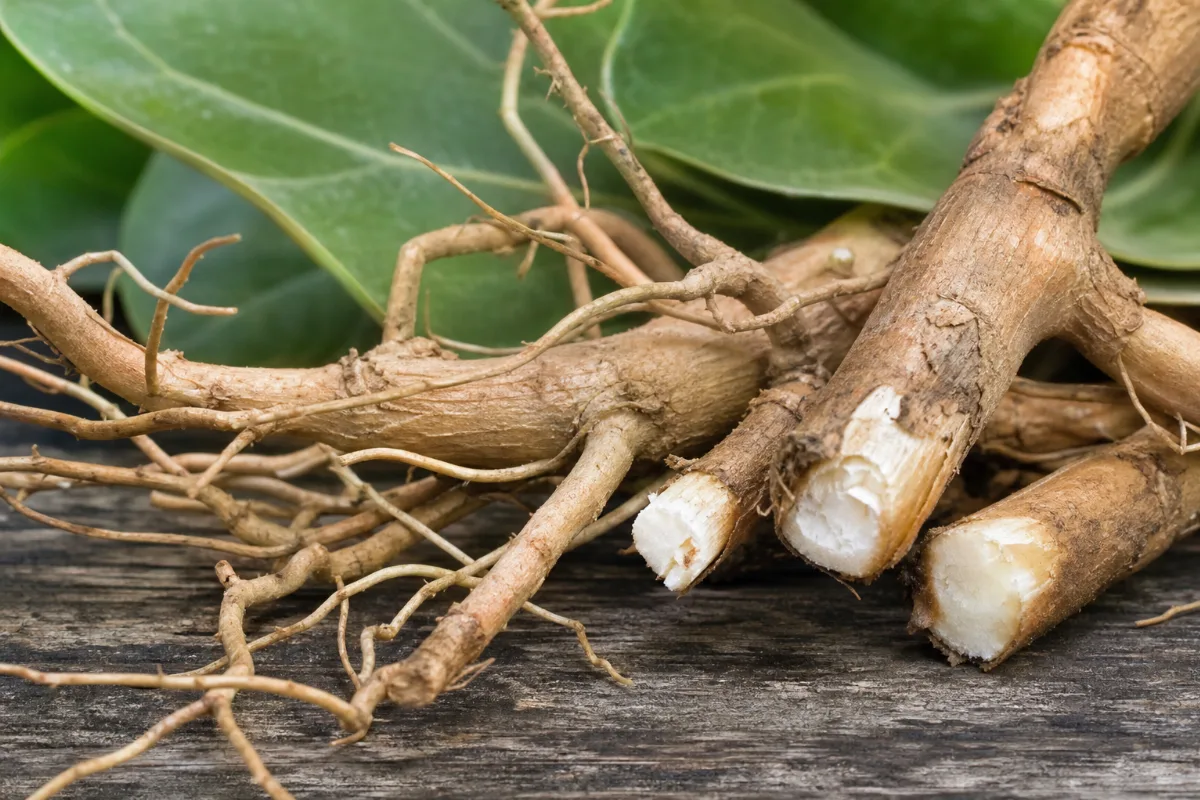
Herbs & Botanicals · Poisonous Ayurvedic milkweed
Calotropis
Calotropis gigantea · also called Giant milkweed, crown flower, arka, madar
Calotropis is a milkweed shrub used in Ayurveda and other traditions, and every part is poisonous. Its milky latex can injure the eye, and swallowing it can cause digoxin-like heart poisoning. It is also used in self-harm in South Asia. There is no safe way to use it yourself, and no human trial supports it.
General information, not medical advice. Last substantive update · Not medically reviewed. A named clinician has not signed off on this page. How this page is made
About Calotropis
Calotropis is a milkweed shrub whose latex and cardenolide heart poisons make it dangerous to the eye and the heart. It has traditional uses, but no human trial supports taking it, and no safe amount is known.
Safety first
Do not swallow, chew, brew or smear any part of Calotropis, and keep the milky latex away from eyes, mouth and skin. All parts are toxic and contain digoxin-like cardenolides.
Eye: in a hospital series of 29 eyes, all had a swollen cornea, 7 had glaucoma, and 74% of those checked at 3 months had lasting cell loss at the back of the cornea. Most eyes recovered in days to weeks with treatment, but one case report found permanent cell loss. A large Indian eye network saw 362 patients in ten years. Get urgent eye care after any contact.
Heart: a patient collapsed after swallowing the plant and applying it to the skin after a snakebite. Rats and sheep had rhythm problems and heart and liver damage. We did not read a source that counts deaths from this plant, though poisoning of this type can be fatal.
Mouth and skin: latex on the gum caused a chemical burn. Self-harm: in one rural Indian hospital, swallowing calotropis was the second most common method of suicide attempt. If you or someone you know is at risk, call or text 988 in the US, or your local emergency number.
If any was swallowed or the latex got in an eye, call emergency services and poison control (US 1-800-222-1222). This page gives no doses and no preparations.
What it is
Calotropis gigantea (giant milkweed, crown flower, arka, madar) is a shrub in the dogbane family, Apocynaceae. A sister species, Calotropis procera (Apple of Sodom), has the same milky latex. Many of the eye and animal studies here used C. procera, and each is labelled.
The plant makes cardenolides such as calotropin, calactin and uscharin. They act on the same cell pump as the heart medicine digoxin. In lab tests, compounds from C. gigantea matched digoxin in strength, which helps explain both the poisoning and the interest in cancer research.
Traditional uses and what research shows
A review says traditional systems use the root, leaf, flower and latex for skin disease, breathing and digestive complaints, and reproductive conditions. These uses were not traced to original texts, and no trial in people backs them.
Cancer research is cell and rat work on stem-bark extracts and calotropin. Two tiny human studies used manufactured C. procera products: a purified-protein dressing for leprosy foot ulcers (23 people) and a children's mouthrinse (60 children). Neither shows the plant is safe or useful. In rats, a root extract ended early pregnancy; this is a warning, not a use.
Interactions
The plant's cardenolides act on the same target as digoxin, so combining it with digoxin or other heart medicines could be dangerous. No study tested this, so the size of the risk is unknown. Ask a pharmacist or doctor about your own medicines.
Pregnancy, breastfeeding and children
Do not use in pregnancy: a root extract ended early pregnancy in rats, and no human data exist. No breastfeeding data were found. Children can be hurt by latex in the eye; treat any contact as urgent.
Regulatory status
We did not open an EMA/HMPC, FDA, NCCIH, LiverTox, LactMed, WHO or Indian pharmacopoeia entry for Calotropis, so their positions are not verified. We found no approved herbal product.
At a glance
Traditional uses history, not proof
- Traditional use for skin disease, asthma, digestive complaints and reproductive conditions (not a recommended use)
Studied for research
- Plant, root bark, flower or latex as a remedy: against (poisoning and injury)
- Cancer-cell research (stem bark, calotropin): very low (lab and animal only)
- Latex-protein dressing for leprosy foot ulcers: very low (23 people, product not plant)
- C. procera mouthrinse in children: very low (60 children, no gain over comparison rinses)
- Traditional use for skin, asthma, digestion: insufficient
Main compounds
- Calotropin
- Calactin
- Uscharin
Common forms
- Root, root bark, leaf and flower (traditional)
- Milky latex (injures eyes, mouth and skin)
- Stem-bark and leaf extracts (lab research)
- Purified latex-protein dressing and mouthrinse (trial products, not the plant)
Research links: Calotropis poisoning with severe cardiac toxicity (PubMed) · Ocular toxicity by latex of Calotropis procera (PubMed) · Eye poisoning across an Indian hospital network (PubMed) · Calotropis gigantea review (PubMed) · Research Library · Genes & Biomarkers Library
The plant and its history
- Accepted scientific name
- Calotropis gigantea (L.) W.T.Aiton
- Naming authority
- GBIF species match, read 2026-10-25: ACCEPTED (key 3579089). C. procera (Aiton) W.T.Aiton also ACCEPTED (key 5414566).
- Common names
- Giant milkweed (English); Crown flower (English); Arka (Sanskrit/Hindi); Madar (Hindi); Apple of Sodom (C. procera) (English); Ushaar (C. procera) (Arabic)
- Botanical family
- Apocynaceae (dogbane family), order Gentianales
- Classification
- Plantae > Apocynaceae > Calotropis > Calotropis gigantea
- Native range
- Tropical Asia and Africa; a widespread weed in India (the case report calls Calotropis widely prevalent in the Indian subcontinent). Not verified further.
- Habitat
- Roadsides and waste ground in warm regions (not verified in a source read).
- What the plant looks like
- Roots: Root used traditionally; not described in a source read.; Stems: Stem bark extracts studied in labs.; Leaves: Leaf extracts studied in labs.; Flowers: Flowers used in garlands and as offerings (per review).; Fruit: Fruit fibre used for ropes and weaving (per review).
- Cultivation
- Not covered.
- Harvest and processing
- Not covered.
- Look-alikes and adulterants
- Name: Calotropis procera; Note: A sister species with the same milky latex and cardenolides. Most eye-injury and rat studies cited here used C. procera, not C. gigantea.; Name: Other milkweeds (e.g. Asclepias curassavica); Note: Contain calotropin per a review; treat as poisonous.
- Sustainability and conservation
- Not covered.
Traditional use and history history, not clinical proof
| Tradition or era | Documented use | Source |
|---|---|---|
| Indian and other traditional medicine | A 2013 review says the plant is used for nervous-system, skin, digestive, breathing and reproductive conditions. The review did not trace these to original texts, and the claims are NOT verified here. | p24012528 |
Traditional use shows how a plant was used. It does not show that a supplement works or is safe today.
What is inside, and how it may work
What the plant contains and how those compounds act in cells and animals. Laboratory and animal mechanisms are not proven effects in people.
Main compounds
| Compound | Family | Where it is concentrated | Activity studied | Level of evidence |
|---|---|---|---|---|
| Calotropin PubChem 16142 | cardenolide (cardiac glycoside) | Measured in C. gigantea stem bark extract | Digoxin-like; potent cell poison; studied in cancer cells. 20 14 12 | Lab |
| Calactin PubChem 441849 | cardenolide | Measured in stem bark fractions | Studied with calotropin in cancer research. 16 12 | Lab |
| Uscharin PubChem 11261800 | cardenolide (contains sulfur and nitrogen) | Not stated in sources read | Named as a plant cardenolide in the request; not described in a source read. 12 | Insufficient |
| Other cardenolides (23 isolated from C. gigantea) | cardenolide | Not stated | Blocked a cancer-cell signal; one matched digoxin in strength. 21 | Lab |
Mechanisms, receptors and pathways
| Target or pathway | Gene or receptor | What was found | Level |
|---|---|---|---|
| Heart rhythm and conduction | Na+/K+-ATPase (the cell sodium-potassium pump), the digoxin target | The case report says the plant has digoxin-like effects, and animals showed rhythm problems and heart damage. 6 22 1 | Human data |
| Cancer-cell survival (HIF-1, apoptosis, ATP, reactive oxygen) | HIF-1 | Isolated cardenolides blocked HIF-1; extracts triggered cell death in colon and liver cancer cells. 21 20 16 | Lab |
| Corneal endothelium (back layer of the cornea) | Not studied | Latex penetrates the cornea and kills cells at its back layer, causing swelling and lasting cell loss. 4 3 | Human data |
Absorption, metabolism and elimination
- Absorption
- Not covered. Swallowing and skin use both preceded toxicity in one case report.
- Distribution
- Not covered.
- Metabolism
- Not covered.
- Elimination
- Not covered.
- Bioavailability
- Not covered.
Isolated compounds versus whole extracts
Lab studies use concentrated fractions and isolated cardenolides; the human trials use manufactured products (purified latex-protein dressing, mouthrinse). None is the raw plant or latex, which causes injury.
Nutritional composition
Not a nutrient and not a food. Do not eat or drink any part.
5 very low certainty1 not enough evidence1 evidence against
What is Calotropis good for?
The plant has no tested benefit. What you may read about Calotropis for skin, asthma, digestion or cancer comes from traditional claims, lab work, and two small trials of manufactured products. Each is rated honestly below. They are not a recommendation.
Benefits, one by one
Each card is a research question, not a promise. Tap a goal to filter. Open a card to see the studies, doses and limits.
Cancer-cell research on stem-bark extracts and calotropin (laboratory and animal only)
Very low certaintyIn dishes and in rats, concentrated C. gigantea extracts and its compound calotropin killed cancer cells. No person has been treated in a trial, and the same compounds are the heart poisons.
4 studiesNot applicable. No amount, preparation or way of using Calotropis is …
Studies, doses and limits
What the trials found
No human data. Cell lines and rats only.
Results
Colon cancer cells: the dichloromethane fraction of stem-bark extract was strongest, and with 5-fluorouracil killed more cells. Liver cancer: with doxorubicin it killed more cells, and in rats with chemically induced liver cancer it slowed progression over 4 weeks. 23 isolated cardenolides blocked a cancer-cell signal (HIF-1), the best matching digoxin.
Effect sizes as reported
None reported for people.
Why this rating
Cell and rat findings often fail in people, the extracts are concentrated fractions, and the active compounds are the poisons that harm the heart.
Form and dose studied
Not applicable. No amount, preparation or way of using Calotropis is given or recommended on this page.
Who was studied
Not applicable (laboratory).
Limits
Cells and rats only. Fractions are lab products, not the plant or latex.
Why researchers looked
Calotropin and related cardenolides are potent cell poisons, so researchers test them as cancer-drug leads, as digoxin-like drugs have been tested.
Traditional use
Used in traditional medicine for tumours and swellings according to a review; not traced to original sources.
Proposed mechanism Pharmacological theory
The plant makes cardenolides (calotropin, calactin, uscharin). These block the sodium-potassium pump in heart and other cells, the same target as digoxin. Compounds from C. gigantea matched digoxin in strength in lab tests.
A proposed mechanism does not show that the effect happens in people.
Every part of Calotropis is poisonous and the milky latex can injure the eye. See the Safety tab first. Do not use it. If any was swallowed or got in the eye, get emergency help now.
Traditional use for skin disease, asthma and digestive complaints
Not enough evidenceMany traditional systems use different parts of the plant for skin problems, breathing complaints and stomach upset. We found no trial in people supporting any of these uses of the plant.
1 studiesNot applicable. No amount, preparation or way of using Calotropis is …
Studies, doses and limits
What the trials found
No human trial of the plant was found for skin disease, asthma or digestion.
Results
The review is a narrative summary of lab and animal work; it reports the traditional uses and says many were supported in animals. Our abstract-only reading cannot rate the quality of those animal studies.
Effect sizes as reported
None for people.
Why this rating
No human trials of the plant for these conditions were found, and the plant is poisonous.
Form and dose studied
Not applicable. No amount, preparation or way of using Calotropis is given or recommended on this page.
Who was studied
Not applicable.
Limits
Narrative review of lab and animal work, abstract only.
Why researchers looked
A 2013 review lists these traditional uses and says lab and animal studies support some of them.
Traditional use
Root bark, leaf, flower and latex are used in Ayurveda and other systems (per the review; not traced to original texts).
Proposed mechanism Preliminary mechanism
Unclear. Lab studies point to anti-inflammatory and other effects, but the cardenolides that may cause these effects also cause the toxicity.
A proposed mechanism does not show that the effect happens in people.
Every part of Calotropis is poisonous and the milky latex can injure the eye. See the Safety tab first. Do not use it. If any was swallowed or got in the eye, get emergency help now.
Taking the plant, root bark, flower or latex as a remedy
Evidence againstNo evidence supports swallowing Calotropis or putting it on the skin or eyes. The human reports we read describe poisoning, eye injury and burns.
8 studiesNot applicable. No amount, preparation or way of using Calotropis is …
Studies, doses and limits
What the trials found
No trial of the plant exists. Case reports, a hospital series and a hospital eye network describe harm.
Results
Cardiovascular collapse after swallowing and skin use (1 patient). Eye injury in 29 eyes and in 362 patients. Gum burn from latex. Swallowing calotropis was the second most common method in one rural hospital's suicide-attempt cases.
Effect sizes as reported
None.
Why this rating
The only human evidence is harm. No safe way to use the plant has been shown.
Form and dose studied
Not applicable. No amount, preparation or way of using Calotropis is given or recommended on this page.
Who was studied
Anyone. Children, pregnant women and people with heart disease or on heart medicines are at special risk.
Limits
Case reports and series cannot say how often harm happens. Species differs between reports (mostly C. procera for eye injury).
Why researchers looked
The plant is used in traditional medicine, so people try it; the research on people is poisoning and injury reports.
Traditional use
Traditional healers use many parts; one traditional use on a snakebite was followed by heart collapse.
Proposed mechanism Pharmacological theory
The plant makes cardenolides (calotropin, calactin, uscharin). These block the sodium-potassium pump in heart and other cells, the same target as digoxin. Compounds from C. gigantea matched digoxin in strength in lab tests.
A proposed mechanism does not show that the effect happens in people.
Every part of Calotropis is poisonous and the milky latex can injure the eye. See the Safety tab first. Do not use it. If any was swallowed or got in the eye, get emergency help now.
Latex-protein wound dressing for leprosy foot ulcers (C. procera, manufactured product)
Very low certaintyIn a very small trial in Brazil, a dressing made with purified latex proteins healed most leprosy foot ulcers in 56 days. This is not raw latex and not the plant, and the trial was tiny.
1 studiesNot applicable. No amount, preparation or way of using Calotropis is …
Studies, doses and limits
What the trials found
Clinical trial of 23 adults with leprosy-related foot ulcers; the abstract does not describe random assignment or blinding.
Results
About 88% of ulcers in the membrane group healed fully before day 56, against 6% in each control group (silver sulfadiazine or plain hydrocolloid dressings). No noticeable side effects were reported.
Effect sizes as reported
88% vs 6% fully healed.
Why this rating
Only 23 people, uneven groups, no clear randomisation or blinding, one research group, not independently repeated.
Form and dose studied
Not applicable. No amount, preparation or way of using Calotropis is given or recommended on this page.
Who was studied
Adults with leprosy-related chronic foot ulcers.
Limits
A purified-protein dressing, not the plant or raw latex. Do not apply raw latex to wounds.
Why researchers looked
Researchers tested a purified-protein membrane after lab and animal wound-healing work.
Traditional use
Latex is used on wounds traditionally; raw latex burns the eye and mouth lining (see Safety).
Proposed mechanism Preliminary mechanism
Not established. The researchers attribute healing to the latex proteins, based on earlier animal work.
A proposed mechanism does not show that the effect happens in people.
Every part of Calotropis is poisonous and the milky latex can injure the eye. See the Safety tab first. Do not use it. If any was swallowed or got in the eye, get emergency help now.
Herbal mouthrinse made from a C. procera extract in children
Very low certaintyA small trial in children found the Calotropis rinse reduced plaque, but no more than the other rinses. It raised saliva pH and tasted better.
1 studiesNot applicable. No amount, preparation or way of using Calotropis is …
Studies, doses and limits
What the trials found
Randomised, double-blind trial, 60 children aged 9-12, 14 days, registered (CTRI).
Results
Plaque fell in all three groups; no difference between groups in plaque or gum scores. Saliva pH rose with the Calotropis rinse.
Effect sizes as reported
No difference in plaque or gum scores between rinses.
Why this rating
Small, short, children, the extract is a researcher-made product, and no benefit beyond the comparison rinses was shown. It does not show the plant is safe for children.
Form and dose studied
Not applicable. No amount, preparation or way of using Calotropis is given or recommended on this page.
Who was studied
Healthy children 9-12 years.
Limits
Abstract only. Funding not read.
Why researchers looked
Researchers wanted a herbal rinse with fewer side effects than chlorhexidine.
Traditional use
Not applicable.
Proposed mechanism Preliminary mechanism
Not tested in the trial.
A proposed mechanism does not show that the effect happens in people.
Every part of Calotropis is poisonous and the milky latex can injure the eye. See the Safety tab first. Do not use it. If any was swallowed or got in the eye, get emergency help now.
Root extract ending early pregnancy (rat study)
Very low certaintyIn rats, C. gigantea root extract prevented pregnancy when given right after mating. This is an animal finding and a warning, not a use. No human study was found.
2 studiesNot applicable. No amount, preparation or way of using Calotropis is …
Studies, doses and limits
What the trials found
No human data.
Results
In rats, the root ethanolic extract gave 100% pregnancy interception when given early after mating.
Effect sizes as reported
100% interception in rats.
Why this rating
Animal only; says nothing about safety or effect in women.
Form and dose studied
Not applicable. No amount, preparation or way of using Calotropis is given or recommended on this page.
Who was studied
Not applicable (rats).
Limits
Rats only; not a recommendation of any kind.
Why researchers looked
Traditional use against pregnancy is reported in the literature; we found no source that confirms it for people.
Traditional use
Root is traditionally linked to reproductive use (per the review); not verified in an original source.
Proposed mechanism Preliminary mechanism
The root extract acted in rats; estrogen-like and anti-estrogen effects were also tested.
A proposed mechanism does not show that the effect happens in people.
Every part of Calotropis is poisonous and the milky latex can injure the eye. See the Safety tab first. Do not use it. If any was swallowed or got in the eye, get emergency help now.
Leaf extract antioxidant and antimicrobial test-tube activity
Very low certaintyIn test tubes, leaf extracts had antioxidant and some germ-killing activity. This is lab chemistry and does not show any benefit in people.
1 studiesNot applicable. No amount, preparation or way of using Calotropis is …
Studies, doses and limits
What the trials found
No human data.
Results
Antioxidant and antimicrobial activity in test tubes. A blood-cell damage test was also run.
Effect sizes as reported
None.
Why this rating
Test tube only.
Form and dose studied
Not applicable. No amount, preparation or way of using Calotropis is given or recommended on this page.
Who was studied
Not applicable (laboratory).
Limits
Test tube only.
Why researchers looked
Researchers screen traditional plants for activity.
Traditional use
Leaf is used traditionally; claims not traced to original texts.
Proposed mechanism Preliminary mechanism
Phenols, flavonoids and cardiac glycosides were found in the extracts.
A proposed mechanism does not show that the effect happens in people.
Every part of Calotropis is poisonous and the milky latex can injure the eye. See the Safety tab first. Do not use it. If any was swallowed or got in the eye, get emergency help now.
Connections to the rest of health
How Calotropis connects to the rest of our health knowledge graph. Every link says what kind of connection it is. A safety link (for example to the liver) is a warning, not a benefit. A study that merely mentions a topic never creates a benefit link.
Explore every connection: goals, body systems, organs, symptoms, genes
A. Wellness goals
| Connected to | Kind of connection | Evidence status | Context | Studies |
|---|---|---|---|---|
| Cellular Protection | Very low certainty | Cancer-cell research on stem-bark extracts and calotropin (laboratory and animal only): In dishes and in rats, concentrated C. gigantea extracts and its compound calotropin killed cancer cells. No person has been treated in a trial, and the same compounds are the heart poisons. | 20 16 21 14 | |
| Healthy Skin | Traditional use | Not enough evidence | Traditional use for skin disease, asthma and digestive complaints: Many traditional systems use different parts of the plant for skin problems, breathing complaints and stomach upset. We found no trial in people supporting any of these uses of the plant. | 8 |
| Breathing Support | Traditional use | Not enough evidence | Traditional use for skin disease, asthma and digestive complaints: Many traditional systems use different parts of the plant for skin problems, breathing complaints and stomach upset. We found no trial in people supporting any of these uses of the plant. | 8 |
| Digestive Support | Traditional use | Not enough evidence | Traditional use for skin disease, asthma and digestive complaints: Many traditional systems use different parts of the plant for skin problems, breathing complaints and stomach upset. We found no trial in people supporting any of these uses of the plant. | 8 |
| Heart Health | Adverse effect or risk | Evidence against | Taking the plant, root bark, flower or latex as a remedy: No evidence supports swallowing Calotropis or putting it on the skin or eyes. The human reports we read describe poisoning, eye injury and burns. | 6 4 15 11 3 2 19 9 |
| Healthy Skin | Very low certainty | Latex-protein wound dressing for leprosy foot ulcers (C. procera, manufactured product): In a very small trial in Brazil, a dressing made with purified latex proteins healed most leprosy foot ulcers in 56 days. This is not raw latex and not the plant, and the trial was tiny. | 10 | |
| Preventive Wellness | Very low certainty | Herbal mouthrinse made from a C. procera extract in children: A small trial in children found the Calotropis rinse reduced plaque, but no more than the other rinses. It raised saliva pH and tasted better. | 18 | |
| Womens Wellness | Very low certainty | Root extract ending early pregnancy (rat study): In rats, C. gigantea root extract prevented pregnancy when given right after mating. This is an animal finding and a warning, not a use. No human study was found. | 17 8 | |
| Immune Support | Very low certainty | Leaf extract antioxidant and antimicrobial test-tube activity: In test tubes, leaf extracts had antioxidant and some germ-killing activity. This is lab chemistry and does not show any benefit in people. | 7 |
B. Body systems
| Connected to | Kind of connection | Evidence status | Context | Studies |
|---|---|---|---|---|
| Reproductive health | Adverse effect or risk | Animal only | Ended early pregnancy in rats; testis damage and lower testosterone in male rats. Preparation or compound: Root extract; latex and leaf extract |
17 1 |
| Immune System | Biological association | Very low certainty | Studied for: Cancer-cell research on stem-bark extracts and calotropin (laboratory and animal only) Studied for: Leaf extract antioxidant and antimicrobial test-tube activity | 20 16 21 14 7 |
| Skin Hair Beauty | Biological association | Not enough evidence | Studied for: Traditional use for skin disease, asthma and digestive complaints Studied for: Latex-protein wound dressing for leprosy foot ulcers (C. procera, manufactured product) | 8 10 |
| Respiratory Health | Biological association | Not enough evidence | Studied for: Traditional use for skin disease, asthma and digestive complaints | 8 |
| Digestive System | Biological association | Not enough evidence | Studied for: Traditional use for skin disease, asthma and digestive complaints Studied for: Herbal mouthrinse made from a C. procera extract in children | 8 18 |
| Heart Circulation | Biological association | Evidence against | Studied for: Taking the plant, root bark, flower or latex as a remedy | 6 4 15 11 3 2 19 9 |
| Reproductive Health | Biological association | Very low certainty | Studied for: Root extract ending early pregnancy (rat study) | 17 8 |
C. Body parts and organs
| Connected to | Kind of connection | Evidence status | Context | Studies |
|---|---|---|---|---|
| Heart | Adverse effect or risk | Documented | Cardiovascular collapse in a case report; rhythm problems and heart damage in animals. Preparation or compound: Cardenolides (calotropin, calactin, uscharin) |
6 22 1 |
| Eye | Adverse effect or risk | Documented | Corneal swelling, glaucoma and lasting cell loss. Preparation or compound: Latex |
4 15 11 3 2 |
L. Active compounds
| Connected to | Kind of connection | Evidence status | Context | Studies |
|---|---|---|---|---|
| Calotropin | Biological association | Lab | Digoxin-like; potent cell poison; studied in cancer cells. Preparation or compound: Measured in C. gigantea stem bark extract |
20 14 12 |
| Calactin | Biological association | Lab | Studied with calotropin in cancer research. Preparation or compound: Measured in stem bark fractions |
16 12 |
| Uscharin | Biological association | Not enough evidence | Named as a plant cardenolide in the request; not described in a source read. Preparation or compound: Not stated in sources read |
12 |
| Other cardenolides (23 isolated from C. gigantea) | Biological association | Lab | Blocked a cancer-cell signal; one matched digoxin in strength. Preparation or compound: Not stated |
21 |
Each connection is stored with the ingredient, the connected record, the kind of connection, the evidence status, the supporting studies, the preparation or compound involved, and a review date (last reviewed October 25, 2026).
The evidence
The research centre for Calotropis. Every record here was checked against PubMed or the publisher's page; we never list a study we have not verified.
Evidence by outcome
Bars show how many studies we found for each outcome, not how well it works. People are added up across trials only (reviews are not added, to avoid double counting).
How we rate evidence
High certainty
Several well-run trials or reviews agree; further research is unlikely to change the picture much.
Moderate certainty
Good trials point the same way, but some doubt remains.
Low certainty
Small, short or inconsistent trials. The finding could change with better research.
Very low certainty
Very little or very weak human data. Treat as a possibility only.
Mixed findings
Trials or reviews disagree with each other.
Not enough evidence
Not enough human research to say either way.
Evidence against
Good research found no benefit, or found harm.
We take the reviewers' own risk-of-bias and GRADE statements where they exist, and otherwise judge from study size, design, consistency, directness and whether a product matches what is sold. Many publications do not make evidence high. Method note: We read our existing herb summary, read the abstract of each PubMed record cited, and checked names in GBIF and compounds in PubChem. Pages that could not be opened are marked not verified.
Study library: every study we checked 22
| Study | Design | People | Product, dose, length | Result |
|---|---|---|---|---|
| Ahmed 2016 Cardiac and testicular toxicity effects of the latex and ethanolic leaf extract of Calotropis procera on male albino rats in comparison to abamectin SpringerPlus · PMID 27722062 · DOI |
Animal study animal |
Male rats | Calotropis procera latex and ethanolic leaf extract by mouth for 4 and 8 weeks latex; leaf Not given here Not given here |
Heart enzymes rose, antioxidant defences fell, and heart and testis tissue was damaged; testosterone, FSH and LH fell, in a dose- and time-dependent way. Effects were similar to the comparison poison abamectin. Methods, limits and fundingOutcomes: Heart and testis damage Limitations: Rats only; one species of Calotropis (procera); mechanism not tested. Read: abstract |
| Al Ghadeer 2019 Corneal Toxicity after Self-Application of Calotropis procera (Ushaar) Latex: Case Report and Analysis of the Active Components Middle East Afr J Ophthalmol · PMID 31114124 · DOI |
Case report |
1 74-year-old man (Saudi Arabia) |
Calotropis procera latex put on the eye latex Not given here Not given here |
Painless loss of vision with corneal swelling and fewer cells at the back of the cornea. Vision improved from hand motion to 20/80 with steroid drops. Methods, limits and fundingOutcomes: Vision and corneal cells Limitations: One case. The paper also analysed latex components; that part was not read in detail. Read: abstract |
| Al-Mezaine 2005 Calotropis procera (ushaar) keratitis Am J Ophthalmol · PMID 15652855 · DOI |
Case report |
1 40-year-old patient (Saudi Arabia) |
Calotropis procera latex in the eye latex Not given here Not given here |
Painless corneal swelling that cleared in 2 weeks, but microscopy showed permanent loss of cells from the back of the cornea. The latex entered the cornea. Methods, limits and fundingOutcomes: Corneal cell loss Limitations: One case. Read: abstract |
| Basak 2009 Ocular toxicity by latex of Calotropis procera (Sodom apple) Indian J Ophthalmol · PMID 19384022 · DOI |
Case series |
29 29 eyes with accidental latex exposure (India, 2003-2006) |
Calotropis procera latex in the eye latex Not given here Not given here |
All eyes had redness and corneal swelling. 25 of 29 (86%) had vision worse than 20/60 at first. 9 (31%) had inflammation inside the eye and 7 (24%) had secondary glaucoma. With steroid and other eye treatment, 27 of 29 (93%) recovered within 3 to 14 days. At 3 months, 17 of 23 eyes (74%) had a lower cell count on the back of the cornea than the other eye. 27 of 29 eyes recovered fully within 3-14 days; 74% of 23 eyes showed lasting low endothelial cell count Methods, limits and fundingOutcomes: Vision, corneal swelling, recovery, corneal cell count Limitations: Small hospital series without a comparison group; species was C. procera, not C. gigantea; long-term effect on the cornea was not known. Read: abstract |
| GBIF 2026 GBIF species match: Calotropis gigantea and Calotropis procera api.gbif.org · Source |
Database record |
Name check | Plant names not applicable Not given here Not given here |
Calotropis gigantea (L.) W.T.Aiton: ACCEPTED, key 3579089, family Apocynaceae, order Gentianales. Calotropis procera (Aiton) W.T.Aiton: ACCEPTED, key 5414566, family Apocynaceae. Methods, limits and fundingOutcomes: Accepted names Limitations: Read 2026-10-25. Synonyms not reviewed. Read: full-text |
| Iyadurai 2020 Calotropis poisoning with severe cardiac toxicity: a case report J Family Med Prim Care · PMID 33110881 · DOI |
Case report |
1 One patient (India) bitten by a snake and treated by a traditional healer |
Calotropis plant material swallowed and applied to the skin not stated (plant material) Not given here Not given here |
The abstract says all parts of the plant are toxic, that it contains cardenolide glycosides with digoxin-like effects, and that the patient developed cardiovascular collapse after swallowing the plant and putting it on the skin. Methods, limits and fundingOutcomes: Cardiovascular collapse Limitations: One case. Only the abstract was read, so the outcome, treatment and species are not known to us. Read: abstract |
| Jamal 2025 Phytochemical Investigations and Pharmacological Potential of Organic Extracts of Calotropis gigantea L. Leaves Scientifica (Cairo) · PMID 40666498 · DOI |
Laboratory study lab |
Test-tube assays | C. gigantea leaf solvent extracts leaf Not given here Not given here |
Leaf extracts contained alkaloids, saponins, tannins, flavonoids, terpenoids and cardiac glycosides, and showed antioxidant and some antimicrobial activity in test tubes. A red-blood-cell damage test was also done. Methods, limits and fundingOutcomes: Chemistry, antioxidant and antimicrobial tests Limitations: Test tube only; no animal or human data. Read: abstract |
| Kadiyala 2013 Calotropis gigantiea (L.) R. Br (Apocynaceae): a phytochemical and pharmacological review J Ethnopharmacol · PMID 24012528 · DOI |
Narrative review mixed |
Published research on C. gigantea | Calotropis gigantea, various parts whole plant Not given here Not given here |
The review lists many traditional uses (skin disease, digestion, breathing, reproductive) and says laboratory and animal studies support many of them, including pain relief, anti-asthma, wound healing, ulcer and contraceptive effects. It also covers toxicity. Methods, limits and fundingOutcomes: Uses and toxicity overview Limitations: Review of lab and animal work. Only the abstract was read; it does not show human evidence, and the quality of the original studies was not assessed. Read: abstract |
| Kosaraju 2015 Risk factors for suicidal attempts among lower socioeconomic rural population of Telangana region Indian J Psychol Med · PMID 25722509 |
Cross sectional |
All suicide-attempt cases at one rural hospital (India), Jan-Jul 2013 | Self-poisoning not applicable Not given here Not given here |
The abstract states the most common method was organophosphorus poisoning, followed by swallowing calotropis. Young married women, daily labourers and people with depression or alcohol problems were most affected. Methods, limits and fundingOutcomes: Methods of self-harm Limitations: One hospital over 7 months; the abstract does not give counts for calotropis or say which species. Read: abstract |
| Nunes 2024 Healing of leprosy-associated chronic plantar wounds with a novel biomembrane containing latex proteins from Calotropis procera Braz J Biol · PMID 39292137 · DOI |
Clinical trial |
23 23 adults with leprosy-related foot ulcers (Brazil); 28 started and 5 were excluded |
A dressing membrane holding purified latex proteins (not raw latex) from Calotropis procera, versus silver sulfadiazine or plain hydrocolloid dressings latex proteins in a manufactured dressing Not given here Not given here |
15 ulcers got the latex-protein membrane for 56 days; 5 got silver sulfadiazine and 3 got hydrocolloid dressings. About 88% of ulcers in the membrane group healed fully before day 56, against 6% in both control groups. No noticeable side effects were reported. About 88% healed (membrane) vs 6% (each control group) Methods, limits and fundingOutcomes: Ulcer healing by day 56 Limitations: Very small. The abstract does not say participants were randomly assigned or blinded, and group sizes are uneven. A purified-protein dressing made by the researchers, not the plant or raw latex; do not generalise. Funding not read. Read: abstract |
| Prabhudesai 2024 From Temple to Emergency Room: A Chemical Injury Case Report Cureus · PMID 38974399 · DOI |
Case report |
1 30-year-old man (India) |
Calotropis sap in the right eye latex Not given here Not given here |
Blurred vision, foreign-body feeling and light sensitivity with a swollen cornea. Vision started at 6/18 and, after two months of eye drops and antibiotics, returned to 6/6. Methods, limits and fundingOutcomes: Vision recovery Limitations: One case; treated promptly. Read: abstract |
| PubChem 2026 PubChem: calotropin, calactin, uscharin pubchem.ncbi.nlm.nih.gov · Source |
Database record |
Compound record check by name | Compounds not applicable Not given here Not given here |
Calotropin CID 16142 (C29H40O9); calactin CID 441849 (C29H40O9); uscharin CID 11261800 (C31H41NO8S). Methods, limits and fundingOutcomes: IDs and formulas Limitations: Matched by name only. Read: full-text |
| Rajapakse 2009 Management of yellow oleander poisoning Clin Toxicol (Phila) · PMID 19306191 · DOI |
Narrative review |
Patients poisoned with yellow oleander seeds (a different plant with similar cardiac glycosides) | Yellow oleander (Thevetia peruviana) seeds seed Not given here Not given here |
The review says such poisoning follows deliberate self-harm in South Asia, causes slow and fast rhythm problems, needs at least 24 hours of heart monitoring, and that both low and high blood potassium worsen toxicity. Methods, limits and fundingOutcomes: Management of plant glycoside poisoning Limitations: A different plant. Used only as a picture of how plant cardiac-glycoside poisoning is handled; not shown to apply to Calotropis. Read: abstract |
| Rajkovic 2023 An updated pharmacological insight into calotropin as a potential therapeutic agent in cancer Front Pharmacol · PMID 37138852 · DOI |
Narrative review mixed |
Preclinical studies of calotropin | Calotropin, a compound from Calotropis and related milkweeds isolated compound Not given here Not given here |
The review says calotropin is a highly potent cardenolide with a structure like digoxin and digitoxin, and that tests in cells and animals show anti-cancer effects. The authors call it a potential adjunct agent. Methods, limits and fundingOutcomes: Overview of lab cancer research Limitations: All evidence is cell or animal. The review states no human trial. Read: abstract |
| Rathi 2021 Demographics and clinical profile of patients with ocular Calotropis poisoning in India Indian J Ophthalmol · PMID 34427234 · DOI |
Cross sectional |
362 362 new patients (408 eyes) among 2,047,360 seen at an eye-hospital network in India, 2010-2020 |
Calotropis latex in the eye latex Not given here Not given here |
362 patients (0.018% of new patients) were diagnosed. 87.29% had one eye affected. Of 408 eyes, 49.26% had mild and 23.28% had moderate loss of vision at first visit. Common signs were redness (61%), folds in the inner corneal layer (57%), corneal swelling (30%) and a surface defect (25%). 0.018% of new eye-clinic patients; about one in four eyes had moderate vision loss at presentation Methods, limits and fundingOutcomes: Who is affected and how severely Limitations: Hospital records; species not always given; outcome after treatment is not in the abstract. Read: abstract |
| Sawong 2022 Calotropis gigantea stem bark extracts inhibit liver cancer induced by diethylnitrosamine Sci Rep · PMID 35840761 · DOI |
Animal study animal |
Liver cancer cells and rats with chemically induced liver cancer | C. gigantea stem bark dichloromethane fraction, with and without doxorubicin stem bark Not given here Not given here |
In cells the fraction plus doxorubicin killed more liver cancer cells. In rats, 4 weeks of treatment lowered the liver-to-body-weight ratio and slowed cancer progression. Methods, limits and fundingOutcomes: Cancer progression in rats Limitations: Rats and cells only. Fractions contain concentrated cardenolides; this is not the plant. Read: abstract |
| Srivastava 2007 Pregnancy interceptive activity of the roots of Calotropis gigantea Linn. in rats Contraception · PMID 17362713 · DOI |
Animal study animal |
Female rats | Calotropis gigantea root ethanolic extract and fractions by mouth root Not given here Not given here |
In rats the root extract stopped pregnancy in 100% of animals when given in the first days after mating. The abstract also reports tests for estrogen-like and anti-estrogen effects. Methods, limits and fundingOutcomes: Pregnancy prevention Limitations: Rats only; no human study. Shows the root can end early pregnancy in rats, not that it is safe or effective in people. Read: abstract |
| Valke 2025 Assessment of the Efficacy of Alstonia scholaris, Calotropis procera, and Chlorhexidine Mouthrinses on Oral Health of Children Aged 9-12 Years: A Randomized Clinical Trial Int J Clin Pediatr Dent · PMID 41509963 · DOI |
Clinical trial |
60 60 children aged 9-12 years (India) |
Mouthrinse made from a Calotropis procera extract, versus an Alstonia scholaris rinse and chlorhexidine extract (part not stated) Not given here Not given here |
Double-blind randomised trial, 14 days. Dental plaque fell in all three groups. There was no difference between groups in plaque or gum scores. The Calotropis group had a rise in saliva pH and better taste acceptance than the others. No difference in plaque or gum scores between groups Methods, limits and fundingOutcomes: Plaque, gum score, saliva pH Limitations: Small, short, children; a rinse that is spat out. The extract is a researcher-made product, not safe-use evidence for the plant. Abstract only; funding not read. Registration: CTRI/2024/06/068874 Read: abstract |
| Velraj 2026 Oral injury from Calotropis procera: A case report on inadvertent gingival damage Clin Adv Periodontics · PMID 40719673 · DOI |
Case report |
1 49-year-old woman |
Calotropis procera latex put on the gum latex Not given here Not given here |
A chemical burn of the gum and mouth lining after direct application of latex. It healed fully by 3 months of follow-up. Methods, limits and fundingOutcomes: Burn and recovery Limitations: One case. Read: abstract |
| Winitchaikul 2021 Calotropis gigantea stem bark extract induced apoptosis related to ROS and ATP production in colon cancer cells PLoS One · PMID 34343190 · DOI |
Laboratory study lab |
Human colon cancer cell lines and normal fibroblasts | C. gigantea stem bark ethanol extract, dichloromethane fraction, with and without 5-fluorouracil stem bark Not given here Not given here |
Fractions killed colon cancer cells in dishes. The dichloromethane fraction was strongest, and with 5-fluorouracil it killed more cells. Calotropin was measured. Normal skin-type cells were less affected. Methods, limits and fundingOutcomes: Cancer-cell death Limitations: Cultured cells only. No animal or human data in this paper. Read: abstract |
| Zheng 2021 Non-classical cardenolides from Calotropis gigantea exhibit anticancer effect as HIF-1 inhibitors Bioorg Chem · PMID 33626453 · DOI |
Laboratory study lab |
Cancer and normal cell lines | 23 cardenolides isolated from C. gigantea isolated compounds Not given here Not given here |
Most blocked a cancer-cell signal (HIF-1), and the best matched digoxin in strength. Two killed cancer cell lines more than normal ones. Methods, limits and fundingOutcomes: HIF-1 inhibition Limitations: Cell lines only. Shows these compounds are digoxin-strength in the lab, which is also why they are poisonous. Read: abstract |
| de Lima 2011 Clinical and pathological effects of Calotropis procera exposure in sheep and rats Toxicon · PMID 21087619 |
Animal study animal |
Sheep and rats | Calotropis procera leaves (sheep, by stomach tube) and latex (rats, injected into the belly) leaf; latex Not given here Not given here |
Rats given the highest latex dose died; the others did not. Heart-muscle and liver damage were seen. Sheep fed leaves had fast heartbeat and temporary rhythm problems, and swelling of the lungs and heart sac at the highest doses. The authors call the plant cardiotoxic and liver-toxic. Methods, limits and fundingOutcomes: Heart and liver damage Limitations: Animal study; injection is not the way people are exposed; small groups. Read: abstract |
What we do not know yet
- No trial of the plant, root bark or raw latex in any condition.
- No human cancer trial of any Calotropis extract.
- No Calotropis-specific series counting poisoning deaths was read.
- No pregnancy, breastfeeding or liver data in people.
- EMA/HMPC, NCCIH, LiverTox, LactMed and WHO not checked.
How new research is added
New studies are found by a saved PubMed search and placed in a review queue. A person reads each one before it changes any rating or safety wording.
Lab markers
What changed in blood or saliva tests during trials. A changed number is not the same as feeling or being healthier, and we give no "normal ranges".
Safety
What studies and official sources say about side effects, medicines and who should check first. Each point shows what kind of evidence it comes from.
Main points to know 7
- The milky latex can seriously injure the eye. A hospital series (C. procera) found corneal swelling in all 29 eyes, secondary glaucoma in 7, and lasting low cell counts at the back of the cornea in 74% of those checked at 3 months. One case report found permanent loss of corneal cells. Most eyes recovered with treatment in days to weeks, but vision loss and lasting damage are possible. A large eye-hospital network saw 362 patients over 10 years. Seek urgent eye care after any contact. Case series 4 15 11 3 2
- Swallowing it can cause digoxin-like heart poisoning. All parts contain cardenolides with digoxin-like effects. A patient collapsed after swallowing the plant and applying it to the skin. Sheep and rats given the plant or latex had rhythm problems and heart and liver damage. Vomiting and rhythm problems are expected in cardiac-glycoside poisoning generally, but we did not read a Calotropis-specific series that counts them, nor one that documents deaths from this plant. Case report 6 22 1 21
- Skin and mouth contact can burn. Latex put on the gum caused a chemical burn. A 1984 report of allergic contact dermatitis from the plant exists but we could not read its abstract, so skin blistering is plausible and not verified here. Case report 19
- Used in self-harm in South Asia. In one rural Indian hospital's suicide-attempt cases, swallowing calotropis was the second most common method after organophosphorus poisoning. Anyone at risk of self-harm should be offered help; in the US, call or text 988. Case series 9
- Pregnancy: do not use. A root extract ended early pregnancy in 100% of rats in a study. No human data exist, but the plant should never be used in pregnancy. Traditional use against pregnancy is widely stated, but we did not read a source that documents it. Animal study 17 8
- Digoxin and heart medicines. The plant's cardenolides act on the same target as digoxin. Taking it with digoxin or other heart medicines could add up to dangerous effects. No study tested this. Pharmacological theory 6 21
- No safe self-use. No safe amount, preparation or part has been established. This page gives no amounts or preparations. Authoritative guidance 6
Side effects 5
| Effect | How often | Severity and recovery | Evidence |
|---|---|---|---|
| Corneal swelling, light sensitivity, blurred or lost vision Mostly C. procera latex. | All 29 eyes in one series | severe Most recovered in days to weeks; some had lasting loss of corneal cells | Case series 4 15 11 3 2 |
| Glaucoma and inflammation inside the eye Hospital series. | 7 and 9 of 29 eyes | severe Treated with drops in the series | Case series 4 |
| Cardiovascular collapse (digoxin-like cardiac toxicity) Swallowed and applied to skin after a snakebite. | Not established | severe Outcome not in the abstract | Case report 6 |
| Chemical burn of the gum and mouth C. procera latex. | Not established | moderate Healed by 3 months with treatment | Case report 19 |
| Heart-muscle, liver and testis damage (animals) Sheep and rats; C. procera. | Not established | severe Not studied | Animal study 22 1 |
Liver
No LiverTox entry for Calotropis was checked. Rats and sheep given C. procera latex or leaves had liver cell changes. No human liver case was read. 22
How often. No human data.
Monitoring. Not applicable.
This is a safety connection. It is not evidence that Calotropis supports liver health.
Medicines and supplements 2
| With | Why it matters | Importance | Evidence | What to do |
|---|---|---|---|---|
| Digoxin, digitoxin and other cardiac-glycoside medicines drug | The plant's cardenolides block the same sodium-potassium pump as digoxin. | Could add to digoxin's effect and cause heart rhythm problems. No study of the plant with digoxin was found. | Pharmacological theory Not enough evidence 6 21 | Never combine. Tell a doctor or poison centre about any plant swallowed. |
| Other heart-rhythm medicines (beta blockers, calcium-channel blockers, anti-arrhythmics) and diuretics drug | Both can slow the heart or change potassium, which changes glycoside toxicity. | Plausible added risk. No interaction study was found. | Pharmacological theory Not enough evidence 13 | Do not use the plant. Ask a pharmacist about your own medicines. |
Who should check first 5
| Situation | Advice | Evidence |
|---|---|---|
| Everyone: swallowing any part of the plant or its latex | Avoid completely. | Case report 6 |
| Putting latex in or near the eyes, on the mouth or on broken skin | Avoid completely. | Case series 4 15 11 3 2 19 |
| Pregnancy and breastfeeding | Avoid completely. | Animal study 17 |
| Heart disease, slow heartbeat, or taking digoxin or other heart medicines | Avoid completely. | Pharmacological theory 6 |
| Children | Keep the plant and latex away from children; treat any contact as urgent. | Case series 15 |
Overdose, product quality and regulators
Summary. All parts are toxic. The cardenolides (calotropin, calactin, uscharin) are digoxin-like. The latex is caustic to the eye.
Animal. Rats given the highest latex dose by injection died; others showed heart and liver damage. Sheep fed leaves had fast heartbeat and rhythm problems and lung and heart-sac fluid at high doses. Rats given latex or leaf extract for 4 to 8 weeks had heart and testis damage.
Human doses studied. No safe amount exists. Amounts are not given on this page.
High dose or long term signals. Heart rhythm problems and collapse (case report); lasting corneal cell loss (eye reports).
Overdose response. Emergency care. Call poison control (US 1-800-222-1222). We did not confirm any Calotropis-specific antidote; the yellow oleander review we read describes heart monitoring and potassium control for a different plant.
Genotoxicity. Not covered.
Toxic plant parts. All parts (case report). Latex: eye, skin and mouth injury. Leaf and latex: heart and liver damage in animals. Root: rat pregnancy loss. A claim that root and stem are more toxic than leaf was not confirmed.
We found no analysis of Calotropis capsules, powders or oils sold as arka, and no adulteration report. Strength of such products is unknown.
Look-alike plants. Not studied. Related milkweeds also contain calotropin (a review names Asclepias curassavica). 14
| Body | Action | Date |
|---|---|---|
| GBIF (plant names) (International) | Both species are accepted names in family Apocynaceae. source | 2026 |
When to get medical help
- Latex or sap in an eye: get eye care urgently. Do not wait for symptoms to get worse.
- Plant or latex swallowed (or put on the skin after a snakebite or other injury) with vomiting, dizziness, a slow, fast or irregular heartbeat, fainting or collapse: call emergency services and poison control (US 1-800-222-1222) now.
- Thoughts of self-harm: in the US call or text 988; elsewhere call local emergency services.
Stop the supplement and contact a clinician or emergency service. In the US, Poison Control is 1-800-222-1222.
General information only, not medical advice. Ask a clinician or pharmacist before use, especially with medicines, in pregnancy or with a health condition. See the Natural Remedy Safety guide.
Frequently asked questions
Is Calotropis safe to take?
No. All parts are toxic. Swallowing it has caused cardiovascular collapse in a reported case, and no safe use has been shown.
What happens if the latex gets in the eye?
Does it affect the heart?
What should I do if someone swallowed it?
Call emergency services and poison control (US 1-800-222-1222) now. Say which part and when.
Is it safe with digoxin or heart medicines?
Do not combine it. It acts on the same target as digoxin. No study tested the combination.
Can it be used in pregnancy?
No. A root extract ended early pregnancy in rats, and no human data exist.
Does Calotropis treat asthma, skin disease or digestion?
It is a traditional use. We found no trial in people for any of them.
Does it fight cancer?
Are the latex dressings and mouthrinses proven?
Is C. procera the same as C. gigantea?
They are two related species with similar latex and poisons. Many eye and animal studies used C. procera, and each is labelled.
Is arka or madar sold as a supplement safe?
We found no analysis of such products, and their strength is unknown. Do not use them.
Why do people harm themselves with it?
One rural Indian hospital reported swallowing calotropis as a common method of suicide attempt. If you are at risk, call or text 988 in the US or your local emergency number.
Explore by health goal
Healthy SkinCellular ProtectionBreathing SupportDigestive SupportHeart HealthPreventive WellnessWomens WellnessImmune Support
Editorial transparency
- Written by
- AlternativeMed editorial team. Research compiled with AI assistance, then checked against PubMed records.
- Medical review
- None. This page has not been reviewed by a physician or pharmacist.
- First published
- 2026-10-25
- Last substantive update
- 2026-10-25
- How we research
- We read our existing herb summary, read the abstract of each PubMed record cited, and checked names in GBIF and compounds in PubChem. Pages that could not be opened are marked not verified.
- How we rate evidence
- See "How we rate evidence" in the Evidence tab.
- Independence
- No product is promoted on this page. No affiliate links are shown.
Sources 22
Each source was opened and checked. Where we read only the abstract, it says so. The small numbers in the text point here.
- Ahmed OM, Fahim HI, Boules MW, et al.. Cardiac and testicular toxicity effects of the latex and ethanolic leaf extract of Calotropis procera on male albino rats in comparison to abamectin. SpringerPlus. 2016. PMID 27722062. DOI 10.1186/s40064-016-3326-7. (abstract)
- Al Ghadeer H, Al Gethami A, Al Sulaiman H, Bukhari T. Corneal Toxicity after Self-Application of Calotropis procera (Ushaar) Latex: Case Report and Analysis of the Active Components. Middle East Afr J Ophthalmol. 2019. PMID 31114124. DOI 10.4103/meajo.MEAJO_180_18. (abstract)
- Al-Mezaine HS, Al-Rajhi AA, Al-Assiri A, Wagoner MD. Calotropis procera (ushaar) keratitis. Am J Ophthalmol. 2005. PMID 15652855. DOI 10.1016/j.ajo.2004.07.062. (abstract)
- Basak SK, Bhaumik A, Mohanta A. Ocular toxicity by latex of Calotropis procera (Sodom apple). Indian J Ophthalmol. 2009. PMID 19384022. DOI 10.4103/0301-4738.49402. (abstract)
- GBIF. GBIF species match: Calotropis gigantea and Calotropis procera. api.gbif.org. 2026. (full-text)
- Iyadurai R, Gunasekaran K, Jose A, et al.. Calotropis poisoning with severe cardiac toxicity: a case report. J Family Med Prim Care. 2020. PMID 33110881. DOI 10.4103/jfmpc.jfmpc_783_20. (abstract)
- Jamal A, Arif A, Kiran S, et al.. Phytochemical Investigations and Pharmacological Potential of Organic Extracts of Calotropis gigantea L. Leaves. Scientifica (Cairo). 2025. PMID 40666498. DOI 10.1155/sci5/1669969. (abstract)
- Kadiyala M, Ponnusankar S, Elango K. Calotropis gigantiea (L.) R. Br (Apocynaceae): a phytochemical and pharmacological review. J Ethnopharmacol. 2013. PMID 24012528. DOI 10.1016/j.jep.2013.08.045. (abstract)
- Kosaraju SK, Vadlamani LN, Mohammed Bashir MS, et al.. Risk factors for suicidal attempts among lower socioeconomic rural population of Telangana region. Indian J Psychol Med. 2015. PMID 25722509. (abstract)
- Nunes MO, Alencar NMN, Pontes MAA, et al.. Healing of leprosy-associated chronic plantar wounds with a novel biomembrane containing latex proteins from Calotropis procera. Braz J Biol. 2024. PMID 39292137. DOI 10.1590/1519-6984.281674. (abstract)
- Prabhudesai A, Lune A. From Temple to Emergency Room: A Chemical Injury Case Report. Cureus. 2024. PMID 38974399. DOI 10.7759/cureus.63851. (abstract)
- PubChem. PubChem: calotropin, calactin, uscharin. pubchem.ncbi.nlm.nih.gov. 2026. (full-text)
- Rajapakse S. Management of yellow oleander poisoning. Clin Toxicol (Phila). 2009. PMID 19306191. DOI 10.1080/15563650902824001. (abstract)
- Rajkovic J, Novakovic R, Grujic-Milanovic J, et al.. An updated pharmacological insight into calotropin as a potential therapeutic agent in cancer. Front Pharmacol. 2023. PMID 37138852. DOI 10.3389/fphar.2023.1160616. (abstract)
- Rathi VM, Das AV, Mahajan M, Khanna RC. Demographics and clinical profile of patients with ocular Calotropis poisoning in India. Indian J Ophthalmol. 2021. PMID 34427234. DOI 10.4103/ijo.IJO_3434_20. (abstract)
- Sawong S, Pekthong D, Suknoppakit P, et al.. Calotropis gigantea stem bark extracts inhibit liver cancer induced by diethylnitrosamine. Sci Rep. 2022. PMID 35840761. DOI 10.1038/s41598-022-16321-0. (abstract)
- Srivastava SR, Keshri G, Bhargavan B, et al.. Pregnancy interceptive activity of the roots of Calotropis gigantea Linn. in rats. Contraception. 2007. PMID 17362713. DOI 10.1016/j.contraception.2006.11.010. (abstract)
- Valke PS, Shetty AJ, Naik SS, et al.. Assessment of the Efficacy of Alstonia scholaris, Calotropis procera, and Chlorhexidine Mouthrinses on Oral Health of Children Aged 9-12 Years: A Randomized Clinical Trial. Int J Clin Pediatr Dent. 2025. PMID 41509963. DOI 10.5005/jp-journals-10005-3329. (abstract)
- Velraj MS, Subramanian BG, Gurumoorthy K. Oral injury from Calotropis procera: A case report on inadvertent gingival damage. Clin Adv Periodontics. 2026. PMID 40719673. DOI 10.1002/cap.70003. (abstract)
- Winitchaikul T, Sawong S, Surangkul D, et al.. Calotropis gigantea stem bark extract induced apoptosis related to ROS and ATP production in colon cancer cells. PLoS One. 2021. PMID 34343190. DOI 10.1371/journal.pone.0254392. (abstract)
- Zheng Z, Zhou Z, Zhang Q, et al.. Non-classical cardenolides from Calotropis gigantea exhibit anticancer effect as HIF-1 inhibitors. Bioorg Chem. 2021. PMID 33626453. DOI 10.1016/j.bioorg.2021.104740. (abstract)
- de Lima JM, de Freitas FJ, Amorim RN, et al.. Clinical and pathological effects of Calotropis procera exposure in sheep and rats. Toxicon. 2011. PMID 21087619. (abstract)