Herbs & Botanicals · Herbs · Bark used for period cramps; no human trials found
Black Haw
Viburnum prunifolium L. · also called Black haw, blackhaw viburnum, stagberry, plum-leaf viburnum
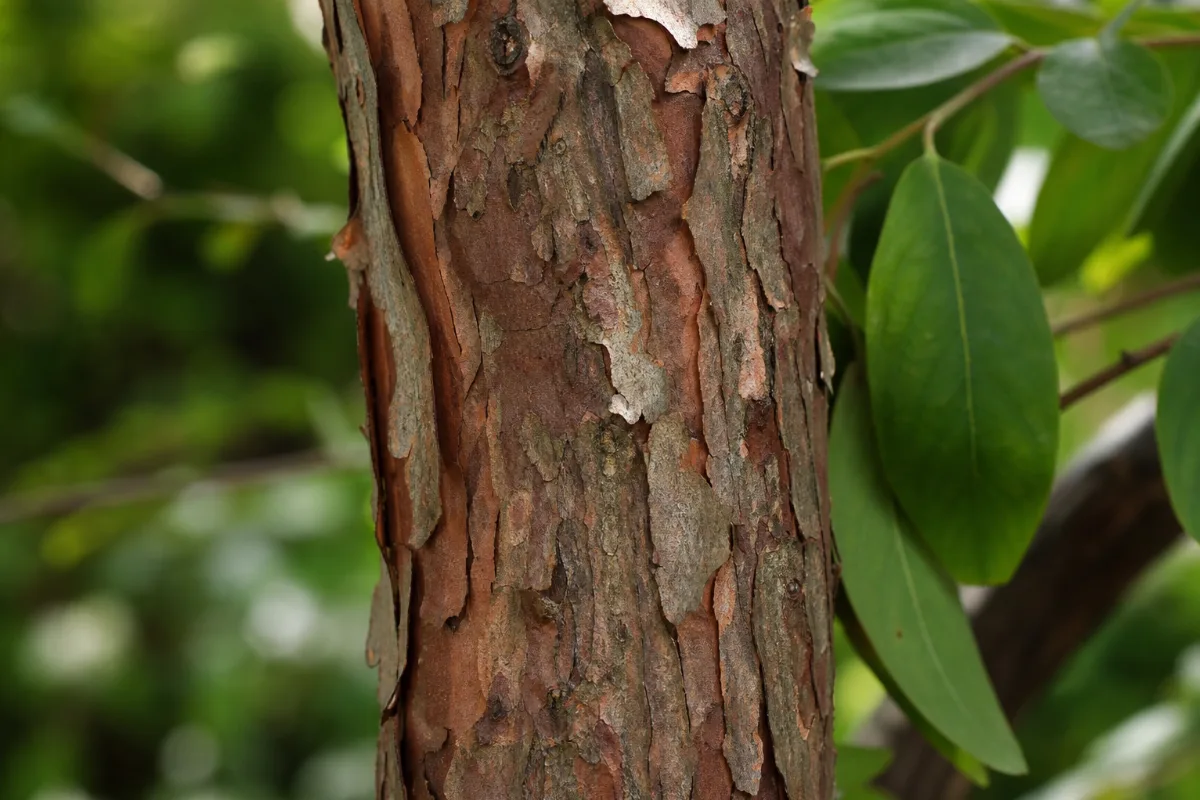
Black haw is a North American shrub. Its root or stem bark is a traditional remedy for period cramps and was used in the 1800s to try to prevent miscarriage. We found no human trial. Cramp bark (Viburnum opulus) is a different plant.
General information, not medical advice. Last substantive update · Not medically reviewed. A named clinician has not signed off on this page. How this page is made
About Black Haw
Black haw is the bark of a North American shrub. People have used it for period cramps and, in the 1800s, to try to keep a pregnancy. There is no human trial, only old notes and lab work. Safety in pregnancy is not established.
What it is
Black haw is Viburnum prunifolium, a shrub of woodlands in central and southern North America. The root bark and stem bark are the parts used (RxList). GBIF accepts the name and places it in the family Viburnaceae; some authors use Adoxaceae.
It is not the same plant as cramp bark (Viburnum opulus), also called guelder rose. Reviews often discuss the two together, so be careful with claims that do not name the species.
Traditional uses
A consumer reference lists menstrual cramps, womb spasms after childbirth, preventing miscarriage, diarrhoea, asthma and increasing urine. Old medical journals from the 1860s to 1880s discuss it for miscarriage; one 1882 item is titled as calling it unreliable. We read only the titles of these old papers.
What the research shows
We found no human trial of black haw. Natural Medicines, quoted by RxList, rates every use as insufficient evidence. A 2016 review says there are no randomized placebo-controlled trials of viburnum for premenstrual symptoms.
The lab work is on animal tissue. In 2009, extracts and iridoid compounds relaxed rabbit gut and guinea-pig windpipe in a dish. Scopoletin was named in 1967 as a possible antispasmodic. In 2022, black haw bark did not relax rat blood vessels. None of this has been shown in people.
At a glance
Traditional uses history, not proof
- Menstrual cramps (RxList / Natural Medicines listing)
- Womb spasms after childbirth (same listing)
- Preventing miscarriage, 19th-century doctors' notes, titles only (p20751515, p36023848)
- Diarrhoea, asthma and increasing urine (RxList listing)
Studied for research
- Period cramps, insufficient (no human trial)
- Preventing miscarriage, insufficient (no human trial; pregnancy safety not established)
- Gut and airway muscle relaxation, lab tissue only
- Blood-vessel relaxation, negative in a rat lab test
Main compounds
- Iridoid glucosides (lab-active in animal tissue)
- Scopoletin (named as an antispasmodic in a 1967 paper)
- Salicylates, aspirin relatives (reported by RxList; amount unknown)
- Oxalic acid (reported by RxList)
Common forms
- Dried root or stem bark (traditional)
- Capsules or tablets of powdered bark
- Tea made by simmering the bark
- Tinctures
Research links: Lab study of black haw iridoids · Review of women's-health botanicals · Bark extracts and blood vessels (rat lab study) · RxList black haw page · Research Library · Genes & Biomarkers Library
The plant and its history
- Accepted scientific name
- Viburnum prunifolium L.
- Naming authority
- L. (GBIF accepted)
- Synonyms
- Viburnum bushii Ashe (GBIF); Viburnum prunifolium var. globosum Nash (GBIF); Viburnum pyrifolium Poir. (GBIF)
- Common names
- Black haw (English); Blackhaw viburnum (English); Stagberry (English); Plum-leaf viburnum (English)
- Botanical family
- Viburnaceae in GBIF; some authors use Adoxaceae (honeysuckle-relative group).
- Classification
- Plantae > Tracheophyta > Magnoliopsida > Dipsacales > Viburnaceae (GBIF) > Viburnum > Viburnum prunifolium
- Native range
- RxList: a shrub native to the woodlands of central and southern North America.
- Habitat
- Woodlands (RxList). Other detail not verified.
- What the plant looks like
- Roots: Root bark is one of the parts used (RxList).; Stems: Stem bark is also used (RxList).; Leaves: Not verified.; Flowers: Not verified.; Fruit: Not verified.
- Cultivation
- Not verified.
- Harvest and processing
- Not verified.
- Look-alikes and adulterants
- Name: Cramp bark (Viburnum opulus); Note: A different species, kept in its own profile. Reviews often discuss the two together; lab antispasmodic work was done on both.; Name: Nannyberry (Viburnum lentago); Note: Sometimes confused by name; a separate species. Not verified in detail.
- Sustainability and conservation
- Not checked.
Traditional use and history history, not clinical proof
| Tradition or era | Documented use | Source |
|---|---|---|
| North American folk and 19th-century medicine | RxList lists the root bark as traditionally used for menstrual cramps, womb spasms after childbirth, preventing miscarriage, diarrhoea, asthma and increasing urine. | s-rxlist-naturalmedicines |
| 1860s to 1880s US medical journals | Journal items titled 'Black Haw' and 'Viburnum, or Black Haw' discussed its use. A rejoinder titled as calling it unreliable in abortion (1882) suggests doctors disagreed. Only titles were read; content NOT verified. | p36023848 |
| 1886 British Medical Journal | A note on its use in abortion and miscarriage. Title only. | p20751515 |
| 1896 Edinburgh | A pathologist reported experimental research into the action of black haw. Title only. | p29613157 |
| 1940s US pharmacy research | Two studies of 'uterine sedative' action of viburnum fractions. Title only; species not stated in title. | p20252795 |
Traditional use shows how a plant was used. It does not show that a supplement works or is safe today.
What is inside, and how it may work
What the plant contains and how those compounds act in cells and animals. Laboratory and animal mechanisms are not proven effects in people.
Main compounds
| Compound | Family | Where it is concentrated | Activity studied | Level of evidence |
|---|---|---|---|---|
| Scopoletin PubChem 5280460 | coumarin | Bark (not stated in the sources read) Not stated | Named in 1967 as an antispasmodic component of V. opulus and V. prunifolium; a 2016 review says it could be responsible for viburnum's smooth-muscle effect. 6 3 10 | Laboratory research |
| Iridoid glucosides (2'-O-acetyldihydropenstemide, 2'-O-trans-p-coumaroyldihydropenstemide, 2'-O-acetylpatrinoside, patrinoside) | iridoid glycoside | Bark extract fractions In the ethyl-acetate fraction: first two were 7.38% and 14.90%; in the butanol fraction the last two were 18.47% and 8.86%. These are fraction percentages, not bark content. | Relaxed rabbit gut and guinea-pig windpipe tissue; the first two were the most potent. CIDs not looked up. 2 14 | Laboratory research |
| Salicylates (specific compound not named; salicin is the usual reference compound) PubChem 439503 | phenolic glycoside | Bark Unknown | RxList states the bark contains salicylates and that they might trigger reactions in aspirin allergy. The CID is for salicin only for reference; its presence in black haw is NOT verified. 12 11 | Authoritative guidance |
| Oxalic acid | organic acid | Bark Unknown | RxList states the bark contains oxalic acid, which might increase stone formation in people prone to stones. 12 | Authoritative guidance |
Mechanisms, receptors and pathways
| Target or pathway | Gene or receptor | What was found | Level |
|---|---|---|---|
| Smooth-muscle relaxation (gut, windpipe) | Possibly beta-adrenergic pathway (our reading of the propranolol result) | Extract, fractions and four iridoids relaxed rabbit jejunum and guinea-pig trachea; propranolol blocked this and tiny amounts of extract strengthened isoprenaline. 2 | Laboratory research |
| Smooth-muscle relaxation (uterus) | Not known | A 2016 review says animal work suggests antispasmodic effects on the uterus and that experiments on human uterine tissue also showed relaxation. Not checked in the original papers. 3 6 | Animal research |
| Blood-vessel relaxation | KCNQ5 potassium channel | Black haw bark extract did not activate KCNQ5 or relax rat mesenteric arteries. 7 | Laboratory research |
Absorption, metabolism and elimination
- Absorption
- No data found.
- Distribution
- No data found.
- Metabolism
- No data found.
- Elimination
- No data found.
- Bioavailability
- No data found.
Isolated compounds versus whole extracts
In the 2009 lab study the isolated iridoids and enriched fractions were more potent than the whole methanol extract. That does not show a whole bark product works in people.
Nutritional composition
Black haw is not a nutrient source. Bark is said to contain oxalic acid (RxList), which matters only for people prone to kidney stones.
6 not enough evidence
What is Black Haw good for?
The traditional uses of black haw and how strong the human evidence is. No use is backed by a human trial.
Benefits, one by one
Each card is a research question, not a promise. Tap a goal to filter. Open a card to see the studies, doses and limits.
Period cramps and premenstrual discomfort
Not enough evidenceBlack haw bark is a traditional remedy for period cramps. No human trial has tested it. The reasons it is used are old custom and some lab work on muscle relaxation.
4 studiesNo dose is supported by evidence.
Studies, doses and limits
What the trials found
No human trial of black haw (Viburnum prunifolium) for this use turned up in our PubMed search (24 records at the time; titles checked). A 2016 review says there are no randomized placebo-controlled trials of viburnum for premenstrual symptoms. Natural Medicines, quoted by RxList, rates the evidence for menstrual cramps as insufficient.
Results
None in people.
Effect sizes as reported
Not available.
Why this rating
No human trials. Lab tissue relaxation does not show a period-pain benefit.
Form and dose studied
No dose is supported by evidence.
Who was studied
Women with period cramps (traditional use only).
Limits
Cramp bark (Viburnum opulus) is a different plant. Reviews often discuss the two together, so some claims may come from the other species.
Why researchers looked
Used as a uterine relaxant and antispasmodic; scientists asked whether compounds in the bark relax smooth muscle.
Traditional use
A consumer reference lists menstrual cramps among the traditional uses of the root bark.
Proposed mechanism Laboratory research
Lab work on rabbit gut and guinea-pig windpipe tissue showed relaxation by bark extracts and iridoid compounds; a 1967 paper names scopoletin as a possible antispasmodic. A review states human uterine tissue also relaxed, but we did not check that original work.
A proposed mechanism does not show that the effect happens in people.
Not for use in pregnancy. See the safety tab.
Preventing miscarriage (traditional use)
Not enough evidenceIn the 1800s doctors wrote about black haw bark for threatened miscarriage. The notes disagree, and no modern trial exists. Safety in pregnancy is not established.
4 studiesNo dose is supported by evidence.
Studies, doses and limits
What the trials found
No human trial. Natural Medicines, quoted by RxList, rates preventing miscarriage as insufficient evidence and rates black haw possibly unsafe in pregnancy.
Results
None.
Effect sizes as reported
Not available.
Why this rating
Only historical doctors' notes, some of which question whether it works. Titles only were read.
Form and dose studied
No dose is supported by evidence.
Who was studied
Pregnant women (traditional use only).
Limits
Historical records were read by title only. They cannot be used to judge benefit or harm.
Why researchers looked
This is the historical reason the herb became known in North American medicine.
Traditional use
19th-century medical journals discussed it for abortion and miscarriage. One 1882 note is titled as calling it unreliable in abortion. We read only titles, not the text.
Proposed mechanism Pharmacological theory
Not known. Uterine-relaxing action seen in old lab work has not been shown to prevent miscarriage.
A proposed mechanism does not show that the effect happens in people.
Do not use to try to hold a pregnancy. Bleeding or cramps in pregnancy need a doctor or midwife.
Uterine spasms after childbirth (traditional use)
Not enough evidenceBlack haw has been used for womb cramps after birth. Evidence is rated insufficient and no trial was found.
1 studiesNo dose is supported by evidence.
Studies, doses and limits
What the trials found
No human trial of black haw (Viburnum prunifolium) for this use turned up in our PubMed search (24 records at the time; titles checked). A 2016 review says there are no randomized placebo-controlled trials of viburnum for premenstrual symptoms.
Results
None.
Effect sizes as reported
Not available.
Why this rating
No studies in women after childbirth.
Form and dose studied
No dose is supported by evidence.
Who was studied
Women after childbirth.
Limits
Not studied. Breastfeeding safety is not established.
Why researchers looked
Same uterine-relaxant idea as for period cramps.
Traditional use
Listed by a consumer reference as a traditional use.
Proposed mechanism Pharmacological theory
Not established in people.
A proposed mechanism does not show that the effect happens in people.
Ask a midwife or doctor before using any herb while breastfeeding.
Gut and airway muscle relaxation (lab tissue only)
Not enough evidenceIn dishes, black haw bark extracts and iridoid compounds relaxed rabbit gut and guinea-pig windpipe tissue. This has not been tested in people.
2 studiesNot applicable to people.
Studies, doses and limits
What the trials found
No human trial. Natural Medicines, quoted by RxList, rates diarrhoea and asthma as insufficient evidence.
Results
Relaxation of both tissues by extract, fractions and four iridoids; potency order fraction (ethyl acetate) > fraction (butanol) > methanol extract.
Effect sizes as reported
Potency order only, no effect sizes (concentrations 1 to 100 microg/ml are lab levels, not doses).
Why this rating
Animal tissue in a dish.
Form and dose studied
Not applicable to people.
Who was studied
None.
Limits
Cannot be applied to people. Other lab-only literature exists and was not reviewed.
Why researchers looked
Black haw is traditionally used for spasms, diarrhoea and asthma. The 2009 study tested whether that makes pharmacological sense.
Traditional use
A consumer reference lists diarrhoea, spasms and asthma as traditional uses.
Proposed mechanism Laboratory research
Iridoid glucosides in the ethyl-acetate and butanol fractions were most active. Propranolol, a beta-blocker, blocked the effect, and very low extract amounts made isoprenaline work better, which hints that beta-adrenergic pathways are involved (our reading; the authors did not say so).
A proposed mechanism does not show that the effect happens in people.
Wheeze or breathing trouble needs medical care, not an untested bark.
Relaxing blood vessels (tested, did not work in the lab)
Not enough evidenceA 2022 lab study found that black haw bark did not relax rat blood vessels, unlike willow or oak bark.
1 studiesNot applicable.
Studies, doses and limits
What the trials found
No human data.
Results
Black haw: no channel activation and no artery relaxation, while several other bark extracts did both.
Effect sizes as reported
No effect sizes.
Why this rating
One negative result in rat tissue and cells.
Form and dose studied
Not applicable.
Who was studied
None.
Limits
A negative lab result is not proof of no effect in people.
Why researchers looked
Researchers tested old bark remedies on a potassium channel (KCNQ5) that relaxes blood vessels.
Traditional use
None specific.
Proposed mechanism Laboratory research
Black haw bark extract did not activate the KCNQ5 channel or relax rat arteries.
A proposed mechanism does not show that the effect happens in people.
None known.
Increasing urine (traditional use)
Not enough evidenceBlack haw root bark has been used as a mild diuretic. The evidence is rated insufficient and we found no trial.
1 studiesNo dose is supported by evidence.
Studies, doses and limits
What the trials found
No human trial found. Rated insufficient evidence by Natural Medicines (via RxList).
Results
None.
Effect sizes as reported
Not available.
Why this rating
Nothing beyond a traditional-use listing.
Form and dose studied
No dose is supported by evidence.
Who was studied
None studied.
Limits
No data on kidney effects. The bark is also said to contain oxalic acid (see safety).
Why researchers looked
Listed as a traditional use.
Traditional use
A consumer reference lists increasing urine and relieving fluid retention.
Proposed mechanism Pharmacological theory
Not known.
A proposed mechanism does not show that the effect happens in people.
People with kidney disease or stones should ask their doctor.
Connections to the rest of health
How Black Haw connects to the rest of our health knowledge graph. Every link says what kind of connection it is. A safety link (for example to the liver) is a warning, not a benefit. A study that merely mentions a topic never creates a benefit link.
Explore every connection: goals, body systems, organs, symptoms, genes
A. Wellness goals
| Connected to | Kind of connection | Evidence status | Context | Studies |
|---|---|---|---|---|
| Womens Wellness | Traditional use | Not enough evidence | Period cramps and premenstrual discomfort: Black haw bark is a traditional remedy for period cramps. No human trial has tested it. The reasons it is used are old custom and some lab work on muscle relaxation. Preventing miscarriage (traditional use): In the 1800s doctors wrote about black haw bark for threatened miscarriage. The notes disagree, and no modern trial exists. Safety in pregnancy is not established. | 12 3 2 6 15 13 1 |
| Calm Relaxation | Traditional use | Not enough evidence | Period cramps and premenstrual discomfort: Black haw bark is a traditional remedy for period cramps. No human trial has tested it. The reasons it is used are old custom and some lab work on muscle relaxation. | 12 3 2 6 |
| Fertility Support | Traditional use | Not enough evidence | Preventing miscarriage (traditional use): In the 1800s doctors wrote about black haw bark for threatened miscarriage. The notes disagree, and no modern trial exists. Safety in pregnancy is not established. | 12 15 13 1 |
| Digestive Support | Preliminary mechanism | Not enough evidence | Gut and airway muscle relaxation (lab tissue only): In dishes, black haw bark extracts and iridoid compounds relaxed rabbit gut and guinea-pig windpipe tissue. This has not been tested in people. | 2 12 |
| Calm Relaxation | Preliminary mechanism | Not enough evidence | Gut and airway muscle relaxation (lab tissue only): In dishes, black haw bark extracts and iridoid compounds relaxed rabbit gut and guinea-pig windpipe tissue. This has not been tested in people. | 2 12 |
| Heart Health | Preliminary mechanism | Not enough evidence | Relaxing blood vessels (tested, did not work in the lab): A 2022 lab study found that black haw bark did not relax rat blood vessels, unlike willow or oak bark. | 7 |
| Metabolic Health | Traditional use | Not enough evidence | Increasing urine (traditional use): Black haw root bark has been used as a mild diuretic. The evidence is rated insufficient and we found no trial. | 12 |
B. Body systems
| Connected to | Kind of connection | Evidence status | Context | Studies |
|---|---|---|---|---|
| Reproductive System | Biological association | Not enough evidence | Studied for: Period cramps and premenstrual discomfort Studied for: Preventing miscarriage (traditional use) | 12 3 2 6 15 13 1 |
| Digestive System | Biological association | Not enough evidence | Studied for: Gut and airway muscle relaxation (lab tissue only) | 2 12 |
| Respiratory System | Biological association | Not enough evidence | Studied for: Gut and airway muscle relaxation (lab tissue only) | 2 12 |
| Cardiovascular System | Biological association | Not enough evidence | Studied for: Relaxing blood vessels (tested, did not work in the lab) | 7 |
| Urinary System | Biological association | Not enough evidence | Studied for: Increasing urine (traditional use) | 12 |
E. Health conditions
| Connected to | Kind of connection | Evidence status | Context | Studies |
|---|---|---|---|---|
| Aspirin sensitivity | Contraindication | Very low certainty | Possible reaction; amount unknown. Preparation or compound: Bark (salicylates) |
12 |
| Kidney stones | Contraindication | Very low certainty | Might add to stone formation. Preparation or compound: Bark (oxalic acid) |
12 |
| Threatened miscarriage | Traditional use | Not enough evidence | Historical use only; pregnancy safety not established. Historical use; pregnancy safety not established. Preparation or compound: Root or stem bark |
12 13 |
| Dysmenorrhea | Traditional use | Not enough evidence | Traditional use; no human trial. Preparation or compound: Root or stem bark |
12 |
J. Genes, receptors and enzymes
| Connected to | Kind of connection | Evidence status | Context | Studies |
|---|---|---|---|---|
| KCNQ5 (potassium channel) | Preliminary mechanism | In vitro | Not activated by black haw bark extract in the 2022 lab study. | 7 |
| Beta-adrenergic receptors | Preliminary mechanism | In vitro | Propranolol blocked black haw's lab relaxing effect; suggestive only. | 2 |
L. Active compounds
| Connected to | Kind of connection | Evidence status | Context | Studies |
|---|---|---|---|---|
| Scopoletin | Biological association | In vitro | Named in 1967 as an antispasmodic component of V. opulus and V. prunifolium; a 2016 review says it could be responsible for viburnum's smooth-muscle effect. Preparation or compound: Bark (not stated in the sources read) |
6 3 10 |
| Iridoid glucosides (2'-O-acetyldihydropenstemide, 2'-O-trans-p-coumaroyldihydropenstemide, 2'-O-acetylpatrinoside, patrinoside) | Biological association | In vitro | Relaxed rabbit gut and guinea-pig windpipe tissue; the first two were the most potent. CIDs not looked up. Preparation or compound: Bark extract fractions |
2 14 |
| Salicylates (specific compound not named; salicin is the usual reference compound) | Biological association | Authoritative guidance | RxList states the bark contains salicylates and that they might trigger reactions in aspirin allergy. The CID is for salicin only for reference; its presence in black haw is NOT verified. Preparation or compound: Bark |
12 11 |
| Oxalic acid | Biological association | Authoritative guidance | RxList states the bark contains oxalic acid, which might increase stone formation in people prone to stones. Preparation or compound: Bark |
12 |
Each connection is stored with the ingredient, the connected record, the kind of connection, the evidence status, the supporting studies, the preparation or compound involved, and a review date (last reviewed October 25, 2026).
The evidence
The research centre for Black Haw. Every record here was checked against PubMed or the publisher's page; we never list a study we have not verified.
Evidence by outcome
Bars show how many studies we found for each outcome, not how well it works. People are added up across trials only (reviews are not added, to avoid double counting).
How we rate evidence
High certainty
Several well-run trials or reviews agree; further research is unlikely to change the picture much.
Moderate certainty
Good trials point the same way, but some doubt remains.
Low certainty
Small, short or inconsistent trials. The finding could change with better research.
Very low certainty
Very little or very weak human data. Treat as a possibility only.
Mixed findings
Trials or reviews disagree with each other.
Not enough evidence
Not enough human research to say either way.
Evidence against
Good research found no benefit, or found harm.
We take the reviewers' own risk-of-bias and GRADE statements where they exist, and otherwise judge from study size, design, consistency, directness and whether a product matches what is sold. Many publications do not make evidence high. Method note: We searched PubMed (24 records for Viburnum prunifolium), read the abstracts of the few papers with abstracts, and read only the titles of several 19th- and 20th-century items that have none. We checked plant names in GBIF and NCBI Taxonomy and compounds in PubChem, and read the RxList (Natural Medicines) page. Most safety wording rests on that one consumer reference. Not verified: EMA/HMPC (site blocked), WHO, Commission E, FDA. Funding was not checked for most papers.
Study library: every study we checked 15
| Study | Design | People | Product, dose, length | Result |
|---|---|---|---|---|
| (no author listed) 1867 Virburnum Prunifolium: Black Haw Atlanta Med Surg J · PMID 35825900 |
Historical title only unknown |
1867 journal item on black haw | Viburnum (see title) bark Not available Not available · vs Not available |
Only the title and journal record were read; PubMed shows no abstract. No claim is taken from the content. Not available Methods, limits and fundingOutcomes: Not available Limitations: No abstract; scanned or very old record. Cannot be used as evidence of benefit or harm. Funding and conflicts: Not available Read: title-only |
| Cometa 2009 In vitro relaxant and spasmolytic effects of constituents from Viburnum prunifolium and HPLC quantification of the bioactive isolated iridoids J Ethnopharmacol · PMID 19429363 · DOI |
Laboratory research in-vitro |
Isolated rabbit jejunum and guinea-pig trachea (no people) | Methanol extract, fractions and four iridoid glucosides from V. prunifolium bark (the drug); exact part not stated in abstract 1 to 100 microg/ml extract; 2e-5 to 4e-4 M iridoids Minutes (tissue bath) · vs Propranolol used to test the effect |
All tested materials relaxed both tissues. Order of potency: ethyl-acetate fraction > butanol fraction > methanol extract; iridoids 1>2>3>4. Propranolol blocked all the effects. At very low concentrations the extract made isoprenaline work better. In the ethyl-acetate fraction iridoids 1 and 2 were 7.38% and 14.90%; in the butanol fraction iridoids 3 and 4 were 18.47% and 8.86%. Potency order only; no effect sizes Methods, limits and fundingOutcomes: Relaxation of spontaneous gut contractions; relaxation of carbachol-contracted windpipe Limitations: Animal tissue in a dish. Not shown in people. Concentrations are not doses. Funding and conflicts: Not stated in abstract Read: abstract |
| Dietz 2016 Botanicals and Their Bioactive Phytochemicals for Women's Health Pharmacol Rev · PMID 27677719 · DOI |
Narrative review human-and-animal review |
Review of women's-health botanicals | Cramp bark (Viburnum opulus) and black haw (V. prunifolium) discussed together bark Not applicable Not applicable · vs Not applicable |
States that rigorous clinical trials of PMS botanicals have not been done and that there are no randomized placebo-controlled trials of viburnum for PMS. Says animal studies suggest an antispasmodic effect on the uterus, and that scopoletin could be responsible. Warns botanicals have not been rigorously tested for toxicity or herb-drug interactions. No effect sizes Methods, limits and fundingOutcomes: Evidence for premenstrual-syndrome botanicals Limitations: Cramp bark and black haw are covered together, so some statements may come from V. opulus work. The claim about human uterine tissue is the review's own and was not checked in the original papers. Funding and conflicts: Authors from a US NIH botanical centre; no industry link seen in the abstract Read: full-text (PMC) and abstract |
| EMA 2026 EMA/HMPC: black haw monograph not found Database or web page · Source |
Authoritative guidance Not applicable |
Not a study | Not applicable Not applicable Not applicable Not applicable · vs Not applicable |
The EMA search page refused automated access (HTTP 401), so an EMA/HMPC monograph could not be checked. None is known to us. Status: not verified. Not applicable Methods, limits and fundingOutcomes: Identity or regulatory check Limitations: Search was blocked; do not read this as proof that no monograph exists. Funding and conflicts: Not applicable Read: web page or API record |
| GBIF 2026 GBIF Backbone Taxonomy: Viburnum prunifolium L. (key 2888608) Database or web page · Source |
Authoritative guidance Not applicable |
Not a study | Not applicable Not applicable Not applicable Not applicable · vs Not applicable |
Checked 2026-10-25. Accepted name Viburnum prunifolium L.; order Dipsacales; family Viburnaceae in GBIF. Synonyms listed include V. bushii Ashe, V. prunifolium var. prunifolium, var. globosum, var. bushii and V. pyrifolium Poir. (GBIF also lists V. lentago DuRoi, which conflicts with usual treatment of nannyberry as a separate species; not used here). Not applicable Methods, limits and fundingOutcomes: Identity or regulatory check Limitations: Family placement differs between authorities (Adoxaceae in some); not resolved. Funding and conflicts: Not applicable Read: web page or API record |
| Jarboe 1967 Scopoletin, an Antispasmodic Component of Viburnum opulus and prunifolium J Med Chem · PMID 22185161 · DOI |
Laboratory research animal-or-in-vitro (not confirmed) |
Title record only (no abstract) | Scopoletin from Viburnum species bark Not available Not available · vs Not available |
Only the title was read. The 2016 Dietz review cites it for scopoletin as a possible antispasmodic. Not available Methods, limits and fundingOutcomes: Title states scopoletin is an antispasmodic component of both V. opulus and V. prunifolium Limitations: No abstract on PubMed; methods and numbers unknown. Funding and conflicts: Not available Read: title-only |
| Manville 2022 KCNQ5 activation by tannins mediates vasorelaxant effects of barks used in Native American botanical medicine FASEB J · PMID 35997997 · DOI |
Laboratory research in-vitro |
Frog-egg cells expressing a potassium channel; rat mesenteric arteries | Bark extracts including black haw bark 1% extracts Not applicable · vs Other bark extracts (red willow, white willow, white oak) |
Cramp bark, birch, slippery elm, white oak, red and white willow and wild cherry extracts activated KCNQ5. Black haw bark neither activated KCNQ5 nor relaxed rat arteries. No effect sizes in abstract Methods, limits and fundingOutcomes: KCNQ5 channel activation; blood-vessel relaxation Limitations: Rat tissue and cell lab model only; a negative result for one bark extract. Funding and conflicts: Authors declare no competing interests Read: abstract |
| NCCIH 2026 NCCIH: no black haw page found Database or web page · Source |
Authoritative guidance Not applicable |
Not a study | Not applicable Not applicable Not applicable Not applicable · vs Not applicable |
A guessed black haw URL on nccih.nih.gov returned 404 on 2026-10-25 and no black haw fact sheet was located. Not found. Not applicable Methods, limits and fundingOutcomes: Identity or regulatory check Limitations: Not found is not proof there is no page elsewhere on the site. Funding and conflicts: Not applicable Read: web page or API record |
| NLM 2026 LiverTox and LactMed: no black haw record found Database or web page · Source |
Authoritative guidance Not applicable |
Not a study | Not applicable Not applicable Not applicable Not applicable · vs Not applicable |
A Bookshelf search for black haw / Viburnum prunifolium with LiverTox or LactMed returned 0 records on 2026-10-25. Not found. Not applicable Methods, limits and fundingOutcomes: Identity or regulatory check Limitations: A search-term miss is not proof there is no record. Funding and conflicts: Not applicable Read: web page or API record |
| PubChem 2026 PubChem: scopoletin, CID 5280460 Database or web page · Source |
Authoritative guidance Not applicable |
Not a study | Not applicable Not applicable Not applicable Not applicable · vs Not applicable |
CID 5280460 returned by name search on 2026-10-25. Not applicable Methods, limits and fundingOutcomes: Identity or regulatory check Limitations: Identifier check only. Funding and conflicts: Not applicable Read: web page or API record |
| PubChem 2026 PubChem: salicin, CID 439503 Database or web page · Source |
Authoritative guidance Not applicable |
Not a study | Not applicable Not applicable Not applicable Not applicable · vs Not applicable |
CID 439503 returned by name search on 2026-10-25. Used only as the reference salicylate-type compound. That black haw contains salicin was NOT verified in any source read. Not applicable Methods, limits and fundingOutcomes: Identity or regulatory check Limitations: Identifier check only. Funding and conflicts: Not applicable Read: web page or API record |
| RxList (consumer reference citing Natural Medicines ratings) 2026 Black Haw: Health Benefits, Side Effects, Uses, Dose & Precautions (RxList, Natural Medicines-based monograph) RxList web page · Source |
Authoritative guidance Not applicable |
General readers; not a study | Viburnum prunifolium root bark and stem bark bark (root bark and stem bark) Page says there is not enough information to set a dose Not applicable · vs Not applicable |
Rates every listed use (cramps, miscarriage prevention, uterine spasm after birth, diarrhoea, asthma, fluid retention) as insufficient evidence. Stem bark likely safe in food amounts; root bark possibly safe as medicine; no side effects reported so far. Possibly unsafe in pregnancy; best to avoid when breastfeeding; salicylates may trigger reactions in asthma or aspirin allergy; oxalic acid may add to stone formation in people with past kidney stones. No numbers; ratings only Methods, limits and fundingOutcomes: Uses, safety rating, precautions Limitations: Consumer page, not a primary source. Gives no frequencies, no case reports and no drug interaction list. Reference list is mostly 1960s to 1990s. Funding and conflicts: Commercial site; no funding statement Read: full-text (web page) |
| Smythe 1882 Viburnum Prunifolium Unreliable in Abortion: A Rejoinder South Med Rec · PMID 36023848 |
Historical title only unknown |
1882 doctor's note whose title calls it unreliable in abortion | Viburnum (see title) bark Not available Not available · vs Not available |
Only the title and journal record were read; PubMed shows no abstract. No claim is taken from the content. Not available Methods, limits and fundingOutcomes: Not available Limitations: No abstract; scanned or very old record. Cannot be used as evidence of benefit or harm. Funding and conflicts: Not available Read: title-only |
| Tomassini 1999 Iridoid glucosides from Viburnum prunifolium Planta Med · PMID 17260259 · DOI |
Chemistry chemistry |
Title record only (no abstract) | Iridoid glucosides isolated from V. prunifolium bark (not stated) Not applicable Not applicable · vs Not applicable |
Only the title was read; it shows iridoid glucosides were isolated from the plant. Not applicable Methods, limits and fundingOutcomes: Chemistry Limitations: No abstract on PubMed. Funding and conflicts: Not available Read: title-only |
| Wilson 1886 Viburnum Prunifolium, or Black Haw, in Abortion and Miscarriage Br Med J · PMID 20751515 · DOI |
Historical title only unknown |
1886 doctor's note on use in abortion and miscarriage | Viburnum (see title) bark Not available Not available · vs Not available |
Only the title and journal record were read; PubMed shows no abstract. No claim is taken from the content. Not available Methods, limits and fundingOutcomes: Not available Limitations: No abstract; scanned or very old record. Cannot be used as evidence of benefit or harm. Funding and conflicts: Not available Read: title-only |
What we do not know yet
- What the evidence supports: nothing. No use is backed by a human trial.
- No safety data in pregnancy, breastfeeding or children.
- No data on how much salicylate or oxalate products contain.
- No documented drug interaction studies; blood-thinner and beta-blocker points are theory or lab only.
- EMA/HMPC could not be checked; no NCCIH, LiverTox or LactMed entry found.
How new research is added
New studies are found by a saved PubMed search and are placed in a review queue. A person reads each one before it changes any evidence rating or safety wording. New publications never change ratings automatically.
Lab markers
What changed in blood or saliva tests during trials. A changed number is not the same as feeling or being healthier, and we give no "normal ranges".
Safety
What studies and official sources say about side effects, medicines and who should check first. Each point shows what kind of evidence it comes from.
Main points to know 5
- Pregnancy: do not use without a clinician. Natural Medicines, quoted by RxList, rates black haw possibly unsafe in pregnancy because it might affect the uterus. It was used in the 1800s to try to prevent miscarriage, but that rests on old doctors' notes and one 1882 note is titled as calling it unreliable. No modern safety study in pregnancy was found. Authoritative guidance 12 13 15
- Aspirin allergy and asthma. The bark is said to contain salicylates, chemical relatives of aspirin. RxList says there is some concern they could trigger an allergic reaction in people with asthma or aspirin allergy. How much salicylate a product holds is unknown, and no reaction report was found. Authoritative guidance 12
- Kidney stones. The bark is said to contain oxalic acid, which might increase stone formation in people with a history of kidney stones (RxList). No case report was found. Authoritative guidance 12
- Breastfeeding: best avoided. RxList advises avoiding black haw while breastfeeding because not enough is known. No LactMed entry was found. Authoritative guidance 12 9
- Very little safety research exists. No human safety trial, liver record, or agency monograph was found. 'No side effects reported' (RxList) means little has been recorded, not that none occur. A 2016 review warns that women's-health botanicals have not been rigorously tested for toxicity or interactions. Authoritative guidance 12 3
Side effects 4
| Effect | How often | Severity and recovery | Evidence |
|---|---|---|---|
| Allergic-type or breathing reaction in people sensitive to aspirin or salicylates Stated as a concern by RxList. No case report found. Salicylate amount in the bark is not given. | Not established | unknown Not reported | Pharmacological theory 12 |
| Kidney-stone formation in people prone to stones (oxalate) Stated as a possibility by RxList. No case report or oxalate measurement found. | Not established | unknown Not reported | Pharmacological theory 12 |
| Effects on the uterus RxList says it might affect the uterus. Lab work showed muscle relaxation in animal gut and windpipe, not the uterus itself. | Not established | unknown Not reported | Pharmacological theory 12 2 |
| Other side effects RxList says no side effects have been reported so far. That reflects how little has been studied. | Not established | unknown Not reported | Authoritative guidance 12 |
Liver
No LiverTox entry and no case report of liver injury from black haw were found. 9
How often. No frequency found.
Monitoring. No agency advice found.
This is a safety connection. It is not evidence that Black Haw supports liver health.
Medicines and supplements 5
| With | Why it matters | Importance | Evidence | What to do |
|---|---|---|---|---|
| Aspirin, other NSAIDs and salicylate-containing products (e.g. willow bark) over-the-counter | Black haw bark is said to contain salicylates, so an additive effect is conceivable. The amount is unknown. | Unknown. RxList lists no drug interactions for black haw. | Pharmacological theory Very low certainty 12 | If you are sensitive to aspirin, or take it daily, ask a pharmacist before using black haw. |
| Blood thinners (warfarin, other anticoagulants, antiplatelets) and bleeding disorders prescription | Theory only, extrapolated from the bark's reported salicylate content. No source we read states that black haw raises bleeding risk. | Not established. No case report or study found. | Pharmacological theory Very low certainty 12 | Tell your prescriber or pharmacist if you take a blood thinner and want to use black haw. Do not start it without checking. |
| Beta-blockers (e.g. propranolol) and beta-agonist inhalers prescription | In lab tissue, propranolol blocked black haw's relaxing effect and tiny extract amounts boosted isoprenaline. This hints at beta-adrenergic involvement. | Lab tissue only (rabbit gut, guinea-pig windpipe). Nobody has tested this in people. | Laboratory research Very low certainty 2 | Ask a pharmacist if you take these medicines. |
| Medicines or herbs that act on the uterus prescription and herbal | RxList says black haw might affect the uterus. | Unknown. | Pharmacological theory Very low certainty 12 | In pregnancy or labour, talk to your midwife or doctor before combining anything. |
| Cramp bark (Viburnum opulus) and other bark remedies herbal | A different species, often discussed alongside black haw. Combined effects have not been studied. | Unknown. | Pharmacological theory Very low certainty 3 | Avoid doubling up on similar herbs without advice. |
Who should check first 6
| Situation | Advice | Evidence |
|---|---|---|
| Pregnancy or trying to conceive | Avoid; rated possibly unsafe (RxList). | Authoritative guidance 12 |
| Breastfeeding | Best avoided; not enough is known. | Authoritative guidance 12 |
| Aspirin allergy, salicylate sensitivity or asthma | Avoid or ask a doctor first. | Authoritative guidance 12 |
| History of kidney stones | Avoid or ask a doctor first (oxalate caution). | Authoritative guidance 12 |
| Taking blood thinners, or a bleeding disorder | Ask a pharmacist or doctor first. This is a theoretical caution only. | Pharmacological theory 12 |
| Children | No safety information was found; avoid. | Authoritative guidance 12 |
Overdose, product quality and regulators
Summary. No formal toxicity data (human or animal) were found in the sources read.
Animal. Not found.
Human doses studied. No human dose has been studied.
High dose or long term signals. No long-term data.
Overdose response. No overdose report found.
Genotoxicity. Not found.
Toxic plant parts. RxList rates the stem bark likely safe in food amounts and the root bark possibly safe as medicine. Safety of leaves, flowers or berries was not covered by any source read (NOT verified).
No contamination or adulteration testing of black haw products was found.
Species mix-ups. Black haw (V. prunifolium) and cramp bark (V. opulus) are separate species with their own plants but are often listed together, and the common name nannyberry is usually given to another species (V. lentago). Whether products are mixed up has not been tested in sources read. 3 5
| Body | Action | Date |
|---|---|---|
| Natural Medicines (as quoted by RxList) (United States) | Every use rated insufficient evidence; pregnancy possibly unsafe; avoid when breastfeeding. source | 2026 |
When to get medical help
- Trouble breathing, wheezing, hives or swelling of the face or throat after taking it (possible aspirin-type reaction): get urgent medical care.
- Vaginal bleeding, cramps or fluid leaking in pregnancy: contact a doctor or midwife right away; do not self-treat with herbs.
- Severe one-sided back or side pain or blood in urine (possible kidney stone): see a doctor.
Stop the supplement and contact a clinician or emergency service. In the US, Poison Control is 1-800-222-1222.
General information only, not medical advice. Ask a clinician or pharmacist before use, especially with medicines, in pregnancy or with a health condition. See the Natural Remedy Safety guide.
Frequently asked questions
What is black haw?
Does black haw help period cramps?
Can black haw prevent miscarriage?
Is black haw safe in pregnancy?
It is rated possibly unsafe because it might affect the uterus. No pregnancy safety study was found.
Is black haw safe while breastfeeding?
Is black haw related to aspirin?
The bark is said to contain salicylates, which are chemical relatives of aspirin. People with aspirin allergy or asthma could react. How much is in a product is unknown.
Can black haw cause kidney stones?
The bark is said to contain oxalic acid, which might add to stone formation in people who already get stones. No case report was found.
Does black haw interact with blood thinners?
No interaction has been documented. A bleeding question is a theory based on the reported salicylate content. Ask your pharmacist if you take a blood thinner.
Does black haw interact with beta-blockers?
Only in a lab dish. Propranolol blocked black haw's relaxing effect on animal tissue. Nobody has tested this in people.
Is black haw the same as cramp bark?
Is black haw harmful to the liver?
No liver injury case or LiverTox entry was found. That means little is known, not that it is proven safe.
Explore by health goal
Womens WellnessCalm RelaxationFertility SupportDigestive SupportHeart HealthMetabolic Health
Editorial transparency
- Written by
- AlternativeMed editorial team. Research compiled with AI assistance, then checked against PubMed records.
- Medical review
- None. This page has not been reviewed by a physician or pharmacist.
- First published
- 2026-10-25
- Last substantive update
- 2026-10-25
- How we research
- We searched PubMed (24 records for Viburnum prunifolium), read the abstracts of the few papers with abstracts, and read only the titles of several 19th- and 20th-century items that have none. We checked plant names in GBIF and NCBI Taxonomy and compounds in PubChem, and read the RxList (Natural Medicines) page. Most safety wording rests on that one consumer reference. Not verified: EMA/HMPC (site blocked), WHO, Commission E, FDA. Funding was not checked for most papers.
- How we rate evidence
- See "How we rate evidence" in the Evidence tab.
- Independence
- No product is promoted on this page. No affiliate links are shown. If one is added later it will be labelled and kept apart from the evidence.
Sources 15
Each source was opened and checked. Where we read only the abstract, it says so. The small numbers in the text point here.
- (no author listed). Virburnum Prunifolium: Black Haw. Atlanta Med Surg J. 1867. PMID 35825900. (title-only)
- Cometa MF, Parisi L, Palmery M, et al.. In vitro relaxant and spasmolytic effects of constituents from Viburnum prunifolium and HPLC quantification of the bioactive isolated iridoids. J Ethnopharmacol. 2009. PMID 19429363. DOI 10.1016/j.jep.2009.03.021. (abstract)
- Dietz BM, Hajirahimkhan A, Dunlap TL, et al.. Botanicals and Their Bioactive Phytochemicals for Women's Health. Pharmacol Rev. 2016. PMID 27677719. DOI 10.1124/pr.115.010843. (full-text (PMC) and abstract)
- EMA. EMA/HMPC: black haw monograph not found. Database or web page. 2026. (web page or API record)
- GBIF. GBIF Backbone Taxonomy: Viburnum prunifolium L. (key 2888608). Database or web page. 2026. (web page or API record)
- Jarboe CH, Zirvi KA, Nicholson JA, et al.. Scopoletin, an Antispasmodic Component of Viburnum opulus and prunifolium. J Med Chem. 1967. PMID 22185161. DOI 10.1021/jm00315a045. (title-only)
- Manville RW, Redford KE, van der Horst J, et al.. KCNQ5 activation by tannins mediates vasorelaxant effects of barks used in Native American botanical medicine. FASEB J. 2022. PMID 35997997. DOI 10.1096/fj.202200724R. (abstract)
- NCCIH. NCCIH: no black haw page found. Database or web page. 2026. (web page or API record)
- NLM. LiverTox and LactMed: no black haw record found. Database or web page. 2026. (web page or API record)
- PubChem. PubChem: scopoletin, CID 5280460. Database or web page. 2026. (web page or API record)
- PubChem. PubChem: salicin, CID 439503. Database or web page. 2026. (web page or API record)
- RxList (consumer reference citing Natural Medicines ratings). Black Haw: Health Benefits, Side Effects, Uses, Dose & Precautions (RxList, Natural Medicines-based monograph). RxList web page. 2026. (full-text (web page))
- Smythe AG. Viburnum Prunifolium Unreliable in Abortion: A Rejoinder. South Med Rec. 1882. PMID 36023848. (title-only)
- Tomassini L, Cometa FM, Foddai S, Nicoletti M.. Iridoid glucosides from Viburnum prunifolium. Planta Med. 1999. PMID 17260259. DOI 10.1055/s-2006-960469. (title-only)
- Wilson JH. Viburnum Prunifolium, or Black Haw, in Abortion and Miscarriage. Br Med J. 1886. PMID 20751515. DOI 10.1136/bmj.1.1318.640-a. (title-only)