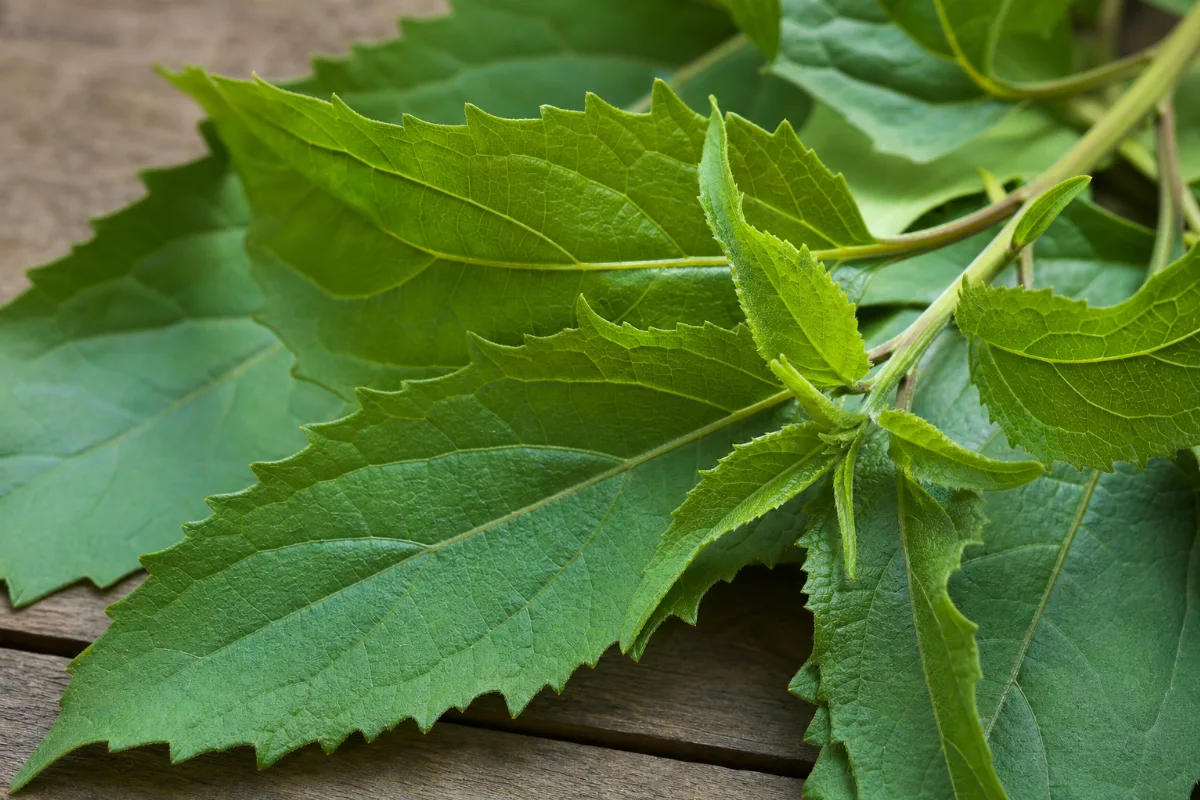
Herbs & Botanicals · African bitter leaf vegetable
Bitter leaf
Vernonia amygdalina · also called Bitterleaf
Bitter leaf is a leafy shrub eaten as a washed, cooked vegetable in West and Central Africa and used as a bitter tonic. It is traditionally used for malaria and blood sugar. Human evidence is thin: one uncontrolled malaria trial where parasites often returned, and one small blood-sugar test with little effect. The key caution is pregnancy: a fatal liver and kidney failure case followed its use to end a pregnancy.
General information, not medical advice. Last substantive update · Not medically reviewed. A named clinician has not signed off on this page. How this page is made
About Bitter leaf
Bitter leaf (Vernonia amygdalina) is a leafy shrub eaten as a cooked vegetable and used as a bitter tonic in West and Central Africa. It is used traditionally for malaria and blood sugar. Evidence in people is thin: one uncontrolled malaria trial where parasites often returned, and one small glucose test with little effect from the leaf alone. Blood pressure and pain results are from mice and rats. The main caution is pregnancy, where a fatal case was reported, and possible interaction with diabetes medicines. Ask a doctor or pharmacist before any use.
What it is
Bitter leaf is Vernonia amygdalina, a shrub of the daisy family (Asteraceae). Its current accepted name is Gymnanthemum amygdalinum, but research and products still use the older name. The leaf is washed and boiled to take out some of the bitterness.
It is not bitter kola (a seed) and not bitter melon (a fruit).
What makes it distinctive
The leaf contains bitter sesquiterpene lactones such as vernodalin and vernolide, and steroid glucosides called vernoniosides. A 2025 review counted 348 compounds. Most lab findings come from strong extracts, not cooked food.
Historical and current uses
Healers in Uganda named it more than any other plant for malaria, and it is among the most-cited antidiabetic plants in West Africa. In a Nigerian survey of 401 adults, 79.6% linked it to lowering blood sugar, though only 11.7% had good knowledge of it.
What the research shows
For malaria, one uncontrolled trial reported 67% adequate clinical response at day 14, with parasites often returning. For blood sugar, a 27-person test found no significant effect from bitter leaf alone. A three-vegetable blend lowered blood sugar a little at 90 and 120 minutes. Blood pressure, pain and inflammation results are in mice and rats. The HIV study is abstract-only.
At a glance
Traditional uses history, not proof
- Washed and boiled leaves eaten as a vegetable and bitter tonic
- Leaf infusion or decoction for malaria, named by Ugandan healers
- Leaf decoction used in Nigerian recipes for blood sugar
- Fresh leaf squeezed in water as a home remedy
- Used by wild chimpanzees, a 1994 report observed, when they were ill
Studied for research
- Malaria: one uncontrolled trial, very low certainty
- Blood sugar: one small human test, very low certainty
- HIV immune markers: one small abstract-only study
- Blood pressure, inflammation and pain: animal studies only
- Worms and cancer cells: lab and observation only
Main compounds
- Sesquiterpene lactones: vernodalin, vernolide
- Steroid glucosides: vernoniosides
- 348 compounds counted in a 2025 review
Common forms
- Fresh or cooked leaf
- Fresh-leaf infusion
- Decoction
- Dried leaf or powder
- Lab extracts (research only)
Research links: Malaria trial (2009) · Blood sugar test (2013) · Uganda case series (2022) · Metformin rat study (2025) · 2025 systematic review · Research Library · Genes & Biomarkers Library
The plant and its history
- Accepted scientific name
- Gymnanthemum amygdalinum (Delile) Sch.Bip. ex Walp.
- Naming authority
- (Delile) Sch.Bip. ex Walp.
- Synonyms
- Vernonia amygdalina Delile
- Common names
- Bitter leaf (English); Bitterleaf (English)
- Botanical family
- Asteraceae (the daisy family).
- Classification
- Plantae > not checked > not checked > not checked > Asteraceae > Gymnanthemum > Gymnanthemum amygdalinum
- Native range
- Native to tropical Africa (a 2026 paper); grown in West Africa and southern China (2025 review). Not verified from a plant database.
- Habitat
- Not verified here.
- What the plant looks like
- Roots: Not verified here.; Stems: Perennial shrub (2026 paper).; Leaves: Leaves are the part eaten and studied.; Flowers: Not verified here.; Fruit: Not verified here.
- Cultivation
- Cultivated as a vegetable and medicinal plant; a 2026 paper assessed invasion risk in southern China.
- Harvest and processing
- Washed and boiled or water-debittered to reduce bitterness (2026 review).
- Look-alikes and adulterants
- Name: Bitter kola (Garcinia kola); Note: A different plant (seed) with a similar name.; Name: Bitter melon (Momordica charantia); Note: A different plant with a bitter fruit.
- Sustainability and conservation
- Not assessed.
Traditional use and history history, not clinical proof
| Tradition or era | Documented use | Source |
|---|---|---|
| West and Central African food and medicine | Eaten as a washed, cooked leaf vegetable and used as a bitter tonic; healers in Uganda named it the most for malaria. | p40468310 |
| Observation of wild chimpanzees (1994) | Chimpanzees in Tanzania were seen eating the pith when ill. | p7878093 |
| West African antidiabetic folk use | Among the most-cited antidiabetic plants in West African healer studies. | p41872917 |
Traditional use shows how a plant was used. It does not show that a supplement works or is safe today.
What is inside, and how it may work
What the plant contains and how those compounds act in cells and animals. Laboratory and animal mechanisms are not proven effects in people.
Main compounds
| Compound | Family | Where it is concentrated | Activity studied | Level of evidence |
|---|---|---|---|---|
| Vernodalin PubChem 179375 | sesquiterpene lactone | leaf (pith in chimpanzee study) | Bitter principle; antiparasitic in lab tests. 16 19 | Laboratory research |
| Vernolide PubChem 5281508 | sesquiterpene lactone | leaf | Tested alongside vernodalol for cytotoxicity on human cell lines in a transmission-blocking study. 1 19 | Laboratory research |
| Vernonioside (stigmastane steroid glucosides) | steroid glucoside | pith | Bitter (A series) and non-bitter (B series) forms; active constituents against parasites in lab tests. 16 | Laboratory research |
| Other compound groups | steroids, flavonoids, terpenoids, alkaloids | leaf 348 compounds counted in a 2025 review | Includes 128 steroids, 14 sesquiterpene enolactones, 43 flavonoids. 12 | Review |
Mechanisms, receptors and pathways
| Target or pathway | Gene or receptor | What was found | Level |
|---|---|---|---|
| Parasite growth and transmission stages | not established | Extracts slowed P. knowlesi growth and reduced mosquito infection in mice. 23 1 | Laboratory research |
| Liver enzymes (CYP3A4, CYP2C9) | CYP3A4, CYP2C9 | Extract inhibited both in a fluorescence enzyme kit; metformin levels rose in diabetic rats. 3 | Animal research |
| Uterine muscle | not established | Water extract increased contraction of human uterine muscle cells in a collagen model. 7 | Laboratory research |
Absorption, metabolism and elimination
- Absorption
- No human absorption study. A 2026 review says none exists for the processed leaf.
- Distribution
- Not studied.
- Metabolism
- Inhibits CYP3A4 and CYP2C9 in a lab kit.
- Elimination
- Not studied; metformin clearance fell in rats with the extract.
- Bioavailability
- Unknown in people.
Isolated compounds versus whole extracts
Most cell and animal work uses lab extracts or isolated compounds, much stronger than a cooked leaf. Trials in people used a fresh-leaf infusion or decoction.
Nutritional composition
A leafy vegetable. A 2026 review says boiling and debittering change nutrients and anti-nutritional factors but no human study has measured nutrient absorption.
3 very low certainty7 not enough evidence
What is Bitter leaf good for?
What bitter leaf is used for and how strong the evidence is. Where the evidence is thin we say so, and nothing here is advice to use it.
Benefits, one by one
Each card is a research question, not a promise. Tap a goal to filter. Open a card to see the studies, doses and limits.
Malaria (traditional treatment)
Very low certaintyBitter leaf is one of the plants most often named for malaria by traditional healers in Uganda. One clinical trial of a fresh-leaf infusion found a clinical response in two thirds of patients, but parasites were usually not cleared or came back.
3 studiesFresh-leaf infusion in the trial. Amounts are not given here; ask a d…
Studies, doses and limits
What the trials found
One clinical trial of a fresh-leaf infusion in patients aged 12 and over with uncomplicated malaria (abstract only; design and size not stated).
Results
Adequate clinical response at day 14 in 67% of cases. Full parasite clearance in only 32% of those with a good response, and in 71% of those the parasites came back. No significant side effects were reported. Haemoglobin showed a non-significant downward trend.
Effect sizes as reported
67% adequate clinical response (day 14); 32% parasite clearance among responders; 71% of those recrudescence.
Why this rating
One uncontrolled trial known from its abstract, high parasite recurrence, and a reviewer noting recrudescence limited both this plant and Artemisia annua.
Form and dose studied
Fresh-leaf infusion in the trial. Amounts are not given here; ask a doctor or pharmacist.
Who was studied
Patients aged 12 and over with uncomplicated malaria in the trial.
Limits
Abstract only; no comparison group is stated; the trial authors themselves said more work was needed. Malaria is dangerous and needs tested treatment.
Why researchers looked
It is widely available and cheap in places with limited access to modern malaria medicines.
Traditional use
In a 2025 survey of 102 Ugandan healers it was the most-mentioned malaria plant; leaves were the part used most, usually as decoctions or infusions.
Proposed mechanism Laboratory research
Lab work points to bitter plant compounds such as sesquiterpene lactones; this is not proven as the cause of any effect in people.
A proposed mechanism does not show that the effect happens in people.
Do not use in place of tested malaria treatment. See the Safety tab for pregnancy and drug-interaction points.
Malaria parasites in the lab and in mice
Not enough evidenceLeaf extracts slowed parasites in lab dishes and reduced them in infected mice, alone and mixed with other plants. These results do not show a benefit in people.
3 studiesLaboratory water, methanol, ethanol and dichloromethane extracts, far…
Studies, doses and limits
What the trials found
None for these specific tests.
Results
Methanol, dichloromethane and water extracts blocked P. knowlesi growth at about 1.1 to 2.0 ug/mL, and the methanol and water extracts were judged likely non-toxic to the mammalian cells used. In mice, three-plant combinations (Artemisia annua, bitter leaf, Microglossa pyrifolia) gave 41.5 to 91.0% parasite suppression. A water extract cut mouse gametocyte density by about 50% and an ethanol extract cut mosquito infection by 27 to 90%.
Effect sizes as reported
IC50 1.131 to 1.973 ug/mL; suppression 41.5 to 91.0%; oocyst prevalence and density down 27% and 90%.
Why this rating
Dish and mouse findings only; mixed extracts; no human result.
Form and dose studied
Laboratory water, methanol, ethanol and dichloromethane extracts, far stronger than a food or home infusion.
Who was studied
Cell cultures, mice, mosquitoes.
Limits
Mouse malaria differs from human malaria; combinations mix three plants.
Why researchers looked
To find out why the plant is used and whether it could help against drug-resistant parasites.
Traditional use
Used with Artemisia annua and other plants in some African traditions.
Proposed mechanism Laboratory research
Extracts reduced the growth of Plasmodium knowlesi in a dish and reduced mouse-malaria parasites and mosquito infection; the active compounds are not settled.
A proposed mechanism does not show that the effect happens in people.
Lab strength is not food strength. See the Safety tab.
Blood sugar
Very low certaintyAnimal studies report that bitter leaf lowers blood sugar. In the only small human test found, a single bitter leaf decoction did not significantly lower blood sugar after a glucose drink. A three-vegetable blend lowered it slightly at two time points.
4 studiesAqueous decoction of leaves. Amounts are not given here; ask a doctor…
Studies, doses and limits
What the trials found
27 volunteers drank 150 mL of a decoction 45 minutes before a 2-hour glucose tolerance test, on separate days.
Results
The bitter leaf decoction alone reduced the area under the glucose curve by 0.4% and did not significantly lower glucose at any time. A decoction of three vegetables (bitter leaf, Gongronema latifolium, Ocimum gratissimum) lowered glucose at 90 minutes (96.8 vs 107.1 mg/dL, P=0.041) and 120 minutes (92.8 vs 102.5 mg/dL, P=0.037), with a 4.1% smaller area under the curve.
Effect sizes as reported
Bitter leaf alone: -0.4% AUC, P>0.05 at all times. Three-plant blend: -4.1% AUC.
Why this rating
One small short test with no effect from bitter leaf alone; the reviews say long-term human trials are missing.
Form and dose studied
Aqueous decoction of leaves. Amounts are not given here; ask a doctor or pharmacist.
Who was studied
27 volunteers (health status not stated in the abstract).
Limits
No people with diabetes stated, no long-term trial found; the survey measures belief, not effect.
Why researchers looked
It is widely believed in Nigeria to lower blood sugar: 79.6% of 401 surveyed linked it to this.
Traditional use
It is among the twelve most-cited antidiabetic plants in West African healer studies.
Proposed mechanism Animal research
Reviews summarise glucose-lowering effects in animals; the mechanism is not settled.
A proposed mechanism does not show that the effect happens in people.
Do not replace diabetes care. A lab and rat study found a possible interaction with metformin; see the Safety tab.
Blood pressure
Not enough evidenceMouse and rat studies report that leaf extracts lowered blood pressure. No human blood-pressure trial was found.
2 studiesLab extracts and fractions; not food amounts.
Studies, doses and limits
What the trials found
None found.
Results
In mice, a crude extract at 2000 mg/kg lowered systolic pressure by 26.05% and diastolic by 34.51%, close to captopril (30.28% and 40.71%). In hypertensive rats a leaf aqueous fraction lowered blood pressure versus untreated rats over 15 days (p<0.05).
Effect sizes as reported
Mouse: SBP -26.05%, DBP -34.51% (captopril -30.28%, -40.71%).
Why this rating
Animal studies only, with very large doses in mice.
Form and dose studied
Lab extracts and fractions; not food amounts.
Who was studied
Mice and rats.
Limits
Animal doses are far above food use; no human data.
Why researchers looked
Used traditionally for high blood pressure in some places; tested in animals.
Traditional use
Folk use only; no healer survey on blood pressure was read.
Proposed mechanism Animal research
Computer docking predicted binding to ACE and a beta-1 receptor, which is a prediction, not proof; in rats nitric oxide did not change significantly.
A proposed mechanism does not show that the effect happens in people.
If you take blood-pressure medicines, ask a pharmacist before adding a bitter plant supplement. An additive effect is theoretical.
Inflammation and pain
Not enough evidenceIn mice, leaf extracts reduced paw swelling and pain-related writhing. No human study was found.
2 studiesLab extracts and fractions.
Studies, doses and limits
What the trials found
None found.
Results
At 1000 mg/kg the extract cut mouse paw swelling by 65.58%, similar to ibuprofen at 7.5 mg/kg (67.03%). Some extracts protected over 65% in the writhing test, similar to paracetamol.
Effect sizes as reported
Paw swelling -65.58% (ibuprofen -67.03%).
Why this rating
One mouse study at very large doses plus review statements.
Form and dose studied
Lab extracts and fractions.
Who was studied
Mice.
Limits
No human data.
Why researchers looked
Anti-inflammatory activity is reported across reviews of the plant.
Traditional use
Folk use for aches and fevers is described in general terms only in the sources read.
Proposed mechanism Animal research
Computer docking predicted binding to COX-2 and iNOS; not shown in people.
A proposed mechanism does not show that the effect happens in people.
None specific beyond the Safety tab.
Immune markers in HIV
Very low certaintyOne small study reported higher CD4 counts after four weeks of a leaf extract in people already on HIV treatment. It is not a substitute for HIV treatment.
1 studiesFresh leaves soaked and squeezed in water.
Studies, doses and limits
What the trials found
A comparative study of HIV-positive clients on antiretroviral therapy, with a control group (size not stated in the abstract).
Results
Mean CD4 count rose in people taking the leaf extract or a supplement, and more with both; the rise was significant versus control (P<0.05). Skin rashes improved in all groups.
Effect sizes as reported
P<0.05 versus control; counts not given in the abstract.
Why this rating
Abstract only; no size, design or values; short; small journal.
Form and dose studied
Fresh leaves soaked and squeezed in water.
Who was studied
HIV-positive adults taking antiretroviral therapy.
Limits
Cannot tell whether the extract changed health outcomes; CD4 alone is not enough.
Why researchers looked
Traditional use for infections and a wish for low-cost add-ons.
Traditional use
Not described in the abstract.
Proposed mechanism Unknown
Not established.
A proposed mechanism does not show that the effect happens in people.
Do not stop or change HIV medicines. Ask a doctor first; interaction with antiretrovirals has not been studied.
Intestinal worms (chimpanzee observation)
Not enough evidenceWild chimpanzees were seen eating the pith of this plant when ill, and lab tests of its compounds fit the idea that it helps against parasites. No human worm trial was found.
1 studiesNot applicable.
Studies, doses and limits
What the trials found
None found.
Results
The 1994 report isolated vernodalin, vernolide, hydroxyvernolide and vernoniosides and said the findings supported a hypothesis of parasite control by chimpanzees.
Effect sizes as reported
No numbers used.
Why this rating
Observation and lab tests only; the authors framed it as a hypothesis.
Form and dose studied
Not applicable.
Who was studied
Wild chimpanzees; isolated compounds.
Limits
Not a human trial.
Why researchers looked
Animal behaviour suggested a medicinal role.
Traditional use
Traditional use against worms is mentioned in the earlier summary only.
Proposed mechanism Laboratory research
Bitter sesquiterpene lactones and steroid glucosides had antiparasitic activity in the lab.
A proposed mechanism does not show that the effect happens in people.
Isolated compounds are not the same as food.
Cancer cells in the lab
Not enough evidenceCell studies report that bitter leaf compounds can kill cancer cells. No human cancer trial was found.
1 studiesLaboratory extracts.
Studies, doses and limits
What the trials found
None found.
Results
The 2025 systematic review lists antitumour activity among the lab-reported effects. No numbers are used here because the abstract gives none.
Effect sizes as reported
Not reported.
Why this rating
Lab only.
Form and dose studied
Laboratory extracts.
Who was studied
Cell lines.
Limits
Dish results rarely carry over to people.
Why researchers looked
Folk use in some places for cancers; lab screening.
Traditional use
A 2025 review says it is used in folk medicine for several cancers.
Proposed mechanism Laboratory research
Cell-culture findings only; selectivity versus normal cells was not verified here.
A proposed mechanism does not show that the effect happens in people.
Do not use instead of cancer treatment.
As a leafy vegetable
Not enough evidenceBitter leaf is eaten as a vegetable in West Africa. A 2026 review found that no human study has measured absorption or health effects after eating the processed leaf.
2 studiesCooked vegetable; strength differs from lab extracts and from home in…
Studies, doses and limits
What the trials found
None measuring absorption or clinical effects.
Results
The review said nutrient and bioavailability claims are mostly predicted or extrapolated.
Effect sizes as reported
Not available.
Why this rating
The review itself says human data are missing.
Form and dose studied
Cooked vegetable; strength differs from lab extracts and from home infusions.
Who was studied
Not applicable.
Limits
Mostly raw-leaf or extract studies.
Why researchers looked
Common food use with unmeasured health effects.
Traditional use
Washed and boiled to reduce bitterness.
Proposed mechanism Review
Boiling and water debittering can lower heat-sensitive nutrients, minerals and anti-nutritional factors; studies were too varied for one estimate.
A proposed mechanism does not show that the effect happens in people.
Food use is common; see the Safety tab for concentrated forms.
Reproductive organs in malaria-infected mice
Not enough evidenceIn infected male mice, bitter leaf extract lowered signs of oxidative damage in the testes. This tested damage caused by infection, not fertility in healthy animals.
1 studiesAqueous extract in mice.
Studies, doses and limits
What the trials found
None.
Results
In 64 male mice infected with a rodent malaria parasite, water extracts (100, 200 and 400 mg/kg for 5 days) suppressed parasites and lowered oxidative markers versus infected untreated mice, dose-dependently.
Effect sizes as reported
p<0.05 for the marker reductions; values not used.
Why this rating
One mouse study.
Form and dose studied
Aqueous extract in mice.
Who was studied
Infected male mice.
Limits
It says nothing about fertility in healthy animals or people.
Why researchers looked
Malaria can harm the testes, so the extract was tried alongside parasite suppression.
Traditional use
Not applicable.
Proposed mechanism Animal research
Lower oxidative stress markers in the testes.
A proposed mechanism does not show that the effect happens in people.
No study showing harm to fertility was found in the sources read; that is a gap, not proof of safety.
Connections to the rest of health
How Bitter leaf connects to the rest of our health knowledge graph. Every link says what kind of connection it is. A safety link (for example to the liver) is a warning, not a benefit. A study that merely mentions a topic never creates a benefit link.
Explore every connection: goals, body systems, organs, symptoms, genes
A. Wellness goals
| Connected to | Kind of connection | Evidence status | Context | Studies |
|---|---|---|---|---|
| Immune Support | Very low certainty | Malaria (traditional treatment): Bitter leaf is one of the plants most often named for malaria by traditional healers in Uganda. One clinical trial of a fresh-leaf infusion found a clinical response in two thirds of patients, but parasites were usually not cleared or came back. Immune markers in HIV: One small study reported higher CD4 counts after four weeks of a leaf extract in people already on HIV treatment. It is not a substitute for HIV treatment. | 9 5 8 18 | |
| Immune Support | Not enough evidence | Malaria parasites in the lab and in mice: Leaf extracts slowed parasites in lab dishes and reduced them in infected mice, alone and mixed with other plants. These results do not show a benefit in people. | 23 6 1 | |
| Blood Sugar Balance | Very low certainty | Blood sugar: Animal studies report that bitter leaf lowers blood sugar. In the only small human test found, a single bitter leaf decoction did not significantly lower blood sugar after a glucose drink. A three-vegetable blend lowered it slightly at two time points. | 10 12 2 20 | |
| Blood Pressure Support | Not enough evidence | Blood pressure: Mouse and rat studies report that leaf extracts lowered blood pressure. No human blood-pressure trial was found. | 22 14 | |
| Inflammation Balance | Not enough evidence | Inflammation and pain: In mice, leaf extracts reduced paw swelling and pain-related writhing. No human study was found. | 22 12 | |
| Digestive Support | Not enough evidence | Intestinal worms (chimpanzee observation): Wild chimpanzees were seen eating the pith of this plant when ill, and lab tests of its compounds fit the idea that it helps against parasites. No human worm trial was found. | 16 |
B. Body systems
| Connected to | Kind of connection | Evidence status | Context | Studies |
|---|---|---|---|---|
| Immune System | Biological association | Very low certainty | Studied for: Malaria (traditional treatment) Studied for: Malaria parasites in the lab and in mice | 9 5 8 23 6 1 18 |
| Blood Sugar Support | Biological association | Very low certainty | Studied for: Blood sugar | 10 12 2 20 |
| Cardiovascular System | Biological association | Not enough evidence | Studied for: Blood pressure | 22 14 |
| Pain Inflammation | Biological association | Not enough evidence | Studied for: Inflammation and pain | 22 12 |
| Digestive System | Biological association | Not enough evidence | Studied for: Intestinal worms (chimpanzee observation) Studied for: As a leafy vegetable | 16 17 2 |
| Cellular Health | Biological association | Not enough evidence | Studied for: Cancer cells in the lab | 12 |
| Reproductive System | Biological association | Not enough evidence | Studied for: Reproductive organs in malaria-infected mice | 21 |
E. Health conditions
| Connected to | Kind of connection | Evidence status | Context | Studies |
|---|---|---|---|---|
| Malaria | Traditional use | Very low certainty | One uncontrolled trial; parasites often returned. Traditional infusion; parasites often returned in one trial. Preparation or compound: Fresh-leaf infusion |
9 |
| Acute liver failure | Adverse effect or risk | Case report | One fatal case. Preparation or compound: Leaf used for abortion |
4 |
I. Biomarkers
| Connected to | Kind of connection | Evidence status | Context | Studies |
|---|---|---|---|---|
| Clinical response and parasite clearance in malaria | Biological association | Very low certainty | Measured in trials: 67% clinical response; low clearance; frequent return. A lab change is not the same as a health benefit. | |
| Blood sugar after a glucose drink | Biological association | Very low certainty | Measured in trials: no significant change with bitter leaf alone; small fall at 90 and 120 minutes with a three-plant blend. A lab change is not the same as a health benefit. | |
| Blood pressure (animal readings) | Biological association | Not enough evidence | Measured in trials: lower in animals. A lab change is not the same as a health benefit. | |
| CD4 count | Biological association | Very low certainty | Measured in trials: higher versus control (P<0.05). A lab change is not the same as a health benefit. | |
| Haemoglobin | Biological association | Very low certainty | Measured in trials: non-significant downward trend. A lab change is not the same as a health benefit. |
J. Genes, receptors and enzymes
| Connected to | Kind of connection | Evidence status | Context | Studies |
|---|---|---|---|---|
| CYP3A4, CYP2C9 | Preliminary mechanism | In vitro | Inhibited by leaf extract in a lab kit. | 3 |
L. Active compounds
| Connected to | Kind of connection | Evidence status | Context | Studies |
|---|---|---|---|---|
| Vernodalin | Biological association | In vitro | Bitter principle; antiparasitic in lab tests. Preparation or compound: leaf (pith in chimpanzee study) |
16 19 |
| Vernolide | Biological association | In vitro | Tested alongside vernodalol for cytotoxicity on human cell lines in a transmission-blocking study. Preparation or compound: leaf |
1 19 |
| Vernonioside (stigmastane steroid glucosides) | Biological association | In vitro | Bitter (A series) and non-bitter (B series) forms; active constituents against parasites in lab tests. Preparation or compound: pith |
16 |
| Other compound groups | Biological association | Review | Includes 128 steroids, 14 sesquiterpene enolactones, 43 flavonoids. Preparation or compound: leaf |
12 |
Each connection is stored with the ingredient, the connected record, the kind of connection, the evidence status, the supporting studies, the preparation or compound involved, and a review date (last reviewed October 25, 2026).
The evidence
The research centre for Bitter leaf. Every record here was checked against PubMed or the publisher's page; we never list a study we have not verified.
Evidence by outcome
Bars show how many studies we found for each outcome, not how well it works. People are added up across trials only (reviews are not added, to avoid double counting).
How we rate evidence
High certainty
Several well-run trials or reviews agree; further research is unlikely to change the picture much.
Moderate certainty
Good trials point the same way, but some doubt remains.
Low certainty
Small, short or inconsistent trials. The finding could change with better research.
Very low certainty
Very little or very weak human data. Treat as a possibility only.
Mixed findings
Trials or reviews disagree with each other.
Not enough evidence
Not enough human research to say either way.
Evidence against
Good research found no benefit, or found harm.
We take the reviewers' own risk-of-bias and GRADE statements where they exist, and otherwise judge from study size, design, consistency, directness and whether a product matches what is sold. Many publications do not make evidence high. Method note: We started from our earlier summary, searched PubMed, read the abstracts, checked the accepted plant name in GBIF and compound records in PubChem. Full texts were not read.
Study library: every study we checked 23
| Study | Design | People | Product, dose, length | Result |
|---|---|---|---|---|
| Abay 2015 Plasmodium transmission blocking activities of Vernonia amygdalina extracts and isolated compounds Malar J · PMID 26208861 |
In vitro and animal study mouse and in vitro |
Mice, mosquitoes, parasite cultures and field isolates | Water extract cut mouse parasite gamete-stage density by about 50%; the ethanol extract cut parasite prevalence and density in mosquitoes by 27% and 90%. Some fractions were also active on parasites from patients in the lab. Methods, limits and fundingOutcomes: Effect on the stages that pass malaria to mosquitoes Read: abstract read via PubMed efetch (first part of abstract only) | |
| Adigwe 2025 Awareness, knowledge and belief regarding bitter leaf use: A cross-sectional study in Nigeria PLoS One · PMID 40460074 |
Cross sectional survey |
401 401 Nigerian adults (65% women) |
98% had heard of bitter leaf; 11.7% had good knowledge; 79.6% linked it to glucose lowering; women were more likely to believe it helps weight loss (p=0.042); most information came from relatives (88%). Methods, limits and fundingOutcomes: Awareness, knowledge, belief Limitations: Measures belief, not effect. Read: abstract read via PubMed efetch | |
| Akowuah 2025 Vernonia amygdalina aqueous leaf extract modulates metformin pharmacokinetics, inhibits CYP3A4 and CYP2C9 enzymes in streptozotocin-induced diabetic rats J Complement Integr Med · PMID 39710889 |
Animal study (rats) plus enzyme kit rat and in vitro |
24 Diabetic rats, 6 per group |
With the extract, metformin peak level rose from 0.91 to 2.153 ug/mL, total exposure (AUC) from 118.25 to 301.006, half-life from 34.69 to 101.321 min and clearance fell. The extract inhibited CYP3A4 and CYP2C9 in a fluorescence enzyme kit. Methods, limits and fundingOutcomes: Metformin blood levels; CYP3A4 and CYP2C9 activity Limitations: Single dose, 6 rats per group, large effect in rats; human relevance unknown. Read: abstract read via PubMed efetch | |
| Alobo 2022 Septic shock, acute renal and liver failure following unsafe abortion using bitter leaves and wandering jew in northern Uganda: A case series Clin Case Rep · PMID 35782209 |
Case series |
2 Two women (31 and 24) after unsafe herbal abortion |
Bitter leaf (V. amygdalina) was used by the 24-year-old, who developed liver and kidney failure and died. The other woman used Commelina africana and had uterine necrosis and peritonitis. The authors describe a possible association only. Methods, limits and fundingOutcomes: Clinical outcomes Limitations: Product, amount, other exposures and co-ingestants unknown; cannot prove the herb was the cause. Read: abstract read via PubMed efetch | |
| Angupale 2023 A review of efficacy and safety of Ugandan anti-malarial plants with application of RITAM score Malar J · PMID 36932389 |
Review review |
126 Ugandan antimalarial plants | Artemisia annua and Vernonia amygdalina were among the most studied of the plants, and both were limited by parasite recrudescence in clinical studies. Methods, limits and fundingOutcomes: Efficacy and safety scoring Read: abstract read via PubMed efetch | |
| Angupale 2024 Optimization of in vivo antimalarial efficacy of combinations of aqueous leaf extracts of Artemisia annua, Vernonia amygdalina and Microglossa pyrifolia using factorial design BMC Complement Med Ther · PMID 39538287 |
Animal study (mice) mouse |
Mice infected with a rodent malaria parasite | Combinations suppressed parasites by 41.5 to 91.0%, with survival of 19 to 23 days. The best combinations (over 90%) used a lower level of A. annua. Higher V. amygdalina levels prolonged survival in the model. Methods, limits and fundingOutcomes: Parasite suppression, survival time Limitations: Mixed extracts; mouse malaria; not a test of V. amygdalina alone. Read: abstract read via PubMed efetch | |
| Attah 2012 Uterine contractility of plants used to facilitate childbirth in Nigerian ethnomedicine J Ethnopharmacol · PMID 22766472 |
Laboratory research in vitro |
Human uterine muscle cells in a collagen model | Water extracts of nine plants including Vernonia amygdalina caused significant sustained increases in human uterine muscle cell contractility. Methods, limits and fundingOutcomes: Cell contractility Limitations: Cell model only; no pregnancy outcome data. Read: abstract read via PubMed efetch | |
| Bunalema 2025 Medicinal plants traditionally used for management of malaria in rural communities of Uganda BMC Complement Med Ther · PMID 40468310 |
Ethnobotanical survey human (healer interviews) |
102 102 traditional medicine practitioners in four Ugandan regions |
V. amygdalina was the most-mentioned plant (use value 0.4). Leaves were the most used part (64%); decoctions (54%) and infusions (26%) were the usual preparations. Methods, limits and fundingOutcomes: Plants named for malaria Limitations: Records what healers say they use, not whether it works. Read: abstract read via PubMed efetch | |
| Challand 2009 A clinical trial of the traditional medicine Vernonia amygdalina in the treatment of uncomplicated malaria J Altern Complement Med · PMID 19922255 |
Uncontrolled clinical trial (design inferred from abstract wording; not stated) |
Patients aged 12 and over with uncomplicated malaria | Adequate clinical response at day 14 in 67% of cases. Complete parasite clearance in only 32% of those with a good clinical response, and of these, parasites came back in 71%. No significant side effects or toxicity seen. A non-significant trend to lower haemoglobin between day 0 and day 28. Methods, limits and fundingOutcomes: Adequate clinical response at day 14; parasite clearance; recrudescence; adverse events Limitations: Sample size, country and comparison group not given in the abstract; full text not read. Read: abstract read via PubMed efetch | |
| Ejike 2013 Synergistic postprandial blood glucose modulatory properties of Vernonia amygdalina, Gongronema latifolium and Occimum gratissimum aqueous decoctions J Ethnopharmacol · PMID 23770031 |
Small crossover style oral glucose tolerance test |
27 27 volunteers (health status not stated in the abstract) |
Single-leaf decoction of V. amygdalina: area under the curve changed by 0.4% and no time point was significantly lower (P>0.05). A blend of the three vegetables lowered glucose at 90 minutes (96.8 vs 107.1 mg/dL, P=0.041) and 120 minutes (92.8 vs 102.5 mg/dL, P=0.037); AUC reduction 4.1%. Methods, limits and fundingOutcomes: Blood glucose curve over 2 hours after a glucose drink Limitations: Single sessions, 27 people, three-plant blend needed for any effect, no people with diabetes stated in the abstract. Read: abstract read via PubMed efetch | |
| Ezuruike 2016 Assessment of Potential Herb-Drug Interactions among Nigerian Adults with Type-2 Diabetes Front Pharmacol · PMID 27559312 |
Survey plus literature analysis |
112 112 Nigerian adults with type 2 diabetes |
Half used herbal medicines with their prescription drugs, and 60% of those did not know the identity of the herb. The paper identified several possible herb-drug interaction scenarios (not specific to bitter leaf in the abstract). Methods, limits and fundingOutcomes: Herb use alongside prescription drugs Limitations: Abstract does not name bitter leaf. Read: abstract read via PubMed efetch | |
| Fu 2025 A Systematic Review of Phytochemistry, Pharmacology, and Applications of Vernonia Amygdalina Del. Chem Biodivers · PMID 41138269 |
Systematic review review |
Literature up to April 2025 | Counted 348 compounds including 128 steroids and 14 sesquiterpene enolactones. Summarised antitumour, anti-inflammatory, antioxidant and glucose-lowering activity and said future work should study single ingredients. Methods, limits and fundingOutcomes: Chemistry, pharmacology (antitumour, anti-inflammatory, antioxidant, glucose lowering), safety Limitations: Abstract only; the review mixes lab, animal and a few human reports. Read: abstract read via PubMed efetch | |
| GBIF Secretariat 2026 GBIF species match: Vernonia amygdalina Delile GBIF API · Source |
Database record not applicable |
not applicable | Vernonia amygdalina Delile is a SYNONYM (key 5397785) of Gymnanthemum amygdalinum (Delile) Sch.Bip. ex Walp. (accepted key 3130899); family Asteraceae. Methods, limits and fundingOutcomes: Accepted name Read: database record | |
| Juwita 2023 Blood pressure lowering effects of Vernonia amygdalina Del. Aqueous fraction on hypertensive Wistar Kyoto rats J Complement Integr Med · PMID 37831720 |
Animal study (rats) rat |
Rats made hypertensive with prednisone and salt | Leaf aqueous fraction lowered blood pressure versus the untreated rats (p<0.05) over 15 days; nitric oxide levels did not change significantly. Methods, limits and fundingOutcomes: Blood pressure, heart rate Read: abstract read via PubMed efetch | |
| Konmy 2026 Antioxidant, anticoccidial, and toxicological evaluation of Ocimum gratissimum and Vernonia amygdalina leaf extracts against Eimeria spp. Sci Rep · PMID 41905985 |
In vitro and animal study rat and in vitro |
Brine shrimp larvae and rats | No lethality in brine shrimp larvae and no major tissue changes in rats; the authors called toxicity low. Methods, limits and fundingOutcomes: Lethality and rat tissue changes Limitations: Short test; amounts and rat details not in the part read. Read: abstract read via PubMed efetch (first part) | |
| Koshimizu 1994 Use of Vernonia amygdalina by wild chimpanzee: possible roles of its bitter and related constituents Physiol Behav · PMID 7878093 |
Field observation and lab tests animal (observation) and in vitro |
Wild chimpanzees (Tanzania); isolated compounds | Isolated sesquiterpene lactones (vernodalin, vernolide, hydroxyvernolide) and steroid glucosides (vernoniosides). Lab tests supported a hypothesis that chimpanzees ingest the pith to control parasite disease. Methods, limits and fundingOutcomes: Antiparasitic activity of constituents Limitations: A hypothesis, not a human trial. Read: abstract read via PubMed efetch | |
| Mofokeng 2026 Processing, Bioaccessibility, Predicted Bioavailability, Gut Microbiome Interactions and Potential Food Applications of Vernonia amygdalina (Bitter Leaf) Foods · PMID 42737207 |
Narrative review review |
Literature on bitter leaf as a food | Boiling and water debittering can lower heat-sensitive nutrients, minerals and anti-nutritional factors but studies were too varied for one estimate. No human study has measured absorption or health effects after eating processed bitter leaf. Methods, limits and fundingOutcomes: Processing, nutrients, anti-nutritional factors Read: abstract read via PubMed efetch | |
| Momoh 2012 Immunological effect of aqueous extract of Vernonia amygdalina and a known immune booster called immunace and their admixtures on HIV/AIDS clients: a comparative study Asian Pac J Trop Biomed · PMID 23569894 |
Small comparative clinical study (size and randomisation not stated in abstract) |
HIV-positive clients taking antiretroviral therapy | Mean CD4 count rose in people taking the leaf extract or the supplement, and more in those taking both; the rise was significant versus the control group (P<0.05). Skin rashes improved in all groups. Methods, limits and fundingOutcomes: CD4 count after 4 weeks; skin rashes Limitations: Number of people, design and CD4 values are not in the abstract; small journal; authors suggested use only as an add-on. Read: abstract read via PubMed efetch | |
| NCBI PubChem 2026 PubChem records: vernodalin and vernolide PubChem PUG REST · Source |
Database record not applicable |
not applicable | Vernodalin CID 179375 (C19H20O7); vernolide CID 5281508 (C19H22O7). No PubChem CID was found for the name "vernonioside". Methods, limits and fundingOutcomes: Compound identity Read: database record | |
| Ohouko 2026 Diabetes mellitus in ECOWAS: an overview of the safety and efficacy of medicinal plants used in traditional medicine practices Trop Med Health · PMID 41872917 |
Narrative review review |
638 plants from 32 West African ethnobotanical studies | V. amygdalina was one of the twelve most-cited plants. The review says few of these plants have had clinical trials or in-depth toxicology and that there is a gap between traditional knowledge and scientific assessment. Methods, limits and fundingOutcomes: Most-cited antidiabetic plants; evidence Read: abstract read via PubMed efetch | |
| Oyeleye 2025 Bitter leaf and siam weed aqueous extracts alleviate testicular damage induced by Plasmodium berghei in male mice via modulation of oxidative stress pathways J Ethnopharmacol · PMID 40714063 |
Animal study (mice) mouse |
64 64 male mice infected with a rodent malaria parasite |
Extracts (100 to 400 mg/kg for 5 days) suppressed parasites and lowered oxidative stress markers in the testes of infected mice, compared with infected untreated mice. Methods, limits and fundingOutcomes: Testis oxidative stress markers; parasite suppression Limitations: Tested damage caused by infection, not fertility in healthy animals. Read: abstract read via PubMed efetch | |
| Pham 2024 In vivo and in silico antihypertensive, anti-inflammatory, and analgesic activities of Vernonia amygdalina Del. leaf extracts Heliyon · PMID 39435095 |
Animal study (mice) plus computer modelling mouse |
Swiss albino mice | Lethal dose above 10,000 mg/kg in mice. At 2000 mg/kg the crude extract lowered systolic pressure by 26.05% and diastolic by 34.51%, not significantly different from captopril (30.28% and 40.71%). At 1000 mg/kg paw swelling fell 65.58%, similar to ibuprofen. Pain-writhing protection above 65% for some extracts. Methods, limits and fundingOutcomes: Blood pressure, paw swelling, writhing Limitations: Very large mouse doses; computer docking is prediction only. Read: abstract read via PubMed efetch | |
| Zulkefli 2025 Vernonia amygdalina (Delile) exhibits in vitro anti-plasmodial activities against Plasmodium knowlesi Trop Biomed · PMID 41108693 |
Laboratory research in vitro |
P. knowlesi parasite culture and Vero cells | IC50 about 1.1 to 2.0 ug/mL across dichloromethane, methanol and water extracts; the methanol and water extracts were judged likely non-toxic to the mammalian cells tested (selectivity index above 10). Methods, limits and fundingOutcomes: Growth inhibition and cell toxicity of leaf extracts Read: abstract read via PubMed efetch |
What we do not know yet
- No controlled human trial of bitter leaf alone for malaria or blood sugar.
- No human interaction study with diabetes, blood-pressure, antimalarial or HIV medicines.
- No fertility study in healthy animals; no breastfeeding data.
- No regulator monograph or LiverTox entry found.
How new research is added
New studies are found by a saved PubMed search and placed in a review queue before they change this page.
Lab markers
What changed in blood or saliva tests during trials. A changed number is not the same as feeling or being healthier, and we give no "normal ranges".
Other 5
Clinical response and parasite clearance in malaria
67% clinical response; low clearance; frequent return in trials
Whether symptoms settled by day 14, and whether parasites were cleared from the blood and stayed away.
Very low certaintyResults and what it means
Why it was measured
These were the trial outcomes for the infusion.
Statistical vs. clinical meaning
Symptom relief with poor clearance is not a malaria cure.
| Study | Result | People | Product |
|---|---|---|---|
| 9 | 67% adequate clinical response at day 14; 32% of responders had full parasite clearance; recrudescence in 71% of those. | Patients aged 12 and over with uncomplicated malaria | Fresh V. amygdalina leaf infusion |
Blood sugar after a glucose drink
No significant change with bitter leaf alone; small fall at 90 and 120 minutes with a three-plant blend in trials
Blood glucose measured over 2 hours after a standard glucose drink.
Very low certaintyResults and what it means
Why it was measured
It shows whether a food or plant dampens the blood-sugar rise.
Statistical vs. clinical meaning
Too small and short to say it helps people with diabetes.
| Study | Result | People | Product |
|---|---|---|---|
| 10 | Bitter leaf decoction: area under curve down 0.4%, not significant. Three-plant blend: 96.8 vs 107.1 mg/dL at 90 min (P=0.041). | 27 volunteers | 150 mL leaf decoctions, single sessions |
Blood pressure (animal readings)
Lower in animals in trials
Systolic and diastolic pressure measured in mice and rats.
Not enough evidenceResults and what it means
Why it was measured
Primary outcome of the animal studies.
Statistical vs. clinical meaning
Animal only.
CD4 count
Higher versus control (P<0.05) in trials
A count of helper T cells used to track HIV.
Very low certaintyResults and what it means
Why it was measured
Outcome of the HIV study.
Statistical vs. clinical meaning
A marker, not a clinical outcome.
| Study | Result | People | Product |
|---|---|---|---|
| 18 | Mean CD4 rose with the extract; greater with extract plus supplement; counts not in abstract. | HIV-positive clients on antiretrovirals | Fresh-leaf aqueous extract for 4 weeks |
Haemoglobin
Non-significant downward trend in trials
The oxygen-carrying protein in red blood cells; low levels mean anaemia.
Very low certaintyResults and what it means
Why it was measured
Checked as a safety marker in the malaria trial.
Statistical vs. clinical meaning
Malaria itself lowers haemoglobin, so the cause cannot be separated.
| Study | Result | People | Product |
|---|---|---|---|
| 9 | A trend to lower haemoglobin between day 0 and day 28 that did not reach significance. | Patients with uncomplicated malaria | Fresh-leaf infusion |
Safety
What studies and official sources say about side effects, medicines and who should check first. Each point shows what kind of evidence it comes from.
Main points to know 3
- Do not use to end a pregnancy. A case series from northern Uganda describes a 24-year-old woman who used bitter leaf to end a pregnancy and died of liver and kidney failure. One case cannot prove the herb was the cause, and the product and amount are unknown, but it is a serious warning. A lab study also found that water extracts increased contractions of human uterine muscle cells. Case report 4 7
- Diabetes medicines. The leaf is believed to lower blood sugar. In a lab and rat study it also changed how metformin was absorbed and cleared. Human relevance is unknown, so if you take diabetes medicines ask a pharmacist before adding it, and watch for low blood sugar. Animal research 3 10
- Evidence for malaria and blood pressure is weak. Malaria use rests on one uncontrolled trial where parasites often returned. Blood-pressure effects are animal only. Do not use it in place of tested treatment. Controlled trial 9 22
Side effects 3
| Effect | How often | Severity and recovery | Evidence |
|---|---|---|---|
| Few side effects reported in the one malaria trial The abstract says no evidence of significant side effects or toxicity; a non-significant downward haemoglobin trend was seen. Sample size is not stated. | Not established | unknown Not stated | Controlled trial 9 |
| Acute liver and kidney failure after use to end a pregnancy One death in a case series of two women; the other woman used a different plant. Cause cannot be proven. | Not established | life-threatening Fatal in the one case | Case report 4 |
| Very bitter taste The bitterness comes from compounds such as vernodalin; the 1994 chimpanzee paper links the bitter compounds to choosing the plant and limiting intake. | Not established | mild Not applicable | Other 16 |
Liver
The only liver signal found is one fatal case in Uganda where liver and kidney failure followed use of bitter leaf to end a pregnancy. Other exposures could not be excluded. No NIH LiverTox entry for bitter leaf was found. A rat toxicity test of a leaf extract found no major tissue changes (abstract read in part). A large mouse dose (LD50 above 10,000 mg/kg) was reported. Neither is evidence about human food use or supplements. 4 15 22
How often. Unknown. No denominator exists.
Monitoring. None established. Anyone with yellow eyes or skin, dark urine or severe tiredness after using it needs medical help.
- . 4
This is a safety connection. It is not evidence that Bitter leaf supports liver health.
Medicines and supplements 5
| With | Why it matters | Importance | Evidence | What to do |
|---|---|---|---|---|
| Metformin and other blood-sugar medicines diabetes medicines (metformin and others) | In diabetic rats the extract raised metformin peak level from 0.91 to 2.153 ug/mL, total exposure from 118.25 to 301.006 and half-life from 34.69 to 101.321 min, and inhibited CYP3A4 and CYP2C9 in an enzyme kit. Separately, blood-sugar lowering is claimed in animals. | Unknown in people. Possible low blood sugar is theoretical; no human hypoglycaemia report was found. | Animal research Very low certainty 3 11 | Ask a pharmacist before combining, and tell your diabetes team. |
| Medicines processed by CYP3A4 or CYP2C9 drugs cleared by CYP3A4 or CYP2C9 | Enzyme inhibition in a lab kit (fluorometric screen). | Unknown; lab kit only. | Laboratory research Very low certainty 3 | Ask a pharmacist, especially for narrow-margin medicines. |
| Antihypertensive drugs blood-pressure medicines | Blood pressure fell in mice and rats, so an additive effect is theoretical. | Unknown; no human data. | Theoretical Very low certainty 22 14 | Ask a pharmacist; check blood pressure regularly if you combine. |
| Antimalarial drugs antimalarial medicines | No interaction study was found. The plant was compared with chloroquine and artemisinin combination therapy only as a comparator in mouse studies. | Unknown. The main risk is delaying proper treatment. | No data Not enough evidence 6 5 | Do not substitute for tested treatment; tell your doctor if you also take it. |
| Antiretroviral drugs HIV medicines | No interaction study found. The CD4 study was run in people on antiretrovirals and did not report interactions in its abstract. | Unknown. | No data Not enough evidence 18 | Tell your HIV care team. |
Who should check first 3
| Situation | Advice | Evidence |
|---|---|---|
| Pregnancy | Avoid, especially concentrated forms. A death case and a lab uterine-contraction finding are the only data; no agency statement was found. | Case report 4 7 |
| Treating malaria without medical care | Do not use instead of tested malaria treatment. | Controlled trial 9 5 |
| Taking diabetes or blood-pressure medicines | Ask a pharmacist first. | Animal research 3 |
Overdose, product quality and regulators
Summary. Little human toxicity data exists. Eating it as a cooked vegetable is common in West and Central Africa. Concentrated extracts are different.
Animal. A mouse study reported a lethal dose above 10,000 mg/kg. A rat test reported no major tissue changes. We did not find a high-dose animal study showing liver or kidney damage, but the evidence we hold is small.
Human doses studied. Not given here.
High dose or long term signals. No long-term human data. The fatal case involved unknown amounts. Animal fertility effects in healthy animals were not found.
Overdose response. No systematic data. Seek urgent help for jaundice, dark urine, little urine, severe vomiting or confusion.
Genotoxicity. Not assessed in sources read.
Toxic plant parts. Leaf is the part eaten and studied; other parts were not assessed here.
No contamination or adulteration reports for bitter leaf were found. One 2022 report found crude-oil spills changed the chemistry of Nigerian plants including bitter leaf.
Look-alike names. Bitter kola (Garcinia kola, a seed) and bitter melon (Momordica charantia) are different plants. 13
| Body | Action | Date |
|---|
When to get medical help
- Yellow skin or eyes (jaundice), dark urine or severe tiredness
- Little or no urine, swelling, confusion
- Fever, chills or shaking in a place with malaria: get a test and tested treatment
- Signs of low blood sugar (shaking, sweating, confusion) if you also take diabetes medicines
- Bleeding or severe pain in pregnancy
Stop the supplement and contact a clinician or emergency service. In the US, Poison Control is 1-800-222-1222.
General information only, not medical advice. Ask a clinician or pharmacist before use, especially with medicines, in pregnancy or with a health condition. See the Natural Remedy Safety guide.
Frequently asked questions
What is bitter leaf?
Does bitter leaf cure malaria?
Does it lower blood sugar?
Can I take it with diabetes medicines?
Is it safe in pregnancy or while breastfeeding?
Does it lower blood pressure?
Is it good for HIV?
One small abstract-only study reported higher CD4 counts in people already on antiretroviral therapy. Do not stop HIV medicines.
Does it fight cancer?
Only in lab cell studies. No human cancer trial was found.
Does it affect fertility?
We found no study showing harm in healthy animals or people. One mouse study showed lower oxidative stress in the testes of infected mice. This is a gap in the evidence.
Can it harm the liver or kidneys?
Is it different from bitter kola or bitter melon?
Yes. They are different plants with different safety questions.
Does the way it is cooked matter?
Boiling and water debittering lower some nutrients and anti-nutritional factors, but studies were too varied for numbers, and no human study measured absorption.
Explore by health goal
Immune SupportBlood Sugar BalanceBlood Pressure SupportInflammation BalanceDigestive Support
Editorial transparency
- Written by
- AlternativeMed editorial team. Research compiled with AI assistance, then checked against the sources listed.
- Medical review
- None. This page has not been reviewed by a physician or pharmacist.
- First published
- 2026-10-25
- Last substantive update
- 2026-10-25
- How we research
- We started from our earlier summary, searched PubMed, read the abstracts, checked the accepted plant name in GBIF and compound records in PubChem. Full texts were not read.
- How we rate evidence
- See "How we rate evidence" in the Evidence tab.
- Independence
- No product is promoted on this page. No affiliate links are shown.
Sources 23
Each source was opened and checked. Where we read only the abstract, it says so. The small numbers in the text point here.
- Abay SM, Lucantoni L, et al.. Plasmodium transmission blocking activities of Vernonia amygdalina extracts and isolated compounds. Malar J. 2015. PMID 26208861. (abstract read via PubMed efetch (first part of abstract only))
- Adigwe OP, Onavbavba G, Omoarelojie O. Awareness, knowledge and belief regarding bitter leaf use: A cross-sectional study in Nigeria. PLoS One. 2025. PMID 40460074. (abstract read via PubMed efetch)
- Akowuah GA, Sabbagh BA, Palanirajan VK, Chew YL. Vernonia amygdalina aqueous leaf extract modulates metformin pharmacokinetics, inhibits CYP3A4 and CYP2C9 enzymes in streptozotocin-induced diabetic rats. J Complement Integr Med. 2025. PMID 39710889. (abstract read via PubMed efetch)
- Alobo G, Reverzani C, Nahurira V, Sarno L. Septic shock, acute renal and liver failure following unsafe abortion using bitter leaves and wandering jew in northern Uganda: A case series. Clin Case Rep. 2022. PMID 35782209. (abstract read via PubMed efetch)
- Angupale JR, Tusiimire J, Ngwuluka NC. A review of efficacy and safety of Ugandan anti-malarial plants with application of RITAM score. Malar J. 2023. PMID 36932389. (abstract read via PubMed efetch)
- Angupale JR, Ajayi CO, et al.. Optimization of in vivo antimalarial efficacy of combinations of aqueous leaf extracts of Artemisia annua, Vernonia amygdalina and Microglossa pyrifolia using factorial design. BMC Complement Med Ther. 2024. PMID 39538287. (abstract read via PubMed efetch)
- Attah AF, O'Brien M, et al.. Uterine contractility of plants used to facilitate childbirth in Nigerian ethnomedicine. J Ethnopharmacol. 2012. PMID 22766472. (abstract read via PubMed efetch)
- Bunalema L, Ocan M, et al.. Medicinal plants traditionally used for management of malaria in rural communities of Uganda. BMC Complement Med Ther. 2025. PMID 40468310. (abstract read via PubMed efetch)
- Challand S, Willcox M. A clinical trial of the traditional medicine Vernonia amygdalina in the treatment of uncomplicated malaria. J Altern Complement Med. 2009. PMID 19922255. (abstract read via PubMed efetch)
- Ejike CE, Awazie SO, Nwangozi PA, Godwin CD. Synergistic postprandial blood glucose modulatory properties of Vernonia amygdalina, Gongronema latifolium and Occimum gratissimum aqueous decoctions. J Ethnopharmacol. 2013. PMID 23770031. (abstract read via PubMed efetch)
- Ezuruike UF, Prieto JM. Assessment of Potential Herb-Drug Interactions among Nigerian Adults with Type-2 Diabetes. Front Pharmacol. 2016. PMID 27559312. (abstract read via PubMed efetch)
- Fu T, Wu F, Shen D, Yang J. A Systematic Review of Phytochemistry, Pharmacology, and Applications of Vernonia Amygdalina Del.. Chem Biodivers. 2025. PMID 41138269. (abstract read via PubMed efetch)
- GBIF Secretariat. GBIF species match: Vernonia amygdalina Delile. GBIF API. 2026. (database record)
- Juwita N, Farinka, et al.. Blood pressure lowering effects of Vernonia amygdalina Del. Aqueous fraction on hypertensive Wistar Kyoto rats. J Complement Integr Med. 2023. PMID 37831720. (abstract read via PubMed efetch)
- Konmy B, Dansou, et al.. Antioxidant, anticoccidial, and toxicological evaluation of Ocimum gratissimum and Vernonia amygdalina leaf extracts against Eimeria spp.. Sci Rep. 2026. PMID 41905985. (abstract read via PubMed efetch (first part))
- Koshimizu K, Ohigashi H, et al.. Use of Vernonia amygdalina by wild chimpanzee: possible roles of its bitter and related constituents. Physiol Behav. 1994. PMID 7878093. (abstract read via PubMed efetch)
- Mofokeng, Chauke, et al.. Processing, Bioaccessibility, Predicted Bioavailability, Gut Microbiome Interactions and Potential Food Applications of Vernonia amygdalina (Bitter Leaf). Foods. 2026. PMID 42737207. (abstract read via PubMed efetch)
- Momoh MA, Muhamed U, Agboke AA, Akpabio EI. Immunological effect of aqueous extract of Vernonia amygdalina and a known immune booster called immunace and their admixtures on HIV/AIDS clients: a comparative study. Asian Pac J Trop Biomed. 2012. PMID 23569894. (abstract read via PubMed efetch)
- NCBI PubChem. PubChem records: vernodalin and vernolide. PubChem PUG REST. 2026. (database record)
- Ohouko O, Lègba B, et al.. Diabetes mellitus in ECOWAS: an overview of the safety and efficacy of medicinal plants used in traditional medicine practices. Trop Med Health. 2026. PMID 41872917. (abstract read via PubMed efetch)
- Oyeleye SI, Bolarinde, et al.. Bitter leaf and siam weed aqueous extracts alleviate testicular damage induced by Plasmodium berghei in male mice via modulation of oxidative stress pathways. J Ethnopharmacol. 2025. PMID 40714063. (abstract read via PubMed efetch)
- Pham CC, Van Doan, et al.. In vivo and in silico antihypertensive, anti-inflammatory, and analgesic activities of Vernonia amygdalina Del. leaf extracts. Heliyon. 2024. PMID 39435095. (abstract read via PubMed efetch)
- Zulkefli NA, Cheong FW, et al.. Vernonia amygdalina (Delile) exhibits in vitro anti-plasmodial activities against Plasmodium knowlesi. Trop Biomed. 2025. PMID 41108693. (abstract read via PubMed efetch)