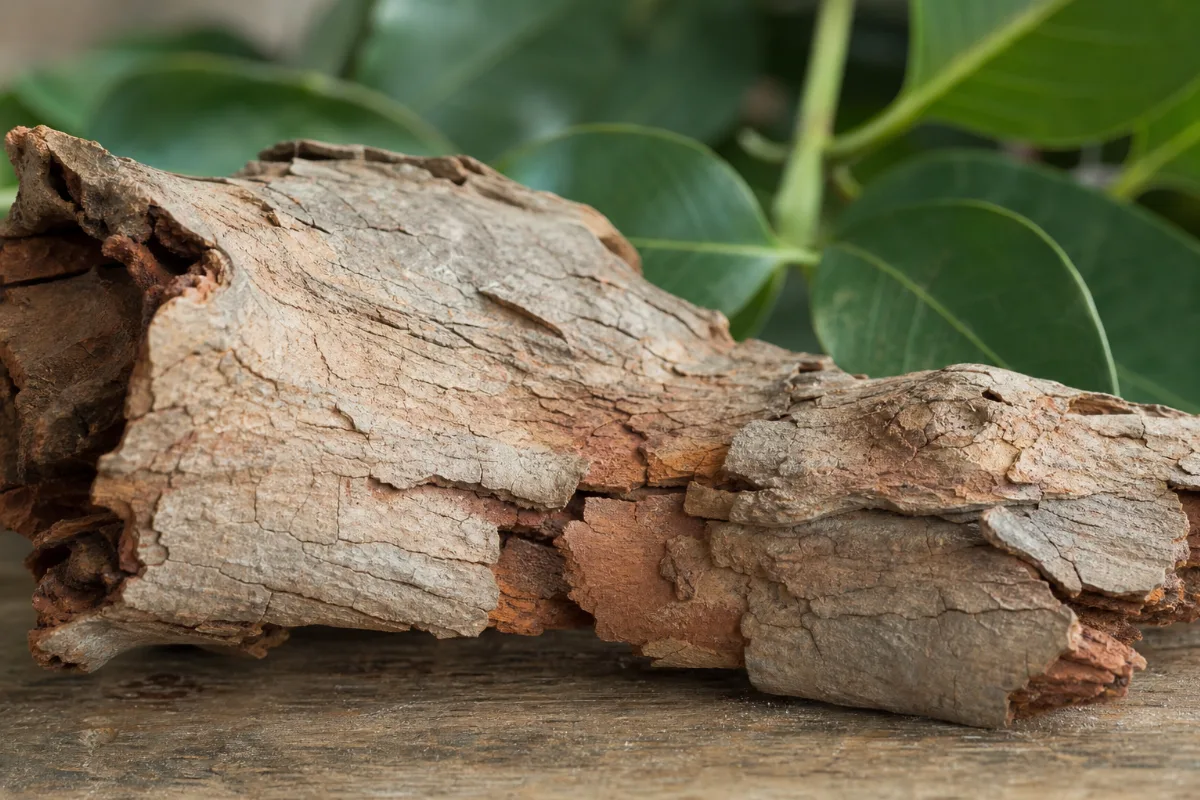
Herbs & Botanicals · Herbs · Ayurvedic tree bark used for the heart, with very low certainty evidence
Arjuna
Terminalia arjuna (Roxb.) Wight & Arn. · also called Arjun, arjuna tree, white murdh, kumbuk; Arjuna bark (Ayurveda); echte Myrobalane (German); Arjuna (French)
Arjuna is a large tree of India whose stem bark is a classic Ayurvedic remedy for the heart. Small trials, mostly from India, have tested the bark for heart failure, angina, blood pressure and cholesterol. The results are mixed, the trials are small and short, and nothing is rated above very low certainty. Do not use arjuna instead of heart treatment. Because people who take it often already use heart, blood pressure or blood-thinning medicines, talk to a doctor or pharmacist first.
General information, not medical advice. Last substantive update · Not medically reviewed. A named clinician has not signed off on this page. How this page is made
About Arjuna
Arjuna (Terminalia arjuna) is a large Indian tree whose stem bark is a classic Ayurvedic heart remedy. Because people who use it often already have heart disease, the main safety message comes first: do not use arjuna instead of heart, blood pressure or blood-thinning treatment. The trials are small, short and mostly from India. In heart failure the best trial (100 people, 12 weeks) missed its main goal. One small angina trial in men was positive, but a review called the evidence insufficient. A very small blood pressure trial was positive when arjuna was added to telmisartan. Nothing is rated above very low or low certainty. Possible interactions with blood pressure, heart-rhythm, nitrate, cholesterol, diabetes and blood-thinning medicines are mostly theory, test-tube or animal findings. A rat study suggested lower thyroid hormones. No human liver injury case was found, but long-term data are thin. Pregnancy and breastfeeding safety is unknown, and some Ayurvedic products have contained heavy metals. EU, NCCIH and LiverTox pages for arjuna were not found. Ask a doctor or pharmacist about amounts.
What it is
Arjuna is the bark of Terminalia arjuna (Roxb.) Wight & Arn., a large tree in the Combretaceae family. GBIF accepts the name. It is described as a common tree of central and south India.
This page covers the stem bark only, as powder, capsules or extracts. A traditional tonic called arjunishta also exists; it is a different preparation and was not among the forms tested in the trials we read.
What makes it distinctive
Arjuna is one of the best-known Ayurvedic herbs for the heart. The bark contains triterpenoids such as arjunolic acid, tannins and flavones. Lab and animal work suggests antioxidant and blood vessel effects, but this has not been shown to explain any effect in people.
Reviewers have noted that many studies did not standardise their extracts and had weak safety data, so a result from one product cannot be assumed for another.
Historical and current uses
In Ayurveda the bark has been used mainly for heart problems. Other parts of the tree have been used for bleeding, diarrhoea, irregular periods, skin ulcers, acne, wounds and fractures. A long history of use does not show that something works or is safe.
Today it is sold as a heart-health supplement. No EU herbal monograph or NCCIH page was found, and WebMD says the FDA has not reviewed it.
What the research shows
The human trials are small, short and mostly from India. No trial tested whether arjuna prevents heart attacks, strokes or deaths. In heart failure, one 100-person trial found no gain in pumping strength; a 2026 pooling of nine trials found lower heart muscle mass but no clear pumping gain. In stable angina, a one-week trial in 58 men was positive, but a review found the evidence insufficient. A 44-person trial found a bigger blood pressure fall when arjuna was added to telmisartan.
Cholesterol, blood vessel lining, inflammation, blood sugar and fitness results come from small trials, several without placebo or with missing numbers in the abstract. Overall certainty is very low.
At a glance
Traditional uses history, not proof
- Ayurveda: the bark has been used mainly for heart problems
- Other parts of the tree have been used for bleeding, diarrhoea, irregular periods, skin ulcers, acne, wounds and fractures
- Traditional liquid tonic (arjunishta) that combines arjuna with other ingredients
Studied for research
- Heart failure, very low to low certainty (one 100-person trial missed its main goal; pooled results mixed)
- Stable angina, very low certainty (one small crossover trial in men; a review found the evidence insufficient)
- High blood pressure, very low certainty (one 44-person trial on top of telmisartan)
- Cholesterol and blood fats, vessel lining, inflammation markers, blood sugar: very low certainty, small and short trials
Main compounds
- Triterpenoids such as arjunolic acid, arjunic acid and arjunetin (a glycoside)
- Tannins and oligomeric proanthocyanidins
- Flavones
Common forms
- Bark powder in capsules, used in several trials
- Bark extracts, including a standardised water extract of stem bark and the brand-coded extract IPC-53
- Traditional arjunishta tonic (not among the forms tested in the trials read)
- Results from one preparation should not be assumed for another
Research links: Arjuna heart failure trial (Phytomedicine, 2016) · Arjuna in heart failure: systematic review (2026) · Arjuna in stable angina: systematic review (2014) · WebMD: Arjuna · Research Library · Genes & Biomarkers Library
The plant and its history
- Accepted scientific name
- Terminalia arjuna (Roxb.) Wight & Arn.
- Naming authority
- (Roxb.) Wight & Arn. (GBIF accepted name, usageKey 3699548, matched exactly, confidence 99)
- Synonyms
- Pentaptera arjuna Roxb.; Pentaptera arjuna Roxb. ex DC.; Pentaptera glabra Roxb.; Pentaptera angustifolia Roxb.; Pentaptera cuneata (Roth) DC.; Chuncoa glabra Buch.-Ham.; Myrobalanus cuneata (B.Heyne ex Roth) Kuntze
- Common names
- Arjuna (English); Arjun (English); Arjun tree (English); White murdh (English); Kumbuk (English); Arjuna (French); Echte Myrobalane (German); Arjuna (Hindi); Arjuna (Sanskrit name written in Devanagari) (Sanskrit); வெண் மருது (Tamil)
- Botanical family
- Combretaceae (the 'leadwood' or 'indian almond' family, order Myrtales), which also includes other Terminalia species and Combretum species; WebMD advises people with allergy to this family to avoid arjuna.
- Classification
- Plantae > Tracheophyta > Magnoliopsida > Myrtales > Combretaceae > Terminalia > Terminalia arjuna
- Native range
- EBSCO describes it as a common tree in central and south India (summary-level; not verified against a botanical database).
- Habitat
- Not verified from a primary source read.
- What the plant looks like
- Roots: Not verified from a primary source read.; Stems: The bark is the medicinal part and the only part this profile covers.; Leaves: Not verified from a primary source read.; Flowers: Not verified from a primary source read.; Fruit: Not verified from a primary source read.
- Cultivation
- Not verified from a primary source read.
- Harvest and processing
- Not verified from a primary source read. What is documented in trials: bark powder, ethanolic or methanolic bark extract, a standardised water extract of stem bark, and the brand-coded extract IPC-53.
- Look-alikes and adulterants
- Name: Other Terminalia species; Note: The genus includes Terminalia bellirica (baheda) and Terminalia chebula (haritaki), which are also used in Ayurveda (for example in triphala); they are different plants with their own evidence. We did not verify any case of arjuna being substituted by them.; Name: Arjunarishta / arjunishta tonic; Note: Traditional fermented liquid tonic containing arjuna bark and other ingredients. It is not the same as the bark powder or extracts tested in the trials we read.
- Sustainability and conservation
- Not verified; no IUCN assessment was retrieved.
Traditional use and history history, not clinical proof
| Tradition or era | Documented use | Source |
|---|---|---|
| Ayurveda, India | The bark has been used mainly for heart problems. Other parts of the tree have been used for bleeding, diarrhoea, irregular periods, skin ulcers, acne, wounds and fractures (EBSCO). A 2017 narrative review gives an ethnomedical overview and says it has been used since ancient times; we did not verify the 'since 500 BC' type claims found in some papers. | s-ebsco-arjun |
| Traditional tonic | Taken as arjunishta, a tonic combining arjuna with other natural ingredients (EBSCO). | s-ebsco-arjun |
| Modern research | Trials in India since 1995 tested bark extract or powder for heart failure, angina, cholesterol and endothelial function; a 2012 review noted the lack of standardised extracts and weak safety data in many clinical studies. | p22583146 |
| Regulation | No EU herbal monograph (EMA/HMPC) or NCCIH page was found for arjuna; WebMD says the FDA has not reviewed it. | s-webmd-arjuna |
Traditional use shows how a plant was used. It does not show that a supplement works or is safe today.
What is inside, and how it may work
What the plant contains and how those compounds act in cells and animals. Laboratory and animal mechanisms are not proven effects in people.
Main compounds
| Compound | Family | Where it is concentrated | Activity studied | Level of evidence |
|---|---|---|---|---|
| Arjunolic acid PubChem 73641 | pentacyclic triterpenoid (oleanane-type) acid | Bark Not stated in sources read | A review describes it as a potent antioxidant and free radical scavenger with reported effects on platelets, blood pressure and cholesterol in experiments; long-term toxicity not studied. 10 | Laboratory research |
| Arjunetin PubChem 21152828 | triterpenoid glycoside (saponin) | Bark Not stated | Named by the IPC-53 trial abstract among glycosides; effects not established in people. 3 | Laboratory research |
| Arjunic acid PubChem 15385516 | triterpenoid acid | Bark Not stated | Listed in the bark extract IPC-53 description with terminic acid and arjunosides. 3 | Laboratory research |
| Tannins and oligomeric proanthocyanidins | condensed tannins / polyphenols | Bark Not stated | Described as strong antioxidants in the bark extract; tannins may reduce iron absorption (WebMD). 3 27 | Laboratory research |
| Flavones | flavonoids | Bark Not stated | Flavones are named as antioxidant components of the bark extract; no single flavone is named in the abstract. 3 | Laboratory research |
Mechanisms, receptors and pathways
| Target or pathway | Gene or receptor | What was found | Level |
|---|---|---|---|
| Antioxidant effect | Red-cell SOD, catalase, glutathione; lipid peroxidation | In the 2016 heart-failure trial red-cell antioxidant enzymes rose in subgroups who improved; in the 2001 trial lipid peroxide fell about 29% on bark powder, near vitamin E. 16 9 | Human data |
| Blood pressure fall via heart or beta-receptors | Beta-adrenergic receptors (suggested) | In anaesthetised dogs, an injected alcoholic extract lowered blood pressure, blocked by propranolol but not atropine or mepyramine, suggesting beta-receptor-type or direct heart action. 18 | Animal research |
| Platelet activity | P-selectin, platelet calcium | An ethanolic bark extract reduced platelet aggregation, calcium release and P-selectin in platelets from people with and without coronary disease, in a test tube. 14 | Laboratory research |
| Thyroid hormones | Thyroid axis | A bark extract lowered thyroid hormones in rats, similar to an antithyroid drug. 20 | Animal research |
| Liver drug-metabolising enzymes | CYP3A, CYP2D | Bark extract and fractions inhibited CYP3A and CYP2D in rat liver tissue (IC50 5.64 and 16.63 microgram/ml for the most potent fraction). 26 | Laboratory research |
| Inflammation and immune signalling | Immune and inflammatory gene pathways | In 116 people with stable coronary disease arjuna lowered immune/inflammatory markers; gene-expression analysis in a subset supported this (numbers not in abstract). 11 | Human data |
Absorption, metabolism and elimination
- Absorption
- No human blood-level data for arjuna's active ingredients were found in the sources we read.
- Distribution
- Not found.
- Metabolism
- Not found in humans. Lab data suggest the extract inhibits CYP3A and CYP2D enzymes in rat liver tissue.
- Elimination
- Not found.
- Bioavailability
- Not established in humans. Reviews of arjunolic acid describe experimental effects but do not give oral bioavailability in people.
Isolated compounds versus whole extracts
Most trials used whole bark powder or bark extracts, not isolated compounds. Lab studies focus on arjunolic acid, but no human trial of isolated arjunolic acid was found. A 2012 review says trials were limited by non-standardised extracts, so which compound matters in people is unknown.
Nutritional composition
A nutrient table is not meaningful for arjuna bark as a medicine; the sources describe minerals in the bark extract (IPC-53 abstract) but give no amounts.
1 low certainty11 very low certainty
What is Arjuna good for?
The main proposed uses and how strong the human evidence is for each. The trials are small and short, and the ratings are our reading, not formal grades.
Benefits, one by one
Each card is a research question, not a promise. Tap a goal to filter. Open a card to see the studies, doses and limits.
Chronic heart failure: pumping strength (ejection fraction)
Low certaintyIn one well-run trial of 100 people with heart failure, an arjuna bark water extract added to usual medicines did not improve the heart's pumping strength over 12 weeks compared with placebo. Some other measures looked better in a post-hoc look at people who improved, but that is not proof.
2 studiesStandardised bark water extract in the 2016 trial; other products are…
Studies, doses and limits
What the trials found
Maulik 2016 (Phytomedicine; 100 people, NYHA class II, ejection fraction 40% or lower, already on standard drugs): standardised bark water extract 750 mg twice daily versus placebo for 12 weeks. The main goal, change in ejection fraction, did not differ (24.3 vs 25.5%; p=0.4). Other secondary outcomes did not differ either except preserved red-cell catalase activity (p=0.01). The extract was well tolerated.
Results
Missed its main goal. A post-hoc comparison of subgroups who improved found larger gains in 6-minute walk distance, antioxidant markers and symptom domains of a quality-of-life questionnaire.
Effect sizes as reported
LVEF 24.3 +/- 7.1 vs 25.5 +/- 7.7%, p=0.4
Why this rating
One randomised trial of reasonable size, but it was negative on its main outcome and the positive findings come from after-the-fact subgroup comparisons. Single centre, India; one author is affiliated with herbal companies.
Form and dose studied
Standardised bark water extract in the 2016 trial; other products are not equivalent.
Who was studied
Adults with NYHA II heart failure on standard drugs.
Limits
One trial for this question; 12 weeks; no data on hospital stays or deaths; subgroup results are hypothesis-generating only.
Why researchers looked
Arjuna bark is the best-known Ayurvedic herb for the heart, so heart failure is the use most tested in modern trials.
Traditional use
In Ayurveda the bark has been used for heart problems for a very long time. Trials test modern bark powder or extracts, not the traditional fermented tonic arjunarishta.
Proposed mechanism Preliminary mechanism
Lab and animal work suggests arjuna bark compounds (arjunolic acid and others) may act as antioxidants and may relax blood vessels or affect heart muscle. These ideas come from cell and animal experiments and have not been shown to explain any effect in people.
A proposed mechanism does not show that the effect happens in people.
Arjuna must not replace heart-failure, angina or blood pressure medicines. Tell your prescriber, because effects on blood pressure and heart drugs are possible but not well tested.
Heart failure: walking distance and quality of life (post-hoc only)
Very low certaintyIn the same 2016 trial, people who happened to improve on arjuna had larger gains in walking distance and some symptom scores. This was found after the trial missed its main goal, so it is a lead for future research, not a finding.
1 studiesStandardised bark water extract.
Studies, doses and limits
What the trials found
Maulik 2016: post-hoc analysis between subgroups of patients who improved found significantly greater percentage increases in 6-minute walk distance, red-cell SOD, catalase and glutathione, and in the symptom severity and stability domains of the Kansas City Cardiomyopathy Questionnaire on arjuna versus placebo. The overall groups did not differ on these outcomes.
Results
Overall groups did not differ; benefit seen only when comparing people who improved.
Effect sizes as reported
No effect sizes in the abstract
Why this rating
Post-hoc subgroup analysis of a trial whose main result was null; selecting people who improved builds in bias.
Form and dose studied
Standardised bark water extract.
Who was studied
Adults with NYHA II heart failure.
Limits
Not a randomised comparison; cannot show arjuna caused the improvement.
Why researchers looked
Heart failure is judged by how people feel and function, not only by scans.
Traditional use
In Ayurveda the bark has been used for heart problems for a very long time. Trials test modern bark powder or extracts, not the traditional fermented tonic arjunarishta.
Proposed mechanism Preliminary mechanism
Lab and animal work suggests arjuna bark compounds (arjunolic acid and others) may act as antioxidants and may relax blood vessels or affect heart muscle. These ideas come from cell and animal experiments and have not been shown to explain any effect in people.
A proposed mechanism does not show that the effect happens in people.
Arjuna must not replace heart-failure, angina or blood pressure medicines. Tell your prescriber, because effects on blood pressure and heart drugs are possible but not well tested.
Severe (NYHA class IV) heart failure: small 1995 crossover trial
Very low certaintyA tiny 1995 trial of 12 people with very severe heart failure found better symptoms and heart scan measures on arjuna bark extract than on placebo over two weeks. It is too small and old to rely on.
1 studiesArjuna bark extract (brand not named in abstract).
Studies, doses and limits
What the trials found
Bharani 1995 (12 people, class IV heart failure on maximally tolerated treatment): bark extract 500 mg every 8 hours or placebo, 2 weeks each with a 2-week washout. On arjuna: better NYHA class (III vs IV), lower echo end-diastolic and end-systolic volume indices (125.28 vs 134.56 and 81.06 vs 94.10 ml/m2; p<0.005), higher stroke volume index (44.21 vs 40.45; p<0.05) and higher ejection fraction (35.33 vs 30.24%; p<0.005). An open-label phase (about 24 months) reported continued improvement but had no control group.
Results
Positive in 12 people over 2 weeks; long-term phase uncontrolled.
Effect sizes as reported
LVEF 35.33 vs 30.24% (p<0.005)
Why this rating
12 participants, two-week periods, one centre, 1995, and no replication of the ejection-fraction gain in the much larger 2016 trial. The abstract in the record we read is cut off.
Form and dose studied
Arjuna bark extract (brand not named in abstract).
Who was studied
Class IV heart failure, mostly dilated cardiomyopathy.
Limits
Very small and old; contradicted on the main measure by the 2016 trial.
Why researchers looked
Reported as one of the first controlled trials of arjuna in severe heart failure.
Traditional use
In Ayurveda the bark has been used for heart problems for a very long time. Trials test modern bark powder or extracts, not the traditional fermented tonic arjunarishta.
Proposed mechanism Preliminary mechanism
Lab and animal work suggests arjuna bark compounds (arjunolic acid and others) may act as antioxidants and may relax blood vessels or affect heart muscle. These ideas come from cell and animal experiments and have not been shown to explain any effect in people.
A proposed mechanism does not show that the effect happens in people.
Arjuna must not replace heart-failure, angina or blood pressure medicines. Tell your prescriber, because effects on blood pressure and heart drugs are possible but not well tested.
Heart failure: pooled reviews (heart muscle mass and ranking)
Very low certaintyA 2026 pooling of nine trials found lower left ventricular mass and higher HDL cholesterol with arjuna, but no clear gain in ejection fraction. Two network analyses of plant extracts put arjuna extract near the top for improving heart-failure class, but those are rankings, not proof.
3 studiesMixed arjuna preparations; the network analyses include a single name…
Studies, doses and limits
What the trials found
Kumar 2026 (9 studies, 537 people): left ventricular mass fell (mean difference -44.32; P=0.0001; no heterogeneity); ejection fraction rose modestly but not significantly (MD 1.85; P=0.1); HDL rose (MD 3.53; P=0.0006); blood pressure, triglycerides and LDL did not change significantly. Tang 2026 network analysis (28 trials, 3,650 people, 15 plant extracts): the arjuna water extract ranked first for number of patients with improved NYHA class (SUCRA 80.4%), but other extracts ranked first for ejection fraction, quality of life and walk distance. Deng 2025 network analysis (20 trials, 2,077 people) lists arjuna among extracts with significant efficacy on cardiac function, but its abstract's ranking figures name other extracts; no arjuna numbers were given. Authors of all three call for larger, higher-quality trials.
Results
Lower LV mass (one pooled result); no clear ejection fraction gain; rankings favour arjuna on NYHA class only in one analysis.
Effect sizes as reported
LV mass MD -44.32; LVEF MD 1.85 (ns); HDL MD 3.53; NYHA SUCRA 80.4%
Why this rating
The pooled trials are few, small and short; the abstracts give no quality ratings; SUCRA ranks treatments but does not measure how large a benefit is; LV mass units and trial details are not in the abstract.
Form and dose studied
Mixed arjuna preparations; the network analyses include a single named product, the water extract of stem bark.
Who was studied
Adults with heart failure.
Limits
Abstract-level reading only; the pooled analyses may re-use the same few small Indian trials.
Why researchers looked
Reviews try to combine the small trials into one answer.
Traditional use
In Ayurveda the bark has been used for heart problems for a very long time. Trials test modern bark powder or extracts, not the traditional fermented tonic arjunarishta.
Proposed mechanism Preliminary mechanism
Lab and animal work suggests arjuna bark compounds (arjunolic acid and others) may act as antioxidants and may relax blood vessels or affect heart muscle. These ideas come from cell and animal experiments and have not been shown to explain any effect in people.
A proposed mechanism does not show that the effect happens in people.
Arjuna must not replace heart-failure, angina or blood pressure medicines. Tell your prescriber, because effects on blood pressure and heart drugs are possible but not well tested.
Chronic stable angina (chest pain on effort)
Very low certaintyA small 1-week crossover trial in 58 men found fewer angina attacks and better treadmill results on arjuna bark extract than on placebo, similar to a standard nitrate. A review of the trials called them poorly designed and the evidence insufficient.
2 studiesBark extract IPC-53 500 mg every 8 hours in the trial.
Studies, doses and limits
What the trials found
Bharani 2002 (58 men, NYHA II-III with provocable ischaemia): bark extract 500 mg every 8 hours, isosorbide mononitrate 40 mg a day, or placebo, one week each in random order. On arjuna: fewer angina episodes and less nitrate use (5.69 vs 18.22 mg/week isosorbide dinitrate; p<0.005), longer exercise (6.14 vs 4.76 min), less ST depression (1.41 vs 2.21 mm) and faster recovery (6.49 vs 9.27 min). The nitrate gave similar gains and the two did not differ. No significant untoward effects. Kaur 2014 systematic review: studies were of poor methodological design; no significant difference on the outcomes that could be pooled; evidence insufficient for or against arjuna.
Results
Positive in one small crossover trial in men; the systematic review found no pooled difference and rated the evidence insufficient.
Effect sizes as reported
Exercise 6.14 vs 4.76 min (p<0.005); review: no significant pooled difference
Why this rating
One small, one-week trial in men; the review judged the trials methodologically poor and could not pool most outcomes. Treatment periods this short say nothing about long-term control or heart attacks.
Form and dose studied
Bark extract IPC-53 500 mg every 8 hours in the trial.
Who was studied
Men with chronic stable angina.
Limits
Short; men only; no hard outcomes; the review found evidence insufficient.
Why researchers looked
Angina is a classic traditional use of arjuna bark.
Traditional use
In Ayurveda the bark has been used for heart problems for a very long time. Trials test modern bark powder or extracts, not the traditional fermented tonic arjunarishta.
Proposed mechanism Preliminary mechanism
Lab and animal work suggests arjuna bark compounds (arjunolic acid and others) may act as antioxidants and may relax blood vessels or affect heart muscle. These ideas come from cell and animal experiments and have not been shown to explain any effect in people.
A proposed mechanism does not show that the effect happens in people.
Chest pain needs a doctor. Do not use arjuna instead of prescribed angina treatment, and do not combine with nitrates without asking.
High blood pressure (stage 1, added to telmisartan)
Very low certaintyOne 2026 trial of 44 people on telmisartan found a larger blood pressure fall with 4 weeks of arjuna than with placebo. It is very small and short, and the pooled heart-failure review found no blood pressure change.
3 studiesArjuna capsules (plant part not stated in the abstract), added to tel…
Studies, doses and limits
What the trials found
Nazir 2026 (44 adults, stage 1 hypertension, all on telmisartan 40 mg daily): arjuna capsules 3 g a day in two doses or placebo for 28 days. Both groups' blood pressure fell from baseline; the fall in the arjuna group was larger than placebo (P<0.001 for systolic and diastolic). Cholesterol, triglycerides and VLDL also fell more (P<0.01, 0.027, <0.01). No test-drug-related adverse events. Kumar 2026 pooled heart-failure trials found no significant blood pressure change. Sandhu 2010 (healthy young adults) reported lower resting systolic pressure with arjuna bark extract, in 10 people per arm.
Results
Larger blood pressure fall than placebo in one 4-week trial; no pooled change in heart-failure trials.
Effect sizes as reported
Significant vs placebo, P<0.001 (mmHg values not in abstract)
Why this rating
One very small, short trial from a single institute with numbers missing from the abstract; the other pooled data disagree.
Form and dose studied
Arjuna capsules (plant part not stated in the abstract), added to telmisartan.
Who was studied
Adults 30-70 with stage 1 hypertension on telmisartan.
Limits
Four weeks; 22 people per arm; no long-term or event data.
Why researchers looked
Arjuna is said in traditional use to support the heart and circulation.
Traditional use
In Ayurveda the bark has been used for heart problems for a very long time. Trials test modern bark powder or extracts, not the traditional fermented tonic arjunarishta.
Proposed mechanism Animal research
Lab and animal work suggests arjuna bark compounds (arjunolic acid and others) may act as antioxidants and may relax blood vessels or affect heart muscle. These ideas come from cell and animal experiments and have not been shown to explain any effect in people. In anaesthetised dogs, an injected alcoholic extract lowered blood pressure; this effect was blocked by propranolol.
A proposed mechanism does not show that the effect happens in people.
Because the benefit was seen on top of a blood pressure medicine, the combination could lower pressure more than expected. Ask the prescriber; report dizziness or fainting.
Cholesterol and blood fats
Very low certaintyA 2001 trial of 105 people with heart disease found lower total and LDL cholesterol after 30 days of arjuna bark powder, and a 2026 trial found lower cholesterol, triglycerides and VLDL. A pooled heart-failure review found no change in LDL or triglycerides. The overall picture is mixed.
4 studiesBark powder 500 mg/day (2001); 3 g/day arjuna capsules (2026).
Studies, doses and limits
What the trials found
Gupta 2001 (105 people with coronary heart disease, not on lipid drugs; Latin-square design): 500 mg bark powder daily for 30 days lowered total cholesterol (-9.7 +/- 12.7%) and LDL (-15.8 +/- 25.6%), p<0.01; placebo and vitamin E groups had no significant lipid change. Nazir 2026 (44 adults, on telmisartan, 28 days): cholesterol, triglycerides and VLDL fell more than placebo (P<0.01, 0.027, <0.01). Kapoor 2015 (116 people with stable CAD): triglycerides and VLDL fell versus placebo (numbers not in abstract). Kumar 2026 pooled analysis: HDL rose (MD 3.53) but LDL and triglycerides did not change significantly.
Results
Some lipid lowering in small, short trials; the pooled analysis disagrees on LDL and triglycerides.
Effect sizes as reported
Total cholesterol -9.7%; LDL -15.8% (Gupta); HDL MD +3.53 (pooled)
Why this rating
Small, short, mostly older single-centre trials with different products; no trial measured heart attacks. Results conflict between trials and the pooled analysis.
Form and dose studied
Bark powder 500 mg/day (2001); 3 g/day arjuna capsules (2026).
Who was studied
People with coronary heart disease or hypertension.
Limits
30 days to 6 months; the 2001 trial used within-group tests; numbers incomplete in several abstracts.
Why researchers looked
Arjuna is traditionally used for the heart, and blood fats are a common thing to measure.
Traditional use
In Ayurveda the bark has been used for heart problems for a very long time. Trials test modern bark powder or extracts, not the traditional fermented tonic arjunarishta.
Proposed mechanism Preliminary mechanism
Lab and animal reports suggest arjunolic acid may lower cholesterol and act as an antioxidant; this has not been shown to explain human results.
A proposed mechanism does not show that the effect happens in people.
Do not replace statins or other cholesterol medicines. Combined use could add to their effect; ask a pharmacist.
Blood vessel lining in smokers
Very low certaintyA tiny 2004 crossover trial in 18 young male smokers found improved blood vessel widening after two weeks of arjuna bark. It is a lab-style measure, not a health outcome.
1 studiesArjuna bark 500 mg every 8 hours.
Studies, doses and limits
What the trials found
Bharani 2004 (18 healthy male smokers, mean age 28): arjuna bark 500 mg every 8 hours or placebo for two weeks each in a crossover design. Flow-mediated dilation was impaired at the start (4.71% vs 11.75% in non-smokers); it rose to 9.31% on arjuna versus 5.17% on placebo (p<0.005). Vessel diameter and flow velocity did not differ.
Results
Improved vessel widening in 18 young smokers after two weeks.
Effect sizes as reported
FMD 9.31 vs 5.17% (p<0.005)
Why this rating
18 people, two weeks, one centre, a vessel test rather than a health outcome. No replication was found.
Form and dose studied
Arjuna bark 500 mg every 8 hours.
Who was studied
Young healthy male smokers.
Limits
Tiny, short, men only; no follow-up.
Why researchers looked
Smoking damages the vessel lining, and arjuna is rich in antioxidants.
Traditional use
In Ayurveda the bark has been used for heart problems for a very long time. Trials test modern bark powder or extracts, not the traditional fermented tonic arjunarishta.
Proposed mechanism Preliminary mechanism
The authors point to antioxidant effects; this is a suggestion, not shown in the trial.
A proposed mechanism does not show that the effect happens in people.
Stopping smoking is the proven way to protect the vessels.
Inflammation markers in coronary artery disease
Very low certaintyA 2015 trial of 116 people with stable heart disease found arjuna lowered triglycerides, VLDL and inflammation-related markers compared with placebo. The abstract gives no numbers.
1 studiesArjuna 500 mg twice daily (preparation not stated in abstract).
Studies, doses and limits
What the trials found
Kapoor 2015 (116 people with stable CAD on medicines; arjuna 500 mg twice daily or placebo; checks at 3 and 6 months): arjuna down-regulated triglycerides, VLDL cholesterol and immuno-inflammatory markers versus placebo. Microarray and PCR work in few samples (n=50 for PCR) agreed; an in-vitro comparison with atorvastatin was also reported.
Results
Direction favoured arjuna on inflammation markers and triglycerides; no values given.
Effect sizes as reported
Not given in abstract
Why this rating
Only the abstract was read, with no numbers; marker changes may not mean fewer events; gene work was in few samples.
Form and dose studied
Arjuna 500 mg twice daily (preparation not stated in abstract).
Who was studied
Adults with stable coronary artery disease on usual drugs.
Limits
No clinical events measured; single centre.
Why researchers looked
Inflammation is thought to drive artery disease, so researchers measured immune and inflammation markers.
Traditional use
In Ayurveda the bark has been used for heart problems for a very long time. Trials test modern bark powder or extracts, not the traditional fermented tonic arjunarishta.
Proposed mechanism Preliminary mechanism
Gene-expression analysis in a small subset pointed to anti-inflammatory and immune-modulating pathways; this is early lab-style evidence.
A proposed mechanism does not show that the effect happens in people.
Added to usual medicines; keep taking them.
Blood sugar in type 2 diabetes
Very low certaintyA 2024 trial of 60 people with type 2 diabetes found arjuna bark added to metformin lowered fasting sugar and HbA1c about as much as the drug sitagliptin did. There was no placebo group, so the result is weak.
1 studiesArjuna bark 1 g with metformin.
Studies, doses and limits
What the trials found
Prakash 2024 (60 adults with type 2 diabetes, 12 weeks): arjuna bark 1 g plus metformin 500 mg twice daily versus sitagliptin 100 mg plus the same metformin. Fasting sugar and HbA1c fell significantly in both groups; the 12-week HbA1c fall was about -0.89 versus -0.90 and fasting sugar -61.17 versus -62.80, not significantly different. Sitagliptin group: 2 headaches and 1 nasopharyngitis; arjuna group none.
Results
Similar fall to sitagliptin, both with metformin; no placebo.
Effect sizes as reported
HbA1c about -0.89 vs -0.90 (ns)
Why this rating
No placebo control, so metformin and natural drift may explain much of the change; small and short; randomisation and blinding not stated in the abstract.
Form and dose studied
Arjuna bark 1 g with metformin.
Who was studied
Adults with type 2 diabetes on metformin.
Limits
12 weeks; 30 per group; abstract only.
Why researchers looked
Some traditional and laboratory sources link arjuna with blood sugar; EBSCO calls such benefits beliefs rather than established.
Traditional use
In Ayurveda the bark has been used for heart problems for a very long time. Trials test modern bark powder or extracts, not the traditional fermented tonic arjunarishta.
Proposed mechanism Preliminary mechanism
Not established; computer and lab work has proposed several targets, none confirmed in people.
A proposed mechanism does not show that the effect happens in people.
Could add to diabetes medicines; watch for low blood sugar and tell your prescriber.
Exercise capacity and blood pressure in healthy young adults
Very low certaintyIn 40 healthy young adults, 8 weeks of arjuna bark extract raised aerobic fitness (VO2 max) and lowered resting systolic pressure in a small trial of 10 people per arm. It does not apply to people with heart disease.
1 studiesStandardised arjuna bark extract 500 mg/day.
Studies, doses and limits
What the trials found
Sandhu 2010 (40 healthy adults, mean age 20.6; 10 per group): 500 mg a day of standardised arjuna bark extract, ashwagandha root extract, both together, or placebo for 8 weeks. Arjuna alone increased VO2 max and lowered resting systolic pressure; the combination improved all measures except balance and diastolic pressure (numbers not in abstract).
Results
Small gains in fitness and systolic pressure in healthy young adults.
Effect sizes as reported
Directional only
Why this rating
Ten per arm; numbers missing; one arm combined arjuna with a different herb (ashwagandha), so its effect there cannot be credited to arjuna.
Form and dose studied
Standardised arjuna bark extract 500 mg/day.
Who was studied
Healthy adults around age 20.
Limits
Eight weeks; very small; healthy young people only.
Why researchers looked
Researchers wanted to see whether arjuna's heart reputation shows up as fitness in healthy people.
Traditional use
In Ayurveda the bark has been used for heart problems for a very long time. Trials test modern bark powder or extracts, not the traditional fermented tonic arjunarishta.
Proposed mechanism Preliminary mechanism
Not explained by the trial.
A proposed mechanism does not show that the effect happens in people.
Authors say both appeared safe at that dose and duration in young adults.
Heart risk factors versus amlodipine plus atorvastatin
Very low certaintyA small 2021 trial compared 8 weeks of arjuna bark powder with a blood pressure drug plus a statin. Both improved blood pressure, lipids and BMI, with no significant difference between them. There was no placebo.
1 studiesArjun Chal (bark powder) 5 g twice daily.
Studies, doses and limits
What the trials found
Saleem 2021 (48 enrolled, 40 completed): arjuna bark powder 5 g twice daily versus amlodipine 5 mg plus atorvastatin 10 mg daily for 8 weeks. Lipids, blood pressure and BMI fell in both groups (p<0.001 within each); the arjuna group's changes were larger but the difference between groups was not statistically significant (p>0.05).
Results
Both groups improved; no significant difference between them.
Effect sizes as reported
Between-group difference not significant
Why this rating
No placebo, so improvement may be due to diet advice, regression or the drugs; 8 weeks; 40 completers; abstract only.
Form and dose studied
Arjun Chal (bark powder) 5 g twice daily.
Who was studied
Adults with cardiovascular risk factors.
Limits
Small; no placebo; the authors' 'slight edge' claim was not statistically significant.
Why researchers looked
Tests arjuna against standard drugs in people with several risk factors.
Traditional use
In Ayurveda the bark has been used for heart problems for a very long time. Trials test modern bark powder or extracts, not the traditional fermented tonic arjunarishta.
Proposed mechanism Preliminary mechanism
Not explained by the trial.
A proposed mechanism does not show that the effect happens in people.
Do not swap prescribed amlodipine or atorvastatin for arjuna.
Connections to the rest of health
How Arjuna connects to the rest of our health knowledge graph. Every link says what kind of connection it is. A safety link (for example to the liver) is a warning, not a benefit. A study that merely mentions a topic never creates a benefit link.
Explore every connection: goals, body systems, organs, symptoms, genes
A. Wellness goals
| Connected to | Kind of connection | Evidence status | Context | Studies |
|---|---|---|---|---|
| Heart Health | Potential benefit | Low certainty | Chronic heart failure: pumping strength (ejection fraction): In one well-run trial of 100 people with heart failure, an arjuna bark water extract added to usual medicines did not improve the heart's pumping strength over 12 weeks compared with placebo. Some other measures looked better in a post-hoc look at people who improved, but that is not proof. Heart failure: walking distance and quality of life (post-hoc only): In the same 2016 trial, people who happened to improve on arjuna had larger gains in walking distance and some symptom scores. This was found after the trial missed its main goal, so it is a lead for future research, not a finding. | 16 15 2 13 24 5 3 12 19 18 9 11 4 22 |
| Physical Stamina | Potential benefit | Very low certainty | Heart failure: walking distance and quality of life (post-hoc only): In the same 2016 trial, people who happened to improve on arjuna had larger gains in walking distance and some symptom scores. This was found after the trial missed its main goal, so it is a lead for future research, not a finding. Exercise capacity and blood pressure in healthy young adults: In 40 healthy young adults, 8 weeks of arjuna bark extract raised aerobic fitness (VO2 max) and lowered resting systolic pressure in a small trial of 10 people per arm. It does not apply to people with heart disease. | 16 23 |
| Blood Pressure Support | Potential benefit | Very low certainty | High blood pressure (stage 1, added to telmisartan): One 2026 trial of 44 people on telmisartan found a larger blood pressure fall with 4 weeks of arjuna than with placebo. It is very small and short, and the pooled heart-failure review found no blood pressure change. Heart risk factors versus amlodipine plus atorvastatin: A small 2021 trial compared 8 weeks of arjuna bark powder with a blood pressure drug plus a statin. Both improved blood pressure, lipids and BMI, with no significant difference between them. There was no placebo. | 19 13 18 22 |
| Cholesterol Balance | Potential benefit | Very low certainty | Cholesterol and blood fats: A 2001 trial of 105 people with heart disease found lower total and LDL cholesterol after 30 days of arjuna bark powder, and a 2026 trial found lower cholesterol, triglycerides and VLDL. A pooled heart-failure review found no change in LDL or triglycerides. The overall picture is mixed. Heart risk factors versus amlodipine plus atorvastatin: A small 2021 trial compared 8 weeks of arjuna bark powder with a blood pressure drug plus a statin. Both improved blood pressure, lipids and BMI, with no significant difference between them. There was no placebo. | 9 19 11 13 22 |
| Inflammation Balance | Potential benefit | Very low certainty | Inflammation markers in coronary artery disease: A 2015 trial of 116 people with stable heart disease found arjuna lowered triglycerides, VLDL and inflammation-related markers compared with placebo. The abstract gives no numbers. | 11 |
| Blood Sugar Balance | Potential benefit | Very low certainty | Blood sugar in type 2 diabetes: A 2024 trial of 60 people with type 2 diabetes found arjuna bark added to metformin lowered fasting sugar and HbA1c about as much as the drug sitagliptin did. There was no placebo group, so the result is weak. | 21 |
| Metabolic Health | Potential benefit | Very low certainty | Blood sugar in type 2 diabetes: A 2024 trial of 60 people with type 2 diabetes found arjuna bark added to metformin lowered fasting sugar and HbA1c about as much as the drug sitagliptin did. There was no placebo group, so the result is weak. | 21 |
| Endurance Support | Potential benefit | Very low certainty | Exercise capacity and blood pressure in healthy young adults: In 40 healthy young adults, 8 weeks of arjuna bark extract raised aerobic fitness (VO2 max) and lowered resting systolic pressure in a small trial of 10 people per arm. It does not apply to people with heart disease. | 23 |
B. Body systems
| Connected to | Kind of connection | Evidence status | Context | Studies |
|---|---|---|---|---|
| Cardiovascular System | Biological association | Low certainty | Studied for: Chronic heart failure: pumping strength (ejection fraction) Studied for: Heart failure: walking distance and quality of life (post-hoc only) | 16 15 2 13 24 5 3 12 19 18 9 11 4 23 22 |
| Metabolism Weight | Biological association | Very low certainty | Studied for: Cholesterol and blood fats Studied for: Blood sugar in type 2 diabetes | 9 19 11 13 21 |
| Immune System | Biological association | Very low certainty | Studied for: Inflammation markers in coronary artery disease | 11 |
| Endocrine System | Biological association | Very low certainty | Studied for: Blood sugar in type 2 diabetes | 21 |
| Musculoskeletal System | Biological association | Very low certainty | Studied for: Exercise capacity and blood pressure in healthy young adults | 23 |
C. Body parts and organs
| Connected to | Kind of connection | Evidence status | Context | Studies |
|---|---|---|---|---|
| Heart | Contraindication | Mixed findings | Do not use instead of heart-failure or angina care. Trials were small; the 2016 heart-failure trial missed its main goal. Preparation or compound: Arjuna bark powder or extract |
16 12 |
| Blood vessels | Drug or supplement interaction | Low certainty | Possible extra blood pressure fall with blood pressure drugs. Preparation or compound: Arjuna bark |
19 18 |
| Thyroid | Adverse effect or risk | Not enough evidence | Lower thyroid hormones in rats; no human data. Preparation or compound: Bark extract (rat doses) |
20 |
| Liver | Adverse effect or risk | Not enough evidence | No human liver injury case found; liver tests unchanged in a 70-person study; rat liver stress at some doses. Preparation or compound: Bark extract |
6 20 |
D. Symptoms
| Connected to | Kind of connection | Evidence status | Context | Studies |
|---|---|---|---|---|
| Heart failure | Potential benefit | Low certainty | No gain in pumping strength in the best trial; pooled results mixed. Do not self-treat. Preparation or compound: Arjuna stem bark water extract |
16 13 |
| Angina | Potential benefit | Very low certainty | One small one-week trial in men; a review found the evidence insufficient. Preparation or compound: Arjuna bark extract |
3 12 |
| High blood pressure | Potential benefit | Very low certainty | One 44-person trial on top of telmisartan; pooled heart-failure trials show no change. Preparation or compound: Arjuna capsules |
19 13 |
F. Functional actions
| Connected to | Kind of connection | Evidence status | Context | Studies |
|---|---|---|---|---|
| Platelet activity | Drug or supplement interaction | Not enough evidence | Test-tube reduction in platelet clumping; bleeding risk is a theory only. Preparation or compound: Ethanolic bark extract |
14 |
I. Biomarkers
| Connected to | Kind of connection | Evidence status | Context | Studies |
|---|---|---|---|---|
| Left ventricular ejection fraction (LVEF) | Biological association | Very low certainty | Measured in trials: mixed. A lab change is not the same as a health benefit. | 16 2 13 |
| Left ventricular mass | Biological association | Very low certainty | Measured in trials: lowered. A lab change is not the same as a health benefit. | 13 |
| NYHA functional class | Biological association | Very low certainty | Measured in trials: lowered. A lab change is not the same as a health benefit. | 2 24 16 |
| Angina attacks and nitrate use | Biological association | Very low certainty | Measured in trials: lowered. A lab change is not the same as a health benefit. | 3 12 |
| Blood pressure (systolic and diastolic) | Biological association | Very low certainty | Measured in trials: mixed. A lab change is not the same as a health benefit. | 19 13 23 |
| Total and LDL cholesterol | Biological association | Very low certainty | Measured in trials: mixed. A lab change is not the same as a health benefit. | 9 19 13 |
| HDL cholesterol | Biological association | Very low certainty | Measured in trials: raised. A lab change is not the same as a health benefit. | 13 |
| Triglycerides and VLDL cholesterol | Biological association | Very low certainty | Measured in trials: mixed. A lab change is not the same as a health benefit. | 19 11 13 |
| Lipid peroxide (TBARS) | Biological association | Very low certainty | Measured in trials: lowered. A lab change is not the same as a health benefit. | 9 |
| Flow-mediated dilation (FMD) | Biological association | Very low certainty | Measured in trials: raised. A lab change is not the same as a health benefit. | 4 |
| Fasting blood sugar and HbA1c | Biological association | Very low certainty | Measured in trials: lowered. A lab change is not the same as a health benefit. | 21 |
| Immune and inflammation markers | Biological association | Very low certainty | Measured in trials: lowered. A lab change is not the same as a health benefit. | 11 |
| VO2 max (aerobic fitness) | Biological association | Very low certainty | Measured in trials: raised. A lab change is not the same as a health benefit. | 23 |
J. Genes, receptors and enzymes
| Connected to | Kind of connection | Evidence status | Context | Studies |
|---|---|---|---|---|
| CYP3A and CYP2D drug-metabolising enzymes | Preliminary mechanism | In vitro | Inhibited by bark extract in rat liver tissue; no human data. | 26 |
K. Biological pathways
| Connected to | Kind of connection | Evidence status | Context | Studies |
|---|---|---|---|---|
| Platelet activation (P-selectin, calcium) | Preliminary mechanism | In vitro | Reduced by an ethanolic bark extract in a test tube. | 14 |
| Thyroid hormone axis | Preliminary mechanism | Animal | Lower hormones in rats given the extract. | 20 |
| Immune and inflammatory gene expression | Preliminary mechanism | Human | Changed in a subset of 116 people with coronary disease taking arjuna (details not in abstract). | 11 |
L. Active compounds
| Connected to | Kind of connection | Evidence status | Context | Studies |
|---|---|---|---|---|
| Arjunolic acid | Biological association | In vitro | A review describes it as a potent antioxidant and free radical scavenger with reported effects on platelets, blood pressure and cholesterol in experiments; long-term toxicity not studied. Preparation or compound: Bark |
10 |
| Arjunetin | Biological association | In vitro | Named by the IPC-53 trial abstract among glycosides; effects not established in people. Preparation or compound: Bark |
3 |
| Arjunic acid | Biological association | In vitro | Listed in the bark extract IPC-53 description with terminic acid and arjunosides. Preparation or compound: Bark |
3 |
| Tannins and oligomeric proanthocyanidins | Biological association | In vitro | Described as strong antioxidants in the bark extract; tannins may reduce iron absorption (WebMD). Preparation or compound: Bark |
3 27 |
| Flavones | Biological association | In vitro | Flavones are named as antioxidant components of the bark extract; no single flavone is named in the abstract. Preparation or compound: Bark |
3 |
Each connection is stored with the ingredient, the connected record, the kind of connection, the evidence status, the supporting studies, the preparation or compound involved, and a review date (last reviewed October 25, 2026).
Evidence at a glance: what changed in 13 lab markers
Tap a number to show only those markers. Counts are markers, not people.
The evidence
The research centre for Arjuna. Every record here was checked against PubMed or the publisher's page; we never list a study we have not verified.
Evidence by outcome
Bars show how many studies we found for each outcome, not how well it works. People are added up across trials only (reviews are not added, to avoid double counting).
How we rate evidence
High certainty
Several well-run trials or reviews agree; further research is unlikely to change the picture much.
Moderate certainty
Good trials point the same way, but some doubt remains.
Low certainty
Small, short or inconsistent trials. The finding could change with better research.
Very low certainty
Very little or very weak human data. Treat as a possibility only.
Mixed findings
Trials or reviews disagree with each other.
Not enough evidence
Not enough human research to say either way.
Evidence against
Good research found no benefit, or found harm.
We take the reviewers' own risk-of-bias and GRADE statements where they exist, and otherwise judge from study size, design, consistency, directness and whether a product matches what is sold. Many publications do not make evidence high. Method note: We searched PubMed, WebMD, EBSCO Research Starters, GBIF, NCBI and PubChem, and recorded each study's design, people, product and result as reported. Only abstracts were read for most studies. We could not find an EMA/HMPC monograph, NCCIH page, LiverTox entry or LactMed entry for arjuna, so these are marked not found, not confirmed absent. Certainty ratings are the compiler's own reading, not formal grades. No study is cited that we could not verify.
Study library: every study we checked 27
| Study | Design | People | Product, dose, length | Result |
|---|---|---|---|---|
| Amalraj 2017 Medicinal properties of Terminalia arjuna (Roxb.) Wight & Arn.: A review. Journal of Traditional and Complementary Medicine · PMID 28053890 · DOI |
Other |
Narrative review | Terminalia arjuna bark n/a n/a · vs n/a |
Narrative review describing antioxidant, hypotensive, anti-atherogenic, anti-inflammatory and other effects, and stating a 'good safety outline' with conventional drugs. n/a Methods, limits and fundingOutcomes: Ethnomedical, phytochemical and pharmacological overview Limitations: Narrative review (not systematic). Authors work at a supplement company (Aurea Biolabs). Its 'good safety outline' claim goes beyond the trials we read. Only the abstract was read. Funding and conflicts: Authors at Aurea Biolabs Pvt Ltd Read: abstract |
| Bharani 1995 Salutary effect of Terminalia Arjuna in patients with severe refractory heart failure. International Journal of Cardiology · PMID 7649665 · DOI |
Controlled trial |
12 Severe refractory heart failure (NYHA IV), mostly idiopathic dilated cardiomyopathy |
Arjuna bark extract bark 500 mg every 8 hours 2 weeks per period (crossover) then open-label 20-28 months · vs Placebo |
Versus placebo: better symptoms and signs, NYHA class III vs IV, lower end-diastolic and end-systolic volume indices (125.28 vs 134.56 and 81.06 vs 94.10 ml/m2; both p<0.005), higher stroke volume index (44.21 vs 40.45; p<0.05), higher LVEF (35.33 vs 30.24%; p<0.005). Open-label phase (mean 24 months) reported continued improvement. LVEF 35.33 vs 30.24% (p<0.005) Methods, limits and fundingOutcomes: Symptoms, NYHA class, echocardiographic volumes and LVEF Limitations: Only 12 people; very short crossover; the long phase had no control group. Abstract is truncated at 250 words in the record we read. 1995, single centre in India. Funding and conflicts: Not stated Read: abstract |
| Bharani 2002 Efficacy of Terminalia arjuna in chronic stable angina: a double-blind, placebo-controlled, crossover study comparing Terminalia arjuna with isosorbide mononitrate. Indian Heart Journal · PMID 12086380 |
Controlled trial |
58 Men with chronic stable angina (NYHA II-III) and provocable ischaemia on treadmill |
Arjuna bark extract (IPC-53) bark 500 mg every 8 hours (isosorbide mononitrate 40 mg/day as active comparator) 1 week per treatment period, crossover · vs Placebo and isosorbide mononitrate |
Versus placebo: less angina and less nitrate use (5.69 vs 18.22 mg/week isosorbide dinitrate; p<0.005), longer exercise (6.14 vs 4.76 min), less ST depression (1.41 vs 2.21 mm), faster recovery (6.49 vs 9.27 min). Similar gains with isosorbide mononitrate; no significant difference between arjuna and isosorbide. No significant untoward effects. Exercise 6.14 vs 4.76 min (p<0.005) Methods, limits and fundingOutcomes: Angina frequency, need for nitrate, treadmill measures Limitations: Men only; one-week treatment periods; single centre; no hard outcomes. Only the abstract was read. Funding and conflicts: Not stated Read: abstract |
| Bharani 2004 Terminalia arjuna reverses impaired endothelial function in chronic smokers. Indian Heart Journal · PMID 15377133 |
Controlled trial |
18 Healthy young male smokers (mean age 28) compared with 18 non-smokers |
Arjuna bark bark 500 mg every 8 hours 2 weeks per period (crossover) · vs Placebo |
Smokers started with impaired flow-mediated dilation (4.71 vs 11.75% in non-smokers). After arjuna it rose to 9.31% versus 5.17% on placebo (p<0.005). Vessel diameter and flow did not differ. FMD 9.31 vs 5.17% (p<0.005) Methods, limits and fundingOutcomes: Flow-mediated dilation of the brachial artery Limitations: 18 young men; two weeks; a vessel test, not a health outcome. Only the abstract was read. Funding and conflicts: Not stated Read: abstract |
| Deng 2025 Effects of plant extracts on patients with heart failure: a network meta-analysis of randomized controlled trials. Frontiers in Pharmacology · PMID 41268442 · DOI |
Meta-analysis |
2077 Heart failure; 20 trials |
Plant extracts including Terminalia arjuna extract bark Various Various · vs Placebo or usual care |
Conclusion lists arjuna extract among those with significant efficacy on cardiac function outcomes, but the abstract's numbers rank other extracts first (astragalus, Shenfu, red ginseng, ginkgo). Heterogeneity and methods problems noted. No arjuna-specific numbers in abstract Methods, limits and fundingOutcomes: 6-minute walk, TNF-alpha, BNP, quality of life, LVEF, NYHA class Limitations: The abstract gives no arjuna figures, and the 2016 arjuna trial itself missed its main outcome, so this conclusion should be read cautiously. Only the abstract was read. Funding and conflicts: Authors declare no conflicts Read: abstract |
| Dwivedi 2019 Role of Terminalia arjuna Wight and Arn. in the treatment of chronic coronary artery disease from pharmacovigilance point of view. Ayu · PMID 32398910 · DOI |
Other |
70 Chronic coronary artery disease; 35 on arjuna plus usual drugs, 35 on usual drugs alone |
Arjuna bark extract powder bark 500 mg three times daily 9 months to 4 years 9 months · vs Usual drugs alone (open, non-placebo control) |
Apart from gastritis and constipation, no noteworthy adverse effects. No significant change in laboratory values (including liver and kidney tests) between baseline and end of therapy in either group. No significant lab changes Methods, limits and fundingOutcomes: Blood count, liver and kidney tests every 6 months; ECG; echo yearly; adverse reactions Limitations: Open, non-blinded comparison; 70 people; numbers per test not in abstract; the authors' conclusion that arjuna is 'safe and effective' goes further than this design can show. Only the abstract was read. Funding and conflicts: No conflict of interest declared Read: abstract |
| EBSCO Research Starters 2026 Arjun as a dietary supplement (EBSCO Research Starters) EBSCO Research Starters · Source |
Authoritative guidance n/a |
Terminalia arjuna bark |
Native to central and south India. Bark used in Ayurveda mainly for heart problems; other parts for bleeding, diarrhoea, irregular periods, skin ulcers, acne, wounds, fractures. Often taken as arjunishta tonic. Describes the angina crossover trial and says cholesterol evidence is weak. No severe adverse effects associated, but comprehensive safety studies have not been performed. Safety not established in pregnancy, breastfeeding, severe liver or kidney disease, or young children. Interactions not discussed. Methods, limits and fundingLimitations: Encyclopedic summary, not a regulator. It describes a 3-month heart-attack trial we could not locate, so we do not repeat that claim. Read: full-text | |
| GBIF GBIF Backbone: Terminalia arjuna (Roxb.) Wight & Arn. (usageKey 3699548) GBIF · Source |
Reference database n/a |
Terminalia arjuna bark |
Accepted species, family Combretaceae, order Myrtales. Synonyms include Pentaptera arjuna Roxb., Pentaptera glabra Roxb., Chuncoa glabra Buch.-Ham. and Myrobalanus cuneata. Vernacular names include arjun, arjuna, kumbuk, white murdh (English); Arjuna (French); echte Myrobalane (German); Hindi, Sanskrit and Tamil names. Retrieved 2026-10-25 by API. Methods, limits and fundingLimitations: Names list only; native range and habitat not taken from GBIF. Read: full-text | |
| Gupta 2001 Antioxidant and hypocholesterolaemic effects of Terminalia arjuna tree-bark powder: a randomised placebo-controlled trial. Journal of the Association of Physicians of India · PMID 11225136 |
Controlled trial |
105 Patients with coronary heart disease, not on lipid-lowering drugs |
Arjuna bark powder bark 500 mg a day in capsules (vitamin E 400 units/day as comparator arm) 30 days · vs Placebo and vitamin E |
Arjuna group: total cholesterol -9.7 +/- 12.7% and LDL -15.8 +/- 25.6% (p<0.01); no significant change in placebo or vitamin E groups. Lipid peroxide fell in both treatment groups (vitamin E -36.4%, arjuna -29.3%). Total cholesterol -9.7%; LDL -15.8% Methods, limits and fundingOutcomes: Total, LDL, HDL cholesterol, triglycerides, lipid peroxide (TBARS) Limitations: Only 30 days; Latin-square design; response rate 86-91%; paired within-group tests; 2001, single centre. Only the abstract was read. Funding and conflicts: Not stated Read: abstract |
| Hemalatha 2010 Arjunolic acid: a novel phytomedicine with multifunctional therapeutic applications. Indian Journal of Experimental Biology · PMID 21046976 |
Other in-vitro |
Narrative review, mostly animal and lab work | Arjunolic acid (isolated compound) bark n/a n/a · vs n/a |
Describes arjunolic acid as a triterpenoid saponin and antioxidant, with reported effects on platelet aggregation, coagulation, blood pressure, cholesterol and metal-induced organ toxicity in experiments. Says more work is needed on mechanisms and on side effects/toxicity with long-term use. n/a Methods, limits and fundingOutcomes: Overview of arjunolic acid's reported effects Limitations: Narrative review; effects described are lab and animal findings on an isolated compound, not whole bark. Only the abstract was read. Funding and conflicts: Not stated Read: abstract |
| Kapoor 2015 Short-Term Adjuvant Therapy with Terminalia arjuna Attenuates Ongoing Inflammation and Immune Imbalance in Patients with Stable Coronary Artery Disease: In Vitro and In Vivo Evidence. Journal of Cardiovascular Translational Research · PMID 25827448 · DOI |
Controlled trial |
116 Patients with stable coronary artery disease, on usual medicines |
Arjuna (preparation and plant part not stated in abstract) unspecified 500 mg twice daily 6 months of follow-up (3 and 6 month checks) · vs Placebo |
Arjuna lowered triglycerides, VLDL cholesterol and immuno-inflammatory markers versus placebo (numbers not in abstract); gene-expression analysis in a subset pointed the same way. Direction only; numbers not in abstract Methods, limits and fundingOutcomes: Triglycerides, VLDL, immune and inflammatory markers; gene-expression analysis in a subset Limitations: Numbers not in the abstract; gene-expression work in few samples (n=50 for PCR); lab surrogate markers, not events. Only the abstract was read. Funding and conflicts: Not stated in abstract (research support, non-US government) Read: abstract |
| Kaur 2014 Terminalia arjuna in Chronic Stable Angina: Systematic Review and Meta-Analysis. Cardiology Research and Practice · PMID 24600529 · DOI |
Systematic review |
Adults with chronic stable angina | Terminalia arjuna / commercial preparations bark Not given in abstract Not given in abstract · vs Standard treatment |
Studies were of poor methodological design. No significant difference between arjuna and control on the outcomes that could be pooled. Evidence insufficient to conclude for or against arjuna. No significant difference on pooled outcomes Methods, limits and fundingOutcomes: Pooled angina outcomes Limitations: Few studies; small and poorly designed; included pseudo-randomised and before-after studies. Only the abstract was read. Funding and conflicts: Not stated Read: abstract |
| Kumar 2026 Evaluation of the Therapeutic Potential and Safety of Terminalia arjuna in Heart Failure Management: A Systematic Review and Meta-analysis of Randomized Controlled Trials. Annals of African Medicine · PMID 42389976 · DOI |
Meta-analysis |
537 Adults with heart failure; 9 studies |
Terminalia arjuna preparations (various) bark Not given in abstract Not given in abstract · vs Control arms (not specified in abstract) |
LV mass fell (MD -44.32; P=0.0001; no heterogeneity). LVEF rose modestly, not significant (MD 1.85; P=0.1). HDL rose (MD 3.53; P=0.0006). Blood pressure, triglycerides and LDL did not change significantly. LV mass MD -44.32; LVEF MD 1.85 (ns); HDL MD 3.53 Methods, limits and fundingOutcomes: LV mass, LVEF, HDL, blood pressure, triglycerides, LDL Limitations: Abstract does not give units, trial quality or per-trial preparations; authors call for larger high-quality trials. Authors are from a dental institute. PROSPERO-registered (number not in abstract). Only the abstract was read; abstract published online ahead of print. Funding and conflicts: No funding statement in abstract Read: abstract |
| Malik 2009 Inhibitory effects of Terminalia arjuna on platelet activation in vitro in healthy subjects and patients with coronary artery disease. Platelets · PMID 19437336 |
Laboratory research in-vitro |
40 Platelets from 20 people with coronary artery disease and 20 matched controls |
Ethanolic arjuna bark extract bark Test-tube concentrations n/a · vs Untreated platelets |
The extract reduced platelet aggregation, calcium release and P-selectin expression in platelets from both groups. Directional only Methods, limits and fundingOutcomes: Platelet aggregation, P-selectin, calcium release Limitations: Done on blood cells in a test tube; says nothing about bleeding risk in people taking the herb. Funding and conflicts: Not stated Read: abstract |
| Maulik 2012 Therapeutic potential of Terminalia arjuna in cardiovascular disorders. American Journal of Cardiovascular Drugs · PMID 22583146 · DOI |
Other |
Narrative review | Terminalia arjuna bark n/a n/a · vs n/a |
Notes antioxidant, anti-ischaemic, antihypertensive and antihypertrophic effects in experiments and reports of clinical efficacy in ischaemic heart disease, hypertension and heart failure. Names as major shortcomings the lack of phytochemical standardisation of extracts and poor design and safety data in many clinical studies. n/a Methods, limits and fundingOutcomes: Overview of experimental and clinical cardiovascular work Limitations: Narrative review. Only the abstract was read. Funding and conflicts: Not stated Read: abstract |
| Maulik 2016 Clinical efficacy of water extract of stem bark of Terminalia arjuna (Roxb. ex DC.) Wight & Arn. in patients of chronic heart failure: a double-blind, randomized controlled trial. Phytomedicine · PMID 26988798 · DOI |
Controlled trial |
100 Adults with chronic heart failure, NYHA class II, ejection fraction 40% or lower, on standard drugs |
Standardised water extract of arjuna stem bark bark 750 mg twice daily 12 weeks · vs Matching placebo |
Well tolerated. LVEF did not change versus placebo (24.3 +/- 7.1 vs 25.5 +/- 7.7%; p=0.4). Other secondary outcomes did not differ except preserved red-cell catalase activity (p=0.01). In a post-hoc comparison of subgroups who improved, walk distance, antioxidant markers and some quality-of-life domains rose more on arjuna. LVEF 24.3 vs 25.5%, p=0.4 Methods, limits and fundingOutcomes: Change in left ventricular ejection fraction (LVEF); walk test, quality of life, BNP, inflammation and oxidative-stress markers; safety Limitations: Missed its main goal. Post-hoc subgroup findings are hypothesis-generating only. Single centre in India. Only the abstract was read. One author is affiliated with companies (Dabur India, Emami); no funding statement in the abstract. Funding and conflicts: Author affiliation with Dabur India Limited and Emami Limited listed; funding not stated in abstract Read: abstract |
| NCBI Taxonomy NCBI Taxonomy search: Terminalia arjuna (taxid 172200) NCBI Taxonomy · Source |
Reference database n/a |
Terminalia arjuna bark |
The esearch API returned one record, taxonomy ID 172200, for the name Terminalia arjuna (2026-10-25). Methods, limits and fundingLimitations: Only the ID was retrieved; the lineage page was not read. Read: full-text | |
| Nammi 2003 Possible mechanisms of hypotension produced 70% alcoholic extract of Terminalia arjuna (L.) in anaesthetized dogs. BMC Complementary and Alternative Medicine · PMID 14561229 · DOI |
Animal research animal |
6 Six anaesthetised dogs |
70% alcoholic bark extract, injected into a vein bark 5-15 mg/kg IV; 6 mg/kg used for follow-up Acute · vs Blockers (propranolol, atropine, mepyramine) |
Dose-dependent fall in blood pressure that was blocked by propranolol but not atropine or mepyramine, suggesting beta-receptor-type or direct heart action. Directional only Methods, limits and fundingOutcomes: Blood pressure Limitations: Injected, not swallowed; anaesthetised dogs; six animals. No human relevance proven. Funding and conflicts: Not stated Read: abstract |
| Nazir 2026 Efficacy of Terminalia arjuna in essential hypertension: A randomized controlled study. Explore (NY) · PMID 42753288 · DOI |
Controlled trial |
44 Adults 30-70 with stage 1 primary hypertension, all also on telmisartan 40 mg daily |
Arjuna (preparation described as capsules; plant part not stated in abstract) unspecified 3 g a day in two divided doses 28 days · vs Matching placebo |
Both groups fell from baseline; the arjuna group fell more than placebo (P<0.001) in systolic and diastolic pressure. Cholesterol, triglycerides and VLDL fell more than placebo (P<0.01, 0.027, <0.01). No test-drug-related adverse events reported. Blood pressure fall greater than placebo, P<0.001 (numbers not in abstract) Methods, limits and fundingOutcomes: Systolic and diastolic blood pressure, lipids, symptoms Limitations: Only 22 per group; 4 weeks; actual mmHg differences not given in the abstract; done at a Unani medicine institute; registered CTRI/2022/03/041534. Only the abstract was read. Funding and conflicts: Authors declare no competing interests Read: abstract |
| Parmar 2006 Cardio-protective role of Terminalia arjuna bark extract is possibly mediated through alterations in thyroid hormones. Pharmazie · PMID 17020158 |
Animal research animal |
Albino rats, with and without thyroxine treatment | Arjuna bark extract bark 21.42 and 42.84 mg/kg (rat doses) Not stated in abstract · vs Untreated, thyroxine-treated, propylthiouracil (antithyroid drug) |
In thyroxine-treated rats, the extract lowered thyroid hormones and heart lipid peroxidation, similar to an antithyroid drug. In normal rats it lowered thyroid hormones and raised liver lipid peroxidation. The authors suggest high amounts could cause liver damage and hypothyroidism. Directional only Methods, limits and fundingOutcomes: Thyroid hormones, cardiac and liver lipid peroxidation Limitations: Rat study only; number of animals not in abstract; no human thyroid data found. Only the abstract was read. Funding and conflicts: Not stated Read: abstract |
| Prakash 2024 Clinical study evaluating antihyperglycemic efficacy and safety of terminalia arjuna versus sitagliptin in Type-2 diabetes mellitus patients. Bioinformation · PMID 40230891 · DOI |
Other |
60 Adults with type 2 diabetes |
Arjuna bark bark 1 g with metformin 500 mg twice daily (comparator: sitagliptin 100 mg once daily with the same metformin) 12 weeks · vs Sitagliptin plus metformin (active control, no placebo) |
Fasting blood sugar and HbA1c fell significantly in both groups. At 12 weeks the fall in fasting sugar was -61.17 vs -62.80 and HbA1c about -0.89 vs -0.90, not significantly different. Headache (2) and nasopharyngitis (1) in the sitagliptin group; none in the arjuna group. HbA1c about -0.89 vs -0.90 (ns) Methods, limits and fundingOutcomes: Fasting blood sugar, HbA1c, liver tests, adverse reactions Limitations: Compared with a drug, no placebo, so the fall may partly be metformin; randomisation and blinding not stated in abstract; 30 per group. Only the abstract was read. Funding and conflicts: No conflict of interest declared Read: abstract |
| Saleem 2021 Effect of Arjun Chal on cardiovascular risk factors - a randomized controlled clinical trial. Journal of Complementary and Integrative Medicine · PMID 33977687 · DOI |
Controlled trial |
48 Adults with cardiovascular risk factors (40 completed) |
Arjun Chal (arjuna bark powder) bark 5 g twice daily 8 weeks · vs Amlodipine 5 mg plus atorvastatin 10 mg daily (active control, no placebo) |
Both groups improved (p<0.001 within each). Arjuna group showed larger changes but the difference between groups was not statistically significant (p>0.05). Authors say it was safe and well tolerated. Between-group difference not significant Methods, limits and fundingOutcomes: Lipid profile, blood pressure, BMI Limitations: Only 48 enrolled, 40 completed; no placebo; not clear whether blinded; unani-medicine institute setting. Only the abstract was read. Funding and conflicts: Not stated Read: abstract |
| Sandhu 2010 Effects of Withania somnifera (Ashwagandha) and Terminalia arjuna (Arjuna) on physical performance and cardiorespiratory endurance in healthy young adults. International Journal of Ayurveda Research · PMID 21170205 · DOI |
Controlled trial |
40 Healthy young adults (mean age 20.6) |
Standardised arjuna bark extract (alone, and combined with ashwagandha root extract) bark 500 mg a day 8 weeks · vs Placebo (flour capsules) |
Arjuna alone raised VO2 max and lowered resting systolic blood pressure; ashwagandha raised speed, power and VO2 max. The combination improved all measures except balance and diastolic pressure (numbers not in abstract). Direction only Methods, limits and fundingOutcomes: Speed, power, balance, VO2 max, blood pressure Limitations: 10 people per arm; numbers not in abstract; healthy young people, so not relevant to heart disease; includes a combination arm with a different herb. Only the abstract was read. Funding and conflicts: No conflict of interest declared Read: abstract |
| Tang 2026 Efficacy of plant extracts in heart failure patients: a systematic review and network meta-analysis. BMC Cardiovascular Disorders · PMID 42277690 · DOI |
Meta-analysis |
3650 Heart failure; 28 trials, 15 plant extracts |
Plant extracts including water extract of arjuna stem bark bark Various Various · vs Placebo or usual care |
In rankings (SUCRA), the arjuna water extract ranked first for number of patients with improved NYHA class (80.4%). Other extracts ranked first for LVEF, quality of life and walk distance. Authors call for larger, higher-quality trials. SUCRA 80.4% for NYHA improvement (a ranking, not an effect size) Methods, limits and fundingOutcomes: NYHA class improvement, LVEF, quality of life, 6-minute walk Limitations: Rankings come from very few arjuna trials (likely the single 2016 trial; not confirmed from the abstract); SUCRA is a ranking, not a measure of benefit size. Only the abstract was read. Funding and conflicts: Authors declare no competing interests Read: abstract |
| Tropical Journal of Natural Product Research 7(7) 2023 Acute and Sub-Acute Oral Toxicity Studies of Hydroalcoholic Extract of Terminalia arjuna (Roxb.) Bark in Rodents (Thomas A, Radhakrishnan EK) Tropical Journal of Natural Product Research 7(7), 2023 · Source |
Animal research n/a |
Terminalia arjuna bark |
Rats. Single oral dose of 2000 mg/kg: no deaths or signs of toxicity (LD50 above 2000 mg/kg). Daily doses of 0, 100, 500 and 1000 mg/kg for 28 days: no treatment-related adverse effects in weight, blood counts, clinical chemistry, urine or tissue examination; no-observed-adverse-effect level 1000 mg/kg/day. Methods, limits and fundingLimitations: Rats only; abstract page read, not full text; specific liver and kidney values not seen. Contrasts with the 2006 rat thyroid study that saw raised liver lipid peroxidation at lower doses, so animal findings are not fully consistent. Read: abstract | |
| Varghese 2018 Bioactivity guided fractionation of methanolic extract of Terminalia arjuna for its CYP3A and CYP2D inhibition in rat liver microsomes. Biopharmaceutics & Drug Disposition · PMID 29327455 |
Laboratory research in-vitro |
Rat liver microsomes | Methanolic arjuna bark extract and fractions bark Test-tube concentrations n/a · vs n/a |
The extract and fractions inhibited both enzymes, IC50 below 50 microgram/ml; the most potent fraction had IC50 5.64 (CYP3A) and 16.63 (CYP2D) microgram/ml. Authors say this may lead to herb-drug interactions. IC50 5.64 and 16.63 microgram/ml (most potent fraction) Methods, limits and fundingOutcomes: Inhibition of CYP3A and CYP2D enzymes Limitations: Rat liver tissue in a test tube; no human data; test-tube concentrations may not match what reaches the body. Funding and conflicts: Not stated Read: abstract |
| WebMD 2026 Arjuna (Terminalia arjuna) - WebMD WebMD · Source |
Authoritative guidance n/a |
Terminalia arjuna bark |
Benefits not well defined; human evidence limited. Side effects: mild stomach upset, nausea, constipation, headache; serious allergic reactions possible. Pregnancy and breastfeeding effects unknown. Avoid with allergy to arjuna or related Combretaceae plants. Tell provider about liver or kidney problems, heart conditions, irregular heartbeat, high or low blood pressure, and planned surgery. Interaction classes named: blood pressure, cholesterol, blood-thinning, heart rate/rhythm and chest-pain medicines; tannins may reduce iron absorption. Some Ayurvedic products including arjuna have contained lead, mercury or arsenic. FDA has not reviewed arjuna. Methods, limits and fundingLimitations: Consumer health site; says research is not enough to confirm the interactions. The interactions are listed as classes without trial data. Read: full-text |
What we do not know yet
- What the evidence supports: small, short trials with mixed results; nothing is rated above very low or low certainty.
- What is uncertain: whether arjuna helps heart failure at all, since the best trial missed its main goal and the benefits came from post-hoc subgroups.
- No trial tested heart attacks, strokes, hospital stays or deaths.
- No human study of arjuna with blood thinners, digoxin, nitrates or statins together; blood-thinner and CYP effects come from test-tube work.
- Thyroid effects come from rats only.
- No pregnancy, breastfeeding or children data; no large long-term safety study.
- No test of heavy metals in arjuna products was found.
- EMA/HMPC, NCCIH, LiverTox and LactMed pages were not found or could not be opened.
- Only abstracts or summary pages were read.
- Dosage and product comparison are not covered yet. For amounts, ask a doctor or pharmacist.
How new research is added
New studies are found by a saved PubMed search and are placed in a review queue. A person reads each one before it changes any evidence rating, safety wording or dose information. New publications never change ratings automatically.
Lab markers
What changed in blood or saliva tests during trials. A changed number is not the same as feeling or being healthier, and we give no "normal ranges".
Metabolic 4
Total and LDL cholesterol
Mixed results in trials
Blood fats that, when high, raise heart disease risk.
Very low certaintyResults and what it means
Why it was measured
Measured in the 2001, 2021 and 2026 trials.
Statistical vs. clinical meaning
Small changes in short trials; conflicting pooled result; lower lipids do not by themselves prove fewer heart events.
Safety implication
None specific.
| Study | Result | People | Product |
|---|---|---|---|
| 9 | Total -9.7 +/- 12.7%, LDL -15.8 +/- 25.6% (p<0.01) vs no change on placebo | 105 people with coronary heart disease | Bark powder 500 mg/day, 30 days |
| 19 | Cholesterol fell more than placebo (P<0.01); values not in abstract | 44 people with stage 1 hypertension | Arjuna 3 g/day, 28 days |
| 13 | LDL: no significant change in pooled analysis | 537 people with heart failure | Various preparations |
HDL cholesterol
Raised in trials
The 'good' cholesterol carried away from artery walls.
Very low certaintyResults and what it means
Why it was measured
Rose in the pooled heart-failure analysis.
Statistical vs. clinical meaning
Statistically clear in one pooled result; units and trials not given in the abstract.
Safety implication
None specific.
| Study | Result | People | Product |
|---|---|---|---|
| 13 | Mean difference +3.53 (P=0.0006) | 537 people with heart failure | Various preparations |
Triglycerides and VLDL cholesterol
Mixed results in trials
Blood fats linked to heart risk when high.
Very low certaintyResults and what it means
Why it was measured
Lowered in two trials; unchanged in a pooled analysis.
Statistical vs. clinical meaning
Direction differs between studies.
Safety implication
None specific.
| Study | Result | People | Product |
|---|---|---|---|
| 19 | Triglycerides P=0.027 and VLDL P<0.01 lower than placebo | 44 adults with stage 1 hypertension | Arjuna 3 g/day, 28 days |
| 11 | Lower than placebo (numbers not in abstract) | 116 people with stable CAD | Arjuna 500 mg twice daily |
| 13 | No significant change | 537 people with heart failure | Various preparations |
Fasting blood sugar and HbA1c
Lowered in trials
Fasting sugar is blood sugar after a night without food; HbA1c reflects the average over about 3 months.
Very low certaintyResults and what it means
Why it was measured
Outcomes of the 2024 diabetes trial.
Statistical vs. clinical meaning
No placebo; the fall may be mostly metformin.
Safety implication
Watch for low blood sugar if combined with diabetes drugs.
| Study | Result | People | Product |
|---|---|---|---|
| 21 | HbA1c about -0.89 (arjuna plus metformin) vs -0.90 (sitagliptin plus metformin), not significantly different; fasting sugar at 12 weeks -61.17 vs -62.80 | 60 adults with type 2 diabetes | Arjuna bark 1 g, 12 weeks |
Inflammatory 1
Immune and inflammation markers
Lowered in trials
Blood and gene-expression markers of inflammation in artery disease.
Very low certaintyResults and what it means
Why it was measured
Outcome of the 2015 coronary artery disease trial.
Statistical vs. clinical meaning
Direction only.
Safety implication
None specific.
| Study | Result | People | Product |
|---|---|---|---|
| 11 | Lowered versus placebo; specific markers and numbers not given in the abstract | 116 people with stable CAD | Arjuna 500 mg twice daily, 6 months |
Other 8
Left ventricular ejection fraction (LVEF)
Mixed results in trials
The share of blood the main pumping chamber pushes out with each beat. Lower numbers mean weaker pumping.
Very low certaintyResults and what it means
Why it was measured
The main outcome of the 2016 heart-failure trial.
Statistical vs. clinical meaning
The larger trial and the pooled analysis found no clear change; only the 12-person crossover trial did.
Safety implication
None specific.
| Study | Result | People | Product |
|---|---|---|---|
| 16 | 24.3 +/- 7.1 vs 25.5 +/- 7.7% (arjuna vs placebo, p=0.4) | 100 people with NYHA II heart failure | Standardised bark water extract, 12 weeks |
| 2 | 35.33 vs 30.24% (arjuna vs placebo, p<0.005) | 12 people with class IV heart failure | Bark extract, 2-week crossover |
| 13 | Mean difference 1.85, not significant (P=0.1) | 9 pooled studies, 537 people | Various arjuna preparations |
Left ventricular mass
Lowered in trials
The weight of the heart's main pumping chamber. A larger mass can mean the heart muscle has thickened under strain.
Very low certaintyResults and what it means
Why it was measured
A pooled result in the 2026 meta-analysis.
Statistical vs. clinical meaning
Statistically clear but the abstract gives no units or trial list, and it is a scan measure, not a clinical outcome.
Safety implication
None specific.
| Study | Result | People | Product |
|---|---|---|---|
| 13 | Mean difference -44.32 (P=0.0001; no heterogeneity); units not in abstract | 9 pooled studies, 537 people with heart failure | Various arjuna preparations |
NYHA functional class
Lowered in trials
A doctor's four-step rating (I to IV) of how much heart failure limits daily activity. Lower is better.
Very low certaintyResults and what it means
Why it was measured
Used in the angina and heart-failure trials and the network analysis.
Statistical vs. clinical meaning
A ranking and a 12-person trial; the 2016 trial reported no difference in NYHA class.
Safety implication
None specific.
Angina attacks and nitrate use
Lowered in trials
How often chest pain on effort happens and how much nitrate tablet is needed.
Very low certaintyResults and what it means
Why it was measured
Main outcome of the 2002 angina trial.
Statistical vs. clinical meaning
Real symptom outcomes, but only one week in men; the systematic review found no significant pooled difference.
Safety implication
Do not stop prescribed angina treatment.
| Study | Result | People | Product |
|---|---|---|---|
| 3 | Nitrate use 5.69 +/- 6.91 vs 18.22 +/- 9.29 mg/week (arjuna vs placebo, p<0.005); treadmill duration 6.14 vs 4.76 min; ST depression 1.41 vs 2.21 mm | 58 men with stable angina | Bark extract 500 mg every 8 hours, one week |
Blood pressure (systolic and diastolic)
Mixed results in trials
The force of blood on artery walls, in mmHg. High pressure raises the risk of stroke and heart attack.
Very low certaintyResults and what it means
Why it was measured
The main outcome of the 2026 hypertension trial.
Statistical vs. clinical meaning
One small trial positive, pooled data not; pressure falls on top of an existing blood pressure drug could matter for safety.
Safety implication
A bigger fall than expected is possible when combined with blood pressure medicines.
| Study | Result | People | Product |
|---|---|---|---|
| 19 | Larger fall than placebo (P<0.001 for both); mmHg values not in abstract | 44 adults with stage 1 hypertension on telmisartan | Arjuna 3 g a day, 28 days |
| 13 | No significant change in pooled heart-failure trials | 537 people with heart failure | Various arjuna preparations |
| 23 | Lower resting systolic pressure with arjuna bark extract; values not in abstract | 40 healthy young adults (10 per arm) | Arjuna bark extract, 8 weeks |
Lipid peroxide (TBARS)
Lowered in trials
A blood marker of oxidative damage to fats; lower suggests less oxidative stress.
Very low certaintyResults and what it means
Why it was measured
Used in the 2001 trial to compare arjuna with vitamin E.
Statistical vs. clinical meaning
A lab marker, not a symptom or outcome.
Safety implication
None specific.
| Study | Result | People | Product |
|---|---|---|---|
| 9 | Arjuna -29.3 +/- 18.9% vs vitamin E -36.4 +/- 17.7% (both p<0.01) | 105 people with coronary heart disease | Bark powder 500 mg/day, 30 days |
Flow-mediated dilation (FMD)
Raised in trials
How much an arm artery widens after a short blockage of blood flow; a measure of vessel lining health.
Very low certaintyResults and what it means
VO2 max (aerobic fitness)
Raised in trials
The most oxygen the body can use during hard exercise.
Very low certaintyResults and what it means
Why it was measured
Outcome of the healthy young adult trial.
Statistical vs. clinical meaning
Ten per arm; directional only.
Safety implication
None specific.
| Study | Result | People | Product |
|---|---|---|---|
| 23 | Increase reported on arjuna bark extract; values not in abstract | 40 healthy young adults | Arjuna bark extract 500 mg/day, 8 weeks |
Safety
What studies and official sources say about side effects, medicines and who should check first. Each point shows what kind of evidence it comes from.
Main points to know 7
- Do not use arjuna instead of heart care. Arjuna is mostly taken by people who already have heart failure, angina, high blood pressure or high cholesterol. The best heart-failure trial found no gain in pumping strength, and a review of angina trials called the evidence insufficient. These conditions need a doctor and proven treatment. Never stop or swap a prescribed heart, blood pressure, cholesterol or blood-thinning medicine for arjuna. Authoritative guidance 27 16 12
- Possible added effect on blood pressure and heart medicines. One 2026 trial gave arjuna on top of telmisartan and saw a larger blood pressure fall than placebo, and injected extract lowered blood pressure in dogs. So blood pressure could drop more than expected on a blood pressure medicine. WebMD also lists heart rate and rhythm and chest-pain medicines as possible interactions but says research is limited. Controlled trial 19 18 27
- Blood thinners: a theory, not a proven interaction. In test-tube experiments an arjuna bark extract reduced platelet clumping, and WebMD lists blood thinners as a possible interaction. No study in people has measured bleeding with arjuna and a blood thinner. Treat this as a reason to ask your prescriber, and to mention arjuna before surgery. Laboratory research 14 27
- Thyroid: rat data suggest it could lower thyroid hormones. A 2006 rat study found a bark extract lowered thyroid hormones, and raised liver lipid peroxidation in normal rats; its authors warned high amounts might cause hypothyroidism and liver harm. We found no human thyroid data, so this is a caution for people with thyroid disease or on thyroid medicine, not a known effect. Animal research 20
- Liver and kidney: no human injury cases found, but little proof of safety. We found no published human case of liver or kidney injury from arjuna and no LiverTox entry. In one 70-person study of 9 months to almost 5 years, liver and kidney tests did not change. EBSCO says safety in severe liver or kidney disease is not established, and one rat study saw liver stress at high doses. The lack of reports is not proof of safety. Case series 6 7 20
- Pregnancy and breastfeeding: not enough information. WebMD says it is unknown whether arjuna affects pregnancy or passes into breast milk, and EBSCO says safety has not been established. Avoid unless a clinician advises otherwise. Authoritative guidance 27 7
- Quality: some Ayurvedic products have contained heavy metals. WebMD reports that some Ayurvedic products, including arjuna, have been found to contain lead, mercury or arsenic. We did not find a test of arjuna products specifically. Third-party testing may lower the risk. Authoritative guidance 27
Side effects 5
| Effect | How often | Severity and recovery | Evidence |
|---|---|---|---|
| Stomach upset, nausea, gastritis WebMD lists mild stomach upset and nausea. Several trials said arjuna was well tolerated. | Gastritis and constipation were the only notable effects in a 70-person study (counts not in abstract) | mild Presumed reversible; not stated in sources | Case series 6 27 |
| Constipation Named by the long-term safety study and by WebMD. | Not given as a rate | mild Presumed reversible | Case series 6 27 |
| Headache Listed by WebMD. In the 2024 diabetes trial none of the arjuna group had side effects. | Not given as a rate | mild Presumed reversible | Authoritative guidance 27 |
| Serious allergic reaction WebMD says serious allergic reactions can occur; stop and seek help for breathing trouble or facial swelling. | Not given | severe Needs urgent care | Authoritative guidance 27 |
| No treatment-related adverse events in trials These trials were small and short (1 to 12 weeks), so rare problems would not be seen. | 2026 hypertension trial: none; 2002 angina trial: no significant untoward effects; 2016 heart-failure trial: well tolerated | none n/a | Controlled trial 19 3 16 |
Liver
We found no published human case report of liver injury from arjuna bark and no entry for it in the NIH LiverTox database (a search of NCBI Bookshelf for arjuna with LiverTox returned nothing; the LiverTox site itself could not be opened by us). In a 70-person study (35 on arjuna bark extract for 9 months to 4 years 9 months), liver and kidney tests did not change between baseline and the end of therapy. A 28-day rat study found no liver or other organ toxicity up to 1000 mg/kg/day, but a different rat study saw higher liver lipid peroxidation and lower thyroid hormones in normal rats, and its authors suggested high amounts could harm the liver. EBSCO says safety in severe liver disease has not been established. 6 25 20 7
How often. No frequency of human liver injury could be given because no cases or large safety data were found. Not finding reports is not the same as proving safety.
Monitoring. No agency monitoring advice was found. People with liver disease should check with their doctor first, and stop and seek care for yellow skin or eyes, dark urine or severe tiredness.
This is a safety connection. It is not evidence that Arjuna supports liver health.
Medicines and supplements 10
| With | Why it matters | Importance | Evidence | What to do |
|---|---|---|---|---|
| Blood pressure medicines (for example telmisartan, amlodipine) prescription | Theory plus data: arjuna may lower blood pressure itself, so effects could add up. | In the 2026 trial all 44 people took telmisartan and the arjuna group had a larger pressure fall than placebo (P<0.001). An injected extract lowered blood pressure in dogs. A 2021 trial compared arjuna with amlodipine plus atorvastatin rather than combining them. | Controlled trial Low certainty 19 18 22 | Tell the prescriber before starting. Report dizziness, fainting or a very low home reading. |
| Heart rhythm and heart-rate medicines (digoxin, beta-blockers, amiodarone) prescription | Theory: WebMD lists heart rate and rhythm medicines. An animal study found the blood pressure drop was blocked by propranolol, hinting at an action on beta-receptors or heart muscle. | No human interaction study was found. Heart-failure trial participants took standard drugs but interactions were not the question. | Pharmacological theory Very low certainty 27 18 | Do not add arjuna to digoxin or other rhythm medicines without cardiology advice. Report a very slow or irregular pulse, fainting or new breathlessness. |
| Nitrates and other chest-pain medicines (isosorbide, nitroglycerin) prescription | Theory: arjuna gave angina relief similar to isosorbide mononitrate in a one-week crossover, so effects could add up. | The trial compared them rather than giving them together. WebMD lists chest-pain medicines as a possible interaction. | Pharmacological theory Very low certainty 3 27 | Do not replace a nitrate with arjuna. Ask before combining. |
| Cholesterol medicines (statins) prescription | Theory: lipid lowering in some trials could add to a statin. | A 2021 trial compared arjuna powder with atorvastatin plus amlodipine (no significant difference); a 2015 trial looked at arjuna beside atorvastatin only in a test-tube experiment. No combined-use safety study. | Controlled trial Very low certainty 22 11 27 | Keep taking the statin; tell the prescriber. |
| Blood thinners and antiplatelet drugs (warfarin, aspirin, clopidogrel, apixaban) prescription | In-vitro: arjuna bark extract reduced platelet aggregation, calcium release and P-selectin in platelets from people with and without heart disease. A review of arjunolic acid reports effects on platelets and clotting in experiments. | No human study of bleeding with arjuna was found. WebMD lists blood thinners as a possible interaction. Bleeding risk is a theory. | Laboratory research Very low certainty 14 10 27 | Tell the prescriber and pharmacist before combining. Report unusual bruising, nosebleeds, black stools or blood in urine. Mention arjuna before any surgery or procedure. |
| Drugs cleared by the liver enzymes CYP3A and CYP2D6 (many heart, mood and pain drugs) prescription | In-vitro: methanolic arjuna bark extract and fractions inhibited CYP3A and CYP2D in rat liver tissue (IC50 below 50 microgram/ml; most potent fraction 5.64 and 16.63). | Rat liver tissue in a test tube; no human study. Authors say this may lead to herb-drug interactions. | Laboratory research Very low certainty 26 | Ask a pharmacist if you take narrow-margin drugs processed by these enzymes. |
| Diabetes medicines (metformin, sitagliptin, insulin) prescription | Theory: sugar-lowering seen in one trial could add to diabetes drugs. | In the 2024 trial arjuna was added to metformin with falls in sugar and no adverse effects reported in that group; there was no placebo. | Controlled trial Very low certainty 21 | Check blood sugar more often if you start; tell your prescriber. |
| Thyroid medicines (levothyroxine, antithyroid drugs) prescription | Animal: in rats a bark extract lowered thyroid hormone levels, similar in direction to an antithyroid drug. | No human data. Could in theory add to antithyroid drugs or work against levothyroxine. | Animal research Very low certainty 20 | If you have thyroid disease or take thyroid medicine, ask before using arjuna and ask about thyroid blood tests. |
| Iron supplements otc | Theory: tannins in the bark may reduce iron absorption (WebMD). | No study of arjuna and iron absorption was found. | Authoritative guidance Very low certainty 27 | If you take iron for anaemia, ask a pharmacist about timing. |
| Other herbs with blood pressure, blood sugar or blood-thinning effects otc | Theory: effects could add up with, for example, garlic or hawthorn. | No study tested combinations. | Pharmacological theory Very low certainty 27 | Tell your pharmacist about every herb you take. |
Who should check first 7
| Situation | Advice | Evidence |
|---|---|---|
| Allergy to arjuna or other Combretaceae plants (family that includes Terminalia and Combretum species) | Do not use. WebMD advises avoiding it with allergy to arjuna, related Combretaceae plants or any ingredient in the product. | Authoritative guidance 27 |
| Pregnancy and breastfeeding | Avoid unless a clinician advises. Effects on pregnancy and breast milk are unknown (WebMD) and safety has not been established (EBSCO). No pregnancy or lactation study was found. | Authoritative guidance 27 7 |
| Severe liver or kidney disease | Do not self-treat. Safety has not been established (EBSCO). | Authoritative guidance 7 |
| Thyroid disease or thyroid medicine | Ask a doctor first. The only data are from rats, which suggest lower thyroid hormones. | Animal research 20 |
| Taking blood thinners, blood pressure, heart-rhythm, nitrate or diabetes medicines | Ask a prescriber or pharmacist first; do not swap any prescribed medicine. | Authoritative guidance 27 19 |
| Planned surgery | Tell the surgical team. WebMD asks people to disclose planned surgery; the bleeding concern rests on test-tube data only. | Authoritative guidance 27 14 |
| Children | Safety in young children has not been established (EBSCO); keep away from children. | Authoritative guidance 7 27 |
Overdose, product quality and regulators
Summary. Bark preparations have low toxicity in rodent studies at the doses tested, and the human studies we read (up to about 5 years in one open study) found no clear organ harm. No overdose case or poisoning report was found. Data are limited and mostly from India.
Animal. 28-day rat study of a hydroalcoholic bark extract: no deaths at a single 2000 mg/kg dose (LD50 above 2000 mg/kg); no treatment-related adverse effects up to 1000 mg/kg/day; no-observed-adverse-effect level 1000 mg/kg/day. A 2006 rat study found lower thyroid hormones and raised liver lipid peroxidation in normal rats at 21-43 mg/kg.
Human doses studied. Trials gave bark powder or extract from about 500 mg to 3 g a day for 1 to 12 weeks; one open study gave 500 mg three times daily for 9 months to 4 years 9 months. These are what was studied, not advice.
High dose or long term signals. Only the 2006 rat study suggested a possible high-dose problem (liver lipid peroxidation, lower thyroid hormones). No human high-dose data were found.
Overdose response. No human overdose case found.
Genotoxicity. Not found in the sources we read.
Toxic plant parts. This profile covers the stem bark only. We did not identify authoritative safety data on the leaf, fruit or other parts, so they are not covered.
Quality is unknown rather than known to be good. WebMD reports that some Ayurvedic products including arjuna have contained lead, mercury or arsenic. Reviewers also note that arjuna extracts in trials were often not standardised.
Heavy metals in Ayurvedic products. WebMD says some Ayurvedic products, including arjuna, have been found to contain harmful metals such as lead, mercury or arsenic. The underlying survey was not identified, and we found no test specifically of arjuna bark supplements. 27
Lack of standardisation. A 2012 review named the absence of phytochemical standardisation of extracts, and poor safety data in many clinical studies, as major shortcomings. Different trials used bark powder, water extract or alcohol extracts, so results do not transfer between products. 15
Adulteration or substitution. No documented substitution of arjuna bark with another plant was found in the sources we read. Other Terminalia species exist, but we did not verify any adulteration case. 8
| Body | Action | Date |
|---|
When to get medical help
- Chest pain or pressure, especially spreading to the arm, jaw or back, or new breathlessness: call emergency services; do not rely on a herb.
- Fainting, severe dizziness or a very slow or irregular pulse.
- Swelling of the face or lips, hives or trouble breathing (allergic reaction).
- Black or bloody stools, vomiting blood, nosebleeds that will not stop, or large unexplained bruises.
- Yellow skin or eyes, dark urine or severe tiredness (possible liver problem).
- Symptoms of very low or high thyroid activity such as marked tiredness, cold intolerance, racing heart or weight change.
Stop the supplement and contact a clinician or emergency service. In the US, Poison Control is 1-800-222-1222.
General information only, not medical advice. Ask a clinician or pharmacist before use, especially with medicines, in pregnancy or with a health condition. See the Natural Remedy Safety guide.
Frequently asked questions
Does arjuna help heart failure?
Does arjuna help angina?
Does arjuna lower blood pressure?
Does arjuna lower cholesterol?
Can I take arjuna with heart or blood pressure medicine?
Is arjuna a blood thinner?
Not proven. In test-tube experiments an extract reduced platelet clumping, but no study measured bleeding in people. Tell your prescriber and surgical team if you take it with blood thinners.
Does arjuna affect the thyroid?
A rat study found lower thyroid hormones with a bark extract. No human data were found, so ask a doctor if you have thyroid disease or take thyroid medicine.
Is arjuna safe for the liver and kidneys?
What are the side effects?
Are arjuna products contaminated?
WebMD reports that some Ayurvedic products, including arjuna, have contained lead, mercury or arsenic. We found no test of arjuna products specifically, so independent testing is worth checking for.
Has any health agency approved arjuna?
No approval was found. WebMD says the FDA has not reviewed it. We did not find an EU herbal monograph, an NCCIH page or a LiverTox or LactMed entry for arjuna.
Explore by health goal
Heart HealthPhysical StaminaBlood Pressure SupportCholesterol BalanceInflammation BalanceBlood Sugar BalanceMetabolic HealthEndurance Support
Editorial transparency
- Written by
- AlternativeMed editorial team. Research compiled with AI assistance, then checked against PubMed records.
- Medical review
- None. This page has not been reviewed by a physician or pharmacist.
- First published
- 2026-10-25
- Last substantive update
- 2026-10-25
- How we research
- We searched PubMed, WebMD, EBSCO Research Starters, GBIF, NCBI and PubChem, and recorded each study's design, people, product and result as reported. Only abstracts were read for most studies. We could not find an EMA/HMPC monograph, NCCIH page, LiverTox entry or LactMed entry for arjuna, so these are marked not found, not confirmed absent. Certainty ratings are the compiler's own reading, not formal grades. No study is cited that we could not verify.
- How we rate evidence
- See "How we rate evidence" in the Evidence tab.
- Independence
- No product is promoted on this page. No affiliate links are shown. If one is added later it will be labelled and kept apart from the evidence.
Sources 27
Each source was opened and checked. Where we read only the abstract, it says so. The small numbers in the text point here.
- Amalraj A, Gopi S. Medicinal properties of Terminalia arjuna (Roxb.) Wight & Arn.: A review.. Journal of Traditional and Complementary Medicine. 2017. PMID 28053890. DOI 10.1016/j.jtcme.2016.02.003. (abstract)
- Bharani A, Ganguly A, Bhargava KD. Salutary effect of Terminalia Arjuna in patients with severe refractory heart failure.. International Journal of Cardiology. 1995. PMID 7649665. DOI 10.1016/0167-5273(95)02320-v. (abstract)
- Bharani A, Ganguli A, Mathur LK, et al.. Efficacy of Terminalia arjuna in chronic stable angina: a double-blind, placebo-controlled, crossover study comparing Terminalia arjuna with isosorbide mononitrate.. Indian Heart Journal. 2002. PMID 12086380. (abstract)
- Bharani A, Ahirwar LK, Jain N. Terminalia arjuna reverses impaired endothelial function in chronic smokers.. Indian Heart Journal. 2004. PMID 15377133. (abstract)
- Deng J, Huang Y, Fu D, et al.. Effects of plant extracts on patients with heart failure: a network meta-analysis of randomized controlled trials.. Frontiers in Pharmacology. 2025. PMID 41268442. DOI 10.3389/fphar.2025.1648811. (abstract)
- Dwivedi S, Chopra D, Bhandari B. Role of Terminalia arjuna Wight and Arn. in the treatment of chronic coronary artery disease from pharmacovigilance point of view.. Ayu. 2019. PMID 32398910. DOI 10.4103/ayu.AYU_114_18. (abstract)
- EBSCO Research Starters. Arjun as a dietary supplement (EBSCO Research Starters). EBSCO Research Starters. 2026. (full-text)
- GBIF. GBIF Backbone: Terminalia arjuna (Roxb.) Wight & Arn. (usageKey 3699548). GBIF. . (full-text)
- Gupta R, Singhal S, Goyle A, et al.. Antioxidant and hypocholesterolaemic effects of Terminalia arjuna tree-bark powder: a randomised placebo-controlled trial.. Journal of the Association of Physicians of India. 2001. PMID 11225136. (abstract)
- Hemalatha T, Pulavendran S, Balachandran C, et al.. Arjunolic acid: a novel phytomedicine with multifunctional therapeutic applications.. Indian Journal of Experimental Biology. 2010. PMID 21046976. (abstract)
- Kapoor D, Trikha D, Vijayvergiya R, et al.. Short-Term Adjuvant Therapy with Terminalia arjuna Attenuates Ongoing Inflammation and Immune Imbalance in Patients with Stable Coronary Artery Disease: In Vitro and In Vivo Evidence.. Journal of Cardiovascular Translational Research. 2015. PMID 25827448. DOI 10.1007/s12265-015-9620-x. (abstract)
- Kaur N, Shafiq N, Negi H, et al.. Terminalia arjuna in Chronic Stable Angina: Systematic Review and Meta-Analysis.. Cardiology Research and Practice. 2014. PMID 24600529. DOI 10.1155/2014/281483. (abstract)
- Kumar A, Ul Haque Z, Rai A. Evaluation of the Therapeutic Potential and Safety of Terminalia arjuna in Heart Failure Management: A Systematic Review and Meta-analysis of Randomized Controlled Trials.. Annals of African Medicine. 2026. PMID 42389976. DOI 10.4103/aam.aam_82_26. (abstract)
- Malik N, Dhawan V, Bahl A, Kaul D. Inhibitory effects of Terminalia arjuna on platelet activation in vitro in healthy subjects and patients with coronary artery disease.. Platelets. 2009. PMID 19437336. (abstract)
- Maulik SK, Talwar KK. Therapeutic potential of Terminalia arjuna in cardiovascular disorders.. American Journal of Cardiovascular Drugs. 2012. PMID 22583146. DOI 10.2165/11598990-000000000-00000. (abstract)
- Maulik SK, Wilson V, Seth S, et al.. Clinical efficacy of water extract of stem bark of Terminalia arjuna (Roxb. ex DC.) Wight & Arn. in patients of chronic heart failure: a double-blind, randomized controlled trial.. Phytomedicine. 2016. PMID 26988798. DOI 10.1016/j.phymed.2016.02.007. (abstract)
- NCBI Taxonomy. NCBI Taxonomy search: Terminalia arjuna (taxid 172200). NCBI Taxonomy. . (full-text)
- Nammi S, Gudavalli R, Babu BS, et al.. Possible mechanisms of hypotension produced 70% alcoholic extract of Terminalia arjuna (L.) in anaesthetized dogs.. BMC Complementary and Alternative Medicine. 2003. PMID 14561229. DOI 10.1186/1472-6882-3-5. (abstract)
- Nazir A, Bhat MDA, Mir UY. Efficacy of Terminalia arjuna in essential hypertension: A randomized controlled study.. Explore (NY). 2026. PMID 42753288. DOI 10.1016/j.explore.2026.103535. (abstract)
- Parmar HS, Panda S, Jatwa R, Kar A. Cardio-protective role of Terminalia arjuna bark extract is possibly mediated through alterations in thyroid hormones.. Pharmazie. 2006. PMID 17020158. (abstract)
- Prakash V, Goel N, Giri KR, et al.. Clinical study evaluating antihyperglycemic efficacy and safety of terminalia arjuna versus sitagliptin in Type-2 diabetes mellitus patients.. Bioinformation. 2024. PMID 40230891. DOI 10.6026/9732063002001862. (abstract)
- Saleem S, Ansari AH, Ansari A. Effect of Arjun Chal on cardiovascular risk factors - a randomized controlled clinical trial.. Journal of Complementary and Integrative Medicine. 2021. PMID 33977687. DOI 10.1515/jcim-2020-0439. (abstract)
- Sandhu JS, Shah B, Shenoy S, et al.. Effects of Withania somnifera (Ashwagandha) and Terminalia arjuna (Arjuna) on physical performance and cardiorespiratory endurance in healthy young adults.. International Journal of Ayurveda Research. 2010. PMID 21170205. DOI 10.4103/0974-7788.72485. (abstract)
- Tang T, Li G, Huang X, et al.. Efficacy of plant extracts in heart failure patients: a systematic review and network meta-analysis.. BMC Cardiovascular Disorders. 2026. PMID 42277690. DOI 10.1186/s12872-026-05793-x. (abstract)
- Tropical Journal of Natural Product Research 7(7), 2023. Acute and Sub-Acute Oral Toxicity Studies of Hydroalcoholic Extract of Terminalia arjuna (Roxb.) Bark in Rodents (Thomas A, Radhakrishnan EK). Tropical Journal of Natural Product Research 7(7), 2023. 2023. (abstract)
- Varghese A, Saboo P, Wairkar S. Bioactivity guided fractionation of methanolic extract of Terminalia arjuna for its CYP3A and CYP2D inhibition in rat liver microsomes.. Biopharmaceutics & Drug Disposition. 2018. PMID 29327455. (abstract)
- WebMD. Arjuna (Terminalia arjuna) - WebMD. WebMD. 2026. (full-text)