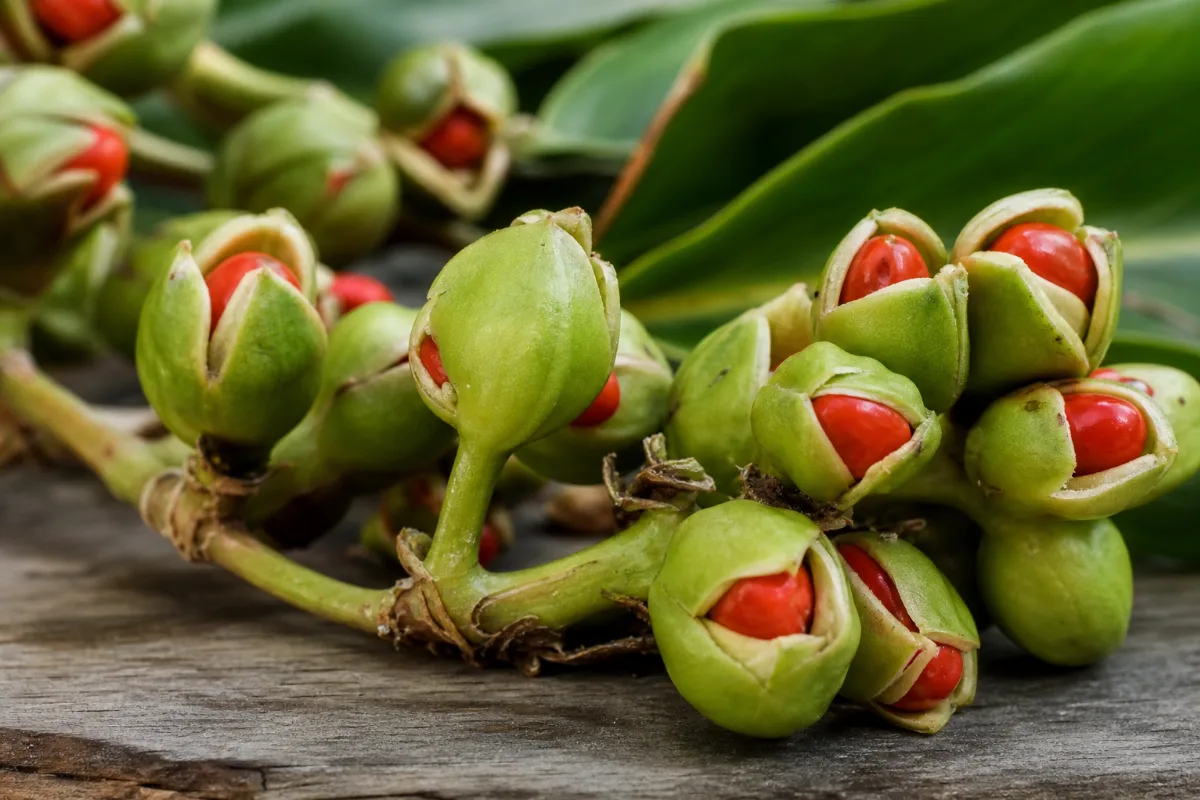
Herbs & Botanicals · Chinese herb for urination and memory
Yi zhi ren (bitter cardamom)
Alpinia oxyphylla · also called Yi zhi ren, bitter cardamom, sharp-leaf galangal
Yi zhi ren is the dried fruit of a ginger-family plant, used in Chinese medicine for frequent urination, drooling, diarrhoea from cold and, more recently, memory. Research is mostly in animals and test tubes; we found no trial of the fruit alone in people. Avoid in pregnancy and tell a pharmacist about your medicines first.
General information, not medical advice. Last substantive update · Not medically reviewed. A named clinician has not signed off on this page. How this page is made
About Yi zhi ren (bitter cardamom)
Yi zhi ren is a Chinese fruit used for the bladder, gut and memory. Lab work is active, but human proof is thin and safety data are missing.
Safety first
Pregnancy and breastfeeding: avoid unless a clinician agrees. No safety data were found.
Heat pattern: Chinese medicine teaches that this warming fruit is not for people with a 'yin deficiency with heat' pattern. We could not check this in the sources we read, so it is traditional teaching, not verified.
Medicines: in a test tube the pure compound nootkatone blocked two liver enzymes, CYP2C19 and CYP2A6. Nobody has tested whether the fruit does the same in people. Ask a pharmacist if you take blood thinners, diabetes medicine, stomach-acid medicine, antidepressants or other regular medicines.
Not galangal: yi zhi ren (Alpinia oxyphylla) is a different plant from galangal (Alpinia galanga) and from true cardamom.
What it is
Yi zhi ren is the dried ripe fruit of Alpinia oxyphylla, a ginger-family plant grown in southern China (Fujian, Guangdong, Hainan). It has been in the Chinese pharmacopoeia since 2012, according to a 2026 review.
The fruit holds terpenes (such as nootkatone), flavonoids (such as tectochrysin), diarylheptanoids (yakuchinone A and B) and sterols.
What the research shows
For frequent urination, a 3-week rat study found the water extract improved bladder measures. The only people trial we found tested Suoquan, a formula, in 369 children with bedwetting. It worked better combined with desmopressin than behavioural measures alone, but it cannot be credited to this fruit.
For memory, reviews describe cell and animal results on amyloid, tau and inflammation. No human memory trial was found.
A 2024 review of herbs for overactive bladder says no herbal compound has yet become a clinical bladder treatment.
What we know about safety
The only toxicity study we found used a lab-made copy of one compound, not the fruit, and was paid for by the company behind it. At high doses it caused liver and kidney effects in rats; the lowest dose did not. A food-flavour review calls nootkatone safe as a flavouring, which is not the same as medicine use.
Regulator pages (EMA, NCCIH, LiverTox, LactMed) were checked quickly and nothing was found. That is not proof they do not exist.
At a glance
Traditional uses history, not proof
- Frequent urination and bedwetting
- Diarrhoea and drooling from 'cold'
- Memory and the kidney-brain tonic idea
Studied for research
- Memory and Alzheimer's models: insufficient (animal only)
- Overactive bladder: very low (rats; one formula trial in children)
- Kidney, blood sugar and inflammation: insufficient (lab only)
Main compounds
- Nootkatone (sesquiterpene)
- Yakuchinone A and B (diarylheptanoids)
- Tectochrysin (flavonoid)
Common forms
- Dried fruit, often in decoctions, teas, wines and foods
Research links: Tie 2024: fruit extract in rats with overactive bladder (PubMed) · Ma 2017: Suoquan formula in 369 children with bedwetting (PubMed) · Tassaneeyakul 2000: nootkatone and human liver enzymes (PubMed) · Research Library · Genes & Biomarkers Library
The plant and its history
- Accepted scientific name
- Alpinia oxyphylla
- Naming authority
- Miq.
- Common names
- Yi zhi ren (zh (pinyin)); Bitter cardamom (en); Sharp-leaf galangal (en (NCBI common name 'sharp-leaf galangal'))
- Botanical family
- Zingiberaceae (ginger family)
- Classification
- Plantae > Tracheophyta > Liliopsida > Zingiberales > Zingiberaceae > Alpinia > Alpinia oxyphylla
- Native range
- Not stated in the abstracts read; a 2026 review says it is widely cultivated in Fujian, Guangdong and Hainan provinces of China.
- Habitat
- Not found in the sources read.
- What the plant looks like
- Roots: Not found.; Stems: Perennial plant (per the 2026 review).; Leaves: Not found.; Flowers: Not found.; Fruit: The dried ripe fruit is the medicinal part (Alpiniae Oxyphyllae Fructus).
- Cultivation
- Cultivated in southern China (Fujian, Guangdong, Hainan).
- Harvest and processing
- Fruit is dried; a 2023 report compares raw and salt-processed fruit in rats (not read in detail).
- Look-alikes and adulterants
- Name: Galangal (Alpinia galanga); Note: Different species; the rhizome is used, not the fruit.; Name: Cardamom (Elettaria cardamomum) and black cardamom (Amomum); Note: Different plants; 'bitter cardamom' is only a local English label for yi zhi ren.
- Sustainability and conservation
- Not found.
Traditional use and history history, not clinical proof
| Tradition or era | Documented use | Source |
|---|---|---|
| Traditional Chinese medicine | Warming kidney and spleen herb used for frequent urination, bedwetting, drooling, diarrhoea from cold and, more recently, memory; one of the 'four southern medicines' of China. | p41976506 |
| Chinese pharmacopoeia | Officially recorded as Alpiniae Oxyphyllae Fructus, according to a 2026 review, since 2012. | p41976506 |
Traditional use shows how a plant was used. It does not show that a supplement works or is safe today.
What is inside, and how it may work
What the plant contains and how those compounds act in cells and animals. Laboratory and animal mechanisms are not proven effects in people.
Main compounds
| Compound | Family | Where it is concentrated | Activity studied | Level of evidence |
|---|---|---|---|---|
| Nootkatone PubChem 1268142 | sesquiterpene | fruit | Named in a rat study as a possible active part of the extract; also a grapefruit flavour compound with strong CYP2C19 and CYP2A6 blocking in a test tube. 9 8 | Review |
| Yakuchinone A PubChem 133145 | diarylheptanoid | fruit | Listed among fruit diarylheptanoids in reviews; no human data. 6 | Review |
| Yakuchinone B PubChem 6440365 | diarylheptanoid | fruit | Listed among fruit diarylheptanoids in reviews; no human data. 6 | Review |
| Tectochrysin PubChem 5281954 | flavonoid | fruit | A fruit flavonoid in the review class of flavonoids; the abstracts read give no human data. 6 | Review |
Mechanisms, receptors and pathways
| Target or pathway | Gene or receptor | What was found | Level |
|---|---|---|---|
| Bladder collagen (TGF-beta1/SMAD3) and calcium signalling (Gq/PLC-beta1) | TGFB1, SMAD3, GNAQ, PLCB1 | The fruit water extract reduced these proteins in the bladders of rats; the authors link them to bladder muscle contraction frequency and strength. 9 | Animal research |
| Beta-amyloid, tau, oxidative stress and inflammation pathways | Reviews describe effects in cell and rodent models of Alzheimer's disease. 5 11 | Animal research | |
| Liver enzymes CYP2A6 and CYP2C19 | CYP2A6, CYP2C19 | Pure nootkatone blocked these two enzymes (Ki 0.8 and 0.5 micromolar) and had no significant effect on the other enzymes tested. 8 | Laboratory research |
Absorption, metabolism and elimination
- Absorption
- A rat study of the oral extract followed five terpenoids and found 27 breakdown products.
- Distribution
- Not found for people.
- Metabolism
- In rats the main routes were glucoside conjugation, dehydration, desaturation and glycine conjugation.
- Elimination
- Plasma, urine and faeces were sampled in rats; no human data.
- Bioavailability
- Not found in people.
Isolated compounds versus whole extracts
Safety and enzyme data come from pure compounds (nootkatone, a lab-made copy), while traditional use is of the whole dried fruit. These are not interchangeable.
Nutritional composition
The fruit is a medicinal herb, not a meaningful source of any essential nutrient. Content of vitamins or minerals was not found in the sources read.
1 very low certainty10 not enough evidence
What is Yi zhi ren (bitter cardamom) good for?
What yi zhi ren is used for, and how strong the evidence is. Almost all of it is from the lab or animals, not from people.
Benefits, one by one
Each card is a research question, not a promise. Tap a goal to filter. Open a card to see the studies, doses and limits.
Memory and thinking
Not enough evidenceYi zhi ren is often described as a herb for memory in Chinese medicine, and lab work is active. No human memory trial of the fruit was found.
3 studiesNot applicable (no human studies).
Studies, doses and limits
What the trials found
No human trial of the fruit for this use was found in the sources read. The 2025 review says it describes clinical applications, but we read only its abstract and cannot say what human data it holds.
Results
Animal and cell findings only in the sources we read.
Effect sizes as reported
None in people.
Why this rating
Insufficient: only reviews of laboratory and animal work; no placebo-controlled human memory trial found.
Form and dose studied
Not applicable (no human studies).
Who was studied
None studied in people.
Limits
Reviews are narrative, not systematic. Laboratory results often do not carry over to people.
Why researchers looked
Lab teams study the fruit because Chinese medicine uses it for the kidneys and brain, and because it holds compounds such as nootkatone and yakuchinone that act on nerve cells in animals.
Traditional use
Traditionally used in China for the kidney and spleen, and in recent decades studied for memory; the 2025 review ties the traditional urinary and digestive uses to a modern interest in the brain.
Proposed mechanism Animal research
Reviews describe effects on beta-amyloid, tau, inflammation and oxidative stress in cells and rodents.
A proposed mechanism does not show that the effect happens in people.
See the Safety tab: human safety data are missing.
Alzheimer's disease models
Not enough evidenceIn cell and rodent models of Alzheimer's disease the fruit and its compounds lowered signs of nerve-cell damage. This is lab science and does not show it helps people with dementia.
2 studiesNot applicable.
Studies, doses and limits
What the trials found
No human trial of the fruit for this use was found in the sources read.
Results
Reviews call the fruit promising and worth further research; no patient results are described in the abstract.
Effect sizes as reported
None in people.
Why this rating
Insufficient: lab and animal evidence only.
Form and dose studied
Not applicable.
Who was studied
None studied in people.
Limits
Review of animal and cell work; not a treatment claim.
Why researchers looked
A 2021 review of the fruit and Alzheimer's disease describes effects on amyloid, tau, inflammation and oxidative stress.
Traditional use
Not a classic traditional use as named; the traditional link is to memory and the kidney-brain tonic idea.
Proposed mechanism Animal research
Pathways linked to beta-amyloid deposition, tau phosphorylation, inflammation and oxidative stress.
A proposed mechanism does not show that the effect happens in people.
Do not use in place of dementia care or medicines.
Nerve-cell protection (Parkinson's and stroke models)
Not enough evidenceLab studies suggest the fruit helps nerve cells survive stress. No human data.
2 studiesNot applicable.
Studies, doses and limits
What the trials found
No human trial of the fruit for this use was found in the sources read.
Results
Cell, rodent and zebrafish results only.
Effect sizes as reported
None in people.
Why this rating
Insufficient: lab only.
Form and dose studied
Not applicable.
Who was studied
None studied in people.
Limits
Narrative reviews; no pooled data.
Why researchers looked
Reviews list protection against nerve-cell death, inflammation and oxidative stress in Parkinson's-type and stroke-type models.
Traditional use
Not a traditional use.
Proposed mechanism Animal research
Reported effects on cell death, inflammation and oxidative stress in nerve cells and animals.
A proposed mechanism does not show that the effect happens in people.
None specific.
Brain inflammation (lab)
Not enough evidenceIn brain immune cells in a dish, the fruit calmed an inflammatory response. This helps explain interest, but it is not a proven benefit in people.
1 studiesNot applicable.
Studies, doses and limits
What the trials found
No human trial of the fruit for this use was found in the sources read.
Results
Cell studies only.
Effect sizes as reported
None in people.
Why this rating
Insufficient: test tube only.
Form and dose studied
Not applicable.
Who was studied
None studied in people.
Limits
Cell models do not mimic a whole body.
Why researchers looked
Reviews describe less microglia-driven inflammation in cell and animal models.
Traditional use
Not a traditional use.
Proposed mechanism Laboratory research
Reduced inflammatory signalling in brain immune cells in culture.
A proposed mechanism does not show that the effect happens in people.
None specific.
Frequent urination and overactive bladder
Very low certaintyThis is the main traditional use. A rat study of the fruit water extract improved bladder measures. In people, only a multi-herb formula has been tested, in children with bedwetting.
4 studiesWater extract in rats; Suoquan capsule (formula) in children.
Studies, doses and limits
What the trials found
No trial of the fruit alone in people was found. The Suoquan capsule trial below is a formula whose ingredients are not listed in the abstract we read.
Results
Rat study: improved bladder storage measures and bladder structure. Children's trial: 369 children; complete response 37.5% for desmopressin plus suoquan versus 6.3% for behavioural measures; relapse 30.6% versus 72.2% for desmopressin alone.
Effect sizes as reported
Complete response 37.5% vs 6.3% (combination formula, not the herb alone).
Why this rating
Very low for the fruit itself: animal data plus one trial of a formula in children. The formula result cannot be credited to this herb.
Form and dose studied
Water extract in rats; Suoquan capsule (formula) in children.
Who was studied
Rats; children aged for bedwetting, not adults.
Limits
Formula not defined in the abstract; different condition and age group; no adult trial.
Why researchers looked
Chinese medicine uses the fruit to hold in urine when the kidney is thought weak. A 2024 review says no herbal compound has yet become a clinical bladder treatment.
Traditional use
Used in Chinese medicine for frequent urination and related kidney-qi weakness. Suoquan, a formula used for frequent urination and bedwetting, is a separate product; its ingredients were not confirmed in the sources we read.
Proposed mechanism Animal research
In rats the extract reduced bladder collagen and changed calcium-signalling proteins. Nootkatone, chrysin and sitosterol were predicted by computer to be involved.
A proposed mechanism does not show that the effect happens in people.
Do not treat bladder symptoms or bedwetting without a doctor, who will check for infection, diabetes, prostate problems and other causes.
Diarrhoea from a 'cold spleen' pattern
Not enough evidenceIn Chinese medicine the fruit is used to 'warm the spleen' for loose stools and drooling. No clinical trial was found.
2 studiesNot applicable.
Studies, doses and limits
What the trials found
No human trial of the fruit for this use was found in the sources read.
Results
Traditional use only in the sources read.
Effect sizes as reported
None in people.
Why this rating
Insufficient: traditional use only.
Form and dose studied
Not applicable.
Who was studied
None studied.
Limits
Traditional pattern language is not a medical diagnosis. Persistent diarrhoea needs a doctor.
Why researchers looked
Traditional digestive use described in the 2025 and 2026 reviews.
Traditional use
Warming herb for spleen cold, loose stools and drooling (especially in children and older adults).
Proposed mechanism Pharmacological theory
Not established; reviews mention gastrointestinal protective effects in lab models.
A proposed mechanism does not show that the effect happens in people.
See Safety tab.
Kidney protection in diabetes models
Not enough evidenceAnimal and cell work suggests protection of kidney cells in diabetes. Nothing like this has been shown in people.
2 studiesNot applicable.
Studies, doses and limits
What the trials found
No human trial of the fruit for this use was found in the sources read.
Results
Cell and animal results only.
Effect sizes as reported
None in people.
Why this rating
Insufficient: lab only.
Form and dose studied
Not applicable.
Who was studied
None studied.
Limits
Mechanism review.
Why researchers looked
A 2024 review covers podocyte autophagy, gut bacteria, oxidative stress and inflammation in diabetic kidney disease models.
Traditional use
Traditionally linked to the kidney 'system' in Chinese medicine, which is not the same as the kidney organ.
Proposed mechanism Animal research
Autophagy, oxidative stress and inflammation pathways in kidney cells and animals.
A proposed mechanism does not show that the effect happens in people.
If you take diabetes medicine, do not change it for a herb.
Blood sugar (animal and lab)
Not enough evidenceReviews list blood-sugar-lowering effects in mice and rats. No human study was found.
2 studiesNot applicable.
Studies, doses and limits
What the trials found
No human trial of the fruit for this use was found in the sources read.
Results
Animal and cell only.
Effect sizes as reported
None in people.
Why this rating
Insufficient.
Form and dose studied
Not applicable.
Who was studied
None studied.
Limits
No human data; effect size unknown.
Why researchers looked
Reviews list antidiabetic effects among the fruit's lab findings.
Traditional use
Not a main traditional use.
Proposed mechanism Animal research
Cell assays and rodent studies.
A proposed mechanism does not show that the effect happens in people.
Could in theory add to diabetes medicines; no human interaction data.
Inflammation, liver fat and immune effects (animal)
Not enough evidenceCell and animal models report calming of inflammation and effects on liver fat and immune cells.
1 studiesNot applicable.
Studies, doses and limits
What the trials found
No human trial of the fruit for this use was found in the sources read.
Results
Lab and animal only.
Effect sizes as reported
None in people.
Why this rating
Insufficient.
Form and dose studied
Not applicable.
Who was studied
None studied.
Limits
Lab models.
Why researchers looked
Reviews list anti-inflammatory, immune and liver-protective effects.
Traditional use
Not a main traditional use.
Proposed mechanism Animal research
Cell and animal inflammation pathways.
A proposed mechanism does not show that the effect happens in people.
A lab liver-protective claim does not mean liver safety in people (see the Safety tab).
Antioxidant and anti-ageing effects (lab)
Not enough evidenceWorm, cell and rat studies report antioxidant and anti-ageing effects. This is lab science only.
2 studiesNot applicable.
Studies, doses and limits
What the trials found
No human trial of the fruit for this use was found in the sources read.
Results
Lab only.
Effect sizes as reported
None in people.
Why this rating
Insufficient.
Form and dose studied
Not applicable.
Who was studied
None studied.
Limits
Antioxidant findings in a dish rarely carry over to people.
Why researchers looked
Reviews list antioxidant and anti-ageing effects among lab findings.
Traditional use
None.
Proposed mechanism Animal research
Antioxidant and anti-ageing signalling in worms, cells and rats.
A proposed mechanism does not show that the effect happens in people.
None specific.
Cancer cell effects in the lab
Not enough evidenceExtracts and compounds slowed some cancer cell lines in the lab. This is not evidence that it treats cancer.
2 studiesNot applicable.
Studies, doses and limits
What the trials found
No human trial of the fruit for this use was found in the sources read.
Results
Cell lines and transplanted tumours only.
Effect sizes as reported
None in people.
Why this rating
Insufficient: lab only.
Form and dose studied
Not applicable.
Who was studied
None studied.
Limits
Lab only. Never replace cancer care with a herb.
Why researchers looked
Reviews list anti-tumour effects among lab findings.
Traditional use
None.
Proposed mechanism Laboratory research
Cell line and transplanted-tumour work.
A proposed mechanism does not show that the effect happens in people.
Do not use as a cancer treatment.
Connections to the rest of health
How Yi zhi ren (bitter cardamom) connects to the rest of our health knowledge graph. Every link says what kind of connection it is. A safety link (for example to the liver) is a warning, not a benefit. A study that merely mentions a topic never creates a benefit link.
Explore every connection: goals, body systems, organs, symptoms, genes
A. Wellness goals
| Connected to | Kind of connection | Evidence status | Context | Studies |
|---|---|---|---|---|
| Memory Support | Preliminary mechanism | Not enough evidence | Memory and thinking: Yi zhi ren is often described as a herb for memory in Chinese medicine, and lab work is active. No human memory trial of the fruit was found. Alzheimer's disease models: In cell and rodent models of Alzheimer's disease the fruit and its compounds lowered signs of nerve-cell damage. This is lab science and does not show it helps people with dementia. | 11 5 2 6 |
| Cognitive Performance | Preliminary mechanism | Not enough evidence | Memory and thinking: Yi zhi ren is often described as a herb for memory in Chinese medicine, and lab work is active. No human memory trial of the fruit was found. | 11 5 2 |
| Brain Health | Preliminary mechanism | Not enough evidence | Alzheimer's disease models: In cell and rodent models of Alzheimer's disease the fruit and its compounds lowered signs of nerve-cell damage. This is lab science and does not show it helps people with dementia. Nerve-cell protection (Parkinson's and stroke models): Lab studies suggest the fruit helps nerve cells survive stress. No human data. | 5 6 11 |
| Inflammation Balance | Preliminary mechanism | Not enough evidence | Brain inflammation (lab): In brain immune cells in a dish, the fruit calmed an inflammatory response. This helps explain interest, but it is not a proven benefit in people. Inflammation, liver fat and immune effects (animal): Cell and animal models report calming of inflammation and effects on liver fat and immune cells. | 11 6 |
| Metabolic Health | Traditional use | Very low certainty | Frequent urination and overactive bladder: This is the main traditional use. A rat study of the fruit water extract improved bladder measures. In people, only a multi-herb formula has been tested, in children with bedwetting. | 9 7 4 1 |
| Digestive Support | Traditional use | Not enough evidence | Diarrhoea from a 'cold spleen' pattern: In Chinese medicine the fruit is used to 'warm the spleen' for loose stools and drooling. No clinical trial was found. | 2 11 |
| Gut Health | Traditional use | Not enough evidence | Diarrhoea from a 'cold spleen' pattern: In Chinese medicine the fruit is used to 'warm the spleen' for loose stools and drooling. No clinical trial was found. | 2 11 |
| Metabolic Health | Preliminary mechanism | Not enough evidence | Kidney protection in diabetes models: Animal and cell work suggests protection of kidney cells in diabetes. Nothing like this has been shown in people. | 10 6 |
| Blood Sugar Balance | Preliminary mechanism | Not enough evidence | Kidney protection in diabetes models: Animal and cell work suggests protection of kidney cells in diabetes. Nothing like this has been shown in people. Blood sugar (animal and lab): Reviews list blood-sugar-lowering effects in mice and rats. No human study was found. | 10 6 |
| Liver Support | Preliminary mechanism | Not enough evidence | Inflammation, liver fat and immune effects (animal): Cell and animal models report calming of inflammation and effects on liver fat and immune cells. | 6 |
| Immune Support | Preliminary mechanism | Not enough evidence | Inflammation, liver fat and immune effects (animal): Cell and animal models report calming of inflammation and effects on liver fat and immune cells. | 6 |
| Healthy Aging | Preliminary mechanism | Not enough evidence | Antioxidant and anti-ageing effects (lab): Worm, cell and rat studies report antioxidant and anti-ageing effects. This is lab science only. Cancer cell effects in the lab: Extracts and compounds slowed some cancer cell lines in the lab. This is not evidence that it treats cancer. | 6 2 |
| Longevity | Preliminary mechanism | Not enough evidence | Antioxidant and anti-ageing effects (lab): Worm, cell and rat studies report antioxidant and anti-ageing effects. This is lab science only. | 6 2 |
B. Body systems
| Connected to | Kind of connection | Evidence status | Context | Studies |
|---|---|---|---|---|
| Liver | Animal signal | Raised liver enzymes and liver weight at high doses in rats; no human data. Preparation or compound: Single synthetic compound in rats |
3 | |
| Nervous System | Biological association | Not enough evidence | Studied for: Memory and thinking Studied for: Alzheimer's disease models | 11 5 2 6 |
| Immune System | Biological association | Not enough evidence | Studied for: Brain inflammation (lab) Studied for: Inflammation, liver fat and immune effects (animal) | 11 6 2 |
| Urinary System | Biological association | Very low certainty | Studied for: Frequent urination and overactive bladder Studied for: Kidney protection in diabetes models | 9 7 4 1 10 6 |
| Digestive System | Biological association | Not enough evidence | Studied for: Diarrhoea from a 'cold spleen' pattern | 2 11 |
| Endocrine System | Biological association | Not enough evidence | Studied for: Kidney protection in diabetes models Studied for: Blood sugar (animal and lab) | 10 6 |
| Hepatic System | Biological association | Not enough evidence | Studied for: Inflammation, liver fat and immune effects (animal) | 6 |
I. Biomarkers
| Connected to | Kind of connection | Evidence status | Context | Studies |
|---|---|---|---|---|
| Beta-amyloid and tau (animal brain tissue) | Biological association | Not enough evidence | Measured in trials: lowered (in lab and animal models). A lab change is not the same as a health benefit. | 5 |
| Bladder storage measures (rat urodynamics) | Biological association | Not enough evidence | Measured in trials: improved (in rats). A lab change is not the same as a health benefit. | 9 |
| Complete response for bedwetting (children, formula) | Biological association | Very low certainty | Measured in trials: higher with combination (formula, not the herb alone). A lab change is not the same as a health benefit. | 7 |
J. Genes, receptors and enzymes
K. Biological pathways
| Connected to | Kind of connection | Evidence status | Context | Studies |
|---|---|---|---|---|
| TGF-beta1/SMAD3 | Preliminary mechanism | Animal | Reduced in rat bladder after fruit extract. | 9 |
L. Active compounds
| Connected to | Kind of connection | Evidence status | Context | Studies |
|---|---|---|---|---|
| Nootkatone | Biological association | Review | Named in a rat study as a possible active part of the extract; also a grapefruit flavour compound with strong CYP2C19 and CYP2A6 blocking in a test tube. Preparation or compound: fruit |
9 8 |
| Yakuchinone A | Biological association | Review | Listed among fruit diarylheptanoids in reviews; no human data. Preparation or compound: fruit |
6 |
| Yakuchinone B | Biological association | Review | Listed among fruit diarylheptanoids in reviews; no human data. Preparation or compound: fruit |
6 |
| Tectochrysin | Biological association | Review | A fruit flavonoid in the review class of flavonoids; the abstracts read give no human data. Preparation or compound: fruit |
6 |
Each connection is stored with the ingredient, the connected record, the kind of connection, the evidence status, the supporting studies, the preparation or compound involved, and a review date (last reviewed October 25, 2026).
The evidence
The research centre for Yi zhi ren (bitter cardamom). Every record here was checked against PubMed or the publisher's page; we never list a study we have not verified.
Evidence by outcome
Bars show how many studies we found for each outcome, not how well it works. People are added up across trials only (reviews are not added, to avoid double counting).
How we rate evidence
High certainty
Several well-run trials or reviews agree; further research is unlikely to change the picture much.
Moderate certainty
Good trials point the same way, but some doubt remains.
Low certainty
Small, short or inconsistent trials. The finding could change with better research.
Very low certainty
Very little or very weak human data. Treat as a possibility only.
Mixed findings
Trials or reviews disagree with each other.
Not enough evidence
Not enough human research to say either way.
Evidence against
Good research found no benefit, or found harm.
We take the reviewers' own risk-of-bias and GRADE statements where they exist, and otherwise judge from study size, design, consistency, directness and whether a product matches what is sold. Many publications do not make evidence high. Method note: We read our existing herb summary, searched PubMed, read the abstract of each PubMed record cited, and checked names against GBIF, NCBI and PubChem. Full texts were not read.
Study library: every study we checked 16
| Study | Design | People | Product, dose, length | Result |
|---|---|---|---|---|
| Chen 2024 Medicinal plants and natural products for treating overactive bladder. Chinese Medicine · PMID 38532487 · DOI |
Narrative review review |
Review of plants studied for overactive bladder | Medicinal plants and herbal formulas (this fruit is covered in our summary file) various n/a n/a · vs n/a |
Reports many promising plant studies but says that so far none of the herbal compounds has become a clinical bladder treatment, and calls for well-designed controlled studies. Narrative review Methods, limits and fundingOutcomes: Which plants and compounds have been studied for overactive bladder Limitations: Abstract read only; the abstract does not name Alpinia oxyphylla. Funding and conflicts: No conflicts declared Read: abstract |
| Chen 2026 Phytochemical Diversity, Mechanistic Pharmacology, and Therapeutic Potential of Alpinia oxyphylla. Foods · PMID 41976506 · DOI |
Narrative review review |
Review of chemistry, traditional use, lab effects, patents | Alpiniae Oxyphyllae Fructus (dried ripe fruit) fruit n/a n/a · vs n/a |
Says the fruit has been in the Chinese pharmacopoeia since 2012, is traditionally used for kidney function, urination and diarrhoea, and holds terpenoids, flavonoids, diarylheptanoids and sterols. 217 English papers (2014 to 2025) were mapped by keywords; oxidative stress, Alzheimer's disease and cognition are the hot topics. Narrative review with bibliometric mapping Methods, limits and fundingOutcomes: Phytochemistry, traditional uses, pharmacology, safety terms searched Limitations: Abstract read only. Not a clinical review. Funding and conflicts: No conflicts declared Read: abstract |
| Le Bloch 2024 Toxicological evaluation of Alpinia oxyphylla-derived molecule (PD-00105): In vitro genotoxicity studies and 90-day oral toxicity study in rats. Toxicology Reports · PMID 39040953 · DOI |
Animal research animal |
Rats, 90-day oral study, plus two cell genotoxicity tests | PD-00105, a lab-made (synthetic) copy of a compound first found in the fruit; not the fruit or an extract n/a (synthetic single compound) 10, 50 and 100 mg/kg body weight per day in rats 90 days · vs untreated rats |
No genotoxicity. At 50 and 100 mg/kg per day there was liver and kidney toxicity, with raised ALT, alkaline phosphatase, cholesterol and LDL and HDL; the lowest dose (10 mg/kg) was judged minimal and non-adverse (NOAEL). NOAEL 10 mg/kg/day in rats Methods, limits and fundingOutcomes: Genotoxicity; organ weights, blood chemistry, tissue changes Limitations: This is one synthetic compound, not the herb. Rats only. Funding and conflicts: Industry funded: authors report financial support from TechnoPhage SA, and the authors are affiliated with Nutraveris and Technophage, the companies behind the compound. Read: abstract |
| Lee 2018 Herbal medicine (Suoquan) for treating nocturnal enuresis: A protocol for a systematic review of randomized controlled trials. Medicine (Baltimore) · PMID 29702985 · DOI |
Review protocol review-protocol |
Plan for a review of Suoquan decoction trials for bedwetting | Suoquan decoctions unspecified n/a n/a · vs n/a |
This is a plan, not results. It states Suoquan is widely used for frequent urination and bedwetting from kidney qi deficiency and that many trials exist. None (protocol) Methods, limits and fundingOutcomes: Planned review of trials (PROSPERO CRD42018087900) Limitations: Protocol only; we found no published results for it. Funding and conflicts: No conflicts declared Read: abstract |
| Li 2021 Alpiniae oxyphyllae Fructus and Alzheimer's disease: An update and current perspective on this traditional Chinese medicine. Biomedicine & Pharmacotherapy · PMID 33383373 · DOI |
Narrative review review-of-lab-animal-reports |
Review of the fruit and Alzheimer's disease models | Alpiniae Oxyphyllae Fructus extracts and compounds fruit n/a n/a · vs n/a |
Describes effects on beta-amyloid, tau phosphorylation, inflammation and oxidative stress, and reviews how the main components are absorbed and handled. Narrative review; no pooled effect Methods, limits and fundingOutcomes: Mechanisms in Alzheimer's models; pharmacokinetics of components Limitations: Abstract read only; the authors call the fruit promising, but no human trial is described in the abstract. Funding and conflicts: No conflicts declared Read: abstract |
| Liao 2024 Recent Research Progress on the Chemical Constituents, Pharmacology, and Pharmacokinetics of Alpinae oxyphyllae Fructus. Molecules · PMID 39202984 · DOI |
Narrative review review-of-lab-animal-reports |
Review of compounds and lab effects of the fruit | Alpinae oxyphyllae fructus (fruit) fruit n/a n/a · vs n/a |
Lists nerve protection, metabolic effects, antioxidant, anti-inflammatory, blood-sugar, uric-acid, anti-ageing, urine-reducing, immune, anti-tumour, kidney, liver and anti-asthma effects reported for the fruit. Narrative review; no pooled effect Methods, limits and fundingOutcomes: Compounds isolated since 2018 and the effects reported for the fruit Limitations: Abstract read only; the abstract does not say how much of the work is in people (our summary file records it as laboratory and animal work). Funding and conflicts: No conflicts declared Read: abstract |
| Ma 2017 Effect of traditional Chinese and Western medicine on nocturnal enuresis in children and indicators of treatment success: Randomized controlled trial. Pediatrics International · PMID 28891253 · DOI |
Controlled trial |
369 369 children with bedwetting (nocturnal enuresis), Beijing |
Suoquan capsule, alone or with desmopressin (a Chinese formula; the abstract does not list its ingredients) unspecified formula not stated in abstract 2 months, 3 months follow-up · vs desmopressin; behavioural intervention |
Complete response was 37.5% with desmopressin plus suoquan versus 6.3% with behavioural intervention alone (P < 0.007). Relapse after 3 months was 30.6% with desmopressin plus suoquan versus 72.2% with desmopressin alone. Complete response 37.5% vs 6.3% (combo vs behavioural) Methods, limits and fundingOutcomes: Complete response rate, relapse Limitations: A multi-herb formula, not Alpinia oxyphylla alone; the abstract does not list ingredients. Children with bedwetting, not adults with frequent urination. Randomised but small groups and an unclear blinding in the abstract. Funding and conflicts: Not stated in abstract Read: abstract |
| Tassaneeyakul 2000 Inhibition selectivity of grapefruit juice components on human cytochromes P450. Archives of Biochemistry and Biophysics · PMID 10860553 · DOI |
Laboratory research in-vitro |
Test-tube enzyme assays with human liver enzymes | Nootkatone (pure compound from grapefruit), tested against human CYP enzymes n/a n/a n/a · vs other grapefruit compounds |
Nootkatone had no significant effect on the enzymes tested except CYP2A6 (Ki 0.8 micromolar) and CYP2C19 (Ki 0.5 micromolar). Ki 0.8 uM (CYP2A6) and 0.5 uM (CYP2C19) Methods, limits and fundingOutcomes: Effect on CYP1A2, 2A6, 2C9, 2C19, 2D6, 2E1, 3A4 activity Limitations: Test tube only. Pure nootkatone, not the fruit of Alpinia oxyphylla. Real-world blood levels from the herb are unknown. Funding and conflicts: Not stated in abstract Read: abstract |
| Tie 2024 Multi-omic analysis revealed the therapeutic mechanisms of Alpinia oxyphylla fructus water extract against bladder overactivity in spontaneously hypertensive rats. Phytomedicine · PMID 37976696 · DOI |
Animal research animal |
Spontaneously hypertensive rats (a model of bladder overactivity linked to blood vessel disease) | Water extract of the fruit (yi zhi ren) fruit not stated in abstract 3 weeks · vs untreated model rats |
The extract improved bladder storage measures, tightened the bladder muscle layer, reduced inflammation and collagen. Network prediction named sitosterol, chrysin and nootkatone as possible active parts. No numbers in the abstract Methods, limits and fundingOutcomes: Bladder pressure measurements, bladder structure, proteins Limitations: Rats only; one model; the active compounds were predicted by computer, not proven. Funding and conflicts: Authors declare no competing interests Read: abstract |
| Wang 2024 Research progress on Alpinia oxyphylla in the treatment of diabetic nephropathy. Frontiers in Pharmacology · PMID 38948461 · DOI |
Narrative review review-of-lab-animal-reports |
Review of kidney effects in diabetes models | Alpinia oxyphylla fruit and compounds fruit n/a n/a · vs n/a |
Lists mechanisms such as podocyte autophagy, gut bacteria, fat toxicity, oxidative stress and inflammation, and calls the fruit of therapeutic potential. The abstract describes no human trial. Narrative review Methods, limits and fundingOutcomes: Mechanisms in diabetic kidney disease models Limitations: Abstract read only; mechanism work, not clinical evidence. Funding and conflicts: No conflicts declared Read: abstract |
| Wei 2025 Neuroprotective Effects and Mechanisms of Alpiniae oxyphyllae Fructus, a Medicinal and Edible Homologous Herb: Research Advances. International Journal of Molecular Sciences · PMID 40650004 · DOI |
Narrative review review-of-lab-animal-and-some-clinical-reports |
Review of nerve-protection research on the fruit | Alpiniae Oxyphyllae Fructus (fruit) fruit not given in abstract n/a · vs n/a |
The abstract says the fruit protects nerve cells through effects on cell death, inflammation and oxidative stress, and says it also describes clinical applications. We read only the abstract, so we cannot say what human data it covers. Narrative review; no pooled effect Methods, limits and fundingOutcomes: Neuroprotective effects and mechanisms Limitations: Narrative review; abstract only was read; human data not checked. Funding and conflicts: No conflicts declared Read: abstract |
| Zhang 2023 Production, Function, and Applications of the Sesquiterpenes Valencene and Nootkatone: a Comprehensive Review. Journal of Agricultural and Food Chemistry · PMID 36541855 · DOI |
Narrative review review |
Review of two flavour compounds including nootkatone | Nootkatone (single compound, from several sources) n/a n/a n/a · vs n/a |
Says most of the studies are in animals and test tubes, so no firm conclusion on health benefit is possible, and that both compounds are considered safe for consumption as food flavours. Narrative review Methods, limits and fundingOutcomes: Production, activities, safety, pharmacokinetics Limitations: Abstract read only. Food-use safety is not the same as safety of the herb in medicine amounts. Funding and conflicts: Not stated in abstract Read: abstract |
| Zuo 2021 Integrated UPLC-MS/MS and UHPLC-Q-orbitrap HRMS Analysis to Reveal Pharmacokinetics and Metabolism of Five Terpenoids from Alpiniae oxyphyllae Fructus in Rats. Current Drug Metabolism · PMID 33334283 · DOI |
Animal research animal |
Rats given oral fruit extract | Extract of the fruit fruit not stated in abstract n/a · vs n/a |
Reports the first rat data on how five terpenoids are absorbed and broken down: 27 breakdown products were found in plasma, urine and faeces, mostly by sugar attachment, water loss and glycine attachment. Descriptive Methods, limits and fundingOutcomes: Blood levels and breakdown products of five terpenoids Limitations: Rats only; five of the many compounds. Funding and conflicts: Not stated in abstract Read: abstract |
| s-gbif GBIF species match: Alpinia oxyphylla Miq. (accepted; key 5302068; family Zingiberaceae) · Source |
Database record reference |
Methods, limits and fundingRead: api-record (2026-10-25) | ||
| s-ncbi-tax NCBI Taxonomy: Alpinia oxyphylla (tax_id 125261; common names yi zhi, sharp-leaf galangal) · Source |
Database record reference |
Methods, limits and fundingRead: api-record (2026-10-25) | ||
| s-pubchem PubChem: nootkatone CID 1268142, yakuchinone A CID 133145, yakuchinone B CID 6440365, tectochrysin CID 5281954 · Source |
Database record reference |
Methods, limits and fundingRead: api-record (2026-10-25) |
What we do not know yet
- No placebo-controlled trial of the fruit alone in people for any use.
- No human safety, interaction or pregnancy data.
- Ingredients of the Suoquan formula tested in children were not confirmed here.
How new research is added
New studies are found by a saved PubMed search and placed in a review queue. A person reads each one before it is added.
Lab markers
What changed in blood or saliva tests during trials. A changed number is not the same as feeling or being healthier, and we give no "normal ranges".
Other 3
Beta-amyloid and tau (animal brain tissue)
Lowered (in lab and animal models) in trials
Two proteins that build up in the brains of people with Alzheimer's disease.
Not enough evidenceResults and what it means
Why it was measured
Used in animal Alzheimer's models to judge whether a substance changes disease-type changes.
Statistical vs. clinical meaning
A change in a lab marker is not a clinical benefit. No human biomarker data were found.
Safety implication
None established.
| Study | Result | People | Product |
|---|---|---|---|
| 5 | The review says fruit compounds modulate pathways linked to amyloid deposition and tau phosphorylation in models; no numbers in the abstract. | Cell and animal models | Fruit extracts and compounds |
Bladder storage measures (rat urodynamics)
Improved (in rats) in trials
Pressure and volume measurements that show how well a bladder stores urine.
Not enough evidenceResults and what it means
Why it was measured
Used in the rat study to judge whether the extract steadied an overactive bladder.
Statistical vs. clinical meaning
Animal data. Human bladder function was not measured with the herb.
Safety implication
None established.
| Study | Result | People | Product |
|---|---|---|---|
| 9 | The water extract improved bladder storage parameters, tightened the detrusor layer and reduced inflammation and collagen; no numbers in the abstract. | Spontaneously hypertensive rats | Fruit water extract for 3 weeks |
Complete response for bedwetting (children, formula)
Higher with combination (formula, not the herb alone) in trials
Share of children who became dry at night after treatment.
Very low certaintyResults and what it means
Why it was measured
The main outcome of the randomised trial of a Suoquan capsule formula.
Statistical vs. clinical meaning
A clinical outcome, but for a multi-herb formula in children; it cannot be credited to Alpinia oxyphylla alone.
Safety implication
The abstract does not report side effects.
| Study | Result | People | Product |
|---|---|---|---|
| 7 | Complete response 37.5% with desmopressin plus suoquan versus 6.3% with behavioural intervention (P < 0.007); relapse 30.6% versus 72.2% with desmopressin alone. | 369 children with nocturnal enuresis | Suoquan capsule with or without desmopressin for 2 months |
Safety
What studies and official sources say about side effects, medicines and who should check first. Each point shows what kind of evidence it comes from.
Main points to know 5
- Human safety data are missing. No safety trial of the fruit in people, no interaction study and no pregnancy data were found. Reviews call the fruit low in toxicity but give no systematic human data. Absence of data is not proof of safety. Authoritative guidance 2 11
- Pregnancy and breastfeeding: avoid unless a clinician agrees. No pregnancy or breastfeeding safety data were found. Pregnancy and breastfeeding are not studied, so the cautious choice is to avoid it. No data
- Traditional caution: 'yin deficiency with heat'. Chinese medicine teaches that this is a warming herb and that people with a heat or 'yin deficiency' pattern (for example feeling hot, thirsty, with night sweats) should not use it. We did not read a source that sets out this caution, so treat it as traditional teaching, NOT verified here. Traditional use
- May affect some medicines (theory only). In a test-tube study the pure compound nootkatone strongly blocked two liver enzymes, CYP2A6 and CYP2C19. Whether the fruit does so in people has not been tested. Laboratory research 8
- Not the same plant as galangal. Alpinia oxyphylla (yi zhi ren, 'bitter cardamom' here) is a different species from Alpinia galanga (galangal) and from true cardamom. Safety facts for one do not carry across to the others. Authoritative guidance 14 15
Side effects 2
| Effect | How often | Severity and recovery | Evidence |
|---|---|---|---|
| Human side effects not documented in the sources read No clinical safety study of the fruit was found. The one trial we read (of a Chinese formula in children) did not report side effects in its abstract. | Not established | unknown unknown | No data |
| Liver and kidney toxicity at high doses of a single lab-made compound (rats) The compound was a synthetic copy of one fruit compound, not the fruit. It tells us nothing certain about the herb, but it is the only toxicity study we found. | At 50 and 100 mg/kg per day in a 90-day rat study; not seen as adverse at 10 mg/kg per day | moderate (animal) unknown | Animal research 3 |
Liver
No case of liver injury linked to the fruit was found, but we did not find a LiverTox entry either. In a 90-day rat study a synthetic copy of one compound raised liver enzymes (ALT, alkaline phosphatase) and enlarged the liver at high doses. Reviews list liver protection in animals, which is not proof of liver safety in people. 3 6
How often. Unknown. No human data.
Monitoring. No source gives monitoring advice. Tell your doctor if you use it and have liver disease.
This is a safety connection. It is not evidence that Yi zhi ren (bitter cardamom) supports liver health.
Medicines and supplements 4
| With | Why it matters | Importance | Evidence | What to do |
|---|---|---|---|---|
| Medicines broken down by CYP2C19 or CYP2A6 (examples: some stomach-acid medicines, some antidepressants and some blood-thinning tablets such as clopidogrel; ask a pharmacist for your own list) drug | Pure nootkatone blocked CYP2A6 (Ki 0.8 micromolar) and CYP2C19 (Ki 0.5 micromolar) in human enzyme tests; other main liver enzymes were not significantly affected. | Unknown. Test-tube data on the pure compound; no human study of the fruit and no knowledge of nootkatone levels in blood after eating the fruit. | Laboratory research Not enough evidence 8 | Tell a pharmacist before combining, especially with medicines that have a narrow safety margin. |
| Anticoagulants and antiplatelets (warfarin, apixaban, clopidogrel, aspirin) drug | No bleeding or clotting data for the fruit were found. The only link is through the CYP2C19 enzyme (relevant to clopidogrel) and is theory. | Unknown. | Pharmacological theory Not enough evidence 8 | Ask the prescriber or pharmacist before use. |
| Diabetes medicines and insulin drug | Animal and cell studies report blood-sugar-lowering effects of the fruit; no human data. | Unknown. A lab effect in rodents could in theory add to diabetes medicines. | Animal research Not enough evidence 6 10 | If you use diabetes medicine, do not add the herb without telling your care team. |
| Other bladder or urine medicines (for example desmopressin or antimuscarinics) drug | The Suoquan formula was combined with desmopressin in one children's trial, but ingredients were not listed in the abstract and drug interactions were not assessed. | Unknown. | Controlled trial Not enough evidence 7 | Do not combine without clinical advice. |
Who should check first 4
| Situation | Advice | Evidence |
|---|---|---|
| Pregnancy and breastfeeding | Avoid unless a clinician agrees. No data. LactMed and other sources were not found for this herb. | No data |
| Heat or 'yin deficiency' pattern in Chinese medicine | Traditional teaching says avoid. NOT verified in the sources we read. | Traditional use |
| Scheduled surgery, bleeding disorders or taking a blood thinner | Ask your doctor first; there is no data, so the caution is precautionary. | Pharmacological theory 8 |
| Children | A formula called Suoquan was tested in children with bedwetting in China, but it is not clear whether it contains this herb. Do not give herbs to children without a paediatrician's advice. | Controlled trial 7 |
Overdose, product quality and regulators
Summary. The only toxicity study we found used a lab-made copy of one compound, not the fruit. It showed liver and kidney toxicity at high rat doses and none at the lowest dose.
Animal. 90-day rat study of PD-00105 (synthetic, derived from a fruit compound): no genotoxicity; liver and kidney effects at 50 and 100 mg/kg/day; NOAEL 10 mg/kg/day. The study was paid for by the company developing the compound.
Human doses studied. None for the fruit alone.
High dose or long term signals. Liver and kidney changes in rats at high doses of the single compound. A review says the compound nootkatone is regarded as safe as a food flavouring.
Overdose response. Not described.
Genotoxicity. The synthetic compound was negative in a bacterial mutation test and a cell micronucleus test.
Toxic plant parts. The dried ripe fruit is the medicinal part. Toxicity of other parts was not found.
No contamination or adulteration study of yi zhi ren was found. Mix-ups between Alpinia species and between 'cardamom' plants are a name-confusion risk.
Name confusion with other Alpinia and cardamom plants. GBIF lists Alpinia oxyphylla Miq. as an accepted species in the ginger family; galangal (Alpinia galanga) and true cardamom are different plants. 14
| Body | Action | Date |
|---|---|---|
| Pharmacopoeia of the People's Republic of China (China) | Alpiniae Oxyphyllae Fructus is officially recorded, a review says since 2012. source | 2026 (review) |
When to get medical help
- Yellow skin or eyes, dark urine, pale stools or severe tiredness (possible liver trouble)
- Any unusual bleeding or bruising while taking a blood thinner
- Blood in the urine, pain or fever with urinary symptoms (infection or other cause; see a doctor)
- Persistent or bloody diarrhoea, or dehydration
Stop the supplement and contact a clinician or emergency service. In the US, Poison Control is 1-800-222-1222.
General information only, not medical advice. Ask a clinician or pharmacist before use, especially with medicines, in pregnancy or with a health condition. See the Natural Remedy Safety guide.
Frequently asked questions
What is yi zhi ren?
Is yi zhi ren the same as galangal or cardamom?
Does it help frequent urination?
Does it help memory?
Is it safe in pregnancy or breastfeeding?
No safety data were found, so avoid it unless a clinician agrees.
What does 'yin deficiency with heat' mean for this herb?
In Chinese medicine the fruit is considered warming, so people with a heat pattern are told to avoid it. We could not verify this in the sources we read.
Can it interact with my medicines?
Possibly. The pure compound nootkatone blocked the liver enzymes CYP2C19 and CYP2A6 in a test tube. No human study exists. Ask a pharmacist, especially if you take medicines processed by those enzymes.
Is it safe with blood thinners?
Unknown. No bleeding data exist. Any link is theoretical, through the CYP2C19 enzyme. Ask your prescriber.
Does it lower blood sugar?
Can it harm the liver?
No human case was found. A high dose of a lab-made single compound caused liver and kidney effects in rats. This is not proof either way for the fruit.
Is it a cancer treatment?
No. Extracts slowed some cancer cell lines in the lab only.
Who should ask a doctor first?
Anyone pregnant, breastfeeding, with liver or kidney disease, or on regular medicines. Ask a doctor or pharmacist about amounts.
Explore by health goal
Brain HealthMemory SupportInflammation BalanceMetabolic HealthBlood Sugar BalanceHealthy AgingCognitive PerformanceDigestive SupportGut HealthLiver SupportImmune SupportLongevity
Editorial transparency
- Written by
- AlternativeMed editorial team. Research compiled with AI assistance, then checked against PubMed records.
- Medical review
- None. This page has not been reviewed by a physician or pharmacist.
- First published
- 2026-10-25
- Last substantive update
- 2026-10-25
- How we research
- We read our existing herb summary, searched PubMed, read the abstract of each PubMed record cited, and checked names against GBIF, NCBI and PubChem. Full texts were not read.
- How we rate evidence
- See "How we rate evidence" in the Evidence tab.
- Independence
- No product is promoted on this page. No affiliate links are shown.
Sources 16
Each source was opened and checked. Where we read only the abstract, it says so. The small numbers in the text point here.
- Chen H, Hoi MPM, Lee SMY. Medicinal plants and natural products for treating overactive bladder.. Chinese Medicine. 2024. PMID 38532487. DOI 10.1186/s13020-024-00884-3. (abstract)
- Chen T, Shahidin, Zhu Q, et al.. Phytochemical Diversity, Mechanistic Pharmacology, and Therapeutic Potential of Alpinia oxyphylla.. Foods. 2026. PMID 41976506. DOI 10.3390/foods15071212. (abstract)
- Le Bloch J, Jones-Dias D, Ferreira R, et al.. Toxicological evaluation of Alpinia oxyphylla-derived molecule (PD-00105): In vitro genotoxicity studies and 90-day oral toxicity study in rats.. Toxicology Reports. 2024. PMID 39040953. DOI 10.1016/j.toxrep.2024.101684. (abstract)
- Lee YB, Ah Lee J, Jang S, et al.. Herbal medicine (Suoquan) for treating nocturnal enuresis: A protocol for a systematic review of randomized controlled trials.. Medicine (Baltimore). 2018. PMID 29702985. DOI 10.1097/MD.0000000000010391. (abstract)
- Li J, Du Q, Li N, et al.. Alpiniae oxyphyllae Fructus and Alzheimer's disease: An update and current perspective on this traditional Chinese medicine.. Biomedicine & Pharmacotherapy. 2021. PMID 33383373. DOI 10.1016/j.biopha.2020.111167. (abstract)
- Liao J, Zhao X. Recent Research Progress on the Chemical Constituents, Pharmacology, and Pharmacokinetics of Alpinae oxyphyllae Fructus.. Molecules. 2024. PMID 39202984. DOI 10.3390/molecules29163905. (abstract)
- Ma Y, Liu X, Shen Y. Effect of traditional Chinese and Western medicine on nocturnal enuresis in children and indicators of treatment success: Randomized controlled trial.. Pediatrics International. 2017. PMID 28891253. DOI 10.1111/ped.13417. (abstract)
- Tassaneeyakul W, Guo LQ, Fukuda K, et al.. Inhibition selectivity of grapefruit juice components on human cytochromes P450.. Archives of Biochemistry and Biophysics. 2000. PMID 10860553. DOI 10.1006/abbi.2000.1835. (abstract)
- Tie Y, Sun Z, Tong X, et al.. Multi-omic analysis revealed the therapeutic mechanisms of Alpinia oxyphylla fructus water extract against bladder overactivity in spontaneously hypertensive rats.. Phytomedicine. 2024. PMID 37976696. DOI 10.1016/j.phymed.2023.155154. (abstract)
- Wang J, Wang X, Ma T, et al.. Research progress on Alpinia oxyphylla in the treatment of diabetic nephropathy.. Frontiers in Pharmacology. 2024. PMID 38948461. DOI 10.3389/fphar.2024.1390672. (abstract)
- Wei Y, Gao K, Sun Y, et al.. Neuroprotective Effects and Mechanisms of Alpiniae oxyphyllae Fructus, a Medicinal and Edible Homologous Herb: Research Advances.. International Journal of Molecular Sciences. 2025. PMID 40650004. DOI 10.3390/ijms26136230. (abstract)
- Zhang LL, Chen Y, Li ZJ, et al.. Production, Function, and Applications of the Sesquiterpenes Valencene and Nootkatone: a Comprehensive Review.. Journal of Agricultural and Food Chemistry. 2023. PMID 36541855. DOI 10.1021/acs.jafc.2c07543. (abstract)
- Zuo L, Li J, Xue L, et al.. Integrated UPLC-MS/MS and UHPLC-Q-orbitrap HRMS Analysis to Reveal Pharmacokinetics and Metabolism of Five Terpenoids from Alpiniae oxyphyllae Fructus in Rats.. Current Drug Metabolism. 2021. PMID 33334283. DOI 10.2174/1389200221666201217154219. (abstract)
- . GBIF species match: Alpinia oxyphylla Miq. (accepted; key 5302068; family Zingiberaceae). . . (api-record (2026-10-25))
- . NCBI Taxonomy: Alpinia oxyphylla (tax_id 125261; common names yi zhi, sharp-leaf galangal). . . (api-record (2026-10-25))
- . PubChem: nootkatone CID 1268142, yakuchinone A CID 133145, yakuchinone B CID 6440365, tectochrysin CID 5281954. . . (api-record (2026-10-25))