Herbal Teas & Extracts · Herbal tea
Lemongrass Tea
Cymbopogon citratus · also called Lemongrass infusion, lemon grass tea, West Indian lemongrass. Not the same as lemongrass essential oil.
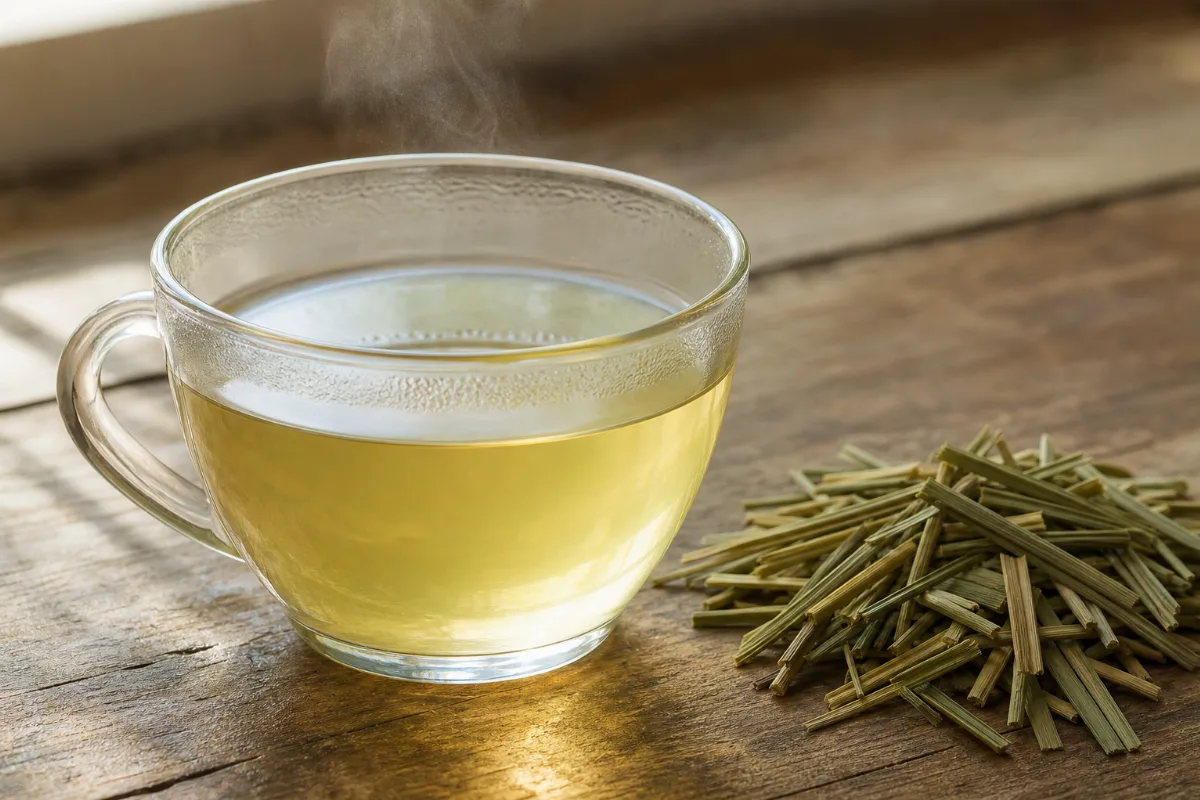
Lemongrass tea is a drink made by steeping the leaves of a tropical grass in hot water. People use it to relax, for stomach upset and for blood pressure. Human research on the tea itself is small: one 1986 test found no calming effect, and a 30-day trial found kidney measures got worse. The main caution is for people with kidney problems, who should ask a doctor first.
General information, not medical advice. Last substantive update · Not medically reviewed. A named clinician has not signed off on this page. How this page is made
About Lemongrass Tea
Lemongrass tea is the drink made from the leaves of Cymbopogon citratus, a tropical grass. Human trials of the tea itself are few, small and mixed. It did not calm people or help sleep in a 1986 test, its blood-pressure benefit rests on a review statement, and a 2015 trial found worse kidney measures after 30 days. Allergy and rare liver reports exist. Most of the research quoted for lemongrass is on the oil.
What it is
Lemongrass is Cymbopogon citratus, a grass in the Poaceae family that GBIF accepts as a species name. The leaf is steeped for the tea.
The oil is mostly citral. The tea is a water infusion and holds little oil. Plant chemicals in the leaf powder include tannins, saponins, alkaloids and flavonoids, but no amounts were given.
Caffeine: no source we read measured caffeine in lemongrass tea. The plant is a grass and not the tea plant (Camellia sinensis) that black and green tea come from. Blends can add true tea, so read the label.
Tea or oil?
A cup of lemongrass tea is a weak water infusion of the leaf. Lemongrass essential oil is a concentrated product with its own risks, including skin allergy. See the lemongrass oil page.
The aroma trials for anxiety and the cholesterol capsule trial are for oil. The tea itself showed no calming effect in a small placebo test. Results for oil cannot be read as results for tea, in either direction.
What the research shows
Blood pressure: a 2022 review says the tea lowers blood pressure and also that the potential has not been thoroughly studied. We could not read the trials behind it.
Anxiety and sleep: the one human test of the tea (1986; 18 anxious people, 50 volunteers for sleep) found no effect compared with placebo. Small trials of smelling the oil found lower anxiety scores.
Kidneys and blood: one 105-person trial found worse kidney measures, and higher haemoglobin and red cell counts, in healthy adults after 30 days. These are lab markers, from the same volunteers, not treatment of any illness.
Mouth rinse and other uses: no significant difference in the main analysis of a 90-person oral thrush trial. No human trials for gut upset, fever, period pain or milk supply.
Quality and contamination
We found no survey of pesticides, metals or plant toxins in lemongrass tea itself. A 2013 analysis of six herbal tea plants that included lemongrass singled out hibiscus, not lemongrass, in its abstract.
Look for the Latin name Cymbopogon citratus on the pack and read the whole ingredient list, because blends may add other herbs.
Pregnancy, breastfeeding and children
No study of the tea in human pregnancy was found, so safety is not established. In rats, a lemongrass infusion for 2 months caused no toxicity and no harm to offspring, but rats are not proof for people. A lab study found an extract relaxed isolated rat uterine muscle. Ask a midwife or doctor.
For breastfeeding, LactMed found no valid trials supporting lemongrass for milk supply and notes the reports of liver enzyme changes with a multi-herb mixture.
Children: no information on the tea was found. Do not give children lemongrass essential oil to swallow.
At a glance
Traditional uses history, not proof
- In Brazilian folk medicine the leaf tea is used for nervous and gut complaints and for fever.
- In Cuban folk medicine the leaf is used for high blood pressure and inflammation.
- A South African hospice used a lemongrass infusion for oral thrush.
Studied for research
- Blood pressure, insufficient (review statement; trials not read)
- Anxiety and calm, against (tea; one small trial)
- Sleep, against (tea; one small trial)
- Anxiety from smelling the oil, very low (oil, not tea)
- Blood counts, very low (one trial in healthy adults)
- Oral thrush as a mouth rinse, insufficient
- Breast milk supply, insufficient
Main compounds
- Citral (mostly in the oil, not the tea)
- Geraniol and neral (oil)
- Tannins, flavonoids and other plant chemicals (leaf powder, amounts not given)
Common forms
- Fresh or dried leaf steeped in hot water
- Tea bags and blends with other herbs or with true tea
- Lemongrass essential oil and oil capsules (different products, separate page)
Research links: Lemongrass tea and kidney function: 2015 trial (abstract) · Lemongrass tea in humans: toxicity, sleep and anxiety, 1986 (abstract) · Lemongrass and blood pressure: 2022 review (abstract) · Lemongrass tea and blood counts: 2015 trial (abstract) · LactMed: Lemongrass · Research Library · Genes & Biomarkers Library
What it is and its history
- Accepted scientific name
- Cymbopogon citratus
- Naming authority
- (DC.) Stapf
- Synonyms
- Andropogon citratus DC.
- Common names
- Lemongrass (English); West Indian lemongrass (English); Lemon grass (English)
- Family or group
- Poaceae (the grass family). It is not the plant that black and green tea come from.
- Classification
- Plantae > Poales > Poaceae > Cymbopogon > Cymbopogon citratus
- Native range
- Not verified from a primary source.
- Habitat
- Not verified.
- What it looks like
- Roots: Not checked.; Stems: Not checked.; Leaves: The leaf is the part used for tea; studies describe dried or fresh leaves steeped in hot water.; Flowers: Not checked.; Fruit: Not checked.
- Cultivation
- Not checked.
- Harvest and processing
- The tea (abafado) is made by pouring boiling water over fresh or dried leaves (Carlini 1986). The oil is made separately by distillation (not the tea).
- Look-alikes and adulterants
- Name: Cymbopogon flexuosus (East Indian lemongrass) and citronella grasses (C. nardus, C. winterianus); Note: Related grasses with different oils. Results from one species should not be assumed for another.; Name: Lemon balm (Melissa officinalis), lemon verbena and lemon eucalyptus; Note: Unrelated lemon-scented plants with their own pages; do not mix up their evidence.
- Sustainability and conservation
- Not checked.
Photographs
Traditional use and history history, not clinical proof
| Tradition or era | Documented use | Source |
|---|---|---|
| Brazilian folk medicine | The leaf tea (abafado) is one of the most used Brazilian folk remedies for nervous and gut complaints and for fever. | p3762195 |
| Cuban folk medicine | The leaf decoction is used as a folk remedy for high blood pressure and inflammation. | p2716341 |
| Hospice use in South Africa | A hospice used lemongrass infusion for oral thrush because gentian violet stains. | p19109001 |
| Herbal milk-supply mixtures | Appears in some mixtures promoted to raise milk supply; LactMed says no valid trials support this. | p42903793 |
Traditional use shows how it was used. It does not show that it works or is safe today.
What is inside, and how it may work
What it contains and how those compounds act in cells and animals. Laboratory and animal mechanisms are not proven effects in people.
Main compounds
| Compound | Family | Where it is concentrated | Activity studied | Level of evidence |
|---|---|---|---|---|
| Citral (geranial and neral) PubChem 638011 | acyclic monoterpene aldehydes | Leaf, mostly in the essential oil About 65-85% of the oil per a review. The tea is a water infusion and holds little oil; its citral level was not found. | Studied as a pure compound and as oil in cells and animals. Unstable in air. 17 14 | Lab animal |
| Neral (cis-citral) PubChem 643779 | monoterpene aldehyde | Leaf (oil) Not stated for tea. | Part of citral; no separate finding read. 14 | Unknown |
| Geraniol PubChem 637566 | monoterpene alcohol | Leaf (oil) Named as an oil component by LactMed. | No finding about tea read. 16 14 | Unknown |
| Polyphenols, tannins, saponins, alkaloids and flavonoids (class names) | plant chemicals | Leaf (water extract) The leaf powder used in the 2015 trial tested positive for these classes; no amounts were given. | Not tested individually. 6 19 | Unknown |
Mechanisms, receptors and pathways
| Target or pathway | Gene or receptor | What was found | Level |
|---|---|---|---|
| Blood vessel relaxation | n/a | In tissue and animals, lemongrass and citral relax blood vessels via nitric oxide and calcium channels (review). 19 | Lab animal |
| Uterine muscle relaxation | n/a | A leaf extract relaxed isolated rat uterine muscle and reduced pain behaviour in rats. Not shown for tea in people. 18 | Animal research |
| Kidney filtration | n/a | Mechanism for the lower eGFR in the 2015 trial was not established in the abstract. 5 | Human data |
Absorption, metabolism and elimination
- Absorption
- A review says oil compounds are quickly absorbed by mouth, lungs and skin; human data are lacking.
- Distribution
- Not established in people.
- Metabolism
- Reportedly oxidation, glucuronidation, sulfation or methylation (review). Citral is metabolised to acids and a bile glucuronide (review).
- Elimination
- Urine, faeces and exhaled volatiles (review). No human numbers.
- Bioavailability
- Unknown in people; none for tea.
Isolated compounds versus whole extracts
The tea is a water infusion with polyphenols and little oil; the essential oil is mostly citral. Results for the oil or for citral alone do not carry over to the tea: the oral tea showed no calming effect in rodents or people, while the oil aroma showed lower anxiety scores in small human trials.
Nutritional composition
Lemongrass tea is not a meaningful source of nutrients in the sources read; no nutrient figures were found.
1 mixed findings3 very low certainty5 not enough evidence2 evidence against
What is Lemongrass Tea good for?
The uses people ask about and how strong the human evidence is for each. Several results people quote are for lemongrass oil, not the tea, and each row says which.
Benefits, one by one
Each card is a research question, not a promise. Tap a goal to filter. Open a card to see the studies, doses and limits.
Anxiety and calm (the tea)
Evidence againstIn a small double-blind test in 18 people with high anxiety, the tea did not lower anxiety compared with placebo. Rodent tests of the tea by mouth also showed no calming effect.
2 studiesLeaf tea (abafado).
Studies, doses and limits
What the trials found
A 1986 study gave dried-leaf lemongrass tea or placebo, double-blind, to 18 people with high trait anxiety before an anxiety-inducing test. Anxiety levels were similar in both conditions.
Results
No difference in anxiety between tea and placebo. The authors conclude the tea lacks anti-anxiety properties.
Effect sizes as reported
No effect size reported in the abstract.
Why this rating
Small and old (1986). Only 18 people. But it is the only human test of the tea itself for this use, and it was null.
Form and dose studied
Leaf tea (abafado).
Who was studied
Healthy adults with high trait anxiety.
Limits
Tiny and old; a null result in 18 people cannot rule out a small effect. Tea types and strengths vary.
Why researchers looked
Lemongrass tea is a popular Brazilian folk remedy for nervous complaints, so it was tested in people and animals.
Traditional use
The leaf tea (called abafado in Brazil) is used in folk medicine for nervous and gut complaints and for fever (Carlini 1986).
Proposed mechanism Animal research
Not established. Oral tea showed no calming action in a battery of 12 rodent tests; effects appeared only when the tea was injected into the abdomen.
A proposed mechanism does not show that the effect happens in people.
No safety signal in this study; see the Safety tab for kidney and allergy notes.
Sleep (the tea)
Evidence againstIn a double-blind test in 50 volunteers, the tea did not change how quickly people fell asleep, sleep quality, dream recall or waking, compared with placebo.
2 studiesLeaf tea.
Studies, doses and limits
What the trials found
The 1986 human study (Leite) tested sleep induction, sleep quality, dream recall and rewakening in 50 volunteers under double-blind placebo conditions.
Results
No effect of the tea compared with placebo on any sleep measure.
Effect sizes as reported
None reported.
Why this rating
One small, old study, null. No later trial of the tea for sleep was found.
Form and dose studied
Leaf tea.
Who was studied
Healthy volunteers.
Limits
Old, short, single study; the volunteers were not described as having insomnia.
Why researchers looked
Lemongrass tea is traditionally used as a mild calming drink.
Traditional use
Brazilian folk medicine uses it for nervous complaints (Carlini 1986).
Proposed mechanism Animal research
Not established; rodent tests of the oral tea showed no sleep-inducing action.
A proposed mechanism does not show that the effect happens in people.
None noted.
Anxiety from smelling the oil (not tea)
Very low certaintySmall trials of breathing in lemongrass essential oil found lower anxiety scores. These test the aroma of the oil, not the tea. A larger trial in children found music and visual distraction worked better than lemongrass smell.
3 studiesEssential oil inhaled; not tea. Oil should not be swallowed; see the …
Studies, doses and limits
What the trials found
Three trials: 38 dental patients (inhaled oil vs no aroma, 2025), 40 healthy men given a stress test (oil vs tea tree oil or water, 2015), and 350 children split among five distraction methods, one of which was lemongrass oil aroma (2025).
Results
38 patients: lower anxiety, blood pressure and heart rate with the aroma. 40 men: less state anxiety and tension right after inhaling, but body stress responses were not prevented. 350 children: all methods reduced anxiety; music was best, and smell was less effective than music or visual distraction.
Effect sizes as reported
Not given as one figure.
Why this rating
Small trials, one visit each, no blinding possible for a smell, no tea tested, and the largest trial had no no-treatment group.
Form and dose studied
Essential oil inhaled; not tea. Oil should not be swallowed; see the lemongrass oil page.
Who was studied
Dental patients, young men, children.
Limits
Anxiety scores are self-rated, and the smell is easy to notice, which makes expectation a likely factor.
Why researchers looked
Citrus-like aromas are used in aromatherapy to ease nerves before stressful events such as dental work.
Traditional use
Aromatherapy use, not a traditional tea use.
Proposed mechanism Not established
Not established in these trials.
A proposed mechanism does not show that the effect happens in people.
The oil is a skin allergen; see Safety.
Blood pressure (the tea)
Not enough evidenceA 2022 review says lemongrass tea lowers blood pressure in healthy and high-blood-pressure people, but also says the effect has not been thoroughly studied. We could not read the trials behind that statement.
2 studiesLeaf tea.
Studies, doses and limits
What the trials found
Only a review abstract was read. It says drinking the tea decreases blood pressure in healthy and hypertensive people, and notes a weak to moderate diuretic effect in animals and humans.
Results
No trial numbers, sizes or effects available to us.
Effect sizes as reported
None available.
Why this rating
The only human-level source is a review statement; the trials behind it were not read, and the authors say the potential is not thoroughly studied.
Form and dose studied
Leaf tea.
Who was studied
Healthy and hypertensive adults (per the review).
Limits
We cannot judge trial quality. A rat decoction study showed a drop in blood pressure only when injected.
Why researchers looked
Lemongrass leaf is a folk remedy for high blood pressure in Cuba and elsewhere.
Traditional use
Cuban folk medicine uses the leaf decoction as an antihypertensive (Carbajal 1989).
Proposed mechanism Lab animal
In lab tissue and animals, lemongrass and citral relax blood vessels; the review links this to nitric oxide and calcium channels.
A proposed mechanism does not show that the effect happens in people.
If you take blood pressure medicine or water pills, mention regular lemongrass tea to your pharmacist (theoretical concern; no interaction report was found).
Kidney function and urine output (a caution)
Mixed findingsIn one 30-day trial in 105 healthy adults, kidney filtration measures went down after daily lemongrass tea, and urine output went up early on. A 1986 two-week study found no change in creatinine or urea.
3 studiesLeaf infusion at three amounts; the amounts are not repeated here.
Studies, doses and limits
What the trials found
2015 trial (Ekpenyong): 105 healthy adults aged 18 to 35 were randomly assigned to three amounts of leaf infusion once daily for 30 days. 1986 study (Leite): healthy volunteers drank the tea once or daily for 2 weeks. A Cuban rat study found a weak diuretic effect.
Results
2015: creatinine clearance and eGFR fell significantly at day 30 in all groups; serum and urine creatinine rose; urea rose in the two higher-amount groups; electrolytes in blood did not change; urine volume rose early in the lower-amount groups. 1986: no change in blood urea or creatinine after 2 weeks.
Effect sizes as reported
Not summarised as one number in the abstract.
Why this rating
A randomised 30-day trial found worse kidney markers, which is a reason for care, but a 2-week study found none. Both are small lab-marker studies in healthy people.
Form and dose studied
Leaf infusion at three amounts; the amounts are not repeated here.
Who was studied
Healthy young adults.
Limits
No placebo group described in the 2015 abstract; changes are against baseline. Lab markers only; no kidney disease developed or was looked for. Length of any recovery was not reported in the abstract.
Why researchers looked
Lemongrass tea is used as a mild diuretic, so researchers checked kidney measures.
Traditional use
Folk use as a water-passing tea.
Proposed mechanism Not established
Not established.
A proposed mechanism does not show that the effect happens in people.
People with kidney disease or on kidney-affecting medicines should ask their doctor before drinking it regularly.
Blood counts (haemoglobin and red cells)
Very low certaintyIn the same 105-person trial, haemoglobin and red blood cell counts rose after 30 days of daily tea. The authors suggest a blood-building effect, but this was not tested in anaemia.
2 studiesLeaf infusion.
Studies, doses and limits
What the trials found
The 2015 trial (Ekpenyong) reports blood counts at baseline and at days 10 and 30 in the same 105 volunteers as the kidney report.
Results
Haemoglobin, packed cell volume and red cell count rose significantly, mostly by day 30. Red cell size and haemoglobin per cell did not change. White cell counts fell, except neutrophils and lymphocytes, which rose in some groups.
Effect sizes as reported
Not given as one figure.
Why this rating
One trial in healthy people, compared with baseline, from the same group that reported the kidney result; no anaemia treated.
Form and dose studied
Leaf infusion.
Who was studied
Healthy adults 18 to 35.
Limits
Not an independent result; the white cell fall is not explained. Whether rises mean anything for health is unknown. A change in blood counts can also come from changes in body water.
Why researchers looked
Researchers looked at blood counts in healthy volunteers.
Traditional use
Not described.
Proposed mechanism Not established
Not established. The authors suggest nutrients and antioxidants in the leaf.
A proposed mechanism does not show that the effect happens in people.
Because kidney markers moved in the same trial, do not treat this as proof of benefit.
Oral thrush (as a mouth rinse)
Not enough evidenceA 90-person trial in people with HIV compared lemongrass infusion, lemon juice and gentian violet for oral thrush. The main (intention-to-treat) analysis found no significant differences.
1 studiesInfusion used in the mouth, not just drunk.
Studies, doses and limits
What the trials found
Ninety patients with HIV and oral thrush were randomly assigned to gentian violet, lemon juice or lemongrass infusion for 11 days; 83 finished.
Results
No significant differences between groups in the intention-to-treat analysis. In the completers-only analysis the authors report lemon juice did better than gentian violet, and the lemongrass comparison reached p<0.05.
Effect sizes as reported
Not given.
Why this rating
Small, active comparator rather than placebo, null primary analysis.
Form and dose studied
Infusion used in the mouth, not just drunk.
Who was studied
Adults with HIV and oral thrush.
Limits
Completers-only results can overstate benefit. No placebo.
Why researchers looked
A South African hospice used a lemongrass infusion because gentian violet stains and can stigmatise patients.
Traditional use
Hospice use in South Africa.
Proposed mechanism Not established
The leaf has known antifungal properties, according to the authors.
A proposed mechanism does not show that the effect happens in people.
Do not use home remedies in place of medical care for infection in people with HIV.
Cholesterol (lemongrass oil capsule, not tea)
Very low certaintyA 1989 trial of lemongrass oil capsules in 22 people with high cholesterol found no significant overall fall; 8 people responded and 14 did not.
1 studiesOil in a capsule; not tea.
Studies, doses and limits
What the trials found
Twenty-two adults with high cholesterol took a daily oil capsule for 90 days with no control group.
Results
Across all 22 the fall approached significance (P below 0.06). Eight responders fell at 90 days by about 38 mg/dl; 14 did not change. Six responders retested 90 days after stopping were not significantly different from baseline.
Effect sizes as reported
Responders about -38 mg/dl at 90 days (+/-10).
Why this rating
Tiny, before-and-after, no control, post hoc split, oil capsule. Nothing about tea.
Form and dose studied
Oil in a capsule; not tea.
Who was studied
Adults with high cholesterol.
Limits
Very old. Nothing confirms the result. Do not swallow essential oils on this basis.
Why researchers looked
Some oil components were thought to lower cholesterol.
Traditional use
Not described.
Proposed mechanism Not established
Not established.
A proposed mechanism does not show that the effect happens in people.
The oil is a different product with its own safety rules.
Breast milk supply
Not enough evidenceLemongrass is in some mixtures promoted to raise milk supply. LactMed found no scientifically valid trials supporting this.
1 studiesLeaf tea in mixtures.
Studies, doses and limits
What the trials found
No trial found. LactMed's entry (read as a PubMed record) says no valid clinical trials support the use.
Results
None.
Effect sizes as reported
None.
Why this rating
No trials.
Form and dose studied
Leaf tea in mixtures.
Who was studied
Breastfeeding mothers.
Limits
Mixtures contain several herbs, so a trial could not separate lemongrass.
Why researchers looked
It appears in some herbal milk-supply tea mixtures.
Traditional use
Used in herbal mixtures.
Proposed mechanism Not established
Not established.
A proposed mechanism does not show that the effect happens in people.
A woman taking a multi-herb milk-supply tea containing lemongrass leaf had raised liver enzymes; see Safety.
Stomach upset, fever and nerves (folk uses, animal tests)
Not enough evidenceBrazilian folk uses were not supported when the oral tea was tested in rats and mice.
1 studiesLeaf tea.
Studies, doses and limits
What the trials found
No human trial of the tea for gut or fever was found. The animal study tested teas from three Brazilian regions.
Results
By mouth the teas did not lower body temperature, change gut transit or defecation, or show calming effects, even at many times the human amount. Injection did have effects.
Effect sizes as reported
None.
Why this rating
Animal-only, and null by mouth.
Form and dose studied
Leaf tea.
Who was studied
Rats and mice.
Limits
Animal study, 1986.
Why researchers looked
The tea is a Brazilian folk remedy for gut and nerve complaints and fever.
Traditional use
Brazilian folk medicine (Carlini 1986).
Proposed mechanism Animal research
Not established.
A proposed mechanism does not show that the effect happens in people.
None noted.
Period pain
Not enough evidenceOne 2025 rat study of a lemongrass leaf extract found less pain behaviour and relaxed isolated uterine muscle. There is no human trial.
1 studiesExtract, not tea.
Studies, doses and limits
What the trials found
No human trial found.
Results
In rats, the highest extract amount reduced writhing and uterine inflammation compared with controls and relaxed isolated rat uterine muscle.
Effect sizes as reported
None for people.
Why this rating
Rats and tissue only, extract not tea.
Form and dose studied
Extract, not tea.
Who was studied
Rats.
Limits
Not tested in people.
Why researchers looked
The leaf is traditionally used for menstrual complaints in some communities (per the authors).
Traditional use
Traditional use in some communities (per the authors; not independently verified).
Proposed mechanism Lab animal
Anti-inflammatory and uterus-relaxing actions of an extract in rats and tissue.
A proposed mechanism does not show that the effect happens in people.
The uterus-relaxing finding is a reason not to assume safety in pregnancy.
Connections to the rest of health
How Lemongrass Tea connects to the rest of our health knowledge graph. Every link says what kind of connection it is. A safety link (for example to the liver) is a warning, not a benefit. A study that merely mentions a topic never creates a benefit link.
Explore every connection: goals, body systems, organs, symptoms, genes
A. Wellness goals
| Connected to | Kind of connection | Evidence status | Context | Studies |
|---|---|---|---|---|
| Stress Anxiety | Evidence against | Anxiety and calm (the tea): In a small double-blind test in 18 people with high anxiety, the tea did not lower anxiety compared with placebo. Rodent tests of the tea by mouth also showed no calming effect. | 11 3 | |
| Sleep | Evidence against | Sleep (the tea): In a double-blind test in 50 volunteers, the tea did not change how quickly people fell asleep, sleep quality, dream recall or waking, compared with placebo. | 11 3 | |
| Stress Anxiety | Very low certainty | Anxiety from smelling the oil (not tea): Small trials of breathing in lemongrass essential oil found lower anxiety scores. These test the aroma of the oil, not the tea. A larger trial in children found music and visual distraction worked better than lemongrass smell. | 13 10 4 | |
| Blood Pressure Support | Not enough evidence | Blood pressure (the tea): A 2022 review says lemongrass tea lowers blood pressure in healthy and high-blood-pressure people, but also says the effect has not been thoroughly studied. We could not read the trials behind that statement. | 19 2 | |
| Kidney Support | Mixed findings | Kidney function and urine output (a caution): In one 30-day trial in 105 healthy adults, kidney filtration measures went down after daily lemongrass tea, and urine output went up early on. A 1986 two-week study found no change in creatinine or urea. | 5 11 2 | |
| Blood Health | Very low certainty | Blood counts (haemoglobin and red cells): In the same 105-person trial, haemoglobin and red blood cell counts rose after 30 days of daily tea. The authors suggest a blood-building effect, but this was not tested in anaemia. | 6 5 | |
| Immune Health | Not enough evidence | Oral thrush (as a mouth rinse): A 90-person trial in people with HIV compared lemongrass infusion, lemon juice and gentian violet for oral thrush. The main (intention-to-treat) analysis found no significant differences. | 21 | |
| Cholesterol Support | Very low certainty | Cholesterol (lemongrass oil capsule, not tea): A 1989 trial of lemongrass oil capsules in 22 people with high cholesterol found no significant overall fall; 8 people responded and 14 did not. | 8 | |
| Womens Health | Not enough evidence | Breast milk supply: Lemongrass is in some mixtures promoted to raise milk supply. LactMed found no scientifically valid trials supporting this. | 16 | |
| Digestive Support | Not enough evidence | Stomach upset, fever and nerves (folk uses, animal tests): Brazilian folk uses were not supported when the oral tea was tested in rats and mice. | 3 | |
| Womens Health | Not enough evidence | Period pain: One 2025 rat study of a lemongrass leaf extract found less pain behaviour and relaxed isolated uterine muscle. There is no human trial. | 18 |
B. Body systems
| Connected to | Kind of connection | Evidence status | Context | Studies |
|---|---|---|---|---|
| Nervous System | Biological association | Evidence against | Studied for: Anxiety and calm (the tea) Studied for: Sleep (the tea) | 11 3 13 10 4 |
| Cardiovascular System | Biological association | Not enough evidence | Studied for: Blood pressure (the tea) Studied for: Cholesterol (lemongrass oil capsule, not tea) | 19 2 8 |
| Urinary System | Biological association | Mixed findings | Studied for: Kidney function and urine output (a caution) | 5 11 2 |
| Blood | Biological association | Very low certainty | Studied for: Blood counts (haemoglobin and red cells) | 6 5 |
| Immune System | Biological association | Not enough evidence | Studied for: Oral thrush (as a mouth rinse) | 21 |
| Reproductive System | Biological association | Not enough evidence | Studied for: Breast milk supply Studied for: Period pain | 16 18 |
| Digestive System | Biological association | Not enough evidence | Studied for: Stomach upset, fever and nerves (folk uses, animal tests) | 3 |
C. Body parts and organs
| Connected to | Kind of connection | Evidence status | Context | Studies |
|---|---|---|---|---|
| Kidneys | Adverse effect or risk | Low certainty | Filtration measures (creatinine clearance, eGFR) fell after 30 days of daily tea in healthy adults; a 2-week study found no change. Filtration measures fell after 30 days of daily tea in healthy adults; a 2-week study found no change. Preparation or compound: Lemongrass leaf tea |
5 11 |
| Liver | Adverse effect or risk | Very low certainty | Rare liver toxicity reports (LactMed), one with a multi-herb mixture. Preparation or compound: Lemongrass in multi-herb tea |
16 |
| Skin | Adverse effect or risk | Low certainty | Contact allergy to the oil; skin symptoms recurred after drinking the tea in one sensitised person. Contact allergy to the oil; symptoms recurred after drinking the tea in one sensitised person. Preparation or compound: Lemongrass tea and oil |
1 16 |
E. Health conditions
| Connected to | Kind of connection | Evidence status | Context | Studies |
|---|---|---|---|---|
| Kidney disease | Contraindication | Low certainty | Ask a doctor before regular use. Preparation or compound: Lemongrass leaf tea |
5 |
| Pregnancy and breastfeeding | Contraindication | Not enough evidence | Safety in pregnancy not established; rat tea study showed no harm, but that is not human proof. Not established; rat study showed no harm, which is not human proof. Preparation or compound: Lemongrass leaf tea |
20 16 |
| High blood pressure | Not enough evidence | Review statement only; trials not read. Preparation or compound: Lemongrass tea |
19 |
I. Biomarkers
| Connected to | Kind of connection | Evidence status | Context | Studies |
|---|---|---|---|---|
| State anxiety scores | Biological association | Very low certainty | Measured in trials: lower with inhaled oil; no change with the tea. A lab change is not the same as a health benefit. | 10 11 |
| Sleep induction and quality | Biological association | Evidence against | Measured in trials: no change. A lab change is not the same as a health benefit. | 11 |
| Blood pressure and heart rate during dental treatment | Biological association | Very low certainty | Measured in trials: lower with inhaled oil. A lab change is not the same as a health benefit. | 13 |
| Creatinine clearance and eGFR | Biological association | Mixed findings | Measured in trials: lower after 30 days of daily tea. A lab change is not the same as a health benefit. | 5 11 |
| Serum creatinine and urea | Biological association | Mixed findings | Measured in trials: higher after 30 days (urea in two of three groups). A lab change is not the same as a health benefit. | 5 11 |
| Haemoglobin and red blood cell count | Biological association | Very low certainty | Measured in trials: higher after 30 days. A lab change is not the same as a health benefit. | 6 |
| Serum cholesterol (oil capsule) | Biological association | Very low certainty | Measured in trials: lower in 8 of 22 people (oil, not tea). A lab change is not the same as a health benefit. | 8 |
| Blood pressure (tea) | Biological association | Not enough evidence | Measured in trials: lower (review statement only). A lab change is not the same as a health benefit. | 19 |
| Liver enzymes | Biological association | Low certainty | Measured in trials: no change in healthy volunteers. A lab change is not the same as a health benefit. | 11 |
L. Active compounds
| Connected to | Kind of connection | Evidence status | Context | Studies |
|---|---|---|---|---|
| Citral (geranial and neral) | Biological association | Lab animal | Studied as a pure compound and as oil in cells and animals. Unstable in air. Preparation or compound: Leaf, mostly in the essential oil |
17 14 |
| Neral (cis-citral) | Biological association | Unknown | Part of citral; no separate finding read. Preparation or compound: Leaf (oil) |
14 |
| Geraniol | Biological association | Unknown | No finding about tea read. Preparation or compound: Leaf (oil) |
16 14 |
| Polyphenols, tannins, saponins, alkaloids and flavonoids (class names) | Biological association | Unknown | Not tested individually. Preparation or compound: Leaf (water extract) |
6 19 |
Each connection is stored with the ingredient, the connected record, the kind of connection, the evidence status, the supporting studies, the preparation or compound involved, and a review date (last reviewed October 25, 2026).
The evidence
The research centre for Lemongrass Tea. Every record here was checked against PubMed or the publisher's page; we never list a study we have not verified.
Evidence by outcome
Bars show how many studies we found for each outcome, not how well it works. People are added up across trials only (reviews are not added, to avoid double counting).
How we rate evidence
High certainty
Several well-run trials or reviews agree; further research is unlikely to change the picture much.
Moderate certainty
Good trials point the same way, but some doubt remains.
Low certainty
Small, short or inconsistent trials. The finding could change with better research.
Very low certainty
Very little or very weak human data. Treat as a possibility only.
Mixed findings
Trials or reviews disagree with each other.
Not enough evidence
Not enough human research to say either way.
Evidence against
Good research found no benefit, or found harm.
We take the reviewers' own risk-of-bias and GRADE statements where they exist, and otherwise judge from study size, design, consistency, directness and whether a product matches what is sold. Many publications do not make evidence high. Method note: We searched PubMed and read the abstracts of the studies listed, read the PubMed record for LactMed (the full LactMed page was blocked), checked the plant name in GBIF, three compounds in PubChem, and the NCCIH herb list.
Study library: every study we checked 22
| Study | Design | People | Product, dose, length | Result |
|---|---|---|---|---|
| Bleasel 2002 Allergic contact dermatitis following exposure to essential oils Australasian Journal of Dermatology · PMID 12121401 |
Case series |
4 Three aromatherapists and one chemist |
Essential oils; one case also reacted to lemongrass tea Oils; tea in one case n/a · vs n/a |
Four cases of allergic contact dermatitis to essential oils, mostly on the hands, with sensitisation to multiple oils. One patient had the skin symptoms come back after drinking lemongrass tea. Methods, limits and fundingOutcomes: Skin allergy Limitations: Four people who were already sensitised through work with oils. Shows it can happen, not how often. Read: abstract |
| Carbajal 1989 Pharmacological study of Cymbopogon citratus leaves Journal of Ethnopharmacology · PMID 2716341 |
Animal study animal |
Rats | Lemongrass leaf decoction (Cuba) Leaf decoction Short tests · vs Controls |
A decoction given into a vein lowered blood pressure in a dose-related way. By mouth it had a weak diuretic and weak anti-swelling effect. Methods, limits and fundingOutcomes: Blood pressure, urine volume, swelling Limitations: Rat study; intravenous results do not apply to drinking tea. Read: abstract |
| Carlini 1986 Pharmacology of lemongrass (Cymbopogon citratus Stapf). I. Effects of teas prepared from the leaves on laboratory animals Journal of Ethnopharmacology · PMID 3762195 |
Animal study animal |
Rats and mice | Lemongrass leaf tea (abafado) from three Brazilian regions; citral for comparison Leaf tea Single oral doses, up to many times the human amount · vs Controls |
By mouth the teas did not lower body temperature, change gut transit, or show calming, sleep-inducing, anticonvulsant or anti-anxiety effects. Injected into the abdomen they did have effects. The authors say the data do not support the popular oral use for nervous, gut and fever complaints. Methods, limits and fundingOutcomes: Body temperature, gut transit, central nervous system tests (12 tests) Limitations: Animal study, 1986. Injection results do not apply to drinking. Read: abstract |
| Chawla 2025 Comparative evaluation of effectiveness among various sensory distractors for reducing dental anxiety in pediatric population aged 6-9 years - A randomized controlled trial Journal of the Indian Society of Pedodontics and Preventive Dentistry · PMID 40159612 |
Randomized trial |
350 Children aged 6 to 9 having dental treatment |
Lemongrass oil aroma was one of five distraction methods (not tea) Essential oil aroma During one dental visit · vs Cards, music, acupressure, honey taste (70 children per group) |
All five methods reduced anxiety. Music did best and visual distraction next; both did better than the smell (lemongrass oil) and taste groups. There was no group without any method. Methods, limits and fundingOutcomes: Anxiety scale, pulse, oxygen saturation Limitations: No no-treatment group, so the smell result cannot be separated from simply being distracted. Aroma, not tea. Read: abstract |
| Ekpenyong 2015 Effect of lemongrass tea consumption on estimated glomerular filtration rate and creatinine clearance rate Journal of Renal Nutrition · PMID 25440110 |
Randomized trial |
105 Healthy adults aged 18 to 35 (55 men, 50 women) |
Lemongrass leaf infusion (Cymbopogon citratus) Leaf powder infusion Once daily for 30 days; checks at days 0, 10 and 30 · vs Three groups given different amounts; results compared with each person's own baseline |
Creatinine clearance and eGFR fell significantly at day 30 in men and women in all groups. At day 10 they were unchanged in the two lower-amount groups, while urine volume and urination frequency rose. Serum and urine creatinine rose significantly in all groups; serum urea rose in the two higher-amount groups. Serum electrolytes did not change. The authors describe dose- and time-dependent adverse effects. Methods, limits and fundingOutcomes: Creatinine clearance, eGFR, urea, creatinine, electrolytes, urine volume Limitations: Healthy young volunteers, lab markers only, no placebo group described in the abstract, compared with baseline. A 1986 trial found no change in creatinine or urea after 2 weeks (see p2429120). Read: abstract |
| Ekpenyong 2015 Bioactive natural constituents from lemongrass tea and erythropoiesis boosting effects: potential use in prevention and treatment of anemia Journal of Medicinal Food · PMID 25162916 |
Randomized trial |
105 Healthy adults aged 18 to 35 (the same 105 volunteers as the kidney report) |
Lemongrass leaf infusion (Cymbopogon citratus) Leaf powder infusion Once daily for 30 days; checks at days 0, 10 and 30 · vs Three groups given different amounts; compared with baseline |
Haemoglobin, packed cell volume and red blood cell count rose significantly in all subjects, mostly by day 30. Red cell size and haemoglobin content per cell did not change. White cell counts fell significantly except neutrophils and lymphocytes, which rose in some or all groups. The authors suggest a blood-building effect. Methods, limits and fundingOutcomes: Haemoglobin, packed cell volume, red cell count, white cells, platelets Limitations: Same volunteers and same design as p25440110, so not an independent result. Lab markers in healthy people, compared with baseline; no illness (anaemia) was treated. Read: abstract |
| Ekpenyong 2015 Ethnopharmacology, phytochemistry, and biological activities of Cymbopogon citratus (DC.) Stapf extracts Chinese Journal of Natural Medicines · PMID 25986281 |
Narrative review mixed |
n/a | Cymbopogon citratus extracts and oil Leaf n/a · vs n/a |
Says oil compounds are quickly absorbed by mouth, lungs and skin, and are changed by oxidation, glucuronidation, sulfation or methylation. Reliable human pharmacokinetic data are lacking. Methods, limits and fundingOutcomes: Pharmacokinetics Limitations: Review; first author also ran the 2015 kidney and blood trials. Read: abstract |
| Elson 1989 Impact of lemongrass oil, an essential oil, on serum cholesterol Lipids · PMID 2586227 |
Uncontrolled trial |
22 Adults with high cholesterol |
Lemongrass essential oil in a capsule (not tea) Essential oil 90 days · vs None described (before-and-after) |
Across all 22 the fall at 90 days approached but did not reach significance (P below 0.06). Eight people responded, with falls at 90 days of about 38 mg/dl in that group, while 14 did not respond. Six responders measured 90 days after stopping showed no significant difference from baseline. Methods, limits and fundingOutcomes: Serum cholesterol Limitations: Small, before-and-after with no control group, post hoc split into responders, 1989 oil capsule not tea. US government and NIH research support. Funding and conflicts: Research Support, US Gov't, PHS Read: abstract |
| GBIF Secretariat 2026 GBIF Backbone Taxonomy: Cymbopogon citratus (DC.) Stapf GBIF API, checked 2026-10-25 · Source |
Database record n/a |
n/a | n/a n/a |
Accepted species (key 2705275), family Poaceae, order Poales, authority (DC.) Stapf. Methods, limits and fundingOutcomes: Accepted name and family. Limitations: Taxonomy database record. Read: full-text |
| Goes 2015 Effect of Lemongrass Aroma on Experimental Anxiety in Humans Journal of Alternative and Complementary Medicine · PMID 26366471 |
Randomized trial |
40 Healthy male volunteers given a stress test (Stroop colour-word test) |
Lemongrass essential oil, inhaled (not tea) Essential oil aroma One session · vs Tea tree oil aroma, or water |
The lemongrass groups showed a fall in state anxiety and subjective tension right after inhaling, and recovered from the task within 5 minutes, unlike controls. Body measures (heart rate, muscle activity) were not prevented from changing. The authors say more work is needed. Methods, limits and fundingOutcomes: State anxiety, tension, heart rate, muscle activity Limitations: Forty young men in four small groups, one session, aroma only. Read: abstract |
| Leite 1986 Pharmacology of lemongrass (Cymbopogon citratus Stapf). III. Assessment of eventual toxic, hypnotic and anxiolytic effects on humans Journal of Ethnopharmacology · PMID 2429120 |
Controlled trial |
Healthy volunteers (safety); 50 volunteers (sleep); 18 people with high trait anxiety | Lemongrass leaf tea (abafado), Brazil Dried leaf tea Single dose or 2 weeks daily (safety) · vs Placebo, double-blind (sleep and anxiety tests) |
After a single dose or 2 weeks of daily tea there was no change in blood glucose, urea, creatinine, cholesterol, triglycerides, liver enzymes or bilirubin (total), proteins, or in urine tests, EEG or ECG. Direct bilirubin and amylase were slightly raised in some volunteers without symptoms. In 50 volunteers the tea had no effect on sleep induction, quality, dream recall or waking compared with placebo. In 18 people with high anxiety the tea did not lower anxiety compared with placebo. The authors conclude it is non-toxic but has no sleep or anxiety-reducing effect. Methods, limits and fundingOutcomes: Blood and urine chemistry, EEG, ECG, sleep, anxiety Limitations: Old, small and not fully described in the abstract (number in the safety part not given). Only 2 weeks of use. Conflicts in part with the 2015 kidney trial. Read: abstract |
| Malik 2013 Aluminium and other elements in selected herbal tea plant species and their infusions Food Chemistry · PMID 23561167 |
Food analysis n/a |
Dry herb and infusion samples of six herbs | Hibiscus, rose hip, ginkgo, lemongrass (Cymbopogon citratus leaves), aloe vera, ginseng Leaf infusion n/a · vs n/a |
Lemongrass was one of six herbs analysed. The abstract picks out hibiscus infusion as the one with notable aluminium, boron and manganese, and gives no lemongrass-specific finding. Methods, limits and fundingOutcomes: Aluminium, heavy metals and minerals Limitations: Abstract does not report lemongrass figures, so nothing about lemongrass tea can be concluded from it. Read: abstract |
| Maybodi 2025 Effect of aromatherapy with lemongrass (Cymbopogon citratus) on the anxiety of patients undergoing scaling and root planning: a randomized clinical trial BMC Complementary Medicine and Therapies · PMID 40069670 |
Randomized trial |
38 Dental patients having gum treatment |
Lemongrass essential oil, inhaled (not tea) Essential oil aroma During one treatment visit · vs No aroma |
Inhaling the aroma lowered systolic and diastolic blood pressure, heart rate and anxiety scores compared with no aroma. Oxygen saturation, pain and satisfaction did not differ. Methods, limits and fundingOutcomes: Anxiety score, blood pressure, heart rate Limitations: Small, unblinded by nature (no aroma versus aroma), one visit, oil aroma not tea. Registration: IRCT20230615058492N2 Read: abstract |
| NCBI PubChem 2026 PubChem compound records: citral, neral, geraniol PubChem PUG REST, checked 2026-10-25 · Source |
Database record n/a |
n/a | n/a n/a |
By name lookup: citral 638011 (formula C10H16O), neral 643779, geraniol 637566. Methods, limits and fundingOutcomes: Compound identity. Limitations: Name lookup only; says nothing about how much is in the tea. Read: full-text |
| NCCIH 2026 NCCIH (NIH): Herbs at a Glance list, searched for lemongrass nccih.nih.gov, checked 2026-10-25 · Source |
Authoritative guidance n/a |
n/a | n/a n/a |
The page loaded (Echinacea was present) and had no lemongrass entry. Methods, limits and fundingOutcomes: Whether NCCIH has a lemongrass fact sheet. Limitations: Absence from one list; not proof that NCCIH says nothing elsewhere. Read: full-text |
| National Library of Medicine (NIH) 2026 Lemongrass (Drugs and Lactation Database, LactMed) LactMed (NCBI Bookshelf) · PMID 42903793 |
Authoritative guidance n/a |
Breastfeeding | Lemongrass leaf and essential oil Leaf, oil n/a · vs n/a |
No scientifically valid clinical trials support lemongrass in mixtures promoted to raise milk supply. Lemongrass essential oil extract is generally recognised as safe in foods per the FDA. Rare cases of liver toxicity and allergic sensitisation have occurred. Two aromatherapists became allergic to their oils; one later got dermatitis after ingesting lemongrass tea and Thai food. Raised liver enzymes occurred in a woman taking a multi-herb milk-supply tea that contains West Indian lemongrass leaf. Methods, limits and fundingOutcomes: Milk supply, safety Limitations: Only the PubMed record text was read; the full LactMed page was blocked by a bot check. No statement on pregnancy was in the text read. Read: abstract |
| Sharma 2021 Chemical Properties and Therapeutic Potential of Citral, a Monoterpene Isolated from Lemongrass Medicinal Chemistry · PMID 31880247 |
Narrative review mixed |
n/a | Citral Oil component n/a · vs n/a |
Citral is about 65-85% of lemongrass oil. It is unstable in air. After swallowing it is digested in the gut and leaves as acids and a bile glucuronide. There is no scientific evidence on its long-term bioavailability. Methods, limits and fundingOutcomes: Composition, metabolism Limitations: Review of the oil component; says little about the tea. Read: abstract |
| Sidiq 2025 Lemongrass Alleviates Primary Dysmenorrhea Symptoms by Reducing Oxidative Stress and Inflammation and Relaxing the Uterine Muscles Antioxidants (Basel) · PMID 40722942 |
Animal study animal |
Female rats; isolated rat uterine muscle | Lemongrass leaf extract (not tea) Leaf extract Short tests · vs Ibuprofen |
In rats with induced period-pain, the highest tested extract amount reduced abdominal writhing and uterine inflammation, and relaxed (tocolytic) isolated rat uterine muscle. Methods, limits and fundingOutcomes: Period-pain model, inflammation and oxidative markers, uterine muscle Limitations: Rats and tissue only, an extract rather than tea. Read: abstract |
| Silva 2022 Exploring the Anti-Hypertensive Potential of Lemongrass-A Comprehensive Review Biology · PMID 36290288 |
Narrative review mixed |
In vitro, ex vivo, animal and human studies | Lemongrass (Cymbopogon citratus) and citral Leaf, oil and extracts n/a · vs n/a |
States that in healthy and hypertensive people, drinking lemongrass tea decreases blood pressure, and that a weak to moderate diuretic effect has been reported in animals and humans. Also states that the anti-hypertensive potential has not been thoroughly studied and the safety profile should be better characterised. Methods, limits and fundingOutcomes: Blood pressure; diuretic effect Limitations: Narrative review; only the abstract was read, so the human trials behind the statement are not known to us (size, quality, funding). Read: abstract |
| Souza Formigoni 1986 Pharmacology of lemongrass (Cymbopogon citratus Stapf). II. Effects of daily two month administration in male and female rats and in offspring exposed in utero Journal of Ethnopharmacology · PMID 3762196 |
Animal study animal |
Adult rats and their offspring | Lemongrass leaf infusion (abafado) Leaf infusion 2 months by mouth, and before mating or in pregnancy · vs Controls |
At up to 20 times the estimated human amount for 2 months there was no sign of toxicity, and no effects in males, females or in pups exposed before mating or during pregnancy. Methods, limits and fundingOutcomes: General toxicity, mating, offspring Limitations: Rats only; not proof of safety in human pregnancy. Read: abstract |
| Wright 2009 Treatment of oral thrush in HIV/AIDS patients with lemon juice and lemon grass (Cymbopogon citratus) and gentian violet Phytomedicine · PMID 19109001 |
Randomized trial |
90 HIV-positive hospice patients with oral thrush, South Africa |
Lemongrass leaf infusion (Cymbopogon citratus), used in the mouth Dried leaf infusion 11 days · vs Gentian violet 0.5% and lemon juice |
83 of 90 completed. In the intention-to-treat analysis none of the differences between the three groups were significant. In the completers-only analysis lemon juice did better than gentian violet, and lemongrass versus gentian violet also reached p<0.05 by chi-square. The authors call the use validated, though the population was small. Methods, limits and fundingOutcomes: Clearing of oral thrush Limitations: Small, 7 dropouts, null primary analysis, active comparator rather than placebo. A mouth treatment, not a drink. Read: abstract |
| de Groot 2016 Essential Oils, Part V: Peppermint Oil, Lavender Oil, and Lemongrass Oil Dermatitis · PMID 27775966 |
Narrative review n/a |
n/a | Lemongrass oil Oil n/a · vs n/a |
Discusses botanical origin, uses, chemical composition and contact allergy to and allergic contact dermatitis from these three oils, and the ingredients that cause it. Methods, limits and fundingOutcomes: Contact allergy Limitations: Only a short abstract was read (no figures). Read: abstract |
What we do not know yet
- What the evidence supports: a small 1986 safety test, one 30-day trial of kidney and blood measures, and a review statement on blood pressure.
- No recent trial of lemongrass tea for blood pressure was found, and the trials behind the 2022 review were not read.
- The one human test of the tea for sleep and anxiety was small and from 1986.
- The 30-day kidney result has not been repeated.
- No human study of the tea in pregnancy, breastfeeding or children.
- No source gave a caffeine measurement for lemongrass tea, and EMA and LiverTox were not read.
How new research is added
New studies are found by a saved PubMed search and are placed in a review queue. A person reads each one before it changes any evidence rating or safety wording. New publications never change ratings automatically.
Lab markers
What changed in blood or saliva tests during trials. A changed number is not the same as feeling or being healthier, and we give no "normal ranges".
Other 9
State anxiety scores
Lower with inhaled oil; no change with the tea in trials
Questionnaire scores of how anxious a person feels right now.
Very low certaintyResults and what it means
Why it was measured
It is the outcome that anxiety trials measure.
Statistical vs. clinical meaning
Self-rated scores. The oil and the tea gave opposite results, so oil results cannot be carried over to the tea.
Safety implication
None noted in the abstracts.
Sleep induction and quality
No change in trials
How fast people fall asleep, how well they sleep, dream recall and waking.
Evidence againstResults and what it means
Why it was measured
The traditional use is as a calming night-time drink.
Statistical vs. clinical meaning
Only one small, old trial.
Safety implication
None noted.
| Study | Result | People | Product |
|---|---|---|---|
| 11 | No difference from placebo on sleep induction, quality, dream recall or rewakening | 50 volunteers | Lemongrass leaf tea |
Blood pressure and heart rate during dental treatment
Lower with inhaled oil in trials
Readings taken around a stressful procedure.
Very low certaintyResults and what it means
Why it was measured
Stress raises blood pressure and heart rate.
Statistical vs. clinical meaning
A stress reading, not long-term blood pressure; oil aroma, not tea.
Safety implication
None noted.
| Study | Result | People | Product |
|---|---|---|---|
| 13 | Lower systolic and diastolic blood pressure and heart rate than no aroma | 38 patients having gum treatment | Inhaled lemongrass oil |
Creatinine clearance and eGFR
Lower after 30 days of daily tea in trials
Blood tests used to estimate how well the kidneys filter.
Mixed findingsResults and what it means
Why it was measured
Doctors use them to track kidney health.
Statistical vs. clinical meaning
A lower value suggests worse filtration. A 1986 two-week study found no change in creatinine or urea.
Safety implication
A possible sign of kidney strain; not shown to cause illness.
| Study | Result | People | Product |
|---|---|---|---|
| 5 | Fell significantly at day 30 in men and women in all three groups | 105 healthy adults | Daily leaf infusion for 30 days |
Serum creatinine and urea
Higher after 30 days (urea in two of three groups) in trials
Waste products the kidneys clear from the blood.
Mixed findingsResults and what it means
Why it was measured
Rising levels point to reduced clearance.
Statistical vs. clinical meaning
Findings conflict across two small studies.
Safety implication
See Safety.
Haemoglobin and red blood cell count
Higher after 30 days in trials
Measures of the blood's oxygen-carrying capacity.
Very low certaintyResults and what it means
Serum cholesterol (oil capsule)
Lower in 8 of 22 people (oil, not tea) in trials
Blood cholesterol level.
Very low certaintyResults and what it means
Why it was measured
A heart-disease risk factor.
Statistical vs. clinical meaning
Before-and-after, no control; oil, not tea.
Safety implication
None reported.
| Study | Result | People | Product |
|---|---|---|---|
| 8 | Responders fell by about 38 mg/dl at 90 days; the whole group did not reach significance | 22 adults with high cholesterol | Lemongrass oil capsule |
Blood pressure (tea)
Lower (review statement only) in trials
Resting blood pressure.
Not enough evidenceResults and what it means
Why it was measured
The main reason people try the tea.
Statistical vs. clinical meaning
We could not read the trials behind the review.
Safety implication
Possible added effect with blood pressure medicines (theoretical).
| Study | Result | People | Product |
|---|---|---|---|
| 19 | Review states tea decreases blood pressure; trial details not read | Healthy and hypertensive adults | Lemongrass tea |
Liver enzymes
No change in healthy volunteers in trials
Blood tests of liver cell damage.
Low certaintyResults and what it means
Why it was measured
Used to spot liver injury.
Statistical vs. clinical meaning
Short, small and old; rare reports of liver problems exist in multi-herb products (see Safety).
Safety implication
See Safety.
| Study | Result | People | Product |
|---|---|---|---|
| 11 | No change in GOT, GPT or alkaline phosphatase after a single dose or 2 weeks; slight rises in direct bilirubin and amylase in some | Healthy volunteers | Leaf tea |
Safety
What studies and official sources say about side effects, medicines and who should check first. Each point shows what kind of evidence it comes from.
Main points to know 3
- Kidney markers went the wrong way in a 30-day trial. In a randomised trial of 105 healthy adults, kidney filtration measures (creatinine clearance and eGFR) fell after 30 days of daily lemongrass tea, and creatinine rose. The authors call these dose- and time-dependent adverse effects. A 1986 study found no change in creatinine or urea after 2 weeks. People with kidney disease, or who take medicines that affect the kidneys, should ask their doctor before drinking it often. Human trial 5 11
- Tea, oil and capsules are different products. This page is about the tea, a weak water infusion of the leaf. Lemongrass essential oil is concentrated, is a known skin allergen, and has its own page. The aroma, cholesterol and mouth-rinse results people quote are mostly for oil or other forms, not tea. Expert review 22 17 16
- Allergy is possible. Contact allergy to lemongrass oil is documented. In a case series of aromatherapists, one patient's skin symptoms came back after drinking lemongrass tea. LactMed reports one aromatherapist who developed dermatitis after ingesting lemongrass tea and Thai food. Case report 1 16
Side effects 3
| Effect | How often | Severity and recovery | Evidence |
|---|---|---|---|
| Allergic skin reaction (dermatitis) after drinking the tea Both cases were people already sensitised to essential oils through work. | Not known; rare case reports only | mild to moderate Not described | Case report 1 16 |
| Lower kidney filtration measures with daily use for 30 days A 2-week study in 1986 found no kidney change. Lab markers only; no illness was reported. | Seen in all three groups of the 2015 trial (105 healthy adults) | unknown Not reported in the abstract | Human trial 5 |
| Slight rises in direct bilirubin and amylase in some volunteers Short 2-week study. | Some volunteers (number not given) | mild, no symptoms Not described | Human trial 11 |
Liver
Healthy volunteers who drank the tea once or daily for 2 weeks had no change in liver enzymes (GOT, GPT, alkaline phosphatase), with slight rises in direct bilirubin and amylase in some without symptoms (Leite 1986). LactMed says rare cases of liver toxicity have occurred with lemongrass and describes one woman with raised liver enzymes while taking a multi-herb milk-supply tea containing West Indian lemongrass leaf; the tea mixture, not lemongrass alone, may have caused it. LiverTox could not be opened, so its rating is not reported. 11 16
How often. No rate was found. 'Rare' is LactMed's word.
Monitoring. No agency monitoring advice was found.
- p42903793.
This is a safety connection. It is not evidence that Lemongrass Tea supports liver health.
Medicines and supplements 3
| With | Why it matters | Importance | Evidence | What to do |
|---|---|---|---|---|
| Blood pressure medicines and water pills (diuretics) prescription | A review says the tea lowers blood pressure and has a weak to moderate diuretic effect (human trials behind it not read). Theoretical added effect. | No interaction report was found. This is a precaution, not a documented interaction. | Theoretical Not enough evidence 19 | Tell your pharmacist or doctor if you drink the tea regularly and take these medicines. |
| Medicines handled by the kidneys prescription | Kidney filtration measures fell in a 30-day trial of the tea. | Could matter for medicines cleared mainly by the kidneys. Not tested with any actual medicine. | Theoretical Very low certainty 5 | Ask your pharmacist if you take a medicine with a narrow safety margin. |
| Other medicines, herbs and supplements in general prescription | Not studied. The pharmacokinetic review says human data are lacking. | No interaction with a specific medicine was described in any source read. That means unknown, not safe. | Authoritative guidance Not enough evidence 7 16 | Ask your doctor or pharmacist if you take regular medicine. |
Who should check first 2
Overdose, product quality and regulators
Summary. At up to about 20 times the estimated human amount for 2 months, lemongrass leaf tea showed no toxicity in rats, and no harm in their offspring (animal). In healthy volunteers, a 2-week tea course produced no change in most blood and urine tests; the 30-day trial found kidney changes.
Animal. Rat tea study (1986): no toxic effects and no harm to offspring in rats given the infusion before mating or in pregnancy.
Human doses studied. Not stated here by design.
High dose or long term signals. Kidney filtration measures fell with 30 days of daily tea in one trial.
Overdose response. No overdose case for the tea was found in the sources read.
Genotoxicity. Not covered in the sources read.
Toxic or hazardous parts. The leaf is the part used for tea. The oil is far more concentrated; swallowing the oil is not covered on this page.
No survey of pesticides, heavy metals or plant toxins in lemongrass tea specifically was found. A 2013 analysis of six herbal tea plants that included lemongrass reported notable aluminium, boron and manganese in the hibiscus infusion, and gave no lemongrass-specific finding in its abstract.
Metals in herbal tea plants and infusions. Lemongrass was one of six herbs analysed; the abstract highlights hibiscus, not lemongrass. 12
| Body | Action | Date |
|---|---|---|
| LactMed (US National Library of Medicine) (United States) | Lactation entry: no valid trials support lemongrass for milk supply; lemongrass essential oil extract is GRAS in foods per the FDA; rare liver toxicity and allergic sensitisation. source | 2026-10-15 |
| NCCIH (US National Center for Complementary and Integrative Health) (United States) | No lemongrass entry on the Herbs at a Glance list. source | 2026-10-25 |
When to get medical help
- Swelling of the lips, face or tongue, a widespread rash or trouble breathing after lemongrass tea or oil: get urgent medical help.
- Much less urine than usual, swelling of the legs or marked tiredness while drinking the tea regularly: stop the tea and see a doctor.
- Yellow skin or eyes, dark urine or severe stomach pain while taking a multi-herb product that contains lemongrass: stop it and seek care.
- Anyone, especially a child, who has swallowed lemongrass essential oil: call your local poison centre or emergency number.
Stop using the product and contact a clinician or emergency service. In the US, Poison Control is 1-800-222-1222.
General information only, not medical advice. Ask a clinician or pharmacist before use, especially with medicines, in pregnancy or with a health condition. See the Natural Remedy Safety guide.
Frequently asked questions
What is lemongrass tea?
Does lemongrass tea lower blood pressure?
A 2022 review says it does, in healthy and hypertensive people, but also says the potential has not been thoroughly studied. We could not read the trials behind that statement.
Does lemongrass tea help with anxiety or sleep?
Can lemongrass tea harm the kidneys?
Does lemongrass tea raise haemoglobin or help anaemia?
What is the difference between lemongrass tea and lemongrass oil?
Does lemongrass tea have caffeine?
No source we read measured caffeine in it. The plant is a grass, not the tea plant, so it is not expected to be a tea-plant drink. Blends can include true tea, so check the label.
Is lemongrass tea safe in pregnancy or while breastfeeding?
Can lemongrass tea cause an allergic reaction?
Can it affect the liver?
Does lemongrass tea interact with medicines?
Does lemongrass tea help oral thrush?
A 90-person trial in people with HIV found no significant differences in the main analysis between lemongrass infusion used in the mouth, lemon juice and gentian violet. Do not replace medical care with it.
Explore by health goal
Stress AnxietyWomens HealthSleepBlood Pressure SupportKidney SupportBlood HealthImmune HealthCholesterol SupportDigestive Support
Editorial transparency
- Written by
- AlternativeMed editorial team. Research compiled with AI assistance, then checked against PubMed records.
- Medical review
- None. This page has not been reviewed by a physician or pharmacist.
- First published
- 2026-10-25
- Last substantive update
- 2026-10-25
- How we research
- We searched PubMed and read the abstracts of the studies listed, read the PubMed record for LactMed (the full LactMed page was blocked), checked the plant name in GBIF, three compounds in PubChem, and the NCCIH herb list.
- How we rate evidence
- See "How we rate evidence" in the Evidence tab.
- Independence
- No product is promoted on this page. No affiliate links are shown. This page is information, not a recommendation to drink or take anything.
Sources 22
Each source was opened and checked. Where we read only the abstract, it says so. The small numbers in the text point here.
- Bleasel, Tate, Rademaker. Allergic contact dermatitis following exposure to essential oils. Australasian Journal of Dermatology. 2002. PMID 12121401. (abstract)
- Carbajal, Casaco, Arruzazabala. Pharmacological study of Cymbopogon citratus leaves. Journal of Ethnopharmacology. 1989. PMID 2716341. (abstract)
- Carlini, Contar, Silva-Filho. Pharmacology of lemongrass (Cymbopogon citratus Stapf). I. Effects of teas prepared from the leaves on laboratory animals. Journal of Ethnopharmacology. 1986. PMID 3762195. (abstract)
- Chawla, Nangia, Srivastava. Comparative evaluation of effectiveness among various sensory distractors for reducing dental anxiety in pediatric population aged 6-9 years - A randomized controlled trial. Journal of the Indian Society of Pedodontics and Preventive Dentistry. 2025. PMID 40159612. (abstract)
- Ekpenyong, Daniel, Antai. Effect of lemongrass tea consumption on estimated glomerular filtration rate and creatinine clearance rate. Journal of Renal Nutrition. 2015. PMID 25440110. (abstract)
- Ekpenyong, Daniel, Antai. Bioactive natural constituents from lemongrass tea and erythropoiesis boosting effects: potential use in prevention and treatment of anemia. Journal of Medicinal Food. 2015. PMID 25162916. (abstract)
- Ekpenyong, Akpan, Nyoh. Ethnopharmacology, phytochemistry, and biological activities of Cymbopogon citratus (DC.) Stapf extracts. Chinese Journal of Natural Medicines. 2015. PMID 25986281. (abstract)
- Elson, Underbakke, Hanson. Impact of lemongrass oil, an essential oil, on serum cholesterol. Lipids. 1989. PMID 2586227. (abstract)
- GBIF Secretariat. GBIF Backbone Taxonomy: Cymbopogon citratus (DC.) Stapf. GBIF API, checked 2026-10-25. 2026. (full-text)
- Goes, Ursulino, Almeida-Souza. Effect of Lemongrass Aroma on Experimental Anxiety in Humans. Journal of Alternative and Complementary Medicine. 2015. PMID 26366471. (abstract)
- Leite, Seabra, Maluf. Pharmacology of lemongrass (Cymbopogon citratus Stapf). III. Assessment of eventual toxic, hypnotic and anxiolytic effects on humans. Journal of Ethnopharmacology. 1986. PMID 2429120. (abstract)
- Malik, Frankova, Drabek. Aluminium and other elements in selected herbal tea plant species and their infusions. Food Chemistry. 2013. PMID 23561167. (abstract)
- Maybodi, Herandi, Vaezpour. Effect of aromatherapy with lemongrass (Cymbopogon citratus) on the anxiety of patients undergoing scaling and root planning: a randomized clinical trial. BMC Complementary Medicine and Therapies. 2025. PMID 40069670. (abstract)
- NCBI PubChem. PubChem compound records: citral, neral, geraniol. PubChem PUG REST, checked 2026-10-25. 2026. (full-text)
- NCCIH. NCCIH (NIH): Herbs at a Glance list, searched for lemongrass. nccih.nih.gov, checked 2026-10-25. 2026. (full-text)
- National Library of Medicine (NIH). Lemongrass (Drugs and Lactation Database, LactMed). LactMed (NCBI Bookshelf). 2026. PMID 42903793. (abstract)
- Sharma, Habib, Sahu. Chemical Properties and Therapeutic Potential of Citral, a Monoterpene Isolated from Lemongrass. Medicinal Chemistry. 2021. PMID 31880247. (abstract)
- Sidiq, Jabeen, Jamil. Lemongrass Alleviates Primary Dysmenorrhea Symptoms by Reducing Oxidative Stress and Inflammation and Relaxing the Uterine Muscles. Antioxidants (Basel). 2025. PMID 40722942. (abstract)
- Silva, Barbara. Exploring the Anti-Hypertensive Potential of Lemongrass-A Comprehensive Review. Biology. 2022. PMID 36290288. (abstract)
- Souza Formigoni, Lodder, Gianotti Filho. Pharmacology of lemongrass (Cymbopogon citratus Stapf). II. Effects of daily two month administration in male and female rats and in offspring exposed in utero. Journal of Ethnopharmacology. 1986. PMID 3762196. (abstract)
- Wright, Maree, Sibanyoni. Treatment of oral thrush in HIV/AIDS patients with lemon juice and lemon grass (Cymbopogon citratus) and gentian violet. Phytomedicine. 2009. PMID 19109001. (abstract)
- de Groot, Schmidt. Essential Oils, Part V: Peppermint Oil, Lavender Oil, and Lemongrass Oil. Dermatitis. 2016. PMID 27775966. (abstract)