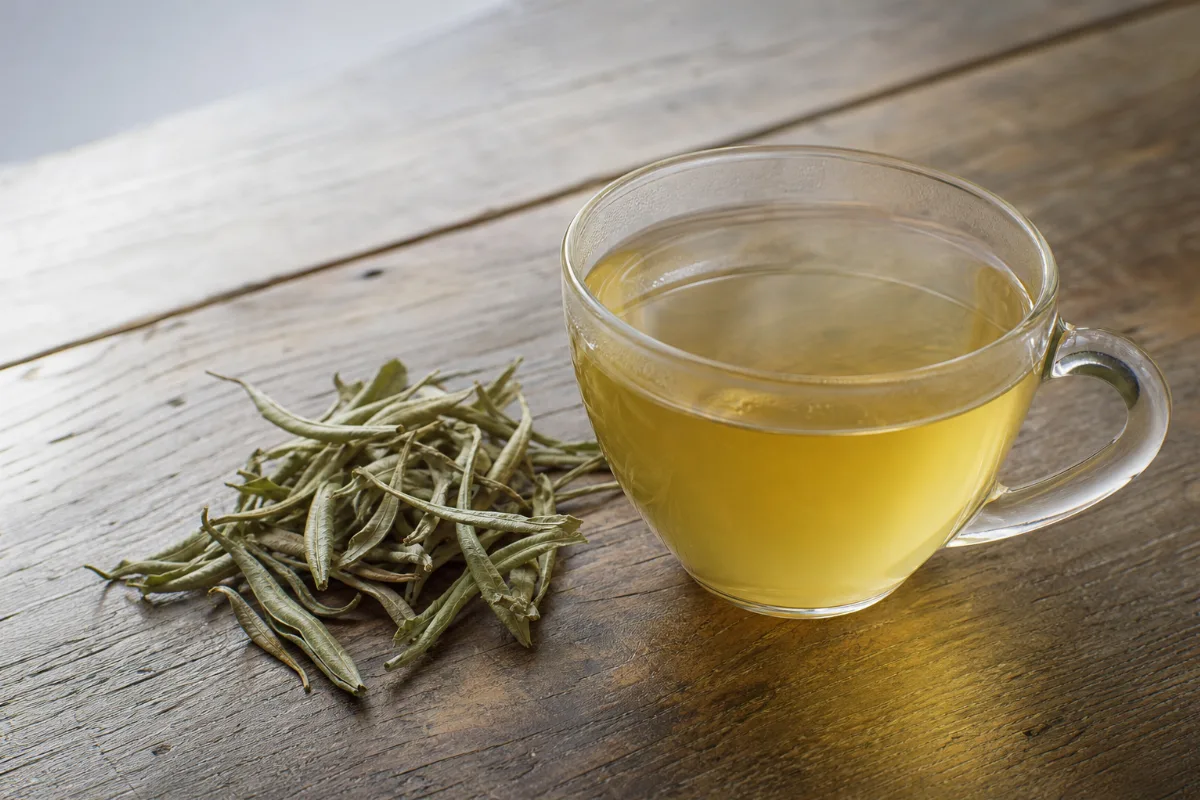
Herbal Teas & Extracts · Herbal tea
Lemon Verbena Tea
Aloysia citrodora · also called Lemon verbena tisane, verbena tea, hierba luisa tea and cedron tea (Spanish), verveine tea (French). Not the same as lemon verbena extract capsules or essential oil.
Lemon verbena tea is a lemon-scented herbal drink made by steeping the leaves of Aloysia citrodora, a shrub of the verbena family. People drink it to unwind, to sleep and for an unsettled stomach, and the EU accepts it as a traditional tea for mild stress and sleep. No trial has tested the tea itself: small studies used a syrup or branded extracts and found low-certainty benefits. The main caution is drowsiness, and it is not recommended in pregnancy, breastfeeding or for children.
General information, not medical advice. Last substantive update · Not medically reviewed. A named clinician has not signed off on this page. How this page is made
About Lemon Verbena Tea
Lemon verbena tea is an herbal infusion of the leaf of Aloysia citrodora, a lemon-scented shrub. The EU accepts the leaf tea as a traditional remedy for mild stress, sleep and mild stomach upset, on long use alone. Research used a syrup, branded extracts and hibiscus blends, not the tea, and nothing is above low certainty. Drowsiness is the main known effect. It is not recommended in pregnancy, breastfeeding or for children, and safety data are thin.
What it is
Lemon verbena tea is an herbal infusion, sometimes called a tisane, made from the leaf of Aloysia citrodora (also called Aloysia triphylla or Lippia citriodora), a shrub of the verbena family. It is not a true tea: black, green and oolong teas come from a different plant, Camellia sinensis.
The leaf holds verbascoside and other phenolic compounds, flavones, and a lemon-smelling oil (geranial, neral and limonene). None of the sources we read lists caffeine in the leaf, but no one measured it in the tea, so caffeine-free is an expectation, not a tested result. Check the label of any blend.
It is a different plant from lemongrass (a grass) and from lemon balm (a mint-family herb), although the three are often confused.
Tea or extract?
A cup of tea is a water extract of the dried or fresh leaf. The trials tested other products: a sugar-based leaf syrup, branded capsules rich in verbascoside, hibiscus blends and an essential oil. Branded verbascoside extracts, such as those used in the sport recovery, sleep and joint trials, can be far more concentrated and are not interchangeable with each other or with tea.
So the trial results on sleep, stress, exercise recovery, weight and blood pressure cannot be assumed to apply to a cup of tea. The essential oil is a separate, much stronger product with its own skin and swallowing cautions. The EU regulator regarded the oil content of the dried leaf as too low to matter for the tea.
Traditional and current uses
The EU assessment report records long use of the leaf infusion for stomach ache, indigestion, wind, colic, fever and trouble sleeping in Spain, France and Switzerland. In 2021 the EU herbal committee kept lemon verbena leaf as a traditional herbal tea for mild mental stress and to aid sleep, and for mild gut complaints with bloating and wind. That status rests on long use, not on proof that it works.
Today most research uses branded leaf extracts, often in blends with hibiscus. They are studied for sleep and stress, recovery from exercise, weight, blood pressure and cholesterol.
What the research shows
The best-supported uses are sleep, stress, exercise recovery, body weight and blood pressure, and all of them sit at low certainty. Joint comfort, cholesterol, multiple sclerosis markers, skin and children's behaviour sit at very low certainty. Digestion is a traditional use with no human trial. Several of the better studies come from the same group of researchers and extract makers.
Mouse studies suggest a calming action through the GABA-A receptor, the system targeted by sleeping tablets. That has not been shown in people.
At a glance
Traditional uses history, not proof
- Southern Europe, South America and North Africa: leaf infusion for stomach ache, indigestion, wind, colic and fever (EMA assessment report).
- Spain, France and Switzerland: tea for nervous tension and as a sleep aid, with Spanish and Swiss authorisations; a Spanish tea product has been sold since at least 1974 (EMA assessment report).
- The EU herbal committee accepted lemon verbena leaf in 2021 as a traditional herbal tea for mild stress, to aid sleep, and for mild stomach complaints with bloating and wind. It did not accept a well-established use.
- Folk medicine: antispasmodic and sedative for insomnia and nerves (secondary sources quoted by EMA).
Studied for research
- Sleep problems, low (a syrup and an extract; no tea trial)
- Perceived stress, low (extract; no tea trial)
- Muscle recovery after hard exercise, low (branded extracts)
- Weight, blood pressure and appetite, low (hibiscus blends, not the tea)
- Anxiety, cholesterol, joint comfort, MS inflammation markers, skin, children's behaviour, very low
- Bloating and mild stomach upset, traditional use only, insufficient
Main compounds
- Verbascoside (acteoside), the main marker compound of the leaf
- Lemon-smelling oil compounds geranial and neral (citral), limonene and 1,8-cineole
- Luteolin flavones and loganic acid, active on an energy-sensing enzyme in fat-cell studies
Common forms
- Tea bags or loose dried leaf steeped in hot water
- Blends with other herbs such as hibiscus or chamomile
- Leaf syrup (used in one trial; different product)
- Capsules and branded verbascoside extracts used in most trials (different products)
- Essential oil (a different product, not for swallowing)
Research links: EU herbal monograph on lemon verbena leaf (EMA/HMPC, 2021) · EU assessment report on lemon verbena leaf (EMA/HMPC, 2021) · Review of lemon verbena chemistry and pharmacology (PubMed, 2018) · Research Library · Genes & Biomarkers Library
What it is and its history
- Accepted scientific name
- Aloysia citrodora Paláu
- Naming authority
- Paláu, published in Parte Práct. Bot. 1: 768 (1784) (GBIF)
- Synonyms
- Aloysia triphylla (L'Hér.) Britton; Lippia citriodora (Lam.) Kunth; Verbena triphylla L'Hér.; Verbena fragrans Salisb.; Lippia triphylla Kuntze; Zappania citriodora Lam. (GBIF also lists several other old and misspelled forms)
- Common names
- Lemon verbena (English); Lemon beebrush (English); Hierba luisa / hierbaluisa (Spanish (EMA monograph)); Cedrón (Spanish (GBIF)); Verveine citronnelle, verveine odorante (French); Zitronenstrauch (German); Cidrão, salva-limão (Portuguese)
- Family or group
- Verbenaceae (the verbena family).
- Classification
- Plantae > Tracheophyta > Magnoliopsida > Lamiales > Verbenaceae > Aloysia > Aloysia citrodora
- Native range
- The 2018 review abstract (Bahramsoltani) says native to South America, North Africa and southern Europe; the EMA report says it grows in warm regions and is widely cultivated in the tropics and Europe. Not verified from a primary botanical source.
- Habitat
- Not verified from a primary botanical source.
- What it looks like
- Roots: Not part of the medicinal use.; Stems: A deciduous shrub, 1 to 3 m tall (EMA report).; Leaves: Opposite or in whorls of 3 to 4, long and narrow (lanceolate), about 3 to 4 inches long, dark green and rough above and paler below, with a strong lemon smell when rubbed (EMA report). The leaf is the medicinal part.; Flowers: Small white flowers in terminal panicles (EMA report).; Fruit: Not relevant to medicinal use; not described in the sources read.
- Cultivation
- Cultivated widely in warm regions; not described further in the sources read.
- Harvest and processing
- The dried leaf is the herbal substance. The EMA report notes a 50 percent loss of oil content in the leaves during flowering (citing Guenther 1948).
- Look-alikes and adulterants
- Name: Lemongrass (Cymbopogon citratus); Note: A grass, not a verbena. Sometimes labelled "lemon verbena" in error.; Name: Lemon balm (Melissa officinalis); Note: A mint-family herb with a similar lemon scent and similar calming use; the EMA assessment report mixes up the two names in a few sentences.; Name: Lippia alba / other Aloysia species; Note: Related plants with a lemon scent are sold under similar names in South America. Not verified in the sources read.
- Sustainability and conservation
- Not verified. A widely grown garden and crop plant.
Photographs
Traditional use and history history, not clinical proof
| Tradition or era | Documented use | Source |
|---|---|---|
| Europe (Spain, France, Switzerland) | The EMA assessment report says the leaf infusion has been widely used for stomach ache and indigestion (Paris and Moyse 1971) and as an antispasmodic (Bruneton 1987), and the decoction as a fever reducer and sedative (Wren 1975). It was in the Spanish Pharmacopoeia in 1925 (via Rosenberg 1925) and a Spanish tea product has been sold since at least 1974, with Swiss approval in 1979. | s-ema-ar-lemon-verbena |
| Europe, South America and North Africa | Used for many years for diarrhoea, wind, insomnia and rheumatism (Bahramsoltani 2018, quoted in the EMA report), and for asthma, cold, fever and colic. | s-ema-ar-lemon-verbena |
| Handbooks | Duke's Handbook of Medicinal Plants (2002) lists agitation, indigestion, insomnia and nervousness. Martindale (2007) lists it as antispasmodic, sedative, stomach and tonic (both quoted in the EMA report). | s-ema-ar-lemon-verbena |
| European regulation | In 2021 the EU herbal committee (HMPC) adopted a monograph for traditional use of the leaf tea for mild mental stress, to aid sleep, and for mild gut complaints. It also noted that France lists the plant for infusions "to improve digestion" and Belgium and Spain allow it in supplements and infusions. | s-ema-hmpc-lemon-verbena |
| Origin and spread | Wikipedia-style claims about introduction to Europe by the Spanish are NOT verified here. | s-gbif-aloysia-citrodora |
Traditional use shows how it was used. It does not show that it works or is safe today.
What is inside, and how it may work
What it contains and how those compounds act in cells and animals. Laboratory and animal mechanisms are not proven effects in people.
Main compounds
| Compound | Family | Where it is concentrated | Activity studied | Level of evidence |
|---|---|---|---|---|
| Verbascoside (acteoside) PubChem 5281800 | phenylpropanoid glycoside (caffeic acid derivative) | Leaf 0.5 to 3.5 percent of dry leaf weight (Etemad 2016); at least 2.5 percent in Ph. Eur. grade leaf (EMA report); 10 to 14 percent in the standardised extracts of several trials | Main marker compound. Antioxidant and anti-inflammatory in cells; activates AMPK in fat cells; calmed mice (GABA-A route); no fetal harm seen in pregnant mice at a high injected amount. 16 20 31 37 14 29 | Laboratory research |
| Geranial (citral A) PubChem 638011 | monoterpene aldehyde | Leaf (essential oil) About 29 percent in one oil chemotype (EMA report) | Citrus-smelling oil part; one of the two main oil compounds per Bahramsoltani 2018. 4 14 29 | Laboratory research |
| Neral (citral B) PubChem 643779 | monoterpene aldehyde | Leaf (essential oil) About 20 percent in one chemotype (EMA report) | Citrus-smelling oil part. 4 14 29 | Laboratory research |
| Limonene PubChem 22311 | monoterpene | Leaf (essential oil) Up to 40.3 percent in one chemotype (EMA report) | A main compound in the oils analysed by Abuhamdah 2015. 1 14 29 | Laboratory research |
| 1,8-Cineole PubChem 2758 | monoterpene oxide | Leaf (essential oil) Not quantified in the sources read | Listed as a main oil component. 1 14 29 | Laboratory research |
| Geraniol PubChem 637566 | monoterpene alcohol | Leaf (essential oil) Not quantified in the sources read | Listed among oil components in the EMA report. 14 29 | Laboratory research |
| Luteolin and derivatives (for example luteolin-7-diglucuronide) PubChem 5280445 | flavone | Leaf Not quantified in the sources read | Luteolin-7-diglucuronide activated AMPK in a fat-cell model and acted with loganic acid. 31 29 | Laboratory research |
| Loganic acid PubChem 89640 | iridoid | Leaf Not quantified in the sources read | Activated AMPK in cells and acted with luteolin diglucuronide. 31 29 | Laboratory research |
Mechanisms, receptors and pathways
| Target or pathway | Gene or receptor | What was found | Level |
|---|---|---|---|
| GABA-A receptor (calming) | GABA-A receptor | In mice, calming and sleep-lengthening effects of lemon verbena extracts and verbascoside were blocked by flumazenil, and an ethanol extract lengthened time to chemical seizures with the same block. This points to a benzodiazepine-site route. The EMA report notes the sedative component of the leaf remains undetermined (vitexin is not responsible). 37 36 14 | Animal research |
| Monoamines, BDNF and calcium/cAMP signalling | Serotonin, noradrenaline, dopamine, BDNF; calcium channel genes | Mouse extract and verbascoside changed these chemicals and genes; doses decided relaxation versus antidepressant-like behaviour. 38 | Animal research |
| AMPK activation (fat metabolism) | PRKAA (AMPK) | Extract and verbascoside lowered fat storage and raised AMPK in fat cells; the extract worked better than verbascoside alone, and loganic acid with luteolin-7-diglucuronide acted together. Computer docking suggests direct binding. 20 31 | Laboratory research |
| Nicotinic receptor binding and nerve-cell protection (essential oil) | Nicotinic acetylcholine receptors | The oil blocked nicotine binding in rat forebrain tissue and protected nerve cells from hydrogen peroxide and beta-amyloid. 1 | Laboratory research |
| Antioxidant enzyme activity in blood cells | Glutathione reductase (GSR), glutathione peroxidase (GPX) | In human trials, the extract raised glutathione reductase in red cells and lymphocytes (probably post-translational, per the authors) and lowered oxidative damage markers in neutrophils without blocking the body's adaptive response. 7 17 | Human data |
| Heart muscle contraction (in vitro) | The EMA report says a dose-dependent drop in heart muscle contraction strength was seen in vitro and could contribute to a short-lived fall in blood pressure. Heart rate was not changed in vivo. 14 | Laboratory research |
Absorption, metabolism and elimination
- Absorption
- No human absorption study of the herb or of verbascoside was found by the EMA, which says no pharmacokinetic data are available. One acute double-blind human study (Villegas-Aguilar 2024) found 66 circulating metabolites after a lemon verbena extract, including homovanillic acid sulfate and glucuronide and hydroxytyrosol sulfate.
- Distribution
- No data.
- Metabolism
- In that human study the circulating forms were mostly conjugated (sulfate and glucuronide) metabolites, not the intact plant compounds. 9 metabolites were shared with an olive extract, with different peak times (Tmax) depending on the source.
- Elimination
- No data.
- Bioavailability
- Unknown in people for verbascoside and for the whole extract.
Isolated compounds versus whole extracts
The effects seen in the lab are attributed mainly to verbascoside, but the whole extract was more potent than verbascoside alone in fat cells, and the sedative part of the leaf is not identified. Several trials use standardised extracts (for example 10 to 14 percent verbascoside) rather than tea, so the trial results cannot be carried over to tea. The EU monograph is for the dried leaf tea.
Nutritional composition
A nutrient table does not apply: lemon verbena is used as a tea or extract in small amounts, not as a food source of vitamins or minerals. No nutrient values were read.
7 low certainty7 very low certainty3 not enough evidence
What is Lemon Verbena Tea good for?
The uses people ask about and how strong the human evidence is for each. No trial tested the tea: results come from a syrup, branded extracts, blends and an oil, which are different products.
Benefits, one by one
Each card is a research question, not a promise. Tap a goal to filter. Open a card to see the studies, doses and limits.
Insomnia (lemon verbena leaf syrup)
Low certaintyIn one Iranian trial of 100 adults with insomnia, a lemon verbena leaf syrup taken before bed for 4 weeks beat a placebo syrup on sleep questionnaires. The EU regulator judged this single trial to be of low relevance.
3 studiesLeaf syrup before bed for 4 weeks. Not an everyday tea; do not compar…
Studies, doses and limits
What the trials found
Afrasiabian 2019 (n = 100, 90 completed): a syrup made from the leaf, taken an hour before bed for 4 weeks versus a plain sugar syrup. Global PSQI and Insomnia Severity Index scores improved more with lemon verbena (p < 0.001) after 4 weeks, and the global scores were already better after 2 weeks. The EMA assessment report says 8 people (6 plant, 2 placebo) had mild passing side effects such as restlessness, diarrhoea, tremor, sleepiness or local itching. No sleep lab or wrist recording was used, and nobody was followed after stopping.
Results
Positive on questionnaires in one trial; not repeated; nothing objective.
Effect sizes as reported
p < 0.001 versus placebo for PSQI and ISI; the abstract gives no group averages or confidence intervals.
Why this rating
One small trial with questionnaire-only outcomes, one research group, a sugary syrup that may itself affect sleep, and a regulator that called it low relevance. Based on one trial, so low is the most we can say.
Form and dose studied
Leaf syrup before bed for 4 weeks. Not an everyday tea; do not compare with the extracts below.
Who was studied
Adults with insomnia in Iran; 72 women and 18 men finished.
Limits
Single trial; no long-term follow-up; syrup contains a lot of sugar (a concern for people with diabetes, as the authors noted).
Why researchers looked
Lemon verbena has a long history as a sleep aid in Persian, Spanish, French and Swiss traditional medicine.
Traditional use
Lemon verbena leaf tea is a traditional European remedy for nerves, trouble sleeping and an unsettled stomach. The EU herbal committee accepts a traditional-use claim for mild mental stress and to aid sleep. That rests on long use, not on proof.
Proposed mechanism Animal research
Animal work suggests parts of the extract act on the GABA-A receptor, the same calming system targeted by sleeping tablets. Mice given extract or verbascoside were calmer and slept longer after a barbiturate, and the effect was blocked by flumazenil. This has not been shown in people.
A proposed mechanism does not show that the effect happens in people.
Safety is covered in the safety section. The EU monograph says it may cause drowsiness and that people should not drive if affected; it is not recommended in pregnancy or breastfeeding.
Sleep quality in healthy adults with sleep problems (standardised extract)
Low certaintyA 90-day trial in 71 healthy adults with sleep problems found better sleep scores, better wrist-device sleep numbers and higher night-time melatonin with a lemon verbena extract than with placebo. Authors work for the extract maker.
2 studiesStandardised leaf extracts for 8 to 12 weeks. Doses are not in the ab…
Studies, doses and limits
What the trials found
Pérez-Piñero 2024 (n = 71): standardised A. citrodora extract for 90 days versus placebo. The extract group did better on a sleep-quality scale (6.5 vs 5.5, p = 0.021), PSQI overall (p = 0.008), sleep latency and sleep efficiency (84.5 vs 79.8, p = 0.023) and on actigraphy (wrist device) measures (p = 0.001). Night melatonin was higher (199.7 vs 174.7 pg/mL, p = 0.048). Martínez-Rodríguez 2022 (8 weeks plus 4 weeks off): people felt better rested, more so in women, and deep and REM sleep times from a wearable improved; numbers are not in the abstract.
Results
Both extract trials point the same way, but both are industry-linked.
Effect sizes as reported
See human evidence; confidence intervals are not in the abstracts.
Why this rating
Two placebo-controlled trials with consistent results, but both small, both linked to the extract maker, with numbers and doses missing from the abstracts.
Form and dose studied
Standardised leaf extracts for 8 to 12 weeks. Doses are not in the abstracts; we do not compare brands.
Who was studied
Healthy adults with sleep disturbances or stress, Spain.
Limits
Industry-linked (Monteloeder employees are among the authors of both); one lab's extract; wearable devices are not a sleep laboratory.
Why researchers looked
Makers of leaf extracts look for plant ingredients that improve sleep without a drug.
Traditional use
Lemon verbena leaf tea is a traditional European remedy for nerves, trouble sleeping and an unsettled stomach. The EU herbal committee accepts a traditional-use claim for mild mental stress and to aid sleep. That rests on long use, not on proof.
Proposed mechanism Pharmacological theory
Not established. The melatonin rise is a lab number that may or may not explain the sleep change.
A proposed mechanism does not show that the effect happens in people.
Safety is covered in the safety section. The EU monograph says it may cause drowsiness and that people should not drive if affected; it is not recommended in pregnancy or breastfeeding.
Feeling stressed (cortisol and questionnaires)
Low certaintyOne trial in stressed adults found that a lemon verbena extract lowered perceived stress and cortisol over 8 weeks, with lower stress still recorded after 4 weeks off. The abstract gives no numbers.
1 studiesPhenylpropanoid-rich extract for 8 weeks.
Studies, doses and limits
What the trials found
Martínez-Rodríguez 2022: extract purified in phenylpropanoids for 8 weeks versus placebo, then a 4-week washout. Perceived stress fell and cortisol fell significantly in the extract group. After the washout they reported even lower stress. The abstract does not give group sizes or values.
Results
Positive in one industry-linked trial; the size is unknown.
Effect sizes as reported
Not given in the abstract.
Why this rating
One trial with undisclosed numbers in the abstract and a maker-linked author team. Low rather than very low because it used both a questionnaire and a blood test.
Form and dose studied
Phenylpropanoid-rich extract for 8 weeks.
Who was studied
Adults with stress, Spain.
Limits
Group sizes missing from the abstract; cortisol alone is not proof of less stress.
Why researchers looked
Stress and poor sleep go together, and makers test calming plants for both.
Traditional use
Lemon verbena leaf tea is a traditional European remedy for nerves, trouble sleeping and an unsettled stomach. The EU herbal committee accepts a traditional-use claim for mild mental stress and to aid sleep. That rests on long use, not on proof.
Proposed mechanism Animal research
Not established. Verbascoside has calming effects in mice that are blocked by flumazenil, pointing to GABA-A receptors.
A proposed mechanism does not show that the effect happens in people.
Safety is covered in the safety section. The EU monograph says it may cause drowsiness and that people should not drive if affected; it is not recommended in pregnancy or breastfeeding.
Anxiety before an operation (inhaled essential oil)
Very low certaintyIn 84 women waiting for a caesarean section, 30 minutes of smelling lemon verbena oil lowered anxiety scores and also heart rate and blood pressure. Only one session, single-blind.
1 studiesEssential oil inhaled; do not swallow the oil.
Studies, doses and limits
What the trials found
Haryalchi 2023 (n = 84, Iran): lemon verbena essential oil as an aroma held near the face for 30 minutes versus a placebo aroma. Anxiety (Spielberger scale) was lower afterwards, and so were heart rate, breathing rate and blood pressure. Pain scores did not change in either group.
Results
Positive in one single-blind trial.
Effect sizes as reported
The abstract gives no numbers.
Why this rating
A single small, single-blind trial of one session, no numbers in the abstract.
Form and dose studied
Essential oil inhaled; do not swallow the oil.
Who was studied
Women before a caesarean section.
Limits
One session; patient and nurse expectations; no replication.
Why researchers looked
Aromatherapy is a low-risk way to try to ease worry before medical procedures.
Traditional use
Lemon verbena leaf tea is a traditional European remedy for nerves, trouble sleeping and an unsettled stomach. The EU herbal committee accepts a traditional-use claim for mild mental stress and to aid sleep. That rests on long use, not on proof.
Proposed mechanism Pharmacological theory
Not established; smell and expectation both play a part.
A proposed mechanism does not show that the effect happens in people.
The essential oil is much stronger than the tea and can irritate or sensitise skin; see the safety section.
Anxiety before a heart test (single capsule by mouth)
Not enough evidenceIn 120 people about to have a heart angiogram, a single lemon verbena capsule did not lower anxiety. Saffron did.
1 studiesSingle extract capsule.
Studies, doses and limits
What the trials found
Soheilipur 2021 (n = 120, Iran): a single capsule of lippia extract, saffron, a half-and-half mix, or placebo, 4 hours before the test. Only the saffron group showed a significant fall in anxiety. Lippia alone showed no significant change; the mix lowered trait anxiety only.
Results
Null for lippia alone.
Effect sizes as reported
Not significant.
Why this rating
One small trial, one dose. A null result does not rule out an effect with longer use.
Form and dose studied
Single extract capsule.
Who was studied
Adults awaiting coronary angiography.
Limits
One dose only.
Why researchers looked
Tested as a quick calming option before a stressful test.
Traditional use
Lemon verbena leaf tea is a traditional European remedy for nerves, trouble sleeping and an unsettled stomach. The EU herbal committee accepts a traditional-use claim for mild mental stress and to aid sleep. That rests on long use, not on proof.
Proposed mechanism Pharmacological theory
Not established.
A proposed mechanism does not show that the effect happens in people.
Safety is covered in the safety section. The EU monograph says it may cause drowsiness and that people should not drive if affected; it is not recommended in pregnancy or breastfeeding.
Attention and behaviour in children with ADHD-type traits
Very low certaintyA 56-day trial in 120 children and teenagers with ADHD-type behaviours below diagnosis level found they felt more tired on lemon verbena extract, with lower depression scores. Parent ratings of hyperactivity only approached significance.
2 studiesExtract given by body weight (amounts for children are a matter for a…
Studies, doses and limits
What the trials found
Jackson 2025 (n = 120, ages 8 to 17, UK): lemon verbena extract (set by body weight) or placebo daily for 56 days. The extract group reported more fatigue (lower energy on the Profile of Mood States) with no loss on thinking tests, and fewer depression symptoms on day 56. Parents reported less hyperactive and impulsive behaviour but only at the level of "approached significance". Further benefits to thinking and mood were exploratory. No unexpected safety events were reported.
Results
The main measurable result was more tiredness; behaviour changes were not clearly significant.
Effect sizes as reported
Not in the abstract.
Why this rating
An exploratory trial; the headline finding is not a benefit; parents' ratings only approached significance. Industry-linked.
Form and dose studied
Extract given by body weight (amounts for children are a matter for a doctor).
Who was studied
Children and teens aged 8 to 17 with sub-clinical ADHD-type behaviours.
Limits
Exploratory; not about diagnosed ADHD; the EU monograph advises against use in children.
Why researchers looked
A maker wanted a plant-based option for children with attention problems.
Traditional use
Lemon verbena leaf tea is a traditional European remedy for nerves, trouble sleeping and an unsettled stomach. The EU herbal committee accepts a traditional-use claim for mild mental stress and to aid sleep. That rests on long use, not on proof. The EU monograph says use in children is not recommended because of a lack of data.
Proposed mechanism Pharmacological theory
Not established.
A proposed mechanism does not show that the effect happens in people.
The EU monograph does not recommend lemon verbena for children. Ask a doctor.
Calming and anxiety-easing effect (animal and lab studies only)
Not enough evidenceIn mice and cell studies, lemon verbena extracts and verbascoside acted calming. No human trial has tested the extract against a known anxiety disorder.
5 studiesNot applicable to people.
Studies, doses and limits
What the trials found
No human trial. In mice, ethanol and water extracts and verbascoside (injected) made animals calmer on the elevated plus-maze and prolonged barbiturate sleep, but at the highest dose they also moved less and were clumsier on the rotating rod. An ethanol extract by mouth lengthened the time to seizure in one chemical test. In cells, the essential oil protected nerve cells from hydrogen peroxide and beta-amyloid damage.
Results
Suggests the calming mechanism is real in mice; does not show it works for people.
Effect sizes as reported
Not applicable.
Why this rating
Only mouse and cell studies. Mouse doses were injected and high.
Form and dose studied
Not applicable to people.
Who was studied
Mice, rats and cells.
Limits
The same doses that calm mice also impaired their coordination.
Why researchers looked
Traditional medicine uses lemon verbena for nerves; labs have tested whether that is real.
Traditional use
Lemon verbena leaf tea is a traditional European remedy for nerves, trouble sleeping and an unsettled stomach. The EU herbal committee accepts a traditional-use claim for mild mental stress and to aid sleep. That rests on long use, not on proof.
Proposed mechanism Animal research
Flumazenil blocked the calming effect, pointing to GABA-A receptors. A second mouse study found changes in serotonin, noradrenaline, dopamine and BDNF and, at low doses, antidepressant-like behaviour. An essential-oil study showed nerve-cell protection in a dish.
A proposed mechanism does not show that the effect happens in people.
Because the calming action may be GABA-related, drowsiness with alcohol or sedatives is a theoretical concern; see the safety section.
Muscle damage and soreness after hard exercise
Low certaintyIn small trials of active adults, lemon verbena leaf extract (a branded extract in two trials) lessened muscle strength loss after an exhausting session, and in one trial lowered blood markers of damage and soreness. The two trials do not agree on which markers move.
4 studiesProprietary leaf extracts, daily for about 2 weeks around one exercis…
Studies, doses and limits
What the trials found
Buchwald-Werner 2018 (n = 44, Germany, registered NCT02923102): Recoverben daily for 15 days versus placebo around a jump protocol. Less loss of muscle strength (p = 0.0311); glutathione peroxidase and movement pain improved only by trend; creatine kinase and IL-6 did not separate. Lee 2021 (n = 60, Taiwan, NCT04742244): Planox daily. Glutathione peroxidase higher; creatine kinase, IL-6, 8-OHdG and muscle pain lower; the abstract line on strength recovery is garbled, so we do not rely on it. Funes 2011 (21-day running): oxidative damage in neutrophils fell and transaminases stayed or fell without blocking adaptation. Poulios 2024 is a narrative review listing Lippia citriodora among antioxidants that reduce oxidative stress markers.
Results
Consistent direction (less damage) but different markers in each trial, and strength outcome unclear in one.
Effect sizes as reported
Strength loss p = 0.0311 in one trial; other effects by trend or without numbers.
Why this rating
Two placebo-controlled RCTs of 44 and 60 people, short, one sponsored by the extract owner, and the main markers do not agree. A supporting running study has no numbers in the abstract.
Form and dose studied
Proprietary leaf extracts, daily for about 2 weeks around one exercise test (two trials); PLX extract daily in a 21-day study.
Who was studied
Healthy, active men and women aged 22 to 50.
Limits
Single exhaustion bouts; no performance (race time, lifting) outcomes; maker involvement.
Why researchers looked
Hard exercise causes muscle damage, oxidative stress and soreness, and verbascoside is an antioxidant.
Traditional use
Lemon verbena leaf tea has been used traditionally for indigestion, wind, colic, spasm, fever and rheumatism (EMA assessment report). Sports, weight, blood pressure and skin products are modern extract products with no traditional tea history.
Proposed mechanism Laboratory research
Antioxidant and anti-inflammatory effects of verbascoside in cell studies; not shown to be the cause in these trials.
A proposed mechanism does not show that the effect happens in people.
Safety is covered in the safety section.
Oxidative stress markers in athletes
Very low certaintyIn small studies of athletes, blood markers of cell damage from oxygen (such as malondialdehyde) were lower with lemon verbena extract, often given with an almond drink. This is a lab change, not a performance or health gain.
4 studiesPLX extract daily in the clearest trial; other studies used drinks wi…
Studies, doses and limits
What the trials found
Carrera-Quintanar 2012 (n = 15 men, PLX extract daily for 21 days): higher HDL-cholesterol, higher urea, lower malondialdehyde and protein carbonyls, higher glutathione reductase. 2015 (n = 33, almond drink with or without extract): blood cells responded differently; no clear benefit. Futsal players 2022: lower malondialdehyde in neutrophils in both supplemented groups, so the almond drink may be responsible. 2000 m run 2020: muscle damage markers still rose; the authors say the link of antioxidant drinks to recovery needs study.
Results
Mixed; some lab markers lower, nothing about performance.
Effect sizes as reported
Not given in most abstracts.
Why this rating
Small groups (15 to 33), mixed with almond drinks or vitamins, lab markers only, results differ between studies.
Form and dose studied
PLX extract daily in the clearest trial; other studies used drinks with unreported amounts.
Who was studied
Young athletes and students.
Limits
Marker-only evidence; antioxidant supplements can also blunt training adaptation (not shown here).
Why researchers looked
Hard training raises oxidative stress; the studies asked whether antioxidant plants lower it.
Traditional use
Lemon verbena leaf tea has been used traditionally for indigestion, wind, colic, spasm, fever and rheumatism (EMA assessment report). Sports, weight, blood pressure and skin products are modern extract products with no traditional tea history.
Proposed mechanism Laboratory research
Verbascoside raises glutathione reductase activity (post-translational, per the authors) in blood cells.
A proposed mechanism does not show that the effect happens in people.
Safety is covered in the safety section.
Joint pain and stiffness
Very low certaintyOne nine-week pilot trial of 45 people with joint discomfort found lower WOMAC and Lequesne pain and function scores with a lemon verbena plus fish oil supplement. Lemon verbena was not tested alone.
1 studiesCombination of lemon verbena extract and fish oil; no separate dose g…
Studies, doses and limits
What the trials found
Caturla 2011 (n = 45): standardised lemon verbena extract (14 percent verbascoside) with omega-3 fish oil for 9 weeks versus placebo. Pain, stiffness and function scores improved versus placebo from weeks 3 to 4; total WOMAC and Lequesne scores fell by 53 and 78 percent from the start. No p-values in the abstract.
Results
Positive in a pilot, but the fish oil is a second active ingredient.
Effect sizes as reported
Percent falls from baseline only.
Why this rating
A pilot of 45 people, combination product, author at the extract maker, no p-values in the abstract.
Form and dose studied
Combination of lemon verbena extract and fish oil; no separate dose given in the abstract.
Who was studied
Adults with joint discomfort.
Limits
Cannot credit lemon verbena; no arthritis diagnosis; short.
Why researchers looked
Rheumatism is a traditional use, and verbascoside is anti-inflammatory in cells.
Traditional use
Lemon verbena leaf tea has been used traditionally for indigestion, wind, colic, spasm, fever and rheumatism (EMA assessment report). Sports, weight, blood pressure and skin products are modern extract products with no traditional tea history.
Proposed mechanism Laboratory research
Antioxidant and anti-inflammatory activity in lab tests (ORAC).
A proposed mechanism does not show that the effect happens in people.
Safety is covered in the safety section.
Body weight and body fat (hibiscus and lemon verbena blend)
Low certaintyFour placebo-controlled trials of a lemon verbena and hibiscus blend in overweight adults found small losses of weight, waist or fat, and a 2026 review pooled 11 trials to about 2 kg of weight loss. No trial tested lemon verbena alone for weight.
6 studiesBlend of lemon verbena and hibiscus polyphenol extract, daily in the …
Studies, doses and limits
What the trials found
Herranz-López 2019 (n = 56, daily blend with a controlled diet, 2 months): in overweight people, waist -6.79 vs -1.85 cm (p < 0.001) and body fat -1.33 vs -0.66 points (p < 0.05); more modest in obese. Marhuenda 2020 (84 days, no diet control): weight, BMI and fat mass down, especially trunk fat; no numbers in abstract. Boix-Castejón 2018 (n = 54): better body measures. Meta-analysis (Xu 2026, 11 RCTs, 503 people, 3 to 12 weeks): weight -2.09 kg, BMI -0.70, fat mass -0.62 points; stronger in shorter trials and combined formulas. Most of these trials used the hibiscus combination and several were linked to the extract maker.
Results
Small average gains, mostly from one family of trials with one blend.
Effect sizes as reported
Pooled: weight -2.09 kg, BMI -0.70 kg/m2, fat mass -0.62 percentage points (the abstract gives no confidence intervals).
Why this rating
Many small trials and a meta-analysis with low heterogeneity, but they use a hibiscus blend, are short and largely come from the same maker group; no GRADE in the abstract.
Form and dose studied
Blend of lemon verbena and hibiscus polyphenol extract, daily in the best-documented trial, 2 to 3 months.
Who was studied
Overweight and obese adults, Spain.
Limits
Hibiscus is in the product; weight regain after stopping is untested.
Why researchers looked
Makers study polyphenol blends for weight control; verbascoside activates AMPK, an energy-sensing enzyme, in fat cells.
Traditional use
Lemon verbena leaf tea has been used traditionally for indigestion, wind, colic, spasm, fever and rheumatism (EMA assessment report). Sports, weight, blood pressure and skin products are modern extract products with no traditional tea history.
Proposed mechanism Laboratory research
In fat cells and mice, lemon verbena polyphenols lowered fat storage and activated AMPK; computer docking suggests verbascoside, luteolin diglucuronide and loganic acid bind AMPK.
A proposed mechanism does not show that the effect happens in people.
Safety is covered in the safety section.
Appetite and fullness
Low certaintyIn a 33-person crossover trial, the lemon verbena and hibiscus extract raised a fullness score and cut calories eaten at a free meal by about 75 kcal. The hormone changes were mixed.
2 studiesLemon verbena plus hibiscus extract for 8 weeks.
Studies, doses and limits
What the trials found
Serna 2022 (n = 33, crossover, 2 x 60 days): satiety quotient 5.53 vs 3.36 (p < 0.0001); calories at the test meal 774 vs 850 kcal (p < 0.004); leptin differed (p < 0.047); GLP-1 fell from baseline in the extract group (4.34 to 3.23 ng/mL). Boix-Castejón 2018 had higher GLP-1 and lower ghrelin.
Results
Fullness better and less eaten at one meal; hormone results point in different directions across the two trials.
Effect sizes as reported
Calories at a test meal -75 kcal.
Why this rating
Two placebo-controlled trials of a combination blend; the GLP-1 findings conflict between trials.
Form and dose studied
Lemon verbena plus hibiscus extract for 8 weeks.
Who was studied
Overweight and obese adults.
Limits
Combination product; one test meal only.
Why researchers looked
Hunger hormones (GLP-1, ghrelin, leptin) are thought to be affected by polyphenols.
Traditional use
Lemon verbena leaf tea has been used traditionally for indigestion, wind, colic, spasm, fever and rheumatism (EMA assessment report). Sports, weight, blood pressure and skin products are modern extract products with no traditional tea history.
Proposed mechanism Pharmacological theory
Possible effect on appetite hormones through AMPK; not proven in people.
A proposed mechanism does not show that the effect happens in people.
Safety is covered in the safety section.
Blood pressure
Low certaintyA meta-analysis found lower blood pressure with lemon verbena extract (about 9 mmHg systolic, 4 diastolic), but nearly all of the data are from a hibiscus blend, and hibiscus alone is known to lower blood pressure.
3 studiesBlend, 84 days (dose not in the abstract).
Studies, doses and limits
What the trials found
Marhuenda 2021 (n = 80, stage 1 hypertension or prehypertension, 84 days): daytime systolic pressure fell with the blend and not with placebo. Meta-analysis 2026: systolic -8.59 mmHg, diastolic -3.73 mmHg. Herranz-López 2019: heart rate and systolic pressure improved in overweight people.
Results
Lower daytime blood pressure with the blend.
Effect sizes as reported
Pooled: SBP -8.59 and DBP -3.73 mmHg.
Why this rating
Evidence is for a hibiscus-lemon verbena blend; credit cannot be split. Short trials.
Form and dose studied
Blend, 84 days (dose not in the abstract).
Who was studied
Adults with raised or borderline blood pressure.
Limits
Combination; blood pressure drug interactions are untested.
Why researchers looked
Hibiscus is a well-known blood pressure plant; the maker tested a blend.
Traditional use
Lemon verbena leaf tea has been used traditionally for indigestion, wind, colic, spasm, fever and rheumatism (EMA assessment report). Sports, weight, blood pressure and skin products are modern extract products with no traditional tea history.
Proposed mechanism Laboratory research
Not established; a lab study showed a dose-dependent drop in heart muscle contraction strength in vitro (EMA).
A proposed mechanism does not show that the effect happens in people.
If you take blood pressure medicine, a blend that lowers pressure may add to it; talk to your prescriber.
Blood cholesterol
Very low certaintyA 12-person, no-placebo study of lemon verbena leaf extract found lower total cholesterol and higher HDL after 16 weeks, and the pooled analysis found total cholesterol 9 mg/dL lower. LDL did not clearly fall.
3 studiesLeaf extract daily for 16 weeks (one study).
Studies, doses and limits
What the trials found
Angiolillo 2021 (n = 12, high cholesterol, Italy): capsules of a 23 percent phenylpropanoid extract for 16 weeks vs own baseline: total cholesterol fell, HDL rose, LDL and triglycerides only trended down. Meta-analysis 2026: total cholesterol -9.06 mg/dL, HDL +2.10 mg/dL; no clear effect on other lipids. Carrera-Quintanar 2012 saw higher HDL in 15 male athletes.
Results
Small shifts in total cholesterol and HDL; LDL unclear.
Effect sizes as reported
Total cholesterol -9.06 mg/dL, HDL +2.10 mg/dL (pooled).
Why this rating
The only dedicated cholesterol study had 12 people and no placebo; the pooled result mixes blends.
Form and dose studied
Leaf extract daily for 16 weeks (one study).
Who was studied
Adults with high cholesterol.
Limits
No controls in the key study.
Why researchers looked
Animals showed better blood fats on lemon verbena.
Traditional use
Lemon verbena leaf tea has been used traditionally for indigestion, wind, colic, spasm, fever and rheumatism (EMA assessment report). Sports, weight, blood pressure and skin products are modern extract products with no traditional tea history.
Proposed mechanism Laboratory research
AMPK activation in fat tissue (cell studies).
A proposed mechanism does not show that the effect happens in people.
Safety is covered in the safety section.
Inflammation markers in multiple sclerosis
Very low certaintyA tiny 30-person trial in multiple sclerosis found lower C-reactive protein in the secondary progressive group after 28 days. Other markers are not described in the readable abstract. Nothing is known about symptoms or relapses.
1 studiesExtract with 10 percent verbascoside for 28 days.
Studies, doses and limits
What the trials found
Mauriz 2014 (n = 30, Spain): lemon verbena extract (10 percent verbascoside) or placebo for 28 days. Secondary progressive MS patients on the extract had lower C-reactive protein than placebo. The p-value and the other eight markers are cut off in the abstract record we read.
Results
Lower CRP in one subgroup.
Effect sizes as reported
p-value not readable.
Why this rating
Tiny, subgroups of 5 to 15, only blood markers, abstract incomplete.
Form and dose studied
Extract with 10 percent verbascoside for 28 days.
Who was studied
People with multiple sclerosis.
Limits
No relapse or disability outcomes.
Why researchers looked
Verbascoside is anti-inflammatory in lab studies.
Traditional use
Lemon verbena leaf tea has been used traditionally for indigestion, wind, colic, spasm, fever and rheumatism (EMA assessment report). Sports, weight, blood pressure and skin products are modern extract products with no traditional tea history.
Proposed mechanism Laboratory research
Anti-inflammatory action of verbascoside in cells.
A proposed mechanism does not show that the effect happens in people.
People with MS take specialist medicines; do not add supplements without telling the neurologist.
Skin ageing signs in polluted city air (four-plant blend)
Very low certaintyA four-plant supplement that includes lemon verbena improved skin moisture, elasticity and wrinkles in 100 outdoor workers in Milan. Lemon verbena cannot be credited alone.
2 studiesFour-herb blend (dose not in abstract).
Studies, doses and limits
What the trials found
Nobile 2021 (n = 100): olive leaf, lemon verbena, rosemary and Sophora japonica in one capsule versus placebo; improvements in skin hydration, water loss, elasticity, wrinkle depth and dark spots, some by 2 weeks. A companion lab and zebrafish study (Peno-Mazzarino 2024) used the same blend.
Results
Positive for the mix.
Effect sizes as reported
The abstract gives no numbers.
Why this rating
Four-plant mix, maker-funded, no numbers in the abstract.
Form and dose studied
Four-herb blend (dose not in abstract).
Who was studied
Adult outdoor workers, Milan.
Limits
Cannot isolate lemon verbena.
Why researchers looked
Pollution speeds skin ageing through oxidative stress.
Traditional use
Lemon verbena leaf tea has been used traditionally for indigestion, wind, colic, spasm, fever and rheumatism (EMA assessment report). Sports, weight, blood pressure and skin products are modern extract products with no traditional tea history.
Proposed mechanism Laboratory research
Antioxidant action in skin explants and cells (blend).
A proposed mechanism does not show that the effect happens in people.
Safety is covered in the safety section.
Bloating, wind and mild stomach upset (traditional use)
Not enough evidenceThe EU lists the tea for mild stomach and gut complaints on the basis of long use. No human trial has tested lemon verbena for digestion.
2 studiesTea (see EU monograph). Ask a pharmacist.
Studies, doses and limits
What the trials found
No human trial. The EU herbal committee accepted traditional use for mild gut complaints with bloating and wind (as a tea), and asks users to see a doctor if symptoms last more than 2 weeks.
Results
Traditional use only.
Effect sizes as reported
Not applicable.
Why this rating
No trial in people.
Form and dose studied
Tea (see EU monograph). Ask a pharmacist.
Who was studied
Adults and elderly.
Limits
No human data.
Why researchers looked
The main historic use of the leaf tea.
Traditional use
Used for indigestion, stomach ache, wind and colic for a long time (EMA assessment report); a Spanish tea product has been sold since at least 1974 for dyspepsia.
Proposed mechanism Laboratory research
In a lab, the water extract relaxed intestinal muscle (EMA report).
A proposed mechanism does not show that the effect happens in people.
Seek a doctor if symptoms last more than 2 weeks or get worse.
Connections to the rest of health
How Lemon Verbena Tea connects to the rest of our health knowledge graph. Every link says what kind of connection it is. A safety link (for example to the liver) is a warning, not a benefit. A study that merely mentions a topic never creates a benefit link.
Explore every connection: goals, body systems, organs, symptoms, genes
A. Wellness goals
| Connected to | Kind of connection | Evidence status | Context | Studies |
|---|---|---|---|---|
| Better Sleep | Potential benefit | Low certainty | Insomnia (lemon verbena leaf syrup): In one Iranian trial of 100 adults with insomnia, a lemon verbena leaf syrup taken before bed for 4 weeks beat a placebo syrup on sleep questionnaires. The EU regulator judged this single trial to be of low relevance. Sleep quality in healthy adults with sleep problems (standardised extract): A 90-day trial in 71 healthy adults with sleep problems found better sleep scores, better wrist-device sleep numbers and higher night-time melatonin with a lemon verbena extract than with placebo. Authors work for the extract maker. | 2 14 37 35 27 |
| Sleep Quality | Potential benefit | Low certainty | Insomnia (lemon verbena leaf syrup): In one Iranian trial of 100 adults with insomnia, a lemon verbena leaf syrup taken before bed for 4 weeks beat a placebo syrup on sleep questionnaires. The EU regulator judged this single trial to be of low relevance. Sleep quality in healthy adults with sleep problems (standardised extract): A 90-day trial in 71 healthy adults with sleep problems found better sleep scores, better wrist-device sleep numbers and higher night-time melatonin with a lemon verbena extract than with placebo. Authors work for the extract maker. | 2 14 37 35 27 |
| Stress Reduction | Potential benefit | Low certainty | Feeling stressed (cortisol and questionnaires): One trial in stressed adults found that a lemon verbena extract lowered perceived stress and cortisol over 8 weeks, with lower stress still recorded after 4 weeks off. The abstract gives no numbers. | 27 |
| Calm Relaxation | Potential benefit | Low certainty | Feeling stressed (cortisol and questionnaires): One trial in stressed adults found that a lemon verbena extract lowered perceived stress and cortisol over 8 weeks, with lower stress still recorded after 4 weeks off. The abstract gives no numbers. Anxiety before an operation (inhaled essential oil): In 84 women waiting for a caesarean section, 30 minutes of smelling lemon verbena oil lowered anxiety scores and also heart rate and blood pressure. Only one session, single-blind. | 27 19 |
| Anxiety Support | Potential benefit | Very low certainty | Anxiety before an operation (inhaled essential oil): In 84 women waiting for a caesarean section, 30 minutes of smelling lemon verbena oil lowered anxiety scores and also heart rate and blood pressure. Only one session, single-blind. Anxiety before a heart test (single capsule by mouth): In 120 people about to have a heart angiogram, a single lemon verbena capsule did not lower anxiety. Saffron did. | 19 40 |
| Better Focus | Potential benefit | Very low certainty | Attention and behaviour in children with ADHD-type traits: A 56-day trial in 120 children and teenagers with ADHD-type behaviours below diagnosis level found they felt more tired on lemon verbena extract, with lower depression scores. Parent ratings of hyperactivity only approached significance. | 23 15 |
| Mood Balance | Potential benefit | Very low certainty | Attention and behaviour in children with ADHD-type traits: A 56-day trial in 120 children and teenagers with ADHD-type behaviours below diagnosis level found they felt more tired on lemon verbena extract, with lower depression scores. Parent ratings of hyperactivity only approached significance. | 23 15 |
| Calm Relaxation | Preliminary mechanism | Not enough evidence | Calming and anxiety-easing effect (animal and lab studies only): In mice and cell studies, lemon verbena extracts and verbascoside acted calming. No human trial has tested the extract against a known anxiety disorder. | 37 36 38 1 4 |
| Anxiety Support | Preliminary mechanism | Not enough evidence | Calming and anxiety-easing effect (animal and lab studies only): In mice and cell studies, lemon verbena extracts and verbascoside acted calming. No human trial has tested the extract against a known anxiety disorder. | 37 36 38 1 4 |
| Mood Balance | Preliminary mechanism | Not enough evidence | Calming and anxiety-easing effect (animal and lab studies only): In mice and cell studies, lemon verbena extracts and verbascoside acted calming. No human trial has tested the extract against a known anxiety disorder. | 37 36 38 1 4 |
| Muscle Recovery | Potential benefit | Low certainty | Muscle damage and soreness after hard exercise: In small trials of active adults, lemon verbena leaf extract (a branded extract in two trials) lessened muscle strength loss after an exhausting session, and in one trial lowered blood markers of damage and soreness. The two trials do not agree on which markers move. Oxidative stress markers in athletes: In small studies of athletes, blood markers of cell damage from oxygen (such as malondialdehyde) were lower with lemon verbena extract, often given with an almond drink. This is a lab change, not a performance or health gain. | 6 24 17 34 7 8 10 9 |
| Physical Stamina | Potential benefit | Low certainty | Muscle damage and soreness after hard exercise: In small trials of active adults, lemon verbena leaf extract (a branded extract in two trials) lessened muscle strength loss after an exhausting session, and in one trial lowered blood markers of damage and soreness. The two trials do not agree on which markers move. | 6 24 17 34 |
| Peak Performance | Potential benefit | Very low certainty | Oxidative stress markers in athletes: In small studies of athletes, blood markers of cell damage from oxygen (such as malondialdehyde) were lower with lemon verbena extract, often given with an almond drink. This is a lab change, not a performance or health gain. | 7 8 10 9 |
| Joint Support | Potential benefit | Very low certainty | Joint pain and stiffness: One nine-week pilot trial of 45 people with joint discomfort found lower WOMAC and Lequesne pain and function scores with a lemon verbena plus fish oil supplement. Lemon verbena was not tested alone. | 11 |
| Weight Management | Potential benefit | Low certainty | Body weight and body fat (hibiscus and lemon verbena blend): Four placebo-controlled trials of a lemon verbena and hibiscus blend in overweight adults found small losses of weight, waist or fat, and a 2026 review pooled 11 trials to about 2 kg of weight loss. No trial tested lemon verbena alone for weight. Appetite and fullness: In a 33-person crossover trial, the lemon verbena and hibiscus extract raised a fullness score and cut calories eaten at a free meal by about 75 kcal. The hormone changes were mixed. | 21 25 5 42 31 20 39 |
| Metabolic Health | Potential benefit | Low certainty | Body weight and body fat (hibiscus and lemon verbena blend): Four placebo-controlled trials of a lemon verbena and hibiscus blend in overweight adults found small losses of weight, waist or fat, and a 2026 review pooled 11 trials to about 2 kg of weight loss. No trial tested lemon verbena alone for weight. | 21 25 5 42 31 20 |
| Blood Pressure Support | Potential benefit | Low certainty | Blood pressure: A meta-analysis found lower blood pressure with lemon verbena extract (about 9 mmHg systolic, 4 diastolic), but nearly all of the data are from a hibiscus blend, and hibiscus alone is known to lower blood pressure. | 26 42 21 |
| Heart Health | Potential benefit | Low certainty | Blood pressure: A meta-analysis found lower blood pressure with lemon verbena extract (about 9 mmHg systolic, 4 diastolic), but nearly all of the data are from a hibiscus blend, and hibiscus alone is known to lower blood pressure. Blood cholesterol: A 12-person, no-placebo study of lemon verbena leaf extract found lower total cholesterol and higher HDL after 16 weeks, and the pooled analysis found total cholesterol 9 mg/dL lower. LDL did not clearly fall. | 26 42 21 3 7 |
| Cholesterol Balance | Potential benefit | Very low certainty | Blood cholesterol: A 12-person, no-placebo study of lemon verbena leaf extract found lower total cholesterol and higher HDL after 16 weeks, and the pooled analysis found total cholesterol 9 mg/dL lower. LDL did not clearly fall. | 3 42 7 |
| Inflammation Balance | Potential benefit | Very low certainty | Inflammation markers in multiple sclerosis: A tiny 30-person trial in multiple sclerosis found lower C-reactive protein in the secondary progressive group after 28 days. Other markers are not described in the readable abstract. Nothing is known about symptoms or relapses. | 28 |
| Immune Support | Potential benefit | Very low certainty | Inflammation markers in multiple sclerosis: A tiny 30-person trial in multiple sclerosis found lower C-reactive protein in the secondary progressive group after 28 days. Other markers are not described in the readable abstract. Nothing is known about symptoms or relapses. | 28 |
| Healthy Skin | Potential benefit | Very low certainty | Skin ageing signs in polluted city air (four-plant blend): A four-plant supplement that includes lemon verbena improved skin moisture, elasticity and wrinkles in 100 outdoor workers in Milan. Lemon verbena cannot be credited alone. | 30 33 |
| Healthy Aging | Potential benefit | Very low certainty | Skin ageing signs in polluted city air (four-plant blend): A four-plant supplement that includes lemon verbena improved skin moisture, elasticity and wrinkles in 100 outdoor workers in Milan. Lemon verbena cannot be credited alone. | 30 33 |
| Digestive Support | Traditional use | Not enough evidence | Bloating, wind and mild stomach upset (traditional use): The EU lists the tea for mild stomach and gut complaints on the basis of long use. No human trial has tested lemon verbena for digestion. | 15 14 |
B. Body systems
| Connected to | Kind of connection | Evidence status | Context | Studies |
|---|---|---|---|---|
| Nervous system | Adverse effect or risk | Low certainty | Drowsiness is listed by EMA; sleepiness and restlessness appeared in the syrup trial; children felt more tired in the 2025 extract trial. Preparation or compound: Leaf tea, syrup, extract |
14 2 23 |
| Sleep Recovery | Biological association | Low certainty | Studied for: Insomnia (lemon verbena leaf syrup) Studied for: Sleep quality in healthy adults with sleep problems (standardised extract) | 2 14 37 35 27 |
| Nervous System | Biological association | Low certainty | Studied for: Insomnia (lemon verbena leaf syrup) Studied for: Feeling stressed (cortisol and questionnaires) | 2 14 37 27 23 15 36 38 1 4 28 |
| Stress Mood | Biological association | Low certainty | Studied for: Feeling stressed (cortisol and questionnaires) Studied for: Anxiety before an operation (inhaled essential oil) | 27 19 40 23 15 |
| Musculoskeletal System | Biological association | Low certainty | Studied for: Muscle damage and soreness after hard exercise Studied for: Oxidative stress markers in athletes | 6 24 17 34 7 8 10 9 11 |
| Immune System | Biological association | Very low certainty | Studied for: Oxidative stress markers in athletes Studied for: Inflammation markers in multiple sclerosis | 7 8 10 9 28 |
| Metabolism Weight | Biological association | Low certainty | Studied for: Body weight and body fat (hibiscus and lemon verbena blend) Studied for: Appetite and fullness | 21 25 5 42 31 20 39 3 7 |
| Digestive System | Biological association | Low certainty | Studied for: Appetite and fullness Studied for: Bloating, wind and mild stomach upset (traditional use) | 39 5 15 14 |
| Cardiovascular System | Biological association | Low certainty | Studied for: Blood pressure Studied for: Blood cholesterol | 26 42 21 3 7 |
| Integumentary System | Biological association | Very low certainty | Studied for: Skin ageing signs in polluted city air (four-plant blend) | 30 33 |
C. Body parts and organs
| Connected to | Kind of connection | Evidence status | Context | Studies |
|---|---|---|---|---|
| Kidneys | Contraindication | Very low certainty | The EMA report says people with kidney problems were previously told to avoid lemon verbena because of oil irritation during excretion, then calls the concern irrelevant for the tea. No kidney harm reported. Preparation or compound: Terpene-rich essential oil; leaf tea |
14 |
| Skin | Adverse effect or risk | Very low certainty | Fragrance-industry restriction for skin allergy and light-triggered reactions (unconfirmed summary). Localised itching occurred in one syrup trial participant group. Preparation or compound: Essential oil |
22 2 |
| Reproductive system | Contraindication | Very low certainty | Not recommended in pregnancy or breastfeeding for lack of human data; two mouse studies found no fetal harm. Preparation or compound: Leaf tea and extract |
15 32 16 |
I. Biomarkers
| Connected to | Kind of connection | Evidence status | Context | Studies |
|---|---|---|---|---|
| Pittsburgh Sleep Quality Index (PSQI) | Biological association | Low certainty | Measured in trials: lowered. A lab change is not the same as a health benefit. | 2 35 |
| Insomnia Severity Index (ISI) | Biological association | Low certainty | Measured in trials: lowered. A lab change is not the same as a health benefit. | 2 |
| Wrist-device sleep measures (actigraphy) | Biological association | Low certainty | Measured in trials: mixed. A lab change is not the same as a health benefit. | 27 35 |
| Night-time melatonin | Biological association | Low certainty | Measured in trials: raised. A lab change is not the same as a health benefit. | 35 |
| Cortisol | Biological association | Low certainty | Measured in trials: lowered. A lab change is not the same as a health benefit. | 27 |
| State-Trait Anxiety Inventory (STAI) | Biological association | Very low certainty | Measured in trials: mixed. A lab change is not the same as a health benefit. | 40 19 |
| Fatigue (Profile of Mood States) | Biological association | Low certainty | Measured in trials: raised. A lab change is not the same as a health benefit. | 23 |
| Loss of muscle strength after exercise (MVC) | Biological association | Low certainty | Measured in trials: lowered. A lab change is not the same as a health benefit. | 6 |
| Creatine kinase (CK) | Biological association | Low certainty | Measured in trials: mixed. A lab change is not the same as a health benefit. | 6 24 |
| Interleukin-6 (IL-6) | Biological association | Low certainty | Measured in trials: mixed. A lab change is not the same as a health benefit. | 17 6 24 |
| Glutathione peroxidase (GPx) | Biological association | Low certainty | Measured in trials: raised. A lab change is not the same as a health benefit. | 6 24 |
| Malondialdehyde (MDA) | Biological association | Very low certainty | Measured in trials: lowered. A lab change is not the same as a health benefit. | 7 10 |
| Blood urea | Biological association | Very low certainty | Measured in trials: raised. A lab change is not the same as a health benefit. | 7 |
| Body weight and BMI | Biological association | Low certainty | Measured in trials: lowered. A lab change is not the same as a health benefit. | 25 42 |
| Waist size and body fat | Biological association | Low certainty | Measured in trials: lowered. A lab change is not the same as a health benefit. | 21 42 |
| Systolic and diastolic blood pressure | Biological association | Low certainty | Measured in trials: lowered. A lab change is not the same as a health benefit. | 26 42 |
| Total cholesterol and HDL-cholesterol | Biological association | Very low certainty | Measured in trials: mixed. A lab change is not the same as a health benefit. | 3 42 |
| Appetite hormones (GLP-1, ghrelin, leptin) | Biological association | Very low certainty | Measured in trials: mixed. A lab change is not the same as a health benefit. | 5 39 |
| C-reactive protein (CRP) | Biological association | Very low certainty | Measured in trials: lowered. A lab change is not the same as a health benefit. | 28 |
J. Genes, receptors and enzymes
| Connected to | Kind of connection | Evidence status | Context | Studies |
|---|---|---|---|---|
| PRKAA1 / PRKAA2 (AMPK, energy sensor) | Preliminary mechanism | In vitro | Activated in cell and mouse studies by the extract and verbascoside. | 20 31 |
| GABA-A receptor | Preliminary mechanism | Animal | Calming effects in mice were blocked by flumazenil. | 37 36 |
| GSR (glutathione reductase) | Preliminary mechanism | Human | Higher enzyme activity in blood cells of athletes taking the extract. | 7 |
K. Biological pathways
| Connected to | Kind of connection | Evidence status | Context | Studies |
|---|---|---|---|---|
| NF-kB and PPAR-gamma / adiponectin | Preliminary mechanism | In vitro | ROS-mediated lowering of NF-kB and PPAR-gamma-linked raising of adiponectin in hypertrophic fat cells. | 20 |
L. Active compounds
| Connected to | Kind of connection | Evidence status | Context | Studies |
|---|---|---|---|---|
| Verbascoside (acteoside) | Biological association | In vitro | Main marker compound. Antioxidant and anti-inflammatory in cells; activates AMPK in fat cells; calmed mice (GABA-A route); no fetal harm seen in pregnant mice at a high injected amount. Preparation or compound: Leaf |
16 20 31 37 14 29 |
| Geranial (citral A) | Biological association | In vitro | Citrus-smelling oil part; one of the two main oil compounds per Bahramsoltani 2018. Preparation or compound: Leaf (essential oil) |
4 14 29 |
| Neral (citral B) | Biological association | In vitro | Citrus-smelling oil part. Preparation or compound: Leaf (essential oil) |
4 14 29 |
| Limonene | Biological association | In vitro | A main compound in the oils analysed by Abuhamdah 2015. Preparation or compound: Leaf (essential oil) |
1 14 29 |
| 1,8-Cineole | Biological association | In vitro | Listed as a main oil component. Preparation or compound: Leaf (essential oil) |
1 14 29 |
| Geraniol | Biological association | In vitro | Listed among oil components in the EMA report. Preparation or compound: Leaf (essential oil) |
14 29 |
| Luteolin and derivatives (for example luteolin-7-diglucuronide) | Biological association | In vitro | Luteolin-7-diglucuronide activated AMPK in a fat-cell model and acted with loganic acid. Preparation or compound: Leaf |
31 29 |
| Loganic acid | Biological association | In vitro | Activated AMPK in cells and acted with luteolin diglucuronide. Preparation or compound: Leaf |
31 29 |
Each connection is stored with the ingredient, the connected record, the kind of connection, the evidence status, the supporting studies, the preparation or compound involved, and a review date (last reviewed October 25, 2026).
Evidence at a glance: what changed in 19 lab markers
Tap a number to show only those markers. Counts are markers, not people.
The evidence
The research centre for Lemon Verbena Tea. Every record here was checked against PubMed or the publisher's page; we never list a study we have not verified.
Evidence by outcome
Bars show how many studies we found for each outcome, not how well it works. People are added up across trials only (reviews are not added, to avoid double counting).
How we rate evidence
High certainty
Several well-run trials or reviews agree; further research is unlikely to change the picture much.
Moderate certainty
Good trials point the same way, but some doubt remains.
Low certainty
Small, short or inconsistent trials. The finding could change with better research.
Very low certainty
Very little or very weak human data. Treat as a possibility only.
Mixed findings
Trials or reviews disagree with each other.
Not enough evidence
Not enough human research to say either way.
Evidence against
Good research found no benefit, or found harm.
We take the reviewers' own risk-of-bias and GRADE statements where they exist, and otherwise judge from study size, design, consistency, directness and whether a product matches what is sold. Many publications do not make evidence high. Method note: We searched PubMed, read the EU herbal monograph and the assessment report on lemon verbena leaf in full, and checked plant names in GBIF and NCBI Taxonomy and compounds in PubChem. The 36 PubMed records were re-checked against PubMed on 2026-10-25 for title match and retraction status; abstracts were read for nearly all studies. Not verified: no NCCIH page, LiverTox or LactMed entry could be found for lemon verbena; the fragrance-industry standard and Drugs.com were seen only through a search summary; the US GRAS status is relayed from the EMA report. Certainty ratings are the compiler's own reading, not formal grades. No study is cited that we could not verify.
Study library: every study we checked 42
| Study | Design | People | Product, dose, length | Result |
|---|---|---|---|---|
| Abuhamdah 2015 Pharmacological and neuroprotective profile of an essential oil derived from leaves of Aloysia citrodora Palau J Pharm Pharmacol · PMID 25877296 · DOI |
Laboratory research in-vitro |
Rat brain membranes and a nerve-cell line | Essential oil of Aloysia citrodora leaf (hydrodistilled), fresh and dried leaf (essential oil) |
The oil blocked nicotine binding in rat brain tissue, scavenged free radicals, and protected nerve cells in a dish. Main oil parts: limonene, geranial, neral, 1,8-cineole, curcumene, spathulenol, caryophyllene oxide. See results. Methods, limits and fundingOutcomes: Receptor binding, antioxidant tests, protection of nerve cells from hydrogen peroxide and beta-amyloid Limitations: Lab work only; no animal or human result. Read: abstract |
| Afrasiabian 2019 Aloysia citriodora Palau (lemon verbena) for insomnia patients: A randomized, double-blind, placebo-controlled clinical trial of efficacy and safety Phytother Res · PMID 30450627 · DOI |
Controlled trial |
100 Adults with insomnia (PSQI above 5), Iran; 90 finished (47 lemon verbena, 43 placebo); 72 women, 18 men |
Syrup made from lemon verbena leaf (Aloysia citriodora), sugar-based leaf Measured amount an hour before bed 4 weeks · vs Matching sugar syrup without the plant |
Global PSQI and ISI improved more than placebo after 4 weeks (p < 0.001 for all) and also after 2 weeks for the global scores. The EMA assessment report adds that 8 people had mild passing side effects (6 plant, 2 placebo): restlessness, diarrhoea, tremor, sleepiness, local itching. p < 0.001 for PSQI and ISI versus placebo; group means are not given in the abstract. Methods, limits and fundingOutcomes: Global PSQI score, PSQI parts (latency, efficiency, daytime function, subjective quality), Insomnia Severity Index (ISI) at 2 and 4 weeks Limitations: Questionnaires only, no sleep recording; no follow-up after stopping; sugar syrup may itself affect sleep; EMA called its relevance low because of the small number of people and subjective measures; the EMA report says the syrup is not a preparation it covers. Read: abstract |
| Angiolillo 2021 Effects of Lippia citriodora Leaf Extract on Lipid and Oxidative Blood Profile of Volunteers with Hypercholesterolemia: A Preliminary Study Antioxidants (Basel) · PMID 33801586 · DOI |
Single arm trial |
12 Adults with high cholesterol, Italy |
Lippia citriodora leaf extract capsules (23 percent phenylpropanoids) leaf Daily 16 weeks · vs None (compared with own baseline) |
Total cholesterol fell and HDL rose; LDL and triglycerides showed only a downward trend. Oxidative markers improved. Not significant for LDL and triglycerides. Methods, limits and fundingOutcomes: Blood lipids and oxidative markers vs baseline Limitations: 12 people, no placebo group. Funding and conflicts: No conflict declared. Read: abstract |
| Bahramsoltani 2018 Aloysia citrodora Paláu (Lemon verbena): A review of phytochemistry and pharmacology J Ethnopharmacol · PMID 29698776 · DOI |
Narrative review |
Review of lemon verbena chemistry and pharmacology to October 2017 | Aloysia citrodora (lemon verbena) leaf |
Neral and geranial are the main oil parts; verbascoside is the main extract compound. Antioxidant, anxiolytic, neuroprotective, anticancer, anaesthetic, antimicrobial and sedative effects were shown in cells and animals. The authors say safety and efficacy in humans are not fully assessed. Not applicable. Methods, limits and fundingOutcomes: Overview Limitations: Narrative review, now older than 7 years. Read: abstract |
| Boix-Castejón 2018 Hibiscus and lemon verbena polyphenols modulate appetite-related biomarkers in overweight subjects: a randomized controlled trial Food Funct · PMID 29862395 · DOI |
Controlled trial |
54 Overweight adults, Spain |
Combination of Lippia citriodora and Hibiscus sabdariffa polyphenols leaf + calyx Not stated in the abstract 60 days · vs Placebo |
Body measures, blood pressure and heart rate improved, with higher GLP-1 (a fullness hormone) and lower ghrelin (a hunger hormone). The abstract gives no numbers. The abstract gives no numbers. Methods, limits and fundingOutcomes: Body measures, blood pressure, hunger and fullness scales, appetite hormones Limitations: Combination product; hormone changes are lab numbers. Funding and conflicts: Not shown in the abstract record read (one erratum exists). Read: abstract |
| Buchwald-Werner 2018 Effects of lemon verbena extract (Recoverben®) supplementation on muscle strength and recovery after exhaustive exercise: a randomized, placebo-controlled trial J Int Soc Sports Nutr · PMID 29410606 · DOI |
Controlled trial |
44 Healthy active adults aged 22 to 50, Germany |
Recoverben (proprietary lemon verbena leaf extract) leaf Daily 15 days (10 before, test day, 4 after) · vs Placebo |
Less loss of muscle strength than placebo over all timepoints (p = 0.0311). Glutathione peroxidase and movement pain only improved by trend (p = 0.0681, p = 0.0788). Creatine kinase and IL-6 did not differ between groups. Strength p = 0.0311; others not significant. Methods, limits and fundingOutcomes: Muscle strength (MVC), creatine kinase, glutathione peroxidase, IL-6, soreness, after a jump protocol Limitations: Small; a single exercise bout; most markers did not separate. Funding and conflicts: Industry-linked: sponsored by Vital Solutions GmbH, which owns the extract; analysis done by independent groups. Registration: NCT02923102 Read: abstract |
| Carrera-Quintanar 2012 Antioxidant effect of lemon verbena extracts in lymphocytes of university students performing aerobic training program Scand J Med Sci Sports · PMID 21083769 · DOI |
Controlled trial |
15 Male athletes aged about 21 beginning an aerobic training programme, Spain |
Lippia citriodora extract PLX (10 percent verbascoside) leaf Daily, 21 days 21 days · vs Placebo |
Extract group had higher HDL-cholesterol, a small fall in red cell number, higher urea, higher glutathione reductase activity, and lower malondialdehyde and protein carbonyls in plasma. The abstract gives no numbers. Methods, limits and fundingOutcomes: Blood cholesterol, urea, antioxidant enzymes, oxidative markers Limitations: Only 15 men; the rise in urea is a flag worth knowing; blood markers only. Read: abstract |
| Carrera-Quintanar 2015 Effect of polyphenol supplements on redox status of blood cells: a randomized controlled exercise training trial Eur J Nutr · PMID 25326831 · DOI |
Controlled trial |
33 Young adults doing eccentric exercise for 21 days, Spain (4 groups of 8 to 9) |
Lippia citriodora extract (PLX), with or without an almond drink leaf Not stated in the abstract 21 days · vs No supplement |
Blood cell types responded differently. The extract alone changed little in gene activity; the extract with the almond drink changed some enzyme genes in neutrophils. The authors conclude that blood cells adapt differently to exercise stress. No benefit measure. Methods, limits and fundingOutcomes: Antioxidant enzyme activity, oxidative markers and gene activity in blood cells Limitations: Single-blind, tiny groups, lab markers only; the study does not show any benefit. Read: abstract |
| Carrera-Quintanar 2020 Antioxidant Supplementation Modulates Neutrophil Inflammatory Response to Exercise-Induced Stress Antioxidants (Basel) · PMID 33297363 · DOI |
Controlled trial |
Young people doing a 2000 m running test, Spain | Almond drink with Lippia citriodora extract, or with vitamins C and E, or none leaf Not stated in the abstract 21 days · vs No supplement |
Muscle damage markers rose after the test in all groups. The authors say antioxidant drinks seem to favour myeloperoxidase release, and that its link to recovery needs study. No benefit shown. Methods, limits and fundingOutcomes: Muscle damage markers, oxidative markers, neutrophil enzymes, myeloperoxidase Limitations: Mixed with vitamins and an almond drink; markers only. Read: abstract |
| Carrera-Quintanar 2022 Modulation of Oxidative Stress and Antioxidant Response by Different Polyphenol Supplements in Five-a-Side Football Players Nutrients · PMID 36615834 · DOI |
Controlled trial |
Five-a-side football players, Spain | Almond drink fortified with Lippia citriodora extract (AB + LE) versus almond drink alone versus nothing leaf Not stated in the abstract About 22 days · vs No supplement control |
After the match, malondialdehyde in neutrophils was lower in both supplemented groups than in controls, and myeloperoxidase did not rise. Because an almond-only group also changed, the extract cannot be credited alone. The abstract gives no numbers. Methods, limits and fundingOutcomes: Oxidative markers and enzymes before and after a match Limitations: Combination with an almond drink; small; markers only. Read: abstract |
| Caturla 2011 A randomized, double-blinded, placebo-controlled study of the effect of a combination of lemon verbena extract and fish oil omega-3 fatty acid on joint management J Altern Complement Med · PMID 22087615 · DOI |
Controlled trial |
45 Adults with joint pain and discomfort, Spain |
Supplement of standardised lemon verbena extract (14 percent verbascoside) plus fish oil omega-3 leaf + fish oil Not stated in the abstract 9 weeks · vs Placebo |
Pain, stiffness and function scores improved versus placebo from weeks 3 to 4. Total WOMAC and Lequesne scores fell by 53 and 78 percent from the start by week 9. The abstract gives no p-values or CIs. Methods, limits and fundingOutcomes: WOMAC and Lequesne joint scores each week Limitations: A mix of lemon verbena and fish oil, so the lemon verbena share is unknown; pilot of 45; no arthritis diagnosis stated. Funding and conflicts: Industry-linked: the first author is at Monteloeder, Inc., a maker of the extract. Read: abstract |
| Cuenca-León 2024 Effectiveness of Lemon Verbena (Cymbopogon citratus) in Oral Candidiasis: A Systematic Review Clin Cosmet Investig Dent · PMID 39286661 · DOI |
Systematic review |
Studies of Cymbopogon citratus (lemongrass) against mouth thrush | Cymbopogon citratus (lemongrass), called "lemon verbena" in the title leaf (a different species) |
This review is about lemongrass (a different plant), yet its title calls it lemon verbena. It is cited only as an example of the name mix-up and says nothing about Aloysia citrodora. Not applicable. Methods, limits and fundingOutcomes: Antifungal effect Limitations: Wrong species for this page. Read: abstract |
| Drugs.com Drugs.com lemon verbena monographs (professional and consumer), seen via web search summary drugs.com/npp/lemon-verbena.html · Source |
Secondary summary |
Readers | Lemon verbena leaf |
A search summary said these pages advise avoiding lemon verbena in kidney failure and in pregnancy and breastfeeding for lack of data, and describe the plant as generally recognised as safe as a flavouring. Not opened by us. Methods, limits and fundingLimitations: Not read by us; secondary to the EMA text we did read. Read: summary-only |
| EMA Committee on Herbal Medicinal Products (HMPC) 2021 Assessment report on Aloysia citrodora Paláu, folium EMA/HMPC/376761/2019 · Source |
Authoritative guidance |
Review of literature to January 2020 | Dried lemon verbena leaf, its water extract and oil leaf |
Well-established use not accepted for lack of good clinical data; the one insomnia trial was judged low relevance. Traditional use accepted. Terpene-rich oils are generally irritant and may irritate kidneys during excretion (citing Duke 2002), so people with kidney problems were previously told to avoid it; EMA judged this irrelevant for the tea because the dried leaf holds only about 2 percent oil and no kidney harm has been reported. May cause drowsiness, more so with alcohol or other sedatives. Pregnancy and breastfeeding: not recommended for lack of data. Genotoxicity data are missing, so no EU list entry. Animal safety: a median lethal amount was found for a water extract injected in mice; 21-day rat injection study showed no organ damage. Methods, limits and fundingOutcomes: Efficacy, safety, toxicology Limitations: Based on the literature up to January 2020; the 2019 trial and a 2018 review are the main human sources. The report text has a slip calling the plant "lemon balm" in two places; we use only statements clearly about lemon verbena. Read: full-text |
| EMA Committee on Herbal Medicinal Products (HMPC) 2021 European Union herbal monograph on Aloysia citrodora Paláu (syn. Aloysia triphylla; Verbena triphylla; Lippia citriodora Kunth), folium EMA/HMPC/376770/2019 (final, adopted 13 January 2021) · Source |
Authoritative guidance |
Adolescents, adults and elderly; traditional use only | Dried lemon verbena leaf as herbal tea leaf |
Traditional use of the dried leaf as a tea: for mild mental stress and to aid sleep, and for mild stomach and gut complaints with bloating and wind. Contraindication: allergy to the plant or other Verbenaceae. Not recommended in children, pregnancy or breastfeeding (no data). May impair driving. Interactions: none reported. Undesirable effects: none known. No overdose reported. Tests of reproductive toxicity, genotoxicity and cancer risk have not been done. Methods, limits and fundingOutcomes: Indications, contraindications, interactions, pregnancy, driving, side effects Limitations: A traditional-use document: it rests on long use, not on proof that the tea works. Read: full-text |
| Etemad 2016 Teratogenic Effect of Verbascoside, Main Constituent of Lippia citriodora Leaves, in Mice Iran J Pharm Res · PMID 27642323 |
Animal study animal |
Pregnant mice | Verbascoside (isolated), injected into the belly leaf compound Daily injection During organ formation · vs Vehicle |
No difference in weight gain, implantation sites, live or resorbed fetuses. No significant differences. Methods, limits and fundingOutcomes: Mother weight, implants, fetuses, skeleton Limitations: Mice, injected; isolated compound not whole herb. Read: abstract |
| Funes 2011 Effect of lemon verbena supplementation on muscular damage markers, proinflammatory cytokines release and neutrophils' oxidative stress in chronic exercise Eur J Appl Physiol · PMID 20967458 · DOI |
Controlled trial |
Trained men doing 90-minute eccentric running for 21 days, Spain | Lemon verbena extract (PLX, standardised to verbascoside) leaf Not stated in the abstract 21 days · vs Placebo |
The extract did not block the body's own antioxidant response, and cut oxidative damage to proteins and fats in white blood cells and lowered myeloperoxidase. Blood transaminases stayed or fell, read by the authors as protection of muscle. IL-6 and IL-1 beta fell with exercise and the extract did not change that. The abstract gives no numbers. Methods, limits and fundingOutcomes: Neutrophil antioxidant enzymes, oxidative damage, inflammation markers, muscle damage markers (blood enzymes) Limitations: Group size not in the abstract; blood markers rather than how people felt or performed. Read: abstract |
| GBIF Secretariat 2026 GBIF Backbone Taxonomy: Aloysia citrodora Paláu GBIF species key 5667503 · Source |
Database |
Plant name record | Aloysia citrodora leaf |
Accepted species in family Verbenaceae, order Lamiales. Published in Parte Práct. Bot. 1: 768 (1784). Synonyms include Aloysia triphylla Britton, Lippia citriodora (Lam.) Kunth, Verbena triphylla L'Hér., Verbena fragrans Salisb. Methods, limits and fundingOutcomes: Accepted name Limitations: Names database, not a botanical description. Read: full-text |
| Haryalchi 2023 Effects of the aroma of lemone verbena (Aloysia citriodora Paláu) essential oil on anxiety and the hemodynamic profile before cesarean section: A randomized clinical trial Health Sci Rep · PMID 37216059 · DOI |
Controlled trial |
84 Women awaiting caesarean section, Iran |
Lemon verbena essential oil, inhaled as an aroma leaf (essential oil) Aroma for 30 minutes One session · vs Matching aroma session with placebo |
Anxiety fell in the oil group. Heart rate, breathing rate and blood pressure fell after inhaling. Pain scores did not change in either group. The abstract gives no numbers. Methods, limits and fundingOutcomes: Anxiety (Spielberger State-Trait Anxiety Inventory) 5 minutes after; vital signs; pain Limitations: Single-blind only, one 30-minute session, abstract gives no numbers; the effect of the smell versus the expectation of care cannot be separated. Funding and conflicts: No conflict declared. Read: abstract |
| Herranz-López 2015 Lemon verbena (Lippia citriodora) polyphenols alleviate obesity-related disturbances in hypertrophic adipocytes through AMPK-dependent mechanisms Phytomedicine · PMID 26055125 · DOI |
Laboratory research animal |
Fat-cell model and mice on a fattening diet | Lemon verbena extract and verbascoside leaf |
Lowered fat storage in fat cells and activated AMPK; mouse fat metabolism improved. See results. Methods, limits and fundingOutcomes: Fat storage, inflammation, AMPK Limitations: Cells and mice only. Read: abstract |
| Herranz-López 2019 Differential effects of a combination of Hibiscus sabdariffa and Lippia citriodora polyphenols in overweight/obese subjects: A randomized controlled trial Sci Rep · PMID 30816148 · DOI |
Controlled trial |
56 Overweight and obese adults, Spain |
Combination of Lippia citriodora and Hibiscus sabdariffa polyphenol extracts (LC-HS) leaf + calyx Daily, on a balanced diet with the same calories 2 months · vs Placebo |
In overweight people, waist fell by 6.79 cm versus 1.85 cm in controls (p < 0.001) and body fat by 1.33 versus 0.66 points (p < 0.05); heart rate and systolic blood pressure also improved. Changes were more modest in obese people. See results. Methods, limits and fundingOutcomes: Weight, waist, body fat, heart rate, blood pressure Limitations: Hibiscus is in the blend; short; diet controlled. Funding and conflicts: Industry-linked: partly funded by Monteloeder S.L., which helped design the study and supplied the product. Read: abstract |
| IFRA (International Fragrance Association) IFRA Standard on verbena oils and absolutes (Lippia citriodora Kunth), as summarised by a web search result IFRA STD 083 (not read in full) · Source |
Authoritative guidance |
Fragrance industry | Lemon verbena (verbena) essential oil leaf |
A search summary reported that the standard restricts verbena oil from Lippia citriodora because of its skin-sensitising and light-triggered (phototoxic) potential. The summary was itself unclear about whether the oil is banned or limited by product type. We did not open the standard. Methods, limits and fundingLimitations: Not read by us; the wording is unconfirmed. Treat as a lead, not a confirmed fact. Read: summary-only |
| Jackson 2025 Daily supplementation with lemon verbena extract decreases subjective energy and parental reports of hyperactivity in children displaying sub-clinical attention deficit hyperactivity disorder-type behaviours: A randomised controlled trial J Psychopharmacol · PMID 40251851 · DOI |
Controlled trial |
120 Children and teenagers aged 8 to 17 with ADHD-type behaviours below the diagnosis level, UK |
Lemon verbena extract (Finzelberg GmbH) leaf Set by body weight, daily 56 days · vs Matching placebo |
The extract group reported more tiredness (lower energy), with no loss in thinking test performance, and lower depression symptoms on day 56. Parent ratings of hyperactive and impulsive behaviour improved but only approached significance. The authors call further benefits to thinking and mood exploratory. No unexpected safety events. The abstract gives no numbers. Methods, limits and fundingOutcomes: Behaviour, thinking tests, mood (Profile of Mood States), parent ratings, body measures; exploratory study Limitations: Exploratory design; the main effect was more reported tiredness, which most families would not count as a benefit; not a treatment trial for diagnosed ADHD. Funding and conflicts: Industry-linked: two authors are employed by Finzelberg GmbH (extract maker) and one consults for it; the company says it did not collect or analyse the data. Read: abstract |
| Lee 2021 Evaluation of the Efficacy of Supplementation with Planox® Lemon Verbena Extract in Improving Oxidative Stress and Muscle Damage: A Randomized Double-Blind Controlled Trial Int J Med Sci · PMID 34104096 · DOI |
Controlled trial |
60 Healthy adults (30 men, 30 women), Taiwan |
Planox lemon verbena leaf extract leaf Daily From 10 days before an exhausting exercise test until tests ended (about 14 days) · vs Placebo |
Glutathione peroxidase was higher, and creatine kinase, IL-6, 8-OHdG (a DNA damage marker) and muscle pain were lower after exercise. The abstract says it "had significant effect on strength recovery", which reads like a typing slip for "no significant effect"; we do not rely on that line. The abstract gives no numbers. Methods, limits and fundingOutcomes: Cooper run, blood markers, pain, stiffness, jump height, muscle strength after exhausting exercise Limitations: Abstract is unclear on strength; one exercise bout. Funding and conflicts: No conflict declared. Registration: NCT04742244 Read: abstract |
| Marhuenda 2020 A Randomized, Double-Blind, Placebo Controlled Trial to Determine the Effectiveness a Polyphenolic Extract (Hibiscus sabdariffa and Lippia citriodora) in the Reduction of Body Fat Mass in Healthy Subjects Foods · PMID 31935957 · DOI |
Controlled trial |
Healthy people without a controlled diet, Spain | Polyphenol blend of Hibiscus sabdariffa and Lippia citriodora (brand blend) calyx + leaf Not stated in the abstract 84 days · vs Placebo |
Body weight, BMI and fat mass fell; the fall in fat was greatest and significant for trunk fat. The abstract gives no numbers. Methods, limits and fundingOutcomes: Body weight, BMI, fat mass by bioimpedance and densitometry Limitations: Combination product with hibiscus; numbers not in the abstract. Funding and conflicts: Industry-linked: two authors are at Monteloeder S.L. (the abstract record carries an erratum). Read: abstract |
| Marhuenda 2021 A Randomized, Double-Blind, Placebo-Controlled Trial to Determine the Effectiveness of a Polyphenolic Extract (Hibiscus sabdariffa and Lippia citriodora) for Reducing Blood Pressure in Prehypertensive and Type 1 Hypertensive Subjects Molecules · PMID 33810049 · DOI |
Controlled trial |
80 Adults with type 1 hypertension (stage 1 / prehypertension), Spain |
Hibiscus sabdariffa and Lippia citriodora blend (MetabolAid) calyx + leaf Not stated in the abstract 84 days · vs Placebo |
Daytime blood pressure fell with the blend but not with placebo; the clearest change was daytime systolic pressure. The abstract gives no numbers. Methods, limits and fundingOutcomes: Ambulatory blood pressure over the day Limitations: Combination product with hibiscus (hibiscus alone lowers blood pressure in other studies, so the credit cannot be split). Funding and conflicts: The paper says no conflict; funders had no role. Read: abstract |
| Martínez-Rodríguez 2022 Anxiolytic Effect and Improved Sleep Quality in Individuals Taking Lippia citriodora Extract Nutrients · PMID 35011093 · DOI |
Controlled trial |
Adults with stress and poorer sleep, Spain (number of people not given in the abstract) | Lemon verbena (Lippia citriodora) extract purified in phenylpropanoids (verbascoside-type compounds); brand not named leaf Not stated in the abstract 8 weeks, then 4 weeks washout · vs Placebo |
The extract group reported less stress after 8 weeks, with a significant fall in cortisol, and lower stress again after the washout. They reported feeling better rested (stronger in women). Time in deep sleep and REM, tracked by a wearable device, improved. The abstract gives no numbers. Methods, limits and fundingOutcomes: Perceived stress, cortisol, sleep questionnaires, sleep stages from a wearable device Limitations: Group size and numbers are not in the abstract, so size and strength of effect cannot be judged; a wearable device is not a sleep lab. Funding and conflicts: Industry-linked: three authors are at Monteloeder S.L., the extract maker; the paper says no conflict of interest. Read: abstract |
| Mauriz 2014 Effects of dietary supplementation with lemon verbena extracts on serum inflammatory markers of multiple sclerosis patients Nutr Hosp · PMID 25617561 · DOI |
Controlled trial |
30 Adults with multiple sclerosis (10 relapsing, 5 primary progressive, 15 secondary progressive), Spain |
Lemon verbena extract with 10 percent verbascoside leaf Not stated in the abstract 28 days · vs Placebo |
In the secondary progressive group, C-reactive protein was lower than placebo. The p-value is cut off in the abstract record we could read. p-value not readable in the abstract record. Methods, limits and fundingOutcomes: C-reactive protein and 8 immune messengers (cytokines) Limitations: Only 30 people split into 3 types; blood markers, not symptoms; part of the abstract is cut off. Funding and conflicts: Some authors are at Campofrio Food Group (affiliation listed); funding not shown in the abstract. Read: abstract |
| NCBI PubChem 2026 PubChem compound records checked for this herb CIDs 5281800, 638011, 643779, 22311, 2758, 637566, 5280445, 89640 · Source |
Database |
Compound records | Constituents leaf |
Verbascoside CID 5281800 (C29H36O15), geranial 638011, neral 643779, limonene 22311, 1,8-cineole 2758, geraniol 637566, luteolin 5280445, loganic acid 89640 were returned by the PubChem name search. Methods, limits and fundingOutcomes: Compound identity Limitations: Names and formulas only; says nothing about amounts in the plant. Read: full-text |
| Nobile 2021 Antioxidant and reduced skin-ageing effects of a polyphenol-enriched dietary supplement in response to air pollution: a randomized, double-blind, placebo-controlled study Food Nutr Res · PMID 33889065 · DOI |
Controlled trial |
100 Outdoor workers in a polluted city (Milan), Caucasian and Asian |
Four-plant supplement (Zeropollution): olive leaf, Lippia citriodora, rosemary, Sophora japonica leaf (mixed) Not stated in the abstract Not stated in the abstract · vs Placebo |
Reported improvements in all skin and antioxidant measures, some as early as 2 weeks. The abstract gives no numbers. Methods, limits and fundingOutcomes: Skin moisture, water loss, elasticity, wrinkles, saliva antioxidant level Limitations: Four-plant mix: lemon verbena cannot be separated out. Funding and conflicts: Industry-linked: partly funded by Monteloeder SL; two authors work there; employees were not in the data analysis. Read: abstract |
| Olivares-Vicente 2019 The Potential Synergistic Modulation of AMPK by Lippia citriodora Compounds as a Target in Metabolic Disorders Nutrients · PMID 31817196 · DOI |
Laboratory research in-vitro |
Fat-cell model | Lippia citriodora extract fractions and 22 compounds leaf |
Verbascoside, luteolin-7-diglucuronide and loganic acid activated AMPK most; loganic acid and luteolin-7-diglucuronide acted together. See results. Methods, limits and fundingOutcomes: AMPK activation Limitations: Cell model and computer docking only. Funding and conflicts: No conflict declared. Read: abstract |
| Oskouei Shirvan 2016 Teratogenic effect of Lippia citriodora leaves aqueous extract in mice Avicenna J Phytomed · PMID 27222830 |
Animal study animal |
Pregnant mice | Aqueous (water) leaf extract, injected into the belly leaf One injection During organ formation · vs Saline |
No difference in implantation, live or resorbed fetuses; defects were low and similar to controls (1.11 percent). No significant differences. Methods, limits and fundingOutcomes: Mother weight, fetus counts and defects Limitations: Mice, injected, one dose; cannot clear human pregnancy; the EMA still advises against use in pregnancy. Read: abstract |
| Peno-Mazzarino 2024 Protective Potential of a Botanical-Based Supplement Ingredient against the Impact of Environmental Pollution on Cutaneous and Cardiopulmonary Systems: Preclinical Study Curr Issues Mol Biol · PMID 38392217 · DOI |
Laboratory research in-vitro |
Human skin explants, cells and zebrafish embryos | Four-plant blend including Lippia citriodora leaf (mixed) |
Blend lowered fat damage and inflammation signals in skin explants exposed to pollutants. See results. Methods, limits and fundingOutcomes: Pollution damage markers Limitations: Lab and zebrafish only; blend. Funding and conflicts: Industry-linked: authors at Monteloeder S.L. Read: abstract |
| Poulios 2024 The Effects of Antioxidant Supplementation on Soccer Performance and Recovery: A Critical Review of the Available Evidence Nutrients · PMID 39599590 · DOI |
Narrative review |
Review of antioxidant supplements in soccer | Many antioxidants; Lippia citriodora is one of the listed ones that reduced oxidative stress markers various |
Lists Lippia citriodora among supplements that reduce oxidative stress markers; the authors say more research is needed. Not applicable. Methods, limits and fundingOutcomes: Muscle damage, inflammation, oxidative stress, performance Limitations: Critical (narrative) review, not a systematic one. Read: abstract |
| Pérez-Piñero 2024 Dietary Supplementation with an Extract of Aloysia citrodora (Lemon verbena) Improves Sleep Quality in Healthy Subjects: A Randomized Double-Blind Controlled Study Nutrients · PMID 38794761 · DOI |
Controlled trial |
71 Healthy adults with sleep disturbances, Spain (33 extract, 38 placebo) |
Standardised extract of Aloysia citrodora leaf (brand not named in the abstract) leaf Not stated in the abstract 90 days · vs Placebo |
Better than placebo on the sleep-quality scale (6.5 vs 5.5, p = 0.021), PSQI overall (p = 0.008), sleep latency (p = 0.027) and sleep efficiency (84.5 vs 79.8, p = 0.023). Wrist-device measures were better (p = 0.001). Night-time melatonin was higher (199.7 vs 174.7 pg/mL, p = 0.048). See results. Differences are modest and the abstract gives no confidence intervals. Methods, limits and fundingOutcomes: Sleep quality on a visual scale, PSQI, sleep recorded by a wrist device (actigraphy), night-time melatonin Limitations: One trial in 71 people; the dose is not in the abstract; PSQI and actigraphy are indirect measures of sleep; melatonin change is a lab number, not a benefit by itself. Funding and conflicts: Industry-linked: three authors are employees of Monteloeder S.L., a maker of plant extracts; the other authors declare no conflict. Read: abstract |
| Rashidian 2016 Anticonvulsant Effects of Lippia citriodora (Verbenaceae) Leaves Ethanolic Extract in Mice: Role of GABAergic System Int J Prev Med · PMID 27563433 · DOI |
Animal study animal |
Mice | Ethanol extract of Lippia citriodora leaf, by mouth leaf Several amounts, injected Single doses · vs Diazepam, phenytoin |
The extract lengthened the time to seizure and shortened its length in one model, and reduced the stiff-limb phase in the other. Flumazenil reversed the first effect, pointing to GABA-related action. See results. Methods, limits and fundingOutcomes: Seizures from pentylenetetrazole and from electric shock; flumazenil block Limitations: Mice only; not a treatment claim. Read: abstract |
| Razavi 2017 Anti-anxiety and hypnotic effects of ethanolic and aqueous extracts of Lippia citriodora leaves and verbascoside in mice Avicenna J Phytomed · PMID 28884085 |
Animal study animal |
66 Mice (11 groups of 6) |
Ethanol and water extracts of Lippia citriodora leaf, and verbascoside, injected into the belly leaf Several amounts, injected Single doses · vs Saline and diazepam |
Extracts and verbascoside acted calmer and lengthened barbiturate sleep. At the highest doses mice also moved less and stayed on the rotating rod for less time. Flumazenil blocked the effects, which points to the GABA-A receptor. See results. Methods, limits and fundingOutcomes: Elevated plus-maze, pentobarbital sleeping time, rotarod, open field; flumazenil block Limitations: Mice, injected not eaten; high doses cause clumsiness; does not show the same in people. Read: abstract |
| Sabti 2019 Elucidation of the Molecular Mechanism Underlying Lippia citriodora(Lim.)-Induced Relaxation and Anti-Depression Int J Mol Sci · PMID 31330819 · DOI |
Animal study animal |
Mice and human nerve-like cells in a dish | Lippia citriodora ethanol extract and verbascoside, by mouth in mice leaf Several amounts Not stated · vs Bupropion and water |
Higher extract doses made mice more still (read by the authors as relaxation); low doses acted like an antidepressant test and changed serotonin, noradrenaline, dopamine and BDNF. Cell tests showed more cell survival. See results. Methods, limits and fundingOutcomes: Tail suspension test, gene activity, brain chemicals Limitations: Mouse behaviour tests are rough guides; dose changed the direction of the result. Read: abstract |
| Serna 2022 Effectiveness of a polyphenolic extract (Lippia citriodora and Hibiscus sabdariffa) on appetite regulation in overweight and obese grade I population: an 8-week randomized, double-blind, cross-over, placebo-controlled trial Eur J Nutr · PMID 34591168 · DOI |
Controlled trial |
33 Overweight and obese grade I adults, Spain (crossover) |
Lippia citriodora and Hibiscus sabdariffa extract (Lc-Hs) leaf + calyx Not stated in the abstract Two 60-day periods with a 30-day washout · vs Placebo |
Fullness quotient was higher (5.53 vs 3.36, p < 0.0001); eating at the test meal was lower (774 vs 850 kcal, p < 0.004). Leptin differed at the end (p < 0.047). GLP-1 fell from baseline in the extract group (4.34 to 3.23 ng/mL, p < 0.001). See results. Methods, limits and fundingOutcomes: Appetite scores, food eaten at a free meal, hormones, blood lipids Limitations: Combination with hibiscus; one test meal. Funding and conflicts: The paper says no conflict; funders had no role. Read: abstract |
| Soheilipur 2021 Comparing the effects of saffron, lippia, and saffron-lippia combination on anxiety among candidates for coronary angiography Avicenna J Phytomed · PMID 34745923 · DOI |
Controlled trial |
120 Adults about to have a coronary angiogram, Iran (4 groups) |
Lippia citriodora extract capsule, alone or half-and-half with saffron leaf One capsule 4 hours before the test Single dose · vs Placebo capsule; saffron group |
Only the saffron group had a clear fall in anxiety. Lippia alone did not change anxiety scores. The saffron plus lippia mix lowered trait anxiety only (p = 0.05). Lippia alone: no significant change (p above 0.05). Methods, limits and fundingOutcomes: State and trait anxiety before, 30 minutes and 3 hours after Limitations: One small single dose; tells us nothing about taking it for weeks. Funding and conflicts: No conflict declared. Read: abstract |
| Villegas-Aguilar 2024 The Application of Untargeted Metabolomic Approaches for the Search of Common Bioavailable Metabolites in Human Plasma Samples from Lippia citriodora and Olea europaea Extracts J Agric Food Chem · PMID 39437164 · DOI |
Controlled trial |
Healthy adults, acute double-blind study (Spain) | Lippia citriodora extract and olive extract (single exposure) leaf Not stated in the abstract Single dose, blood taken over time · vs Not stated |
66 circulating metabolites were found, 9 shared with olive extract (for example homovanillic acid sulfate and glucuronide, hydroxytyrosol sulfate). Not applicable. Methods, limits and fundingOutcomes: Metabolites in blood plasma over time Limitations: Does not measure any health effect. Funding and conflicts: No competing interest declared. Read: abstract |
| Xu 2026 The effect of Lippia Citriodora (LC) extract on cardiometabolic risk factors: a systematic review and meta-analysis Nutr Diabetes · PMID 42191680 · DOI |
Meta-analysis |
503 Adults in 11 randomised trials (3 to 12 weeks) |
Lippia citriodora extract alone or with Hibiscus sabdariffa leaf + calyx Varied 3 to 12 weeks · vs Placebo |
Pooled changes: body weight -2.09 kg, BMI -0.70, fat mass -0.62 percentage points, total cholesterol -9.06 mg/dL, systolic pressure -8.59 mmHg, diastolic -3.73 mmHg, HDL +2.10 mg/dL. No clear effect on blood sugar markers or other fats. Heterogeneity was generally low. See results; the abstract gives no confidence intervals. Methods, limits and fundingOutcomes: Weight, BMI, fat mass, lipids, glucose markers, blood pressure Limitations: Most trials used the hibiscus combination; small, short, many from the same extract makers; no GRADE rating in the abstract. Funding and conflicts: No competing interests declared by the authors. Read: abstract |
What we do not know yet
- What the evidence supports: nothing about lemon verbena is above low certainty. Sleep, stress, exercise recovery, weight and blood pressure are low; anxiety, cholesterol, joint comfort, MS markers, skin and children are very low; digestion is insufficient.
- Missing: any trial of the tea itself; any trial of lemon verbena alone for weight or blood pressure; trials in people with diagnosed anxiety, depression or ADHD; measured caffeine in the tea; long-term safety; interaction studies; human pregnancy data.
- Quality problems: small trials, many linked to extract makers, abstracts that omit numbers.
How new research is added
New studies are found by a saved PubMed search and are placed in a review queue. A person reads each one before it changes any evidence rating or safety wording. New publications never change ratings automatically.
Lab markers
What changed in blood or saliva tests during trials. A changed number is not the same as feeling or being healthier, and we give no "normal ranges".
Hormonal 2
Night-time melatonin
Raised in trials
The body's sleep-timing hormone, measured in blood at night.
Low certaintyResults and what it means
Why it was measured
Tested to see if the extract changes sleep hormones.
Statistical vs. clinical meaning
Borderline p-value in one trial; a higher number is not by itself a benefit.
Safety implication
No safety signal reported.
| Study | Result | People | Product |
|---|---|---|---|
| 35 | 199.7 vs 174.7 pg/mL, p = 0.048 (extract vs placebo). | Healthy adults with sleep problems | Standardised extract for 90 days |
Cortisol
Lowered in trials
A stress hormone made by the adrenal glands.
Low certaintyResults and what it means
Why it was measured
Often used as a body marker of stress.
Statistical vs. clinical meaning
One trial, numbers not given.
Safety implication
Not a safety marker.
| Study | Result | People | Product |
|---|---|---|---|
| 27 | Cortisol fell significantly in the extract group after 8 weeks; the abstract gives no values. | Adults with stress and poorer sleep | Extract purified in phenylpropanoids |
Metabolic 1
Total cholesterol and HDL-cholesterol
Mixed results in trials
Total blood cholesterol and the "good" HDL fraction.
Very low certaintyResults and what it means
Why it was measured
Heart disease risk marker.
Statistical vs. clinical meaning
Small numbers; mixes blends.
Safety implication
No safety signal reported.
| Study | Result | People | Product |
|---|---|---|---|
| 3 | Total cholesterol fell and HDL rose; LDL and triglycerides only trended down. | 12 adults with high cholesterol | Extract daily, 16 weeks |
| 42 | Total cholesterol -9.06 mg/dL; HDL +2.10 mg/dL pooled; no clear effect on LDL or triglycerides. | Adults, 11 trials | Extract alone or with hibiscus |
Inflammatory 2
Interleukin-6 (IL-6)
Mixed results in trials
An immune messenger that rises with inflammation and exercise.
Low certaintyResults and what it means
Why it was measured
Marker of inflammation after exercise.
Statistical vs. clinical meaning
Results conflict.
Safety implication
Not a safety marker.
C-reactive protein (CRP)
Lowered in trials
A blood marker that rises with inflammation.
Very low certaintyResults and what it means
Why it was measured
General inflammation marker.
Statistical vs. clinical meaning
One tiny trial.
Safety implication
Not a safety marker.
| Study | Result | People | Product |
|---|---|---|---|
| 28 | Lower than placebo in secondary progressive MS after 28 days (p-value cut off in the abstract). | 30 people with MS | Extract with 10% verbascoside |
Other 14
Pittsburgh Sleep Quality Index (PSQI)
Lowered in trials
A questionnaire about the past month of sleep: how long to fall asleep, how long asleep, how often woken, daytime tiredness. Lower is better.
Low certaintyResults and what it means
Why it was measured
Standard questionnaire for sleep trials.
Statistical vs. clinical meaning
Statistically significant in two small trials, one industry-linked. A questionnaire that depends on how a person feels.
Safety implication
Not a safety marker.
| Study | Result | People | Product |
|---|---|---|---|
| 2 | Global PSQI and its four parts improved more than placebo after 4 weeks (p < 0.001); global score was better at 2 weeks too. No group averages in the abstract. | Adults with insomnia | Leaf syrup before bed |
| 35 | PSQI overall score better than placebo (p = 0.008); sleep latency score 1.6 vs 1.9 (p = 0.027); sleep efficiency 84.5 vs 79.8 (p = 0.023). | Healthy adults with sleep problems | Standardised extract for 90 days |
Insomnia Severity Index (ISI)
Lowered in trials
A short questionnaire grading the severity of insomnia. Lower is better.
Low certaintyResults and what it means
Why it was measured
Used to see whether insomnia symptoms eased.
Statistical vs. clinical meaning
One trial; the EMA called it low relevance.
Safety implication
Not a safety marker.
| Study | Result | People | Product |
|---|---|---|---|
| 2 | ISI improved more than placebo after 4 weeks (p < 0.001). | Adults with insomnia | Leaf syrup before bed |
Wrist-device sleep measures (actigraphy)
Mixed results in trials
A watch-like device that estimates sleep from movement: how long to fall asleep, how efficient sleep is, waking after sleep onset.
Low certaintyResults and what it means
Why it was measured
An objective check beside questionnaires.
Statistical vs. clinical meaning
Both industry-linked; consumer wearables are less accurate than sleep labs.
Safety implication
Not a safety marker.
| Study | Result | People | Product |
|---|---|---|---|
| 35 | Latency, efficiency, wakefulness after sleep onset and awakenings were better in the extract group (p = 0.001). | Healthy adults with sleep problems | Standardised extract for 90 days |
| 27 | Percent of time in deep sleep and REM improved with a wearable device; no numbers in the abstract. | Adults with stress and poorer sleep | Extract for 8 weeks |
State-Trait Anxiety Inventory (STAI)
Mixed results in trials
A 40-item questionnaire scoring anxiety right now (state) and in general (trait).
Very low certaintyResults and what it means
Why it was measured
The usual anxiety score in short trials.
Statistical vs. clinical meaning
One positive single-blind aroma trial and one null capsule trial.
Safety implication
Not a safety marker.
| Study | Result | People | Product |
|---|---|---|---|
| 19 | Lower after 30 minutes of inhaling lemon verbena oil; no numbers in the abstract. | Women before caesarean section | Inhaled essential oil |
| 40 | No significant change with lippia extract alone; the saffron-lippia mix lowered trait anxiety only (p = 0.05). | Adults before angiography | Single capsule |
Fatigue (Profile of Mood States)
Raised in trials
A mood questionnaire; its fatigue-inertia scale measures tiredness and low energy.
Low certaintyResults and what it means
Why it was measured
Used in the children's trial.
Statistical vs. clinical meaning
This is a side effect to know about rather than a benefit.
Safety implication
More tiredness is relevant to drowsiness warnings.
| Study | Result | People | Product |
|---|---|---|---|
| 23 | Children on the extract reported greater subjective fatigue (reduced energy) over 56 days, without worse performance on thinking tests. | Children aged 8 to 17 | Extract for 56 days |
Loss of muscle strength after exercise (MVC)
Lowered in trials
How much the strongest voluntary muscle squeeze drops after a hard session.
Low certaintyResults and what it means
Why it was measured
Direct measure of muscle recovery.
Statistical vs. clinical meaning
One small trial; statistically significant but practical size unknown.
Safety implication
Not a safety marker.
| Study | Result | People | Product |
|---|---|---|---|
| 6 | Less loss of strength over all timepoints (p = 0.0311). | Active adults | Extract daily |
Creatine kinase (CK)
Mixed results in trials
A muscle enzyme that leaks into blood when muscle is damaged.
Low certaintyResults and what it means
Why it was measured
Marker of muscle damage.
Statistical vs. clinical meaning
Two trials, opposite findings.
Safety implication
Not a safety marker.
Glutathione peroxidase (GPx)
Raised in trials
An antioxidant enzyme.
Low certaintyResults and what it means
Why it was measured
Marker of oxidative defence.
Statistical vs. clinical meaning
Trend in one, significant in the other.
Safety implication
Not a safety marker.
Malondialdehyde (MDA)
Lowered in trials
A by-product of fat damage by oxygen; lower means less damage.
Very low certaintyResults and what it means
Why it was measured
Marker of oxidative stress.
Statistical vs. clinical meaning
Small groups; almond drink alone also lowered it.
Safety implication
Not a safety marker.
Blood urea
Raised in trials
A waste product cleared by the kidneys.
Very low certaintyResults and what it means
Why it was measured
A routine kidney and protein-breakdown marker.
Statistical vs. clinical meaning
Seen in one 15-person study; the cause is unknown. Worth noting because of the kidney caution in the safety section.
Safety implication
Unclear; flagged because the EU report says people with kidney problems were previously told to avoid it.
| Study | Result | People | Product |
|---|---|---|---|
| 7 | Circulating urea rose in the extract group, with a modest fall in red cell number. Values not in the abstract. | 15 male athletes | PLX extract daily, 21 days |
Body weight and BMI
Lowered in trials
Weight in kg and weight divided by height squared.
Low certaintyResults and what it means
Why it was measured
Basic weight outcome.
Statistical vs. clinical meaning
Small average change; blend mostly.
Safety implication
No safety signal reported.
Waist size and body fat
Lowered in trials
Waist circumference in cm and percent body fat.
Low certaintyResults and what it means
Why it was measured
Shows where fat is lost.
Statistical vs. clinical meaning
Larger in overweight than in obese people.
Safety implication
No safety signal reported.
Systolic and diastolic blood pressure
Lowered in trials
The force of blood in artery walls (top and bottom numbers).
Low certaintyResults and what it means
Why it was measured
Heart disease risk marker.
Statistical vs. clinical meaning
Hibiscus is a likely contributor.
Safety implication
Add-on effect with blood pressure drugs is untested.
Appetite hormones (GLP-1, ghrelin, leptin)
Mixed results in trials
Gut and fat-cell hormones that signal fullness and hunger.
Very low certaintyResults and what it means
Why it was measured
Proposed explanation for appetite effects.
Statistical vs. clinical meaning
The two trials disagree on GLP-1.
Safety implication
Not a safety marker.
Safety
What studies and official sources say about side effects, medicines and who should check first. Each point shows what kind of evidence it comes from.
Main points to know 5
- Lemon verbena leaf tea at traditional amounts looks low-risk, but the safety record is thin. The EU herbal committee lists no known side effects, no reported overdose and no reported interactions for the tea, and the EMA assessment report says traditional use has not shown harm. The same report says tests for cancer risk, gene damage and reproductive harm have not been done, and it found almost no human safety data. "None reported" is not the same as "none exist". Authoritative guidance 15 14
- It can cause drowsiness. The EMA report says products with lemon verbena may cause drowsiness, more so with alcohol or other sedatives or at high doses. The monograph says affected people should not drive or use machinery. Children in one trial felt more tired, and the Iranian syrup trial recorded sleepiness in some people. Authoritative guidance 15 14 23 2
- Not recommended in pregnancy or breastfeeding. The EU monograph says safety in pregnancy and breastfeeding has not been established and use is not recommended for lack of data. Two mouse studies (injected, during organ formation) found no harm to fetuses from the water extract or from verbascoside, but they do not clear it for people. Authoritative guidance 15 32 16
- Kidney caution: people with kidney problems were once told to avoid it. The EMA report says terpene-rich oils may irritate the kidneys as they are passed out of the body (citing a plant handbook from 2002), so people with kidney problems were previously told to avoid lemon verbena. EMA then judged this irrelevant for the tea because dried leaf holds only about 2 percent oil and no kidney harm has been reported. It is still sensible to check with a doctor if you have kidney disease. In one 15-person study, blood urea rose. Authoritative guidance 14 7
- The essential oil is stronger than the tea and may harm skin. A web summary of the fragrance industry standard says verbena oil from this plant is restricted because it can cause skin allergy and light-triggered skin reactions. We could not open the standard, so treat this as unconfirmed. We found no published human case reports of skin reaction in PubMed. Do not swallow the oil. Do not put undiluted oil on skin or use it before sun exposure. Authoritative guidance 22
Side effects 5
| Effect | How often | Severity and recovery | Evidence |
|---|---|---|---|
| Drowsiness or sleepiness Listed by the EMA assessment report as a possible effect. In the Iranian syrup trial, sleepiness was among the passing side effects. | Not established | mild Expected to pass; EMA warns against driving if affected | Authoritative guidance 14 15 |
| Restlessness, tremor, diarrhoea, local itching Counts come from the EMA assessment report's reading of the trial. This is one small trial. | 8 of 90 people who finished the 4-week syrup trial had one of these (6 on lemon verbena, 2 on placebo); all grade 1 (mild) | mild Mild and passing; no one stopped for these (per EMA report) | Controlled trial 2 14 |
| More tiredness (lower energy) in children The extract group reported greater fatigue than placebo across 56 days. The study reported no unexpected safety events. | Not established | mild Not stated | Controlled trial 23 |
| Allergic reaction or rash The EU monograph lists allergy to lemon verbena or other Verbenaceae plants as a reason not to use it. No case report was found in PubMed. | Not established | variable Stop use; seek care if swelling or breathing trouble | Authoritative guidance 15 |
| Higher blood urea (one small study) Seen in 15 male athletes after 21 days of an extract; the abstract gives no values and the cause is unknown. Not seen or looked for in the other trials we read. | Not established | unknown Not stated | Controlled trial 7 |
Liver
We found no published human case of liver injury from lemon verbena and no LiverTox entry. In 21-day rat injection tests, the water extract caused no change to liver tissue or to alkaline phosphatase and bilirubin (EMA, summarising a 2016 study). In a 21-day running study, blood transaminases stayed the same or fell in people taking the extract. 14 17
How often. No frequency of liver injury is known. Not finding case reports is not proof of safety.
Monitoring. No agency monitoring advice was found. People with liver disease should tell their doctor.
This is a safety connection. It is not evidence that Lemon Verbena Tea supports liver health.
Medicines and supplements 6
| With | Why it matters | Importance | Evidence | What to do |
|---|---|---|---|---|
| Alcohol and sedatives or sleeping medicines (benzodiazepines, Z-drugs, some antihistamines, some antidepressants) prescription | Additive drowsiness. In mice, the calming effect of lemon verbena extract and verbascoside was blocked by flumazenil, which points to the GABA-A receptor that benzodiazepines act on. | No interaction has been reported in people. The EMA report warns that drowsiness may increase with alcohol or other sedatives. | Authoritative guidance Very low certainty 14 37 | If you take a sedative or sleeping medicine, do not add lemon verbena extract without asking your doctor or pharmacist. Avoid alcohol with it. |
| Blood pressure medicines prescription | Blends of lemon verbena and hibiscus lowered blood pressure in trials. The EMA report also notes that, in a lab study, the water extract reduced heart muscle contraction strength. | No interaction study. The blood pressure effect has only been tested with hibiscus blends. | Pharmacological theory Very low certainty 26 42 14 | If you take blood pressure medicine and add a hibiscus-lemon verbena product, watch for dizziness and tell your prescriber. |
| Medicines affected by sugar or taken with a sugar syrup (diabetes medicines) prescription | The trial syrup contained a large amount of sugar. The 2026 meta-analysis found no clear change in blood sugar markers from the extract. | A concern about the sugar in the syrup used in the insomnia trial, as the trial authors noted. Not a drug interaction. | Controlled trial Very low certainty 2 42 | If you have diabetes, a plain tea is a different product from the sugar syrup used in the trial. |
| Other herbs and supplements that make you sleepy (valerian, lemon balm, passionflower, melatonin) herb-supplement | Similar calming action in theory. | No interaction study. Theory only. | Pharmacological theory Very low certainty 14 | Introduce one calming product at a time. |
| Medicines that stress the kidneys, or kidney disease treatments prescription | The EMA report mentions possible kidney irritation from terpene-rich oils, as a theory based on a 2002 handbook. | No human kidney harm reported. No interaction study. | Pharmacological theory Very low certainty 14 | If you have kidney disease or take kidney-sensitive drugs, ask your doctor first. |
| Drug-metabolising enzymes (CYP) and transporters prescription | No study of lemon verbena and drug-metabolising enzymes was found in PubMed or in the EMA report. | Unknown. "No interactions reported" in the EU monograph reflects no data, not proof of no interaction. | Authoritative guidance Not enough evidence 15 14 | Tell your pharmacist you take it, especially if you use narrow-range medicines. |
Who should check first 6
| Situation | Advice | Evidence |
|---|---|---|
| Allergy to lemon verbena or to other plants in the Verbenaceae family | Do not use. The EU monograph lists hypersensitivity to the plant and to other Verbenaceae as a contraindication. | Authoritative guidance 15 |
| Kidney problems | Ask a doctor first. The EMA report says people with kidney problems were previously told to avoid it because of oil irritation, then calls the concern irrelevant for the tea because of its low oil content. No kidney harm has been reported. | Authoritative guidance 14 |
| Pregnancy and breastfeeding | Not recommended for lack of data (EU monograph). | Authoritative guidance 15 14 |
| Children and teenagers | The EU monograph says use in children is not recommended because adequate data are lacking. The 2025 trial in children aged 8 to 17 used an extract under research conditions. | Authoritative guidance 15 23 |
| Before driving or operating machinery | May impair ability to drive and use machines (EU monograph). | Authoritative guidance 15 |
| Essential oil: sensitive or damaged skin, or before sun exposure | Avoid undiluted oil on skin. A fragrance-industry restriction exists for skin allergy and light-triggered reactions (unconfirmed; see notes). | Authoritative guidance 22 |
Overdose, product quality and regulators
Summary. The EMA assessment report concludes that the water extract of the leaf has a very low toxicity risk when taken by mouth, and no constituent of concern has been described. The report notes that gene-damage data are missing, so a European Union list entry for the leaf is not supported.
Animal. A water extract injected into mice, and a 21-day injection test in rats, showed no change in blood counts, kidney, liver or other organ tissue or in the blood tests listed, apart from lower triglycerides at two amounts. In liver cells in a dish, a high concentration for 72 hours did not kill half the cells (EMA, summarising Etemad 2016). These are injection and dish tests, not tea drinking.
Human doses studied. Trials used a leaf syrup and branded extracts (and one children's trial) for up to 90 days, with no serious events reported in the abstracts we read. Exact amounts are not repeated here, and no trial measured the strength of a cup of tea.
High dose or long term signals. No long-term human data beyond 12 weeks. The EMA notes drowsiness risk at excess doses.
Overdose response. No case of overdose has been reported (EU monograph).
Genotoxicity. No data (EMA). Water infusion reduced gene damage from cisplatin and acrylamide in mice (EMA, citing earlier studies). That does not substitute for a safety test.
Toxic or hazardous parts. No toxic plant part is described for the leaf. The essential oil is a concentrated product with possible skin effects (unconfirmed, see regulatory).
No contaminant testing of lemon verbena tea or supplements was found. The main practical issue is naming: several different plants are sold as "lemon verbena", and essential oil composition varies.
Name confusion with lemongrass. A 2024 systematic review in PubMed is titled "Lemon Verbena (Cymbopogon citratus)" although Cymbopogon citratus is lemongrass, a different plant. Check the Latin name Aloysia citrodora (or Aloysia triphylla / Lippia citriodora) on the label. 12
Essential oil chemistry varies. The EMA report, citing earlier work, describes at least five oil chemotypes, including types dominated by limonene, citronellal or beta-thujone (73.4 percent in one). Oil from different sources may therefore differ in risk and effect. 14
Quality standard. The European Pharmacopoeia monograph 1834 requires at least 2.5 percent acteoside (verbascoside) and a minimum amount of essential oil in the dried leaf (EMA report). 14
Heavy metals, pesticides, adulteration testing. Not found in the sources read. Unknown. 14
| Body | Action | Date |
|---|---|---|
| European Medicines Agency, Committee on Herbal Medicinal Products (HMPC) (European Union) | Final herbal monograph on lemon verbena leaf (EMA/HMPC/376770/2019, adopted 13 January 2021): traditional herbal medicine as a tea for mild symptoms of mental stress and to aid sleep, and for mild gut complaints with bloating and wind. Well-established use was not accepted. Not recommended in children, pregnancy or breastfeeding. A European Union list entry is not supported because of missing genotoxicity data. source | 2021-01-13 |
When to get medical help
- Swelling of the face or lips, hives, or trouble breathing after using lemon verbena (possible allergy): seek urgent care.
- Extreme sleepiness, confusion, or being hard to wake (especially with alcohol or sedatives): seek urgent care.
- A burning rash or blistering of skin after essential oil and sun: wash the area, stay out of the sun and seek care.
- Much less urine than usual, flank pain or swelling if you have kidney disease and have been using it: see a doctor.
Stop using the product and contact a clinician or emergency service. In the US, Poison Control is 1-800-222-1222.
General information only, not medical advice. Ask a clinician or pharmacist before use, especially with medicines, in pregnancy or with a health condition. See the Natural Remedy Safety guide.
Frequently asked questions
Does lemon verbena tea help you sleep?
Possibly a little, but the tea itself has not been tested. Three placebo-controlled trials found better sleep scores: an Iranian trial of a leaf syrup in 100 people with insomnia and two Spanish extract trials in people with poor sleep or stress. The Spanish trials are linked to the extract maker, none used a sleep lab, and the EU regulator called the Iranian trial low relevance. Certainty is low.
Does lemon verbena tea help anxiety or stress?
There is some support for stress and little for anxiety, and none of it is for the tea. One extract trial found lower perceived stress and cortisol. Smelling the oil lowered anxiety before surgery in one single-blind trial, and a single capsule did nothing before a heart test. There is no trial in anxiety disorders. Certainty is low for stress and very low for anxiety.
Is lemon verbena tea caffeine-free?
Is the tea the same as lemon verbena extract or supplements?
Is lemon verbena tea safe in pregnancy, while breastfeeding or for children?
It is not recommended. The EU monograph says safety has not been established in pregnancy, breastfeeding or children, for lack of data. Two mouse studies found no fetal harm, but those used injections in animals and do not clear it for people. In a 2025 trial in children aged 8 to 17, an extract made them feel more tired. Ask a doctor first.
Can lemon verbena tea make you sleepy?
Is lemon verbena the same as lemongrass or lemon balm?
Is lemon verbena essential oil safe on skin or in the sun?
Be careful. A web summary of the fragrance industry standard says verbena oil from this plant is restricted because it can cause skin allergy and light-triggered reactions. We could not open the standard, so treat this as unconfirmed, and we found no human case report. Do not swallow the oil, and do not use undiluted oil on skin or before sun. The oil is a different product from the tea.
Should people with kidney problems avoid lemon verbena tea?
Ask a doctor first. The EU assessment report says people with kidney problems were once told to avoid it because oil-rich plants may irritate the kidneys on the way out, then calls that concern irrelevant for the tea because the leaf holds little oil. No kidney harm has been reported. In one small extract study, blood urea rose in athletes.
Does lemon verbena help with weight loss or blood pressure?
Possibly a little, but only as a blend with hibiscus, and not as tea. A 2026 pooled analysis of 11 trials found about 2 kg of weight loss and lower blood pressure, and hibiscus alone is known to lower blood pressure. Most trials came from the same maker group and none tested lemon verbena alone. Certainty is low. If you take blood pressure medicine, tell your prescriber.
Does lemon verbena tea interact with medicines?
Explore by health goal
Calm RelaxationAnxiety SupportBetter SleepSleep QualityMood BalanceMuscle RecoveryWeight ManagementHeart HealthStress ReductionBetter FocusPhysical StaminaPeak PerformanceJoint SupportMetabolic HealthBlood Pressure SupportCholesterol BalanceInflammation BalanceImmune SupportHealthy SkinHealthy AgingDigestive Support
Editorial transparency
- Written by
- AlternativeMed editorial team. Research compiled with AI assistance, then checked against PubMed records.
- Medical review
- None. This page has not been reviewed by a physician or pharmacist.
- First published
- 2026-10-25
- Last substantive update
- 2026-10-25
- How we research
- We searched PubMed, read the EU herbal monograph and the assessment report on lemon verbena leaf in full, and checked plant names in GBIF and NCBI Taxonomy and compounds in PubChem. The 36 PubMed records were re-checked against PubMed on 2026-10-25 for title match and retraction status; abstracts were read for nearly all studies. Not verified: no NCCIH page, LiverTox or LactMed entry could be found for lemon verbena; the fragrance-industry standard and Drugs.com were seen only through a search summary; the US GRAS status is relayed from the EMA report. Certainty ratings are the compiler's own reading, not formal grades. No study is cited that we could not verify.
- How we rate evidence
- See "How we rate evidence" in the Evidence tab.
- Independence
- No product is promoted on this page. No affiliate links are shown. If one is added later it will be labelled and kept apart from the evidence.
Sources 42
Each source was opened and checked. Where we read only the abstract, it says so. The small numbers in the text point here.
- Abuhamdah S, Abuhamdah R, Howes MJ, et al.. Pharmacological and neuroprotective profile of an essential oil derived from leaves of Aloysia citrodora Palau. J Pharm Pharmacol. 2015. PMID 25877296. DOI 10.1111/jphp.12424. (abstract)
- Afrasiabian F, Mirabzadeh Ardakani M, Rahmani K, et al.. Aloysia citriodora Palau (lemon verbena) for insomnia patients: A randomized, double-blind, placebo-controlled clinical trial of efficacy and safety. Phytother Res. 2019. PMID 30450627. DOI 10.1002/ptr.6228. (abstract)
- Angiolillo A, Leccese D, Palazzo M, et al.. Effects of Lippia citriodora Leaf Extract on Lipid and Oxidative Blood Profile of Volunteers with Hypercholesterolemia: A Preliminary Study. Antioxidants (Basel). 2021. PMID 33801586. DOI 10.3390/antiox10040521. (abstract)
- Bahramsoltani R, Rostamiasrabadi P, Shahpiri Z, et al.. Aloysia citrodora Paláu (Lemon verbena): A review of phytochemistry and pharmacology. J Ethnopharmacol. 2018. PMID 29698776. DOI 10.1016/j.jep.2018.04.021. (abstract)
- Boix-Castejón M , Herranz-López M , Pérez Gago A , et al.. Hibiscus and lemon verbena polyphenols modulate appetite-related biomarkers in overweight subjects: a randomized controlled trial. Food Funct. 2018. PMID 29862395. DOI 10.1039/c8fo00367j. (abstract)
- Buchwald-Werner S, Naka I, Wilhelm M, et al.. Effects of lemon verbena extract (Recoverben®) supplementation on muscle strength and recovery after exhaustive exercise: a randomized, placebo-controlled trial. J Int Soc Sports Nutr. 2018. PMID 29410606. DOI 10.1186/s12970-018-0208-0. (abstract)
- Carrera-Quintanar L, Funes L, Viudes E, et al.. Antioxidant effect of lemon verbena extracts in lymphocytes of university students performing aerobic training program. Scand J Med Sci Sports. 2012. PMID 21083769. DOI 10.1111/j.1600-0838.2010.01244.x. (abstract)
- Carrera-Quintanar L, Funes L, Vicente-Salar N, et al.. Effect of polyphenol supplements on redox status of blood cells: a randomized controlled exercise training trial. Eur J Nutr. 2015. PMID 25326831. DOI 10.1007/s00394-014-0785-x. (abstract)
- Carrera-Quintanar L, Funes L, Herranz-López M, et al.. Antioxidant Supplementation Modulates Neutrophil Inflammatory Response to Exercise-Induced Stress. Antioxidants (Basel). 2020. PMID 33297363. DOI 10.3390/antiox9121242. (abstract)
- Carrera-Quintanar L, Funes L, Herranz-López M, et al.. Modulation of Oxidative Stress and Antioxidant Response by Different Polyphenol Supplements in Five-a-Side Football Players. Nutrients. 2022. PMID 36615834. DOI 10.3390/nu15010177. (abstract)
- Caturla N, Funes L, Pérez-Fons L, et al.. A randomized, double-blinded, placebo-controlled study of the effect of a combination of lemon verbena extract and fish oil omega-3 fatty acid on joint management. J Altern Complement Med. 2011. PMID 22087615. DOI 10.1089/acm.2010.0410. (abstract)
- Cuenca-León K, Lima-Illescas M, Pacheco-Quito EM, et al.. Effectiveness of Lemon Verbena (Cymbopogon citratus) in Oral Candidiasis: A Systematic Review. Clin Cosmet Investig Dent. 2024. PMID 39286661. DOI 10.2147/CCIDE.S478181. (abstract)
- Drugs.com. Drugs.com lemon verbena monographs (professional and consumer), seen via web search summary. drugs.com/npp/lemon-verbena.html. . (summary-only)
- EMA Committee on Herbal Medicinal Products (HMPC). Assessment report on Aloysia citrodora Paláu, folium. EMA/HMPC/376761/2019. 2021. (full-text)
- EMA Committee on Herbal Medicinal Products (HMPC). European Union herbal monograph on Aloysia citrodora Paláu (syn. Aloysia triphylla; Verbena triphylla; Lippia citriodora Kunth), folium. EMA/HMPC/376770/2019 (final, adopted 13 January 2021). 2021. (full-text)
- Etemad L, Zafari R, Moallem SA, et al.. Teratogenic Effect of Verbascoside, Main Constituent of Lippia citriodora Leaves, in Mice. Iran J Pharm Res. 2016. PMID 27642323. (abstract)
- Funes L, Carrera-Quintanar L, Cerdán-Calero M, et al.. Effect of lemon verbena supplementation on muscular damage markers, proinflammatory cytokines release and neutrophils' oxidative stress in chronic exercise. Eur J Appl Physiol. 2011. PMID 20967458. DOI 10.1007/s00421-010-1684-3. (abstract)
- GBIF Secretariat. GBIF Backbone Taxonomy: Aloysia citrodora Paláu. GBIF species key 5667503. 2026. (full-text)
- Haryalchi K, Kazemi Aski S, Mansour Ghanaie M, et al.. Effects of the aroma of lemone verbena (Aloysia citriodora Paláu) essential oil on anxiety and the hemodynamic profile before cesarean section: A randomized clinical trial. Health Sci Rep. 2023. PMID 37216059. DOI 10.1002/hsr2.1282. (abstract)
- Herranz-López M, Barrajón-Catalán E, Segura-Carretero A, et al.. Lemon verbena (Lippia citriodora) polyphenols alleviate obesity-related disturbances in hypertrophic adipocytes through AMPK-dependent mechanisms. Phytomedicine. 2015. PMID 26055125. DOI 10.1016/j.phymed.2015.03.015. (abstract)
- Herranz-López M, Olivares-Vicente M, Boix-Castejón M, et al.. Differential effects of a combination of Hibiscus sabdariffa and Lippia citriodora polyphenols in overweight/obese subjects: A randomized controlled trial. Sci Rep. 2019. PMID 30816148. DOI 10.1038/s41598-019-39159-5. (abstract)
- IFRA (International Fragrance Association). IFRA Standard on verbena oils and absolutes (Lippia citriodora Kunth), as summarised by a web search result. IFRA STD 083 (not read in full). . (summary-only)
- Jackson PA, Smith EF, Forster J, et al.. Daily supplementation with lemon verbena extract decreases subjective energy and parental reports of hyperactivity in children displaying sub-clinical attention deficit hyperactivity disorder-type behaviours: A randomised controlled trial. J Psychopharmacol. 2025. PMID 40251851. DOI 10.1177/02698811251324574. (abstract)
- Lee MC, Hsu YJ, Ho CS, et al.. Evaluation of the Efficacy of Supplementation with Planox® Lemon Verbena Extract in Improving Oxidative Stress and Muscle Damage: A Randomized Double-Blind Controlled Trial. Int J Med Sci. 2021. PMID 34104096. DOI 10.7150/ijms.60726. (abstract)
- Marhuenda J, Perez S, Victoria-Montesinos D, et al.. A Randomized, Double-Blind, Placebo Controlled Trial to Determine the Effectiveness a Polyphenolic Extract (Hibiscus sabdariffa and Lippia citriodora) in the Reduction of Body Fat Mass in Healthy Subjects. Foods. 2020. PMID 31935957. DOI 10.3390/foods9010055. (abstract)
- Marhuenda J, Pérez-Piñero S, Arcusa R, et al.. A Randomized, Double-Blind, Placebo-Controlled Trial to Determine the Effectiveness of a Polyphenolic Extract (Hibiscus sabdariffa and Lippia citriodora) for Reducing Blood Pressure in Prehypertensive and Type 1 Hypertensive Subjects. Molecules. 2021. PMID 33810049. DOI 10.3390/molecules26061783. (abstract)
- Martínez-Rodríguez A, Martínez-Olcina M, Mora J, et al.. Anxiolytic Effect and Improved Sleep Quality in Individuals Taking Lippia citriodora Extract. Nutrients. 2022. PMID 35011093. DOI 10.3390/nu14010218. (abstract)
- Mauriz E, Vallejo D, Tuñón MJ, et al.. Effects of dietary supplementation with lemon verbena extracts on serum inflammatory markers of multiple sclerosis patients. Nutr Hosp. 2014. PMID 25617561. DOI 10.3305/nh.2015.31.2.8319. (abstract)
- NCBI PubChem. PubChem compound records checked for this herb. CIDs 5281800, 638011, 643779, 22311, 2758, 637566, 5280445, 89640. 2026. (full-text)
- Nobile V, Schiano I, Peral A, et al.. Antioxidant and reduced skin-ageing effects of a polyphenol-enriched dietary supplement in response to air pollution: a randomized, double-blind, placebo-controlled study. Food Nutr Res. 2021. PMID 33889065. DOI 10.29219/fnr.v65.5619. (abstract)
- Olivares-Vicente M, Sánchez-Marzo N, Encinar JA, et al.. The Potential Synergistic Modulation of AMPK by Lippia citriodora Compounds as a Target in Metabolic Disorders. Nutrients. 2019. PMID 31817196. DOI 10.3390/nu11122961. (abstract)
- Oskouei Shirvan Z, Etemad L, Zafari R, et al.. Teratogenic effect of Lippia citriodora leaves aqueous extract in mice. Avicenna J Phytomed. 2016. PMID 27222830. (abstract)
- Peno-Mazzarino L, Radionov N, Merino M, et al.. Protective Potential of a Botanical-Based Supplement Ingredient against the Impact of Environmental Pollution on Cutaneous and Cardiopulmonary Systems: Preclinical Study. Curr Issues Mol Biol. 2024. PMID 38392217. DOI 10.3390/cimb46020099. (abstract)
- Poulios A, Papanikolaou K, Draganidis D, et al.. The Effects of Antioxidant Supplementation on Soccer Performance and Recovery: A Critical Review of the Available Evidence. Nutrients. 2024. PMID 39599590. DOI 10.3390/nu16223803. (abstract)
- Pérez-Piñero S, Muñoz-Carrillo JC, Echepare-Taberna J, et al.. Dietary Supplementation with an Extract of Aloysia citrodora (Lemon verbena) Improves Sleep Quality in Healthy Subjects: A Randomized Double-Blind Controlled Study. Nutrients. 2024. PMID 38794761. DOI 10.3390/nu16101523. (abstract)
- Rashidian A, Farhang F, Vahedi H, et al.. Anticonvulsant Effects of Lippia citriodora (Verbenaceae) Leaves Ethanolic Extract in Mice: Role of GABAergic System. Int J Prev Med. 2016. PMID 27563433. DOI 10.4103/2008-7802.187251. (abstract)
- Razavi BM, Zargarani N, Hosseinzadeh H. Anti-anxiety and hypnotic effects of ethanolic and aqueous extracts of Lippia citriodora leaves and verbascoside in mice. Avicenna J Phytomed. 2017. PMID 28884085. (abstract)
- Sabti M, Sasaki K, Gadhi C, et al.. Elucidation of the Molecular Mechanism Underlying Lippia citriodora(Lim.)-Induced Relaxation and Anti-Depression. Int J Mol Sci. 2019. PMID 31330819. DOI 10.3390/ijms20143556. (abstract)
- Serna A, Marhuenda J, Arcusa R, et al.. Effectiveness of a polyphenolic extract (Lippia citriodora and Hibiscus sabdariffa) on appetite regulation in overweight and obese grade I population: an 8-week randomized, double-blind, cross-over, placebo-controlled trial. Eur J Nutr. 2022. PMID 34591168. DOI 10.1007/s00394-021-02678-x. (abstract)
- Soheilipur K, Khazdair MR, Moezi SA, et al.. Comparing the effects of saffron, lippia, and saffron-lippia combination on anxiety among candidates for coronary angiography. Avicenna J Phytomed. 2021. PMID 34745923. DOI 10.22038/AJP.2021.18077. (abstract)
- Villegas-Aguilar MDC, Cádiz-Gurrea ML, Sánchez-Marzo N, et al.. The Application of Untargeted Metabolomic Approaches for the Search of Common Bioavailable Metabolites in Human Plasma Samples from Lippia citriodora and Olea europaea Extracts. J Agric Food Chem. 2024. PMID 39437164. DOI 10.1021/acs.jafc.4c05325. (abstract)
- Xu S, Huang Z, Wang K, et al.. The effect of Lippia Citriodora (LC) extract on cardiometabolic risk factors: a systematic review and meta-analysis. Nutr Diabetes. 2026. PMID 42191680. DOI 10.1038/s41387-026-00420-2. (abstract)