Ghee (Clarified Butter): Nutrients, What Research Shows and Safety
Ghee (clarified butter) as a food: USDA values, saturated fat, what small studies and a 2025 meta-analysis found on cholesterol and heart risk, milk allergy and storage.
Content last updated . This page has not been medically reviewed.
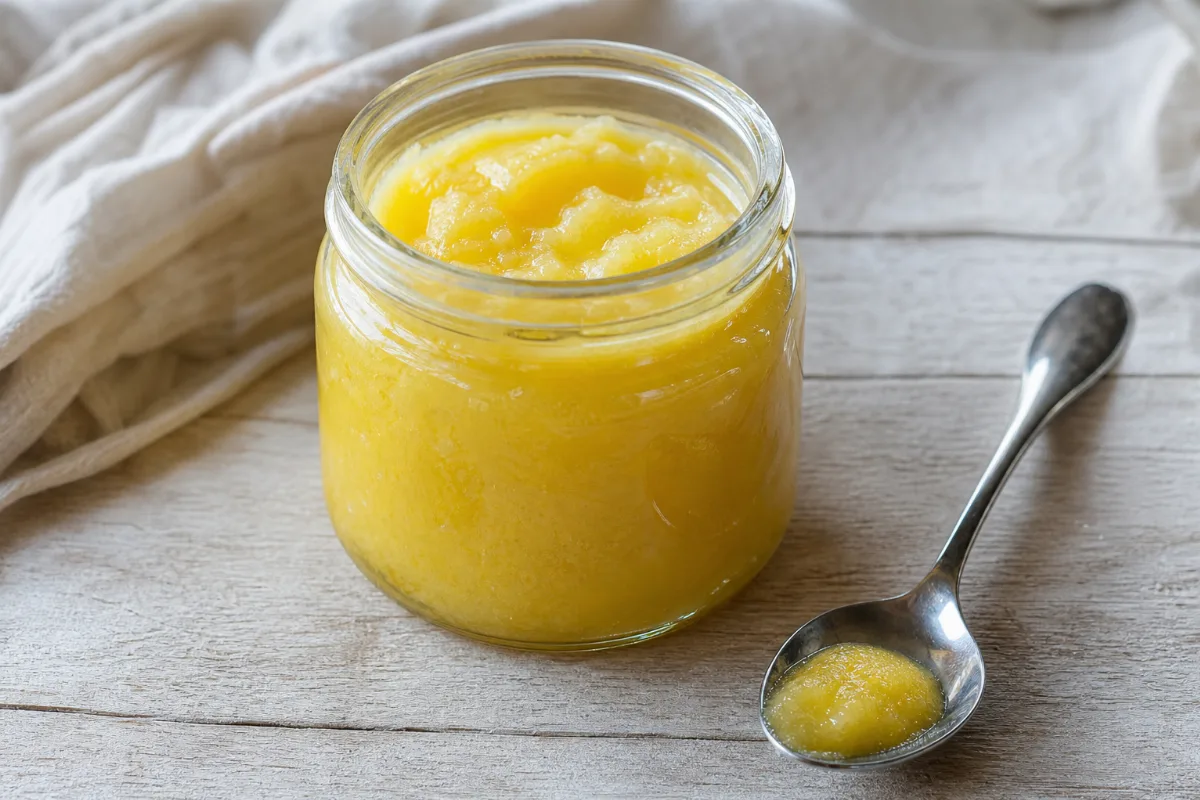
Ghee is clarified butter: butter is heated until the water cooks off and the milk solids are removed, leaving almost pure milk fat. It is a long-standing cooking fat in South Asian cooking and in Ayurvedic tradition. This page keeps ghee as a food apart from traditional claims, medicated ghee preparations and hype, and says what research shows and does not show.
Read this first
- Ghee is even more concentrated than butter. USDA lists about 7.9 g of saturated fat in 1 tablespoon (12.8 g), which is 40% of the FDA Daily Value of 20 g, and about 112 kcal. [1]
- Evidence for health benefits is thin. A 2025 meta-analysis found no significant effect of ghee on the overall lipid profile and no significant change in coronary heart disease risk (odds ratio 1.15, range 0.71 to 1.59), though the authors called the risk "marginally increased." [3]
- The one small human study we read (60 healthy adults, about 35 g of ghee a day for 6 weeks, no control group) found no harm to cholesterol, but it cannot show that ghee is healthy. [2]
- Milk allergy: ghee is on the list of milk-containing ingredients that people with milk allergy are told to avoid. For trouble breathing or swelling of the face or throat, call 911 (or your local emergency number). [6]
- Honest summary: ghee is a traditional, flavorful cooking fat; it has the same saturated-fat concerns as butter, and the claims that it heals or "detoxes" are not supported by the sources we read.
What is in it (USDA values)
USDA has no item named "ghee." The closest is "Butter oil, anhydrous" (FoodData Central item 173412, SR Legacy), which is milk fat with nearly all water removed. [1] We use it as the closest match; real ghee varies with how it is made. The serving column is the USDA household portion of 1 tablespoon, 12.8 g.
| Nutrient | Per 100 g | Per 1 tablespoon (12.8 g) | % Daily Value per serving |
|---|---|---|---|
| Energy | 876 kcal | 112 kcal | not set |
| Total fat | 99.5 g | 12.7 g | 16% |
| Saturated fat | 61.9 g | 7.9 g | 40% |
| Monounsaturated fat | 28.7 g | 3.7 g | no DV |
| Polyunsaturated fat | 3.7 g | 0.5 g | no DV |
| Cholesterol | 256 mg | 33 mg | 11% |
| Vitamin A (RAE) | 840 mcg | 108 mcg | 12% |
| Vitamin E (alpha-tocopherol) | 2.8 mg | 0.36 mg | 2% |
| Vitamin K | 8.6 mcg | 1.1 mcg | 1% |
| Sodium | 2 mg | 0 mg | 0% |
| Protein | 0.28 g | 0.04 g | 0% |
| Carbohydrate | 0 g | 0 g | 0% |
% Daily Value uses the FDA 2016 Daily Values; values vary with the milk, the method and the batch. The serving figures are the 100 g values multiplied by 0.128. Compared with butter, ghee has more calories and saturated fat per gram because the water has been removed, and almost no sodium. [1] USDA does not list trans fat for this item. USDA also lists a vitamin D value in the file, but it looks unusually high and we could not re-check it, so we left it out.
What research says
| Health goal | What the sources found | Strength of evidence | What was studied |
|---|---|---|---|
| Blood lipids (cholesterol) | A 2025 systematic review found neutral to positive effects in 8 studies and no significant change in overall lipid profile. [3] A six-week study of 60 adults in India eating about 35 g a day found total cholesterol and LDL fell in the group as a whole, with no control group, so the change cannot be credited to ghee. [2] | Mixed | Small, short studies; mostly in India |
| Coronary heart disease | The same review pooled 10 studies (19,948 people) and found an odds ratio of 1.15 (0.71 to 1.59), not statistically significant. The authors still described a "marginally increased risk." [3] | Insufficient evidence | Observational studies from the Indian subcontinent and elsewhere |
| Heart effects of heated ghee (oxidized cholesterol) | The 2022 paper notes that cholesterol in ghee oxidizes when heated, but did not measure it. [2] The animal results we saw were small and mixed. | Lab or animal only | Rats and rabbits, as cited in [2] |
| Bone, joint, gut health, "detox", immunity | We did not read a human trial showing ghee improves these. | No good evidence of benefit found in the sources we read | Not applicable |
| Compared with butter or oils | We found no trial that compared ghee directly with olive oil, canola or butter on LDL. A 2018 network meta-analysis found that butter raised LDL more than many plant oils. Ghee is also milk fat, so a similar effect is plausible, but that is our inference. [4] | Insufficient evidence | Trials of butter, not ghee |
The 2022 study did not report a funding statement in the text we read, and the authors made the ghee themselves. [2] The 2025 meta-analysis did not report a formal certainty rating in its abstract. [3]
Food vs traditional preparations. "Medicated ghee" (ghee infused with herbs) used in Ayurveda is a different product and was not part of the evidence above.
How much is a normal serving
The USDA household portion is 1 tablespoon (12.8 g), about 112 kcal. [1] That is information from USDA, not a prescription. For limits on saturated fat, the NHS gives a maximum of 30 g a day for men and 20 g for women and lists ghee among high-saturated-fat foods. [5] The American Heart Association advises replacing saturated fat with unsaturated fat, especially polyunsaturated fat. [7] Press coverage in January 2026 of the 2025-2030 US Dietary Guidelines says the 10%-of-calories limit on saturated fat was kept; we read this only in a news report. [8]
Safety, allergy and medicines
- Saturated fat: one tablespoon is 40% of the saturated fat Daily Value. [1] People with high cholesterol or heart disease should ask their clinician.
- Milk allergy: FARE lists ghee, butter and butter fat as milk-containing ingredients to avoid, and says epinephrine is the first-line treatment for anaphylaxis. [6] Some sellers market ghee as safe for dairy allergy because the milk solids are removed. We read no allergy-authority source supporting that, so people with a diagnosed milk allergy should ask their allergist before eating ghee. See food allergy basics and emergency signs.
- Lactose: we did not read an authoritative source that states how much lactose ghee holds, so we make no claim.
- Pregnancy: the NHS says pregnant people should avoid liver and liver products because of vitamin A. [9] Ghee contains vitamin A (12% of the Daily Value in a tablespoon). [1] A normal use of ghee is far below the 1,500 mcg a day long-term level the NHS names for bone health, but it counts together with other sources. [9] See foods in pregnancy.
- Heating: cholesterol in ghee can oxidize when heated, according to the 2022 paper; whether this matters for health in people was not shown. [2] See smoke points and cooking with oil.
- Children: see foods for babies and toddlers.
- Medicines: we found no source describing a direct interaction between ghee as food and a medicine.
Choosing, storing and food safety
- Ghee has almost no water, so it is less perishable than butter. We did not read an official source with exact storage times, so follow the label.
- Choose ghee made from pasteurized milk butter if you are pregnant or serving young children; the CDC says raw-milk products can carry germs such as Listeria. [10]
- Keep the jar clean and dry when scooping; we did not read a source on home-made ghee safety, so this is general kitchen advice.
Related pages
Health connections for Ghee (Clarified Butter)
What research links to eating or drinking this food, and how strong the evidence is. Many studies are observational or use juice, powder, oil or extracts rather than the food as eaten; each card says which.
Ghee and blood lipids
Preliminary or mixedA 2025 meta-analysis found neutral to positive effects on lipids in 8 studies and no significant overall effect; a small 6-week uncontrolled study of 60 adults saw total and LDL cholesterol fall.
Supplements: Small, short studies, mostly in India; no control group in the 2022 study.
Ghee and coronary heart disease
Not enough evidenceA pooled odds ratio of 1.15 (0.71 to 1.59) across 10 studies was not statistically significant; the authors called it a marginally increased risk.
Supplements: Association only; a formal certainty rating was not reported in the abstract.
Replacing saturated fat
Clinically supportedCochrane trials found cutting saturated fat for two years or more lowered combined heart events by about 21%; the AHA advises replacing it with unsaturated fat.
Supplements: Not a dose recommendation.
Heated ghee and oxidized cholesterol
Lab or animal research onlyA 2022 paper notes that cholesterol in ghee oxidizes when heated; it did not measure this, and the animal results cited were small.
Supplements: No human outcome shown.
Vitamin A in ghee
Established roleUSDA lists about 108 mcg RAE per tablespoon (12% of the Daily Value) in the closest USDA item.
Supplements: Not a reason for extra intake when diet is adequate.
Traditional claims for bone, joint and gut health
Not enough evidenceWe read no human trial showing ghee improves these.
Supplements: Not supported by the sources we read.
Connected topics
Open a group to see how each topic connects and how strong the evidence is.
Health goals (1)
- Cholesterol BalancePreliminary or mixed
A 2025 meta-analysis found no significant overall effect of ghee on lipids, while its saturated fat content argues for caution.
Body systems (2)
- Cardiovascular SystemPreliminary or mixed
Ghee's effect on lipids was neutral to positive in small studies; heart disease outcome data are unclear.
- Heart & CirculationPreliminary or mixed
Ghee's effect on lipids was neutral to positive in small studies; heart disease outcome data are unclear.
Body parts (1)
- HeartPreliminary or mixed
Small studies on lipids; coronary heart disease link not significant.
Biomarkers (1)
- LDL CholesterolPreliminary or mixed
One uncontrolled 6-week study saw LDL fall; the meta-analysis found no significant overall effect on lipids.
Conditions & symptoms (1)
- Milk AllergyDocumented risk
Ghee is a milk fat on the avoid list for milk allergy.
Documented risks and interactions (3)
- Saturated fat in ghee. USDA lists about 7.9 g of saturated fat per tablespoon, 40% of the FDA Daily Value; the NHS lists ghee among high-saturated-fat foods.
- Milk allergy and ghee. FARE lists ghee among the milk-containing ingredients to avoid; epinephrine is first-line treatment for anaphylaxis.
- Vitamin A upper amounts and pregnancy. NHS: long-term intake above about 1,500 mcg a day from food and supplements may weaken bones; pregnant people should avoid liver.
Frequently asked questions
Is ghee healthier than butter?
We found no trial that compares them. Ghee has more saturated fat per gram than butter because the water is removed. [1] The 2025 meta-analysis found no significant effect of ghee on overall lipids. [3]
Is ghee safe if I am allergic to milk or lactose intolerant?
Milk allergy: FARE lists ghee as a milk-containing ingredient, so people with milk allergy are told to avoid it. [6] Ask an allergist. Lactose: we did not read a source on its lactose content.
Does ghee lower cholesterol?
One small six-week study with no control group saw lower total and LDL cholesterol, but it cannot show ghee caused this. [2] A larger review found no significant overall effect. [3]
Can I cook with ghee?
Yes, many people do. We did not read a verified smoke point for ghee, so we give no number; see our smoke point guide.
Does ghee heal joints or gut problems?
We did not read a human trial showing this. Claims come from tradition and mechanism or animal ideas.
References
- USDA FoodData Central. Butter oil, anhydrous (FDC 173412). SR Legacy, April 2018. Values taken from the USDA data file prepared for this site, 2026-10-24; the USDA web page itself could not be opened at the time of writing.
- Lipid profile in healthy human volunteers before and after consuming ghee. Bioinformation 2022, PMC10326324. Read 2026-10-24.
- Ghee's health benefits on cardiovascular health and lipid profile: a systematic review and meta-analysis. Progress in Nutrition 2025. Abstract read 2026-10-24.
- Schwingshackl L, et al. Effects of oils and solid fats on blood lipids: a systematic review and network meta-analysis. J Lipid Res 2018. Abstract read 2026-10-24.
- NHS. Eat less saturated fat. Read 2026-10-24.
- FARE (Food Allergy Research & Education). Milk allergy. Read 2026-10-24.
- Sacks FM, et al., American Heart Association. Dietary Fats and Cardiovascular Disease: A Presidential Advisory. Circulation 2017. Abstract read 2026-10-24.
- FOX 5 New York. Foods that Americans were told to avoid for decades are back under Trump's new nutrition rules. 18 January 2026. News report. Read 2026-10-24.
- NHS. Vitamin A. Read 2026-10-24.
- CDC. Raw milk. Read 2026-10-24.