Tomato Juice: Nutrients, What Research Shows and Safety
Tomato juice as a drink: USDA vitamin C, potassium and sodium per cup (salted or not), small trials on cholesterol, and cautions on sodium, kidney disease and reflux.
Content last updated . This page has not been medically reviewed.
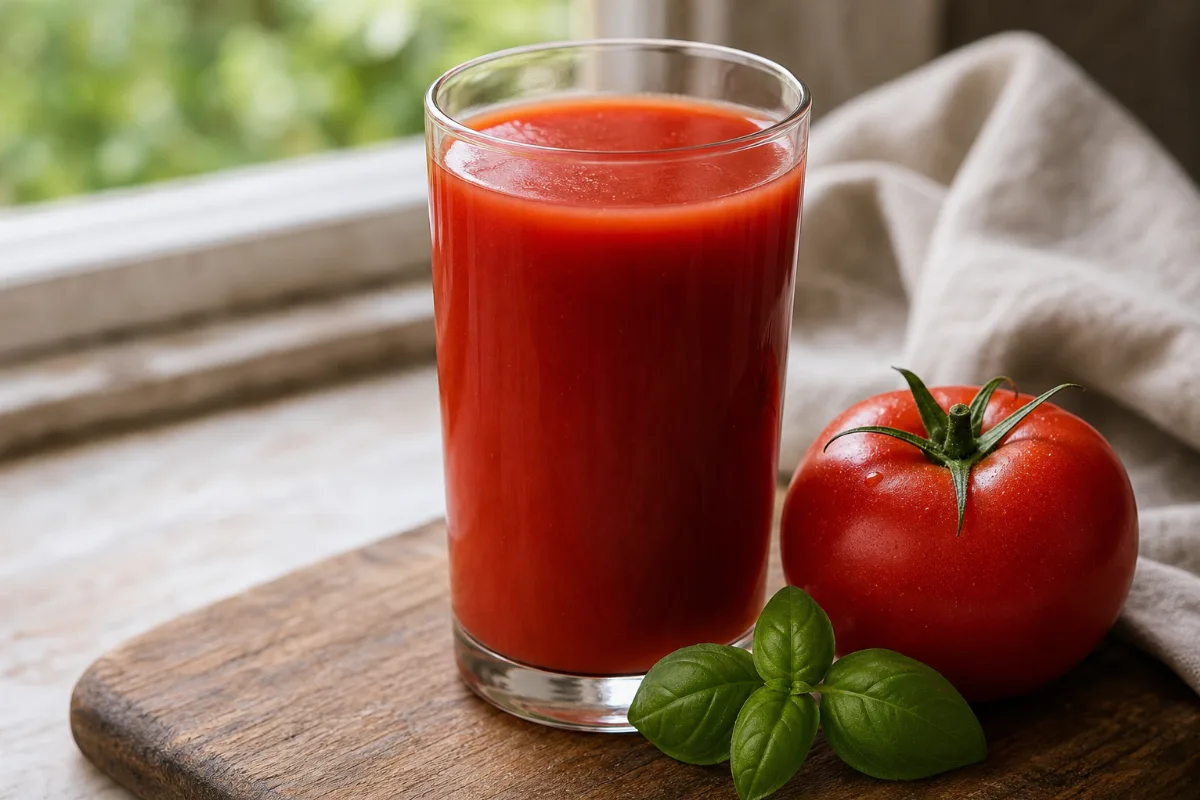
Tomato juice is the pressed and usually heated juice of tomatoes, Solanum lycopersicum (nightshade family, Solanaceae), sold canned or bottled, plain or with salt added. People drink it for its vitamin C and for lycopene, the red carotenoid (a plant pigment) of tomatoes. This page covers the drink. It keeps tomato juice apart from fresh tomatoes, sauces, and lycopene capsules, which are different products, so results for one do not transfer to another. Information only.
Read this first
- Check the sodium. USDA lists 10 mg of sodium per 100 g in juice with no salt added and 253 mg per 100 g in juice with salt added. One cup of the salted type has about 615 mg, 27% of the 2,300 mg Daily Value. [1] [2] FDA says 20% or more of the Daily Value per serving counts as high. [3]
- Kidney disease: one cup has about 527 mg of potassium (11% of the Daily Value). NIDDK says damaged kidneys can struggle to clear potassium, and a care team may advise limits. [1] [12]
- Heartburn: NIDDK lists tomatoes among acidic foods that some people with reflux say trigger symptoms. [13]
- Evidence in one line: small studies saw lower LDL cholesterol after eating tomato products, but they are short and often small. Tomato juice is a vitamin C-rich, low-calorie drink. It is not a treatment for any disease.
What is in it (USDA values)
The values are for canned tomato juice without salt added (USDA FoodData Central item 170545, SR Legacy). [1] The salted item (170458) is identical except sodium. [2] The serving column is the USDA household portion of 1 cup (243 g).
| Nutrient | Per 100 g | Per 1 cup (243 g) | % Daily Value per serving |
|---|---|---|---|
| Energy | 17 kcal | 41 kcal | not set |
| Total sugars | 2.6 g | 6.3 g | no DV |
| Carbohydrate | 3.5 g | 8.6 g | 3% |
| Fiber | 0.4 g | 1.0 g | 3% |
| Protein | 0.85 g | 2.1 g | 4% |
| Vitamin C | 70.1 mg | 170 mg | 189% |
| Thiamin | 0.10 mg | 0.24 mg | 20% |
| Riboflavin | 0.078 mg | 0.19 mg | 15% |
| Folate | 20 mcg DFE | 49 mcg DFE | 12% |
| Potassium | 217 mg | 527 mg | 11% |
| Copper | 0.042 mg | 0.10 mg | 11% |
| Sodium (no salt added) | 10 mg | 24 mg | 1% |
| Sodium (salt added) | 253 mg | 615 mg | 27% |
% Daily Value uses the FDA 2016 Daily Values; values vary with brand. The serving figures are the 100 g values multiplied by 2.43. [1] [2] USDA lists beta-carotene (270 mcg per 100 g) but no lycopene value for this item, so we quote none. [1]
Lycopene is the red pigment. In a small crossover trial of 11 adults, lycopene from a special orange "tangerine" tomato juice was absorbed about 8.5 times better than from red tomato juice, with large differences between people. [9] That is a finding about absorption in people, not about health benefit.
What research says
| Health goal | What the sources found | Strength of evidence | What was studied |
|---|---|---|---|
| LDL cholesterol | A 2017 pooled analysis of 21 trials found LDL about 0.22 mmol/L lower with tomato products. [4] In 21 healthy adults, 3 weeks of a high-tomato diet (400 ml juice a day plus ketchup) lowered LDL by 12.9% versus a low-tomato diet; the abstract does not describe randomization. [5] | Promising but limited | Tomato products (juice, paste, sauce) and lycopene capsules pooled; one small juice-based diet study |
| Blood pressure | A 2021 network analysis found standardized tomato extract lowered systolic pressure; other tomato and lycopene forms showed no consistent effect. [6] A one-year Japanese study of unsalted juice saw pressure fall in people with high readings, but it had no control group and was funded by a tomato and soy sauce company. [7] | Insufficient evidence for juice | Extract, juice, observational |
| Blood sugar after a meal | In 25 healthy young women, 200 g of tomato juice 30 minutes before white rice gave a smaller glucose rise than water. [8] | Promising but limited (small, short, healthy volunteers) | Single servings |
| Heart disease and stroke risk | Pooled cohort studies linked higher lycopene intake or blood level to lower stroke risk (HR 0.74) and cardiovascular disease (HR 0.86); no significant link for heart attack. [10] | Mixed (observational) | Tomatoes and lycopene in general, not juice alone |
| Prostate cancer | A pooled analysis of prospective studies found no statistically significant link for tomato or lycopene. [11] | No good evidence of benefit | Observational studies |
The pooled trial analysis mixes tomato products with capsules and measures markers such as LDL, not heart attacks. [4] We did not find a trial showing tomato juice prevents cancer or heart disease ("Proper evidence not found in the sources we read").
Eaten as food vs taken as supplement. Lycopene supplements lowered systolic pressure in one pooled analysis, but tomato foods did not clearly do so. [4] [6]
How much is a normal serving
The USDA household portion is 1 cup (243 g), about 8 fl oz, with about 41 kcal; USDA also lists 6 fl oz (182 g). [1] The NHS says no more than 150 ml of juice, smoothies and vegetable juice combined counts toward 5 A DAY in a day. [14] This is information, not a prescription.
Safety, allergy and medicines
- Sodium and blood pressure: over 70% of sodium in the US diet comes from packaged and prepared foods, FDA says; check the Nutrition Facts label and compare "no salt added" with regular. [3]
- Kidney disease and potassium: NIDDK says high potassium can affect the heart and muscles, and that a care team may suggest limiting high-potassium foods. [12] NIDDK names orange juice, not tomato juice, as an example; the figure for tomato juice is from USDA. [1] See foods, kidney disease, potassium and oxalates.
- Reflux (GERD): some people find tomatoes trigger symptoms; triggers differ and NIDDK advises talking to a doctor about yours. [13]
- Medicines: we did not find a source we could read on interactions between tomato juice as a drink and a specific medicine ("Proper evidence not found"). A pharmacist can check your list. Potassium-rich foods matter for people who take medicines that raise blood potassium; ask your care team (NIDDK notes that medicines can raise potassium). [12]
- Diabetes: one cup has about 8.6 g of carbohydrate, much less than fruit juices. [1] Ask a clinician or dietitian. See foods for blood sugar control.
- Pregnancy, breastfeeding and children: canned juice is heat-treated; fresh-pressed juice is not, and FDA lists pregnant women and children among those at higher risk from untreated juice. [15] We did not read other advice specific to tomato juice.
- Allergy: tomato allergy exists but we did not read a source on how common it is. For trouble breathing or swelling of the face or throat, call 911 (or your local emergency number). See food allergy basics.
- Lycopene capsules are a different product; this page does not cover them.
Choosing, storing and food safety
- Look for "no salt added" if you want to limit sodium. [1] [3]
- Fresh-pressed juice is not pasteurized unless the label says so; FDA says untreated juice must be refrigerated and carry a warning label when packaged, but juice sold by the glass does not need one. [15]
- We did not read a source with storage advice specific to tomato juice, so we give none beyond the label and refrigeration after opening if the label says so.
Related pages
Health connections for Tomato Juice
What research links to eating or drinking this food, and how strong the evidence is. Many studies are observational or use juice, powder, oil or extracts rather than the food as eaten; each card says which.
Tomato juice and LDL cholesterol
Preliminary or mixedA 2017 pooled analysis of 21 trials of tomato products and lycopene found LDL cholesterol about 0.22 mmol/L lower with tomato products. A small 3-week study of 21 healthy adults (400 ml tomato juice a day plus ketchup) found LDL 12.9% lower than on a low-tomato diet, though the abstract does not describe randomization.
Supplements: Results for tomato products do not automatically apply to lycopene capsules, which are a different product.
Tomato juice and blood pressure
Preliminary or mixedA 2021 network meta-analysis found standardized tomato extract lowered systolic blood pressure, but other tomato and lycopene forms did not show a consistent effect. A year-long Japanese study of unsalted tomato juice (funded by a soy sauce and tomato product company) saw blood pressure fall in people with high readings, but it had no control group.
Supplements: Not proof that juice treats high blood pressure; do not change medicines.
Tomato juice before a meal and blood sugar
Preliminary or mixedIn 25 healthy young women, 200 g of tomato juice 30 minutes before white rice gave a smaller rise in blood glucose than water. It was a short crossover study and does not show benefit for people with diabetes.
Supplements: Small, short, healthy volunteers.
Lycopene, cooking and absorption
Lab or animal research onlyIn a small crossover trial of 11 adults, lycopene from a special orange tomato juice was absorbed about 8.5 times better than from red tomato juice, with large differences between people. Heating changes the shape of lycopene in a way thought to help absorption.
Supplements: Absorption is not the same as benefit.
Tomatoes, lycopene and heart or prostate outcomes in people who eat them
Preliminary or mixedA pooled analysis of cohort studies linked higher lycopene intake or blood level to a lower stroke risk (HR 0.74) and to lower cardiovascular disease (HR 0.86); a separate pooled analysis of prospective studies found no significant link between tomato or lycopene and prostate cancer. These are observational and cover tomatoes in general, not tomato juice.
Supplements: Observational links do not prove cause.
Connected topics
Open a group to see how each topic connects and how strong the evidence is.
Health goals (3)
- Blood Sugar BalancePreliminary or mixed
A small crossover study in healthy women found a smaller glucose rise when tomato juice was drunk before rice than with water.
- Cholesterol BalancePreliminary or mixed
Pooled trials of tomato products found modestly lower LDL; the juice-specific study was small and may not have been randomized.
- Heart HealthPreliminary or mixed
Cohort studies link higher lycopene intake to lower stroke and cardiovascular disease risk, and trials show small changes in markers; no trial of heart attacks with tomato juice.
Body systems (4)
- Cardiovascular SystemPreliminary or mixed
Small changes in LDL and vessel function markers in pooled trials of tomato products; juice-specific data are limited.
- Digestive SystemDocumented risk
NIDDK lists tomatoes among acidic foods some people with GERD find trigger symptoms.
- Heart & CirculationDocumented risk
Salted canned juice can supply 27% of the sodium Daily Value in a cup, which matters for blood pressure.
- Kidney & UrinaryDocumented risk
Potassium (527 mg per cup) matters for people with kidney disease who must limit it.
Body parts (1)
- KidneysDocumented risk
Kidney disease can raise blood potassium; ask the care team about juices.
Functional actions (2)
- AntioxidantPreliminary or mixed
In a small study, LDL resisted oxidation 13% more after a high-tomato diet; this is a lab marker in people.
- Cardiovascular SupportPreliminary or mixed
Pooled trials of tomato products improved LDL and flow-mediated dilation; effects were small.
Biomarkers (1)
- LDL CholesterolPreliminary or mixed
LDL was lower with tomato products in pooled trials (about 0.22 mmol/L) and in one small juice study.
Conditions & symptoms (3)
- Gastroesophageal Reflux DiseaseDocumented risk
NIDDK lists tomatoes as an acidic food that some people with GERD find triggers symptoms.
- HypercholesterolemiaPreliminary or mixed
Tomato products modestly lowered LDL in pooled trials; not a treatment.
- HyperkalemiaDocumented risk
Kidney disease can cause high blood potassium; juices supply potassium (527 mg per cup).
Documented risks and interactions (3)
- Sodium in canned tomato juice. USDA lists 10 mg sodium per 100 g in juice without salt added and 253 mg per 100 g with salt added. One cup of the salted juice has about 615 mg, 27% of the 2,300 mg Daily Value.
- Potassium and kidney disease. One cup has about 527 mg of potassium (11% of the Daily Value) by USDA data. NIDDK says damaged kidneys can struggle to clear potassium and a care team may advise limiting high-potassium foods.
- Tomato juice and heartburn. NIDDK lists acidic foods such as citrus and tomatoes among foods some people with GERD say trigger symptoms, and advises talking to a doctor about which foods affect you.
Frequently asked questions
Is tomato juice good for you?
It is a low-calorie drink (41 kcal per cup) with about 189% of the vitamin C Daily Value. [1] Small studies saw lower LDL cholesterol, but they are not proof of lasting benefit. [4] [5] Salted versions can have 27% of the sodium Daily Value in a cup. [2]
Does tomato juice lower blood pressure?
The evidence for juice is thin. A pooled analysis found an effect for standardized tomato extract but no consistent effect for other tomato forms. [6] A year-long juice study had no control group. [7] Salt in the juice works against blood pressure; do not change medicines.
Is tomato juice bad for acid reflux?
NIDDK lists tomatoes as an acidic food that some people with reflux find trigger symptoms. Triggers differ, so ask a doctor. [13]
Is tomato juice OK with kidney disease?
It has about 527 mg of potassium per cup. [1] People with kidney disease who limit potassium should ask their care team. [12]
Does lycopene from tomato juice prevent cancer?
A pooled analysis of prospective studies found no significant link between tomato or lycopene and prostate cancer. [11] We found no trial showing prevention.
References
- U.S. Department of Agriculture. FoodData Central: Tomato juice, canned, without salt added (SR Legacy, FDC 170545). April 2018 release. Read 2026-10-24.
- U.S. Department of Agriculture. FoodData Central: Tomato juice, canned, with salt added (SR Legacy, FDC 170458). April 2018 release. Read 2026-10-24.
- U.S. Food and Drug Administration. Sodium in your diet. Current as of 2024-03-05. Read 2026-10-24.
- Cheng HM et al. Tomato and lycopene supplementation and cardiovascular risk factors: a systematic review and meta-analysis. Atherosclerosis 2017 (abstract read via Europe PMC). Read 2026-10-24.
- Silaste ML et al. Tomato juice decreases LDL cholesterol levels and increases LDL resistance to oxidation. Br J Nutr 2007 (abstract read via Europe PMC). Read 2026-10-24.
- Rattanavipanon W et al. Effect of tomato, lycopene and related products on blood pressure: a systematic review and network meta-analysis. Phytomedicine 2021 (abstract read via Europe PMC). Read 2026-10-24.
- Odai T et al. Unsalted tomato juice and cardiovascular risk markers in Japanese residents. Food Sci Nutr 2019 (abstract read via Europe PMC; funded by Kikkoman Corporation). Read 2026-10-24.
- Saito Y et al. Tomato juice preload and postprandial glucose in healthy women. Asia Pac J Clin Nutr 2020 (abstract read via Europe PMC). Read 2026-10-24.
- Cooperstone JL et al. Enhanced bioavailability of lycopene when consumed as cis-isomers from tangerine compared to red tomato juice. Mol Nutr Food Res 2015 (abstract read via Europe PMC). Read 2026-10-24.
- Cheng HM et al. Lycopene and tomato and risk of cardiovascular diseases: a systematic review and meta-analysis of epidemiological evidence. Crit Rev Food Sci Nutr 2019 (abstract read via Europe PMC). Read 2026-10-24.
- Chen J et al. Lycopene/tomato consumption and the risk of prostate cancer: a systematic review and meta-analysis of prospective studies. J Nutr Sci Vitaminol 2013 (abstract read via Europe PMC). Read 2026-10-24.
- NIDDK. Eating, diet and nutrition for chronic kidney disease. Reviewed January 2025. Read 2026-10-24.
- NIDDK. Eating, diet and nutrition for GER and GERD in adults. Reviewed July 2020. Read 2026-10-24.
- NHS. 5 A DAY: what counts?. Reviewed 9 June 2026. Read 2026-10-24.
- U.S. Food and Drug Administration. What you need to know about juice safety. Current as of 2024-03-05. Read 2026-10-24.