Coconut Milk Beverage: Nutrients, What Research Shows and Safety
Coconut milk beverage from the carton: USDA nutrients per cup, saturated fat and sugar, what coconut oil trials show, coconut allergy labeling and baby cautions.
Content last updated . This page has not been medically reviewed.
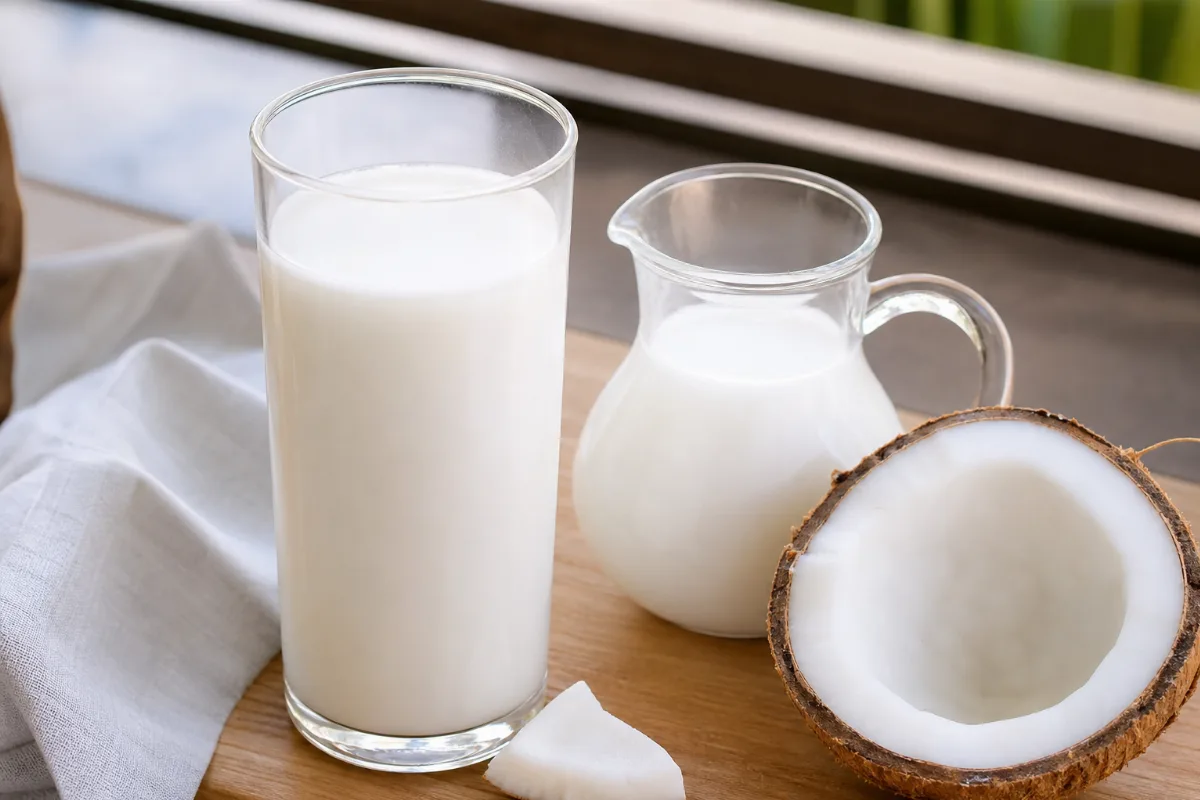
A coconut milk beverage is the carton drink sold in the refrigerated or shelf-stable milk aisle. It is made from coconut (Cocos nucifera, a palm in the Arecaceae family) and water, and is much thinner than the canned coconut milk used in cooking. The NHS lists coconut drinks among the dairy alternatives. [1] This page covers the carton drink only. It keeps canned coconut milk, coconut oil and coconut water apart. For coconut oil see coconut oil.
Read this first
- Saturated fat: USDA lists 2.08 g fat per 100 g and all of it is saturated, about 5 g in a cup (25% of the Daily Value). A cup of whole cow's milk has 4.55 g. [2] [3] The 2025-2030 Dietary Guidelines say saturated fat should not exceed 10% of daily calories. [4]
- Sweetened versions: the USDA record is for a sweetened, fortified drink. The Dietary Guidelines say no amount of added sugars is recommended. [2] [4]
- Not much protein: about 0.5 g protein in a cup. [2]
- Allergy: in 2025 the FDA stopped counting coconut as a tree nut for allergen labeling, but coconut allergy exists, and coconut used as an ingredient must still be listed. [5] For trouble breathing or swelling of the face or throat, call 911.
- Babies: CDC says no plant milk before 12 months. [6]
- Evidence in one line: we found no study of coconut milk drinks and health outcomes; trials of coconut oil are mixed and do not test this drink.
What is in it (USDA values)
The values below are for coconut milk beverage that is sweetened and fortified with calcium and vitamins A, B12 and D2 (USDA FoodData Central item 174116, SR Legacy). [2] The serving column is the USDA household portion of 1 cup, 240 g. USDA lists vitamin D as 0 in this record even though its name says D2 was added; we show the value as listed.
| Nutrient | Per 100 g | Per 1 cup (240 g) | % Daily Value per serving |
|---|---|---|---|
| Energy | 31 kcal | 74.4 kcal | no DV |
| Total fat | 2.08 g | 4.99 g | 6% |
| Saturated fat | 2.08 g | 5 g | 25% |
| Protein | 0.21 g | 0.5 g | 1% |
| Carbohydrate | 2.92 g | 7.01 g | 3% |
| Total sugars | 2.5 g | 6 g | no DV |
| Fiber | 0 g | 0 g | 0% |
| Calcium | 188 mg | 451 mg | 35% |
| Potassium | 19 mg | 45.6 mg | 1% |
| Sodium | 19 mg | 45.6 mg | 2% |
| Iron | 0.3 mg | 0.72 mg | 4% |
| Vitamin D | 0 mcg | 0 mcg | 0% |
| Vitamin B12 | 1.25 mcg | 3 mcg | 125% |
| Vitamin A (RAE) | 63 mcg | 151 mcg | 17% |
% Daily Value uses the FDA 2016 Daily Values; values vary by brand and by whether the drink is sweetened. The serving figures are the 100 g values multiplied by 2.4. USDA does not say how much of the 2.5 g sugars per 100 g is added. [2] In a New Zealand label study, coconut drinks ranged from 0.2 to 7.9 g fat and 0.2 to 5.9 g sugars per 100 mL, so products differ a lot. [7]
Plant compounds: Proper evidence not found in the sources we read for named plant compounds in coconut milk drinks.
What research says
| Health goal | What the sources found | Strength of evidence | What was studied |
|---|---|---|---|
| LDL ("bad") cholesterol | A meta-analysis of 16 trials found that coconut oil raised LDL by 10.47 mg/dL and HDL by 4.00 mg/dL compared with non-tropical vegetable oils. [8] A 2025 meta-analysis of 14 trials (1,049 people) of virgin coconut oil found no significant change in LDL. [9] The American Heart Association advisory says swapping saturated fat for unsaturated fat lowers LDL. [10] | Mixed for coconut oil; Insufficient evidence for the carton drink | Coconut oil, not the drink. A cup of the drink has about 5 g of fat, from USDA [2] |
| Replacing cow's milk | Coconut drinks averaged 0.7 g protein and 3.3 g fat per 100 mL on labels; apart from calcium-fortified soy, none was broadly comparable to milk. [7] The NHS says unsweetened, calcium-fortified coconut drinks count toward the dairy group. [1] | Established (food composition) | Labels and lab analysis |
| Early-life growth | A 2026 review found that partly replacing cow's milk with plant drinks was linked with slightly lower height and BMI in 5-year-olds (not coconut-specific; observational). Case reports describe severe undernutrition with exclusive use. [11] | Mixed | Cohort studies and case reports |
| Weight, blood sugar, other claims | Proper evidence not found in the sources we read. | Insufficient evidence | Not applicable |
Eaten as food vs oil. Trials of coconut oil cannot be applied to this drink, which holds only about 5 g of fat a cup. [2] Canned coconut milk (cooking) is a different, much fattier product that our USDA file does not cover.
How much is a normal serving
The USDA portion is 1 cup (240 g), which has 74 kcal. [2] We did not find an official serving size. The NHS says unsweetened, calcium-fortified plant drinks count toward the dairy food group. [1] This is information, not a prescription for you.Safety, allergy and medicines
- Coconut allergy: the FDA's January 2025 allergen guidance removed coconut from the tree nut list, so a "contains tree nuts" statement no longer covers coconut, but coconut must still appear in the ingredient list. A 2023 study suggests about 1 in 260 Americans could have a coconut allergy. [5] Whether coconut cross-reacts with tree nuts was not covered in the source we read. If you have a tree nut allergy, ask your allergist. [12]
- Saturated fat and cholesterol: the American Heart Association advisory links swapping saturated fat for unsaturated fat with lower LDL. [10] Talk with your clinician if you have high cholesterol.
- Sweetened versions: see the bullets near the top. CDC says to choose unflavored, unsweetened versions for children. [6]
- Babies and children: the NHS says babies under 1 should not have drinks called "milk" such as rice, oat or almond drinks; CDC says no plant milk before 12 months, and that fortified dairy alternatives are the only milk alternatives that help meet a child's dairy needs. [1] [6]
- Kidney disease: NIDDK suggests asking a dietitian about plant milks. [13] USDA lists 19 mg potassium per 100 g, about 46 mg a cup. [2]
- Medicines and pregnancy: we did not find coconut-milk-drink-specific information in the sources we read.
Choosing, storing and food safety
- For a milk replacement, choose unsweetened versions with added calcium and vitamin D. [6]
- Check the label for the amount of saturated fat and added sugar. [4]
- Shake the carton, since some plant drinks separate. [7]
- We did not read storage rules; follow the package.
Related pages
Health connections for Coconut Milk Beverage
What research links to eating or drinking this food, and how strong the evidence is. Many studies are observational or use juice, powder, oil or extracts rather than the food as eaten; each card says which.
Coconut milk drink compared with cow's milk
Established roleCoconut drinks averaged 0.7 g protein and 3.3 g fat per 100 mL on labels; the USDA sweetened record has 0.5 g protein and 5 g saturated fat per cup.
Supplements: This is about nutrients in the drink, not a treatment.
Calcium and vitamin B12 in fortified coconut drinks
Established roleThe USDA record lists about 451 mg calcium (35% of the Daily Value) and 3 mcg vitamin B12 (125%) per cup, which come from added nutrients that differ by brand.
Supplements: Check the label; unfortified products have far less.
Coconut fat and LDL cholesterol (oil trials)
Preliminary or mixedCoconut oil raised LDL by 10.47 mg/dL versus non-tropical oils in a 16-trial meta-analysis, while a 2025 meta-analysis of virgin coconut oil found no significant LDL change. Neither tested the carton drink.
Supplements: Trials tested coconut oil, not the drink.
Connected topics
Open a group to see how each topic connects and how strong the evidence is.
Body systems (1)
- Immune SystemDocumented risk
Coconut allergy exists (about 1 in 260 Americans in a 2023 study) and coconut must be listed on labels.
Root causes (1)
- Nutrient DeficiencyEstablished role
Calcium and vitamin B12 depend on fortification; protein is low.
Conditions & symptoms (1)
- Food AllergyDocumented risk
Coconut allergy is possible; coconut must be listed in the ingredients.
Documented risks and interactions (5)
- Saturated fat limit and coconut drinks. A cup has about 5 g saturated fat (25% of the Daily Value); the 2025-2030 Dietary Guidelines say saturated fat should not exceed 10% of daily calories.
- Added sugar in sweetened coconut drinks. The USDA record is sweetened and lists 6 g sugars per cup; the 2025-2030 Dietary Guidelines say no amount of added sugars is recommended and CDC says to choose unsweetened for children.
- Coconut allergy. The FDA removed coconut from the tree nut allergen list in January 2025; coconut must still appear in the ingredient list. A 2023 study suggests about 1 in 260 Americans could have a coconut allergy.
- Coconut drink for babies under 12 months. The NHS says babies under 1 should not have plant drinks called milk; CDC says no plant milk before 12 months.
- Plant drinks in early life and growth. A 2026 review links partly replacing cow's milk with plant drinks in early life with slightly lower height and BMI in 5-year-olds, with case reports of undernutrition.
Frequently asked questions
Is coconut milk drink healthy?
It depends on the product. The USDA sweetened, fortified record has 5 g saturated fat, 6 g sugars and little protein per cup, and plenty of added calcium and B12. [2] We found no study of the drink and health outcomes.
Does coconut milk raise cholesterol?
Trials of coconut oil raised LDL compared with non-tropical oils in one meta-analysis, while a newer one of virgin coconut oil found no significant LDL change. [8] [9] Neither tested the carton drink.
Is coconut a tree nut allergen?
Since January 2025 the FDA no longer counts coconut as a tree nut for allergen labeling, but coconut allergy exists and coconut must still be listed as an ingredient. [5]
Can I use it instead of cow's milk?
The NHS counts unsweetened, calcium-fortified coconut drinks toward the dairy group, but protein is low. [1] [2] Ask a dietitian for children.
Is it the same as canned coconut milk?
No. This page covers the thin carton drink; canned coconut milk is a different, richer product we did not study here.
References
- NHS. Milk and dairy in your diet. Read 2026-10-24.
- U.S. Department of Agriculture. FoodData Central: Beverages, coconut milk, sweetened, fortified with calcium, vitamins A, B12, D2 (SR Legacy, FDC 174116). April 2018 release. Read 2026-10-24.
- U.S. Department of Agriculture. FoodData Central: Milk, whole, 3.25% milkfat, with added vitamin D (SR Legacy, FDC 171265). April 2018 release. Read 2026-10-24.
- U.S. Department of Agriculture and U.S. Department of Health and Human Services. Dietary Guidelines for Americans, 2025-2030. January 2026. Read 2026-10-24.
- Academy of Nutrition and Dietetics (eatright.org). Coconut is no longer a tree nut allergen. published 2026-05-26. Read 2026-10-24.
- CDC. Cow's milk and milk alternatives (infant and toddler nutrition). Read 2026-10-24.
- Smith NW et al. Nutritional assessment of plant-based beverages in comparison to bovine milk. Front Nutr 9:957486 (full text read). 2022. Read 2026-10-24.
- Neelakantan N et al. The effect of coconut oil consumption on cardiovascular risk factors: a systematic review and meta-analysis of clinical trials. Circulation (abstract read via Europe PMC). 2020. Read 2026-10-24.
- Zhang Y et al. The effect of virgin coconut oil on cardiovascular disease risk factors: a systematic review and meta-analysis. Diabetol Metab Syndr (abstract read via Europe PMC). 2025. Read 2026-10-24.
- Sacks FM et al. (American Heart Association). Dietary fats and cardiovascular disease: a presidential advisory from the American Heart Association. Circulation (abstract read via Europe PMC). 2017. Read 2026-10-24.
- Schlune A et al. Plant-based drinks as an alternative to cow's milk in early life: health effects in infancy, childhood, and adolescence. Dtsch Arztebl Int (abstract read via Europe PMC). 2026. Read 2026-10-24.
- U.S. Food and Drug Administration. Food Allergies. Read 2026-10-24.
- NIDDK. Eating and nutrition for chronic kidney disease. Read 2026-10-24.