Pears: Nutrients, What Research Shows and Safety
What the sources say about pears: fiber and nutrients from USDA, studies on diabetes risk and heart health, allergy and food-safety notes, and what is still unknown.
Content last updated . This page has not been medically reviewed.
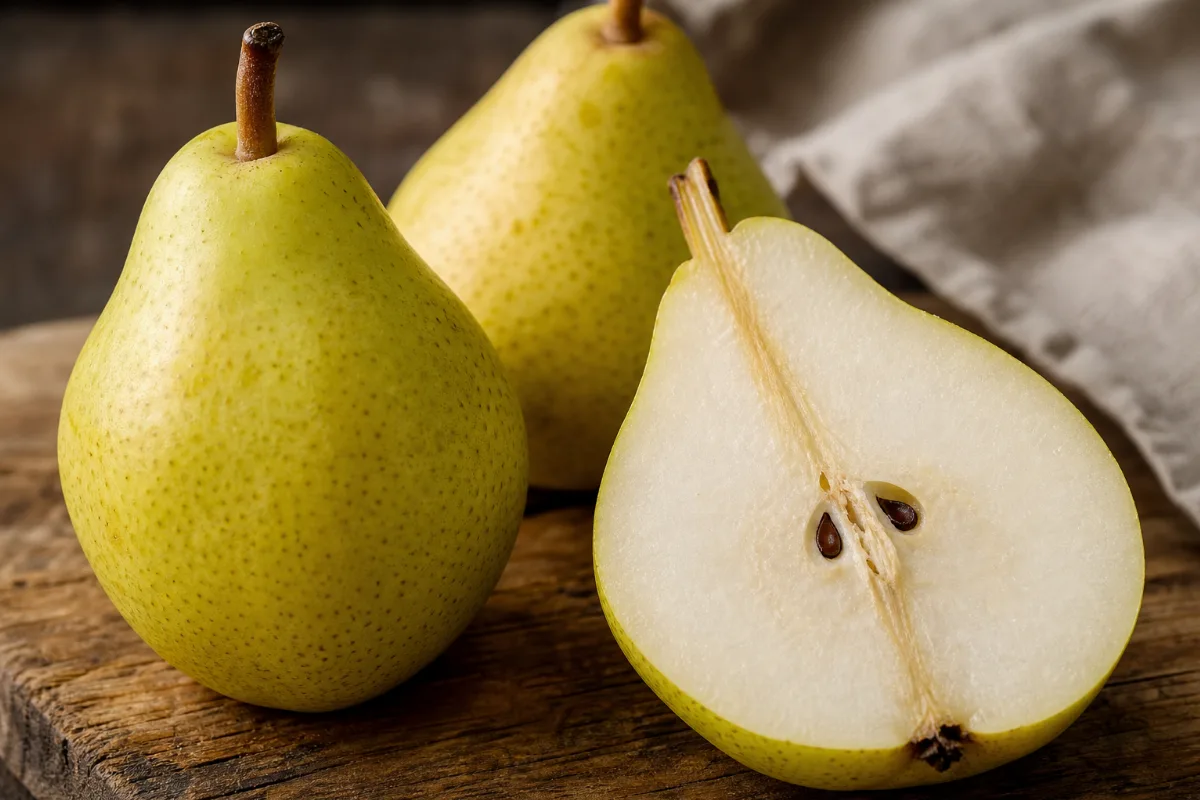
Pears are the fruit of Pyrus communis (European pear), a tree in the rose family (Rosaceae). The soft, juicy flesh is eaten, often with the skin. People eat pears for their fiber and as part of a fruit-rich diet. This page keeps the whole fruit apart from supplements and from hype, and says plainly what research does and does not show.
Read this first
- Pears are an everyday food. As with any food, an allergic reaction is possible. For trouble breathing or swelling of the face or throat, call 911. See food allergy basics and emergency signs.
- The sources we read did not describe medicine interactions for pears, so we make no claim either way. A pharmacist can check; see food and medicine interactions.
- Pears are a good fiber source. The health evidence is modest: one small trial and observational studies, none showing that pears prevent or treat a disease.
What is in it (USDA values)
| Nutrient | Per 100 g | Per 1 medium pear (178 g) | % Daily Value per medium pear |
|---|---|---|---|
| Energy | 57 kcal | 101 kcal | not set |
| Fiber | 3.1 g | 5.5 g | 20% |
| Total sugars | 9.75 g | 17.4 g | not set |
| Vitamin C | 4.3 mg | 7.7 mg | 9% |
| Potassium | 116 mg | 206 mg | 4% |
| Folate (DFE) | 7 µg | 12 µg | 3% |
| Vitamin K | 4.4 µg | 7.8 µg | 7% |
| Vitamin A (RAE) | 1 µg | 2 µg | 0% |
| Copper | 0.08 mg | 0.14 mg | 16% |
| Magnesium | 7 mg | 12 mg | 3% |
Source: USDA FoodData Central, "Pears, raw" (SR Legacy, FDC 169118). [1] % Daily Value uses the FDA 2016 Daily Values; values vary with variety, ripeness and storage. The medium-pear column is our arithmetic from the USDA per-100 g values and the USDA portion of 178 g.
A 2026 study comparing three pear varieties reported polyphenols, flavonoids and carotenoids in the fruit, with levels differing by variety and by organic versus conventional growing. [2] A study of pear flesh named flavonoids including proanthocyanidins. [3] These sources measured the compounds in the fruit. They did not test health effects in people, so what these compounds do in the body remains lab-level knowledge here.
What research says
| Health goal | What the sources found | Strength of evidence | What was studied |
|---|---|---|---|
| Bowel regularity | The US NIDDK lists pears among fiber-rich fruits and says fiber should be added gradually. [4] We found no trial of pears for constipation. | Insufficient evidence (for pears specifically) | Fiber in general; whole fruit |
| Type 2 diabetes risk | A 2017 meta-analysis of five cohort studies (228,315 people) found 18% lower risk with the highest apple-and-pear intake versus the lowest. [5] | Promising but limited (observational; apples and pears pooled) | Habitual intake in cohorts |
| Heart and metabolic markers | In a randomized crossover trial of 40 adults with metabolic syndrome, two medium fresh pears a day for 12 weeks lowered pulse pressure and some waist measures versus a calorie-matched drink; the fall in systolic blood pressure was not significant. [6] | Promising but limited (one small trial) | Whole fresh pears; adults aged 45 to 65 |
| Blood pressure | In that same trial the systolic change did not reach significance. [6] | Mixed | Same trial |
| Vitamin or mineral deficiency | Pears give small shares of most vitamins (USDA). [1] | Established role only as a minor contributor | Nutrient values |
| Antioxidant or "anti-inflammatory" effects in people | Compounds were measured in the fruit; the sources we read did not test effects in people. [2][3] | Lab or animal only | Fruit analysis |
Eaten as food vs taken as a supplement or extract. The trial above used whole fresh pears. We found no trial of pear extracts or powders and make no claims about them. Observational links (like the diabetes finding) do not prove that pears are the cause.
How much is a normal serving
The USDA household portions for raw pear are 1 small (148 g), 1 medium (178 g), 1 large (230 g) or 1 cup of slices (140 g). [1] The NHS counts one medium pear as one 80 g portion toward 5 A DAY. [7] For canned pears, the NHS says about 2 halves is similar, and to choose fruit canned in juice rather than syrup. Dried fruit is about 30 g and is high in sugar. Juice and smoothies count as at most one portion a day (a combined total of no more than 150 ml). [7] This is information, not a prescription. We could not read the MyPlate cup figures, so they are not quoted. See fruit juice vs whole fruit. We found no sourced data on how cooking changes pear nutrients: Proper evidence not found in the sources we read.Safety, allergy and medicines
- Allergy: the NHS describes oral allergy syndrome (itchy mouth and throat after raw fruit, vegetables or nuts, "not usually serious", and eased by well-cooked fruit) and food allergy (hives, swelling of lips or face, breathing problems). [8] The sources we read did not name pear as a trigger, so we cannot say how common it is for pears.
- Emergency signs (NHS): sudden swelling of the lips, mouth, throat or tongue, fast or difficult breathing, a tight throat, pale or blue skin, fainting. Use an adrenaline auto-injector if one is prescribed and call emergency services. [8]
- Medicines: no medicine interaction for pears was described in the sources we read, so none is claimed. Ask a pharmacist if you take medicines for kidney, heart or blood-thinning conditions.
- Sugar: one medium pear has about 17 g of natural sugars alongside 5.5 g of fiber. [1] People managing diabetes should ask their care team how fruit fits their plan.
- Fiber: add fiber a little at a time so the body gets used to it. [4]
- Not covered: we could not read sources on sorbitol or fructose sensitivity, pesticide residue data or pregnancy for pears, so we make no claims on those.
Choosing, storing and food safety
- Choose produce that is not bruised or damaged; cut away damaged areas. [9]
- Rinse under running water, even if you will peel it. Do not use soap, detergent or produce wash. Washing reduces bacteria but does not remove all of them. [9]
- Refrigerate cut or packaged produce at 40°F or below. [9]
- Keep raw produce away from raw meat, poultry and seafood. [9]
Related pages
Health connections for Pears
What research links to eating or drinking this food, and how strong the evidence is. Many studies are observational or use juice, powder, oil or extracts rather than the food as eaten; each card says which.
Fiber and bowel regularity
Preliminary or mixedPears are listed by the US NIDDK as a good source of fiber, and fiber is part of eating for regular bowel movements. One medium pear gives about 5.5 g of fiber (USDA).
Supplements: Not applicable (food). We did not find a trial of pears or pear fiber for constipation: proper evidence not found.
Apple and pear intake and type 2 diabetes risk
Preliminary or mixedA 2017 meta-analysis of five cohort studies found people who ate the most apples and pears had an 18% lower type 2 diabetes risk than those who ate the least. Apples and pears were analysed together.
Supplements: Observational association only; no pear-specific result.
Heart and metabolic markers in metabolic syndrome
Preliminary or mixedIn one randomized crossover trial in 40 adults aged 45 to 65 with metabolic syndrome, two medium fresh pears a day for 12 weeks lowered pulse pressure and some body measures versus a calorie-matched drink; systolic blood pressure change was not significant.
Supplements: Whole fresh pears were tested, not supplements.
Plant compounds (polyphenols, flavonoids, carotenoids)
Lab or animal research onlyPears contain polyphenols, flavonoids and carotenoids; amounts vary by variety and growing method. The sources we read measured them in the fruit; they did not show health effects in people.
Supplements: Not applicable.
Part of a fruit-and-vegetable eating pattern
Preliminary or mixedThe NHS counts one medium pear as one 80 g portion toward 5 A DAY; canned pears in juice and dried fruit also count, and juice counts as at most one portion.
Supplements: Not applicable.
Small amounts of copper, potassium, vitamin K and vitamin C
Established roleUSDA lists modest amounts: one medium pear gives about 16% of the Daily Value for copper and smaller shares of vitamin C, potassium and vitamin K.
Supplements: Not applicable (food).
Juice, dried and canned pears
Not enough evidenceThe NHS says juice and smoothies count as at most one portion a day (150 ml limit), dried fruit is high in sugar and best eaten with a meal, and canned fruit is better in juice than syrup.
Supplements: Not applicable.
Connected topics
Open a group to see how each topic connects and how strong the evidence is.
Health goals (1)
- Digestive SupportPreliminary or mixed
Pears are a good fiber source per NIDDK; evidence is about fiber in general, not pears specifically.
Body systems (2)
- Digestive SystemPreliminary or mixed
Pears are a fiber source (about 5.5 g in a medium pear, USDA) and NIDDK lists them among fiber-rich fruits; no trial of pears for bowel problems was found.
- Gut HealthPreliminary or mixed
Fiber from fruit such as pears is part of eating for regular bowel movements (NIDDK); pear-specific trials were not found.
Body parts (1)
- GutPreliminary or mixed
The fiber in pears passes through the gut; we found no pear-specific trial.
Habits (1)
- Balanced NutritionPreliminary or mixed
The NHS counts a medium pear as one 5 A DAY portion; this is eating-pattern guidance, not proof of a specific benefit.
Conditions & symptoms (4)
- ConstipationPreliminary or mixed
Pears are a fiber source and fiber is part of eating for regular bowel movements (NIDDK); no trial of pears for constipation was found.
- Food AllergyDocumented risk
Fruit can trigger oral allergy syndrome or serious reactions in allergic people (NHS); pear-specific data not found in the sources read.
- Metabolic Syndrome XPreliminary or mixed
One randomized crossover trial (40 adults) found modest changes in pulse pressure and body measures with two pears daily for 12 weeks.
- Type 2 Diabetes Mellitus Without ComplicationPreliminary or mixed
Cohort studies link higher apple and pear intake to lower diabetes risk (18%); observational, apples and pears pooled.
Documented risks and interactions (2)
- Allergic reactions to fruit, including oral allergy syndrome. The NHS describes oral allergy syndrome (itchy mouth and throat after raw fruit, vegetables or nuts) and emergency signs of a serious reaction. The sources we read did not name pears specifically.
- Washing and food safety of fresh pears. The FDA advises rinsing produce under running water (no soap or produce wash), washing before cutting, refrigerating cut produce, and discarding bruised areas.
Frequently asked questions
Are pears good for constipation?
Pears are listed by the NIDDK as a good fiber source, and fiber is part of eating for regular bowel movements. [4] We did not find a trial of pears themselves for constipation.
Do pears lower the risk of diabetes?
A meta-analysis of cohort studies linked the highest apple-and-pear intake to 18% lower type 2 diabetes risk. [5] This is an association, not proof, and apples and pears were analysed together.
Do I need to peel pears?
The sources we read do not say to peel them. The FDA says to rinse produce under running water before eating, even if you will peel it. [9] The USDA values above are for raw pear as listed in the database. [1]
Is pear juice the same as a whole pear?
No. The NHS counts juice as at most one portion a day however much you drink, and keeps a 150 ml daily limit for juice and smoothies together. [7]
Can pears cause an allergic reaction?
Any food can in someone allergic. The NHS describes oral allergy syndrome from raw fruit and the emergency signs of a serious reaction. [8] The sources we read did not name pears specifically.
References
- U.S. Department of Agriculture. Pears, raw (FDC 169118, SR Legacy). FoodData Central, April 2018 release. Read 2026-10-23.
- Hallmann E. Phytochemical Composition and Quality Attributes of Pear Cultivars Grown Under Organic and Conventional Orchard Management: A Three-Year Study. Molecules 2026. PMID 42357388. Abstract read 2026-10-23.
- Su J et al. Integrated Analysis of Metabolome and Transcriptome Provides Insights into Flavonoid Biosynthesis of Pear Flesh. Foods 2025. PMID 41227686. Abstract read 2026-10-23.
- National Institute of Diabetes and Digestive and Kidney Diseases (NIDDK). Eating, Diet & Nutrition for Constipation. Read 2026-10-23.
- Guo XF et al. Apple and pear consumption and type 2 diabetes mellitus risk: a meta-analysis of prospective cohort studies. Food Funct 2017. PMID 28186516. Abstract read 2026-10-23.
- Navaei N et al. Influence of daily fresh pear consumption on biomarkers of cardiometabolic health in middle-aged/older adults with metabolic syndrome: a randomized controlled trial. Food Funct 2019. PMID 30720034. Abstract read 2026-10-23.
- NHS. 5 A DAY portion sizes. Read 2026-10-23.
- NHS. Food allergy. Read 2026-10-23.
- US Food and Drug Administration. Selecting and Serving Produce Safely. Read 2026-10-23.