Whole-Wheat Bread: Nutrients, What Research Shows and Safety
Whole-wheat bread as a food: USDA values per slice, what trials show on blood sugar and fullness, gluten and wheat allergy, sodium, toast acrylamide and label checks.
Content last updated . This page has not been medically reviewed.
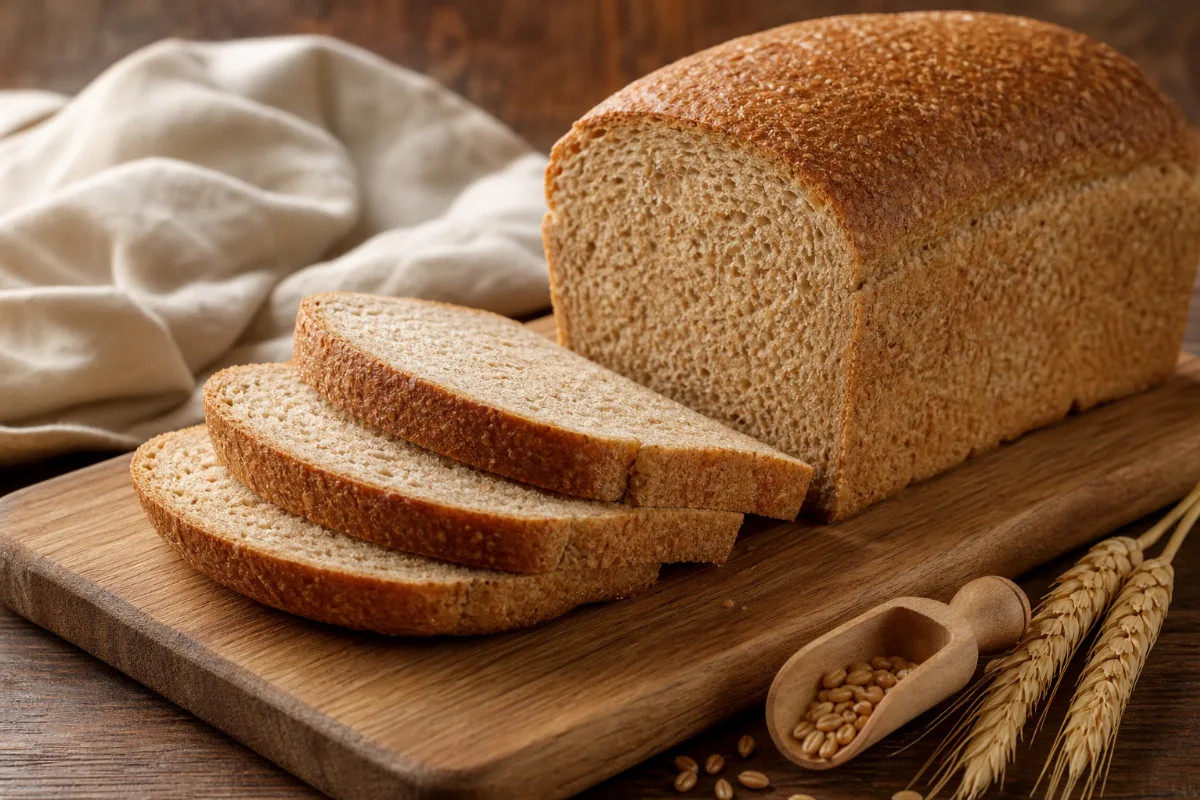
Whole-wheat bread is bread made from flour milled from the whole wheat kernel (Triticum aestivum, grass family Poaceae), so the bread keeps some of the bran and germ that white flour loses. People choose it for fiber and for the heart-health and blood-sugar links seen in whole-grain studies. This page covers commercial sliced whole-wheat bread, as described by USDA. It keeps the bread apart from whole wheat berries (whole wheat), sourdough (sourdough bread claims checked) and from hype. Bread is made from wheat, so gluten and wheat allergy come first below.
Read this first
- Gluten and wheat allergy: wheat contains gluten and is on the MedlinePlus list of the most common food allergens. [5] [6] People with celiac disease or a wheat allergy should not eat it without their clinician's advice. For trouble breathing or swelling of the face, lips or throat, call 911 (or your local emergency number). [6]
- Evidence in one line: in a 2026 controlled-feeding trial of 39 adults with prediabetes, whole-wheat bread lowered the blood sugar rise after a sugar drink by 27% compared with refined white bread over two weeks. [2] It is one small trial; observational studies of whole grains are separate. [4]
- Sodium: USDA lists 146 mg of sodium in one slice (6% of the Daily Value), and a sandwich uses two slices. [1]
- "Whole wheat" on the label is not the same as 100% whole grain. Studies classify whole grains in different ways, so read the ingredient list; see fiber and whole-grain claims on packages. [7]
- Toasting: FDA advises toasting bread to a light brown rather than a dark brown, because browned areas have more acrylamide. [9]
What is in it (USDA values)
The values below are for whole-wheat bread, commercially prepared (USDA FoodData Central item 172688, SR Legacy). [1] The serving column is the USDA household portion of 1 slice, 32 g. [1]
| Nutrient | Per 100 g | Per 1 slice (32 g) | % Daily Value per serving |
|---|---|---|---|
| Energy | 252 kcal | 80.6 kcal | not set |
| Total fat | 3.5 g | 1.12 g | 1% |
| Saturated fat | 0.722 g | 0.231 g | 1% |
| Protein | 12.4 g | 3.98 g | 8% |
| Fiber | 6 g | 1.92 g | 7% |
| Sodium | 455 mg | 146 mg | 6% |
| Calcium | 161 mg | 51.5 mg | 4% |
| Iron | 2.47 mg | 0.79 mg | 4% |
| Magnesium | 75 mg | 24 mg | 6% |
| Phosphorus | 212 mg | 67.8 mg | 5% |
| Manganese | 2.17 mg | 0.696 mg | 30% |
| Selenium | 25.7 mcg | 8.22 mcg | 15% |
| Thiamin (B1) | 0.394 mg | 0.126 mg | 11% |
| Niacin (B3) | 4.44 mg | 1.42 mg | 9% |
| Vitamin E (alpha-tocopherol) | 2.66 mg | 0.851 mg | 6% |
% Daily Value uses the FDA 2016 Daily Values; values vary with the brand, the recipe and how much whole grain is used. The serving figures are the 100 g values multiplied by 0.32. USDA lists carbohydrate at 42.7 g per 100 g, about 13.7 g per slice, and total sugars at 4.34 g per 100 g. [1] The bread has 0.137 g of ALA omega-3 per 100 g, a small amount; the FDA sets no Daily Value for ALA. [1] The USDA item is a commercial product, so seeds, sweeteners and added fiber in your loaf will change these numbers.
Plant compounds: we did not find, in the sources we read, a measured plant compound for whole-wheat bread that we can report. A 2026 review of wheat compounds says most support for their benefits comes from cell and animal studies. [10]
What research says
| Health goal | What the sources found | Strength of evidence | What was studied |
|---|---|---|---|
| Blood sugar after a sugar drink (prediabetes) | In a randomized crossover trial of 39 adults with prediabetes, two weeks of whole-wheat bread versus refined white bread (all other food controlled) lowered the glucose rise after a 75 g sugar drink by 27%. Fasting glucose and insulin improved with either bread, and inflammation markers did not differ. [2] | Promising but limited (one small, short trial) | Adults with prediabetes, bread as part of a fully controlled diet |
| Blood sugar and fullness in healthy young adults | In a single-meal crossover study of 16 young adults, blood sugar responses were similar for whole-grain and refined wheat bread. Whole-grain bread, but not whole-grain pasta, increased fullness and lowered hunger compared with refined bread; the amount eaten at the next meal did not differ. [3] | Mixed | 16 healthy adults, one meal |
| Heart disease, cancer and early death | A pooled analysis of 45 prospective studies found lower risk with more whole grains in general (relative risk 0.81 for coronary heart disease per 90 g a day). [4] It was about whole grains as a group, not bread alone. | Promising but limited (observational) | Adults followed for years |
| Gut bacteria | In the prediabetes trial, overall gut bacteria diversity did not change; a few bacterial groups shifted slightly. [2] | Insufficient evidence | Stool samples from 39 adults |
| Easier digestion of bread | A 2026 review says bread fermentation may lower FODMAPs and improve mineral availability, but the clinical evidence is "insufficient." [11] | Insufficient evidence | Review of bread fermentation |
| Cholesterol | Proper evidence not found for whole-wheat bread in the sources we read. | No good evidence of benefit found | Not applicable |
The review of whole grains by Jia and colleagues points out that processing matters: for example, intact barley in a stew gives a lower blood sugar rise than milled barley flour used in bread, and people who eat whole grains also tend to have healthier habits. [7] So whole-wheat bread is not the same food as intact whole grains.
Eaten as food vs taken as an extract. All trials above used bread or whole-grain foods. We did not find trials of whole-wheat extracts in the sources we read.
How much is a normal serving
The USDA household portions are 1 slice (32 g, about 81 kcal) and 1 ounce (28.35 g). [1] The 2025-2030 Dietary Guidelines for Americans set a goal of 2 to 4 servings of whole grains a day, say whole grains are encouraged, and advise cutting back on highly processed refined carbohydrates such as white bread. [8] The page we read did not define a serving of bread. The NHS lists wholemeal bread as a healthy choice in a balanced diet and says starchy foods should be just over a third of what you eat. [12] These are official statements, not a prescription.
Safety, allergy and medicines
- Celiac disease and gluten: NIDDK says gluten occurs naturally in wheat, barley and rye, and appears in breads, cereals and pastas. [5] NHS says coeliac disease is not routinely tested for in England but testing is usually advised for people with symptoms or a family history. [13] NIDDK advises not to start a gluten-free diet before testing, because it can make tests inaccurate. [5] See gluten and celiac basics.
- Wheat sensitivity without celiac disease: a 2025 review says self-reported rates are often above 10%, but blinded challenges confirm it in typically under 30% of cases; fructans (fermentable carbohydrates) and other wheat proteins are implicated, and a low-FODMAP diet is an effective adjunct. [14]
- Wheat allergy: wheat is on the MedlinePlus list of the most common food allergens. For anaphylaxis, call 911 and use prescribed epinephrine. [6]
- Sodium: NIDDK says adults should aim for less than 2,300 mg a day and that 5% Daily Value or less per serving is low and 20% or more is high. [15] One slice (6%) is moderate; two slices plus fillings add up.
- Acrylamide: FDA says acrylamide forms in high-heat cooking and lists toast among foods with higher levels, but it does not recommend cutting back on healthful whole grains. [9]
- Choking: the CDC lists crackers or breads with seeds, nut pieces or whole grain kernels among grain products to avoid for infants and young children. [16]
- Kidney disease and diabetes: each slice has about 68 mg of phosphorus (USDA). [1] NIDDK advises people with kidney disease to limit added phosphorus and follow their team's potassium advice. [17] People who count carbohydrate should use the label of the exact loaf.
- Medicines, pregnancy and breastfeeding: we did not find a medicine interaction or a pregnancy warning for whole-wheat bread in the sources we read.
Choosing, storing and food safety
- Check the ingredient list: whole-wheat flour should come first, and the label's "whole grain" words do not guarantee 100% whole grain. [7]
- Compare the sodium % Daily Value on the label between brands. [15]
- For celiac disease, choose a product labeled "gluten-free" (fewer than 20 parts per million). [5]
- We did not read a source on how long bread keeps or on freezing, so we give no storage time; follow the package.
Related pages
Health connections for Whole-Wheat Bread
What research links to eating or drinking this food, and how strong the evidence is. Many studies are observational or use juice, powder, oil or extracts rather than the food as eaten; each card says which.
Whole-wheat bread and blood sugar after a sugar drink
Preliminary or mixedIn a 2026 randomized crossover trial of 39 adults with prediabetes, two weeks of whole-wheat bread versus refined white bread lowered the post-drink glucose rise by 27%. Fasting glucose and insulin improved with either bread.
Supplements: One small, short trial in adults with prediabetes; funding not seen.
Whole-wheat bread, blood sugar and fullness in healthy adults
Preliminary or mixedIn a one-meal crossover study of 16 young adults, blood sugar responses were similar for whole-grain and refined bread; whole-grain bread raised fullness more than refined bread; later food intake did not differ.
Supplements: Single meals in healthy volunteers.
Whole grains and heart disease or early death
Preliminary or mixedA pooled analysis of 45 prospective studies linked more whole grains with lower coronary heart disease, cancer and all-cause death. It is about whole grains as a group, not bread alone.
Supplements: Observational.
Gut bacteria changes with whole-wheat bread
Not enough evidenceIn the prediabetes trial, overall bacterial diversity did not change; a few groups shifted slightly.
Supplements: Small trial, nominal shifts only.
Connected topics
Open a group to see how each topic connects and how strong the evidence is.
Health goals (2)
- Blood Sugar BalancePreliminary or mixed
A 2026 crossover trial in prediabetes found whole-wheat bread lowered the glucose rise after a sugar drink by 27% versus white bread; one small trial, and single-meal glucose was similar in healthy young adults.
- Metabolic HealthPreliminary or mixed
Prediabetes trial showed better glucose tolerance with whole-wheat bread; other markers did not differ.
Body systems (2)
- Blood Sugar SupportPreliminary or mixed
Lower glucose rise after a sugar drink in adults with prediabetes in one controlled crossover trial.
- Immune SystemDocumented risk
Wheat is a major food allergen and gluten triggers celiac disease.
Body parts (2)
- GutDocumented risk
Celiac disease damages the small intestine after gluten from wheat.
- Small IntestineDocumented risk
Celiac disease affects the small intestine; gluten is in bread.
Functional actions (1)
- Blood Sugar RegulationPreliminary or mixed
Whole-wheat bread lowered the post-sugar-drink glucose rise in prediabetes in one trial.
Root causes (3)
- Autoimmune DysfunctionDocumented risk
Celiac disease is an autoimmune reaction to gluten from wheat, barley and rye.
- Blood Sugar ImbalancePreliminary or mixed
Glucose tolerance improved with whole-wheat bread in adults with prediabetes in one crossover trial.
- Poor DietPreliminary or mixed
The 2025-2030 Dietary Guidelines say to cut back on highly processed refined carbohydrates such as white bread and encourage whole grains.
Habits (2)
- Balanced NutritionPreliminary or mixed
Wholemeal bread is described by the NHS as a healthy choice in a balanced diet; check sodium.
- Meal PlanningDocumented risk
Label reading matters: whole-grain wording varies and sodium differs by brand.
Biomarkers (1)
- Blood GlucosePreliminary or mixed
Postprandial glucose excursion fell 27% with whole-wheat bread in the prediabetes trial.
Conditions & symptoms (4)
- Celiac DiseaseDocumented risk
Bread from wheat contains gluten, which triggers celiac disease.
- Wheat HypersensitivityDocumented risk
Wheat is a major food allergen; call 911 for anaphylaxis.
- Gluten SensitivityDocumented risk
Non-coeliac wheat sensitivity is self-reported by over 10% but confirmed in under 30% by blinded challenge.
- Prediabetes SyndromePreliminary or mixed
In one 2026 controlled crossover trial in adults with prediabetes, whole-wheat bread lowered the glucose rise after a sugar drink by 27% versus white bread.
Documented risks and interactions (5)
- Gluten, celiac disease and wheat allergy. Bread from wheat contains gluten; wheat is a major food allergen. People with celiac disease or wheat allergy should not eat it without clinician advice.
- Non-coeliac wheat sensitivity. Self-reported in over 10% of people, confirmed by blinded challenge in typically under 30%; fructans and other wheat proteins are implicated.
- Sodium in bread. USDA lists 146 mg sodium per slice (6% of the Daily Value). NIDDK describes 5% or less as low and 20% or more as high.
- Acrylamide in toast. FDA says acrylamide forms in high-heat cooking, lists toast among foods with higher levels, and advises toasting to light brown rather than dark brown; it does not recommend cutting back on healthful whole grains.
- Choking hazard of breads with seeds or whole kernels. The CDC lists breads with seeds, nut pieces or whole grain kernels among grain products to avoid for infants and young children.
Frequently asked questions
Is whole-wheat bread better for blood sugar than white bread?
In a 2026 randomized crossover trial of 39 adults with prediabetes, two weeks of whole-wheat bread lowered the blood sugar rise after a sugar drink by 27% compared with white bread. [2] In a one-meal study of 16 healthy young adults, blood sugar responses were similar. [3] It is promising but limited.
Does "whole wheat" on the label mean 100% whole grain?
Not necessarily. Studies classify whole grains in different ways, so read the ingredient list. [7]
Is whole-wheat bread gluten-free?
No. Wheat contains gluten, and so does bread made from it. [5]
How much sodium is in a slice?
USDA lists 146 mg in one slice of commercial whole-wheat bread, 6% of the Daily Value. [1]
Does toasting make bread unhealthy?
FDA says toast has higher acrylamide than many foods and advises toasting to light brown rather than dark brown, while not recommending cutting back on healthful whole grains. [9]
References
- U.S. Department of Agriculture. FoodData Central: Bread, whole-wheat, commercially prepared (SR Legacy, FDC 172688). April 2018 release. Read 2026-10-24.
- Pierson JT et al. Whole wheat bread improves postprandial glucose tolerance in adults with prediabetes: a controlled-feeding randomized crossover trial with microbiome-associated variation in response. Front Nutr 2026 (abstract read via Europe PMC; funding statement not shown there). Read 2026-10-24.
- Kristensen M et al. Wholegrain vs. refined wheat bread and pasta: effect on postprandial glycemia, appetite, and subsequent ad libitum energy intake in young healthy adults. Appetite 2010 (abstract read via Europe PMC). Read 2026-10-24.
- Aune D et al. Whole grain consumption and risk of cardiovascular disease, cancer, and all cause and cause specific mortality: systematic review and dose-response meta-analysis of prospective studies. BMJ 2016 (abstract read via Europe PMC). Read 2026-10-24.
- NIDDK. Eating, diet, and nutrition for celiac disease. Reviewed October 2020. Read 2026-10-24.
- MedlinePlus. Food allergy. Read 2026-10-24.
- Jia Y, Miller V, Jenkins DJ. Whole Grains Perspective: Porridge or Popcorn. J Nutr 2026 (record and abstract read via Europe PMC). Read 2026-10-24.
- U.S. Department of Agriculture and U.S. Department of Health and Human Services. Dietary Guidelines for Americans 2025-2030 (realfood.gov). Read 2026-10-24.
- FDA. Acrylamide and diet, food storage, and food preparation. Read 2026-10-24.
- Vinayagam R et al. Wheat bioactive compounds and human health: a review of nutraceutical potential, molecular mechanisms and AI-assisted functional food innovation. Int J Mol Sci 2026 (abstract read via Europe PMC). Read 2026-10-24.
- Ribet L et al. Fermentation in breadmaking: enhancing digestibility and nutritional value for gastrointestinal health. Front Nutr 2026 (abstract read via Europe PMC). Read 2026-10-24.
- NHS. Starchy foods and carbohydrates. Read 2026-10-24.
- NHS. Coeliac disease. Read 2026-10-24.
- Maimaris S et al. Non-coeliac wheat sensitivity: symptoms in search of a mechanism, or a distinct well-defined clinical entity? A narrative review. Int J Mol Sci 2025 (abstract read via Europe PMC). Read 2026-10-24.
- NIDDK. Eating, diet, and nutrition for kidney stones. Reviewed May 2017. Read 2026-10-24.
- CDC. Choking hazards (infant and toddler nutrition). Page dated 2026-03-11. Read 2026-10-24.
- NIDDK. Healthy eating for adults with chronic kidney disease. Read 2026-10-24.