Quinoa: Nutrients, What Research Shows and Safety
Quinoa as a food: USDA nutrient values, what trials found on blood sugar and cholesterol, why it is gluten-free, the bitter saponin coating and cross-contact.
Content last updated . This page has not been medically reviewed.
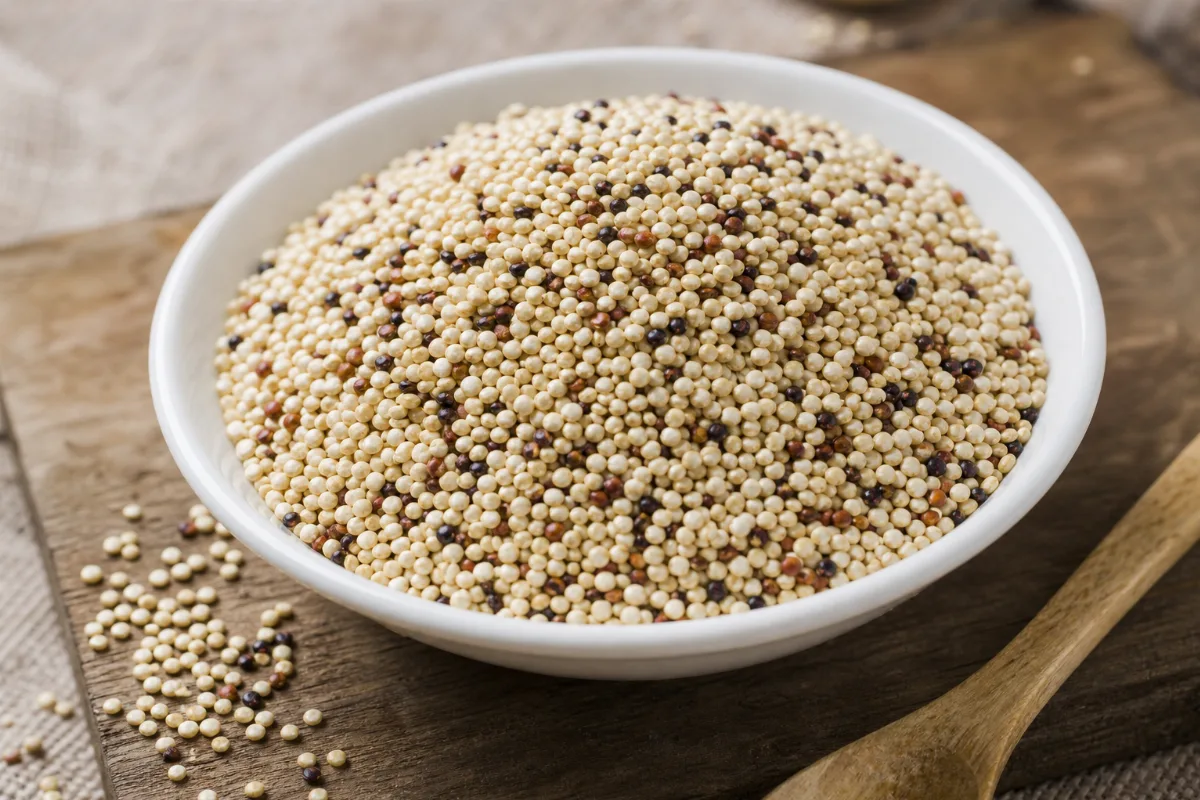
Quinoa is the seed of Chenopodium quinoa, an annual plant native to South America. [1] It is cooked and eaten like a grain, and it is usually counted with the whole grains because its structure is similar, although it is not a true cereal grass. [2] People eat it for fiber, protein and minerals, and because it is naturally gluten-free. This page keeps the whole food apart from saponin extracts and supplements, and apart from hype.
Read this first
- Naturally gluten-free, but check the label if you have celiac disease. The Celiac Disease Foundation and NIDDK both list quinoa as safe for a gluten-free diet. [3] [4] Grains can pick up gluten during harvest and processing, so the Foundation suggests buying products tested to under 20 parts per million and avoiding bulk bins. [3] In the US, a "gluten-free" label means under 20 ppm and is voluntary. [5]
- The bitter coating (saponins) is normally removed before sale. [1]
- Evidence in one line: small trials and pooled analyses show small improvements in blood sugar and blood fats, but we read no trial that measured heart attacks or strokes from eating quinoa.
- Allergy: we did not find a source we could read about quinoa allergy. For any food reaction with trouble breathing or swelling of the face or throat, call 911 (or your local emergency number). [6]
What is in it (USDA values)
The values below are for cooked quinoa (USDA FoodData Central item 168917, SR Legacy). [7] The serving column is the USDA household portion, 1 cup cooked, which USDA lists as 185 g. [7]
| Nutrient | Per 100 g | Per 1 cup cooked (185 g) | % Daily Value per serving |
|---|---|---|---|
| Energy | 120 kcal | 222 kcal | not set |
| Total fat | 1.92 g | 3.6 g | 5% |
| Saturated fat | 0.23 g | 0.4 g | 2% |
| Protein | 4.4 g | 8.1 g | 16% |
| Fiber | 2.8 g | 5.2 g | 18% |
| Magnesium | 64 mg | 118 mg | 28% |
| Manganese | 0.63 mg | 1.17 mg | 51% |
| Copper | 0.19 mg | 0.36 mg | 39% |
| Phosphorus | 152 mg | 281 mg | 22% |
| Folate (DFE) | 42 mcg | 78 mcg | 19% |
| Zinc | 1.09 mg | 2.0 mg | 18% |
| Iron | 1.49 mg | 2.8 mg | 15% |
| Potassium | 172 mg | 318 mg | 7% |
| Thiamin (B1) | 0.107 mg | 0.20 mg | 16% |
% Daily Value uses the FDA 2016 Daily Values; values vary with variety, growing place and how much water is absorbed in cooking. The serving figures are the 100 g values multiplied by 1.85. For comparison, USDA lists dry (uncooked) quinoa at 368 kcal, 14.1 g protein and 7.0 g fiber per 100 g; cooking adds water, so the cooked values per 100 g are much lower. [8] USDA lists no vitamin B12 and no vitamin C in cooked quinoa. [7]
Plant compounds: quinoa seeds contain saponins, which give a bitter taste and are usually removed before eating. They have been called antinutritional, and the 2026 review we read looks at their possible drug uses, which is lab research. [1] In a 2026 lab digestion test, saponins did not change how much of the minerals and fat-soluble vitamins were released from the seeds, but mineral release was low overall. [9] The same study group measured carotenoids and vitamin E forms in the seeds. [9] This is chemistry from the lab, not proof of a benefit in people.
What research says
| Health goal | What the sources found | Strength of evidence | What was studied |
|---|---|---|---|
| Blood sugar | A 2024 pooled analysis of 7 trials (258 adults, 15 to 50 g of quinoa a day for 28 to 180 days) found a beneficial effect on fasting blood glucose, with the curve steepening near 25 g a day; the authors ask for more studies. [2] A one-year trial in 207 adults with impaired glucose tolerance (100 g a day replacing about half the daily staple food) reported better glucose and insulin measures than a multigrain group and a control group. [10] | Promising but limited | Quinoa seed in the diet; adults, one trial in impaired glucose tolerance |
| Cholesterol and blood fats | A pooled analysis of 5 trials (206 people) found small drops: triglycerides about 7 mg/dl, total cholesterol about 7 mg/dl, LDL about 3 mg/dl. [11] A crossover trial in 40 older adults eating 15 g of quinoa biscuits a day for 4 weeks found small drops in total and LDL cholesterol versus wheat biscuits. [12] | Promising but limited (small changes) | Quinoa seed, flour in biscuits; adults |
| Body weight | The cardiovascular pooled analysis found about 1.3 kg lower body weight. [11] The 2024 blood sugar analysis found no significant effect on weight or BMI versus placebo. [2] In a 148-adult trial of 40 g a day for 4 weeks, quinoa did not differ significantly from rice or bulgur on body measures. [13] | Mixed | Quinoa seed; adults with and without overweight |
| Gut bacteria | 28 men ate a roll with 20 g of quinoa flour a day for 4 weeks; their gut bacteria did not change. The authors say larger amounts or longer periods may be needed. [14] | No good evidence of benefit at that amount | Quinoa flour in bread |
| Inflammation | A review of 20 animal and in vitro studies found lower inflammatory markers in most, but called quinoa "not yet a confirmed agent". [15] | Lab or animal only | Preclinical studies |
| Whole grains in general and long-term health | A pooled analysis of 45 prospective studies found that people who ate more whole grains had lower risk of heart disease and death. [16] Observational studies cannot prove cause, and quinoa was not analyzed on its own. | Promising but limited (observational, not quinoa-specific) | Whole grain intake in general |
We did not check funding in every study; abstracts often do not say. The trials above used the whole seed, flour or products made with it, not extracts. We read no human trial of quinoa saponin extracts.
Eaten as food vs taken as an extract or supplement. The pooled analyses call the intervention "quinoa seed supplementation", but the amounts (15 to 50 g a day) are food-sized. [2] [11] Saponin extracts are a separate product studied in the lab. [1]
How much is a normal serving
The USDA household portion for cooked quinoa is 1 cup (185 g), which has about 222 kcal; for dry quinoa it is 1 cup (170 g). [7] [8] That is information from the USDA data, not a prescription. Harvard's Nutrition Source lists quinoa among the unprocessed whole grains. [17] The NHS advises choosing wholegrain starchy foods as a fiber source, without naming quinoa. [18] The trials above used 15 to 100 g of quinoa a day, and amounts varied a lot between studies. [2] [10]
Safety, allergy and medicines
- Celiac disease and gluten: quinoa is naturally gluten-free. [3] [4] Cross-contact can happen during growing, processing, storage and cooking. [4] Check for a gluten-free label if you have celiac disease; FDA says that label means under 20 ppm of gluten. [5]
- Allergy: we did not find a source we could read on quinoa allergy. Food allergy symptoms include hives, swelling of the face or lips, vomiting, wheezing and trouble breathing. Anaphylaxis is a medical emergency, so call 911. [6] See food allergy basics and emergency signs.
- Saponins: bitter and usually removed before sale; we did not read a source describing harm from the small amounts left in prepared quinoa. [1]
- Diabetes and medicines: the blood sugar trials above measured glucose, not medicine doses. We read no source on interactions between quinoa and diabetes medicines. Ask your care team before changing how you eat or take medicines. See foods and medicine interactions.
- Kidney disease, pregnancy, children: we did not read a source on quinoa for these groups. See foods in pregnancy and foods and kidney disease.
- Fiber: cooked quinoa gives 5.2 g of fiber per cup by USDA data. [7] We did not read a source on quinoa-specific digestive side effects.
Choosing, storing and food safety
- For gluten-free diets, choose packages labeled gluten-free and avoid bulk bins, because of cross-contact. [3]
- Read the label to see whether the quinoa has been rinsed or pre-washed to remove saponins. [1]
- We did not read a source with specific storage or cooking-time advice for quinoa. See food storage, leftovers and food safety basics.
Related pages
Health connections for Quinoa
What research links to eating or drinking this food, and how strong the evidence is. Many studies are observational or use juice, powder, oil or extracts rather than the food as eaten; each card says which.
Quinoa and blood sugar
Preliminary or mixedA pooled analysis of 7 trials found a beneficial effect on fasting glucose, and a one-year trial in people with impaired glucose tolerance reported better glucose and insulin measures than multigrain or control. More studies are needed.
Supplements: Trials used the whole seed or flour in food amounts (15 to 100 g dry a day).
Quinoa and cholesterol and triglycerides
Preliminary or mixedPooled trials found small drops in triglycerides, total cholesterol and LDL; a crossover trial of quinoa biscuits in older adults found small drops too.
Supplements: Small changes, short trials, quinoa seed and flour products.
Quinoa and body weight
Preliminary or mixedOne pooled analysis found about 1.3 kg lower weight, another found no significant effect on weight or BMI, and a 148-adult trial found no difference from rice or bulgur.
Supplements: Results are mixed.
Saponins: bitter coating
Lab or animal research onlySaponins give quinoa a bitter taste and are usually removed before eating. In a lab digestion test they did not change mineral or vitamin release.
Supplements: Lab research on saponins and extracts is not the same as eating quinoa.
Quinoa and gut bacteria
Not enough evidenceIn 28 men eating 20 g of quinoa flour a day for 4 weeks, gut bacteria did not change.
Supplements: Larger amounts or longer periods are untested in the sources we read.
Quinoa and inflammation
Lab or animal research onlyA review of 20 animal and in vitro studies found lower inflammatory markers in most; the authors say quinoa is not yet a confirmed agent for inflammation.
Supplements: No human trial of inflammatory disease was read.
Whole grains and long-term health (not quinoa-specific)
Preliminary or mixedA pooled analysis of 45 observational studies linked more whole grains to lower risk of heart disease and death. This cannot prove cause and does not isolate quinoa.
Supplements: Information about whole grains, not about quinoa alone.
Fiber, protein and minerals in a serving
Established roleOne cup cooked gives about 5.2 g fiber, 8.1 g protein, 51% DV manganese, 39% copper and 28% magnesium by USDA data.
Supplements: Dietary role only.
Connected topics
Open a group to see how each topic connects and how strong the evidence is.
Health goals (2)
- Blood Sugar BalancePreliminary or mixed
Pooled trials and a one-year trial found better glucose measures. More studies are needed.
- Cholesterol BalancePreliminary or mixed
Pooled trials found small drops in LDL, total cholesterol and triglycerides.
Body systems (1)
- Blood Sugar SupportPreliminary or mixed
Better glucose measures in pooled trials and a one-year trial.
Functional actions (1)
- Blood Sugar RegulationPreliminary or mixed
Glucose measures improved in pooled trials.
Root causes (1)
- Blood Sugar ImbalancePreliminary or mixed
Better glucose measures in trials, including people with impaired glucose tolerance.
Habits (1)
- Balanced NutritionPreliminary or mixed
A whole-grain choice; observational data link more whole grains to lower risk, not specific to quinoa.
Biomarkers (5)
- Blood GlucosePreliminary or mixed
Fasting glucose was lower in the pooled analysis.
- HbA1cPreliminary or mixed
Reduced in the one-year trial in impaired glucose tolerance (one trial).
- InsulinPreliminary or mixed
Serum insulin was lower in the pooled cardiovascular analysis.
- LDL CholesterolPreliminary or mixed
About 3 mg/dl lower in a pooled analysis, a small change.
- TriglyceridesPreliminary or mixed
About 7 mg/dl lower in a pooled analysis.
Conditions & symptoms (1)
- Celiac DiseaseDocumented risk
Quinoa is naturally gluten-free, but cross-contact can occur; choose labeled products (under 20 ppm).
Documented risks and interactions (2)
- Naturally gluten-free grain and cross-contact. Quinoa is naturally gluten-free, but grains can pick up gluten in harvest and processing. A US gluten-free label means under 20 ppm.
- Food allergy: no quinoa-specific source read. We did not find a source we could read on quinoa allergy. Call 911 for trouble breathing or swelling of the face or throat after any food.
Frequently asked questions
Is quinoa a grain?
It is a seed that is cooked and eaten like a grain. It is not a true cereal grass but is usually counted with the whole grains because its structure is similar. [2] Harvard lists it with unprocessed whole grains. [17]
Is quinoa gluten-free?
Yes, quinoa is naturally gluten-free. [3] [4] People with celiac disease should still look for a gluten-free label, because grains can pick up gluten during processing. [3] [5]
Does quinoa lower blood sugar or cholesterol?
Small trials and pooled analyses found small improvements in blood glucose, triglycerides and cholesterol. [2] [11] One head-to-head trial found no significant difference from rice or bulgur after 4 weeks. [13] The evidence is promising but limited.
Do I need to rinse quinoa?
Quinoa seeds carry bitter saponins, which are usually removed before sale. [1] We did not read a source on home rinsing, so follow the package directions.
Can quinoa cause an allergic reaction?
We did not find a source we could read on quinoa allergy. Any food can cause one in some people; trouble breathing or swelling of the face or throat needs a 911 call. [6]
References
- Karydogianni S et al. Quinoa (Chenopodium quinoa Willd.) saponins and their pharmaceutical potential: a review. 2026. (abstract read via Europe PMC) Read 2026-10-24.
- Atefi M et al. Does quinoa (Chenopodium quinoa) consumption improve blood glucose, body weight and body mass index? A systematic review and dose-response meta-analysis of clinical trials. 2024. (abstract read via Europe PMC) Read 2026-10-24.
- Celiac Disease Foundation. Gluten-free foods. Read 2026-10-24.
- NIDDK. Eating, diet and nutrition for celiac disease. Read 2026-10-24.
- FDA. Questions and Answers: Gluten-Free Food Labeling Final Rule. 2022. (content current as of 2022-06-30) Read 2026-10-24.
- MedlinePlus. Food allergy. Read 2026-10-24.
- U.S. Department of Agriculture. FoodData Central: Quinoa, cooked (SR Legacy, FDC 168917). April 2018 release. Read 2026-10-24.
- U.S. Department of Agriculture. FoodData Central: Quinoa, uncooked (SR Legacy, FDC 168874). April 2018 release. Read 2026-10-24.
- Lindenmayer LA et al. Saponins do not impede the bioaccessibility of minerals and fat-soluble vitamins from different quinoa genotypes. 2026. (abstract read via Europe PMC) Read 2026-10-24.
- Huang L et al. Quinoa is more effective than other whole grains in the management of impaired glucose tolerance: a randomized controlled trial. 2025. (abstract read via Europe PMC) Read 2026-10-24.
- Karimian J et al. The effects of quinoa seed supplementation on cardiovascular risk factors: a systematic review and meta-analysis of controlled clinical trials. 2021. (abstract read via Europe PMC) Read 2026-10-24.
- Pourshahidi LK et al. Modest improvement in CVD risk markers in older adults following quinoa consumption: a randomized-controlled crossover study with a novel food product. 2020. (abstract read via Europe PMC) Read 2026-10-24.
- Oztekin Y et al. Metabolites. Comparative effects of quinoa, buckwheat, bulgur, and rice on cardiometabolic health in adults with overweight or obesity: a randomized controlled study. 2026. (abstract read via Europe PMC) Read 2026-10-24.
- Li L et al. Impact of daily consumption of whole-grain quinoa-enriched bread on gut microbiome in males. 2022. (abstract read via Europe PMC) Read 2026-10-24.
- Malek Mahdavi A et al. Effects of quinoa (Chenopodium quinoa) on inflammatory mediators: a systematic review of preclinical studies. 2023. (abstract read via Europe PMC) Read 2026-10-24.
- Aune D et al. BMJ. Whole grain consumption and risk of cardiovascular disease, cancer, and all cause and cause specific mortality: systematic review and dose-response meta-analysis of prospective studies. 2016. (abstract read via Europe PMC) Read 2026-10-24.
- Harvard T.H. Chan School of Public Health. Whole grains (The Nutrition Source). Read 2026-10-24.
- NHS. Starchy foods and carbohydrates. Read 2026-10-24.